
Busan Travel Guide 2026: The Complete Plan (Flights, Weather, Where to Stay, Food & More)
Everything you need to plan a perfect Busan trip — beaches, temples, markets and night views, from people who keep coming back.
- Best time: May–June and September–November (clear skies, mild sea breeze). July–August is beach season but hot, humid and crowded.
- Getting around: unlike most beach cities, Busan has a clean, cheap metro — you barely need taxis.
- Where to stay: Haeundae for the beach & comfort, Gwangalli for the night view & nightlife, Seomyeon for transport & value.
- Money: Korea is nearly cashless — cards work almost everywhere, and you do not tip. Budget about ₩90,000–160,000 (~$65–115) per person per day mid-range.
1. Getting to Busan: Flights, Visa & the KTX
2. Weather & the Best Time to Visit
3. Getting Around: Metro, Buses & Taxis
4. Where to Stay: The Best Neighborhoods
5. Top Attractions, in 3 Tiers
6. A Sample 3-Day Itinerary
7. What to Eat: Busan’s Best Dishes
8. Day Trips from Busan
9. Money, Connectivity & Etiquette
10. Is Busan Safe? What to Know
Busan is South Korea’s second city and its summer capital — a string of real beaches wrapped around a buzzing port, with seaside temples, hillside art villages and one of Asia’s great seafood scenes. It’s cleaner, calmer and far cheaper than Seoul, and astonishingly easy to get around thanks to a metro that reaches almost everything. This master guide pulls it all together — getting in and visas, weather, transport, where to stay, what to see, what to eat, day trips, money and etiquette — so you can read it once and have your trip basically planned.
1. Getting to Busan: Flights, Visa & the KTX
Most visitors arrive at Gimhae International Airport (PUS), about 40 minutes west of the city, with direct flights from across Asia — Japan (Tokyo, Osaka, Fukuoka), Taiwan, Hong Kong, China, and Southeast Asia. From farther away you’ll usually connect through Seoul (Incheon), then either fly down or take the train.
🛂 Entry: visa & K-ETA
- Visa-free: citizens of many countries (the US, UK, most of Europe, Australia, Canada, Japan and more) enter visa-free for 30–90 days for tourism.
- K-ETA: visa-free visitors normally need a Korea Electronic Travel Authorization applied for online before flying. Note: Korea has been running a temporary K-ETA exemption for a rotating list of countries — always check the current rule at the official k-eta.go.kr before you book.
- Your passport should be valid for the length of your stay; have your accommodation address ready for the arrival card.
2. Weather & the Best Time to Visit
Busan has four real seasons, and the month you pick changes everything. Good news: its winters are the mildest in mainland Korea, and its shoulder seasons are gorgeous.
| Months | Season | Vibe & tip |
|---|---|---|
| Mar–Apr | Spring | Cherry blossoms (early Apr); still breezy, bring a layer. |
| May–Jun | Late spring | ⭐ Warm, clear, low humidity — the best all-round time to explore. |
| Jul–Aug | Summer | Hot & humid; beaches open and packed. Watch for the late-June/July rainy spell (jangma) and typhoons. |
| Sep–Nov | Autumn | ⭐ October is peak — crisp blue skies, perfect sea light, fireworks festival. |
| Dec–Feb | Mild winter | Sunny and dry, daytime usually above freezing — far gentler than Seoul. |
The sweet spots are clearly May–June and October. For swimming, aim for mid-July to mid-August; for fewer crowds, try early June or September.
3. Getting Around: Metro, Buses & Taxis
Here’s Busan’s big advantage over most beach destinations: a proper subway. You can reach Haeundae, Seomyeon, Nampo-dong and the fish market all by metro, no driving or haggling required.
🚇 Metro
Four clean, signed-in-English lines plus the Donghae line. A single ride is about ₩1,550 with a card. Covers most major sights.
🚌 City buses
For the hillside spots the metro misses — Gamcheon Village, Taejongdae, coastal viewpoints. Transfers within 30 min are free.
🚕 Taxis / Kakao T
Cheap by Western standards (base ~₩4,800). Use the Kakao T app to call one and avoid any language hassle; there’s a late-night surcharge.
Grab a rechargeable T-money or Cashbee card from any convenience store on arrival — tap it on metro, buses and even to pay at convenience stores. It makes transfers free and the whole trip frictionless.
4. Where to Stay: The Best Neighborhoods
In Busan, which area you sleep in matters more than the hotel’s star rating. Pick the zone first.
🏖️ Haeundae
The famous beach: ocean-view hotels, resorts, aquarium, easy and polished. Best for first-timers, couples and families. Pricier.
🌉 Gwangalli
Beach café-and-bar strip with a knockout view of the lit Gwangan Bridge. Best for nightlife and a younger crowd.
🚇 Seomyeon
The transport heart (two metro lines cross here): cheap, central, endless food and shopping. Best for value and getting anywhere fast.
🏯 Nampo-dong / Busan Station
Old downtown by the fish market and markets, steps from the KTX. Best for street food and a first, walkable base.
- Guesthouse / budget — ~₩30,000–70,000/night ($22–50). Great for solo & backpackers.
- Mid-range hotel — ~₩80,000–150,000/night ($60–110). Plenty in Seomyeon & Gwangalli.
- Haeundae ocean-view / luxury — ~₩180,000–400,000/night ($130–290). The splurge.
5. Top Attractions, in 3 Tiers
👑 Tier 1 — don’t even think, just go
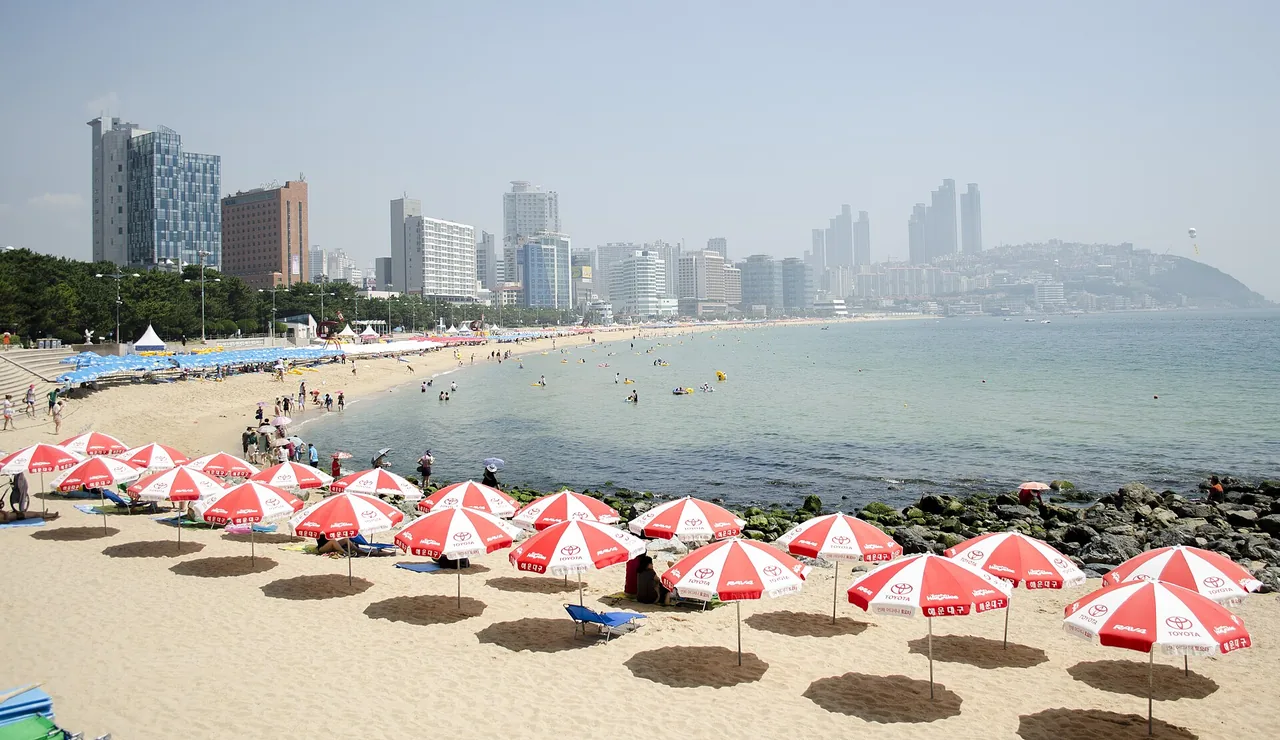
- Haeundae Beach: Busan’s signature crescent of sand, backed by skyscrapers; pair it with the leafy Dongbaek Island boardwalk.
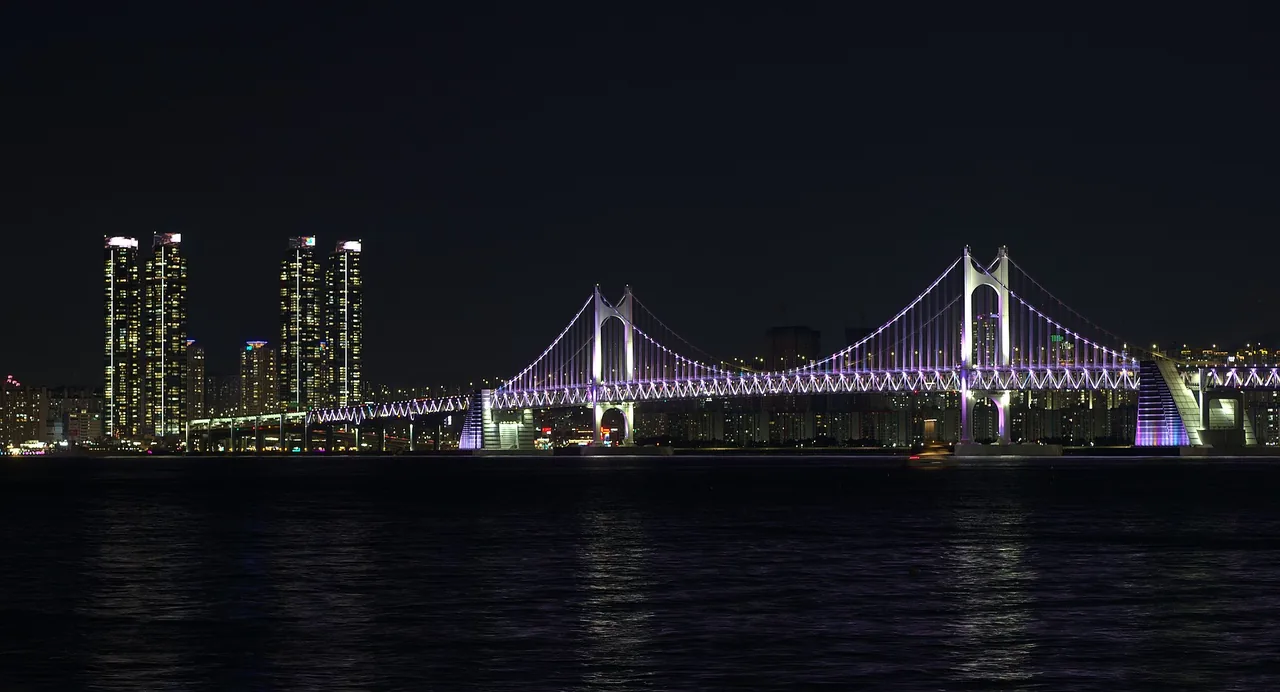
- Gwangalli Beach & Gwangan Bridge: come at night. Beach cafés and raw-fish restaurants face the glittering bridge, and there’s a weekend drone light show.
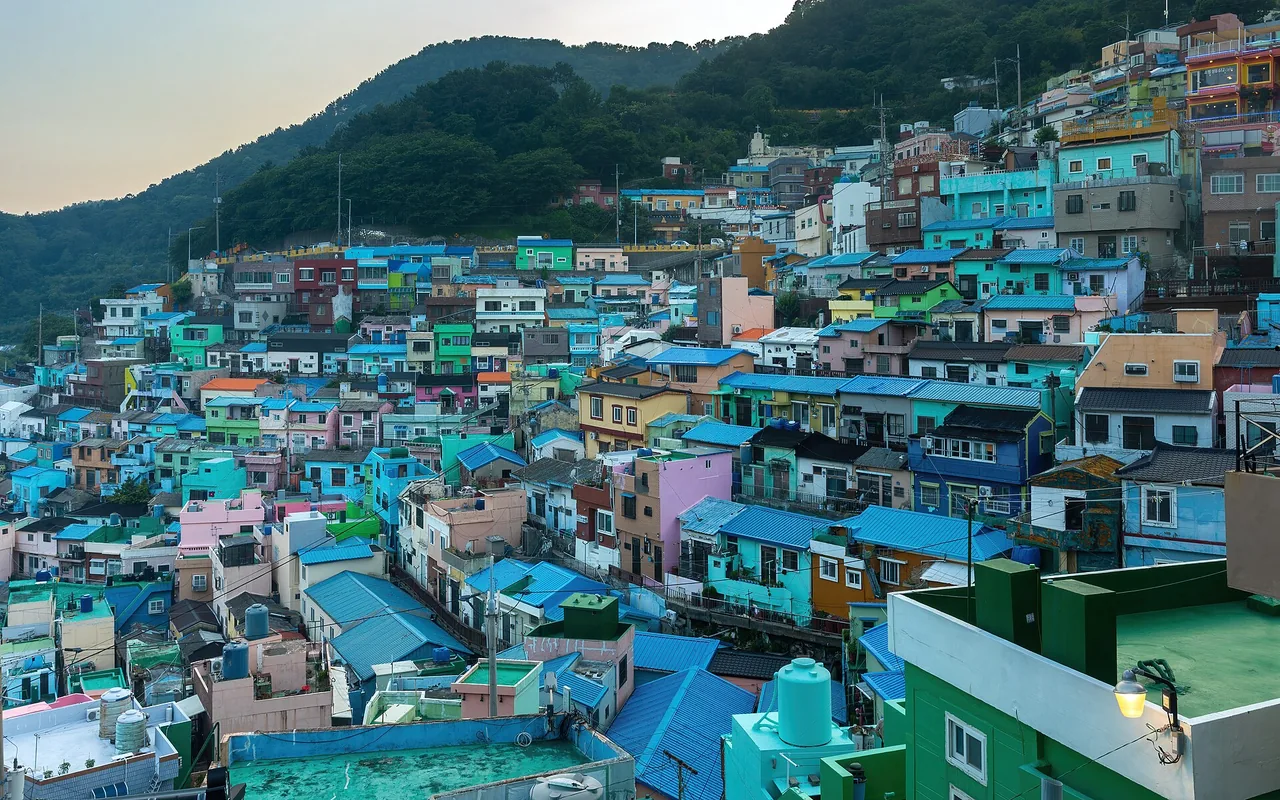
- Gamcheon Culture Village: a hillside maze of pastel houses, murals and tiny galleries — “Busan’s Santorini.” Go in the morning before the crowds.
- Haedong Yonggungsa: a rare Buddhist temple built right on the rocky coast — one of Korea’s most beautiful seaside spots, and a sunrise favorite.
🏙️ Tier 2 — downtown & coast
- Jagalchi Fish Market & Gukje Market — Korea’s biggest seafood market; pick your fish and eat it upstairs.
- Taejongdae — dramatic sea cliffs, a lighthouse and a little tram, out on Yeongdo island.
- Huinnyeoul Culture Village — white cliff-top lanes and sea-view cafés; Busan’s current photo darling.
- Songdo Marine Cable Car — glides over the bay with a glass-floor option.
💎 Tier 3 — pick by taste
Oryukdo Skywalk (glass platform over the sea), Beomeosa (a 1,300-year mountain temple), Busan Tower in the old town, Shinsegae Centum City (the world’s largest department store) with Spa Land jjimjilbang, and Songjeong Beach for surfing.
K-culture note: Busan is a constant K-drama and film backdrop — Gamcheon, Cheongsapo and the Gwangan Bridge skyline turn up everywhere. The Busan International Film Festival (BIFF) takes over the city each October.
6. A Sample 3-Day Itinerary
First time? This loop keeps the travel logical — old downtown, then the eastern beaches and night views.
- Day 1 — Old downtown: Gamcheon Culture Village in the morning, then Jagalchi & Gukje markets for a seafood lunch, the BIFF Square street food (try seed hotteok), and Yongdusan Park / Busan Tower at dusk.
- Day 2 — East coast: Haedong Yonggungsa temple early, Haeundae Beach & Dongbaek Island, then Shinsegae Centum / Spa Land in the afternoon, and Gwangalli at night for grilled shellfish under the bridge.
- Day 3 — Yeongdo & slow morning: Huinnyeoul Village, Taejongdae cliffs and the Songdo cable car, then a coffee before your train or flight.
7. What to Eat: Busan’s Best Dishes
Busan’s food is built on two pillars — the sea, and hearty working-port comfort food. You can eat brilliantly for very little.
- Dwaeji-gukbap — the city’s soul food: a milky pork-bone soup with rice, the dish locals are most proud of. ~₩9,000.
- Milmyeon — Busan’s own cold wheat noodles, chewy and refreshing (or spicy); a summer staple.
- Ssiat hotteok — a griddled sweet pancake stuffed with seeds and nuts, the must-eat snack at BIFF Square.
- Busan eomuk (fish cakes) — far better than they sound: hot skewers with broth, plus modern bakery-style versions. A popular edible souvenir.
- Hoe (raw fish) & gomjangeo — at Jagalchi, choose your catch and eat it fresh; spicy grilled hagfish (gomjangeo) is a beer-and-soju classic.
- Dongnae pajeon — a thick seafood-and-scallion pancake, perfect with makgeolli rice wine.
8. Day Trips from Busan
Want more than the city? Each of these works as an easy day trip and shows a different side of southern Korea.
🏛️ Gyeongju
~1 hour by train. The 1,000-year Silla capital: UNESCO Bulguksa Temple, royal tombs, and the trendy Hwangnidan-gil lane. History + atmosphere.
⛴️ Tongyeong
~1.5 hours. The “Naples of Korea”: a cable car, the Dongpirang mural village, island-hopping ferries and famous honey bread.
🌊 Geoje
~1.5 hours. Big coastal scenery — Windy Hill, Oedo island garden and pebble beaches. Best with a rental car.
Gyeongju is the easiest car-free pick (regular trains). For Tongyeong and Geoje, an intercity bus or a small-group tour is simplest.
9. Money, Connectivity & Etiquette
A few things that surprise first-time visitors to Korea — and make your trip smoother once you know them.
- No tipping. This is the big one for Western travelers: Korea has no tipping culture. Don’t tip restaurants, taxis or hotels — the price you see is the price you pay, and tipping can even cause confusion.
- Cards over cash. Korea is one of the most cashless countries on earth — credit/debit cards and phone pay work almost everywhere. Carry a little cash only for old-school market stalls.
- Exchange & ATMs: rates in town beat the airport. Look for “Global ATM” signs (7-Eleven, banks) that accept foreign cards.
- SIM / eSIM & Wi-Fi: get a tourist SIM or eSIM (KT, SKT). Public Wi-Fi is fast and everywhere, but your own data + Naver Map + Papago is what you’ll actually rely on.
- Etiquette: keep your voice down on the metro, stand right on escalators, and don’t eat while walking in formal spaces. A small bow and “kamsahamnida” (thank you) goes a long way.
10. Is Busan Safe? What to Know
Busan — like the rest of South Korea — is one of the safest places you can travel. Violent crime against tourists is extremely rare, and it’s completely normal to walk around late at night.
- Solo and female travelers generally feel very comfortable; lost phones and wallets are often handed in.
- The real “risks” are minor: strong rip currents at the beaches (swim between the flags), summer heat and typhoons.
- Dial 112 for police and 119 for fire/ambulance; the 1330 Korea Travel Hotline offers 24/7 help in English.
In short: come relaxed. The main things to plan around are the weather and the crowds, not your safety.
Busan FAQ
🌊 Next step: map out your days with our Busan 3-day itinerary →