Haeundae Beach, Busan: The Complete Visitor’s Guide
Korea’s most famous city beach, plus the Sky Capsule, Marine City night views, Dongbaek Island and everything within walking distance
Last updated: June 2026
Haeundae at a glance
Haeundae is Busan’s signature beach: a 1.5 km stretch of clean sand backed by skyscrapers, with cafes, restaurants and hotels lined up directly behind the shore.
Getting here is easy. Take Busan Metro Line 2 to Haeundae Station, leave by Exit 3 or 5, and walk 5 to 10 minutes to the sand.
The 2026 swimming season runs from June 26 to September 15, with lifeguards on duty and water temperatures of roughly 24 to 28 C through summer.
Even outside summer it is worth a half to full day: walk Dongbaek Island, ride the Sky Capsule along the coast, and stay for the Marine City night views.
Haeundae is the face of Busan and one of the largest city beaches in Korea, where a long crescent of sand meets a wall of glass towers, a wooded island trail and a coastal sky train all in one neighbourhood. Answer first: arrive on Metro Line 2, swim in summer (June 26 to September 15 in 2026), and stay into the evening for the night views. This guide is part of our complete Busan Travel Guide, so use it for the beach itself and tap the master guide for the wider city. Below you will find how to get here, the swimming season in detail, the Sky Capsule, Dongbaek Island and Nurimaru, the Marine City night scene, nearby attractions, food, transport and where to stay.
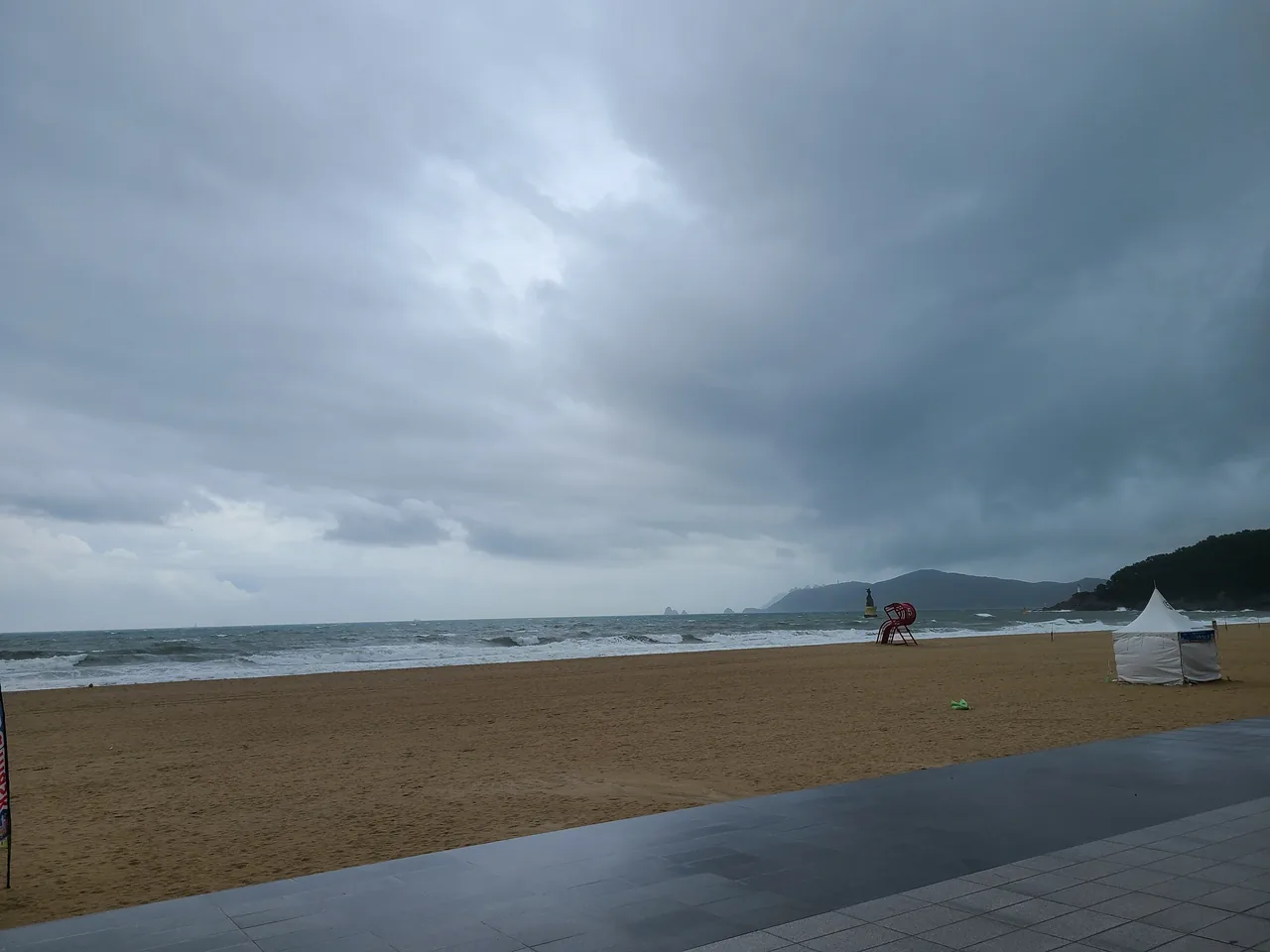
Haeundae’s 1.5 km of sand, framed by Marine City towers (Photo: H. Y. Shin, CC0)
Haeundae is Busan in miniature: sea, city and night view all packed into a single walkable district. A 1.5 km arc of sand sits in front of the Marine City skyline, with the wooded loop of Dongbaek Island at one end and the Sky Capsule coastal train at the other. You can reach it on foot from Haeundae Station on Metro Line 2.
In summer it is the country’s number one beach resort, with parasols stretching from end to end. The rest of the year it turns quiet and walkable, ideal for a seaside stroll, a sunrise, or an evening looking across the bay at the towers lighting up. Because it is a city beach, hotels, cafes and seafood restaurants sit right behind the sand, so you are never more than a few minutes from a meal or a coffee with an ocean view.
Plan it like this: beach plus Dongbaek Island takes a relaxed half day; add the Sky Capsule, the aquarium and a Marine City dinner and you have a full, easy day without a car.
2. Haeundae at a glance: the key facts
Free to enter, open year round, with a defined summer swimming season. Here are the numbers worth knowing before you go.
Item
Detail
Location
Haeundae-gu, Busan
Entry
Free (the beach itself)
Getting here
Metro Line 2, Haeundae Station, Exit 3 or 5, then 5 to 10 min on foot
Beach size
1.5 km long, 30 to 50 m wide, opened 1965
Swimming season (2026)
June 26 to September 15
Water temperature
About 24 to 28 C from July to September
Best for
Swimming in summer; walks and night views all year
Time needed
Half day for beach and island; a full day with nearby sights
Haeundae draws about 9.9 million visitors over the summer season, Korea’s busiest beach. That popularity is exactly why it has such complete infrastructure, and also why public transport beats driving in July and August.
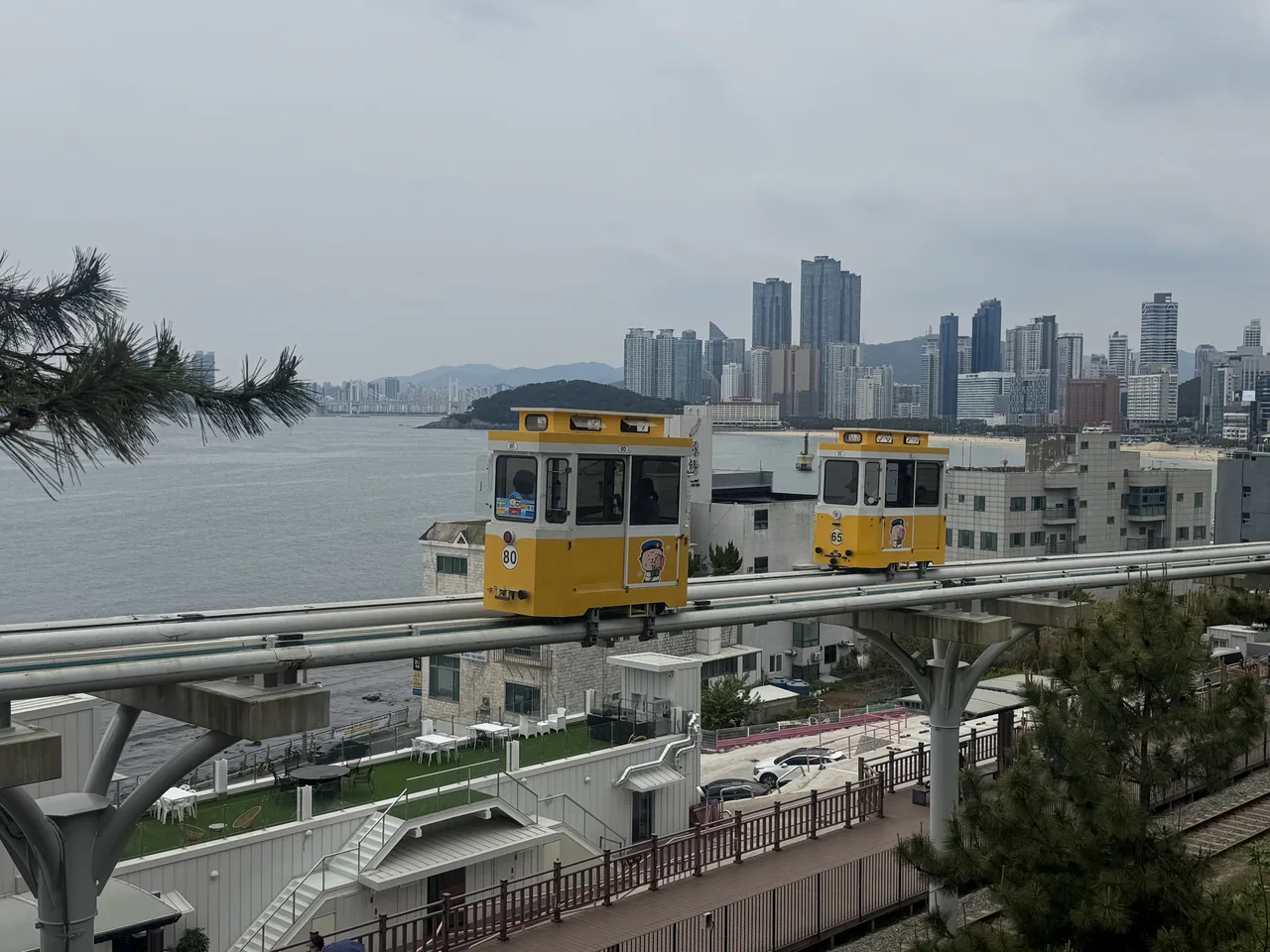
The Sky Capsule glides above the coast from Mipo (Photo: VN.NguyenDucDuy, CC BY-SA 4.0)
3. The beach itself: sand, sunrises and seafront
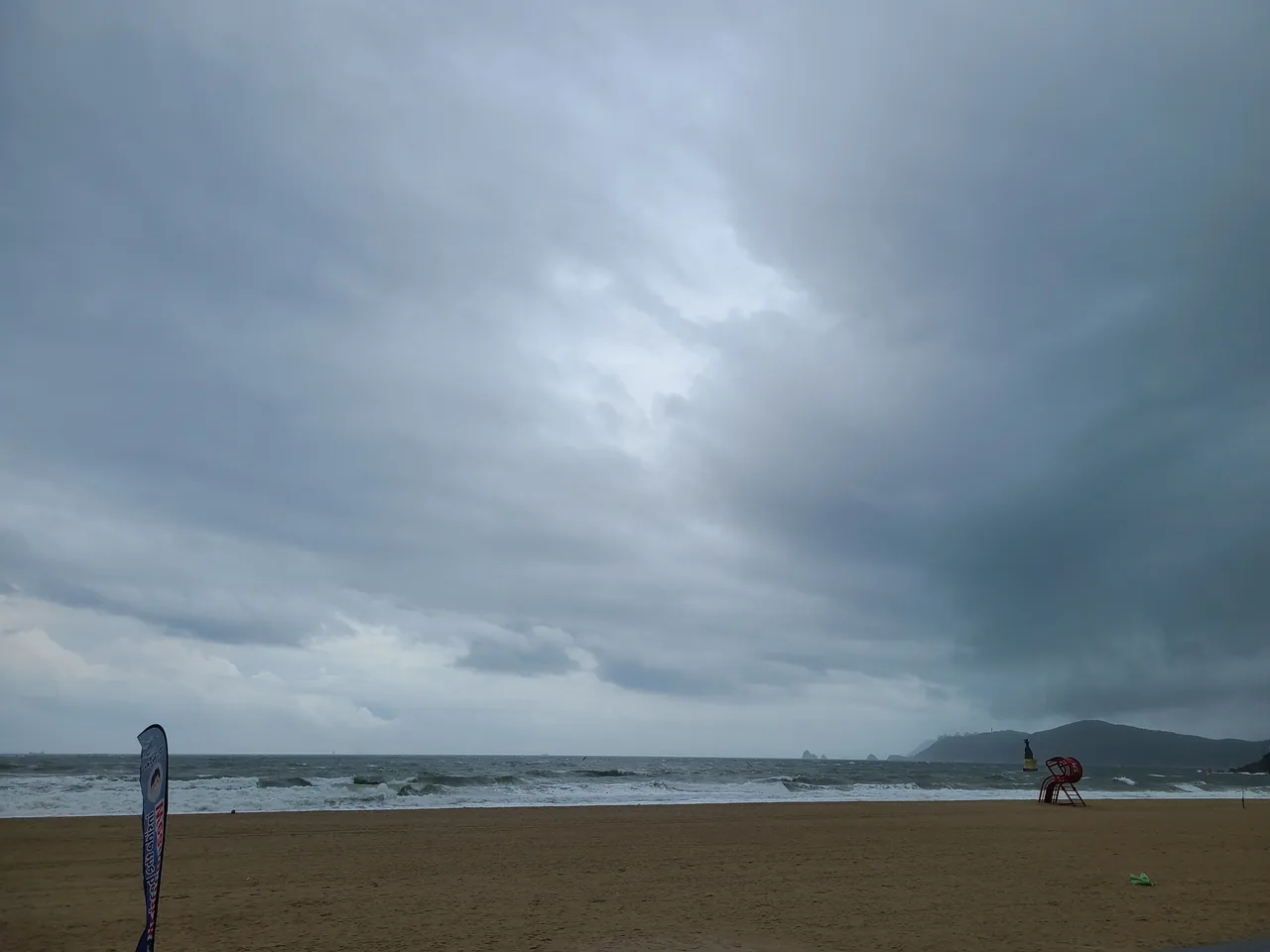
The sand here is famously clean and coarse, so it brushes off your skin and clothes easily rather than clinging. The 1.5 km shore is gently curved, 30 to 50 m deep, and faces open sea, which makes it feel spacious even when busy. It opened as a public beach back in 1965 and has been Busan’s star ever since.
There is more to do than swim. The promenade behind the sand is made for slow walking, and the eastern Mipo end is a well known sunrise spot, especially on crisp winter mornings when seagulls wheel over an almost empty beach. Around Gunam-ro and the beach plaza you will find an open air stage, seasonal events and night lighting that keeps the seafront lively after dark.
For walkers Stroll the full 1.5 km, then continue onto the Dongbaek Island loop at the western end for sea views the whole way.
For photographers Sunrise at the Mipo end; the city skyline behind the sand; and the towers reflecting in the water at night.
For loungers Grab an ocean view cafe directly behind the beach. You are never far from coffee, beer or a meal.
Because everything sits in one compact district, you can dip in and out of the sand between a cafe stop and a walk without ever feeling like you have left the beach.
4. Summer swimming season: how it actually works
In 2026 the official swimming season runs June 26 to September 15, and that is when lifeguards are posted and the water is safe to enter. Korea’s late heat means the season now often stretches into mid September, and the water stays a comfortable 24 to 28 C well into early autumn.
During the season the beach is fully equipped. You can rent parasols, tubes and life vests on the spot, and there are showers, changing rooms and storage. Some days have evening swimming hours, so check the day’s signage when you arrive.
1. Arrive by metro. Parking is genuinely difficult in peak season, so take Line 2 to Haeundae Station.
2. Rent on site. Pick up a parasol and any gear from the beachfront rental stands.
3. Swim between the flags. Stay inside the marked safe zone and watch the safety flags for current and jellyfish warnings.
4. Rinse and change. Use the public showers and changing rooms, then store bags in a locker.
Before summer: the Haeundae Sand Festival lands in mid May (May 15 to 18 in 2026), filling the beach with giant sand sculptures. It is free and a great reason to visit before swimming season opens.
Good to know: the famous Busan fireworks and drone shows are held at nearby Gwangalli, not Haeundae. At Haeundae the headline event is the Sand Festival. In peak summer expect strong sun and occasional jellyfish, so use sunscreen and respect the flags.
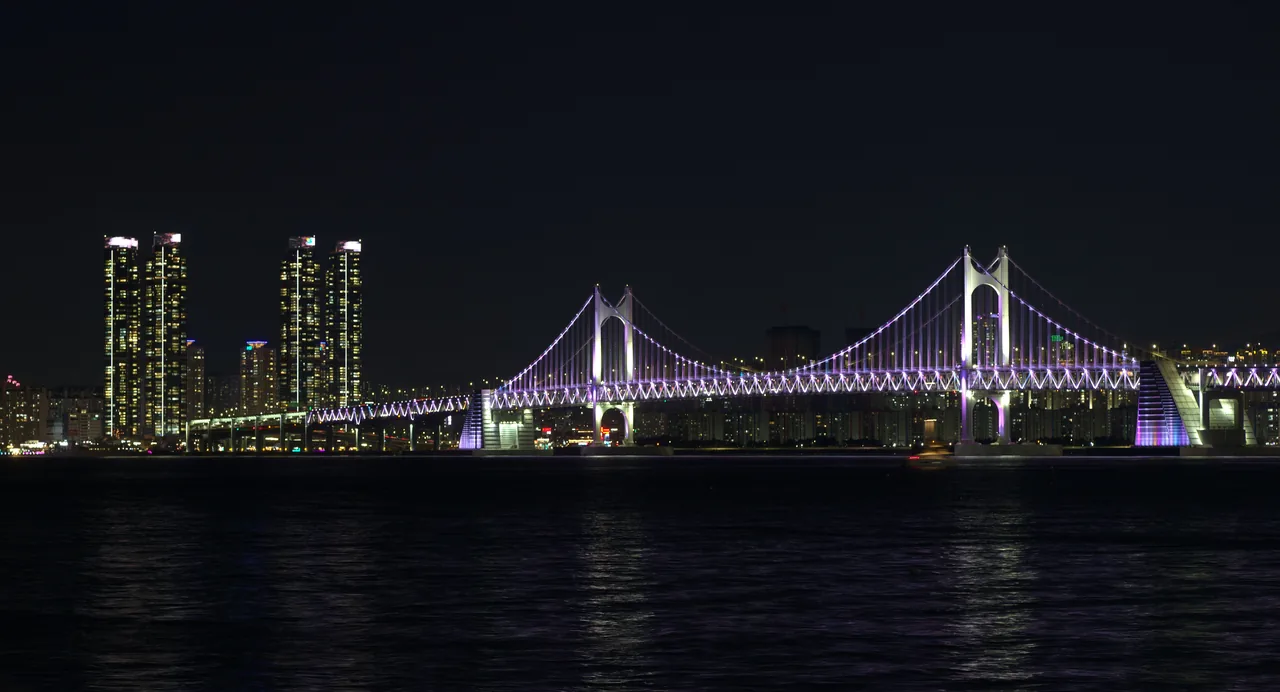
Marine City and Gwangan Bridge light up after dark (Photo: Jeena Paradies, public domain)
5. Dongbaek Island and Nurimaru APEC House
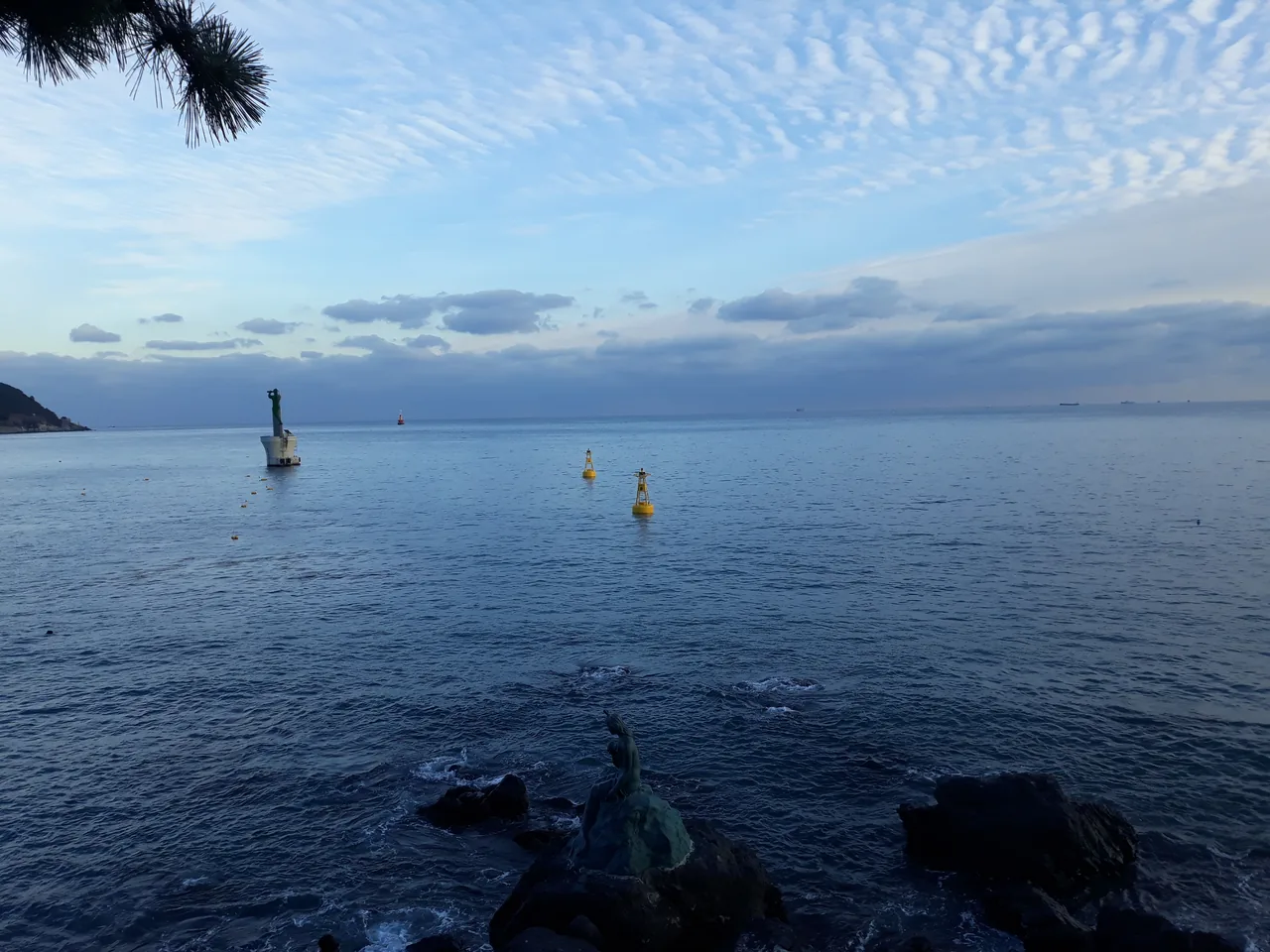
At the western end of the beach, Dongbaek Island offers a roughly one hour seaside loop and a free architectural landmark. Despite the name it is now connected to the mainland, so you simply walk on. The shaded trail winds past camellia trees and sea pines, with a lighthouse, a mermaid statue and a rock carving of the name “Haeundae” attributed to the scholar Choe Chi-won.
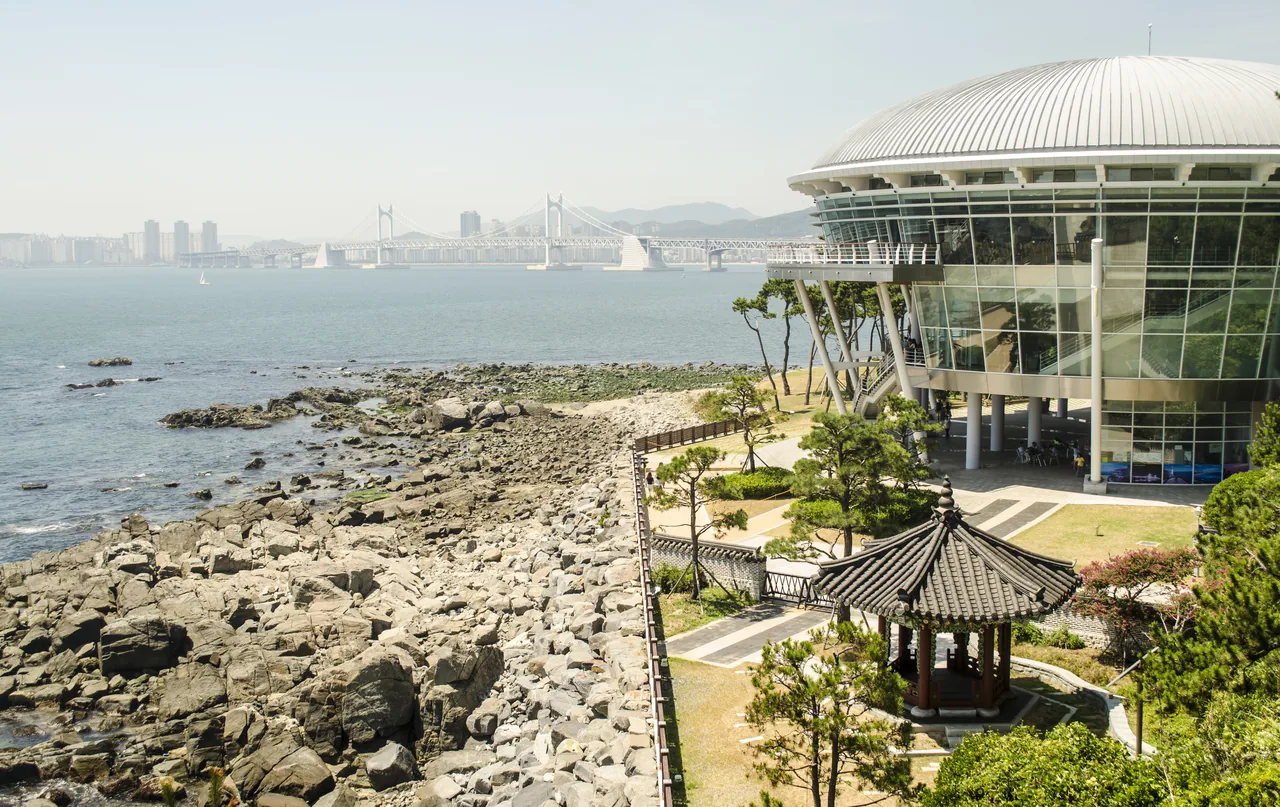
The headline sight is Nurimaru APEC House, the venue that hosted the 2005 APEC leaders’ summit and later the 2019 ASEAN-Korea meeting. It reinterprets a traditional Korean pavilion in modern form: three floors under a rounded, titanium coated roof, wrapped in glass for sweeping ocean views. Entry is free.
On Dongbaek Island
What to expect
Coastal loop
About 1 hour, mostly flat, sea views throughout
Nurimaru APEC House
Free entry, modern pavilion, panoramic windows
Best views
Gwangan Bridge, Oryukdo islets and Dalmaji hill in one sweep
Time it for sunset. The west facing tip of the island catches a strong sunset and an easy transition into the Marine City night view just across the water.
6. Blue Line Park: the Sky Capsule and Beach Train
Built on a former coastal railway, Blue Line Park runs the Sky Capsule and the Beach Train between Mipo, Cheongsapo and Songjeong, and it is one of the most popular things to do right next to Haeundae. The four person Sky Capsule glides 2.3 km at 7 to 10 m above the shore in a private pod, taking about 30 minutes one way. The Beach Train runs the full 4.8 km route and is sold as a separate ticket.
Sky Capsule (one way, per capsule)
Price
1 to 2 people
₩40,000
3 people
₩45,000
4 people
₩50,000
The Sky Capsule starts running around 8:30, the Beach Train from about 9:30. The last Sky Capsule from Mipo varies by season, roughly 20:30 in July and August, 19:30 in May, June and September, 18:30 in March, April and October, and 18:00 from November to February. The Beach Train runs about an hour later than the Sky Capsule, so the last beach train is roughly 21:30 in summer. Popular slots sell out early.
Prefer to walk? The Greenrailway path along the same route is a free, scenic alternative, passing the Daritdol observatory and the Cheongsapo coast.
Booking ahead is strongly recommended, and the official site can be awkward with foreign cards, so reserving in advance saves time at the gate.
Nurimaru APEC House at the tip of Dongbaek Island (Photo: StephNurnberg, CC BY 2.0)
7. Marine City and The Bay 101: the night view
Haeundae has one of Korea’s best skyline night views, and the place to take it in is The Bay 101 looking across to Marine City. Marine City is a cluster of high rise towers built on reclaimed land at the eastern edge of the bay, a frequent filming location and an icon of Busan after dark.
The Bay 101 sits at the entrance to Dongbaek Island, a waterfront complex of pubs and cafes known for fish and chips with a view. At night the Marine City towers light up and reflect off the calm water of the marina, a scene locals proudly compare to Hong Kong. It is free to stand and look, and it doubles as the disembarkation point for yacht tours.
For a closer look at the skyline, a sunset yacht cruise departs from The Bay 101 and glides out across the bay just as the Marine City towers begin to light up.
If you plan to visit two or three paid attractions in a day, such as BUSAN X the SKY, the Blue Line Park and the aquarium, it is worth checking whether a Visit Busan Pass bundles them more cheaply than buying each ticket separately.
Eat fresh seafood at Haeundae Market and go cafe hopping in Haeridan-gil, both within walking distance of the sand. Haeundae Market is a covered traditional market and food alley running off Gunam-ro, packed with sliced raw fish (hoe), grilled hagfish, seed hotteok (sweet pancakes), fish cake and milmyeon (cold wheat noodles).
Haeridan-gil is the trendy newtro district beside the old railway line, full of design led cafes, restaurants and bars that have become some of the most popular spots in the area. Ocean view cafes and dessert places are a particular strength.
Haeundae Market Raw fish, grilled hagfish, fish cake, seed hotteok. Bring cash and be ready to point and gesture.
Haeridan-gil Stylish cafes, craft drinks and small restaurants in a converted railside neighbourhood.
Raw fish (hoe) Order at a market stall with a chojip (sauce house) nearby, or at a seafront restaurant.
Tip for popular spots: well known restaurants can have long waits, so be flexible with timing or aim for an early or late table.
A calm winter sunrise, the quieter face of Haeundae (Photo: H. Y. Shin, CC BY 4.0)
10. Getting here and around
The simplest route is Metro Line 2 to Haeundae Station, then Exit 3 or 5 and a 5 to 10 minute walk. Transfer there from Busan Station or the Seomyeon hub on the metro network.
Light rail to Sasang, then Line 2 to Haeundae (about 1 hour)
Marine City / Blue Line Park
From Haeundae Station by local bus, taxi or on foot
Cards and apps: get a rechargeable transit card (Cashbee or T-money) for buses and the metro, and use the Kakao T app to hail taxis.
Parking warning: in peak summer the public car parks fill up and traffic is heavy, so public transport is strongly recommended over driving.
11. Where to stay: Busan’s top hotel district
Haeundae and Marine City form Busan’s prime hotel zone, with a dense cluster of ocean view luxury hotels and resorts. This is the first choice for families, couples and anyone wanting a stay focused resort base, with big names lining the waterfront and skyline.
Prices climb further on summer weekends and peak dates. For the best views, look for rooms facing the Marine City or Dalmaji side.
Book early: rooms sell out roughly a month ahead for peak summer and weekends. Off season weekdays, by contrast, can drop to nearly half price.
Practical tips: drop bags in the coin lockers at Haeundae Station, keep your day to the eastern Haeundae side rather than bouncing back and forth to the western districts like Gamcheon or Nampo, and save the best night views for Dongbaek Island, The Bay 101 and Marine City.
🏨 In Haeundae the gap between a sea view and no view is big — compare on your datesSee on Trip.com →See on Agoda →See on Expedia →Affiliate link — we may earn a commission at no extra cost to you.
Take Busan Metro Line 2 to Haeundae Station and leave by Exit 3 or 5, then walk 5 to 10 minutes to the sand. You can transfer to Line 2 from Busan Station or Seomyeon. From Gimhae Airport, take the light rail to Sasang and switch to Line 2, about an hour in total.
Q. When does the swimming season open?
In 2026 the official season runs from June 26 to September 15. Lifeguards are on duty during this window and the water sits at about 24 to 28 C, staying warm into early September. Outside these dates the beach is still open for walking, but swimming is at your own risk.
Q. What is there to do on the beach itself?
Swim in summer, walk the 1.5 km promenade year round, and catch the sunrise at the Mipo end, which is especially good in winter. The sand is clean and coarse, so it brushes off easily, and cafes, restaurants and an open air event plaza sit right behind the shore.
Q. How much is the Sky Capsule and should I book?
A one way Sky Capsule capsule costs ₩40,000 for 1 to 2 people, ₩45,000 for 3 and ₩50,000 for 4. Popular time slots sell out early and the official site can be tricky with foreign cards, so booking ahead is recommended. The Beach Train is a separate, cheaper ticket.
Q. Are Dongbaek Island and Nurimaru worth it?
Yes. Dongbaek Island is a relaxed one hour seaside loop with pines, a lighthouse and great views of Gwangan Bridge and Oryukdo. At its tip, Nurimaru APEC House, the 2005 APEC summit venue, is free to enter and offers panoramic ocean views, making it an easy add on to the beach.
Q. Where are the best night views?
The Bay 101 at the entrance to Dongbaek Island is the classic spot, looking across to the lit up Marine City towers reflected in the marina. Pair it with the Gwangan Bridge view from Dongbaek Island or nearby Gwangalli. It is free, and a small tripod helps at blue hour.
Q. What can I combine with Haeundae in a day?
Within easy reach are BUSAN X the SKY observation deck, the SEA LIFE Busan Aquarium beneath the beach, the scenic Dalmaji-gil and Moontan Road, and the quieter Songjeong Beach at the end of the Blue Line route. Two or three of these make a comfortable full day.
Q. Can I visit without a car?
Absolutely. Metro Line 2 drops you a short walk from the sand, and everything (the island, Sky Capsule, Marine City and food streets) is walkable or a short bus or taxi away. Get a Cashbee or T-money transit card and use Kakao T for taxis. In peak season public transport is far easier than driving.
Q. When is the best time to visit?
For swimming, come during the June to September season, ideally avoiding the late July to mid August peak crowds. For walks, photography and night views, the beach is rewarding all year, and off season weekdays are calm and far cheaper for hotels.
Q. Where should I stay near Haeundae?
Haeundae and Marine City are Busan’s top hotel district, dense with ocean view hotels and resorts. Budget guesthouses start around ₩40,000, mid-range hotels run ₩80,000 to ₩150,000, and luxury sea facing rooms ₩180,000 and up. Book about a month ahead for peak summer and weekends.