
Stand-Up Paddleboarding at Gwangalli: A Beginner’s Guide
Gwangalli is Busan’s calm-water playground and Korea’s most popular spot to stand-up paddleboard — a sheltered bay with the Gwangan Bridge filling the horizon, so every paddle comes with a postcard backdrop. A basic lesson plus free paddle costs from around ₩11,000–40,000, runs in basic English, and most first-timers are gliding within minutes. Here’s everything: how a session works, real 2026 prices, sunrise vs sunset, SUP yoga on the water, how to get there and the smartest way to book.
- Yes, you can paddleboard in Busan — and Gwangalli Beach is the easiest place to start: a calm, sheltered bay with gentle water, framed by the Gwangan Bridge. It’s Korea’s headline SUP zone, beginner-friendly enough that most people are paddling around within minutes of a short lesson.
- Prices start low — a 60-minute board rental at the Gwangalli Marine Leisure Centre runs from about ₩11,000, while a guided lesson-plus-free-paddle package with a surf school is roughly ₩32,000–40,000, board and basic English instruction included.
- Sunrise, midday or sunset — paddle the glassy dawn water, a warm afternoon, or the famous golden-hour session with the bridge lighting up. SUP yoga runs on weekends from early May to mid-November (beach yoga 9am, on-the-water yoga 11am).
- Getting there is easy — Metro Line 2 to Gwangan Station, then about a 10-minute walk to the beach. The SUP zone sits in the middle of the sand, with showers and lockers at the operators.
- No experience or gear needed — operators provide the board, paddle, life vest and a quick safety briefing. Just bring swimwear, sunscreen and a towel. Book ahead for summer weekends, when slots fill fast.
Calm water, the Gwangan Bridge backdrop and gear plus English instruction included — the best sunrise and sunset slots fill fast. Secure yours:🛶 Book a Gwangalli SUP session · Klook🛶 Book a Gwangalli SUP session · KKday* affiliate link
1. Can you really paddleboard at Gwangalli Beach?
2. Gwangalli SUP at a glance
3. Why Gwangalli is perfect for beginners
4. What a SUP session is actually like
5. Prices & what’s included
6. How to book & which operator to pick
7. SUP yoga: sunrise on the water
8. Sunrise, day or sunset? Best time & season
9. How to get to the Gwangalli SUP zone
10. What to wear & bring
11. Safety & paddle etiquette
12. Beyond SUP: a Gwangalli day
13. Other Busan water sports — and is SUP worth it?
Most visitors come to Gwangalli for the view — the wide arc of sand, the cafes and the Gwangan Bridge glowing across the bay at night. What far fewer realise is that the same sheltered water is Korea’s most popular place to learn stand-up paddleboarding. Because the bay is calm and protected, with none of the dumping shore-break of a surf beach, it’s about as gentle an introduction to a board as you’ll find anywhere — and the Gwangan Bridge sitting right on the horizon means your very first wobbly paddle doubles as one of the best photos of your trip. You don’t need any experience, any gear, or much Korean: a short briefing has most people standing and gliding within minutes, the operators supply everything, and the instructors get by in friendly basic English. This is the complete beginner’s playbook for SUP at Gwangalli — exactly how a session works, what it really costs in 2026, whether to paddle at sunrise, midday or sunset, the weekend SUP-yoga classes that float you out onto the water, what to wear, the safety basics, how to get there without a car, and the smartest way to book a summer slot before it sells out. Plan the rest of your trip with our complete Busan Travel Guide.
1. Can you really paddleboard at Gwangalli Beach?
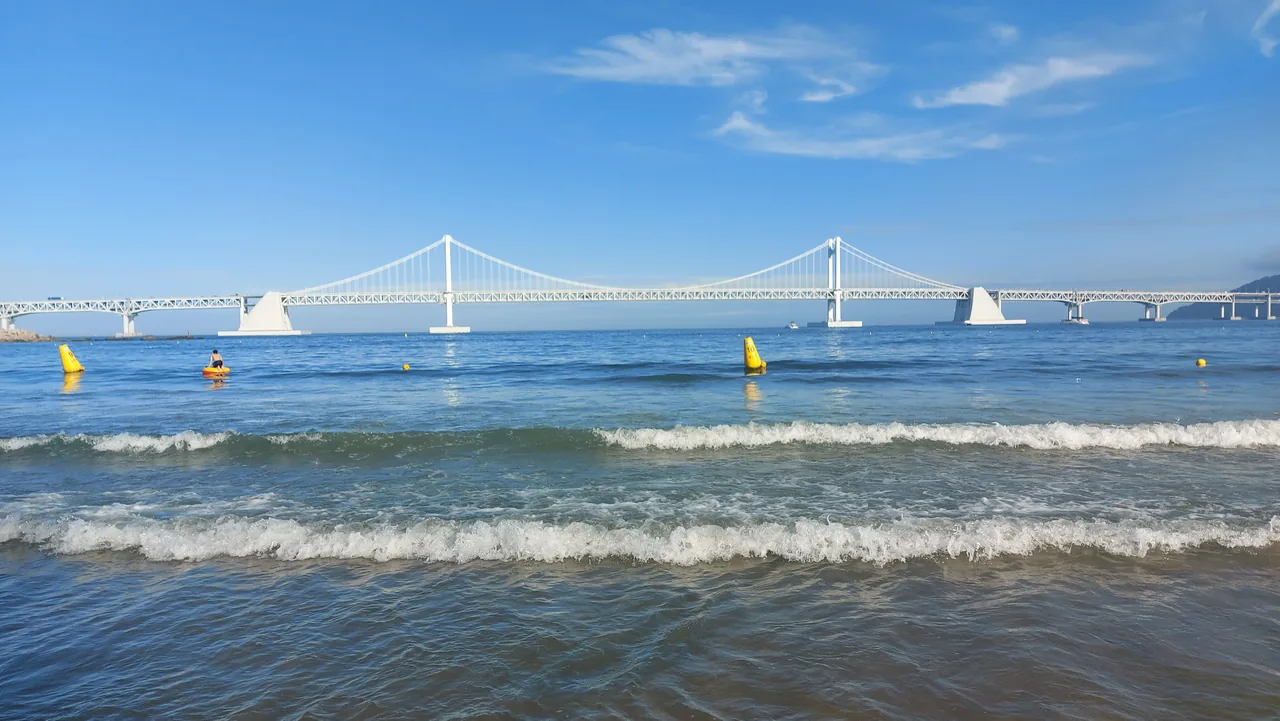
Yes — Gwangalli Beach is Korea’s most popular and beginner-friendly spot for stand-up paddleboarding (SUP). The bay is calm and sheltered, the water is gentle, and the Gwangan Bridge sits right on the horizon, so it’s both the easiest place to learn and the most photogenic. Most first-timers are paddling within minutes of a short briefing.
Gwangalli isn’t a surf beach — and for SUP, that’s exactly the point. Where Songjeong gets rolling waves for surfers, Gwangalli is a wide, protected bay with flat, glassy water for much of the day. That calm is what makes it ideal for stand-up paddleboarding: you can find your balance, kneel up, then stand, without waves knocking you off. There’s a dedicated SUP zone in the middle of the beach, a marine leisure centre and surf schools renting boards by the hour, and a steady stream of beginners out paddling all summer long.
- Calm, sheltered water: the bay protects the inside from big waves, so the surface is flat and forgiving — the opposite of a heavy surf break.
- The Gwangan Bridge backdrop: the 7.4km bridge fills the horizon, so the classic “me, my board and the bridge” shot is the default souvenir.
- Everything’s right there: a marine leisure centre and several surf schools rent boards, run lessons, and have life vests, lockers and showers steps from the sand.
2. Gwangalli SUP at a glance
Everything you need on one screen — the where, when and how much.
| Details | |
|---|---|
| Where | Gwangalli Beach, Suyeong-gu, Busan — the SUP zone is mid-beach, facing the Gwangan Bridge |
| Why here | Calm, sheltered bay + the Gwangan Bridge backdrop = Korea’s most popular, beginner-friendly SUP spot |
| Board rental | From ~₩11,000 / 60 min at the Marine Leisure Centre (incl. a 5–10 min how-to) |
| Lesson + free paddle | ~₩32,000–40,000 with a surf school — ~30-min basics then free paddling, board & vest included |
| SUP yoga | Weekends, early May–mid-Nov: beach yoga 9am, on-the-water yoga 11am (~2 hrs) |
| Best time | Sunrise (glassy) · midday (warmest) · sunset (golden hour + bridge lights); season ~May–Nov |
| Getting there | Metro Line 2 → Gwangan Station, ~10-min walk to the beach |
| Bring | Swimwear, sunscreen, a towel — board, paddle, life vest & briefing all provided |
| Book ahead? | Yes for summer weekends, sunset slots and SUP yoga — they fill fast🛶 Book online: Klook · KKday (affiliate link) |
3. Why Gwangalli is perfect for beginners
Gwangalli does half the work for you — the sheltered bay gives you the flat, calm water that makes standing up easy, and the scenery makes the photos unforgettable.
- Flat, protected water: the bay shelters the inside from the swell, so most of the day the surface is calm and glassy — ideal for finding your balance on a wide, stable beginner board.
- A wide, stable board: SUP boards are big and buoyant, so you start kneeling, then rise to your feet when you’re ready. Falling just means a soft splash into shallow, gentle water.
- A quick, gentle learning curve: after a 5–30 minute briefing on stance, paddling and turning, most people are gliding around on their own. It’s far quicker to “get” than surfing.
- The bridge backdrop: paddling toward the Gwangan Bridge is the whole appeal — beginners spend as much time taking photos as paddling, and that’s exactly the point.
- Everything provided, English OK: boards, paddles, life vests, lockers and showers are all on the beach, and the ASI-certified instructors guide visitors in basic English.
4. What a SUP session is actually like
A Gwangalli SUP session is short to learn and long to enjoy — a quick briefing, then as much paddling as your time slot allows, with the bridge in front of you the whole way.
- Check in & kit upAt the marine leisure centre or surf school you’re given a board, paddle and a life vest, and shown how to carry and handle the board on the sand.
- The briefingA short safety and technique briefing — how to stand, hold the paddle, stroke and turn. At the leisure centre it’s a quick 5–10 minutes; a full lesson runs around 30 minutes with more coaching.
- Onto the water (on your knees first)You paddle out kneeling on the wide, stable board, get a feel for the balance on the calm water, then rise to your feet when you’re comfortable.
- Free paddle & photosThis is the fun part — glide around the calm bay toward the Gwangan Bridge, take the obligatory photos, and practise turning and balancing at your own pace for the rest of your slot.
- Rinse offBack on the sand, rinse the salt off at the operator’s showers, then walk straight into Gwangalli’s cafe-and-restaurant strip.
5. Prices & what’s included
SUP at Gwangalli is genuinely cheap to try: a basic rental costs about the price of a coffee-and-cake, and a full guided session is still excellent value.
| What | Typical price | Includes |
|---|---|---|
| Board rental (Marine Leisure Centre) | From ~₩11,000 / 60 min | Board, paddle, life vest + a 5–10 min how-to; open year-round |
| Lesson + free paddle (surf school) | ~₩32,000–40,000 | ~30-min basics then free paddling; board, paddle, vest included |
| Sunrise / sunset SUP | ~₩40,000 | Timed golden-hour session — the bridge at its most photogenic |
| SUP yoga (weekends, in season) | Varies by class | ~2 hrs; beach yoga 9am or on-the-water yoga 11am |
| Wetsuit / shorty hire | ~₩10,000 | Optional, useful outside high summer |
The cheapest way to simply try SUP is an hour’s board rental at the Gwangalli Marine Leisure Centre. If you’d rather have proper coaching, English support and a guaranteed slot — especially for a sunrise or sunset session — a lesson-plus-paddle package booked online through Klook or KKday is the easy choice, and locks the price in.
6. How to book & which operator to pick
Gwangalli has a marine leisure centre and a cluster of surf schools, all renting boards and running SUP lessons. They’re broadly similar, so pick by what you want — a cheap quick paddle, a guided lesson, or a timed sunrise/sunset slot.
- Gwangalli Marine Leisure Centre — the budget, walk-up option: board rental from about ₩11,000 for 60 minutes with a quick how-to, open all year. Also runs kayaks, jet boats and sunset yacht trips from the same spot. Map
- Surf Marine — a long-running Gwangalli SUP operator whose instructors include national paddleboard team members; runs guided sunrise, daytime and sunset sessions with gear and basic English support. Map
- Crazy Surfers — an ASI-certified school with years of experience, offering SUP lessons, rentals and the weekend SUP-yoga programme. Map
The smartest way to book: reserve online in advance through Klook or KKday. You get English support, instant confirmation and a guaranteed slot — which matters most for sunrise, sunset and summer-weekend sessions that sell out. You simply show your voucher to the operator on the beach.
Sunrise, sunset and summer-weekend slots (and SUP yoga) sell out — book ahead to lock your time. Compare both platforms:🛶 Book a Gwangalli SUP session · Klook🛶 Book a Gwangalli SUP session · KKday* affiliate link
7. SUP yoga: sunrise on the water
Gwangalli’s signature experience is SUP yoga — a yoga class held on a floating paddleboard, with the Gwangan Bridge as your studio wall. It’s a genuinely special, only-in-Busan way to start the day.
- When: weekends only, from early May to mid-November (the 2026 season runs roughly 3 May–16 November). Each class is about two hours.
- Two formats: beach SUP yoga at 9am (poses on a board on the sand — the gentle intro) and on-the-water SUP yoga at 11am (the board floating on the calm bay, which is where the magic, and the occasional splash, happens).
- Who runs it: the Crazy Surfers SUP school operates the Gwangalli SUP-yoga programme; arrive about 20 minutes early to get set up.
- Who it’s for: all levels — the calm, sheltered water makes the floating class far more approachable than it sounds, and falling in is simply part of the fun.
8. Sunrise, day or sunset? Best time & season
Gwangalli paddles beautifully at three very different times of day, and each has its own appeal. Here’s how to choose, plus the honest seasonal picture.
| Time / season | What it’s like | Best for |
|---|---|---|
| Sunrise | The calmest, glassiest water of the day, soft light, near-empty bay — the most serene paddle | Calm beginners, photographers, SUP yoga |
| Midday | Warmest water and air, liveliest beach scene, easiest to walk up — but busiest and brightest | Warmth, spontaneity, families |
| Sunset | Golden-hour light then the Gwangan Bridge lighting up — the most atmospheric and photogenic session | Couples, photos, the bucket-list paddle |
| Season | SUP runs roughly May–November; high summer is warmest and busiest; the Marine Leisure Centre operates year-round with a wetsuit | Warm water = Jun–Sep; calmer crowds = May, Oct |
For pure conditions, sunrise wins — the bay is at its flattest and quietest. For the photo and the romance, sunset is unbeatable, especially in summer when the bridge light show and weekend drone show follow. High summer (June–August) gives the warmest water but the biggest crowds; May and October are quieter with comfortable conditions.
9. How to get to the Gwangalli SUP zone
Gwangalli is easy to reach by metro, and the SUP zone is right in the middle of the beach.
- Metro (simplest): take Metro Line 2 to Gwangan Station, leave by Exit 3 or 5, and walk about 10 minutes down to the beach. Geumnyeonsan Station (also Line 2) is a similar walk from the other end.
- The SUP zone: the marine leisure centre and surf schools cluster around the middle of the beachfront, facing the bridge — just head for the boards and flags on the sand.
- From Haeundae: Gwangalli is only a few minutes away — one metro hop (via Line 2) or a short taxi, making it an easy add-on to a Haeundae day.
- Taxi: quick and cheap from anywhere central if you’re short on time or carrying a change of clothes.
10. What to wear & bring
The operator provides the SUP gear — you just need a few basics and to expect to get a bit wet.
- Swimwear + quick-dry layer: wear swimwear with a rashguard or quick-dry top and shorts. You may stay mostly dry on calm days, but always plan to get splashed.
- Reef-safe sunscreen: you’re out on open, reflective water — apply a strong, water-resistant SPF before you paddle and reapply, especially midday.
- A towel and change of clothes: operators have showers; bring a towel and dry clothes for the cafe afterwards.
- A dry bag or waterproof phone pouch: essential if you want those mid-bay bridge photos without risking your phone.
- Outside high summer: a wetsuit or shorty (often hireable for around ₩10,000) keeps you comfortable in spring and autumn water.
11. Safety & paddle etiquette
SUP at Gwangalli is low-risk, but it’s open water shared with other beach users, so a few rules keep everyone safe.
- Always wear the life vest: it’s provided for a reason — keep it on even if you’re a strong swimmer.
- Stay in the SUP zone: paddle within the designated area and the operator’s guidance — don’t drift into swimming areas or out toward the shipping lane under the bridge.
- Mind the wind: an offshore breeze can push a light board out faster than you expect. If the wind picks up, head back in early; on a windy day, ask the operator before going out.
- Fall flat and away: if you lose balance, fall to the side away from your board into the water, not onto the board. Hold or stay near your board — it floats and is your best flotation.
- Give way and go slow near others: the calm bay gets busy in summer with swimmers and other paddlers — keep your distance and a steady, predictable line.
12. Beyond SUP: a Gwangalli day
Gwangalli is one of Busan’s best hang-out beaches, so build a whole day around your paddle.
- The cafe & restaurant strip: the streets behind the sand are wall-to-wall cafes, bars and raw-fish (hoe) restaurants — the classic post-paddle move is brunch or coffee with salty hair.
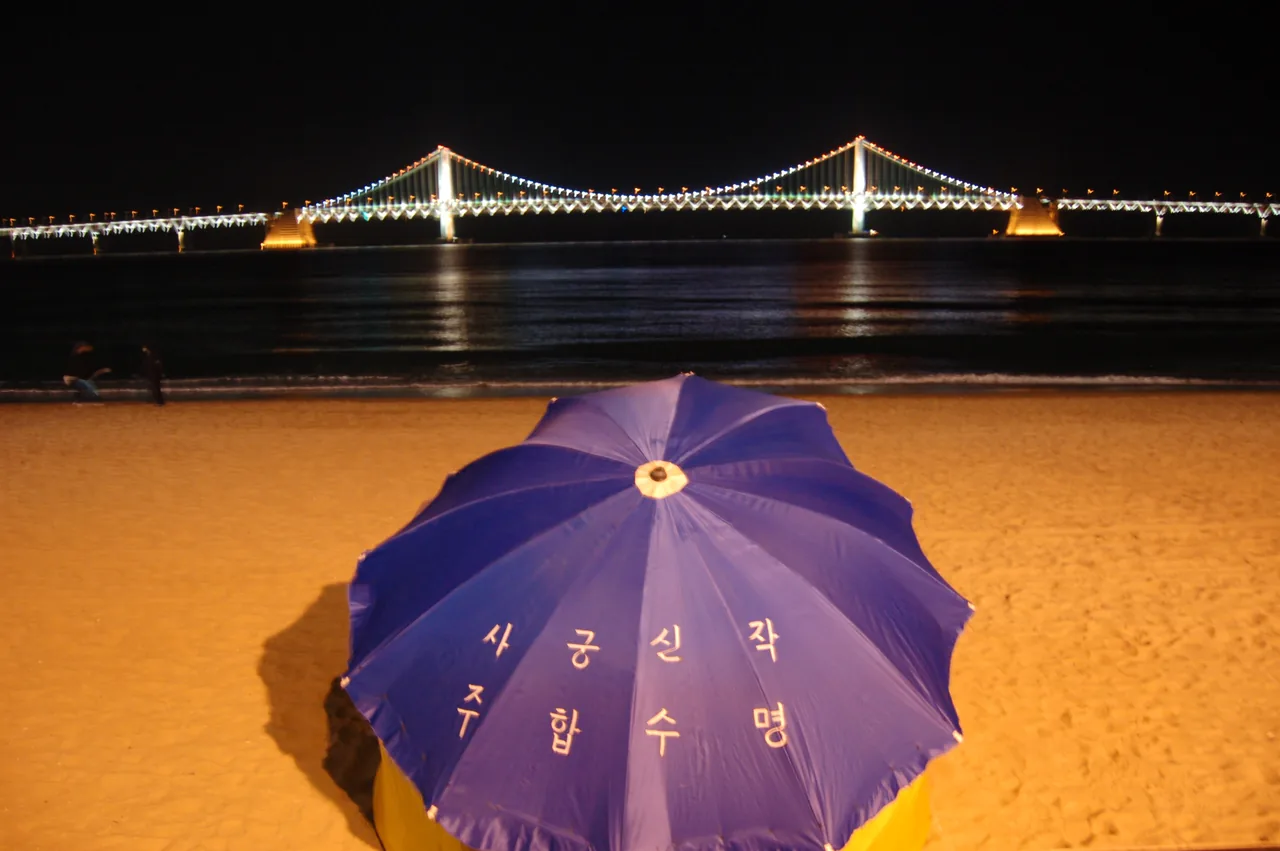
- The Gwangan Bridge at night: the bay’s defining sight, lit up after dark — a sunset SUP that rolls into bridge-lights-and-dinner is the perfect evening.
- The weekend drone show: Gwangalli’s famous drone light show runs over the bay on weekend nights — time a sunset paddle to catch it afterwards.
- More water sports: the same marine leisure centre runs kayaks, jet boats and sunset yacht cruises if you want more on the water.
- Nightlife: Gwangalli is one of Busan’s top nightlife strips once the sun’s down — see our Busan nightlife guide.
13. Other Busan water sports — and is SUP worth it?
SUP is the gentlest way onto the water in Busan, but it’s not the only one — and at these prices, it’s an easy yes.
- SUP at Gwangalli: the calmest, most beginner-friendly, most scenic — start here. From ~₩11,000 to rent, ~₩32,000–40,000 for a guided session.
- Surfing at Songjeong: if you want actual waves, Songjeong is Korea’s surf capital, a short hop up the eastern coast — see our Songjeong surfing guide.
- Kayak, jet boat & sunset yacht: all run from the Gwangalli Marine Leisure Centre and the bay — more speed, or a relaxed cruise under the bridge.
- Where else to SUP: Dadaepo and the quieter eastern beaches also have paddleboarding, but Gwangalli has the most operators, the easiest access and the bridge backdrop.
Is it worth it? For most visitors, absolutely. SUP at Gwangalli is cheap (from ~₩11,000), quick to learn, suits all ages, and delivers a genuinely unique memory — gliding across a calm bay with the Gwangan Bridge in front of you. A sample summer plan: sunrise or sunset paddle (~₩40,000) → showers → coffee or dinner on the cafe strip → bridge lights. Total spend for one: about the cost of a nice meal, for one of the most memorable hours of a Busan trip. Slot it into our 2-night-3-day or 4-day itineraries, and check the Busan budget guide for how it fits a daily budget.
🎡Things to Do38
🍜Food7
🏨Where to Stay3
🚇Getting Around7
🧭Travel Tips14
📌More3
🧭All-Korea essentials29
Gwangalli SUP — FAQ
🛶 Next: plan the rest of your trip with all our Busan guides →