
Busan Activities: 25+ Ways to Surf, Sail, Luge & Hike
Busan isn’t a city you just look at — it’s Korea’s outdoor playground, where you can surf at sunrise, hike a mountain fortress by noon, sail under a lit-up bridge at sunset and scream along with 20,000 baseball fans by night. This is the complete, fact-checked guide to every activity worth doing: water sports, the luge, hikes and coastal walks, templestay, hot springs, prices and exactly how to book each one.
- Busan is Korea’s activity capital — the only city where serious surf, an 800-metre fortress mountain, a yacht-filled bay and the country’s loudest baseball stadium sit on one metro network.
- Top five: learn to surf at Songjeong (~₩65,000 with board and wetsuit), ride a sunset yacht past Gwangan Bridge, race the Skyline Luge in Gijang (3 rides ₩30,000), hike the Geumjeong fortress wall, and join a Lotte Giants game at Sajik Stadium.
- Water sports run all summer — SUP and SUP yoga on Gwangalli, kayaks, jet boats and banana boats at the marine sports centre; surfing runs year-round with thicker wetsuits.
- On land: the Igidae coastal walk (4.7 km of cliffs, free), the Oryukdo Skywalk (free), templestay at Beomeosa, and Korea’s best urban hot springs when your legs give out.
- Most activities are bookable online a few days ahead — the seasonal calendar and booking guide below shows what’s good when and what it costs.
1. What activities is Busan known for?
2. Busan’s top 10 activities at a glance
3. Surfing at Songjeong: Korea’s best beginner break
4. SUP, kayak & the Gwangalli water playground
5. Yacht tours & cruises: Busan from the water
6. Skyline Luge: gravity racing above the Osiria coast
7. Sky-high rides: capsules, cable cars & observation decks
8. Baseball at Sajik: the world’s biggest karaoke room
9. Hiking Geumjeongsan: the fortress in the clouds
10. Coastal walks: Igidae, Oryukdo & the Galmaetgil
11. Templestay at Beomeosa: sleep in a 1,300-year-old temple
12. Hot springs & jjimjilbang: recovery as an activity
13. Rainy-day & indoor activities
14. What to do when: the activity calendar
15. Booking, language & practical tips
16. What it costs — and three ready-made active days
Most Busan guides tell you what to look at. This one tells you what to do. Busan is built for it like nowhere else in Korea: a surf town inside the city limits, a national-geopark coastline you can walk for hours, an 801-metre mountain ringed by the country’s longest fortress wall, a bay full of yachts that sail straight under the Gwangan Bridge light show, a gravity luge above a theme-park coast, and a baseball stadium that locals call the world’s biggest karaoke room. We’ve done the lot — wiped out at Songjeong on a February morning, made it up Godangbong in summer heat, lost our voices at Sajik — and this guide is the complete playbook: every activity worth your time, what each one actually costs, when the season runs, how to book it without speaking Korean, and how to stack two or three into a single perfect day. Strap in. Plan the rest of the trip with our complete Busan Travel Guide.
1. What activities is Busan known for?
Busan is Korea’s outdoor and adventure capital — known for surfing at Songjeong Beach, yacht tours under Gwangan Bridge, the Skyline Luge, fortress-wall hiking on Geumjeongsan, cliff-coast walks, and the loudest baseball crowd in the country at Sajik Stadium. Seoul has the palaces; Busan has the playground.
What makes it work is geography: a 300-metre-deep band where mountains fall straight into a warm, surfable sea, all threaded by one metro line.
- In the water: surf, SUP, kayak, jet boat, yacht and cruise — six beaches, each with its own speciality.
- On land: a fortress mountain, a national-geopark cliff coast, a gravity luge, hot springs and a templestay among 1,300-year-old halls.
- In the stands: Korean baseball — less a sport, more a three-hour singalong with fried chicken.
2. Busan’s top 10 activities at a glance
The shortlist — every headline activity, its season, real prices and where it happens.
| Activity | Where | Season | Typical cost |
|---|---|---|---|
| Surfing lesson | Songjeong Beach | All year (wetsuits in winter) | ~₩65,000 incl. board & suit |
| Sunset/night yacht tour | Haeundae · Suyeongman Marina | All year | ~₩30,000–60,000 (≈US$22+) |
| Skyline Luge | Osiria, Gijang | All year, no closing days | 3 rides ₩30,000 / 5 rides ₩36,000 |
| SUP / SUP yoga | Gwangalli SUP Zone | May–Nov (yoga weekends) | Rental/lesson from ~₩30,000 |
| Lotte Giants baseball | Sajik Stadium | Late Mar–Oct | From ~₩10,000–20,000 |
| Geumjeongsan fortress hike | Beomeosa → Godangbong | All year (best spring/autumn) | Free |
| Igidae coastal walk | Yongho-dong cliffs | All year | Free (4.7 km, 2–3 h) |
| Oryukdo Skywalk | Yongho-dong | All year (09:00–18/19:00) | Free |
| Templestay | Beomeosa Temple | All year | Programme-based |
| Sky Capsule & coastal rides | Blueline Park, Songdo cable car | All year | ₩7,000–39,000 |
3. Surfing at Songjeong: Korea’s best beginner break
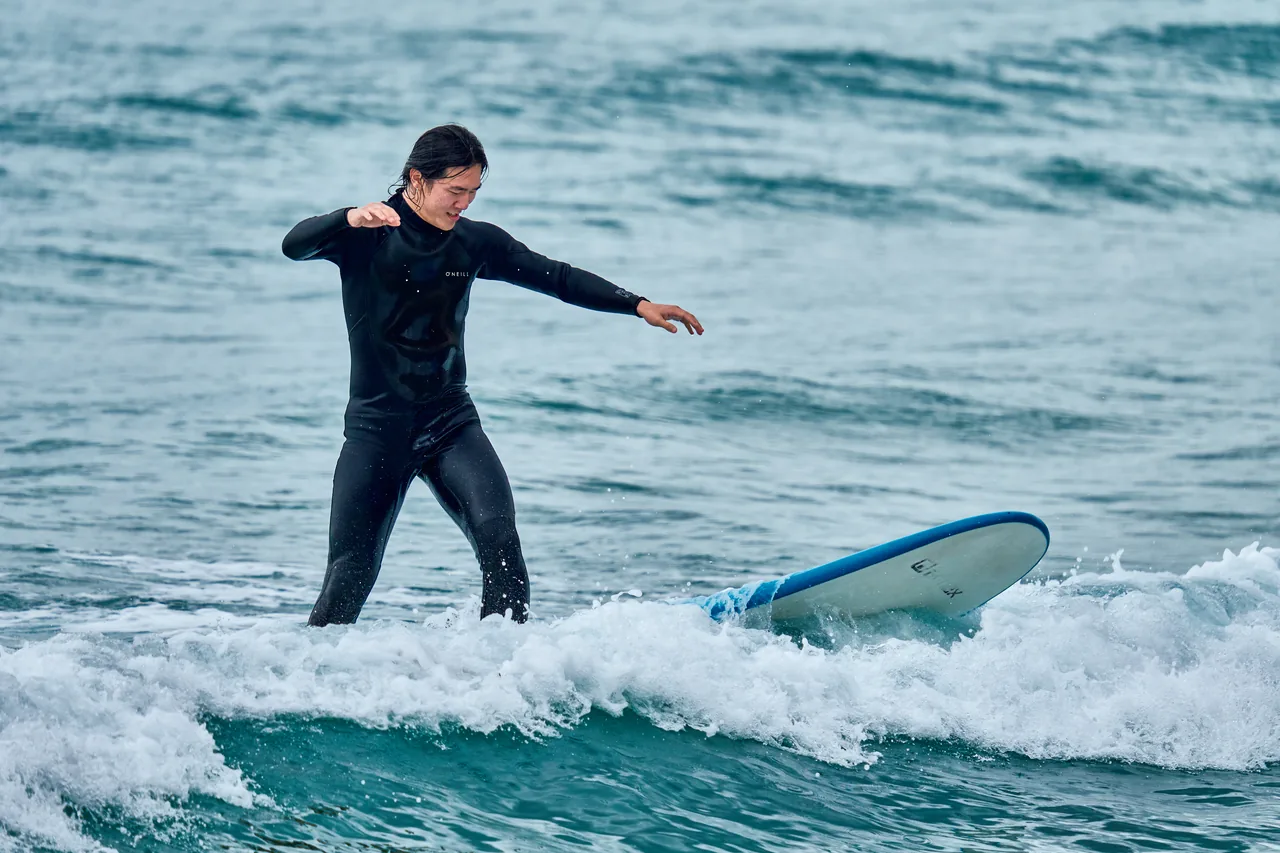
Songjeong Beach is Korea’s most beginner-friendly surf town — gentle, consistent waves over a shallow sandy bottom, ringed by surf shops where a first lesson costs about ₩65,000 with everything included. It’s one metro-and-bus hop past Haeundae, and it has real year-round surf culture: wetsuited regulars are out even in February.
- The lesson: intro packages typically run about two hours of instruction plus unlimited free-surf time the same day, with board and wetsuit included (~₩65,000 at the big schools). You’ll stand up on day one — the waves here are forgiving.
- The shops: Songjeong’s beachfront is lined with established schools — Surfholic (the biggest, seconds from the sand), Daysurf, Uncle Surf, Surf Road among them — most with showers, lockers and rental quivers.
- When: genuinely year-round. Summer brings warm water and crowds; autumn typhoon swells bring the best waves; winter is quiet, cold and addictive (thick suits provided).
4. SUP, kayak & the Gwangalli water playground
Gwangalli is Busan’s flat-water playground — home to Korea’s flagship SUP Zone, where you paddle with the Gwangan Bridge filling the horizon. If surfing feels like too much commitment, this is the gateway drug.
- SUP: rentals and lessons run from spring through autumn right off the beach — the classic photo is you, the board, and the bridge. Beginners are paddling comfortably within half an hour.
- SUP yoga: weekend sessions run from early May to mid-November at the SUP Zone — beach yoga from 9 am, on-water classes from 11 am. Falling in is part of the fun.
- The marine sports centre: the Gwangalli Marine Leports Centre runs kayaks, jet boats, banana boats and small-craft sailing — the cheap-thrills counter for groups.
- Calmer waters: kayaking and canoeing also run on the Nakdong River estuary on the city’s west side — flat, scenic and bird-filled.
5. Yacht tours & cruises: Busan from the water
Seeing the city from the water is Busan’s signature splurge that isn’t actually a splurge — a one-hour public yacht cruise past Marine City and under the Gwangan Bridge starts around ₩30,000. At night, many boats time it so the bridge light show erupts overhead.
- The classic route: boats leave from Suyeongman Yacht Marina and The Bay 101 in Haeundae, loop past Marine City’s skyline, Dongbaek Island and the Gwangan Bridge, and return in roughly 50–60 minutes. Public (shared) tickets are cheap; private charters scale up from there.
- Day vs night: daytime gives you the skyline and sea air; sunset and night sailings get the bridge lights — and several operators run small fireworks events off the stern on evening departures.
- The river option: the Haeundae River Cruise runs flat-water day, sunset and night sailings on the Suyeong River — the calm-stomach alternative with the same bridge views.
6. Skyline Luge: gravity racing above the Osiria coast
The Skyline Luge in Gijang is Busan’s purest hit of silly fun — a gravity kart you steer down winding tracks, with a chairlift ride back up and sea views the whole way. It runs every single day of the year.
- The numbers: luge-and-skyride packages cost ₩30,000 for 3 rides, ₩33,000 for 4 or ₩36,000 for 5 (children ₩12,000); each run takes 5–7 minutes and most people are done — grinning — in 60 to 90 minutes. Open 10:00–18:00, ziplines from 11:00, no closing days.
- Who it’s for: everyone. Kids ride with parents, teenagers race each other, and adults who came “for the children” buy the five-ride pass for themselves.
- The location bonus: it sits in the Osiria tourism complex next to Lotte World Adventure Busan and a stop from the Blueline coastal rail — three of the city’s biggest fun-days stack into one outing.
7. Sky-high rides: capsules, cable cars & observation decks
Busan turned its coastline into a series of rides — and they’re attractions in their own right, each covered in depth on this site.
- Haeundae Blueline Park: the four-seat Sky Capsules and the Beach Train run along the old coastal rail between Mipo and Songjeong — the city’s most photogenic 30 minutes (₩7,000–39,000 depending on ride).
- Songdo Marine Cable Car: 1.62 km over open sea, with crystal-floor cabins, to a clifftop park — pair it with the coastal skywalk below.
- BUSAN X the SKY: Korea’s second-highest observation deck, on the 98th–100th floors above Haeundae Beach (~₩27,000, cheaper online).
- Oryukdo Skywalk: a free glass horseshoe hanging off the cliff where Busan’s coast officially divides the East Sea from the South Sea — overshoe covers on, nerves optional (09:00–19:00 summer, –18:00 winter).
8. Baseball at Sajik: the world’s biggest karaoke room
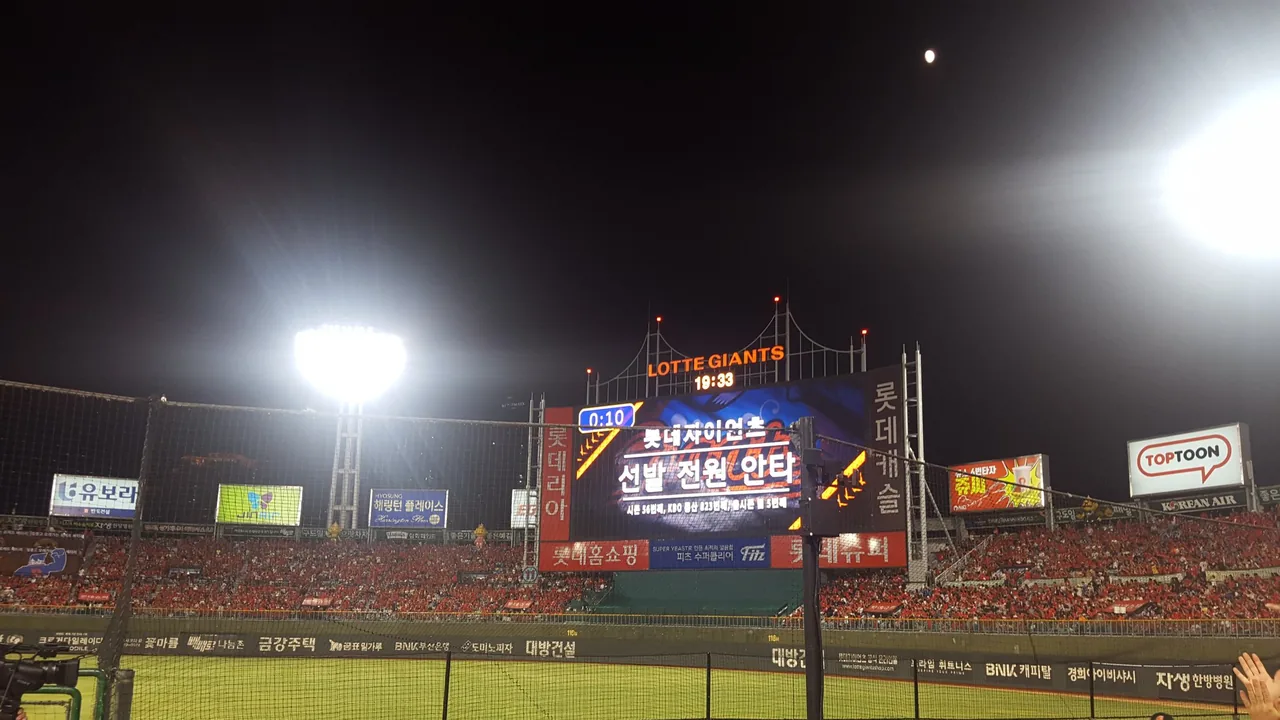
A Lotte Giants home game at Sajik Stadium is the single best cultural activity in Busan — three hours of chants, orange plastic-bag hats, fried chicken and 20,000 people singing in unison. Koreans call Sajik “the world’s biggest karaoke room,” and they are not exaggerating.
- The season: KBO baseball runs from late March to October, with home stands every couple of weeks. Evening games (usually 18:30) are the atmosphere pick.
- Tickets: sold via the Lotte Giants official site and app, opening two to three weeks before each game; weekday games rarely sell out, big weekend series do. Prices start around ₩10,000–20,000 for general seating — the first-base side puts you inside the home cheering section.
- The rituals: newspaper hats during the seventh inning, the orange rubbish-bag headwear (you’ll see), chant leaders on platforms, and the crowd singing every batter’s personal song. You don’t need to understand baseball — you need to stand up when everyone stands up.
- Food rules: outside food is welcome — locals bring fried chicken boxes and convenience-store beer. Eating your way through the game is the point.
9. Hiking Geumjeongsan: the fortress in the clouds
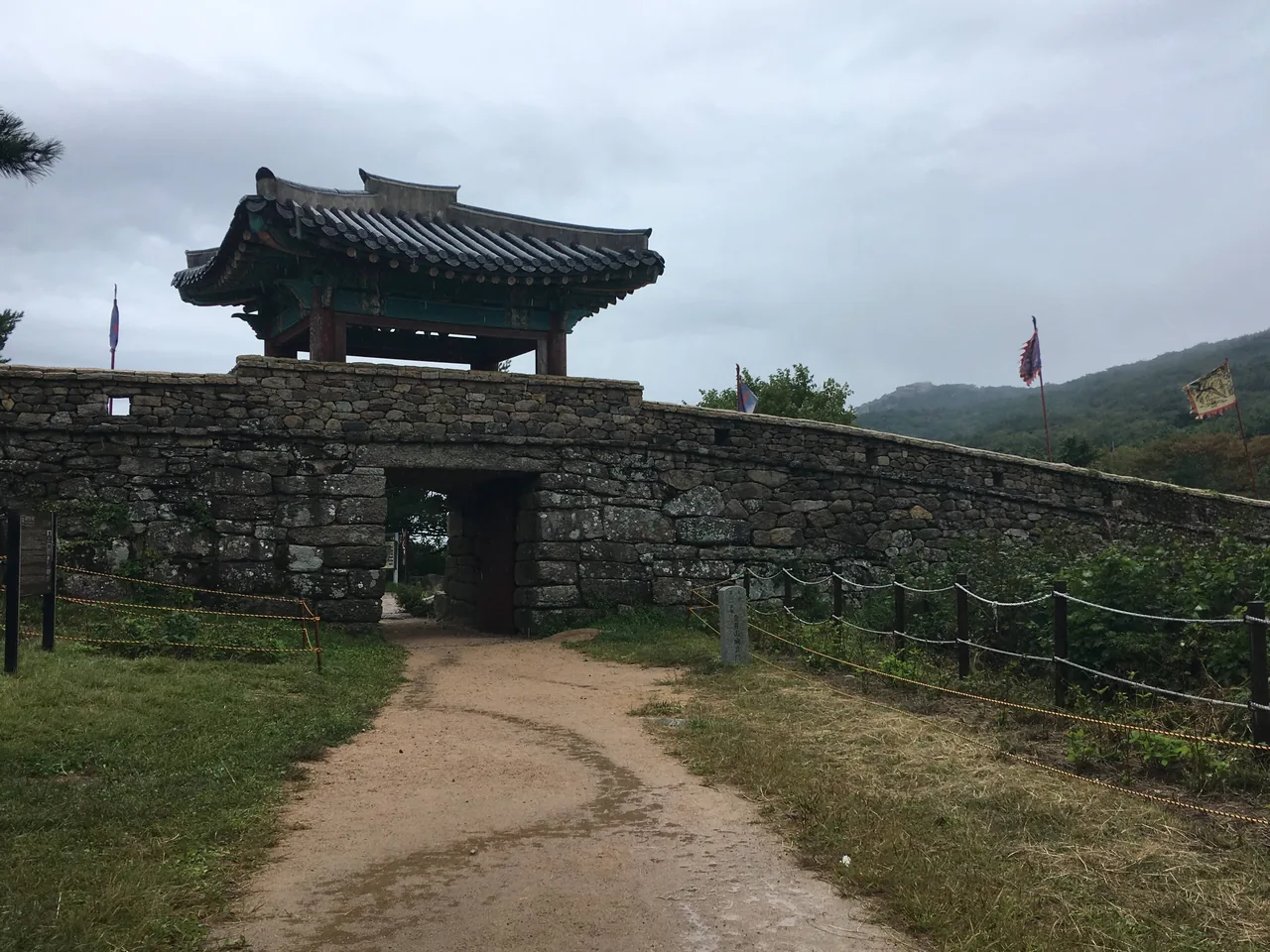
Geumjeongsan (801.5 m) is Busan’s rooftop — a granite massif ringed by Geumjeongsanseong, the longest fortress wall in Korea, with the 1,300-year-old Beomeosa Temple on its flank. It’s a real mountain hike that starts from a metro station.
- The classic route: Beomeosa Temple → North Gate → the Geumsaem rock spring → Godangbong summit. Expect dirt trail, wooden decks and some rocky, stair-railed sections near the top; allow a half day return.
- The wall: the fortress (Historic Site No. 215) runs along the ridgeline with four restored gates — walking gate to gate on the grassy ramparts is the most atmospheric stretch.
- The reward: village restaurants on the mountain’s plateau famously serve black-goat barbecue and makgeolli to descending hikers — hiking in Korea is a culinary sport.
- Easier option: a cable car runs up the Dongnae side, letting you ridge-walk without the full climb.
10. Coastal walks: Igidae, Oryukdo & the Galmaetgil
Busan’s cliff coast is a national geopark you can walk for free — and the Igidae section is the best urban coastal trail in Korea.
- Igidae Coastal Walk: 4.7 km of cliff path, suspension bridges and rock shelves between Oryukdo and Gwangan, taking 2–3 hours — with the Marine City skyline floating across the water the entire way. Free, open all the time, properly dramatic in a swell.
- Oryukdo Skywalk: the glass overlook at the trail’s southern end (free, overshoes provided) stares down at the five-six islets that gave it its name — start or finish your walk here.
- The Galmaetgil: Busan’s signature long-distance trail network rings the entire city — 21 sections of coast, river and ridge. The Haeundae Dalmaji and Taejongdae sections are the other greatest hits.
- Dongbaekseom: the easy one — a flat 30-minute loop around Haeundae’s camellia island past the APEC house and lighthouse.
11. Templestay at Beomeosa: sleep in a 1,300-year-old temple
Beomeosa Temple runs a year-round templestay — the deepest cultural immersion available in Busan, from tea ceremony to pre-dawn chanting on the slopes of Geumjeongsan.
- What you do: programmes mix temple tours, baru gongyang (formal monastic meals), tea ceremony with a monk, seated meditation, the 108 prostrations, mala-bead making and evening chanting; some include a sunrise hike toward Godangbong.
- What it’s like: simple shared rooms, temple food, lights out early, woken by the moktak before dawn — a genuine reset, not a hotel with incense.
- Booking: reserve ahead through the official templestay programme; English-friendly sessions run regularly given Beomeosa’s size.
12. Hot springs & jjimjilbang: recovery as an activity
In Busan, the bathhouse is not a rest day — it’s on the itinerary. This is Korea’s great hot-spring city, and soaking is the traditional finish to every hike, surf and game.
- Dongnae Oncheon: the city’s historic hot-spring district has drawn bathers for centuries — its grand bathhouses pump genuinely thermal water, and the neighbourhood pairs perfectly with the Geumjeongsan descent and a Dongnae pajeon.
- Spa Land Centum City: the modern cathedral of Korean bathing — 22 baths fed by two natural springs and a dozen themed sauna rooms inside the Shinsegae complex. Foreigners famously make pilgrimages just for this.
- The jjimjilbang ritual: scrub, soak, sweat in the kiln rooms, sleep on a heated floor in cotton pyjamas, repeat — with sikhye rice punch and baked eggs between rounds.
13. Rainy-day & indoor activities
Rain doesn’t cancel Busan — it just moves the activity indoors, and the indoor bench is deep.
- Spa Land or a grand jjimjilbang: the all-day rain plan locals actually use.
- SEA LIFE Busan Aquarium: under Haeundae Beach, with its 80-metre shark tunnel.
- Shinsegae Centum City: the world’s largest department store — with an ice rink, cinema and food halls — next to the Busan Cinema Center‘s architecture.
- Climbing, bowling, VR and noraebang: Seomyeon’s entertainment blocks stack screen golf, escape rooms, VR arcades and karaoke into every other building — the Korean urban indoor canon.
14. What to do when: the activity calendar
Every activity has a season — time it right and you get smaller crowds and better conditions.
| Season | Best activities | Why now |
|---|---|---|
| Spring (Mar–May) | Geumjeongsan & Igidae hikes, baseball opening weeks, first SUP sessions | Cherry blossom on the trails, mild temperatures, the Giants’ season starts in late March. |
| Summer (Jun–Aug) | Surfing, SUP, jet boats, night yacht tours, evening baseball | Warm water and long evenings — book water sports early in the day to beat heat and crowds. |
| Autumn (Sep–Nov) | Typhoon-swell surfing, fortress hiking, fireworks-festival cruises | The best waves and clearest skies of the year; foliage hits the mountain in late October. |
| Winter (Dec–Feb) | Hot springs, luge (open all year), quiet-water surfing, X the Sky sunsets | Crisp visibility, empty line-ups, and the bathhouse season at its most deserved. |
15. Booking, language & practical tips
Almost everything here can be booked online in English a few days ahead — and half of it needs no booking at all.
- Book ahead (online): yacht tours (evening slots first), surf lessons in July–August, templestay, and the luge on weekends. Platforms like Klook and KKday carry most of them with English support and instant confirmation.
- Just turn up: hikes, coastal walks, the Skywalk, SUP rental on weekdays, hot springs and the aquarium.
- Baseball: tickets open 2–3 weeks out on the Giants’ official site/app — weekday games are an easy walk-up, big weekend series are not.
- What to bring: water shoes for rocky entries, sunscreen (the sea reflects), a dry bag for boat trips, and trail shoes for Igidae and the fortress.
- Safety basics: summer beaches have lifeguard zones and flags — respect them; typhoon-watch days close water sports; the luge and yacht operators provide all safety gear.
16. What it costs — and three ready-made active days
Busan’s activities are absurdly good value: most of the best things here cost either nothing or less than a mid-range dinner.
- Free tier: Igidae walk, Oryukdo Skywalk, Geumjeongsan hike, Dongbaekseom loop, beach swimming in season.
- Under ₩40,000: luge (₩30,000–36,000), public yacht cruise (~₩30,000+), SUP session, baseball ticket plus chicken, X the Sky, jjimjilbang day.
- The splurges: surf lesson (~₩65,000 all-in), private yacht charter, scuba diving (~₩104,000/hr instruction).
Three ready-made days:
- Coast day: sunrise surf at Songjeong → Blueline Sky Capsule → late lunch at Haeundae Market → sunset yacht from The Bay 101.
- Mountain day: Beomeosa at opening → fortress hike to Godangbong → black-goat-and-makgeolli lunch → Dongnae hot springs → Dongnae pajeon dinner.
- Family day: Skyline Luge at 10:00 → Lotte World Busan afternoon → evening Giants game (in season) or Gwangalli beach night.