
Boryeong Mud Festival 2026: The Complete Guide to Korea’s Wildest Summer Festival
Everything for the 29th Boryeong Mud Festival: 2026 dates and hours, the five ticketed zones, night shows, honest Seoul and Busan transport (there’s no KTX), what to eat, what to pack, where to stay, and what else is worth seeing near Daecheon Beach.
| Dates | 29th Boryeong Mud Festival: July 24 – August 9, 2026 (17 days) at Daecheon Beach. Weekdays 13:00–18:00, weekends 10:00–18:00, break 13:30–14:30. Extended hours (13:00–21:30) on opening day (July 24) and August 6. Mud zones closed August 5 for a safety inspection. |
|---|---|
| Tickets (2026) | General Zone adult: ₩12,000 weekday / ₩16,000 weekend. Family Zone: ₩11,000 weekday / ₩13,000 weekend. Both up ₩2,000 from 2025. Every ticket includes a ₩5,000 gift certificate. |
| Five zones | General Zone, Family Zone, Water Park Zone, the new dog-friendly Meong-deu Zone, and the Mud Cask Zone — spread across the Mud Expo Plaza and the Mud Plaza on Daecheon Beach. |
| Getting there from Seoul | No KTX runs to Daecheon. It’s Mugunghwa-ho or ITX-Maeum from Yongsan (~3 hr), or an express bus from Seoul Nambu Terminal or Central City. |
| From Busan | No direct bus — KTX/SRT to Cheonan-Asan (~1 hr 50 min), then transfer to the Janghang Line for Daecheon (~1 hr). Total roughly 3–4 hours; an overnight beats a day trip. |
| Weather | July averages ~25.7°C with the year’s highest humidity (83.8%) and rainfall. The monsoon usually breaks just before the festival opens, but sudden showers are common. |
| Book ahead | Weekend and show-night rooms near Daecheon Beach sell out — book accommodation 1–2 months ahead. |
1. What Is the Boryeong Mud Festival, and Why Is It So Famous?
2. When Is the 2026 Boryeong Mud Festival, and What Are the Hours?
3. How Much Are 2026 Boryeong Mud Festival Tickets?
4. What Can You Actually Do There? The Five Zones Explained
5. Is the Festival Better After Dark? Shows, Fireworks, and a Drone Light Show
6. How Do You Get to Boryeong From Seoul?
7. How Do You Get There From Busan, and From the Station to the Beach?
8. What to Eat Near the Festival
9. Should You Go Solo or Book a Guided Day Tour?
10. Where Should You Stay Near Daecheon Beach?
11. What Should You Pack for the Mud Festival?
12. What’s the Best Boryeong Mud Festival Souvenir?
13. Staying a Few More Days: Boryeong’s Nearby Sights
14. What’s the Weather Like in Boryeong in July, and What Should You Know Before You Go?
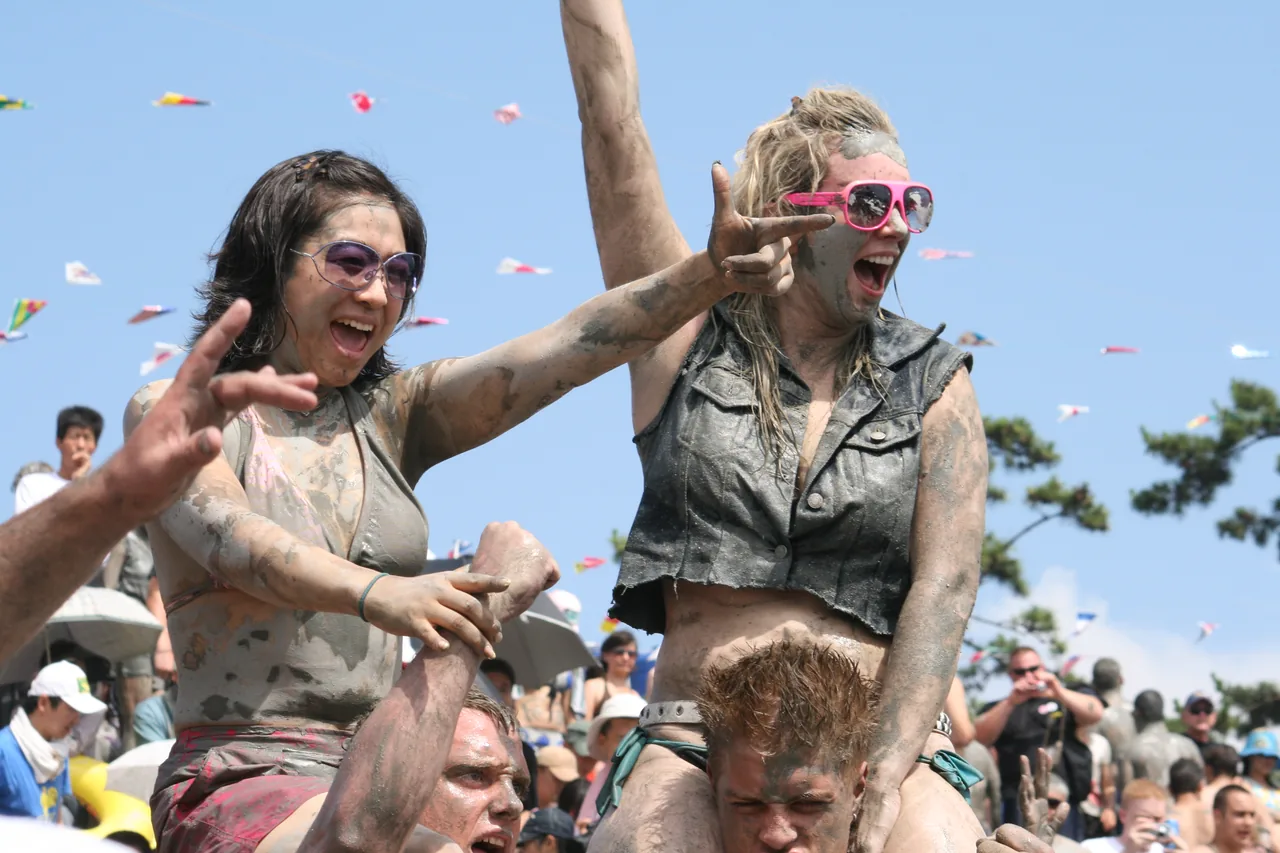
The Boryeong Mud Festival turns Daecheon Beach Map into a mud-covered playground for 17 days every summer, and in 2026 the 29th edition runs July 24 to August 9. It grew out of a four-day cosmetics promotion in 1998 into one of the South Korean regional festivals with the highest foreign attendance, complete with five separate mud zones, nightly concerts, and a drone light show over the beach. This guide breaks down exactly what 2026 tickets cost and include, what’s inside each of the five festival zones, how to actually get to Boryeong from Seoul or Busan (the KTX route some blogs mention doesn’t exist), what to eat around the festival grounds, what to pack, where to stay, and what else is worth a look if you turn this into a multi-day trip along the Chungnam coast.
1. What Is the Boryeong Mud Festival, and Why Is It So Famous?
The Boryeong Mud Festival is Daecheon Beach’s flagship summer event, built around mineral-rich tidal mud from the Boryeong coast, and it has grown into one of the South Korean regional festivals with the highest foreign-visitor turnout. It began small in 1998 as a marketing push for a homegrown cosmetics line and expanded, within a generation, into a 17-day event that regularly draws well over a million visitors.
The origin dates to 1994. Boryeong’s local economy had taken a hit after nearby coal mines closed under the government’s coal-industry rationalization policy, and then-mayor Park Sang-don was searching for a new economic angle when he reportedly drew inspiration from a scene in a film that used mud. That same year, the Korea Research Institute of Chemical Technology analyzed the mineral content of the tidal-flat mud along the Boryeong coast, and a partnership with Pacific Corporation — the company known today as Amorepacific — turned that research into actual cosmetics development. By June 1996, the first mud-based products went on sale: a mud pack, a cleanser, a shampoo, and a soap, marking Korea’s first domestically developed mud-based cosmetic ingredient line.
The first Boryeong Mud Festival ran July 16–19, 1998 — just four days on Daecheon Beach, staged mainly to promote those new products. It struck a nerve immediately and expanded fast in the years that followed. In 2006, “Boryeong Clay” was formally registered in the International Cosmetic Ingredient Dictionary (ICID), giving the local mud recognized status as an official cosmetic ingredient worldwide — a credential few regional festivals anywhere can claim.
How Big Is It, and Who’s Actually Coming?
Visitor counts swing considerably by year and by counting method, so treat any single figure as a snapshot rather than a stable baseline:
| Year | Total visitors | Foreign visitors |
|---|---|---|
| 2019 | ~1.4 million | ~388,000 (~27.7%) |
| 2024 (27th festival) | 1.65 million | ~80,000 (~5%) |
| 2025 (28th festival) | ~1.69 million | not confirmed |
Older figures — a widely repeated “2.2 million visitors in 2007” claim traces to a single uncorroborated source and isn’t used here. The safer takeaway: total attendance has stayed in the 1.4–1.7 million range in the years with reliable data, while the foreign share has swung anywhere from roughly 5% to nearly 28% depending on the year and how organizers counted.
The festival has also picked up formal government backing recently. Korea’s Ministry of Culture, Sports and Tourism and the Korea Tourism Organization selected it as a “Global Festival,” with three years of funding at roughly ₩800 million a year (about ₩2.4 billion total) aimed explicitly at more than doubling foreign attendance. Part of that plan includes a new direct shuttle from Incheon International Airport, reportedly four departures a day and around two and a half hours each way. That shuttle plan is confirmed at the policy level; the operator, exact stops, and ticketing details are best confirmed through the festival’s official channels closer to your travel date rather than assumed from this guide.
Ask around online and you’ll also hear about a “Mud Prison,” “mud wrestling,” and a “Mud King” contest — the attractions that arguably made this festival famous outside Korea in the first place, thanks to widely circulated 2008 AP photos and years of English-language travel blog coverage. Those attractions traditionally anchored the festival’s international reputation, but they don’t appear by name in the official 2025–2026 program listings, which favor newer names like “Mud Mob Performance” and “Color Mud Painting” instead. Whether that’s a rebrand of the same idea, a retired attraction, or something in between isn’t confirmed — so don’t plan your visit around finding a literal Mud Prison booth in 2026.
2. When Is the 2026 Boryeong Mud Festival, and What Are the Hours?
The 29th Boryeong Mud Festival runs July 24 (Friday) through August 9 (Sunday), 2026 — 17 days total — at Daecheon Beach. If you’re reading this close to publication, the festival opens in a matter of days, so lock in dates and transport before anything else.
Daily operating hours split between weekdays and weekends:
| Day | Hours |
|---|---|
| Weekdays (Mon–Thu) | 13:00–18:00 |
| Weekends (Fri–Sun) | 10:00–18:00 |
| Break time (daily) | 13:30–14:30 |
| Extended night hours | 13:00–21:30 on July 24 (opening day) and August 6 |
Some travel sites list very different date ranges for 2026 — “July 15 to August 15” and “July 17 to July 26” both circulate online, and both are confirmed errors. The dates above come from the festival’s official site (mudfestival.or.kr), cross-checked against Tourist Korea and multiple independent Korean tourism outlets, all of which agree on July 24–August 9.
If you’re planning a future trip instead, the festival follows a fairly consistent pattern: it typically opens on a Friday in the third or fourth week of July and runs 17 days.
| Year | Dates | Length |
|---|---|---|
| 2022 | July 16 – August 15 | 31 days — an outlier, co-hosted with an international expo |
| 2023 | July 21 – August 6 | 17 days |
| 2024 | July 19 – August 4 | 17 days |
| 2025 | July 25 – August 10 | 17 days |
| 2026 | July 24 – August 9 | 17 days |
Treat 2022 as the exception rather than the rule — every other recent edition, including 2026, sticks to the same 17-day format. If you’re trying to guess dates for a year not yet announced, “a Friday in the third or fourth week of July, running for 17 days” is a reasonable working assumption, though you should always confirm against the official site once dates are published.
3. How Much Are 2026 Boryeong Mud Festival Tickets?
A standard adult ticket for the General Zone costs ₩12,000 on weekdays and ₩16,000 on weekends in 2026 — both up ₩2,000 from 2025. Pricing splits by zone, age, day of week, and group size, so check the full table before you buy.
| Category | Weekday (Mon–Thu) | Weekend (Fri–Sun) |
|---|---|---|
| General Zone – Adult (19–64) | ₩12,000 | ₩16,000 |
| General Zone – Youth (11–18, 140cm+) | ₩11,000 | ₩14,000 |
| General Zone – Group 20+ (adult / youth, weekdays only) | ₩11,000 / ₩10,000 | — |
| Family Zone (guardian 19+ or child 3–12, same price) | ₩11,000 | ₩13,000 |
| Family Zone – Group 20+ | ₩9,000 | ₩13,000 |
What’s Included With Your Ticket
A paid ticket buys wristband access to your chosen zone (General, Family, or Water Park) for the day, plus a ₩5,000 Boryeong Love gift certificate that’s redeemable locally — effectively knocking a chunk off the price if you spend it in town. It does not automatically include the Mud Cask Zone: that one’s free if you’re already wearing a paid wristband from any of the other zones, or ₩3,000 as a standalone on-site purchase if that’s the only zone you want. Several discounts stack on top of the base prices above. Boryeong residents, adults 65 and older, holders of disability registration grades 1–3, and national merit recipients get a 30% discount. Weekday groups of 50 or more booked through a travel agency get 20% off. A 10% early-bird discount on Family Zone tickets was advertised on the festival’s English-language page for bookings made by June 15 — by the time you’re reading this close to the festival’s July 24 opening, that window has already closed.
Paying at the Gate vs. Booking Ahead
Given a festival drawing well over a million visitors across 17 days, on-site ticket booths at the entrance to each zone are the default way most visitors buy in, and nothing in the official pricing pages suggests gate purchases are restricted or capacity-limited by date. The now-closed Family Zone early-bird discount is evidence that some form of advance or online booking channel exists for at least part of the season — if you want to lock in a specific date or avoid a queue on a peak weekend, check the festival’s official site (mudfestival.or.kr) directly for whatever pre-sale option is live closer to your visit, since the exact online booking mechanics for 2026 aren’t detailed on the general information pages checked for this guide.
One more practical note: the festival runs on three ticketed price zones — the General Zone (which includes the mud run), the Family Zone, and the Water Park Zone — but five distinct experience zones overall once you count the Mud Cask Zone and the new dog-friendly Meong-deu Zone, both covered in full next.
4. What Can You Actually Do There? The Five Zones Explained
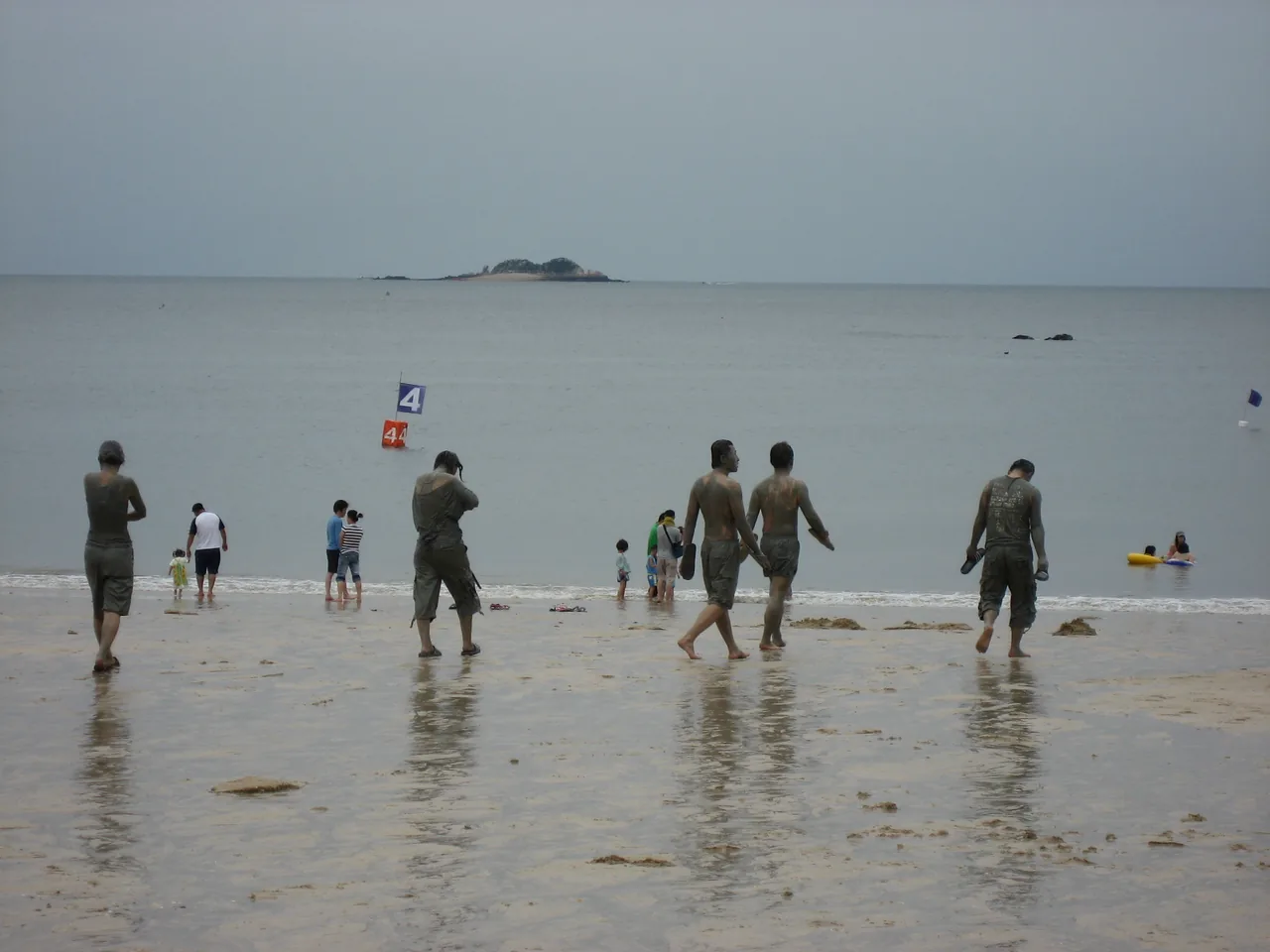
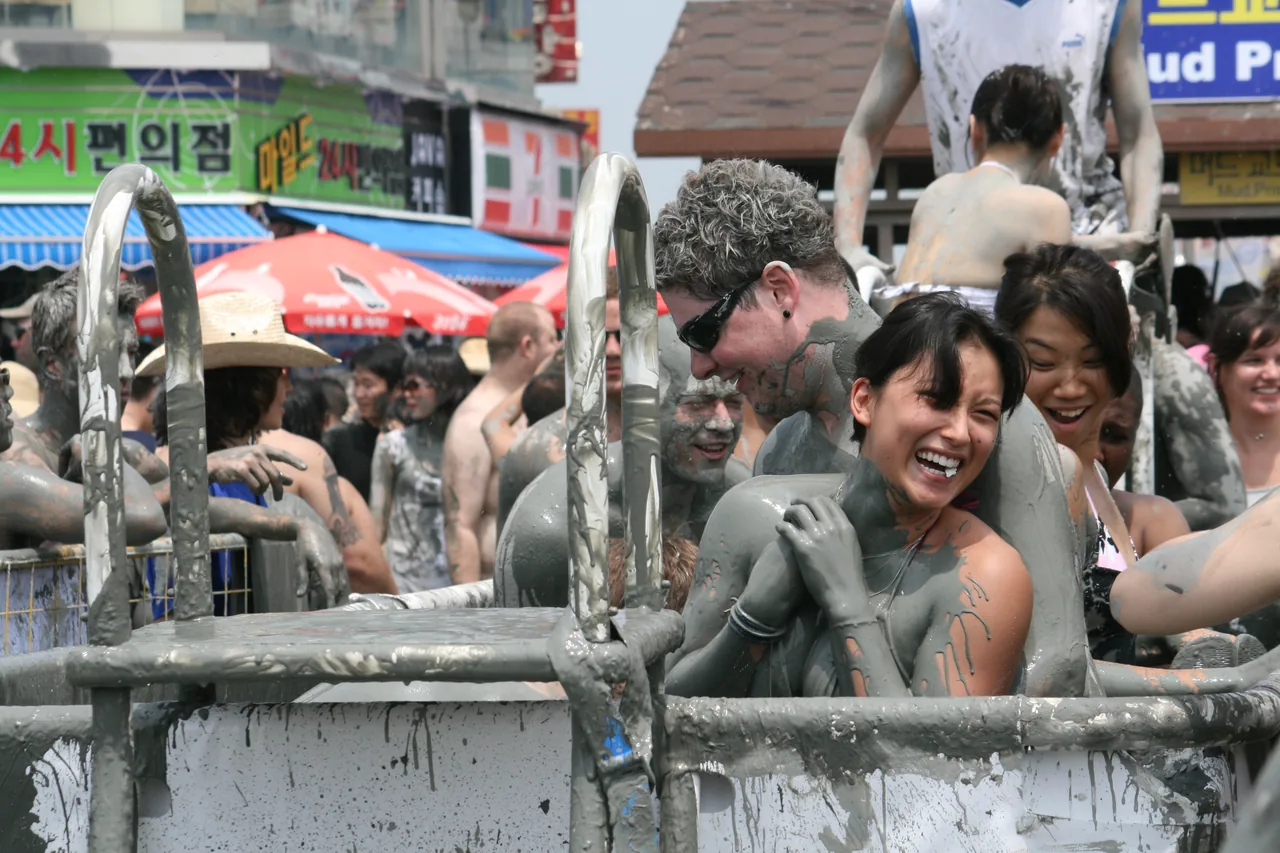
Daecheon Beach splits into five distinct experience zones for the festival — General, Family, Water Park, Meong-deu (dog-friendly), and Mud Cask — spread mainly across the Mud Expo Plaza and the smaller Mud Plaza. Most first-time visitors head straight for the General Zone, home to the festival’s signature open-air mud pool.
General Zone (Mud Expo Plaza)
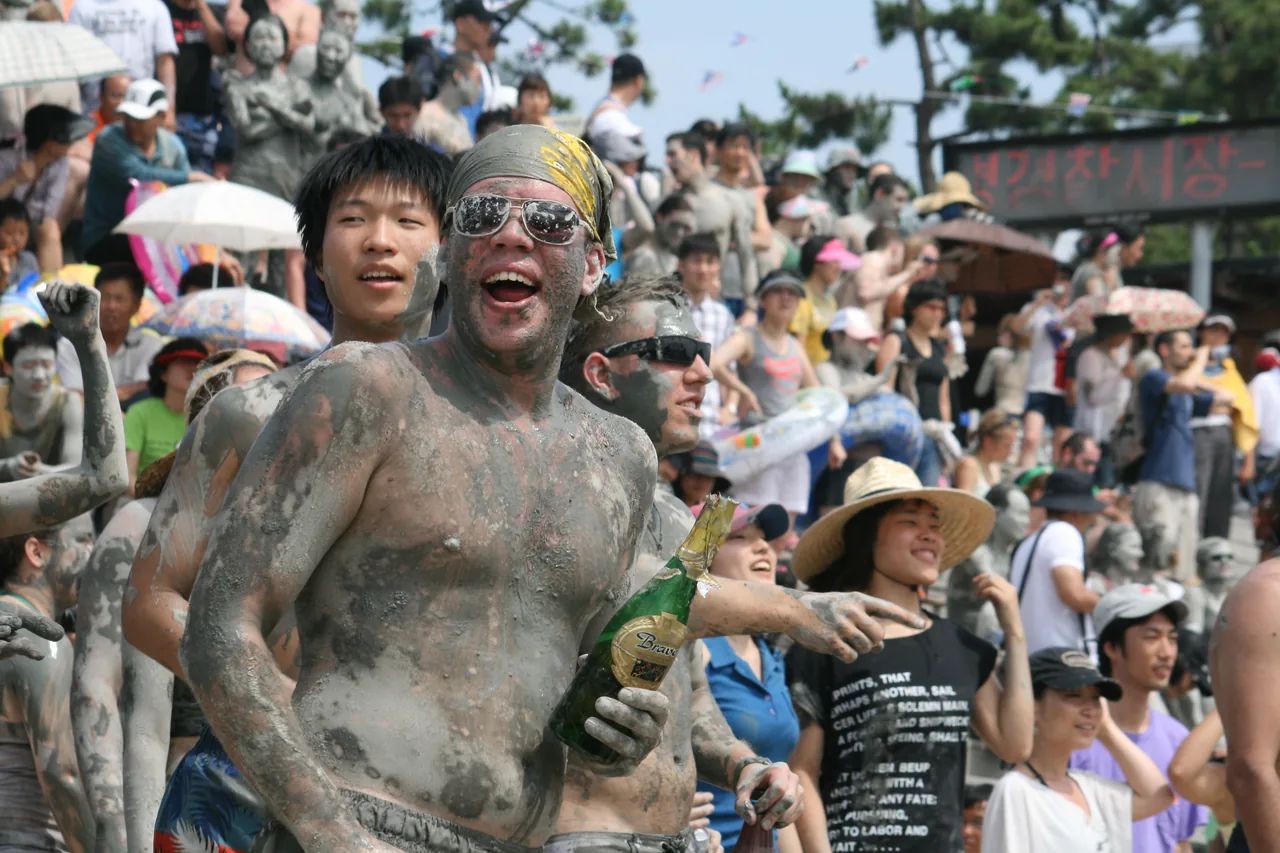
This is the zone in every photo you’ve seen of this festival: a large open mud pool, mud slides, a mud spray shower and mud fountain you can run through, plus the mud run obstacle course. It’s staged at the Mud Expo Plaza, the festival’s main experience ground, and also hosts the quieter add-ons — color mud body painting, a self mud massage station, and a mud beauty care zone for anyone who wants the skincare angle without the full-contact chaos of the main pool. After dark, this same footprint becomes the night mud zone, lit with LED lighting for a noticeably different atmosphere than the daytime version.
Family Zone
A scaled-down, gentler version of the mud pool sized for younger children and supervised by their guardians. Pricing treats a guardian (19+) and a child (3–12) as the same ticket category, which keeps things simple for a family group buying multiple tickets at once.
Water Park Zone
Standard water-park-style attractions set up alongside the beach — a way to cool off in a hot, humid July without necessarily going all-in on mud. Useful as a second-day option or a midday break between mud sessions.
Meong-deu Zone (new for 2026)
A dog-friendly mud experience area introduced for the 2026 edition — welcome news if you’re traveling with a pet and didn’t want to leave them out of the mud entirely. As a new addition, expect specifics on access rules and hours to firm up closer to opening; check the official site if you’re planning around it specifically.
Mud Cask Zone (Mud Plaza)
A separate, smaller area at the Mud Plaza built around barrel-style mud tubs you climb into individually rather than a shared open pool. It’s free if you’re already wearing a paid wristband from any of the three main zones, or ₩3,000 as a standalone on-site purchase if you only want this experience.
| Zone | Location | Best for |
|---|---|---|
| General Zone | Mud Expo Plaza | The full mud-pool, slide, and mud-run experience |
| Family Zone | Mud Expo Plaza | Guardians with children aged 3–12 |
| Water Park Zone | Daecheon Beach | Cooling off without a full mud commitment |
| Meong-deu Zone | Daecheon Beach (new 2026) | Travelers with a dog |
| Mud Cask Zone | Mud Plaza | A quicker, individual mud dip |
5. Is the Festival Better After Dark? Shows, Fireworks, and a Drone Light Show
Yes — the festival’s biggest performances are timed for evening and night, when the mud pools give way to concerts, a drone light show, and, on past editions, closing fireworks. If you can only attend at one time of day, plan around the night program rather than the afternoon mud session alone.
The night lineup runs deep, and it changes in character across the 17-day run:
- Drone light show over the beach
- Mud Mob Performance — a DJ-and-EDM set with mud water cannons firing into the crowd
- Mud on the Beach Night
- K-pop Super Live — the festival’s biggest concert night
- TV Chosun Super Concert — a trot (Korean retro-pop) lineup on closing night
- Mud Rock Festa and a K-Hip-hop Festival
- Boryeong Mud Song Festival and an 8090 Night Show (retro-themed)
- Open-stage and mud-busking slots for smaller acts scattered across the run
The Night to Build Your Trip Around: July 25
July 25 is the single biggest night of the whole festival, confirmed on the official schedule — not opening night, as some earlier write-ups (including an earlier draft of this guide) assumed. The lineup that day: a Black Eagles aerobatics display (the Republic of Korea Air Force’s air show team) over Daecheon Beach at 16:20, then K-pop Super Live at the Mud Expo Plaza special stage at 19:20, followed by the drone light show at 22:00. The announced K-pop lineup already includes acts like STAYC, CRAVITY, Wendy, and Koyote alongside a long list of rookie and trot names — expect the full bill to keep growing closer to the date.
Opening night itself, July 24, is a lower-key affair: it’s built around a “Citizens’ Grand Stage” community concert at the Boryeong Sports Complex (not the beach) at 17:00, with a lineup of Korean trot and local performers rather than K-pop. Both July 24 and August 6 keep the mud zones open until 21:30 instead of the usual 18:00, so either date works if you want extra daylight, but July 25 is the one to build a trip around if a big concert night is the priority.
The festival is expected to close with fireworks on the last night (August 9), alongside the TV Chosun Super Concert — English-language references describe a closing fireworks show, while Korean-language sources describe it more generally as a “fireworks program” without pinning down exact timing, so don’t bank on a fixed schedule until you’re on the ground.
6. How Do You Get to Boryeong From Seoul?
By Train
- Head to Yongsan Station in Seoul and find a Janghang Line service toward Daecheon — Mugunghwa-ho, the retrofitted Saemaul-ho, or the once-daily ITX-Maeum.
- Ride roughly 3 hours to Daecheon Station (one real example: a 05:32 departure arrives 08:31).
- Expect a fare in the rough range of ₩12,000–16,000 one-way — check Korail’s site for the exact fare on your travel date rather than treating that as fixed. https://breezekorea.com/seoul-to-busan-ktx/
- Daecheon Station itself moved to its current location in December 2007 as part of a Janghang Line straightening project, and hasn’t moved since — if you’re cross-referencing an old map or an outdated blog post, this isn’t a recent change.
By Bus
Two separate Seoul terminals run buses toward Boryeong, which trips a lot of first-time visitors up:
- Seoul Nambu Terminal — has a route to Boryeong departing from platform 2.
- Central City (Seoul Express Bus Terminal, Gangnam) — also runs express buses to Boryeong Bus Terminal, on the opposite side of the city from Nambu Terminal.
- Dongseoul Terminal — runs three departures a day toward Boryeong as well, a third option if the first two don’t fit your schedule.
None of the three Seoul routes has a precisely confirmed travel time in the sources checked for this guide, so here’s the best available reference point: the Incheon–Daecheon bus route, a broadly similar distance, runs about 2 hours 10 minutes for ₩17,100, five times daily on Chungnam Express. A Seoul departure is likely somewhere in a similar 2 to 2.5-hour range, though treat that as an estimate rather than a confirmed figure for the Seoul-specific routes.
7. How Do You Get There From Busan, and From the Station to the Beach?
There’s essentially no direct bus from Busan to Daecheon, so the realistic route is KTX or SRT to Cheonan-Asan Station, then a transfer onto the Janghang Line for the final leg to Daecheon. Budget roughly 3–4 hours door to door, which makes an overnight stay a more realistic plan than a same-day round trip from Busan.
- Board KTX or SRT from Busan to Cheonan-Asan Station — about 1 hour 50 minutes.
- At Cheonan-Asan, transfer onto a Mugunghwa-ho, Saemaul-ho, or ITX-Maeum service on the Janghang Line toward Daecheon. Cheonan-Asan is worth knowing about on its own: it’s the only station in Korea where the KTX/SRT platforms and the conventional-line platforms connect directly through a transfer corridor, which makes this changeover noticeably easier than most cross-network transfers in Korea.
- Ride the Janghang Line roughly another 1 hour to Daecheon Station.
- Total door-to-door time: roughly 3–4 hours — long enough that an overnight in Boryeong makes more sense than trying to squeeze a Busan round trip into one day.
From Daecheon Station or the Bus Terminal to the Beach
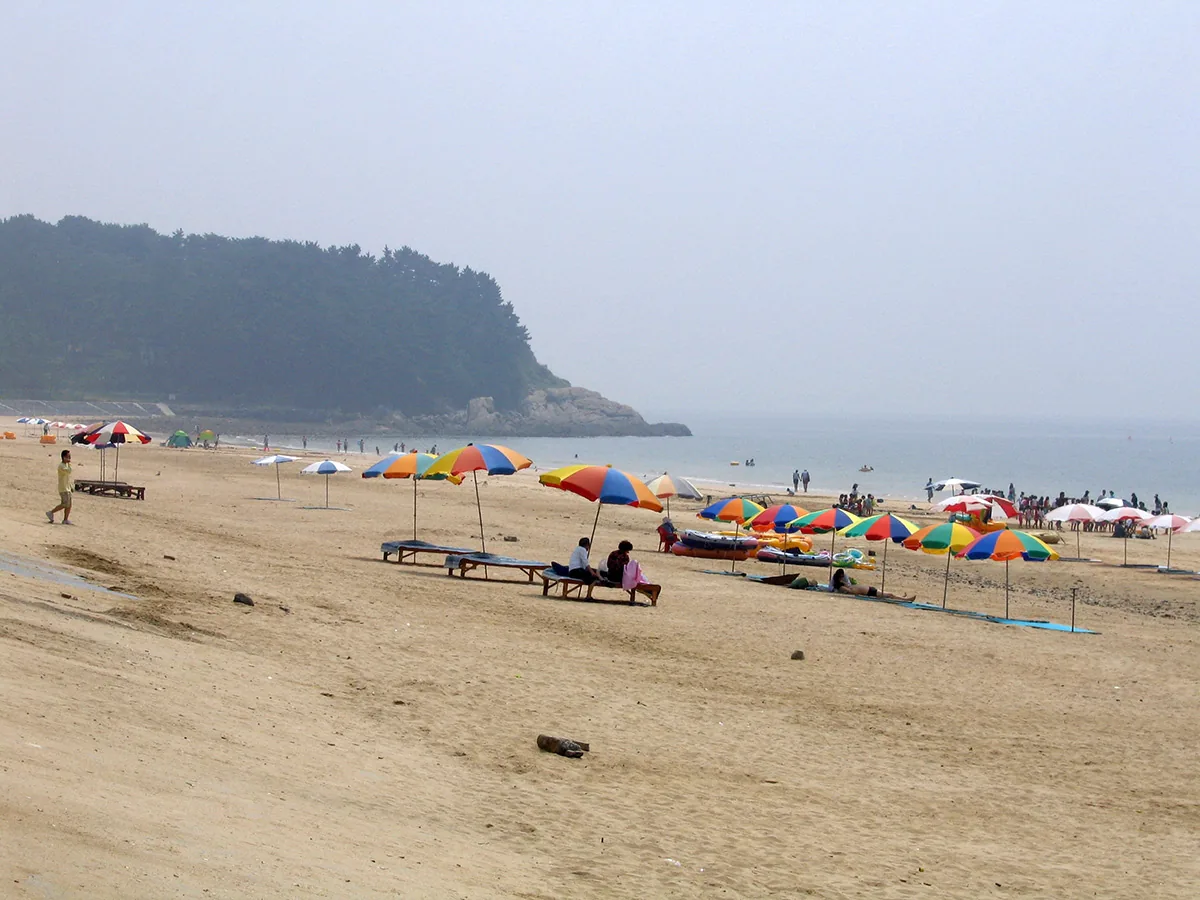
Once you’re off the train or bus, the beach itself is close. Daecheon Station to Daecheon Beach is about 7.5km, roughly a 10-minute drive. City buses 100 and 101 connect both Daecheon Station and Boryeong Bus Terminal to the beach in about 15 minutes. During the festival, the official site also points to Kakao T shuttle and K.ride shuttle services as confirmed 2026 transport options. You may also see blog mentions of a dedicated shuttle running specifically between Daecheon Station and the festival grounds — that detail isn’t confirmed through official channels, so verify current shuttle routes and schedules on arrival or through the official festival site rather than assuming a fixed free service exists. Loading a copy of https://breezekorea.com/korea-travel-apps/ before you land makes routing any of this far less stressful once you’re navigating a beach town you don’t already know.
If you need help locally, the tourist information center at Daecheon Station can be reached at 041-932-2023 or 041-930-0980 — useful numbers to have saved before you arrive, especially if a shuttle schedule doesn’t match what you read online.
8. What to Eat Near the Festival
Boryeong is a fishing port town first, so the food scene around the festival centers on the seafood at Daecheon Port’s fish market, plus a beachfront alley of all-you-can-eat grilled shellfish. Skip the generic festival-food-stall instinct and eat like the town actually eats.
Daecheon Port Fish Market (대천항 어시장)
The fish market at Daecheon Port is the anchor for serious seafood near the festival. Look for these categories rather than a specific restaurant name — reliable single-source recommendations for individual stalls aren’t solid enough to print, but these dishes are the ones the market is genuinely built around:
- Bandaeng-i hoe-muchim and grilled bandaeng-i — a small, oily local fish served two ways: as a spicy raw-fish salad tossed with vegetables and gochujang, or simply grilled.
- Hwaleo-hoe (live-fish sashimi) — standard at any serious Korean fish market, and Daecheon Port is no exception.
- Mulhoe — a cold, spicy raw-fish soup, genuinely refreshing in Boryeong’s humid late-July heat.
- Haemul-kalguksu — hand-cut noodles in a seafood broth, a heartier option if you want something warm despite the season.
The Beachfront Grilled Shellfish Alley
Along the commercial strip fronting Daecheon Beach, look for the cluster of restaurants running jogae-gui — all-you-can-eat grilled shellfish, typically clams and other shellfish grilled tableside over a burner. It’s a well-known feature of the beach’s dining strip and a natural stop after a day in the mud pool, when a low-effort, high-volume seafood dinner within walking distance of your hotel is exactly what you want.
If your trip stretches a little further along the coast to Muchangpo (covered later in this guide), spring visitors should also know the area’s real specialty is jjukkumi (spring octopus) and dodari (flounder) — not “silchi” (a smaller fish sometimes wrongly attached to this stretch of coast), and both are seasonal to spring rather than the July festival window.
9. Should You Go Solo or Book a Guided Day Tour?
Going independently is cheaper, but the lack of a KTX connection and the two-terminal bus confusion make a guided day tour genuinely worth considering if you’re short on time. Weigh the honest trade-off before you decide rather than defaulting to whichever option you saw first.
Independent travel means roughly 3 hours each way by train from Seoul (or a similarly long bus ride, depending on which terminal you use), plus figuring out local transport from Daecheon Station to the festival grounds on your own. It’s the cheaper option and gives you full control over your schedule, but it eats most of a day in transit alone if you’re coming from Seoul, and considerably more from Busan.
A guided day tour trades that complexity for a fixed schedule: round-trip shuttle transport plus festival admission bundled together, and in some cases a K-pop concert ticket included. At least five booking platforms have run Seoul-departure Boryeong Mud Festival day tours in recent seasons:
| Platform | Notes |
|---|---|
| Trazy | 2026-season listing confirmed |
| KoreaTravelEasy | 2026-season listing confirmed |
| Klook | Runs a Boryeong tour most seasons; confirm current-year dates before booking |
| KKday | Runs a Boryeong tour most seasons; confirm current-year dates before booking |
| Creatrip | Has offered Boryeong day tours in past seasons |
Exact 2026 pricing varies by platform and season, but past listings have landed somewhere around the ₩100,000 mark — treat that as a rough ballpark rather than a quote, and check the live listing for what’s actually included (shuttle only, or shuttle plus a concert ticket) before comparing prices across platforms.
10. Where Should You Stay Near Daecheon Beach?
Book accommodation near Daecheon Beach 1–2 months before the festival — weekend and concert-night rooms sell out fast once the dates are set. The area has a dense cluster of motels, hotels, pensions, and resort-style condos within walking distance of the sand, and during the festival’s 17-day run that inventory disappears quickly, especially around the two extended-hours nights.
Outside peak festival dates, budget motels run in the upper ₩30,000s a night, with some boutique pensions and small hotels in a similar range — but treat that only as an off-season reference point. Prices rise for the festival itself, and rise further still around opening weekend (July 24–26) and August 6, the two nights with extended hours and headline concerts.
11. What Should You Pack for the Mud Festival?
Pack clothes you’re willing to throw away, a full change of clothes, and a waterproof phone pouch — mud stains don’t come out in a normal wash, and mud gets into phone ports as easily as it gets into fabric. Here’s the full checklist based on what people who’ve actually done this consistently recommend.
- Dark, disposable clothing or an old swimsuit. Skip white or light colors entirely — mud stains they pick up rarely wash out.
- A full change of dry clothes and a towel, plus a sealed plastic bag to carry the wet, muddy ones home.
- A waterproof phone pouch, tested at home before you go, since it needs to keep out both water and fine mud particles, not just splashes.
- Aqua shoes or water sandals with straps. They’re the majority recommendation because they stay on your feet in thick mud; flip-flops are easy to lose in the mud pool and aren’t the safer choice here.
- Strong, waterproof sunscreen, reapplied often — July sun on an open beach is intense, and standing water reflects extra UV back at you.
- Glasses instead of contact lenses if you can manage it. There’s no official rule banning contacts, so it isn’t prohibited outright, but general hygiene concerns around mud and standing water make glasses the safer, lower-risk call for the mud zones specifically.
- Cash, since on-site ATM lines can build up quickly with festival crowds.
Showers are available at the Mud Plaza on Daecheon Beach (123 Mud-ro, Boryeong-si), but hair dryers are limited in number and lines can form — bringing a small travel dryer saves waiting around post-mud. If you’re bringing an expensive camera, some past visitors report that wrapping it completely in a plastic bag works better than a waterproof pack designed for water alone, since mud is grittier and harder to seal out entirely than plain water — worth considering, though it’s a field tip rather than a tested guarantee.
12. What’s the Best Boryeong Mud Festival Souvenir?
The official Boryeong Mud shop is boryeongmud.or.kr, run directly by the city-affiliated Boryeong Festival & Tourism Foundation, and it sells mud soap starting around ₩3,000 along with mask packs, cleansers, sunscreen, shampoo, and body wash. It’s the closest thing to an “official” souvenir this festival has, and the most straightforward option if you want something guaranteed to be tied to the city itself.
The brand traces the same timeline as the festival: products launched in 1996, gained word-of-mouth attention alongside the festival starting in 1998, earned international recognition when Boryeong Clay was registered in the ICID in 2006, and relaunched under the name “BORYEONG MUD+” in 2019. Today the line covers 37 products, reported 2025 revenue of ₩1.5 billion, and carries U.S. FDA certification — a level of documentation most regional festival merchandise never bothers to pursue.
13. Staying a Few More Days: Boryeong’s Nearby Sights
If the mud festival is only part of your trip, Boryeong’s coastline has several genuinely worthwhile stops within a short drive — a tidal “sea-parting” walk, one of Korea’s longest undersea tunnels, and an island you can now drive to. None of these require a full extra day each; most can be combined into one or two half-days around the festival.
| Sight | What it is |
|---|---|
| Muchangpo Beach’s “Miracle Sea Road” | At low tide, a roughly 1.5km mudflat path opens up to Seokdae-do island. The exact date and time shift with the tide table, so check a current tide chart rather than assuming it’s walkable on any given day. Spring visitors should note the area’s real specialty is jjukkumi (spring octopus) and dodari (flounder), not “silchi.” |
| Boryeong Undersea Tunnel | Opened December 1, 2021, running 6,927m — one of Korea’s longest undersea tunnels — and free to drive through, with no toll. |
| Wonsan-do | An island connected to the mainland via the Boryeong Undersea Tunnel. From there, the Wonsan Anmyeon Bridge continues the drive onward to Taean, meaning you can reach a genuinely different stretch of the Chungnam coast entirely by car. |
| Oseosan | A mountain known as an autumn destination for silver grass (eulalia) fields — worth filing away for a return trip outside festival season rather than late July. |
| Seongjusan Recreation Forest | Built around the Hwajanggol valley, a cooler, shaded alternative to another beach day if the July heat gets to be too much. |
| Gaehwa Art Park | A combined sculpture park and art museum; adult admission is ₩6,000. |
The undersea tunnel and Wonsan-do pairing is the most efficient add-on for most visitors: it’s a short, toll-free drive that turns into a genuinely different island landscape without eating a full day, and it connects onward toward Taean if you want to keep going. Muchangpo’s Miracle Sea Road is the more schedule-dependent option — worth planning specifically around the tide table rather than showing up and hoping, since the mudflat path is only open on the days and hours the tide actually allows it.
14. What’s the Weather Like in Boryeong in July, and What Should You Know Before You Go?
Expect an average temperature around 25.7°C, Korea’s most humid month of the year (83.8% average humidity), and the year’s heaviest rainfall — the festival lands right around when the monsoon typically breaks, but sudden showers are still common. Pack for heat, humidity, and the chance of rain in the same day, sometimes the same afternoon.
Korea’s monsoon (jangma) usually starts in late June and wraps up in the middle-to-late part of July. The 2026 festival (July 24–August 9) falls mostly after that window closes, but atmospheric instability in Korean summers regularly produces sudden downpours even outside the official monsoon period — a “jangma’s last gasp, pack for a sudden shower” mindset fits this trip better than assuming clear skies for all 17 days. Sea temperature at Daecheon, based on mid-July real-time readings, sits around 25–26°C, comfortable for swimming — though that’s a snapshot from mid-July specifically, not a fixed seasonal average you can assume holds through early August.
A few closing notes on safety and etiquette: keep track of your belongings in the mud pool area, since it’s easy to lose small items in the mud itself; follow staff instructions around the water-cannon and mud-cannon performances if you’d rather stay drier; and remember that Daecheon Beach is a shared public beach — the festival zones are ticketed, but the wider beach and town still operate as a normal Korean seaside community outside those specific areas.
If Boryeong is one stop on a bigger Korea itinerary, our complete Korea travel guide covers regional trip planning, transport passes, and seasonal timing for the rest of the country.
🎡Things to Do76
🍜Food8
🏨Where to Stay4
🚇Getting Around18
🧭Travel Tips28
📌More4
Boryeong Mud Festival: FAQ
🇰🇷 Read the Complete Korea Travel Guide →
Images: Boryeong Mud Festival & Daecheon Beach photos: Kai Hendry (CC BY 2.0), hojusaram (CC BY-SA 2.0), Ken Eckert (CC BY-SA 4.0), Stinkie Pinkie (CC BY 2.0), via Wikimedia Commons.