
Seoul 4-Day Itinerary: The Perfect Route + a Day Trip (Hour by Hour)
A local’s relaxed, hour-by-hour plan for four days in Seoul — palaces and hanok, Myeongdong and Namsan, Gangnam, trendy Seongsu and the Han River, plus a full fourth day out of the city to the DMZ, Nami Island, Suwon or Everland.
| Is 4 days enough? | It’s the sweet spot. Four days lets you see the palaces, the markets, the mountain views and the modern skyline without rushing, with a whole day left to escape the city. |
|---|---|
| Days 1–3 | The city at an easy pace: palaces and hanok in old Seoul (Day 1), Myeongdong, Namsan and Hongdae (Day 2), then Gangnam, trendy Seongsu and a Han River evening (Day 3). |
| Day 4 | One big day trip. Pick the DMZ (history, tour-only), Nami Island + Gapyeong (nature, ₩19,000 ferry-in), Suwon Hwaseong (a UNESCO fortress, walls free) or Everland (families). |
| The rule | Group each day by area so you never cross the city twice — old town, downtown, Gangnam, then out of town. |
| Bring | The Climate Card tourist pass (₩5,000/8,000/10,000/15,000 for 1/2/3/5 days — physical card only for foreigners) and Naver Map or KakaoMap. Google Maps can’t route transit in Korea. |
1. Your 4 days in Seoul at a glance
2. Why four days in Seoul?
3. Arriving: from the airport into Seoul
4. Getting around: transit passes compared
5. Day 1 — Palaces & hanok in old Seoul
6. Seoul’s five palaces compared
7. Day 2 — Myeongdong, Namsan & Hongdae
8. Day 3 — Gangnam, Seongsu & the Han River
9. Day 4 — Seoul’s best day trips (pick one)
10. Shopping, K-beauty & tax refunds
11. K-pop & K-culture spots
12. Making the most of the Han River
13. Where to stay in Seoul
14. Getting around Seoul like a local
15. What to eat in Seoul
16. Festivals & best time to visit
17. Tailor the trip: families, couples, foodies & rainy days
18. Budget: what a 4-day Seoul trip costs
19. Practical tips & final word
Four days is the relaxed sweet spot for Seoul. It’s enough to see the palaces, the food markets, the mountain views and the modern skyline without rushing — and it still leaves a whole day to get out of the city. This is a local’s Seoul 4-day itinerary, planned hour by hour, with each day built around one part of town so you never backtrack. Days 1–3 cover the city at an easy pace; Day 4 is a full day trip you choose (DMZ, Nami Island, Suwon or Everland). On a tighter schedule? Our 3-day Seoul itinerary does the essentials in three. For the complete city overview, see our Seoul travel guide, and for the wider country our Korea travel guide guide.
1. Your 4 days in Seoul at a glance
Here’s the shape of the trip. Each day stays in one part of the city so you spend your time exploring, not riding the subway back and forth. Times are a suggested rhythm, not a schedule to obey:
| Day | Area | Morning | Afternoon | Evening | Metro |
|---|---|---|---|---|---|
| Day 1 | Old Seoul (Jongno & Bukchon) | Gyeongbokgung + guard change | Bukchon, Insadong, Ikseon-dong | Gwangjang Market + Cheonggyecheon | Line 3 |
| Day 2 | Downtown & Namsan | Myeongdong + Olive Young | N Seoul Tower / Namsan | Hongdae (or Itaewon) | Lines 4 & 2 |
| Day 3 | Gangnam, Seongsu & the Han | Seoul Sky + Lotte World / COEX | Seongsu café-hopping | Yeouido river cruise + fountain | Line 2 |
| Day 4 | Day trip (pick one) | DMZ · Nami Island + Gapyeong · Suwon Hwaseong · or Everland | tour / train | ||
Short on time? Days 1–3 alone make a great three-day trip — that’s our 3-day Seoul itinerary, which sequences the city core in detail. The magic of a fourth day is the room it buys you: a slower pace inside the city, the trendy Seongsu neighborhood a rushed trip has to skip, and one memorable day out. First, a few things to sort before you start.
2. Why four days in Seoul?
Seoul rewards a little more time. Two days is a stopover; three is a solid first trip; four is where the visit starts to breathe. Here’s how the day counts compare so you can decide honestly:
| Days | Good for | What you’ll realistically see |
|---|---|---|
| 2 days | A stopover or quick taste | One palace, Myeongdong and a night view — enjoyable but rushed, no day trip. |
| 3 days | A classic first trip | Palaces, downtown, Gangnam and the river, grouped by area (this is our 3-day Seoul itinerary). |
| 4 days | The relaxed sweet spot | All of the above at an easy pace, plus trendy Seongsu and a full day trip out of the city. |
| 5–7 days | A slow trip or repeat visit | Add a second day trip, more neighborhoods, the big museums and deeper shopping. |
The honest gap between three and four days is the day trip. With three days you have to choose between finishing the city and leaving it; with four you don’t. The fourth day is what turns a Seoul city break into a proper Korea trip — the DMZ and the divided border, or the tree-lined lanes of Nami Island, or an 18th-century UNESCO fortress you can walk for free.
3. Arriving: from the airport into Seoul
Almost everyone lands at Incheon International Airport (ICN), about an hour west of the city; some regional and budget flights use the closer Gimpo (GMP). Here’s how to get in and what it costs:
| Option | Time to central Seoul | Cost | Good for |
|---|---|---|---|
| AREX Express Train (non-stop) | ~43 min to Seoul Station | ₩13,000 (~₩11,500 booked online) | Fastest fixed-price ride, luggage-friendly |
| AREX All-Stop (commuter) | ~59 min to Seoul Station | ~₩4,150 by transit card | Best value; stops at Hongik Univ & Gongdeok |
| Airport limousine bus | ~60–90 min | ~₩10,000–18,000 | Door-to-door near many hotels, no transfers |
| Taxi | ~60–70 min | ~₩60,000–90,000 | Late arrivals, groups with lots of luggage |
The two AREX trains share the same track: the express is only about 15 minutes faster than the all-stop, so unless you’re going straight to Seoul Station the cheaper all-stop is usually the smarter buy — and it stops at Hongik University (Hongdae) and Gongdeok, which suits many travelers better anyway. Full options, including night buses and Gimpo, are in getting from Incheon Airport.
4. Getting around: transit passes compared
Seoul has one of the best public-transport systems in the world — numbered, color-coded subway lines with English signage and announcements, reaching every stop in this plan. The only real decision is which fare card to use. Here’s the honest comparison for a four-day trip:
| Pass | Price | Covers | Best for |
|---|---|---|---|
| Climate Card (tourist) | ₩5,000 / 8,000 / 10,000 / 15,000 (1/2/3/5 days) | Unlimited Seoul subway + city buses | Heavy in-city sightseeing over several days |
| T-money card | Card ₩2,500–4,000 + fares (base subway ₩1,550) | Every subway, bus, most taxis, convenience stores | Flexibility; light or mixed use |
| Discover Seoul Pass | ₩50,000 (24h) / 70,000 (48h) / 90,000 (72h) | 70+ attractions free + 1 AREX + T-money function | Cramming many paid sights into a day or two |
| Seoul City Tour Bus | ~₩24,000 (Tiger downtown route) | Hop-on-hop-off loop of palaces & Namsan | A relaxed overview day, less walking |
The Climate Card tourist pass — how it works
Seoul’s flat-rate Climate Card (기후동행카드) gives unlimited rides on the city subway and city buses. For a four-day trip the 5-day pass at ₩15,000 is the natural fit (the tiers are 1-day ₩5,000, 2-day ₩8,000, 3-day ₩10,000, 5-day ₩15,000). Two things visitors must know:
- Foreigners buy the physical card only. The mobile version needs a Korean resident/registration number and a domestic card. Buy the physical card at the Seoul Tourism Plaza, the Myeongdong Tourist Information Center, the customer-service office of any Line 1–8 station, or convenience stores near stations (CU, GS25, 7-Eleven, emart24). It activates the moment you load it.
- What it excludes: the Shinbundang line, anything outside Seoul city limits, wide-area / intercity / airport buses, KTX and ITX trains, and the Ttareungyi public bikes (short-term passes don’t include them). And, as noted above, you can’t board AREX at Incheon.
5. Day 1 — Palaces & hanok in old Seoul
Start where Seoul’s history lives: the grand royal palaces and the hanok lanes of Jongno. Because you have four days, you can take this slowly and even add a second palace. Almost everything today sits on or near Metro Line 3.
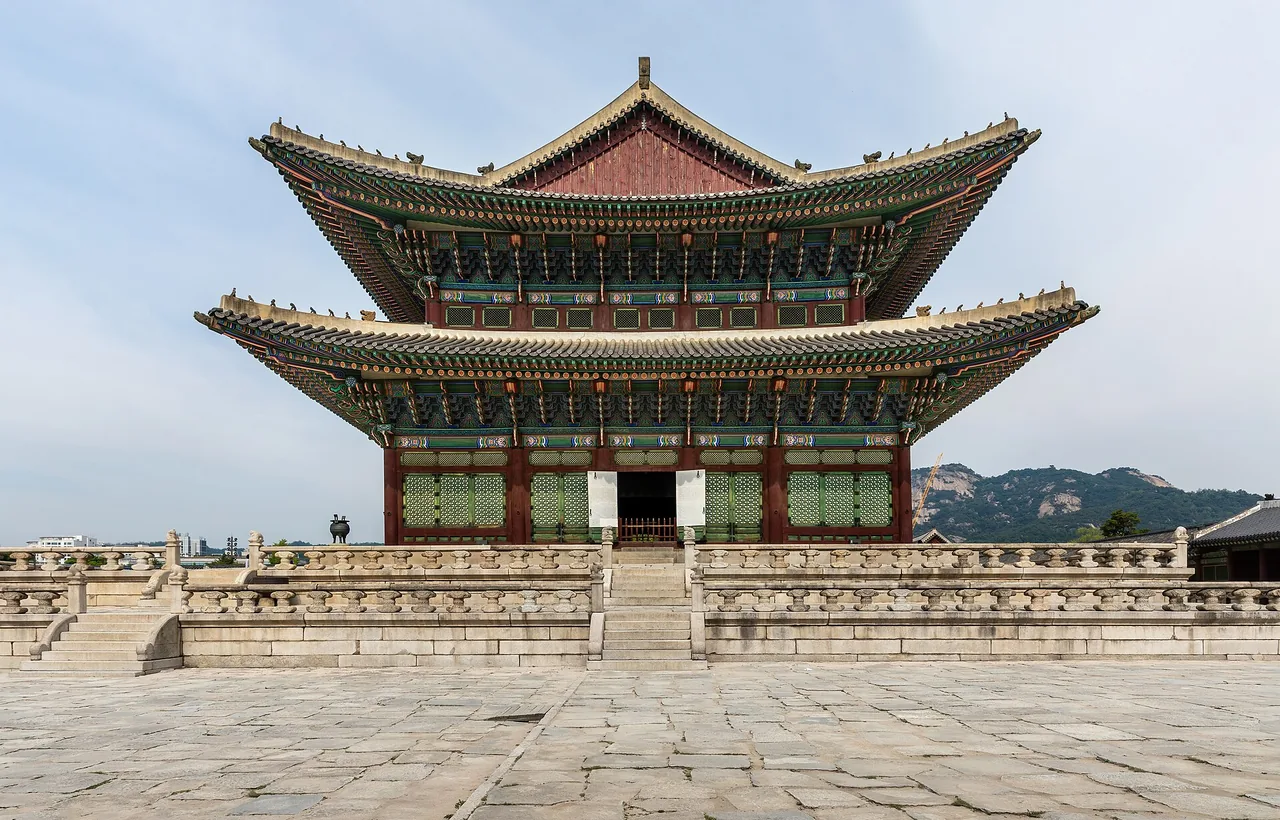
Begin at Gyeongbokgung Palace, the largest and grandest of the five royal palaces (Gyeongbokgung Station, Line 3, Exit 5). Adult admission is ₩3,000 — and it’s free if you’re wearing hanbok. Arrive at opening for the emptiest grounds and softest light, then catch the Royal Guard-Changing Ceremony at 10:00 (repeated at 14:00) at Gwanghwamun Gate — it runs outside the ticket gate, so it’s free to watch, about 20 minutes, and it’s cancelled in rain or extreme heat. Inside, walk the Geunjeongjeon throne hall and the Gyeonghoeru pavilion on its pond, and duck into the free National Folk Museum on the grounds. Note the palace is closed every Tuesday.
With the extra day, add nearby Changdeokgung (₩3,000; Anguk Station, Line 3, Exit 3; closed Mondays), a UNESCO World Heritage palace laid out to follow the land rather than a grid. Its highlight is the Huwon (Secret Garden), visited on a timed, guided tour only — an extra ₩5,000 on top of the ₩3,000 palace ticket. Book ahead on the Korea Heritage Service site (royal.khs.go.kr); reservations open at 10:00 KST six days before, and peak-season slots vanish in minutes. English tours run around 10:30, 11:30, 14:30 and 15:30. If you visit two or more palaces, the Integrated Palace Ticket is ₩6,000, valid 6 months, and covers Gyeongbokgung, Changdeokgung, Changgyeonggung, Deoksugung and Jongmyo (it does not include the Huwon).
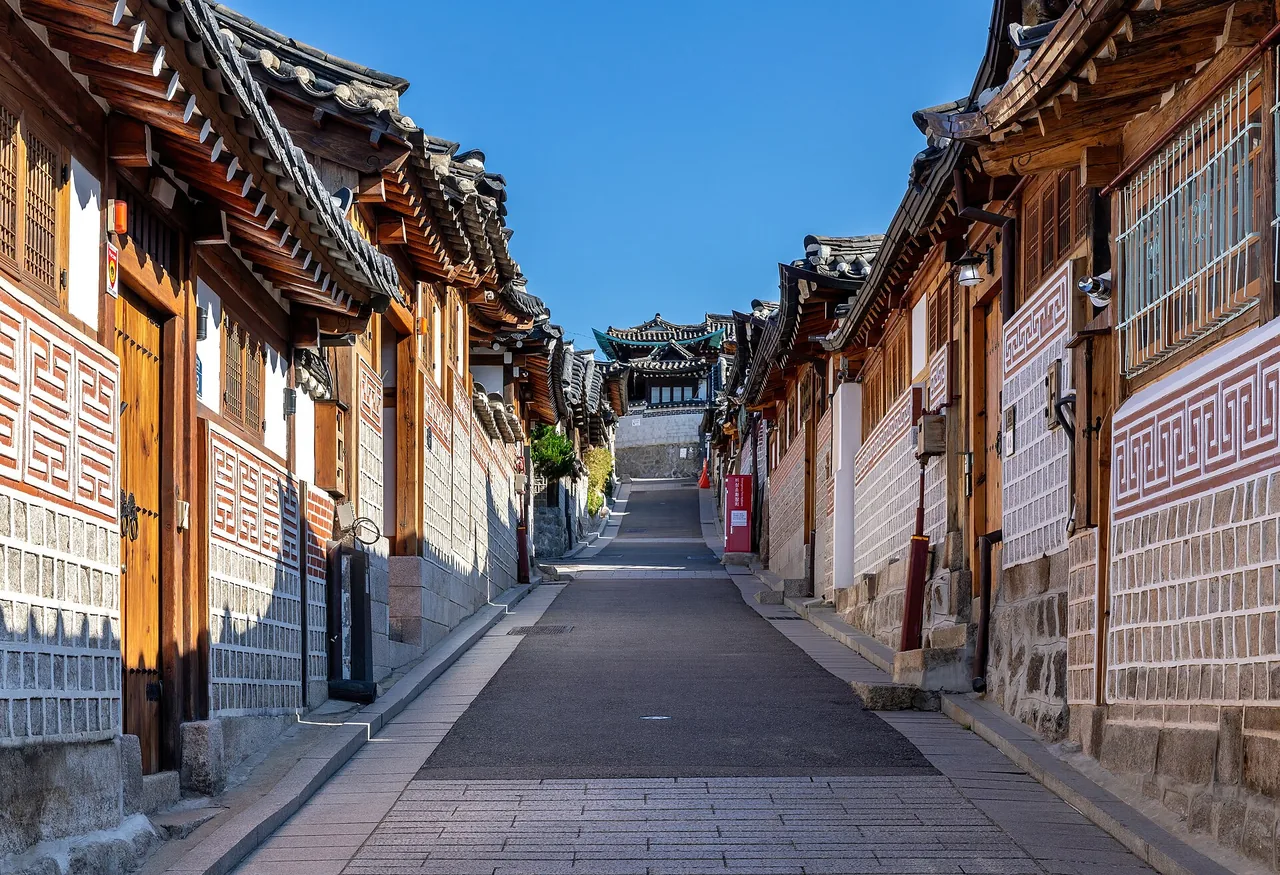
A short, gentle uphill walk from Anguk Station brings you to Bukchon Hanok Village, the hillside neighborhood of restored tile-roofed hanok houses. It’s free and photogenic — the classic shot down Bukchon-ro 11-gil, with hanok roofs sloping toward Namsan and N Seoul Tower, is here. But this is a living residential area, not a film set, and it’s now actively protected.
Walk down to Insadong (Anguk Station, Exit 6), the pedestrian craft street of tea houses, galleries, calligraphy and hanji-paper shops, anchored by the spiral Ssamziegil complex (~10:30–20:30). For lunch and coffee with more atmosphere, cut over to Ikseon-dong (Jongno 3-ga Station, Lines 1/3/5, Exit 4), a warren of tiny 1920s hanok — Seoul’s first planned hanok development — now filled with dessert cafés, salt-bread bakeries, makgeolli courtyards and fusion restaurants. Unlike Bukchon, these hanok are commercial: you’re meant to walk in and sit down.
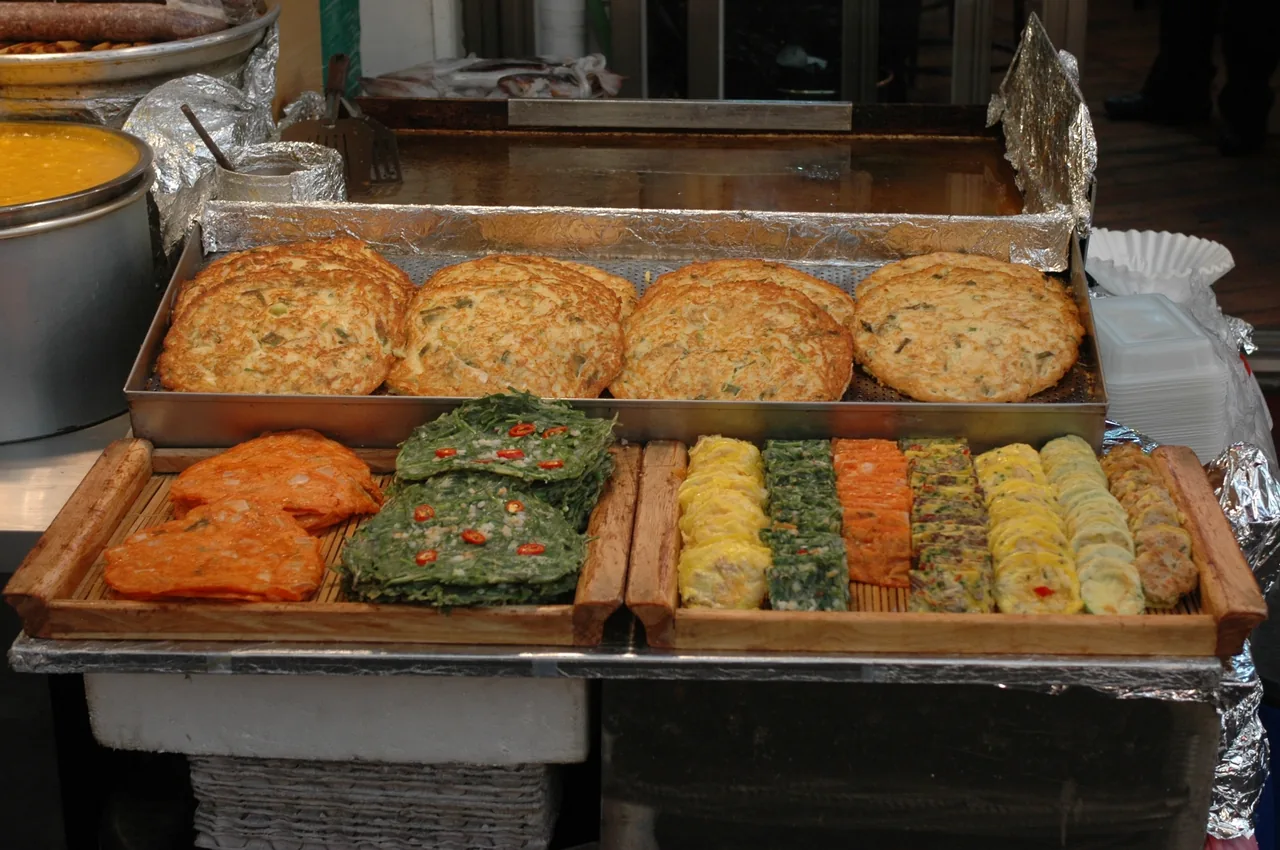
Finish at Gwangjang Market (Jongno 5-ga Station, Line 1, Exit 8), Seoul’s greatest food-crawl market and a Netflix “Street Food: Asia” star. Graze the food alley: bindaetteok (mung-bean pancake, ~₩6,000–8,000), mayak gimbap (moreish mini rolls with a mustard-soy dip), yukhoe (raw beef), sundae (blood sausage) and knife-cut kalguksu. Bring cash, expect ~30-minute waits at the famous stalls, and — after a 2025 tourist-overcharging scandal — confirm the price before you order. Note the market is quietest with many stalls shut on Mondays. Walk it off along the lantern-lit Cheonggyecheon stream to end the day.
6. Seoul’s five palaces compared
Day 1 puts you at Gyeongbokgung, but Seoul has five royal palaces plus the Jongmyo royal shrine, all within a compact old-town cluster. If you love history, here’s how they stack up so you can add the right one on Day 1 (or slot another into a slow morning): When the garden booking opens and how many places each slot holds is in our Changdeokgung Secret Garden guide.
| Site | Adult | Closed | Highlight | Subway |
|---|---|---|---|---|
| Gyeongbokgung | ₩3,000 | Tuesday | Grandest palace; 10:00/14:00 guard change; Folk Museum | Gyeongbokgung (L3, Ex5) |
| Changdeokgung | ₩3,000 | Monday | UNESCO (1997); the Secret Garden (Huwon) | Anguk (L3, Ex3) |
| — Huwon add-on | +₩5,000 | Monday | Guided timed tour only — reserve ahead | Anguk (L3, Ex3) |
| Changgyeonggung | ₩1,000 | Monday | The 1909 Grand Greenhouse; Chundangji pond; open to 21:00 | Hyehwa (L4) |
| Deoksugung | ₩1,000 | Monday | Guard change 11:00/14:00; the stone-wall walkway; open to 21:00 | City Hall (L1/2) |
| Jongmyo Shrine | ₩1,000 | Tuesday | UNESCO (1995); guided weekdays, free self-guided Sat/Sun | Jongno 3-ga (L1/3/5) |
| Integrated ticket | ₩6,000 / 6 mo | — | 4 palaces + Jongmyo (excludes Huwon) | — |
Which palace should you add?
Changdeokgung is the connoisseur’s pick for its Secret Garden (reserve ahead). Deoksugung is the most convenient — right at City Hall Station, open until 21:00, with its own guard-changing ceremony at 11:00 and 14:00 and the beloved tree-lined stone-wall walkway (a top autumn stroll). Changgyeonggung is the quiet, cheap one, worth it for the 1909 Western-style Grand Greenhouse. Jongmyo, the solemn royal ancestral shrine, is visited on a timed guided tour on weekdays (English at 10:00, 12:00, 14:00, 16:00) but is free to wander self-guided on weekends.
7. Day 2 — Myeongdong, Namsan & Hongdae
Day 2 mixes shopping, the city’s best skyline view and a night out. It runs mostly on Metro Lines 4 and 2, and it’s deliberately lighter in the morning so you can linger. Where to shop for cosmetics in Myeongdong, and where the in-store tax refund counters actually are, is covered in our Myeongdong guide. Hongdae works better from late afternoon than at midday, so see something else first and arrive around dusk. Which exit to use is in the Hongdae guide.
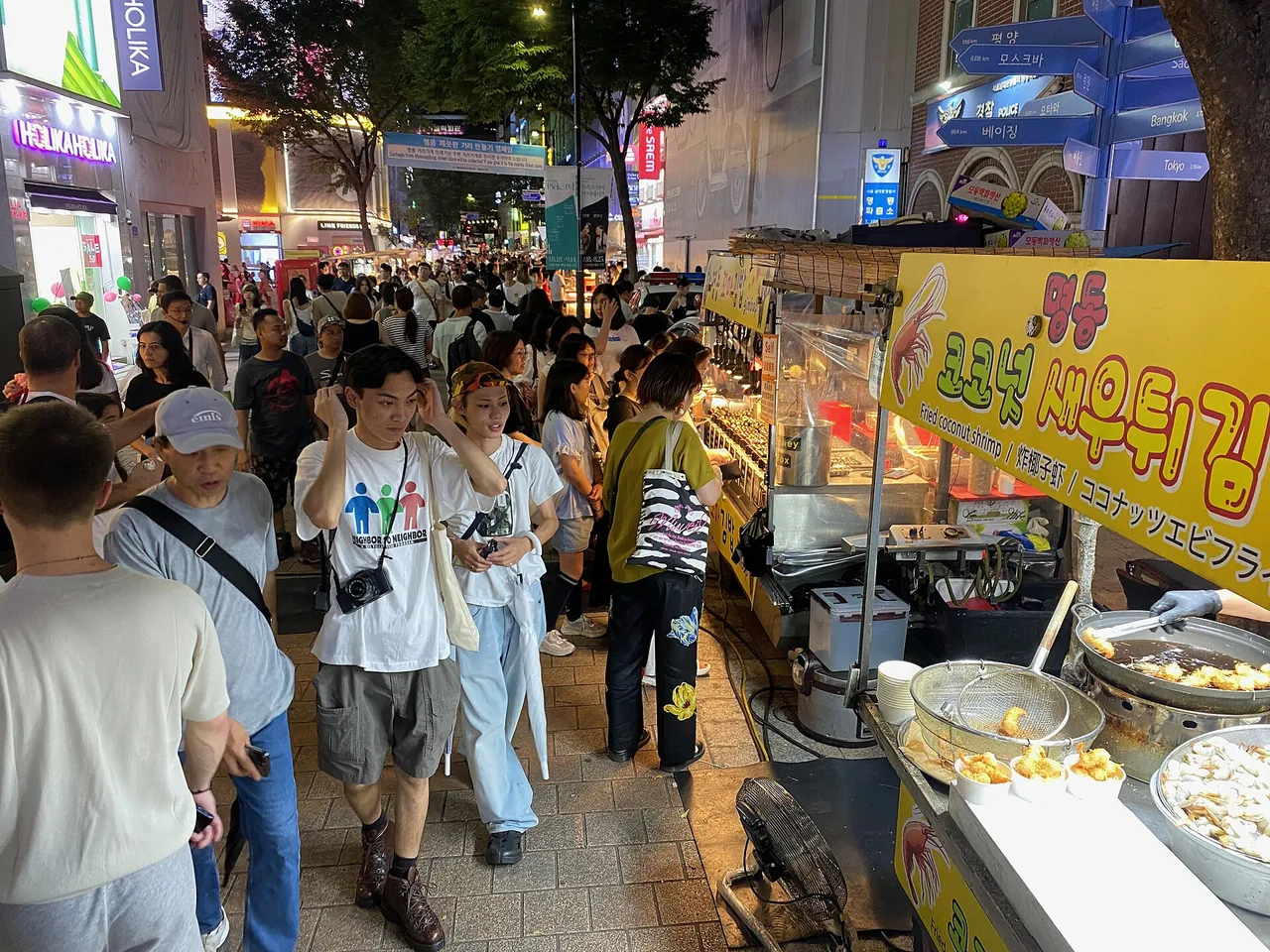
Spend the late morning in Myeongdong (Myeongdong Station, Line 4, exits 5–8), Seoul’s K-beauty and street-food heartland. The star is the new flagship Olive Young Central Myeongdong Town (opened March 2026) — three floors, 1,000+ brands, a K-food section, multilingual staff, baggage storage and an in-store instant tax-refund counter (spend ≥₩15,000, show your physical passport, get ~5–7% back on the spot). Sunscreens are the cult buy (Beauty of Joseon, Round Lab, Rovectin); watch for 1+1 deals on Mediheal, Torriden and Dr. Jart+. Then step into the red-brick Gothic Myeongdong Cathedral (1898) for a quiet moment.
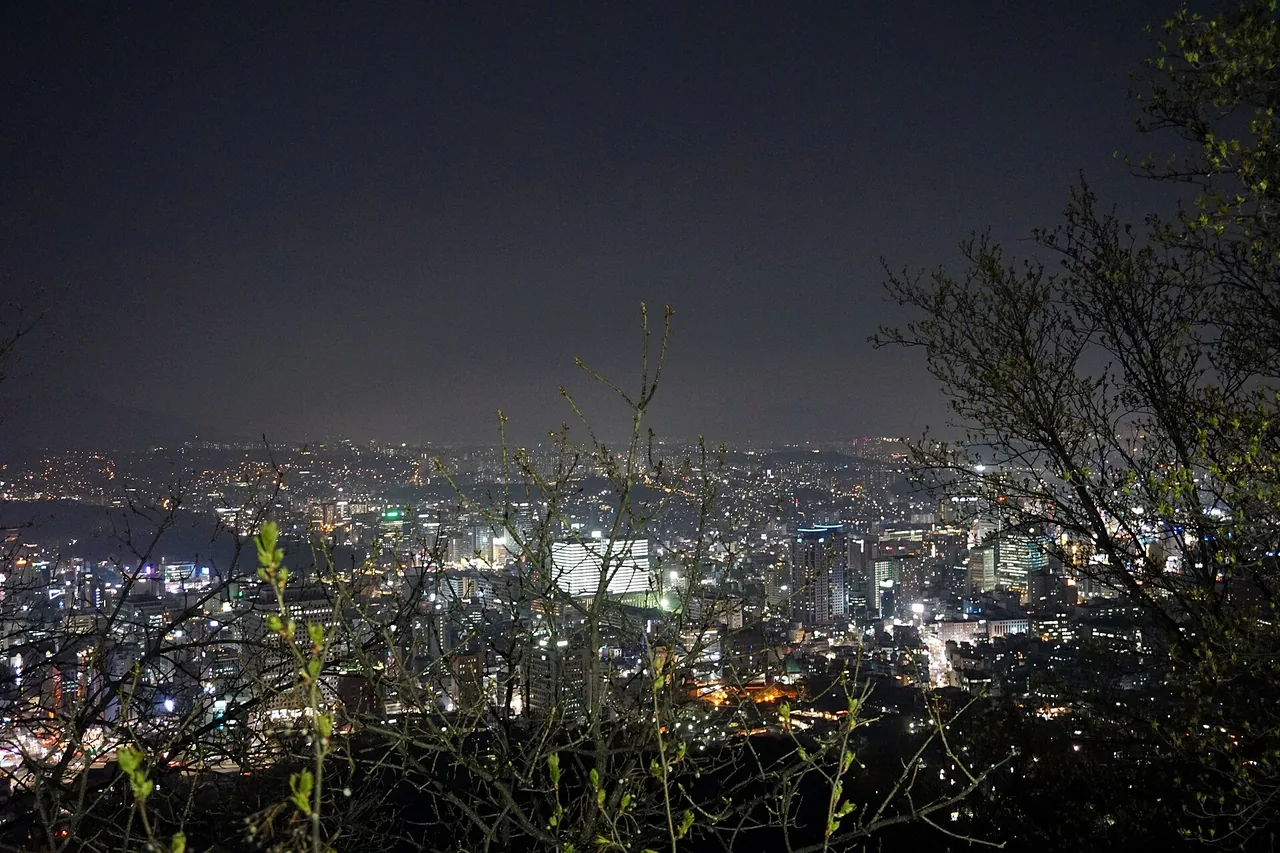
Head up Namsan mountain to N Seoul Tower. The most scenic way up is the Namsan cable car (₩15,000 round trip / ₩12,000 one way, ~3 min, 10:00–23:00); to reach the cable-car base from Myeongdong, use the free Namsan Oreumi inclined elevator (9:00–23:00, ~10 min walk from Myeongdong Station Exit 4). The tower observatory is ₩29,000 (about ₩18,400 booked online), open 10:00–23:00. Go up in late afternoon so you catch the daytime panorama and then the city lighting up — the classic Seoul skyline shot — and add your padlock to the famous fence if you like.
Before the night out, night owls and shoppers can detour to Dongdaemun (Dongdaemun History & Culture Park Station, Lines 2/4/5) for Zaha Hadid’s swooping, glowing Dongdaemun Design Plaza (DDP), the LED Rose Garden that lights up after sunset (25,000+ LED roses, a top photo spot), the Thu–Sun night market, and 24-hour fashion malls. For casual single-item shopping stick to the retail malls (Doota, Migliore) rather than the wholesale floors. Most Dongdaemun wholesale buildings open around 8pm and stay shut on Friday and Saturday nights, so check the day of the week when you plan. What is open at each hour is in the Dongdaemun guide.
End in Hongdae (Hongik University Station, Line 2), the university district that comes alive at night with buskers, indie live music, thrift shops and clubs. The busking peaks on weekend evenings along Eoulmadang-ro (the “Walking Street” from Exit 9); by day the leafy Gyeongui Line Forest Park (“Yeontral Park”) in Yeonnam-dong is the café-and-bar strip. Prefer a more international bar scene? Swap in Itaewon and Gyeongnidan-gil instead (Itaewon Station, Line 6), Seoul’s most global dining-and-cocktail district, with the Leeum Museum of Art nearby in Hannam-dong.
8. Day 3 — Gangnam, Seongsu & the Han River
Day 3 is modern Seoul: a sky-high view, a theme park or a photogenic library, the neighborhood every local is talking about, and a river evening. Almost all of it links along Metro Line 2.
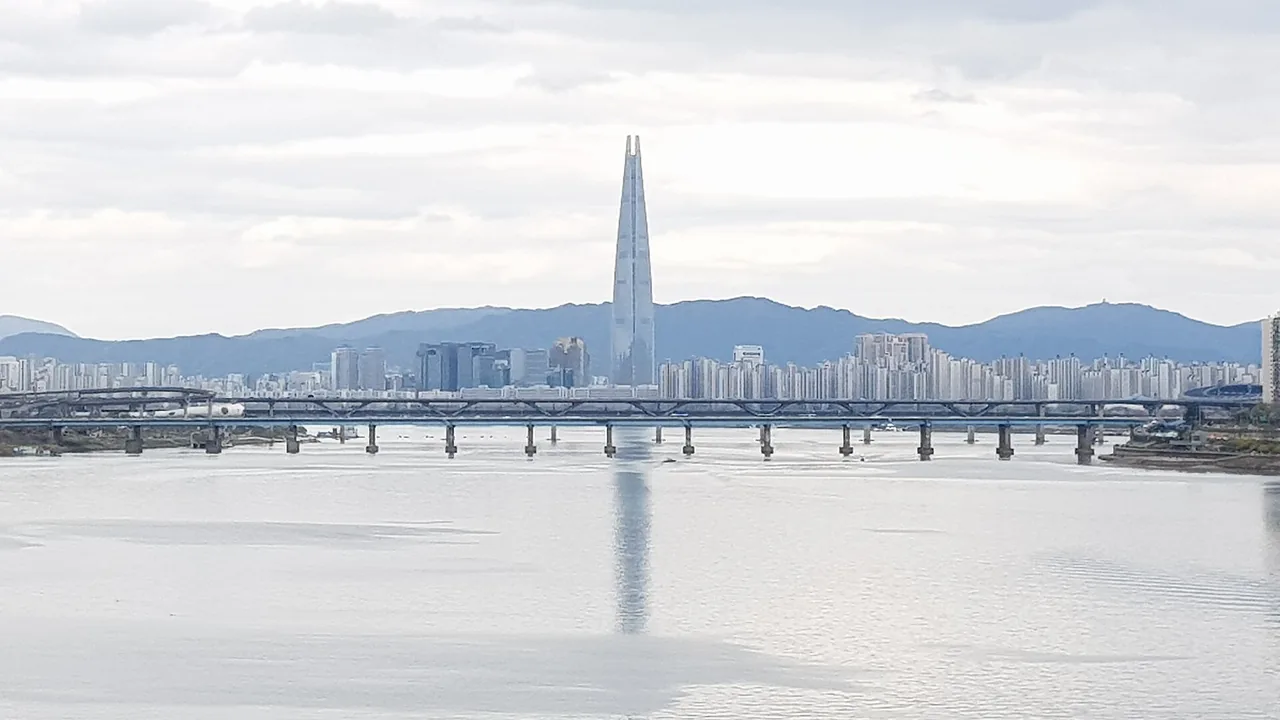
Ride up Seoul Sky, the observation deck on floors 118–123 of Korea’s tallest tower (adults ₩31,000; Jamsil Station, Lines 2 & 8), for a clear-morning view over the city and the Han River. Go early for the best light and the shortest lines.
Right below the tower is Lotte World, the huge indoor-outdoor theme park beside Seokchon Lake — great for families or the young at heart (a full-day pass runs around ₩62,000; check the app for seasonal pricing). Not into rides? Swap in the free, wildly photogenic Starfield Library at COEX (two 13-metre bookshelf walls, ~70,000 books, 10:30–22:00; Samseong Station, Line 2), and add the 794 AD Bongeunsa Temple across the road (free grounds).
Hop over to Seongsu (Seongsu Station, Line 2, Exit 3), Seoul’s most talked-about neighborhood right now — a former printing-and-shoe-factory district reborn as a maze of industrial-chic design cafés, brand pop-up stores and concept shops. This is the trendy corner a rushed three-day trip has to skip, so lean in:
- Daelim Changgo — the icon: a cavernous converted warehouse now a café-gallery-event space (~11:00–22:00, free entry).
- LCDC Seoul — a concept-store complex in a former auto shop; browse the “Doors” shops on level 3.
- Cafe Onion Seongsu — the signature raw-concrete café (iconic but busy); pair it with a quieter spot like Tenne or a Jayeondo salt-bread bakery.
- Pop-ups — Seongsu is the pop-up capital of Seoul; they rotate constantly, so the point is to wander and discover rather than plan.
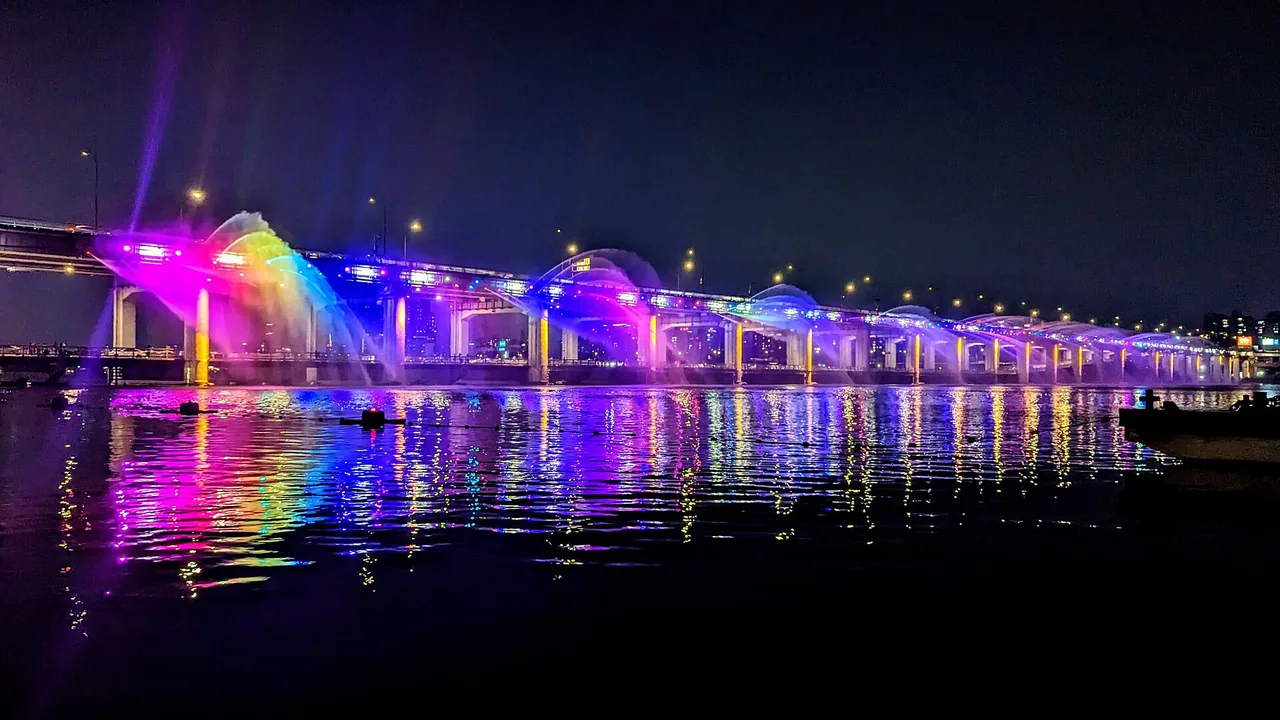
Finish along the Han River at Yeouido Hangang Park (Yeouinaru Station, Line 5). Take an evening Han River cruise (E-Land’s Yeouido daytime tour is about ₩19,900; sunset and moonlight-music dinner cruises cost more), order fried chicken and beer (chimaek) delivered to the grass like the locals do (the Coupang Eats app has an English UI), and time it for the Banpo Bridge Moonlight Rainbow Fountain — the Guinness-record bridge fountain runs in season (roughly March 16 – October 31) with evening shows around 19:30, 20:00, 20:30 and 21:00. A night cruise that passes under the illuminated fountain is the single best way to see it.
9. Day 4 — Seoul’s best day trips (pick one)
The reward for a fourth day is a whole day outside the city — and this is the part a three-day trip simply can’t fit. There’s no single “best” choice; it depends on what you’re after. Here are the four favorites side by side, then a fair, fuller look at each:
| Day trip | Best for | Getting there | Time needed | Rough cost |
|---|---|---|---|---|
| DMZ | History & the divided border | Guided tour only (access restricted) | Half to full day | Half-day ₩50,000–80,000 / full-day ₩110,000–160,000 |
| Nami Island + Gapyeong | Nature, couples, photos | ~1–1.5 hr by ITX/subway or tour | Full day | Nami entry ₩19,000 + transport |
| Suwon Hwaseong | Heritage on a budget, independent travel | ~1 hr by subway (Line 1) / ~30 min KTX | Half to full day | Walls free; palace ₩2,000; trolley ₩6,000 |
| Everland | Families, thrill-seekers | ~1–1.5 hr by bus/shuttle (Yongin) | Full day | Gate ₩59,000 (online ~₩39,000) |
The DMZ — history at the border
The Demilitarized Zone is the tense buffer between the two Koreas and one of the most sobering, memorable day trips from Seoul. You can’t visit independently — it’s a military-controlled zone, so an authorized DMZ guided tour is required and you must carry your original passport. A typical itinerary takes in the Third Infiltration Tunnel (a North Korean incursion tunnel you walk down; no photos, hard hat required), the Dora Observatory looking across into the North, and Imjingak Peace Park with the Freedom Bridge. Half-day tours cover the core sights and get you back by early afternoon; full-day tours add lunch and extras. It appeals most to travelers drawn to modern history and geopolitics.
Nami Island + Gapyeong — nature and K-drama scenery
About 1–1.5 hours northeast of Seoul, Nami Island is a small, tree-lined river island reached by a short ferry, famous for its photogenic tree-lined lanes (and as the Winter Sonata filming location). Admission is ₩19,000 including the round-trip boat (₩16,000 concession; children/early-bird less), and you’re issued a novelty “Naminara Republic” passport. It pairs beautifully with the wider Gapyeong area: take the ITX-Cheongchun express train (~45–60 min from Yongsan/Cheongnyangni) to Gapyeong, then the Gapyeong City Tour Bus (~₩8,000, hop-on-hop-off) which loops Nami plus Petite France (₩16,000), the Garden of Morning Calm (₩11,000; its winter light festival runs early Dec – mid-March) and the Gangchon rail-bike. It’s the most relaxed, scenic option — ideal for couples, photographers and families who want green space and fresh air over city and crowds.
Suwon Hwaseong — a UNESCO fortress on a budget
Only about an hour south on subway Line 1 (or ~30 minutes by KTX), Suwon is home to Hwaseong, a magnificent 18th-century UNESCO-listed fortress with ~5.7 km of walls. Best of all, walking the fortress walls is free (the old admission fee was scrapped); only Hwaseong Haenggung palace charges a small ₩2,000. You can ride the Hwaseong tourist trolley (₩6,000, ~30–50 min with an English/Chinese/Japanese audio guide) up the steeper Paldalsan section, walk the ramparts and archery pavilions, and even try traditional archery at Yeonmudae (₩3,000 for 10 arrows). It’s the pick for independent travelers who want serious heritage without a tour and without spending much — figure 3–4 hours for the core, 5–6 with the trolley, archery and museums. Which parts are original, which were rebuilt in the 1970s and what closes on Mondays are all in our full guide to Suwon Hwaseong.
Everland — Korea’s biggest theme park
About an hour out in Yongin, Everland is Korea’s largest theme park (from Gangnam Station, bus 5002 ~55–65 min, then a free shuttle). The gate price is ₩59,000 for adults (₩46,000 for children), but booking online or via Klook typically drops the adult price to about ₩39,000 — worth doing. Headliners include Monimo RUSH (the wooden coaster renamed from T Express in April 2026, a 77° drop at ~104 km/h), the Zootopia safari bus, and big seasonal festivals — spring tulips and cherry blossoms, Halloween “Blood City,” a Christmas illumination. It’s the obvious choice for families and ride-lovers, and it fills a full day; go on a weekday to dodge the longest queues.
10. Shopping, K-beauty & tax refunds
Seoul is one of Asia’s great shopping cities, and getting the tax back is easy once you know the rules. Here’s where to go and how to claim:
| Where | What for | Nearest station |
|---|---|---|
| Myeongdong | K-beauty (Olive Young flagship), duty-free, street food | Myeongdong (Line 4) |
| Seongsu | Pop-up stores, indie fashion, design goods | Seongsu (Line 2) |
| Garosu-gil (Sinsa) | K-beauty flagships, boutiques, cafés | Sinsa (Line 3, Exit 8) |
| Dongdaemun (DDP) | 24-hour fashion malls, wholesale | DDP History & Culture Park (L2/4/5) |
| Namdaemun Market | Souvenirs, kids’ clothes, glasses, street food | Hoehyeon (Line 4, Exit 5) |
| The Hyundai Seoul (Yeouido) | Seoul’s biggest department store; indoor garden | Yeouido (Lines 5/9) |
How the tax refund works (2026)
Korea’s VAT is 10%, and tourists get roughly 5–8% back after fees. The minimum purchase per receipt is ₩15,000. There are two ways to claim:
- Instant (in-store) refund — the easy one. Show your physical passport at the register and the refund is deducted on the spot. It works for purchases under ₩1,000,000 per receipt and up to ₩5,000,000 total across your stay. Olive Young’s flagship and its Gangnam and Hongdae branches all have instant-refund counters.
- Airport refund — for single purchases over ₩1,000,000 or when a shop didn’t apply the instant refund. Get customs export confirmation, then collect at a refund counter or a 24-hour self-service kiosk before departure — at Incheon near Gate 28 (Terminal 1) / Gate 253 (Terminal 2), and at Gimpo on the 2nd floor by the duty-free area. Bring the physical passport; kiosks often reject digital ones.
11. K-pop & K-culture spots
Seoul is the home of K-pop, but the map changes fast — several once-famous stops have closed, so here’s what’s actually worth your time in 2026:
- KWANGYA@SEOUL (SM Entertainment) — the strongest open fan spot, in Seongsu-dong (Seoul Forest area, 10:30–20:00, Seongsu Station, Line 2). Merch for aespa, NCT, EXO, Red Velvet and SHINee, plus AR and photo zones. Fold it into your Day 3 Seongsu loop.
- HiKR Ground — the best free option: a Korea Tourism Organization K-pop space near Euljiro (indoor, all-weather, Tue–Sun; MV stages and photo zones). Free.
- LINE Friends flagship — the big character store, in Myeongdong (10:00–23:00), with more branches in Itaewon and Sinsa (Garosu-gil). KakaoFriends has a Ryan Café in Hongdae.
- Hongdae busking — free live K-pop covers and dance crews along Eoulmadang-ro, Fri–Sun ~19:00–23:00 (Hongik University Station, exits 8/9).
- Dance class — studios like 1MILLION in Seongsu run drop-in classes for visitors (around ₩28,000, book online in English) from beginner to advanced.
- K-Star Road — a free ~1 km walk of “GangnamDol” art figures between Apgujeong and Cheongdam; plus the giant K-pop media wall at COEX.
12. Making the most of the Han River
The Han River is the city’s giant back garden, and a summer or autumn evening beside it is peak Seoul. Beyond the Day-3 cruise, here’s how locals use Han River:
- River cruise — E-Land runs sightseeing cruises from Yeouido (daytime tour ~₩19,900) with sunset and moonlight-music-dinner options; the night cruise’s highlight is gliding under the Banpo fountain.
- Banpo Bridge Moonlight Rainbow Fountain — free, the Guinness-record longest bridge fountain; in season (~March 16 – October 31) with evening shows around 19:30, 20:00, 20:30 and 21:00 (plus 21:30 in summer). Best viewed from Banpo Hangang Park under the bridge (Express Bus Terminal Station, Lines 3/7/9, ~15–20 min walk).
- Chimaek delivery — order fried chicken and beer straight to a riverside pickup point; the Coupang Eats app has an English UI that makes this painless for visitors.
- Ttareungyi bikes — the public bike share; day pass ₩5,000 (or ₩1,000/hour). Foreigners should use the Tmoney GO app (English, no Korean number needed). Note it’s not covered by the short-term Climate Card.
- Which park? Yeouido for cherry blossoms, fireworks and picnics; Banpo for night views and the fountain; Ttukseom for a quieter riverside beside Seongsu; Nanji for camping and BBQ.
13. Where to stay in Seoul
The single best decision you’ll make is your base. Stay within a couple of minutes of a subway line and pick the district that fits your trip:
| Area | Best for | Why |
|---|---|---|
| Myeongdong / Jongno | First-timers, central sightseeing | Walking distance to palaces, markets and shopping, with several subway lines crossing. |
| Hongdae | Younger travelers, nightlife | Buzzing café-and-music scene and the fastest AREX link to the airport. |
| Gangnam | Upscale stays, shopping | Polished hotels and boutiques, easy reach to Seongsu, Jamsil and Seoul Sky. |
| Dongdaemun | Shoppers, night owls | Late-night fashion malls, DDP on the doorstep, good transit links. |
| Itaewon / Hannam | International food, design, bars | Global dining and cocktail bars, galleries, a more grown-up night scene. |
For most first-time four-day trips, Myeongdong or Jongno is the easiest base — you can walk to Day 1, and Lines 2, 3 and 4 fan out to everything else. If nightlife matters more than sightseeing radius, Hongdae wins on atmosphere and airport access. For the full breakdown by neighborhood, with trade-offs and specific picks, see where to stay in Seoul.
14. Getting around Seoul like a local
Once you have a fare card, moving around is genuinely easy. The essentials:
- Subway — the backbone. Nine-plus numbered, color-coded lines with English signage and announcements; fast, clean and cheap (base fare ₩1,550). Line 2 (the green loop) alone links Hongdae, Gangnam, Seongsu and Jamsil. Free transfers within 30 minutes (60 at night).
- Buses — color-coded: blue = long trunk routes, green = short neighborhood loops, red = wide-area (these fall outside the Climate Card). Same tap-card system.
- Taxis — reasonable and easy to hail with the KakaoT app, which spares you a phone call and shows the fare. Handy late at night after the subway stops (roughly midnight).
- Directions — Naver Map or KakaoMap, never Google Maps, which can’t route Korean transit. Papago translates menus and signs.
15. What to eat in Seoul
Eating is half the trip. Most of these sit right on the day’s route — slot them in as you go:
| Dish | What it is | Where to find it |
|---|---|---|
| Samgyeopsal / hanwoo | Grilled pork belly or premium Korean beef, cooked at your table | BBQ streets in Jongno & Gangnam |
| Chikin + beer (chimaek) | Korean fried chicken with a cold beer | Hongdae; delivered to the Han River |
| Bibimbap | Rice bowl with vegetables, egg and gochujang | Insadong & Jongno restaurants |
| Naengmyeon | Cold buckwheat noodles in icy broth | Old Euljiro noodle houses |
| Gwangjang street eats | Bindaetteok, mayak gimbap, yukhoe, sundae, kalguksu | Gwangjang Market (Jongno 5-ga) |
| Myeongdong street food | Tornado potato, egg bread, corn dogs, tteokbokki, tanghulu | Myeongdong food corridor (after 4 pm) |
| Bingsu / dessert cafés | Shaved-ice dessert; salt bread; specialty coffee | Ikseon-dong & Seongsu cafés |
Gwangjang Market is the classic evening food crawl, Myeongdong is the street-food strip (carts fill up after 4 pm), and Euljiro hides some of the city’s best old-school restaurants and cold-noodle houses. For named shops and the full rundown, see our Korea travel guide food guide — and always double-check current hours in a map app before you set out.
16. Festivals & best time to visit
Spring and autumn are Seoul’s most comfortable and beautiful seasons; summer is hot with a rainy monsoon, and winter is cold but festive. Here’s the month-by-month picture to time your trip:
| Month | Avg high / low (°C) | What it’s like | Verdict |
|---|---|---|---|
| Jan | 2 / -6 | Deep winter, dry, occasional snow, very cold | Quiet; bundle up |
| Feb | 4 / -4 | Late winter, still cold | Low season |
| Mar | 11 / 1 | Early spring warming up; magnolias | Improving |
| Apr | 18 / 7 | Cherry blossoms (early–mid month), pleasant | ★ Ideal |
| May | 23 / 12 | Sunny, green, festival season | ★ Ideal |
| Jun | 27 / 17 | Early summer; monsoon starts late month | Good (humid from late) |
| Jul | 29 / 22 | Monsoon, heaviest rain, humid | Hot & wet; indoor days |
| Aug | 31 / 23 | Hottest and most humid, afternoon showers | Heat; river nights |
| Sep | 27 / 17 | Early autumn, clearing skies | ★ Good |
| Oct | 20 / 9 | Autumn foliage (late Oct–early Nov), crisp & clear | ★ Ideal |
| Nov | 12 / 2 | Late autumn into early winter; peak foliage early on | Good, chilly |
| Dec | 4 / -4 | Early winter; illuminations everywhere | Cold but festive |
2026 festival calendar (confirmed dates)
- Cherry blossoms — Yeouido Spring Flower Festival ~April 3–7 and Seokchon Lake (beside Lotte World) ~April 3–11, both free (bloom timing varies year to year).
- Lotus Lantern Festival (연등회) — the grand lantern parade is May 16, 19:00–21:30 (Dongdaemun → Jongno → Jogyesa); Buddha’s Birthday falls May 24, with lantern displays May 8–25. UNESCO-listed and free.
- Han River pools — outdoor swimming ~June 19 – August 30.
- Seoul International Fireworks Festival — October 3 at Yeouido Hangang Park, main show 19:00–21:00, free but drawing around a million people (go by transit, expect road closures).
17. Tailor the trip: families, couples, foodies & rainy days
Same four-day backbone, different emphasis. Tweak it to your group:
- With kids: keep Day 3 for Lotte World and make Day 4 Everland — two theme-park days bookending the city. Add the COEX Aquarium and the free National Museum’s interactive halls on Day 2, and note the Gyeongbokgung guard ceremony is a hit with children.
- Couples: hanbok at Gyeongbokgung Palace, sunset and a padlock at N Seoul Tower, café-hopping in Seongsu, and a Han River moonlight cruise make an easy romantic loop — with Nami Island as the dreamy Day-4 day trip.
- Foodies: build around Gwangjang Market, an Euljiro dinner crawl, a Myeongdong street-food graze and Seongsu’s dessert cafés. Consider making Day 4 a slow, food-focused day in the city rather than a distant trip.
- Rainy day: swap outdoor stops for the free National Museum of Korea (National Museum of Korea) in Yongsan, the Starfield Library at COEX, the department stores, and the covered stalls of Gwangjang Market — all comfortable in monsoon season.
- On a budget: lean on the free wins — Bukchon, the ₩1,000–3,000 palaces (free in hanbok), the markets, the Han River parks and the Banpo fountain — and let the ₩15,000 Climate Card carry your transport.
18. Budget: what a 4-day Seoul trip costs
A rough sense of costs for a comfortable mid-range trip, per person and excluding flights. Here’s how four days add up:
| Item | Budget | Mid-range | Comfort |
|---|---|---|---|
| Accommodation (3 nights) | ~₩150,000 (hostel/guesthouse) | ~₩300,000–600,000 (3–4★, per room) | ₩900,000+ (luxury) |
| Food (4 days) | ~₩80,000 (markets, street food) | ~₩120,000–240,000 | ₩300,000+ (BBQ, fine dining) |
| Transport | ₩15,000 (Climate Card 5-day) | ₩15,000 (Climate Card) | ~₩40,000 (more taxis) |
| Sights & extras (Days 1–3) | ~₩40,000 | ~₩90,000 | ~₩160,000 |
| Day-4 day trip | ~₩19,000 (Nami) / free walls (Suwon) | ~₩40,000 (Everland online) | ~₩110,000–160,000 (full-day DMZ) |
| On-the-ground total | ~₩300,000–350,000 | ~₩500,000–800,000 | ₩1,100,000+ |
A comfortable four-day Seoul trip lands roughly at ₩500,000–1,100,000 per person on the ground, driven mostly by your hotel and your Day-4 choice. It stays affordable because so many headline sights cost little or nothing — the palaces are ₩1,000–3,000 (free in hanbok), Bukchon and the markets and the river parks are free, and the Climate Card caps transport at ₩15,000.
19. Practical tips & final word
A few things that make a four-day Seoul trip run smoothly:
- Group by area, not by checklist — old town, downtown, Gangnam, then out of the city. It’s the whole secret to this plan.
- Start early at Gyeongbokgung (for the 10:00 guard change) and reach Bukchon by 10:00 (both to beat crowds and to stay inside its visitor hours).
- Book Day 4 ahead — DMZ tours (and any genuine JSA slots) sell out, and Changdeokgung’s Secret Garden needs a timed reservation days in advance.
- Sort your pass and apps on arrival — pick up the Climate Card, load Naver Map or KakaoMap, KakaoT and Papago, and keep your physical passport on you for tax-free shopping.
- Carry some cash — cards work almost everywhere, but market stalls and wholesale floors don’t.
Before-you-go checklist
- ☐ Transit sorted — Climate Card plan or T-money
- ☐ Apps installed — Naver/KakaoMap, KakaoT, Papago, Coupang Eats
- ☐ Day-4 day trip booked (DMZ / Nami / Everland) if it needs a tour or ticket
- ☐ Changdeokgung Secret Garden reserved (if you want it)
- ☐ eSIM or SIM for data; passport for tax refunds and duty-free
- ☐ Weather checked — layers for spring/autumn, rain gear for the July monsoon