
Gyeongju Day Trip From Busan: Buses, Trains, Free Tickets and an Hour-by-Hour Plan
Three of Gyeongju’s biggest sights stopped charging admission in 2023, and the humble intercity bus still beats the KTX. Here is the day that actually fits.
- Yes, a day trip works, because the core of Gyeongju sits inside a circle roughly 3 km across that you can cover on foot. What does not work is trying to add Seokguram, Yangdong Village and the national museum to the same day.
- Take the intercity bus from Nopo, around 7,700 won and about an hour, with 47 to 50 departures a day. It sets you down a 10-minute walk from the royal tombs, which no train does.
- Bulguksa, Seokguram and Daereungwon have all been free since 4 May 2023. The only ticket most people need is Donggung and Wolji at 3,000 won.
- Four downtown sights stay open until 22:00, so a Gyeongju day ends with lit stone and water rather than a 17:00 scramble for the bus.
- Bus 12 is the only bus to Seokguram and its last run down is 16:40. Gyeongju’s own official tourism site says 22:30. It is wrong, and believing it will strand you on a mountain.
1. Does a Gyeongju day trip from Busan actually work?
2. Every sight, with time, cost and closing hour
3. Getting there 1: the intercity bus from Nopo, and why it wins
4. Getting there 2: the KTX, and the trap nobody warns you about
5. Getting around Gyeongju: buses, bikes and a taxi surcharge that bites
6. What you can walk to, and what you cannot
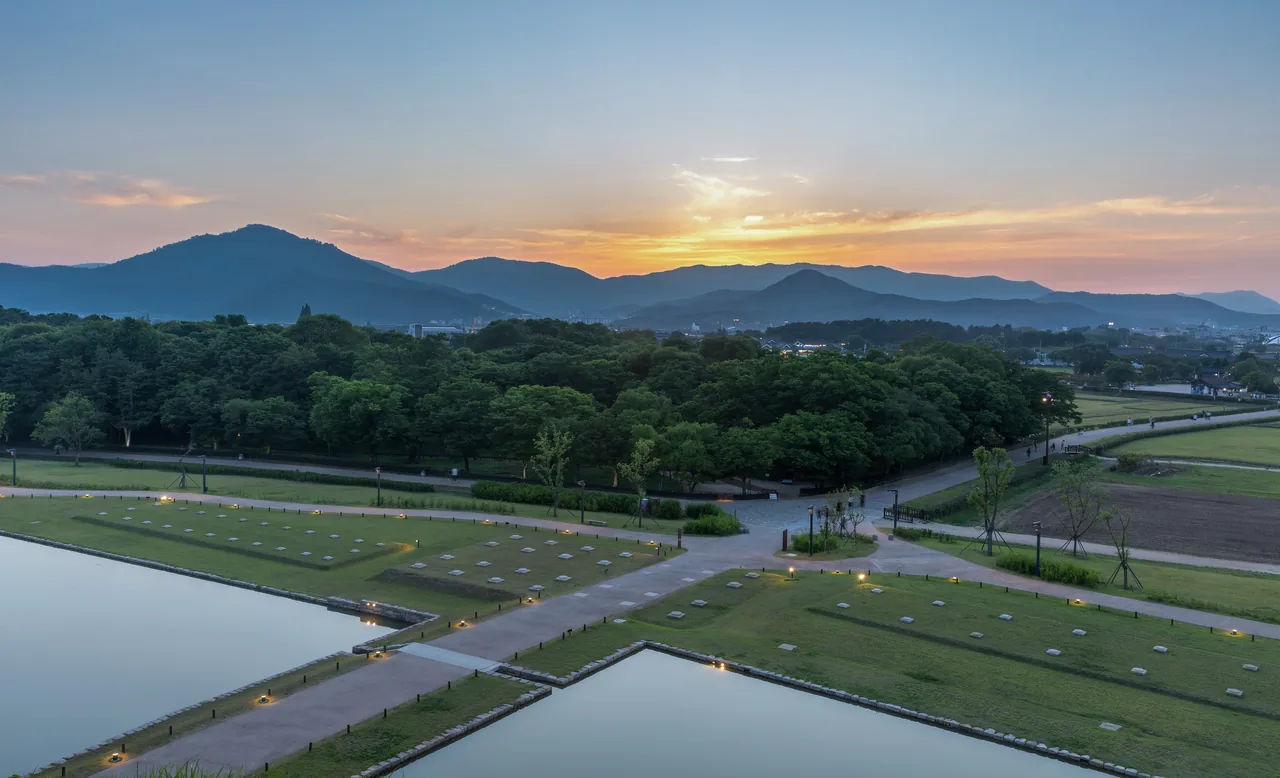
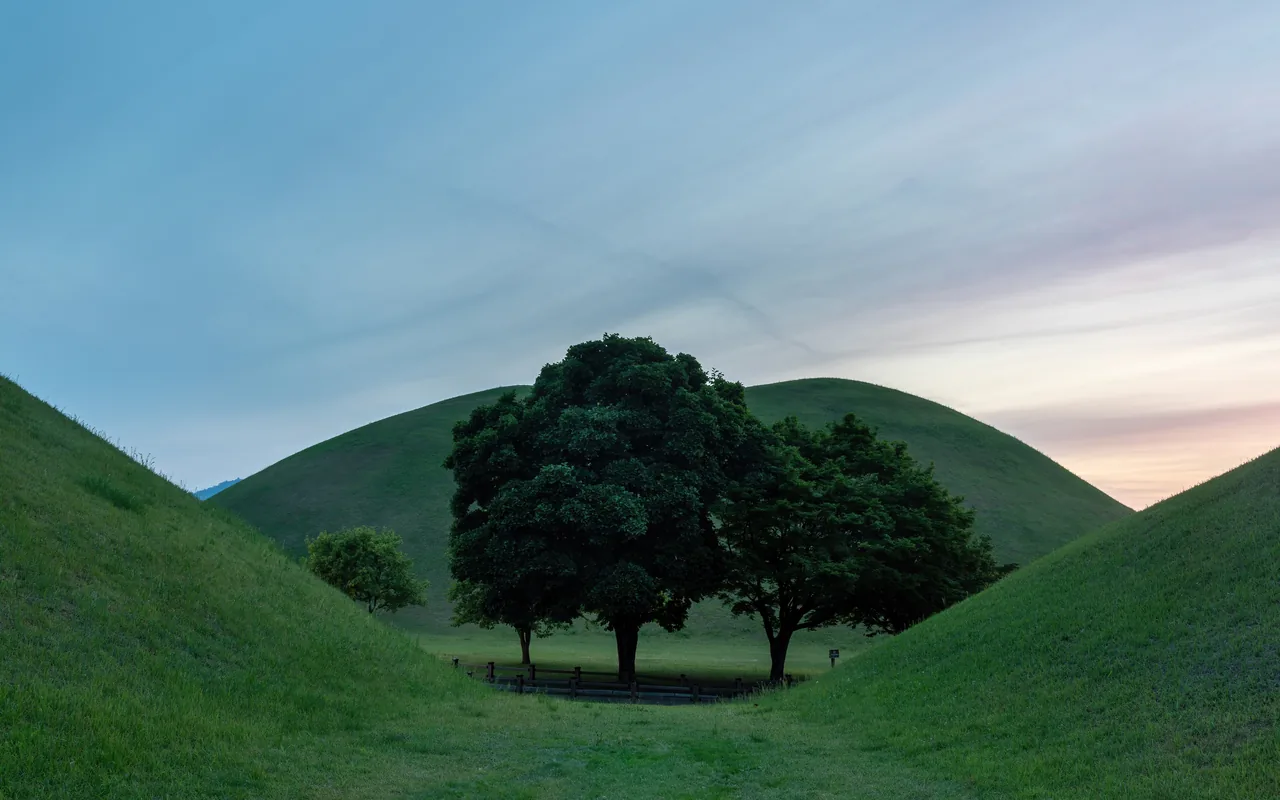
7. Daereungwon and Cheonmachong: the tombs in the middle of town
8. Cheomseongdae and Gyerim: fifteen minutes that anchor the whole valley
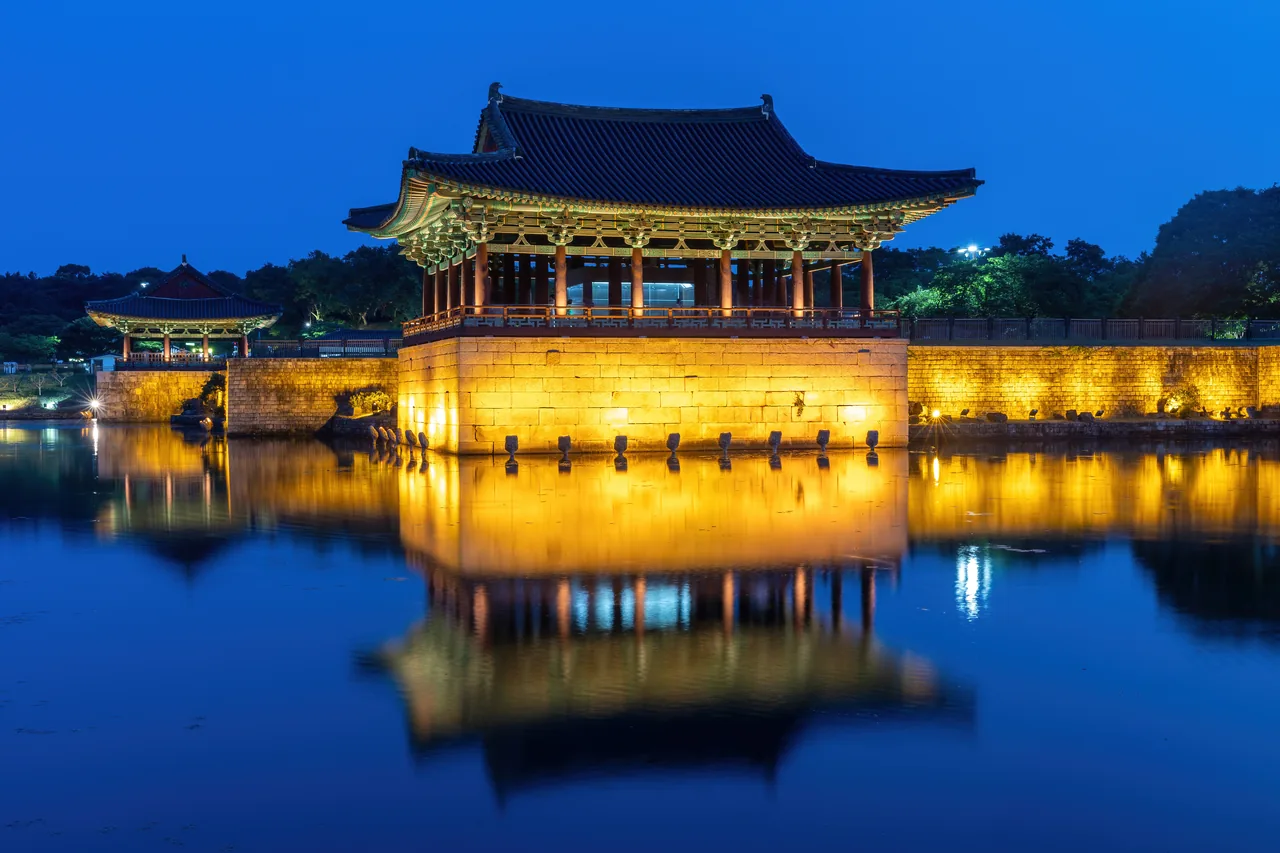
9. Donggung and Wolji: the one ticket worth buying, and buy it for the evening
10. Woljeonggyo: free, open until 22:00, and best after dark
11. Bulguksa: free since 2023, and the one distant sight worth the bus
12. Seokguram: an honest verdict on the most oversold stop in Gyeongju
13. Gyeongju National Museum: free, huge, and the smartest use of a hot afternoon
14. Hwangnidan-gil and Gyochon Hanok Village: what they are, honestly
15. Yangdong Village: UNESCO-listed, and not a day trip
16. Bomun Lake Resort: thirty free minutes on the way back from Bulguksa
17. Eating in Gyeongju: ssambap, two kinds of bread, and one street that no longer exists
18. Three day plans that actually fit ten hours
19. What a Gyeongju day trip actually costs
20. When to go: cherry blossom, autumn colour, and the summer problem
21. Accessibility, buggies and where to leave your bag
22. Twelve things that 2023 and 2024 guides get wrong
23. The honest weaknesses of a Gyeongju day trip
Gyeongju was the capital of the Silla kingdom for close to a thousand years, and the reason people call it a museum without walls is literal: the burial mounds of Silla kings sit between a coffee street and a car park, not behind a fence in a park somewhere. From Busan it is a genuinely easy day, but almost every English guide still in circulation was written before 2023 and gets the three things that matter most, the ticket prices, the station and the last bus, plainly wrong. This guide is built for someone based in Busan with no car, and it sits under our complete Busan Travel Guide as one of the strongest day trips out of the city. A comparable option in travel time is a day trip to Ulsan, which trades the ruins for coastline and lighthouses.
1. Does a Gyeongju day trip from Busan actually work?
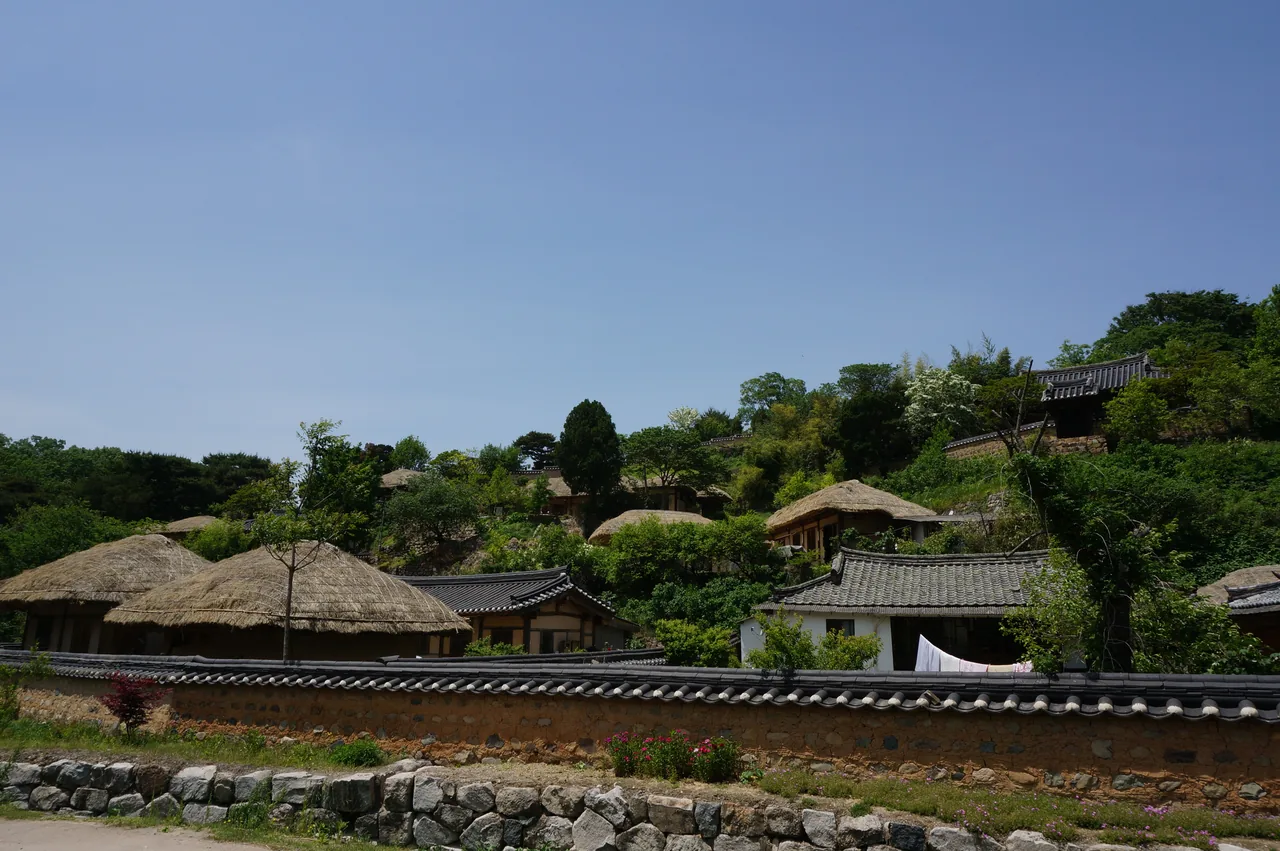
It works, and it works better than most Korean day trips, for one structural reason: the sights you came for are stacked on top of each other. Gyeongju city defines its historic centre as a 3 km radius you can see on foot or by bicycle, and the royal tomb park, the observatory, the palace pond, the stone bridge, the hanok village, the cafe street and the national museum are all inside it.
The catch is arithmetic. Leave Busan on an early bus and you are on the ground around 10:30; the last comfortable departure back is 20:30 to 21:00. That is about ten usable hours, and Gyeongju has more than ten hours of things in it.
| A Gyeongju day trip suits you if | It will disappoint you if |
|---|---|
| You want history you can walk between rather than drive between | You want a single blockbuster site and nothing else |
| You are happy with an early start and a late finish | You need to be back in Busan for dinner |
| You like the idea of ruins lit up at night, since four sights run to 22:00 | You are travelling in July or August and hate open sun |
| You are fine paying almost nothing in admission | You expect English-language guiding on the ground |
| You accept you will leave two or three famous things undone | You want to tick off every UNESCO listing in the area |
You do not need to know Silla history to enjoy this, but a small amount makes the stones stop being scenery. Here is the shortest honest version.
| Thing you will see | What it actually is |
|---|---|
| Grassy hills in the middle of town | Royal burial mounds. Silla buried its rulers in the capital itself, so the tombs are downtown rather than out in a necropolis |
| A squat stone tower in a field | Cheomseongdae, generally described as an astronomical observatory, and the one silhouette every Korean recognises instantly |
| A pond with pavilions on it | Donggung and Wolji, the pleasure garden of the Silla palace complex |
| Two temples on a mountain outside town | Bulguksa and Seokguram, the Buddhist half of Silla’s legacy and the reason the area is UNESCO-listed |
| A village of old wooden houses | Yangdong, a Joseon-era clan village, so several centuries newer than everything else here |
2. Every sight, with time, cost and closing hour
This is the whole decision on one screen. Times are realistic visiting times, not minimum times, and prices are 2026 adult walk-up rates.
| Sight | Adult price | Time needed | Closes | Reachable on foot from downtown |
|---|---|---|---|---|
| Daereungwon tomb park | Free | 40 to 60 min | 22:00 | Yes |
| Cheonmachong, inside Daereungwon | 3,000 won | +20 min | Evening, see below | Yes |
| Cheomseongdae | Free | 10 to 20 min | 22:00, 21:00 in winter | Yes |
| Gyerim wood | Free | 15 to 20 min | Open ground | Yes |
| Woljeonggyo bridge | Free | 20 to 30 min | 22:00 | Yes |
| Donggung and Wolji | 3,000 won | 40 to 60 min, up to 1.5 h at dusk | 22:00, last tickets 21:30 | Yes |
| Gyochon Hanok Village | Free | 30 to 45 min | Open village | Yes |
| Gyeongju National Museum | Free | 1.5 to 2.5 h | 18:00 weekdays, later at weekends | Yes |
| Hwangnidan-gil | Free | 1 to 2 h, 2 to 3 h with a meal | Shop hours | Yes |
| Bulguksa | Free | 1 to 2 h | Last entry 18:00 in summer | No, 11.4 km |
| Seokguram | Free | 15 to 20 min of viewing | Last entry 18:00 in summer | No, 12.6 km |
| Bomun Lake Resort | Free | 30 to 45 min, or 2 h for the full loop | Open area | No, 5.9 km |
| Yangdong Village | 4,000 won | 2 to 3 h, 5 h round trip | 19:00 Apr to Sep, 18:00 Oct to Mar | No, 18.9 km |
3. Getting there 1: the intercity bus from Nopo, and why it wins
For a standard day trip the bus from Busan Comprehensive Bus Terminal at Nopo is the right answer, and it is not close. The reason has nothing to do with speed and everything to do with where you end up: Gyeongju Intercity Bus Terminal is in Noseo-dong, a 10-minute walk from Daereungwon and Hwangnidan-gil.
| From | Fare | Journey | Runs per day | First | Last |
|---|---|---|---|---|---|
| Busan Comprehensive (Nopo) | About 7,700 won, all coaches premium seating | 50 min scheduled, about 60 min real | 47 to 50, every 15 to 20 min | 06:20 | 22:00 |
| Busan Seobu (Sasang) | 9,500 won | 1 h 07 min | 21 | Varies | Varies |
| Haeundae intercity bus stop | 10,500 won | 1 h 12 to 15 min | 13 to 15 | 07:20 | 21:20 |
Nopo is directly connected to Nopo Station on Busan Subway Line 1, which is the northern terminus, so from anywhere on Line 1 you simply ride to the end. The fare figure is drawn from ticketing aggregators rather than a carrier price list, so treat 7,700 won as close but confirm at the window.
4. Getting there 2: the KTX, and the trap nobody warns you about
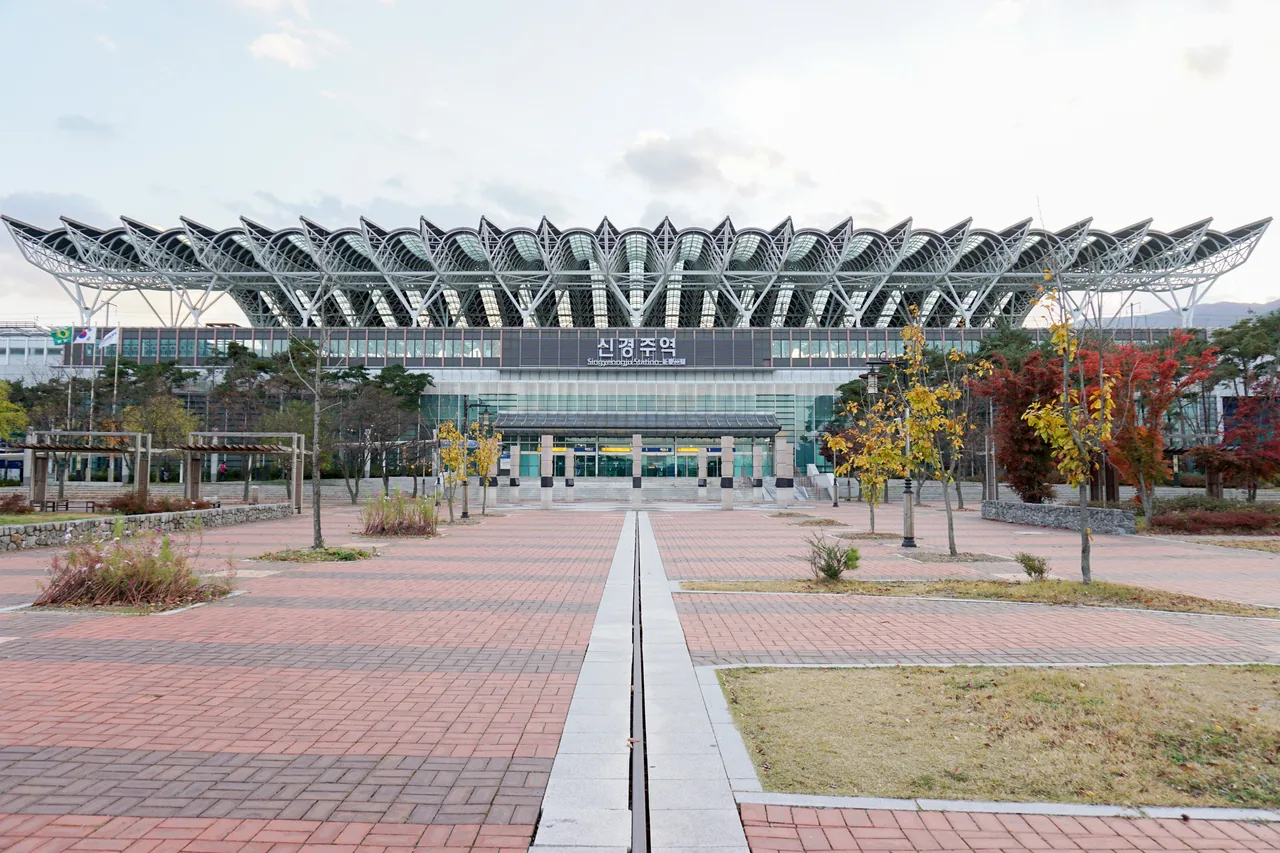
The KTX from Busan Station takes 27 to 34 minutes and costs 11,000 won, and then you are still 8.3 km from anything you want to see. This is the single most misleading number in Gyeongju travel writing.
| Service | Fare | Journey | Runs per day |
|---|---|---|---|
| KTX and KTX-Sancheon, Busan to Gyeongju | 11,000 won | 27 to 34 min | 33 to 42 combined with SRT |
| SRT, Busan to Gyeongju | 10,000 won | 27 to 34 min | Included in the above |
Getting from that station into town costs you roughly 30 minutes on a city bus, or a taxi at 15,000 to 20,000 won because the whole run sits in the surcharge zone. Add that to the 27 minutes and the KTX stops looking fast.
The Sin-Haeundae and Bujeon trains, which almost no English guide mentions
Since December 2024 the Jungang Line services running down to Bujeon have called at Gyeongju Station, and from 30 December 2025 they added stops at Centum, Sin-Haeundae and Gijang. If you are staying in Haeundae, you no longer need to travel across the city to Busan Station at all.
| Route | Train | Fare | Journey | Runs per day |
|---|---|---|---|---|
| Sin-Haeundae to Gyeongju | KTX-Eum | 10,900 won | 52 min | 15 in total, 05:29 to 21:08 |
| ITX-Maum | 8,700 won | 1 h 13 min | ||
| Mugunghwa | 5,800 won | 1 h 18 min | ||
| Bujeon to Gyeongju | KTX-Eum | 12,500 won | About 1 h | 22 in total, 05:11 to 20:50 |
| ITX-Maum | 10,100 won | 1 h 30 min | ||
| Mugunghwa | 6,800 won | 1 h 40 min |
The Mugunghwa from Sin-Haeundae at 5,800 won is the cheapest way to reach Gyeongju from anywhere in Busan. It still lands you at Geoncheon, so the 30-minute transfer into town applies to all of these.
| Your situation | Best option | Why |
|---|---|---|
| Standard day trip, staying anywhere central | Nopo intercity bus | Arrives downtown. Beats the train on total time and total cost once you add the transfer and the taxi surcharge |
| Staying in Haeundae | Mugunghwa or ITX from Sin-Haeundae | 5,800 to 8,700 won and no cross-city trek to Busan Station |
| Cheapest possible | Sin-Haeundae Mugunghwa, 5,800 won | Lowest fare of any option in this guide |
| Fastest on paper | Busan Station KTX, 27 min | True, and then add about 30 minutes to reach the tombs |
Driving is the fourth option: about 77 km and 1.5 to 2 hours depending on traffic. Tolls change often enough that we will not quote a figure; check the Korea Expressway Corporation site at ex.co.kr for the current amount.
5. Getting around Gyeongju: buses, bikes and a taxi surcharge that bites
Gyeongju moved to a single flat bus fare on 1 July 2025, so the old standing-fare and seated-fare split is gone. One tap gets you anywhere in the city, including out to Bulguksa.
| Rider | Cash | Transport card |
|---|---|---|
| Adult, 19 and over | 1,500 won | 1,450 won |
| Youth, 13 to 18 | 1,200 won | 1,150 won |
| Child, 6 to 12 | 800 won | 750 won |
The card discount is a flat 50 won rather than a percentage, so the real reason to tap a card is the transfer. Transfers are free across the whole city, once, within 30 minutes of getting off, excluding the same route number, and cash fares do not qualify. Gyeongju began offering free travel to residents aged 6 to 18 by card on 1 April 2026, though whether that applies to visiting or foreign children is not something we can confirm.
Which bus goes where
Routes changed on 15 July 2026 in a large reorganisation built around the KTX station, which now sees 249 services a day across routes 50, 51, 70, 700, 710 and 711. That is extremely recent, so printed leaflets and older blog posts are behind.
| Destination | Routes |
|---|---|
| Bulguksa | 10, 11, 12, 150, 150-1, 711, 1150 |
| Seokguram | 12 only |
| Yangdong Village | 203, 212, 252 |
| Bomun Lake Resort | 10, 11, 18, 100-1, 150, 150-1, 710 |
| Gyeongju Station, the KTX one | 50, 51, 60, 61, 70, 700, 710, 711, 1100, 1150, 1200, 1600 |
| Route | What it does | Frequency and hours |
|---|---|---|
| 10 | The workhorse loop: terminal, Gyeongju Station, Cheomseongdae and Daereungwon, Bunhwangsa, Bomun, Bulguksa, Gyeongju National Museum, Donggung and Wolji, back to the terminal | City says about every 20 min, 06:00 to 21:40. Terminal to Bulguksa takes 35 to 45 min |
| 11 | Route 10 run in reverse | Similar frequency. Sources disagree on whether it calls at Bulguksa, so do not rely on it for that leg |
| 12 | The Bulguksa to Seokguram shuttle, and the only bus up the mountain | Hourly, about 9 runs a day, 08:40 to 16:40. Leaves Bulguksa at 40 past the hour and Seokguram on the hour. 17 to 20 min each way |
| 203 | Intercity terminal, express terminal, Gyeongju Station, Yangdong Village, Oksan Seowon | 10 runs a day, averaging one every 100 min, 07:30 to 20:15 |
| 700 | Gyeongju Station, terminal, Donggung and Wolji, Bomun, Bulguksa, Gampo | Listed as hourly, but from Gyeongju Station the real pattern is four runs a day: 07:50, 08:50, 13:50 and 14:50 |
Taxis, and the 55 percent surcharge
| Item | Rate from 1 February 2026 |
|---|---|
| Flagfall | 4,500 won for the first 1.7 km |
| Distance | 100 won per 128 m |
| Time, below 15 km/h | 100 won per 30 seconds |
| Late night | Plus 20 percent, 23:00 to 04:00 |
| Out-of-area surcharge | Plus 55 percent |
The surcharge applies once you leave a 5 km radius centred on Gyeongju Arts Center in Hwangseong-dong. That radius excludes the KTX station, Bomun, Bulguksa and Gyeongju World, so every one of those trips is charged at 55 percent above the meter rate, in both directions.
| Trip | Rough fare | How solid is this |
|---|---|---|
| Gyeongju Station to Hwangnidan-gil | 15,000 to 20,000 won | Two reported fares plus estimate, so treat it as a range |
| Intercity terminal to Bulguksa | Around 13,000 to 16,000 won | Indicative only, not verified |
| Bulguksa to Seokguram | Around 10,000 to 13,000 won | Indicative only, not verified |
| Downtown to Yangdong Village | Around 20,000 to 25,000 won | Indicative only, not verified |
Tasilla public bikes
| Pass | Price |
|---|---|
| One day, 24 hours | 1,000 won |
| One week | 2,500 won |
| One month | 5,000 won |
A day pass gives you 150 minutes per hire, with 500 won per extra 30 minutes, and returning the bike resets the clock so a chain of short hops costs you nothing beyond the 1,000 won. There are roughly 100 docks and 300 bikes, including around Hwangnidan-gil and Daereungwon; hire runs 07:00 to 22:00 and returns are accepted around the clock.
6. What you can walk to, and what you cannot
This is the single most useful thing to understand about Gyeongju: seven of its best sights are one continuous walk. Daereungwon, Cheomseongdae, Gyerim, Woljeonggyo, Gyochon village, Hwangnidan-gil and Gyeongju National Museum all sit within about 1.5 km of each other.
| Leg | On foot |
|---|---|
| Hwangnidan-gil to Daereungwon | 500 m, about 7 min |
| Daereungwon to Cheomseongdae | About 5 min |
| Cheomseongdae to Gyerim | About 5 min |
| Gyerim to Woljeonggyo | About 10 min |
| Woljeonggyo to Donggung and Wolji | 15 to 30 min depending on the route you pick |
| Whole chain | Roughly 2.5 to 3 km, 40 minutes to an hour of actual walking |
Two official Gyeongju walking routes give different numbers for the same legs, because one loops around the Wolseong palace mound and the other cuts back past Cheomseongdae. If you take the Cheomseongdae line between Woljeonggyo and Wolji, it is the short version.
| Destination | Straight-line distance from Cheomseongdae | Verdict |
|---|---|---|
| Bomun Lake Resort | 5.9 km | Bus, but it is on the way to Bulguksa |
| Gyeongju Station, KTX | 8.3 km | Bus or taxi, about 30 min |
| Bulguksa | 11.4 km | Bus 10, 35 to 45 min from the terminal |
| Seokguram | 12.6 km | Bus 12 from Bulguksa only |
| Yangdong Village | 18.9 km | Bus 203, ten runs a day |
7. Daereungwon and Cheonmachong: the tombs in the middle of town
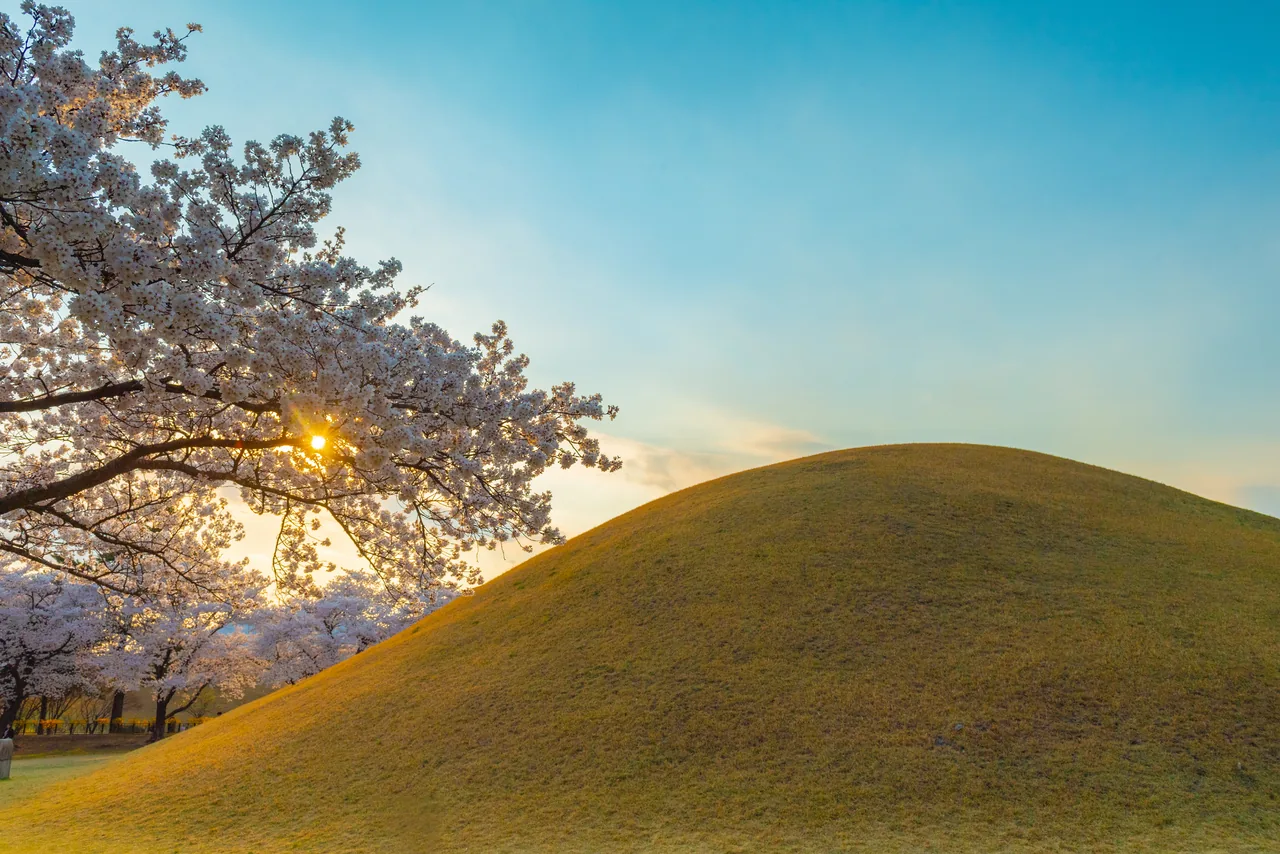
Daereungwon has been free since 4 May 2023, and any guide still quoting 3,000 won for entry is out of date. The park is a field of grass-covered royal burial mounds with paths between them, and it opens 09:00 to 22:00 with the ticket window closing at 21:30.
Allow 40 to 60 minutes to walk it properly. The mounds are large enough that photographs never quite convey the scale, and the walk between them is flat and easy.
| Detail | Daereungwon |
|---|---|
| Admission | Free since May 2023 |
| Hours | 09:00 to 22:00 |
| Time needed | 40 to 60 min, plus 20 min for Cheonmachong |
| Cheonmachong entry | 3,000 won adult, 2,000 youth, 1,000 child |
| Terrain | Flat, described by the city as an easy path, buggy and wheelchair friendly |
| Parking | Paid municipal lot, free at the Jjoksaem lot |
Cheonmachong is the one mound that has been excavated and opened up, so you walk inside and see the burial chamber and the finds. It is the only paid thing in the park, and 3,000 won for twenty minutes is the best-value ticket in Gyeongju after the museum, which is free.
Gyeongju runs a free projection-art event at Daereungwon in late summer and autumn. The 2025 edition drew 600,000 people in 24 days, 50,000 of them from abroad, so expect crowds. Showtimes for 2026 had not been published when this was written, so check on the day rather than planning your evening around a start time you found online.
8. Cheomseongdae and Gyerim: fifteen minutes that anchor the whole valley
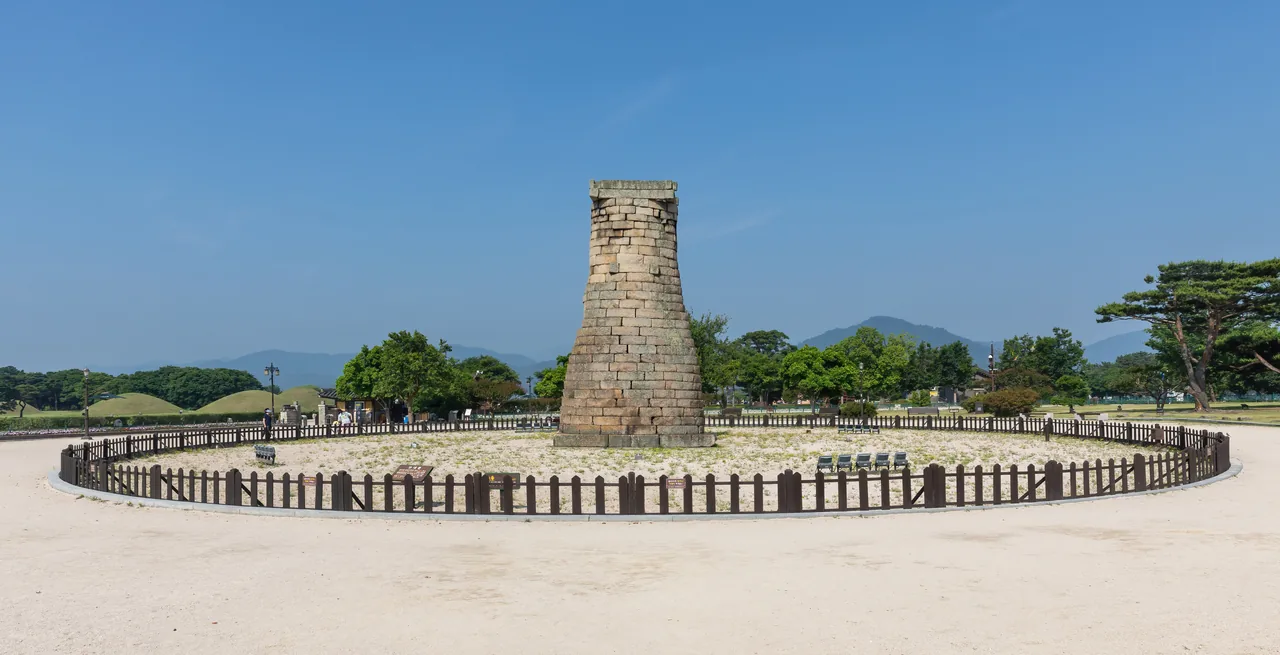
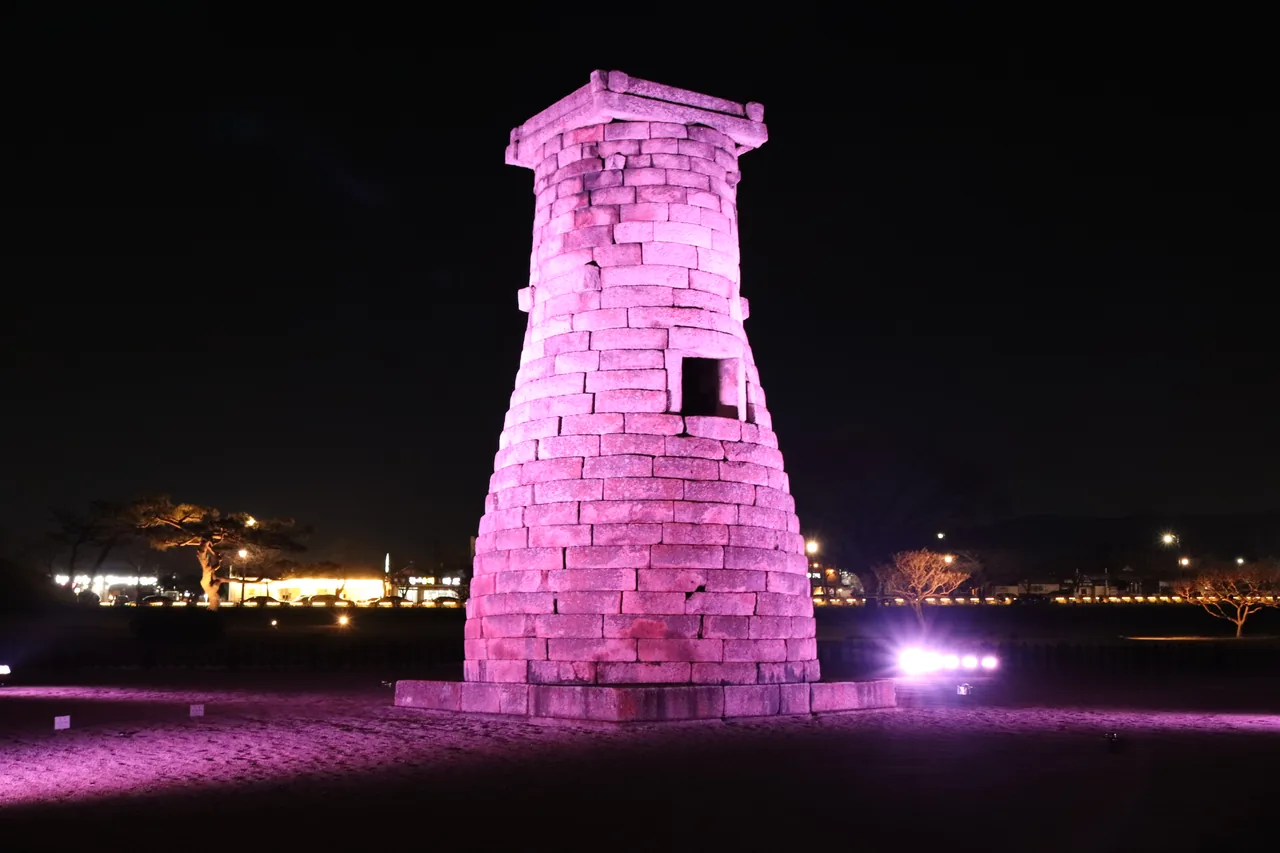
Cheomseongdae is free, open until 22:00 in summer and 21:00 in winter, and takes ten to twenty minutes. It is a low, bottle-shaped stone tower standing alone in an open field, and it is the image on almost every piece of Gyeongju tourism material.
Be honest with yourself about what it is: a small structure you look at, walk around and photograph. Its value is that it costs nothing, sits between two things you were going to see anyway and is genuinely striking after dark once the lighting comes on.
| Cheomseongdae | Gyerim | |
|---|---|---|
| Price | Free | Free |
| Hours | 09:00 to 22:00, earlier in the colder months | Open ground |
| Time | 10 to 20 min | 15 to 20 min |
| Terrain | Flat and barrier-free, but no wheelchair hire on site | Flat wooded paths |
| Best season | Pink muhly grass late September to late October, tulips and rape flowers in April, poppies in May | Early November foliage |
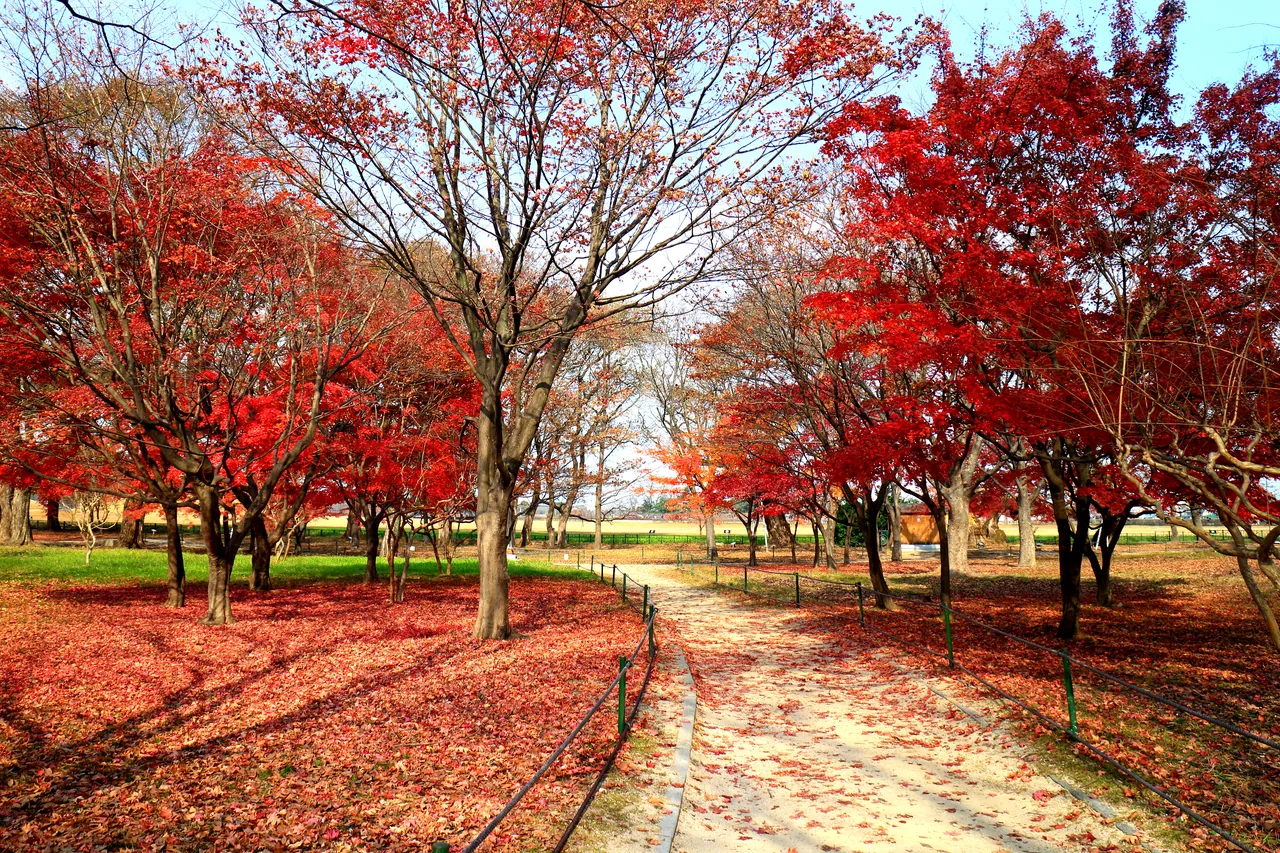
Gyerim is a small ancient wood a few minutes further on, wrapped up in the founding legends of Silla’s royal houses. It matters practically for one reason: it is the only free autumn foliage spot in Gyeongju that a day tripper without a car can actually reach, and it peaks in early November.
9. Donggung and Wolji: the one ticket worth buying, and buy it for the evening
Donggung and Wolji costs 3,000 won, opens 09:00 to 22:00 with last tickets at 21:30, and there is no separate night ticket. One daytime ticket carries you straight through to closing, which is the detail that makes a Gyeongju evening possible.
It is a reconstructed palace annexe beside a pond, and it is unambiguously better at night, when the pavilions are lit and reflected in the water. Forty minutes to an hour is enough; allow an hour and a half if you arrive before sunset and want to watch the lights come on.
| Ticket | Individual | Group |
|---|---|---|
| Adult | 3,000 won | 2,400 won |
| Youth and serving military | 2,000 won | 1,600 won |
| Child | 1,000 won | 800 won |
| Season | Approximate sunset in Gyeongju | Arrive by |
|---|---|---|
| Midsummer | Around 19:40 | 19:00 |
| Spring and autumn equinox | Around 18:20 | 17:45 |
| Midwinter | Around 17:15 | 16:45 |
Those sunset figures are calculated approximations rather than published times, so give yourself a buffer. Arriving in the last light and staying half an hour into the illumination is the single best-value hour in a Gyeongju day trip.
10. Woljeonggyo: free, open until 22:00, and best after dark
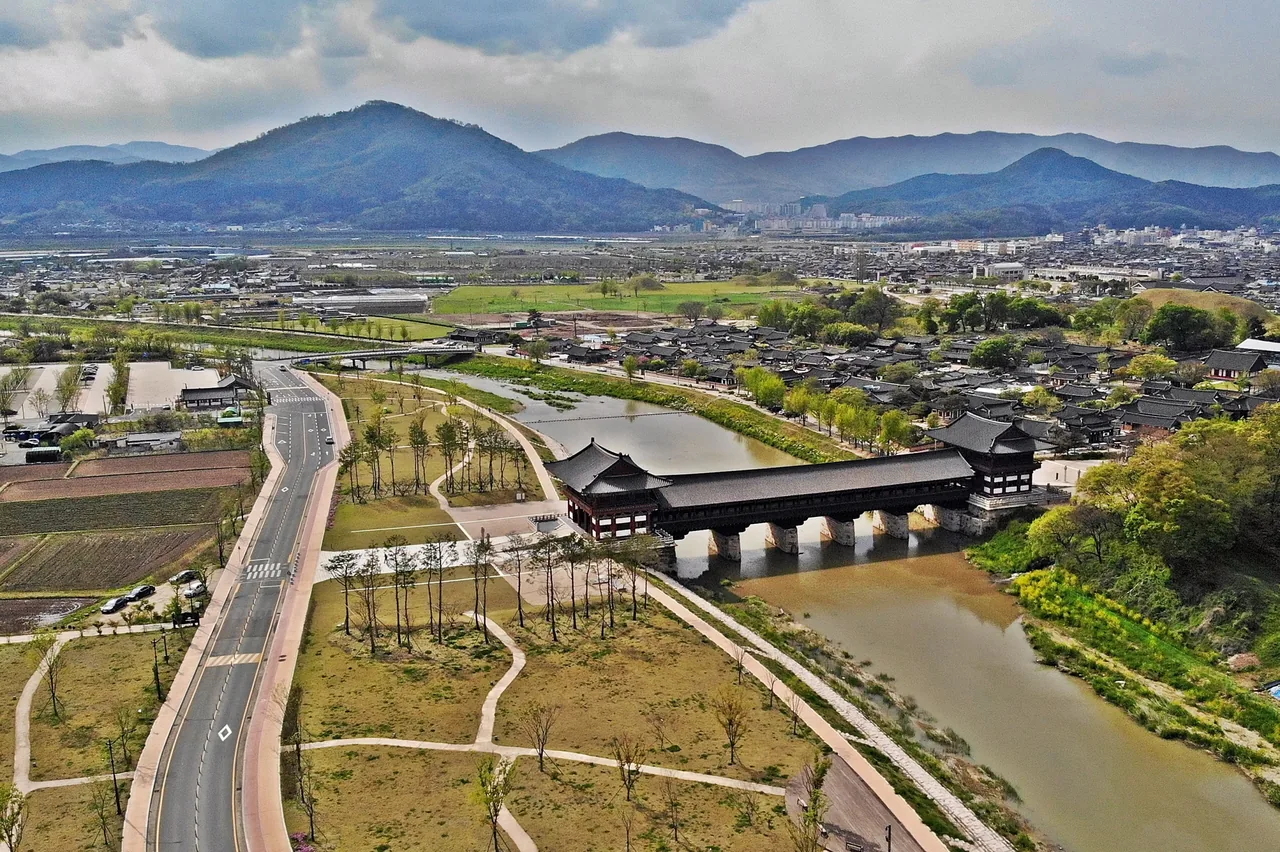
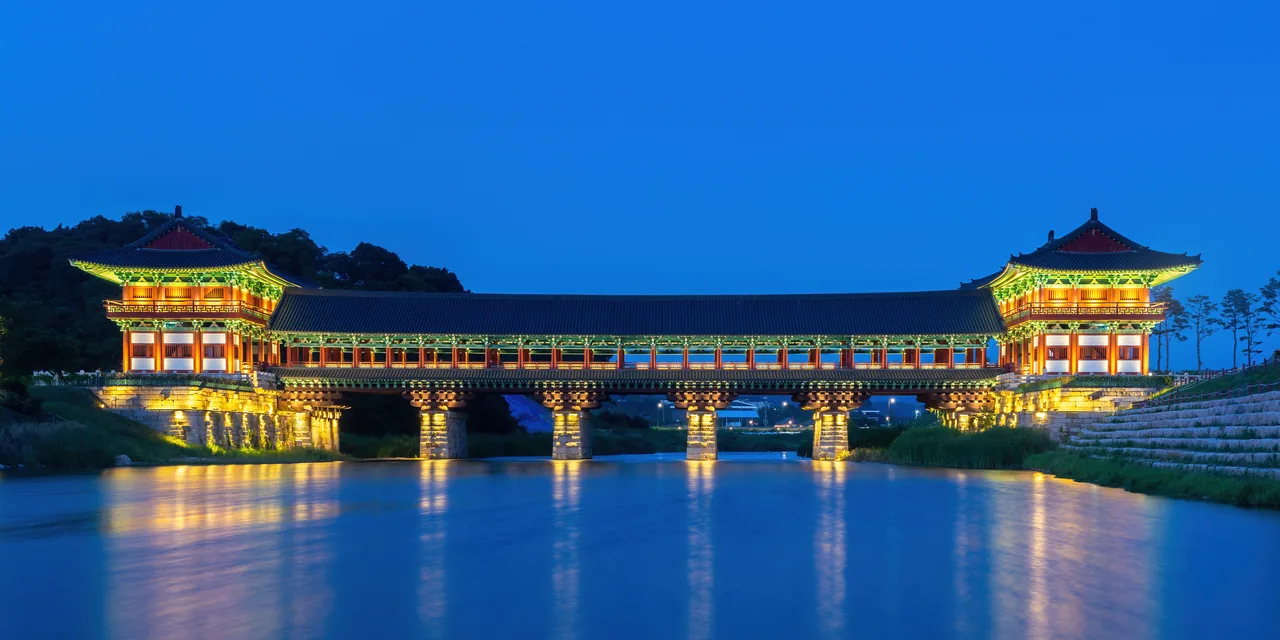
Woljeonggyo is a reconstructed covered wooden bridge over the Namcheon stream, it costs nothing, and it is open until 22:00 with a free public car park. Twenty to thirty minutes covers it.
By day it is handsome but quiet. Lit up at night, with the whole span reflected in the water, it is one of the three night-time sights the city built its evening tourism strategy around, alongside Donggung and Wolji and Cheomseongdae.
| Detail | Woljeonggyo |
|---|---|
| Price | Free |
| Hours | 09:00 to 22:00 |
| Time needed | 20 to 30 min |
| Walk from Gyerim | About 10 minutes |
| Walk to Gyochon Hanok Village | Immediately adjacent |
| Parking | Free public car park |
There is an exhibition space in the bridge structure itself, but the only opening hours we can find for it date from 2018, so we are not going to quote them. If it is open when you pass, look in; if not, you have lost nothing.
11. Bulguksa: free since 2023, and the one distant sight worth the bus
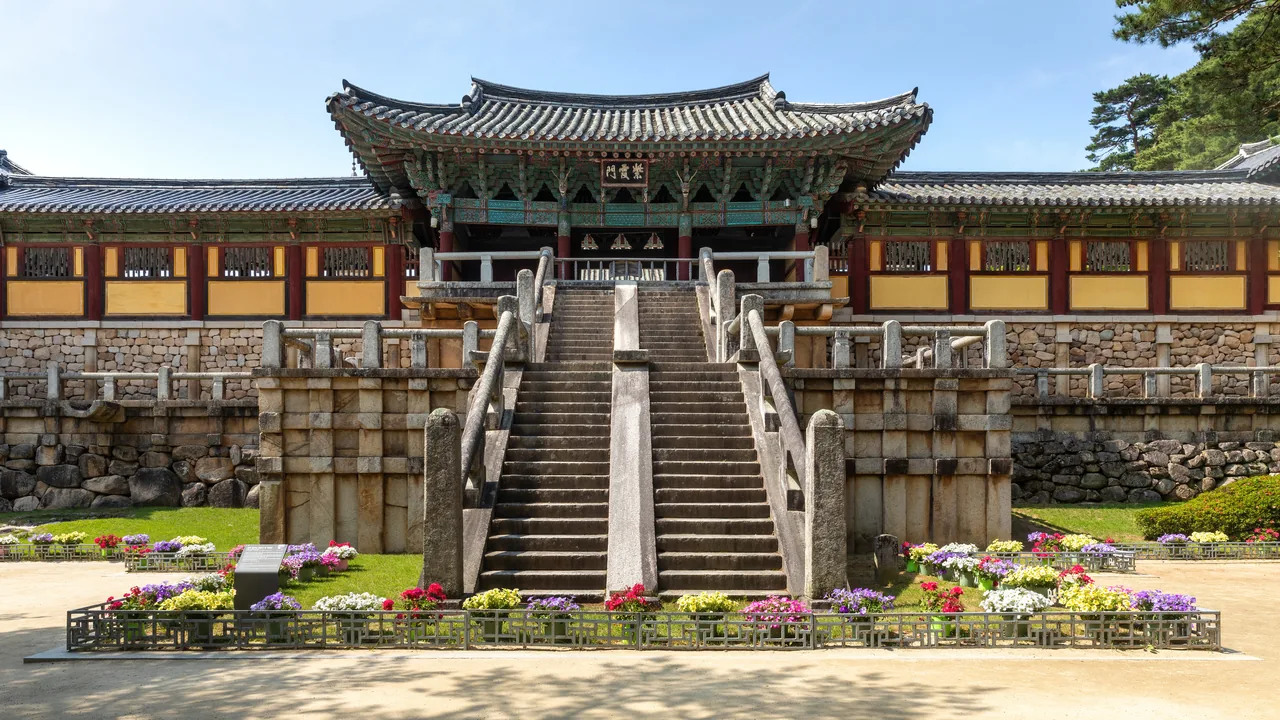
Bulguksa has charged nothing since 4 May 2023. If a guide tells you 6,000 won, that guide is at least three years old. Even Gyeongju city’s own website still carries the abolished adult price on one of its pages, so this is not a mistake you should feel silly for making.
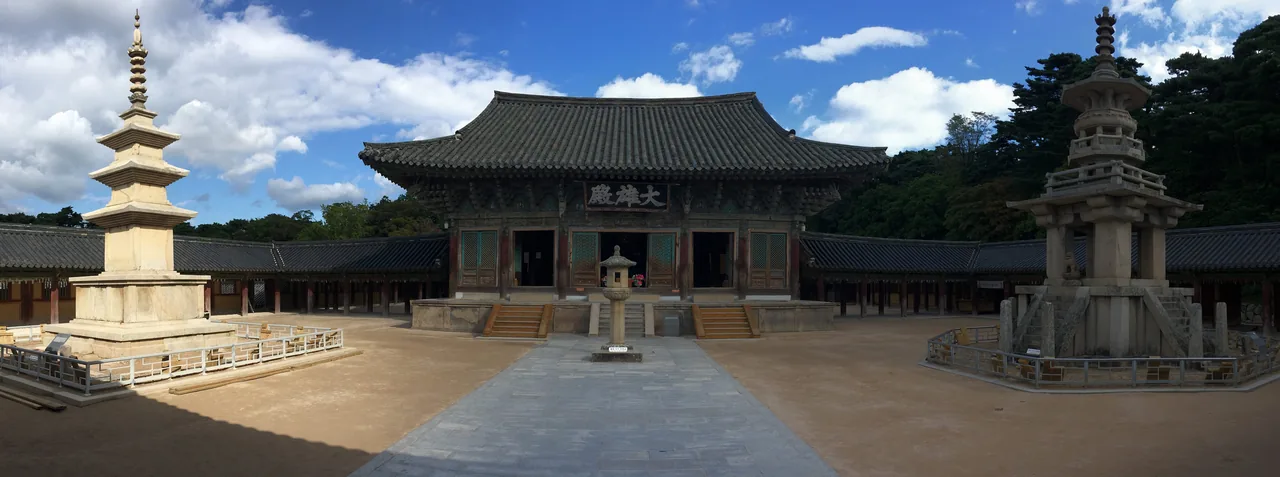
The temple is a terraced complex of stone platforms, staircases and halls, with the Seokgatap and Dabotap pagodas in the main courtyard. Give it an hour and a half, two if you are the kind of person who reads every sign.
| Period | Last entry |
|---|---|
| March to September | 09:00 to 18:00 |
| February and October | 09:00 to 17:30 |
| November to January | 09:00 to 17:00 |
| Detail | Bulguksa |
|---|---|
| Admission | Free |
| Closed | Never, open every day of the year |
| Time needed | 1 to 2 hours |
| Buses from downtown | 10, 11, 12, 150, 150-1, 711, 1150 |
| Journey from the terminal | 35 to 45 min on route 10 |
| Parking | Chargeable, and published rates conflict, so we will not quote one |
Bulguksa is also Gyeongju’s best autumn foliage site, peaking in early November, and its cherry blossom is the last in the city to open because it includes late double-flowered varieties that come out in the middle to late part of April.
12. Seokguram: an honest verdict on the most oversold stop in Gyeongju
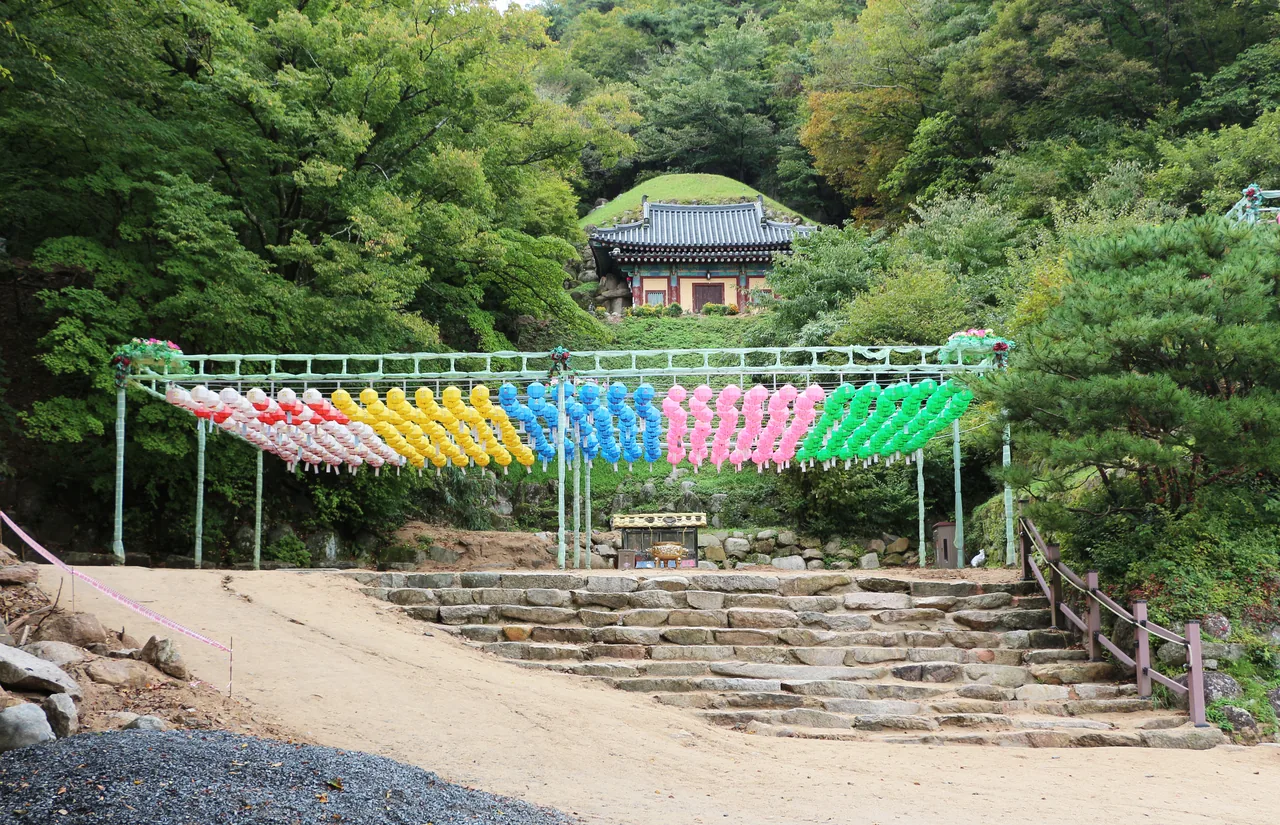
Seokguram is free, spectacular in principle and, on a ten-hour day trip, usually the wrong choice. Here is why, laid out plainly, because almost nobody writes this down.
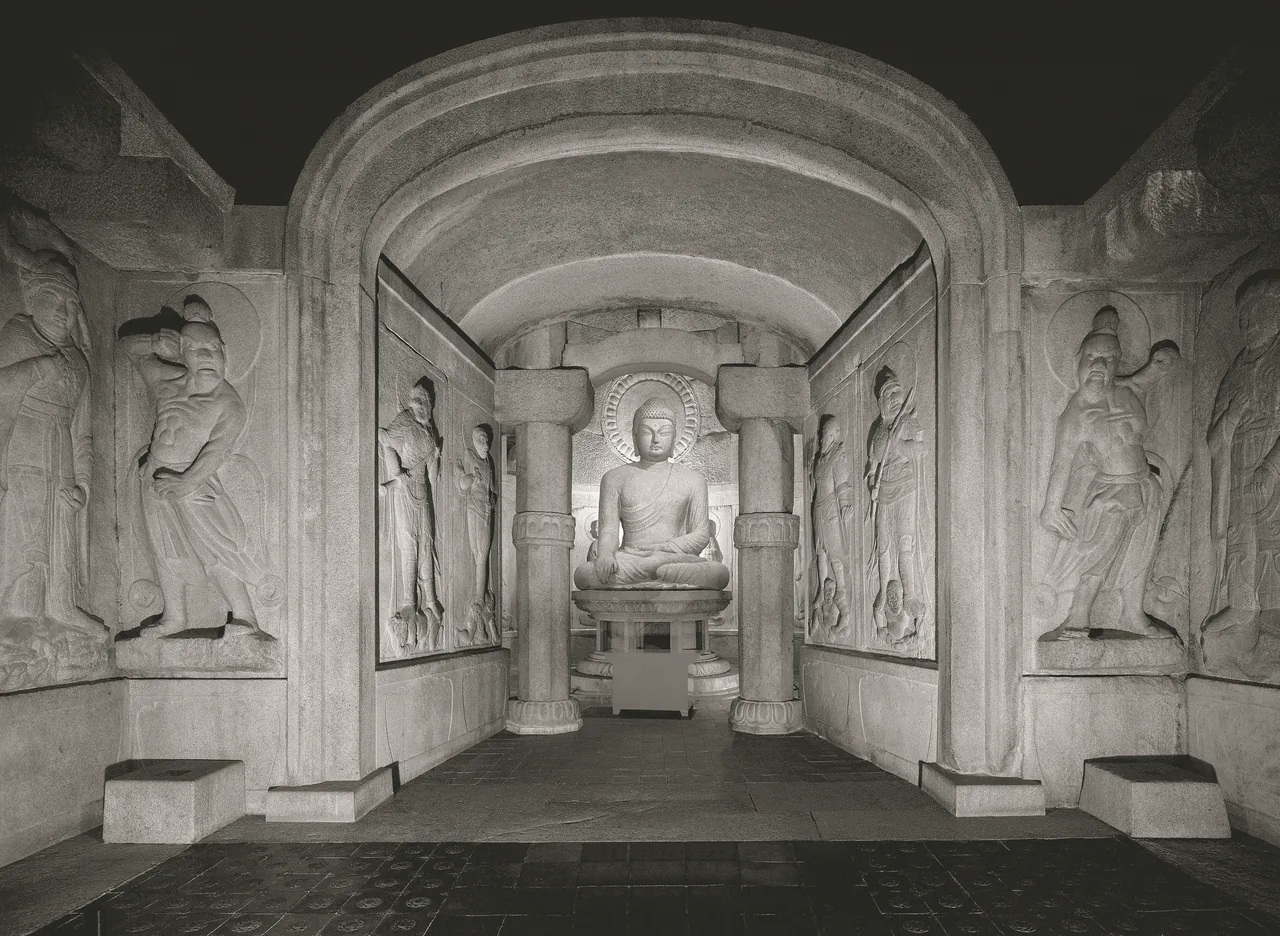
You do not go inside the rotunda. Conservation rules mean you view the seated Buddha and the wall reliefs from the antechamber, through a glass partition, and photography inside is prohibited. Actual viewing time is 15 to 20 minutes.
| What it costs you | Time |
|---|---|
| Bus 12 up from Bulguksa | 17 to 20 min |
| Walk from the car park to the grotto | Allow 10 min, sources disagree |
| Viewing the Buddha | 15 to 20 min |
| Waiting for the next bus down, hourly service | Up to 60 min |
| Bus 12 back down | 17 to 20 min |
| Total out of your day | 1.5 to 2 hours |
On a ten-hour day, one and a half to two hours is not a rounding error. Spending it on Seokguram removes, entirely, one of the following: the whole of Gyeongju National Museum, or the Woljeonggyo and Gyochon pair, or sunset at Donggung and Wolji.
| Go to Seokguram if | Skip it if |
|---|---|
| Completing the UNESCO listing genuinely matters to you | This is your first visit and you want density |
| You are on a chartered or guided tour where the waiting disappears | You are relying on bus 12 and arriving after lunch |
| You have decided to skip downtown Gyeongju altogether | You would rather have the museum, or the evening lights |
| You want the mountaintop setting and the forest approach for their own sake | Looking at a masterpiece through glass, without photographs, would frustrate you |
13. Gyeongju National Museum: free, huge, and the smartest use of a hot afternoon
The museum is free, holds the finds from every tomb and temple you have been looking at, and needs 1.5 to 2.5 hours. It is also indoors and air-conditioned, which in July and August makes it the single most strategically useful building in the city.
Its Wolji Hall reopened on 17 October 2025 after an 18-month refurbishment. The museum drew 1.98 million visitors in 2025, up 45 percent and its highest in thirty years, so it is not a quiet backwater.
| Detail | Gyeongju National Museum |
|---|---|
| Admission | Free |
| Weekdays | 10:00 to 18:00 |
| Sundays and public holidays | 10:00 to 19:00 |
| Extended evenings | Until 21:00 on some Saturdays and on the last Wednesday of the month, though published schedules conflict, so confirm for your date |
| Last admission | 30 minutes before closing |
| Closed | 1 January, Seollal and Chuseok, plus one Monday in March and one in November for maintenance |
| Lockers | Free |
| Access | Fully accessible: lifts, step-free routes throughout, wheelchairs and buggies on loan |
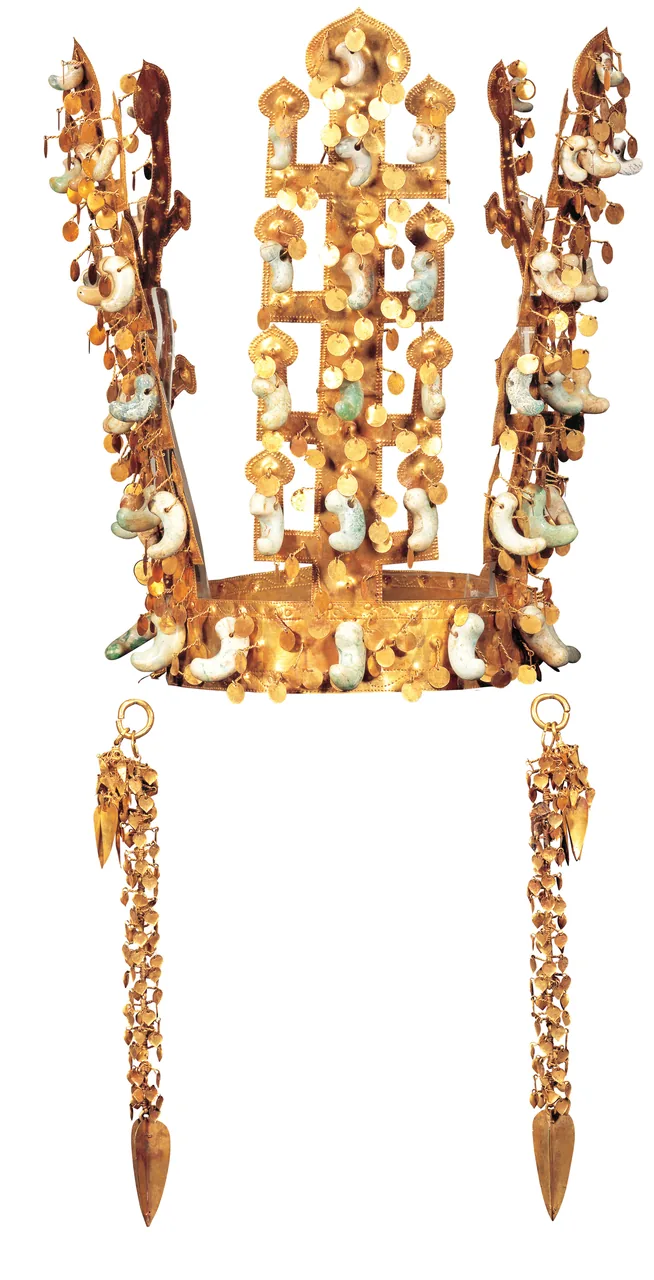
The special exhibition on Silla gold crowns closed on 22 February 2026, so if that is what brought you, it has gone. The permanent galleries are the reason to come and they are not going anywhere.
14. Hwangnidan-gil and Gyochon Hanok Village: what they are, honestly
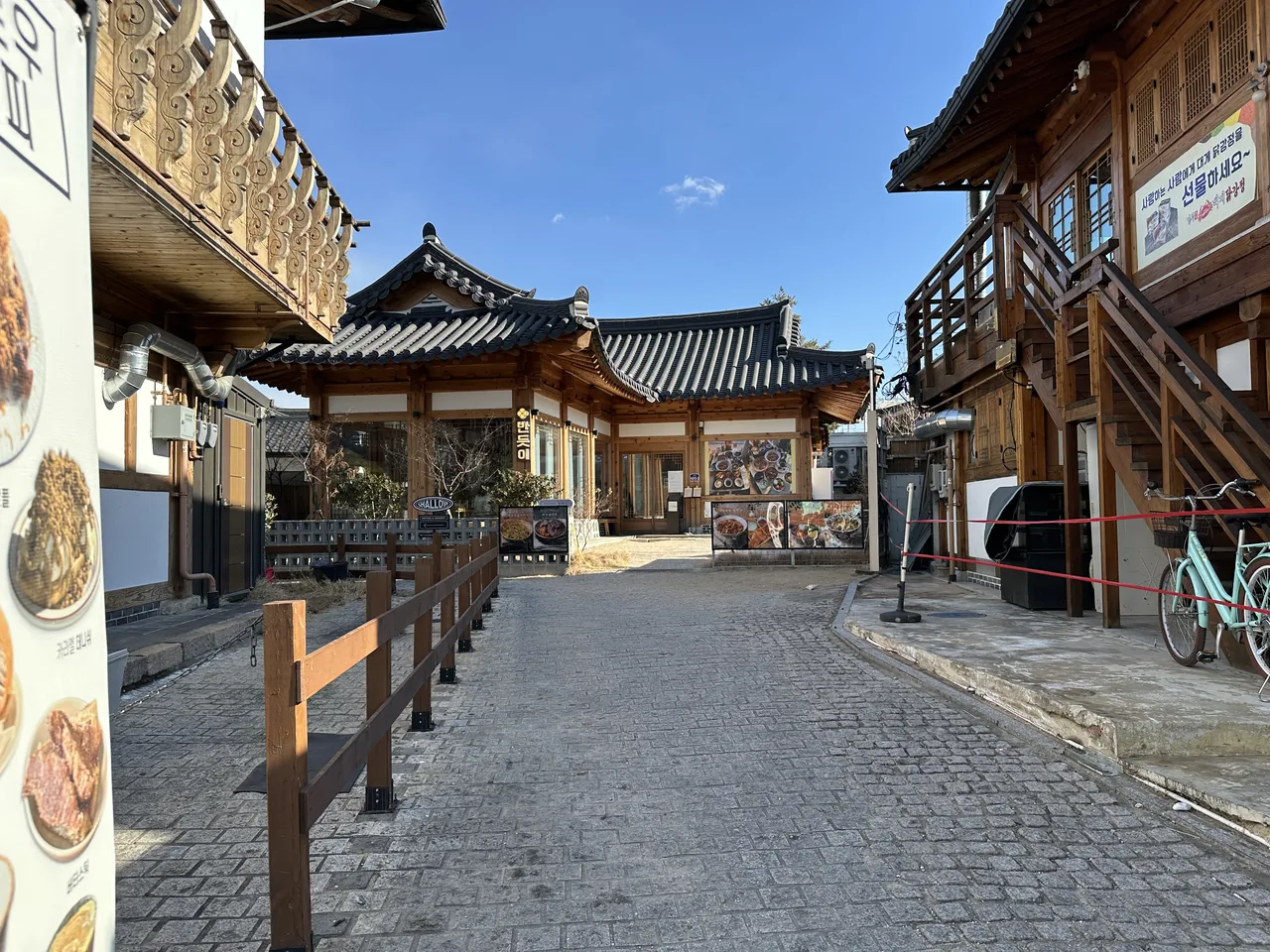
Hwangnidan-gil is a cafe and shopping street, not a historic one, and it is worth one to two hours precisely because it costs you nothing to get to. The name is a portmanteau of Hwangnam-dong and Seoul’s Gyeongnidan-gil, and it dates from around 2017.
The strip runs along Poseok-ro between Naenam junction and the Hwangnam Elementary School junction. What you are walking through is low-rise 1960s and 1970s buildings re-let as cafes, gift shops and restaurants, and it is on Korea’s list of 100 must-visit destinations.
| Argument for | Argument against |
|---|---|
| 500 m from Daereungwon and 1 km from the bus terminal, so the travel cost is effectively zero | There is no history here. The buildings are half a century old, not a millennium |
| Your lunch, your coffee and your Hwangnam-ppang are all genuinely on this street | Weekend afternoons make it the most congested point in Gyeongju |
| It gives you a sit-down break in the middle of a long walking day | Gentrification has pushed out much of the original resident trade, a well-documented local complaint |
Treat it as the place you eat and rest between sights rather than as a destination. One to two hours, or two to three if you take a proper meal there.
A 894-space municipal car park at 428 Sajeong-dong opened on 3 January 2026 at a cost of 24.5 billion won, which retired the old “parking here is impossible” advice. It was free for the first half of the year and the city has been moving towards charging; whether that has taken effect is not something we can confirm. It runs full most weekend afternoons regardless. The street itself is being narrowed to widen the pavements and converted to one-way traffic.
Gyochon Hanok Village sits next to Woljeonggyo and is an open village with no gate and no set hours. The Choi family residence inside it, the house of the famous Gyeongju landowning clan, is free and open 09:00 to 18:00, closing at 17:00 in winter. Thirty to forty-five minutes is enough for both.
15. Yangdong Village: UNESCO-listed, and not a day trip
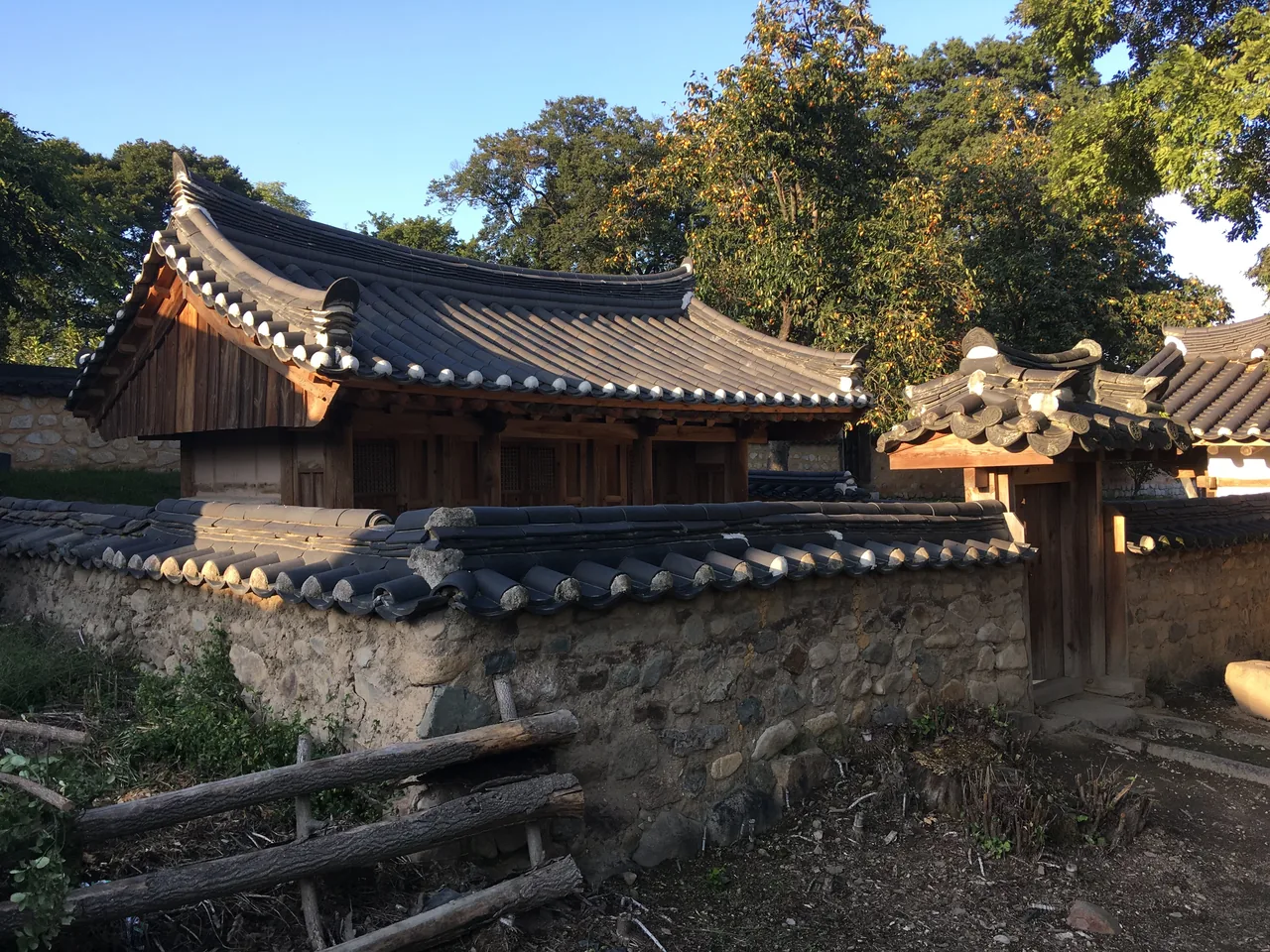
Yangdong is a genuine 54-house Joseon clan village, jointly inscribed by UNESCO with Hahoe in 2010, and on a Busan day trip the verdict is no. This is not snobbery about buses. It is a five-hour round trip out of a ten-hour day.
| Element | Cost in time |
|---|---|
| Bus 203 out, one of only ten runs a day | Plus up to 100 min of waiting |
| The village itself | 2 to 3 hours |
| Bus 203 back, same headway | Plus up to 100 min of waiting |
| Realistic total | About 5 hours |
| Ticket | Individual | Group |
|---|---|---|
| Adult | 4,000 won | 3,400 won |
| Youth | 2,000 won | 1,700 won |
| Child | 1,500 won | 1,200 won |
Opening hours are 09:00 to 19:00 from April to September and 09:00 to 18:00 from October to March, with the ticket office closing an hour before. It is the one major Gyeongju sight that shuts at sunset rather than at 22:00, which makes it structurally incompatible with an evening in the city.
Yangdong is a village of the Wolseong Son and Yeogang Yi clans, several hundred years newer than the Silla material downtown. It belongs to a two-night trip, a car, or a guided tour, not to a day out of Busan.
16. Bomun Lake Resort: thirty free minutes on the way back from Bulguksa
Bomun is a purpose-built resort district around a lake, and its correct role in a day trip is a 30 to 45 minute stop, not a destination. Buses 10 and 11 pass through it on the way to and from Bulguksa, so the travel cost is zero.
The full lakeside loop is 8 km and takes about two hours by the city’s own reckoning. That is a lovely walk and it will eat a third of your day, so save it for a longer trip.
| Option at Bomun | Time | Fits a day trip? |
|---|---|---|
| Bomunjeong pavilion and a short stretch of the lakeside path | 30 to 45 min | Yes, and it is free |
| Full 8 km lake circuit | About 2 hours | No |
| Gyeongju World theme park | Most of a day | No |
| Gyeongju Expo Park with Solgeo Art Museum | Half a day, 12,000 won adult | Rarely |
Bomun has had substantial money spent on it recently: 15 billion won of landscape work including a 15 m egg-shaped landmark, media poles, a laser show and a pleasure boat, plus a permanent night-lighting programme worth 2.35 billion won that ties Daereungwon, Cheomseongdae, Woljeonggyo and the Bomun lakeside into a single evening circuit. An autonomous shuttle began running a 9.7 km route with two eight-seat vehicles on 25 June 2026 and is scheduled to continue to 20 February 2027, though fares, hours and booking are not published in a form we would repeat.
The lakeside path is also the most wheel-friendly walk in Gyeongju: the city describes it as having no slopes and no steps at all.
17. Eating in Gyeongju: ssambap, two kinds of bread, and one street that no longer exists
The most Gyeongju thing you can eat, and the most convenient, is ssambap, and the ssambap restaurants are concentrated around Daereungwon. A ssambap set is grilled fish or meat, a home-style soybean stew and a spread of leaves to wrap it all in, and the cluster is officially recognised as a destination in its own right.
Because that cluster sits inside the walkable core, lunch does not cost you any travel time at all. That is worth more on a tight day than any specific restaurant recommendation.
Hwangnam-ppang, and the family story every guide gets wrong
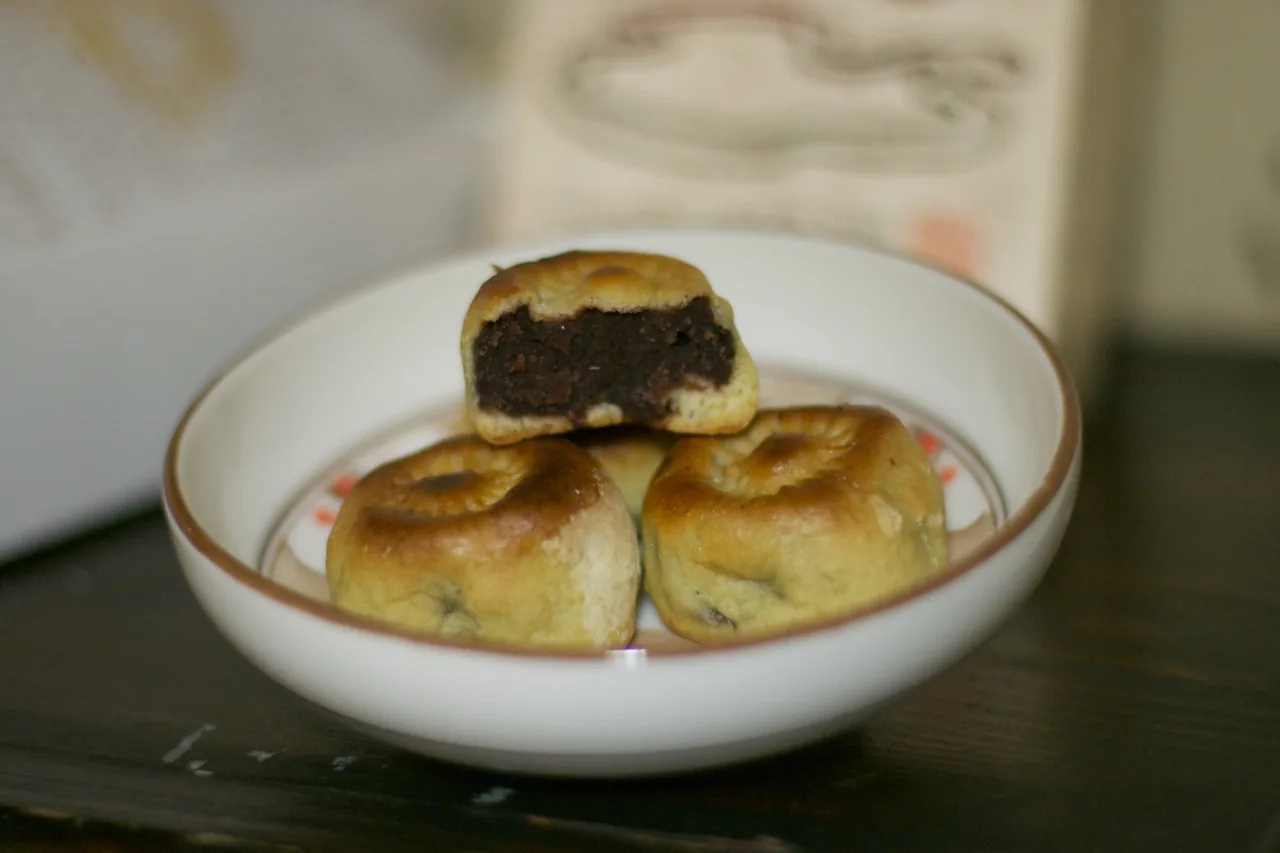
All three of the famous Gyeongju bean-paste bakeries descend from one man. Choi Yeong-hwa started baking in Noseo-ri in 1937, created the pastry in 1938, and moved to Hwangnam-ri in 1939, which is where the name comes from.
| Brand | Lineage | Where | What is different |
|---|---|---|---|
| Hwangnam-ppang | The second son, who registered the trademark first and holds it | 783 Taejong-ro, at the Hwangnam-ppang crossroads. 08:00 to 22:00, every day | Because of the trademark, there is only ever one shop |
| Choi Yeong-hwa-ppang | The eldest son, who lost the trademark and trades under the founder’s own name | 6-1 Bukjeong-ro, plus a Hwangnidan-gil branch | Same family, different signage |
| Gyeongju-ppang, Lee Sang-bok | An apprentice, Lee Sang-bok, who joined the founder at 14 | A franchise with many outlets | Thicker crust, pressed centre, sold by the piece, cheaper |
So the recipe originates with Choi Yeong-hwa in 1938, the name belongs to the second son’s trademark, the eldest son uses the father’s name, and Gyeongju-ppang is a pupil’s line rather than a family one. The common claim that Hwangnam-ppang and Gyeongju-ppang are two names for the same thing is simply wrong.
| Item | Price, official as of July 2026 |
|---|---|
| Hwangnam-ppang box 1, 20 pieces | 28,000 won, about 1,400 won each |
| Hwangnam-ppang box 2, 30 pieces | 42,000 won |
| Chalbori-ppang, single | 900 won, fixed |
| Chalbori-ppang, 10 / 20 / 30 | 9,000 / 18,000 / 27,000 won |
Chalbori-ppang is a different lineage altogether. It was created in 2003 by Seo Yeong-seok of Danseokga, using glutinous barley grown in Gyeongju’s Geoncheon rather than wheat flour. It is a chewy barley pancake, light, cheap and far more robust in a daypack than the bean-paste kind.
The haejang-guk street is gone
Some tofu and cold soybean noodle shops survive in the Paljeong area, and they are good in summer. Whether any of the individual jelly-soup restaurants reopened elsewhere is not something we can verify. And on a related point: buckwheat appears in Gyeongju cooking as an ingredient in that soup, not as an independent noodle tradition, so do not come here expecting a local soba.
Byeolchaeban, the city’s own food brand
Gyeongju certifies a local cuisine brand called Byeolchaeban, from the words for star, as in Cheomseongdae, and for a food tray. It covers four dishes: Yukbuchon yukgaejang and gondalbi bibimbap as the mains, plus flounder with fruit sauce and sweet pumpkin, and braised abalone. Yukbuchon yukgaejang is made from Gyeongju hanwoo brisket and tripe with six local ingredients including young bracken, gondalbi and spring onion.
| Byeolchaeban designated restaurants |
|---|
| Gyodong Ssambap branch, inside the walkable core |
| Jangwon Charcoal Garden branch |
| Bulguk branch, near Bulguksa |
| Bomun branch |
| The branch at Gyeongju Station |
Markets and the Bulguksa question
Jungang Market has roughly 700 shops plus about 100 stalls, opens 08:00 to 20:00 and closes on the 1st and 15th of each month. Its night market runs 18:00 to 23:00, but the city and the market association publish different operating days, so check locally before making it your dinner plan.
18. Three day plans that actually fit ten hours
All three assume you are on the ground at about 10:30 and leaving between 20:30 and 21:00. Pick one and commit; the failure mode in Gyeongju is trying to blend two of them.
| Combination | Verdict |
|---|---|
| Downtown cluster plus Bulguksa | Works comfortably |
| Downtown cluster plus the museum plus night lighting | Works, and is the most satisfying |
| Yangdong plus Bulguksa plus the evening | Does not work |
| Munmudaewang-neung or the Yangnam columnar joints plus anything else | Does not work |
| Full Bomun lake circuit plus downtown plus Bulguksa | Does not work |
| Museum plus Bulguksa plus Seokguram plus night lighting | Does not work |
| Gyeongju World plus sightseeing | Does not work |
19. What a Gyeongju day trip actually costs
Because of the 2023 abolition of admission at Bulguksa, Seokguram and Daereungwon, the cheapest realistic version of this day runs well under 30,000 won including transport from Busan. The single largest line item is getting there.
| Line item | Budget day | Comfortable day |
|---|---|---|
| Busan to Gyeongju | 5,800 won, Mugunghwa from Sin-Haeundae | About 7,700 won, bus from Nopo |
| Transfer into town from the station | 1,450 won by bus | Included, the bus already arrives downtown |
| Local buses during the day | 2,900 won, two rides to Bulguksa and back | 2,900 won |
| Admission | 3,000 won, Donggung and Wolji only | 6,000 won, adding Cheonmachong |
| Lunch | Around 10,000 won | Ssambap set, more |
| Coffee and Hwangnam-ppang | Skip or a single 900 won chalbori-ppang | Coffee plus a 28,000 won box to take home |
| Return to Busan | 5,800 won | About 7,700 won |
| Approximate total | Under 30,000 won | Around 60,000 to 70,000 won with a gift box |
Compare that with the packaged alternatives, which buy you convenience rather than access.
| Option | Price | Notes |
|---|---|---|
| Gyeongju City Tour, World Heritage course | 25,000 won adult, 23,000 youth and child, admissions extra at 5,000 won | Daily, 7 to 8 hours, Korean commentary only |
| Gyeongju City Tour, Silla History course | 25,000 / 23,000 won, admissions extra at 10,000 won | Wednesdays and Fridays |
| Gyeongju City Tour, East Coast course | 25,000 / 23,000 won | Tuesday, Thursday, Saturday, Sunday |
| Gyeongju City Tour, Yangdong and Namsan course | 25,000 / 23,000 won, admissions extra at 6,000 won | Mondays only |
| Gyeongju City Tour, night course | 20,000 won adult, 18,000 youth and child, all admissions included | Daily 18:30 to 22:00, about 3 hours |
| Chartered 15-seat minibus from Busan | 450,000 won for 9 hours | Round trip from Busan, breaks even against per-person tours at about 9 or 10 people |
Day tours are worth the money in exactly two situations: when you want both Seokguram and Yangdong, because the 60-minute and 100-minute bus headways otherwise make that impossible, and when you want commentary in a language other than Korean. On the second point, note that the municipal city tour is Korean-only, so foreign-language guiding means a Busan-based tour operator instead. For everything else, the downtown cluster is free and 1,450 won gets you across town, so doing it yourself wins comfortably.
20. When to go: cherry blossom, autumn colour, and the summer problem
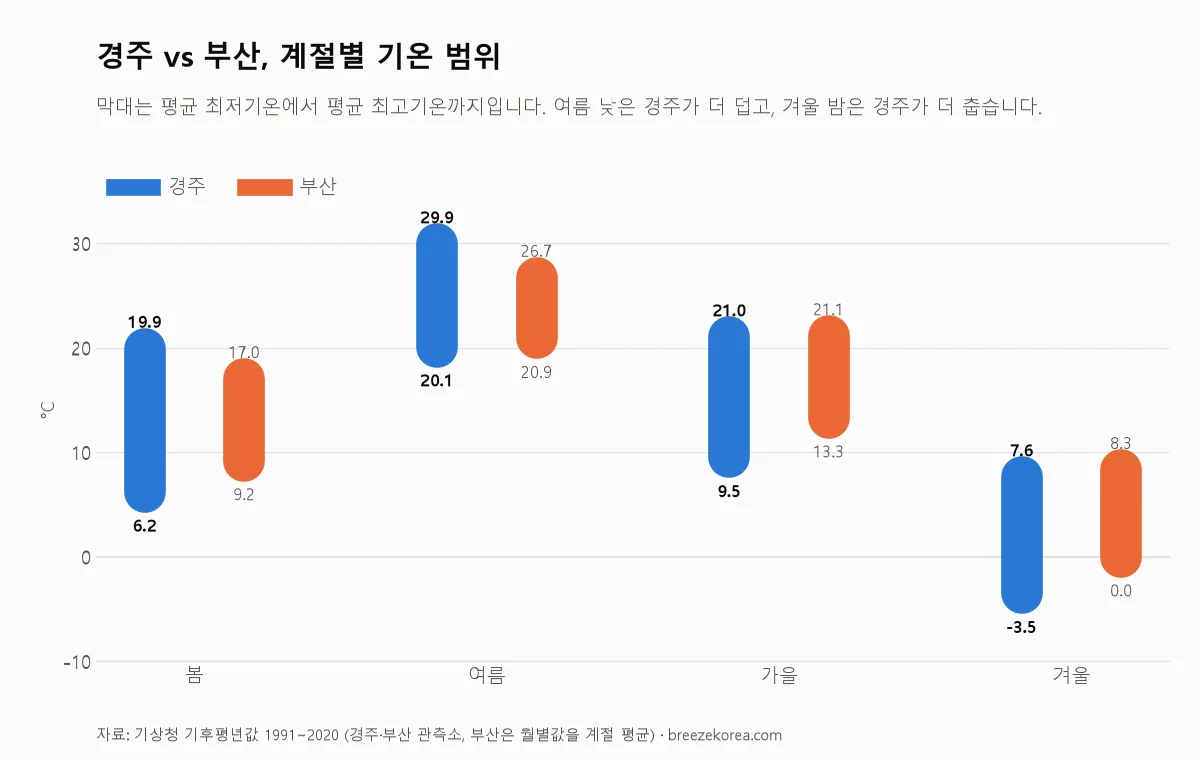
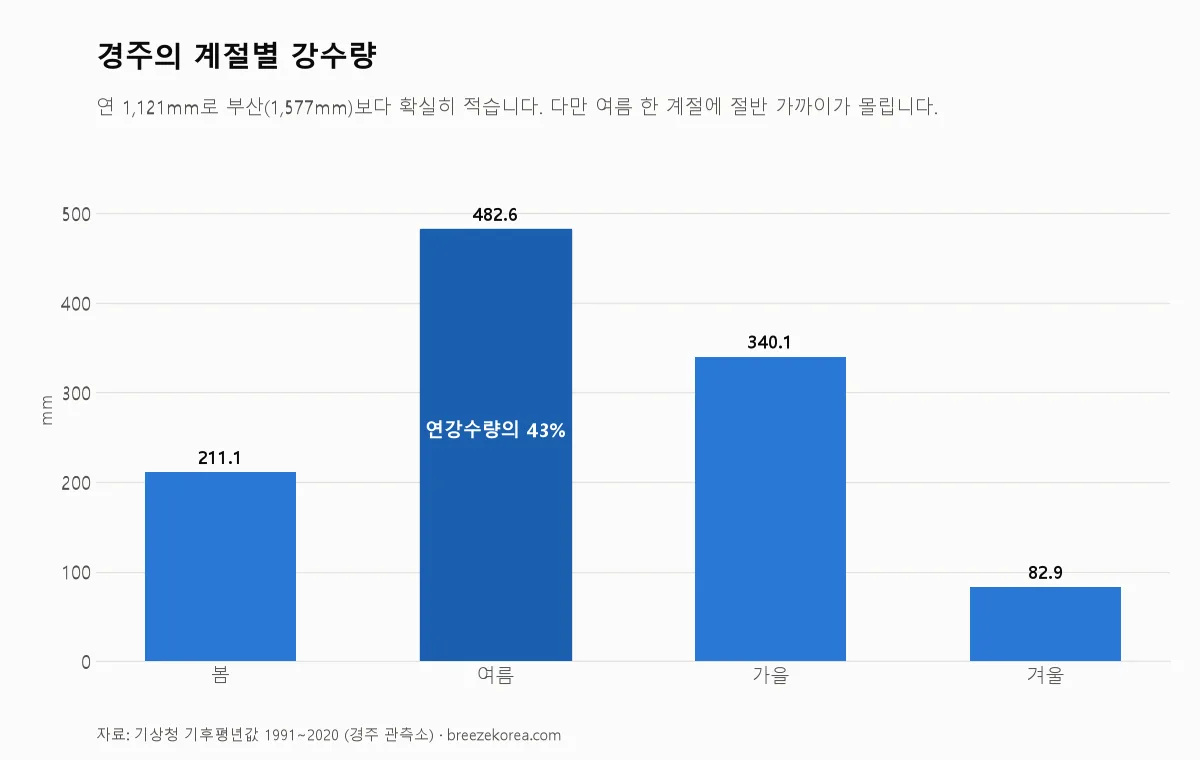
Gyeongju is not simply a slightly cooler Busan. It is inland, which means hotter afternoons in summer and much colder nights in winter. The annual averages hide this completely, and it is the difference between a good day and a miserable one.
| Gyeongju climate normals, 1991 to 2020 | Year | Spring | Summer | Autumn | Winter |
|---|---|---|---|---|---|
| Mean temperature | 13.4°C | 12.8 | 24.4 | 14.7 | 1.7 |
| Mean daily high | 19.6°C | 19.9 | 29.9 | 21.0 | 7.6 |
| Mean daily low | 8.0°C | 6.2 | 20.1 | 9.5 | −3.5 |
| Rainfall | 1,121.2 mm | 211.1 | 482.6 | 340.1 | 82.9 |
Busan’s normals are 15.0°C a year and 1,576.7 mm of rain. So Gyeongju is 1.6 degrees cooler on average and gets about 455 mm less rain, and yet a Busan-based visitor will find it hotter in July and colder at dawn in January. Summer alone accounts for 43 percent of the annual rainfall.
Cherry blossom
Gyeongju has no blossom reference tree of its own, so forecasts are read across from Busan, Daegu and Ulsan, where the 1991 to 2020 normal first-bloom date is 28 or 29 March. The city describes its own season as late March into early April. In 2026 first bloom came between 24 and 28 March with full bloom from 31 March to 7 April, and Daegu and Pohang opened on 26 March, three days ahead of normal.
| Spot | Timing within the season | Reachable without a car? |
|---|---|---|
| Daereungwon stone wall path, about 550 m | Earliest in the city | Yes, downtown |
| Cheomseongdae flower field | Tulips and rape in April, poppies in May | Yes, downtown |
| Heungmuro, the approach to General Kim Yu-sin’s tomb | Mid-season, a full blossom tunnel | Short bus ride |
| Bomun lakeside and Bomunjeong | Mid-season | Yes, buses 10 and 11 |
| Hwangnyongsa Maru-gil, about 1 km, and Hwangnyongwon | Mid-season | Yes |
| Amgok blossom tunnel, about 300 m | Mid-season | Car preferable |
| Bulguksa, including late double blossom | Last in the city, mid to late April | Yes, bus 10 |
Autumn
| Spot | Peak | Day trip? |
|---|---|---|
| Bulguksa | Early November, the densest colour in the city | Yes |
| Gyerim | Early November | Yes, and it is free and downtown |
| Cheomseongdae pink muhly | Late September to late October | Yes, downtown |
| Tongiljeon ginkgo avenue, about 2 km | Late October to early November | Car needed |
| Dori village ginkgo wood, Ungok Seowon, Mujangbong silver grass | Early November | Car needed |
Only three of the city’s official autumn spots work without a car: Gyerim, the pink muhly at Cheomseongdae, and Bulguksa. That is still a strong autumn day.
Festivals in 2026
| Event | Date | Where |
|---|---|---|
| 53rd Silla Cultural Festival | 9 to 11 October 2026, free | Bonghwangdae and Woljeonggyo area |
| Gyeongju Cherry Blossom Marathon, 33rd edition | Saturday 4 April 2026 | Bomun Lake |
| Gyeongju Cherry Blossom Festival | “Early April”, exact dates not published | Bomun and Daereungwon |
| Silla Ceramics Festival | Late April | Hwangseong Park |
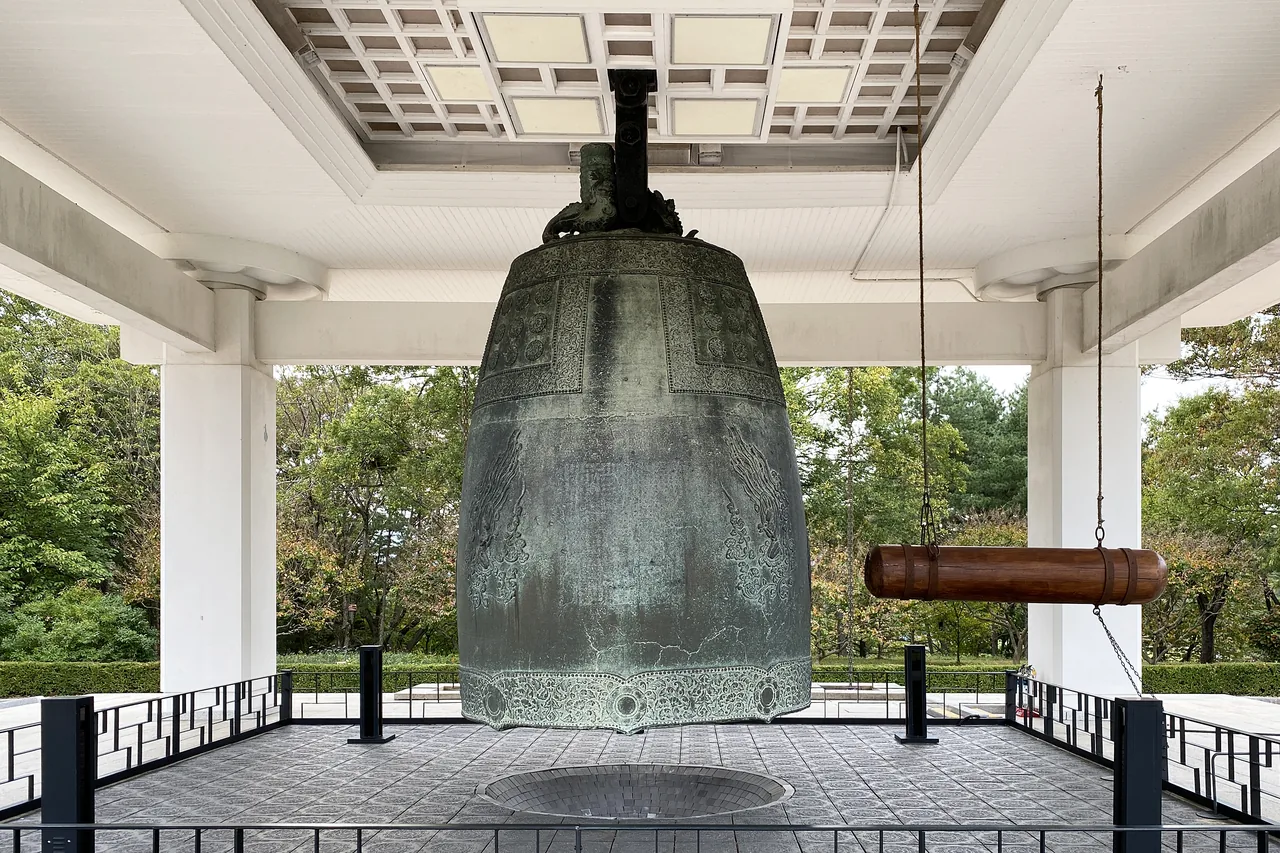
| New Year bell ringing | 31 December | Silla Great Bell Park |
| New Year sunrise | 31 December to 1 January | Bonggil Daewangam Beach |
The Silla Cultural Festival programme includes the Hwabaek assembly reenactment, a Silk Road festa, a hwarang hip-hop event and a moonlight night market. If you want a firm date anchor for blossom season, the marathon on 4 April 2026 is the most reliable one published, since the blossom festival itself has not posted exact dates.
21. Accessibility, buggies and where to leave your bag
The entire downtown cluster is flat, and Gyeongju city classes it as barrier-free walking. Seokguram is the hard limit. If you are pushing a buggy or using wheels, the good news is that the flat part is also the best part.
| Place | Reality |
|---|---|
| Daereungwon | Described by the city as an easy flat path. Wheelchair loan at the main gate |
| Cheomseongdae | Flat and barrier-free, but no equipment loan on site |
| Donggung and Wolji | Mostly flat, watch for raised tree roots on the paths |
| Gyeongju National Museum | Fully accessible, lifts, step-free routes through all halls, equipment on loan |
| Bulguksa | Entrance, precinct and the main hall with the two pagodas are manageable with assistance, on slopes. The Nahanjeon, Birojeon and Gwaneumjeon halls are stairs only and cannot be reached. Loan at the information desk |
| Seokguram | The grotto is stairs only. The Buddha cannot be reached by wheelchair. Car park and approach are fine |
| Yangdong Village | Loan equipment and accessible toilets exist, but it is a hillside village on unpaved slopes |
| Bomun lakeside path | The city states it has no slopes and no steps, making it the best wheeled walk in Gyeongju |
Left luggage
| Where | Price | Hours |
|---|---|---|
| Gyeongju Station lockers | 1,000 won small to 2,500 won extra large, per 2 hours | Station hours |
| Gyeongju Express Bus Terminal | 2,000 to 5,000 won | 06:00 to 21:00 |
| Gyeongju National Museum | Free | Museum hours |
| Hwangnidan-gil Living Culture Centre, 1058-26 Poseok-ro | Free, one item | 10:00 to 18:30 |
| Hwangnidan-gil lockers | 1,500 / 3,000 / 5,000 won per 2 hours | Street hours |
| Jimcarry, Gyeongju Station branch | Varies | 09:00 to 23:00, unstaffed lockers after 18:00 |
22. Twelve things that 2023 and 2024 guides get wrong
Gyeongju changed more between 2023 and 2026 than in the twenty years before it. This table is the fastest way to check whatever else you have been reading.
| What older guides say | What is true in 2026 | Changed |
|---|---|---|
| Bulguksa 6,000 won, Seokguram 6,000 won | Both free | 4 May 2023 |
| Daereungwon 3,000 won | Free. Only Cheonmachong inside it still charges 3,000 won | 4 May 2023 |
| Gyeongju Station is downtown, or get off at Bulguksa Station | The downtown station and Bulguksa Station both closed in December 2021. The high-speed station out at Geoncheon took the name Gyeongju Station in December 2023 and is 8.3 km from town | 2021 and 2023 |
| City bus 1,300 won standing, 1,700 seated | Flat 1,500 won cash, 1,450 by card | 1 July 2025 |
| Taxi flagfall 3,300 or 4,000 won | 4,500 won, and the base distance shortened from 2 km to 1.7 km | 1 February 2026 |
| Route 700 is the way to and from the KTX station | A large route reorganisation now puts 50, 51, 70, 700, 710 and 711 through the station, 249 services a day | 15 July 2026 |
| It is the bus or the KTX, nothing else | Direct trains from Bujeon and Sin-Haeundae, from 5,800 won | December 2024 and December 2025 |
| Parking at Hwangnidan-gil is impossible | An 894-space municipal car park opened | 3 January 2026 |
| Tasilla bikes, 90 minutes for 1,000 won | 150 minutes per hire on a 1,000 won day pass | Current |
| The Wolji hall at the national museum is closed for works | Reopened after 18 months | 17 October 2025 |
| The Seokguram access road is closed after the landslip | Permanently rebuilt and open | Repaired before APEC 2025 |
| Go to Paljeong for haejang-guk | The street is gone. The last restaurant closed | October 2025 |
23. The honest weaknesses of a Gyeongju day trip
Gyeongju is a strong day out and it is not a perfect one. These are the things worth knowing before you commit ten hours.
| Weakness | How much it matters |
|---|---|
| You will leave things undone | High. Seokguram, Yangdong, the east coast and the full Bomun circuit will not fit, and pretending otherwise ruins the day |
| Bus headways of 60 and 100 minutes on the outlying routes | High. Bus 12 and bus 203 dictate your plan rather than the other way round |
| No shade at the headline sights | High in July and August, negligible in October |
| Foreign-language guiding on the ground is thin | Moderate. The municipal city tour is Korean-only, so context has to come from reading or from a Busan-based operator |
| Seokguram is viewed through glass with no photography | Moderate, and it surprises people who have travelled a long way for it |
| Reconstruction rather than survival | Moderate. Woljeonggyo and parts of Donggung and Wolji are modern rebuilds. The tombs, the observatory and the temples are not |
| Weekend congestion at Hwangnidan-gil | Low to moderate. Go on a weekday if you can, or eat before the lunchtime peak |
| Bomun is quieter than the brochures | Low. Trade shifted to Hwangnidan-gil after 2016, which mostly means fewer people in your photographs |