
Sokcho Travel Guide: Seoraksan Entry Hours, Cable Car Fares and Yangyang Surf
In Sokcho the sea sits twenty minutes from the Seoraksan gate, so the first decision is what fits into one day. This covers the park’s 14 official trails and their entry hours, the cable car fares and discount rules, the three areas to sleep in, and Yangyang’s 14 surf beaches.
| Getting there | Sokcho has no train station. From Dongseoul there are 34 intercity and 14 express departures a day, about two hours. |
|---|---|
| Entering the mountain | Trails toward Daecheongbong open at 03:00 and close to new entries at noon in summer. Entering later is a fine of 200,000 won. |
| Short trails | Ulsanbawi, Biryong Falls and Biseondae from Sogongwon have no hour limit while it is light. |
| Cable car | Gwongeumseong is 16,000 won return, no reservations, and there is no walking path down. |
| Temples | Sinheungsa, Baekdamsa and Naksansa dropped their cultural property fees. Entry is free. |
| Where to stay | Sokcho Beach for the water, the intercity terminal for buses, Seorakdong if you start walking before dawn. |
1. The national park headquarters has a Sokcho address
2. There is no train to Sokcho
3. Two bus routes cover almost everything
4. On Seoraksan the clock decides the trail, not your legs
5. Four half-day trails from Sogongwon
6. The cable car sells return tickets only
7. The temple entrance fee no longer exists
8. Four ways up Daecheongbong
9. A shelter booking extends your cut-off time
10. Baekdamsa is reached by village shuttle
11. Osaek and Heullimgol run on different rules
12. Camping, lockers and showers
13. Four beaches, and they are not interchangeable
14. Abai Village was built by refugees
15. The market is really a chicken street
16. Ten museums for the day it rains
17. Two lagoons inside the city
18. Hot springs are inside the city limits
19. Yangyang has the temple and the surf
20. Fourteen surf beaches, each with a grade
21. Three places to sleep, chosen by what you are doing
22. The coast and the interior are different climates
23. What a day actually costs
24. Two nights and three, built around the clock
Sokcho puts a national park and the East Sea within twenty minutes of each other, which sounds convenient until you try to fit both into one day. This is the Gangwon chapter of the Korea travel guide, and it works differently from Gangneung down the coast.
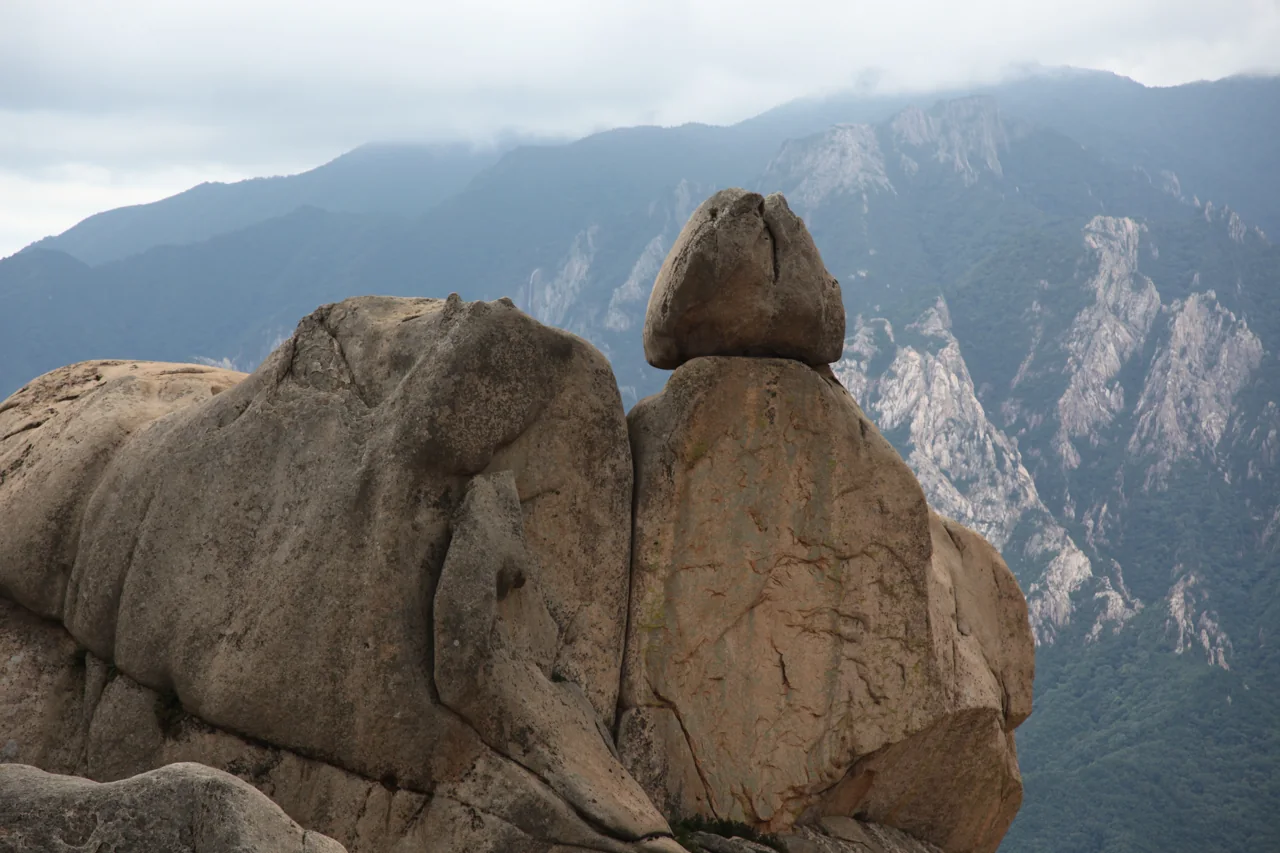
1. The national park headquarters has a Sokcho address
Seoraksan National Park’s head office is at 833 Seoraksan-ro, Sokcho. The park administration sits inside the city. Sokcho itself is small, around 80,000 people on the coast, but its western boundary runs straight into the mountain. From the beach to the park gate at SogongwonMap is under twenty minutes by road.
The park covers 400.027 square kilometres and spreads across four local authorities: Inje, Goseong, Yangyang and Sokcho. Koreans divide it into three sides, and the names matter because they tell you how far you will be travelling.
| Name | Which side | What is there |
|---|---|---|
| Oeseorak (outer) | Sokcho, part of Yangyang, Goseong | Sogongwon, Ulsanbawi, Gwongeumseong, Biseondae, Cheonbuldong valley |
| Naeseorak (inner) | Inje | Baekdamsa, Suryeomdong, Oseam, Bongjeongam |
| Namseorak (south) | Hangyeryeong to Osaek | Osaek mineral spring, Jujeongol, Heullimgol, Yongso Falls |
Almost everything reachable on a day out from a Sokcho hotel is in Oeseorak. Naeseorak and Namseorak are on the far side of the massif, roughly an hour away by road. Photographs of Baekdamsa and Heullimgol circulate widely, so it is worth knowing early that neither is a casual afternoon from town.
Three separate designations
Seoraksan was made a natural monument in 1965, Korea’s fifth national park in 1970, and a UNESCO Biosphere Reserve in 1982. The park service describes it as the country’s finest rock scenery, and the evidence is concentrated on Gongnyong Ridge, Yongajangseong and Ulsanbawi. Three main ridgelines shape it: Seoraksan ridge running northwest to Madeungnyeong and Misiryeong, the Seobuk ridge west to Gwittaegicheong and Daeseungnyeong, and Hwachae ridge northeast.
Sokcho counts 104 official sights
The city’s tourism office sorts its attractions into four groups: 31 natural sights, 45 experiences and facilities, 22 cultural heritage items and 6 festivals. Nine of those facilities are municipal sports grounds, tennis courts and the like, which no visitor needs. Call it 95 places that are actually worth a traveller’s attention.
How long do you need? One short trail plus half a day in town fills an overnight. Adding Daecheongbong or dropping south to Yangyang needs two nights.
2. There is no train to Sokcho
Sokcho has no railway station. Buses and cars are the only ways in. This surprises people who have already taken the KTX to Gangneung and assume the whole east coast is connected the same way.
| Route | Departures | First and last | Journey |
|---|---|---|---|
| Dongseoul → Sokcho intercity terminal | 34 a day | 06:05 · 21:00 | about 2h10 |
| Dongseoul → Sokcho express terminal | 14 a day | 07:00 · 20:00 | about 2h30 |
Roughly one every half hour. Note that Sokcho has two bus terminals in different parts of town. The intercity terminal sits inland by Cheongcho Lake; the express terminal is over by Sokcho Beach. Check which one your ticket ends at before you book a room, or you will be walking across town with luggage.
The railway is under construction, later than advertised
A high-speed line from Chuncheon to Sokcho is being built: 93.7 kilometres, 2.4 trillion won, with five new stations at Hwacheon, Yanggu, Inje, Baekdam and Sokcho. At the groundbreaking the opening date given was 2027. Contract packages ran late and completion is now expected in the first half of 2029. A great deal of what you will read online still repeats the 2027 figure.
Yangyang International Airport is 40 minutes away
The airport that serves this coast lost its based carrier to insolvency and went quiet for a while. It now has a domestic route to Jeju running twice daily under Parata Air, and traffic rights have been granted for a Shanghai service due to start. If you are coming from Jeju, this beats routing through Seoul.
3. Two bus routes cover almost everything
Getting from town to the mountain is simple because there is one line. City buses 7 and 7-1 start at the intercity terminal and run past the old fire station, the express bus terminal, the Seoraksan entrance, the park visitor centre and the Kensington Hotel to the Seoraksan car park at the end. Wherever you sleep in central Sokcho, that bus gets you to Sogongwon.
The gaetbae is public transport that costs 500 won
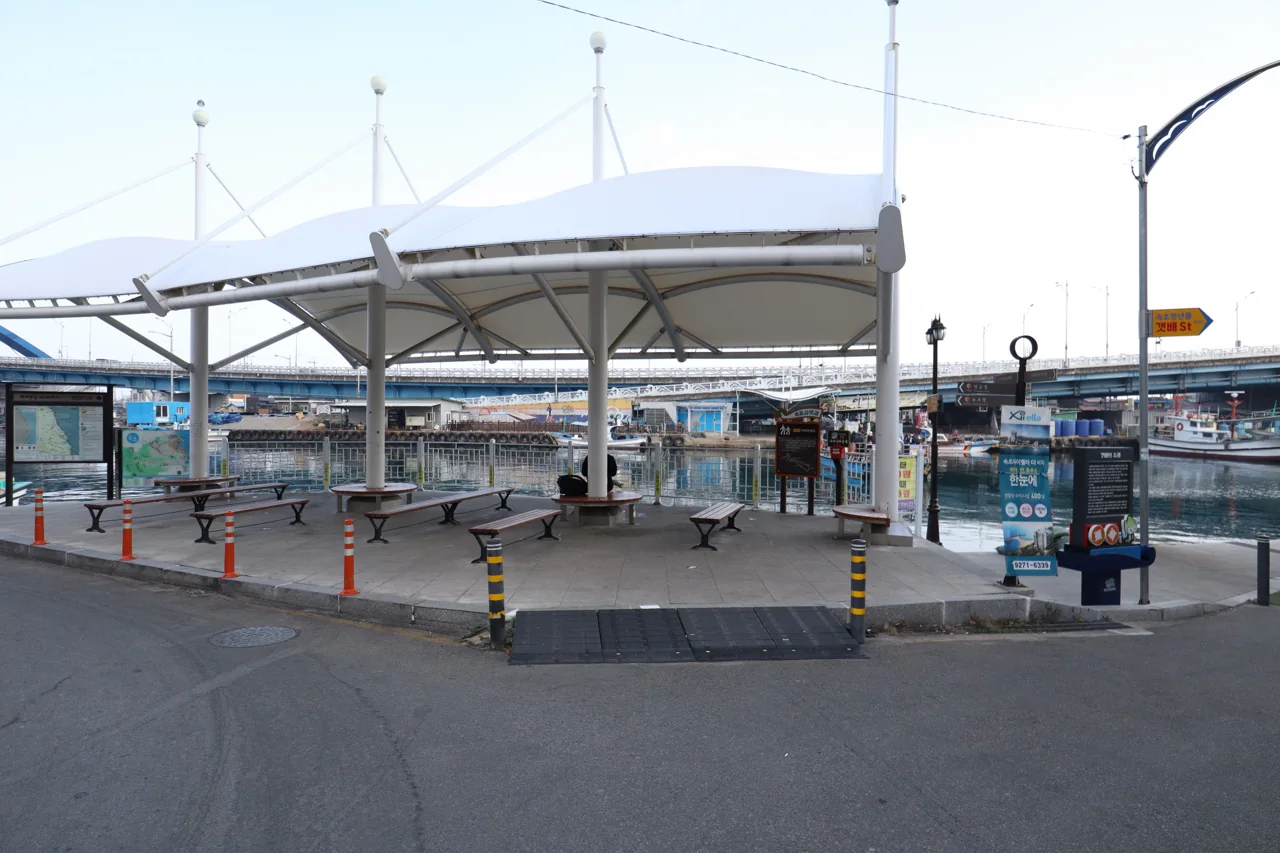
The gaetbaeMap crosses the Sokcho port channel to Abai Village. It is 500 won one way for adults, 300 won for primary school children, and 500 won each for handcarts and bicycles.
| Season | Hours |
|---|---|
| May to October | 05:00-23:00 |
| November to April | 05:30-22:30 |
Those hours exist because residents commute on it, not because tourists want an early photograph. It stops in bad weather, so telephone ahead if you are relying on a late crossing.
City buses take the same transport cards used in Seoul, so whatever you already carry will work here. Taxis are easy to find near both terminals and around the market, and the distances involved are short enough that a taxi to Sogongwon is a reasonable choice for an early start when bus 7 has not begun running.
4. On Seoraksan the clock decides the trail, not your legs
The park sets a first entry time and a cut-off time for each trail, and enforces them. The system is called the designated entry hour scheme. Walking past a closed checkpoint carries a fine of 200,000 won for a first offence, 300,000 for a second and 500,000 for a third.
Hours differ between winter, meaning November to March, and summer, April to October. Gathered for the routes that reach the summit ridge, they look like this.
| Checkpoint | Direction | Winter | Summer |
|---|---|---|---|
| Namseorak centre (Osaek) | to Daecheongbong | 04:00-11:00 | 03:00-12:00 |
| Hangyeryeong centre | to Hangyeryeong junction | 04:00-10:00 | 03:00-12:00 |
| Baekdam centre | to Suryeomdong and Socheong | 04:00-13:00 | 03:00-14:00 |
| Biseondae centre | to Yangpok | 04:00-12:00 | 03:00-14:00 |
| Biseondae centre | to Madeungnyeong | 04:00-10:00 | 03:00-11:00 |
Read the summer column again: after midday most doors toward the summit are shut. Arriving in Sokcho on a mid-morning bus and heading for Osaek does not work. Any itinerary with Daecheongbong in it assumes you slept near the mountain the night before.
The coast and the short trails are not like this
From the Sogongwon entrance, the routes to Ulsanbawi, the Towangseong Falls viewpoint, Biseondae and Gwongeumseong carry one restriction only: no entry from sunset until two hours before sunrise. During daylight the clock is not your problem.
That contrast is the whole planning logic here. A late start means short trails and the town. An early start opens the summit. There is no version where you decide at eleven in the morning.
Weather closes trails regardless of the hour. Heavy rain, snow and typhoon warnings, the spring and autumn fire-prevention periods, and spring rockfall season all trigger separate closures. The park office number is 033-801-0900 and notices go up on its site.
There is a separate guide to Seoraksan itself. It covers which of the three entrances to use, what changes between them, the cable car and hut bookings, and when the leaves turn. → Seoraksan: which entrance to use
5. Four half-day trails from Sogongwon
The park publishes fourteen official courses. Four of them start at Sogongwon and fit inside half a day from a Sokcho hotel.
| Course | Distance and time | What the walking is like |
|---|---|---|
| UlsanbawiMap | 3.8km one way · 2h | 2.8km of gentle valley path to Heundeulbawi, then 1.0km of steel staircase |
| Biryong Falls (Towangseong viewpoint) | 2.8km one way · 1h30 | 2.4km along the stream, then 0.4km of steep deck stairs to the viewpoint |
| Geumganggul | 3.6km one way · 2h | 3.0km easy to Biseondae, then a stepped climb to the cave |
| Yangpok | 6.5km one way · 3h10 | Past Biseondae and up Cheonbuldong valley to Yangpok shelter |
Two stretches take wheelchairs and pushchairs
This is documented by the park service and rarely mentioned elsewhere. On the Biryong Falls route, the first 1.2 kilometres from Sogongwon are passable with a pushchair or a wheelchair. On the Geumganggul route the Biseondae nature trail covers about a third of the distance on the same terms. If someone in your party cannot manage steps, these two are the answer rather than the cable car alone.
Geumganggul closes to entry at two in the afternoon
Even though it is an out-and-back walk, the climb from Biseondae up to Geumganggul is inside the entry-hour scheme and shuts at 14:00 in both seasons, because the final section is a steep staircase. The cave itself is a natural hollow partway up Mireuk peak where the monk Wonhyo is said to have practised.
6. The cable car sells return tickets only
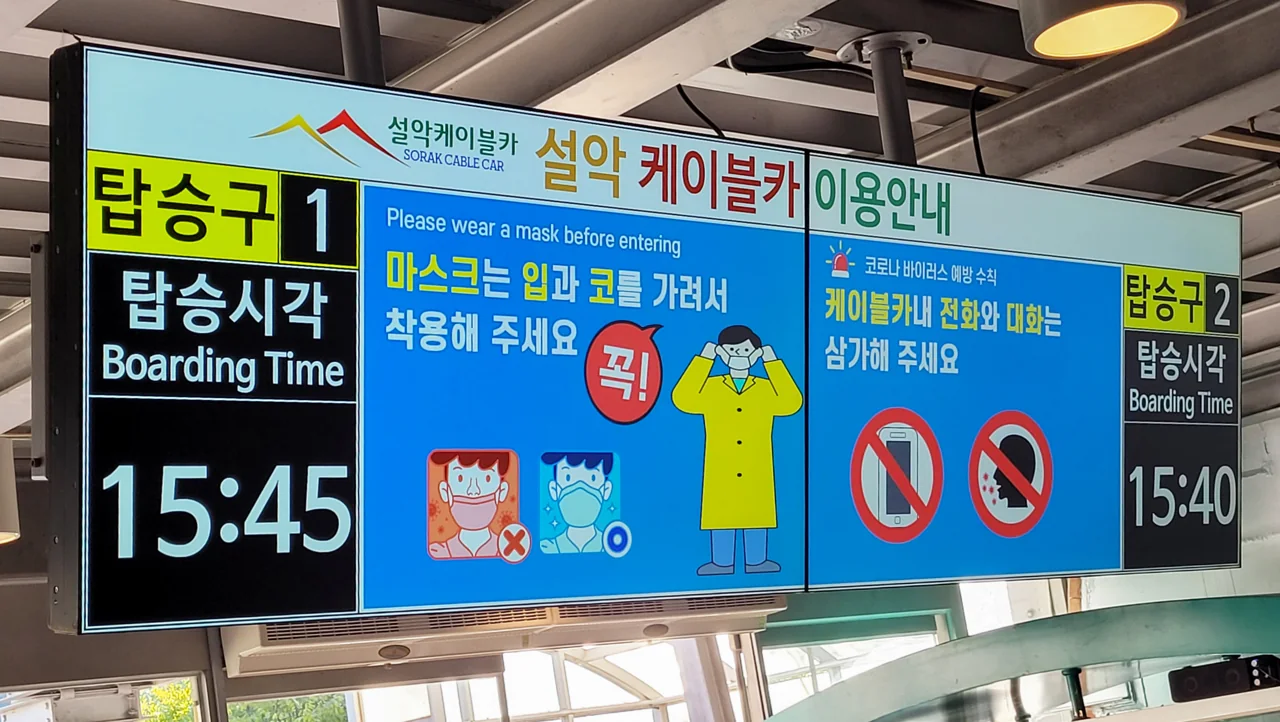
There is no single ticket, because there is no path down. Everyone who rides up to GwongeumseongMap rides back. The trip is five minutes each way over roughly 1,200 metres of cable, and Gwongeumseong sits at about 700 metres above sea level.
| Ticket | Return fare |
|---|---|
| Adult, middle school and up | 16,000 won |
| Child, 37 months to primary school | 12,000 won |
| Infant under 36 months | Free |
| Severe disability or national merit, adult | 13,000 won |
| Severe disability, child | 9,500 won |
| Senior, 65 and over | 14,000 won |
| Sokcho resident, adult | 8,000 won |
As a visitor you will pay the full 16,000
The operator states this plainly and most guides skip it: the reduced fares apply to Korean nationals in person. Photocopies and photographs of cards are refused, discounts do not stack, and there is no group rate at all. For an overseas visitor the adult return is 16,000 won and the useful thing to know is simply that there is nothing to apply for.
There is a second catch that affects Korean seniors and is worth understanding if you travel with family here. The senior discount is suspended during the summer and autumn peaks, and the autumn peak covers the entire foliage season. Disability, national merit and Sokcho resident discounts run all year.
No reservations, ever
Wind and cloud stop the cars often enough that the operator sells same-day at the window only. Cars run every ten to fifteen minutes when quiet and every five when busy. Refunds are full up to ten minutes before your slot and 20 per cent less after that; changing your time also costs 20 per cent.
One more line from the official FAQ deserves repeating. If you take the last car up, you get about twenty minutes at the top. Operating hours change daily with the weather and are posted on the front page of the operator’s site each morning.
Pushchairs cannot board. There is a free storage rack outside the building on the right. Wheelchairs can board using the lift to the second-floor platform. The cable car has no car park of its own; drivers use the paid Sinheungsa lot.
7. The temple entrance fee no longer exists
For decades, walking into Sogongwon meant paying Sinheungsa a cultural property viewing fee whether or not you intended to visit the temple. Hikers resented it for exactly that reason. A revision to the cultural heritage law removed the charge at 65 temples nationwide, Sinheungsa included. In Gangwon the same change made Baekdamsa, Naksansa, Guryongsa, Cheongpyeongsa and Woljeongsa free.
The old wording survives in odd places. The cable car operator’s own directions page still lists a telephone number for cultural property area admission enquiries. The only money changing hands at the Sogongwon gate now is parking.
What to look at
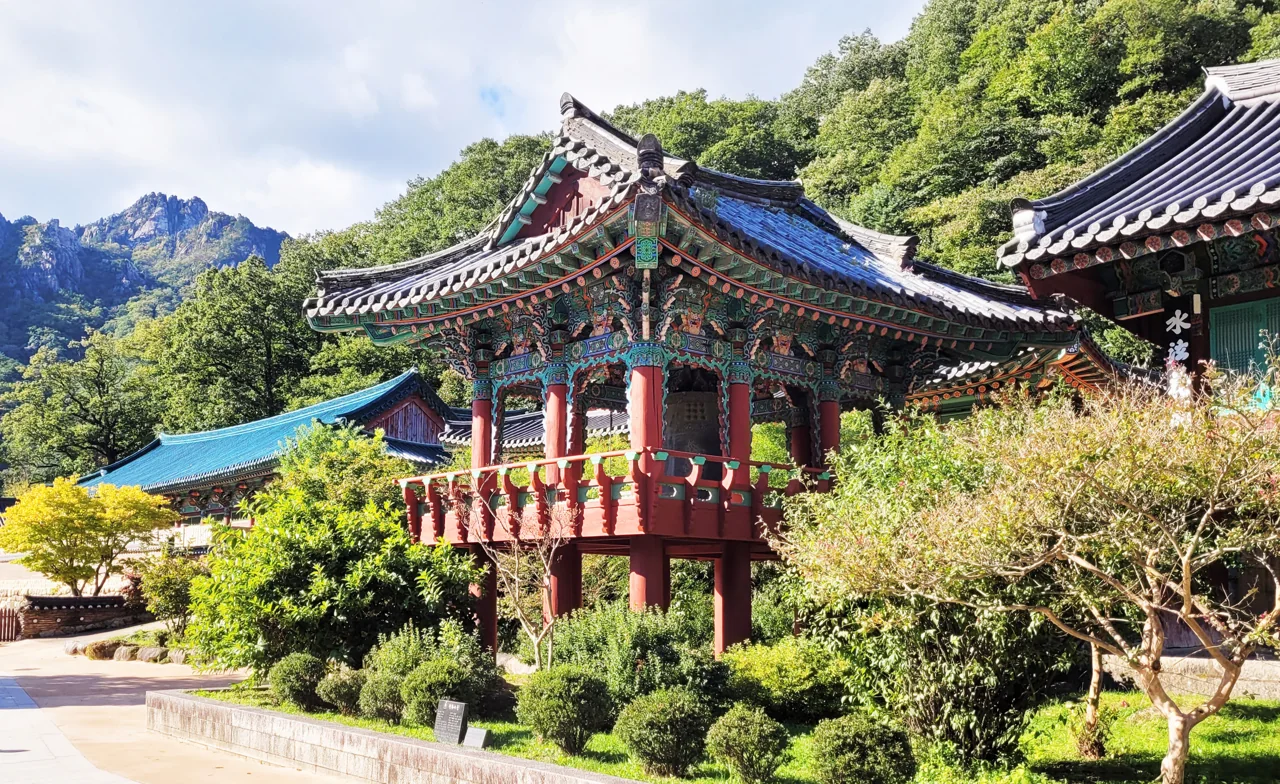
SinheungsaMap is a few minutes’ walk from the entrance, so you pass it on the way to Ulsanbawi or Biseondae whether you planned to or not. Sokcho lists four of its features as heritage items: the Geungnakbojeon hall, the bronze bell, the wooden Amitabha triad and the Bojeru pavilion. The large bronze Buddha at the front stands where the Biseondae path begins.
The temple also runs a templestay programme, which appears on the city’s official list of visitor experiences. It is one of the few ways to be inside the park before the buses arrive.
8. Four ways up Daecheongbong
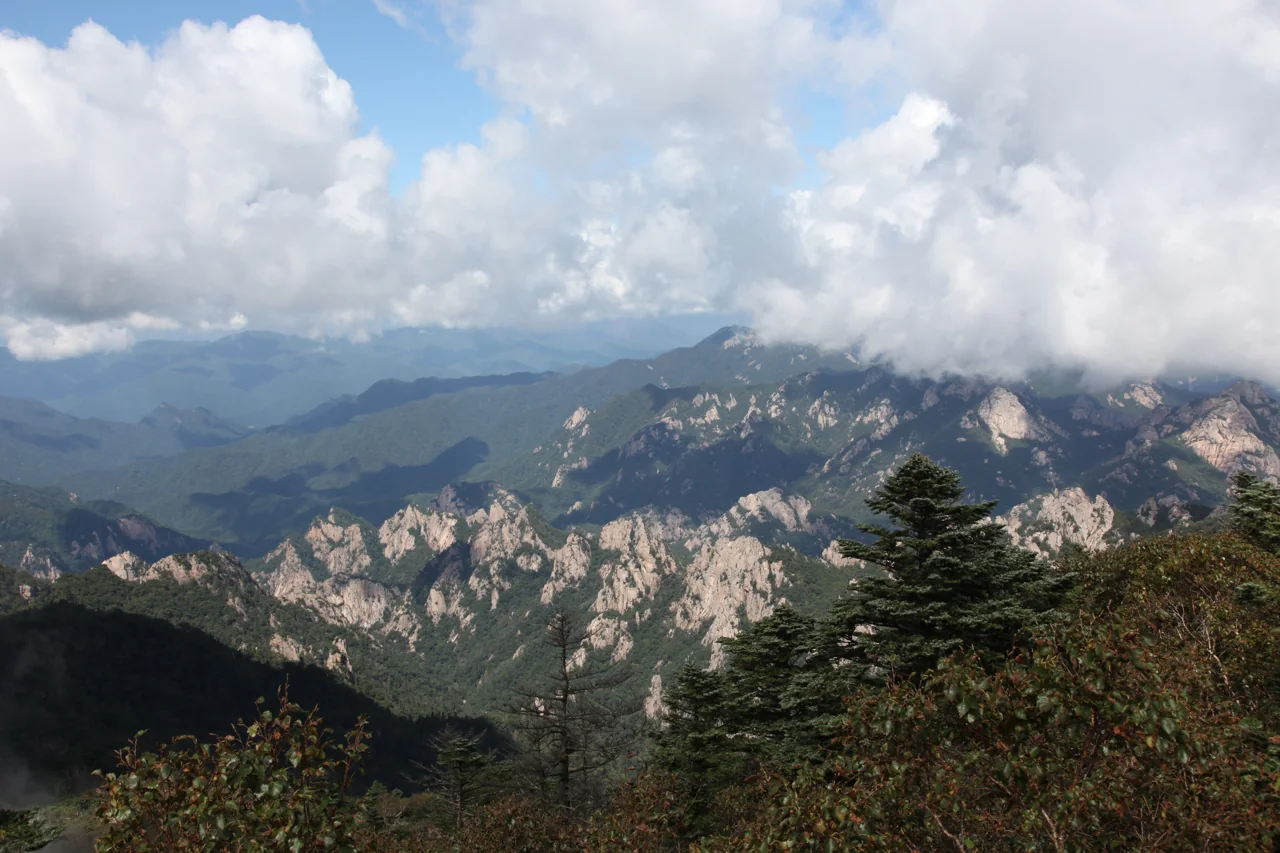
DaecheongbongMap is 1,708 metres and the highest point in the park. Four official courses reach it and they are not comparable in effort.
| Course | Distance | Time | Starts at |
|---|---|---|---|
| Osaek | 5km | 4 hours | Namseorak centre, Yangyang |
| Baekdam | 12.9km | Full day | Baekdamsa, Inje |
| Hangyeryeong | 19.3km | About 12 hours | Hangyeryeong centre, Inje |
| Seorakdong | via Cheonbuldong | Full day | Sogongwon, Sokcho |
Osaek is by far the shortest and by far the steepest. Five kilometres, four hours, and almost all of it climbing. The Hangyeryeong route at 19.3 kilometres is really a traverse: up to the junction and the summit, down to Huiungak, and out to Sogongwon in about twelve hours.
Gongnyong Ridge is counted separately
Gongnyong Ridge, the one in most of the photographs, is its own entry among the fourteen official courses. It is not a half-day outing and it is not a beginner’s ridge.
To do the summit in one day you must enter at Osaek between 03:00 and noon in summer. No morning bus from Seoul arrives in time. Stay at Osaek or near Hangyeryeong the night before, or plan a shelter.
9. A shelter booking extends your cut-off time
Four shelters take reservations: Socheong, Huiungak, Yangpok and Suryeomdong. A partitioned bed is 20,000 won midweek and 30,000 won at weekends and peak periods, and the partitioned type sleeps two. Everything goes through the national park reservation system.
The extension nobody mentions
Shelter guests get later cut-off times at the checkpoints, and the amount varies by where you enter.
| Entering at | Booked at | Extra time |
|---|---|---|
| Biseondae centre | Huiungak | 1 hour |
| Yangpok | 2 hours | |
| Namseorak and Hangyeryeong centres | Socheong or Huiungak | 1 hour |
| Baekdam centre | Socheong | 1 hour |
| Suryeomdong | 2 hours |
The extension comes with a matching obligation. Check-in windows are 15:00 to 18:00 in winter and 15:00 to 19:00 in summer. Spending the extra hours on the mountain and arriving late means the shelter is closed to you.
Cancellation
Refunds are full up to three days before, then 10 per cent is withheld at two days, 20 per cent at one day, and 30 per cent on the day or for a no-show. Cancellations caused by weather warnings carry no penalty.
10. Baekdamsa is reached by village shuttle
The road to BaekdamsaMap is too narrow for private cars, so a village-run shuttle covers the 6.5 kilometres from Yongdae village. It is 2,500 won one way for adults and 1,200 won for anyone eighteen or under, running 08:00 to 18:00 in peak season and 09:00 to 17:00 otherwise.
Walking is allowed and takes about ninety minutes, but the road and the footpath are the same surface, so you step aside for every bus. The park service says as much in its own notes.
Where the name comes from
The story is that there are a hundred pools between Daecheongbong and the temple, and baekdam means a hundred pools. The poet and independence activist Han Yong-un wrote his best-known collection here, and there is a museum devoted to him beside the temple.
Suryeomdong is long but flat
From the Baekdam office to Suryeomdong shelter is 11.2 kilometres and three hours. The distance sounds serious; the walking is not. The path follows water the whole way with almost no gradient, and the park service recommends it for all ages. Beyond Yeongsiam the Gugokdam valley holds nine pools, including Ssangyong Falls and Yongson Falls. There are rockfall warnings posted along the section, so stay on the path.
11. Osaek and Heullimgol run on different rules
Namseorak means Osaek-ri in Yangyang, where the mineral springMap, Jujeongol valley and Heullimgol sit together. The Osaek ranger office is open year-round from 09:00 to 18:00.
Yongso Falls is an hour of near-level walking
From the mineral spring centre to the Yongso Falls centre is 3.2 kilometres and one hour. The park service describes it as gentle, largely on timber decking, suitable for children and older walkers. Jujeongol is named for a story about counterfeiters minting coins in the valley. Seonnyeotang and Geumgangmun are the sections photographed for autumn colour.
Hours here follow the coastal rule rather than the summit rule: closed from sunset to two hours before sunrise, open through the day.
Heullimgol needs a booking
The Heullimgol to Yongso Falls section is reservation-only and one-way. Turning up without a booking means not walking it. The operating window also moves.
| Period | Reservation hours |
|---|---|
| Autumn peak | 08:00-15:00 |
| Other reservation months | 09:00-14:00 |
Further west: Namgyori and Daeseung Falls
Two more official courses sit under the Seobuk ridge on the Inje side. Namgyori runs 11.3 kilometres in six and a half hours past the Sibiseonnyeotang pools and Bokssungatang to Daeseungnyeong and out at Jangsudae; the park rates the scenery highly and the difficulty as serious. Daeseung Falls from the Hangyesanseong office is a shorter out-and-back with a generous 16:00 cut-off.
Gombaeryeong is stricter still
Over on Jeombongsan, Gombaeryeong takes bookings and allows entry only between 09:00 and 11:00, with descent from the summit starting at 14:00. Winter and summer are the same.
12. Camping, lockers and showers
There is a national park campground at Seorakdong. Rates split between midweek and weekend or peak, and the park defines two peaks: 1 July to 31 August, and 1 October to 15 November. Weekend means Friday, Saturday and the day before a public holiday.
| Pitch | Midweek | Weekend and peak |
|---|---|---|
| Car campsite, one night, one pitch | 20,000 won | 30,000 won |
| Campervan pitch, one night | 30,000 won | 35,000 won |
| Caravan, one night | 75,000 won | 100,000 won |
Car pitches include power, water and waste hookups. Campervan pitches charge electricity separately at 3,000 won midweek and 4,000 at peak. Caravans include parking for one vehicle and four people.
What you need after coming down
Coin showers cost 1,000 won for six minutes and 500 for each extra three. Lockers are 2,000 won for small bags under 5kg, 2,500 for 5 to 20kg and 3,500 for large, all for one day. If you arrive on the morning bus with luggage, this is where it goes rather than up the mountain with you.
Reductions exist for national merit recipients rated one to three and for people with severe disabilities, who pay nothing for facility use; other national merit holders, people with lesser disabilities and recognised good samaritans pay half. A companion is included for the full-exemption categories.
Cancellation terms match the shelters. A full refund up to three days before, then 10 per cent withheld at two days, 20 per cent at one day and 30 per cent on the day. If a weather warning forces the closure, no penalty applies and the fee comes back in full.
13. Four beaches, and they are not interchangeable
Seven of Sokcho’s 31 natural sights carry the sea and coastal scenery tag. Four of them are beaches visitors actually use.
| Beach | Where | Character |
|---|---|---|
| Sokcho Beach | Beside the express bus terminal | Widest sand, hotels and restaurants on the front |
| Deungdae Beach | North of Yeonggeumjeong | Connects to the lighthouse observatory |
| Oeongchi Beach | South of Sokcho Beach | Start of the Badahyanggiro coastal deck |
| Cheongho Beach | Abai Village side | Across the gaetbae crossing |
The swimming season is dated
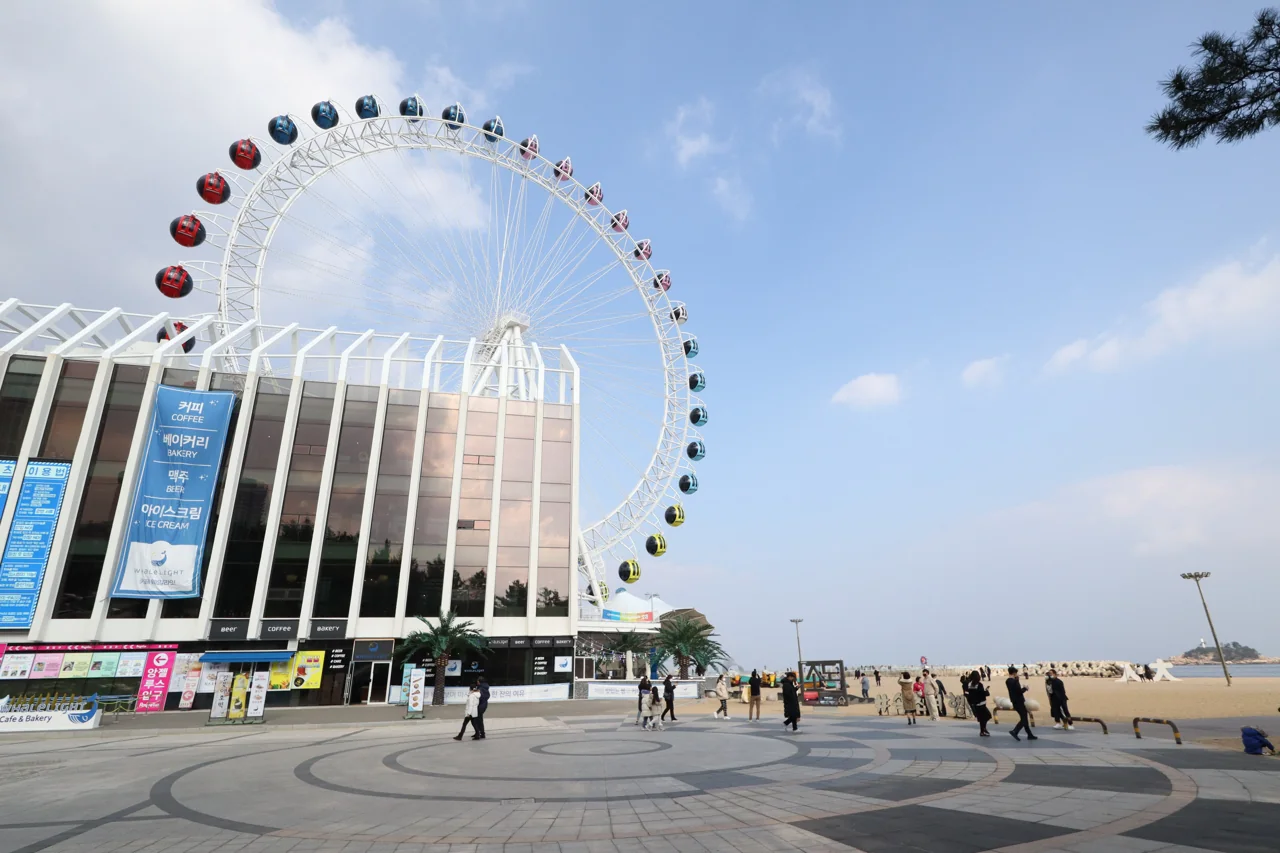
Sokcho BeachMap operates for 52 days from early July to late August, with 23 of those days including a night opening until nine in the evening. Outside the season there are no lifeguards, so if swimming is the point of the trip, check the dates before the hotel.
Yeonggeumjeong has two pavilions
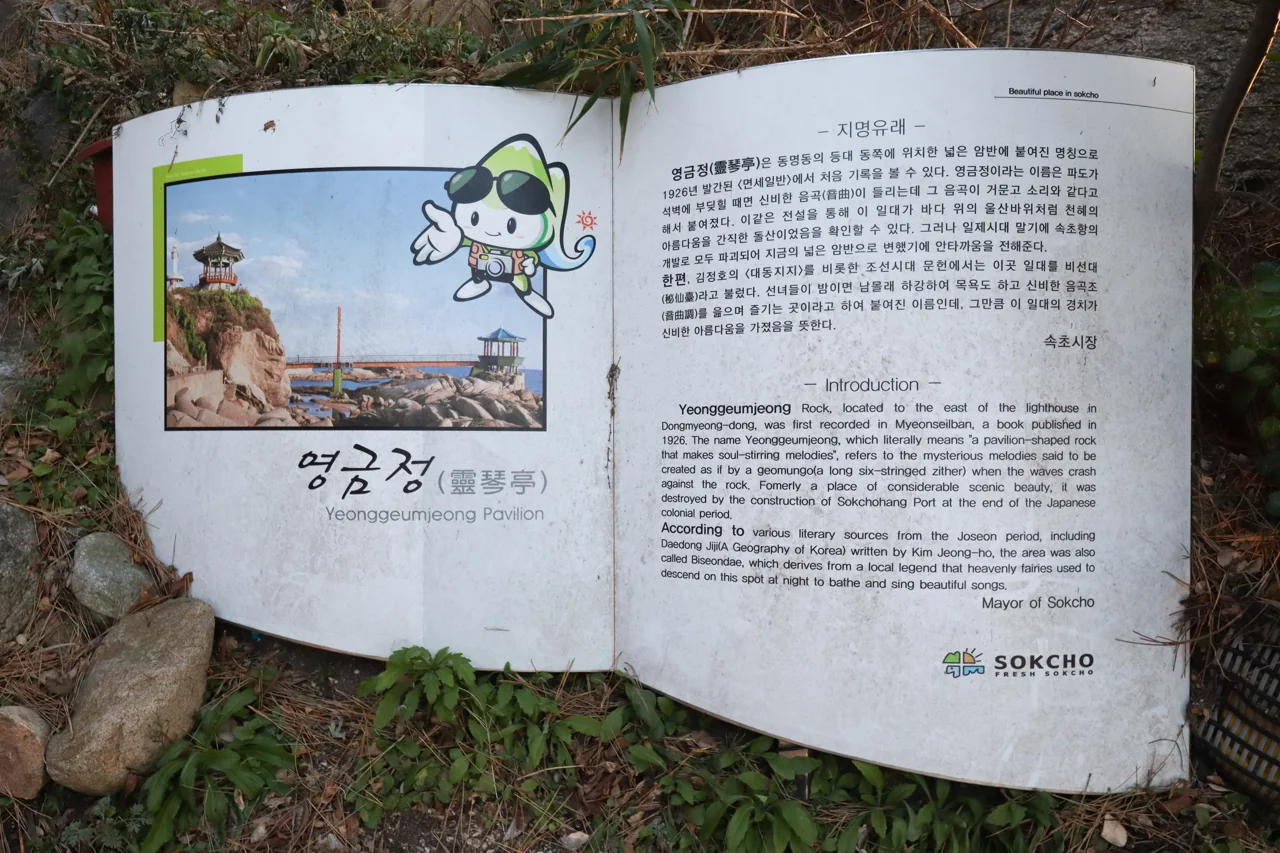
YeonggeumjeongMap is the rock shelf below the Sokcho lighthouse, named for the sound the waves make against it. One pavilion sits out on the rocks as a viewpoint and another is the sunrise pavilion. Sokcho lists the site as heritage, along with a separate entry for the Hwarang and Bodeok legend attached to it.
Twelve named walking routes
The city has mapped twelve town walks it calls giljari: Yeongnangho, Jangsa and Yeongnang beach, Subok, Abai Village, Sokcho beach, Cheongdaesan, Cheongcho lake, Cheongcho stream, Seorak Nuri, Daepo independence movement, Badahyanggi, and the Haeparang trail. Haeparang course 45 passes through the city. Badahyanggiro itself runs along coastline that was closed as a military zone for years.
14. Abai Village was built by refugees
Across the port channel, Abai Village was settled by people who came south from Hamgyong province during the Korean War and could not go back. That history is why Sokcho files the village under cultural heritage rather than attractions. Abai is a Hamgyong word for an older man.
You reach it on the gaetbae, a flat barge with no engine that passengers pull across on a steel cable using a hooked pole. The channel is narrow and the crossing takes a couple of minutes.
What to eat there
The food is northern and hard to find elsewhere in Korea. Abai sundae is pork large intestine stuffed with glutinous rice and vegetables and steamed. Ojingeo sundae uses a squid body as the casing, sliced and pan-fried. Hoe naengmyeon, the cold noodle dish with raw fish, comes from the same displaced-population kitchen.
The lanes have murals, listed separately by the city as the Abai Village mural street, and the fourth of the twelve town walks runs through here. The municipal Silhyangmin Culture Village, which recreates refugee life, sits apart from the village itself, and the Displaced People’s Culture Festival is one of Sokcho’s six official festivals.
15. The market is really a chicken street
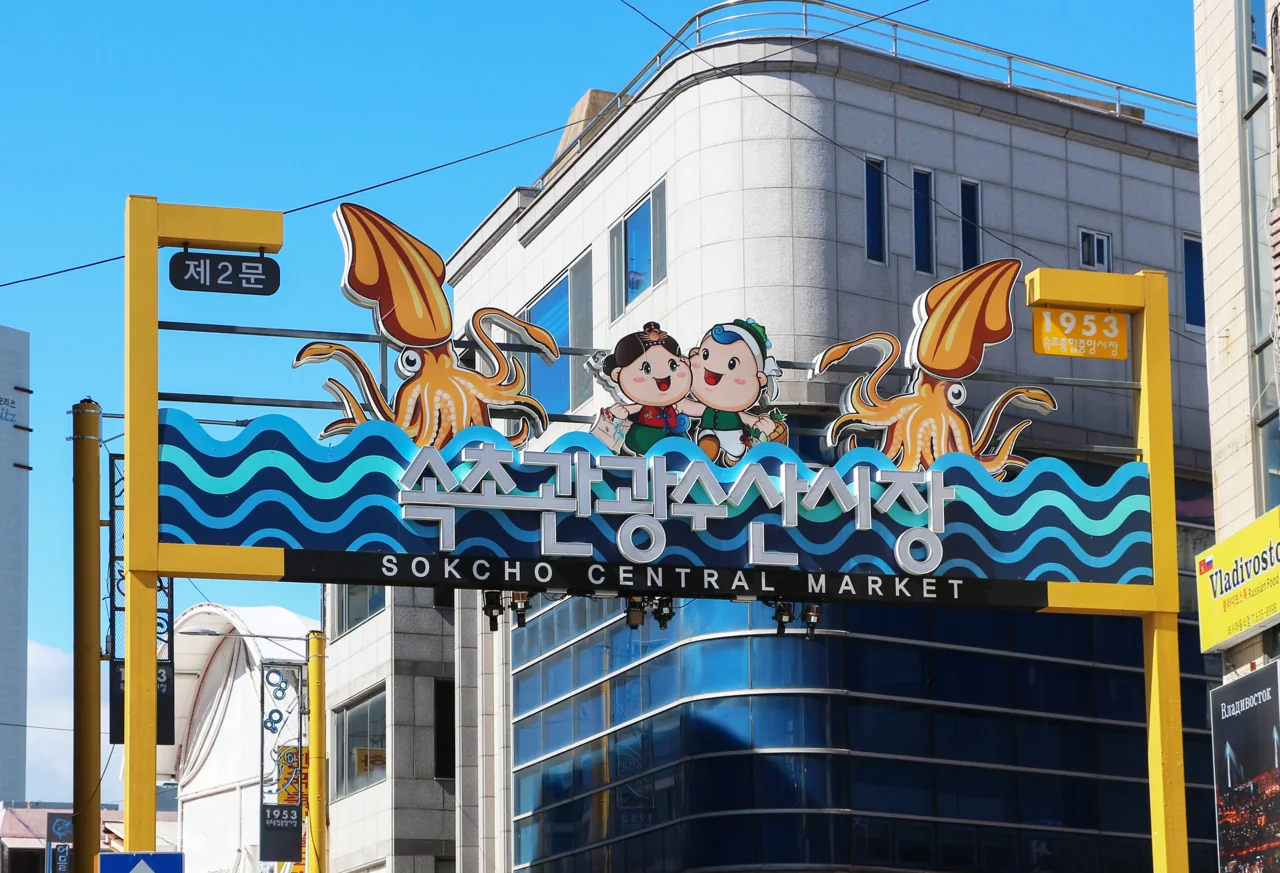
Sokcho Tourist and Fishery MarketMap sits in the centre of town and still gets called Jungang Market by locals, so both names appear on maps. Its reputation rests on dakgangjeong, sweet and spicy fried chicken, sold from more than ten shops packed into one lane.
The Sokcho version uses a sauce of grain syrup and cheongyang chilli over chicken fried hard, which is why it stays crisp after it cools. That is the reason people carry boxes of it onto buses back to Seoul. Weekends and holidays mean queues.
| Dish | Where |
|---|---|
| Dakgangjeong | Market chicken lane |
| Abai and squid sundae | Abai Village |
| Raw fish and mulhoe | Daepo port, Dongmyeong port |
| Grilled fish, spicy fish stew | Around the beach and market |
| Makguksu buckwheat noodles | Across town |
Sokcho registers six ports as attractions: Daepo, Dongmyeong, Seorak, Sokcho, Oeongchi and Jangsa. Daepo is the one known for raw fish and fried seafood and has its own viewpoint. Dongmyeong is closest to the centre and links to the lighthouse observatory.
16. Ten museums for the day it rains
Ten of the city’s 45 experience and facility entries carry the museum and gallery tag, which matters because a wet day on Seoraksan is a day the trails close.
- National Mountain Museum. A national museum about mountaineering, sited at the foot of the range it is about.
- Sokcho Municipal Museum. City history and how the displaced population settled here.
- Silhyangmin Culture Village. Reconstructed refugee housing and daily life.
- Balhae History Museum. On the Balhae kingdom.
- Seokbong Ceramics Museum. Beside Cheongcho Lake.
- Museum X, Teddy Bear Farm and Happy Owl House. Aimed at families.
- National Mountaineering School. A training facility that also runs public programmes.
- Seorak Waterpia. Indoor and outdoor hot spring water park, open in winter.
Six festivals are on the city’s official calendar: the Yeongnangho cherry blossom festival, the Sokcho Summer Festival, the New Year sunrise event, the Displaced People’s Culture Festival, the Sokcho chrysanthemum show and the Seorak Cultural Festival. They are spread through the year rather than clustered in summer, which is unusual for a beach town.
Expo Tower
The Expo Tower beside Cheongcho Lake is the building on most Sokcho postcards. From the observation level you see the lake, the town, and on a clear day the Seoraksan ridgeline behind it. The Expo lawn beside it fills with people walking in the evening.
17. Two lagoons inside the city
Sokcho has two lakes in the middle of town, Yeongnangho and Cheongchoho. Both are lagoons, bays that sand bars cut off from the sea. Having two of them in one small city is unusual.
Yeongnangho
A well-made path circles the whole lake, and it is the first of the city’s twelve walking routes. Beombawi, the tiger rock on the shore, is the viewpoint for the town and for sunrise. An inscription cut into the rock by the Joseon scholar Song Si-yeol is on the heritage list. A barefoot ochre path and a wetland ecology park have been added recently, and plenty of people ride the loop instead of walking it.
Cheongchoho
Cheongchoho connects to Sokcho port, so boats move through it. There is a lakeside park and amusement area, another barefoot walking path, and the Cheongchojeong pavilion on the water, which is heritage-listed. Yacht trips run from here through Sokcho Marina Yacht Club and the Comarin marina, both on the city’s leisure sports list.
18. Hot springs are inside the city limits
Three of Sokcho’s natural sights carry the hot spring tag: Cheoksan Hot Spring resort, Cheoksan Hot Spring recreation village and the Cheoksan foot bath park. All three sit on the road toward Seoraksan, close to the bus route that takes you there.
This is what the evening after a mountain day is for. The foot bath park asks for the least time and the least commitment. Seorak Waterpia uses the same spring water on a much larger scale, indoors and out, and stays open through winter, which makes it the fallback when children are along and the trails are closed.
Because the springs sit on the road between town and Sogongwon, they fit into a day without a detour. Coming down from Ulsanbawi in the late afternoon and stopping here before dinner adds nothing to the travelling, which is not true of most hot spring towns in Korea.
19. Yangyang has the temple and the surf
Yangyang county, immediately south, publishes an official Yangyang 10 Scenic Views. Three of the ten are on Seoraksan, which says something about where the county’s boundary runs.
| View | Place |
|---|---|
| 1 | Namdaecheon river |
| 2 | Daecheongbong |
| 3 | Osaengnyeong (Hangyeryeong) |
| 4 | Osaek Jujeongol |
| 5 | Hajodae |
| 6 | Jukdojeong |
| 7 | Namae port |
| 8 | Naksansa Uisangdae |
| 9 | Osan-ri Prehistory Museum |
| 10 | Yangyang surf beach road |
Naksansa is free to enter
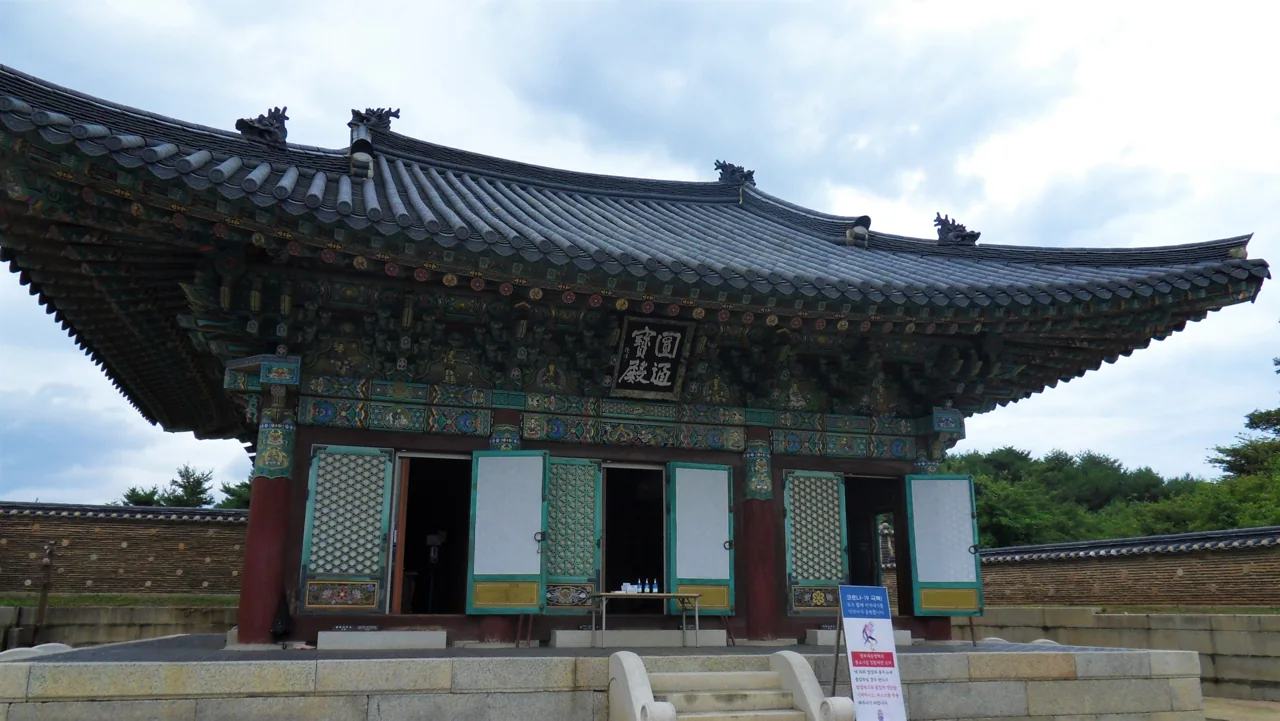
Founded by the monk Uisang under King Munmu of Silla, NaksansaMap is one of the eight scenic sites of the Gwandong region. The cultural property fee here was abolished in the same reform, so entry costs nothing. Uisangdae, the octagonal pavilion on the cliff, is the sunrise viewpoint; Hongnyeonam is built over a sea cave, and through a gap in its floor you can watch the water move underneath. The complex burned in a major forest fire and was rebuilt.
Salmon come up the Namdaecheon
The Namdaecheon gathers water off Odaesan, Seoraksan and Jeombongsan and carries it to the sea. Its upper reaches hold first-grade water and attract protected migratory birds. There is a salmon ecology park and an observation walk at the mouth, and a sculpture park on the middle floodplain that fills with cosmos flowers in autumn.
20. Fourteen surf beaches, each with a grade
Yangyang runs a dedicated surf map as an official service, and fourteen beaches are on it: Multchi, Seorak, Jeongam, Naksan, Dongho, Hajodae, Gisamun, Jukdo, Gaetmaeul, Ingu, Dongsan, Jigyeong-ri, Namae 1-ri and Namae 3-ri.
What the map actually gives you
- Skill grading. Each beach is marked beginner, lower intermediate, intermediate, advanced or pro.
- Safety level. Four steps from watch through caution and alert to danger.
- Live readings. Water temperature, air temperature, wind and wave height.
- Hazard layers. Rip currents, swell and wave overtopping, with CCTV feeds.
- Activity type. Which beaches suit kayak and canoe, kite surfing and SUP rather than board surfing.
A beach with a reputation for good waves is not the same as a beach for a first lesson. Start from the beginner grading, and stay out on a day with a rip current warning no matter what grade the beach carries.
Jukdo and Ingu are the centre of it
Jukdo beach, below the Jukdojeong pavilion that is the sixth of the ten views, and neighbouring Ingu beach hold most of the surf shops, schools and guesthouses. Lessons with board and wetsuit hire are the standard package.
Getting there from Sokcho takes about forty minutes by road. There is no rail link and bus connections are infrequent enough that most people who plan a surfing day either drive or book a package that includes transfers. If you are basing yourself in Sokcho and want one day of it, treat it as a day trip rather than an afternoon.
21. Three places to sleep, chosen by what you are doing
Sokcho is small enough that no choice is badly wrong. What differs is which mornings become possible.
| Area | Suits | Trade-off |
|---|---|---|
| Sokcho Beach and Oeongchi | Sea views, and the express terminal is close | Highest prices, books out first in summer and autumn |
| Intercity terminal and market | Bus travel, route 7 starts here, market on foot | No sea view |
| Seorakdong | Pre-dawn starts, Sogongwon within walking distance | Few dinner options, a bus ride back into town |
If Daecheongbong is on your list, Seorakdong or the Osaek side is not a preference, it is a requirement. Nothing runs from the town centre to a trailhead at three in the morning.
There is also a middle option that gets overlooked. Staying near the intercity terminal puts you one bus from Sogongwon and one bus from the market, and it is the cheapest of the three areas in every season. If your plan is short trails and town rather than the summit, that is where the money goes furthest.
Prices move sharply by date. The same room can double in midsummer and in foliage season. The park’s own peak definition, 1 October to 15 November, lines up with the hotel peak, so campsite fees rise at the same time. Fix the dates first and then look at rooms.
22. The coast and the interior are different climates
One pair of numbers tells you what to pack. In the 30-year normals, Sokcho records 0.8 cold-wave days a year. Inje, on the other side of the mountain, records 22.2.
| Measure | Sokcho (coast) | Inje (inner Seorak) |
|---|---|---|
| January mean | 0.1°C | -4.7°C |
| January minimum | -3.8°C | -10.4°C |
| Cold-wave days a year | 0.8 | 22.2 |
| Tropical nights a year | 6.4 | 0.7 |
| Days with 10°C+ diurnal range | 85.7 | 235.8 |
| Annual rainfall | 1,407.2mm | 1,204.6mm |
Two-thirds of Inje’s year swings more than ten degrees between day and night. In Sokcho it is under a quarter, because the sea holds the temperature steady. A T-shirt day on the seafront is a jacket day at the trailhead.
Month by month
August is the wettest month at 298.0mm, July next at 265.6mm. December is driest at 40.1mm across 4.7 rain days. October brings 87.9mm over 7.0 days, under a third of summer, with sunshine back up to 189.8 hours. Tropical nights are confined to July and August, 3.6 and 2.6 days.
The colour starts at the top
The park service puts its own dates in the course notes. Ulsanbawi, Yangpok and Baekdamsa all carry mid-October to early November as the recommended foliage window. It moves downhill from the summit. That window overlaps the park peak season and the cable car discount blackout, so the same walk costs more in the weeks it looks best.
23. What a day actually costs
The fixed costs of a day here, per adult.
| Item | Cost | Note |
|---|---|---|
| National park entry | Free | Abolished nationally |
| Sinheungsa, Naksansa, Baekdamsa | Free | Cultural property fee abolished |
| Cable car return | 16,000 won | No visitor discounts |
| Gaetbae one way | 500 won | 1,000 won return |
| Baekdamsa shuttle one way | 2,500 won | 5,000 won return |
| Small locker | 2,000 won | One day |
| Coin shower, six minutes | 1,000 won | 500 won per extra three |
| Shelter, one night | 20,000-30,000 won | Midweek or weekend |
The striking line is the first one. Walking on Seoraksan costs nothing. Take bus 7 to Sogongwon, walk to Ulsanbawi and back, and the day’s spending is a bus fare and lunch. The cable car is the optional part, not the entry ticket.
Accommodation is where the money actually moves, and it moves most on autumn weekends.
Food sits in the middle. A market meal or a bowl of mulhoe at a port is inexpensive; a full raw fish spread at Daepo for a group is not. The one genuinely fixed cost is the bus in and out, which is why booking it early matters more here than in cities where trains run every half hour.
24. Two nights and three, built around the clock
One night: coast plus a short trail
| When | What |
|---|---|
| Day 1 morning | Bus from Dongseoul, arrive around midday |
| Day 1 afternoon | Bus 7 to Sogongwon, Ulsanbawi or Biryong Falls and back |
| Day 1 evening | Cheoksan hot spring, dinner at the market |
| Day 2 morning | Gaetbae to Abai Village, Yeonggeumjeong and the lighthouse |
| Day 2 afternoon | Sokcho Beach or the Badahyanggiro deck, then the bus out |
Two nights with the summit
| When | What |
|---|---|
| Day 1 | Arrive, town and Abai Village, move out to Seorakdong to sleep |
| Day 2 pre-dawn | Enter for Daecheongbong. Check the hour for your checkpoint |
| Day 2 evening | Down, hot spring, sleep in town |
| Day 3 | South to Naksansa and the surf beaches, or the cable car |
Two nights without climbing
The version with no summit fills just as easily: town and Abai Village on the first day, the cable car and Sinheungsa with an afternoon around the two lakes on the second, and Yangyang for Naksansa and Jukdo on the third. Nothing in that plan is governed by an entry hour.
Book the bus before the hotel. With no railway, seat supply is fixed. Autumn weekend returns to Seoul sell out first. Decide when you are leaving, then decide what you are climbing.
🎡Things to Do3
🧭All-Korea essentials135
Sokcho and Seoraksan: frequently asked questions
See the full Korea travel guide
Images: Photographs via Wikimedia Commons: Olga Lipunova (CC BY-SA 3.0), Bernard Gagnon (CC0), Mobius6 (CC BY-SA 4.0), Cultural Corps of Korean Buddhism (CC BY-SA 4.0), Ashy Minivet (CC0).