
Busan to Tsushima Ferry: Schedules, Fares, Taxes and Getting Around the Island
Three operators sail from Busan, the fastest crossing takes 1 hour 10 minutes, and Japan tripled its departure tax on 1 July 2026.
| Operators | PanStar, Daea Express Shipping and Starline all sail from Busan Port. |
|---|---|
| Fastest crossing | Busan to Hitakatsu in 1 hour 10 minutes to 1 hour 30 minutes, depending on the operator and the season. Izuhara takes 2 hours 20 minutes or more. |
| One way fare | 90,000 won to Hitakatsu, 110,000 won to Izuhara on the published Daea tariff. |
| Japan departure tax | 3,000 yen each time you leave Japan. It was 1,000 yen before 1 July 2026. |
| Island buses | A one day pass costs 1,040 yen. A single north to south fare is 3,400 yen. |
| Where you board | Busan Port International Passenger Terminal, third floor, a 5 to 7 minute walk from Busan Station. |
1. Three operators, and the fastest crossing is 1 hour 10 minutes
2. Hitakatsu or Izuhara, decide this first
3. Every timetable in one place
4. What kind of ship you are boarding
5. Sailings are not identical every day
6. What a ticket costs
7. Japan tripled its departure tax on 1 July 2026
8. So what does the trip actually cost
9. Getting to Busan Port International Passenger Terminal
10. Check in, immigration and baggage
11. Entering Japan, where airport advice does not apply
12. The island bus day pass costs 1,040 yen
13. Where the Hitakatsu loop bus goes
14. Crossing between Hitakatsu and Izuhara
15. Rental cars, taxis and bicycles
16. Day trip, one night or two, and how the sailings decide
17. Where to stay on Tsushima
18. When to go
19. Looking back at Korea from Tsushima
20. Cancellations, booking and the last checks
Tsushima is the closest part of Japan to Korea, and the crossing takes about as long as a train ride to the next city. Part of our Busan travel guide.
1. Three operators, and the fastest crossing is 1 hour 10 minutes
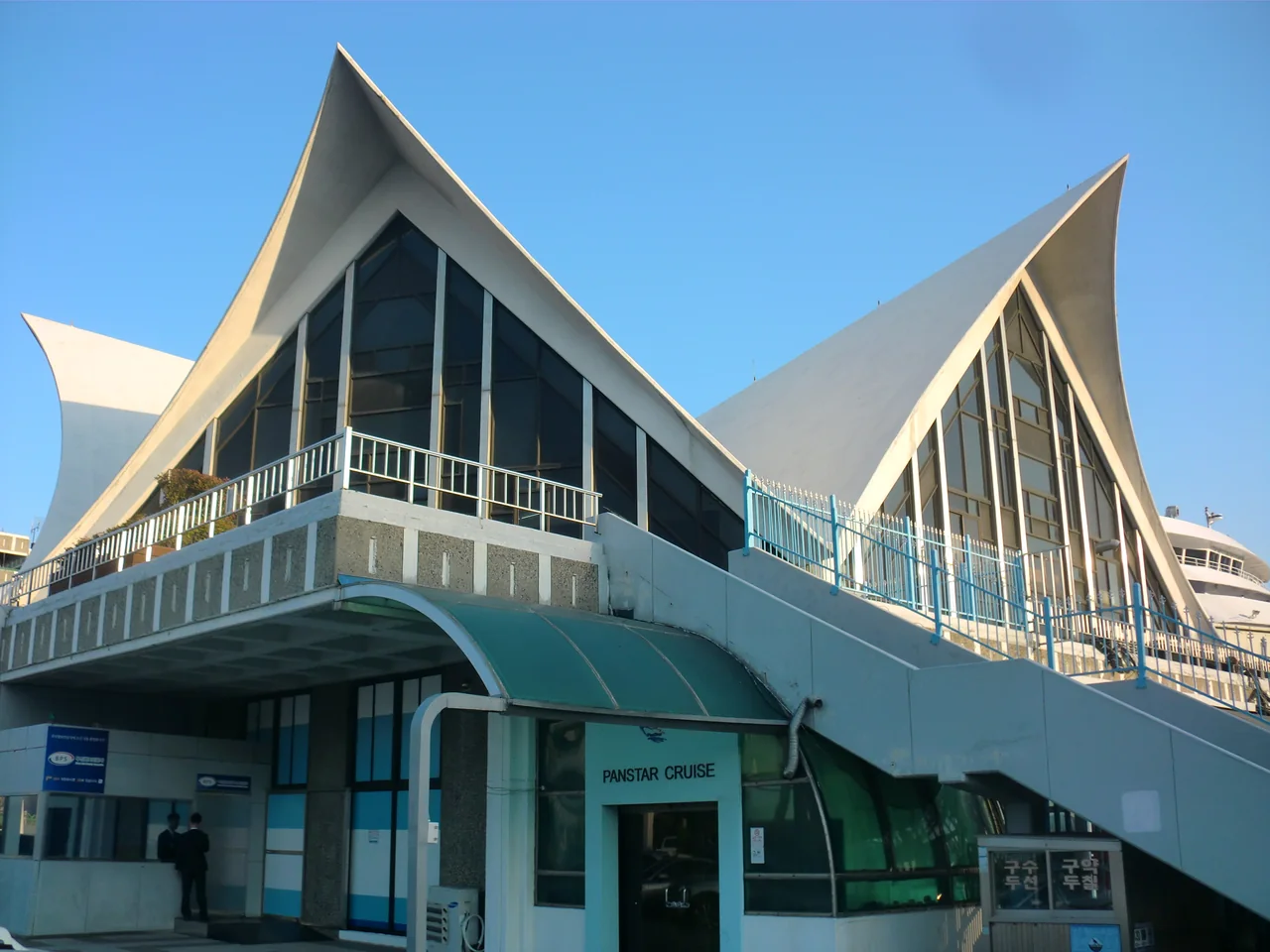
Three companies run passenger ferries from Busan to Tsushima: PanStar with the Tsushima Link, Daea Express Shipping with the SeaFlower, and Starline with the Nova. All three sail from Busan Port International Passenger TerminalMap, and all three keep their Busan offices on the third floor of that building.
Which operator is quickest changes with the seasonal timetables. On the timetables in force from October, Starline’s morning sailing 620 leaves Busan at 09:10 and reaches Hitakatsu at 10:20, so the crossing is 1 hour 10 minutes. PanStar takes 1 hour 20 minutes to the same port, and Daea takes 1 hour 20 minutes to 1 hour 30 minutes. All three are 40 knot high speed craft, so the gap between them is small, and the order can change when the next timetable comes out.
| Operator | Vessel | Ports served | Busan to Hitakatsu (varies by season) |
|---|---|---|---|
| PanStar | Tsushima Link | Hitakatsu, Izuhara | 1h 20m |
| Daea Express Shipping | SeaFlower | Hitakatsu, Izuhara | 1h 20m to 1h 30m |
| Starline | Nova | Hitakatsu only | 1h 10m to 1h 20m |
Check your passport before you plan anything
This is a border crossing into Japan, and what you need depends on your nationality. Korean, most European, North American and Australian passport holders enter visa free for up to 90 days. Chinese nationals need a Japanese visa arranged in advance, so a spontaneous day trip from Busan is not possible on a Chinese passport. Check your own status before you book a ticket.
There is no flight from Busan
Tsushima has an airport, but nothing flies to Korea from it. The only departures are five a day to Fukuoka and four or five a day to Nagasaki, both about half an hour. The ferry is the only direct way to reach the island from Korea. You could route through Fukuoka and connect to a domestic flight, but that consumes a full day in each direction.
If you are comparing sea routes to Japan, we also cover the Busan to Fukuoka ferry and the Busan to Shimonoseki ferry. Both of those are overnight ships where you sleep on board, which makes them a different kind of trip.
2. Hitakatsu or Izuhara, decide this first
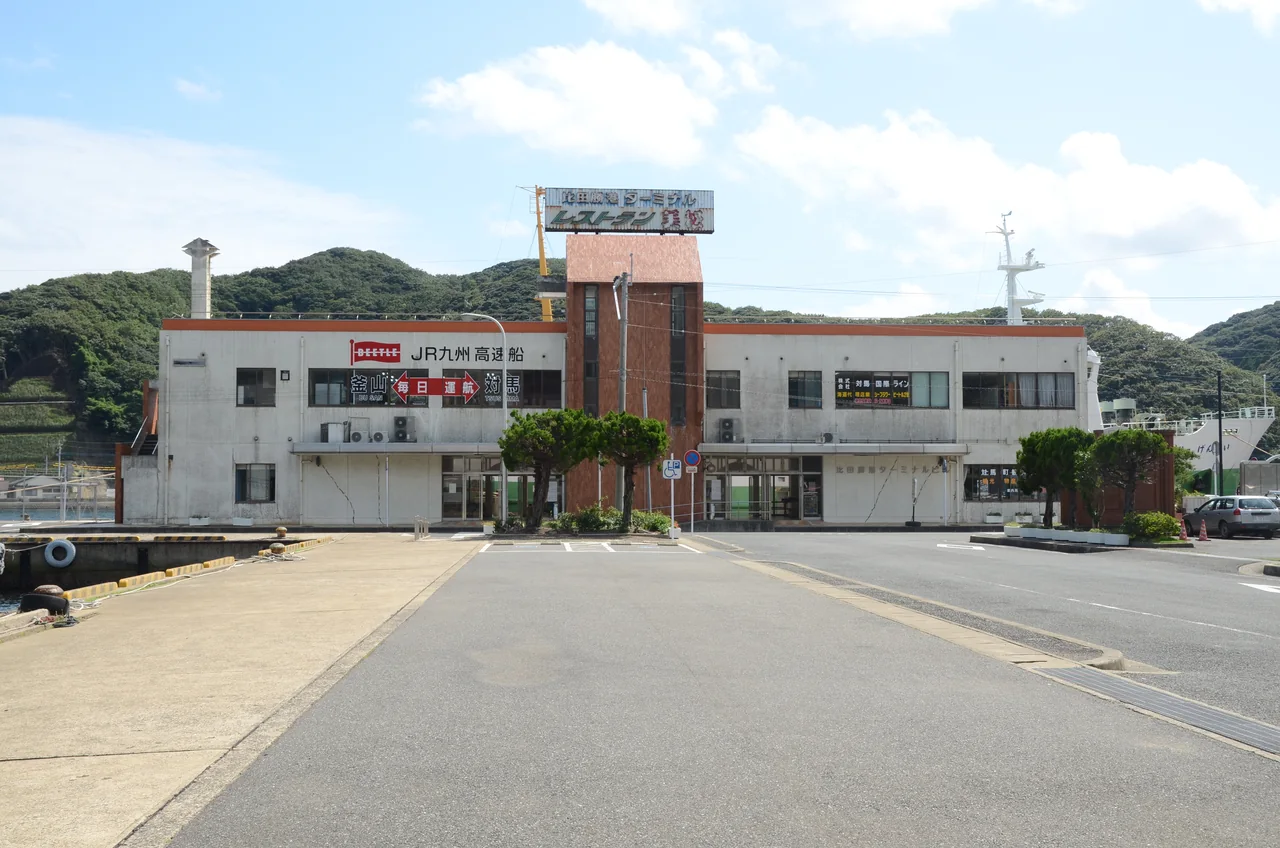
Two ports on Tsushima take ferries from Busan. HitakatsuMap sits at the northern tip of the island and IzuharaMap sits in the south. They are on the same island, but the bus between them takes two and a half hours. Which one you sail into shapes the whole trip.
Hitakatsu is closer, Izuhara is larger
Hitakatsu is the nearest Japanese port to Korea, which is why the sailings concentrate there. All three operators call at it. Miuda Beach and the Korea Observatory are close by, and the convenience stores, restaurants and hotels sit within walking distance of the terminal. Day trips and one night trips almost always mean Hitakatsu.
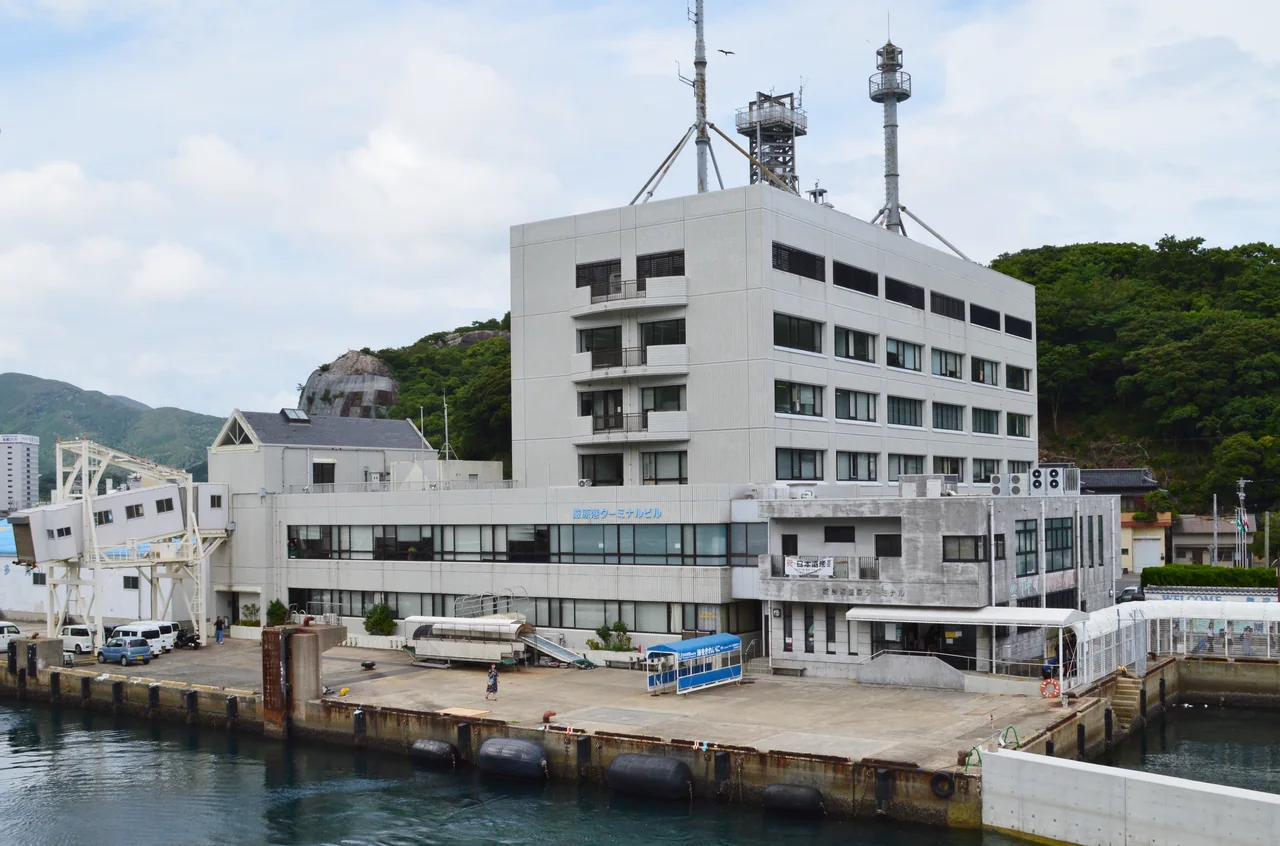
Izuhara is the administrative centre of the island. The city hall, the hospital and the main shopping street are here, and the great majority of the island’s rooms are in this area. The crossing takes 2 hours 20 minutes to 2 hours 40 minutes and runs on fixed days of the week. If you plan two nights or more and want to see the south, this is the port to aim for.
| Comparison | Hitakatsu | Izuhara |
|---|---|---|
| Crossing from Busan | 1h 10m to 1h 30m | 2h 20m to 2h 40m |
| Operators calling | All three | PanStar and Daea |
| One way fare (Daea tariff) | 90,000 won | 110,000 won |
| Suits | Day trip, one night | Two nights or more |
| Nearby | Miuda Beach, Korea Observatory | Shopping street, city hall, port festival |
What is waiting when you step off
Hitakatsu has separate international and domestic terminals. Ferries from Busan use the international one. The loop bus stops directly outside it, and the tourist information office in the same area sells the island bus pass. Everything you need for a short stay is within a few minutes on foot.
In Izuhara the shopping street is also walkable from the quay. The cross island bus stops in front of the Fureaidokoro Tsushima building, and the Tsushima Kotsu bus office is inside the Tiara Mall. Banks, the hospital and the largest supermarkets are all in this district.
You can also use one port each way, sailing into Hitakatsu, working south and leaving from Izuhara. That works, but you carry your luggage across the island, and if you rent a car the drop off charge applies. More on that below.
3. Every timetable in one place
The sailing times below are taken from each operator’s own website and the timetables in force from October, and are given in local time. Korea and Japan share a time zone, so nothing needs adjusting when you land. Operators reissue their timetables every month and move times with the seasons, so check the operator’s monthly timetable before you go.
PanStar Tsushima Link
| Route | Departs | Arrives | Duration |
|---|---|---|---|
| Busan to Hitakatsu | 08:40 | 10:00 | 1h 20m |
| Hitakatsu to Busan | 16:40 | 18:00 | 1h 20m |
| Busan to Izuhara (calling at Hitakatsu) | 08:40 | 11:20 | 2h 40m |
| Busan to Izuhara (direct) | 10:20 | 12:40 | 2h 20m |
| Izuhara to Busan | 16:00 | 18:20 | 2h 20m |
PanStar does not run every route every day. It splits the week between Hitakatsu and Izuhara, and on some days there is no return sailing from Hitakatsu at all. The days change from month to month, so check the operator’s monthly timetable for your dates. From mid November the winter timetable moves the weekday return from Hitakatsu forward to 15:00 and the return from Izuhara to 15:30.
PanStar’s own pages give different return times. The basic route information on its booking site lists 17:10 for the departure from Hitakatsu, the monthly timetable shows 16:40, and the winter timetable moves weekday returns to 15:00. Go by the time printed on your booking confirmation and the timetable for your month, and check it again the day before you sail.
Daea SeaFlower
| Route | Departs | Arrives | Duration |
|---|---|---|---|
| Busan to Hitakatsu | 09:40 | About 11:00 | 1h 20m to 1h 30m |
| Hitakatsu to Busan | 15:40 | About 17:00 | 1h 20m to 1h 30m |
| Busan to Izuhara | 09:20 | About 11:40 | 2h 20m to 2h 30m |
| Izuhara to Busan | 15:30 | About 17:50 | 2h 20m to 2h 30m |
Daea’s summary page and its monthly timetable give arrival times about 10 minutes apart, so treat the arrivals as approximate. Izuhara sailings run only on set days of the week, and on those days there is no Hitakatsu sailing. From mid November to January, departures from Tsushima move earlier, with the Izuhara return leaving at 15:00, so check the monthly timetable before you go.
Starline Nova
| Route | Sailing | Departs | Arrives |
|---|---|---|---|
| Busan to Hitakatsu | 620 | 09:10 | 10:20 |
| Busan to Hitakatsu | 646 | 12:30 | 13:50 |
| Hitakatsu to Busan | 545 | 12:30 | 14:00 |
| Hitakatsu to Busan | 575 | 16:10 | 17:40 |
Starline does not sail to Izuhara. The Izuhara route on the company’s schedule page carries no registered sailings. If you book with this operator, Hitakatsu is the only destination available.
One naming point causes confusion. Starline was known for years as the Nina, and the booking domain still carries that name. The vessel now working this route is the Nova, and the company itself writes Starline Nova in its own footer. Timetables you find under the old name may not match what is sailing today.
4. What kind of ship you are boarding
All three are high speed craft. You sit in an assigned seat for an hour or two, in a cabin closer to an aircraft than to a cruise ship. There is no promenade deck and no cabin to sleep in.
| Vessel | Built | Dimensions | Capacity | Speed |
|---|---|---|---|---|
| Tsushima Link (PanStar) | 2001 | 52.4m by 11.8m | 425 | 40 knots |
| SeaFlower (Daea) | 2012 | 37.98m, 590 GT | 442 | 40 knots |
| Nova (Starline) | Not published | Not published | Not published | High speed craft |
The SeaFlower was built by the Dutch yard Damen in Guangzhou and launched in August 2012. She carries seven crew. The Tsushima Link is the older of the two published vessels and is longer but carries slightly fewer passengers. Forty knots works out to a little over 70 kilometres an hour.
Seat classes
Daea splits the cabin into standard and premium, with premium costing 10,000 won more each way. PanStar sells economy and a premium class with reclining seats, at 1,000 yen more each way. On a crossing this short most passengers find the standard seat sufficient.
If you are prone to seasickness
High speed craft react quickly to swell. You feel the motion more than you would on a large overnight ferry, and on windy days some passengers struggle. Take medication about half an hour before departure and sit towards the middle of the vessel, where the movement is least.
When conditions are genuinely bad the operator cancels. A sailing that goes ahead is safe, but a winter crossing in a strong northwesterly can still be rough. If you are travelling with young children or older relatives on a day like that, choose your seats with the motion in mind.
What is sold on board
All three operators run a duty free shop selling spirits, tobacco, cosmetics, drinks and snacks. PanStar adds two things the others do not advertise: it will hold duty free goods bought on the outbound leg until your return sailing, and it offers currency exchange on board, which the company describes as a first for a high speed vessel on this route.
Starline takes duty free orders for the return leg by phone, between 09:30 and 16:30 and up to 48 hours before departure. The selection includes mainland Japanese goods that are not sold on Tsushima itself.
5. Sailings are not identical every day
The tables above show the standard pattern. In practice sailings are added at weekends and dropped on individual dates. Getting this wrong costs a whole day, so check the operator’s calendar for your travel month before you book.
Daea adds sailings at weekends
| Day | Departures from Busan | Departures from Tsushima |
|---|---|---|
| Saturday | 07:50, 11:30 | Hitakatsu 15:40 |
| Sunday | 09:40 | Hitakatsu 13:00, 16:40 (12:50 and 16:20 from mid November) |
The Saturday 07:50 departure leaves nearly two hours earlier than the weekday sailing and gets you onto the island earlier than any other sailing that day. The Saturday return from Tsushima leaves at 15:40, though, so look at the return before you count on a longer day. The late Sunday afternoon return from Hitakatsu gives you more of the afternoon at the other end of the day.
Starline drops sailings on individual dates
Open Starline’s schedule two weeks at a time and you will see gaps against sailings 646 and 545. The morning 620 runs every day. The two midday sailings run on selected days of the week only, and the evening return can leave at a different time on Sundays, earlier still from mid November. If your plan depends on arriving at midday and leaving at midday, confirm that both sailings exist on your date.
All three companies carry the same disclaimer: times and sailings may change according to weather. During the summer typhoon period and in winter northwesterlies, cancellations do happen.
6. What a ticket costs
Only one of the three publishes a complete tariff. Daea Express Shipping lists every passenger category on its own site, and the table below reproduces it. These are one way fares departing from Busan.
| Category | Izuhara | Hitakatsu | Discount |
|---|---|---|---|
| Adult | 110,000 won | 90,000 won | None |
| Age 65 and over, students, mild disability, veterans | 88,000 won | 72,000 won | 20% |
| Child, 2 to under 12 | 55,000 won | 45,000 won | 50% |
| Infant, 1 to under 2 | 11,000 won | 9,000 won | 90% |
| Under 1, no seat | Free | Free | 100% |
| Premium seat | 120,000 won | 100,000 won | Adds 10,000 won |
The discount conditions have edges
The student rate covers middle school through university and requires a student card or enrolment certificate at the point of purchase. Postgraduate students and anyone aged 30 or over are excluded, even with a valid card. Discounts do not stack, so a 65 year old student receives one 20 percent reduction, not two.
Large items have their own rule. Anything over 158cm in combined dimensions or over 20kg counts as special baggage, which in practice means bicycles and fishing gear. The published tariff lists this against the standard fare rather than any discounted category. Whether it can be carried, and what it costs, varies by operator, so confirm before booking.
Where to buy
You can book directly with the operator or through a travel platform. Booking direct gives you a specific sailing and seat and is easier to change. Platform products bundle the return leg at a lower headline price but often restrict date changes.
Platform listings are sold as same day return, one night or two nights. The same physical sailing costs a different amount depending on which product you select, so fix your return date first and then choose the matching product.
Coming back you pay in yen
Return fares are set in Japanese currency. On the Daea tariff a standard seat is 11,000 yen from Izuhara and 9,000 yen from Hitakatsu. PanStar sells the Hitakatsu departure at 9,500 yen on weekdays and 11,500 yen at weekends and in peak season, with the premium seat adding 1,000 yen each way.
Buying a return ticket in Korea settles both legs in won and removes the exchange calculation. The trade is flexibility, since changing the return date afterwards is harder.
7. Japan tripled its departure tax on 1 July 2026
The Japanese international tourist tax rose from 1,000 yen to 3,000 yen on 1 July 2026. It applies to sea passengers exactly as it applies to air passengers, it is charged once when you leave Japan, and children under two are exempt.
You pay it every time you leave
The rate is 3,000 yen for each departure from Japan. If you visit Tsushima twice, you pay it twice, and leaving by ferry costs exactly the same as leaving by air. The only exemption is for children under two. Ferry operators on the Korea to Japan routes add it to the fees on the leg that leaves Japan.
Published fee tables can lag behind. An operator’s fee table may still show the old departure tax of 1,000 yen. If the total at checkout is higher than the published fee table suggests, the checkout figure is the one that applies and the fee table is out of date.
Why it went up
The Japanese government presented the increase as funding for tourism infrastructure, on the argument that visitor numbers have grown substantially since the rate was set and that airports and ports need investment to cope. Tripling the rate in one step drew comment across the regional travel trade when it was announced.
You never pay this at a counter. It is collected inside the ticket price by the carrier and remitted to the government, and it appears in the fees line of your booking.
Every fee, both directions
| Charge | Leaving Busan | Leaving Tsushima |
|---|---|---|
| Terminal fee | 6,000 won | 500 yen |
| Departure tax | 1,000 won | 3,000 yen |
| Fuel surcharge | About 13,000 to 15,000 won to Hitakatsu, 24,000 to 25,000 won to Izuhara | Charged in yen, for example 1,500 yen from Hitakatsu and 2,500 yen from Izuhara on PanStar |
The 1,000 won charged in Busan is a Korean departure levy and is separate from the Japanese tax. Both countries collect their own. Fuel surcharges move with fuel prices. Daea and PanStar announce them in notices on their own websites and revise them as often as monthly, so the figures in the table above are a recent guide rather than a fixed rate. The return leg from Tsushima carries its own surcharge in yen. Check the operator’s latest notice before you book, and treat the checkout total as the amount you pay.
8. So what does the trip actually cost
The headline fare understates the total, because fees attach to each leg and the Japanese departure tax among them has tripled. Here is a Hitakatsu return assembled from the published Daea tariff.
| Item | Per person |
|---|---|
| Busan to Hitakatsu, one way | 90,000 won |
| Hitakatsu to Busan, one way | 9,000 yen |
| Busan terminal fee | 6,000 won |
| Korean departure levy | 1,000 won |
| Tsushima terminal fee | 500 yen |
| Japanese departure tax | 3,000 yen |
| Fuel surcharge, each way | Set by the operator, check its latest notice |
The fees on their own
Strip out the fares and you are left with 7,000 won and 3,500 yen, plus the fuel surcharge in each direction. For two people the fixed yen fees alone come to 7,000 yen. Before the increase the same line was 3,000 yen, so a couple now pays 4,000 yen more for exactly the same journey. The shorter your trip, the larger a share of the total these fixed charges represent.
Discounted return bundles pull the fare portion down sharply, and platforms list same day returns in the 50,000 to 70,000 won range at quieter times. The fees are identical whichever product you buy. That is why the advertised price is never the amount you pay.
Compared with the other sea routes
The overnight services to Fukuoka and Shimonoseki trade time for a night’s accommodation, since you sleep on board. Tsushima is the opposite arrangement: you arrive within the hour, but the island offers a different kind of stay than a large Japanese city.
The 3,000 yen departure tax is the same on every route. Because the Tsushima round trip is so short, that fee weighs more heavily here than anywhere else. On a day trip the ferry and the fees are close to the entire cost of the journey.
Spending on the island
Getting around is covered below, but the headline is that a full day of bus travel costs 1,040 yen. Rooms in Hitakatsu and Izuhara are ordinary business hotel rates outside the peak weeks.
9. Getting to Busan Port International Passenger Terminal
The terminal is at 206 Chungjang daero in Dong gu, Busan. Busan Station is the closest transport hub by a wide margin. A pedestrian deck links the station directly to the terminal, so arriving by train puts you 5 to 7 minutes from the check in counters.
| From | Route | Time |
|---|---|---|
| Busan Station (rail) | Straight across the pedestrian deck | 5 to 7 min |
| Busan Station (metro) | Moving walkway, station concourse, deck | 10 to 15 min |
| Choryang Station | Exit 6, underpass junction, cross Chungjang daero | About 20 min |
| Gimhae Airport (public transport) | Light rail, change at Sasang for Line 2, change at Seomyeon for Line 1 | About 70 min |
| Gimhae Airport (car) | West Busan interchange, Busan Station, terminal car park | About 30 min |
City buses that stop at the terminal
| Route | Runs via | Frequency | Adult fare |
|---|---|---|---|
| 5-1 | Banyeo, Seomyeon, Chungjangno, terminal, Jagalchi | 13 to 16 min | 1,700 won |
| 1004 | Gimhae, Baegyang tunnel, Seomyeon, Busan Station, terminates at terminal | 11 to 16 min | 2,200 won |
| 42 | Hoedong, Suyeong, Kyungsung University, Busan Station rear, terminal | 8 to 16 min | 1,700 won |
Those fares are the transport card rate. Paying cash costs 1,550 won on the 5-1 and 42, and 2,100 won on the 1004. Our guide to the Busan metro and transport cards explains how the cards and transfers work.
Coming from Seoul, the KTX to Busan is the simplest option because it leaves you on the right side of the deck with no transfer at all. If you fly into Gimhae, see getting from Gimhae Airport into the city. For a morning sailing, spending the previous night in Busan removes all the risk.
The hillside immediately behind the terminal is Choryang, one of the oldest quarters in the city and worth an hour if you come back on an afternoon sailing. It connects to Taejongdae and the rest of the coastal sights by metro.
10. Check in, immigration and baggage
The process mirrors an airport. Ticketing, baggage check, exit immigration, security, then boarding. PanStar asks passengers to reach the third floor counter 90 minutes before departure. On busy summer weekends, allow more.
How the flow runs
You collect your boarding pass and clear baggage at the third floor counter, present your passport at Korean exit immigration, pass security and wait in the departure hall. Boarding is on foot from the hall to the vessel. Budget close to an hour for the whole sequence.
Automated immigration gates are available to eligible travellers and are considerably faster than the staffed desks on a weekend morning.
Baggage allowance
On Starline the allowance is three pieces per person totalling 20kg or less. Two pieces travel free and the third is chargeable. Each piece must be 158cm or less in combined dimensions, and a backpack counts as a piece. Fishing equipment and bicycles, including folding bicycles, are declared separately.
| Rule | Limit |
|---|---|
| Pieces | Three per person, two free |
| Weight | 20kg total |
| Size | 158cm combined per piece |
| Declared separately | Fishing gear, all bicycles |
Travelling with children
A child is 2 to under 12 on the date of travel and an infant is 7 days to under 2. Unaccompanied minors between 6 and under 12 must be registered with the reservation centre at least 24 hours before departure, and children under 6 cannot travel alone at all.
11. Entering Japan, where airport advice does not apply
Entry conditions depend on your passport, not on the fact that you arrived by sea. Visa free nationals get the same 90 days they would at Narita. Everyone else needs the visa arranged before travel.
Visit Japan Web is optional
The service pre registers your immigration and customs declarations, and since January 2024 both are combined into a single code. Registering speeds things up, but you can still enter using paper forms. Guides that describe it as mandatory are wrong.
Electronic customs gates exist at seven airports only: New Chitose, Narita, Haneda, Chubu, Kansai, Fukuoka and Naha. Hitakatsu and Izuhara are not on that list. Any advice built around scanning a code at a customs kiosk describes an airport, not a seaport, and at Tsushima an officer processes you at a counter.
What you cannot bring in
Japan enforces its rules on meat and meat products strictly. Sausage, jerky and ready meals containing meat are all prohibited, and fruit, vegetables and seeds are subject to quarantine. Travellers on short trips often pack food for the crossing and then have to surrender it on arrival.
Penalties are possible, so check what is left in your bag before you disembark. The same restriction applies in reverse when you carry Japanese meat products back into Korea.
Money and connectivity
Tsushima still runs substantially on cash. Larger shops and hotels in both port towns take cards, but small restaurants and the buses are easier with notes and coins. Bus fares and the day pass are paid directly to the driver, so carry change.
Your phone drops the Korean network partway across and picks up a Japanese one as you approach the island. Even on a one day visit you will want data for bus times and maps.
12. The island bus day pass costs 1,040 yen
Getting around after you land is where the money is actually decided. Tsushima is long from north to south and the distances are real. Tsushima Kotsu sells a one day pass for 1,040 yen that covers every route on the island for that calendar day.
| Option | Izuhara to Hitakatsu |
|---|---|
| One day pass | 1,040 yen, unlimited on all routes |
| Cross island bus, one way | 3,400 yen |
| Limited express cross island, one way | 3,390 yen |
| Taxi | 25,000 to 30,000 yen |
One long ride and the pass has already paid
A single north to south fare is 3,400 yen and the pass is less than a third of that. Even for shorter hops, two rides usually beat the pass. If there is any chance you will use a bus, buy the pass first.
The official Tsushima Kotsu timetable repeats this advice in four separate places. Most travel writing about the island mentions that a pass exists without giving the price or the comparison, which is why so many visitors work it out only after paying full fare on the first ride.
Ordinary fares are distance based
You take a numbered ticket when boarding and pay on the way out, with the fare rising by distance. From Izuhara that means 610 yen to Tarugahama Iriguchi, 1,680 yen to Nii and 3,270 yen to Oura. With the pass you skip the calculation entirely and simply show it to the driver.
Where to buy it
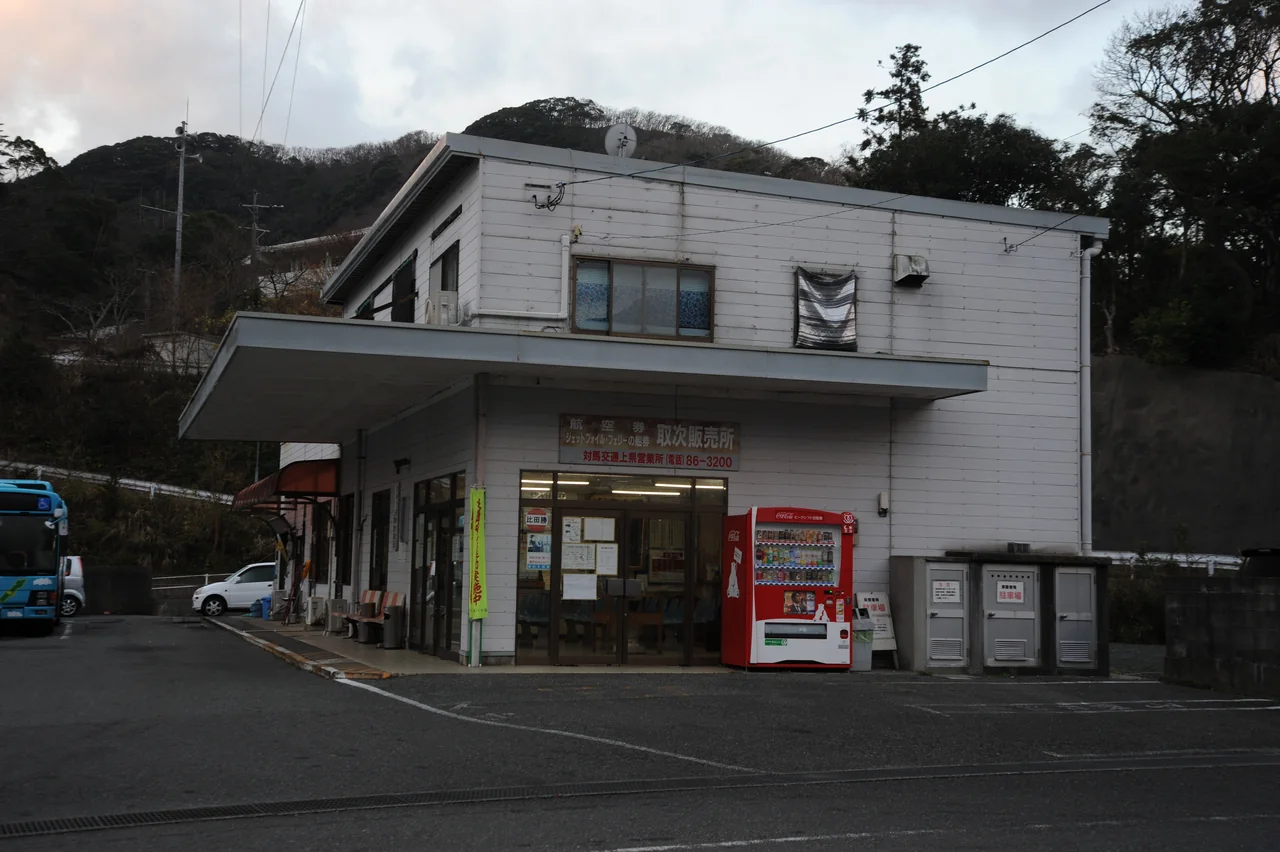
The simplest method is buying from the driver as you board. It is also sold at the Hitakatsu bus centre, the Hitakatsu tourist information office and the Tsushima Kotsu office in Izuhara, which is inside the Tiara Mall.
Timetables are issued for fixed periods, with new editions in April and October. The current edition covers October to the end of March. Download the edition that covers your travel dates from the Tsushima Busan office site before you go.
13. Where the Hitakatsu loop bus goes
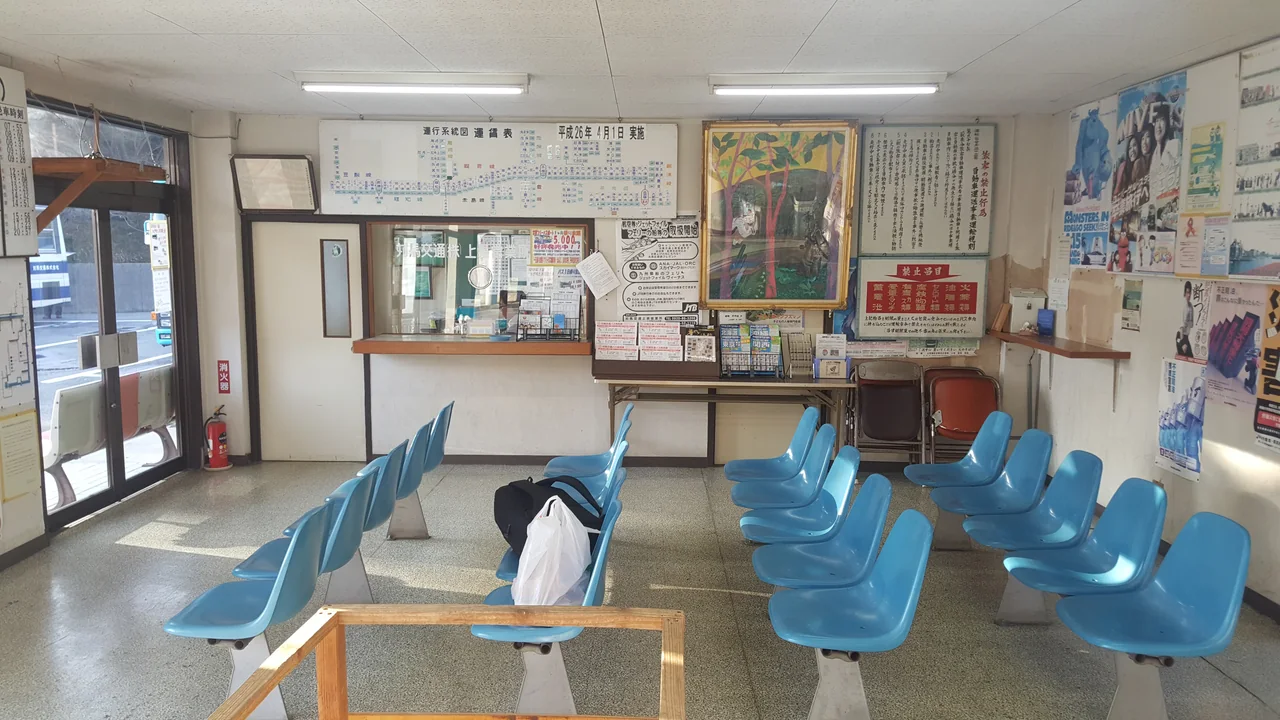
If you land at Hitakatsu, the Waniura loop is the route that matters. It circles the northern tip of the island from the Hitakatsu bus centre and passes most of the places visitors actually want.
| Direction | Departures from Hitakatsu bus centre |
|---|---|
| Via Oura | 07:57, 14:00 |
| Via Nishidomari | 12:30, 17:40 |
| Japanese school summer holidays | Extra runs added; dates and times appear in the edition issued each April |
You do not need a car in the north
The destination column of the official timetable names Toyo Battery and the Korea Observatory, Miuda Beach and campsite, and the Hitakatsu international terminal. All of them are reachable by bus. The common claim that Tsushima requires a rental car is not true of the northern end of the island.
The limitation is frequency. With two services in each direction per day outside the summer holidays, missing one means waiting hours. Plan the observatory visit around a specific return departure rather than assuming you can walk back.
Which stops the loop serves
The route calls at Hitakatsu bus centre, the high school, Oura, Waniura, Ochido, Izumi, Nagisa no Yu, Nishidomari, Furusato, the international terminal, the domestic terminal and Kamitsushima hospital. A full circuit takes a little over 40 minutes.
Buses run the loop in both directions from the same stops, so check the destination sign before boarding. A stop that looks close by road can be most of a circuit away in the wrong direction.
An autumn route runs to the maple valley
A route bus runs from Hitakatsu through the Shushi maple road towards Oshika. Services are few, and fewer still at weekends and on public holidays, so check the current timetable before you plan around it. The colour arrives in November, and the timetable itself notes that a return trip is cheaper with the day pass. Departure times change with each timetable period.
14. Crossing between Hitakatsu and Izuhara
If your plan includes both ports, settle the transfer before you book anything else. The two towns are two and a half hours apart by bus.
The limited express is the direct service
| Route | Departs | Arrives | One way |
|---|---|---|---|
| Izuhara to Hitakatsu international terminal | 08:40 | 10:56 | 3,390 yen |
| Hitakatsu international terminal to Izuhara | 12:40 | 14:56 | 3,390 yen |
This runs separately from the ordinary route buses, as a seasonal service. It operates four days a week, Friday through Monday, once in each direction. On other days you take the ordinary cross island service with changes, which takes longer.
The service runs until 28 December 2026, the end of the operating period printed in the official timetable. After that, check Tsushima Kotsu’s notices to see whether it continues. When it is not running, the ordinary cross island buses cover the same journey with changes.
The stops are fixed
In Izuhara it uses the stop at the Fureaidokoro Tsushima building. In Hitakatsu it uses the stop in front of the international terminal. Both are shared with the ordinary route buses. Intermediate calls are Tarugahama Iriguchi, Nii and Oura.
Sectional fares from Izuhara run 610 yen to Tarugahama Iriguchi, 1,680 yen to Nii and 3,270 yen to Oura. The 1,040 yen day pass is valid on this service too, so it is cheaper than any single sector.
15. Rental cars, taxis and bicycles
To reach the south freely a car is the practical answer. You must carry an International Driving Permit, issued in your home country before departure. It cannot be obtained on the island.
| Company | 660cc per day | 1,500cc per day |
|---|---|---|
| Yoshinaga Rent a Car | 7,700 to 8,800 yen | 13,200 to 14,850 yen |
| Hitotsubatago | 7,500 to 9,000 yen | 9,500 to 11,500 yen |
Picking up in one town and dropping off in the other adds a 10,000 yen relocation charge, payable on the spot. That applies to Hitakatsu to Izuhara and the reverse. It is close to a full day’s rental, so build it into the plan before you commit to a one way itinerary.
Driving on the island
Japan drives on the left. Tsushima is mountainous with narrow sections and long curves, and there is very little street lighting once you leave the towns. Traffic is light, which helps, but the roads demand attention.
Fuel stations are concentrated in Hitakatsu and Izuhara with a few in between. Some close on Sundays and in the evening, so refill when the tank drops below half rather than waiting.
Taxis have to be called
Every taxi on Tsushima works by telephone booking. You do not hail one on the street. Separate companies operate in Izuhara, Mitsushima, Toyotama, Mine, Saka, Kamiagata and Hitakatsu.
Fares rise steeply with distance. Izuhara to Hitakatsu runs 25,000 to 30,000 yen, which makes taxis useful for short hops and impractical for crossing the island.
Bicycles are rented through the tourism and products association. They work well around Hitakatsu where the ground is flat, but most of the island is hill country and long distances on two wheels are hard going.
16. Day trip, one night or two, and how the sailings decide
Build the itinerary backwards from the ferry times. With only a few sailings a day there is no room to stretch or shorten the plan once you are there.
Day trip
Take a morning sailing into Hitakatsu and an afternoon sailing back, and you have a little over six hours on the island at best. Immigration at both ends consumes some of that, so treat five to six hours as the usable figure. The loop bus to the Korea Observatory and Miuda Beach plus lunch in Hitakatsu fills it comfortably.
Return sailings do not run on every day of the week, and from mid November the winter timetables move some afternoon returns earlier. Check both legs on the operator’s timetable for your exact date before you book.
One night
Same sailings, one extra night. You get an afternoon and a full morning, which makes this the most comfortable short format. Stay in Hitakatsu, where several hotels are within walking distance of the terminal.
Two nights or more
This is the version that reaches Izuhara. Land at Hitakatsu, spend the first day in the north, take the limited express south on day two and sleep in Izuhara, then sail home from there. The limited express only runs Friday to Monday, and only within its operating period, so the days have to line up. When it is not running, the ordinary cross island buses make the same journey with changes and take longer.
With a rental car, returning to your starting port avoids the 10,000 yen relocation charge. Basing in Hitakatsu and driving south for a day works, since the Eboshidake viewpoint and Watatsumi Shrine sit in the middle of the island and are an easy return trip.
17. Where to stay on Tsushima
Accommodation clusters in the two port towns. There are guesthouses and campsites in between, but many of them are difficult to reach without a car. Without your own transport, stay in Hitakatsu or Izuhara.
| Area | What is there | Suits |
|---|---|---|
| Hitakatsu | Business hotels and small guesthouses within walking distance of the port | One night, northern itinerary |
| Izuhara | The largest concentration of rooms, alongside shops and restaurants | Two nights or more |
| Miuda area | Beach and campsite, busy in summer | Summer swimming |
Hitakatsu
Several business hotels sit within a short walk of the terminal, and at least one chain property is close enough that the loop bus timetable lists it as a landmark. Room counts are small, so summer weekends and Korean public holidays fill early.
Some visitors check what is available here before travelling even on a day trip, in case a cancellation strands them overnight. In winter that does occasionally happen.
Izuhara
This is where most of the island’s rooms are, from business hotels to ryokan style properties, with restaurants and shops on the doorstep. If you intend to explore the south, basing here keeps the daily distances down.
The constraint is the sailing schedule, since direct services from Busan to Izuhara run on set days. Many visitors arrive at Hitakatsu and come south by bus instead. The limited express runs four days a week during its operating period, and the slower ordinary buses run on the other days. Confirm the connection before booking the room.
What to check when booking
Room supply is small enough that the gap between peak and off peak is wide. Summer holidays and long weekends fill months ahead, while a winter weekday often has availability on the day. A few properties have hot spring baths, which draws visitors in the colder months.
Some smaller guesthouses still take cash only. The payment methods are listed on the booking page, so check before you arrive with cards alone.
18. When to go
Tsushima sits at roughly the same latitude as Busan and the weather is similar. Being an island, it feels the wind more, and the wind is what determines whether the ferry sails. When choosing dates, cancellation risk matters more than temperature.
| Period | Sailings | On the island |
|---|---|---|
| March to May | Reliable | Good walking weather, fresh growth |
| June | Rainy season | Frequent rain |
| July to August | Typhoon risk | Miuda Beach, extra loop bus runs |
| September to October | Typhoons early on | Clear days show Busan from the observatory |
| November | Mostly settled | Shushi maple road |
| December to February | Northwesterly cancellations | Quietest months |
Summer adds services
During the Japanese school summer holidays the Hitakatsu loop bus runs additional services. The dates and times appear in the timetable edition issued each April. If Miuda Beach is the point of the trip, this is the easiest period to move around.
It is also typhoon season. An August cancellation pushes your return back a day, so avoid scheduling anything important for the evening you are due home.
Autumn and winter
From mid October the typhoon risk falls away and the air clears. The days when Busan is visible from the Korea Observatory cluster in this period. November brings colour to the Shushi valley, which a small number of route buses from Hitakatsu serve.
Winter northwesterlies produce the most cancellations of the year. In exchange, tickets and rooms are easy to find, and the island is at its quietest.
19. Looking back at Korea from Tsushima
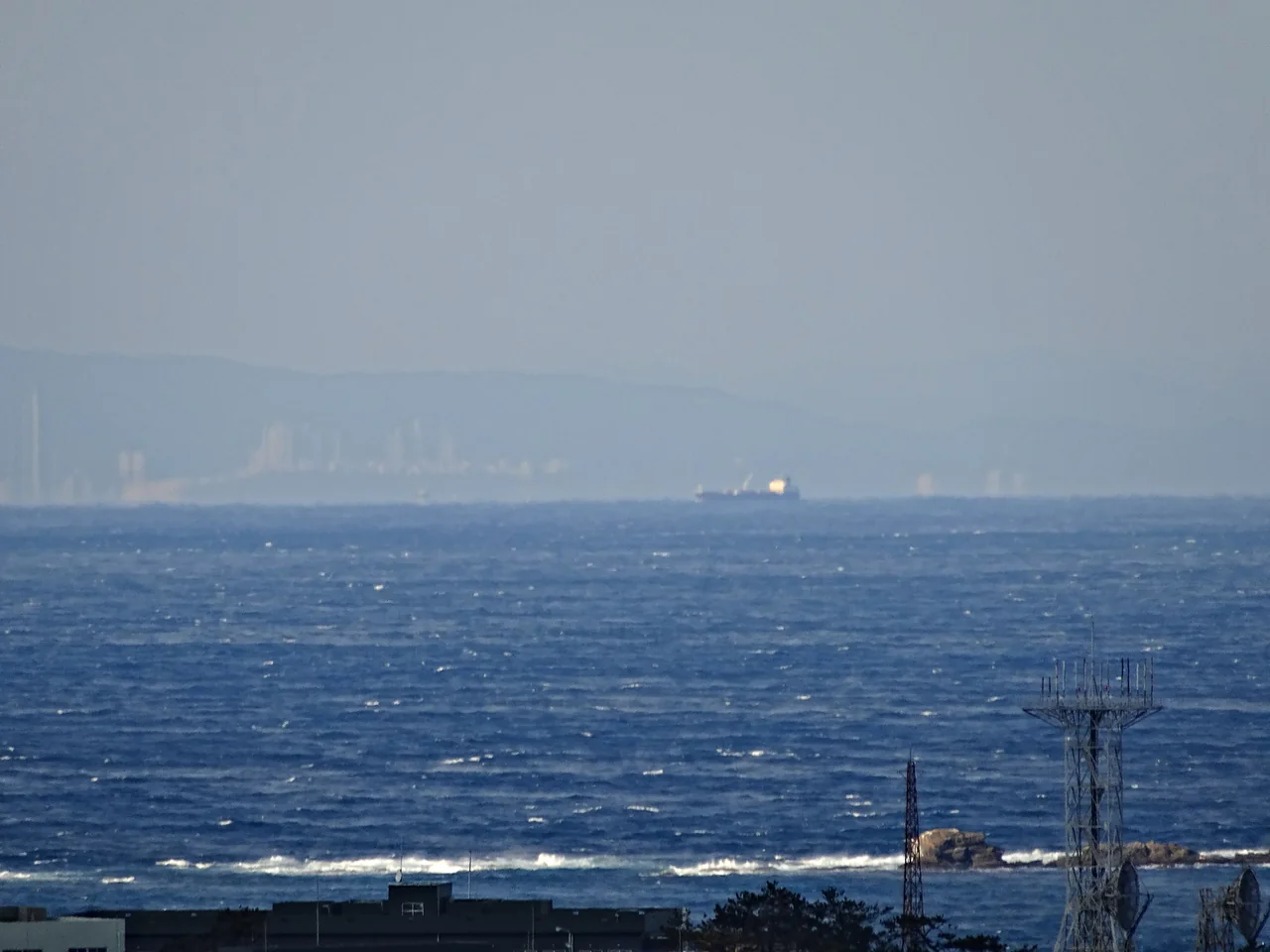
The Korea Observatory stands at Waniura on the northern tip. On a clear day you can see across to Busan, roughly 50 kilometres away, and on some nights the city lights are visible. The loop bus timetable lists it as a destination alongside the Toyo Battery, so it is reachable without a car.
Several sites connect the island to Korean history
Izuhara holds a monument commemorating the marriage of Princess Deokhye, the last princess of the Joseon dynasty. A memorial to Choe Ik hyeon, the scholar and militia leader who died here in 1907, stands in the same area. Tsushima was also the first stop for the Joseon diplomatic missions to Japan, and material about them is kept in the town.
PanStar leads with both monuments in its own description of the island, which tells you how the operator reads the interests of its passengers.
What Izuhara has beyond that
Old castle grounds and samurai residence walls survive around the harbour, and the Nakarai Tosui memorial house is in the same district. Nakarai Tosui produced the first Japanese translation of the Korean tale of Chunhyang.
The Izuhara port festival takes place in summer and includes a re enactment of the Joseon mission procession, which draws Korean participants. Other events through the year include a flowering ash festival and a border marathon.
The natural sights
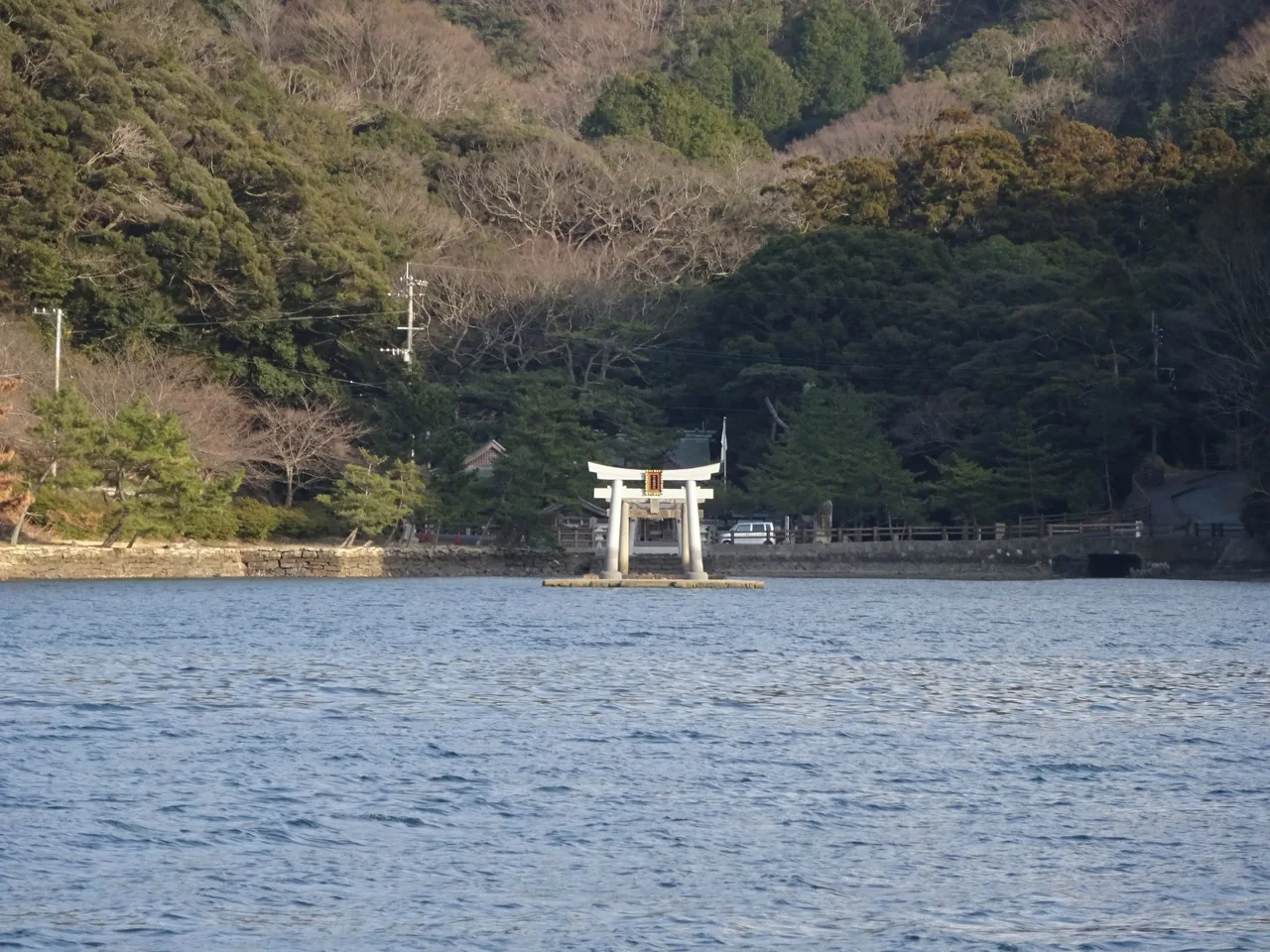
Eboshidake viewpoint rises 176 metres above the northern shore of Aso Bay and is the only place on the island with a full 360 degree view. It is open at all hours and free. Watatsumi Shrine sits below it and the two are usually visited together.
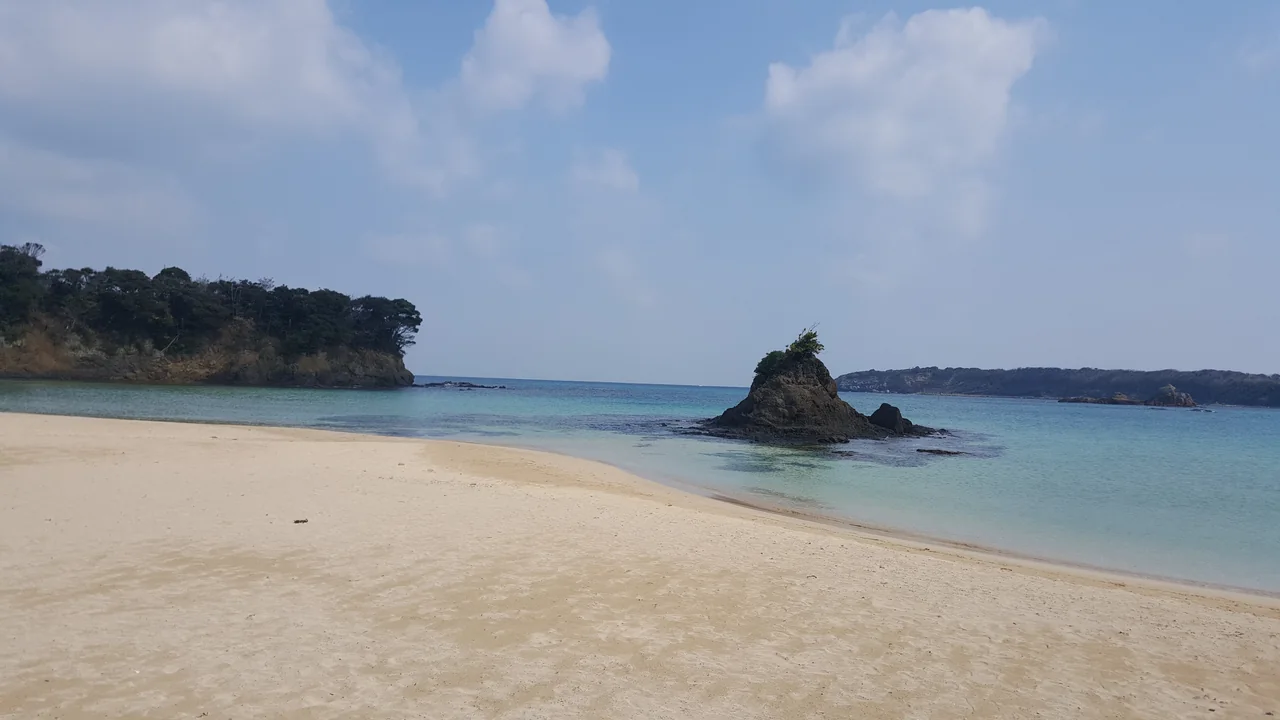
Miuda Beach is on Japan’s list of 100 selected coastlines and is served by the Hitakatsu loop, so it fits into a day trip.
The visitor numbers
Korean visitors have returned in force. The route collapsed entirely in 2020 and reopened between Busan and Hitakatsu in February 2023. Since the route reopened, the number of Korean visitors has climbed strongly again.
The island’s population is under 30,000, and the Korean visitors who arrive in a year far outnumber the people who live there, which is why Korean signage is common in Hitakatsu shops and restaurants. English is less widely spoken, so a translation app earns its place.
20. Cancellations, booking and the last checks
High speed craft are sensitive to sea state, and all three operators carry the same warning that sailings may change with the weather. Cancellations occur in the summer typhoon period and during winter northwesterlies. If the return sailing is cancelled on a day trip, you are staying the night.
Building in the margin
In winter, leave the following morning clear. In summer, start watching the typhoon forecast two days out. Operators notify passengers once a cancellation is confirmed, but the earlier you see it coming, the more options you have.
Before you pay
| Check | Why |
|---|---|
| The sailing exists on your date | Some sailings run only on certain days of the week |
| The return departure time | Operator pages disagree, and winter times are earlier |
| The total at checkout | Fuel surcharge and departure tax sit outside the headline fare |
| Passport validity | Checked when the ticket is issued |
| Visa requirement | Depends on nationality, not on the route |
| International Driving Permit | Must be issued at home if you intend to drive |
Who to call
| Organisation | Telephone |
|---|---|
| PanStar (Tsushima Link, passenger line) | 1577-9996 |
| Daea Express Shipping (SeaFlower) | 1661-9604 |
| Starline (Nova) | 1599-0255 |
| Tsushima Kotsu (island buses) | 0920-52-1810 |
Operators contact you on the number left at booking if a sailing is cancelled or retimed. If you want to confirm on the day, calling directly is faster. The Tsushima Kotsu line handles the island route buses and charter services, including timetable changes.
Coming home
Return sailings land in Busan in the late afternoon or early evening, and immigration adds time on top. Leave the evening loose. The pedestrian deck puts you at Busan Station within minutes, so a same day onward train is realistic if the timetable allows.
Finally, none of these numbers are permanent. Operators publish sailing calendars monthly and the island bus timetable is reissued twice a year. The figures here come from the operators’ own pages and the official Tsushima Kotsu timetable. Check them once more before you travel.
🎡Things to Do49
🍜Food7
🏨Where to Stay3
🚇Getting Around9
🧭Travel Tips14
📌More3
🧭All-Korea essentials51
Frequently asked questions
See the full Busan travel guide →
Images: Photographs via Wikimedia Commons: hyolee2 (CC BY-SA 3.0), Olegushka (CC0), Saigen Jiro (CC0), Bruno Plus (CC BY-SA 4.0), Choi2451 (CC BY-SA 3.0).