
Myeongdong Guide: Which Exit to Take, and How to Get Up Namsan
Myeongdong is bigger than the street that carries the name. Namdaemun Market, Bukchang-dong and the alleys behind City Hall sit inside the same designated zone. The subway exit you pick decides which half you see first, and there are two completely different ways up the mountain behind it.
| How far does Myeongdong reach | Past the shopping street: Namdaemun Market, Bukchang-dong, Da-dong and Mugyo-dong are all one tourism zone. |
|---|---|
| Which station | Myeongdong for the shopping street, Euljiro 1-ga for the department stores, Hoehyeon for the market. |
| When does it open | There is no set time. Every shop differs, and the big stores run past 10pm. |
| Getting up Namsan | Cable car, or a free incline elevator with no stairs at all. |
| If it rains | Six underground arcades run beneath the stations, so you can cross the district dry. |
| Anything free | Three museums, all of them run by banks. |
1. The name covers more ground than you think
2. Four stations, four completely different first impressions
3. Nothing here has a fixed opening time
4. The shopping street used to be houses
5. Cosmetics happen in one building now
6. The big buildings sit on the ring road, not the street
7. When it rains, go under
8. Namdaemun Market is a set of alleys, each selling something different
9. The old city gate is right across the road
10. The cathedral opens around its services, not around visitors
11. Two ways up Namsan, and one of them has no stairs
12. Three museums, all of them run by banks
13. With kids, head for Sogong-ro and the stream
14. Theatres, because this was a theatre district first
15. The western half is where people actually eat
16. Myeongdong is a bigger place to sleep than to sightsee
17. You can also just take the bus around
18. Things worth knowing before you go
1. The name covers more ground than you think
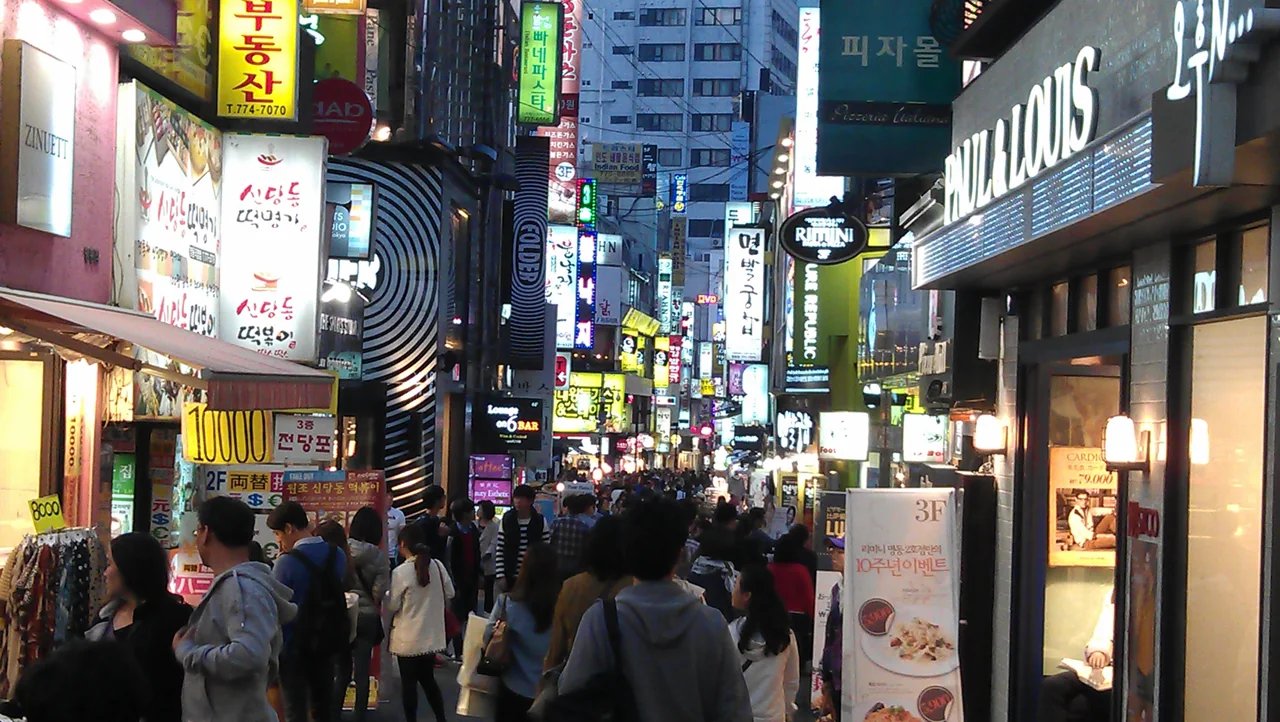
There is a Myeongdong station, a Myeongdong street and a Myeongdong cathedral, so most visitors picture one block and stop there. The official boundary is much wider. The zone is formally called the Myeongdong, Namdaemun, Bukchang-dong, Da-dong and Mugyo-dong Special Tourism Zone, and it was designated back in 2000.
It runs from Samil-daero beside the Sejong Hotel, down Toegye-ro past Shinsegae department store, through Namdaemun Market and the Plaza Hotel, up to City Hall and Cheonggye Plaza, then back around. Da-dong and Mugyo-dong were added later, after the Cheonggyecheon stream was uncovered.
Think of it as three pieces
The east is the shopping street and the lanes behind it: cosmetics, clothes, street food. The west is Namdaemun Market and the old city gate, which feels like a different city entirely. The north, around City Hall and the stream, is office towers with restaurant alleys tucked underneath them.
A full day covers all three without rushing. Half a day means picking east or west. If you are still building the wider trip, the Seoul travel guide lays out how the districts connect.
2. Four stations, four completely different first impressions
Myeongdong is ringed by four subway stations. You can walk between all of them, but what you see when you come up the stairs is not remotely the same.
| Station | Line | What you surface into |
|---|---|---|
| Myeongdong | Line 4 | The pedestrian shopping street, cosmetics shops, food carts |
| Euljiro 1-ga | Line 2 | Lotte Department Store and the duty-free floors, connected underground |
| Hoehyeon | Line 4 | The Namdaemun Market entrance and Shinsegae’s flagship |
| City Hall | Lines 1 and 2 | Seoul Plaza, and the restaurant alleys of Bukchang-dong and Mugyo-dong |
Come for shopping, use Myeongdong. Come for department stores and duty free, use Euljiro 1-ga. Come for the market, use Hoehyeon. Getting the transfers right is covered in the Seoul subway guide.
If Namsan is on your list, check the exit number first
Two exits at Myeongdong station lead toward the mountain and they are not equivalent. Exit 3 puts you on a walking route uphill. Exit 4 leads to a route with no stairs. With luggage, a stroller or tired legs, exit 4 is the one you want.
Walk in one way, out another
The district is compact enough to cross on foot end to end. Entering at one station and leaving from a different one saves you retracing the same street twice, which matters more than it sounds on a crowded afternoon.
Map3. Nothing here has a fixed opening time
Look up Myeongdong street in the district’s own tourism listing and under opening hours it says, in effect, varies by shop. Namdaemun Market says the same. There is no such thing as an hour when the district opens or closes.
Walk it at different times and you get different places open. Early morning belongs to the market. Cosmetics shops and clothing stores come up mid-morning. The department stores do not let you in until half past ten. At night the order inverts and the big stores are the last ones standing.
A rough order for the day
| Time | What is open |
|---|---|
| Early morning | Namdaemun Market, Sungnyemun gate |
| Late morning | Cosmetics stores, the museums |
| Afternoon | Department stores, duty free, underground arcades |
| Evening into night | Street food carts, the big stores, theatres |
Korean holidays break all of this. Market buildings close on their own schedules and most museums shut entirely.
4. The shopping street used to be houses
It is one of the busiest streets in the country now, but during the Joseon dynasty Myeongdong was residential. It turned commercial under the Japanese occupation, and clothing, cosmetics and theatres arrived in that order afterwards.
No cars. One wide pedestrian street with narrow lanes branching off it. The big-name stores sit on that street, and the small shops and the cheap restaurants are one turn off it.
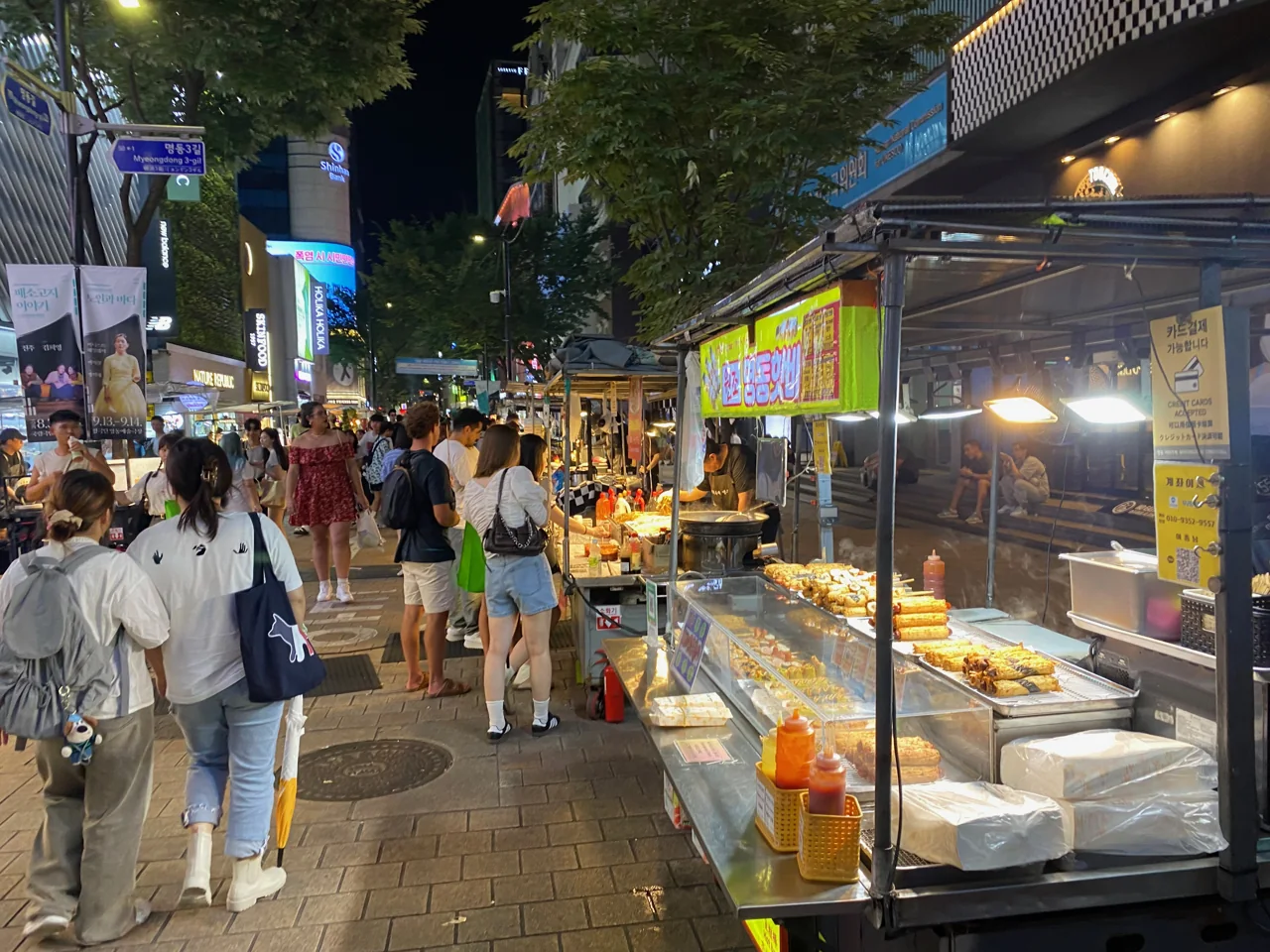
The food carts stand in the middle of the street
The carts everyone photographs do not line the edges. They form a row straight down the centre, and you walk around them on both sides. Egg bread, tornado potatoes, grilled prawns, dumplings, and the mix shifts from cart to cart.
There is no published hour for them. A few trade during the day, but the full row appears once the light goes. Payment varies by cart, so ask before you order rather than after.
5. Cosmetics happen in one building now
The Myeongdong of a decade ago meant a separate shop for every brand and someone outside each one handing you samples. That model has mostly collapsed into single large stores that carry everything. Olive Young Myeongdong Town on Myeongdong-gil is the big one and it uses two full floors.
It also keeps longer hours than almost anything else in the district. 10:00 to 22:30, every single day, weekends and public holidays included. You can eat dinner first and still have time.
| Where | Address | Hours |
|---|---|---|
| Olive Young Myeongdong Town | Myeongdong-gil 53 | Daily 10:00 to 22:30 |
| Lotte Department Store main branch | Namdaemun-ro 81 | 10:30 to 20:00, weekends to 20:30 |
| Lotte Young Plaza | Namdaemun-ro 67 | Same as the department store |
| Shinsegae main branch | Sogong-ro 63 | Check in store |
Single-brand shops still exist
Along Myeongdong-gil and the side lanes you will still find brands trading on their own. If you already know the brand you want, those carry the deeper range. If you are comparing across brands, the combined stores save you a lot of walking.
Tax refunds happen at the till
The larger stores run an in-store counter that refunds the tax on the spot rather than making you claim it at the airport. Bring your passport and find the counter before you queue to pay, not after. There is a minimum spend and the rules differ by store, so read the sign at the counter.
6. The big buildings sit on the ring road, not the street
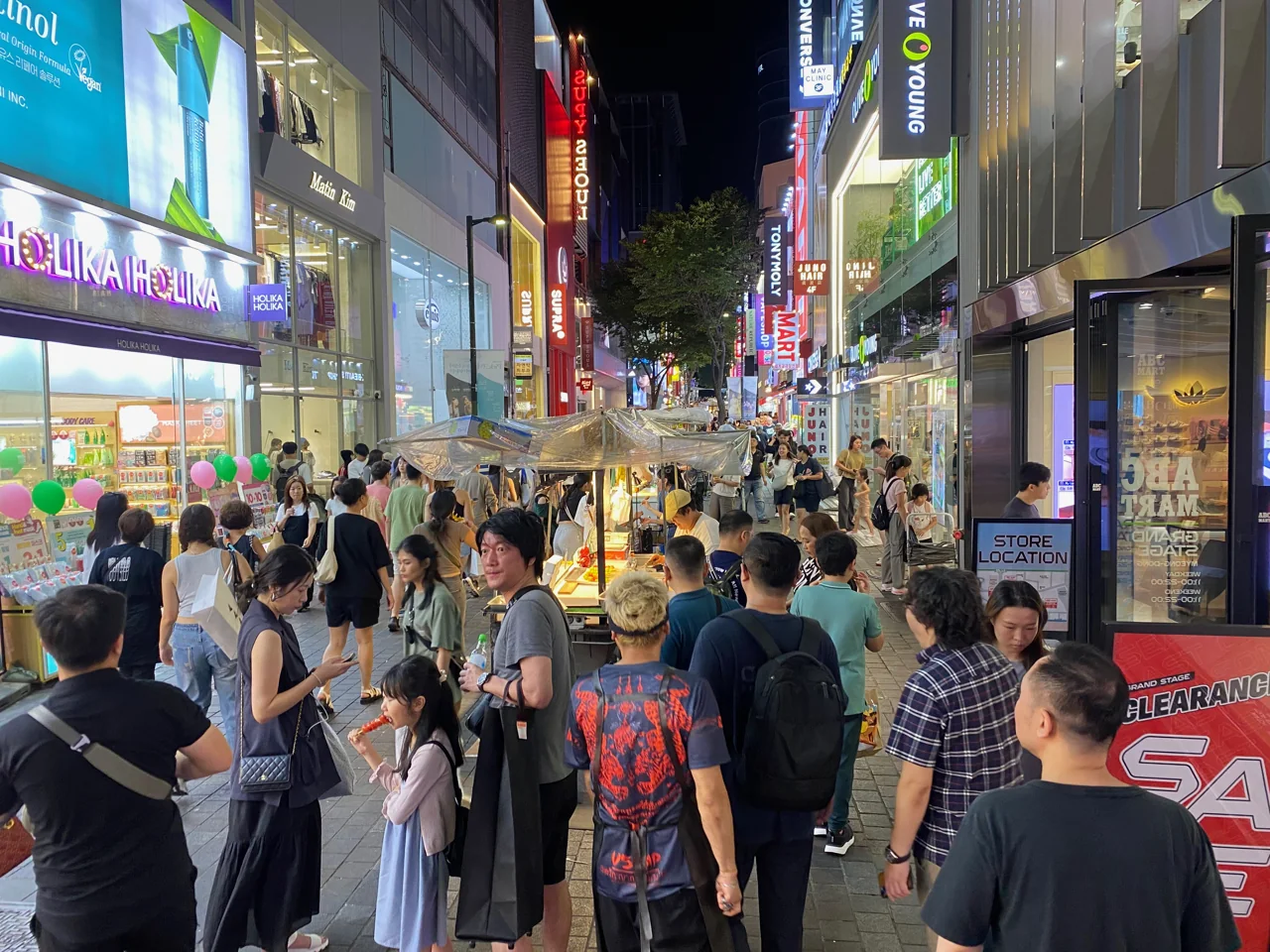
The shopping street itself is pedestrian and low-rise. Everything large is on the roads that box it in. On the Euljiro 1-ga side, Lotte Department Store, Avenuel and Young Plaza stand in a row. On the Hoehyeon side is the Shinsegae flagship.
Both major downtown duty-free operators are here. Lotte Duty Free occupies floors inside the Lotte building; Shinsegae Duty Free is over on Toegye-ro. Departure-day rules apply to both, so buy with your flight date in mind.
| Building | Address | What is inside |
|---|---|---|
| Lotte Department Store and Avenuel | Namdaemun-ro 81 | Department store, duty free, cinema, restaurant floor |
| Shinsegae main branch | Sogong-ro 63 | Department store, opens straight onto Namdaemun Market |
| Noon Square | Myeongdong-gil 14 | CGV Myeongdong cinema, fashion |
| M Plaza | Myeongdong 8-gil 27 | Fashion, food and drink |
| High Harriet | Toegye-ro 123 | Fashion, accessories |
| Mesa | Namdaemun Market 10-gil 2 | Fashion, attached to the market |
Cinemas double as meeting points
CGV Myeongdong sits on an upper floor of Noon Square and Lotte Cinema Avenuel is in the department store complex. Both are easy landmarks when you are splitting up and meeting later.
Eating after the stores close
The restaurant floors stay open about an hour past the shop floors. Turn up right at closing time and the kitchens may already have stopped taking orders, so give yourself a margin.
7. When it rains, go under
There is a second Myeongdong below street level. Myeongdong Station Underground Arcade, Myeongdong Underground Shopping Centre, Euljiro 1-ga Underground Arcade, Sogong Underground Arcade, Hoehyeon Underground Shopping Centre and the City Hall Plaza Underground Shopping Centre all sit beneath the district.
Several station-to-station stretches connect, though the whole thing is not one continuous tunnel. Caught without an umbrella, drop into the nearest station and move underground instead of along the street.
They do not all sell the same things
Hoehyeon is the odd one out, full of second-hand goods and long-established stalls rather than fashion. For clothes and accessories, stay around Myeongdong and Euljiro 1-ga. For browsing something stranger, Hoehyeon is the interesting one.
Add the department stores and the cinemas and a wet day in this district can be spent almost entirely indoors. Other rainy-day options across the city are in the rainy day in Seoul guide.
8. Namdaemun Market is a set of alleys, each selling something different
The market takes its name from Namdaemun, the great south gate, which stands directly across the road. Its ancestor was an 18th-century market called Chilpae, and it has been the commercial centre of the city ever since.
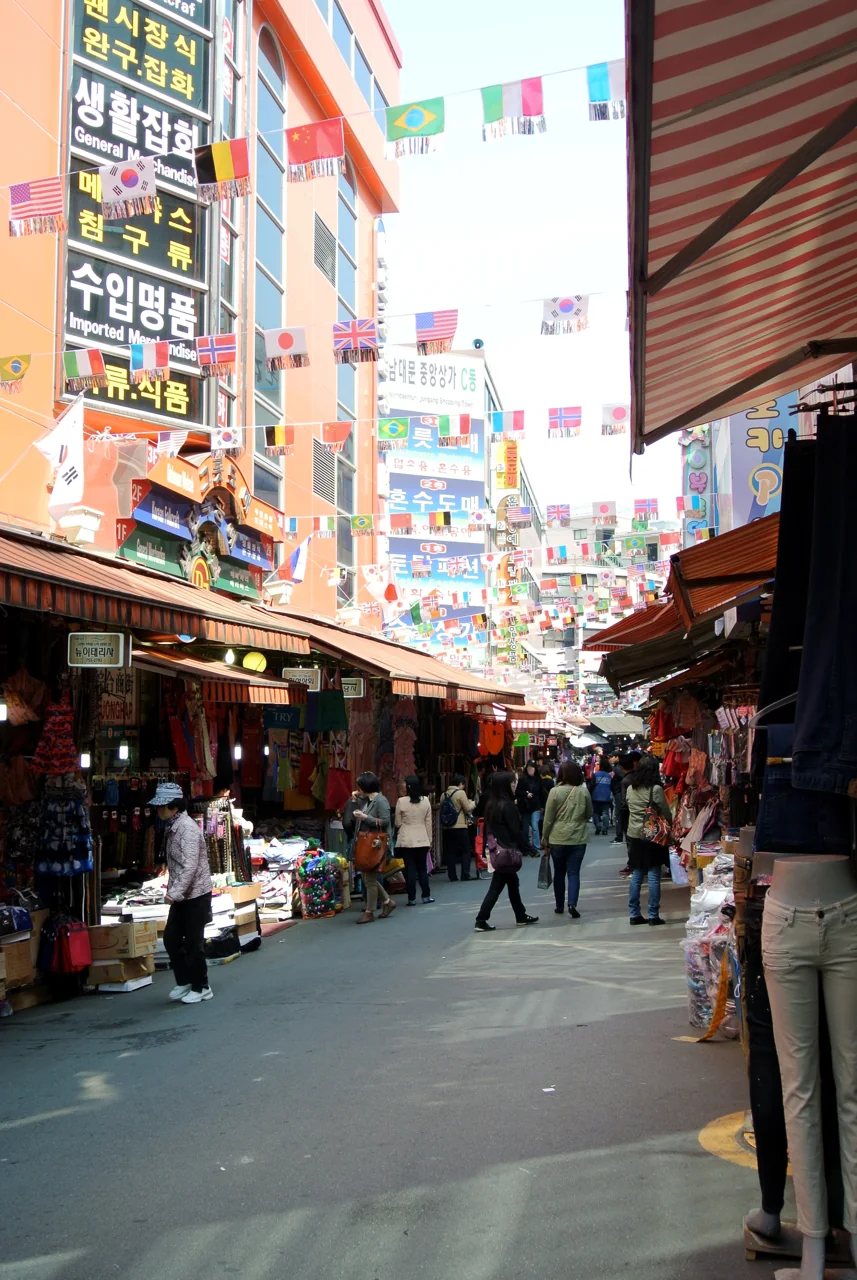
It is not one building. Walk in at random and you will wander through the wrong trade for twenty minutes. The market names its own alleys, and knowing them is the whole trick.
| Alley | What it sells |
|---|---|
| Food Alley | Market cooking, a mix of sit-down counters and stand-up stalls |
| Children’s Clothing Street | Kidswear, wholesale as well as retail, so several pieces cost less per item |
| Ladies’ Clothing Street | Womenswear |
| Souvenir Street | Gifts and traditional goods |
Know the names before you arrive hungry
The long-running kitchens here have reputations attached to them. Eunho Sikdang and Jinju-jip are the old oxtail soup houses. Buwon Myeonok does northern-style cold noodles. Some things are known by their alley rather than a shop name, which is how Hairtail Alley and Kalguksu Alley end up being used as addresses. Vegetable hotteok and chicken soup round out the list of things people come here specifically to eat.
Wholesale and retail sit side by side
This market supplies shops across the country as well as selling to you. The same item can carry two prices depending on how many you take, and some counters only deal in bulk. Ask before you commit.
The information centre runs 10:00 to 19:00 and closes on the two big holidays. Staff there hand out maps and will point you at the right alley.
9. The old city gate is right across the road
Cross the main road from the market and you are at Sungnyemun, the southern main gate of the old city wall. Almost everyone calls it Namdaemun, the great south gate, which is where the market got its name.
It was begun under King Taejo and finished a few years later, then substantially rebuilt during King Sejong’s reign. It is the oldest wooden building left standing in Seoul and the largest surviving gate structure in the country. It carries National Treasure status.
You can walk inside it
Most people photograph it from the traffic island and move on, which misses the point. The gate opens to visitors, and the closing time shifts with the season.
| Season | Open |
|---|---|
| February to May, September to October | 09:00 to 18:00 |
| June to August | 09:00 to 18:30 |
Fold it into the market visit rather than treating it as a separate stop. It is a two-minute crossing from the market side, so it takes almost no extra time.
Map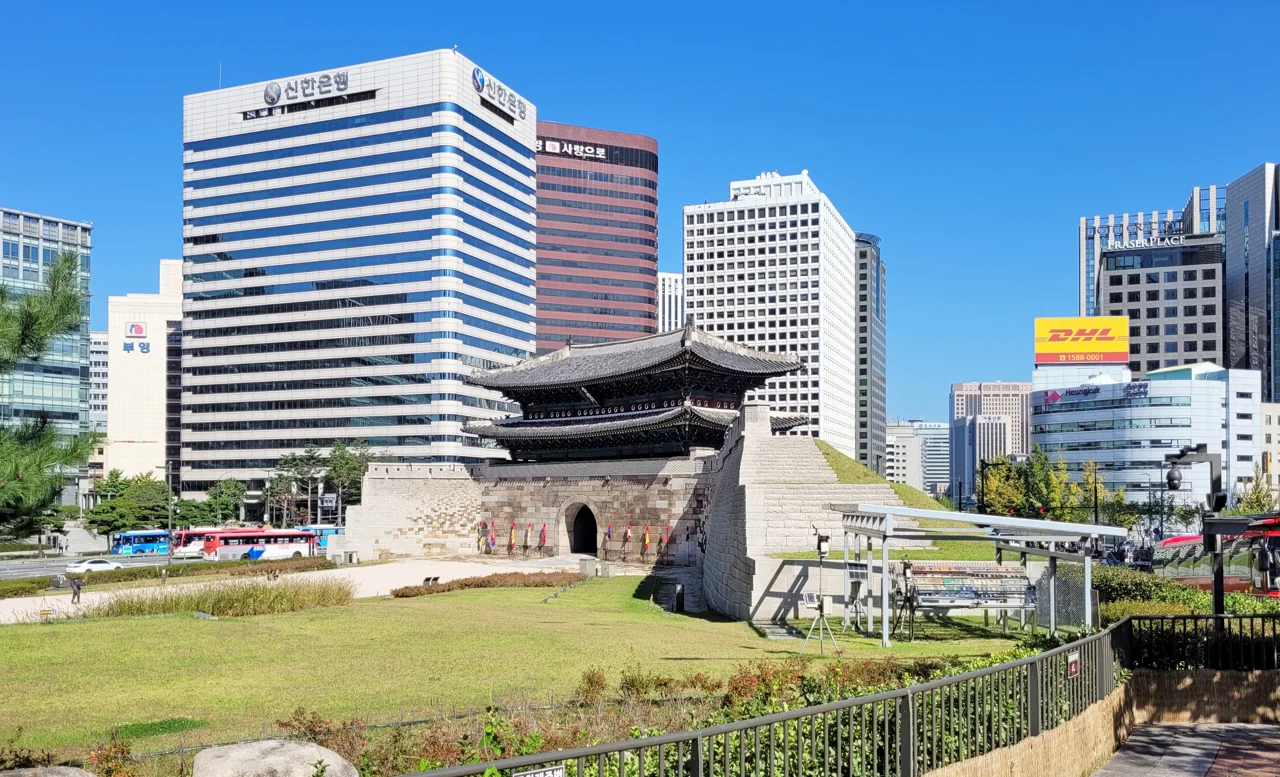
10. The cathedral opens around its services, not around visitors
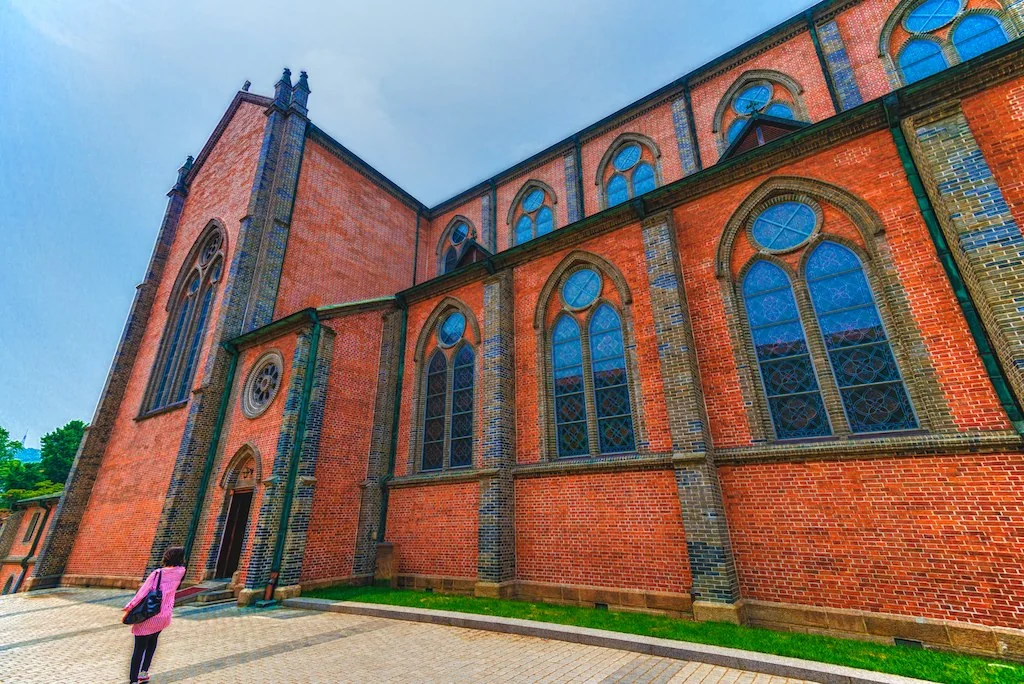
Myeongdong Cathedral sits on the rise at the end of the shopping street. This is where Catholicism in Korea began, and the building went up in 1898 to a design by a French priest named Coste, put together with volunteer labour from around a thousand parishioners.
The red brick makes it visible from a long way off. The slope leading up to it has been built out with shops and cafés, so the approach is busier than you expect for a church.
There are no visiting hours as such
This is a working cathedral rather than a monument, so instead of opening times there is a Mass schedule, and turning up for a service is how you get inside. Weekdays there is Mass at 7am, 6pm and 7pm, with no 7pm service on Mondays. Monday to Saturday adds a 10am Mass.
| When | Services |
|---|---|
| Weekdays, Mon to Sat | 7:00, 10:00, 18:00 and 19:00 (no 19:00 on Mondays) |
| Saturday evening | The 18:00 and 19:00 services count as Sunday Mass |
| Sunday | Repeatedly, from 7:00 through to 21:00 |
| Confession | Tue to Fri 11:00 to 20:00; Sat and Sun 10:00 to 20:00 |
One service is in English
The 9am Sunday Mass is celebrated in English. English confession is offered on Saturday afternoon and before that Sunday morning service.
11. Two ways up Namsan, and one of them has no stairs
The mountain behind Myeongdong is walkable from the shopping street. The only real question is how you handle the hill.
- Walk it. Out of Myeongdong station exit 3, into the lane by the convenience store, then up between the Pacific Hotel and another convenience store. Seven or eight minutes to the cable car building.
- Take the incline elevator. Out of exit 4, left at the Hoehyeon intersection, and the Namsan Oreumi carries you up. No stairs, no fare.
- Take the free shuttle. A shuttle bus runs between Myeongdong station and the cable car platform every ten minutes at no charge.
The cable car does not sell tickets online
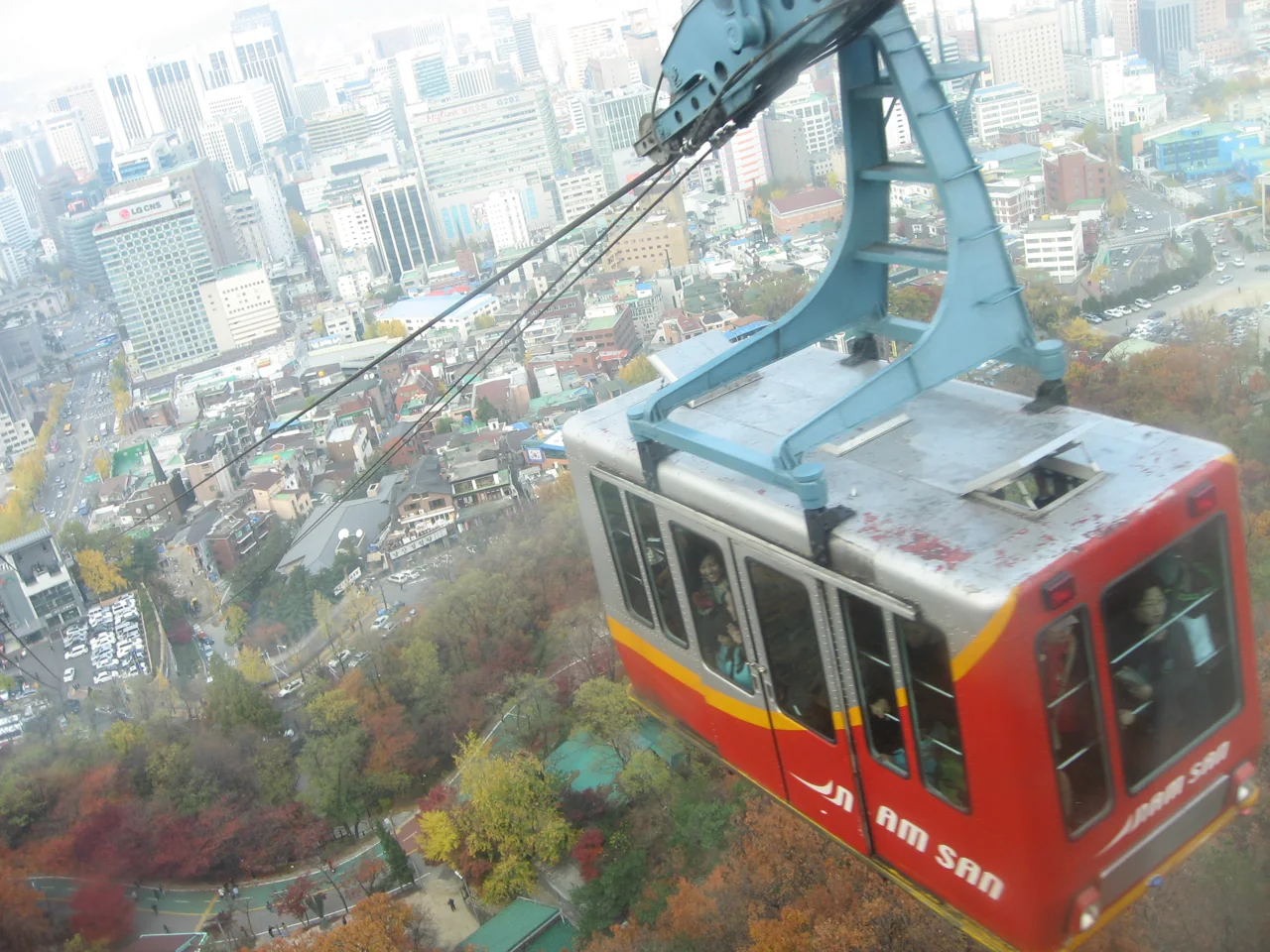
This catches people out constantly. The Namsan cable car has no advance booking at all and the operator states plainly that payment is on site only. You queue, you buy, you board. Weekend afternoons the queue is long; mornings are quiet.
| Ticket | Return | One way |
|---|---|---|
| Adult, 13 and over | 15,000 won | 12,000 won |
| Child, 36 months to 12 years | 11,500 won | 9,000 won |
| Seniors and visitors with disabilities | 11,500 won | 9,000 won |
It runs 10:00 to 23:00 with no closing day. The ride itself takes about three minutes.
What is waiting at the top
N Seoul Tower and its observation deck are at the summit, open until 22:30 on weekdays and 23:00 at weekends and on public holidays.
Below the cable car platform is Baekbeom Square, named for the independence leader Kim Gu, whose statue stands there. The site was a Japanese shrine during the occupation. It is worth the two minutes on the way past.
Map
12. Three museums, all of them run by banks
Every museum inside the zone is operated by a bank, which makes sense once you notice that this was the street the head offices chose. All three are free.
| Museum | Address | Open | Closed |
|---|---|---|---|
| Bank of Korea Money Museum | Namdaemun-ro 39 | Tue to Sun, 10:00 to 17:00 | Mondays, public holidays, major holidays |
| Woori Bank Museum | Sogong-ro 51, basement | 10:00 to 18:00 | Weekends, public holidays |
| Korea Financial History Museum | Sejong-daero 135-5, floors 3 and 4 | Mon to Sat, 10:00 to 18:00 | Public holidays, major holidays |
The Money Museum building is half the visit
It occupies the old Bank of Korea head office, so the architecture is worth as much attention as the displays. Inside are Korean and foreign currency across several galleries, tracing how notes and coins are made. Admission costs nothing.
Check the day before you walk over
The three do not share a closing day. The Money Museum shuts on Mondays; the Woori museum shuts both weekend days, which catches a lot of visitors. The Financial History Museum stops admitting people an hour before it closes.
For a large national collection rather than a specialist one, the National Museum of Korea is the trip to make.
13. With kids, head for Sogong-ro and the stream
The shopping street is hard going with a stroller. The north and west edges of the district are considerably easier.
Seoul Animation Center
On Sogong-ro. The ground floor holds a comics library, free to browse, running from decades-old series through to current animation. Upstairs is a character space built around the shows Korean children actually watch.
The two floors keep different hours. The character space runs to 18:00, the library to 20:00.
Seoul Citizens Hall
Underneath City Hall. Performances and exhibitions rotate through it and you can simply sit down without buying anything. It connects directly to Seoul Plaza and the subway, which makes it a genuine wet-weather option.
Hanbit Media Park
A small park on the bank of the Cheonggyecheon stream, with water channels and trees rather than playground equipment. Walk down from Cheonggye Plaza and you reach it.
14. Theatres, because this was a theatre district first
Before the cosmetics, Myeongdong was where Seoul went to see plays. Several of those stages are still running.
Myeongdong Theater
Between Euljiro 1-ga and Myeongdong stations. A mid-size house on five floors above a basement level, and the seating sits close enough to the stage that you can read faces. The programme spans straight drama, experimental work, wordless performance and musicals.
Myeongdong Nanta Theatre
Third floor of the UNESCO building on Myeongdong-gil, and it stages nothing but Nanta. Under 400 seats. The show is non-verbal, which is precisely why it works for an audience that does not speak Korean, and it runs year-round without a day off.
Samilro Changgo Theater
Tucked behind Samil-daero. This was the first privately run small theatre in the country, opened in 1975 in a converted two-storey house near the cathedral.
CKL Stage
Basement level on Cheonggyecheon-ro, operated by the Korea Creative Content Agency, so the programme leans toward curated and showcase productions.
None of these publish general opening hours. They open around whatever is on that night, so check the day’s schedule before you walk over.
15. The western half is where people actually eat
Walk from the shopping street toward City Hall and the crowd changes. Fewer visitors, more office workers on a lunch break. This is Bukchang-dong, Da-dong and Mugyo-dong, the other half of the zone.
Bukchang-dong
A concentration of traditional Korean restaurants clustered around the Lotte Hotel, mixed in with accommodation. It is where a lot of visitors get sent when they ask for Korean food near their hotel.
Da-dong and Mugyo-dong
Right on the stream. Known specifically for octopus, pork back ribs and sea snails, served in alleys hemmed in by office towers. Quiet at midday, full after work.
Seoul Plaza and Cheonggye Plaza
Between the two sits Seoul Plaza, a lawn in front of City Hall that hosts events through the year. A short walk further and you reach Cheonggye Plaza, where the restored stream begins.
Market and city gate during the day, then over here for dinner, is a sequence that works without any backtracking.
16. Myeongdong is a bigger place to sleep than to sightsee
Ask what there is to see in Myeongdong and the honest list is short. Ask where to stay and the answer runs long. The registered hotels inside the zone outnumber the attractions several times over, and that is before counting guesthouses and licensed homestays.
The reason is position. Four stations, airport buses on the main roads, and transfers to anywhere in the city. Myeongdong works less as a destination and more as the place you leave your bag while you do everything else.
| Where to book | What it is like |
|---|---|
| On Myeongdong-gil | Middle of everything, lit up all night. Royal Hotel Seoul, Metro Hotel |
| Myeongdong 8na-gil and Chungmuro | One block off, noticeably quieter. Le Méridien Seoul Myeongdong, Moxy Seoul Myeongdong, Days Hotel Myeongdong |
| Myeongdong 10-gil and Toegye-ro | Closest to the station. Nine Tree Hotel Myeongdong, The Grand Hotel Myeongdong |
| Samil-daero | Toward the stream and Euljiro. Lotte City Hotel Myeongdong, Four Points Chosun Myeongdong |
Light sleepers should move one block
The street itself carries noise well past midnight. Chungmuro and Myeongdong 8na-gil put a building between you and that, and add maybe three minutes of walking. It is the single best trade available here.
To weigh Myeongdong against other neighbourhoods, the where to stay in Seoul guide compares them directly.
17. You can also just take the bus around
If you would rather not walk all of it, the ticket office for the Seoul City Tour Bus sits inside this zone, on Taepyeongno 1-ga.
The daytime route covers downtown, the palaces and Namsan, with unlimited hop-on hop-off across fifteen stops. The night route runs along the Han River and Namsan for ninety minutes without intermediate stops, pausing only at N Seoul Tower for photographs.
What is on board
The double-deckers carry audio guides, USB charging points and free wifi, and single-deck vehicles run the same routes. The front row upstairs has the view; in the rain the lower deck is the comfortable choice.
The ticket does more than ride
Some businesses along the route give a discount on the day’s ticket, and a luggage storage operator near Myeongdong is among them. Worth asking about if you want a final day without dragging bags around.
18. Things worth knowing before you go
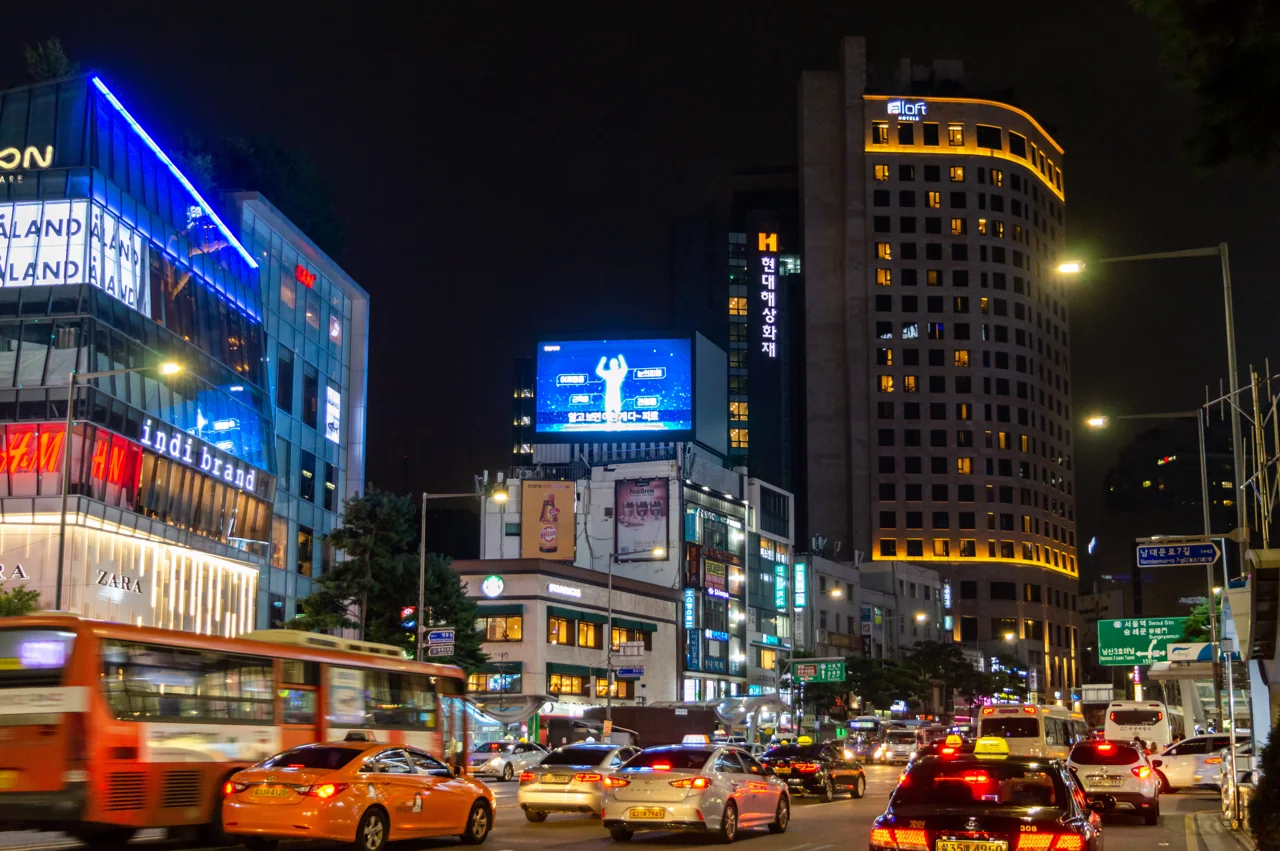
- No cars on the shopping street. A taxi will meet you on the ring road, so if you have luggage, check your hotel’s position against the main roads rather than the pedestrian lanes.
- Weekend afternoons are the peak. That applies to the cable car and the department stores equally. Weekday mornings are a different district.
- Lockers are in the stations. Both Myeongdong and Euljiro 1-ga have them.
- The ring road and the lanes empty at different times. The department store side goes quiet after 8pm, which is roughly when the pedestrian street fills up.
- Holidays need checking. Market buildings and museums close on entirely different days.
- Cards work nearly everywhere except some of the street carts. The money guide for Korea covers what to carry.
Stringing it into one day
Market at opening, the gate across the road, department stores and the arcades through the middle of the day, the shopping street as the light drops, then up Namsan for the view. Come down for dinner in Bukchang-dong or Mugyo-dong.
For the rest of the trip, the Seoul itinerary connects this day to the others.
🎡Things to Do10
🚇Getting Around4
🧭All-Korea essentials114
Frequently asked questions
Images: Photographs via Wikimedia Commons: Christian Bolz (CC BY-SA 4.0), Sgroey (CC BY-SA 4.0), Adbar (CC BY-SA 3.0), Bernard Gagnon (CC0), cloud.shepherd (CC BY 2.0), Andrew Bell (CC BY 2.0), Tristan Surtel (CC BY-SA 4.0).