
Busan Metro Guide: Fares, Cards & How to Get Around
Lines, 2026 fares, transit cards and transfers explained — with the Busan–Gimhae Light Rail, the Donghae Line and every map app you actually need
| Which card | Buy a T-money or Cashbee (EZL) card at any convenience store — both work everywhere in Busan |
|---|---|
| Metro fare | ₩1,600 by card for zone 1 (up to 10 km), ₩1,800 for zone 2 — not the ₩1,300 older guides still quote |
| One-day pass | ₩5,000 for unlimited Metro (Lines 1–4 only) — worth it from about four rides in a day |
| Transfers | Free or discounted within 30 minutes (60 min at night) with a card, up to two transfers |
| Map apps | Use Naver Map or Kakao Map — Google Maps still can’t do public transit in Korea |
| From the airport | Busan–Gimhae Light Rail links Gimhae Airport to the Metro at Sasang (Line 2) or Daejeo (Line 3) |
1. Busan public transport at a glance
2. The four Metro lines and where they take you
3. Which transit card? T-money vs Cashbee vs WOWPASS
4. Buying and topping up a card, step by step
5. How to ride the Metro, step by step
6. Busan Metro fares in 2026 (the numbers that matter)
7. The transfer discount, explained
8. Day passes, commuter passes and the Visit Busan Pass
9. Resident-only schemes: Dongbaek Pass, K-Pass and Modu Card
10. City buses — when the Metro can’t reach
11. The airport light rail (Busan–Gimhae Light Rail)
12. The Donghae Line — coastal day trips by rail
13. Reaching Busan’s top sights by transit
14. Map apps — and why Google Maps won’t work
15. Operating hours, last trains and rush hour
16. Etiquette, accessibility and practical tips
17. The best choice by situation, plus a sample daily budget
Getting around Busan comes down to one thing: one rechargeable transit card gets you on all four Metro lines, the city buses, the airport light rail and the Donghae Line down the coast. This guide lays out the lines and where they go, which card to buy and how to load it, the exact 2026 fares (the current Metro fare is ₩1,600 by card, not the ₩1,300 many older pages still show), how the transfer discount works, and which map app to trust — because Google Maps still won’t route you here. If you’ve just landed, pair this with our Gimhae Airport to Busan guide guide for the ride into town; for everything beyond transport, our complete Busan travel guide covers the rest of the city.
1. Busan public transport at a glance
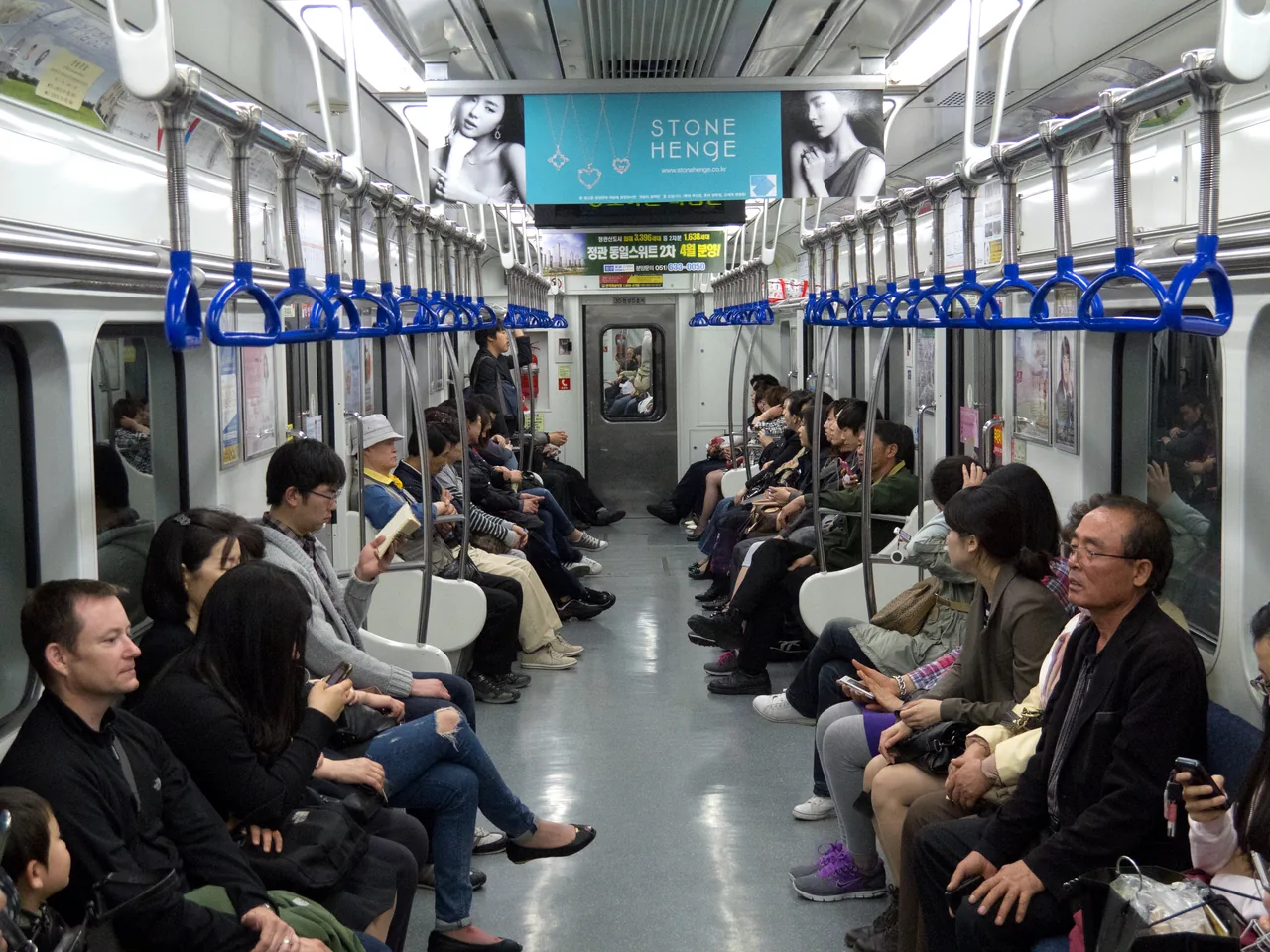
Busan runs on one card and two apps: tap a T-money or Cashbee card to ride everything, and plan every route in Naver Map or Kakao Map. The network is bigger than most visitors expect — four Metro lines, an airport light rail, a coastal commuter line and a dense bus grid — but a single card ties it all together, so there’s no separate ticket to figure out for each mode.
Here’s the whole system in one table, and what each part is good for:
| Mode | What it is | Card fare (adult) |
|---|---|---|
| Metro Lines 1–4 | The backbone — 114 stations across the city | ₩1,600 / ₩1,800 |
| Busan–Gimhae Light Rail (BGL) | Elevated line linking Gimhae Airport to the Metro | ₩1,300 / ₩1,500 |
| Donghae Line | Coastal commuter rail toward Songjeong, Osiria and Ulsan | ₩1,200 / ₩1,400 |
| City buses | Fills the gaps to hillside spots the Metro misses | from ₩1,550 |
| City Tour Bus | Hop-on hop-off sightseeing loop (separate ticket) | see Busan City Tour Bus guide |
Two habits make Busan effortless. First, buy a transit card before you do anything else — it unlocks the transfer discount that makes the whole network cheap, and you tap the same card on the Metro, a bus or the light rail. Second, plan every trip in Naver or Kakao Map, never Google Maps, which still can’t route public transport in South Korea.
Reassuring note for first-timers: every Metro station name, sign, map and announcement appears in English (and station numbers), ticket machines have an English mode, and staff are used to helping visitors. You do not need any Korean to ride the Busan Metro. For a wider look at moving around the region, see our getting around Busan hub hub.
2. The four Metro lines and where they take you
Busan’s Metro has four numbered, colour-coded lines and 114 stations, and almost everything a visitor wants sits on Line 1 or Line 2. Line 1 runs north–south through the old downtown; Line 2 sweeps along the coast to the beaches. If you only learn one rule, learn this: Seomyeon is where Lines 1 and 2 cross, so when you’re unsure how to connect two places, route yourself through Seomyeon.
| Line | Colour | Route (ends) | Key stops for visitors |
|---|---|---|---|
| Line 1 | Orange | Nopo ↔ Dadaepo Beach | Busan Station (KTX), Seomyeon, Nampo (Jagalchi, BIFF, gateway to Yeongdo), Dadaepo Beach |
| Line 2 | Green | Jangsan ↔ Yangsan | Haeundae, Gwangan (Gwangalli), BEXCO, Centum City, Kyungsung-Pukyong Univ., Seomyeon |
| Line 3 | Brown / gold | Suyeong ↔ Daejeo | Suyeong (to Line 2), Yeonsan (to Line 1), Daejeo (to the airport light rail), Sports Complex |
| Line 4 | Blue | Minam ↔ Anpyeong | Korea’s first driverless rubber-tyred line; Dongnae (to Line 1), Minam (to Line 3) |
Line 1 is your line for markets and the old city: Nampo-dong & old town guide, Jagalchi Market guide and Busan Station all sit on it, and it’s how you connect to the KTX & Korail Pass guide for high-speed trains to Seoul. Line 2 is the coast line for Haeundae Beach guide and Gwangalli Beach guide, plus the Centum and BEXCO convention area.
A note on the colours: Lines 1, 2 and 3 (orange, green, gold) can look confusingly similar to travellers with red-green colour vision differences. Always read the line number alongside the colour on signs and maps rather than relying on the colour alone. A fifth line (the Sasang–Hadan line) is under construction and slated to open around the end of 2026, though that date is not yet firm.
3. Which transit card? T-money vs Cashbee vs WOWPASS
Any rechargeable transit card works on everything in Busan, so the honest answer is: buy whichever the convenience store hands you. The two you’ll see are Cashbee (Busan’s home-grown card, rebranded EZL in December 2023) and T-money (Seoul’s card, but nationally compatible). For most visitors there is no practical difference; WOWPASS is a separate option built specifically for foreign tourists.
| Card | Best for | Notes |
|---|---|---|
| Cashbee (EZL) | A Busan-only trip | Busan’s native card, Korea’s first commercial transit card; rebranded EZL in Dec 2023 |
| T-money | Visiting Seoul too | Same card works nationwide; the safe default if your trip isn’t only Busan |
| WOWPASS | Inbound tourists who want to load with a foreign card | Prepaid card + currency exchange with T-money transit built in; top up in the app |
| Single-journey ticket | One or two rides only | Costs more per ride and gets no transfer discount; needs a ₩500 deposit |
One-line verdict: if you’re seeing only Busan, grab a Cashbee/EZL; if Seoul is also on your itinerary, a T-money is the tidier choice; if you’d rather load your card with a foreign bank card instead of cash, WOWPASS is built for exactly that.
What WOWPASS adds for foreign visitors: it’s a foreigner-only prepaid card with a built-in currency exchanger, and because it carries T-money functionality it works on the Busan Metro and buses just like any other transit card. You load Korean won onto it using a foreign card in the WOWPASS app, which sidesteps the cash-only quirk of ticket machines (more on that below). In Busan you’ll find WOWPASS kiosks at Busan Station (Toyoko Inn Busan Station branch, ground floor) and the Busan Port International Passenger / International Cruise terminals. Check live kiosk locations at wowpass.kr/find-kiosk before you rely on one.
WOWPASS at the airport: there is no permanent WOWPASS kiosk at Gimhae Airport. If you want the card the moment you land, order an airport-pickup package in advance, or simply buy a normal Cashbee/T-money card at an airport convenience store and switch to WOWPASS later in the city.
4. Buying and topping up a card, step by step
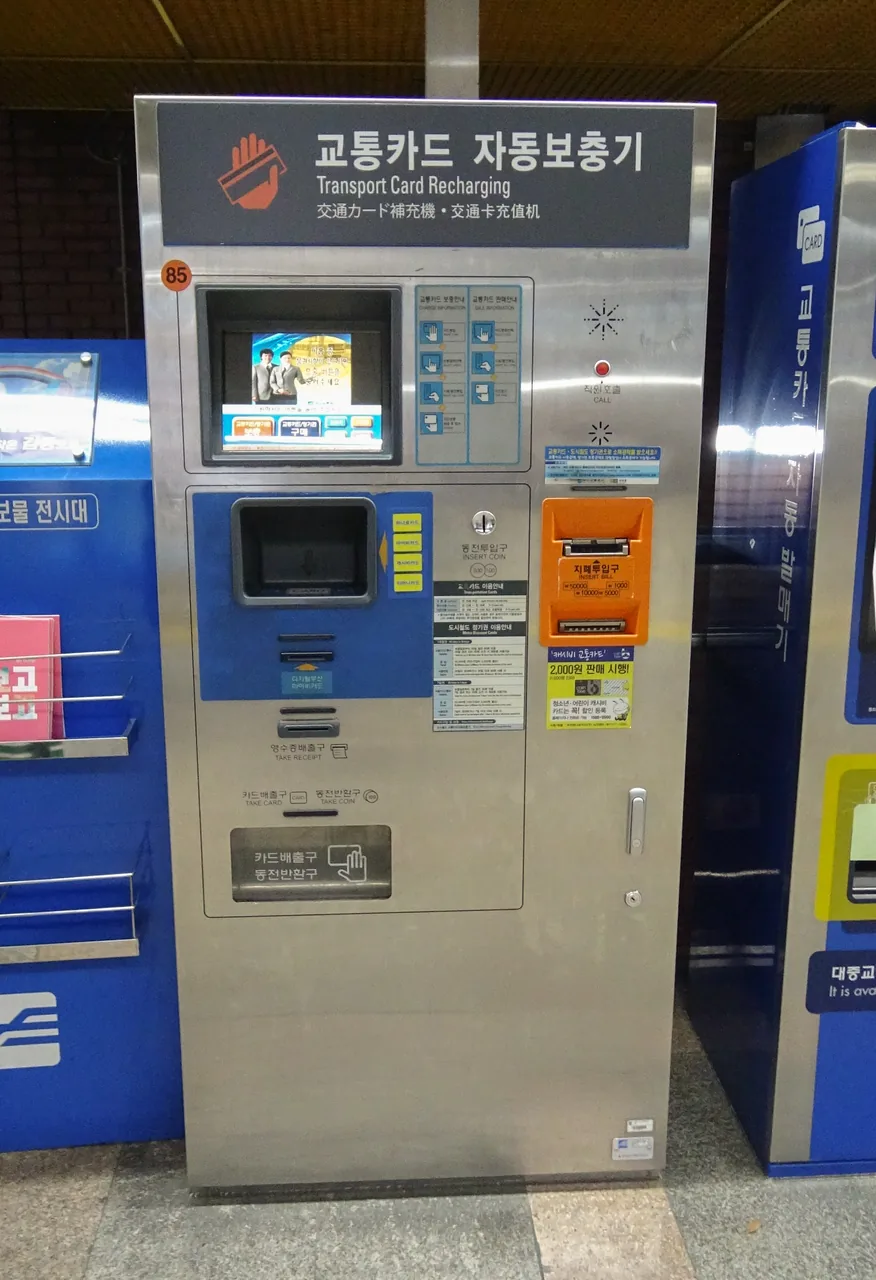
You can have a working card in under five minutes: buy a blank card for about ₩2,500 at any convenience store or station machine, then load it with cash. Cards are unregistered and anonymous — no ID needed — and the same card tops up anywhere. For children’s fares you’ll need to register a birthdate (see the fares section).
- Buy a blank cardAsk for a Cashbee/EZL or T-money card at a GS25, CU or 7-Eleven, or use a station ticket machine. The empty card costs roughly ₩2,500 and that fee is separate from your travel credit.
- Load it with cashTop up at the convenience store counter or a station recharge machine. Add ₩10,000–20,000 to start; you can always reload. Ticket machines and recharge points take cash reliably.
- Tap on and tap offTouch the card to the reader at the gate when you enter and again when you exit — the Metro charges by distance, so you must tap out. On buses, tap when you board (and tap off on some routes to keep the transfer discount).
- Reload when it runs lowWatch your balance on the reader as you exit and top up before it dips too low. Any convenience store will reload it in seconds.
Refunds when you leave: you can cash out a leftover balance at convenience stores and card counters. The fee is ₩500 for refunds up to ₩200,000, plus 4% on any amount above that — so for a typical tourist balance you lose only ₩500, and it’s often not worth chasing small amounts. Older local cards (Mybi, Hanaro) still work too, but you’re unlikely to encounter them.
Important for inbound visitors — cash matters here. Busan’s Metro ticket machines do not yet accept credit cards; they are cash-only for now, so keep some won on hand to buy and load a card. And unlike some cities, Busan’s Metro and buses do not yet accept foreign contactless (open-loop EMV) tap-to-pay directly. Busan Transport Corporation plans card payment at machines in late 2026 and open-loop EMV boarding around 2028; until then, a Cashbee or T-money card bought with cash is the sure thing. Sort out money before you arrive with our money, cards & exchange in Korea guide.
5. How to ride the Metro, step by step
Riding the Busan Metro is a six-step routine: plan it, tap in, find your direction, count your stops, transfer inside the gates, and tap out. English signage makes every step legible, and station numbers give you a backup if a name is unfamiliar.
- Plan the routeSearch your destination in Naver Map or Kakao Map. It gives you the line, the direction (the end-of-line station name), the number of stops and which exit to use.
- Tap in at the gateTouch your transit card to the reader on the gate. It opens; your entry is logged so the exit can charge the right distance-based fare.
- Head to the correct platformPlatforms are signed by the terminus in each direction (for example, Line 2 toward Jangsan or toward Yangsan). Match the app’s direction to the sign and go down to that platform.
- Board and count your stopsEvery station is announced and displayed in English. Watch the in-car line diagram and count down to yours.
- Transfer without leaving the gatesTo change lines (say Line 1 to Line 2 at Seomyeon), follow the coloured transfer signs inside the paid area. You do not tap again for a line change, and it does not cost extra.
- Tap out to exitTouch your card at the exit gate. The correct fare (zone 1 or zone 2) is deducted based on how far you rode.
If you used a single-journey ticket instead of a card, drop the plastic token into the deposit-refund machine near the exit gates to get your ₩500 deposit back. With a rechargeable card you skip all of that — just tap and go.
6. Busan Metro fares in 2026 (the numbers that matter)
The current Busan Metro fare is ₩1,600 by card for zone 1 (trips up to 10 km) and ₩1,800 for zone 2 (over 10 km) — as of the May 2024 increase, with no rise in 2025 or 2026. Many travel pages still list ₩1,300; that figure is out of date. Here is the full, current fare grid by payment type, zone and age.
| Rider | Card — zone 1 / zone 2 | Single ticket (cash) — zone 1 / zone 2 |
|---|---|---|
| Adult (19+) | ₩1,600 / ₩1,800 | ₩1,700 / ₩1,900 |
| Youth (13–18) | ₩1,050 / ₩1,200 | ~₩1,150 / ₩1,300 |
| Child (6–12) | Free (with a registered card) | ₩750 / ₩850 |
The zone boundary is distance: ride 10 km or less and you pay the zone 1 fare; go beyond 10 km and it’s zone 2. The app shows which applies before you travel, and the gate works it out automatically when you tap out.
Children ride free — but only by card. Kids aged 6–12 travel free on the Metro when their birthdate is registered on the card (done at a convenience store or in the EZL app); Korea made children’s transit free nationwide from October 2023. Buy a single ticket for a child and it is charged, so register the card instead. Under-6s ride free with an accompanying adult.
Seniors, read this carefully. Over-65s do ride the Busan Metro and city buses free — but only holders of a resident senior transit card tied to Korean registration. Short-term foreign tourists are not eligible for the senior free fare and pay the standard adult fare. For the record, fares rose ₩150 on 6 October 2023 and again ₩150 on 3 May 2024 (reaching today’s ₩1,600), and have held steady since.
7. The transfer discount, explained
With a transit card you can transfer between Metro, bus and light rail almost for free — within 30 minutes of tapping out (60 minutes at night), up to two transfers, paying only the single highest fare rather than adding them up. This regional transfer discount, in place across the greater Busan area since 2011, is the single biggest reason to use a card over cash.
The rules in brief:
| Rule | Detail |
|---|---|
| Time window | Transfer within 30 minutes of tapping out (60 minutes from 21:00 to 07:00) |
| How many | Up to 2 transfers (three rides total) |
| What you pay | Only the single most expensive fare of the journey, not the sum |
| Card required | Cash and single tickets get no transfer discount |
| Zone 2 add-on | Crossing into zone 2 on a transfer adds ₩200 (adult) / ₩150 (youth) / ₩0 (child) |
It works across Metro ↔ city bus, bus ↔ bus, and Metro ↔ village bus, and — importantly — the airport light rail (BGL) and the Donghae Line are both inside the same discount scheme, so a coastal or airport trip chains cheaply onto the Metro. When you switch from a cheaper mode to a pricier one, you pay only the difference.
Two things that break the discount: if you exit the Metro fare gates and re-enter, that counts as a fresh journey with no transfer credit. And while the BGL and Donghae Line each connect to the Metro and buses under the discount, a direct BGL-to-Donghae-Line transfer is restricted — route through the Metro instead.
8. Day passes, commuter passes and the Visit Busan Pass
Busan sells a ₩5,000 one-day Metro pass for unlimited Lines 1–4 travel, which pays off from about four rides in a day — but note it covers the Metro only, not buses, the airport light rail or the Donghae Line. Beyond that, the passes get niche or resident-focused, so here’s how they actually stack up.
| Pass | Price | What it covers |
|---|---|---|
| One-day Metro pass | ₩5,000 | Unlimited Metro (Lines 1–4) for the calendar day — no buses, BGL or Donghae Line |
| One-month commuter pass | ₩45,000 | 60 rides over 30 days — effectively for residents/commuters |
Is the one-day pass worth it? Do the maths against the ₩1,600 card fare: four Metro rides is ₩6,400, so from four rides up the ₩5,000 pass wins. On a two-or-three-ride sightseeing day, a normal card with the transfer discount is cheaper and more flexible (it also covers buses, which the pass does not). There are mobile 1-day, 3-day and 1-month pass variants, but the 3-day price isn’t officially fixed, so we won’t quote a number for it.
No city-wide monthly cap. Unlike Seoul’s Climate Card (a bus-and-metro monthly flat-rate pass), Busan has no equivalent unlimited monthly product — and Seoul’s card doesn’t work in Busan anyway. If you’re comparing the two cities, see our Seoul Climate Card guide breakdown.
Don’t confuse a sightseeing pass with a transit pass. The Visit Busan Pass (foreigner-only) costs ₩49,000 for 24 hours or ₩69,000 for 48 hours and gives free entry to around 30 paid attractions — X the Sky, the Blue Line Park beach train, Lotte World Busan, Skyline Luge, the City Tour Bus and more — plus discounts, counting from first use. The physical card can double as a rechargeable transit card, but you still load and pay transport fares separately; the mobile version is attractions-only with no transit. In other words, it is an attractions pass, not an unlimited-transport pass. If your days are attraction-heavy, it can pay for itself:
9. Resident-only schemes: Dongbaek Pass, K-Pass and Modu Card
You’ll see Korean travellers rave about the Dongbaek Pass, K-Pass and the new Modu Card — but these are refund schemes for residents, and short-term foreign tourists cannot use them. We flag them honestly so you don’t waste time trying to sign up; for you, a normal transit card with the transfer discount is the right tool.
| Scheme | What it does | Who can use it |
|---|---|---|
| Dongbaek Pass | Refunds monthly transit spend above ₩45,000 to a Dongbaek-jeon local card | Residents with a Busan address (foreigners need an Alien Registration Card) |
| K-Pass | Refunds 20–53% of nationwide transit spend (15+ rides/month) | Residents with a Korean registration number and address |
| Modu Card (2026) | New flat-rate card that auto-picks the better of the schemes | Residents only |
The catch is the same across all three: they require an Alien Registration Card or Korean registration number and a domestic address, plus a local bank/card link, so a visitor on a tourist entry cannot enrol. From April 2026 residents who combine Dongbaek-jeon with K-Pass get their full transit spend refunded with no cap, which is fantastic — for people who live here.
Bottom line for tourists: ignore these schemes entirely. Buy a Cashbee or T-money card, tap on and off, and let the transfer discount do the saving. You’ll never come out behind on a short trip.
10. City buses — when the Metro can’t reach
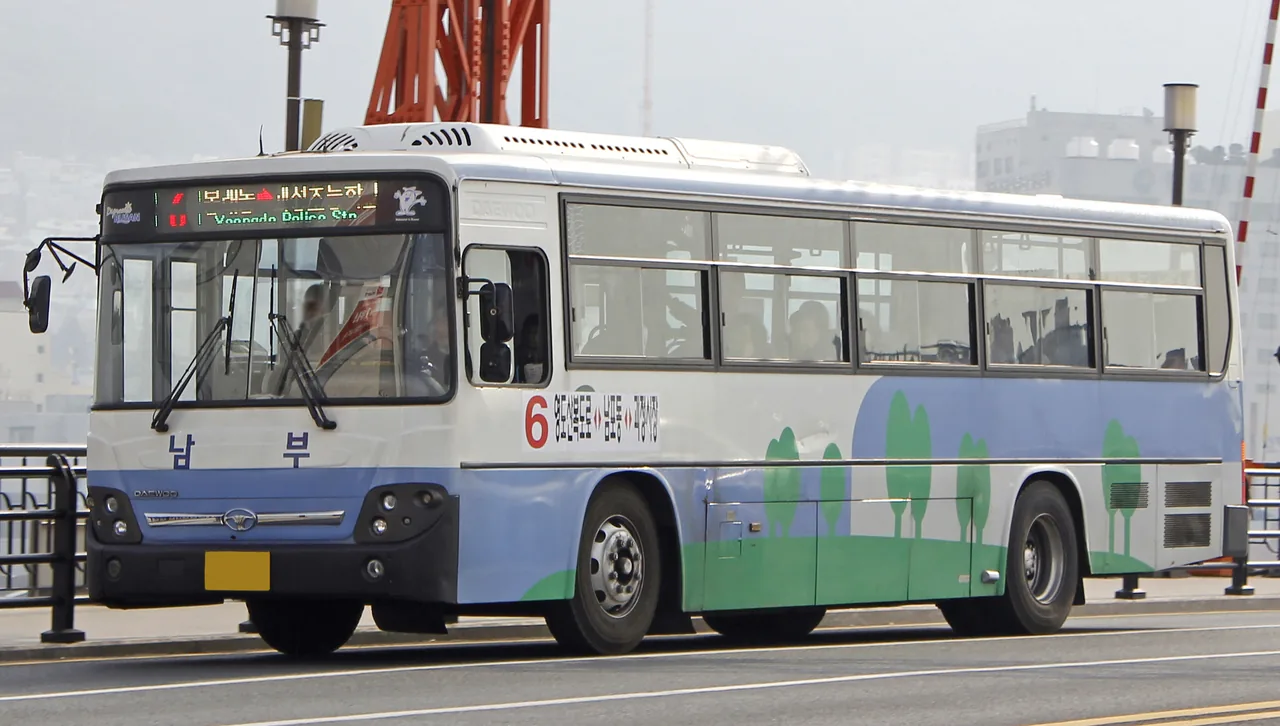
Busan’s city buses fill in the hillside and coastal spots the Metro doesn’t reach, and you tap the same transit card to ride — fares run from ₩1,550 for a regular bus. The colour tells you the type: blue for ordinary routes, red for express (seated) buses, and small green village buses that climb the hills.
| Bus type | Adult card / cash | Youth (card) | Child (card) |
|---|---|---|---|
| Regular (blue) | ₩1,550 / ₩1,700 | ₩800 | Free |
| Express (red, seated) | ₩2,100 / ₩2,200 | ₩1,350 | Free |
| Late-night (regular) | ₩2,050 / ₩2,100 | ₩1,000 | Free |
| Village (green) | ₩1,480 (card) | — | Free |
How to ride: tap your card on the reader as you board, and on many routes tap again as you get off — that second tap is what preserves your transfer discount, so make a habit of it. Children ride free by card (cash is charged). The 2023 fare rise was the first in a decade, and prices have held since.
When you’ll actually need a bus: for the last-mile climbs the Metro skips. The photogenic Gamcheon Culture Village guide Culture Village and the cliffs of Taejongdae guide are both reached by bus from the nearest Metro station, and a bus is often the simplest hop up to Beomeosa Temple guide temple from Line 1. Always confirm the exact route in Naver or Kakao Map, since Busan overhauled its bus network in July 2025 and some numbers changed.
11. The airport light rail (Busan–Gimhae Light Rail)
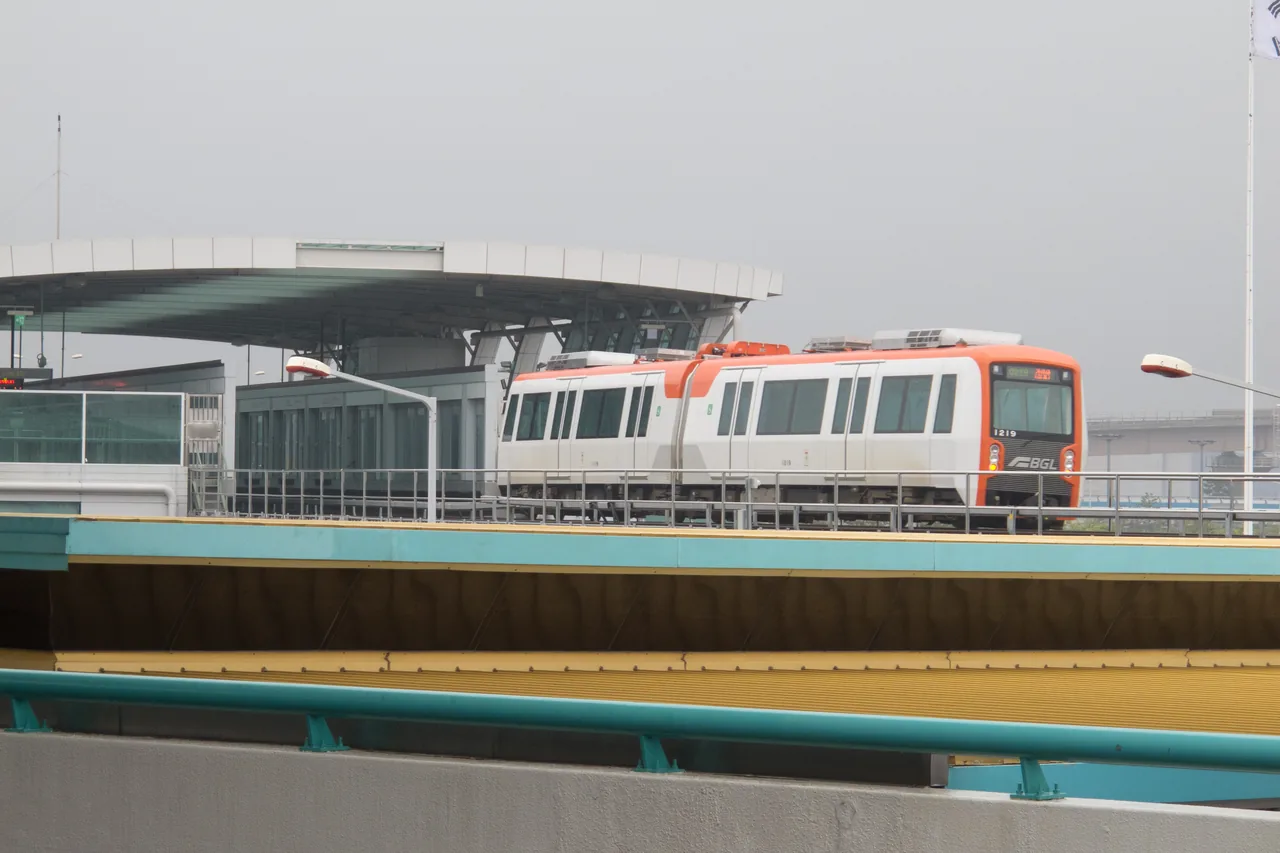
The Busan–Gimhae Light Rail (BGL) connects Gimhae International Airport straight into the Metro, at Sasang for Line 2 or Daejeo for Line 3, for ₩1,300 (zone 1) or ₩1,500 (full route) by card. It’s an elevated, driverless line of 21 stations running from Sasang to Gayadae, with the airport on its own spur station, and it’s fully inside the regional transfer discount — so it chains cheaply onto a Metro ride.
| Detail | BGL |
|---|---|
| Fare (card) | ₩1,300 zone 1 / ₩1,500 full route |
| Airport connection | Direct station at Gimhae International Airport |
| To Metro Line 2 | Transfer at Sasang (best for Seomyeon, Gwangalli, Haeundae) |
| To Metro Line 3 | Transfer at Daejeo (Deokcheon / Yeonsan side) |
| Hours | First trains from about 05:00; last from Sasang about 23:41 |
For most visitors, ride the BGL from Airport Station to Sasang and transfer to Metro Line 2, the line that reaches the beaches and Seomyeon. Because the transfer discount applies, the airport-to-city rail trip totals only around ₩2,000–2,600 to most districts rather than two full fares.
Heavy bags or travelling as a group? The transfer corridors at Sasang and Daejeo are long, and hauling suitcases up and along them is a chore. If that’s you, a pre-booked door-to-door pickup skips every transfer and drops you at your hotel — worth it late at night or with a family in tow:
For the full comparison of every airport option — light rail versus limousine bus, taxi, shuttle and private transfer, with fares and times — see our dedicated Gimhae Airport to Busan guide guide.
12. The Donghae Line — coastal day trips by rail
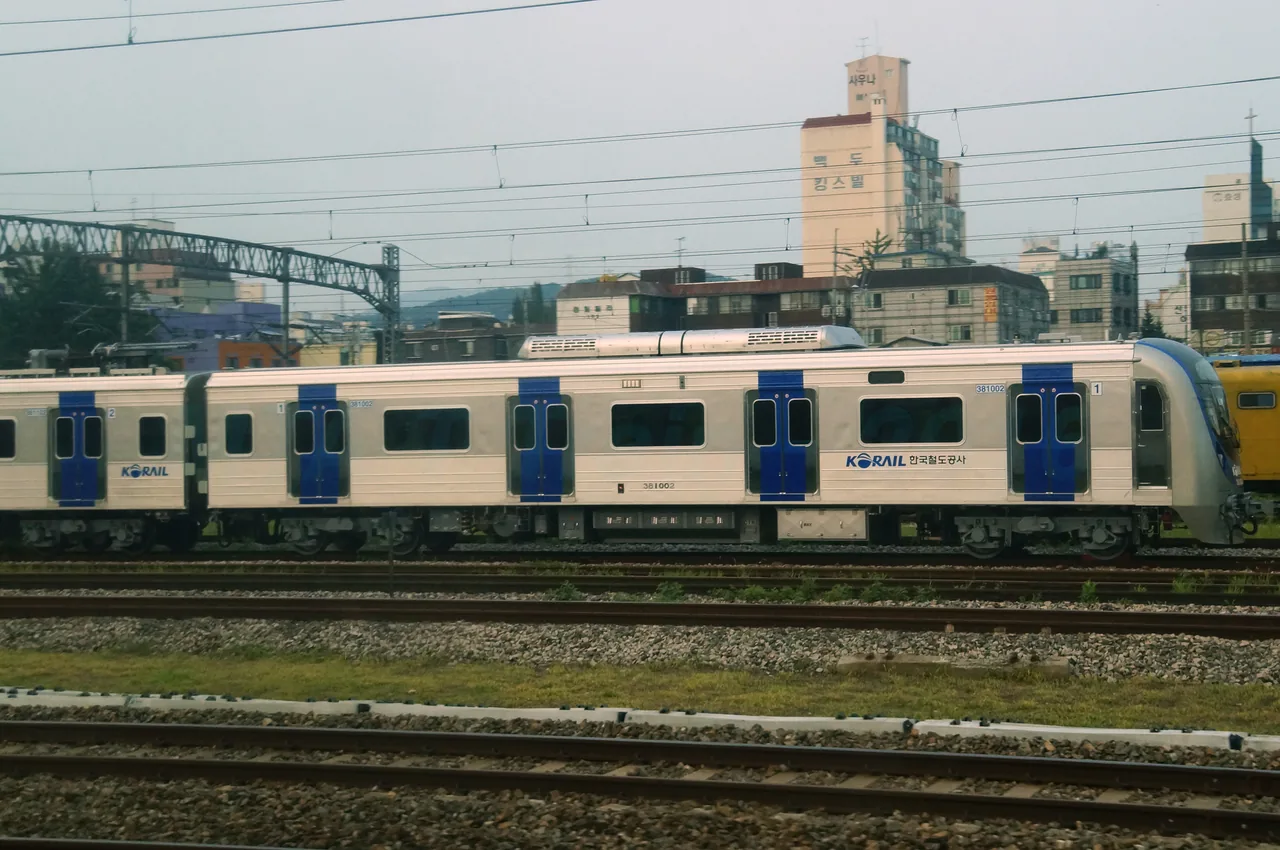
The Donghae Line is Busan’s coastal commuter rail: it runs from Bujeon to Taehwagang (Ulsan) across 23 stations in about 76 minutes, and it’s the easy way to reach Songjeong Beach, Osiria and Ilgwang without a car. Fares are ₩1,200 (zone 1) or ₩1,400 (zone 2) by card, and it’s inside the transfer discount, so it links to the Metro cheaply — connect to Line 2 at BEXCO.
| Key station | What’s there |
|---|---|
| Bujeon | Northern terminus; near central Busan |
| BEXCO | Transfer to Metro Line 2; convention centre |
| Songjeong | Songjeong Beach, a relaxed surf-town strand |
| Osiria | Haedong Yonggungsa temple, Lotte World Adventure Busan, the aquarium and outlets |
| Ilgwang | Ilgwang Beach and the fishing-village coastline |
Watch the frequency. Trains run about every 15 minutes at rush hour but every 30 minutes off-peak and on weekends — noticeably sparser than the Metro — so check the timetable in your map app and don’t just turn up expecting a train. The Haedong Yonggungsa guide temple at Osiria is the standout day trip: ride to Osiria station, then it’s a short bus or taxi hop to the sea-cliff temple.
Don’t confuse two different Donghae services. This wide-stop commuter line (Bujeon–Taehwagang) is not the same as long-distance KTX/ITX intercity trains up the east coast toward Gangneung. For those faster mainline services, see our KTX & Korail Pass guide guide. The commuter line’s northern extension toward Buk-Ulsan is slated for December 2026.
13. Reaching Busan’s top sights by transit
Almost every major Busan attraction maps cleanly onto a line and a station — here’s the cheat sheet from Metro line to sight. Match where you’re going to the row and you’ll know your line and whether you need a short bus hop at the end.
| Sight | How to get there |
|---|---|
| Nampo, Jagalchi Market, BIFF Square | Line 1 to Nampo-dong & old town guide / Jagalchi Market guide (walkable from the stations) |
| Busan Station & KTX | Line 1 to Busan Station; connect for the KTX & Korail Pass guide |
| Haeundae Beach | Line 2 to Haeundae — see Haeundae Beach guide |
| Gwangalli Beach & the bridge view | Line 2 to Gwangan — see Gwangalli Beach guide |
| Gamcheon Culture Village | Line 1 to Toseong, then a short bus up the hill — see Gamcheon Culture Village guide |
| Taejongdae cliffs | Line 1 to Nampo, then a bus onto Yeongdo — see Taejongdae guide |
| Haedong Yonggungsa temple | Donghae Line to Osiria, then a short bus/taxi — see Haedong Yonggungsa guide |
| Beomeosa temple | Line 1 to Beomeosa, then a village bus up — see Beomeosa Temple guide |
| Songjeong Beach | Donghae Line to Songjeong |
The pattern is simple: Line 1 for the old-town markets and temples, Line 2 for the eastern beaches, and the Donghae Line for the coast beyond Haeundae. Anything the rail doesn’t quite reach — a hilltop village, a cliff park — is a short, cheap bus at the end, covered by the same tapped card and its transfer discount.
Prefer to sightsee without route-planning? The hop-on hop-off Busan City Tour Bus loops the main coastal sights on one ticket and can be a relaxing way to see the headlines in a day. Compare it against the Metro in our Busan City Tour Bus guide guide.
14. Map apps — and why Google Maps won’t work
Use Naver Map or Kakao Map for every route in Busan — Google Maps still cannot give public-transport directions in South Korea, and its walking and driving directions are unreliable too. This surprises a lot of first-time visitors, so set up a Korean map app before you leave home.
| App | Best for | Notes |
|---|---|---|
| Naver Map | All-in-one transit (Metro + bus) | The top pick; English interface, door-to-door routing |
| Kakao Map | Transit + live train positions | Added real-time train tracking (incl. Busan Lines 1–4) in June 2025 |
| Subway Korea / Kakao Metro | Metro-only planning | Great for last trains, transfers and journey times |
| Google Maps | Not recommended in Korea | No public-transport routing; walking/driving often wrong |
Why the Google Maps gap exists: Korea restricts export of detailed mapping data, so Google can’t power transit routing here. A February 2026 government announcement conditionally allowing data export hasn’t yet translated into working directions, so the practical advice remains unchanged — install Naver or Kakao Map and don’t rely on Google. Our essential Korea travel apps guide covers the essential apps, and Naver Map vs KakaoMap guide dives deeper into Naver versus Kakao.
Every one of these apps runs on mobile data, so line up a connection before you land — an eSIM you activate on arrival is the cleanest route, and it means your maps and transit planning work the second you step off the plane:
15. Operating hours, last trains and rush hour
Busan’s Metro runs from roughly 05:05–05:20 in the morning to about 23:30–24:00 at night, with trains every few minutes at peak and up to 10–15 minutes late at night. Exact first and last times vary by line, station and direction, so always confirm the last train in your map app rather than cutting it fine.
| Detail | Typical timing |
|---|---|
| First train | About 05:05–05:20 |
| Last train | About 23:30–24:00 (varies by line/direction) |
| Rush hour | Roughly 08:00–09:00 and 18:00–19:00 |
| Frequency (Line 2, peak) | Every 4–5 minutes |
| Frequency (daytime) | About every 7 minutes |
| Frequency (early/late) | Every 10–15 minutes |
Plan around the last train. If you’re out late in Haeundae or Gwangalli, check the last Line 2 departure toward your area before you settle in for the evening — miss it and you’re on a night bus or a taxi. The Donghae Line and BGL also stop around late evening, so a coastal day trip needs an eye on the return timetable.
Beat the crush: avoid the 08:00–09:00 and 18:00–19:00 peaks if you can, especially on Line 2 through Seomyeon and Centum, where trains fill up. Mid-morning and mid-afternoon are pleasantly quiet for sightseeing. Time of year matters for planning your days too — see our Seoul Climate Card guide guide.
16. Etiquette, accessibility and practical tips
Busan’s Metro is clean, orderly and easy to use with a few local courtesies: keep priority seats free, keep phone calls quiet, and queue at the platform markings. These small habits are widely observed and make you a welcome rider.
Priority seats
Leave the marked seats for elderly, pregnant, disabled and injured passengers — locals keep them free even when the car is busy.
Keep it quiet
Phone calls are kept short and low; music and video go through earphones. Carriages are notably calm.
Queue and let others off
Line up either side of the door markings and let passengers exit before you board.
Screen doors & safety
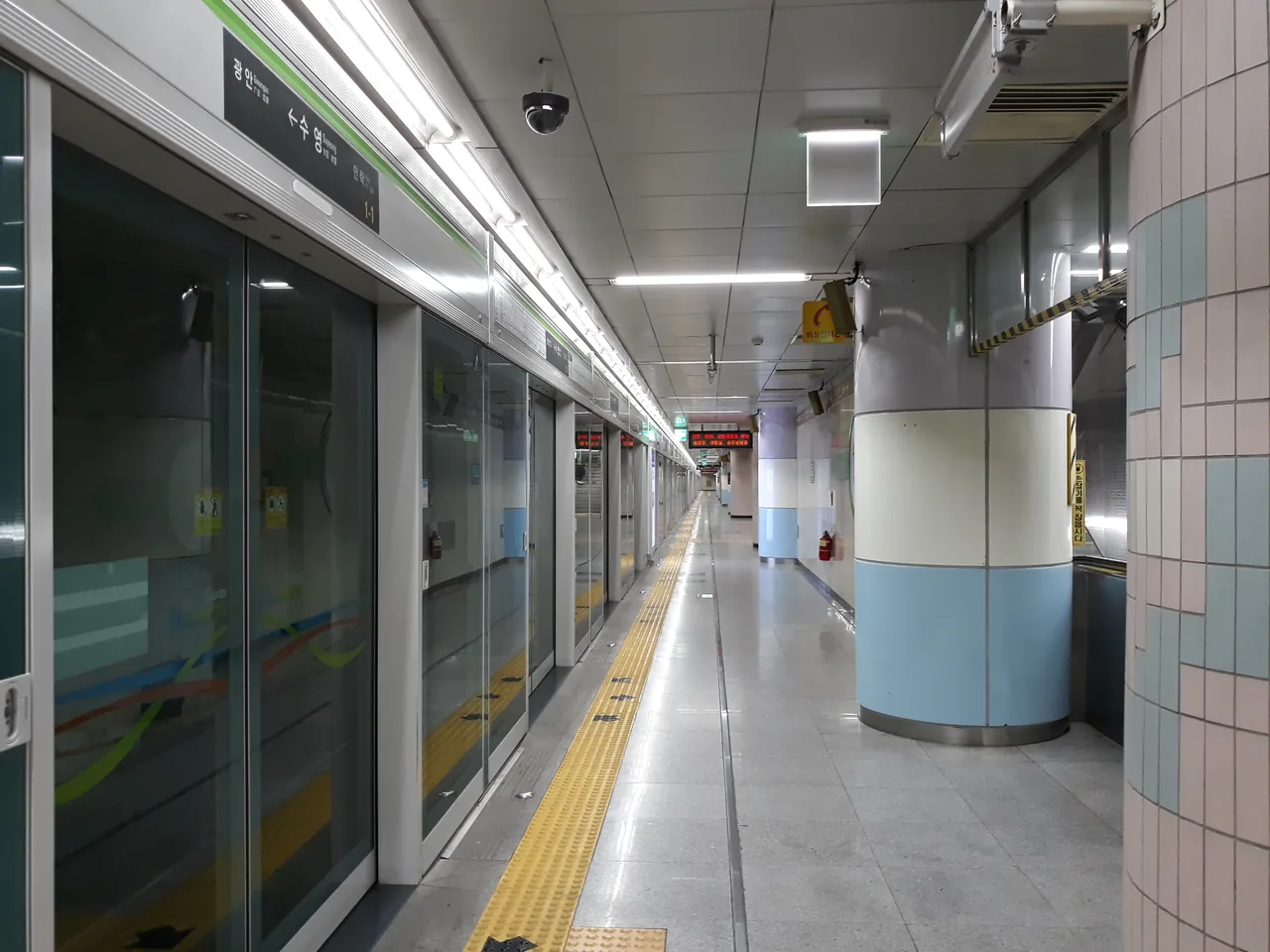
Platform screen doors are widespread (Line 3 has them system-wide), so stand back until they open.
Lifts & step-free routes
Stations have elevators; the map apps and station signs point to step-free paths — useful with luggage or a stroller.
Wi-Fi & charging
Free station and in-car Wi-Fi is common, though your own eSIM data is faster and more reliable.
Luggage and long transfers: some interchange corridors — Sasang and Daejeo especially — involve a fair walk and stairs. With big bags, look for the lift signs, allow a few extra minutes, and consider travelling outside rush hour when platforms are less crowded.
A realistic accessibility note: lifts and step-free routes exist at Busan stations, but they can be tucked away and occasionally out of service. If you rely on step-free access, check the route in advance and give yourself buffer time; for a heavy-luggage arrival, a door-to-door transfer removes the transfer walks entirely.
17. The best choice by situation, plus a sample daily budget
Here’s the whole guide boiled down to a decision table, and a realistic sense of what a day of transport actually costs. Find your situation, take the recommended option, and don’t overthink it — a card covers nearly everything.
| Your situation | Best choice |
|---|---|
| Here a few days, general sightseeing | A Cashbee/T-money card with the transfer discount |
| Riding four or more times in one day | The ₩5,000 one-day Metro pass (Metro-only) |
| Heading to the beaches | Metro Line 2 (Haeundae, Gwangalli) |
| Markets and old town | Metro Line 1 (Nampo, Jagalchi) |
| To or from Gimhae Airport | Busan–Gimhae Light Rail to the Metro |
| Coastal day trip (Songjeong, Osiria) | The Donghae Line |
| Hillside spots (Gamcheon, Taejongdae) | Metro + a short city bus |
What a typical sightseeing day costs. Say you ride from your hotel to Nampo, then across to Haeundae, out to Gwangalli in the evening and back — four to five Metro trips, roughly ₩1,600–1,800 each, so about ₩7,000–9,000 for the day. Add a bus hop up to Gamcheon and the transfer discount keeps that link cheap. On a day like that the ₩5,000 one-day pass edges ahead, while a lighter two-trip day is cheaper on a normal card.
The one habit that saves the most: tap the same card on and off every mode, and let the 30-minute transfer discount stitch your journeys together — it turns a bus-plus-Metro trip into a single fare. With that sorted, plan the rest of your Busan trip with our complete complete Busan travel guide guide.
🎡Things to Do49
🍜Food7
🏨Where to Stay3
🚇Getting Around7
🧭Travel Tips14
📌More3
🧭All-Korea essentials37
Frequently asked questions
Sorted on getting around? Now plan the rest of your visit — neighbourhoods, beaches, food and where to stay — with our complete complete Busan travel guide guide to Busan.
Images: Tom Page, CC BY-SA 2.0 · Asacyan, CC BY-SA 4.0 · Dongchan0417, CC BY-SA 3.0 · Minseong Kim, CC BY-SA 4.0 · Tom Page, CC BY-SA 2.0 · Mtattrain, CC BY-SA 4.0 — via Wikimedia Commons.