
Where to Stay in Busan: The Best Hotel Areas, Honestly Compared
Haeundae, Gwangalli, Seomyeon or the station — what each Busan neighbourhood is actually like to sleep in, and who it suits.
| First time in Busan | Haeundae. The beach, the food and the sights sit in one walkable district |
|---|---|
| Night views and bars | Gwangalli. The same bridge view costs far less here than in Haeundae |
| Riding the metro all day | Seomyeon. Two lines cross, so nowhere is more than one change away |
| Markets and old Busan | Nampo and Jagalchi. Fish market, street food and Gamcheon within reach |
| One night off the KTX | Busan Station. Roll your suitcase off the train and you are there |
| A quiet couple of days | Gijang or Songjeong. Wide beaches, far fewer people |
1. Busan is long, and that changes everything
2. Haeundae, the obvious first choice
3. Gwangalli, for the bridge and the night
4. Seomyeon, if you plan to move around
5. Nampo and Jagalchi, the old downtown
6. Yeongdo, over the bridge and quieter
7. Busan Station, for a short trip
8. Centum City, for shopping and events
9. Songjeong, for surfing or for nothing at all
10. Gijang and Osiria, resorts at the eastern end
11. Songdo, the cable car and the old beach
12. Dadaepo, if you are here for the sunset
13. Dongnae, for the hot springs
14. Near Gimhae Airport, only if your flight forces it
15. Worth checking before you book
16. So which one
Busan rewards choosing the right base more than almost any city in Korea. It is a long, narrow city strung along the coast, and the district you sleep in decides how much of it you actually see. Pick badly and you spend half of every day riding the metro back and forth.
This is what each neighbourhood is like to stay in, what you can walk to, and where it lets you down. If you want the wider trip first, see complete Busan travel guide.
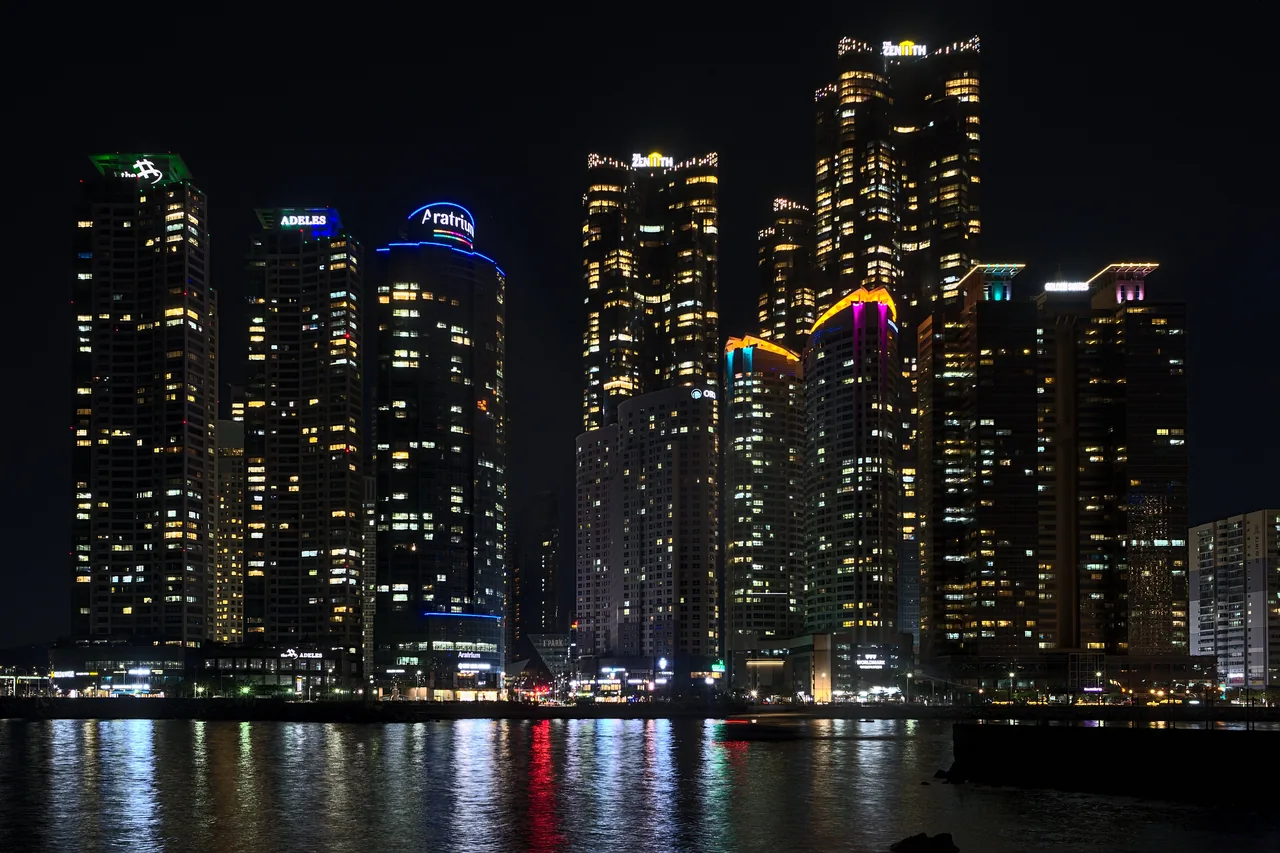
1. Busan is long, and that changes everything
Before you compare hotels, understand the shape of the city. Busan runs east to west along the sea. Gijang at the eastern end and Dadaepo at the western end are both inside the city, but getting from one to the other eats a serious chunk of a day. It is not a compact circle with everything radiating from a centre.
So where you sleep sets a limit on what you can see. Base yourself in Haeundae and then plan a day around Gamcheon Culture Village and Jagalchi Market, and much of that day goes on trains. The classic mistake is putting the far east and the far west in the same day.
Busan is also hilly. Whole neighbourhoods climb the slopes behind the port, so a few hundred metres on a map can be a staircase. With a suitcase that difference is real. It is worth looking at the terrain, not just the distance, before you book.
One more thing that surprises visitors: Google Maps cannot give you walking or driving directions in Korea. Download Naver Map or KakaoMap before you arrive. Both have English, and both need data, so sort a SIM or eSIM as well. Metro signage and announcements are in English, so the trains themselves are easy.
2. Haeundae, the obvious first choice
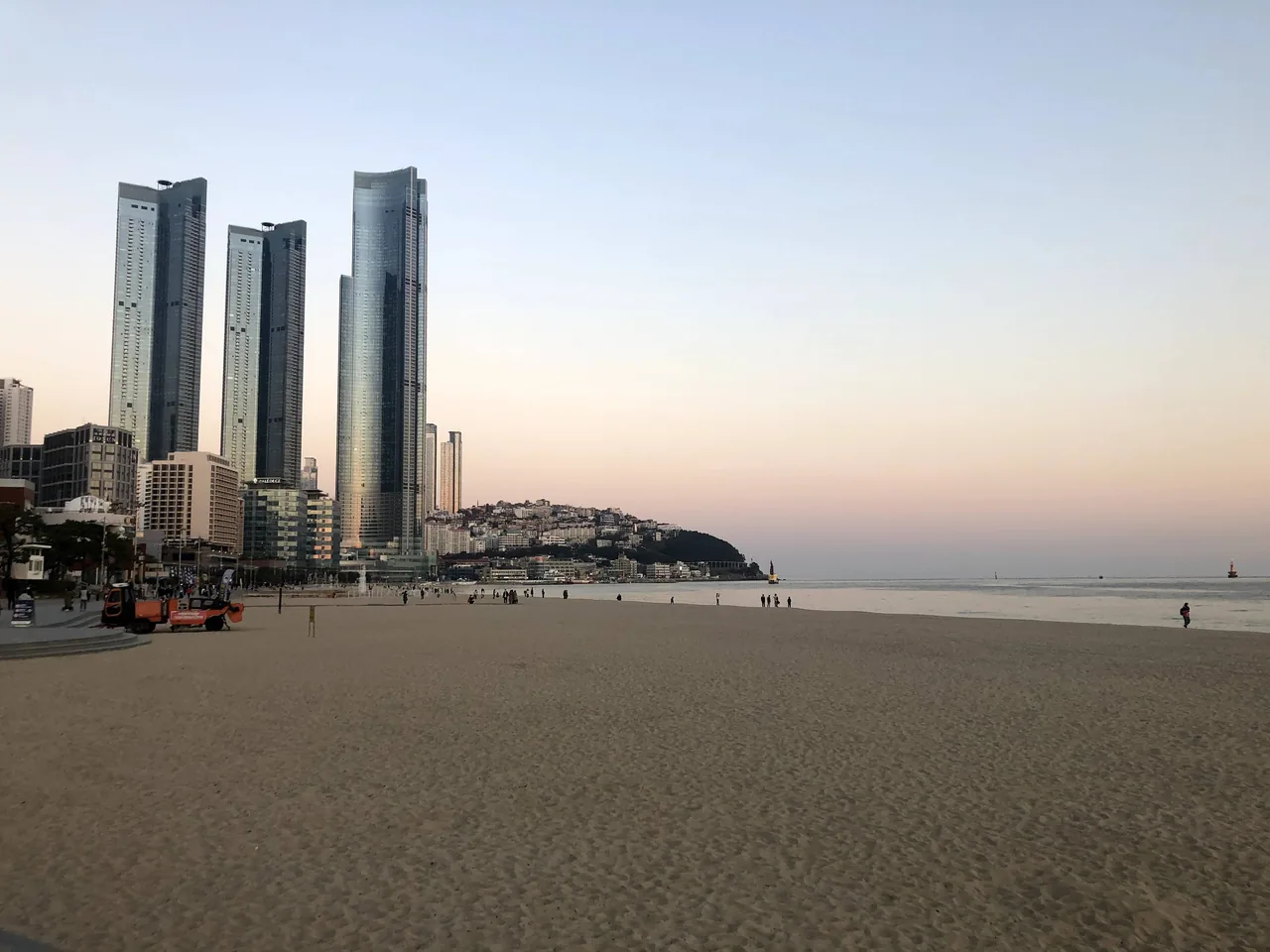
Busan’s biggest concentration of hotels, and where nearly all the famous names are. A morning on the sand, an afternoon of raw fish in the market, an evening climbing Dalmaji Hill for the view: that whole day happens inside one district. If this is your first visit, do not overthink it.
What is here Haeundae Beach and the Dongbaek IslandMap loop are the anchors. Dalmaji Hill above the beach is lined with cafes. Haeundae Market handles dinner, and from Mipo the Blue Line Park beach train runs along the water to Songjeong. The aquarium and the Busan Cinema Center are close.
Why stay here Everything is in one place, so you waste little time moving. This is also where you have the widest choice of rooms that actually face the sea. Restaurants stay open late, so a long evening never leaves you hungry.
The catch It is the most expensive part of the city. And a Haeundae address does not mean a station is outside your door. Some hotels that look close on a map sit up a hill. Check how you would actually walk to the metro before you book. In midsummer the beach is packed solid.
Front row and back streets are different neighbourhoods. A room facing the water costs a great deal more. Move one block back and the price drops noticeably while the beach is still a short walk. If waking up to the sea is not the point of the trip, the second row is the sensible buy.
Named hotels On the sand itself: Josun Palace and Paradise Hotel Busan. Signiel Busan occupies the upper floors of the LCT tower and has the widest view in the city. Around the Marine City marina, the Westin Josun Busan and Park Hyatt Busan are quieter than the beach and better for night views. For less money, look at the streets behind Haeundae Market and around Gunam-ro. To narrow it down inside Haeundae itself, see our zone-by-zone Haeundae guide.
3. Gwangalli, for the bridge and the night
The second-largest cluster of accommodation, and a very different character. There are few large luxury hotels here; most places are mid-range. What you get instead is a room facing Gwangan Bridge for far less than the equivalent view in Haeundae.
What is here Cafes and bars run the length of Gwangalli Beach. At Millak Waterfront ParkMap people buy raw fish and eat it looking at the water. There is a drone show on Saturday nights, and once the bridge lights come on the evening takes care of itself.
Why stay here For the same money you are far more likely to get a sea view. The area stays lively late, and you can walk straight from dinner onto the sand.
The catch It is a walk from the metro. Gwangan and Geumnyeonsan stations are already back from the water, and the hotels spread out from there. With luggage you will end up in a taxi. Weekend nights are loud, so light sleepers should avoid the front row.
Which row you book decides the price. Buildings here stand in several ranks back from the beach, and the gap between the first and third rank is large. But a high floor in the third rank still sees the bridge. Check which floor an “ocean view” room is on, and look at the photos to see how much of the window the next building takes.
Not for everyone With small children or an early bedtime, weekend Gwangalli is noisy. With heavy bags or older parents, the walk from the station is a burden. For those trips, Haeundae or Centum is easier.
4. Seomyeon, if you plan to move around
No sea, but the most practical address in Busan. Two metro lines cross here, so Haeundae and Nampo are each a direct ride or a single change. If your days involve several different districts, this is the answer.
What is here Department stores and an underground shopping arcade sit on top of the station, and the surrounding alleys are wall-to-wall food. Old pork soup restaurants and bars run late, so evenings never run out. Busan Citizens Park is close.
Why stay here Connections are unbeatable, and hotels here mostly sit near the station, which means less hauling of bags. Rooms are generally larger than what the same money buys in Haeundae.
The catch You will not see the sea from your window. It is a busy district, so nights are not quiet and mornings are crowded.
Seomyeon stationMap has a lot of exits. Which one your hotel sits above changes the walk considerably. Check the exit number, and if you can reach the hotel through the underground arcade, rainy days get much easier.
For quiet, go towards Jeonpo. A few blocks from the main crossing the noise drops away, and the cafe district there is pleasant in the morning.
Named hotels Lotte Hotel Busan sits on top of the department store and is the easy landmark. Ibis Ambassador Busan City Centre and Hotel TT Seomyeon are mid-range options right by the station. Towards Jeonpo, smaller hotels go for less.
5. Nampo and Jagalchi, the old downtown
The historic centre. Several markets sit within walking distance of each other, and this is also the closest base for Gamcheon Culture Village and for crossing to Yeongdo. If it is not your first visit, or you would rather see a city than a beach, this side is more interesting.
What is here Jagalchi Fish Market, Gukje Market and the Bupyeong Kkangtong night market run into one another. Yongdusan ParkMap has a tower with a view, the Yeongdo Bridge lifts on a schedule, and one bus gets you to Gamcheon.
Why stay here Hotels sit close to stations, so arriving is simple. Eating costs noticeably less, and plenty of places open early.
The catch There is water, but it is a working port, not a beach. Once the markets close the streets empty quickly, and many buildings are old, so rooms can be small.
This is not flat ground. A few hundred metres on the map can be stairs and slope. The Commodore, for instance, has a fine outlook because it stands on a hill, which also means dragging a case up to it. With heavy luggage, choose something on the level near a station.
Taking a ferry? The international terminal is by Busan Station, so if you are sailing to Japan this area is convenient. Morning sailings leave early.
Named hotels The Commodore Hotel is the landmark on the hill. Stanford Hotel Busan and Busan Tourist Hotel sit between the station and the markets, and Toyoko Inn Busan Jungang-dong is the predictable-price option nearby.
6. Yeongdo, over the bridge and quieter
An island one bridge from Nampo. It is still Busan, but the mood changes completely, which makes it a good second night after a day in the old downtown.
What is here Huinnyeoul Culture VillageMap clings to a cliff, so the sea appears at the end of every alley. The Jeoryeong coastal path runs below it with nothing but wave noise, and Taejongdae sits at the far end of the island. Converted warehouses have become cafes worth an afternoon.
Why stay here Few people, and the sea is right there. Nampo’s markets are just across the bridge for dinner.
The catch There is no metro on the island. You cross by bus or taxi, and you move around by bus once you are there. There are not many hotels either, so choice is thin, and things close early.
Named hotels Lavalse Hotel faces the water and is the best known. Beyond that there are a handful of small hotels.
7. Busan Station, for a short trip
If you have one night, or you arrive late and leave early, stop thinking and book here. Hotels in this pocket are almost all within walking distance of the platform. Nowhere else in Busan is that dependable.
What is here The Choryang Ibagu-gilMap staircase climbs to a ridge road looking down on the harbour. Chinatown and Texas Street are directly opposite the station. Nampo is a few stops away, so you can go out for dinner and come back easily.
Why stay here No wandering with a suitcase, which matters a lot for an early train. Airport buses also leave from in front of the station.
The catch This is a transport hub rather than a destination. You will not spend a whole day here, and it is not quiet at night.
Across the road is not the same as opposite the platform. A wide road runs past the station, so some hotels need an underpass or footbridge. Late at night with bags that one crossing is more annoying than it sounds. Check which side of the road you are on.
Named hotels Hotel Astee connects almost directly to the station. Toyoko Inn Busan Station and Hotel Foret The Spa are a few steps away with predictable pricing.
8. Centum City, for shopping and events
Administratively part of Haeundae, but nothing like it. The centre of gravity here is department stores and the convention centre, and the hotels sit right by the station. If you are attending something at BEXCO, or your dates include rain, this is the comfortable choice.
What is here Shinsegae Centum CityMap and Lotte Department Store adjoin each other, and the Busan Cinema Center and BEXCO are a walk away. Haeundae Beach is a couple of stops on the metro, so you do not have to give up the sea.
Why stay here Station and hotel are close, and you can spend a whole day indoors. With children, or in poor weather, that counts for a lot.
The catch The district has no real atmosphere. There are few streets worth wandering at night, so dinner tends to happen inside a department store.
Watch the event calendar. When BEXCO has a large show, hotels here fill at once. On ordinary weekdays this is one of the steadier-priced parts of the city.
Named hotels Shilla Stay Haeundae and Sono Moon Haeundae are near the station, with Toyoko Inn Busan Haeundae 2 nearby for predictable rates.
9. Songjeong, for surfing or for nothing at all
Follow the coast a little past Haeundae. The beach is wide and far emptier, and it is where people come to learn to surf. Good for the day in a longer trip when you want to do nothing.
What is here Surf schools run year round on Songjeong BeachMap. The loop around Jukdo Park is short and pretty, and this is the far end of the Blue Line Park beach train from Haeundae.
Why stay here Several places sit right on the sand and cost less than Haeundae. Mornings on the beach are quiet.
The catch There is no subway. Songjeong has a Donghae Line station, but it is a walk from the beach and trains are not frequent. Dinner options are thinner than in Haeundae, so arriving late narrows your choices.
Named hotels Small hotels line the beachfront. If you want a large, well-known property, stay in Haeundae and come out for the day.
10. Gijang and Osiria, resorts at the eastern end
The far east of the city. It is a long way from downtown, and that is the point. Wide resorts sit on the coast with the main attractions clustered nearby.
What is here Lotte World Adventure Busan and the aquarium are together at Osiria, with Haedong Yonggungsa templeMap and Jukseong Church a short drive away. Further down towards Ilgwang the beaches are almost empty.
Why stay here Few people and open views. Some properties are worth a whole day without leaving, and with children the fact that the theme park is next to the hotel matters.
The catch You want a car. The subway does not reach here and buses are infrequent. Going into town for dinner becomes a project.
Split your stay. Basing here and commuting into the city every day burns half a day each way. Give the city its own nights and this coast its own nights.
Named hotels Ananti at Busan is split between Cove and Villas, with a few more resort-style properties around Osiria.
11. Songdo, the cable car and the old beach
Korea’s oldest public beach. It is small, but the cable car and the cliff walkway fill half a day easily, and it is close enough to Nampo to bolt onto an old-downtown itinerary.
What is here The Songdo Marine Cable CarMap crosses the bay, and the Cloud Trail runs out along the cliffs. A coastal path continues to Amnam Park and stays quiet.
Why stay here Beachfront rooms without Haeundae’s crowds, and Nampo’s markets are close for dinner.
The catch No metro station. You come in by bus or taxi from Jagalchi, which is a nuisance with luggage, and there are not many hotels to choose from.
Named hotels Wyndham Grand Busan stands at the end of the beach, and Fairfield by Marriott Busan Songdo Beach is on the sand.
12. Dadaepo, if you are here for the sunset
The western end of the city, where the Nakdong River meets the sea. The water is shallow and the sand very wide, which makes it feel unlike the other beaches. It is also where people come for Busan’s best-known sunset.
What is here The musical fountain plays in the evening at Dadaepo BeachMap, and the Molundae trail runs out along pine-covered cliffs. Shallow water suits small children.
Why stay here Space and few people. And the metro does reach it, at the very end of Line 1, which is more than can be said for Gijang or Songdo.
The catch It is a long way from the centre even by train, dinner options are limited, and there are only a handful of places to stay. Unless the sunset is the reason for your trip, there is little cause to sleep out here.
13. Dongnae, for the hot springs
Most visitors do not realise Busan has a hot spring district. It is on the opposite side of the city from the sea, but in winter, or after a day of walking, that can be exactly what you want.
What is here HurshimchungMap is a very large bathhouse open all day. Dongnae Eupseong fortress wall and the Oncheoncheon stream path are close, and Sajik Baseball Stadium is one stop away.
Why stay here Some hotels connect straight through to the baths. The metro is close and Seomyeon is minutes away, so getting about is fine.
The catch The sea is far. There are only a few hotels, so busy dates sell out.
Named hotels Hotel Nongshim adjoins Hurshimchung, which makes it an unambiguous choice if the baths are why you came.
14. Near Gimhae Airport, only if your flight forces it
Not somewhere to spend a holiday. Worth noting only because flight times sometimes require a night nearby.
Why it works Close to the terminalMap and inexpensive, which is a relief for a dawn departure.
The catch Treat this area as having no subway. The Myeongji side sits well away from any station, so a taxi or rental car is assumed. There is little within walking distance for dinner. Do not mix this into your Busan sightseeing; use it for the first or last night only.
15. Worth checking before you book
A few things behave differently in Busan than you might expect.
- Trace the walk to the metro on a map. Busan is hilly, so terrain matters more than distance.
- Look at which way an “ocean view” room actually faces. The next building often takes half the window.
- Check parking if you are driving. Haeundae and Gwangalli are tight, and many hotels charge.
- Decide whether you need breakfast. Around Nampo or Busan Station plenty of places open early, so you may not.
- Check the check-in time. Some start late in the afternoon. Arriving on a morning KTX, ask whether you can leave bags.
- Install Naver Map or KakaoMap. Google Maps will show you the hotel but will not route you to it.
16. So which one
In short:
- First visit, two or three days — Haeundae. Spend the time seeing things rather than choosing.
- You like being out at night — Gwangalli, accepting the walk from the station.
- Several districts a day — Seomyeon. The connections save real time.
- One night off the train — Busan Station. There is no better option.
- You came to rest — Gijang or Songjeong, with a car or with the city given up.
- Not your first visit — Nampo. Walking this side of the city is the better trip.
Whichever you choose, look once at how you would actually walk from the station. In a city built on hills, map distance and real distance are not the same thing.