
Where to Stay in Busan: The Best Neighborhood for Your Trip
Busan is long, coastal and spread out, so the area you sleep in shapes your whole trip. Here is an honest, area-by-area breakdown — Seomyeon, Haeundae, Gwangalli, Nampo-dong, Busan Station and Songjeong — with exactly which traveler each suits, what you’ll pay, and how easy it is to get around.
| First trip, want it easy | Seomyeon — the Line 1×2 interchange, one hop to the beaches, markets and station |
|---|---|
| Beach, resorts & sea views | Haeundae — flagship beach, luxury towers and the best sea-view rooms, on Line 2 |
| Night views & a younger vibe | Gwangalli — the illuminated Gwangan Bridge, café-bar strip and better value |
| Markets & old Busan | Nampo-dong — Jagalchi fish market, street food and Gamcheon nearby, on Line 1 |
| KTX trains & day trips | Busan Station — the rail hub, cheap value beds, easy trips to Gyeongju |
| Quiet beach & surf | Songjeong — a laid-back surf beach east of Haeundae, slower and calmer |
| Golden rule | Sleep within a 5–10 minute walk of a Line 1 or Line 2 subway station |
1. Which Busan area is right for you?
2. How Busan fits together (a 2-minute orientation)
3. Seomyeon — best for first-timers & central convenience
4. Haeundae — best for the beach, resorts & sea views
5. Gwangalli — best for night views & a younger vibe
6. Nampo-dong & Jagalchi — best for markets, street food & old Busan
7. Busan Station & Choryang — best for KTX trains, day trips & value
8. Songjeong — best for a quiet beach, surf & a slower pace
9. Two more bases worth knowing: Centum City & Dongnae
10. What kind of place: hotel, resort, guesthouse or pension
11. What you’ll actually pay, by area & season
12. Getting to your base — from the airport & by train
13. Should you split your stay? (beach + downtown)
14. Booking tips & common mistakes
15. So, which area should you pick?
1. Which Busan area is right for you?
For a first trip that mixes downtown and beach, base yourself in Seomyeon — the point where Metro Lines 1 and 2 cross, one hop from everything. Choose Haeundae for the beach and resorts, Gwangalli for night views on a budget, Nampo-dong for markets and old Busan, the Busan Station area for KTX trains and day trips, and Songjeong for a quiet beach. The thing that matters most is not the area name but how close your bed is to a Line 1 or Line 2 station.
Busan is Korea’s second city and its biggest port, strung for miles along the coast rather than packed into a tight center, so the wrong base can add half an hour of transit to every outing. This guide breaks down the areas most visitors actually choose, who each one suits, and what a night roughly costs. For the bigger picture of your trip, start with our complete Busan travel guide, and if you’re arriving by high-speed train from Seoul or Incheon, see how it works in our Seoul to Busan by KTX.
| Area | Best for | Vibe | Price level | Beach / to downtown |
|---|---|---|---|---|
| Seomyeon | First-timers, all-rounders, foodies | Central, urban, busy | Mid | No (metro to the beach) |
| Haeundae | Beach holidays, resorts, splurge | Upscale, resort, scenic | High | On the beach |
| Gwangalli | Night views, younger travelers, value | Lively, café-bar, cool | Mid | On the beach (short walk to station) |
| Nampo-dong | Markets, street food, culture | Old Busan, atmospheric | Low | No (15–25 min to beaches) |
| Busan Station | Train travelers, day-trippers, value | Functional, connected | Low | No (metro to beaches) |
| Songjeong | Surfers, families, quiet stays | Laid-back, slow, coastal | Mid | On the beach |
| Centum City | Business, shopping, families | Modern, orderly | Mid | Near (Line 2 to beaches) |
Still torn? Compare live prices across every Busan district in one place — that’s the quickest way to see what your exact dates actually cost.
2. How Busan fits together (a 2-minute orientation)
Busan is long and coastal, not compact: the old downtown and markets sit in the west, the beach resorts in the east, and Seomyeon in the middle, where the two main metro lines cross. Get that mental map and everything else falls into place. Most visitors ride only two of the five lines, so you don’t need to memorize the whole network.
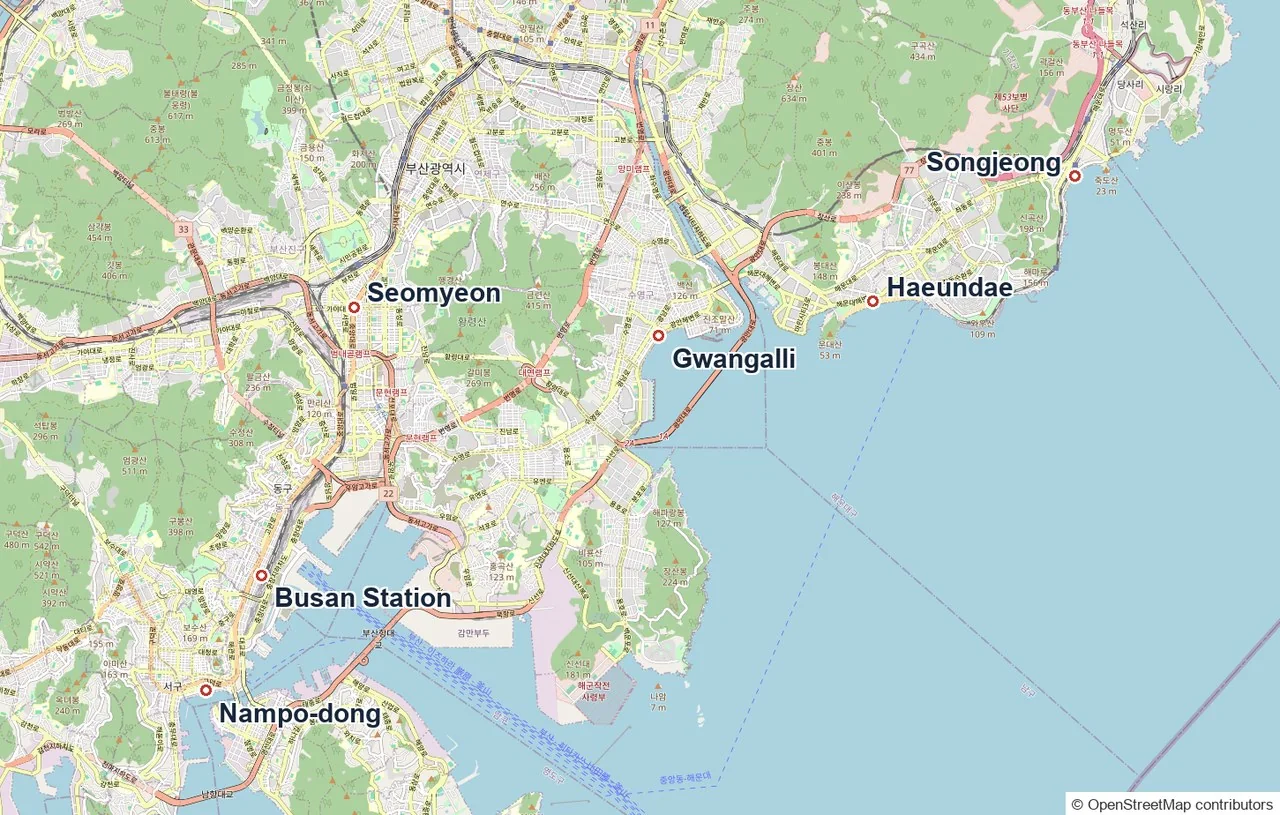
Think of it as two spines meeting at one hub:
- Line 1 (orange) — the western / downtown spine: runs from Busan Station up through Nampo and Jagalchi, on through Seomyeon and out to Dongnae and Nopo. This is old Busan, markets and the rail hub.
- Line 2 (green) — the coastal spine east: runs Seomyeon → Gwangan (for Gwangalli) → Centum City → Haeundae → Jangsan. This is the beach line.
- Seomyeon — the interchange: where Lines 1 and 2 meet, and the pivot of the whole city. From here you’re one uncomplicated ride to almost anywhere a visitor wants to go.
- Donghae Line & the Blue Line Park beach train: reach Songjeong and the east coast, including the scenic Mipo–Cheongsapo–Songjeong ride along the sea.
Fares are simple and cheap with a transit card (T-money or Cashbee): the metro is ₩1,600 for one zone (up to 10 km) or ₩1,800 for two zones (over 10 km), and most cross-city hops — Seomyeon to Haeundae, say — fall into the two-zone ₩1,800 band. A city bus is ₩1,550 and a taxi starts at ₩4,800 for the first 2 km (fares current as of 2026; cash is slightly higher than card). To navigate, use Naver Map or KakaoMap, not Google Maps, which is weak for Korean transit; we cover the apps and cards in our getting around Busan by metro.
3. Seomyeon — best for first-timers & central convenience
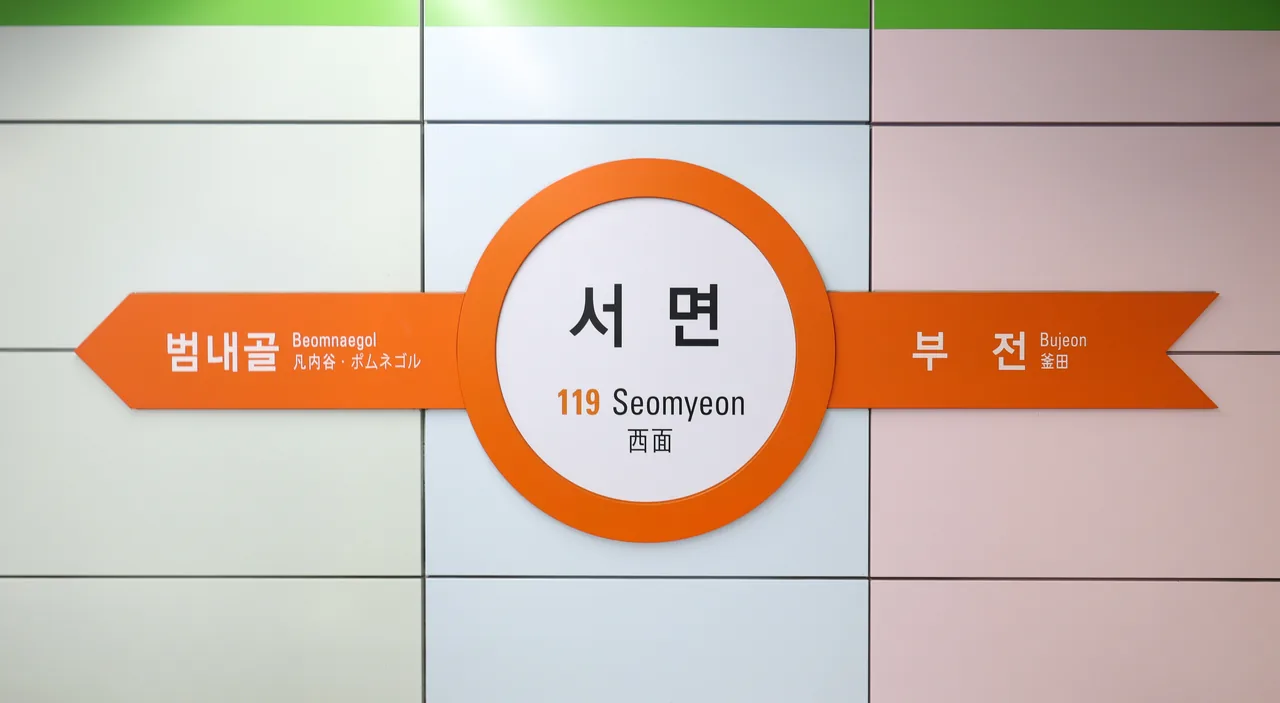
Seomyeon is Busan’s downtown crossroads, the one place where Metro Lines 1 and 2 meet — which makes it the single most convenient base, with one transfer or none to the beaches, the markets and the station. If it’s your first trip and you want to mix everything without long commutes, start here. Map
| Where | Busanjin-gu, the geographic and transit center of the city |
|---|---|
| Best for | First-timers, all-rounders, foodies, nightlife, business, value seekers |
| Subway | Seomyeon (Lines 1 & 2) — the main interchange |
| Price | Full range, with strong mid-range value |
| Watch out for | Not on the beach; busy and very urban; a few late-night streets (Seomyeon 1-beonga) get seedy |
Seomyeon is a dense, energetic downtown: department stores (Lotte, NC Outlet), the beauty and medical belt Busan is known for, endless underground arcades and cafés, and one of the city’s great eating streets — the famous dwaeji-gukbap (pork-and-rice soup) alley right by the station — plus big, spread-out nightlife. Because it sits on the Line 1&2 interchange, it has more hotels at more price points than anywhere else, and mid-range value is genuinely good. Dig into what to eat nearby with our Busan food guide, and see how it anchors the rest of your plans in our Seomyeon guide.
Where exactly to book in Seomyeon
- Around Seomyeon Station (exits 1, 2, 7): the core — Lotte Department Store, NC Outlet, Judies Taehwa and a wall of business hotels. This is peak convenience with the interchange under your feet. Book here for pure access; expect city noise and no view.
- Jeonpo Café Street (전포 카페거리): one stop east to Jeonpo on Line 2, or a 10-minute walk. Hip roasteries, indie boutiques and design-led guesthouses; younger, calmer after dark. Book here for trendy-but-quiet at a small price premium on character.
- Seomyeon 1-beonga (서면 1번가): the neon grid of bars, clubs and pojangmacha tents. Fun and central, but loud and a little seedy late at night — book a block or two off it if you sleep lightly.
- Bujeon Market (부전시장) side: a traditional market pocket with the cheapest, grittiest, most local beds — fine for budget travelers who don’t mind rough edges.
By day Seomyeon is all commerce and coffee: shoppers pouring in and out of the department stores, office workers filling the gukbap counters at lunch, the underground mall humming. By night the 1-beonga blocks light up and stay busy past midnight, while the Jeonpo side quietens to café tables and low-key bars — which is why the street you pick matters more here than the district. On your doorstep are the department stores, Seomyeon Medical Street, cinemas and hundreds of restaurants; the transit reach is the real draw, with roughly 10 minutes to Nampo and to Busan Station on Line 1, ≈20 minutes to Gwangalli and ≈30 minutes to Haeundae on Line 2, plus the airport via Sasang.
The trade-off is that Seomyeon is central, not scenic. You’re in the middle of the city rather than by the sea, the streets are busy, and a couple of the after-dark lanes around 1-beonga can feel rough. For access and value, though, nothing else in Busan matches it.
- Stay here if: it’s your first visit, you want to mix beaches, markets and food without long rides, or you’re chasing value and convenience.
- Look elsewhere if: you want to wake up to the sea or a quiet, scenic base.
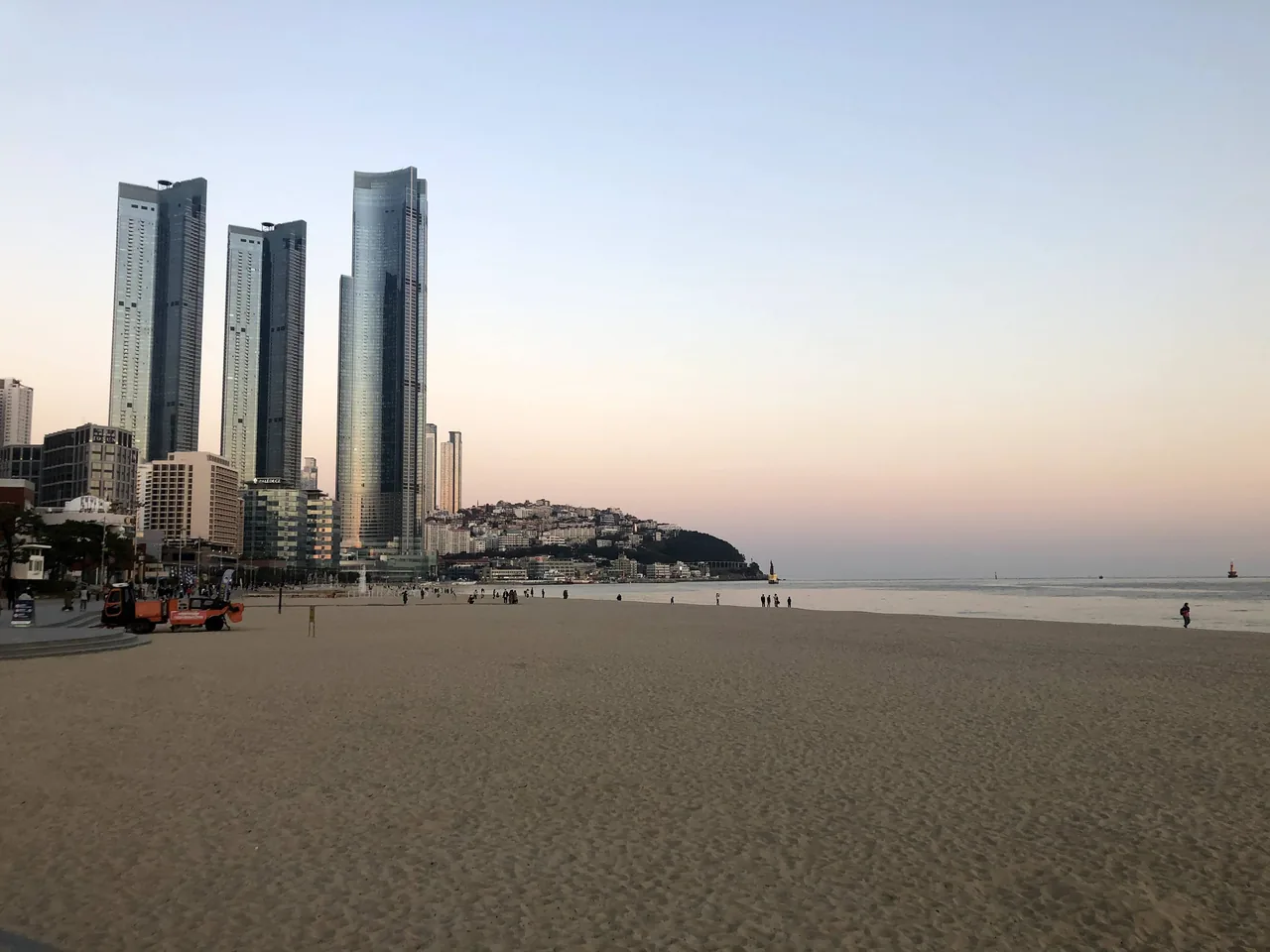
4. Haeundae — best for the beach, resorts & sea views
Haeundae is Busan’s flagship beach and its most upscale base: luxury towers rising off the sand, the city aquarium, Marine City’s skyline and the best sea-view rooms in Busan, all on Line 2. This is where to be if the beach is the point of the trip. Map
| Where | Far east of the city, Haeundae-gu |
|---|---|
| Best for | Beach holidays, families, couples, a splurge, that resort feeling |
| Subway | Haeundae (Line 2); Jung-dong and Dongbaek stations nearby |
| Price | The highest in the city, with a clear sea-view premium |
| Watch out for | 30–40 minutes to the old town and markets; heavy summer crowds and peak prices |
Haeundae wraps a broad sandy beach in a full resort district: the SEA LIFE aquarium, the leafy Dongbaekseom coastal walk with Nurimaru APEC House, The Bay 101 for a knockout night view of the Marine City skyline, the LCT and Signiel Busan high-rises, and the Dalmaji Hill cafés above the eastern end. From Mipo, the Blue Line Park beach train and Sky Capsule glide along the old coastal rail line — one of Busan’s signature rides, covered in our Blue Line Park Sky Capsule guide. This is splurge territory, and the sea-view rooms book out first, so reserve early for summer. See how it fits the rest of your trip in our Haeundae Beach guide.
Where exactly to book in Haeundae
- Beachfront (해수욕장 앞): direct sand access and true sea-view rooms in the top-end hotels — the Paradise, the Grand Josun. Priciest by far, and worth booking the sea-view line specifically rather than a “partial” room.
- Marine City (마린시티): the glossy high-rise cluster behind The Bay 101, all skyline and night lights. A short walk or one stop from the beach, with big views and slightly softer prices than the beachfront, though a touch removed from Haeundae Station.
- Jung-dong & Dalmaji Hill (중동·달맞이길): up the hill east of the sand — quieter, café-lined, with sunrise and sea views, near the LCT and Signiel towers. Best for couples who’ll trade a flat walk for calm and a view.
- Behind the beach — Gunam-ro & Haeundae Market (구남로·해운대시장): mid-range and value beds a few streets back, still a short stroll to the sand, with lively market food at the door. The smart-value pick.
- Near Haeundae Station (Line 2): a few blocks inland, convenient for the metro and cheaper than the beachfront — a solid compromise base.
By day the beach is the whole show: sunbathers and beach umbrellas in summer, the Dongbaekseom loop and the aquarium keeping families busy, cafés spilling up Dalmaji Hill. At night Marine City and The Bay 101 turn on, the skyline reflects off the water, and the seafront restaurants and terraces stay open late — this is one of the livelier late corners of the city without feeling rough. On your doorstep: the beach, SEA LIFE, Nurimaru APEC House, the Blue Line Park from Mipo and Marine City’s dining. Being the far east end, count on ≈10 minutes to Gwangalli and ≈30 minutes to Seomyeon on Line 2, and roughly 40 minutes to Nampo and the old town.
The catch is distance and cost. Haeundae is the priciest base in Busan, it’s a 30–40 minute metro ride to Nampo and the western markets, and in July and August the beach and its hotels are at their busiest and dearest.
- Stay here if: you want a beach holiday, a resort or five-star hotel, a sea-view room, or an easy base for families.
- Look elsewhere if: you’re on a budget, or you’d rather be near the markets and old-town streets.
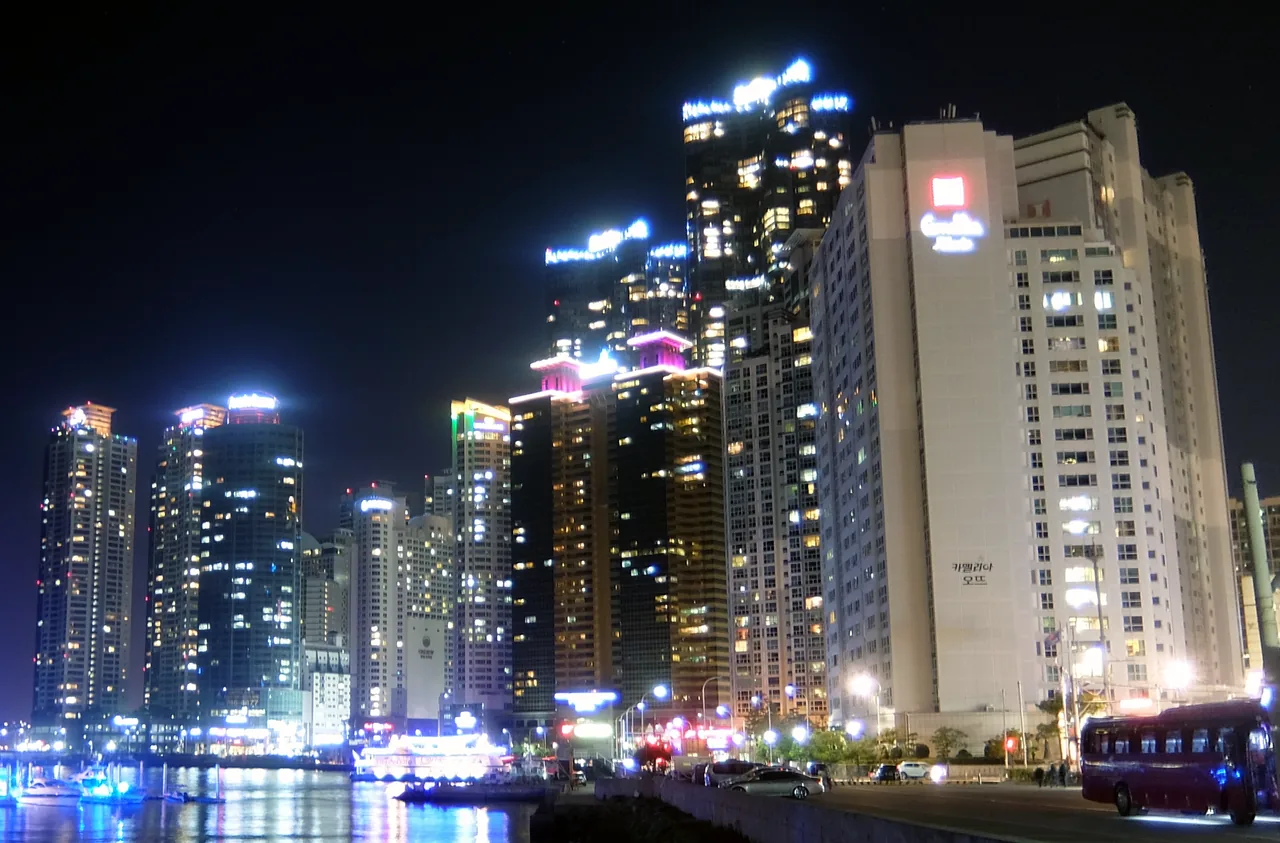
5. Gwangalli — best for night views & a younger vibe
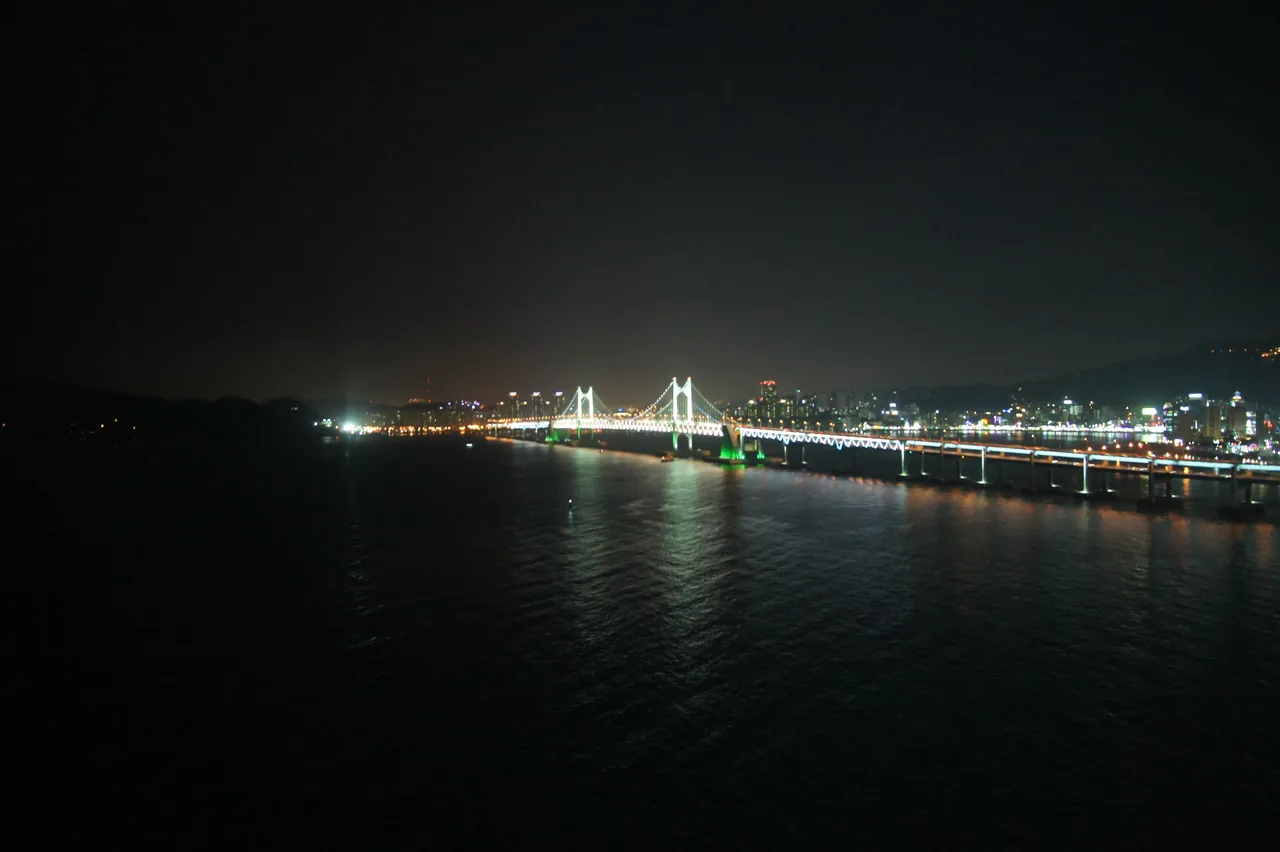
Gwangalli is Haeundae’s cooler, cheaper cousin: a beach that faces the illuminated Gwangan Bridge, backed by a dense strip of cafés and bars, with better value and the best night view in Busan, on Line 2. Map
| Where | Suyeong-gu, on the coast between the center and Haeundae |
|---|---|
| Best for | Younger travelers, couples, nightlife, night views, value |
| Subway | Gwangan (Line 2), a 10–15 minute walk to the sand; Geumnyeonsan nearby |
| Price | Mid-range, and cheaper than Haeundae |
| Watch out for | Fewer big-brand luxury hotels; lively and noisy at night; the beach is a short walk from the station |
The whole draw here is the water and the bridge. By day it’s a relaxed beach; after dark the Gwangan Bridge lights up over the bay, and on Saturday nights the free M Drone Light Show paints the sky above the water. The strip behind the sand is thick with seaside raw-fish (hoe) restaurants, pojangmacha tents and bars, and the lodging skews toward boutiques and guesthouses rather than towers, which keeps prices friendlier. See how it fits the rest of your plans in our Gwangalli Beach guide, and pack in Busan’s after-dark sights with our things to do in Busan.
Where exactly to book in Gwangalli
- Beachfront promenade (광안리 해변): the café-bar-restaurant strip facing the bridge, where a genuine bridge or sea-view room is the entire point. Confirm the view line before booking — on the back rows a “sea view” can be half-blocked by buildings.
- Inland around Gwangan Station (Line 2): a 5–15 minute walk to the sand, much cheaper, and still easy. The value play if the nightly view isn’t essential.
- Namcheon-dong (남천동): the quieter residential west end near the beach, around the Samik Beach and The W apartments — calmer nights, a slightly longer stroll to the busy strip.
- Millak-dong (민락동): raw-fish town, with the hoe centres and the waterside Millak Park — for seafood lovers who want it at the source.
By day the promenade is easygoing — coffee, a paddle, hoe lunches looking at the bridge. From evening it flips into one of the city’s best nights out: the bridge glows, Saturday’s drone show draws a crowd to the sand, and the pojangmacha and bars behind the beach fill up and run late. On your doorstep are Gwangan Bridge, the seaside raw-fish and street-food strip, and a dense, walkable café-bar scene. On Line 2 it’s about 10 minutes to Haeundae and ≈20 minutes to Seomyeon, using either Gwangan or Namcheon station.
The trade-offs are minor: fewer international luxury names than Haeundae, genuine late-night buzz if you want quiet, and a short walk from Gwangan station to the beach itself, so a sea-view room is worth targeting.
- Stay here if: you want the bridge night view, a younger and livelier scene, or beach access at a better price than Haeundae.
- Look elsewhere if: you need a five-star resort on the sand, or you’re a light sleeper who wants calm nights.
6. Nampo-dong & Jagalchi — best for markets, street food & old Busan
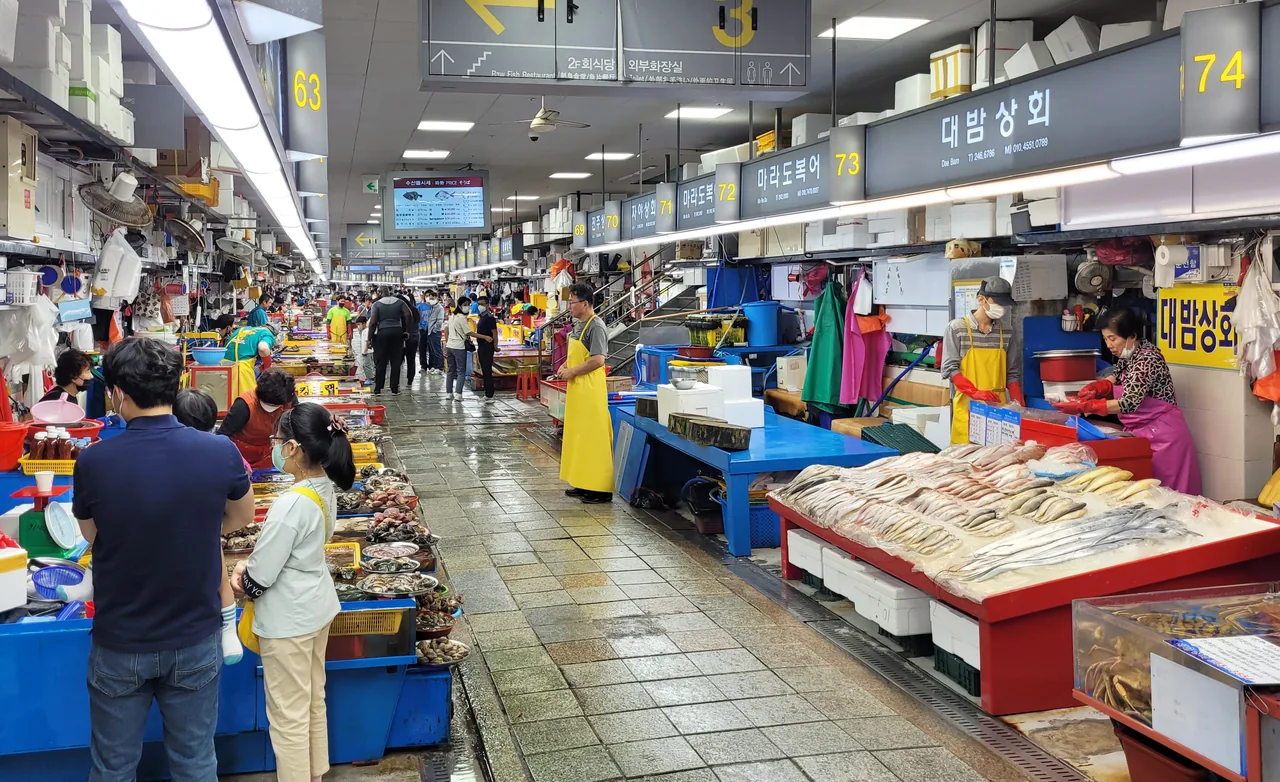
Nampo-dong is the heart of old Busan: Jagalchi Fish Market, Gukje Market, the BIFF Square street food and the Gwangbok-ro shopping streets, with Gamcheon Culture Village and Busan Tower close by, all on Line 1. Map
| Where | Jung-gu, the western downtown |
|---|---|
| Best for | Market and street-food lovers, culture, budget-to-mid, walkers, an “old Busan” feel |
| Subway | Nampo & Jagalchi (Line 1) |
| Price | Budget to mid-range, with some good boutiques |
| Watch out for | Older buildings and busy lanes; a metro ride from the beaches |
This is the most atmospheric part of the city to sleep in. Jagalchi is Korea’s largest fish market, Gukje Market is a warren of stalls and everyday goods, BIFF Square is street-food central, and Yongdusan Park with Busan Tower rises over it all — with the Songdo cable car and harbor ferries close at hand. Just up the hill sits Gamcheon Culture Village, the pastel hillside neighborhood, a short bus ride away (buses 1-1 or 2-2); we cover it in our Gamcheon Culture Village guide, and how the district ties into the rest of a trip in our Nampo-dong & Jagalchi guide. It’s walkable, endlessly snackable and great value.
Where exactly to book in Nampo-dong
- Gwangbok-ro & BIFF Square (광복로·BIFF광장): the walkable shopping-and-street-food core — central, lively and the best spot for a first taste of old Busan. Book here to be able to leave the bags and wander.
- Jagalchi (자갈치, Line 1): the fish-market waterfront, seafood at the source, with ferries and Jagalchi station on the doorstep. Atmospheric, a little pungent, wonderful for seafood lovers.
- Gukje & Kkangtong Markets (국제·깡통시장): sprawling market lanes and night food alleys, with budget guesthouses tucked nearby — the cheap, characterful choice.
- Yongdusan / Busan Tower side: the hilltop-park edge, a step up and away from the bustle for a slightly calmer base.
By day this is Busan at full tilt: fishmongers calling out at Jagalchi, shoppers threading Gukje, hotteok and gimbap sizzling around BIFF Square. In the evening the food alleys light up and the markets stay busy well after dark, though it winds down earlier and calmer than the beach nightlife. On your doorstep: Jagalchi Fish Market, Gukje Market, BIFF Square, Yongdusan Park and Busan Tower, Bosu-dong Book Alley, the Songdo cable car and the harbor ferries. On Line 1 it’s roughly 5 minutes (two stops) to Busan Station and ≈10 minutes to Seomyeon, with the eastern beaches a longer ride away.
The downside is simply that this is the west: buildings are older, the lanes are busy, and you’re a metro ride from the eastern beaches. For markets, food and old-Busan character, though, nowhere beats it.
- Stay here if: markets, street food and old-town atmosphere are your trip, and you like being able to walk everywhere.
- Look elsewhere if: you want to step out onto a beach, or you prefer a newer, quieter neighborhood.
7. Busan Station & Choryang — best for KTX trains, day trips & value
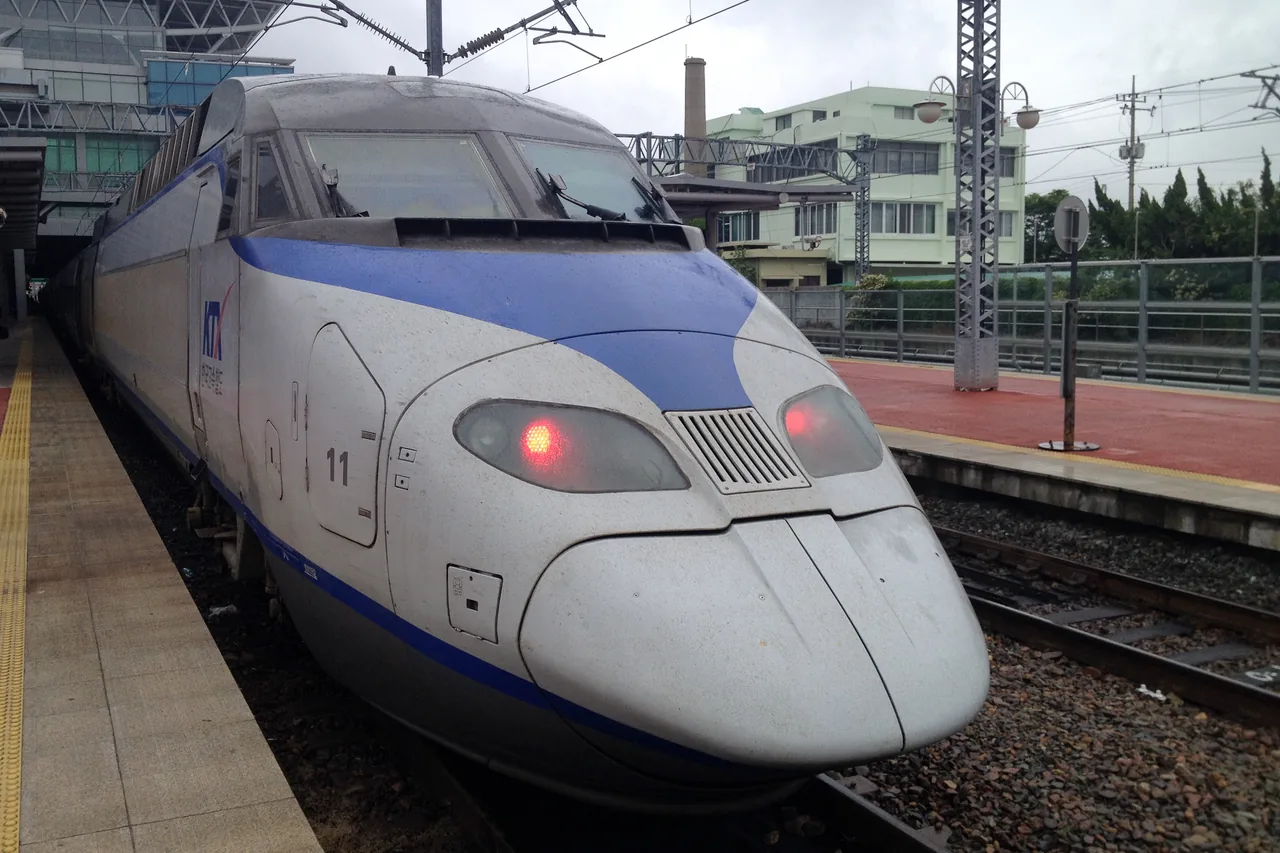
The Busan Station area is the KTX and SRT rail hub, and the best base if you arrive or leave by train, do day trips to places like Gyeongju or Tongyeong, or just want a cheap, transit-friendly bed, on Line 1. Map
| Where | Dong-gu, right beside the station and Chinatown |
|---|---|
| Best for | Train travelers, day-trippers, stopovers, budget and business stays |
| Subway | Busan Station (Line 1) |
| Price | Budget to mid-range, with strong value |
| Watch out for | Functional rather than scenic; the Texas Street / Chinatown pocket is rough at night |
This is the practical base. Business hotels and hostels cluster around the station forecourt, it’s two stops on Line 1 down to Nampo and the markets, and the high-speed line makes trips easy — Seoul to Busan is about 2h30 by KTX (details in our Seoul to Busan by KTX), and Gyeongju’s historic sites are a short hop away. Up the hillside behind the station, the Choryang Ibagu-gil offers steep lanes and harbor views. If you’re flying in instead, the run from Gimhae is laid out in our getting from Gimhae Airport into Busan.
Where exactly to book near Busan Station
- Right by the station (부산역 앞): business hotels and hostels with a walk-to-KTX door — the ideal choice for a first or last night, or a day-trip base. Functional, well-priced, connected.
- Chinatown & Texas Street (차이나타운·텍사스거리): next to the station, with Chinese, Russian and Central-Asian food that gives it real character by day — but this is a rough red-light pocket at night, so pick your block carefully.
- Choryang Ibagu-gil (초량 이바구길): the mountainside village lane one stop up, with the 168 Stairs, a monorail, murals, cafés and harbor views — the area’s charm, if you don’t mind the climb.
By day the forecourt bustles with travelers and the Chinatown lanes are worth a wander for their food; the Ibagu-gil above rewards a slow uphill walk with port views. After dark, though, the Texas Street blocks turn seedy and the district as a whole quietens into a working transport zone rather than a place to be out. On your doorstep: the KTX and SRT station, Chinatown, Choryang Ibagu-gil and Busan Port views. On Line 1 it’s about 5 minutes (two stops) to Nampo and ≈10 minutes to Seomyeon; the KTX puts Seoul about 2h30 away, and it’s a practical launchpad for Gyeongju by train — note that Tongyeong buses leave from Busan West / Sasang, not Busan Station.
Don’t expect scenery: this is a working transport district, not a pretty one, and the old Texas Street and Chinatown pocket by the station can feel seedy after dark. For value and rail access, though, it’s hard to beat.
- Stay here if: you’re tied to a train, doing day trips, passing through on a stopover, or want a cheap, well-connected bed.
- Look elsewhere if: you want beaches or atmosphere on your doorstep.
8. Songjeong — best for a quiet beach, surf & a slower pace
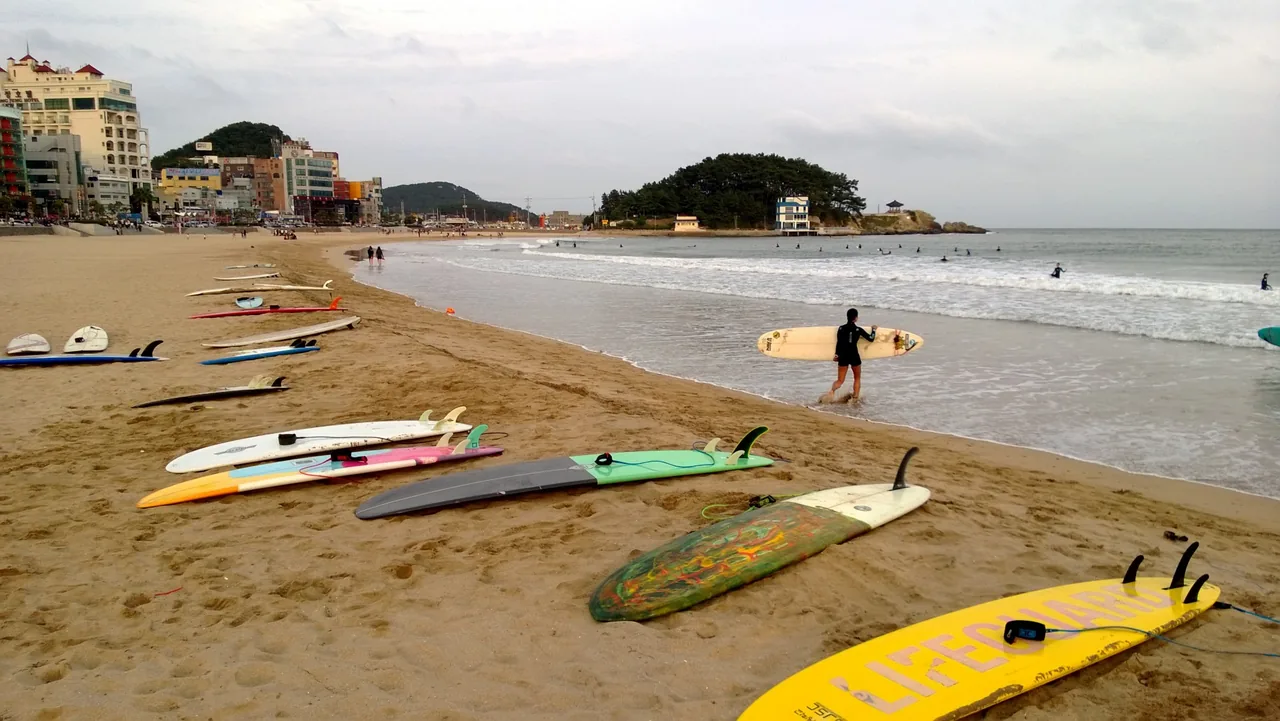
Songjeong is the laid-back beach just east of Haeundae — surf schools, seaside pensions, the Blue Line Park Sky Capsule terminus and the Haedong Yonggungsa temple nearby — for travelers who’d take sand and calm over nightlife. Map
| Where | Eastern Haeundae-gu, on the Donghae Line |
|---|---|
| Best for | Surfers, families, couples wanting quiet, longer and slower stays |
| Subway | Donghae Line (Osiria / Songjeong) plus the Blue Line Park train; buses from Haeundae |
| Price | Mid-range — pensions and guesthouses, with the Ananti Cove luxury resorts nearby |
| Watch out for | Farther out, with fewer restaurants and little nightlife; plan your transport |
Songjeong’s gentle, protected beach makes it Busan’s surf-and-pension town: board rentals, surf schools and low-key guesthouses set the tone. The Blue Line Park beach train ends here after its scenic coastal run from Mipo (see our Blue Line Park Sky Capsule guide), and the nearby Osiria zone packs in Lotte World Adventure Busan, the Skyline Luge and the Ananti Cove resorts. The dramatic seaside temple of Haedong Yonggungsa is a short trip away, and there’s plenty more to slot in with our things to do in Busan.
Where exactly to book around Songjeong
- Songjeong Beach front (송정 해변): surf shops, surf schools, beach cafés and pensions right on the sand — laid-back, with gentle waves good for beginners. The core choice for surfers and quiet-seekers.
- Cheongsapo (청사포): the little fishing village between Haeundae and Songjeong, home to the Daritdol Skywalk glass-floor observatory, a café row and a Blue Line Park stop — charming and scenic.
- Osiria zone (오시리아): the east-coast resort and theme cluster — Lotte World Adventure Busan, Skyline Luge, Lotte Premium Outlets and the luxury Ananti Cove, near Haedong Yonggungsa. The pick for families and a splurge.
- Gijang (기장): further out still, with markets and temples — quietest of all, best for a genuinely slow stay.
By day this coast is all sand and sky: surfers in the water off Songjeong, families riding the Blue Line Park Sky Capsule and beach train, the Osiria attractions humming. At night it goes quiet fast — a handful of beach cafés and pension terraces rather than a scene — which is precisely the appeal. On your doorstep: Songjeong Beach and its surf, the Blue Line Park Sky Capsule and beach train (Mipo–Cheongsapo–Songjeong), the Cheongsapo Daritdol Skywalk, Haedong Yonggungsa and the Osiria cluster. The Donghae Line and the Blue Line Park train reach it, along with buses (100 or 139) from Haeundae — but being the far east coast, budget 40-plus minutes to downtown.
The trade-off is that you’re on the outer edge of the city, so restaurants and nightlife thin out and you’ll want to plan how you get in and out — but that remove is exactly what makes it peaceful.
- Stay here if: you surf, you’re traveling with kids, or you want a quiet, slow beach base away from the crowds.
- Look elsewhere if: you want restaurants, nightlife and sights within easy walking distance.
9. Two more bases worth knowing: Centum City & Dongnae
Two secondary areas suit specific trips, even if they don’t headline most itineraries.
Centum City & BEXCO
A modern business-and-shopping district on Line 2, sitting midway between Seomyeon and Haeundae. It’s home to Shinsegae Centum City — recognized as the world’s largest department store — plus the BEXCO convention center and the Spa Land jjimjilbang. It’s a smart, orderly base for conventions, for shoppers, and for families who want to be near the aquarium and the beaches without paying full Haeundae rates.
Dongnae & Oncheonjang
Busan’s traditional hot-spring district, up on Line 1: local, residential and cheaper, centered on the big Heosimcheong spa. It’s the place to soak like a local, it’s quieter and more affordable than the coast, and Dongnae has its own history and food scene — the catch is simply that it sits a fair way from the beaches.
10. What kind of place: hotel, resort, guesthouse or pension
Beyond the area, the type of place you book shapes the price and the experience as much as the location does.
| Type | Best for | Where common | Rough nightly price |
|---|---|---|---|
| Hostel / guesthouse | Solo & budget travelers, meeting people | Nampo, Busan Station, Gwangalli | ₩20,000–50,000 |
| Business hotel (3–4★) | Most travelers, couples, families | Seomyeon, Busan Station, Centum | ₩60,000–130,000 |
| Beach resort / 5★ | A splurge, sea views, special trips | Haeundae, Marine City, Ananti / Songjeong | ₩200,000 and up |
| Pension / ondol room | Families & groups, floor sleeping | Songjeong, Gijang, the beaches | ₩80,000–200,000 |
| Serviced apartment / officetel | Longer stays, want a kitchen | Seomyeon, Centum, Haeundae | ₩80,000–160,000 |
A few things worth knowing. An ondol room means sleeping on padded mats on a heated floor rather than a Western bed — common in pensions and older places, and a fun experience for families and groups. Officetels often run on self-check-in codes with no front desk, so you get a kitchenette and space but no daily service; fine if you expect it. And Korea’s clean, no-frills budget “motels” near the stations are a perfectly good fallback if you just need a cheap bed for a night.
11. What you’ll actually pay, by area & season
As a rough guide: hostel beds run ₩20,000–50,000, a comfortable mid-range double ₩70,000–140,000, and five-star sea-view rooms start around ₩250,000 — but every number jumps in peak season.
Two things drive the price: the area and the calendar. By area, Haeundae sits at the top; Gwangalli, Nampo and Busan Station give the best value; Seomyeon lands in the middle. On top of that, the beaches spike hardest in the summer holidays, while the downtown areas (Seomyeon, Nampo, Busan Station) stay steadier year-round.
| Season | When | Demand & price |
|---|---|---|
| Summer beach peak | Jul–Aug (esp. domestic holidays) | Highest — beach areas book out |
| Cherry blossom | Late Mar–early Apr | High |
| Fireworks Festival weekend | 7 Nov 2026, Gwangalli | Very high near Gwangalli & Haeundae |
| BIFF & Sand Festival | BIFF 6–15 Oct 2026; Sand Festival 15–18 May 2026 (Haeundae) | High locally |
| Shoulder | May–Jun, Sep–Oct | Moderate, good weather |
| Winter | Dec–Feb | Lowest, quiet, cheapest |
If you can travel in the shoulder weeks — May–June or September–October — you’ll get good weather and moderate prices, and the beaches are far calmer than in the summer crush. To match your dates to the weather and the festivals, see our best time to visit Busan.
12. Getting to your base — from the airport & by train
Where you stay also decides your easiest arrival, so it’s worth thinking about the last leg before you book.
From Gimhae International Airport (PUS): the main route is the Busan–Gimhae Light Rail (BGL) to Sasang, then a transfer to Line 2 — cheapest, no traffic, about 15 minutes to Sasang, then Line 2 east to Seomyeon, Gwangalli or Haeundae. Airport bus 2029 runs to Seomyeon (the old limousine 201 has been discontinued). A taxi to Seomyeon or Busan Station runs roughly ₩25,000–35,000. We break down every option in our getting from Gimhae Airport into Busan.
By KTX or SRT: high-speed trains arrive at Busan Station (Line 1, in the western downtown), and Seoul to Busan takes about 2h30. If your base is Haeundae or Gwangalli, factor in the metro ride east from the station when you arrive — it’s easy but it isn’t instant. Full details are in our Seoul to Busan by KTX.
For inbound visitors: K-ETA is waived for most eligible passports through 31 December 2026, so many travelers won’t need to apply — check your nationality before you fly. Note that from 1 January 2026, every visitor without a valid K-ETA must submit a free e-Arrival Card online within three days of arrival, so fill it in before you land. Grab a T-money or Cashbee transit card on arrival to tap onto the metro and buses, and if you plan to pack in sights, the foreigner-only Visit Busan Pass (Visit Busan Pass) can bundle attractions and transport into one card.
13. Should you split your stay? (beach + downtown)
Many travelers are happiest splitting their nights: a couple downtown — Seomyeon or Nampo — for food, markets and transport, and a couple at the beach — Haeundae or Gwangalli — for the sea.
Because Busan spreads its highlights across east and west, a split base can cut a lot of back-and-forth. Some combinations that work well:
- First-timer, 3–4 nights: Seomyeon (2) + Haeundae or Gwangalli (2) — downtown convenience plus a beach finish.
- Beach-focused: all your nights in Gwangalli or Haeundae, day-tripping into the markets and old town.
- Foodie or culture trip: Nampo (2) + Seomyeon (1) — markets and street food, then the central hub.
- Train stopover: a single night by Busan Station tied to your KTX in or out.
14. Booking tips & common mistakes
The travelers who are happiest with their Busan base all did the same few things: they booked near a station, checked the real walking distance, and locked in peak-season rooms early with free cancellation.
- Book near the subway, not just “near the action”: a short walk to a Line 1 or Line 2 station beats a “central” address that’s a long hike from the line.
- Read the station-exit distance and the hills: listings love “near the beach” or “near the station,” but Busan is hilly — check the exit number and the climb.
- Match the line to your plans: Line 2 for the beaches (Gwangalli, Haeundae), Line 1 for the old town and markets. Base on the line you’ll use most.
- Book peak weeks early and refundable: for summer, the fireworks weekend (7 Nov 2026) and cherry blossom, reserve a free-cancellation room well ahead and keep watching prices.
- Check what “hotel” really means: an officetel may be self-check-in with no front desk, and a pension may mean an ondol floor rather than a bed — fine if you expect it.
- Confirm the practical detail: if you’re flying in, note the airport route to your area; if you’re driving, confirm parking and expect a squeeze around Haeundae and Gwangalli.
15. So, which area should you pick?
If you take one thing away: first-timers should base in Seomyeon, beach-and-resort seekers in Haeundae, night-view and value travelers in Gwangalli, market lovers in Nampo-dong, train travelers by Busan Station, and quiet-beach or surf types in Songjeong — and everyone should sleep near a Line 1 or Line 2 station.
Quick recap:
- Easiest first trip: Seomyeon — the interchange, one hop to everything.
- Beach, resorts & sea views: Haeundae.
- Night views & a younger vibe on a budget: Gwangalli.
- Markets & old Busan: Nampo-dong.
- KTX trains & day trips: Busan Station.
- Quiet beach & surf: Songjeong.
With a base chosen, build out the rest: see the full complete Busan travel guide for the city picture, sort your arrival with our getting from Gimhae Airport into Busan or Seoul to Busan by KTX, and line up the days with our things to do in Busan and best time to visit Busan.
🎡Things to Do49
🍜Food7
🏨Where to Stay2
🚇Getting Around8
🧭Travel Tips14
📌More3
🧭All-Korea essentials37
Where to stay in Busan — frequently asked questions
🏨 Next: plan the rest of your trip with our complete Busan travel guide →