
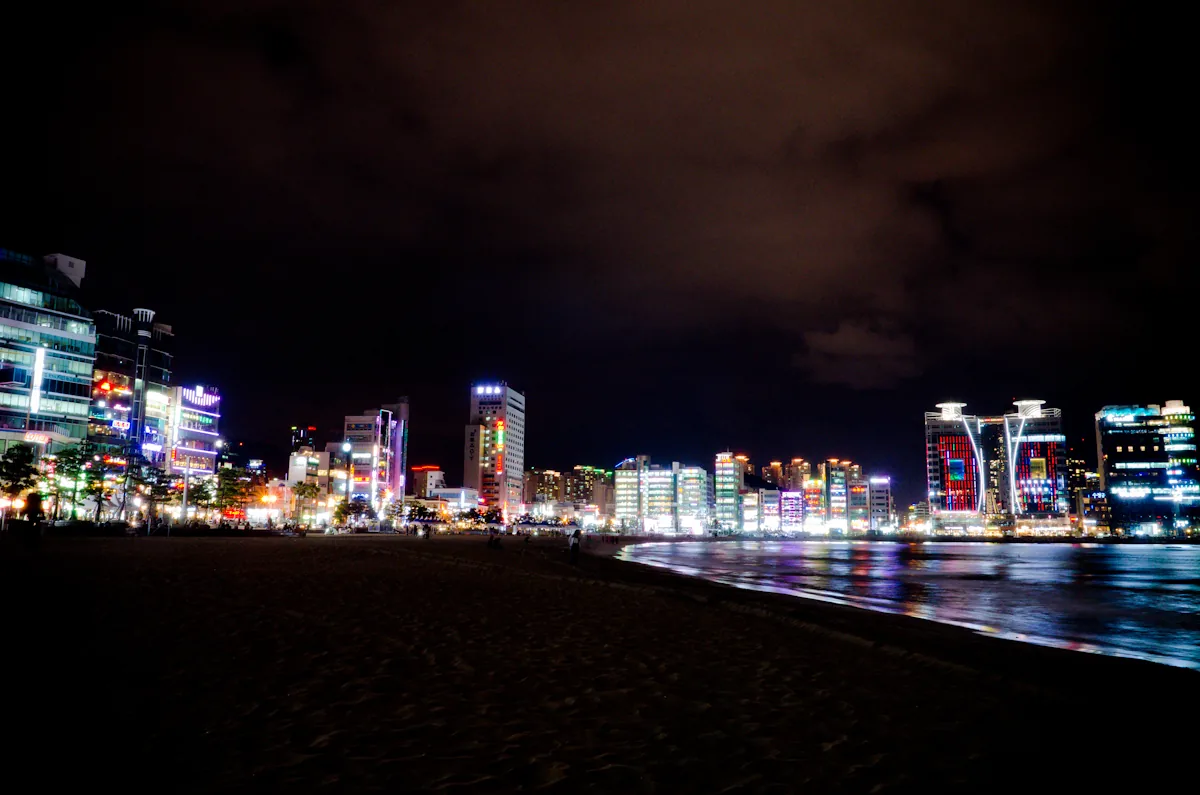
Busan Nightlife: Districts, Prices, Etiquette and Last Trains
Five nightlife districts, what a drink actually costs, and how to get back to your hotel after the metro stops.
| Five districts | Seomyeon (biggest), Gwangalli (beach), Haeundae and Marine City (upscale), Kyungsung and Pukyong (student), Nampo and Gwangbok (old town) |
|---|---|
| Legal drinking age | Counted by birth year, not birthday. In 2026, anyone born in 2007 or earlier |
| Soju in a bar | 4,000 to 6,000 won a bottle, occasionally 7,000 (January 2026) |
| Drinking on the sand | Legal on Gwangalli and Haeundae. Banned only at Millak Waterside Park (50,000 won fine) |
| Last metro | Roughly 23:15 to 00:30 depending on line and direction. Check the app the same night |
| Taxi flag-fall | 4,800 won for the first 2 km, plus a 20 to 30 percent late-night surcharge from 23:00 to 04:00 |
| Free show worth timing | Gwangalli M Drone Light Show, every Saturday, twice a night |
| One number to save | 1330, the tourism hotline, English 24 hours |
1. What a Busan night is actually like
2. The five districts at a glance
3. Seomyeon: the biggest and busiest
4. Gwangalli: the bridge, the sand, the beer
5. Haeundae and Marine City: the expensive view
6. Kyungsung and Pukyong: where the students drink
7. Nampo and Gwangbok: the old downtown
8. Pocha, hof, sooljip: what the signs mean
9. What you will actually be drinking
10. Prices: convenience store versus bar
11. Drinking etiquette that actually matters
12. Clubs: timing, and what we can and cannot verify
13. The seasonal calendar and outdoor nights
14. Getting back to your hotel
15. Staying safe
Busan drinks by the water and it drinks cheaply. That combination is the whole story, and it is why a night here does not feel like a night in Seoul even though the menus overlap almost completely.
1. What a Busan night is actually like
Busan has no single nightlife centre. It has five, strung along a coastline and a subway map, and they are far enough apart that you pick one and stay in it. Trying to do two in an evening means a taxi ride you did not budget for.
The other structural fact: the sea is a venue. Bars here compete on which window faces the water, and in summer a large share of the drinking happens outdoors, legally, on sand.
Busan versus Seoul, honestly
| Aspect | Busan | Seoul |
|---|---|---|
| Layout | Five separate districts spread across a long coast | Dense clusters within one metro core |
| Drink prices | Lower outside Marine City and hotel bars | Higher across the board |
| The view | Bridge lights, open water, a working port | River and skyline |
| Getting home | Metro stops earlier than the bars do; taxis and night buses matter more | Denser late-night transport |
| Outdoor drinking | Beaches are part of the night, seasonally | Parks and riverside |
The rhythm of the evening
Koreans move in rounds. The first round is dinner with alcohol, the second is a bar, the third is whatever is still open. Nobody announces this; it simply happens, and if you are invited along, going to the second round is the polite default.
Most bars fill between 20:00 and 22:00. Clubs do not get going until well after midnight. If you arrive at a Seomyeon club at 23:00 you will be drinking alone under good lighting.
Drinking age, correctly stated. Korea counts this by birth year, not by your birthday and not by any traditional age reckoning. In 2026 you may buy and drink alcohol if you were born in 2007 or earlier. Born 2008 or later, you cannot, even if you have already had your nineteenth birthday. Carry your passport; staff at busy venues do check.
One more thing worth knowing before you go out: prices did not jump this year. The most recent increase was in 2025 and applied to brewery shipment prices for beer only, roughly 2.9 percent at OB and 2.7 percent at Hite Jinro. Soju was excluded. The industry trend going into 2026 has been slightly lower alcohol content, around half a degree, with prices held.
2. The five districts at a glance
Pick by what you want the night to feel like, not by what is closest to your hotel. The metro connects all five and the ride is rarely more than 30 minutes.
| District | Character | Price level | Metro | Strongest at night |
|---|---|---|---|---|
| Seomyeon | The largest concentration, the widest range | Mid | Seomyeon, Lines 1 and 2 | Clubs, second rounds, late-night food |
| Gwangalli | Beach with the bridge in view | Mid | Gwangan, Line 2 | Beachfront bars, craft beer, Saturday drone show |
| Haeundae and Marine City | Upscale, view-driven | High | Haeundae, Line 2 | Hotel lounges, rooftops |
| Kyungsung and Pukyong | Student quarter | Low | Kyungsung Univ. and Pukyong Univ., Line 2 | Live music, cheap drinks |
| Nampo and Gwangbok | Old downtown | Low to mid | Nampo, Line 1 | Pocha, markets, night market |
Which one, for which night
| If you want | Go to | Why |
|---|---|---|
| Options, and to decide later | Seomyeon | Everything is within a few blocks, so a bad first choice costs you nothing |
| A drink with a view and no cover charge | Gwangalli | The bridge does the work; you can also just sit on the sand |
| A quiet, well-made cocktail | Marine City | Hotel bars and rooftops, priced accordingly |
| To spend very little | Kyungsung and Pukyong | Student pricing, live bands most weekends |
| Street food alongside the drinking | Nampo and Gwangbok | Market stalls and the night market run in parallel |
A practical note on distance: Gwangalli and Haeundae look adjacent on a map and are two metro stops apart, so combining them in one evening is realistic. Seomyeon to Haeundae is not, unless you are happy paying for the taxi.
3. Seomyeon: the biggest and busiest
Seomyeon is where Busan goes out when it has not decided what it wants. It sits on the interchange of Metro Lines 1 and 2, which is exactly why it grew this way — everyone can get there, so everyone does.
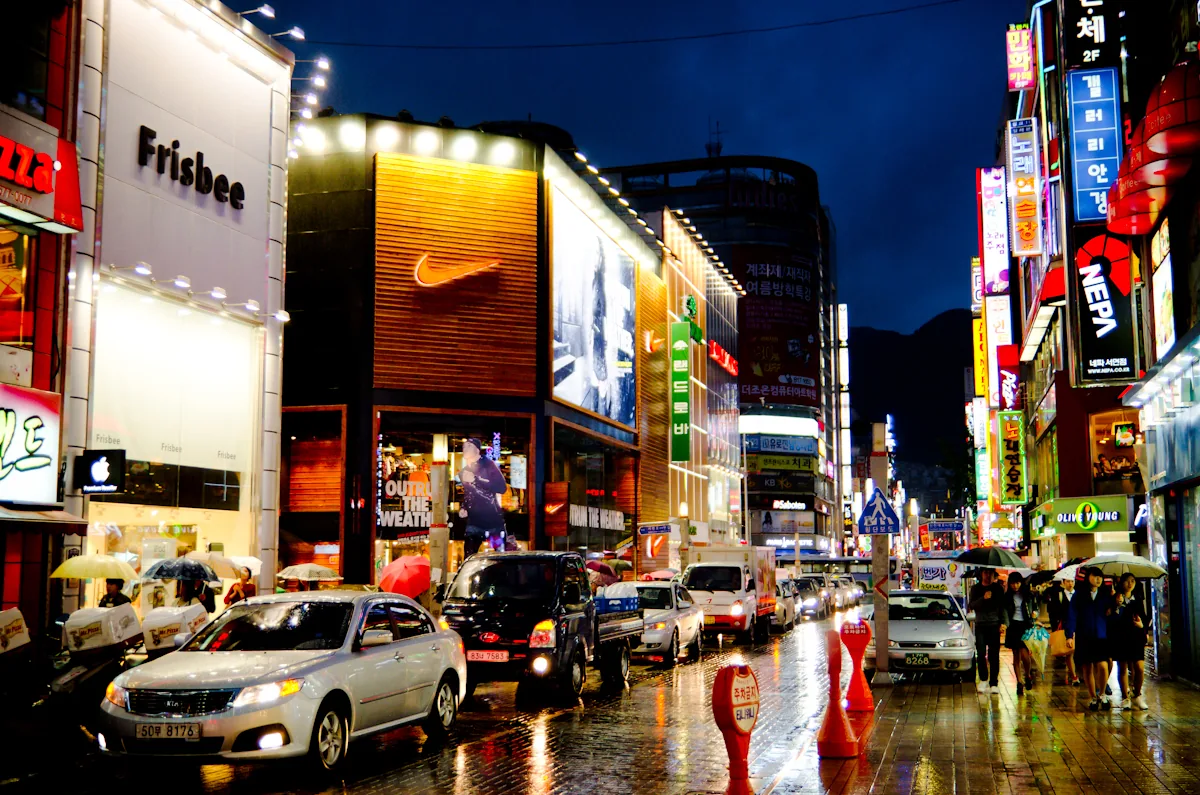
The core is Seomyeon 1beongaMap, a drinking street formally designated by Busanjin District. Within it the density is genuinely unusual: chain pocha, hof bars, izakaya, cocktail bars and clubs stacked over several floors of the same building, with late-night restaurants filling the gaps.
How to work the area
- Street level is chains and franchises. The more interesting rooms are on the second, third and basement floors — read the vertical signboards.
- Exit numbers matter more than street names here. Agree on an exit number when you meet people; the underground shopping arcade is large and disorienting.
- Late-night food is the district’s real advantage. When Gwangalli has closed, Seomyeon is still serving.
Touts: a Seomyeon-specific problem. Street touts, called ppiki, who steer you toward a bar you did not choose are a documented issue in Seomyeon and the wider Busanjin District. This is not a Busan-wide pattern — the court cases and reporting all point to this one area. Solicitation on the street is itself an offence under Article 3(1)(8) of the Minor Offences Act. If someone approaches you and offers to lead you somewhere, decline and keep walking. The specific scam and the sentences handed down are in the safety section below.
What to eat here
Seomyeon is one of the best places in the city for dwaeji gukbap, the pork and rice soup that functions as Busan’s hangover food and late-night meal at once. Several shops run 24 hours, which is the point.
For everything the district does in daylight, see our full Seomyeon area walkthrough.
Staying in Seomyeon means you can walk home, which changes the maths on a late night. Some links below are affiliate links; booking through them costs you nothing extra.
4. Gwangalli: the bridge, the sand, the beer
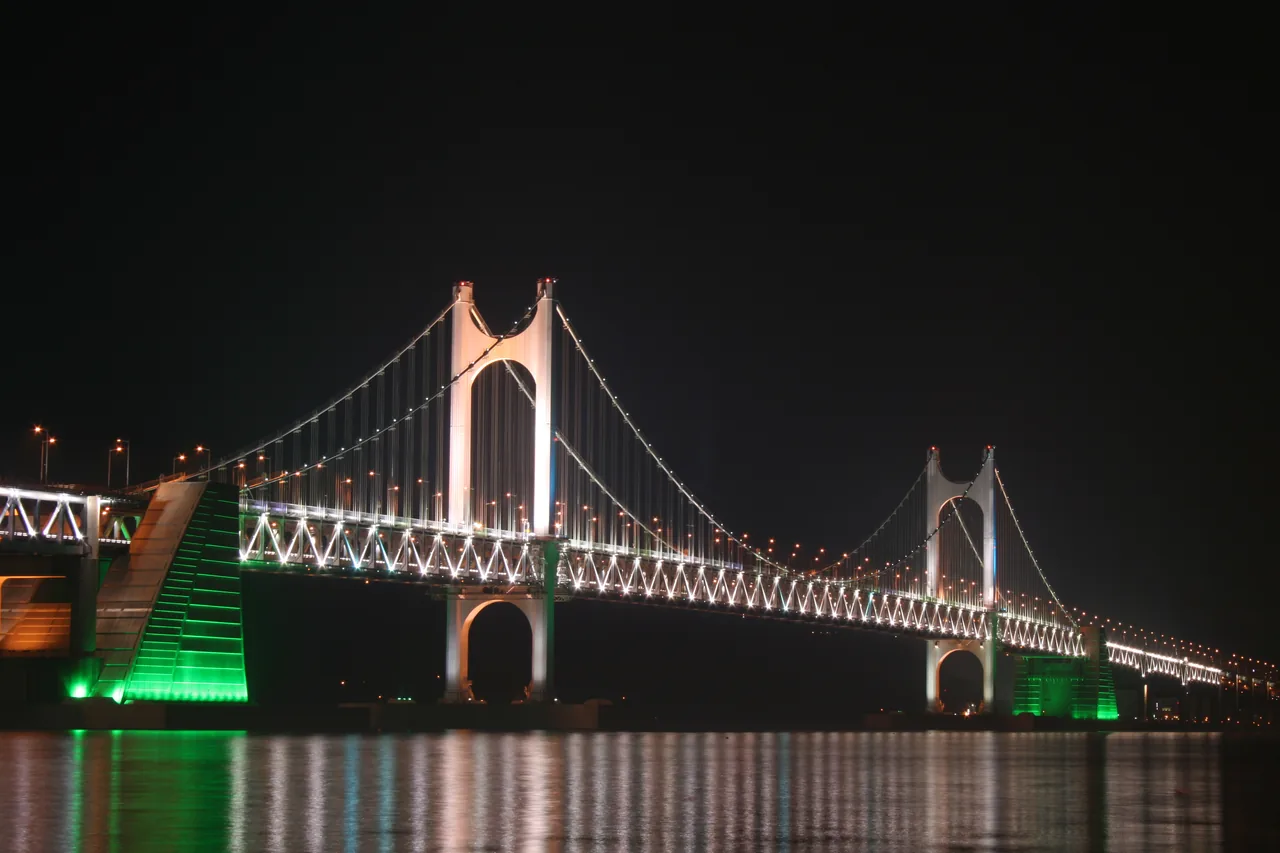
Gwangalli is the answer for most visitors most nights. You get a lit suspension bridge, a beach you are allowed to drink on, and a strip of bars that all face the same view.
Drinking on the beach: the rule people get wrong
Drinking alcohol on Gwangalli beach is legal. So is drinking on Haeundae’s sand. There is exactly one no-drinking zone on this stretch of coast: Millak Waterside ParkMap, designated in July 2023, where the fine is 50,000 won.
Here is why this gets reported wrongly so often. Millak Waterside Park is about a five-minute walk from Gwangalli beach, at the northeastern end. One place got a ban, the place next door did not, and travel articles collapsed the two into “drinking is banned on Busan beaches.” It is not. Just know which patch of ground you are on.
| Location | Drinking | Note |
|---|---|---|
| Gwangalli beach sand | Permitted | Convenience stores line the road behind the beach |
| Haeundae beach sand | Permitted | Same, with more of them |
| Millak Waterside Park | Prohibited | Since 1 July 2023, 50,000 won fine |
| Going in the water at night | Prohibited during the season | Swimming hours are 09:00 to 18:00, 50,000 won fine outside them |
Smoking on the beach is a separate matter and the reported fine amounts conflict across sources. Treat it as up to 100,000 won under the relevant municipal ordinance and use the designated areas.
Craft beer, verified
Gorilla Brewing GwanganMap sits at 125 Gwangnam-ro, second floor, with more than 20 taps. It is the anchor of the area’s craft scene and the most reliable place to land if you want something other than a mass-market lager.
A tempting shortcut that does not exist: Galmegi BrewingMap has no Gwangalli location. Its official taproom list covers Haeundae and Nampo only. If a blog sends you to a Gwangalli branch, it is out of date.
Seeing the bridge from the water
The view improves considerably from underneath. Evening yacht trips run from Gwangalli and pass beneath Gwangan Bridge; we cover schedules, operators and what the trip is actually like in our Gwangan Bridge yacht tour breakdown.
More on the beach itself in the Gwangalli beach guide, and if you are still choosing between the two big beaches, we compare them directly in Haeundae or Gwangalli.
5. Haeundae and Marine City: the expensive view
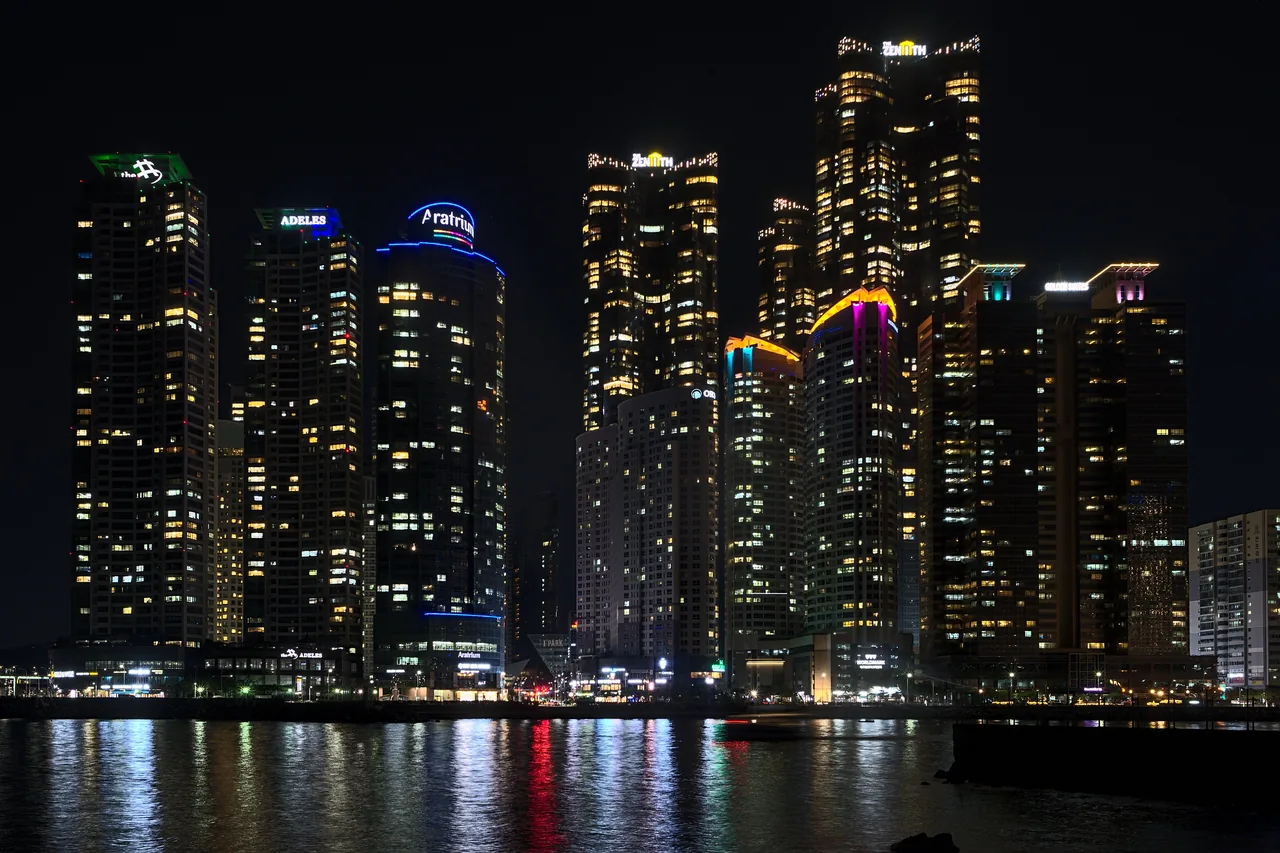
This is where Busan spends money. Marine City is a cluster of towers on reclaimed land, and the bars are positioned to sell you the skyline you are standing inside.
Confirmed venues
| Venue | Type | Address and detail |
|---|---|---|
| Roof 101 | Rooftop | Inside The Bay 101Map, 52 Dongbaek-ro. Faces the Marine City skyline |
| Galmegi Brewing Haeundae | Craft taproom | 9 Haeundae Haebyeon-ro 265beon-gil. Open until 03:00 Friday and Saturday |
| Panorama Lounge | Hotel lounge | Westin Josun BusanMap |
| O’Kim’s | Hotel pub | Westin Josun Busan |
What it costs
Straight answer: nobody publishes it. All four of the major hotel bars in this area keep their drink prices off their public pages, so any figure you find online is someone’s guess. Budget generously and expect a service-included bill.
Cocktails in ordinary Busan bars run roughly 15,000 to 25,000 won, with signature drinks going past 30,000. Hotel rooftops sit above that range. If a fixed price matters to you, the craft taprooms are the predictable option.
A cheaper version of the same view
The observation deck at Busan X the Sky puts you higher than any bar here for a fixed ticket price, and it has a cafe. Do that first, then drink somewhere with a door you can walk out of.
The Friday and Saturday 03:00 closing at Galmegi Haeundae is the useful fact in this section. Most of Haeundae winds down considerably earlier than Seomyeon does, and after the beachfront restaurants close, options thin out fast.
Related reading: the Haeundae beach guide, and the best hotels in Busan if you want to be able to stagger home.
6. Kyungsung and Pukyong: where the students drink
Two universities, one shared drinking quarter, and prices set by people on student budgets. If Marine City is the ceiling, this is the floor, and it is the most consistently fun floor in the city.
The area’s real specialty is live music. Small basement rooms with actual bands, several nights a week, at a cover charge that would not buy you one cocktail in Haeundae.
Confirmed venues
| Venue | Type | Detail | Confidence |
|---|---|---|---|
| Ovangarde | Live music | 15-1 Yongso-ro 7beon-gil, basement. Wednesday to Sunday, over 100 shows a year, July 2026 schedule already posted | Strongest confirmation in the area |
| Vinyl Underground | Live music | Indie bands | Secondary sources; check before travelling |
| SekaiMap | Izakaya | 36 Suyeong-ro 334beon-gil, reported 18:00 to 04:00 daily | Secondary sources |
| Eoreunui JipMap | Bar | 27 Yongso-ro 13beon-gil, second floor, around 80 seats, reported 18:00 to 04:00 year-round | Secondary sources |
Ovangarde is the one to build a night around. A venue posting its schedule a month out is a venue that is definitely open, which is not something you can assume about small live rooms anywhere.
If you have read that Interplay is in this district, it is not. Interplay is near Pusan National University in Jangjeon-dong, Geumjeong-gu, a different part of the city entirely and a different metro line. Two separate university areas, frequently mixed up.
Practical notes
- Opening hours in student areas track the academic calendar. Expect a quieter quarter during exam weeks and the deepest part of winter and summer break.
- The 04:00 closing times listed above are what the venues advertise, not a guarantee on a slow Tuesday.
- Menus here are often Korean-only with no photos. A translation app pointed at the wall is normal behaviour and nobody minds.
- This district is a long way from the beaches. Plan your ride home from here specifically, rather than assuming you can walk to a beachfront hotel.
7. Nampo and Gwangbok: the old downtown
Nampo is Busan’s original centre and it still drinks like one. Less polish than Seomyeon, more street, and the food is inseparable from the drinking.
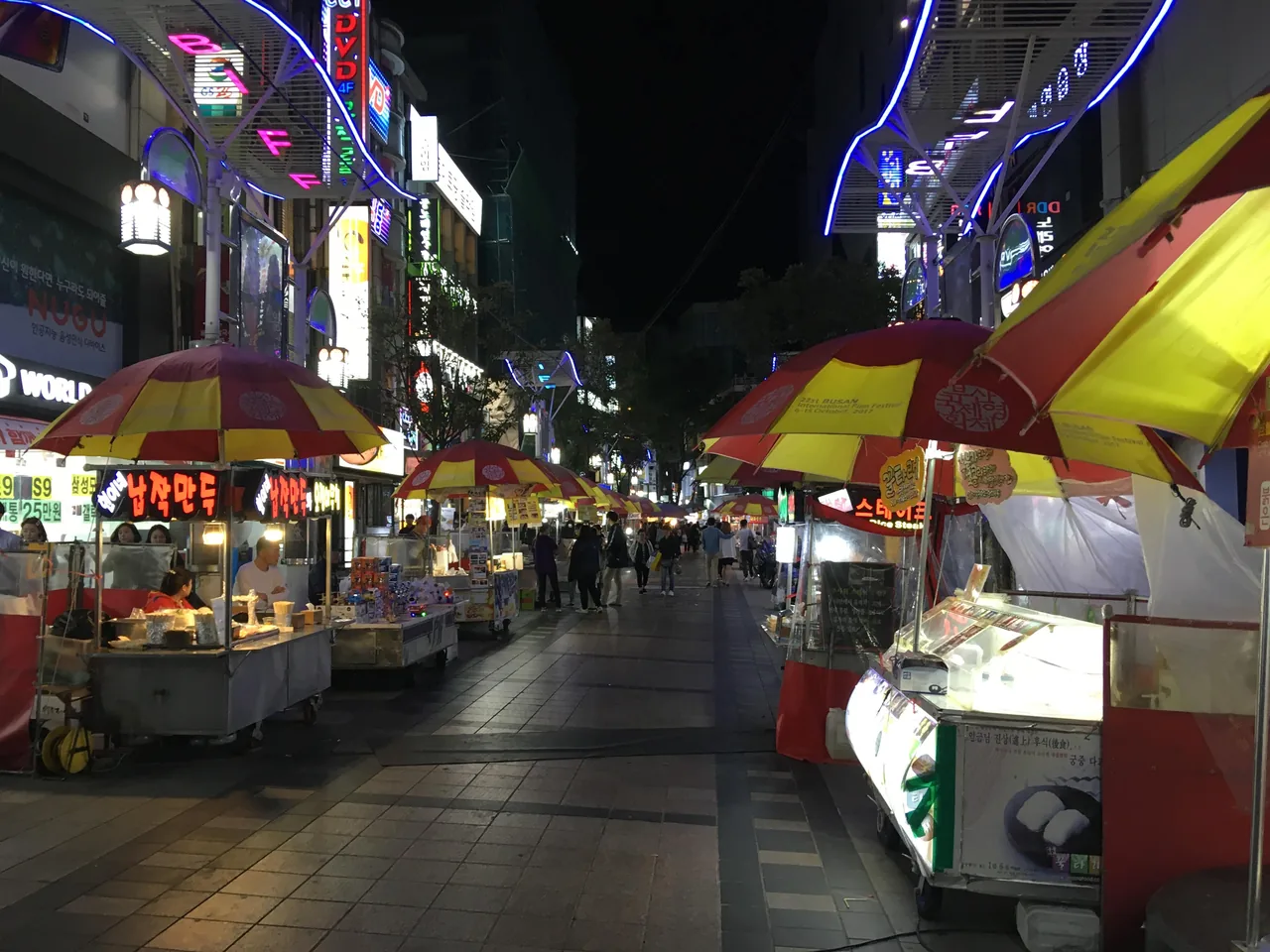
The evening as a sequence
| Time | Where | What |
|---|---|---|
| From around 19:30 | Bupyeong Kkangtong Night MarketMap | Cooked-to-order stalls, reported to run until around midnight |
| Evening | BIFF SquareMap | Street food stalls under the arcade, the classic pre-drinking stop |
| Late | Gwangbok-ro | Bars and pocha along and behind the pedestrian street |
Confirmed venues
| Venue | Type | Detail |
|---|---|---|
| Galmegi Brewing Nampo | Craft taproom | 21-3 Gwangbok-ro. Open until 03:00 Friday and Saturday |
| Macau Bar | Bar | 91-12 Gwangbok-ro, reported to close 01:30 Friday and Saturday |
Galmegi Nampo running to 03:00 on weekends is what makes this district viable as a full night rather than a dinner stop. On weekdays, assume the area empties out substantially earlier.
Eat first, seriously
The stall food here is the reason to come at this hour, and eating before and during drinking is standard practice in Korea rather than an afterthought. Our Busan street food guide covers what is worth queuing for, and the Nampo-dong walkthrough maps the wider area.
There is no permanent night market in Haeundae, despite what several travel sites claim. Bupyeong Kkangtong in Nampo is the one that actually exists and runs regularly.
Getting back from Nampo is Line 1 territory, which is a different last-train picture from the Line 2 beach districts. Check the section on getting home before you settle in.
8. Pocha, hof, sooljip: what the signs mean
Korean drinking venues are categorised by a handful of words that appear on signs everywhere. Knowing them tells you the price bracket and the food before you open the door.
| Term | What it actually is |
|---|---|
| Pojangmacha | A mobile street stall under a tent. Street food, outdoors, seating on stools |
| Pocha | The fixed-premises descendant of the pojangmacha, established as a format from the 2010s onward. Indoors, same menu language |
| Hof | Draught beer led. The menu is nearly indistinguishable from a pocha; the interior is what separates them |
| Sooljip | The general catch-all term for a place that sells alcohol |
| Club | EDM and hip-hop, operating mainly in the small hours |
How to choose between them
| You want | Look for |
|---|---|
| Outdoors, cheap, atmospheric | Pojangmacha, a tent |
| The same food with heating and a toilet | Pocha |
| Cold draught and something fried | Hof |
| Cocktails or spirits | Bar, usually signed in English |
Two things that trip visitors up
Chain pocha are not street stalls. The chains have branded interiors and priced menus — Hanshin Pocha’s food runs roughly 13,000 to 24,000 won a dish — while an actual tent on the pavement is a different transaction entirely. Both use the word pocha.
The other one: almost every venue expects you to order food with the alcohol. This is anju, and it is not upselling. Ordering four bottles of soju and nothing to eat reads as strange, and in some places it will not be accepted.
9. What you will actually be drinking
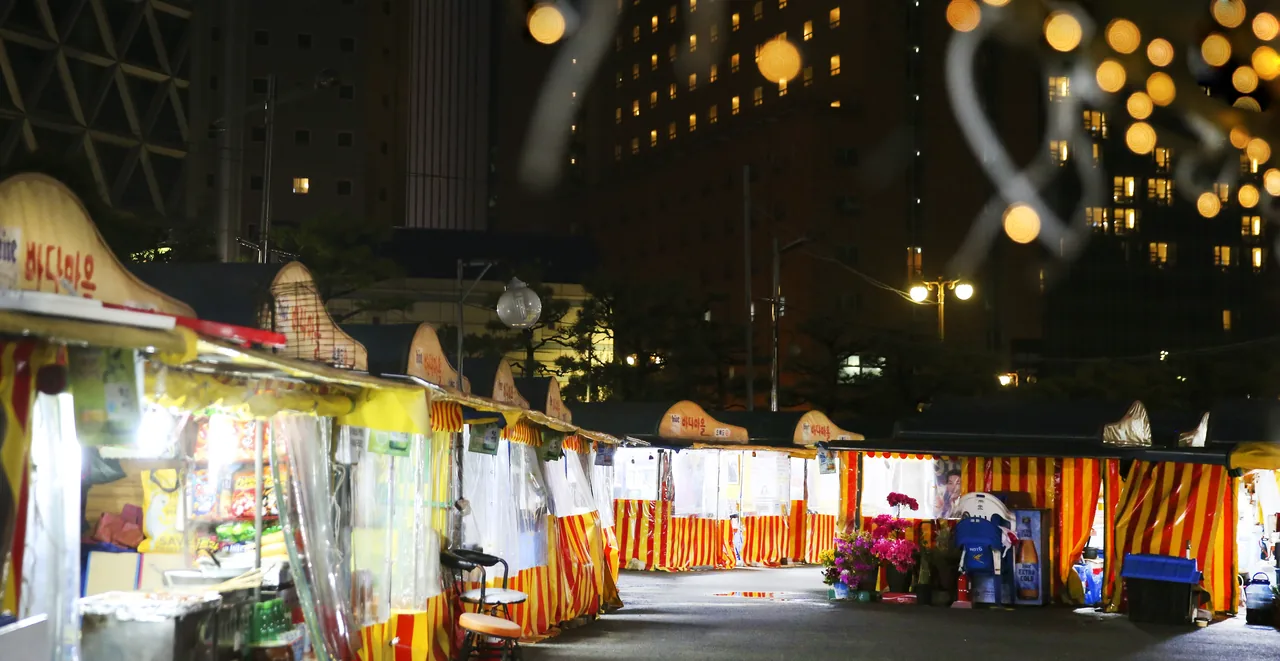
Soju, beer and makgeolli cover most of it. The distinctions below matter mainly because the strengths differ by a factor of six, and the bottles look similar.
| Drink | Strength | Base |
|---|---|---|
| Diluted soju | Around 16 percent on measured products, and the industry has been trending downward | Neutral spirit, diluted |
| Distilled soju | Roughly 25 to 40 percent | Rice or starch with nuruk, distilled |
| Makgeolli | Roughly 5 to 7 percent | Grain and nuruk, unfiltered and watered |
| Cheongju | Roughly 13 to 18 percent | The clear liquid filtered off makgeolli |
| Bokbunjaju | Reported at 16, 16.8 and 18 percent depending on producer | Korean black raspberry |
| Somaek | Depends on the mix, commonly 2:8 or 3:7 soju to beer | Blended at the table |
The gap between diluted and distilled soju is the one to internalise. They are sold under the same word. A green bottle at 16 percent and a ceramic bottle at 35 percent will be poured into the same small glass, and the second one will end your evening considerably sooner.
Specific brand strengths change without much announcement, and current 2026 figures for the major labels are not reliably documented. Read the number on the bottle rather than trusting a figure you read online, including ours.
Somaek, briefly
Soju mixed into beer. Someone at the table will make it and hand it to you. The point is not the flavour, it is that a full glass gets drunk together, so the round moves. Accept the first one; nobody is counting after that.
Anju is part of the drink
Food ordered alongside alcohol is treated as a component of the drinking rather than a side order, and it is generally understood to slow absorption. Fried chicken, seafood, stews, egg rolls. In Busan the seafood versions are the ones worth ordering, given where the ingredients came in from that morning.
10. Prices: convenience store versus bar
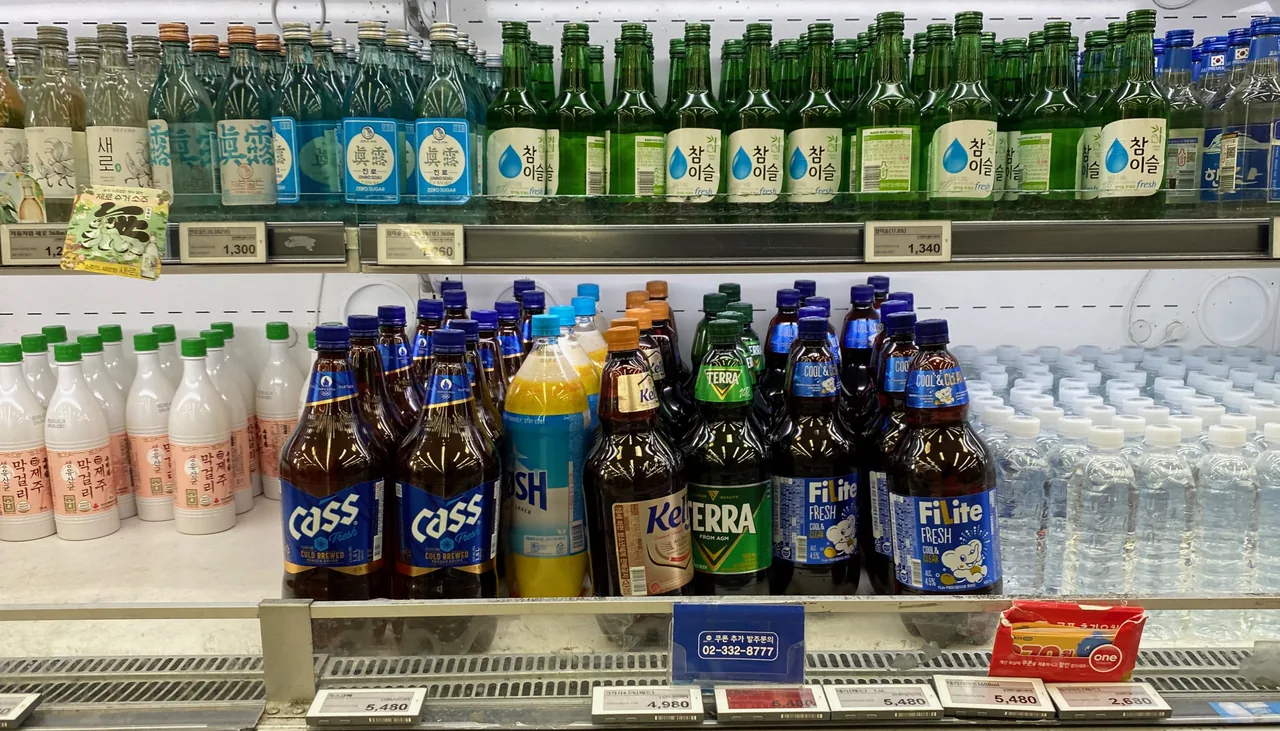
The single most useful number: a bottle of soju costs about 1,900 won in a convenience store and 4,000 to 6,000 won in a bar. That gap is why Korean nights so often start on a beach or a park bench.
| Item | Convenience store or supermarket | Bar or restaurant |
|---|---|---|
| Soju | About 1,900 won for 360 ml at a convenience store; roughly 1,320 to 1,446 won at a supermarket | 4,000 to 6,000 won, occasionally 7,000 (January 2026) |
| Beer | About 2,800 won for a 500 ml can | Varies widely; we have no reliable figure, so ask |
| Makgeolli | Roughly 1,850 to 2,200 won for 750 ml | No reliable figure; ask |
| Craft beer | — | Roughly 6,500 to 7,000 won, but that benchmark is Seoul-based and the serving size is unclear. Treat as indicative only |
| Cocktail | — | Roughly 15,000 to 25,000 won; signature drinks 30,000 and up |
| Hotel rooftop cocktail | — | Not published by any of the major hotels here |
| Chain pocha dish | — | Around 13,000 to 24,000 won at Hanshin Pocha |
Where we have written “ask,” that is deliberate. Beer and makgeolli bar prices vary too much between a student hof and a Marine City lounge for a single number to be honest, and we would rather leave a blank than invent one.
Sample budgets for one person, one night
| Kind of night | Rough spend | What that buys |
|---|---|---|
| Beach, self-catered | Under 15,000 won | Convenience store drinks and snacks on the sand at Gwangalli |
| Student district | 20,000 to 35,000 won | Soju and anju for two rounds, plus a live music cover |
| Standard pocha night | 35,000 to 55,000 won | Shared dishes and several bottles across two venues |
| Craft beer evening | 40,000 to 60,000 won | Three or four pours plus food |
| Cocktails with a view | 60,000 won and up | Two drinks in a hotel bar, before any taxi home |
These are our estimates from the price data above, not surveyed averages. For a full picture of what a trip here costs, see our Busan travel budget breakdown.
On the rumour of a 2026 price hike: there was not one. The last increase was 2025, on beer shipment prices only, and soju was left out.
11. Drinking etiquette that actually matters
Korean drinking custom is mostly about hierarchy at the table. If everyone present is roughly your age and you all arrived together, very little of it applies. If there is a visibly older person or a host, all of it does.
| Situation | The convention |
|---|---|
| Receiving a pour | Hold the glass with both hands |
| Pouring for someone | Both hands, cover the label, fill to about 70 percent |
| Drinking in front of a senior | Turn your head to the right and shield the glass with your hand |
| Topping up | Pour only into an empty glass. Topping up a partly full one echoes ancestral rites and is avoided |
| Order of service | The eldest person or the host is served first |
| Toasting | Hold your glass lower than the senior person’s |
| Seating | The seat of honour is the one furthest from the door |
The self-pouring question
You will read confident claims that you must never pour your own drink in Korea. Sources genuinely disagree on this: some describe self-pouring as ordinary among peers, with mutual pouring reserved for tables that include elders, others state a flat prohibition.
What everyone agrees on, and therefore all we will tell you: when a senior is at the table, do not pour your own glass. Fill someone else’s and yours will get filled. Among friends of the same age, watch what the table does and match it.
Refusing a drink is fine. Accept the glass with both hands, take a sip, and set it down. The gesture of accepting is what registers; the volume is not audited.
Things that are simply not done
- Sticking chopsticks upright in rice. Funerary imagery, and it will land badly.
- Pouring for yourself first while an older person’s glass sits empty.
- Filling a glass to the brim.
- Loud, visible drunkenness in a hotel lobby or on the metro, which is tolerated less than the stereotype suggests.
More on general behaviour, tipping and public conduct in our Korea travel etiquette guide.
12. Clubs: timing, and what we can and cannot verify
Busan’s club scene is concentrated in Seomyeon and it runs late. Weekend hours reported at the larger venues stretch from around 20:30 to 06:00, with the room only really filling after 01:00.
Named venues, with a caveat
Two Seomyeon clubs come up consistently in reporting: J&J, also called Jeje, which is hip-hop led, and Output. Both warrant a check before you go — much of the available information dates to around 2022, and closure rates in the sector have risen sharply since. Search the venue name on Instagram before you commit to a taxi.
| Question | Answer |
|---|---|
| Where are the clubs? | Overwhelmingly Seomyeon |
| When should I arrive? | After 01:00 for a full room; before then you are early |
| What is the cover charge? | We could not verify current pricing for any Busan club. A pattern of men paying and women entering free is widely reported |
| Dress code? | Not consistently documented. Smart casual is the safe read |
| Getting home? | The metro will be closed. Budget for a surcharged taxi |
A specific trap. Search results for “Club D Oasis” in Busan point to a facility at Haeundae LCT — that is a waterpark and jjimjilbang complex, not a nightclub. Its combined ticket, in the region of 71,000 won, is a waterpark admission. Do not budget it as a club entry fee.
We are not naming venues in the LGBTQ+ scene here, because we could not confirm that any of them are still trading in 2026; the available material dates to around 2015 and publishing a dead address helps nobody.
Practical club advice
- Bring your passport. Photocopies are commonly refused at the door.
- Cloakrooms exist at the larger venues but fill up. Travel light.
- If you leave and want to come back, ask about re-entry before you walk out.
- Have a way home settled before you go in. This is the section where people get caught out.
13. The seasonal calendar and outdoor nights
Busan puts several of its best night events outdoors and charges nothing for most of them. If your dates are flexible, plan around this table rather than around bars.
| Event | When | Detail |
|---|---|---|
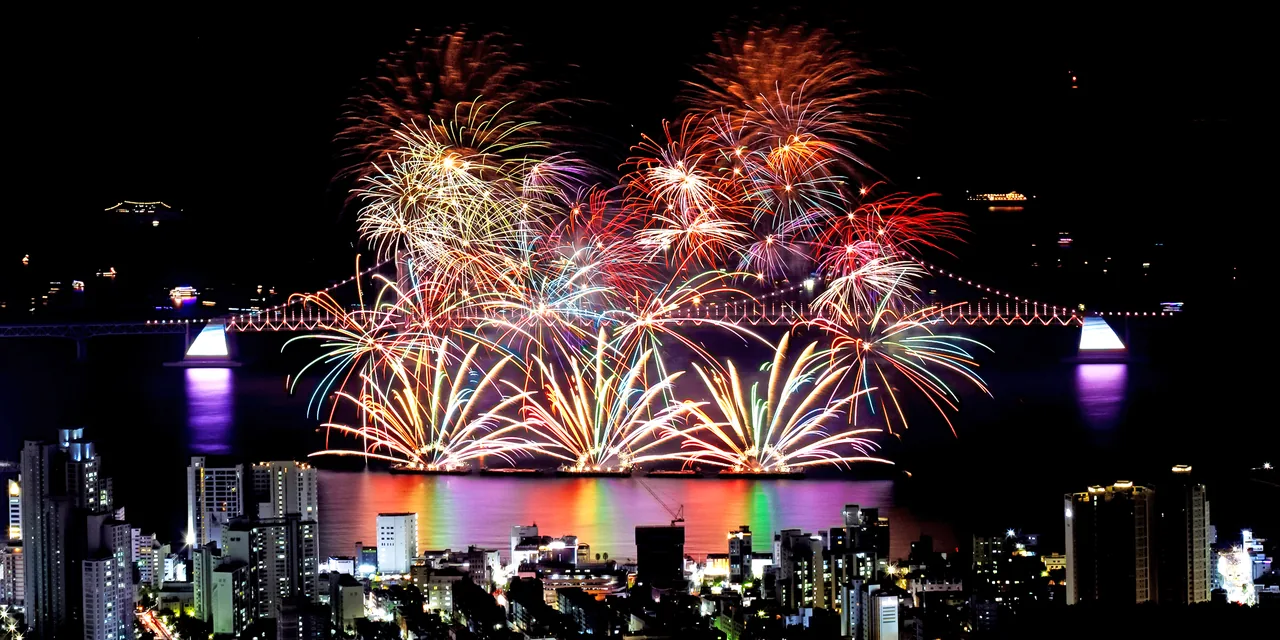
| Gwangalli M Drone Light Show | Every Saturday, twice a night | 20:00 and 22:00 from March to September; 19:00 and 21:00 from October to February. Over 12 minutes, around 1,100 drones, up to 3,000 for special editions. Visible from anywhere on Gwangalli beach. Enquiries 051-610-6518 |
| 2026 special editions | 4 and 11 July, 18 July, 25 July | SpongeBob, Korean heritage theme, Pokemon |
| Busan Fireworks Festival | Saturday 7 November 2026 | Gwangalli, Haeundae and Igidae. Paid seating prices not yet announced |
| Beach season, Haeundae | 26 June to 15 September 2026 | Opening date per Busan Ilbo; late June is the reliable framing |
| Beach season, Gwangalli | 1 July to 31 August 2026 | |
| Busan Sea Festival | 7 to 13 August 2026 | Seven days, Dadaepo |
| Bupyeong Kkangtong Night Market | Year round | Reported 19:30 to around midnight |
| Typhoon exposure | August is the peak | KMA long-term averages: August 1.2 affecting storms, July 1.0, September 0.8 |
The drone show is the single best free thing
Every Saturday, twice, from the sand, with no ticket and no queue. Arrive 20 minutes early in summer for a spot near the water. The 22:00 slot in high season is less crowded than the 20:00 one.
Swimming rules during beach season
Water hours are 09:00 to 18:00. Entering the sea at night, defined as from 30 minutes after sunset to 30 minutes before sunrise, carries a 50,000 won fine. Being on the sand at night is a separate matter and is not itself restricted — which is what makes evening beach drinking at Gwangalli work.
If you are here in August, watch the forecast. It is the peak typhoon month and outdoor events including the drone show can be cancelled at short notice.
Deeper coverage: the Busan Fireworks Festival guide, our summer festival calendar, and when to visit Busan for the season-by-season picture.
Guided evening tours handle the transport, which matters most on fireworks night when the whole city moves toward the same beach.
14. Getting back to your hotel
This is the part that goes wrong. Busan’s metro closes well before its bars do, and the gap is where an unplanned 25,000 won taxi ride appears.
| Option | What to know |
|---|---|
| Last metro | Falls somewhere between roughly 23:15 and 00:30 depending on line and direction. At Haeundae the two directions can differ by as much as 78 minutes. There is no single citywide number — check the app on the night |
| Metro fare | 1,600 won zone 1, 1,800 won zone 2 |
| Night buses | Around 14 routes. Departures from terminals between 22:20 and 23:50, returning to depot 01:30 to 02:30. Route 1000 runs Dadaepo to Seomyeon; route 1001 runs Cheonggangni to Dong-A University |
| Night bus fare | 1,950 won standard, 2,450 won seated. Figures of 2,000 and 2,500 circulate and are wrong. The late-night rate reportedly starts around 23:40 |
| Taxi base fare | 4,800 won for the first 2 km, then 100 won per 132 m, or per 33 seconds below 15 km/h |
| Late-night taxi surcharge | Applies 23:00 to 04:00. Plus 30 percent between midnight and 02:00; plus 20 percent from 23:00 to midnight and from 02:00 to 04:00. Out-of-city adds 30 percent, and combined surcharges can reach 50 percent |
You will see 4,500 won quoted as the Busan taxi base fare across a lot of search results. It is out of date. The figure has been 4,800 won since 1 June 2023.
Rough taxi fares
| Route | Approximate metered fare |
|---|---|
| Seomyeon to Gwangalli | Around 9,300 won |
| Seomyeon to Haeundae | Around 16,900 won on the meter, though passengers commonly report 20,000 to 25,000 in practice |
| Gwangalli to Haeundae | Around 8,600 won |
All three are daytime meter calculations. Add the late-night surcharge and treat them as ballpark figures, not quotes.
Taxi apps
- Kakao T is what everyone uses. Foreign cards fail on it fairly often; you can work around this by selecting payment direct to the driver. Whether it works without a Korean phone number is disputed across sources, so do not count on it — test it on your first day, not at 02:00.
- k.ride is built for foreign visitors and accepts social logins.
- UT also operates here.
Set up and test at least one taxi app on the afternoon you arrive, while you still have daylight, wifi and patience.
Full detail in our Busan metro and transit card guide and getting around Busan.
15. Staying safe
Busan is a comfortable city to be out in late. The one documented risk to a visitor’s night is a specific scam in a specific district, and it is worth knowing in detail because knowing it makes it easy to avoid.
The Seomyeon tout scam, as prosecuted
Court records from Seomyeon and Busanjin District describe a consistent method. A street tout leads a customer into a bar. The customer is encouraged to drink heavily and loses consciousness. They are then moved to an affiliated venue and billed for two or three bottles of alcohol that were never opened. In one case the victim’s own financial authentication was used to make nine separate transfers.
Five victims lost a combined 22.23 million won. One of them lost 16.95 million won in the space of 18 hours. The sales manager received a custodial sentence of one year and six months; the tout received one year and four months.
Street solicitation of this kind is an offence in itself under Article 3(1)(8) of the Minor Offences Act.
The defence is simple: never enter a venue because someone on the street brought you there. Choose the place yourself, walk in yourself, and if a bill appears for drinks you did not open, do not pay it — call 112.
Numbers to save
| Number | For | Hours |
|---|---|---|
| 112 | Police | 24 hours |
| 119 | Fire and ambulance | 24 hours |
| 1330 | Korea Tourism Organization interpretation and travel helpline | Korean, English, Japanese and Chinese 24 hours; Russian, Vietnamese, Thai, Malay and Indonesian 08:00 to 19:00 |
| 051-120 | Busan city complaints and information | Weekdays 08:30 to 18:30 only |
1330 is the one that matters most to a visitor. It is genuinely round the clock in English and the operators will interpret on a live call with a taxi driver, a shop or the police. Save it before you need it, and note that 051-120 is a Busan city service, not the Seoul Dasan hotline it is sometimes confused with.
Practical habits
| Situation | What to do |
|---|---|
| Approached by a tout | Keep walking, do not engage. Seomyeon specifically |
| Charged for unopened bottles | Refuse and call 112. Photograph the bill |
| Separated from your group | Meet at a metro exit number, not a bar name |
| Card declined by a taxi app | Switch to paying the driver directly, or use k.ride |
| Need a language bridge, any hour | Call 1330 and hand the phone over |
| Lost something in a taxi | Report through the app you booked with; that is why booking beats hailing |
During peak summer, Haeundae operates a seasonal police station, reported to run 24 hours with around 58 officers. For anything else, 112 works everywhere and 1330 will interpret.
If you are still in the planning stage, our Korea visa and K-ETA guide covers entry requirements, and where to stay in Busan will help you pick a base near the district you actually intend to drink in.