
Hidden Autumn-Foliage Spots In & Near Seoul (Beyond the Crowds)
Seven quiet valleys, temples, river islands and forests where Seoul turns gold and red without the shoulder-to-shoulder crush
| Peak window | First week of November for Seoul’s mountains (ginkgo a touch earlier, late Oct); valleys colour a few days later |
|---|---|
| No-car picks (subway + bus) | Baeksasil Valley, Jingwansa Temple, Suseongdong Valley — all reachable from Line 3 |
| Free spots | Baeksasil, Jingwansa, Suseongdong, Gangcheonseom — zero admission |
| Needs a booking | Korea National Arboretum only if you drive (parking reservation) — arrive on foot/by bus and buy on-site, subject to the daily cap |
| Biggest tree | Yongmunsa’s giant ginkgo — ~1,100 years old, 41–42 m tall |
| Bigger than Nami Island | Gangcheonseom — a free river island larger than Nami, with a ginkgo avenue |
| Quietest of all | Jat-hyanggi Pureun-sup in Gapyeong — hard to reach, so blissfully empty |
1. Why these hidden spots (and the 7 at a glance)
2. When the colour peaks around Seoul
3. Baeksasil Valley — Seoul’s secret garden
4. Jingwansa Temple — a thousand-year-old calm under Bukhansan
5. Suseongdong Valley — a raw mountain gorge ten minutes from a subway
6. Gangcheonseom — a free river island bigger than Nami
7. Yongmunsa — the oldest, tallest ginkgo in Korea
8. Jat-hyanggi Pureun-sup — a fragrant pine-nut forest you’ll have to yourself
9. Korea National Arboretum — a 500-year royal forest that caps its own crowds
10. In-city 3 vs day-trip 4: which to pick
11. How to string them into a day
12. Practical tips for a fall-foliage day
13. Where to go next
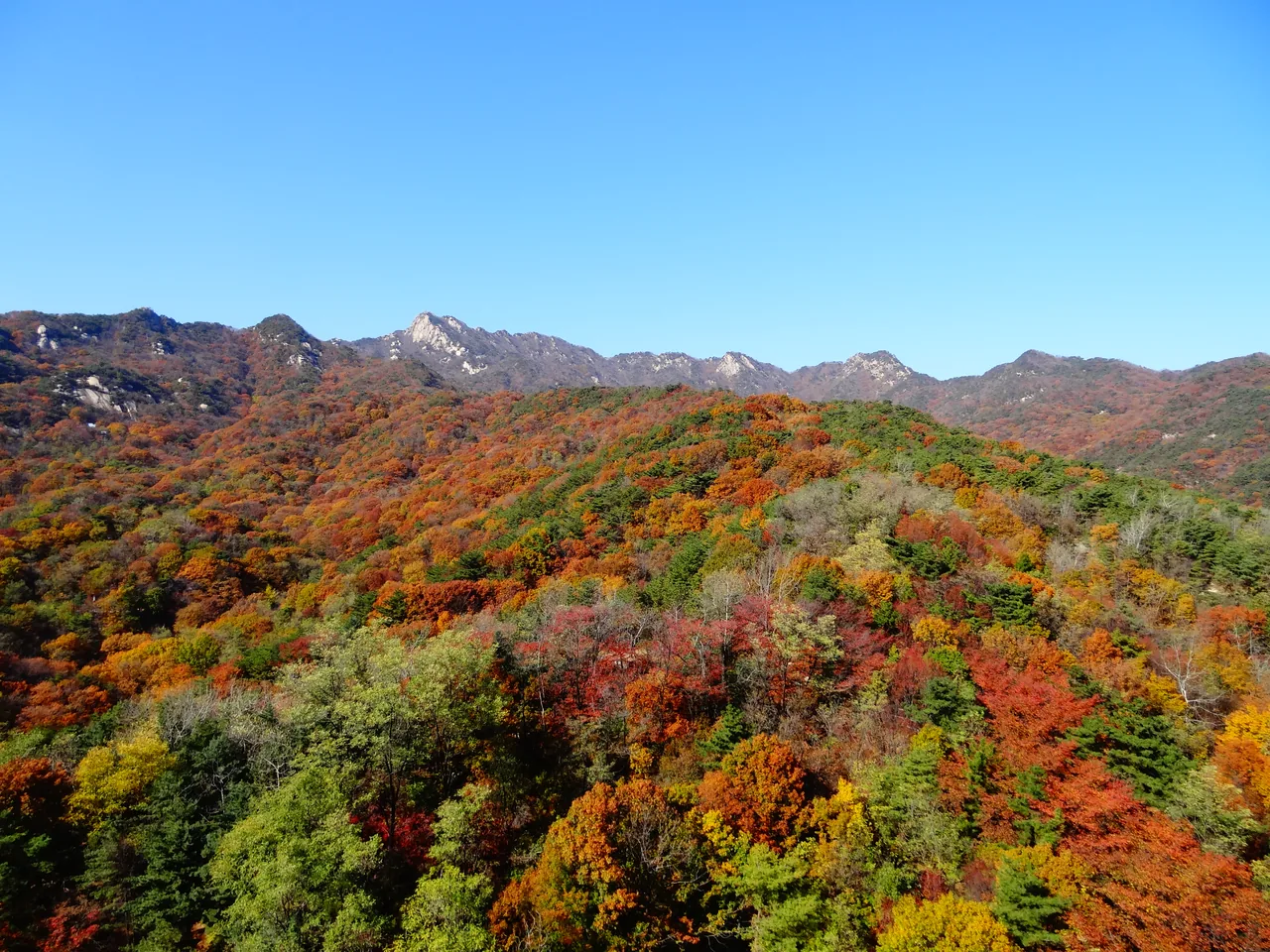
1. Why these hidden spots (and the 7 at a glance)
Most autumn-leaf guides funnel everyone to the same packed handful of places — Naejangsan, Seoraksan, Nami Island — so here are seven quiet alternatives in and around Seoul where you can actually hear the leaves. If you already know the famous spots and want colour without the queues and the tripod scrums, this is your list.
Seoul is one of the few megacities on earth ringed by real mountains, and when those ridges turn in late autumn the city is briefly spectacular. The trouble is that everyone goes to the same five postcards. The places below are different: a Joseon-era "secret garden" valley behind Buam-dong, a thousand-year-old nuns’ temple folded into Bukhansan, a granite stream-valley a ten-minute walk from a subway, a free river island bigger than Nami, the oldest ginkgo tree in Korea, a pine-nut healing forest, and a 500-year-old royal forest that caps its own visitor numbers. Three sit inside the city and need nothing but a transit card; four are day trips an hour or so out.
For the bigger picture of when and where to travel, start with the complete Korea travel guide and the best time to visit Korea; this guide zooms into the autumn micro-season and the spots the tour buses skip.
| Spot | Where | Type | Peak | Cost | Access |
|---|---|---|---|---|---|
| Baeksasil Valley | Buam-dong, Jongno-gu | Wooded valley | Early–mid Nov | Free | Subway + bus |
| Jingwansa Temple | Eunpyeong-gu | Mountain temple | Early Nov | Free | Subway + bus |
| Suseongdong Valley | Okin-dong, Jongno-gu | Granite stream-valley | Early Nov | Free | Subway + short walk |
| Gangcheonseom | Yeoju, Gyeonggi | River island | Late Oct–mid Nov | Free | Day trip |
| Yongmunsa giant ginkgo | Yangpyeong, Gyeonggi | Ancient tree + temple | Late Oct–early Nov | Free (parking paid) | Day trip |
| Jat-hyanggi Pureun-sup | Gapyeong, Gyeonggi | Pine-nut forest | Late Oct–early Nov | ₩1,000 | Day trip (car best) |
| Korea National Arboretum | Pocheon, Gyeonggi | Protected royal forest | Mid Oct–early Nov | ₩1,000 (book ahead) | Day trip |
2. When the colour peaks around Seoul
Around Seoul the colour first touches the mountain ridges in mid-October and hits its peak in the first week of November, give or take three days depending on the weather. Plan for that window and you’ll catch the city at its best.
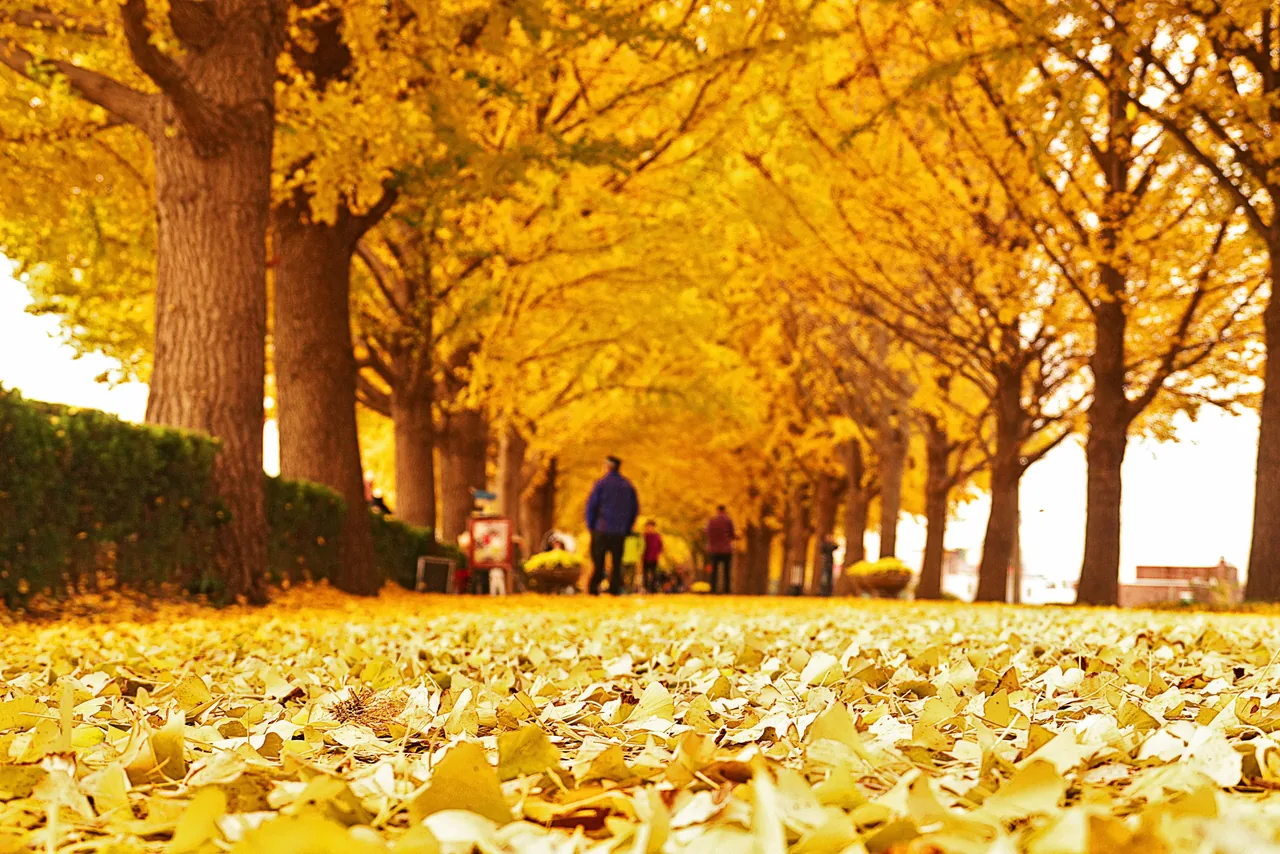
A few patterns are worth knowing. Ginkgo (은행나무) peaks slightly earlier than the maples — usually late October into the very start of November — so the golden avenues at Gangcheonseom and Yongmunsa, and the ginkgo at the arboretum, time a touch ahead of the red ridge colour. Open, sunny ridges turn first; shaded valleys like Baeksasil run a few days behind, which actually buys you a second window if you mistime the peak. Silver-grass (억새) fields, like those on Gangcheonseom, hold their feathery plumes right through November.
| Place / feature | Peak window |
|---|---|
| Seoul mountain ridges (maple) | First week of November (±3 days) |
| Ginkgo, generally | Late October → very early November |
| Shaded valleys (Baeksasil) | A few days later — early–mid November |
| Korea National Arboretum (ginkgo ~Oct 28) | Mid October → early November |
| Yongmunsa giant ginkgo | Late October → early November |
| Gangcheonseom ginkgo | Late October → first half of November |
| Silver-grass (억새) | Through November |
The single best trick for quiet is timing your day, not just your week. A weekday beats a weekend by a mile, and arriving right at opening — before mid-morning — gives you the paths almost to yourself. Weekend middays are the busiest hours everywhere on this list. For the wider season picture, see the best time to visit Korea.
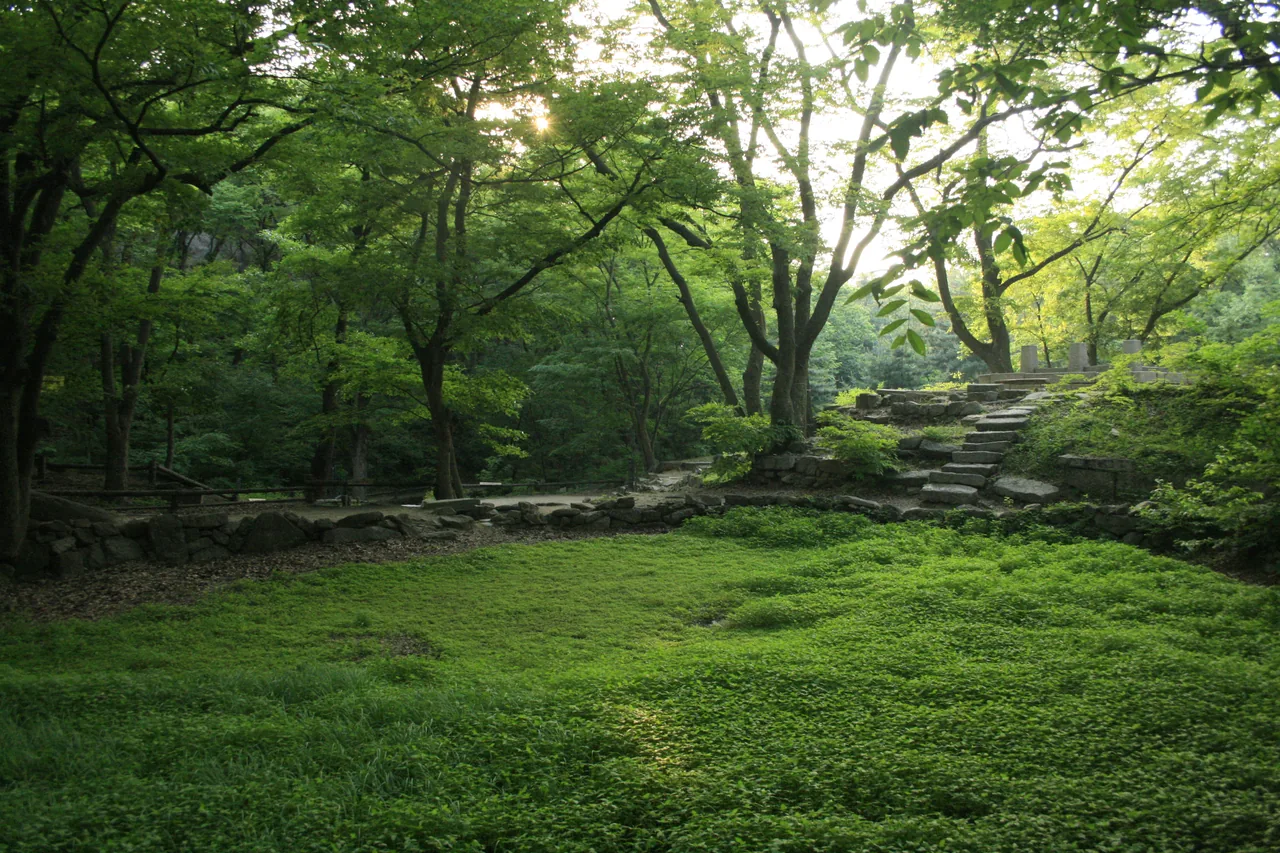
3. Baeksasil Valley — Seoul’s secret garden
Baeksasil Valley Map is a hidden wooded ravine behind Buam-dong that locals quietly call Seoul’s "secret garden" — a Joseon-era villa garden site where a clean mountain stream still runs through the trees. It is one of the most atmospheric autumn walks in the city, and almost no foreign visitor finds it.
| Where | Buam-dong, Jongno-gu, Seoul |
|---|---|
| Type | Hidden wooded valley (Scenic Site) |
| Foliage peak | Early–mid November |
| Admission | Free (no gate) |
| Getting there | Gyeongbokgung Stn (Line 3) Exit 3 → green bus → 10–15 min walk |
| Time needed | 1–2 hours (more with Buam-dong cafés) |
Officially the area is Baekseok-dong-cheon (백석동천), designated a Scenic Site (명승). Tucked into the hills behind Buam-dong, it holds the remains of a Joseon-period byeolseo (별서) — a scholar’s countryside villa garden — with rock-carved inscriptions, the foundation stones of a former pavilion and pond, and worn stone steps threading up among tall trees. It feels centuries removed from the city a few ridgelines away. Because it isn’t signposted on the big tourist maps, it stays a neighbourhood walk rather than a sight.
The valley’s other secret is its water: this is a Grade-1 clean stream where salamanders (도롱뇽) actually breed — a genuinely rare thing inside a city of ten million. Autumn here is mixed maples and tall trees arching over the stream, and because it’s shaded it colours a few days later than the open ridges, usually early to mid-November. The mood is contemplative rather than a blazing canopy: dappled light, the sound of water, very few people.
| Detail | Info |
|---|---|
| Cost | Free |
| Hours | Open valley, daylight (no gate) |
| Foliage peak | Early–mid November |
| Nearest station | Gyeongbokgung (Line 3), Exit 3 |
Getting there: from Gyeongbokgung Station (Line 3), Exit 3, take a green Jongno bus — 7022, 1020 or 7212 — to the Buam-dong Community Center (부암동주민센터) stop, then walk roughly 10–15 minutes uphill along Baeksasil-gil. Pair it with Buam-dong’s cafes, the Sanmotunge terrace, and the old Changuimun gate.
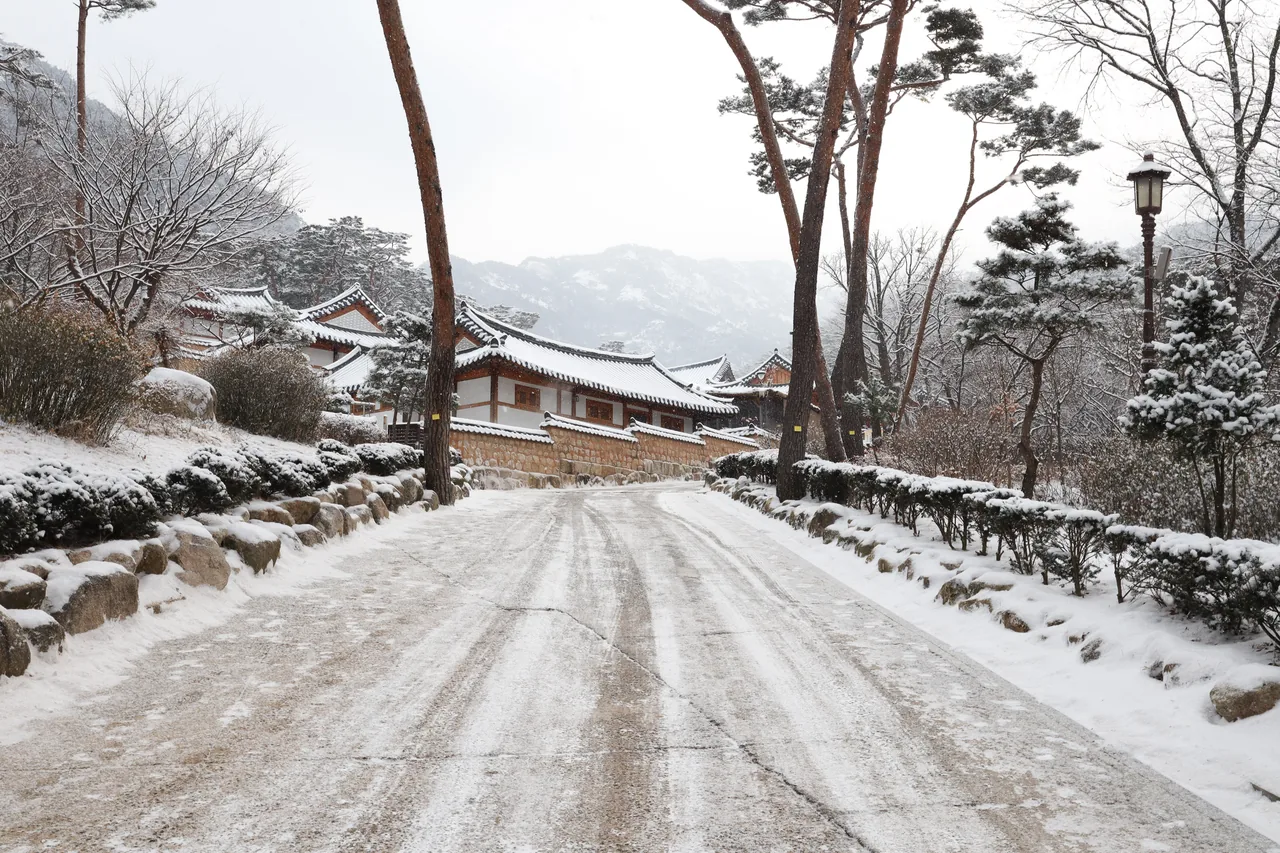
4. Jingwansa Temple — a thousand-year-old calm under Bukhansan
Jingwansa Map is a thousand-year-old temple folded into the north-west foot of Bukhansan, where a tree-lined approach along a stream stays serene while the crowds pour into the mountain’s main trailheads. It is the quiet autumn temple most people drive straight past.
| Where | Jingwan-dong, Eunpyeong-gu (NW foot of Bukhansan) |
|---|---|
| Type | Thousand-year-old mountain temple (nuns’) |
| Foliage peak | Early November |
| Admission | Free to enter the grounds |
| Getting there | Gupabal Stn (Line 3) Exit 3 → bus 7211/701 (~10 min) → short walk |
| Time needed | 1–1.5 hours (longer for temple food/stay) |
Founded in the Goryeo era and linked to King Hyeonjong in the 11th century, Jingwansa is counted among Seoul’s four great temples. Today it is a renowned nuns’ temple (비구니 사찰), and it carries itself with a particular composure. While fall-leaf hikers head for Bukhansan’s busy main routes, Jingwansa’s valley approach — set in a quiet fold of the mountain — stays calm. You walk in along a stream under arching trees, ginkgo and maple bright around the temple halls, the grey Bukhansan ridge rising behind. There is incense, birdsong, and the unhurried rhythm of a working monastery.
Jingwansa is also a national centre of Korean Buddhist temple cuisine (사찰음식) — its temple food is famous well beyond Korea — and it runs temple-stay and cooking programs you should reserve ahead. The grounds are free to enter, and the foliage peaks in early November.
Getting there: take Line 3 to Gupabal Station, Exit 3, then local bus 7211 (or 701) toward the Jingwansa / Hana High School area — about 10 minutes — and walk the short stretch to the temple gate.
5. Suseongdong Valley — a raw mountain gorge ten minutes from a subway
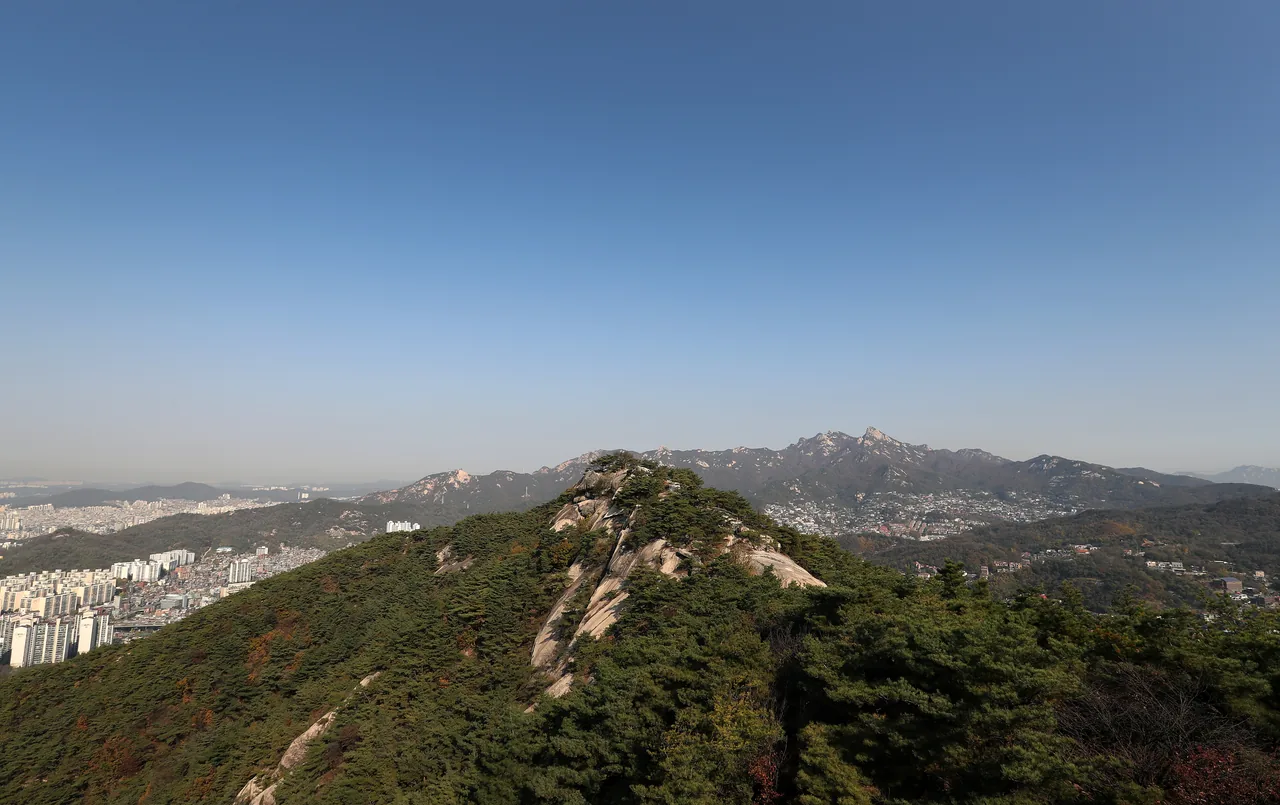
Suseongdong Valley Map is a rocky stream-valley on Inwangsan, praised by Joseon scholars and painted by a master, that sits a ten-minute walk above Seochon yet stays empty while crowds throng Gyeongbokgung next door. It’s the most accessible wild place on this list.
| Where | Okin-dong, Jongno-gu (on Inwangsan, above Seochon) |
|---|---|
| Type | Rocky granite stream-valley |
| Foliage peak | Early November |
| Admission | Free |
| Getting there | Gyeongbokgung Stn (Line 3) Exit 2 → Jongno 09 village bus, or 15–20 min walk |
| Time needed | 1 hour (a half-day with Seochon) |
Joseon-era scholars celebrated this gorge, and it is the subject of a famous 18th-century painting, "Suseongdong" by Gyeom-jae Jeong Seon (겸재 정선). For decades it was buried under the Okin apartment blocks (옥인시범아파트, built 1971); when those were demolished the valley was restored in 2012, and a remarkable thing resurfaced — the Girin Bridge (기린교), a stone-slab span made of two long granite slabs about 3.8 m each. It is the only stone bridge inside the old Seoul City Wall preserved in its original form, and the longest single-stone bridge of its kind — and it appears in Jeong Seon’s painting, so you’re looking at the same view a great artist framed three centuries ago.
In autumn, maples flare over the granite boulders and the stream, framing the slopes of Inwangsan. Peak is early November. The valley is free and connects straight to the Inwangsan Jarakgil (인왕산 자락길) walking path if you want to keep climbing.
Getting there: from Gyeongbokgung Station (Line 3), Exit 2, take the Jongno 09 maeul (village) bus to its last stop (수성동계곡), or simply walk 15–20 minutes uphill through Seochon. It sits right above Seochon’s alleys, which makes pairing easy: the hanok lanes of Bukchon Hanok Village guide and the palace grounds covered in the Gyeongbokgung & hanbok guide are all within walking or one-stop distance, so you can fold raw mountain valley into a classic old-Seoul day.
6. Gangcheonseom — a free river island bigger than Nami
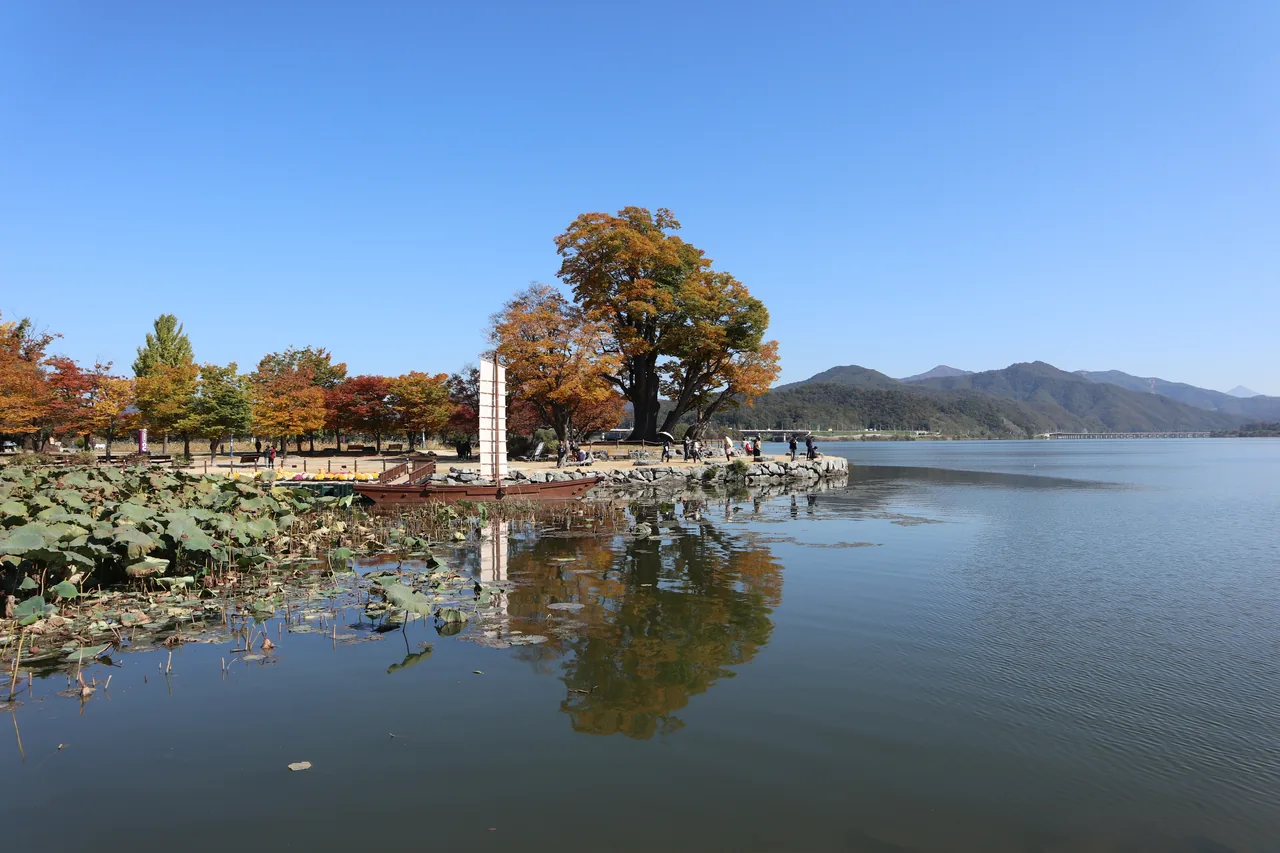
Gangcheonseom Map is a flat river island in the Namhan River near Yeoju — larger than Nami Island, completely free, and laced with a golden ginkgo avenue and broad silver-grass fields. Most people don’t even know it exists, which is exactly why it’s so peaceful.
| Where | Gangcheon-myeon, Yeoju, Gyeonggi |
|---|---|
| Type | Flat river island (~570,000 m², bigger than Nami) |
| Foliage peak | Late Oct → first half of Nov (silver-grass through Nov) |
| Admission | Free entry & free parking |
| Getting there | ~1 h 15 by car; or Gyeonggang Line metro to Yeoju Stn → bus/taxi/city-tour bus |
| Time needed | ~1 hour+ to loop (half-day with a picnic) |
At around 570,000 m² it’s bigger than its famous cousin, yet it lives in Nami’s shadow. A long ginkgo-tree avenue (은행나무길) runs down the island’s spine, with wide fields of feathery silver-grass (억새) on either side. You can loop the whole island in an hour or so on flat, well-kept deck paths and trails that are friendly to strollers, wheelchairs, wagons and pets. People come to picnic, to lay out a mat under the gold, and to camp lightly — it’s a place to slow down, not to tick off.
It’s free to enter and free to park. The ginkgo peaks from late October into the first half of November, and the silver-grass plumes carry on through the month.
| Detail | Info |
|---|---|
| Size | ~570,000 m² (bigger than Nami) |
| Cost | Free entry & free parking |
| Peak | Late Oct → first half of Nov (ginkgo); silver-grass through Nov |
| From Seoul | ~1 h 15 by car |
Getting there: driving is easiest — about 1 h 15 from Seoul via the Yeongdong Expressway. By transit, take the Gyeonggang Line (a Seoul-area commuter metro) to Yeoju Station with a transit card, then a local bus or taxi (20–30 min) toward Gangcheon; or use the Yeoju City Tour bus (hop-on-hop-off), which runs a Gangcheonseom course. A short walk over a footbridge puts you on the island.
7. Yongmunsa — the oldest, tallest ginkgo in Korea
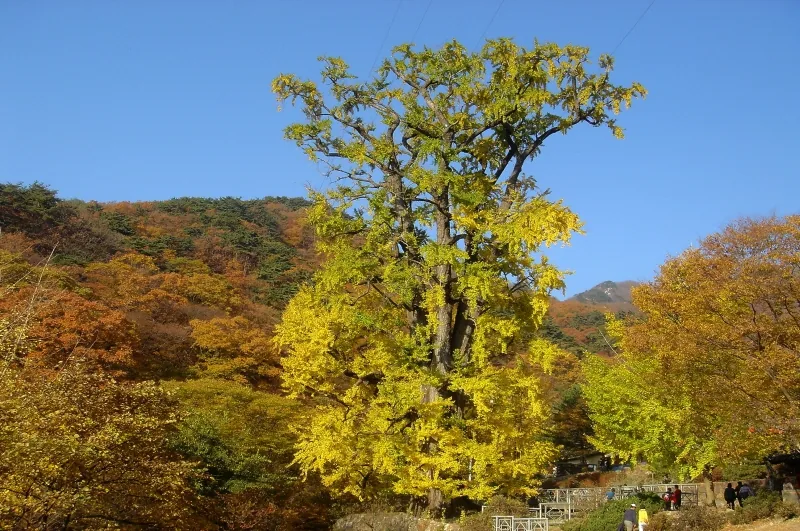
The giant ginkgo at Yongmunsa Map in Yangpyeong is the largest and oldest ginkgo tree in Korea — roughly 1,100 years old, 41–42 m tall, with a trunk girth of about 11 m — and when it sheds, it lays a vast golden carpet beneath a thousand-year-old temple. It’s a genuinely world-class tree, barely an hour from Seoul, that most foreign travellers miss.
| Where | Yongmun-myeon, Yangpyeong, Gyeonggi |
|---|---|
| Type | Korea’s oldest/tallest ginkgo (~1,100 yrs) at a temple |
| Foliage peak | Late October → early November |
| Admission | Free (parking ~₩3,000 standard car) |
| Getting there | Gyeongui–Jungang Line to Yongmun Stn → bus 7-4/7-8 (~20 min) or taxi |
| Time needed | 1.5–2 hours (incl. ~20 min valley walk up) |
Designated Natural Monument No. 30, the tree’s legend ties it to Crown Prince Maui of Silla or to the monk Uisang, who is said to have planted his walking staff here. Whatever the truth, the scale is real: standing under a living thing that was already centuries old when Korea was unified is its own kind of awe. At peak fall it turns a deep, even gold, and the leaf-drop blankets the temple courtyard.
Temple admission has been free since May 2023. Parking runs about ₩3,000 for a standard car (₩1,000 compact, ₩5,000 large). The foliage peaks late October into early November.
Getting there: take the Gyeongui–Jungang Line to Yongmun Station, then a local bus (e.g. 7-4 or 7-8) toward Yongmunsa (~20 min) or a taxi. From the Yongmunsan resort car park it’s about a 20-minute walk up a valley trail to the temple and the tree.
8. Jat-hyanggi Pureun-sup — a fragrant pine-nut forest you’ll have to yourself
Jat-hyanggi Pureun-sup Map — the "Pine-nut Fragrance Green Forest" in Gapyeong — is Korea’s only pine-nut (잣나무) healing forest, a cool, crisp, phytoncide-rich hillside that stays quiet precisely because it’s hard to reach. This is the gentle, restorative entry on the list.
| Where | Sang-myeon, Gapyeong, Gyeonggi (~450–600 m elevation) |
|---|---|
| Type | Pine-nut (Korean pine) healing forest — evergreen |
| Foliage peak | Late October → early November (broadleaf accents) |
| Admission | Adults ₩1,000 (parking free); closed Mondays |
| Getting there | Best by car; transit awkward (Gyeongchun Line metro / ITX-Cheongchun to Gapyeong/Sangcheon → taxi) |
| Time needed | 1.5–2 hours (longer with a healing program) |
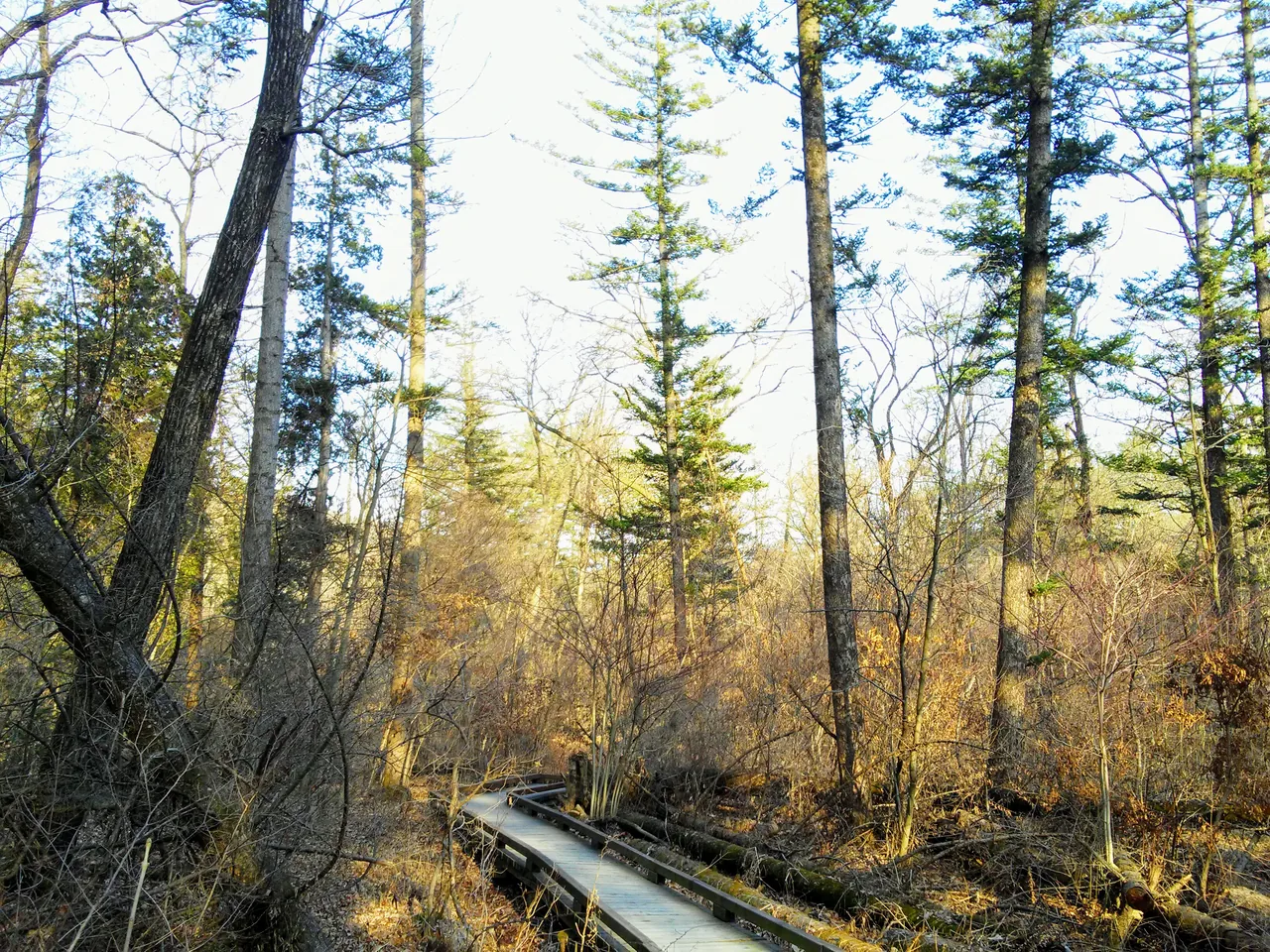
Set between Chungnyeongsan and Seorisan at around 450–600 m, the forest is filled with towering planted Korean pines (잣나무) — the trees that give Korea its prized pine nuts — and it’s run as a forest-therapy destination, with healing programs and air so clean it’s almost a flavour. One honest note for autumn: the pines are evergreen, so this isn’t a red-maple spectacle. It’s something subtler — a fragrant green-and-gold forest where the broadleaf trees scattered among the pines turn colour, the air is sharp and cool, and you may have whole stretches of deck trail to yourself. Some sections are barrier-free.
| Detail | Info |
|---|---|
| Cost | Adults ₩1,000 (students ₩600, elementary ₩300); parking free |
| Closed | Mondays |
| Hours | Apr–Oct 09:00–18:00; Nov–Mar 09:00–17:00 |
| Peak | Late October → early November |
Getting there: a car is by far the best way; transit is awkward — take the Gyeongchun Line metro (or the faster ITX-Cheongchun) to the Gapyeong / Sangcheon area, then a taxi. That difficulty is exactly what keeps the forest empty. Some programs need booking ahead.
9. Korea National Arboretum — a 500-year royal forest that caps its own crowds
The Korea National Arboretum Map, set inside Pocheon’s Gwangneung Forest, is a 500-year-protected royal forest and UNESCO Biosphere Reserve with a daily visitor cap that keeps it calm even at peak — and, good news for car-free visitors, you only need a reservation if you arrive by car. If you want layered, natural autumn colour without a manicured-park feel, this is the one.
| Where | Soheul-eup, Pocheon, Gyeonggi (Gwangneung Forest) |
|---|---|
| Type | 500-year royal forest / national arboretum (UNESCO reserve) |
| Foliage peak | Mid October → early November (ginkgo ~Oct 28) |
| Admission | Adults ₩1,000; daily cap ~4,500 — reservation only needed if arriving by car |
| Getting there | Toward Uijeongbu → local bus 21 to Gwangneung-nari (no booking needed), or drive (parking reservation) |
| Time needed | 2–3 hours (fir-tree trail + eco trails) |
Gwangneung Forest has been protected for about five centuries because it shielded the tomb forest of King Sejo of Joseon, and today it’s one of the best-preserved temperate forests in Asia. The arboretum within it offers a famous fir-tree forest trail (전나무숲), eco-observation trails, and enormous tree diversity, so autumn arrives in natural layers rather than as a single planted blaze. Foliage peaks mid-October into early November.
Here’s the part most guides get wrong: the daily visitor cap (about 4,500) is what keeps it from being mobbed, but a reservation is only required if you arrive by car. If you come on foot or by public transport, you can buy a same-day ticket on-site without any booking, as long as the daily cap hasn’t been reached — genuinely good news for car-free foreign visitors. Drivers do need a parking reservation, made from 30 days out via Naver or the KB Pay app, and only reserved cars may park. Adults pay ₩1,000.
| Detail | Info |
|---|---|
| Cost | Adults ₩1,000 (parking reservation only if driving) |
| Daily cap | ≈4,500 per day |
| Closed | Mondays, Jan 1, Lunar New Year & Chuseok; Sundays in winter (Dec–Feb) |
| Hours | Apr–Oct 09:00–18:00 (last entry 17:00); winter 09:00–17:00 (last entry 16:00) |
In autumn it’s effectively open Tuesday–Sunday (Sundays do open in Oct–Nov), but peak weekends fill fast. Getting there: head from Seoul toward Uijeongbu, then a local bus (e.g. 21) to the Gwangneung-nari area — no reservation needed if you come this way — or drive, in which case you must book a parking slot in advance.
10. In-city 3 vs day-trip 4: which to pick
If you have no car and a free morning, pick one of the three in-city valleys; if you have a full day and want a river island or a thousand-year-old tree, take a day trip. This table lines up all seven so you can match a spot to your time, budget and patience.
| Spot | Time from central Seoul | Cost | Reservation? | Crowds | Best for |
|---|---|---|---|---|---|
| Baeksasil Valley | ~35–45 min (subway + bus) | Free | No | Low | Atmospheric walkers, café-hoppers |
| Jingwansa Temple | ~45 min (subway + bus) | Free | For temple-stay/food only | Low | Quiet temple, temple cuisine |
| Suseongdong Valley | ~20–30 min (subway + walk) | Free | No | Low–medium | Easy half-day, history + Seochon |
| Gangcheonseom | ~1 h 15 (car) / longer by train | Free | No | Low–medium | Families, picnics, ginkgo avenue |
| Yongmunsa ginkgo | ~1 h+ (train + bus) | Free (parking paid) | No | Medium | One world-class tree, temple |
| Jat-hyanggi Pureun-sup | ~1.5 h (car best) | ₩1,000 | Programs only | Very low | Forest therapy, total quiet |
| Korea National Arboretum | ~1–1.5 h | ₩1,000 | Only if driving (parking) | Low (capped) | Serious nature, planners |
The short version: Suseongdong is the easiest yes for a no-car visitor, Gangcheonseom is the best family day, Yongmunsa is the single most jaw-dropping sight, and the arboretum is for anyone willing to book ahead in exchange for guaranteed calm.
11. How to string them into a day
Group these by direction and you get three clean days: an in-city half-day on foot, a Yeoju river-island day, and a Yangpyeong tree-and-river day — with Gapyeong and Pocheon best saved for a car. Here are the routes that actually flow.
- In-city half-day (no car) Start at Gyeongbokgung Station. Walk up through Seochon to Suseongdong Valley, drop back into Seochon for lunch and tea, then bus over toward Buam-dong for Baeksasil Valley and the Sanmotunge terrace. Three sights, zero car, all on a transit card.
- Yeoju day (Gangcheonseom + Silleuksa) Take the Gyeonggang Line commuter metro to Yeoju, spend the morning looping Gangcheonseom’s ginkgo avenue with a picnic, then add Silleuksa Temple by the river in the afternoon. Easy, flat, family-friendly.
- Yangpyeong day (Yongmunsa + Dumulmeori) Ride the Gyeongui–Jungang Line to Yongmun for the giant ginkgo, then make for Dumulmeori, ideally early or late, for river mist where the two Han branches meet.
- Car-only outliers Jat-hyanggi Pureun-sup (Gapyeong) and the Korea National Arboretum (Pocheon) are awkward by transit — pair them with a rental car day, and book the arboretum before you set off.
For the rail and bus mechanics of these day trips, see the getting around Korea guide. And one practical warning that saves real grief: Google Maps is weak for Korean public-transit routing — use Naver Map or KakaoMap instead, compared side by side in the Naver Map vs Kakao Map guide.
12. Practical tips for a fall-foliage day
Go on a weekday, start at opening, dress in layers, check the live foliage status a few days out, and — for the arboretum — book ahead. Five small habits turn a good autumn day into a quiet, well-timed one.
- Weekday + early start: the difference between elbow-room and a scrum. Aim to be on the trail at opening; weekend middays are the worst.
- Check the peak before you commit: the window shifts by a few days each year. A week out, look at a live foliage map or recent photos rather than a fixed date.
- Dress in layers: valleys and altitude (Jat-hyanggi, the arboretum) run noticeably colder than central Seoul, especially first thing. Real shoes for the rocky valley paths.
- Reserve the arboretum: no booking, no entry — and peak-weekend slots vanish 30 days out. Treat it as a ticketed event, not a drop-in.
- Carry mobile data: Naver/Kakao Map navigation, the Yeoju tour-bus timetable, and the arboretum reservation all need a connection in the field.
Because Naver and Kakao Map navigation, plus the arboretum and program reservations, all depend on having data the moment you step off the train, sort a local eSIM before you go.
For getting around once you’ve landed, the Naver Map vs Kakao Map guide covers which app to trust, and the Climate Card vs T-money guide breaks down whether a Climate Card or T-money suits your mix of in-city days and day trips.
13. Where to go next
These seven spots are the quiet half of a Korean autumn — pair them with the famous places, a city day, and a day trip, and you have a full season planned. Here’s where to read on.
Build the backbone of your trip with the complete Korea travel guide and a ready-made Korea itinerary guide. For contrast, see the spot everyone knows in the Nami Island guide — then appreciate how much quieter Gangcheonseom is. Add another classic Seoul day trip with the Seoul DMZ day-trip guide, and anchor your in-city days around the palaces and hanok lanes in the Gyeongbokgung & hanbok guide and Bukchon Hanok Village guide. Autumn in and around Seoul rewards the traveller who looks just past the postcard — and now you know exactly where to look.