
Busan Weather by Season: When You Should Actually Go
A month-by-month breakdown of Busan’s temperatures, rainfall, beach dates, and festival calendar, so the only question left is which season fits the trip.
| Spring (Mar-May) | Mild and blooming. Cherry blossoms peak in early April, but April also brings the year’s worst yellow dust. |
|---|---|
| Summer (Jun-Aug) | Beach season (official dates run late June through August or September), plus monsoon in late June-July and typhoon risk July-September. |
| Fall (Sep-Nov) | Clear skies and falling humidity. BIFF runs in October, foliage peaks in early November. |
| Winter (Dec-Feb) | Mild for Korea, dry, and the cheapest, least crowded season. Camellias bloom and light festivals run through it. |
| When to avoid | Late June through late July for rain risk, and early-to-mid August for peak heat and peak crowds together. |
| Bottom line | Pick April-May or September-early November for the best all-around weather, July-August for the beach, and December-February for value and quiet. |
1. Quick Answer: The Best Time to Visit Busan
2. Busan Weather by Month: Temperature and Rainfall at a Glance
3. Spring in Busan (March to May): Cherry Blossoms and Mild Air
4. Side Trip to Jinhae: Home of the World’s Largest Cherry Blossom Festival
5. One Spring Catch: Yellow Dust and Fine Dust Season
6. Summer in Busan (June to August): Beach Season
7. Busan Sea Temperature by Month: When the Water Is Actually Swimmable
8. Monsoon Season in Busan: Late June Into Late July
9. Typhoon Season: July Through September
10. Fall in Busan (September to November): Clear Skies and Film Festivals
11. Busan Fireworks Festival: Dates, Times, and Where to Watch
12. Gwangalli M Drone Light Show: Every Saturday, All Year Round
13. Winter in Busan (December to February): Mild Coast, Camellia Blooms
14. New Year’s Sunrise in Busan: Where to Watch the First Light of 2026
15. Best Time to Visit Busan by Purpose (and How It Differs From Seoul)
16. What to Pack for Busan, Season by Season
This guide breaks down Busan’s climate, beach season, and festival calendar month by month, using confirmed 2026 dates for the city’s biggest events. For help turning any of these windows into a full itinerary, the complete Busan travel guide covers neighborhoods, transit, and a suggested day-by-day plan.
1. Quick Answer: The Best Time to Visit Busan
The best time to visit Busan is spring (April-May) or fall (September to early November), when mild temperatures and clear skies make sightseeing easiest.
Summer (July-August) is the right call if a beach trip is the actual goal, and winter (December-February) is the cheapest, quietest season for anyone who doesn’t need to swim.
One-line rule: pick spring or fall for weather, summer for beaches, winter for price and crowds.
2. Busan Weather by Month: Temperature and Rainfall at a Glance
Busan’s climate is humid subtropical, with hot, wet summers and mild, dry winters. Here is every month’s average low, high, and rainfall.
| Month | Low (°C) | High (°C) | Rainfall (mm) | What It Feels Like |
|---|---|---|---|---|
| January | -2.6 | 7.4 | 35 | Cold and dry, mostly clear skies |
| February | -0.7 | 9.6 | 50 | Still cold but easing, camellias start blooming |
| March | 3.6 | 13.7 | 90 | Chilly turning mild, cherry blossoms start late in the month |
| April | 8.8 | 18.8 | 140 | Mild, cherry blossoms peak early in the month, yellow dust risk |
| May | 13.9 | 23.3 | 155 | Warm and comfortable, one of the best months of the year |
| June | 18.6 | 26.1 | 190 | Warm and humid, monsoon begins late in the month |
| July | 22.8 | 28.8 | 325 (year’s highest) | Hot and rainy, monsoon overlaps with the start of beach season |
| August | 23.5 | 30.4 | 265 | Hottest, most humid, peak beaches and peak crowds, typhoon risk |
| September | 18.6 | 26.8 | 160 | Still warm, typhoon risk continues |
| October | 11.9 | 22.3 | 80 | Mild and clear, festival season including BIFF |
| November | 5.3 | 15.9 | 50 | Cool and crisp, fall foliage and the fireworks festival |
| December | -0.9 | 9.5 | 35 | Cold and dry, winter light festival season begins |
Two windows worth planning around: the monsoon (jangma), roughly late June through late July, and typhoon season, July through September with August the most active month. Neither one rules out a trip, but both are good reasons to keep the itinerary flexible.
3. Spring in Busan (March to May): Cherry Blossoms and Mild Air
Spring runs March through May and is one of Busan’s two best windows for comfortable sightseeing weather.
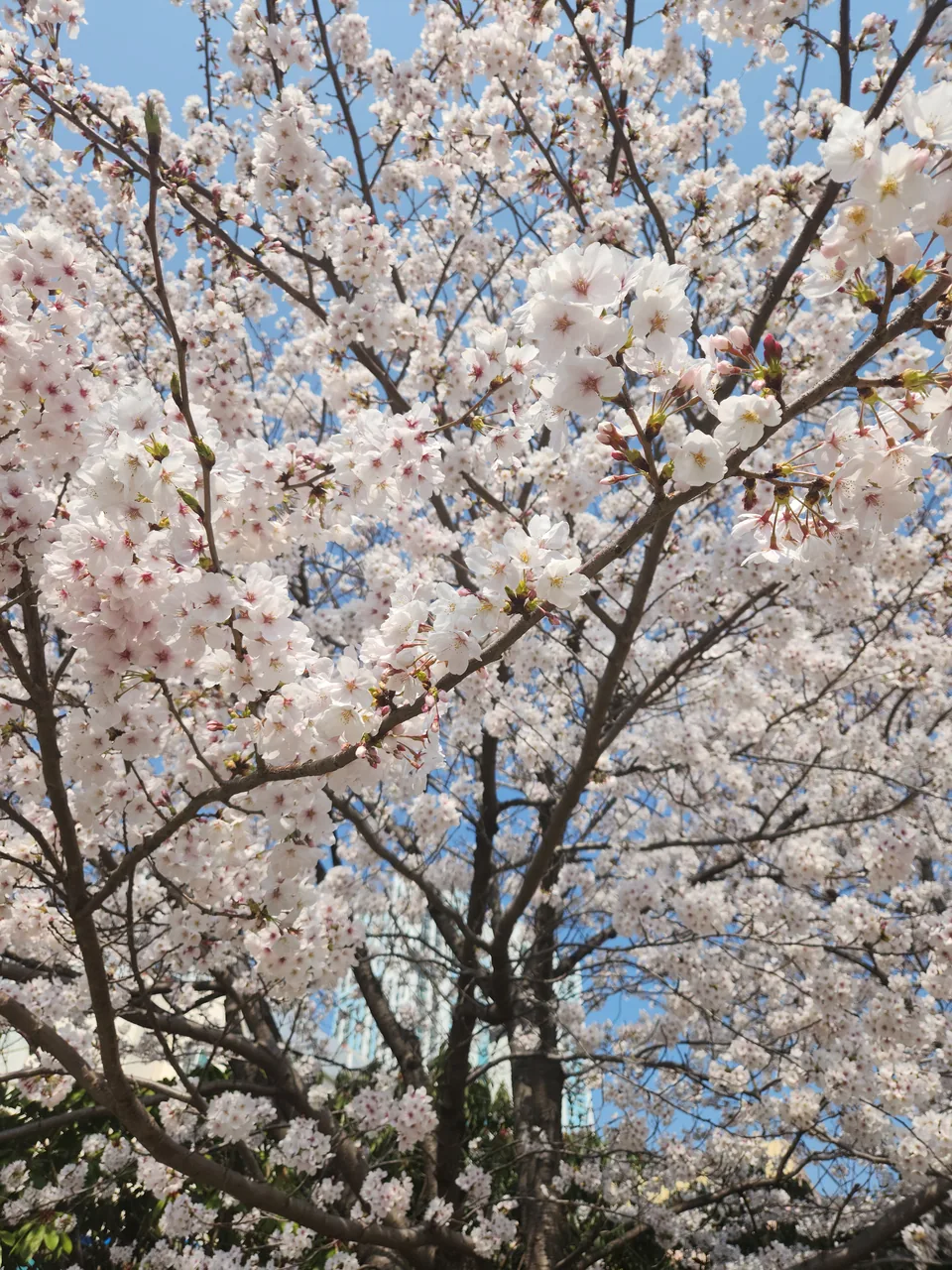
Cherry blossoms typically start in late March and peak in early April, though the exact week shifts a little with each year’s weather.
- Busan Citizens Park Map (Sasang-gu): open lawns and a long blossom-lined path, easy to reach by subway.
- Hwangnyeongsan Cherry Blossom Road Map: a hillside road and walking path with city views framed by blossoms.
- Oncheoncheon Stream Map (near Oncheonjang and Dongnae): a walkable, blossom-lined stream right in the middle of the city.
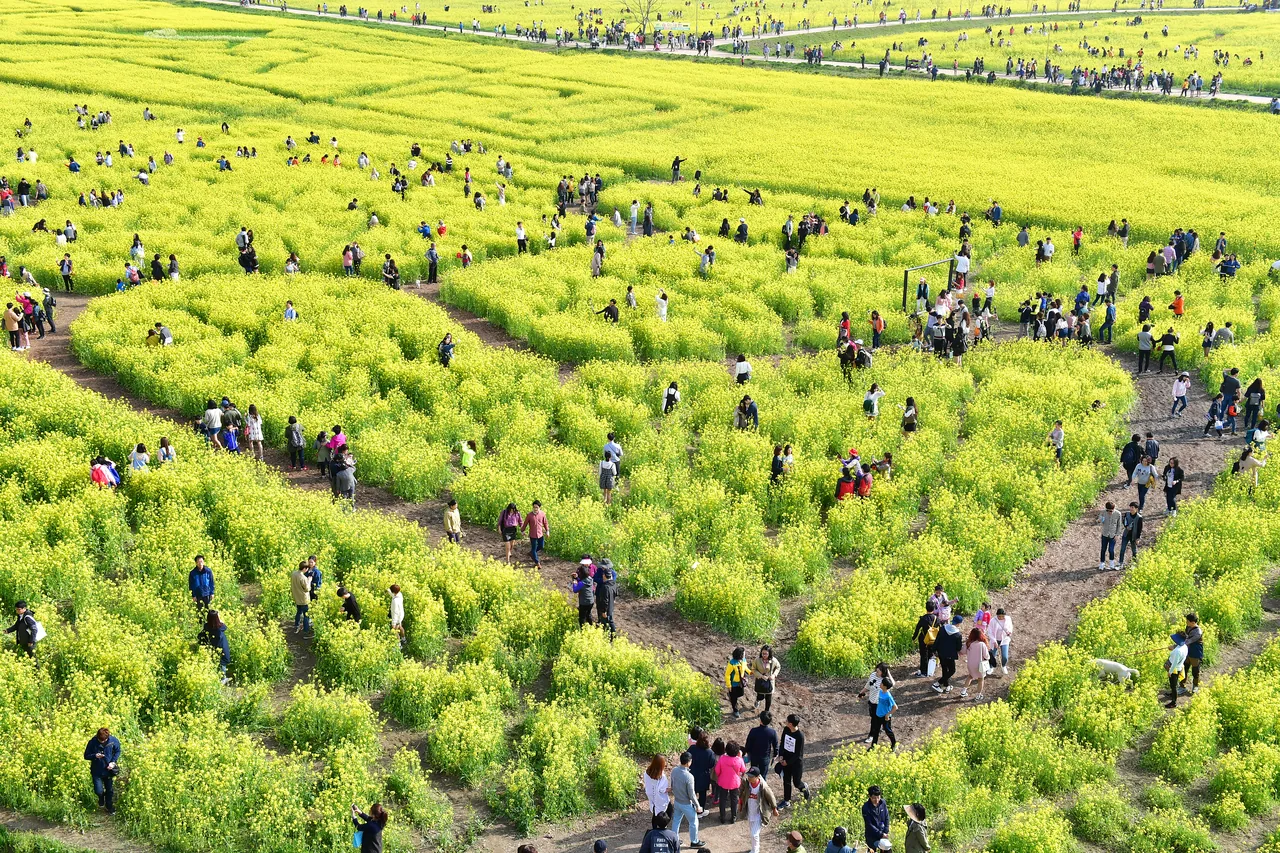
- Daejeo Eco Park Map (Gangseo-gu): cherry blossoms and canola fields bloom at the same time here, a combination most Busan parks don’t have.
Average highs climb from about 13.7°C in March to 23.3°C in May, so mornings still call for a jacket even as afternoons turn warm.
4. Side Trip to Jinhae: Home of the World’s Largest Cherry Blossom Festival
Jinhae Gunhangje Festival is an easy day trip from Busan and, by its own claim, the largest cherry blossom festival in the world.
The 2026 edition runs March 27 to April 5, its 64th year, centered on Jinhae-gu in the city of Changwon, about an hour’s bus ride from Busan.
| Detail | Fact |
|---|---|
| 2026 dates | March 27 – April 5 (64th edition) |
| Main areas | Yeojwacheon Stream Map, Jungwon Rotary, and Jinhaeru |
| Scale | About 360,000 cherry trees, more than 2 million visitors a year |
| Bus from Busan | Busan Seobu (Sasang) Terminal to Jinhae Terminal, about 1 hour 5 minutes |
| Frequency | Around 27 departures a day |
| Fare | About KRW 6,100 one way |
The opening ceremony is expected around April 3, and a naval fireworks display at Jinhaeru on the evening of April 1 has shown up in past editions, but neither detail is locked in yet. Check the official festival announcement closer to the date before building a schedule around either one.
Because buses run roughly every 20 minutes for most of the day, Jinhae fits comfortably into a single day trip from Busan without booking a tour.
5. One Spring Catch: Yellow Dust and Fine Dust Season
Spring is also Busan’s worst stretch for yellow dust and fine dust, with April typically the peak month for poor air quality.
Check a same-day air quality forecast before heading out in March and April, and keep a mask on hand for the occasional bad-air day. Most spring days are fine; the dust tends to arrive in short spikes rather than lasting for weeks at a time.
6. Summer in Busan (June to August): Beach Season
Summer, June through August, is when Busan does something Seoul cannot: open its beaches for the season.
| Beach | 2026 Opens | 2026 Closes |
|---|---|---|
| Haeundae Beach Map | June 26 | September 15 (extended this year) |
| Songjeong Beach Map | June 26 | August 31 |
| Gwangalli Beach Map | July 1 | August 31 |
| Songdo Beach Map | July 1 | August 31 |
| Dadaepo Beach Map | July 1 | August 31 |
| Ilgwang Beach | July 1 | August 31 |
These are the official 2026 city dates. Closing dates sometimes shift slightly late in the season, so confirm with the city announcement if traveling right at the edges of the window.
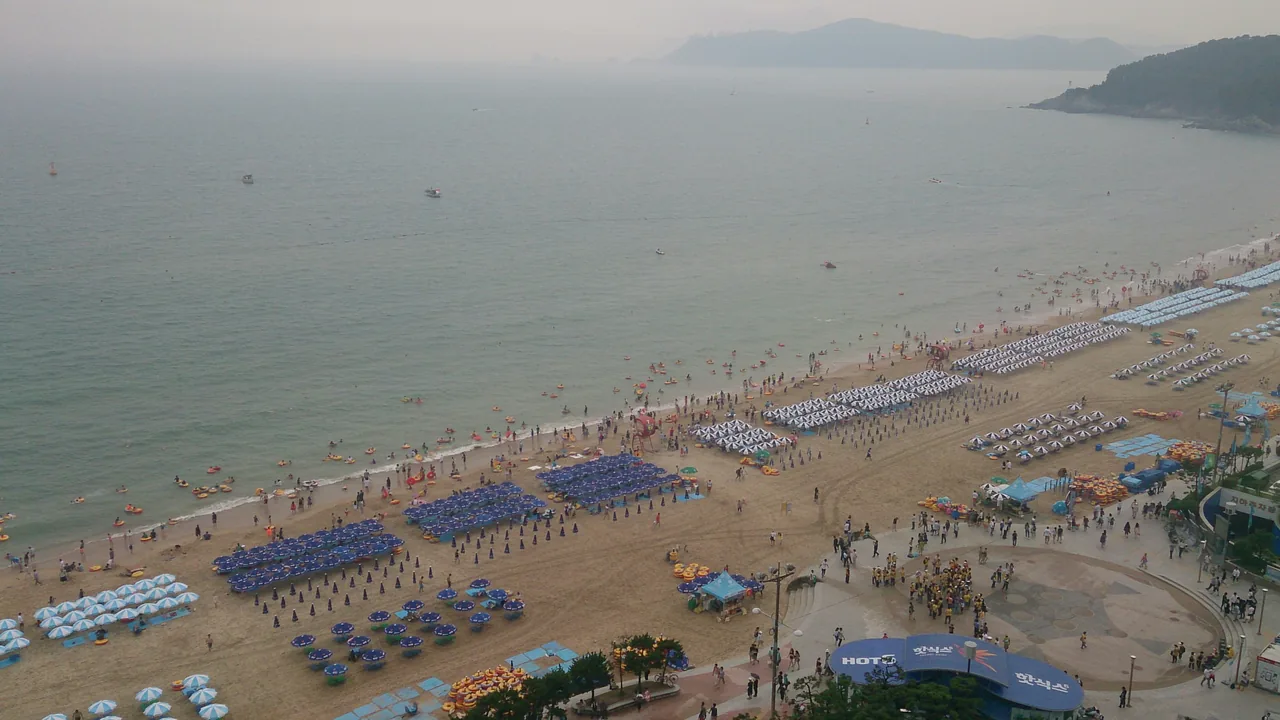
Early August is also when Haeundae and Gwangalli see their heaviest crowds of the year, partly because the Busan Sea Festival runs August 7-13, now consolidated at Dadaepo Beach instead of spread across several beaches.
Weekday mornings before 10am are the simplest way to see either beach without the peak crowd.
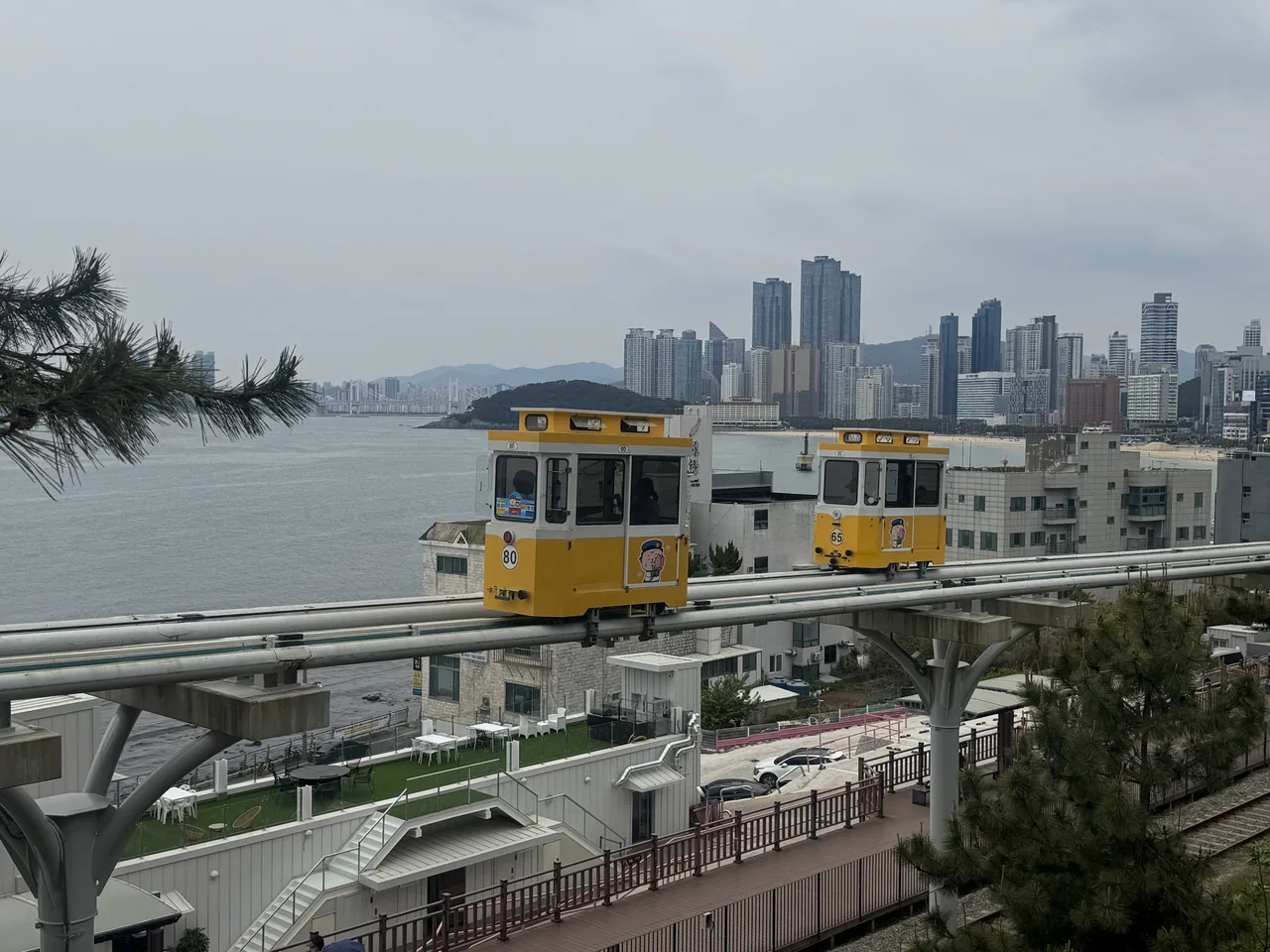
Riding the Blueline Park sky capsules along Haeundae’s old coastal rail line is one of the newer highlights of a summer visit, but weekend afternoons bring long ticket lines and capsules can sell out before reaching the counter. Booking a timed slot ahead of time avoids the wait.
7. Busan Sea Temperature by Month: When the Water Is Actually Swimmable
Water temperature is the real test of whether a Busan beach day will feel good, not just the air temperature.
| Month | Avg Sea Temp (°C) |
|---|---|
| January | 14.4 |
| February | 13.5 |
| March | 13.6 |
| April | 14.7 |
| May | 16.7 |
| June | 20.2 |
| July | 23.8 |
| August | 26.7 (warmest) |
| September | 25.1 |
| October | 22.4 |
| November | 19.2 |
| December | 16.5 |
July through September is the genuinely comfortable swimming window, with water sitting between 23.8°C and 26.7°C. June and October sit right on the edge at 20-22°C, fine for a quick dip but noticeably cooler than midsummer.
8. Monsoon Season in Busan: Late June Into Late July
Busan’s monsoon, known locally as jangma, typically runs from late June through late July. Rain tends to arrive as heavy short bursts rather than an all-day drizzle, so one wet afternoon doesn’t usually wreck the whole day. If the rain sets in, our guide to Busan when it rains lists the indoor options with prices and opening hours.
Building a flex day or two into any late June or July itinerary is the simplest way to work around it.
9. Typhoon Season: July Through September
Typhoon season for Korea runs July through September, and Busan, sitting directly on the south coast, is more exposed than inland cities.
| Fact | Detail |
|---|---|
| Peak months | August busiest, then July, then September |
| Share of storms | About 90% of typhoons affecting Korea form in July-September |
| Yearly average | Around 3.1 typhoons affect Korea per year |
| Recent trend | September typhoons have been trending stronger in recent years |
A direct typhoon hit can delay or cancel ferries and flights with little notice. Checking the forecast a few days before departure, and again the morning of any ferry crossing, is worth the two minutes it takes.
10. Fall in Busan (September to November): Clear Skies and Film Festivals
Fall, September through November, is Busan’s other top season, with humidity dropping fast once September ends and clear skies becoming the norm. For that month on its own, our guide to Busan in September has the beach closing dates and the Chuseok week laid out day by day.
The Busan International Film Festival (BIFF) takes over the city October 6-15 in 2026, marking its 31st edition.
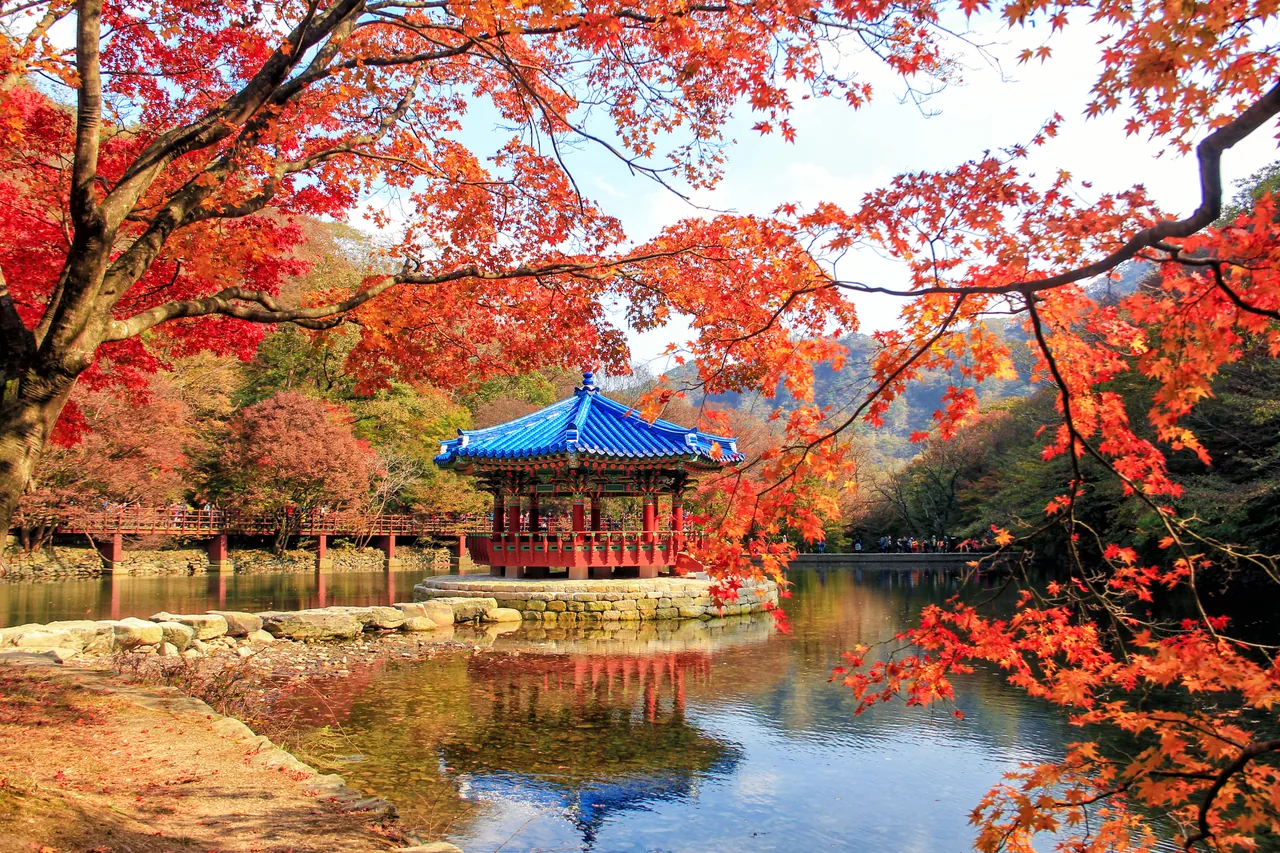
Fall foliage peaks in early November, creating a short overlap between the tail end of BIFF and the start of leaf-peeping season.
11. Busan Fireworks Festival: Dates, Times, and Where to Watch
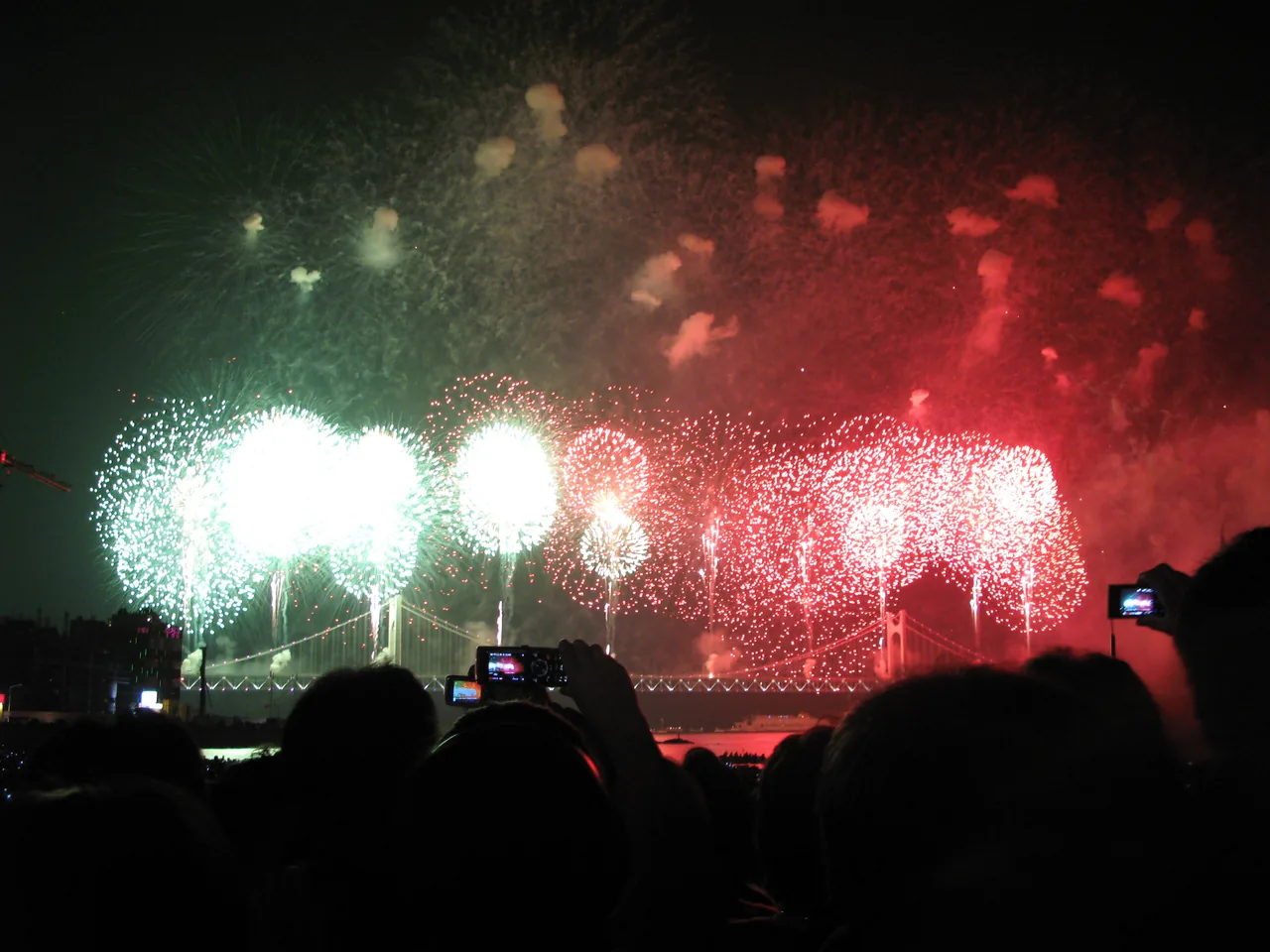
The Busan Fireworks Festival lights up Gwangalli Beach on November 7, 2026, a Saturday, for its 21st edition.
At 8:00pm, the lights cut and the first shells go up over Gwangalli Beach, reflected off the Gwangan Bridge and the dark water below. The main show runs until 9:30pm.
Seat reservations typically open in October; checking the official announcement closer to the date is the safest way to lock in a spot instead of standing for ninety minutes.
Watching the show from the water on a Haeundae yacht tour departing near The Bay 101 is a different angle on the same fireworks, though tours can be cancelled or rescheduled on short notice if the weather turns rough. Confirming the day-of forecast before booking is worth the extra step.
For more on getting a good spot and what else to expect, see the full Busan Fireworks Festival guide.
12. Gwangalli M Drone Light Show: Every Saturday, All Year Round
The Gwangalli M Drone Light Show runs every Saturday, all year round, not starting in March as some older guides claim. It has already been running weekly since January.
| Season | Showtimes |
|---|---|
| Winter | 7:00pm and 9:00pm |
| Summer | 8:00pm and 10:00pm |
Each show runs about 12 minutes and typically uses around 1,000 drones, with special shows scaling up to as many as 2,500, including a New Year’s Eve countdown show on December 31. Admission is free, and Gwangalli Beach itself or the promenade near the Gwangan Bridge are the easiest places to watch from.
Pair it with the Gwangalli neighborhood guide for where to eat and where to stand.
13. Winter in Busan (December to February): Mild Coast, Camellia Blooms
Winter, December through February, is Busan’s mildest and driest season, noticeably warmer than inland Korean cities thanks to the coast.
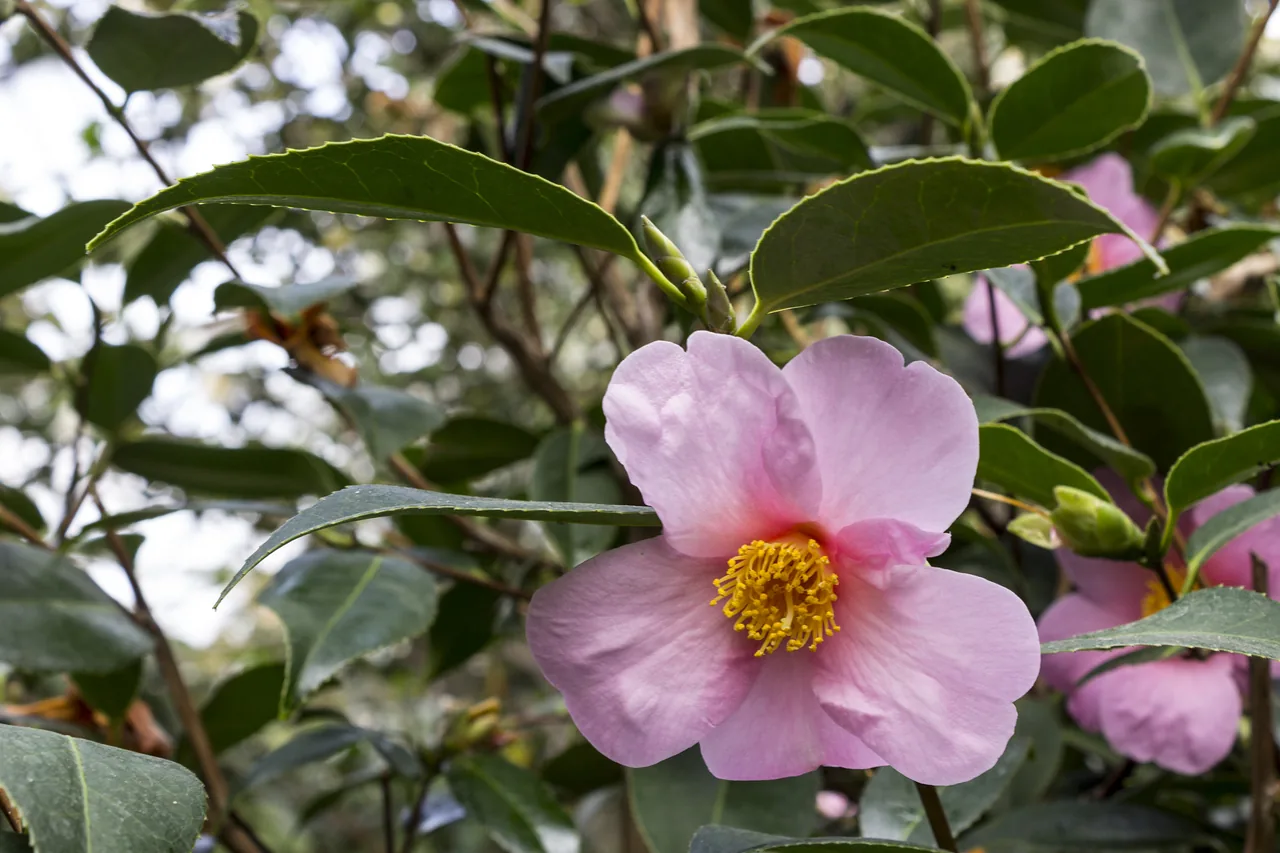
Camellias are the city’s first flowers of the new year, opening around January and February while most of the country is still bare.
| Festival | Most Recent Run | Area | Hours |
|---|---|---|---|
| Gwangbok-ro Light Tree Festival | Dec 5, 2025 – Feb 22, 2026 | Gwangbok-ro Map, near Nampo Station | Daily 5:30pm-10pm, free |
| Haeundae Stella Light Festival | Nov 29, 2025 – Jan 18, 2026 | Haeundae | Evening hours, free |
| Oncheoncheon Light Festival | Dec 19, 2025 – Feb 1, 2026 (3rd edition) | Dongnae-gu | Evening hours, free |
The 2026 winter edition of each festival is usually confirmed in October or November, so treat the exact December 2026 dates as unconfirmed until the city posts its official schedule.
14. New Year’s Sunrise in Busan: Where to Watch the First Light of 2026
Sunrise on January 1, 2026 is expected around 7:31am, and Busan has three well-known spots for watching it.
| Spot | Details |
|---|---|
| Dadaepo Beach | Busan’s signature sunset beach also hosts the city’s official New Year event, with free tteokguk and music from about 5:30am |
| Songdo Beach | Crowds gather from around 6:00am |
| Oryukdo Skywalk Map | At the start of the Igidae coastal trail, busiest from about 6:50am to 7:00am |
Two more spots worth knowing for sunrise light or coastal views year-round are Haedong Yonggungsa Temple and Taejongdae, both long-standing favorites, though neither runs a confirmed official New Year program.
15. Best Time to Visit Busan by Purpose (and How It Differs From Seoul)
| Purpose | Best Window |
|---|---|
| Cherry blossoms (Busan) | Early April |
| Cherry blossoms (Jinhae) | Late March to early April |
| Beach season | July-August |
| Fall foliage | Late October to early November |
| Fireworks festival | November |
| Drone light show | Every Saturday, year-round |
| Best value, fewest crowds | Winter weekdays |
| Avoiding rain | Skip late June to late July if possible |
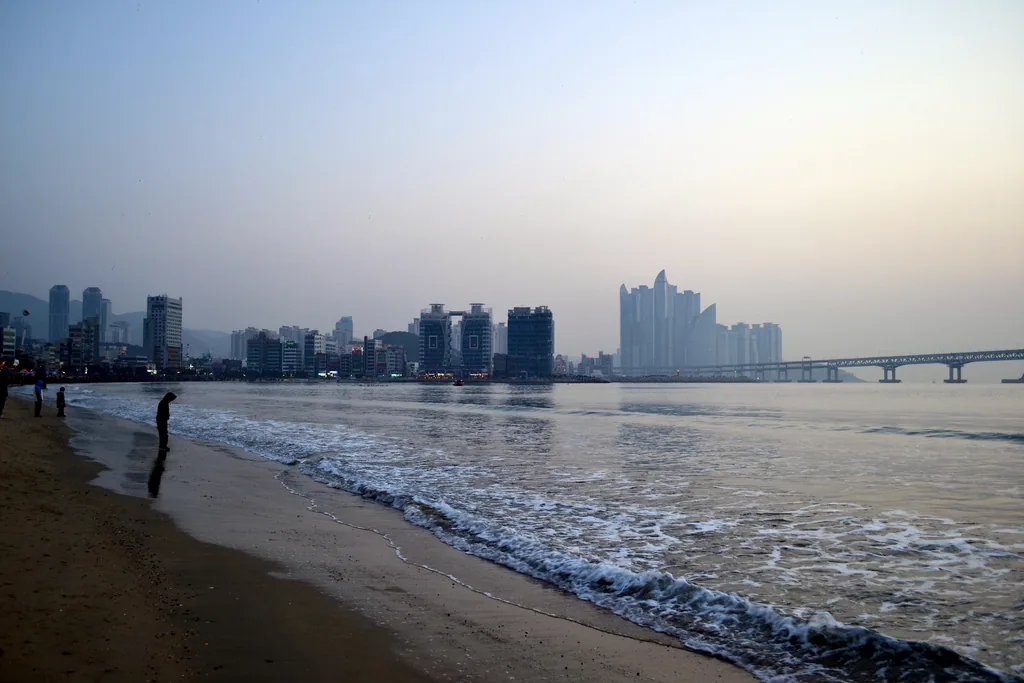
Unlike Seoul, Busan is a coastal city, so its winters bring far less snow and its summers come with a real beach scene, two of the clearest differences between the two cities’ travel calendars.
A Busan city tour bus is a practical way to cover several of these seasonal highlights in a single day, whatever time of year it is.
A Visit Busan Pass bundles admission to roughly 30 paid attractions, which pays off for a packed sightseeing schedule, but it can cost more than paying individually for anyone who only wants to hit two or three big spots.
16. What to Pack for Busan, Season by Season
| Season | What to Pack |
|---|---|
| Spring / Fall | Layers: a light jacket for morning and evening, short sleeves for midday |
| Summer | Swimwear, quick-dry clothing, and a light rain jacket for monsoon season |
| Winter | A warm coat plus a windproof layer for the coastal wind |
Getting around is easier with the basics sorted before landing: a Busan subway and transit card guide for daily travel, a KTX and Korail pass guide if train seats need booking ahead during a busy season, a short list of essential travel apps for Korea, and a quick look at Naver Map versus Kakao Map before relying on a map app that doesn’t work well in Korea.
A Korean currency and exchange guide is also worth a quick read before landing, especially around winter’s lower-cost travel window.
Setting up a Korea eSIM before departure means connectivity works the moment the plane lands, though it’s worth double-checking activation instructions ahead of time since some plans need a working wifi connection to install before takeoff.
Whatever the season, the full Busan travel guide covers the rest of the trip planning, from neighborhoods to a full day-by-day itinerary.
🎡Things to Do49
🍜Food7
🏨Where to Stay3
🚇Getting Around8
🧭Travel Tips13
📌More3
🧭All-Korea essentials37
Frequently asked questions
See the complete Busan travel guide next
Images: Vichycombo, CC BY-SA 4.0 · Appleysj, CC BY-SA 4.0 · VN.NguyenDucDuy, CC BY-SA 4.0 · ProjectManhattan, CC BY-SA 3.0 · RedMosQ, public domain · Tungdangthanh, CC BY-SA 3.0 · cultivar313, CC BY-SA 3.0 · Republic of Korea, CC BY 2.0 — via Wikimedia Commons.