
Busan Street Food: What to Eat & Where to Find It

Jagalchi’s fish stalls, BIFF Square’s seed-filled hotteok, the alleys of Gukje Market and a night market that comes alive after dark — a local’s guide to eating your way through Busan.

Last Updated: June 2026
The short version

  • Busan’s street-food heart is the old downtown around Nampo: Jagalchi fish market, BIFF Square, Gukje Market and the Bupyeong Kkangtong Night Market — all within a few blocks.
  • Must-eats: ssiat hotteok (seed-filled pancake, a BIFF Square original), bibim dangmyeon (spicy glass noodles), Busan eomuk (fish cake), and fresh seafood at Jagalchi.
  • Most stalls are cash-friendly but many now take cards; go hungry, share, and check hours in a map app — small stalls keep their own schedules.
  • It pairs perfectly with a sit-down bowl of dwaeji-gukbap or milmyeon, and fits the Nampo half of a Busan day.

If Busan has a single best meal, it isn’t in a restaurant — it’s grazing the markets. The old downtown around Nampo packs Korea’s largest fish market, a street-food square, a sprawling traditional market and a buzzing night market into a few walkable blocks. This is a local’s guide to Busan street food: the markets, the must-eat dishes, the famous local names, and how to do a crawl without missing the good stuff. Plan the rest of your trip with our complete Busan Travel Guide.
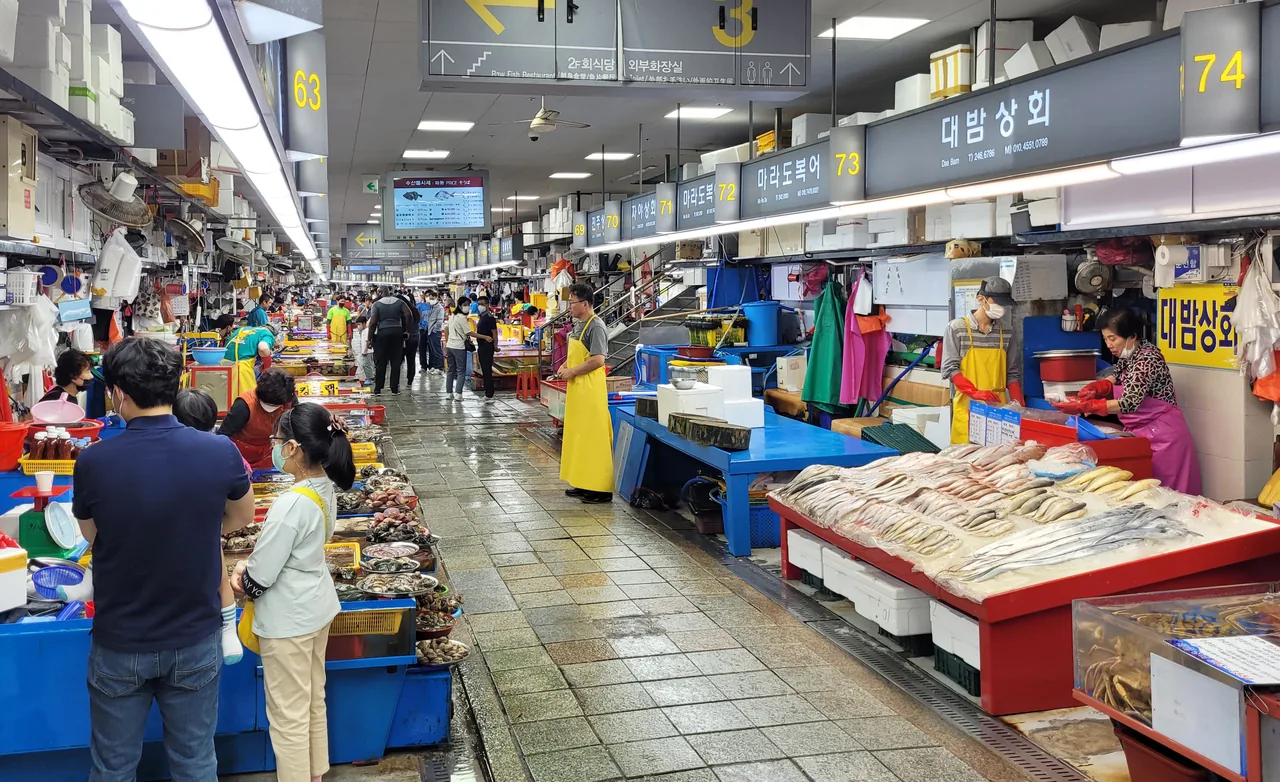
Stalls of fresh seafood and vendors in the hall of Jagalchi Market, Busan's biggest fish market
Jagalchi Market, the heart of Busan’s seafood street food. (Photo: Bernard Gagnon, CC0)

1. Busan’s street-food markets at a glance

Four markets, all within walking distance in the Nampo/Bupyeong area, cover most of the eating:

MarketKnown forArea
Jagalchi MarketKorea’s biggest fish market — raw & grilled seafoodNampo (Jagalchi station)
BIFF SquareSsiat hotteok, bibim dangmyeon, street snacksNampo
Gukje MarketTraditional market alleys, eomuk, yubu jeongolNampo
Bupyeong Kkangtong Night MarketGlobal street food after darkBupyeong (next to Gukje)

You can hit all four in an afternoon-into-evening. Below, what to eat at each — and the dishes worth crossing town for.

2. Jagalchi Market: Korea’s biggest fish market

Jagalchi Market (자갈치시장) is the soul of seafood Busan — a cavernous hall of stalls run mostly by the city’s famous jagalchi ajumma (market women), plus a modern building on the waterfront.

  • How it works: pick your fish or shellfish fresh downstairs, and a restaurant upstairs will prepare it as raw hoe (sashimi) or grilled, usually for a cooking fee. Agree the price first.
  • The local specialty: gomjangeo (꼼장어) — spicy grilled hagfish — is a Jagalchi classic, along with grilled clams and a bowl of seafood.
  • Cheap and quick: stalls selling steamed crab, dried fish and Busan eomuk (fish cake) skewers are good even if you don’t sit down for hoe.
Local tip: mornings are liveliest and freshest; the upstairs hoe restaurants fill at lunch and dinner. Always confirm prices and the cooking fee before you order.

3. BIFF Square: the street-food strip

A few minutes from Jagalchi, BIFF Square (BIFF광장) — named for the Busan International Film Festival — is the city’s best-known street-food run.

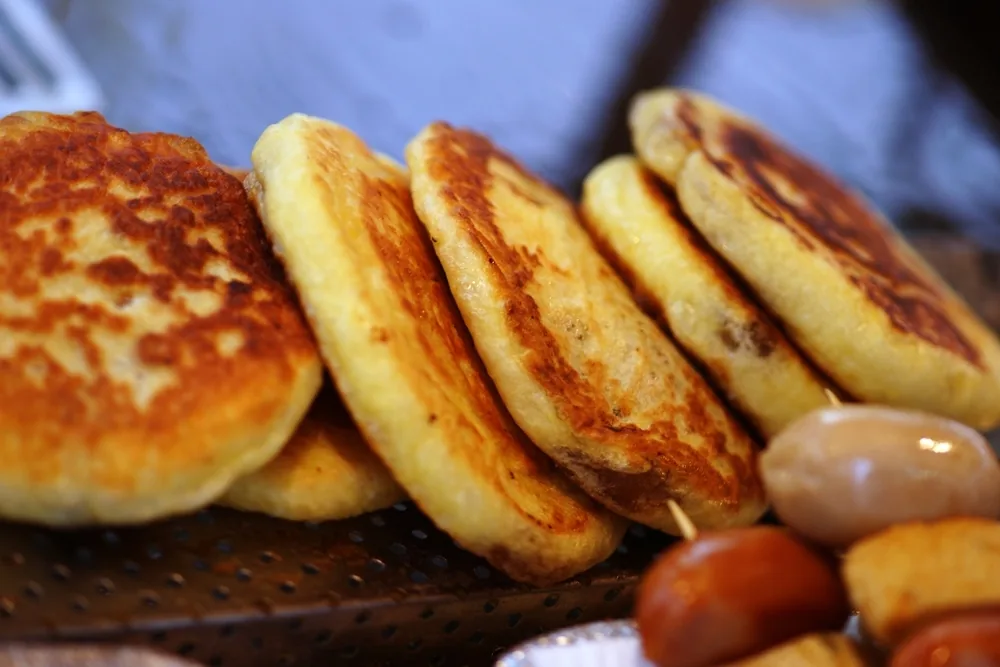
  • Ssiat hotteok (씨앗호떡): Busan’s signature street snack and a BIFF Square original — a fried sweet pancake split open and stuffed with seeds and nuts. Look for the lines.
  • Bibim dangmyeon (비빔당면): chewy glass noodles tossed in a sweet-spicy sauce, a cheap Busan favorite.
  • The classics: tteokbokki (spicy rice cakes), eomuk skewers with hot broth, gimbap and twigim (fritters) line the strip.
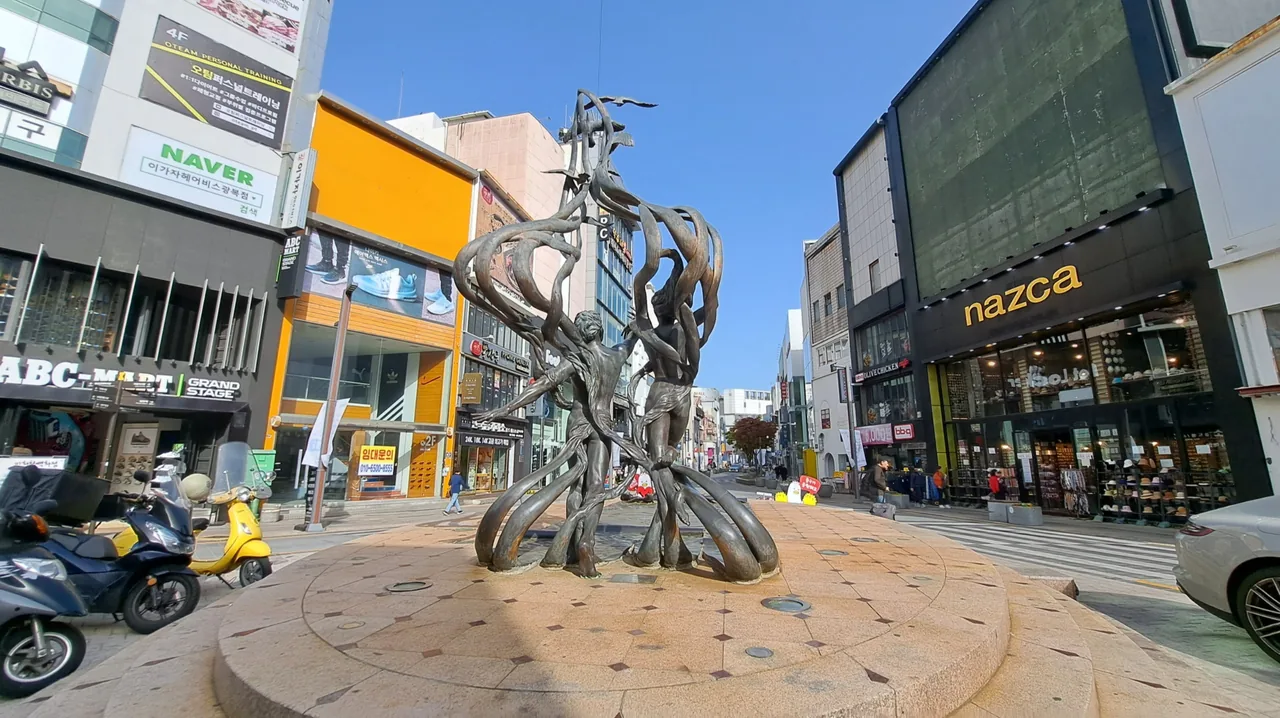
Go for the hotteok: the seed-filled version was popularized here — grab one fresh off the griddle and eat it walking (careful, the syrup is molten).
A busy alley of stalls and shoppers at Gukje Market in Nampo, Busan
Gukje Market’s alleys, full of food and finds, in old-town Nampo. (Photo: Hankook12, CC0)

4. Gukje Market & the Bupyeong Night Market

Behind BIFF Square, Gukje Market (국제시장) is a sprawling maze of alleys selling everything — and plenty to eat among the shops.

  • In Gukje: sit-down alley stalls for yubu jeongol (fried-tofu hotpot), bibim dangmyeon, kalguksu and patbingsu in summer; the famous Manmul (“everything”) street runs through it. Map
  • Bupyeong Kkangtong Night Market (부평깡통야시장): right next door, this covered market turns into a night-food hub after sunset, with stalls of grilled skewers, dumplings and international street food. Map
  • When: the night market is best in the evening (roughly from late afternoon); Gukje’s day stalls wind down earlier.
Hours vary: individual stalls open and close on their own schedules and some shut one day a week — check a map app for the specific stall or restaurant before making a special trip.

5. The must-eat Busan street foods

Beyond the markets, these are the dishes that say “Busan.” Most cost just a few thousand won:

DishWhat it is
Ssiat hotteok (씨앗호떡)Fried sweet pancake stuffed with seeds & nuts
Bibim dangmyeon (비빔당면)Chewy glass noodles in sweet-spicy sauce
Eomuk (어묵)Busan’s famous fish cake, on skewers with broth
Gomjangeo (꼼장어)Spicy grilled hagfish, a Jagalchi specialty
Chungmu gimbapMini rice rolls with spicy squid & radish
Tteokbokki & twigimSpicy rice cakes & assorted fritters

For the two great sit-down Busan dishes — dwaeji-gukbap (pork soup) and milmyeon (cold wheat noodles) — see our dedicated guides linked below.

6. Beyond the markets: more food streets

The markets are the headline, but a few other areas are worth a graze:

  • Seomyeon food alley (서면 먹자골목): the city’s central nightlife-and-eating district, thick with pork-soup joints, grills and pojangmacha (tented street bars). Map
  • Haeundae Market: a covered lane near the beach with street snacks, seafood and the famous Haeundae-style eomuk. Map
  • Gwangalli: beachfront cafes and bars rather than market stalls, but a great spot for an evening bite with a bridge view.
Pair it up: graze the Nampo markets by day, then sit down for a proper bowl of dwaeji-gukbap in Seomyeon, or milmyeon nearby — street food and soul food in one trip.
Golden fried hotteok pancakes on a griddle, a Busan street-food specialty
Ssiat hotteok — the seed-filled pancake popularized at BIFF Square. (Photo: Korea.net / KOCIS, CC BY-SA 2.0)

7. How to do a Busan street-food crawl

A few practical notes to eat well and stress-free:

  • Bring some cash: many stalls now take cards, but small ones may be cash-only — keep a little won on you.
  • Go hungry and share: portions are small and cheap, so a group can taste far more by splitting.
  • Check hours in a map app: search the stall or market in KakaoMap or Naver Map; hours and closing days vary and Google Maps is unreliable in Korea.
  • Best time: late morning for Jagalchi, afternoon for BIFF/Gukje, evening for the Bupyeong night market — you can do them in that order.
  • Allergies: a lot of street food contains seafood, wheat or nuts (the hotteok especially) — ask or check before you order.
One smooth route: Jagalchi → BIFF Square → Gukje Market → Bupyeong Night Market is a single walkable loop that takes you from fresh seafood to late-night snacks.

8. Where street food fits in your Busan trip

The Nampo markets make a perfect half-day, and they slot neatly into a wider plan:

  • Pair with old downtown: combine the markets with Gamcheon Culture Village and Yongdusan Park — all on the western, Line 1 side of the city.
  • Make it a meal day: markets for grazing, a sit-down soul-food lunch, and a Gwangalli or Seomyeon dinner.
  • Fit it to your days: the markets are Day 2 territory in most plans — see how it all comes together in our complete Busan Travel Guide.

Get a transit card, route each stop in KakaoMap, and the whole crawl is an easy, delicious afternoon.

📚 More Busan guides
★ Start here Planning Your First Trip to Korea? Start Here
🎡Things to Do38
A Night at Sajik Stadium: Watching the Lotte Giants in BusanBeomeosa Temple Busan: Free Entry, Easy Subway & Overnight TemplestayBusan Activities: 25+ Ways to Surf, Sail, Luge & HikeBusan Cinema Center: BIFF’s Home & Its Record-Breaking RoofBusan Fireworks Festival: The Complete Gwangalli GuideBusan in Summer: WATERBOMB, the Free Sea Festival & a Saturday-Night Drone Show Worth Planning AroundBusan Nightlife: Districts, Prices, Etiquette and Last TrainsBusan Spas & Jjimjilbang: A First-Timer’s Guide to Korean BathhousesBusan Water Parks: Where to Cool Off in 2026 (Clubs, Slides & Free Beaches)Busan with Kids: The Best Family Days Out & TipsBusan X the Sky: Inside Korea’s 2nd-Tallest ObservatoryBusan Yacht Tour: Sunset & Night Cruise Under Gwangan BridgeGamcheon Culture Village Busan: Free Entry, How to Get There & Photo SpotsGwangalli Beach, Busan: The Complete Guide to Night Views, Food, Cafes & StaysGyeongju Day Trip from Busan: Korea’s Ancient Capital in a DayHaedong Yonggungsa Temple: Busan’s Clifftop Temple by the Sea (Complete 2026 Guide)Haeundae Beach, Busan: The Complete Visitor’s GuideHaeundae Blue Line Park: Sky Capsule & Beach Train Guide (2026)Haeundae vs Gwangalli: Which Busan Beach Should You Choose?Is the Visit Busan Pass Worth It? Price, Attractions & TipsJagalchi Market: How to Eat at Korea’s Biggest Fish MarketLearning to Surf at Songjeong Beach, BusanLotte World Adventure Busan: Rides, Tickets & TipsNampo-dong: Gukje Market, BIFF Square & Busan Tower in One DayOsiria Tourism Complex Busan: Lotte World, Luge, Yonggungsa & How to Actually Get AroundRainy Day in Busan? The Best Things to Do IndoorsSEA LIFE Busan Aquarium: Tickets, the Tunnel & What to SeeSeomyeon: Busan’s Buzzing Hub for Shopping, Food & NightlifeShopping in Busan: Markets, Malls & What to Actually BuySkyline Luge Busan: How to Ride Korea’s First LugeSongdo Beach: Korea’s First Beach, Cable Car & SkywalkStand-Up Paddleboarding at Gwangalli: A Beginner’s GuideTaejongdae: Cliffs, a Lighthouse & the Danubi TrainThe 7 Best Beaches in Busan (and How to Pick Yours)The Best Photo Spots in Busan for Sunset & Night ShotsThings to Do in Busan: 12 Sights & Experiences You’ll RememberTongyeong Day Trip from Busan: Cable Car, Murals & the SeaYeongdo Busan Guide: Taejongdae, Huinnyeoul Village & Coffee
🍜Food6
🏨Where to Stay2
🚇Getting Around6
🧭Travel Tips14
📌More3
🧭All-Korea essentials29
Boryeong Mud Festival 2026: The Complete Guide to Korea’s Wildest Summer FestivalBukchon Hanok Village: How to Visit Seoul’s Living Hanok Quarter (the Right Way)Caribbean Bay: The Complete Guide to Korea’s Biggest Water Park (2026)Chuseok 2026: Why Korea Won’t Get a Bonus Day Off (And What It Means for Your Trip)DMZ Tour from Seoul: How to Visit Korea’s BorderEverland: The Ultimate Guide to Korea’s Biggest Theme Park (2026)Google Maps Doesn’t Work in Korea — Here’s What Locals Use InsteadGyeongbokgung Palace & Hanbok: How to Do Seoul’s Grandest Palace RightHan River in Summer: The Ultimate Seoul Picnic, Chimaek & Pool GuideHidden Autumn-Foliage Spots In & Near Seoul (Beyond the Crowds)How to Get Around Korea: Trains, Subways, Buses & the T-money CardIncheon Airport to Seoul: The Fastest, Cheapest and Easiest Ways InKorea Travel Apps in 2026: The Complete Guide to Every App You Actually NeedKorea Travel Deals: How to Actually Pay Less for Your TripKorea Visa & K-ETA in 2026: Do You Actually Need One?Korean Etiquette: The Do’s, Don’ts & Customs Travelers Should KnowLotte World Seoul: The Complete Guide to the Jamsil Theme Park (2026)Money in Korea: Cash, Cards, ATMs & the No-Tipping RuleN Seoul Tower (Namsan Tower): The Complete Visitor GuideNami Island Day Trip from Seoul: The Complete Guide to Naminara, Gapyeong & the Tree-Lined LanesNational Museum of Korea: Masterpieces, Tips & Your Last Free YearPlanning Your First Trip to Korea? Start HereSeoul Climate Card vs T-money: Which One Saves You More?Seoul When It Rains: Indoor Things to Do (2026 Guide)Staying Online in Korea: eSIM, SIM Card or Pocket WiFi?The Perfect Korea Itinerary: 7 & 10-Day Routes, Day by DayWhat Should You Eat in Korea? 35 Dishes You Can’t MissWhen to Visit Korea: The Best Time to Go, Season by SeasonWhere to Stay in Seoul: The Best Neighborhood for Your Trip
Browse all our Korea guides →

Busan street food FAQ

Q. What is the best street food in Busan?
The signatures are ssiat hotteok (seed-filled sweet pancake, a BIFF Square original), bibim dangmyeon (spicy glass noodles), Busan eomuk (fish cake skewers), and fresh seafood — raw or grilled — at Jagalchi Market. Gomjangeo (spicy grilled hagfish) is a Jagalchi specialty.
Q. Where do you find street food in Busan?
The old downtown around Nampo: Jagalchi fish market, BIFF Square (the street-food strip), Gukje Market and the Bupyeong Kkangtong Night Market are all within a few walkable blocks. Seomyeon and Haeundae Market are also good for a graze.
Q. What is ssiat hotteok?
A Busan street-food icon: a fried sweet pancake (hotteok) split open and stuffed with a mix of seeds and nuts. The seed-filled version was popularized at BIFF Square and is best eaten fresh off the griddle — mind the molten syrup.
Q. Is Jagalchi Market worth visiting?
Yes — it’s Korea’s largest fish market and a Busan icon. Pick fresh seafood downstairs and have it served as hoe (sashimi) or grilled upstairs, or just browse the lively stalls. Confirm prices and the cooking fee before ordering.
Q. How much does street food cost in Busan?
Most snacks are a few thousand won each (roughly ₩2,000–5,000), so a group can taste a lot by sharing. A sit-down seafood meal at Jagalchi costs more and depends on what you pick.
Q. Do Busan street stalls take cards?
Many now accept cards, but smaller stalls may be cash-only, so carry a little cash. You can withdraw won at convenience-store ATMs nearby.
Q. When is the best time for Busan street food?
Late morning is liveliest at Jagalchi, afternoon suits BIFF Square and Gukje Market, and the Bupyeong Kkangtong Night Market is best after sunset. Doing them in that order makes one smooth loop.
Q. What should I eat at BIFF Square?
Ssiat hotteok first, then bibim dangmyeon, eomuk skewers, tteokbokki and assorted twigim (fritters). It’s the most famous concentrated street-food strip in Busan.

📖 Read the full Busan Travel Guide →