
Where to Stay in Seoul: The Best Neighborhood for Your Trip
Seoul is huge, and the area you sleep in shapes your whole trip. Here is an honest, area-by-area guide — Myeongdong, Hongdae, Jongno, Gangnam, Dongdaemun and Itaewon — with exactly which traveler each area suits, what you’ll pay, and how easy it is to get around.
| First trip, want it easy | Myeongdong or Jongno — central, walkable, on the subway, close to palaces and shopping |
|---|---|
| Nightlife & budget | Hongdae — clubs, live music, cheap beds, and a direct airport train |
| Modern & upscale | Gangnam — glossy hotels, malls, K-pop, but pricey and far from the old city |
| Palaces & tradition | Jongno & Insadong — hanok stays, tea houses, Gyeongbokgung on your doorstep |
| Shopping till late | Dongdaemun — 24-hour malls, night markets, mid-range hotels |
| International vibe & families | Itaewon & Yongsan — world food, big family hotels, museums |
| Golden rule | Stay within a 5-minute walk of a subway station on Line 2 or a line that reaches your must-sees |
1. Which Seoul neighborhood is right for you?
2. How Seoul fits together (a 2-minute orientation)
3. Myeongdong — best for first-timers and shoppers
4. Hongdae — best for nightlife, youth and budget
5. Jongno & Insadong — best for palaces, tradition and hanok stays
6. Gangnam — best for modern, upscale and K-pop
7. Dongdaemun — best for shopping and night owls
8. Itaewon & Yongsan — best for world food and families
9. What kind of place: hotel, hanok, guesthouse or apartment
10. What you’ll actually pay, by area and season
11. Getting around from your base
12. Booking tips and common mistakes
13. So, which area should you pick?
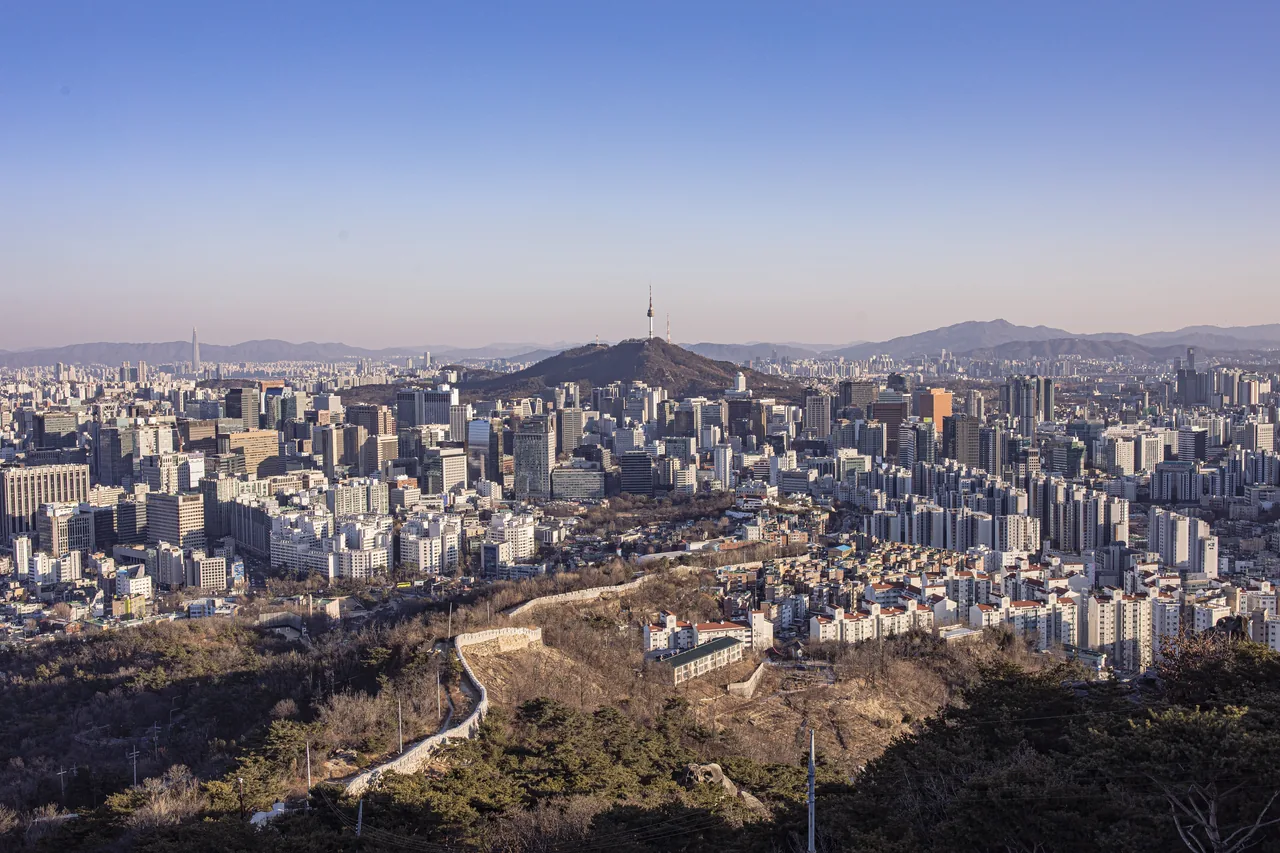
1. Which Seoul neighborhood is right for you?
For a first trip, stay in Myeongdong or Jongno — both are central, sit on top of the subway, and put palaces, shopping and street food within walking distance. If you’re here for nightlife or to save money, choose Hongdae; for sleek hotels and malls, Gangnam; for non-stop shopping, Dongdaemun; for an international, family-friendly base, Itaewon. The single thing that matters most is not the neighborhood name but how close your bed is to a useful subway station. How far Hongdae actually reaches, and why the beds here are mostly guesthouses rather than hotels, is set out in our Hongdae guide. Yeonnam-dong, Sangsu-dong and Hapjeong are all within walking distance.
Seoul has roughly ten million people and an enormous metro system, so the wrong base can cost you an hour of commuting every day. This guide breaks down the six areas most visitors actually choose, who each one is best for, and what a night roughly costs. For the bigger picture of a Korea trip, start with our complete Korea travel guide, and to decide how many days to give Seoul, see the Korea itinerary guide.
| Area | Best for | Vibe | Rough price (mid-range double) | To the palaces |
|---|---|---|---|---|
| Myeongdong | First-timers, shoppers | Central, busy, touristy | ₩₩–₩₩₩ | 10–15 min |
| Hongdae | Nightlife, young, budget | Loud, fun, energetic | ₩–₩₩ | 25–35 min |
| Jongno & Insadong | Culture, hanok stays | Historic, walkable | ₩₩–₩₩₩ | 0–10 min |
| Gangnam | Luxury, business, K-pop | Modern, polished, pricey | ₩₩₩–₩₩₩₩ | 30–40 min |
| Dongdaemun | Shopping, night owls | Practical, 24-hour | ₩₩ | 15–20 min |
| Itaewon & Yongsan | Families, world food | International, mixed | ₩₩–₩₩₩ | 20–25 min |
Still torn? Compare live prices across every Seoul district in one place — that’s the quickest way to see what your dates actually cost.
2. How Seoul fits together (a 2-minute orientation)
The Han River splits Seoul in two: the historic core with the palaces sits north of the river, and modern Gangnam sits south. Most first-timers want to be north of the river, where the palaces, hanok villages, Myeongdong and Hongdae all are. Gangnam, south of the river, is newer, glossier and more spread out.
Think of it as a few clusters strung along the subway:
- The old center (Jongno, Insadong, Myeongdong): palaces, markets, N Seoul Tower. Walkable, central, on Lines 1, 2, 3, 4 and 5.
- The west (Hongdae, Mapo): youth, nightlife, cafés. On Line 2 and the airport train.
- South of the river (Gangnam, Apgujeong, Jamsil): luxury malls, K-pop, business towers. On Lines 2, 3, 7 and 9.
- The transport spine: Line 2 is the green circle that loops the whole city and touches Hongdae, City Hall, Dongdaemun and Gangnam. A hotel near a Line 2 stop is rarely a bad call.
The metro is cheap, clean and signposted in English, so you don’t need to be in the dead center — you just need to be near the right line. To find your way around like a local, use Naver Map or KakaoMap rather than Google (which is limited for Korean transit); we compare them in our Naver Map vs Kakao Map guide, and the fare cards that make hopping around painless are covered in our Climate Card vs T-money guide.
3. Myeongdong — best for first-timers and shoppers
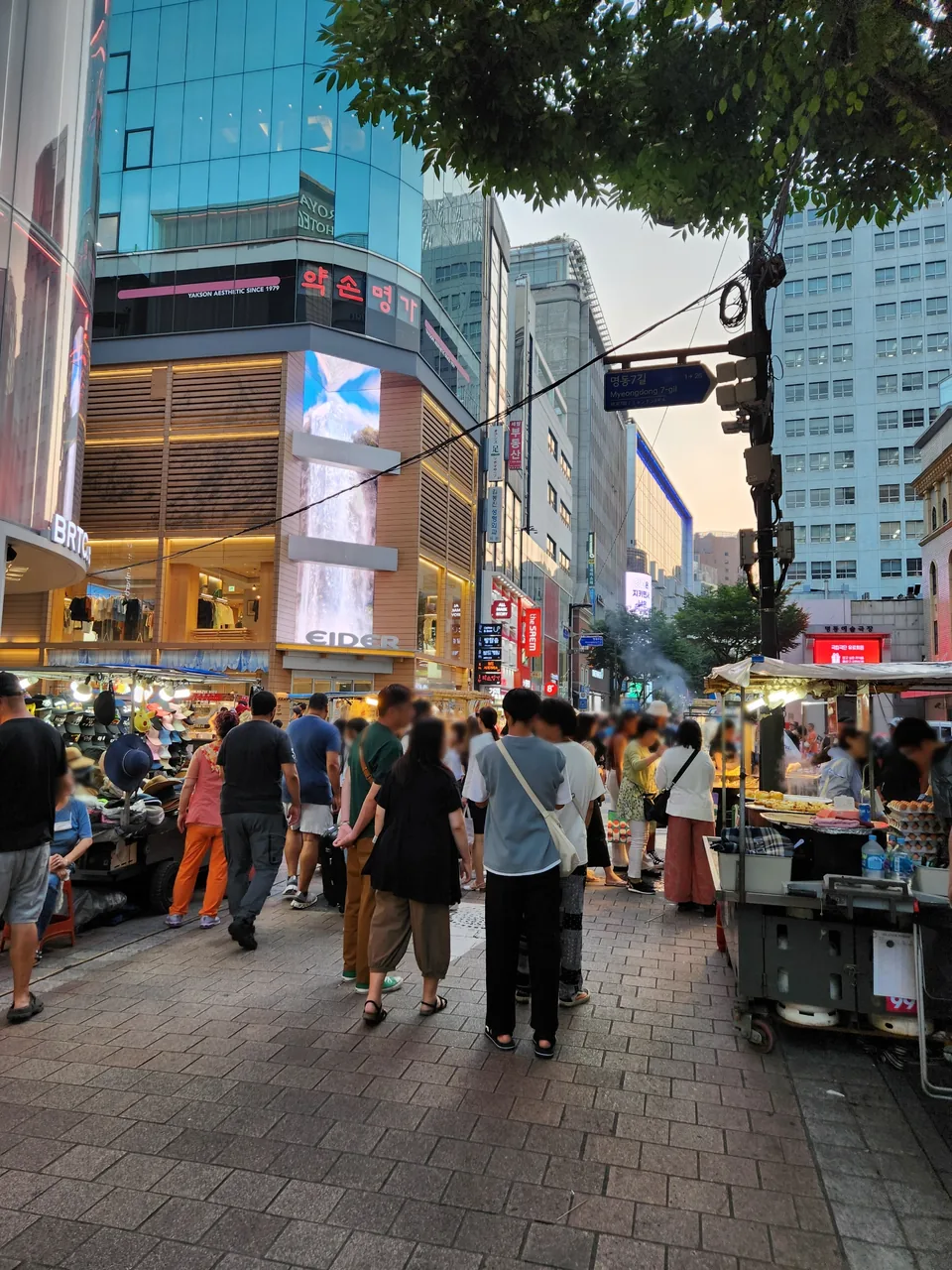
Myeongdong is the safe, central, do-it-all choice: subway lines in every direction, cosmetics and department stores at street level, and the palaces, Namsan and Namdaemun Market all close by. If this is your first time in Seoul and you want zero stress, start here. Map How far Myeongdong actually reaches, and which of the four stations suits your plans, is set out in our Myeongdong guide. Namdaemun Market and Bukchang-dong sit inside the same zone.
| Where | Jung-gu, dead center of the old city |
|---|---|
| Best for | First-timers, shoppers, short stays, families |
| Subway | Myeongdong (Line 4), Euljiro-1(il)-ga (Line 2); Seoul Station & AREX a couple of stops away |
| Price | Mid-range to upper — you pay for the location |
| Watch out for | Crowds, hard-sell shopping streets, very “tourist Seoul” |
Myeongdong is wall-to-wall shopping — skincare flagships, global fashion brands, and two giant department stores (Lotte and Shinsegae) — plus one of the city’s best evening street-food markets. It’s a 10–15 minute walk or one quick subway ride to Gyeongbokgung and the other palaces, the Namsan cable car to N Seoul Tower starts nearby, and Namdaemun Market is around the corner.
The trade-off is that Myeongdong is unapologetically touristy. By day the main lanes are packed and the shopping can feel pushy; in the evenings it’s lively but loud. You’re paying a premium for the convenience, and you won’t get much of the “everyday Seoul” feel here.
- Stay here if: you want everything on your doorstep, you’re shopping seriously, or you have limited days and don’t want to waste any on commuting.
- Look elsewhere if: you want quiet, local atmosphere or a bargain.
4. Hongdae — best for nightlife, youth and budget
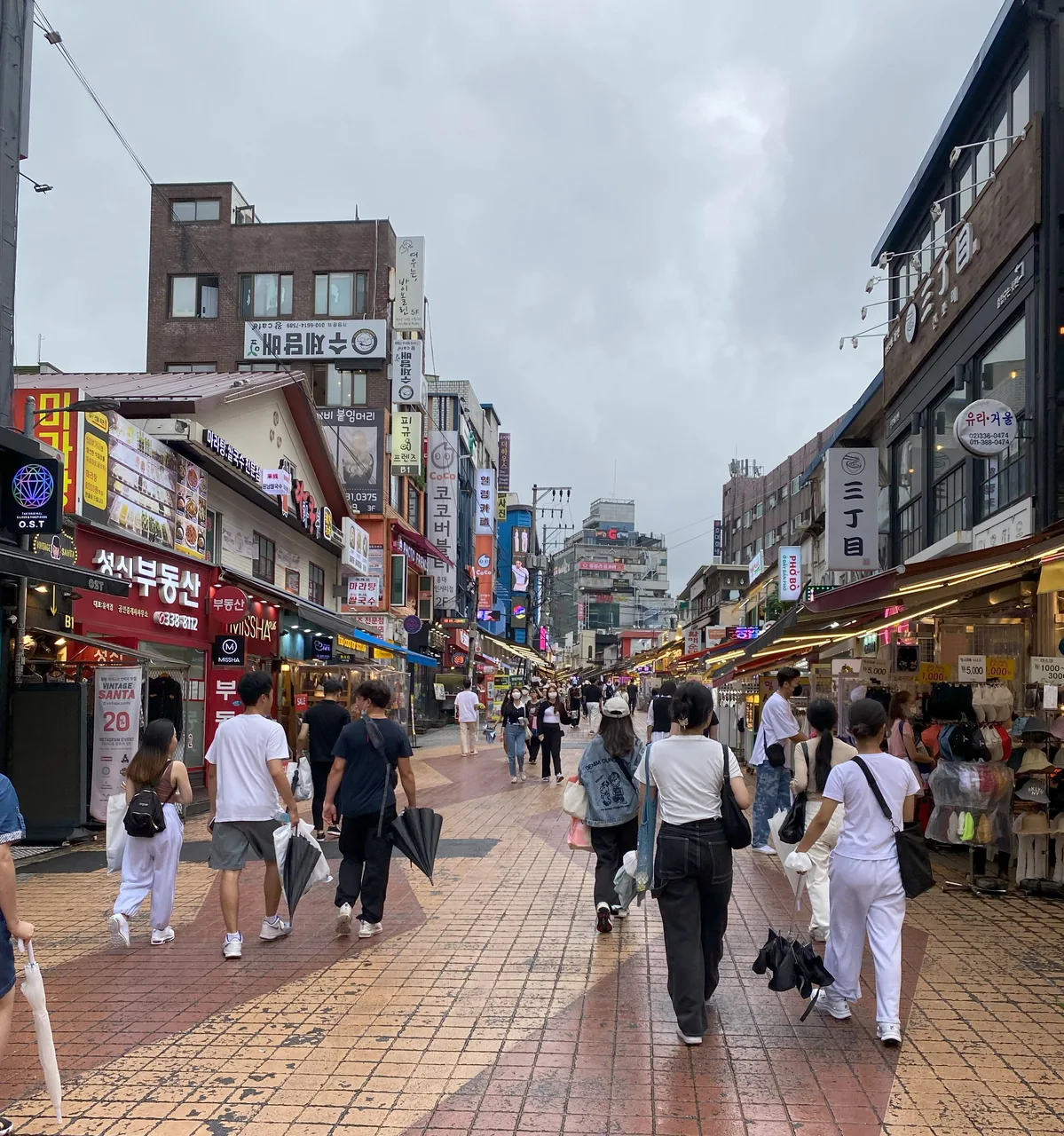
Hongdae is where Seoul stays up late: indie clubs, live music, street performers, cheap eats and the city’s biggest cluster of hostels and budget guesthouses. It’s also the smartest base if you’re flying in or out cheaply, because it sits directly on the airport train line. Map
| Where | Mapo-gu, around Hongik University in the west |
|---|---|
| Best for | Young travelers, nightlife, solo and budget trips |
| Subway | Hongik Univ. (Line 2 & AREX airport train — direct from Incheon, no transfer) |
| Price | Budget to mid-range; the best value of the major areas |
| Watch out for | Noise at night; 25–35 min to the palaces and Gangnam |
This is the Seoul of student energy — claw machines, photo booths, buskers, late-night BBQ and clubs that run till dawn. Cafés and indie shops fill the daytime, and the area spills over into trendy Yeonnam-dong and Mangwon next door. Beds are cheap, and the social hostel scene makes it a favorite for solo travelers.
The big practical win is the airport: Hongik University station is a stop on the AREX line, so you can ride straight in from Incheon with your luggage and no transfers — a real plus on arrival day. One detail worth knowing: Hongdae is served by AREX’s all-stop commuter train; the nonstop Express train skips it and runs Seoul Station to Incheon only. The downside is distance: you’re 25–35 minutes from the palaces and roughly 40 from Gangnam, and the streets are genuinely loud on weekend nights.
- Stay here if: you’re young at heart, traveling solo or on a budget, or you value the easy airport link and nightlife over being next to the sights.
- Look elsewhere if: you’re an early riser, traveling with kids, or want palaces within walking distance.
5. Jongno & Insadong — best for palaces, tradition and hanok stays
Jongno is the historic heart of Seoul, and if you want palaces, hanok villages and traditional tea houses on your doorstep — or to actually sleep in a restored hanok — this is the area. Map
| Where | Jongno-gu, north of Myeongdong around the palaces |
|---|---|
| Best for | Culture lovers, hanok stays, relaxed walkers |
| Subway | Anguk (Line 3), Jonggak & Jongno-3(sam)-ga (Lines 1, 3, 5) |
| Price | Mid-range hotels; boutique hanok guesthouses at a premium |
| Watch out for | Some lanes are quiet after dark; hanok rooms can be simple |
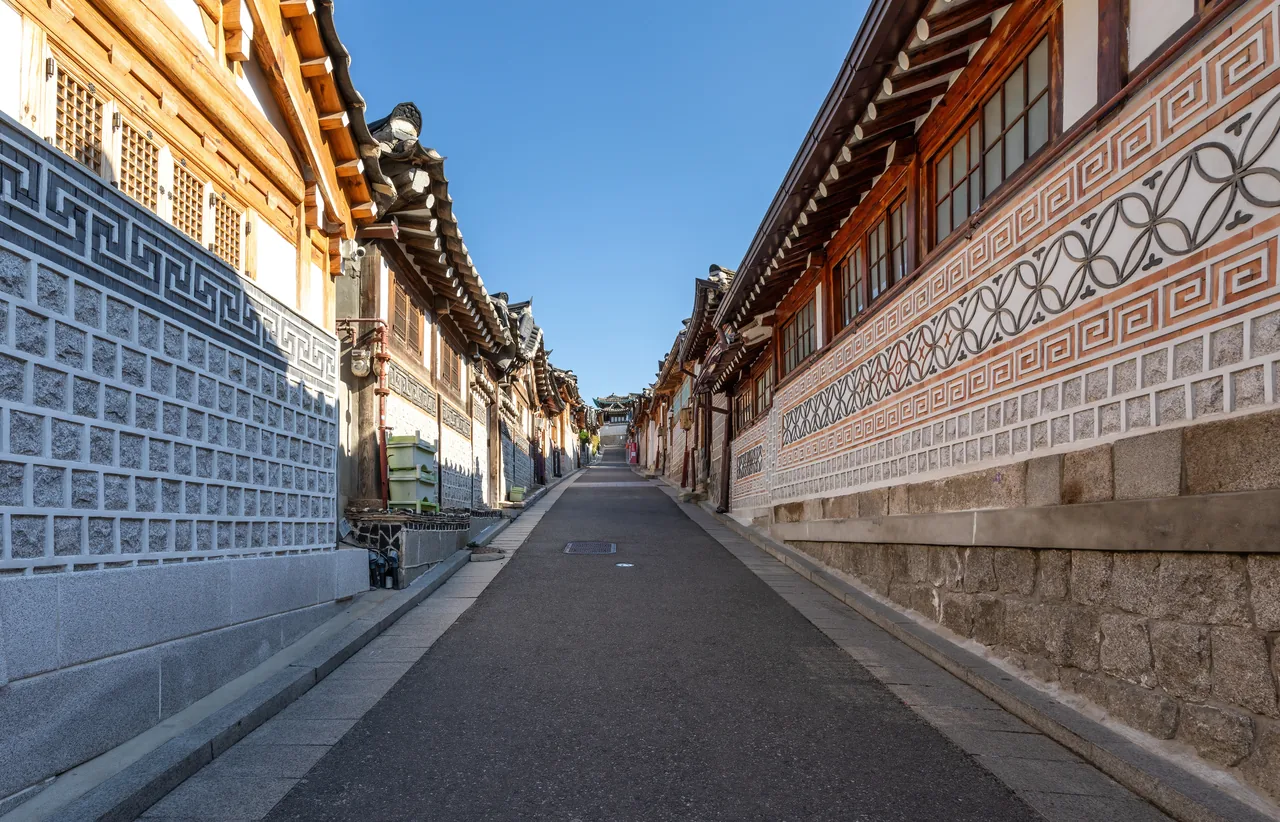
This is the Seoul of sweeping palace roofs and narrow hanok alleys. Gyeongbokgung and Changdeokgung, the Bukchon Hanok Village, and Insadong’s antique shops, galleries and tea houses are all here, mostly within walking distance of each other. It’s central, genuinely atmospheric, and far more “old Korea” than Myeongdong a few blocks south. Dive deeper into the highlights with our Gyeongbokgung & hanbok guide and Bukchon Hanok Village guide.
The signature experience is a hanok stay — sleeping in a traditional courtyard house in or near Bukchon, often on a heated ondol floor. They’re atmospheric and unforgettable, though rooms can be small and simple and some share bathrooms, so read the details before booking. Around the palaces you’ll also find normal mid-range hotels for those who want a regular bed.
- Stay here if: palaces, tradition and a calm, walkable base matter more than nightlife.
- Look elsewhere if: you want buzzing nights or a big modern hotel with a pool.
6. Gangnam — best for modern, upscale and K-pop
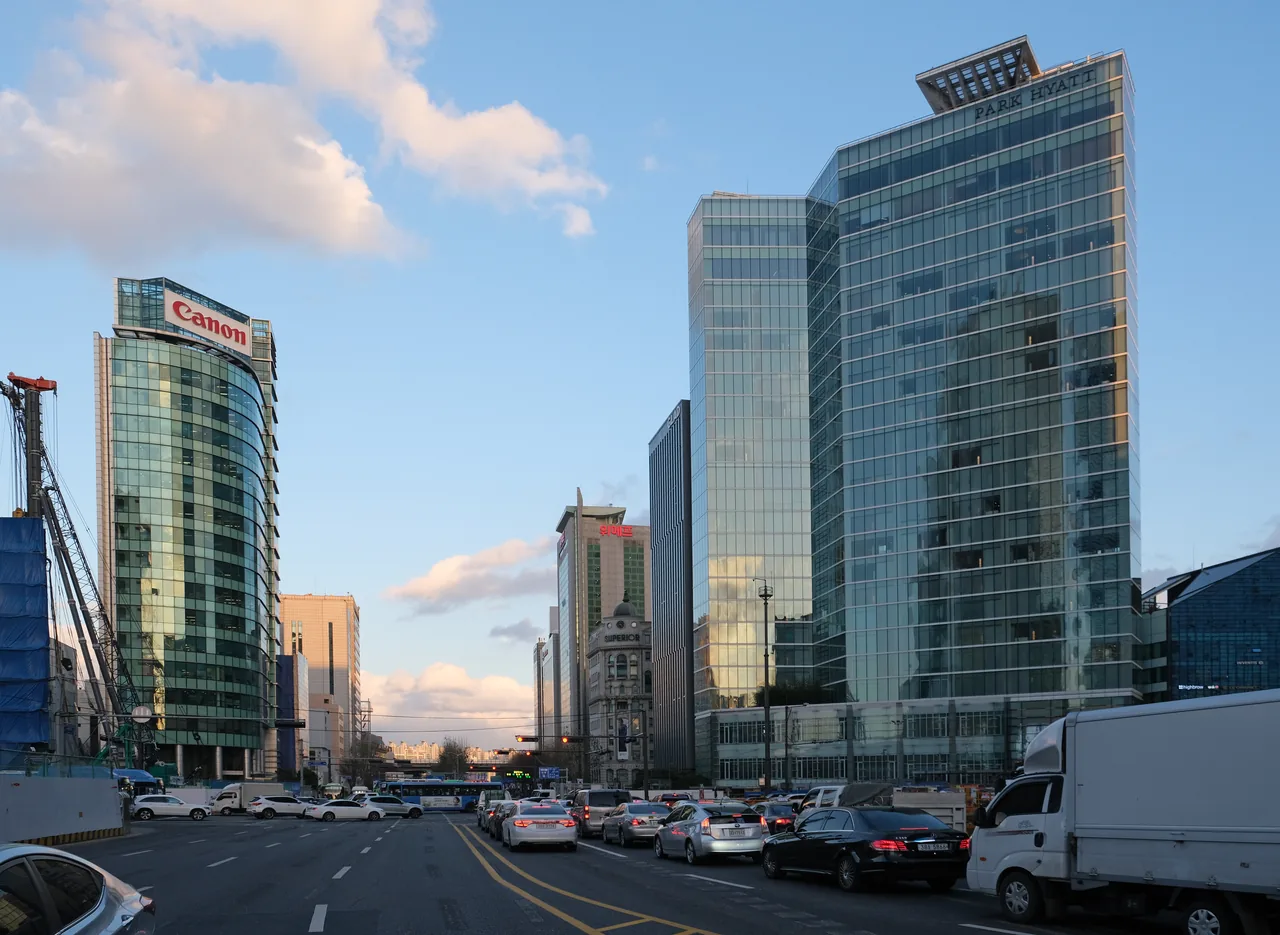
Gangnam is Seoul’s glossy, modern south side: glass towers, designer malls, polished hotels and the K-pop strip around Apgujeong, all on wide, clean boulevards. It’s where to be for luxury, business and a sleeker side of the city — at a price. Map
| Where | Gangnam-gu, south of the Han River |
|---|---|
| Best for | Luxury and business stays, K-pop fans, mall shoppers |
| Subway | Gangnam (Line 2 & Sinbundang), Apgujeong (Line 3), Cheongdam (Line 7), Samseong/COEX (Lines 2 & 9) |
| Price | Upper mid-range to luxury — the priciest of the major areas |
| Watch out for | 30–40 min to the palaces; spread out; less old-Seoul charm |
South of the river you get COEX (the giant mall, aquarium and the Starfield library), Garosu-gil’s boutiques, the Apgujeong and Cheongdam flagship-and-entertainment district, and an extensive range of business and luxury hotels. Streets are wide and orderly, and the nearby Express Bus Terminal in Seocho makes day trips out of the city easy.
The catch is cost and distance. Gangnam is the most expensive base in Seoul, it’s a 30–40 minute ride to the palaces north of the river, and the area is so spread out that “Gangnam” can mean very different walks depending on the hotel. It’s modern and convenient, but you won’t find the historic texture here.
- Stay here if: you want a luxury or business hotel, you’re shopping the malls, you’re chasing K-pop spots, or you have business south of the river.
- Look elsewhere if: you’re on a budget or want palaces and old streets nearby.
7. Dongdaemun — best for shopping and night owls
Dongdaemun is built for shopping that never stops: floor after floor of fashion malls, some open through the night, plus street food, night markets and reliable mid-range hotels. Map Dongdaemun opens in shifts: the retail malls close around midnight, while the wholesale buildings open in the evening and shut on Friday and Saturday nights. What is open when is in our Dongdaemun guide.
| Where | Central-east, straddling Jung-gu and Jongno-gu |
|---|---|
| Best for | Shoppers, night owls, fashion hunters |
| Subway | Dongdaemun & Dongdaemun History & Culture Park (Lines 1, 2, 4, 5) |
| Price | Mid-range, often good value |
| Watch out for | Functional rather than scenic; busy and a bit gritty |
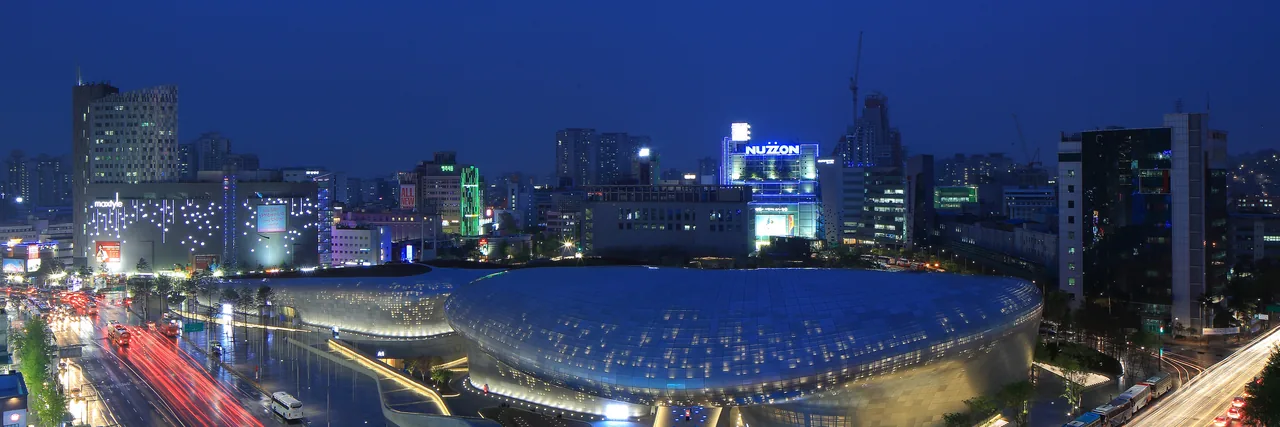
The landmark is the DDP (Dongdaemun Design Plaza), Zaha Hadid’s silver spaceship of a building, surrounded by wholesale and retail fashion malls that keep going long after midnight. Nearby Gwangjang Market is one of the best places in the city for classic street food. With four subway lines meeting here, you’re well connected to the rest of Seoul.
Dongdaemun is more practical than pretty — it’s a working shopping district, busy and a little rough at the edges. But for a shopper or a night owl who wants a comfortable mid-range hotel without Myeongdong or Gangnam prices, it’s a sharp-value base.
- Stay here if: shopping is your trip, you keep late hours, or you want decent value with great subway links.
- Look elsewhere if: you want scenery, quiet or a “pretty” neighborhood to wander.
8. Itaewon & Yongsan — best for world food and families
Itaewon and neighboring Yongsan are Seoul’s most international pocket: food from every continent, big family-friendly hotels, and major museums, with fast trains out of the city from Yongsan station. Map
| Where | Yongsan-gu, south of Namsan |
|---|---|
| Best for | Families, foodies, longer or repeat stays |
| Subway | Itaewon (Line 6); Yongsan & Ichon (Lines 1, 4, KTX/ITX) |
| Price | Mid-range to upper, with large international hotels |
| Watch out for | Hilly streets; pockets of rowdy nightlife; Line 6 has fewer connections |
Itaewon is where Seoul goes global — halal, Mexican, Indian, African and Western kitchens line the main drag, and it has long been the most foreigner-friendly part of the city. Just south, Yongsan adds the War Memorial of Korea, the Leeum art museum and large modern hotels (handy for families who want pools and space), plus Yongsan station for KTX and ITX trains to the rest of the country.
The trade-offs: the streets are hilly, some lanes get rowdy late at night, and Line 6 is a little less connected than Line 2 (transfer at Samgakji for Line 4), so check your hotel’s exact station. But for diverse food, a family base or a comfortable repeat-visit neighborhood, it’s a strong pick.
- Stay here if: you want global food, a family-sized hotel, or an easy launchpad for train trips beyond Seoul.
- Look elsewhere if: you want to walk to the palaces or you’re after the cheapest bed.
9. What kind of place: hotel, hanok, guesthouse or apartment
Beyond the neighborhood, decide what type of room you want — it changes the price and the experience as much as the location does.
| Type | Best for | Where it’s common | Rough nightly price |
|---|---|---|---|
| Hostel / guesthouse | Solo & budget travelers, meeting people | Hongdae, Jongno | ₩20,000–90,000 |
| Mid-range hotel (3–4★) | Most travelers, couples, families | Everywhere | ₩90,000–180,000 |
| Luxury hotel (5★) | Special trips, business | Gangnam, Myeongdong, Jongno | ₩250,000 and up |
| Hanok stay | Traditional, atmospheric nights | Bukchon, Jongno, Insadong | ₩100,000–250,000 |
| Serviced apartment / officetel | Longer stays, want a kitchen | Gangnam, Myeongdong, Yongsan | ₩90,000–200,000 |
A few notes from experience. Hanok stays are magical but basic — expect a small room, sometimes a shared bathroom, and sleeping on a padded mat on a warm floor rather than a tall Western bed. Officetels and serviced apartments are great for stays of several nights because you get a kitchenette and laundry, but check-in is sometimes by self-service code rather than a front desk. And Korea’s ubiquitous budget “motels” near stations are cheap and clean if no-frills — a fine fallback, just read recent reviews.
10. What you’ll actually pay, by area and season
As a rough guide, budget beds start around ₩20,000–40,000, a comfortable mid-range double runs ₩90,000–180,000, and five-star rooms begin near ₩250,000 — but every number jumps in peak season.
Two things drive the price: the area and the calendar. Gangnam and Myeongdong sit at the top; Hongdae and Dongdaemun give the best value; Jongno spans cheap guesthouses to premium hanoks. On top of that, cherry-blossom season (early April) and autumn foliage (mid-October to mid-November) are the most expensive and book out first, followed by summer holidays and the year-end. Deep winter (January–February) and the quieter shoulder weeks are the cheapest times to find a deal.
| Season | When | Demand & price |
|---|---|---|
| Cherry blossom | Late March–April | Highest — book weeks ahead |
| Autumn foliage | Mid-Oct–mid-Nov | Very high — book early |
| Summer | Jul–Aug | High (holidays, humid) |
| Year-end | Late Dec | High |
| Winter | Jan–Feb | Lowest — best deals |
| Shoulder | May–Jun, Sep | Moderate, good weather |
Planning your trip around the seasons? Our best time to visit Korea guide breaks down month by month, and if you’re chasing autumn color without the crowds, see our pick of hidden autumn foliage spots near Seoul.
11. Getting around from your base
Wherever you stay, the subway is your best friend — so the real question is how close your hotel is to a station, and whether that line reaches what you came to see.
Seoul’s metro is cheap, fast, frequent and signed in English. A single ride is about ₩1,550 (around US$1.10, raised June 2025) with a transit card, and lines run from early morning to around midnight. The thing to optimize isn’t being downtown — it’s a short, flat walk from your door to a station, ideally on Line 2 (the loop that touches Hongdae, City Hall, Dongdaemun and Gangnam) or a line that goes straight to your priorities.
- Get a transit card on arrival: a T-money card or the Climate Card saves money and hassle. The Climate Card’s tourist passes give unlimited subway, bus and public-bike rides and cost ₩5,000 (1 day), ₩8,000 (2 days), ₩10,000 (3 days), ₩15,000 (5 days) or ₩20,000 (7 days), as of June 2026. We compare them in our Climate Card vs T-money guide.
- Navigate with the right app: use Naver Map or KakaoMap, not Google, for accurate Seoul transit and walking directions — see our Naver Map vs Kakao Map guide.
- From the airport: your area decides the easiest route in. Hongdae is on the AREX train; Seoul Station (a short hop from Myeongdong and Jongno) is the AREX terminus; full details in our Incheon Airport to Seoul guide.
- Trains beyond Seoul: Seoul Station (KTX) and Yongsan station handle high-speed trains nationwide — handy if you’re combining Seoul with Busan or Gyeongju. Our getting around Korea guide covers it.
12. Booking tips and common mistakes
The travelers who are happiest with their Seoul base all did the same few things: they booked near a station, checked the real walking distance, and locked in peak-season rooms early with free cancellation.
- Book near the subway, not just near the action: a five-minute walk to a station beats a “central” address that’s a long hike from the line.
- Read the station-exit distance: listings love the phrase “near the station.” Check the map and the exit number — Seoul blocks and hills are bigger than they look.
- Match the line to your plans: if you’ll spend your days at the palaces, don’t sleep deep in Gangnam; if you’re nightlife-first, Hongdae saves you late-night taxis.
- Book peak weeks early, with free cancellation: for cherry blossom and autumn, reserve a refundable room well ahead and keep watching prices.
- Check what “hotel” really means: officetels and guesthouses may use self check-in codes and have no front desk or daily cleaning — fine if you expect it.
- Confirm the airport connection: if you arrive late or leave early, a base near the AREX line (Hongdae, Seoul Station) makes the airport run painless.
13. So, which area should you pick?
If you take one thing away: first-timers should stay in Myeongdong or Jongno, night owls and budget travelers in Hongdae, luxury and modern seekers in Gangnam, and shoppers in Dongdaemun — and everyone should sleep near a subway station.
Quick recap:
- Easiest first trip: Myeongdong (shopping, central) or Jongno (palaces, calm).
- Nightlife & budget: Hongdae — bonus points for the direct airport train.
- Tradition & hanok stay: Jongno & Insadong.
- Luxury, malls, K-pop: Gangnam.
- Non-stop shopping: Dongdaemun.
- World food & families: Itaewon & Yongsan.
With a base chosen, build the rest of the trip: see the full complete Korea travel guide for the country picture, plan your days with the Korea itinerary guide, sort your arrival in the Incheon Airport to Seoul guide, and line up a classic day trip to the Seoul DMZ day-trip guide.
🎡Things to Do13
🚇Getting Around4
🧭All-Korea essentials116
Where to stay in Seoul — frequently asked questions
🏨 Next: plan the rest of your trip with our complete Korea travel guide →