
Busan in May: Early-Summer Warmth, Lotus Lanterns & the Sand Festival
May is Busan on the threshold of summer — the warmest, greenest, most festival-packed month of spring, glowing with tens of thousands of lotus lanterns, lined with giant sand sculptures on Haeundae Beach, and offering the last stretch of dry, comfortable weather before the summer rains. Here’s the complete, fact-checked guide to making the most of it.
- May is Busan’s early-summer threshold: the warmest spring month, with highs of about 21–24°C, lush green everywhere, long 14-hour days and the last reliably dry, comfortable weather before the late-June rainy season.
- It’s the city’s biggest festival month: the Haeundae Sand Festival (15–18 May 2026), the Samgwangsa Temple lantern festival (from 15 May, 40,000+ lanterns) and the Busan Lotus Lantern Parade (16 May) all converge around Buddha’s Birthday on 24 May.
- It’s green, not pink — the cherry blossoms are gone, replaced by fresh green, roses in late May and warm, walkable days; the sea is warming (around 16–17°C) but still a touch cold for swimming.
- The main catches are rising rainfall (around 90–120mm, the run-up to the monsoon), wide day-to-night temperature swings and busy festival weekends — but for warm weather, lanterns and festivals before the summer crowds and rain, May is one of the best months to visit.
1. Is May a good time to visit Busan?
2. May weather in Busan, in detail
3. Buddha’s Birthday and the lotus lantern festivals
4. The Haeundae Sand Festival and May’s festival cluster
5. Late spring in bloom: roses, fresh green and more
6. Spring-into-summer outdoors at its best
7. The sea and beaches in May
8. Crowds, prices and booking
9. What to pack for May
10. A smart May itinerary and verdict
May is the month Busan tips from spring into early summer — and it may be the most quietly perfect time of the whole year to visit. The cherry blossoms of April are gone, but what replaces them is just as lovely: the entire city turns a deep, lush green, roses come into bloom by late May, and the days grow long, warm and golden, with about 14 hours of daylight. Crucially, it’s the last stretch of reliably dry, comfortable weather before the rainy season (jangma) arrives in late June, which makes May a sweet spot many travellers miss. It’s also Busan’s biggest festival month: tens of thousands of lotus lanterns glow at Samgwangsa Temple and parade through the streets in the run-up to Buddha’s Birthday on 24 May, while giant sand sculptures rise along Haeundae Beach for the Sand Festival in mid-May. The trade-offs are gentle — rainfall is creeping up as summer approaches, mornings and evenings can still be cool against warm afternoons, and festival weekends draw crowds — but for warm, green, festival-filled days before the heat, humidity and peak crowds of summer, May is hard to beat. This in-depth, fact-checked guide covers the weather week by week, Buddha’s Birthday and the lotus lantern festivals (with exact 2026 dates), the Haeundae Sand Festival and May’s festival cluster, the roses and fresh green that define late spring, the best outdoors and the sea, crowds and booking, what to pack, a smart day-by-day plan and how May compares to April and June. Plan it alongside the rest of your trip with our complete Busan Travel Guide.
1. Is May a good time to visit Busan?
Yes — May is one of the best months to visit Busan, the warm, green, festival-packed threshold of early summer. It offers the warmest weather of spring (highs of about 21–24°C), lush green everywhere, long sunny days and the last stretch of dry, comfortable conditions before the rainy season arrives in late June. On top of that, it’s Busan’s biggest festival month, anchored by Buddha’s Birthday (24 May 2026), the Samgwangsa and citywide lotus lantern festivals, and the Haeundae Sand Festival.
There are a few mild trade-offs to weigh. The famous cherry blossoms are gone — May is about green, roses and festivals rather than blossoms. Rainfall is creeping up (around 90–120mm) as the monsoon approaches, there can be wide swings between cool mornings and warm afternoons, and festival weekends (especially mid-to-late May) draw crowds. The sea is warming but still a touch cold for swimming (around 16–17°C). But none of that outweighs the appeal of warm, golden days, glowing lanterns and big festivals before the summer heat and rains.
2. May weather in Busan, in detail
May is the warmest month of spring, with comfortable highs around 21–24°C and the last reliably dry weather before the late-June rains. It warms steadily through the month, with notably wide swings between cool mornings and warm afternoons:
| Period | Typical daytime high | What it feels like |
|---|---|---|
| Early May | ~21–22°C | Warm, bright spring days; lush green; cool mornings |
| Mid May | ~22–23°C | Warm and lovely; festival season; the odd warm spell |
| Late May | ~23–24°C | Edging into early summer; roses; humidity and showers rising |
Daytime highs climb from about 21–22°C early in the month to 23–24°C by late May (with the occasional warmer day pushing toward 27°C), while overnight lows rise from around 14°C to 18°C. That gap between cool mornings and warm afternoons is the month’s defining quirk, so layers matter. May enjoys long days — about 14 hours of daylight — and plenty of sunshine, but rainfall is rising (around 90–120mm over roughly 8–9 days) as the monsoon approaches in late June. The sea averages about 16–17°C — warming but still a touch cold for most swimmers. Overall, May offers the warmest, most comfortable all-round weather of spring, with summer’s heat and humidity still mostly held at bay.
3. Buddha’s Birthday and the lotus lantern festivals
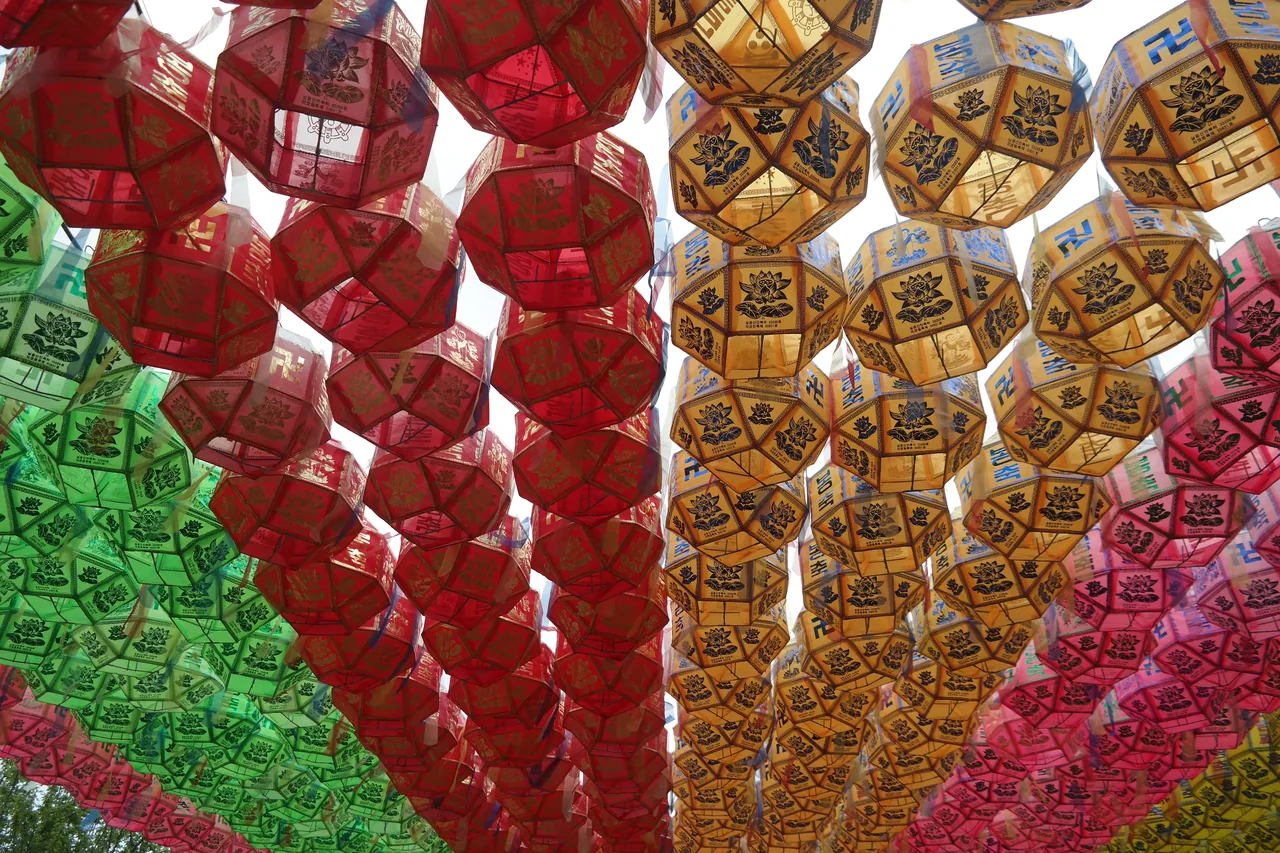
May’s signature experience is the lotus lantern festivals leading up to Buddha’s Birthday, which falls on 24 May in 2026. For weeks beforehand, temples and streets across Busan glow with tens of thousands of paper lanterns — one of the most beautiful and atmospheric sights of the entire year, and a deeply photogenic, family-friendly celebration. Here’s what to plan around:
| Event | 2026 dates | What to expect |
|---|---|---|
| Samgwangsa Temple lantern festival | From 15 May (evenings) | 40,000+ lanterns blanketing the temple; CNN-listed; best after sunset |
| Busan Lotus Lantern Parade | 16 May | 2.2km parade from Busan Citizens Park to Songsanghyeon Square |
| Citywide lantern displays | From 1 May | Songsanghyeon Square lit with traditional and character lanterns |
| Buddha’s Birthday (holiday) | 24 May | Temple ceremonies citywide; a public holiday |
- Samgwangsa Temple is the must-see: its grounds disappear under a canopy of more than 40,000 lanterns, and CNN named it one of “50 beautiful places to visit in Korea.” Go after dark, when the lanterns glow against the night.
- The Lotus Lantern Parade (16 May 2026) winds 2.2km from Busan Citizens Park to Songsanghyeon Square at sunset, led by giant ceremonial lanterns shaped like the Buddha, a phoenix and an elephant.
- Buddha’s Birthday (24 May) is a national holiday, with ceremonies at temples across the city — expect some closures and busier transport.
4. The Haeundae Sand Festival and May’s festival cluster
The Haeundae Sand Festival runs 15–18 May 2026 on Haeundae Beach, and it’s the centrepiece of an extraordinary mid-May festival cluster. Each year, international artists carve giant sand sculptures along the sand; the 2026 theme is “A Journey Through Busan’s History in Sand,” with 11 artists from Korea, Canada, China, France and Taiwan creating 17 large-scale works. It’s free, family-friendly and genuinely spectacular.
- What’s on: a trail of monumental sand sculptures and reliefs, plus sandboarding, hands-on sculpture-making workshops, sand playgrounds and stage performances across all four days.
- Where: the Haeundae Beach Event Plaza, easily reached by metro (Haeundae Station) — pair it with a walk along the beach and the Dalmaji-gil hill.
- Good news if you miss the dates: the sculptures typically stay on display until mid-June (around 14 June 2026), so you can still catch them after the festival itself ends.
What makes mid-May so special is the convergence: the Sand Festival (15–18 May), the Samgwangsa lantern festival (from 15 May), the Lotus Lantern Parade (16 May) and Buddha’s Birthday (24 May) all land within ten days of each other. If you time your visit to mid-to-late May, you can experience several of Busan’s biggest events in a single trip.
5. Late spring in bloom: roses, fresh green and more
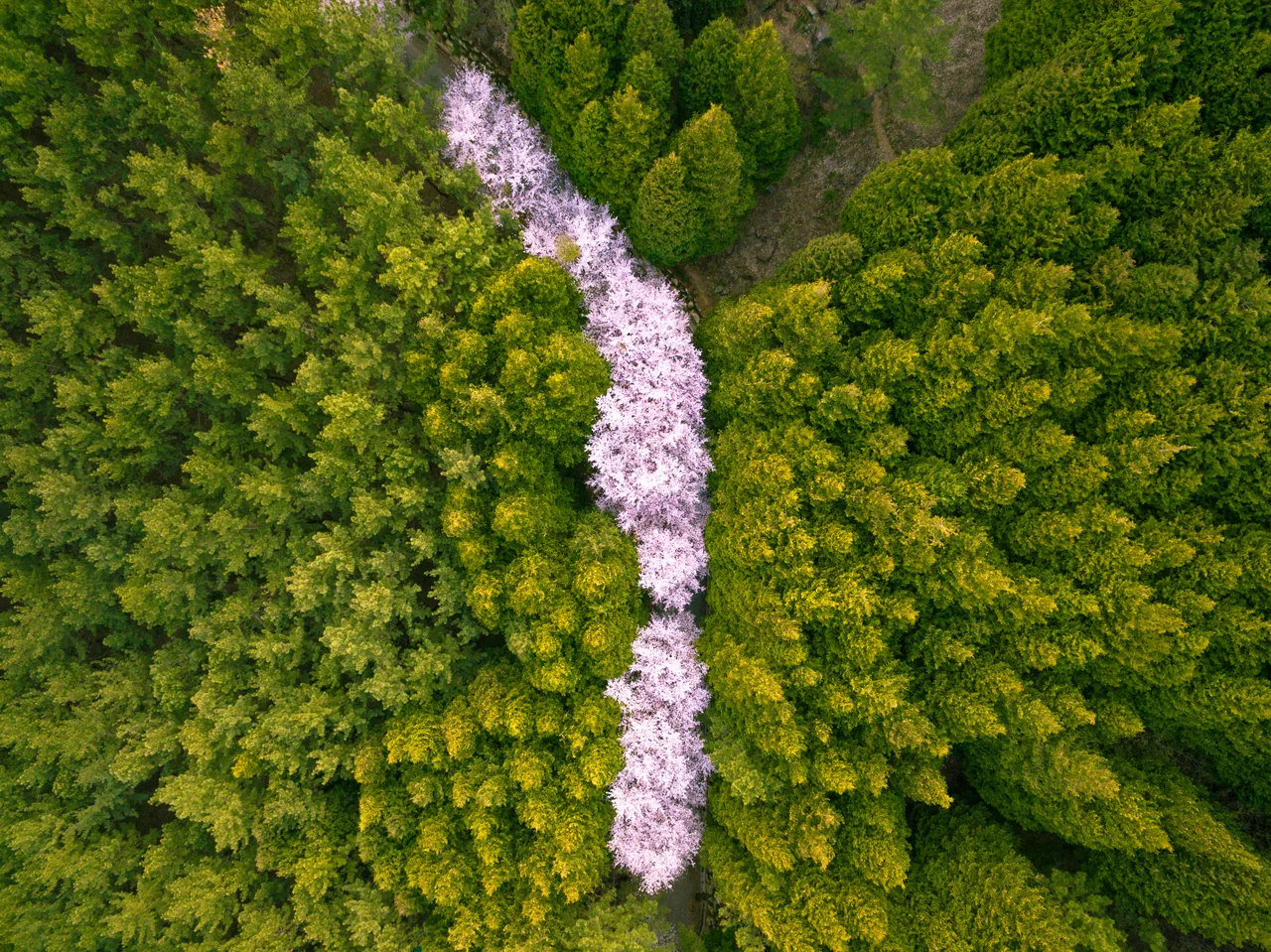
With the cherry blossoms gone, May is defined by lush green and a second wave of flowers — above all, roses, which peak in late May. It’s arguably the freshest, greenest the city looks all year:
- Roses: rose gardens around the city, including at Busan Citizens Park and other parks, burst into colour in late May — the signature flower of the month and a lovely, less-crowded alternative to the cherry-blossom crush.
- Fresh green at its peak: the tender green of April deepens into full, vivid foliage across the mountains, parks and tree-lined streets — the city at its most verdant.
- Late azaleas and spring flowers: royal azaleas (cheoljjuk) linger into early May on the hillsides, and gardens carry a mix of late-spring blooms through the month.
- Green tea and countryside: late spring is a beautiful time for green landscapes just outside the city, with day trips to temples and countryside especially rewarding.
6. Spring-into-summer outdoors at its best
May offers the warmest, greenest, and one of the most comfortable months of the year for being outdoors in Busan — before summer’s heat and humidity set in. This is prime time to explore on foot:
- Coastal walks: the seaside cliff paths, Oryukdo, Igidae and the Galmaetgil are glorious in warm, green late spring — long, comfortable and framed by blue sea and fresh foliage.
- Hiking: Geumjeongsan, Jangsan and the city’s mountains are lush and inviting, with warm but not yet sweltering temperatures and clear, green views.
- Temples and culture: Haedong Yonggungsa by the sea, Beomeosa, the lantern-lit Samgwangsa, Gamcheon Culture Village and the markets are all wonderful in May’s mild, sunny weather.
- Long, golden days: with about 14 hours of daylight, May is perfect for full days outdoors, from a morning hike to lantern-lit temples and a sunset by the water.
7. The sea and beaches in May
May isn’t quite a swimming month — the sea averages about 16–17°C, warming but still a touch cold — but Busan’s beaches are warm, lively and at their pre-season best. This is the month the coast truly comes alive ahead of summer:
- Lovely and lively: Haeundae, Gwangalli, Songjeong and Songdo are warm, sunny and buzzing, perfect for long beach walks, café time and people-watching.
- The Sand Festival: Haeundae Beach hosts the giant sand sculptures in mid-May, turning the shore into an open-air gallery (sculptures on display to around mid-June).
- Surfing and water sports: surfing is in full swing at Songjeong, and paddle-boarding and other water sports pick up — a wetsuit is still wise as the water warms.
- Seaside cafés and sunsets: the warm evenings make Gwangalli’s café strip, the lit-up Gwangan Bridge and seaside dinners a real pleasure.
8. Crowds, prices and booking
May is moderately busy — calmer than the April cherry-blossom peak, but with a clear surge around the mid-to-late-May festivals and the Buddha’s Birthday holiday. Here’s how to plan:
- Festival weekends are busiest: mid-to-late May — especially around the Sand Festival (15–18 May), the lantern festivals and Buddha’s Birthday (24 May) — brings the month’s biggest crowds to Haeundae and the temples.
- Book ahead for late May: Buddha’s Birthday is a public holiday, so accommodation fills and prices rise around it — reserve early, especially for the holiday weekend.
- Early May is quieter: the first half of the month is calmer and a touch cheaper, with warm, dry weather and fewer crowds — a great-value window.
- Weekdays beat weekends: as always, visiting popular spots and festivals on weekdays means thinner crowds.
9. What to pack for May
Pack for warm days, cool mornings and rising showers — May’s wide temperature swings and increasing rain are the keys.
- Light, warm-weather clothing: t-shirts and light layers for warm afternoons of 21–24°C.
- A sweater or light jacket: for cool mornings and evenings, and the sea breeze along the coast.
- A compact umbrella or rain jacket: showers grow more frequent as the monsoon approaches — don’t skip this.
- Comfortable walking shoes: for hikes, coastal walks, temples and festivals.
- Sun protection: the May sun is strong and the days are long — bring sunscreen, sunglasses and a hat.
- A light scarf or extra layer: handy for evening lantern festivals, which run after dark.
- Allergy medication: late-spring pollen is still around if you’re sensitive.
10. A smart May itinerary and verdict
May rewards a plan built around the festivals, the warm green weather and the outdoors — with mid-to-late May timed to the lanterns and Sand Festival. Here’s how it compares across late spring and early summer, with a simple template:
| April | May | June | |
|---|---|---|---|
| Weather | Warm spring (~17–20°C) | Warm, early summer (~21–24°C) | Warm, humid; rains begin late (~23–26°C) |
| Nature | Cherry peak then petals | Fresh green; roses (late May) | Green; hydrangeas; rainy season |
| Highlight | Peak blossoms & river festivals | Lanterns & Sand Festival | Hydrangeas before the rains |
| Sea | Cold (~14–15°C) | Warming (~16–17°C) | Cool, swimmable late (~20°C) |
| Crowds | Peak (festival weeks) | Moderate (festival surge mid–late) | Moderate |
- Early May: enjoy warm, dry, quieter days — hikes, coastal walks, temples and the first lantern displays at Songsanghyeon Square.
- Mid-to-late May: time your trip to the festival cluster — the Haeundae Sand Festival (15–18 May), Samgwangsa lanterns (from 15 May), the Lotus Lantern Parade (16 May) and Buddha’s Birthday (24 May).
- Mix festivals, flowers and the sea: pair lantern temples and rose gardens with a beach walk and a seaside sunset for a classic late-spring Busan day.
- Evenings: warm and magical — lantern-lit temples, the Gwangan Bridge and dinner by the sea.
Verdict: May is one of the very best months to visit Busan — warm, green and bursting with festivals, from tens of thousands of lotus lanterns to giant sand sculptures on Haeundae Beach, all before the heat, humidity and rains of summer. The cherry blossoms are gone and rainfall is creeping up, but for warm, golden days, glowing lanterns, big festivals and the last comfortable, dry stretch before the monsoon, few months can match May — especially if you time mid-to-late May to the festival cluster around Buddha’s Birthday. Plan it all with our complete Busan Travel Guide.