
Busan in Summer: WATERBOMB, the Free Sea Festival & a Saturday-Night Drone Show Worth Planning Around
A sold-out K-pop water fight on August 8, free fireworks on the sand at Dadaepo, and 2,500 drones over Gwangalli every Saturday — here’s what’s actually on at the peak of summer, and how to be there.
| Sea Festival | Free, early August at Dadaepo Beach — fireworks over the water, beach food stalls, family night vibe (exact 2026 dates not yet posted). |
|---|---|
| WATERBOMB | Aug 8, 2026 — paid K-pop water fight. From ₩88,000 early-bird, ₩165,000 standard. 19+ only, passport/ID at the gate. Jay Park, BIBI, KISS OF LIFE confirmed so far. |
| Drone show | Free, every Saturday on Gwangalli Beach — ~2,500 drones, ~12 min, usually 8pm. Watch from anywhere on the sand. |
| Cost | Two of the three headliners are free — only WATERBOMB needs a ticket. The beaches, the drone show and the night markets cost nothing to enjoy. |
| Weather | Hot and humid (24–32°C in August), warm sea for swimming, but it’s also peak typhoon season — outdoor events can shift. |
| Book ahead | August is the busiest week of Busan’s year. Lock in your hotel and WATERBOMB tickets weeks early. |
1. Busan in summer at a glance
2. Busan Sea Festival: the free flagship on the sand
3. WATERBOMB Busan: the K-pop water fight you buy a ticket for
4. Gwangalli M Drone Light Show: 2,500 drones, completely free
5. Busan’s summer beaches: which one for which day
6. Beach safety and rules: swimming hours, zones, jellyfish
7. Summer water activities: surfing, SUP and yacht tours
8. What to eat in a Busan summer
9. Summer weather, heat and typhoons — what to expect
10. Crowds, hotels and when to book
11. A perfect Busan summer weekend
12. Also worth knowing: the fireworks come in autumn
A Busan summer runs on three headline events: the paid WATERBOMB water-party on August 8, the free Busan Sea Festival on the beach in early August, and a free drone light show over Gwangalli every Saturday night. Below you’ll find dates, ticket prices, the foreigner rules for WATERBOMB, plus the best summer beaches, swimming safety, water activities, summer food and weather around them. New to the city? Start with our complete Busan travel guide, then build days with our Busan itinerary.
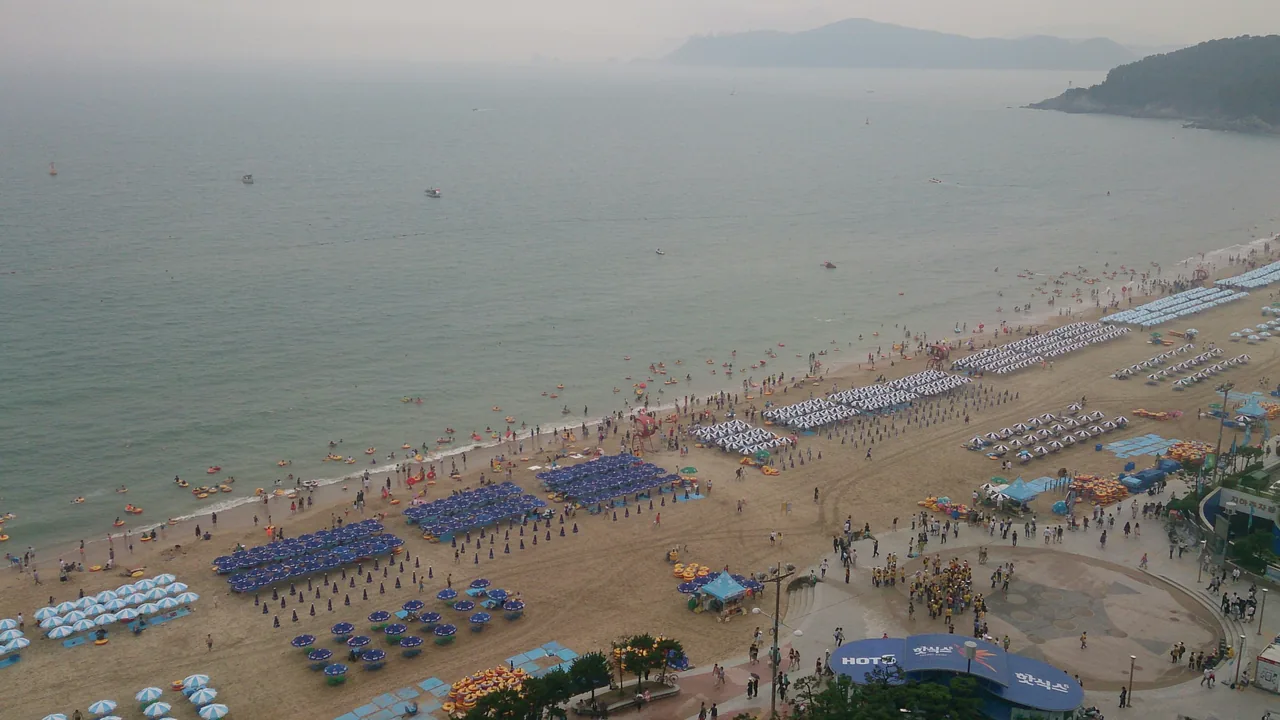
1. Busan in summer at a glance
Busan packs its loudest paid party and its biggest free events into the same warm weeks of July and August, so you can stack them without much effort. Three things anchor the season — here they are, in calendar order.
- Busan Sea Festival — the city’s flagship summer event. Free, on the beach (lately at Dadaepo), early August, with a fireworks night and food stalls.
- WATERBOMB Busan — a ticketed K-pop water-cannon festival on August 8, 2026. Adults only, big lineup, total soaking.
- Gwangalli M Drone Light Show — a free Saturday-night show of around 2,500 drones over the water, viewable from the whole beach all summer long.
The rest of summer fills in around those: open beaches with lifeguards, surfing and SUP, seaside night markets, cold noodles and shaved ice, and long warm evenings. Planning a route between them is easy — see our Busan itinerary for a full day-by-day, and use our best beaches in Busan guide to pick where to base each day. First, the events.
2. Busan Sea Festival: the free flagship on the sand
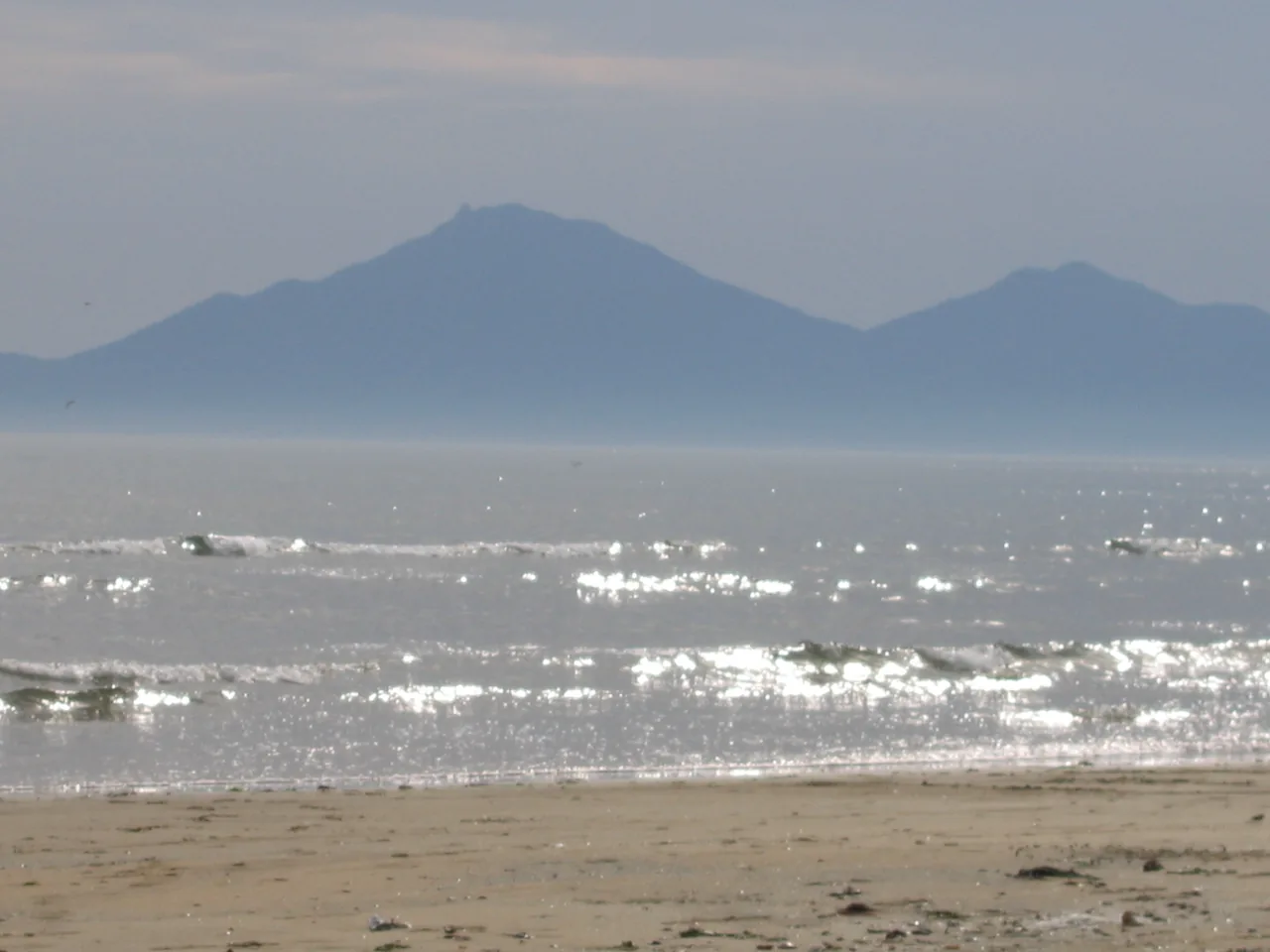
The Busan Sea Festival is the easiest win of high summer — it’s free, it’s on the beach, and it ends each night with fireworks. It runs in early August and, in recent years, has centred on Dadaepo Beach Map in the city’s far west, famous for its huge tidal flats and long sunsets.
Historically the festival spread across several beaches — Haeundae, Gwangalli, Songdo, Songjeong, Dadaepo and Imnang — but lately it has concentrated at Dadaepo. The headline moment is the Dadae fireworks show, a beachfront display over the water. Around it you’ll find live music, DJs and dance stages, splash-and-play zones for kids, and — the part locals love most — the food.
| What’s on | The detail |
|---|---|
| Fireworks | The nightly Dadae fireworks over the water are the signature draw — arrive before dusk for a sand spot facing the sea. |
| Stages | Live music, DJ sets and dance performances run through the evening on the beach. |
| Dadaepo-cha | A strip of beach pojangmacha (tented food-and-drink stalls) right on the sand — grill smoke, cold beer, soju, sea breeze. |
| Dadae-yajang | A local night market of street food where you can graze your way through a Korean summer evening. |
| Kids’ zones | Splash-and-play areas and family activities make it an easy outing with children. |
It’s a relaxed, family-friendly, late-afternoon-into-night affair rather than a club scene — good for couples, good for kids, good for solo travelers who just want atmosphere without a ticket. Dadaepo sits at the western end of Metro Line 1 (Dadaepo Beach station), so it’s a longer ride from the Haeundae–Gwangalli side; allow extra time and consider basing near the west for the festival nights — see our where to stay in Busan guide for areas.
3. WATERBOMB Busan: the K-pop water fight you buy a ticket for
WATERBOMB is the one summer event in Busan you pay for — and the one that sells out. It’s a daylong outdoor party where the crowd, the dancers and the artists soak each other with water cannons and water guns between K-pop, hip-hop and EDM performances. Mark August 8, 2026 (some listings show an Aug 7–9 window — treat the 8th as the anchor and confirm the exact day on the official channels). Gates-to-finish runs roughly 1pm to 10pm.
What it’s actually like
The crowd is split into Team Water and Team Bomb for the water fight, and throughout the day a “Waterbomb Time” countdown ends in everyone getting blasted at once by water cannons and foam cannons — these mass-soak moments are the climax of each set, when the whole field erupts. Water guns are central to the experience: you can bring your own or buy one on-site, refill at the water stations dotted around the field, and pick your targets. Between soakings there are food zones, brand booths and photo zones. The lineup announced so far includes Jay Park (the headline regular), BIBI and KISS OF LIFE, with more acts — typically a rotating mix of rappers, idols and DJs — expected closer to the date.
Tickets and prices
| Ticket type | Price | Notes |
|---|---|---|
| Early-bird | ₩88,000 | Limited batches; the cheapest way in. Sells out first. |
| Standard | ₩165,000 | The regular general-admission price. |
| Later tiers | Higher | Prices step up as each tier sells out — buying early genuinely saves money. |
| VIP / packages | Premium | When offered, these add front-zone access or perks at a higher price; watch the official channel. |
How foreigners actually buy
- From abroad / in English: Trip.com and Melon Global typically list WATERBOMB for international buyers — the easiest path if you don’t read Korean.
- Domestic platforms: Interpark, Ticketlink, Melon and Yes24 sell it inside Korea (Korean payment/ID may be needed).
4. Gwangalli M Drone Light Show: 2,500 drones, completely free
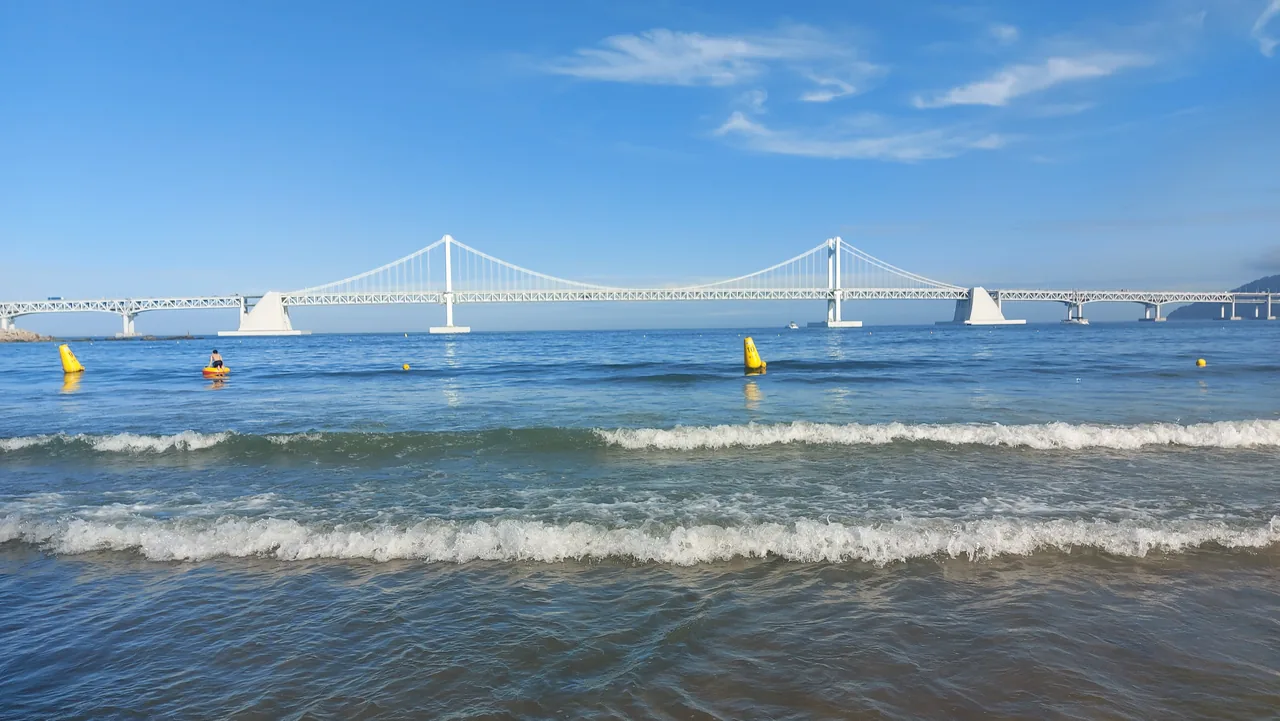
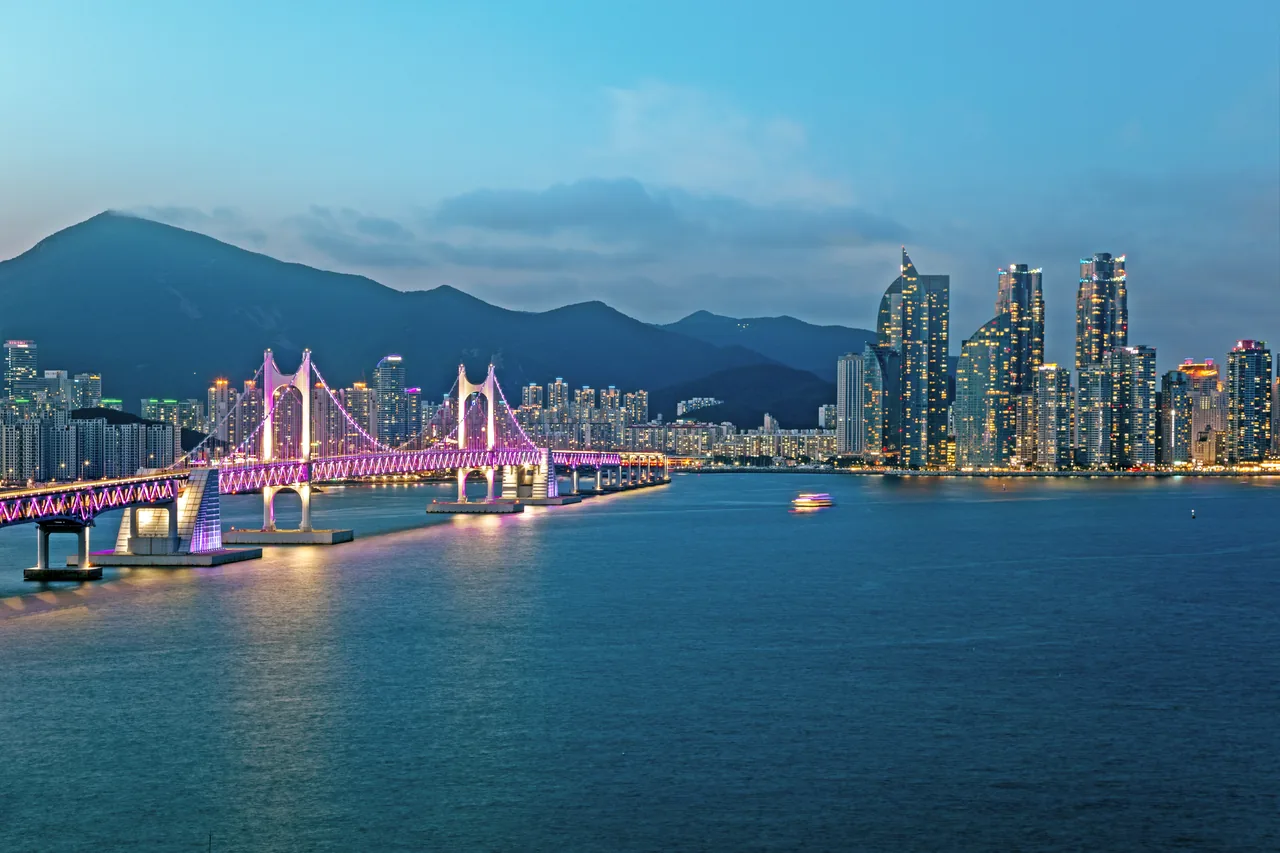
The single best free thing you can do on a Busan summer night is stand on Gwangalli Beach Map and watch the drone show. Around 2,500 drones rise over the water and the Gwangan Bridge in a choreographed display that lasts roughly 12 minutes — picture a fireworks finale that morphs into shapes, words and animations in the sky.
The basics:
- When: every Saturday night through summer, usually around 8pm (special editions get added through the year).
- Cost: free.
- Where to watch: anywhere along Gwangalli Beach — no ticket, no seating, no gate. The whole beachfront has a view, and the cafe-and-bar terraces facing the bridge are prime seats if you arrive early.
Because it’s free and weekly, the drone show slots neatly onto the end of almost any summer day — these are some of the city’s best free Busan photo spots.
5. Busan’s summer beaches: which one for which day
In July and August every major Busan beach is officially open and staffed — lifeguards, showers, the works — and the sea is warm enough to actually enjoy. This is the city at its peak: swimming, beach umbrellas, and a coastline that stays lively well after dark.
Each beach has its own personality:
- Haeundae Map — the famous one: wide sand, hotels, restaurants, summer water-park add-ons, the most action. See our Haeundae Beach guide.
- Gwangalli — bridge views, a cafe-and-bar strip, and the Saturday drone show on its doorstep.
- Songjeong Map — Busan’s mellow surf beach, calmer and younger in feel; more in our surfing at Songjeong guide.
- Songdo Map — the historic beach with a cable car and skywalk; see Songdo Beach.
- Dadaepo — vast shallow flats, sunsets, and home turf for the Sea Festival.
| Beach | Best for | Vibe |
|---|---|---|
| Haeundae | First-timers, families, nightlife nearby | Big, busy, full-service |
| Gwangalli | Sunset, cafes, the drone show | Stylish, social, bridge views |
| Songjeong | Surfing, beginners, a younger crowd | Relaxed, sporty |
| Songdo | Cable car, skywalk, calmer swims | Old-school, scenic |
| Dadaepo | Sunsets, shallow flats, the Sea Festival | Wide, mellow, far west |
Not sure which to pick? Our best beaches in Busan guide breaks down which beach suits which kind of day.
6. Beach safety and rules: swimming hours, zones, jellyfish
Busan’s beaches are well-organised in summer, but they run on rules — know the swimming hours and the zone markings and you’ll have an easy time. During the July–August open season, supervised swimming is usually allowed 09:00–18:00; outside those hours lifeguards blow whistles to clear the water.
| Rule / facility | What to know |
|---|---|
| Swimming hours | Typically 09:00–18:00 in Jul–Aug, with lifeguards on duty. Whistles mean get out. |
| Designated zones | Swimming areas are roped off and kept separate from marine-leisure zones (surfing, SUP, jet ski) — stay in the right one. |
| Lifeguards | Stationed throughout the open season; follow their flags and instructions. |
| Showers & lockers | Showers, changing rooms and lockers are available at the main beaches for a small fee — rinse off the salt before you head out. |
| Flags | Watch the warning flags: a red flag means swimming is closed, usually for rough surf, jellyfish or weather. |
7. Summer water activities: surfing, SUP and yacht tours
If you want to be on the water rather than just in it, Busan’s summer has an activity for every comfort level — most of them easy to book ahead.
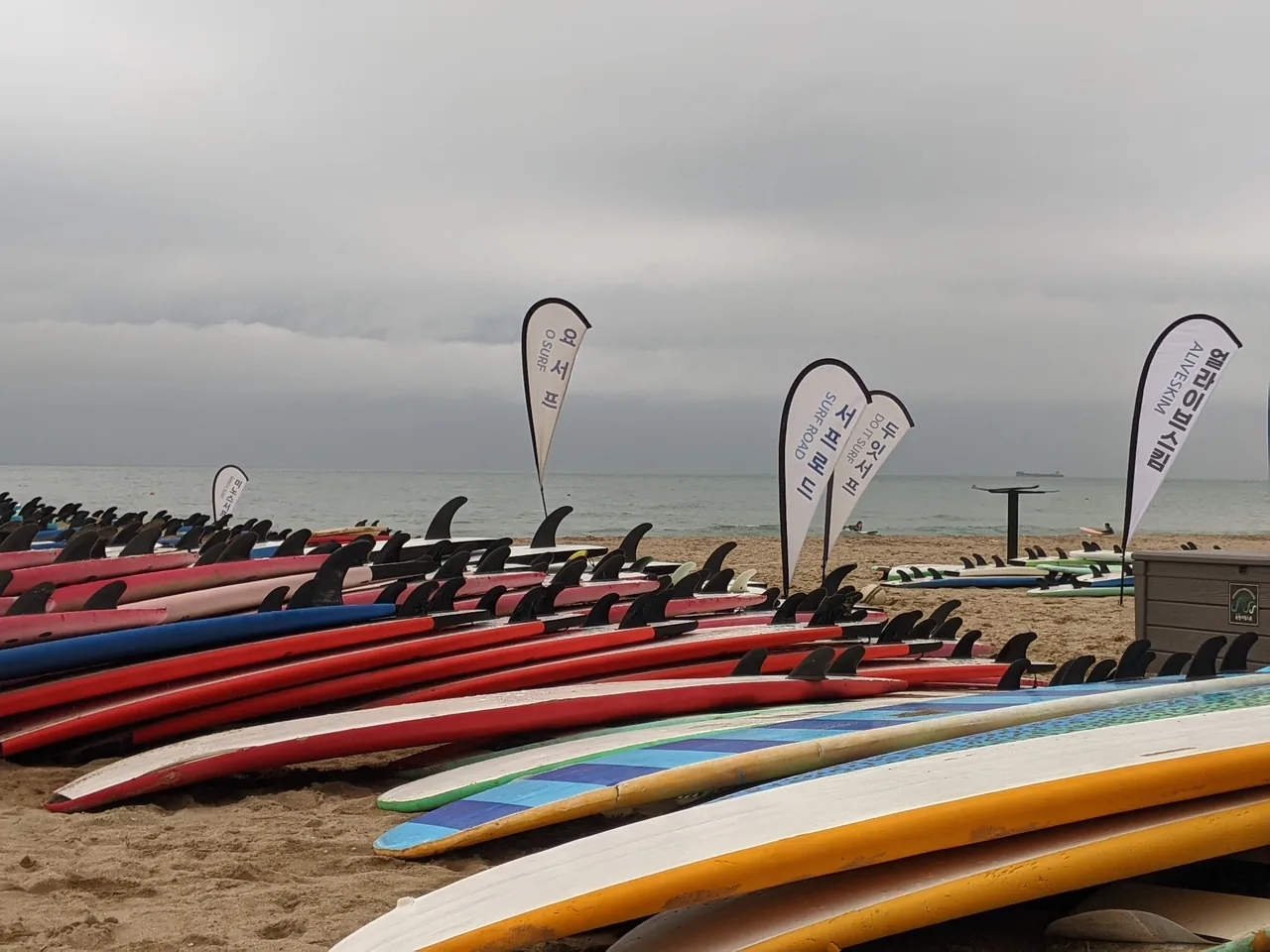
- Surfing — Songjeong Map: Busan’s home of surf, with board rentals and beginner lessons right on the sand. Gentle, friendly waves make it a good first-timer beach; a two-hour intro lesson with board and wetsuit is the usual starting point.
- SUP / paddleboarding — Gwangalli: calm bay water and the bridge backdrop make Gwangalli the spot to paddle, especially in the morning before crowds build and the wind picks up.
- Yacht tours — Gwangalli / Suyeong Bay: sunset and night cruises out toward the Gwangan Bridge, plus jet ski, banana boat and flyboard options for the adrenaline crowd. Night sails timed to the Saturday drone show are the most popular.
- Sea-swimming & snorkelling — Songdo: the calmer, clearer water around Songdo suits an easy float, and the cable car overhead makes it a full half-day.
Most of these run on reservation, and slots fill in peak season — it’s worth locking activities in before you arrive.
8. What to eat in a Busan summer
Busan’s summer food is built for the heat: cold noodles, shaved ice, and grilled shellfish eaten with your toes in the sand. Here’s what to seek out.
- Gwangalli grilled-shellfish street: a strip of jogae-gui (grilled clams and shellfish) restaurants with a sea view — time a weekend table to catch the Saturday-night drone show while you eat. You grill a sizzling tray of clams, scallops, mussels and prawns at your table, often finished with a cheese-and-rice scramble in the shell.
- Milmyeon: Busan’s signature cold summer noodles — chewy wheat noodles in an icy broth (or spicy bibim style), the local answer to a hot day and a Busan original you won’t find done as well elsewhere.
- Patbingsu: mountains of shaved ice with sweet red bean and toppings, the classic Korean summer dessert; cafes all over Gwangalli and Haeundae pile on fruit and condensed milk.
- Raw fish, eel and snow crab: head to the Jagalchi or Millak raw-fish centres for hoe (sliced raw fish), grilled eel and snow crab — pick your fish downstairs, eat it upstairs. More in our Busan raw fish & seafood guide.
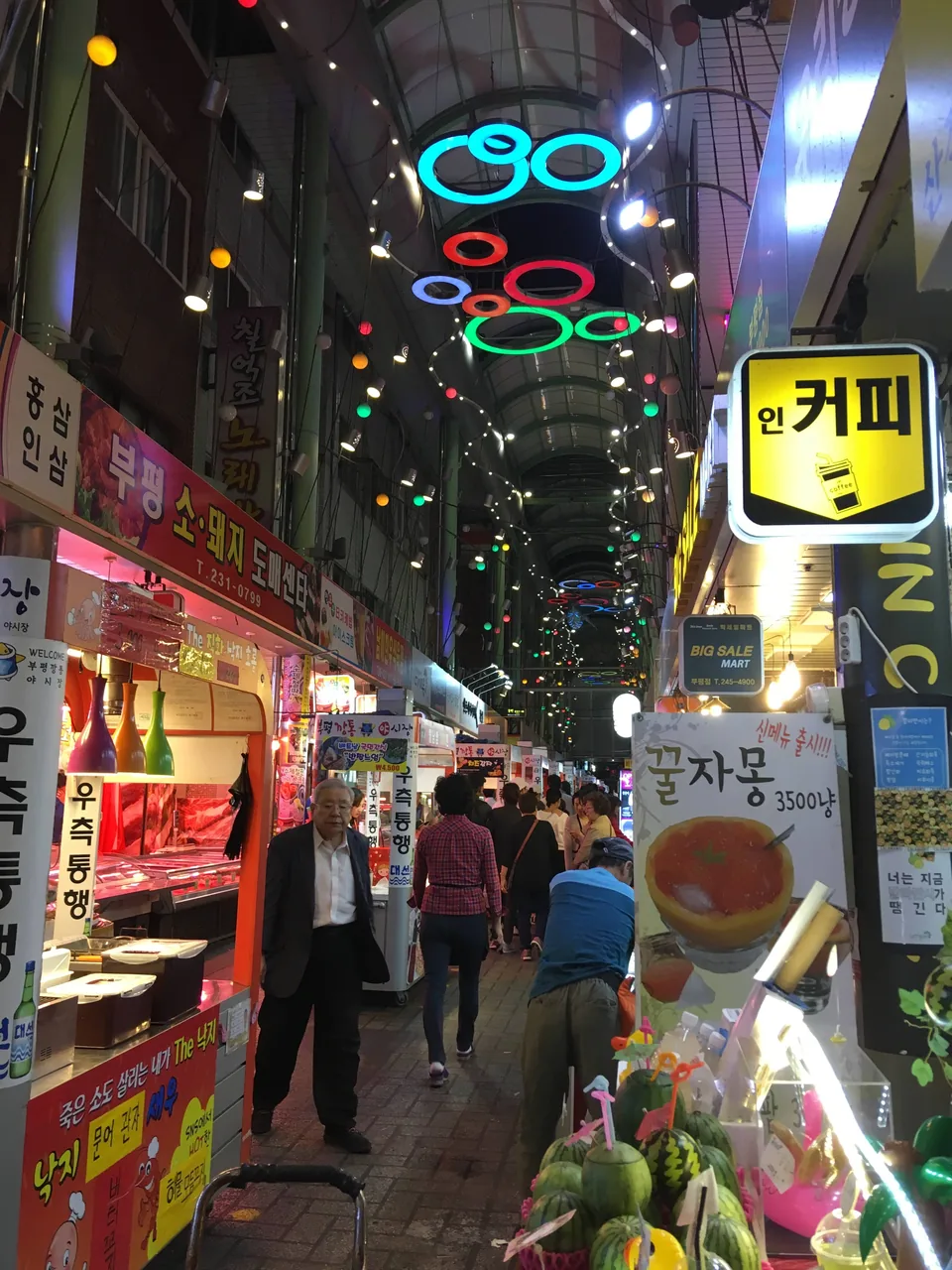
For the full street-food run, don’t miss the Bupyeong Kkangtong Night Market Map in Nampo-dong — Korea’s first permanent night market, open daily around 19:30–23:00 with roughly 30 stalls. Look for bibim-dangmyeon (spicy glass noodles), yubu-jeongol (fried-tofu hotpot), seed hotteok (the Busan-style sweet pancake stuffed with seeds and nuts) and fresh seafood skewers. Cool down afterward at one of Busan’s seaside cafes — browse more in our what to eat in Busan, Busan street food and Busan cafés guides.
9. Summer weather, heat and typhoons — what to expect
Busan summers are hot, humid and beautiful for swimming — but August is also peak typhoon season on the south coast, so build in flexibility. The warm sea is the upside; the muggy air and storm risk are the trade-offs.
| August conditions | What it means |
|---|---|
| Temperature ~24–32°C | Hot days, warm nights; the sea is at its most swimmable. |
| High humidity | It feels hotter than the number — hydrate, seek shade midday. |
| Monsoon tail (July–early Aug) | Lingering rainy spells can roll through; pack a light rain layer. |
| Peak typhoon season (August) | Storms usually weaken before reaching the south coast, but outdoor events can be rescheduled. |
For a month-by-month feel, see our best time to visit Busan guide, plus the detail in Busan in July and Busan in August.
10. Crowds, hotels and when to book
August is the single busiest stretch of Busan’s year — domestic family travel and foreign visitors peak at the same time — so prices surge and the best places sell out. The festivals make it busier still: WATERBOMB and Sea Festival weekends are when the city is fullest.
What that means in practice:
- Book accommodation weeks ahead, especially in Haeundae and Gwangalli where you’ll want to be for the events.
- Expect higher rates than spring or autumn — budget accordingly or look slightly inland near a metro line.
- Buy WATERBOMB early for the cheaper tiers (see above).
- Reserve activities and key restaurants too — surf lessons, yacht tours and the popular Gwangalli grills all fill up on summer weekends.
Compare areas and properties in our best Busan hotels guide, and read up on neighbourhoods in our where to stay in Busan guide before you commit. The beach districts also run late in summer — see Busan nightlife for the bar-and-club scene that builds around WATERBOMB week, and catch a Lotte Giants night game at a Lotte Giants game at Sajik.
before you land so maps, tickets and translation just work.
11. A perfect Busan summer weekend
You can build a near-perfect summer weekend around the three headliners — and most of it is free. Here’s a two-day template that lands you in the right place at the right time.
Saturday: beaches by day, drones by night
- Morning: swim and laze on a staffed beach — Haeundae or Songjeong — while the water is calm and the sun is gentle; squeeze in a surf lesson at Songjeong if you fancy it.
- Midday: retreat to a cafe through the hottest hours with a milmyeon lunch or a patbingsu.
- Evening: move to Gwangalli, grab a table on the grilled-shellfish strip, then stay on the sand for the free Saturday drone show over the bridge. These are the city’s best free Busan photo spots.
Sunday: west coast & the Sea Festival
- Afternoon: head west to Dadaepo for the shallow flats and the long sunset.
- Evening: during the Sea Festival window (early August), stay for the beachfront fireworks and graze the Dadaepo-cha and night-market stalls — all free to attend.
The WATERBOMB day (Aug 8)
- Travel light and waterproof, bring your passport for the 19+ ID check, get to the venue for the early-afternoon start, and plan to be soaked until close (~10pm). Eat beforehand and pack dry clothes for the trip home.
Getting between the beaches, the stadium and the festival sites is straightforward — our Busan metro & transit card guide covers the metro and buses, and our Busan itinerary strings it all into full days.
12. Also worth knowing: the fireworks come in autumn
One thing that is not a summer event: the Busan Fireworks Festival, the city’s massive Gwangalli pyrotechnic show, happens in autumn — not August — and the Busan International Rock Festival lands in October too. If your trip slides past summer, those are the headline acts to plan around instead; see our Busan Fireworks Festival guide. For summer, stick with the events above.
🎡Things to Do48
🍜Food7
🏨Where to Stay3
🚇Getting Around8
🧭Travel Tips14
📌More3
🧭All-Korea essentials45
Frequently asked questions
From abroad or in English, Trip.com and Melon Global usually list WATERBOMB for international buyers — the simplest route if you don’t read Korean. Inside Korea, it’s sold on Interpark, Ticketlink, Melon and Yes24, though those may require Korean payment or ID. Buy early: early-bird tickets start around ₩88,000 and standard is ₩165,000, with prices rising as tiers sell out.
No. WATERBOMB is an adults-only event, age 19 and over, with no exceptions for minors. You must bring photo ID — for foreign visitors, your passport — to show at the entrance. Without valid ID proving you’re 19+, you won’t be admitted, even with a ticket.
It’s anchored on August 8, 2026. Some listings show an Aug 7–9 window, so confirm the exact day on the official ticketing channels. The event itself runs roughly 1pm to 10pm.
A waterproof phone pouch is essential — everything gets soaked. Wear beachwear you can move and swim in and avoid white clothes; bring a full change of dry clothes and a towel, water shoes, your passport for the ID check, and keep valuables to a minimum. Hydrate, and use sunscreen and a hat for the daytime hours. Water guns can be brought from home or bought on-site.
Yes. The Busan Sea Festival is free to attend — the fireworks, live stages, play zones and beach atmosphere all come at no cost. You only pay for whatever food and drink you buy at the night-market and beach stalls.
Expect early August, lately centred on Dadaepo Beach in the city’s far west. Exact 2026 dates hadn’t been posted as of mid-2026 — confirm at festivalbusan.com or by calling 051-713-5000 before planning around it.
Yes, it’s completely free. It runs every Saturday night through summer, usually around 8pm, lasts about 12 minutes, and you can watch from anywhere along Gwangalli Beach — no ticket or seat needed. It can be delayed or cancelled for weather or radio conditions, so check before you go.
During the July–August open season, supervised swimming is usually allowed 09:00–18:00, with lifeguards on duty. Outside those hours the lifeguards clear the water with whistles. Always stay inside the roped-off swimming zone, which is kept separate from the surfing and marine-leisure areas.
Jellyfish can appear in summer, especially after warm spells or storms. If you’re stung, don’t rub the area — rinse with seawater (not fresh water) and report to the beach first-aid post, which usually has vinegar and treatment. Lifeguards post warnings when jellyfish numbers are high.
Songjeong Beach is Busan’s surf hub, with board rentals and beginner lessons on the sand and gentle waves that suit first-timers. For paddleboarding (SUP), the calm bay water at Gwangalli is the spot, best in the morning before the wind and crowds build. Both run on reservation in peak season, so book ahead.
August is peak typhoon season for Korea’s south coast, and outdoor events can be delayed, paused or rescheduled. Storms usually weaken before reaching Busan, but you should check the official event channels daily during your trip and keep your plans flexible.
The Busan Sea Festival and the Gwangalli drone show are family-friendly and free, with play zones, beach fireworks and a relaxed atmosphere — great for kids. WATERBOMB is the exception: it’s a high-energy, soaking-wet party that’s 19+ only, so children can’t attend at all.
Plenty. The Busan Sea Festival (early August) and the weekly Saturday drone show over Gwangalli are both free, as are the beaches themselves, sunset at Dadaepo, and browsing the night markets (you only pay for what you eat). Of the three headline summer events, two cost nothing — only WATERBOMB needs a ticket.
See our full Busan travel guide →
Images: Haeundae in summer: ProjectManhattan (CC BY-SA 3.0). Dadaepo: Ken Eckert (CC BY-SA 4.0). Gwangalli & Gwangan Bridge: Masterhatch (CC BY-SA 4.0). Gwangan Bridge skyline at dusk: Busan Metropolitan City (KOGL Type 1). Bupyeong night market: Christophe95 (CC BY-SA 4.0). Songjeong surfboards: Heather Carreiro (CC BY-SA 4.0). All via Wikimedia Commons.