Everything you need to plan a DMZ tour from Seoul — why you have to join a guided tour, what you’ll see (the Third Tunnel, Dora Observatory, Imjingak), half-day vs full-day, costs, what to bring and how to book.
Last updated: June 2026
The short version
Can you go alone?
No. The DMZ sits in a controlled military zone — you can only visit on an organised guided tour that handles access and clearance.
Bring your passport
Your physical passport is required for entry. No passport, no tour — it’s checked at the control point.
What you’ll see
Most tours cover Imjingak Park, the Third Infiltration Tunnel, Dora Observatory and Dorasan Station, looking straight into North Korea.
How long
Half-day tours run about 5–6 hours; full-day tours 9–10 hours and add stops like a suspension bridge or gondola. It’s about an hour from Seoul.
JSA / Panmunjom
The blue huts of the JSA are often suspended to tourists and booked separately with stricter rules — always check current status when booking.
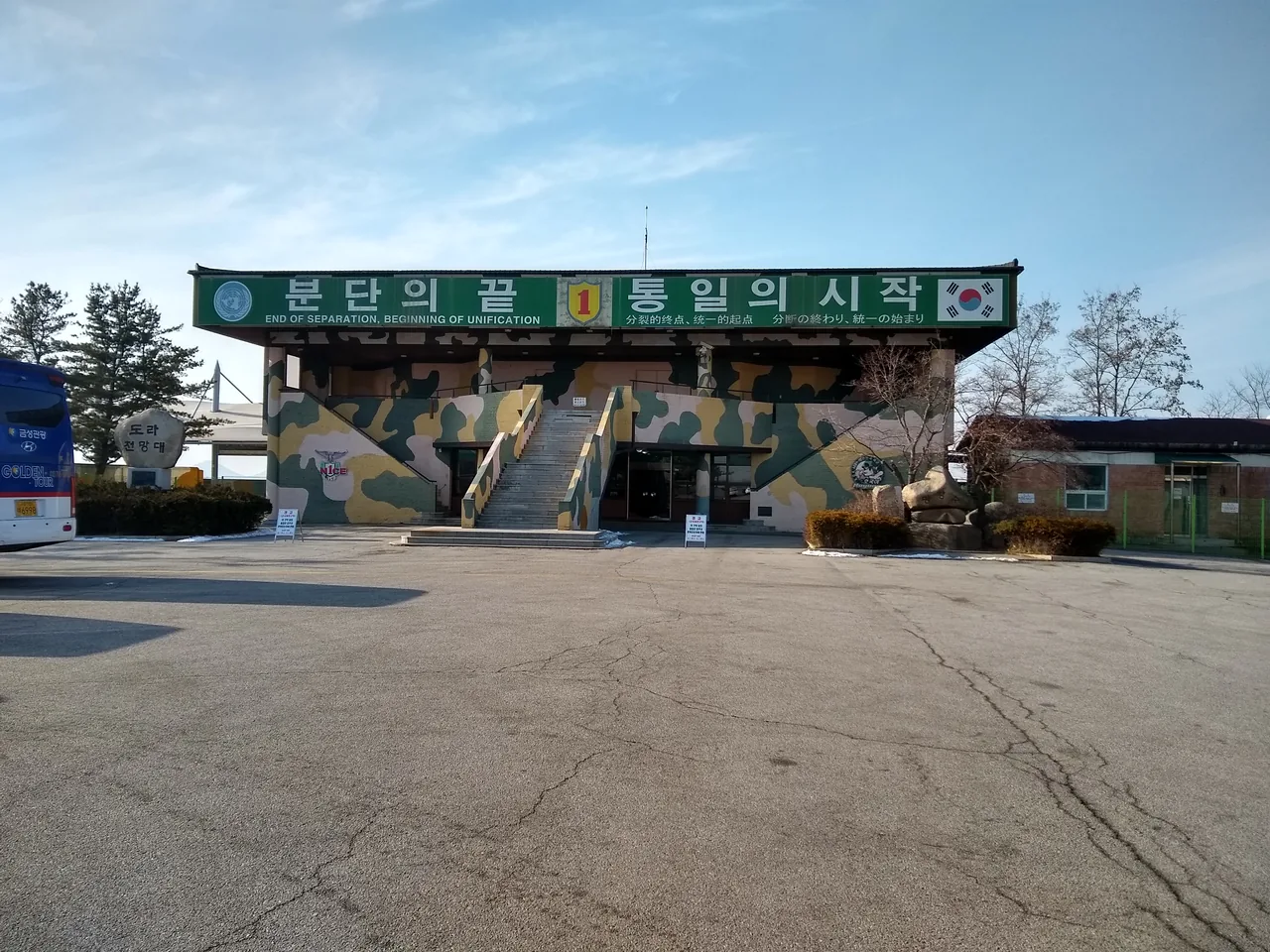
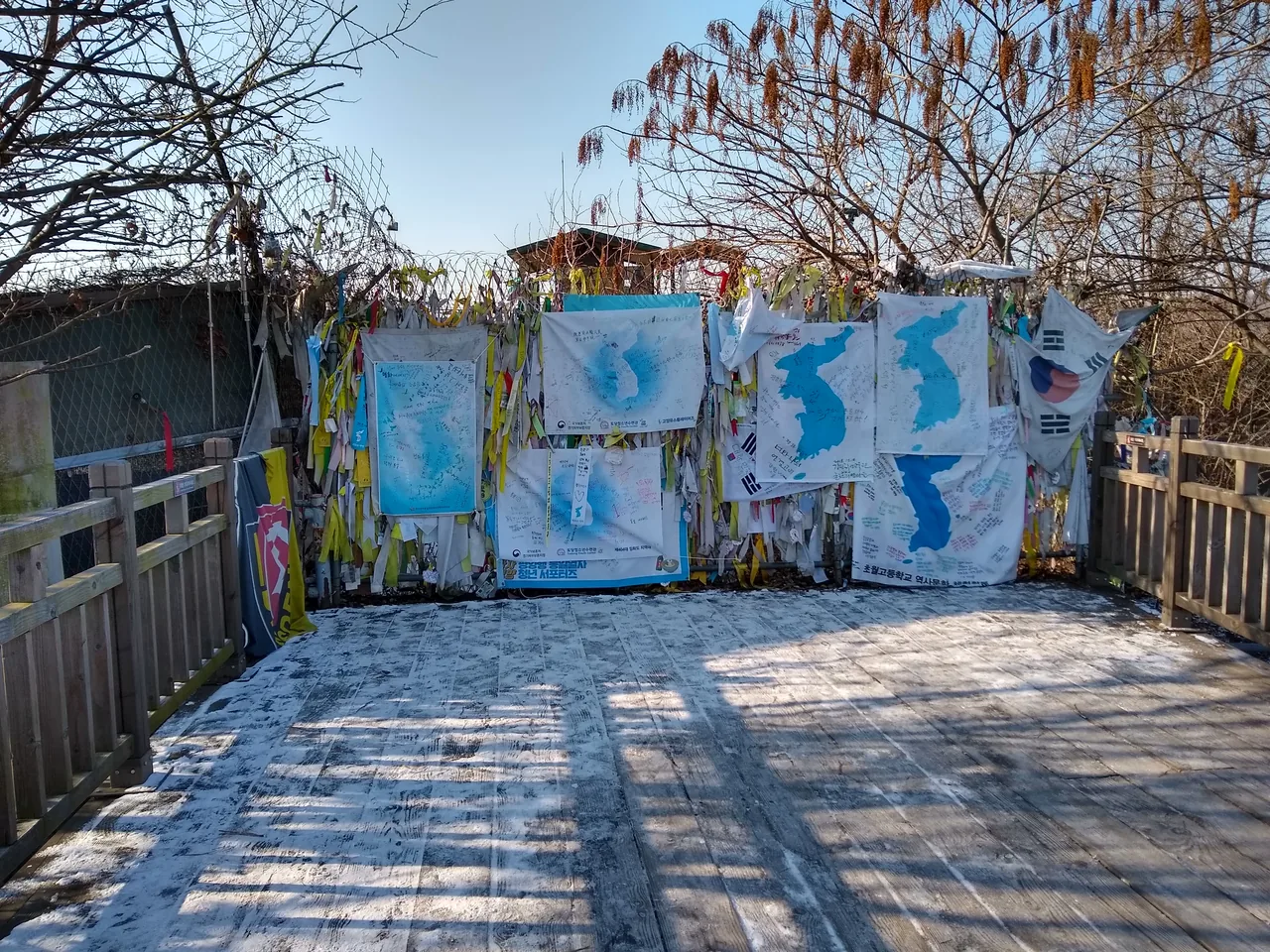
Imjingak Park, the gateway to the DMZ about an hour from Seoul. Photo: Lance Vanlewen, CC BY-SA 4.0, via Wikimedia Commons.
1. DMZ tour from Seoul: the quick answer
To visit the DMZ from Seoul you have to join a guided tour — you can’t drive up and walk in. The Demilitarized Zone is an active military buffer between North and South Korea, so access runs through licensed tour operators who arrange transport, a guide and the security clearance. Most tours leave central Seoul in the morning, reach the border area in about an hour, and run as a half-day (5–6 hours) or full-day (9–10 hours) trip.
Two things are non-negotiable: bring your actual passport (it’s checked at the control point), and book ahead, because popular tours and the limited JSA slots sell out. Beyond that it’s one of the most fascinating half-days you can have near Seoul — standing metres from one of the world’s tensest borders, looking into North Korea.
How to use this guide: start with what you can and can’t do, then the stops, the half-day vs full-day choice, costs, and exactly what to bring. New to Korea? Pair it with our Korea itinerary guide to slot the DMZ into your days.
2. What is the DMZ (and the JSA)?
The DMZ (Demilitarized Zone) is a roughly 4 km-wide, 250 km-long strip that has separated North and South Korea since the 1953 armistice. Despite the name it’s one of the most heavily fortified borders on Earth — and, oddly, an accidental nature reserve. Tours visit the southern edge of it, near Paju, about an hour from Seoul.
People often confuse two things:
The DMZ tour — the standard, widely available trip to viewpoints and sites along the southern boundary (the Third Tunnel, Dora Observatory, Imjingak). This is what most visitors do.
The JSA / Panmunjom — the famous blue huts where the two sides meet face to face, inside the Joint Security Area. It’s a separate, stricter, often-suspended tour (more on that below).
In plain terms: a “DMZ tour” gets you to the border zone and its viewpoints; a “JSA tour” gets you to the actual line where North and South stand a few metres apart. When JSA visits are paused, the DMZ tour is the way to experience the border.
3. Can you visit the DMZ without a tour?
No — independent visits aren’t allowed. Because the area is under military control, you can’t simply drive to the Third Tunnel or Dora Observatory on your own. Access is granted through approved tour operators who pre-register your details, carry you in by coach, and guide you past the checkpoints.
There’s one small exception: Imjingak Park, right at the southern entrance, is freely accessible without a tour — you can take public transport there and see the Freedom Bridge and memorials. But to go any further north (the tunnel, the observatory, Dorasan Station), you need the organised tour.
Passport, every time: bring your physical passport — not a photo or copy. Your name is checked against the tour’s pre-registered list at the control point, and without the document you’ll be turned back. Check entry rules in our Korea visa & K-ETA guide before you travel.
4. What you’ll see on a DMZ tour
A standard DMZ tour strings together the key sites along the southern boundary. The exact mix varies by operator, but most include:
Stop
What it is
Imjingak Park
The gateway park, with the Freedom Bridge, the Mangbaedan altar and war memorials
Third Infiltration Tunnel
A tunnel dug by North Korea toward Seoul, discovered in 1978 — you walk down into it
Dora Observatory
A hilltop deck where you look across the border into North Korea, including Kaesong
Dorasan Station
The eerily ready railway station built to one day connect to the North
Unification Village
Tongilchon / Daeseong-dong, the farming village inside the controlled zone
Full-day tours often add an extra: the Gamaksan red suspension bridge, a DMZ gondola, or Camp Greaves, a former US base turned exhibition.
The highlight for most: standing at Dora Observatory looking into North Korea, and walking down the Third Tunnel — bring a light jacket, the tunnel is cool and damp.
5. JSA & Panmunjom: the blue huts
The JSA (Joint Security Area) at Panmunjom is the iconic spot — the row of blue conference huts straddling the actual border, where you can technically step into North Korea inside the room. It’s the most dramatic way to see the divide, and the most restricted.
Key things to know:
It’s often suspended. JSA tourist visits are paused and resumed depending on the security situation, so availability changes — always check the current status when you book.
It’s a separate tour with stricter rules: advance registration (often days or weeks ahead), passport details, a dress code and a briefing.
When it runs, it’s usually a full-day tour, sometimes combined with the regular DMZ sites.
Don’t bank on the JSA. If seeing Panmunjom is your dream, check availability early and have the standard DMZ tour as a backup — it’s reliably open and still a powerful experience.
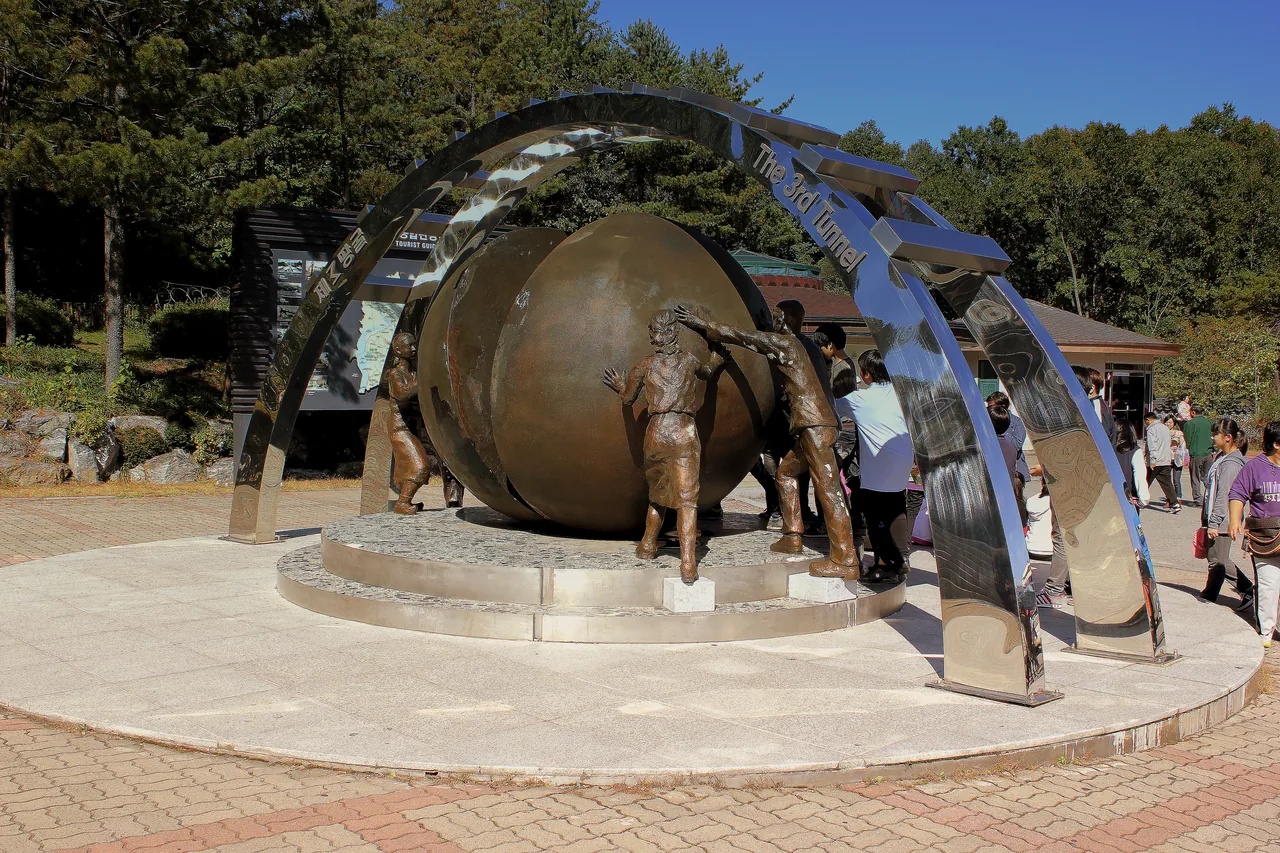
The Third Infiltration Tunnel, dug by North Korea toward Seoul and discovered in 1978. Photo: calflier001, CC BY-SA 2.0, via Wikimedia Commons.
6. Half-day vs full-day: which DMZ tour?
The big choice is length. Both start with a pickup in Seoul; the difference is how much you pack in.
Half-day
Full-day
Time
~5–6 hours (usually morning)
~9–10 hours
Covers
The DMZ core: Imjingak, Third Tunnel, Dora Observatory
The core plus extras (suspension bridge, gondola, Camp Greaves) or the JSA
Best for
A tight schedule, or a DMZ add-on to a Seoul day
Going deep, or combining with the JSA
Lunch
Usually not included (back by lunch)
Often included or a stop is given
Quick pick: short on time or just want the essentials? The half-day covers the famous sites. Want the full story (and maybe the JSA)? Go full-day. Either way you’re back in Seoul the same day.
7. How much does a DMZ tour cost, and what’s included?
DMZ tours are well-priced for what they include — transport from Seoul, a licensed guide, and the site entries are usually bundled. As a rough guide:
Half-day DMZ tour — typically the most affordable option, covering transport, guide and the core sites.
Full-day tour — more, reflecting the extra stops and often lunch.
JSA / Panmunjom — the priciest, when available, due to the extra arrangements.
Most tours include round-trip transport from a central Seoul meeting point, an English-speaking guide and entrance fees. Lunch, optional add-ons (gondola, bridge) and hotel pickup may cost extra — check the inclusions before you book.
Compare and book ahead: prices and inclusions vary by operator, so it pays to compare. Booking online also locks in your spot — DMZ tours, and especially JSA slots, sell out in peak season.
8. How to book & what to bring
Booking is simple if you do it in advance. Reserve online, get your confirmation, and turn up at the meeting point with the one thing that matters most — your passport.
Book a day or more ahead Pick a half- or full-day tour, confirm the inclusions and the meeting point, and reserve online. Popular dates and JSA slots go early.
Bring your passport The physical document, not a copy. It’s checked against the registered list at the control point.
Dress comfortably and neatly Walking shoes for the tunnel and observatory; avoid ripped or military-style clothing. The JSA has a stricter dress code if you’re doing it.
Arrive early at the meeting point Tours leave on time and can’t wait — be there 10–15 minutes before departure.
Mind the photo rules: photography is restricted at certain points (inside the tunnel, and beyond marked lines at the observatory). Follow your guide — it’s a real military zone, not a theme park.
9. Getting there & where tours start
You don’t need to find your own way to the border — that’s the point of the tour. Almost all DMZ tours start from central Seoul, with a meeting point near a major station or landmark (often around City Hall, Myeongdong, Hongdae or Dongdaemun), and some offer hotel pickup.
From the meeting point it’s about an hour by coach to the Imjingak area, where the controlled section begins. You’ll travel in as a group and stay with your guide throughout.
Get to your meeting point easily: use the subway and a T-money card — our full guide to getting around Korea guide covers Seoul’s transport, the apps you need and how to reach any meeting point stress-free.
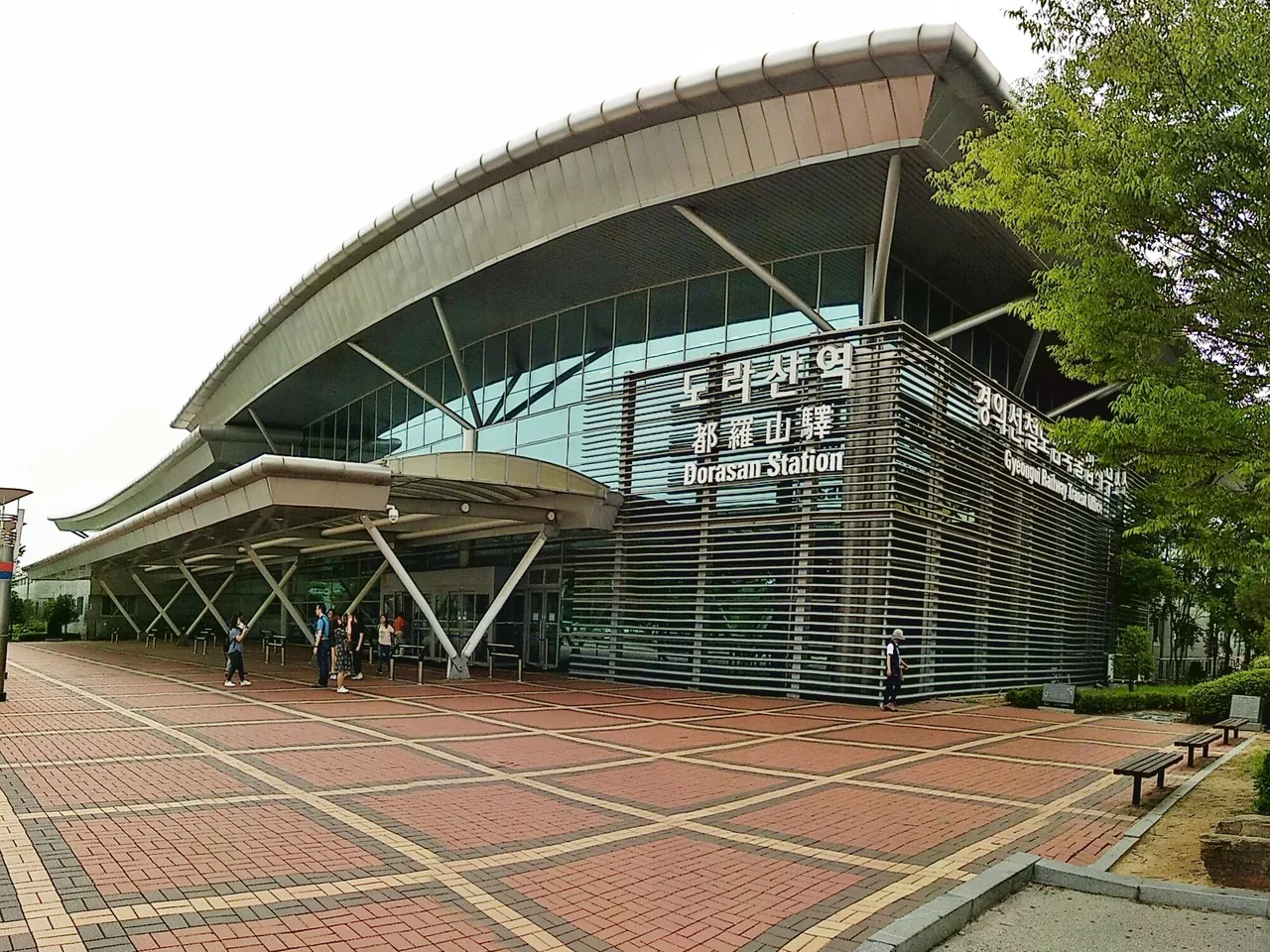
Dorasan Station, built to one day connect to the North. Photo: Sanmosa, CC BY-SA 4.0, via Wikimedia Commons.
10. Best time to go & opening days
The DMZ is a year-round trip, but a few timing points matter:
Closed Mondays and national holidays. The DMZ sites don’t operate every day — most tours run Tuesday to Sunday, so plan around it.
Spring and autumn are the most comfortable, with mild weather and clear views from the observatory.
Winter is cold and stark but atmospheric; summer is hot and hazy, which can blur the view north.
Clear days give the best observatory views into North Korea — haze and rain can limit how far you see.
Plan around the closures: never schedule your DMZ tour for a Monday. For month-by-month weather and the clearest seasons, see our best time to visit Korea guide.
11. Is a DMZ tour worth it?
For most visitors, yes — it’s one of the most memorable things you can do from Seoul. There’s nothing else like standing at a living Cold War frontier, walking a tunnel dug for an invasion, and looking through binoculars into a country you can’t otherwise visit. It’s history you can feel, not just read.
It’s especially worth it if you’re interested in history, geopolitics or the Korean War, or simply want an experience that’s unlike anything else on a Korea trip. If you only want palaces, food and shopping, you can skip it — but most people are glad they went.
This is a working military zone, so a little awareness goes a long way:
Follow the photo rules. No photography inside the tunnel, and only within marked lines at the observatory. Your guide will tell you where it’s allowed.
Stay with your group. Don’t wander off or cross marked boundaries — these are real, enforced lines.
Dress respectfully, especially for the JSA (no ripped, revealing or military-style clothing). The standard DMZ tour is more relaxed but neat is best.
No pointing, gesturing or waving toward the North at the JSA — it can be misread. Behave calmly and seriously where asked.
Bring your passport and arrive on time — the two things that can end your tour before it starts.
The mindset: treat it with the seriousness it deserves and you’ll have a smooth, profound visit. Ready to book? Compare half-day and full-day options above, and start planning the rest with our complete Korea Travel Guide.
🍂 Prefer nature over history for your second day trip? Nami Island swaps the border for tree-lined lanes, gardens and gorgeous autumn colour, an easy hour from Seoul.
🎢 Prefer a fun day to a history one next time out? Everland, Korea’s biggest theme park, swaps the border for coasters, a safari and pandas, an hour from Seoul.
No. The DMZ is a controlled military zone, so you can only visit on an organised guided tour that arranges access and security clearance. The one exception is Imjingak Park at the southern entrance, which you can reach independently, but the Third Tunnel, Dora Observatory and Dorasan Station all require a tour.
Q. Do I need my passport for the DMZ?
Yes — your physical passport is required and is checked against the tour’s registered list at the control point. A photo or copy won’t do, and without it you’ll be turned away. Bring the actual document.
Q. How long is a DMZ tour from Seoul?
Half-day tours run about 5–6 hours and cover the core sites (Imjingak, the Third Tunnel, Dora Observatory). Full-day tours run about 9–10 hours and add extra stops or the JSA. The border area is roughly an hour from central Seoul.
Q. What’s the difference between the DMZ tour and the JSA tour?
A DMZ tour visits viewpoints and sites along the southern boundary, like the Third Tunnel and Dora Observatory. A JSA (Joint Security Area / Panmunjom) tour takes you to the famous blue huts on the actual border line — it’s separate, stricter, often suspended, and needs advance registration.
Q. Is the JSA / Panmunjom open to tourists?
It depends. JSA visits are suspended and resumed depending on the security situation, so availability changes over time. If you want to see Panmunjom, check the current status when booking and book well ahead, with a standard DMZ tour as a backup.
Q. Is a DMZ tour safe?
Yes. Tours are run by licensed operators under strict military protocols, and millions of tourists have visited safely. You stay with your guide, follow clear rules, and remain in approved areas throughout.
Q. What should I wear and bring?
Wear comfortable walking shoes (you go down into the tunnel) and dress neatly — avoid ripped or military-style clothing, especially for the JSA. Bring your passport, a light jacket (the tunnel is cool), and follow the photography rules your guide explains.
Q. Which days is the DMZ closed?
The DMZ sites are generally closed on Mondays and national holidays, so most tours run Tuesday to Sunday. Never book your visit for a Monday — check the operating days when you reserve.
Q. How far is the DMZ from Seoul?
The southern DMZ area near Paju is roughly an hour by road from central Seoul, which is why almost all tours are comfortable half-day or full-day trips returning to the city the same day.
Q. Is the DMZ tour worth it?
For most visitors, yes. Standing at a living Cold War border, walking an infiltration tunnel and looking into North Korea is a uniquely powerful experience you can’t get anywhere else. It’s especially rewarding if you’re interested in history or the Korean War.