
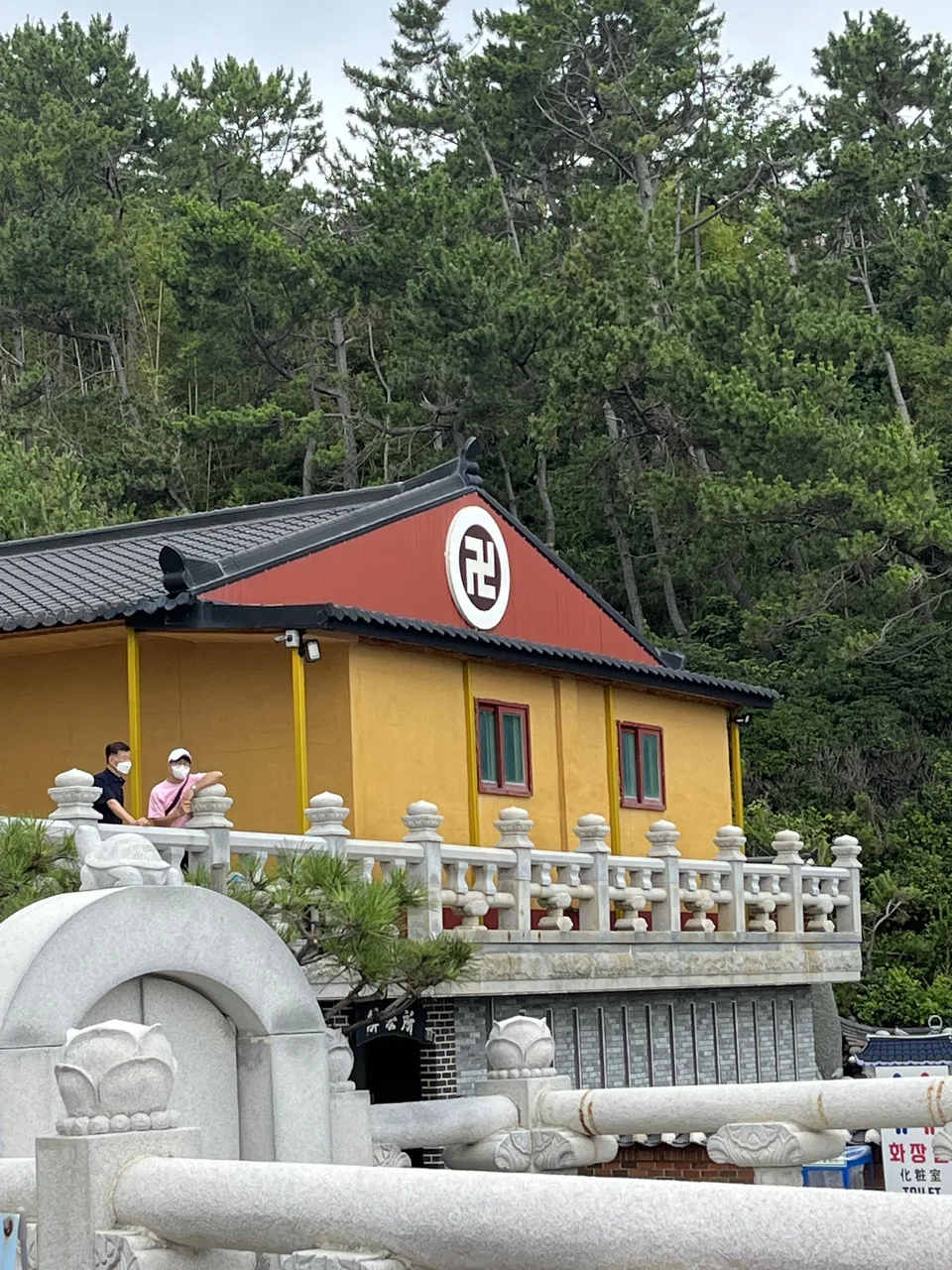
Haedong Yonggungsa Temple: Busan’s Clifftop Temple by the Sea (Complete 2026 Guide)
Korea’s most famous seaside temple, built right on the rocks of Busan’s east coast, and how to visit it well
| Entry & hours | Free, open every day, 04:30 to 19:20 (last entry 18:50) |
|---|---|
| Where | Yonggung-gil 86, Gijang-gun, Busan, on the rocky east coast |
| Getting there | Bus 181 from Haeundae Station (Exit 7), about 45 min; or Osiria Station + bus 1001; taxi ₩15,000 to 20,000 |
| Best time | Sunrise, or right at 04:30 opening, to beat the crowds and catch the sea light |
| Don’t miss | The 10 m Haesu Gwaneum sea-goddess Buddha, the 108 steps, the clifftop halls over the waves |
| Time needed | About 1 to 1.5 hours to walk the whole complex |
1. Haedong Yonggungsa at a glance
2. Why go, and what makes it special
3. History and the founding legend
4. What to see, in the order you walk it
5. Sunrise and lanterns: the temple at its most beautiful
6. Visitor information: hours, fees and parking
7. How to get there: buses, subway and taxi
8. Best photo spots and timing
9. Nearby: turning it into a half-day on the east coast
10. Where to stay nearby
11. Where to eat nearby
12. When to visit: season by season
13. Etiquette and accessibility
14. Practical tips and staying connected
15. Wrap-up: fitting the temple into your Busan trip
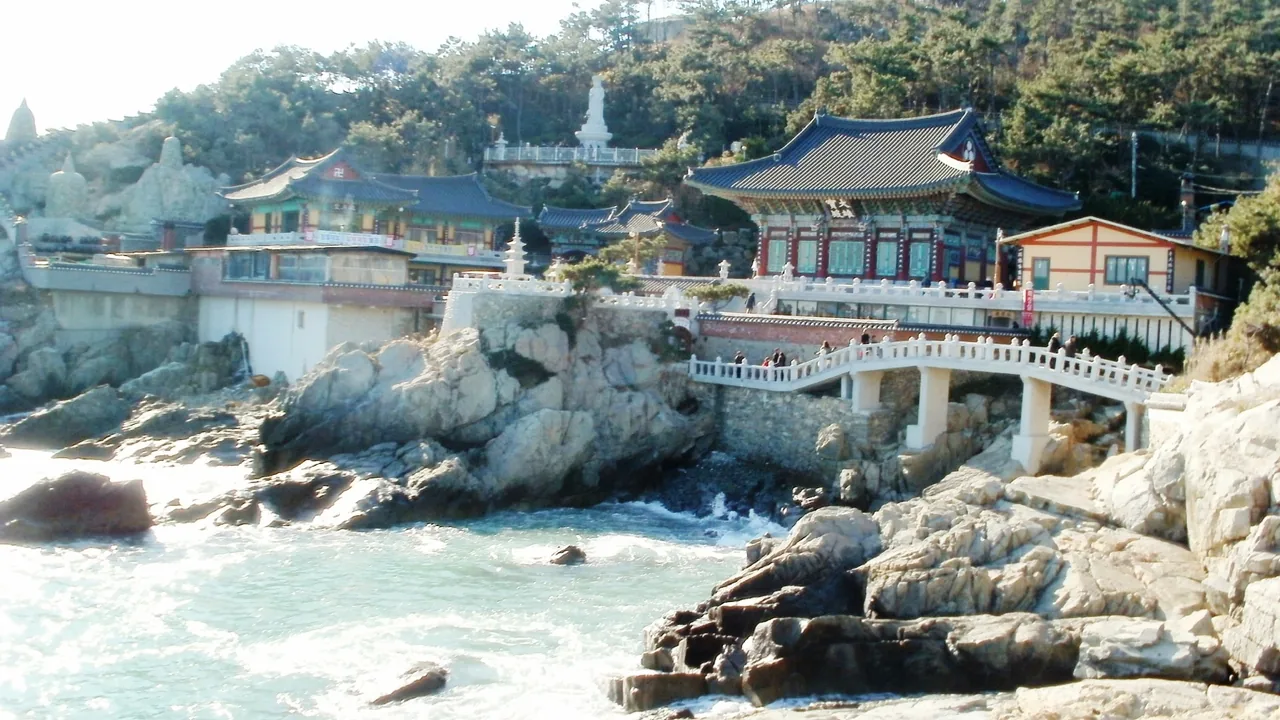
Haedong Yonggungsa is the rarest kind of Korean temple: instead of hiding in the mountains, it clings to a rocky headland with the East Sea crashing at its feet, which is why it is often called Korea’s temple on the water. Entry is free, it opens before dawn at 04:30, and the single most common way to reach it is bus 181 from Haeundae. This guide, part of our Busan travel guide, walks you through every statue and shrine on the grounds, the founding legend from 1376, the exact transport and parking, the best time for sunrise and lanterns, and how to fold the visit into a half-day along Busan’s east coast, honestly and up to date for 2026.
1. Haedong Yonggungsa at a glance
Haedong Yonggungsa is a Buddhist temple built directly onto the sea cliffs of Busan’s east coast, and it is one of very few Korean temples that sits on the water rather than in the mountains. That single fact is what makes it special, and it is free to enter, open from before dawn, and reachable by a single bus from Haeundae.
| Detail | What to know |
|---|---|
| Entry fee | Free, open 365 days a year |
| Opening hours | 04:30 to 19:20, with last entry at 18:50 |
| Location | Yonggung-gil 86, Gijang-eup, Gijang-gun, Busan (Sirang-ri), on a rocky headland |
| Getting there | Bus 181 from Haeundae Station Exit 7 (about 45 min), or Osiria Station plus bus 1001; taxi from Haeundae is ₩15,000 to 20,000 |
| Time needed | About 1 to 1.5 hours to walk the grounds |
| Best for | Sea views, dramatic photos, sunrise, wish-making, and a half-day on the east coast |
2. Why go, and what makes it special
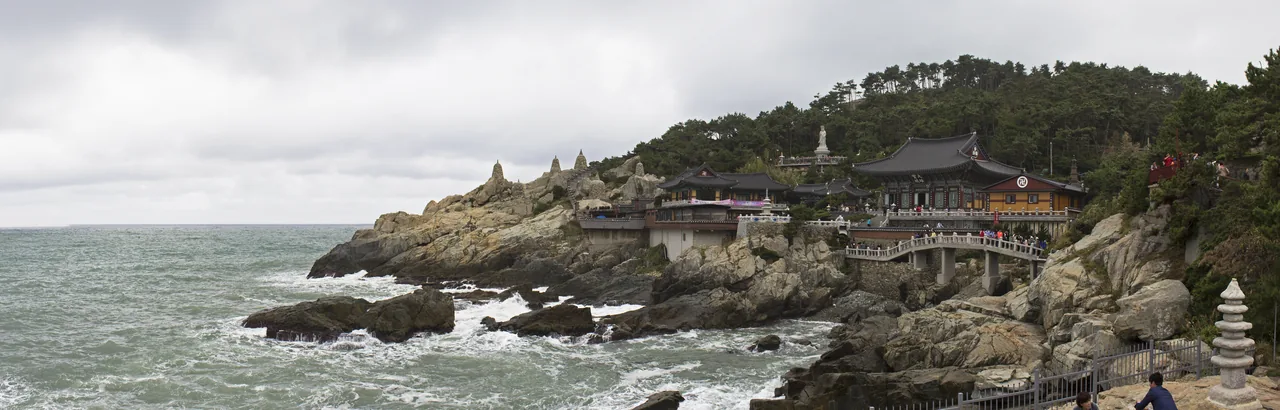
Almost every famous Korean temple is a mountain temple, tucked into a forest valley. Haedong Yonggungsa is the great exception: it is a temple on the sea, its halls and shrines built onto the rocks with waves breaking a few metres below. That is the one thing you cannot get anywhere else, and it is why the temple appears on so many “must-see in Busan” lists.
Three things set it apart from the other temples on your itinerary:
Where Beomeosa and most others are mountain monasteries, Yonggungsa is water, rock and open horizon. The setting alone makes it one of the most photographed places in Busan.
Locals believe that here, “at least one sincere wish will come true.” That reputation draws crowds of pilgrims at New Year and before the national college entrance exam.
Because it faces east over open water, it is one of the best sunrise spots in the city, and one of very few temples you can watch the sun rise from.
It is worth being honest about the trade-off. Its fame means it is busy, especially at weekends, on holidays, and around Buddha’s Birthday, and the current buildings are a twentieth-century reconstruction rather than centuries-old originals. If you want silence and ancient timber, a quiet mountain monastery is the counterweight. But for sheer drama, sea air and photographs, few temples in the country compete with this one.
3. History and the founding legend
By tradition Haedong Yonggungsa is said to have been founded in 1376, near the end of the Goryeo dynasty, by the great Seon master Naong Hyegeun. The story of how it came to stand on the sea is the reason the temple carries the word yonggung, “dragon palace,” in its name, and it is worth knowing before you go.
As the legend tells it, the country was suffering from drought and hardship. One night the Dragon King of the East Sea, the deity who rules the ocean, appeared to Master Naong in a dream. He promised that if a temple were built at the edge of Bongnaesan, on this very headland by the water, and people prayed there, the land would find peace and the rain would come. Naong built the temple on the rocks facing the sea, and it has been a place of prayer to the sea ever since.
Because of that origin, the temple’s principal image is not an ordinary Buddha but Haesu Gwaneum, the Bodhisattva of Mercy who watches over the sea, traditionally shown riding a dragon over the waves. This is a temple that faces the ocean and prays to it, which is unusual and part of what makes visiting feel different from an inland temple.
Over the centuries the temple’s reputation as an efficacious place of prayer only grew, and today it is famous nationwide as a temple where a heartfelt wish is said to be granted, which is why you will see pilgrims at the start of the lunar year and again in the run-up to exam season.
4. What to see, in the order you walk it
The temple reveals itself in sequence as you walk downhill from the entrance toward the sea. Follow the path and you will pass everything below in this order. Each stop has a name, a meaning and a reason it is there, so here is what to look for and a tip for each.
1. Iljumun gate and the twelve zodiac guardians
You enter past the Iljumun, the one-pillar gate that marks the boundary of sacred ground, and a line of twelve zodiac guardian statues (sibisin). Each is about 3 m tall, with an animal head, a human body and a weapon, and together they are the twelve earthly protectors, one for each animal of the Korean zodiac. Tip: find the guardian for your own birth-year animal and take a photo in front of it, a small ritual most visitors enjoy.
2. The bridges to the cliff path
You cross a short bridge (Hongnyong Bridge, 虹龍, “rainbow dragon”) that carries the path over the rocks toward the temple proper. It is your first taste of the sea view and a good place to pause before the descent.
3. The 108 steps
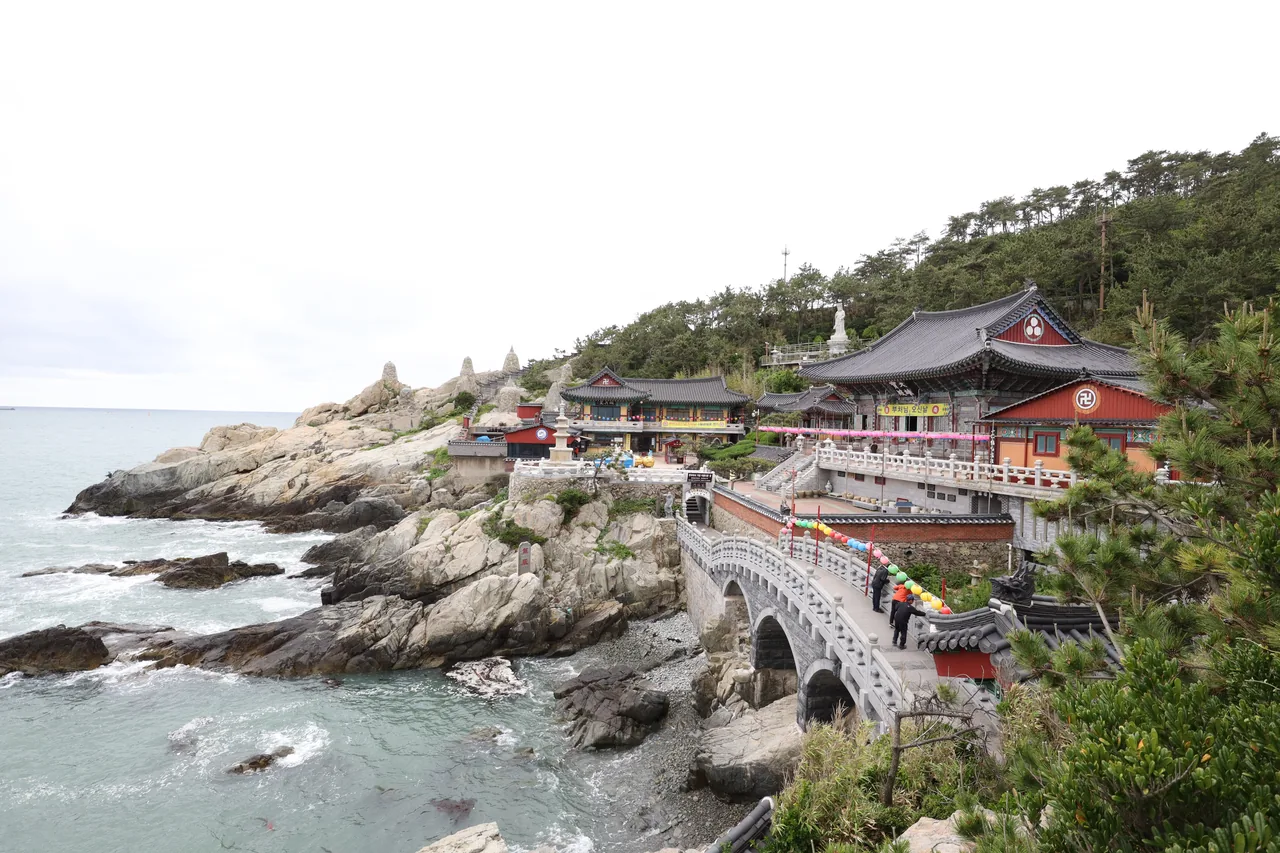
The signature approach is the 108 steps, a stone stairway lined with lanterns that drops down the cliff toward the halls. The number 108 stands for the 108 defilements or worldly desires in Buddhism, so descending them is meant to leave your burdens behind. Tip: the first proper sea view opens up partway down, one of the best photo spots on the whole site. Coming back up is a real climb, so pace yourself.
4. Haesu Gwaneum Daebul, the great sea-goddess Buddha
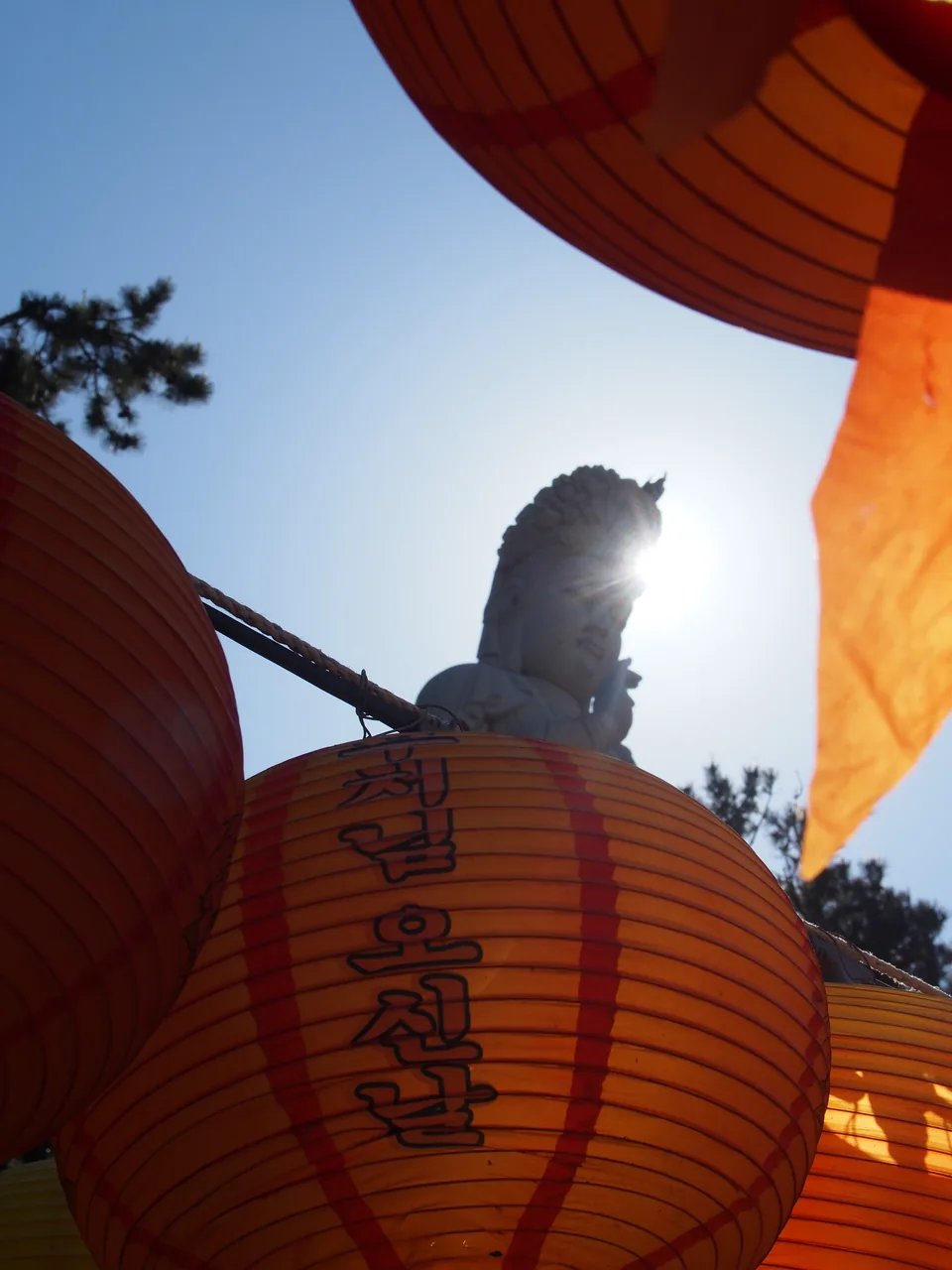
Standing above the temple is the Haesu Gwaneum Daebul, a roughly 10 m stone image of the Bodhisattva of Mercy, said to be the largest single-stone Buddha statue in Korea. She faces out over the sea, watching over sailors and fishermen and receiving the prayers of visitors. Tip: the platform around her gives the widest sweep of coast and temple together.
5. Daeungjeon and the shrines by the sea
The Daeungbojeon (main hall) and a cluster of smaller shrines sit right on the rocks. Among them are a stupa said to hold sacred relics, a three-story stone pagoda flanked by four stone lions representing the emotions of joy, anger, sorrow and pleasure, and a reclining Buddha in the Gwangmyeongjeon. There is also a spring-water fountain where people drink for health, the smiling Podae (the “laughing Buddha”) for good fortune, and the sixteen arhats.
6. The wish shrines: Deungnam Buddha, the golden pig, the study Buddha
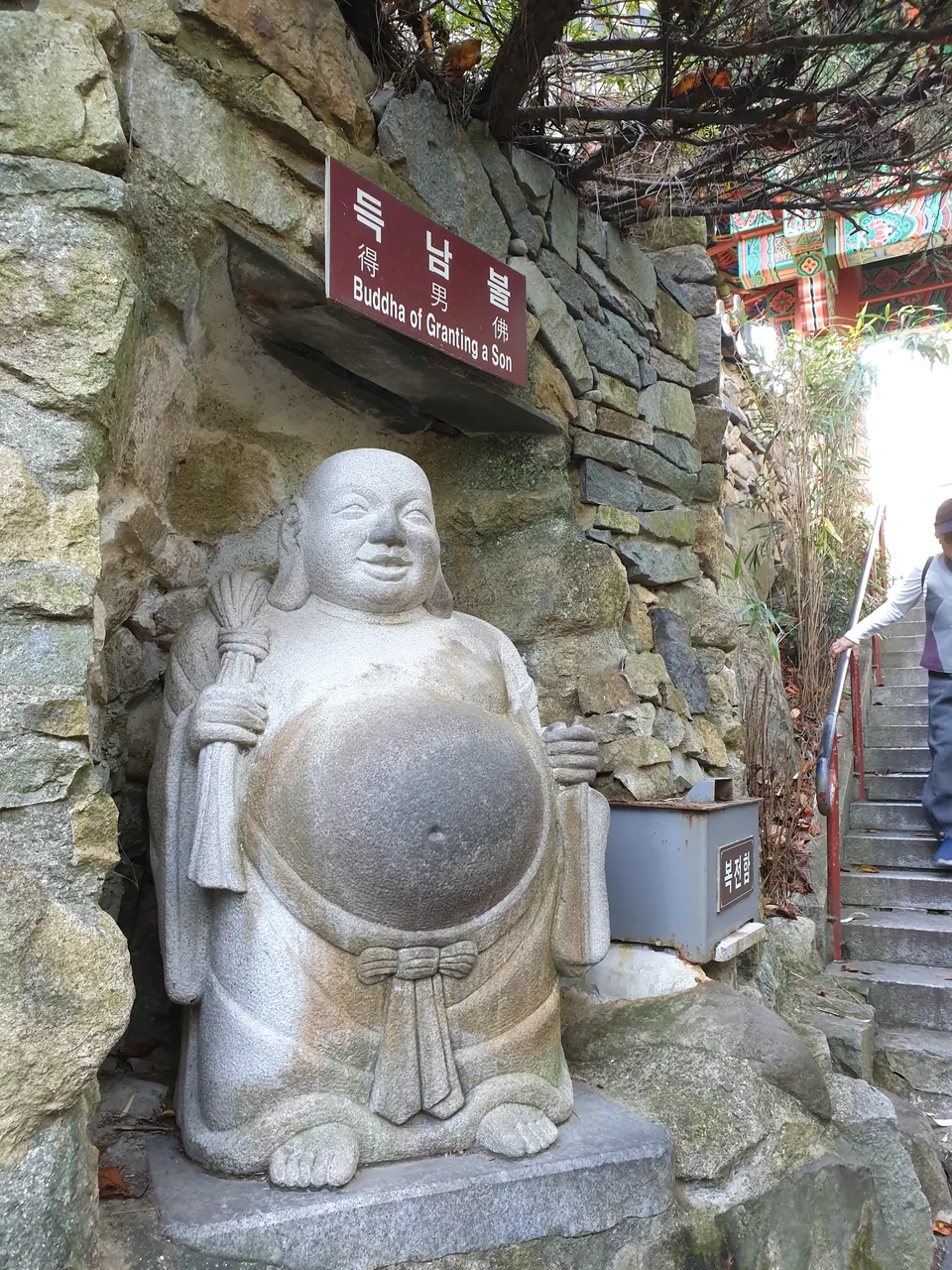
This is a temple of specific, practical wishes, and each has its own shrine. In a small cave shrine (the Mireukjeon) sits the Deungnam Buddha, a Maitreya to whom childless couples pray for a son. Nearby, a golden pig statue is rubbed for wealth, and a study Buddha receives the prayers of students before the national exam. Tip: these are the busiest spots with locals, so you will often see genuine, moving devotion here.
| What to see (checklist) | What it is & why it matters |
|---|---|
| Twelve zodiac guardians | Twelve 3 m earthly protectors at the entrance; pose with your birth animal |
| 108 steps | Lantern-lined stairway for the 108 desires; first sea view halfway down |
| Haesu Gwaneum Daebul | Roughly 10 m stone Buddha of Mercy, Korea’s largest single-stone image, facing the sea |
| Daeungbojeon & relic stupa | The main hall and sacred relics right on the clifftop |
| Three-story pagoda & four lions | Lions for joy, anger, sorrow and pleasure |
| Deungnam (son-wish) Buddha | Cave Maitreya for couples praying for a child |
| Golden pig / study Buddha | Wealth and exam-success prayers |
| Spring fountain, Podae, reclining Buddha | Health water, the laughing Buddha, and the Gwangmyeongjeon reclining Buddha |
5. Sunrise and lanterns: the temple at its most beautiful
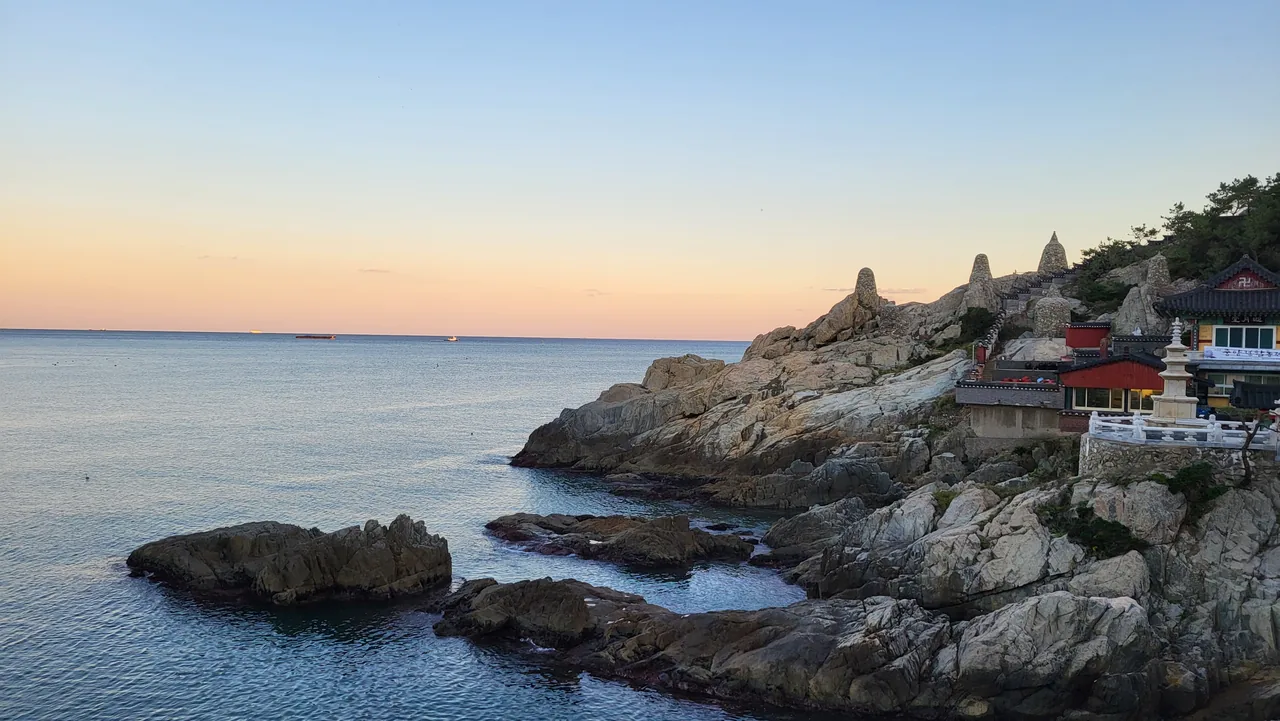
Two times of year and one time of day turn Haedong Yonggungsa from lovely into unforgettable: sunrise, New Year, and Buddha’s Birthday. Because the temple faces due east over open water, it is one of the very few Buddhist temples in Korea where you can watch the sun rise straight out of the sea.
Sunrise over the sea
The best spot is around Iryeonam, the sunrise rock, where the sun lifts clean over the horizon behind the halls. Aim to be inside before first light; the temple opens at 04:30, which is early enough for sunrise for much of the year. In midsummer the sun rises around 05:10 to 05:30, and in midwinter closer to 07:20 to 07:40, so check the exact sunrise time for your date and arrive 20 to 30 minutes ahead.
New Year and the first sunrise
On the first sunrise of the lunar new year the temple draws huge crowds of people coming to make their wish for the year. It is atmospheric but extremely busy, so come only if you want the crowd as part of the experience, and expect packed buses and full car parks.
Buddha’s Birthday and the lanterns
In the weeks around Buddha’s Birthday, which falls on 24 May in 2026, the whole temple is hung with thousands of coloured paper lanterns. Strung above the rocks and the sea, they are one of the most photogenic sights on the Busan coast, especially in the soft light near dusk. This is the single most beautiful time to visit, and also one of the busiest, so plan around it.
6. Visitor information: hours, fees and parking
Entry is completely free and the temple is open every day of the year, from 04:30 until 19:20, with last entry at 18:50. There is no ticket booth to queue at; you simply walk in.
| Item | Detail |
|---|---|
| Admission | Free |
| Open | Every day, 04:30 to 19:20 (last entry 18:50) |
| Quietest time | Right at 04:30 opening, or for sunrise on a weekday |
| Busiest time | Weekend and holiday middays, New Year, Buddha’s Birthday |
Parking
There is a paid car park at the temple, but be ready for two catches: it is card only, with no cash accepted, and it fills up fast at weekends and in high season.
| Parking fee | Cost |
|---|---|
| First 30 minutes | ₩2,000 |
| Each additional 10 minutes | ₩500 |
| Daily maximum | ₩20,000 |
| Payment | Card only (no cash) |
7. How to get there: buses, subway and taxi
The most popular way to reach the temple is bus 181 from Haeundae; the smoothest for many is the Donghae Line train to Osiria Station plus a short bus. Google Maps directions are unreliable in South Korea, so use Naver Map or KakaoMap for live bus times.
| Mode | From | Time | Fare / notes |
|---|---|---|---|
| Bus 181 | Haeundae Station (Line 2), Exit 7 | ~45 min | City bus fare; get off at the “Haedong Yonggungsa” stop (by Skyline Luge), then 5 min walk |
| Train + bus | Osiria Station (Donghae Line) + bus 1001 | ~15 min on the bus | Handy if you are already on the Donghae Line; buses 100 and 1001 also pass nearby |
| Taxi | Haeundae Beach area | 20 to 25 min | ₩15,000 to 20,000 |
By bus 181, step by step:
8. Best photo spots and timing
Haedong Yonggungsa is built for photographs, but the good angles are specific and the light changes fast. Here is where to shoot and when.
From the bridge and the upper path you get the classic composition: the golden-roofed halls stacked on the rocks with the sea behind. The single most recognisable Busan temple shot.
The sea opens up as you descend. Turn back toward the steps and lanterns for a strong foreground, or out to the water for the wide view.
The area around the 10 m Buddha gives the broadest sweep of statue, temple and coastline in one frame.
For the sun rising out of the sea behind the halls, this is the spot. Get there before first light.
9. Nearby: turning it into a half-day on the east coast
The temple sits in the middle of one of Busan’s best clusters of things to do, so it is easy and rewarding to build a half-day around it. Everything below is close, and most people pair two or three stops with the temple.
| Nearby stop | Distance | What it is |
|---|---|---|
| Skyline Luge Busan | Right by the bus stop | Gravity go-karts down a hillside track, great with kids or for a fun contrast to the temple |
| National Fisheries Science Museum | ~15 min walk | Free, with marine exhibits and a small aquarium; a family favourite |
| Osiria Tourism Complex | Short bus / drive | Lotte World Adventure Busan, Lotte Premium Outlets, Skyline Luge, and the Ananti at Busan Cove resorts |
| Songjeong Beach | Short drive | A relaxed surf beach, calmer than Haeundae |
A natural flow is: arrive early at the temple (before the crowds and the heat), then ride the Skyline Luge Busan next door, or walk to the free fisheries museum, and finish at Songjeong Beach for the beach or a coffee. If you would rather stay by the sky-rail and the sea, the Blueline Park Sky Capsule Sky Capsule at nearby Cheongsapo is another popular add-on. For more ideas on structuring your days, see our full list of things to do in Busan.
10. Where to stay nearby
The temple is on the city’s eastern edge, so most visitors do not sleep right beside it; they base themselves in Haeundae, Songjeong or Osiria and come out for a morning. Here is how the nearby bases compare.
| Area | Best for | Getting to the temple |
|---|---|---|
| Haeundae | First-timers who want the beach, dining and nightlife on the doorstep | Bus 181 direct, about 45 min, or a ₩15,000 to 20,000 taxi |
| Songjeong | A quieter, surfy beach mood, still close to the temple | Short drive or bus, closer than Haeundae |
| Osiria | Resort stays (Ananti at Busan Cove) and theme parks near the temple | Osiria Station + bus 1001, or a short taxi |
For most travellers Haeundae is the sensible choice: it has the widest range of hotels, the easiest transport, and the direct bus to the temple. For a full breakdown of neighbourhoods and where they suit different travellers, see our where to stay in Busan guide, and our dedicated Haeundae Beach guide for that area in detail.
11. Where to eat nearby
This stretch of coast is known for seafood, and the temple’s neighbourhood makes it easy to eat well before or after your visit.
A short trip up the coast, Gijang is famous for snow crab (daege), anchovies (myeolchi) and other fresh seafood. Pick your crab and have it steamed on the spot, a classic Busan feast.
The road toward Songjeong and Cheongsapo is lined with ocean-view cafes, perfect for a coffee after the temple with the water in front of you.
The short walk to the entrance passes food stalls selling snacks like hotteok, fishcakes and street food, handy for a quick bite.
If seafood is the point of your trip, Busan is one of the best cities in Asia for it. Our guide to Busan’s seafood covers where to eat raw fish (hoe), crab and the local specialities across the city, not just out here on the east coast.
12. When to visit: season by season
The temple is open all year and each season has its own reason to come. Here is how they compare.
| Season | What it is like |
|---|---|
| Spring (Mar to May) | Mild and the peak time: the Buddha’s Birthday lanterns (24 May 2026) are the year’s highlight. Busy but beautiful. |
| Summer (Jun to Aug) | Hot, humid and crowded, with a rainy spell in the monsoon. Come at opening to beat the heat, and pair it with the beaches nearby. |
| Autumn (Sep to Nov) | Clear skies, comfortable temperatures and the crispest sea views of the year. Arguably the best all-round time to visit. |
| Winter (Dec to Feb) | Cold and clear, with dramatic waves and, at the lunar new year, the famous first-sunrise crowds. A striking, atmospheric time. |
13. Etiquette and accessibility
Haedong Yonggungsa is a working temple as well as a sight, so a little respect goes a long way. It is also a steep, stepped site, which matters for anyone with limited mobility.
Accessibility
The site has a lot of steps and slopes, including the 108 steps, so it is challenging for wheelchairs and strollers and tiring for anyone who struggles with stairs. There is no way to see the lower, seaside halls without descending and re-climbing. If steps are difficult, you can still enjoy the entrance, the guardian statues and the views from the upper path, and take it slowly. Wear comfortable, grippy shoes; the stone can be slick when wet or busy.
14. Practical tips and staying connected
A few small things make the visit smoother, especially the timing, the card-only parking and staying online for maps.
Arrive at 04:30 opening or for sunrise. You get soft light, cool air, thin crowds and the best photos, and you free up the rest of your day.
The car park is card only. Carry a small amount of cash anyway for the food stalls and market, where cash is still handy.
Expect stairs and slopes. Skip the heels and sandals; grippy shoes make the 108 steps far easier.
Naver Map and KakaoMap give accurate bus times and directions; Google Maps directions are unreliable in Korea.
Because those map apps and live bus times are essential here, and because the temple sits away from the city centre, it is worth having mobile data from the moment you land rather than hunting for wi-fi. A travel eSIM is the simplest option for most visitors, letting you use Naver Map, translate signs and check bus times from the airport onward.
15. Wrap-up: fitting the temple into your Busan trip
Haedong Yonggungsa is best treated as a memorable half-day on Busan’s east coast, not a full day on its own. Come early, walk the grounds in an hour or so, then roll it into the luge, the beaches and the food nearby, and you have one of the most satisfying stretches of any Busan trip.
Pair it with the mountain calm of Beomeosa Temple for a complete picture of Busan Buddhism, sea temple and forest monastery, or with the colourful hillside of Gamcheon Culture Village for a very different Busan icon. To see exactly how it slots into a couple of days, our Busan itinerary puts it all in order.
For everything else, where to stay, what to eat, how to get around and what else to see, start with our complete Busan travel guide below.