
Gamcheon Culture Village Busan: Free Entry, How to Get There & Photo Spots
Busan’s pastel hillside maze, once a refugee and Taegeukdo settlement, now a living public-art village
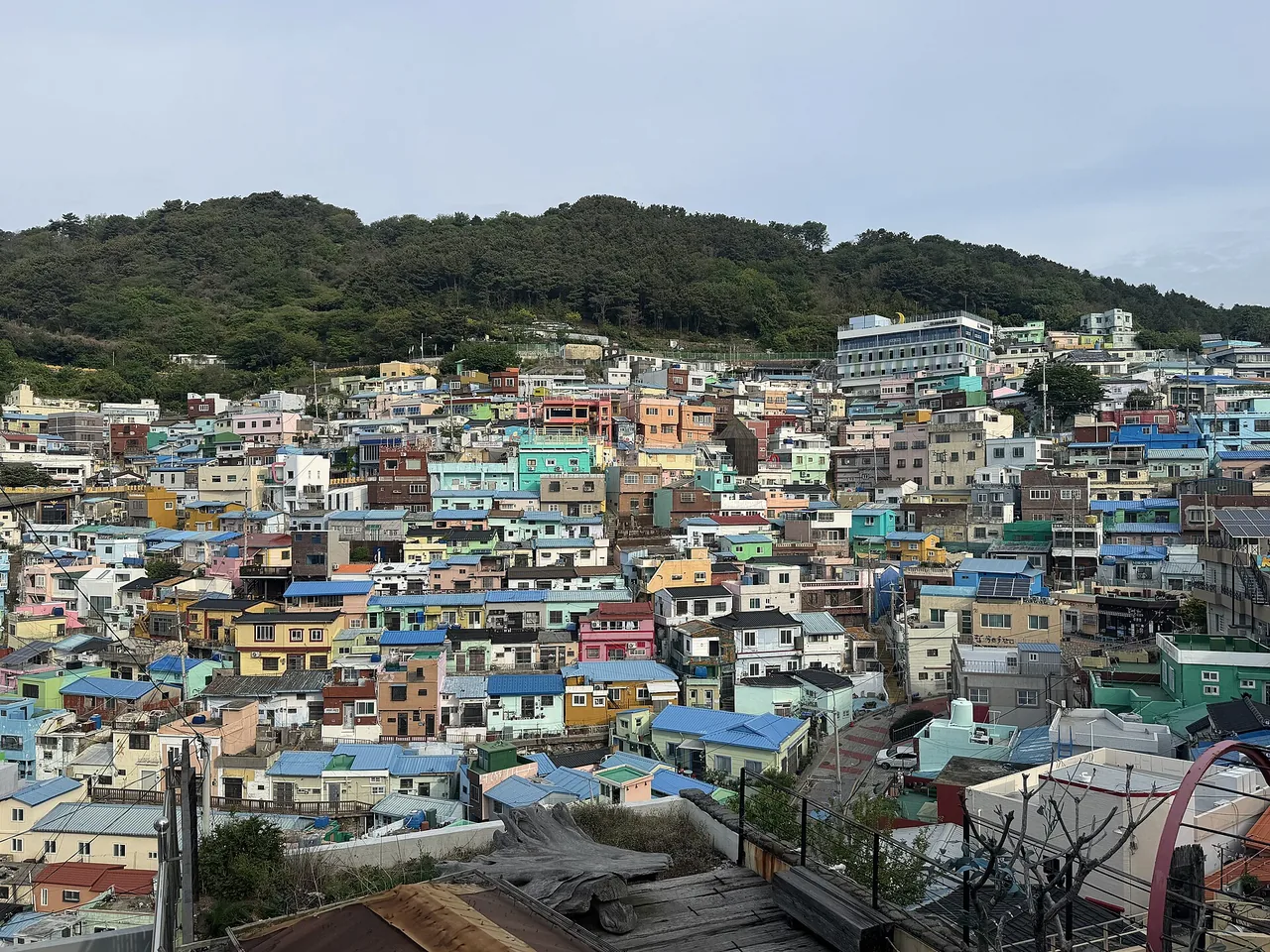
- Gamcheon Culture Village is a hillside neighbourhood in western Busan where pastel houses climb the slope in tiers, threaded with murals, sculptures and twisting alleys, and entry is completely free.
- It began in the 1950s as a settlement for Korean War refugees and the Taegeukdo religious community, and was transformed into a public-art village from 2009, which is why it is nicknamed Korea’s Santorini and the Machu Picchu of Busan.
- Getting there means a transfer: take Subway Line 1 to Toseong Station, then a short village bus up to the entrance, and from 2025 city bus 61 also runs straight to the village. If the travel time puts you off, Choryang Ibagu-gil is the hillside neighbourhood you can reach on foot from Busan Station instead. Different character, same slope.
- Allow about 2 to 3 hours to wander, come on a weekday morning or in the late-afternoon light, and remember that real residents still live here, so tread quietly.
1. What is Gamcheon Culture Village?
2. Gamcheon at a glance
3. History: from refugee and Taegeukdo settlement to art village
4. How to get there
5. Getting around: routes, the stamp map and which way to walk
6. Must-see photo spots and art
7. Small museums, house projects and alley art
8. Cafes, snacks and souvenirs
9. A village where people live: etiquette
10. Best seasons and times of day
11. Accessibility: steep hills and stairs
12. Combine it with western Busan: a half-day plan
13. Practical tips worth knowing
Gamcheon Culture Village is a free, open-air neighbourhood in western Busan where hundreds of pastel houses stack up a steep hillside in steps, connected by a maze of painted alleys, galleries and tiny cafes. What looks like a pretty photo backdrop is actually a real community with a moving history: it grew in the 1950s from Korean War refugees and the Taegeukdo faith community, then reinvented itself as a public-art village from 2009. This guide is part of our complete Busan Travel Guide, and it goes deep on the history, the art and the photo spots, not just how to get there.
1. What is Gamcheon Culture Village?
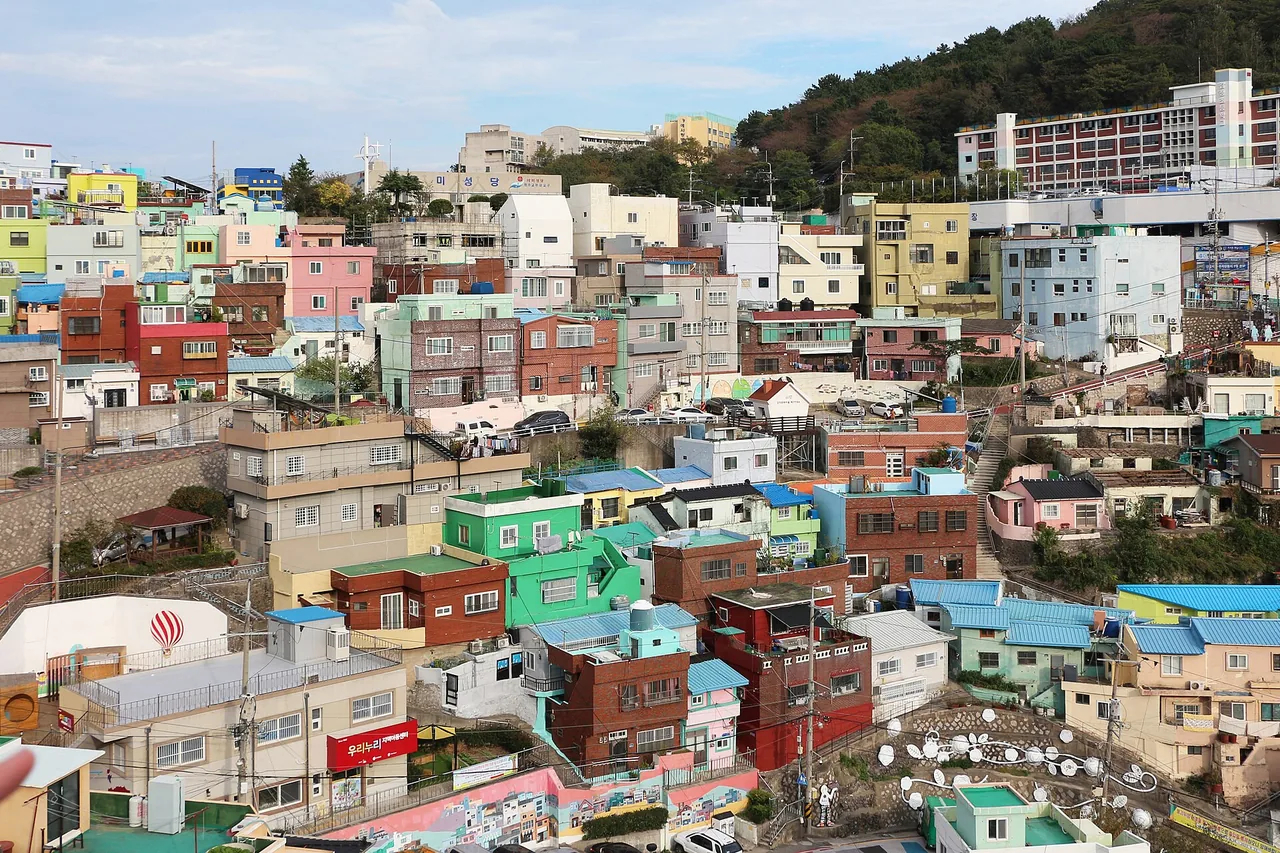
Gamcheon Culture Village is a living hillside neighbourhood in Busan where pastel-painted houses rise in tiers up a steep slope, woven together by murals, sculptures and a labyrinth of narrow alleys, and it is free to enter. It is one of Busan’s most photographed places, but it is not a theme park or a museum: people actually live here, in a community that turned its own poverty and history into one of Korea’s most successful public-art projects. That mix of beauty, story and everyday life is exactly what makes it special.
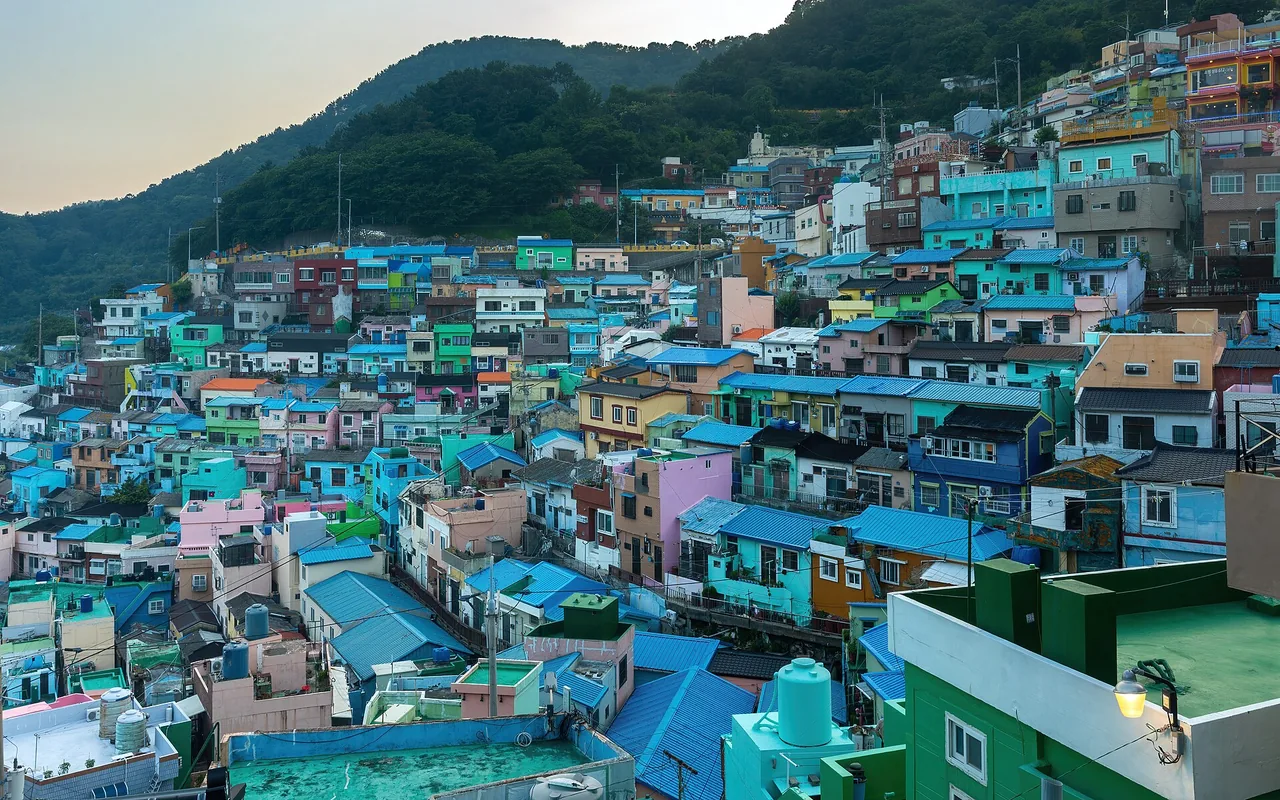
The look has earned it two famous nicknames, Korea’s Santorini and the Machu Picchu of Busan, but the real draw is the layering of art over history. You come for the colours and the views, and you leave understanding a neighbourhood built by refugees and a religious community that designed its homes so no one would block their neighbour’s light.
Murals, installations and small galleries fill the alleys, the result of art projects begun in 2009 that won a national award.
Houses climb the hillside in tiers and every lane connects to another, so half the fun is gently losing your way.
There is no admission fee. You only spend money if you want a coffee, a snack, the stamp map or a souvenir.
Residents still live in these houses, so this is a community to be respected, not just a backdrop for photos.
2. Gamcheon at a glance
| Detail | What to know |
|---|---|
| Location | Gamcheon-dong, Saha-gu, western Busan (203 Gamnae 2-ro), set on a steep hillside |
| Entry fee | Free |
| Hours | The village is open all the time (it is free and residential); the information center runs Mon to Fri, 08:30 to 18:30. Shops and cafes vary, roughly 09:00 to 18:00, cafes until about 19:00. |
| Time needed | About 2 to 3 hours at an easy pace |
| Getting there | Subway Line 1 to Toseong Station, then a village bus up the hill; or city bus 61 direct to the entrance |
| Best seasons | Spring and autumn for walking; late afternoon any day for the light |
| Best for | Photography, art, history, couples and families who enjoy wandering and views |
Recent counts put it at roughly 1.85 million visitors a year, and it is free, so it can get busy. The simplest way to enjoy it is to start at the top, by the main entrance and information center, and drift downhill through the alleys, following the painted fish and arrows in the pavement.
3. History: from refugee and Taegeukdo settlement to art village
Gamcheon’s story is the reason it feels so different from a manufactured tourist sight: this hillside was settled by the poor, by Korean War refugees and by a religious community, long before a single mural was painted. Understanding that history changes how you see every alley and rooftop.
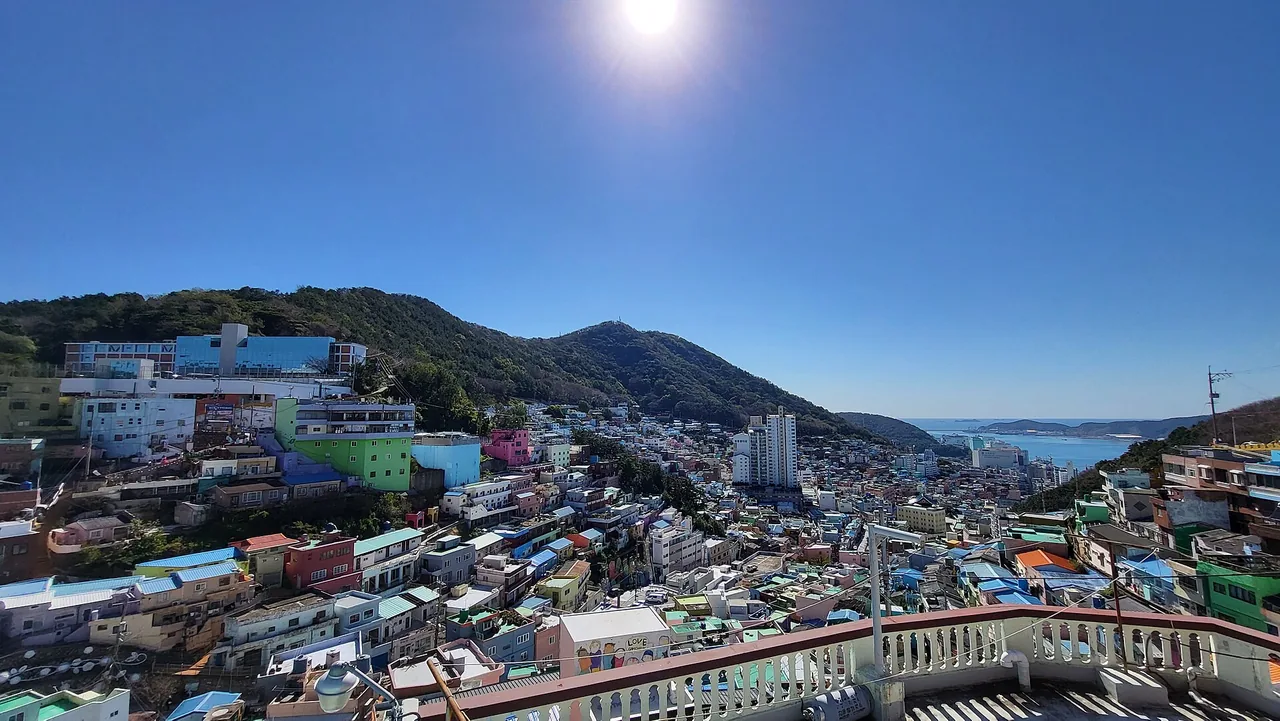
Workers first moved onto this slope, away from Busan’s harbour and downtown, in the 1920s and 30s. The neighbourhood really took shape around 1955, when about 800 households arrived: followers of Taegeukdo, a religious community in the Jeungsan tradition, settling alongside refugees displaced by the Korean War. They built their homes in stepped tiers up the hillside and, by design, kept houses low enough not to block the view of the home behind, a spirit of looking out for your neighbour that echoes Taegeukdo’s own teachings. Every alley was made to connect to every other, which is why the whole village feels like a maze.
For decades the village was poor and slowly emptying out. The turning point came in 2009, when an art project titled “Dreaming of Busan’s Machu Picchu” won a Ministry of Culture competition. Design students from Dongseo University began painting murals with support from the Saha-gu district office, and in 2010 the “Miro Miro” alley project turned lanes and empty houses into art spaces. By 2015 around 300 abandoned homes had become galleries, tiny museums, workshops and shops, and the village had won a presidential award for public art.
| Year | What happened |
|---|---|
| 1920s to 30s | Workers settle this hillside, away from the harbour and downtown. |
| around 1955 | About 800 households arrive: the Taegeukdo community and Korean War refugees. Stepped houses, designed not to block the view behind, with interconnecting alleys. |
| 2009 | The “Dreaming of Busan’s Machu Picchu” art project wins a Ministry of Culture competition; murals begin. |
| 2010 | The “Miro Miro” alley project turns lanes and empty houses into art spaces. |
| Today | Around 300 former empty houses are galleries and shops; a free, award-winning, still-lived-in art village. |
4. How to get there
The standard route is Subway Line 1 to Toseong Station, then a short village bus up to the village, and as of 2025 city bus 61 also runs directly to the entrance. Gamcheon sits high on a hillside, so almost everyone transfers from the subway to a bus for the final climb rather than walking up.
| Option | How it works |
|---|---|
| Subway + village bus | Line 1 to Toseong Station, exit 6, then village bus Saha 1-1, Seo-gu 2 or Seo-gu 2-2. Get off at the Gamjeong Elementary School stop and walk about 5 minutes. Buses run every 10 to 15 minutes and can fill up on busy weekends. |
| City bus 61 (direct) | Since the 5 July 2025 Busan bus reform, bus 61 runs straight to the village entrance, the easiest single-bus option. |
| Taxi | A few minutes from Toseong Station; about 15 to 25 minutes from Busan Station or Seomyeon; roughly 40 to 50 minutes from Haeundae. |
| By car | There is a small public car park, but it is small and crowded on weekends. About 25 to 40 minutes from downtown. |
The 5 July 2025 reform added the direct 61 bus to the village entrance and extended the Seo-gu 2-2 line all the way to Busan Station, so reaching Gamcheon is noticeably easier than it used to be.
5. Getting around: routes, the stamp map and which way to walk
The smartest plan is to start at the top, by the entrance and information center, then wander downhill through the alleys, following the painted fish and arrows underfoot. There are three official routes, and the village suggests them so you can match the walk to your time and energy.
| Route | Roughly how long |
|---|---|
| Main road, there and back | About 40 minutes |
| Highlights course | About 1 hour 20 minutes |
| Stamp course | About 1 hour 20 minutes |
Most people allow 2 to 3 hours, which leaves room to get a little lost on purpose, the best way to enjoy the maze.
Pick up the “Miro Miro” stamp map at the village information center for ₩2,000. Collect stamps at 9 points around the village (each spot has a different stamp design); complete them all and you receive a small souvenir. The finished map is a keepsake in itself.
6. Must-see photo spots and art
The single most famous photo spot is the Little Prince and the fox sculpture, perched on a wall looking out over the village toward Busan harbour. It is the village’s signature image, a symbol of hope and watching over the neighbourhood, and the queue can be long, so come early or in the late afternoon. From there, the painted stairways and alleys offer one striking frame after another.
The village’s most famous photo spot: two figures sitting on a wall gazing out over the rooftops to the harbour. Expect a queue; arrive early or late for a clearer shot.
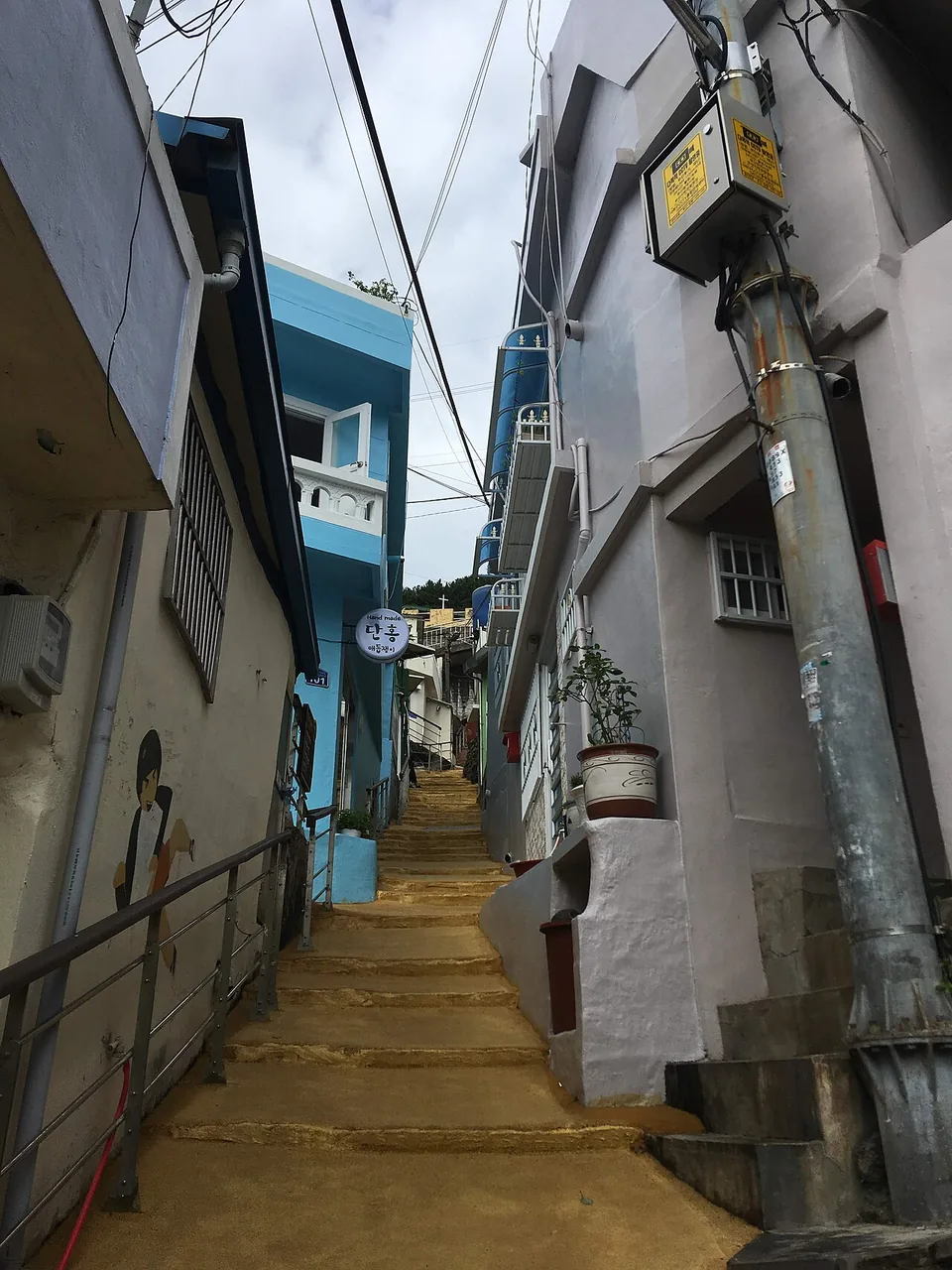
A steep, much-photographed flight of steps climbing through the houses.
A lane decorated with colourful fish and murals, one of the most playful corners of the village.
A spot where the alleys frame a glimpse of the sea between the houses.
A lookout rest area with a sweeping panorama of the whole village.
7. Small museums, house projects and alley art
Beyond the famous photo spots, the village is full of small museums, art houses and converted homes that tell its story up close. Around 300 once-empty houses have been turned into galleries, workshops and shops, so it is worth stepping inside a few as you walk down.
A small museum of the village’s everyday life and history.
An art house built around light installations.
One of the village’s themed art houses.
A hall on the Taegeukdo community and the history of the village.
An old communal well, a reminder of village life before the murals.
Around 300 former empty houses now hold galleries, craft workshops and small stores tucked along the alleys.
New sculptures, installations and murals appear throughout the lanes, so each visit looks a little different. Take your time and let the side alleys surprise you.
8. Cafes, snacks and souvenirs
Gamcheon’s rooftop and view cafes are part of the experience: many look out over the layered roofs and the sea, and are the perfect place to rest halfway down the hill. Between them you will find street snacks and shops selling work by local artists.
| Cafe | What it is known for | Note |
|---|---|---|
| Coffee IT House | Rooftop panorama view | One of the classic view stops |
| Blue House on the Stairs | Blue facade and its cloud-shaped “cloud coffee” | A photogenic stop on the steps |
| Asteroid B612 | Little Prince theme, hillside views and merchandise | Themed cafe with souvenirs |
| Vodavom | Iced americano around ₩3,500 | Open 10:00 to 19:00 |
| Gamnae Cafe | A village-run social enterprise cafe | Run by the community |
Small stalls sell street snacks such as hotteok (sweet pancakes) and ice cream. For souvenirs, look for local artists’ prints, ceramics and postcards, and remember that a completed stamp map is a keepsake in itself.
9. A village where people live: etiquette
This is a genuine residential neighbourhood, not an attraction built for visitors, and people still live in these houses. Overtourism is a real concern here, so the way you behave matters as much as where you point your camera.
- Do not enter homes, private stairways or the inner ends of alleys.
- Never peer or photograph into people’s windows.
- Take your rubbish with you; bins are limited.
- Keep your voice down, especially early morning and evening.
- Be considerate when taking photos of residents or their laundry, and ask before photographing people.
A little courtesy keeps the village welcoming for the next visitor, and for the people who call it home.
10. Best seasons and times of day
Spring and autumn are the most comfortable times to walk Gamcheon’s slopes, and the late afternoon gives the best light of the day. Because the village is open and exposed on the hillside, timing makes a real difference to both comfort and photos.
Mild, clear and pleasant for walking the steps and alleys, the best seasons overall.
Warm light hits the pastel walls, the prime time for photographs.
The quietest time, before tour groups and weekend crowds arrive.
Midsummer midday is hot and busy on the open slope; winter is quiet and clear, just dress warmly.
11. Accessibility: steep hills and stairs
Gamcheon is built on a steep hillside full of stairs, slopes and narrow alleys, so comfortable shoes are essential and the deep stairway lanes are not suitable for everyone. It is a beautiful place to wander, but it is a demanding one to walk.
Wear sturdy, flat footwear, take the slopes slowly and use the rest spots and view cafes along the way to catch your breath.
12. Combine it with western Busan: a half-day plan
Gamcheon pairs naturally with the rest of western Busan, so the classic plan is a morning at the village followed by lunch and an afternoon nearby. Everything below is close enough to chain into a relaxed half-day.
If you only have time for one add-on, Nampo-dong and Jagalchi are the closest and easiest, while Huinnyeoul, Songdo and Taejongdae reward a slightly longer afternoon.
13. Practical tips worth knowing
A few small things make a Gamcheon visit smoother. Keep these in mind before you go.
| Tip | Why it matters |
|---|---|
| Go on a weekday morning | It is much quieter than weekends and holidays. |
| Carry some cash | Small stalls, the stamp map and tiny shops may prefer cash. |
| Start at the information center | Grab the stamp map and orient yourself before heading downhill. |
| Find toilets early | Public toilets are limited on the steep slope, so use them when you see them. |
| Avoid driving on weekends | The car park is small and fills fast; the bus or a taxi is easier. |
| Mind your manners | People live here, so keep quiet and respect private spaces (see the etiquette section). |