
Incheon Travel Guide: Chinatown, the Open Port Quarter, Wolmido and Songdo
Incheon is a mainland, an island and two reclaimed districts stitched together, and how you cross between them decides your day. Here is what the official sources say about fares, opening hours and the districts that were just renamed.
| The airport is not the city | Incheon International sits on Yeongjong Island. The old city is across the water, and you cross by bridge or by changing trains. |
|---|---|
| By car it beats Seoul | Driving, Chinatown is about half an hour from the airport and Seoul Station is closer to an hour. By train the order flips. |
| Mondays | Museums, observation decks and the Wolmi Sea Train all close. The city tour bus closes Monday and Tuesday. |
| Museum tickets | The five-museum combined ticket is 3,400 won, but buying all five separately costs 4,000. Two or three sites are cheaper bought singly. |
| Bridge tolls | Incheon Bridge dropped to 2,000 won and Yeongjong Bridge is 3,200. A third bridge to Cheongna has opened. |
| Free to visit | The G Tower deck, two national museums, the Incheon Landing Memorial Hall and five observation decks all charge nothing. |
1. The airport is on an island, and the city is across the water
2. Can you see Incheon on a layover?
3. Getting into Incheon: the airport line skips the old city
4. Three bridges to the island, and all three changed price
5. Mondays close most of the indoor city
6. The open port quarter: two concessions, one staircase apart
7. Museum tickets: the combined pass is not always the deal
8. Chinatown, and the dish that started here
9. Wolmido: the seafront the city grew up around
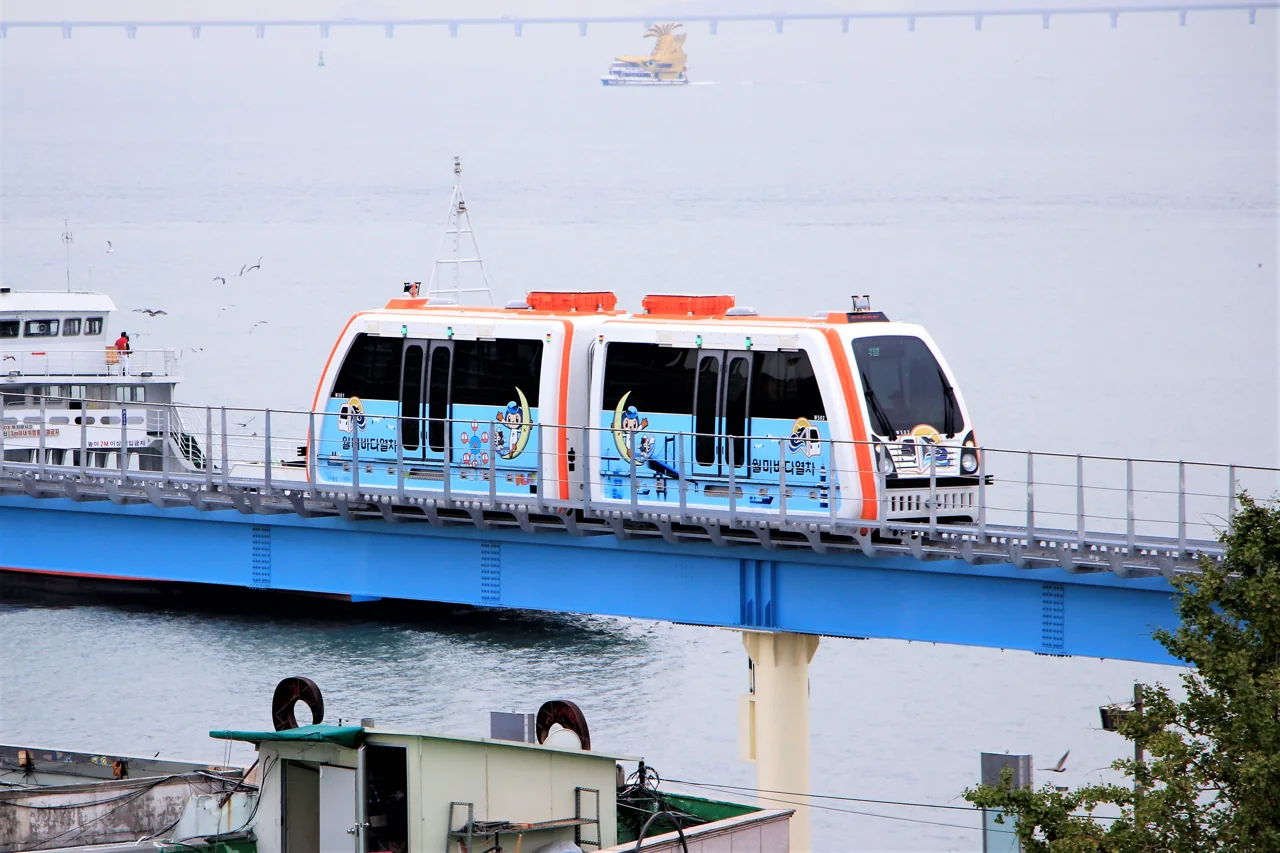
10. The Wolmi Sea Train, and the rule almost nobody uses
11. Two national museums that opened recently
12. Songdo: a new city that gives away its views
13. Yeongjong and Muuido: beaches beside the runway
14. Palmido: the country’s oldest lighthouse, by boat
15. Sorae Port, and a park that closes on Mondays
16. Bupyeong and Gyeyang: an underground record and a hill
17. Cheongna’s sky bridge and the canal
18. Three noodle dishes were invented here
19. Two ports, doing two different jobs
20. Ganghwa Island needs its own day
21. The city tour bus runs to a weekday timetable
22. When to come: fog and wind matter more than temperature
23. Where to stay: airport side, Songdo, or the old streets
Incheon is a city where what you cross on matters more than what you go to see. This is the Seoul-region chapter of our Korea travel guide, and if you only want to get from the airport into Seoul, that is covered separately in Incheon Airport to Seoul.
1. The airport is on an island, and the city is across the water
Almost everyone arriving in Korea passes through Incheon, and almost nobody stops. Part of the reason is geography that the name hides. Incheon International Airport is not in the old city. It sits on Yeongjong, an island off the coast, and the streets that people mean when they say Incheon are on the mainland on the other side of the water.
So the city comes in three pieces. There is the mainland, where the port opened in 1883 and where the markets and the hills are. There is the island, which holds the airport, the beaches and the resorts. And between them are Songdo and Cheongna, districts built on ground reclaimed from the sea within living memory.
Each piece is a different day out. Walking the old quarter, driving across a bridge to a beach, and riding lifts up glass towers in a new city are three separate outings that happen to share a name. Combining two of them in one day mostly means a long time on the road.
The district names changed this summer
Incheon redrew its districts, the first change in three decades. The mainland half of the old Jung-gu merged with Dong-gu to become Jemulpo-gu; the island half became Yeongjong-gu; and Seo-gu split along the canal into Geomdan-gu and Seohae-gu.
That matters to a visitor for a practical reason. Map apps and hotel sites now return the new names. Chinatown and Wolmido show up as Jemulpo-gu, and airport hotels as Yeongjong-gu. Older guides still link to a “Jung-gu tourism” site that now belongs to a different district office altogether.
How long do you need? The open port quarter and Wolmido fill one day comfortably. Add Songdo or Sorae Port and you want two. Add the island beaches and you want three. Ganghwa Island, which is also administratively Incheon, needs a day of its own.
2. Can you see Incheon on a layover?
This is the question that brings most English-speaking travellers here, so it is worth answering with the actual numbers rather than a vague yes.
What a layover actually allows
If you are landing and leaving from Incheon with a long gap, the constraint is not distance but immigration and the return trip. Clearing arrivals, getting to the city, and being back at the gate with time to spare eats several hours before you have seen anything.
By car or taxi the old city is roughly half an hour away, so a seven-hour gap is workable for Chinatown and the open port streets, and a five-hour gap is not. By train you should add an hour each way, because the airport line does not stop in the old city and you have to change.
The alternative that fits a short gap
If your gap is short, stay on the island. Eurwangni Beach is about twenty minutes from the terminals by road, and Yonggungsa, a small temple with old trees in front of it, is free and open around the clock. The resorts next to the airport have spas and art spaces you can walk into without a booking.
There is also a free transit tour tradition at Korean airports for passengers with long gaps; ask at the transfer desk on arrival, since the routes and times change.
Keep the return in mind. Whatever you plan, work backwards from your boarding time, not forwards from landing. Traffic on the bridges is heavy on Friday evenings and Sunday afternoons.
3. Getting into Incheon: the airport line skips the old city
Here is the thing that catches people out. The Airport Railroad runs from the airport to Seoul Station, and along the way it spends a long time inside Incheon. Eight of its stations are on Incheon soil: both airport terminals, the cargo terminal, Unseo, Yeongjong, Cheongna International City, Geomam and Gyeyang.
And yet not one of those stations is in the old city. To reach Chinatown you change at Gyeyang for Incheon Line 1, or at Geomam for Incheon Line 2, and then ride in. With the change, it takes over an hour.
| Airport Railroad | Airport to Seoul Station | Fare | Frequency |
|---|---|---|---|
| Express | 43 minutes | 13,000 won | about every 20 minutes |
| All-stop | 66 minutes | 5,350 won | frequent |
Both run from 05:20 until midnight.
By road the order reverses
Drive, and Incheon is the near option. Chinatown is a little over half an hour from the terminals; Seoul Station is closer to an hour. Eurwangni is about twenty minutes, Songdo under thirty.
Inside the city, distances collapse. Chinatown to Wolmido is a few minutes. Chinatown to Songdo, to Bupyeong, or to Sorae Port are each somewhere between ten and twenty minutes. With a car Incheon is a city where you can string several places together in a day; on trains alone you take one district at a time.
Coming from Seoul
From central Seoul the usual route is the Gyeongin Line, the oldest railway in Korea, which runs to Dongincheon and Incheon stations. Chinatown starts across the road from Incheon StationMap. Songdo is served by the Suin-Bundang Line and Incheon Line 1; Cheongna and Geomdan by Incheon Line 2.
4. Three bridges to the island, and all three changed price
If you are driving to the airport side, you pay a toll. There are now three crossings, and the cost of all three has moved recently, so older advice is wrong.
| Bridge | Small car | What changed |
|---|---|---|
| Incheon Bridge | 2,000 won | Cut sharply from 5,500 |
| Yeongjong Bridge | 3,200 won | Cut from 6,600 |
| Third Bridge (Yeongjong to Cheongna) | 2,000 won | Newly opened, 4.7 km, six lanes |
On Incheon Bridge a kei-class car pays 1,000 won, a medium vehicle 3,500 and a large one 4,500. Half-price applies to small-engine cars and to drivers with disability or veteran status; electric and hydrogen cars get thirty per cent off. Island residents get one free round trip a day with a registered card.
Which bridge you want depends on where you start. From central Seoul the Yeongjong Bridge is the natural line; from Incheon city and Songdo it is the Incheon Bridge; from the Cheongna side the new one is shortest.
Rental cars. Tolls are charged automatically and added to your bill, so you do not need cash at the barrier. Ask the rental desk which transponder the car carries if you plan to use the new bridge.
5. Mondays close most of the indoor city
Before anything else, check what day you are going. Incheon’s indoor attractions close on Mondays almost as a block. Working through the city’s own tourism listings, the pattern holds across museums, exhibition halls, observation decks and even a tourist railway.
Closed Mondays
All five open port museums shut: the Jjajangmyeon Museum, the Incheon Open Port Museum, the Modern Architecture Exhibition Hall, the Daebul Hotel Exhibition Hall and the Korea-China Cultural Center. So do the Chinese History Museum, the Sudoguksan Daldonae Museum, the Museum of Korean Modern Literature, Noodle Platform and the Jemulpo Club.
On Wolmido the Wolmi Sea Train and the National Incheon Maritime Museum close, along with the Korean Emigration Museum. In Songdo the G Tower observation deck closes, as do the National Museum of World Writing Systems, the Incheon Metropolitan City Museum, the Incheon Urban History Museum and the Incheon Landing Memorial Hall. Sorae Wetland Ecology Park closes too, despite being outdoors.
The Incheon City Tour bus does not run on Mondays or Tuesdays, and its phone line is unstaffed on those days.
What stays open
Plenty, as it happens. The two observation decks in Wolmi Park are free and open from seven in the morning until ten at night, every day. The Incheon Bridge deck in Songdo, the Shrimp Tower at Sorae and the Aramaru deck on the canal are all free and never close. Dapdong Cathedral and Yonggungsa temple stay open.
The streets themselves are unaffected. Chinatown and the open port quarter are perfectly walkable on a Monday. You simply cannot go inside anything.
Public holidays complicate it. When a Monday is a public holiday, the open port museums close the following day instead. The Emigration Museum does the opposite and opens normally. The Literature Museum and the Landing Memorial Hall close the day after any public holiday.
6. The open port quarter: two concessions, one staircase apart
Most of a visit happens in the open port quarterMap, the neighbourhood that grew after the port opened to foreign trade in 1883. It holds more standing historic buildings than anywhere else in the city.
That last point is worth being precise about. Incheon has well over a hundred nationally listed heritage items, but most of them are either on Ganghwa Island or are books and paintings held in a museum store in Songdo. The heritage you can actually walk past is concentrated here.
The concession boundary steps
Walking up from Chinatown towards the park, you cross a flight of stone stepsMap. Everything to one side was the Qing Chinese concession; everything to the other was the Japanese concession. The buildings on either side still look different, one row with Chinese eaves and the other in Japanese-era stone.
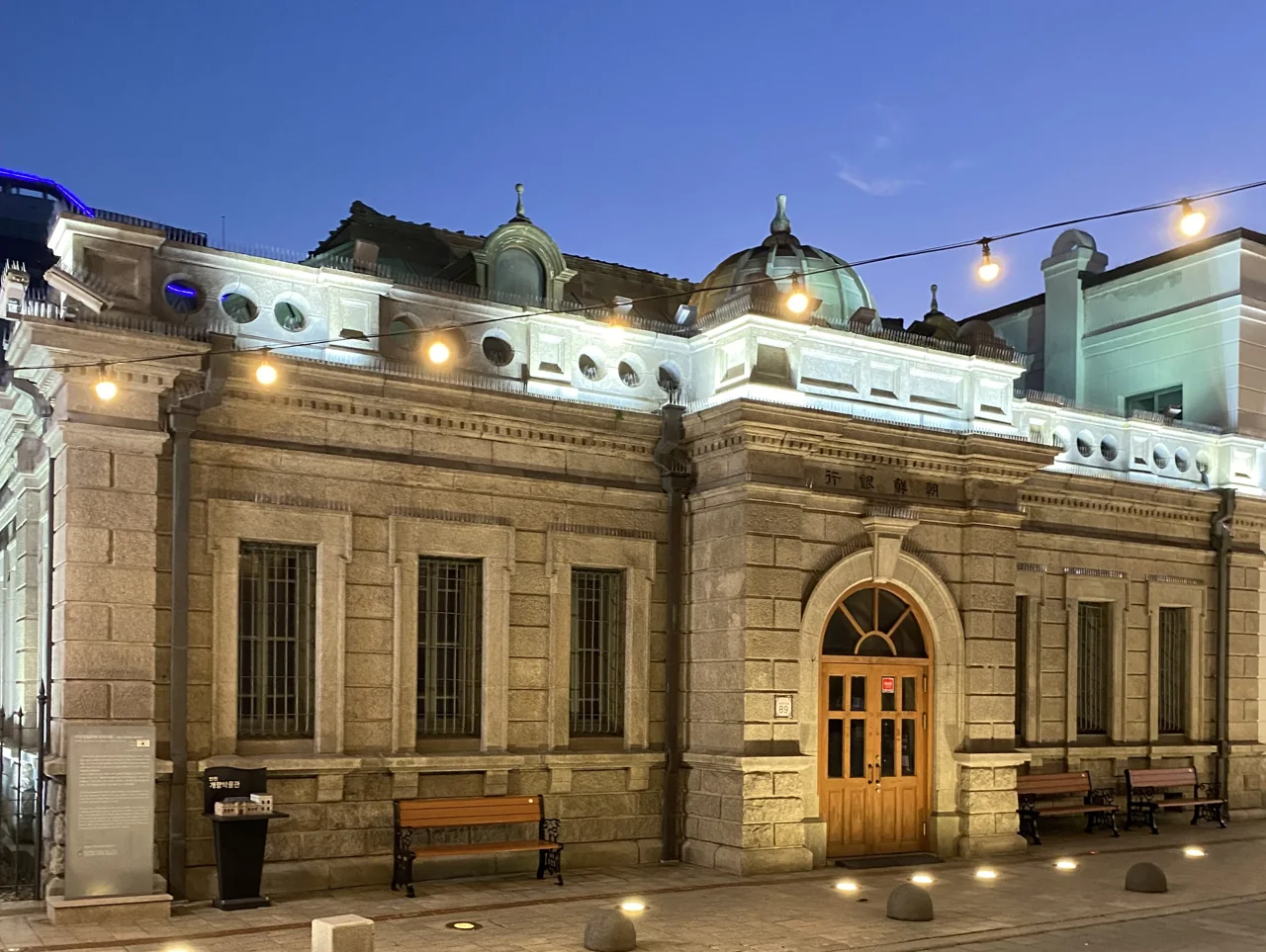
Walk down the Japanese side and you reach the Japanese-style street, where two bank buildings survive. The former First Bank of Japan is now the Incheon Open Port Museum; the former Eighteenth Bank is now the Modern Architecture Exhibition Hall.
Nearby
Hongyemun is an arched gate cut through the hill. The Jemulpo Club was the social club for foreign residents in the port era and is free to enter today. Dapdong Cathedral stands on high ground, charges nothing and is open every day.
Higher up is Jayu ParkMap, from which the whole harbour is visible. A little inland, the Sudoguksan Daldonae Museum reconstructs the hillside shanty housing that people lived in after the war, and the Baedari lane still has its second-hand bookshops.
7. Museum tickets: the combined pass is not always the deal
The open port museums are small and clustered, and they sell a five-site combined ticket. Do the arithmetic before you buy it.
| Site | Adult | Teen | Under 13 |
|---|---|---|---|
| Jjajangmyeon Museum | 1,000 won | 700 | Free |
| Daebul Hotel Exhibition Hall | 1,000 won | 700 | Free |
| Korea-China Cultural Center | 1,000 won | 700 | Free |
| Incheon Open Port Museum | 500 won | 300 | Free |
| Modern Architecture Exhibition Hall | 500 won | 300 | Free |
| Combined ticket | 3,400 won | 2,300 | Free |
Buying all five separately comes to 4,000 won. The pass saves 600 won, and only if you visit every one. For two or three sites, single tickets cost less. The combined ticket is also valid on the day of purchase only, so you cannot spread the five over a weekend.
All five open at nine and close at six, with last admission at 17:30, and all five close on Mondays. Children under thirteen are free everywhere, so a family only pays for the adults.
The free ones
In the same few streets, the Jemulpo Club, the Museum of Korean Modern Literature and Noodle Platform charge nothing. The literature museum opens at ten and closes on Mondays and also on the day after any public holiday.
8. Chinatown, and the dish that started here
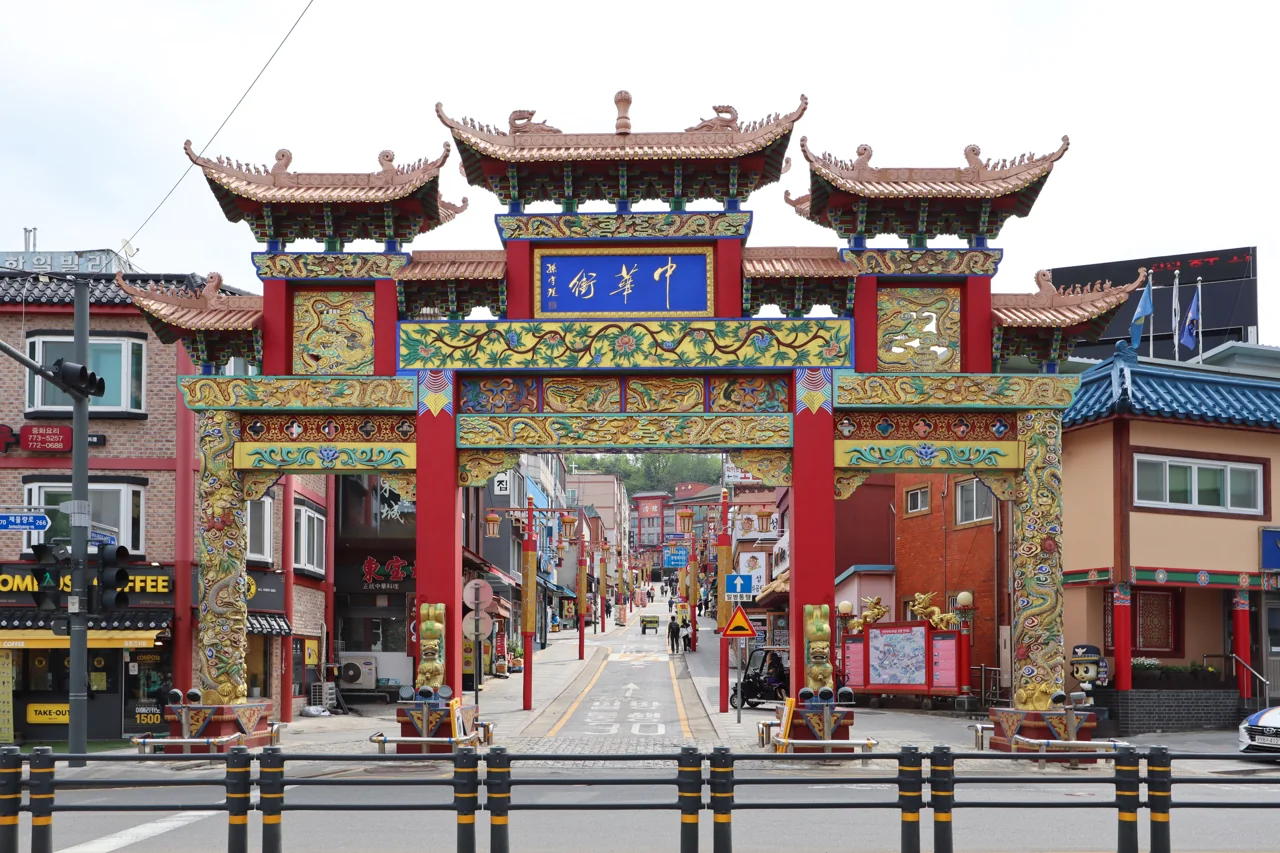
Incheon ChinatownMap is the only official Chinatown in Korea. It grew out of the Qing concession at the port opening and is still run largely by families descended from those settlers. The gate is across the road from Incheon Station.
Gonghwachun
The restaurant credited with first selling jjajangmyeon, the black bean noodle dish that is now eaten across the country, was called Gonghwachun. It began as a guest house for Chinese traders, moved to its present building in 1911 and took the new name the following year. It closed in 1983 as the district declined.
The building is now the Jjajangmyeon Museum and is itself a registered heritage property. Inside, a 1930s dining room and a 1960s kitchen have been rebuilt, along with the metal delivery boxes that were once a common sight on Korean streets. Noodle Platform nearby carries the story further.
On the street
An alley wall carries around eighty painted panels illustrating Romance of the Three Kingdoms, read in sequence as you walk. The Chinese History Museum covers how the community arrived and stayed.
Food is not limited to noodles. Bakeries sell hollow sugar bread and clay-oven buns, and over the hill in Sinpo International Market there is a long-standing queue for sweet fried chicken. Sinpo was Incheon’s first permanent market and is more than a century old.
Go early. Chinatown is a narrow hill street and it is busiest at lunchtime, especially at weekends. Museums first, late lunch after, is the way to avoid queueing twice.
9. Wolmido: the seafront the city grew up around
WolmidoMap is a few minutes by road from Incheon Station, a bit far to walk comfortably. It was an island once; landfill joined it to the shore long ago.
The culture street
A promenade runs along the water lined with fairground rides, seafood restaurants and a musical fountain that plays after dark. Wolmi Theme Park charges nothing to enter, but there is no all-day wristband. You buy rides individually or take a bundle of the three big ones. Arriving expecting a conventional theme park usually costs more than planned.
Wolmi Park and its decks
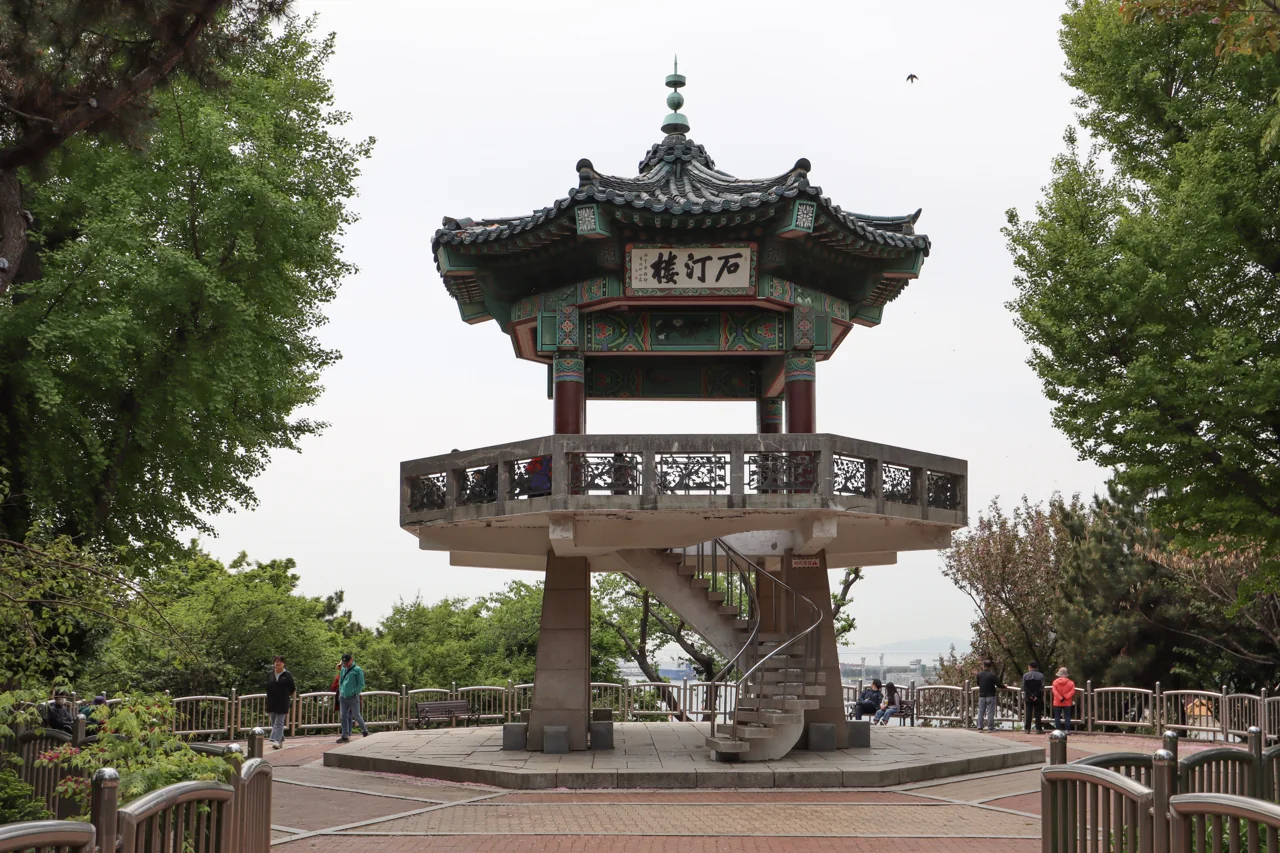
Behind the strip the hill is a public park with two viewpoints, both free and both open from seven in the morning until ten at night, every day of the year. From them you can see the harbour, the tidal lock and the bridge to the island in one sweep. On a Monday, when everything else is shut, this is where to go.
Inside the park is the Korean Emigration Museum. The first emigrant ship to Hawaii sailed from Incheon in 1902, and the museum follows the Korean communities that grew from those departures, in Hawaii, Mexico and beyond. It is free, closes Mondays, but opens normally when the Monday is a public holiday.
The two harbours
South of Wolmido is Yeonan Pier, where the island ferries leave and where the raw fish restaurants cluster. North of it, Bukseong Port is a working inlet where the boats settle onto the mud when the tide is out.
10. The Wolmi Sea Train, and the rule almost nobody uses
The Wolmi Sea Train is an elevated tourist railway that circles Wolmido. The loop is 6.1 km, it calls at four stations, and a full circuit takes about thirty-five minutes. Because the track is raised, you look down on the harbour, the docks and the roofs of Chinatown.
| Ticket | Weekday | Weekend |
|---|---|---|
| Adult | 11,000 won | 14,000 won |
| Teen / senior | 8,000 won | 10,000 won |
| Child | 7,000 won | 8,000 won |
There is a separate, much lower fare for Incheon residents, which visitors cannot claim.
One ticket, two rides
The rule worth knowing: your ticket lets you ride a second time on the same day. Show a same-day receipt from a business on Wolmido and you can ride again after that. Riding once in daylight and once after sunset is the obvious use.
Hours
From April to October it runs Tuesday to Thursday until six, and Friday to Sunday and public holidays until seven. From November to March it closes at six throughout. First train is at ten and the last departure is ten to fifteen minutes before closing. Closed Mondays.
For an evening ride, pick a Friday or a weekend between April and October. Those are the only times it runs past six. In midwinter the early sunset means the six o’clock closing still gives you the lights.
11. Two national museums that opened recently
Two national museums have arrived in Incheon in the last few years. Both are free, both close on Mondays, and neither appears in older guidebooks.
National Incheon Maritime Museum
Built on reclaimed ground by the Wolmido lock, this is the first national maritime museum in the Seoul region. It covers maritime exchange and the working port, and has a children’s museum and an immersive video hall. Open from ten to six with last admission at 17:30. Free except for some special exhibitions.
It slots naturally either side of a Sea Train ride. With children, the children’s wing will take longer than you expect.
National Museum of World Writing Systems
Next to Songdo Central Park, and the first national museum built in Incheon. The subject is exactly what the name says: the world’s writing systems, from cuneiform onward, which makes it unusually easy to enjoy without reading Korean. Open Tuesday to Sunday, ten to six, last admission half an hour before.
Its holiday rule differs from the others: when a Monday is a public holiday, it opens that day and closes on the next weekday instead.
12. Songdo: a new city that gives away its views
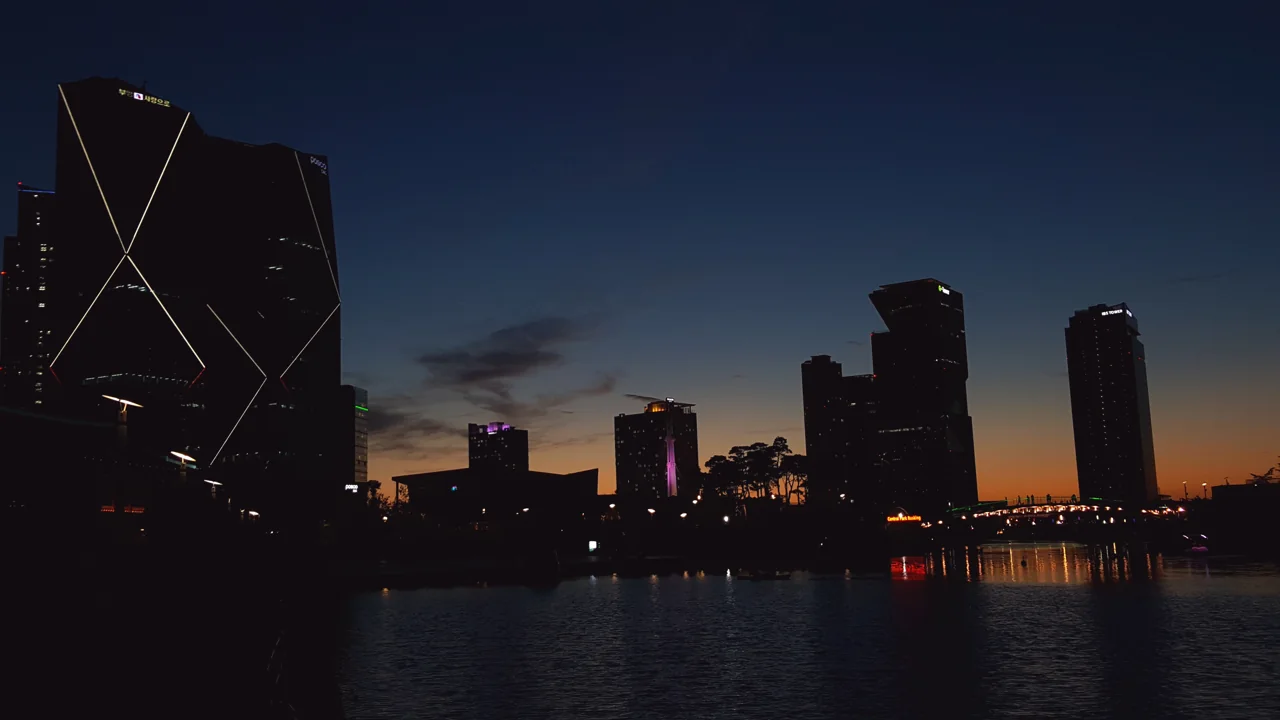
SongdoMap was built on ground reclaimed from the sea. There is no old architecture, but there is something unusual for a Korean city: the high viewpoints do not charge.
The G Tower deck
For a skyline view this is the first stop, and it is free. Open weekdays from ten until nine at night, and weekends and holidays from one in the afternoon until nine. Weekday last admission is 20:30. Closed Mondays.
The weekend opening catches people out: arrive on a Saturday morning and the doors are shut.
Central Park
The park is built around a seawater canal. A water taxi runs along it for 4,000 won for adults and 2,000 for children, and electric boats rent for roughly 35,000 to 43,000 won each. Around the edges are the Incheon Urban History Museum, the Tri-bowl concert hall and the Arts Center Incheon.
The Landing Memorial Hall
South of the park, the Incheon Landing Operation Memorial Hall commemorates the amphibious landing of September 1950, one of the turning points of the Korean War. It is free, parking included, open nine to six with last admission at 17:30. It closes on Mondays and also on the day after any public holiday. The Incheon Metropolitan City Museum stands beside it and is likewise free.
Bridge views and a migrant neighbourhood
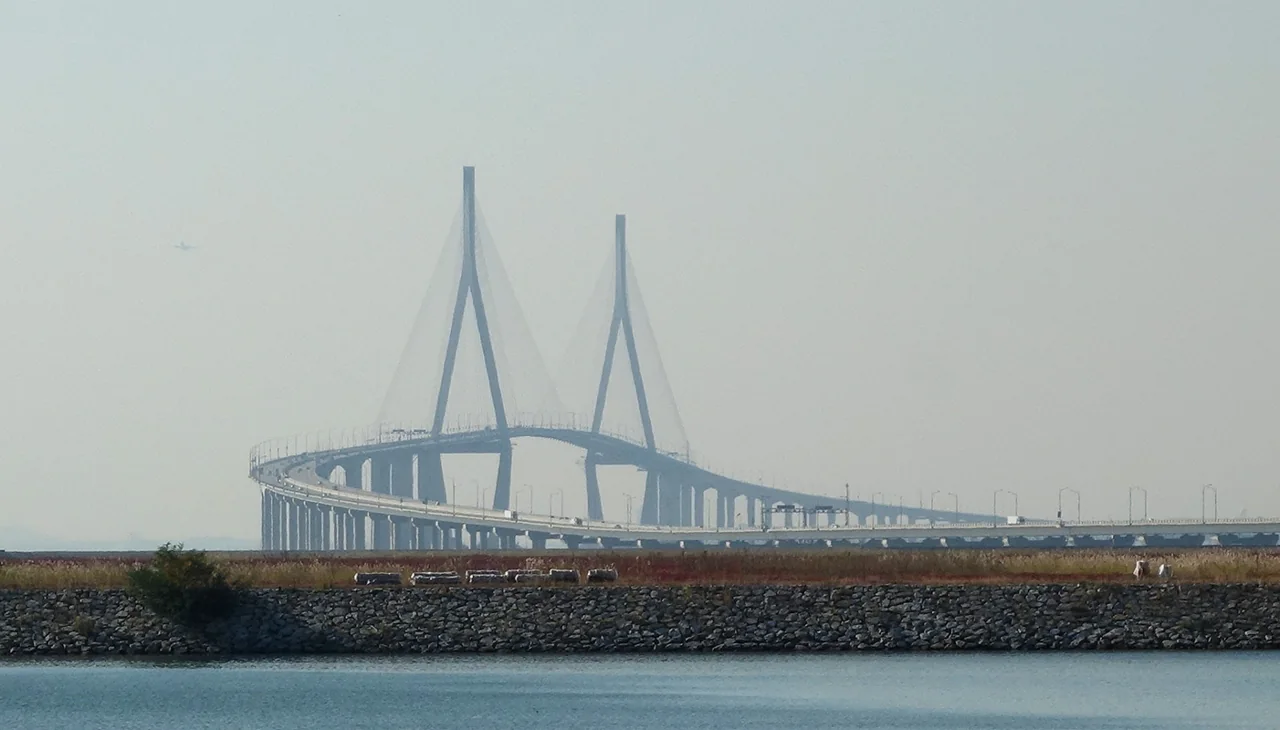
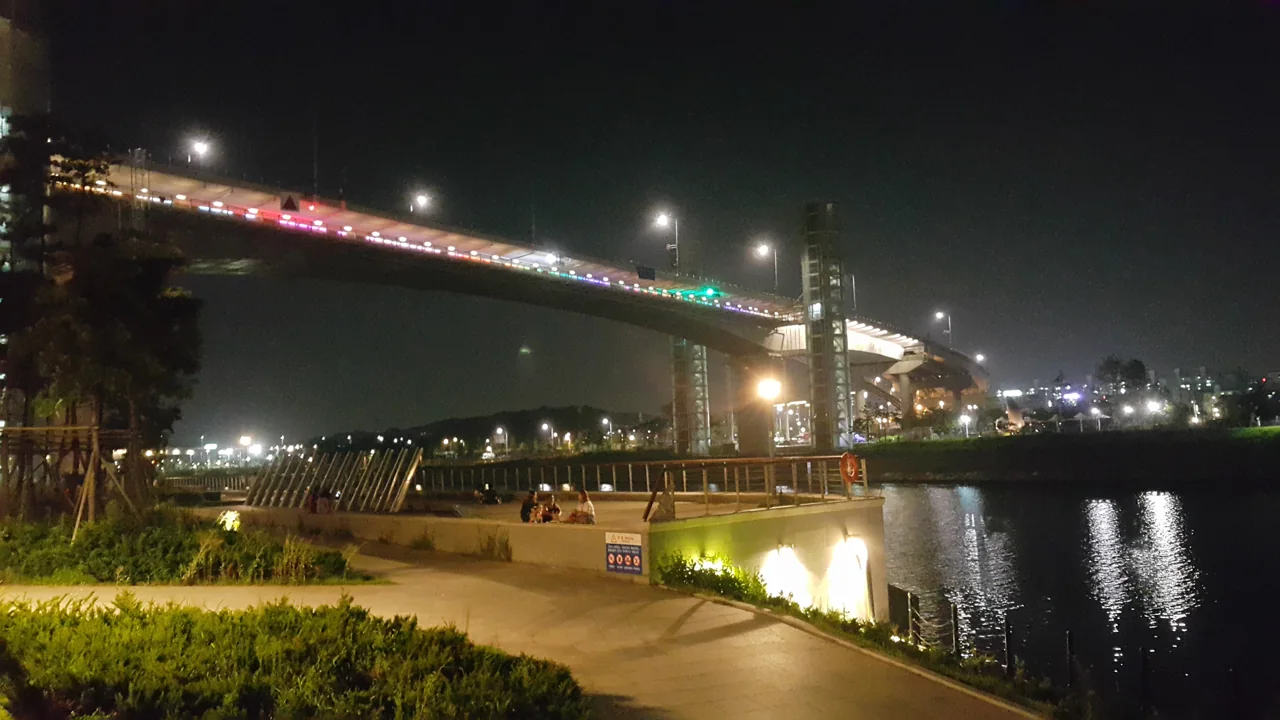
The Incheon Bridge observation deck is open around the clock and free, looking straight down the span. Nearby Amdo Coastal Park exposes wide mudflats at low tide.
Just inland, Hambak Village is home to Koryo-saram, ethnic Koreans whose families lived in Central Asia for generations and who have returned. The shops and restaurants along its streets sell Uzbek and Russian food. It is the city’s second immigrant quarter after Chinatown.
13. Yeongjong and Muuido: beaches beside the runway
The airport island has a coastline. The western shore is a line of beaches, and a bridge carries on to Muuido. For anyone with a spare afternoon before a night flight, this is the practical option.
Eurwangni and Seonnyeobawi
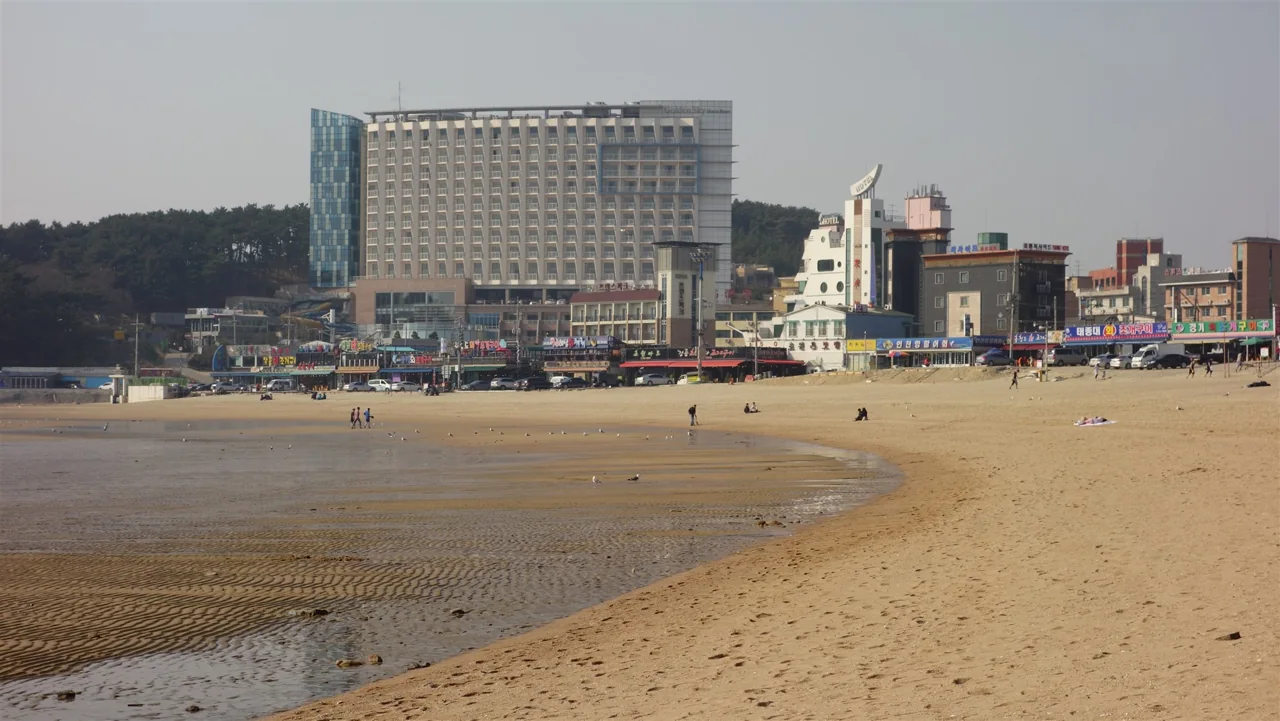
Eurwangni BeachMap is the best known, about twenty minutes from the terminals, open all year with no admission. Seonnyeobawi to the south is the sunset spot, and at Masian the tide goes far enough out for clam digging.
Muuido
Reached by road bridge. Hanagae Beach is the main strand, and a coastal boardwalk has been built along the cliffs. The boardwalk is free and open year-round. Parking is 400 won for the first half hour, then 200 won per quarter hour, capped at 4,000 won for the day.
From the far end a footbridge crosses to Somuuido, which is walking only. Horyonggoksan gives a short climb with sea views, and there is a national recreation forest on the island.
Yonggungsa and the bridge museum
Yonggungsa, an old temple with large trees at the entrance, is free and never closes. The Incheon Bridge Memorial Hall is free too, open until six from April to October and until five from November to March, and closes on Mondays only from December to March.
The resorts
Two large integrated resorts sit near the terminals. Paradise City has an art space and a spa complex; Inspire has an arena and an indoor water park. The water park became a paid attraction when it reopened and sells six-hour tickets, with an hourly charge past that.
14. Palmido: the country’s oldest lighthouse, by boat
Palmido is a small island reached by boat from Yeonan Pier. Its lighthouse was the first built in Korea and is a designated historic site. The island was closed as a military area for decades before opening to visitors.
The lighthouse is free and open every day, from six in the morning to six in the evening between April and October, and from seven to five from November to March. You are asked to call ahead and book. The small lighthouse history hall on the island never closes.
Two different cruises
Boats from Yeonan Pier come in two kinds. One lands on Palmido, taking about fifty minutes each way with roughly two hours ashore, so the whole outing runs to three and a half hours. The other is a ninety-minute loop past Songdo, Yeongjong and the Incheon Bridge that does not land anywhere.
Bring your passport. Korean domestic ferries require a passenger manifest and an identity check at boarding, and foreign passengers need their passport rather than a copy. Arrive half an hour before departure, and call ahead in fog or high wind, when sailings are cancelled.
15. Sorae Port, and a park that closes on Mondays
Sorae PortMap is a working fishing harbour at the southern edge of the city, with its own station on the Suin-Bundang Line, so it is easy to reach from Seoul without a car. The market sells shrimp, blue crab and small silver fish straight off the boats.
The market building is new: it was rebuilt after a fire and reopened with wider aisles across two floors and a basement. The quay itself is open at all hours.
The old railway bridge
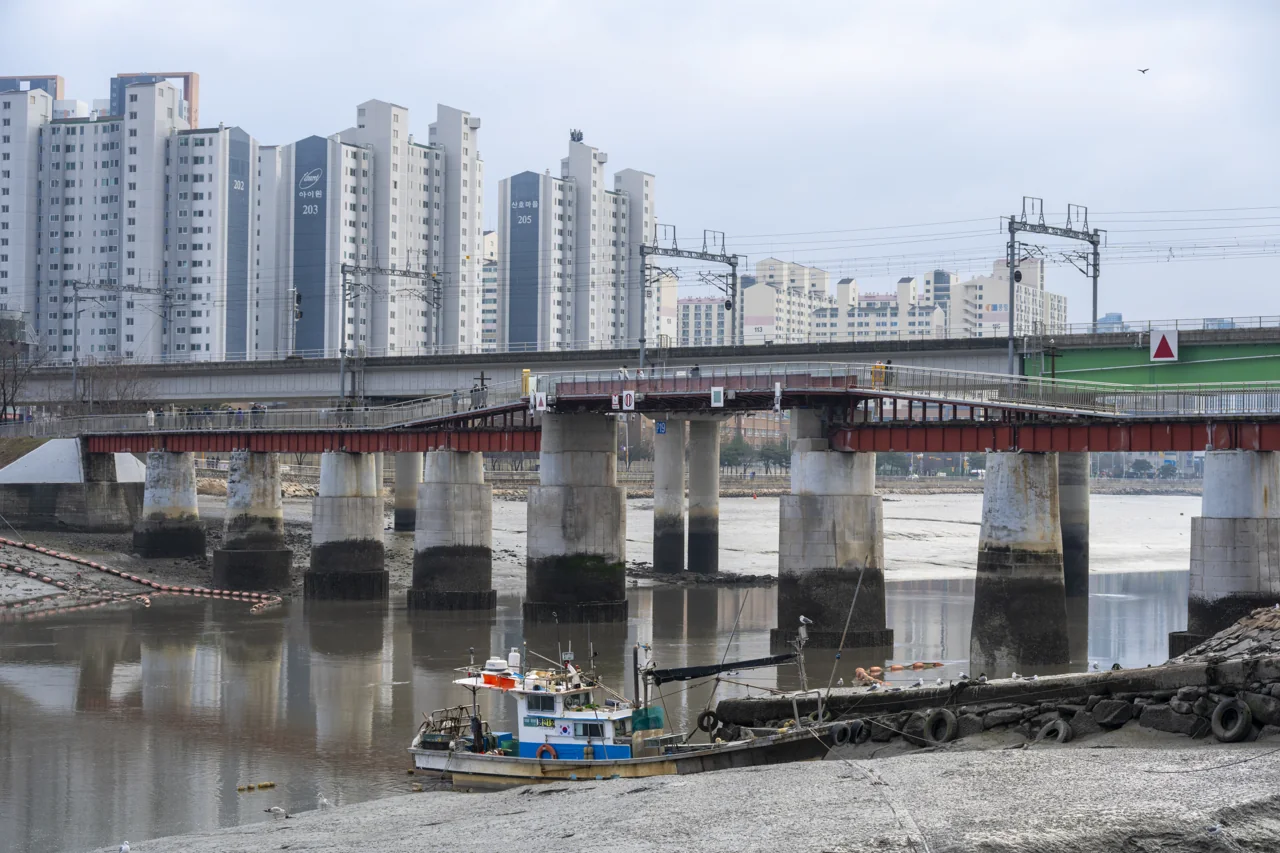
Sorae Railway Bridge crosses the channel here. It carried a narrow-gauge line that once hauled salt, and it is now a footbridge. Beside it, the shrimp-shaped Shrimp Tower observation deck is free and open every day of the year, until 17:30 on weekdays and six at weekends.
Sorae Wetland Ecology Park
Next to the port, this park restores the old salt pans, with salt warehouses, windmills, reed beds and a boardwalk over the mudflats. Admission is free.
But it closes on Mondays despite being an outdoor park, and on the day after public holidays. It opens at ten and closes at six, with last entry at five, which rules out the sunset that the reed beds are known for. The neighbouring Sorae History Museum also closes Mondays.
Incheon Grand Park
Ten minutes away by road, this is the city’s largest park, wooded and good for cycling. Nearby stands the Jangsu-dong ginkgo, a natural monument that turns gold in late autumn.
16. Bupyeong and Gyeyang: an underground record and a hill
Few itineraries include Bupyeong. It holds one genuine distinction all the same.
The underground shopping arcade
Dug as an air raid shelter in 1978 and extended ever since, the arcade under Bupyeong Station now holds more than a thousand shops and runs from the station to the pedestrian street above. It has been certified as the largest by shop count within a single area.
One correction worth making: the certification came from the World Record Academy in the United States, not Guinness, with a separate domestic record from the Korea Record Institute. A great many web pages say Guinness, and it is not accurate.
The passages branch in several directions and it is easy to lose your bearings, so note your exit number. Above ground, Bupyeong Culture Street runs on, with the small bar-and-cafe lanes of Cheongridan-gil and Pyeongridan-gil nearby, and Bupyeong Kkang Market trading wholesale at dawn. The Bupyeong History Museum is free and closes Mondays.
Gyeyangsan
GyeyangsanMap is the highest hill in Incheon, which is not saying much: it is a half-day walk up and down, from a station on Incheon Line 1. On its slope is Gyeyang Mountain Fortress, a historic site, with a museum beside it charging 1,000 won for adults and nothing for under-eighteens or over-sixty-fives. Closed Mondays.
In spring the terraces at Gyeyang Kkotmaru are planted with rape flower and in autumn with cosmos. The old Bupyeong government office and Confucian school survive nearby.
17. Cheongna’s sky bridge and the canal
The north-west of the city gained something new this year: an observation complex built onto the Cheongna Sky Bridge.
THE SKY184
An observation deck 184 metres above the sea, with a rooftop level, a lower sea-view deck, a waterside area and a visitor centre.
| Attraction | Price |
|---|---|
| Sky deck | 15,000 won |
| Edge Walk, including the deck | 60,000 won |
| Sea deck, waterside area, visitor centre | Free |
The Edge Walk puts you in a harness on the outside of the structure. Open ten in the morning to eight at night, closed Mondays, and booked in advance. Incheon residents pay half, which visitors cannot claim.
The Gyeongin Ara Waterway
A canal linking the Han River to the Yellow Sea, with a long cycle path beside it that draws far more cyclists than sightseers. The Aramaru observation deck is free, open from nine in the morning until ten at night, every day, looking down on an artificial waterfall. The Ara Tower deck and Gyulhyeon wharf are along the same route.
Jeongseojin
At the canal’s western end, Jeongseojin is named as the counterpart to Jeongdongjin on the east coast, and it is a sunset point. There is a tourist information office here.
Cheongna itself has a lake park, a canal walk, the Robot Land complex and the National Institute of Biological Resources.
18. Three noodle dishes were invented here
Incheon’s food story is unusually concrete. Three noodle dishes that spread across Korea began in this city, and all three came from what is now Jemulpo-gu.
| Dish | Where | What it is |
|---|---|---|
| Jjajangmyeon | Chinatown | Wheat noodles in black bean sauce, first sold at Gonghwachun |
| Jjolmyeon | Sinpo and Gyeong-dong | Very chewy cold noodles in a sweet chilli sauce, from a noodle factory in the early 1970s |
| Basin naengmyeon | Hwapyeong-dong | Cold noodles served in a bowl so large it earned the nickname, from the mid-1980s |
Beyond noodles
Sinpo dakgangjeong, sweet fried chicken with chilli, is queued for at Sinpo Market. Multeombeong is the local name for braised monkfish, with a street of restaurants in Yonghyeon-dong. Bandaengi, big-eye herring, is eaten raw and dressed at Yeonan Pier and Sorae.
Incheon is not, despite the Chinatown, a city of Chinese restaurants. Step out of those few streets and it is Korean food like anywhere else. Bupyeong brews a local makgeolli. For the wider picture, see what to eat in Korea.
19. Two ports, doing two different jobs
Incheon has two passenger terminals and they are easy to confuse. They are also far apart, so check which one your ticket names.
Coastal terminal: to the islands
At Yeonan Pier in Jemulpo-gu, this is where ferries leave for the Ongjin islands and Palmido. Deokjeokdo, Jawoldo and, much further out, Baengnyeongdo near the maritime boundary. Sailings are frequently cancelled in fog or wind.
International terminal: to China
In Yeonsu-gu, this is where the car ferries to China sail. Weihai, Qingdao and several other routes have resumed, bringing the operating total to seven, including a Dandong service that had been suspended for years.
Being able to reach China by sea is something no other Korean city offers on this scale. It is slower than flying but allows far more luggage, which is why the traffic is steady. A cruise terminal sits alongside.
High-speed rail is not running yet
A high-speed line from Songdo Station to Busan and Mokpo has been under construction for years. It has not opened. The date has slipped repeatedly and work continues. Some guides describe it as if it were running; for now, long-distance trains mean going to Seoul Station or Gwangmyeong first. Getting between Korean cities is covered in getting around Korea.
20. Ganghwa Island needs its own day
Ganghwa County is administratively part of Incheon. In practice it is further from Incheon city than Incheon city is from Seoul, and no train goes there. You need a bus or a car.
It rewards the trip. There are dolmens from the Bronze Age, coastal forts from the nineteenth century, Jeondeungsa temple, and an Anglican church built in the form of a Korean wooden hall. Manisan carries an ancient altar at its summit. More of Incheon’s national heritage sits here than anywhere else in the city.
Gyodong Island lies close to the northern maritime boundary, so you pass a checkpoint and need identification to enter; its Daeryong Market is a preserved 1960s lane. Seokmodo has a seawater spa that fills up in winter.
Without a car, the city tour bus is the way. Its Gyodong route runs on Saturdays only and its Seokmodo route on Sundays only. If either is your reason for coming, plan the trip around that day.
21. The city tour bus runs to a weekday timetable
Without a car, the Incheon City Tour is the practical way to cover ground. It comes in two forms.
Loop routes
The Incheon Retro route circles the open port quarter and Wolmido; the Sea route takes in Songdo, the Incheon Bridge and the island. There is a combined ticket for both, and a version of the sea route with a guide.
Loop routes are first come, first served rather than booked. If a bus fills you wait for the next one, and standing up is not permitted. Departures are from the main tourist information centre in Songdo and from Incheon Station.
Themed routes have fixed days
| Day | Route |
|---|---|
| Wednesday | Muuido |
| Thursday | Cheongna |
| Friday | Seonjae and Yeongheung islands |
| Saturday | Gyodong Island |
| Sunday | Seokmodo |
| Friday and Saturday | Sunset and night views |
If a particular island is your reason for coming, you have to come on its day. And nothing runs on Mondays or Tuesdays.
Tourist information offices are at the main Songdo centre, Incheon Station, Wolmido, the bus terminal, Sorae Port, Jeongseojin and Manisan.
22. When to come: fog and wind matter more than temperature
Incheon sits on the coast, so its weather differs from Seoul’s in ways that affect a trip. Watch the fog and the wind rather than the temperature.
Fog peaks in early summer
Fog builds through May and June and is at its worst in July, then drops away sharply in August. Fog grounds the island ferries and delays flights. If your plan involves a boat in early summer, leave slack in the schedule.
The rain comes in July
July is by a wide margin the wettest month, with August not far behind. Visiting then means building indoor options into the plan, which Incheon makes easy: several of the best museums cost nothing.
Winter is windy
Wind is strongest from January to March. At the same temperature, the open port hill, the Wolmido seafront and the beaches feel considerably colder than the forecast suggests. In winter, plan around indoor sights and the observation decks.
In short
Autumn is the safest choice. September and October bring less rain, little fog and wind that has not yet picked up. Spring is good too, apart from days of poor air quality. The national picture is in the best time to visit Korea.
23. Where to stay: airport side, Songdo, or the old streets
Rooms in Incheon cluster on the airport island and in Songdo. The open port quarter, which is what most people come to see, has relatively few.
Yeongjong, by the airport
Large hotels and the two integrated resorts. This is the right choice for a late arrival or an early departure, and the beaches are close enough to add a half day. Getting to the old city means a bridge or a change of trains.
Songdo
Newer hotels, parks and viewpoints within walking distance, quiet and spacious. The open port quarter is a train ride with a change.
The old city
Around Incheon and Dongincheon stations. Fewer rooms, but Chinatown, the open port streets and Sinpo Market are all on foot. For a single night this is the most efficient base.
Choosing. Early or late flight, stay on the island. Travelling with children and wanting space, Songdo. Here for the history and walking everywhere, the old city. If Incheon is part of a wider trip, see the Seoul travel guide as well.
🧭All-Korea essentials138
Incheon travel FAQ
Images: Photographs via Wikimedia Commons: Mobius6 (CC BY-SA 4.0), Ken Eckert (CC BY-SA 4.0), Boubloub (CC0), Trainholic (CC BY-SA 4.0), Raccoon Dog (CC BY-SA 4.0), Alvis Jean (CC0), pkh409 (CC BY-SA 4.0).