
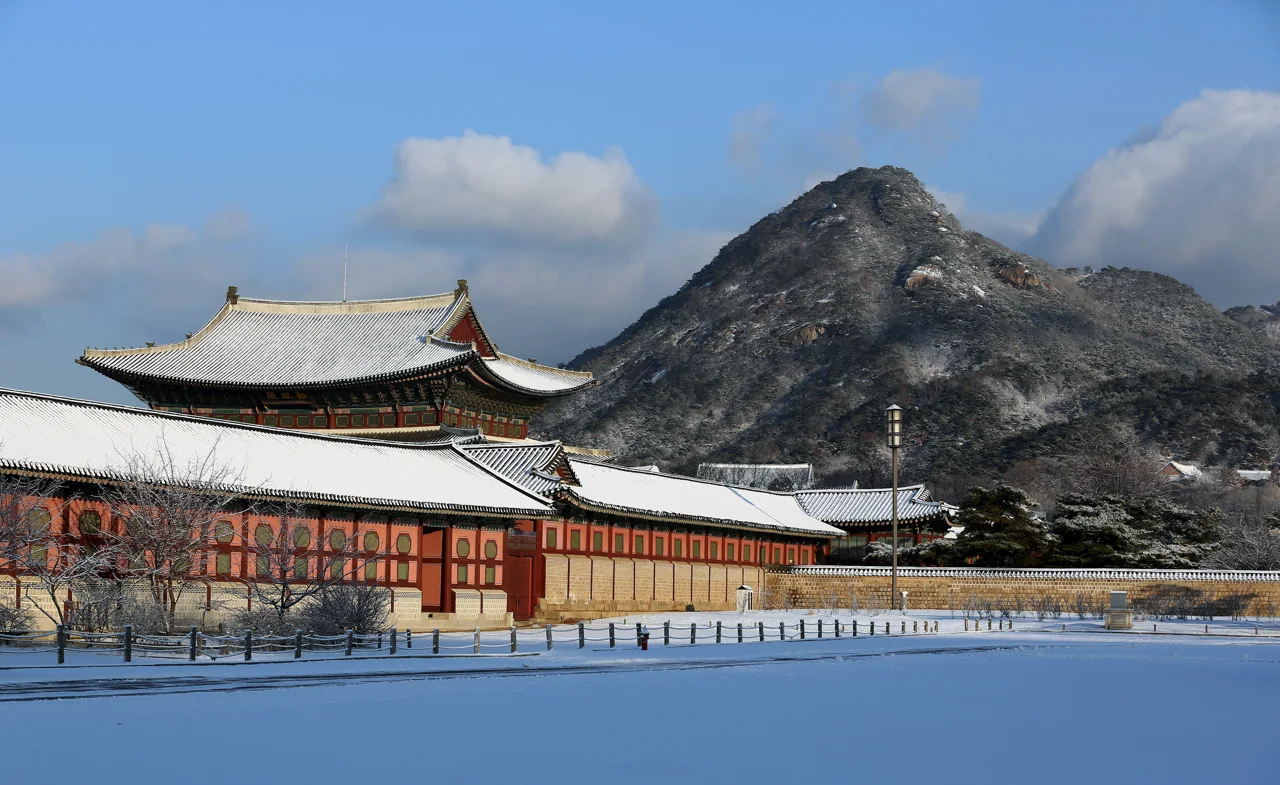
Korea in December: Weather, What to Wear, Light Festivals, Christmas, Skiing and Winter Food
Region-by-region weather, when Seoul’s lights switch on, New Year’s Eve plans, ski resorts and the crab, oysters and street snacks of the season
| What is the weather like? | Cold and dry, with Seoul below freezing most nights, Busan and Jeju milder, and the Gangwon mountains the coldest. |
|---|---|
| Will I see snow in Seoul? | Snow falls on a few days in a typical December but is never guaranteed; for certain snow, go to the Gangwon ski resorts, which add machine-made snow, or high up on Hallasan. |
| What should I wear? | A thick padded coat, hat, gloves, scarf and warm shoes for Seoul, with thin layers underneath because buildings and trains are well heated. |
| When do Seoul’s light festivals start? | Busan’s and Myeongdong’s are on from early December, while Gwanghwamun and Cheonggyecheon switched on together around December 12 last year. |
| Is it crowded? | Foreign visitor numbers are low, but Christmas Day, New Year’s Day and the weekends around them fill ski resorts, trains and popular restaurants. |
| Is December a good time to go? | Yes if you want festive lights, skiing and winter seafood; pick mid-December for the full Seoul light season and early December for quieter days. |
1. What Korea is like in December
2. December weather by region, and where to find snow
3. What changes between early, mid and late December
4. Seoul’s light festivals and Gwanghwamun Market
5. Christmas in Myeongdong, Jamsil and Dongdaemun
6. Christmas at Everland and Lotte World
7. New Year’s Eve and the first sunrise of the year
8. Busan in December
9. Ski resorts in December
10. Hallasan and Seoraksan in winter
11. Dry winter days on the east coast
12. Jeju in December
13. What to eat in December
14. Gyeongju, Daegu and Jeonju in December
15. Crowds, holidays and K-ETA
16. What to pack for the cold, and who December suits
1. What Korea is like in December
December in Korea at a glance
- Cold and dry. In most regions this is the driest or second-driest month of the year.
- Seoul turns much colder between November and December, and most nights drop below freezing.
- It gets dark a little after 5 pm, which leaves long evenings for light festivals.
- Seoul’s biggest light festivals switch on in mid-December. Busan and Myeongdong start earlier.
- Christmas Day and New Year’s Day are public holidays. December 31 is a normal working day.
- Ski resorts open one after another from late November.
- Snow crab fishing along the coast reopens on December 1.
Temperatures fall quickly once November ends. Seoul feels the change sharply: its temperature falls more between November and December than in any other city in this guide. The air also gets very dry, and rain becomes rare almost everywhere.
For American visitors, December is a quiet month. Fewer foreign tourists come to Korea in December than in most of the year, and only January and February see fewer.
What the month is good for
December is the month of street lights, Christmas markets and theme park parades. Seoul lines Gwanghwamun Square and the Cheonggyecheon stream with lights, and Busan does the same on Haeundae Beach and along Gwangbok-ro.
It is also the start of ski season in the Gangwon mountains, and the start of the best months for seafood. Coastal snow crab fishing reopens on December 1, yellowtail is at its best, and oysters are in season.
Street food changes too. Fish-shaped bungeoppang, sweet hotteok pancakes and roasted sweet potatoes appear on street corners as soon as the cold arrives.
The month changes from start to finish
In early December some of Seoul’s largest displays are not on yet. By mid-December most of the lights and markets are running and more ski resorts are open, and the last week brings Christmas and New Year’s Eve events.
If you are still choosing between months, our guide to the best time to visit Korea compares all four seasons. The rest of this page stays with December.
Where to base yourself
Seoul is the easiest base for a December trip. Most of the light festivals and markets are in the city centre, ski shuttles leave from Seoul subway stations, and the KTX takes you to Busan and Gangneung. Our Seoul travel guide explains the neighbourhoods.
2. December weather by region, and where to find snow
The gap between the coldest and mildest parts of Korea is wide in December. Pyeongchang in the mountains stays near freezing even at midday, while Seogwipo on Jeju’s south coast has the gentlest winter weather in the country.
The figures below are rounded averages from the Korea Meteorological Administration’s climate normals. Treat them as a rough guide, because any single week can be warmer or colder.
| Region | Daytime high | Night low | What it feels like |
|---|---|---|---|
| Seoul and Incheon | about 4°C (39°F) | about -3°C (27°F) | Below freezing almost every night, a few snowy days, dry air and a cold wind off the Han River |
| Gangwon mountains (Pyeongchang, Daegwallyeong) | about 0°C (32°F) | about -9°C (16°F) | Around freezing at midday and the windiest month of the year; this is ski resort country |
| East coast (Gangneung, Sokcho) | about 7°C (45°F) | about -1°C (30°F) | Warmer than Seoul, with the fewest rainy or snowy days and the driest air of the year |
| Gyeongju and Daegu | 8 to 9°C (46 to 48°F) | around 0°C (32°F) | Hardly any rain, lots of sunny days and a few degrees warmer than Seoul |
| Jeonju | about 7°C (45°F) | about -2°C (28°F) | Often grey, with as many snowy days as Seoul or a few more |
| South coast (Busan, Yeosu) | 9 to 10°C (48 to 50°F) | about 2°C (36°F) | The mildest part of the mainland; frost is rare, but water left outside freezes on about half the nights. Busan almost never sees snow; Yeosu gets a few days of flurries |
| Jeju City (north) | about 11°C (52°F) | about 6°C (43°F) | Mild, but only January gets less sunshine; many cloudy days, frequent showers, a few days of snow flurries and strong wind |
| Seogwipo (south Jeju) | about 13°C (55°F) | about 6°C (43°F) | The gentlest December in Korea, with far more sunshine than the north of the island and only a few days of flurries |
Seoul and the northwest
Seoul’s days are cold and dry, and most nights drop below freezing. The wind along the Han River and between tall buildings makes it feel a lot colder than the thermometer says.
The dry air is hard on lips and skin, so pack lip balm and moisturiser. Rain is rare, so you can plan outdoor sightseeing with some confidence.
The east coast, the southeast and Busan
Gangneung and Sokcho on the east coast have their driest weather of the year in December, with the fewest rainy or snowy days and the lowest humidity. Blue skies over the sea are common.
Gyeongju and Daegu are dry and sunny too, and a few degrees warmer than Seoul. Busan and Yeosu on the south coast are milder again, and frost is rare, although on about half the nights it still gets cold enough for water left outside to freeze. Snow almost never falls in Busan, while Yeosu sees a few days of flurries. December is one of Busan’s sunnier months.
Jeju: the north and south are different
Many people picture Jeju as warm and sunny in winter, and first-timers are often surprised. The north of the island, where Jeju City and the airport are, gets less sunshine in December than in any other month except January, with frequent showers, sleet and strong wind.
Seogwipo on the south coast gets much more sunshine and has the mildest December in the country. The top of Hallasan, between the two, is covered in snow.
Where you can see snow
Snow falls in Seoul on a few days in a typical December, but it often melts quickly and a white city is never guaranteed. Jeonju gets about as many snowy days as Seoul.
For snow you can count on, go to the Gangwon ski resorts, which add machine-made snow to what falls naturally, or climb the upper slopes of Hallasan on Jeju.
3. What changes between early, mid and late December
Korea’s festive events do not all start on December 1. Some are already running from November, Seoul’s biggest light festivals switch on in the middle of the month, and several close on December 31.
Each event posts its dates on its official site every year, so the table below follows last year’s schedule. Most events keep a similar pattern from one year to the next, but check the official pages before you go.
| Part of the month | What is on | Not yet, or ending |
|---|---|---|
| Early December (1st to 11th) | Haeundae Light Festival in Busan (from late November), the Shinsegae Myeongdong facade show (from early November), Lotte World Tower Christmas Market (from late November), Christmas at Everland and Lotte World, the Gwangbok-ro tree festival in Busan (lit around December 5 last year), and a few ski resorts with some slopes open | The Gwanghwamun and Cheonggyecheon light festivals are not on yet |
| Mid-December (12th to 20th) | Seoul Winter Festa switches on (around December 12 last year): Seoullight Gwanghwamun, Gwanghwamun Market and the Seoul Lantern Festival on Cheonggyecheon. Seoullight DDP (from December 18 last year), the Seoul Plaza ice rink (from December 19 last year) and most ski resorts | |
| Late December (21st to 31st) | Christmas Day (a public holiday) and New Year’s Eve events | Ending on December 31: Gwanghwamun Market, Seoullight DDP, and Christmas at Everland and Lotte World |
Early December
The first part of the month has fewer events. Busan’s Haeundae beach lights are already on, the Gwangbok-ro street lights followed in the first week last year, the Shinsegae building in Myeongdong has its Christmas show, and the theme parks are decorated.
What you will miss is central Seoul’s main light festival. Gwanghwamun Square and the Cheonggyecheon stream are still dark in the first days of December, and the Seoul Plaza ice rink is not built yet.
Mid-December
Seoul switches most of its winter events on at once under the name Seoul Winter Festa. Last year that happened around December 12, and the city published a summary of the festival after it ended.
The DDP projection show and the ice rink followed about a week later. Most ski resorts were open by the middle of the month last season, though many still ran only part of their slopes.
Late December
Christmas Day is a public holiday, and when it falls next to a weekend many Koreans head out, and ski resorts, popular restaurants and KTX trains get busy.
Gwanghwamun Market, Seoullight DDP and the theme park Christmas shows run right up to December 31, so late-December arrivals still see them; only travellers who arrive after New Year miss them. Others carried on into the new year last time: Seoullight Gwanghwamun, the Cheonggyecheon lanterns and the Haeundae lights ran into January, and the Seoul Plaza ice rink and the Gwangbok-ro lights stayed until February.
4. Seoul’s light festivals and Gwanghwamun Market
Seoul’s winter lights are grouped around Gwanghwamun Square and the Cheonggyecheon stream, a short walk apart in the old city centre.
Seoullight Gwanghwamun
Seoullight Gwanghwamun covers Gwanghwamun Square with light installations and projects moving images onto the stone walls of Gwanghwamun Gate and the Sejong Center. Last year it ran from 5:30 pm to 9:30 pm from Sunday to Thursday, and until 10 pm on Friday and Saturday.
On December 31 last year it stayed on until midnight and ended with a countdown to the new year. The Seoul city announcement for Seoullight Gwanghwamun lists the programme.
MapGwanghwamun Market
Gwanghwamun Market, which used to be called the Gwanghwamun Christmas Market, fills part of the square with market stalls and a carousel. Last year it opened in the evening from 5:30 pm to 9:30 pm, and stayed open until midnight on December 31.
The market only runs from mid-December until December 31. Small local businesses take turns running the stalls, so the snacks and crafts change during the run. Details are on the official Gwanghwamun Square event page.
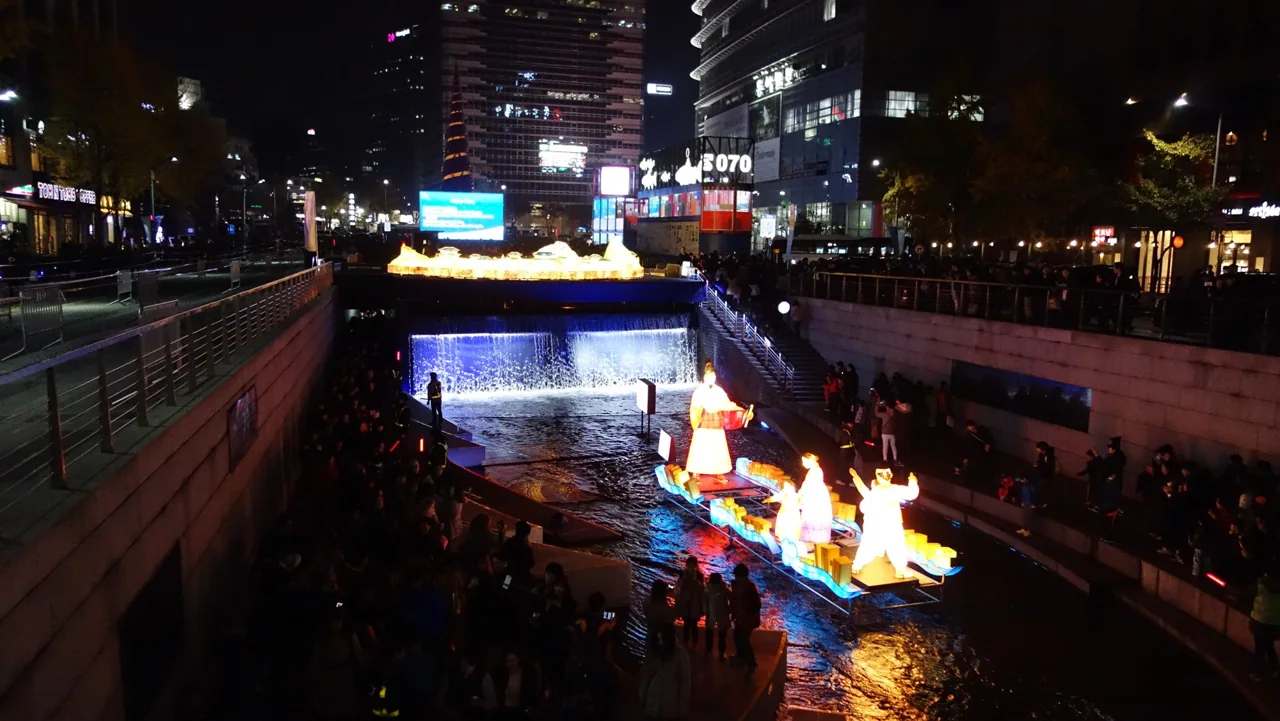
Seoul Lantern Festival on Cheonggyecheon
The Seoul Lantern Festival places large lit lanterns along the Cheonggyecheon stream, from Cheonggye Plaza down to Samil Bridge. Last year the lanterns were lit from 6 pm to 11 pm, so you could see them later than the Gwanghwamun lights.
In some years the lanterns have stayed up until mid-January. The Seoul city news page on the lantern festival has the route and themes.
MapA walking route for one evening
Many travellers start at Gwanghwamun Square just after sunset, walk through the market, then cross to Cheonggye Plaza and follow the lanterns east along the stream. In late December you can keep walking toward Dongdaemun Design Plaza for its projection show.
5. Christmas in Myeongdong, Jamsil and Dongdaemun
Away from Gwanghwamun, Seoul’s Christmas decorations gather around department stores, the Lotte World Tower in Jamsil and the curved building of Dongdaemun Design Plaza. Several of these start earlier than the city’s own festival.
The Shinsegae facade in Myeongdong
The main Shinsegae Department Store building near Myeongdong covers its outer wall with a Christmas video show. Last year it ran every day from 5 pm to midnight, and because you watch it from the street, it costs nothing.
The show switched on in early November last year, which makes it one of the few big Christmas displays you can see in Seoul during the first days of December. It fits easily into an evening of shopping and street food in Myeongdong.
Lotte World Tower Christmas Market
The Christmas market at Lotte World Tower sets up on the World Park lawn in Jamsil. Last year it ran from late November to early January, from 11:30 am to 10 pm.
Entry was free before 4 pm, and after 4 pm you needed a paid ticket. If you only want to walk around the stalls, the early afternoon is the time to go.
MapSeoullight DDP
Seoullight DDP projects moving images across the long, curved outer wall of Dongdaemun Design Plaza. It runs for only about two weeks at the end of the year, and it is free.
Last year it started on December 18 and ended on December 31, with shows from 6 pm to 9:30 pm. The Seoul city announcement for Seoullight DDP gives the show times.
The Seoul Plaza ice rink
In most winters an outdoor ice rink is built in front of Seoul City Hall. Last year it opened on December 19 and stayed open until early February, so there is no rink in early December.
Last year an hour on the ice cost 1,000 won, including skates and a helmet. Opening dates and session times are posted by the Seoul Plaza office.
How Koreans spend Christmas
December 25 is a public holiday in Korea, but many people treat it as a day out with a partner or friends. Family gatherings are saved for the Lunar New Year instead.
That means Myeongdong, Hongdae, Jamsil and Gangnam get very busy on Christmas Eve and Christmas Day. Book any restaurant you care about in advance, especially for dinner.
6. Christmas at Everland and Lotte World
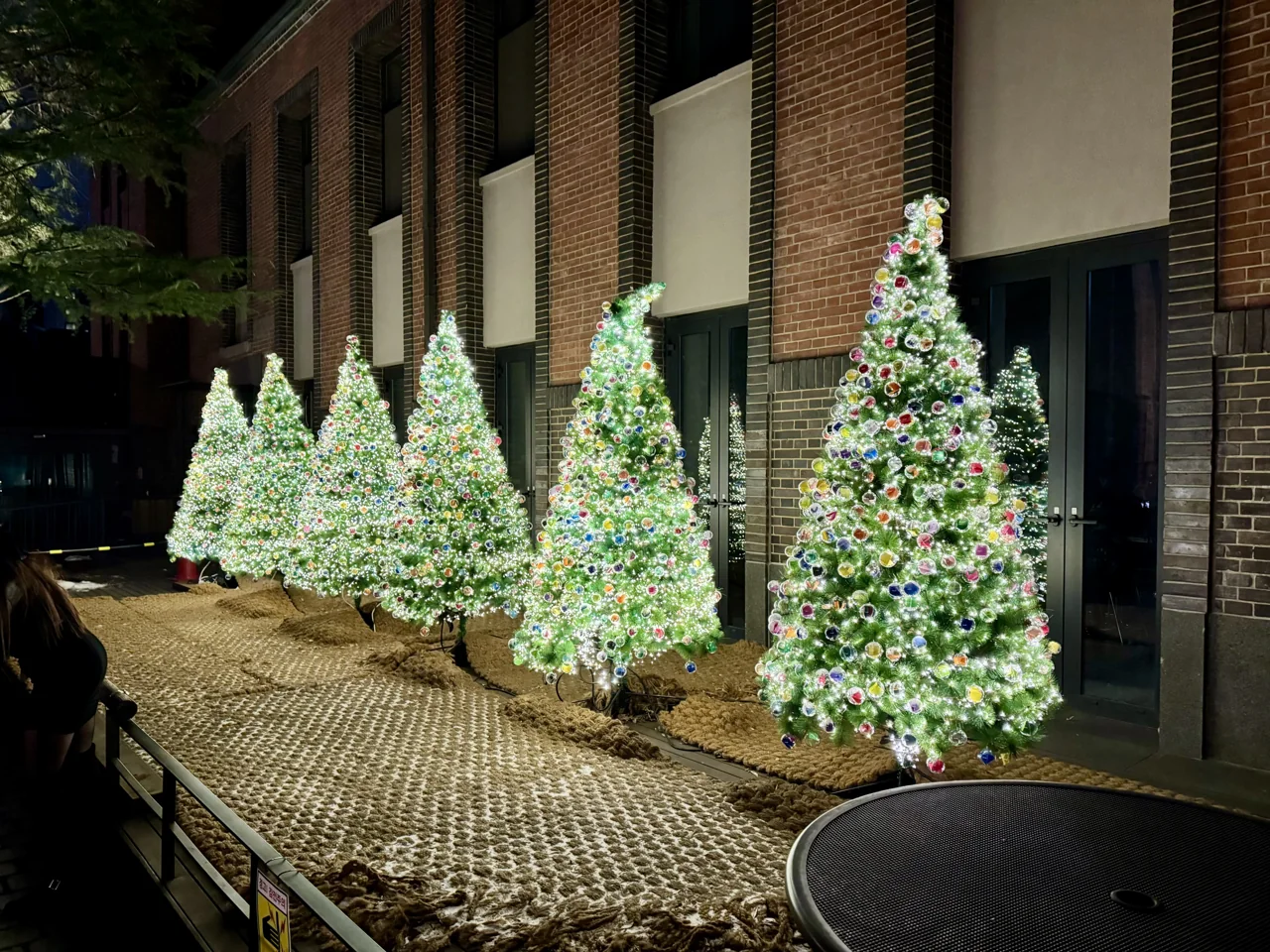
Everland and Lotte World both run Christmas parades and shows from late November until December 31. From January they switch to different programmes, so the Christmas shows are gone once December ends.
Everland Christmas Fantasy
Everland is in Yongin, south of Seoul. Its Christmas Fantasy season includes a Christmas parade, stage shows in the Santa Village area and a fireworks show after dark.
Last year a snow sledding slope also opened in mid-December, and it usually stays open until mid-February, well after the Christmas shows finish. Our Everland guide covers getting there from Seoul and how to plan the day.
Much of Everland is outdoors, and the fireworks happen after dark, when it is coldest. Hand warmers from a convenience store help while you wait.
Lotte World Adventure
Lotte World Adventure in Jamsil is mostly indoors. Last year its Christmas season had a parade twice a day, once in the afternoon and once in the evening, and a video show projected onto the Magic Castle.
Because the main park is indoors, Lotte World is a good backup on a day of snow or bitter wind.
Choosing between them
Everland suits travellers who want a full day out, more rides and the fireworks. Lotte World is easier to fit into a Seoul itinerary, because it is in Jamsil next to the Lotte World Tower Christmas market.
Christmas Day and the weekends around it bring out more local visitors everywhere, so a weekday earlier in December is usually the calmer choice.
7. New Year’s Eve and the first sunrise of the year
In Seoul, the sun sets at about 5:15 pm in early December and a little later by the end of the month. Sunrise moves from about 7:30 am to nearly 7:50 am, according to the Korea Astronomy and Space Science Institute.
Busan’s sunrise comes about 15 minutes earlier than Seoul’s. With dark evenings starting so early, light festivals and night markets become the main evening activity.
The Bosingak bell in Seoul
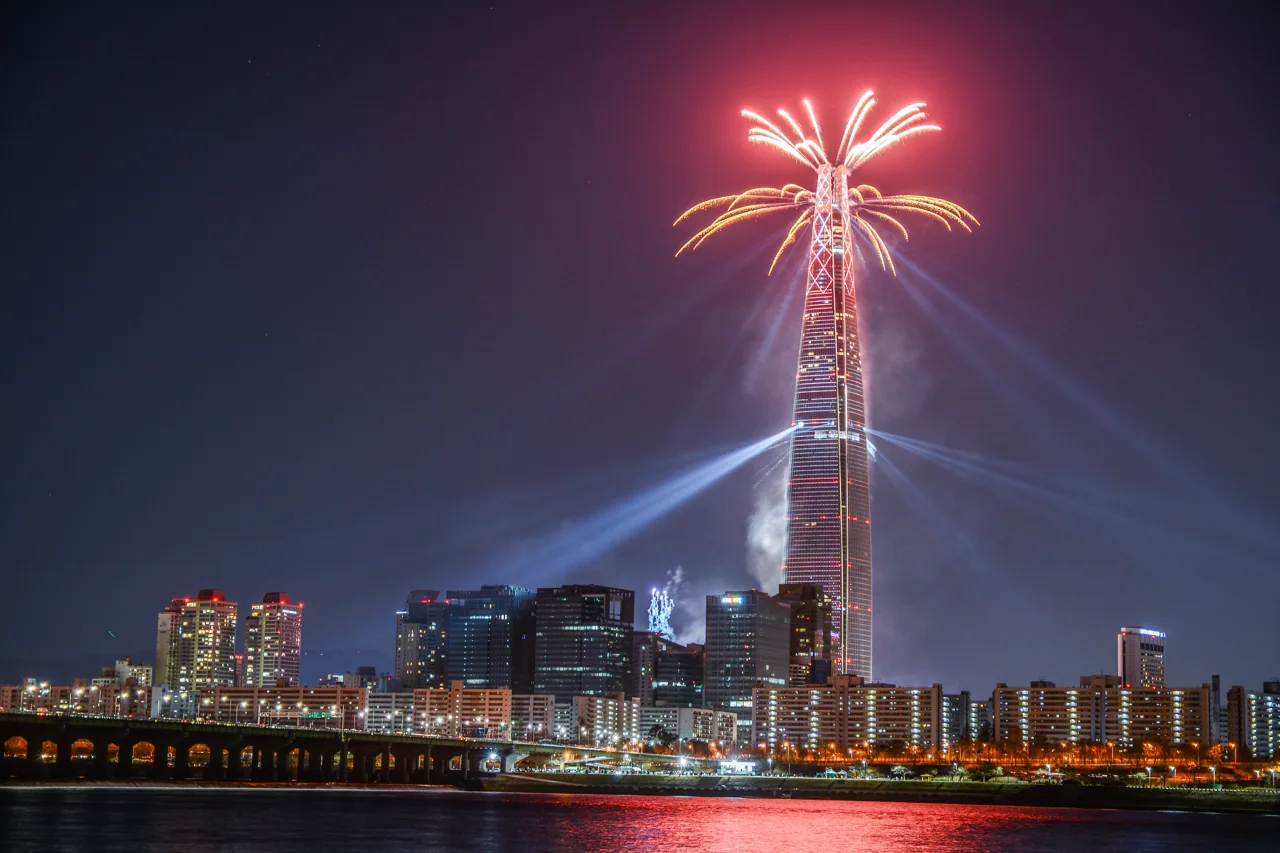
The big New Year’s Eve event in Seoul is the bell ringing at Bosingak pavilion in Jongno. The bell is struck 33 times at midnight, and huge crowds fill the streets around it.
Different sources give different start times for the programme before midnight, so check the official Bosingak bell site closer to the day. Last year the city announced its transport plan for the night in late December.
MapGetting there and back
Last year, Seoul subway lines 1 to 9 ran late until about 2 am. Roads around Bosingak were closed from the evening until the next morning, as the Seoul city notice explained.
Countdowns at Gwanghwamun and DDP
If the Bosingak crowd sounds like too much, Seoullight Gwanghwamun stays on until midnight on December 31 and ends with a countdown. Dongdaemun Design Plaza holds its own countdown on its outer wall as well.
Gwanghwamun Square is a short walk from Bosingak, so some people watch the lights there first and move on before midnight.
Busan: Gwangalli drones and the Yongdusan bell
Gwangalli Beach in Busan normally has a drone light show on Saturday evenings. Last year there was only one show on December 31, at midnight, with the drones taking off at 11:56 pm, according to Visit Busan. The usual evening shows did not run that night.
Yongdusan Park in central Busan rings its citizens’ bell at midnight too. The number of people allowed in is limited, and last year Busan Metro Line 1 ran late after the event.
The first sunrise on January 1
Watching the first sunrise of the year is a popular Korean tradition, and the east coast is a popular place for it. Last year the sun rose at 7:32 am at Homigot in Pohang, 7:39 am at Jeongdongjin near Gangneung and 7:47 am in Seoul, according to the Korea Astronomy and Space Science Institute.
Jeongdongjin turns over a giant sand hourglass at midnight on December 31, Gyeongpo Beach has fireworks, and Homigot holds a sunrise festival. Travellers often report that early morning trains and nearby rooms fill up quickly, so book well ahead if you want to go.
8. Busan in December
Busan is the mildest big city on the mainland in December, and this is one of its sunnier months. Frost is rare, snow almost never falls, and many travellers find it pleasant for long walks along the sea.
Haeundae Light Festival
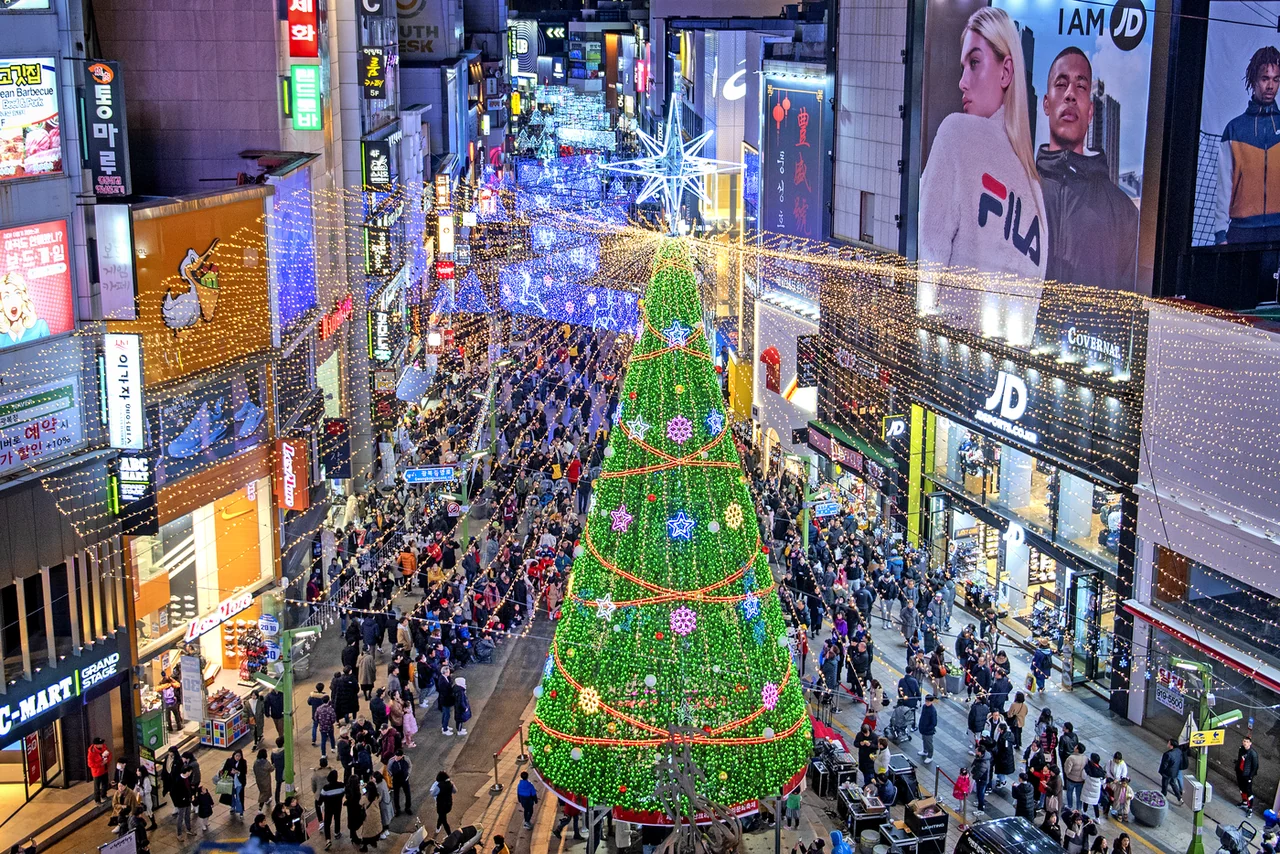
The Haeundae Light Festival lights up Haeundae Beach and Gunam-ro, the pedestrian street that leads from Haeundae subway station to the sand. Last year it ran from late November to mid-January, every evening from 6 pm to 11 pm, and it was free.
Because it starts in November, Haeundae is a good choice if you are in Korea in early December and Seoul’s festival has not begun. The Korea Tourism Organization festival page has the details.
The Gwangbok-ro tree festival
Gwangbok-ro, the shopping street in the old city centre near Nampo, puts up a tall Christmas tree and hangs lights over the street. It was previously called the Busan Christmas Tree Festival, so you may see either name.
Last year the lights came on around December 5 and stayed up until February. Entry is free, and the festival page lists the dates.
MapNew Year’s Eve in Busan
Busan has two midnight events on December 31: a single drone show over Gwangalli Beach and the bell at Yongdusan Park, which is a short walk up from Gwangbok-ro. Both are covered in the New Year’s Eve section above.
Planning a Busan trip
Busan works well as a second stop after Seoul, and the KTX links the two cities. For cable car hours, hot springs and more on the city in winter, read our full guide to Busan in December.
9. Ski resorts in December
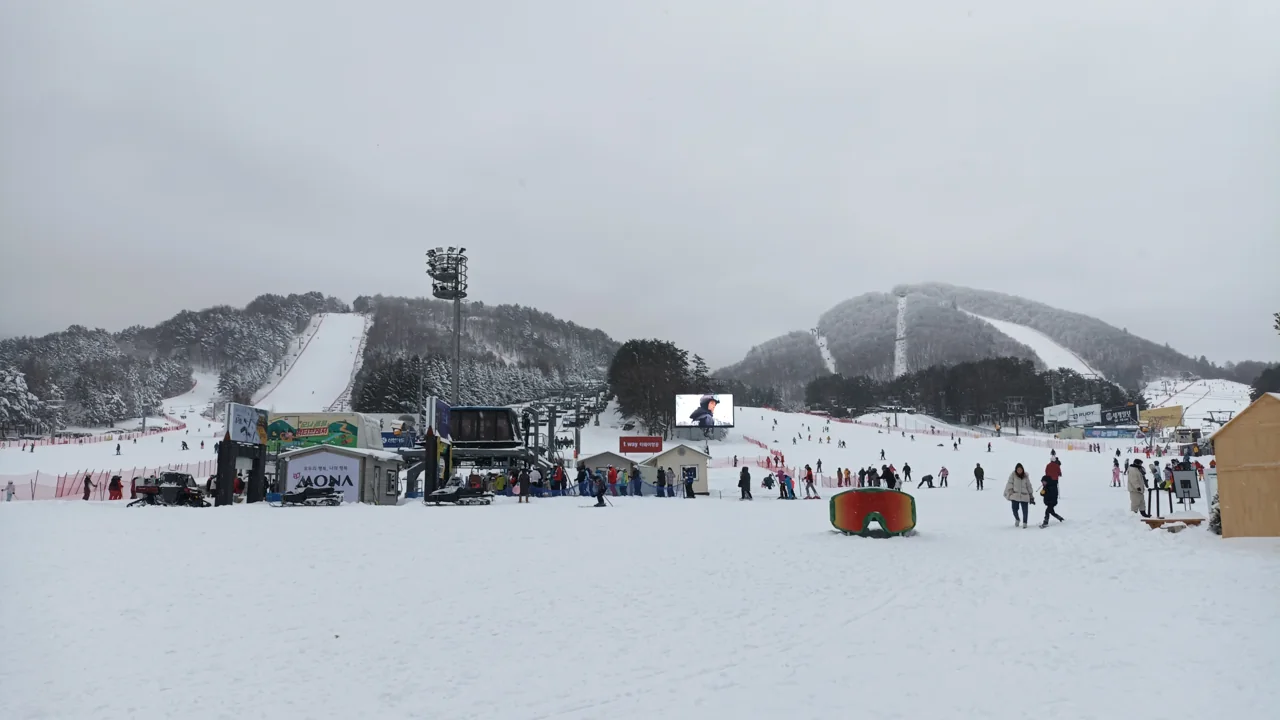
Korea has 13 ski resorts still operating. Most of them are in Gangwon province, with a few others in southern Gyeonggi (Konjiam and Jisan), Muju in Jeonbuk State and Eden Valley near Yangsan in the southeast.
When the resorts open
Last season the first resorts, Mona Yongpyong and Phoenix, opened in late November. The others followed from late November through December, with Eden Valley last in late December. Each resort announces its own opening date shortly before the season.
Through the whole of December, most resorts run only part of their slopes. In early December, ski only where resorts have announced they are open. From mid-December more resorts are running, so you have far more choice.
Resorts near Seoul
Konjiam Resort is in Gwangju, Gyeonggi province, and describes itself as about 40 minutes from Gangnam. It runs a paid shuttle from Jamsil station and stays open until late at night.
Jisan Resort in Icheon runs paid shuttles from City Hall and Sports Complex stations in Seoul. Elysian Gangchon near Chuncheon is about an hour from Seoul on the ITX-Cheongchun train and has a free shuttle from the Seoul area.
Vivaldi Park in Hongcheon has a separate shuttle booking for foreign visitors, explained on its official ski information page. In the peak season it runs late-night skiing into the early morning hours, except on Monday nights. Last season that only started in the second half of December.
MapThe large Gangwon resorts
The large Gangwon resorts include Mona Yongpyong, Phoenix and Alpensia in Pyeongchang, High1 in Jeongseon and Wellihilli in Hoengseong. They all have shuttle buses from Seoul, and you can check slope openings on the Mona Yongpyong official site.
Day trips from Seoul
Many travellers take a ski day tour from Seoul rather than organise buses and rentals themselves. Tours on Klook and KKday go to Vivaldi, Elysian Gangchon, Konjiam, Jisan, Mona Yongpyong and Wellihilli.
Most of these tours bundle the bus with ski or snowboard rental and a set of ski clothes, which helps if you did not pack for the slopes. For more on each resort, see our Korea ski resort guide.
The famous ice fishing festivals in Gangwon take place in January.
10. Hallasan and Seoraksan in winter
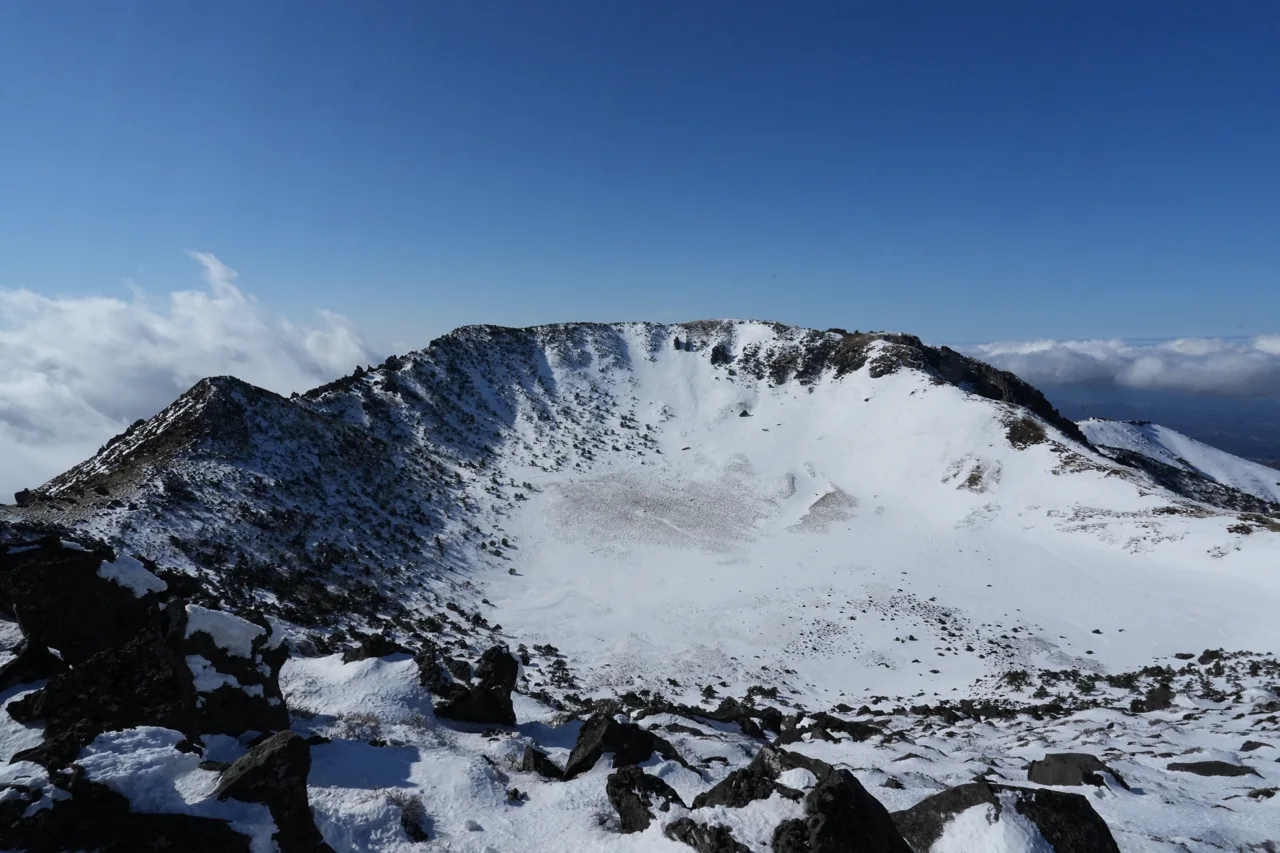
Korea’s two most famous mountains both change their rules in winter. Hallasan on Jeju is often covered in snow at the top, and Seoraksan near Sokcho kept some of its high trails closed until mid-December last year.
Hallasan: reservations and cut-off times
The two trails to the summit crater, Baengnokdam, are Seongpanak and Gwaneumsa. Both need a reservation for the summit section. Bookings for each month open at 9 am on the first working day of the month before.
From October to March, you must pass the trailhead and the halfway checkpoint by 11:30 am. Some blogs still say noon, but that was an old rule. Hikers must leave the summit by 1:30 pm.
The park recommends crampons, warm clothes, warm water and a headlamp for winter hikes. The rules are on the official Hallasan National Park site.
MapHallasan without a reservation
If you cannot get a summit booking, the Yeongsil and Eorimok trails lead to Witse-oreum, a high ridge below the summit, without one. You must start by 12 noon.
Both routes climb high enough to reach snow in December, so the winter gear advice applies here too.
Seoraksan: early-December trail closures
Last year, the high trails toward Daecheongbong, Seoraksan’s highest peak, were closed from mid-November to December 15 as a wildfire precaution. The lower areas around Biseondae, Ulsanbawi and the Gwongeumseong cable car stayed open.
Winter also brings earlier start limits on the long routes. For example, hikers heading from Osaek to Daecheongbong must set off by 11 am. Check the Korea National Park Service trail notices before you go, and read our Seoraksan guide for the routes.
11. Dry winter days on the east coast
Gangneung and Sokcho on the east coast have the fewest rainy or snowy days of the year in December, and clear days are common. The air is dry and the sea is a deep blue.
Gangneung and Sokcho
Both cities are warmer than Seoul in the daytime, though the wind off the sea is cold. Winter is a good time for walks along the beach. Sokcho sits at the foot of Seoraksan, and Jeongdongjin, a popular sunrise spot, is just south of Gangneung.
Gangneung is easy to reach from Seoul by KTX. Our Gangneung guide covers the train and the beaches.
Winter surfing in Yangyang
Jukdo Beach in Yangyang, north of Gangneung, is known for surfing, and people surf there through the winter. The Yangyang county tourism page introduces the surf beaches.
Sunrise and New Year’s Eve
Because the coast faces east, many Koreans come here in winter to watch the sun rise over the sea. Jeongdongjin and Gyeongpo both hold events on the night of December 31, described in the New Year’s Eve section above.
On other mornings, the dry December weather gives you a fair chance of seeing the sun come up over the water.
12. Jeju in December
Jeju’s weather depends on which side of the island you are on. The north, around Jeju City and the airport, is often grey, windy and wet in December, while Seogwipo on the south coast gets much more sun.
Where to stay and how to get around
If sunshine matters to you, book a room on the south side of the island, around Seogwipo or Jungmun. You will still fly into the north, but you will spend more of your time under clear skies.
Buses cover the island, but a car makes it much easier to follow the weather from one side to the other. Our Jeju car rental guide explains how to book and what foreign drivers need.
Camellias at Camellia Hill
Camellia Hill in Andeok-myeon, Seogwipo, grows many kinds of camellia that flower one after another from autumn to spring. Some of them bloom in December.
From November to February the garden is open from 8:30 am to 6 pm, and the last entry is at 5 pm. The Visit Jeju page for Camellia Hill has the address and hours.
MapTangerine picking
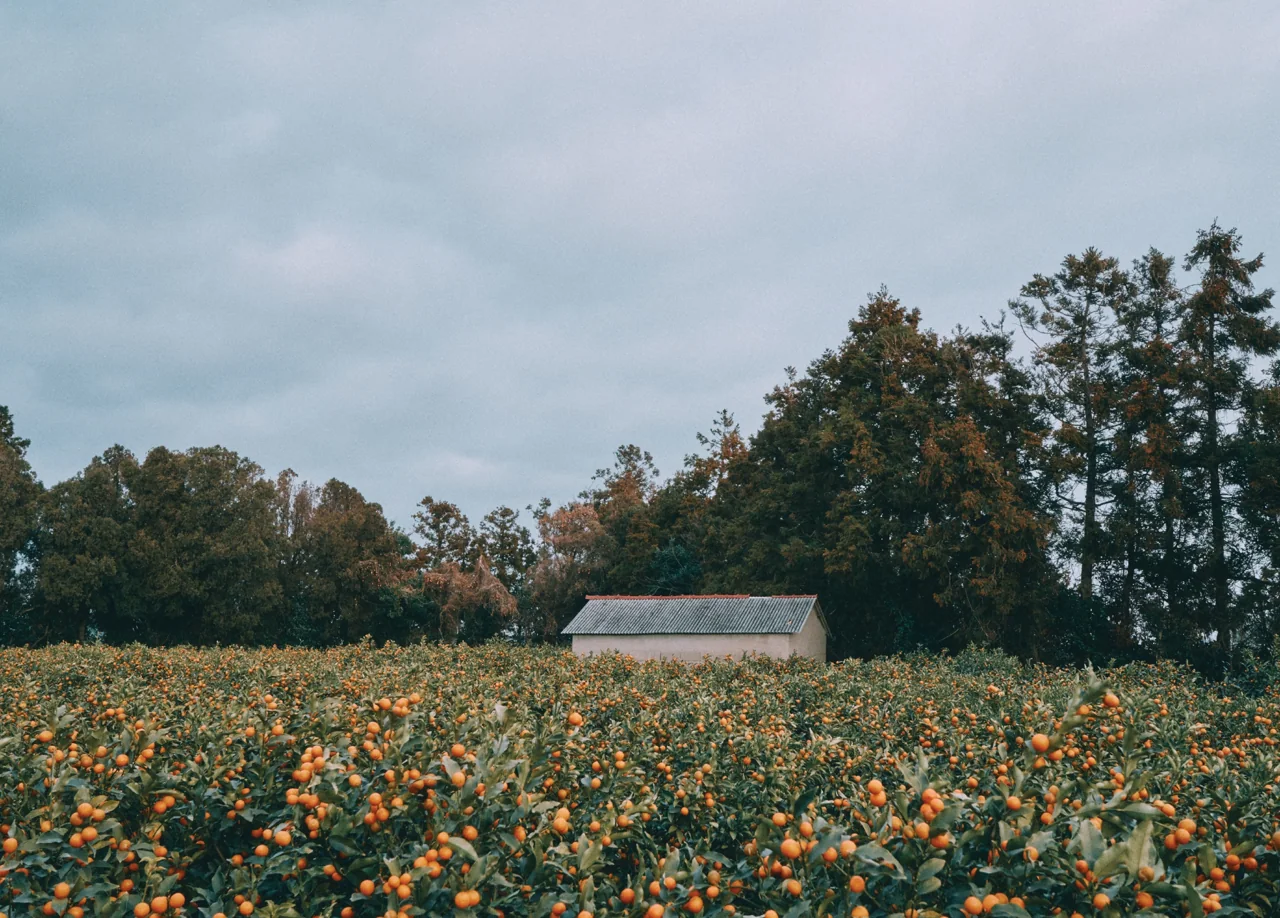
Jeju’s outdoor tangerine harvest is mostly winding down by mid-December, according to the Jeju agricultural research service. Tangerine picking farms each close their season on different dates.
If picking your own tangerines is part of the plan, go in early December and check with the farm before you drive out.
Yellowtail and snow on Hallasan
Yellowtail, called bangeo in Korean, is at its best in December and January. The yellowtail festival in Moseulpo is usually held in November, so it is normally over by December, but raw yellowtail is on the menu at fish restaurants across the island.
The top of Hallasan is snowy through December. The hiking section above covers the trails and cut-off times, and our Jeju travel guide covers the rest of the island.
13. What to eat in December
December is when Korean menus turn to winter seafood, hot soups and street snacks. Several of these foods are only easy to find in the cold months.
Snow crab
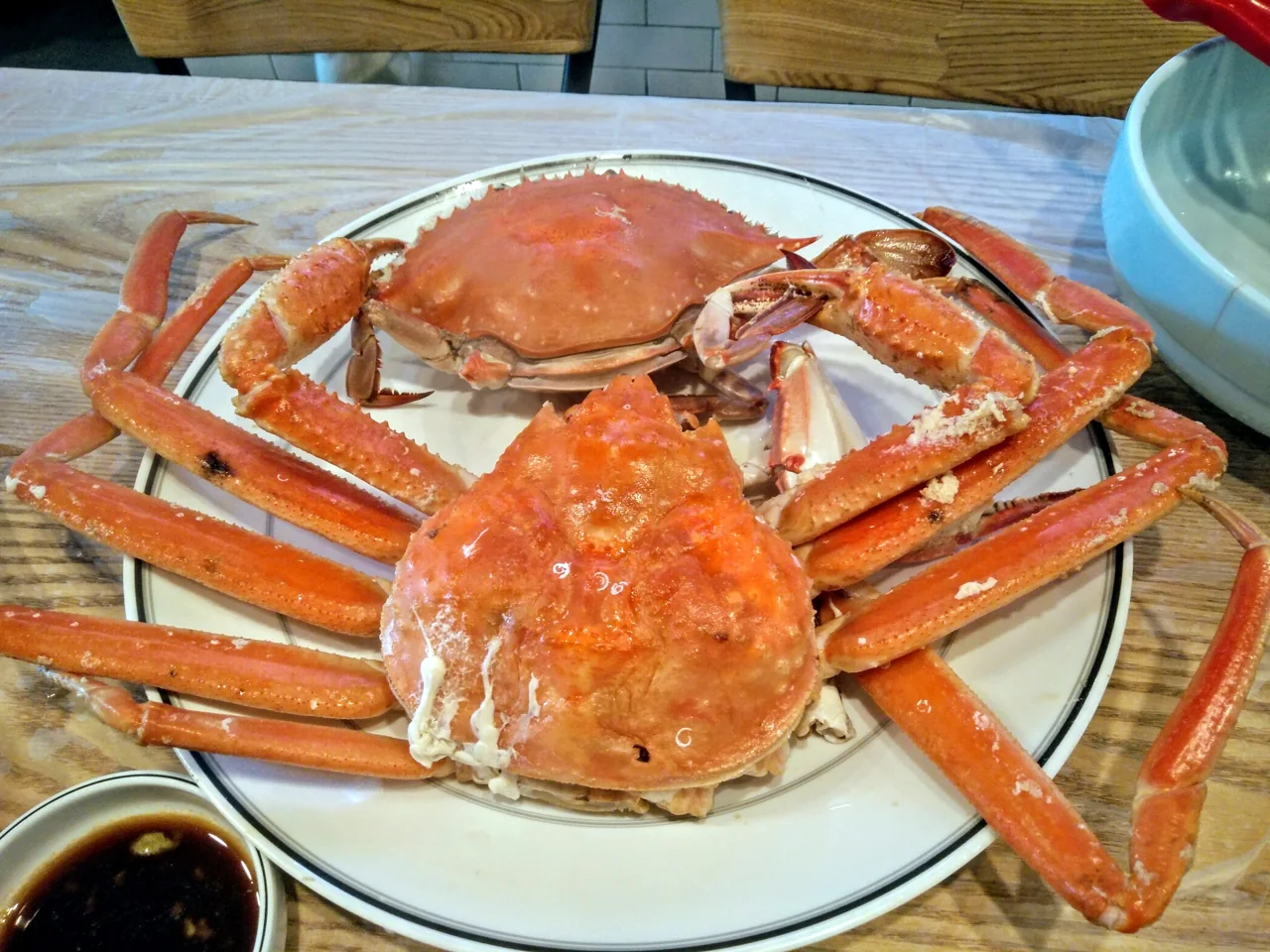
Korean law closes the coastal snow crab season from June 1 to November 30, so coastal crab boats go back out on December 1. Offshore boats in the East Sea start in November. Catching female snow crab is banned all year. The rules are set out by the Ministry of Oceans and Fisheries.
The main crab towns are Ganggu Port in Yeongdeok and Uljin, both on the east coast. Restaurants there usually steam the crabs whole. Prices follow the daily market, so ask before you order.
MapYellowtail
Yellowtail is at its best in December and January. Raw fish restaurants on Jeju and along the east coast serve it as thick slices of sashimi.
Gwamegi
Gwamegi is Pacific saury left outside in the cold sea wind, where it freezes and thaws again and again until it dries. Guryongpo in Pohang makes most of the gwamegi eaten in Korea.
People wrap it in dried laver or seaweed with spring onion and garlic. It tastes strongly of fish, so some people love it and others cannot eat it.
Oysters
Oysters from Tongyeong and Geoje on the south coast go on sale from the first auction in late October until the following spring. The Tongyeong city fisheries page explains the local oyster farms.
In winter you will find them in gulgukbap (oyster rice soup), in gul-jeon (oyster pancakes) and served raw.
Jeju tangerines
Jeju tangerines pile up in convenience stores and markets all over the country in December. They are small, sweet and easy to peel.
Street snacks
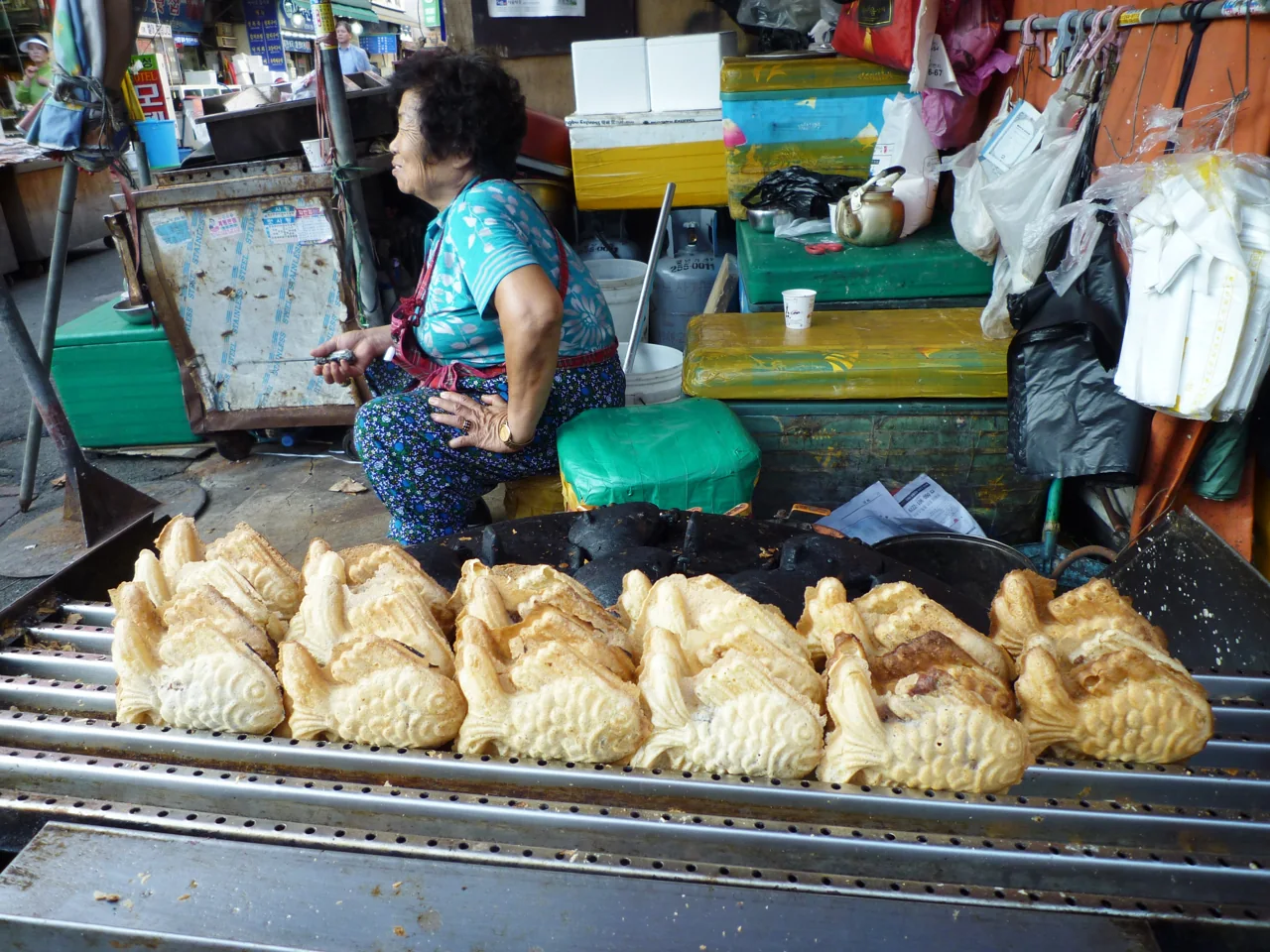
Street stalls appear on busy corners once the weather turns cold. Bungeoppang are fish-shaped pastries filled with red bean paste or custard, and hotteok are griddled pancakes with a brown sugar and cinnamon filling. Hotteok filling is very hot, so bite carefully.
Other stalls sell roasted sweet potatoes from drum-shaped ovens, and fish cake skewers in a cup of hot broth. Some stalls only take cash or a Korean bank transfer, so keep a few small notes with you.
Hot soups for cold days
On cold days, Koreans head for seolleongtang (beef bone soup), sundaeguk (blood sausage soup), kalguksu (knife-cut noodle soup) and budae-jjigae (sausage and noodle stew). You will find all four in ordinary restaurants in any city.
For more dishes and how to order them, see our guide to what to eat in Korea.
14. Gyeongju, Daegu and Jeonju in December
Gyeongju, Daegu and Jeonju each make an easy stop between Seoul and the south. Gyeongju and Daegu are dry and sunny, while Jeonju is greyer and gets more snow.
Gyeongju
Gyeongju gets hardly any rain in December, and clear days are common. The old royal tombs, temples and palace sites are pleasant to walk around on cold, bright days.
Donggung Palace and Wolji Pond stay open from 9 am to 10 pm in winter, with the last tickets at 9:30 pm. The sun sets early, so you can see the lit pavilions and their reflections on the pond in the early evening. Hours are listed on the Gyeongju city tourism site.
MapFor the rest of the city, read our Gyeongju guide.
Daegu
Daegu is dry and mostly sunny in December, and it feels less cold than Seoul. It is an easy stop on the KTX line between Seoul and Busan.
Jeonju
Jeonju is known for its hanok village of traditional houses. In December it has as many grey and snowy days as Seoul, sometimes a few more, because snow clouds come in from the west coast.
That gives you a chance of seeing tiled roofs under snow, though it is never certain. Our Jeonju guide covers the hanok village and the food.
15. Crowds, holidays and K-ETA
December is one of the quietest months for foreign visitors to Korea. Only January and February see fewer, according to the Korea Tourism Data Lab.
December is also a low month for visitors from the US, so you are travelling at a time when there are fewer foreign tourists than in spring or autumn.
Public holidays
Christmas Day and New Year’s Day are public holidays in Korea. December 31 is not a holiday, so shops and offices work as normal that day.
When December 25 or January 1 sits next to a weekend, many Koreans travel. Ski resorts, popular restaurants and KTX trains fill up, so book those days early.
Hotels and prices
Many travellers find it easy to choose hotels in December, except in Christmas week and the days around New Year. Book those two periods early, especially near Bosingak or on the east coast for the sunrise.
K-ETA and the arrival card
Citizens of 22 countries and regions, including the United States, Canada, the UK, Australia and New Zealand, do not need a K-ETA for arrivals up to December 31 (Korean time). The exemption goes by your arrival date, so staying on into January is fine.
Whether the exemption continues after December 31 is announced separately; in each of the last two years the extension came in December. If you will enter Korea on or after January 1, for example after a side trip abroad, check the rules on the official K-ETA site before you fly.
Travellers from exempt countries can still apply for a K-ETA if they wish, which lets them skip the arrival card. Otherwise, you can fill in the free electronic arrival card from three days before you land. Our K-ETA guide walks through both.
16. What to pack for the cold, and who December suits
Packing for Korea in December depends mostly on whether you are heading north or south. Seoul and the mountains need full winter gear, while Busan and Jeju are milder.
What to wear in Seoul and Gangwon
Bring a thick padded coat, a hat, gloves, a scarf and warm, comfortable shoes. Evenings at the light festivals mean standing outside after dark, when it is coldest.
Under the coat, wear several thin layers rather than one thick jumper. Indoors, heating is strong: homes have heated floors, and subway carriages and department stores can feel hot, so you will want to take layers off.
What to wear in Busan and Jeju
A warm jacket is enough on many days in Busan and Jeju, but the sea wind cuts through thin clothes. For the north of Jeju, pack a waterproof layer for rain and wind.
Small things worth packing
Hand warmers are sold at every convenience store. Bring lip balm and moisturiser for the dry air, and shoes with good grip, because pavements turn icy after snow.
Air quality
From December to March, Korea runs a seasonal fine dust management period. You can check air quality forecasts in the AirKorea app, which has an English version. The traffic restrictions in the government’s fine dust plan only matter if you rent a car.
Planning around short days
It gets dark soon after 5 pm, so plan outdoor sightseeing for the morning and early afternoon. Save evenings for light festivals, markets, a jjimjilbang bathhouse or a museum.
Keep your phone online so you can use Korean map apps such as Naver Map or KakaoMap for walking and subway directions. A data plan from our Korea eSIM guide is the simplest way to do that.
Who December suits
December is a good choice if you want festive lights and Christmas markets, skiing, or winter seafood such as snow crab, yellowtail and oysters. It also suits travellers who prefer a month with fewer foreign tourists, and anyone who likes dry weather on the east coast, in Busan or in Gyeongju.
Another month may suit you better in a few cases. For autumn leaves, come by early November; for ice fishing festivals and the widest choice of ski slopes, come in January; for swimming, come in summer. If you dislike the cold and want sunny days in the north of Jeju, December is one of the least sunny months there. Our guide to when to visit Korea compares all the options.
Choosing your dates within December
For the full Seoul light festival season and a wider choice of ski resorts, go after mid-December. For quieter streets, go in early or mid-December before Christmas, and go early in the month if you want to pick tangerines on Jeju.
🎡Things to Do77
🍜Food8
🏨Where to Stay4
🚇Getting Around14
🧭Travel Tips25
📌More4
Korea in December: FAQ
Images: Photographs via Wikimedia Commons: Korea.net / KOCIS (CC BY-SA 2.0), Ken Eckert (CC BY-SA 4.0), Nat4Eben (CC BY-SA 4.0), Hwan Hyeok Kim (CC BY 2.0), Dittwjfsdgkvkdjg (CC BY-SA 4.0), Sadopaul (CC BY 4.0), Jeju Olle Foundation (CC BY-SA 4.0), donchili (CC BY-SA 2.0), Joriola (CC BY-SA 3.0). Gwangbok-ro photo: Busan Metropolitan City and Busan Tourism Organization (KOGL Type 1).