
Changdeokgung Secret Garden: Booking, Times and What Is Closed
Changdeokgung sells two separate tickets, and the rear garden only admits you at a fixed time. Here are the English slot times, when booking opens, what you actually pay at each age, and the one area you cannot see right now.
| Two tickets | The palace buildings cost 3,000 won and the rear garden costs 5,000 won. You cannot buy the garden ticket on its own. |
|---|---|
| Timed entry | The garden admits 100 people per slot, 50 booked online and 50 sold at the ticket office from 9am on the day. |
| Booking window | Online booking opens at 10am six days before your visit and closes the day before. It runs on a separate ticketing platform reached through the heritage service page. |
| English slots | Four a day, Tuesday to Sunday, from March to November. There is no English garden talk in winter. |
| Closed area | Ongnyucheon, the deepest part of the garden, is shut for repair. Official timing is now about 70 minutes, not the 90 you will read elsewhere. |
| Closed day | Monday. Gyeongbokgung closes on Tuesday instead, which catches people out. |
1. You buy two tickets, not one
2. The garden runs on fixed entry times
3. Your language decides which slots you can take
4. Booking opens at 10am, six days ahead
5. What you actually pay, by age and nationality
6. Free entry covers 22 categories at the buildings, three at the garden
7. None of the multi-visit tickets include the garden
8. Ongnyucheon is closed and the route is shorter than you have read
9. What the garden walk actually shows you
10. The nine stops in the palace buildings
11. Twenty-five designated heritage items inside one palace
12. Hanbok gets you into the buildings free
13. The Moonlight Tour sells to foreigners on a different site
14. It closes on Mondays, not Tuesdays
15. Getting there, and the gate through to Changgyeonggung
16. Prams, wheelchairs and what you cannot bring in
17. Building the day around your slot
Changdeokgung is the only one of Seoul‘s four palaces on the UNESCO World Heritage list, and it is the only one where a large part of the grounds is behind a timed ticket. If you have already done Gyeongbokgung, expect a different set of rules here.
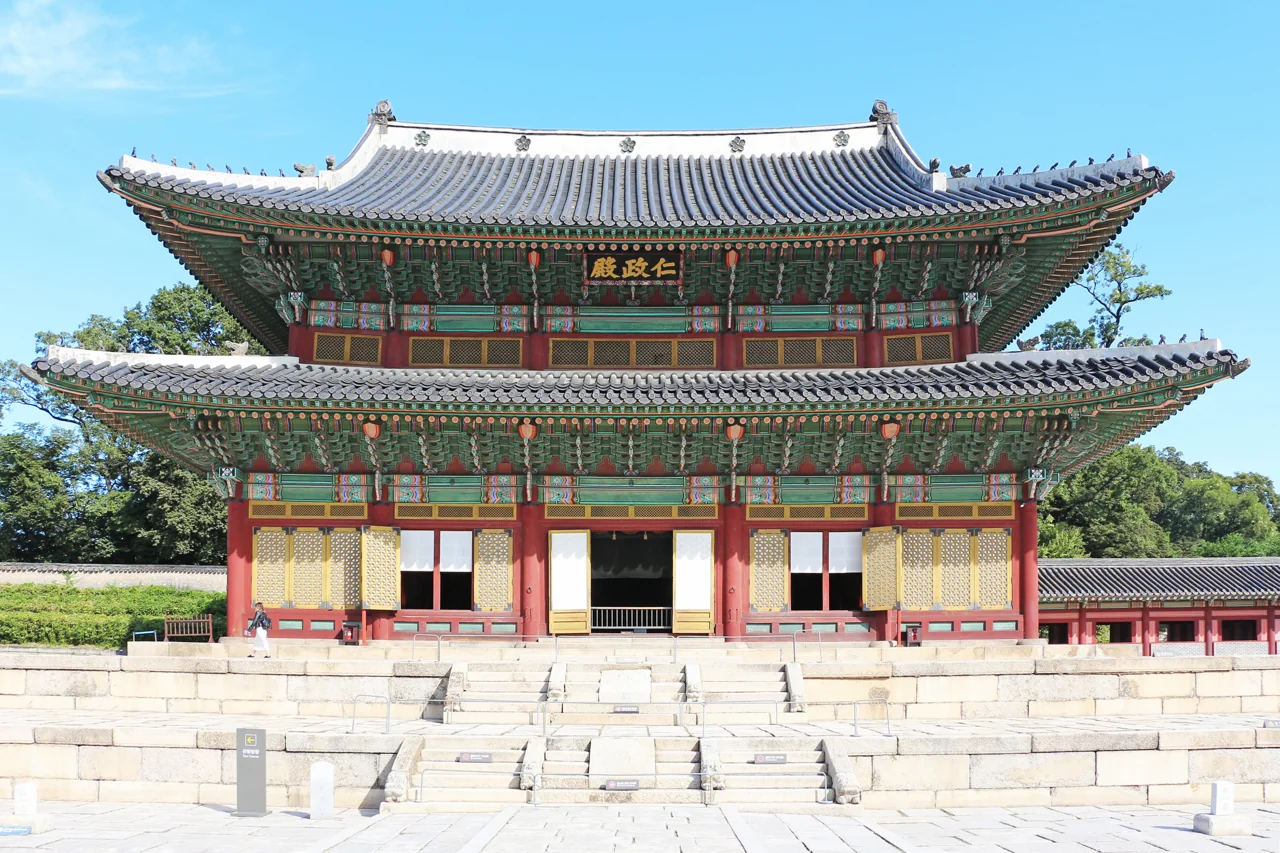
1. You buy two tickets, not one
One ticket does not cover Changdeokgung. The grounds split in two, and each half is sold separately.
| Area | What is there | How you see it | Adult price |
|---|---|---|---|
| Palace buildings | Donhwamun, Injeongjeon, Seonjeongjeon, Huijeongdang, Daejojeon, Nakseonjae | Walk in and wander. No cap on numbers, no booking. | 3,000 won |
| Rear garden (Huwon) | Buyongji, Aeryeonji, Yeongyeongdang, Gwallamji | Timed entry only, in fixed groups. | 5,000 won |
The official price page carries a line that trips people up: a garden ticket must be bought together with a buildings ticket. There is no garden-only option. An adult aged 19 to 64 therefore pays 3,000 plus 5,000, so 8,000 won to see both.
Why only the garden is capped
The stated reason is heritage and ecological protection. The garden is woodland, ponds and pavilions joined by earth paths and slopes, and crowds damage the ground and the planting. So the number entering at one time is held at 100.
Do you have to follow the guide once inside?
No. Once your group is admitted you can either follow the guide or walk the open sections on your own. Only the entry time is fixed. Turn up after your slot has started and you are neither admitted nor refunded.
Order of play. Pick the garden slot first, then fit the buildings around it. The buildings have no time constraint at all.
2. The garden runs on fixed entry times
Everyone gathers at the garden entranceMap and goes in together. The official notice gives the numbers.
| Item | Detail |
|---|---|
| Meeting point | Rear garden entrance |
| Walk from the palace gate | Over 15 minutes from Geumhomun |
| Latest arrival | Ticket holders must be through Donhwamun, the main gate, 15 minutes before the slot |
| Capacity per slot | 100 (50 online, 50 sold on the day) |
| Length | About 70 minutes |
| Late arrival | No entry and no refund |
That 15 minutes is the number people miss. Enter at Donhwamun, look at Injeongjeon and Huijeongdang, then walk up to the garden entrance and you have spent close to twenty minutes on foot. The booking site puts the hard limit at 15 minutes before the slot, through the main gate at Donhwamun. For a 10am slot, aim to be inside by 9:30.
Half of every slot is sold on the day
A sold-out online listing does not mean you are locked out. Fifty places per slot go on sale at the ticket office from 9am. The official notice does add a warning: in April, May, October and November both the online and the same-day tickets sell out very quickly. In those months, be at the ticket office when the gate opens at 9am.
The last slot moves with the sunset
The official wording is that the final garden entry time may change according to sunset. When the days are short the 4pm slot simply does not appear. If you want a late slot, check that the time is actually listed on the booking screen before you plan around it.
3. Your language decides which slots you can take
Garden slots are assigned by language, and the non-Korean ones are limited to particular days.
| Language | Days | Times | Per day |
|---|---|---|---|
| English | Tuesday to Sunday | 10:30, 11:30, 14:30, 15:30 | 4, March to November |
| Korean | Tuesday to Sunday | 10:00 to 16:00, hourly | 7 |
| Chinese | Tuesday, Thursday, Saturday | 12:30 | 1 |
| Japanese | Wednesday, Friday, Sunday | 13:30 | 1 |
Note the season limit on the English slots. From December to February there is no English garden talk at all. The Korean 4pm slot is also March to October only.
The rule cuts one way
The official notice says Korean nationals cannot enter or join the guided walk during foreign-language garden slots, and that a Korean national accompanying a foreign visitor may join, up to two people.
Two things follow from that. English slots hold a smaller and quieter group, because the domestic demand that fills the Korean slots cannot go there. And if a Korean friend is coming with you, they are allowed in on your ticket, but only two of them.
You can take a Korean slot if you want
The restriction runs in one direction only. A foreign visitor is not barred from a Korean-language slot. Since you can choose to walk the open sections alone rather than follow the guide, a Korean slot is a real option in winter, when no English slot exists, or on a day when the English times do not fit. You get the garden, just not the commentary.
The buildings have free talks too, with no booking
They start in front of the guard post opposite Injeongmun and run about 50 minutes.
| Language | Days | Times |
|---|---|---|
| English | Tuesday to Sunday | 10:15, 13:15 |
| Korean | Tuesday to Sunday | 09:30, 11:30, 13:30, 15:30, 16:30 (March to October) |
| Chinese | Tuesday, Thursday, Saturday | 10:00 |
| Japanese | Wednesday, Friday, Sunday | 11:00 |
They leave on time, run in the rain, and are not open to groups of very young children.
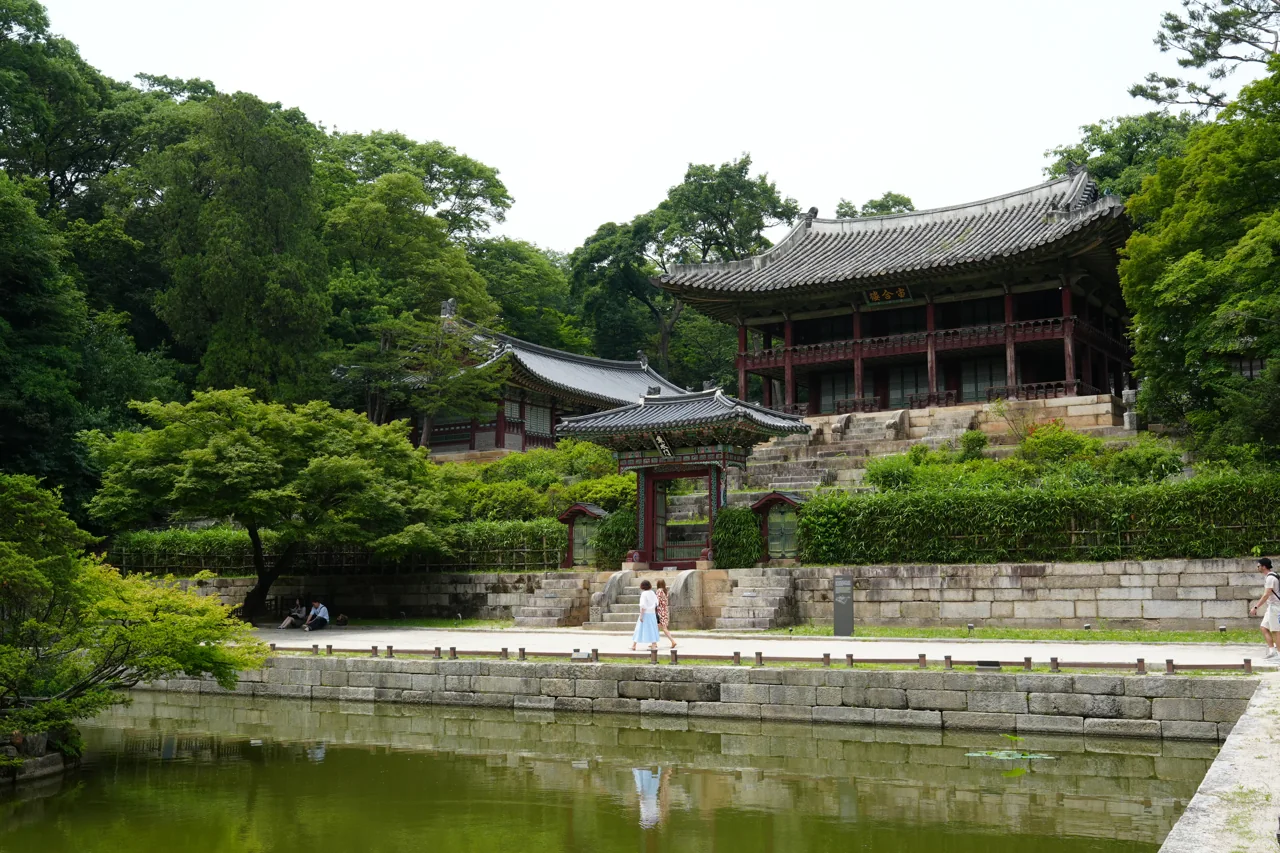
4. Booking opens at 10am, six days ahead
The first thing to get right is where you book. You do not pay on the palace website. The heritage service reservation page hands you over to a separate ticketing platform, and a lot of older guidance still points at the address the culture ministry used before the agency was reorganised.
The rules
| Item | Rear garden | Palace buildings |
|---|---|---|
| Booking window | From 10am six days before, until the day before | Same |
| Party size | Up to 10 people, one booking per visit day | No cap |
| On the day | 50 per slot from 9am at the ticket office | Buy any time |
| Payment | Card. Unpaid bookings cancel themselves at the deadline | Same |
Cancellation is priced by the clock
| When you cancel | Rear garden | Palace buildings |
|---|---|---|
| Free | Up to 2 hours before your slot starts | Up to 2 hours before last admission |
| 10% fee | From 2 hours before until the slot starts | From 2 hours before until last admission |
| No refund | After the slot has started | After last admission |
A garden booking does not include the buildings
The reservation page states plainly that a buildings ticket must also be booked. This is where people end up queueing at the window after they thought they were done. The exception: anyone entitled to free or discounted buildings entry, and anyone holding a combined palace ticket, skips that booking and just brings proof.
Free entry is refunded, not deducted
There is no free or discounted option on the garden booking screen. The official instruction is to book at full price and then show your proof at the gate no later than 15 minutes before entry to be refunded. That is an extra step on the day, so arrive early.
5. What you actually pay, by age and nationality
The official table reads as follows.
| Ticket | Who | Individual | Group of 10 or more |
|---|---|---|---|
| Palace buildings | Foreign visitors aged 19 to 64 (Koreans 25 to 64) | 3,000 won | 2,400 won |
| Rear garden, adult | Aged 19 to 64 | 5,000 won | No group rate |
| Rear garden, senior | 65 and over | 5,000 won | No group rate |
| Rear garden, youth | Aged 7 to 18 | 2,500 won | No group rate |
Two of those lines rarely make it into English guides. Visitors aged 65 and over pay full price for the garden even though the buildings are free to them; the senior row exists but the amount is identical to the adult one. And the garden costs 2,500 won for anyone aged 7 to 18, not the 5,000 you will see quoted as a flat figure.
The total in your hand
| Visitor | Buildings | Garden | Total |
|---|---|---|---|
| Foreign visitor, 19 to 64 | 3,000 | 5,000 | 8,000 won |
| Foreign visitor, 7 to 18 | Free | 2,500 | 2,500 won |
| Foreign visitor, 65 and over | Free | 5,000 | 5,000 won |
| Korean national, 25 to 64 | 3,000 | 5,000 | 8,000 won |
| Korean national, 19 to 24 | Free | 5,000 | 5,000 won |
| Anyone aged 6 or under | Free | Free | Free |
The free-entry age is not the same for everyone. Foreign visitors get in free up to 18; Korean nationals up to 24. Six years of difference, decided by passport.
Local residents pay half
Residents of the district a palace sits in get 50% off with ID. For Changdeokgung that means Jongno-gu. Discounts do not stack, so you cannot put the 50% on top of a group rate.
6. Free entry covers 22 categories at the buildings, three at the garden
The heritage service publishes a long free-entry list. Counted as printed, it runs to 22 categories: under-24 and over-65 Korean nationals, under-18 and over-65 foreign visitors, parents holding a multi-child card, expectant mothers and one companion, state guests and diplomatic missions, wounded veterans in state care, people on official business and anyone wearing hanbok, schoolteachers leading pupils, registered disabled visitors and one carer, independence patriots, national merit recipients, veterans compensation recipients, May 18 and special-mission and combat veterans, defoliant-related patients, licensed tourist interpreters and cultural guides leading a group, recognised filial-duty honourees, basic livelihood recipients, near-poverty households, military service honour card holders and serving soldiers in uniform, holders and trainers of national intangible heritage, heritage committee members, and anyone else the site director admits.
The garden runs its own, much shorter list
Lower down the same page: free garden entry applies to children aged 6 and under, Korean national merit recipients, and Korean registered disabled visitors. That is the whole list.
| Visitor | Buildings | Garden |
|---|---|---|
| Aged 6 or under | Free | Free |
| Korean veterans and disabled visitors | Free | Free |
| Aged 65 and over | Free | 5,000 won |
| Wearing hanbok | Free | Full price |
| Foreign veterans and disabled visitors | Free | Full price |
| Expectant mothers, teachers, guides | Free | Full price |
The veteran and disability waivers are written as Korean nationals only. For a foreign visitor there is exactly one route to a free garden ticket, and it is being 6 or under.
Culture Day does not include the garden either
Palaces open free on the last Wednesday of each month. The official line adds a bracket: the Changdeokgung rear garden is excluded. On that day the buildings cost nothing, cannot be pre-booked because they are free, and the garden still costs 5,000 won.
7. None of the multi-visit tickets include the garden
Beyond single admission there are several passes sold at the palaces themselves.
| Ticket | Price | How it works | Rear garden |
|---|---|---|---|
| Combined palace ticket | 6,000 won | Four palaces and Jongmyo, once each, within six months | Excluded |
| Monthly pass | 30,000 won for Gyeongbokgung and Changdeokgung | One month, unlimited. Needs a photo | Excluded |
| Lunchtime ticket | 5,000 won | Ten visits over three months, 12:00 to 14:00 only | Excluded |
| Annual timed pass | From 30,000 won | Lunchtimes for a year | Not sold for Changdeokgung |
The combined ticket is the one worth doing the arithmetic on. Bought separately, Gyeongbokgung 3,000, Changdeokgung 3,000, Deoksugung 1,000, Changgyeonggung 1,000 and Jongmyo 1,000 come to 9,000 won, so the 6,000 won ticket saves 3,000. Buy it at any of the four palace ticket offices or at Jongmyo. Refunds only at the palace that sold it, and none at all once a section has been torn off.
It does not get you into the garden. The ticket’s own notes tell you to book the garden six days ahead or buy it on the day. What it does do is remove the separate buildings booking: show the combined ticket at the gate and buy only the garden ticket on top.
Rule of thumb. Two or more palaces on your list means the combined ticket pays for itself. Changdeokgung alone means you want the plain 3,000 and 5,000 tickets.
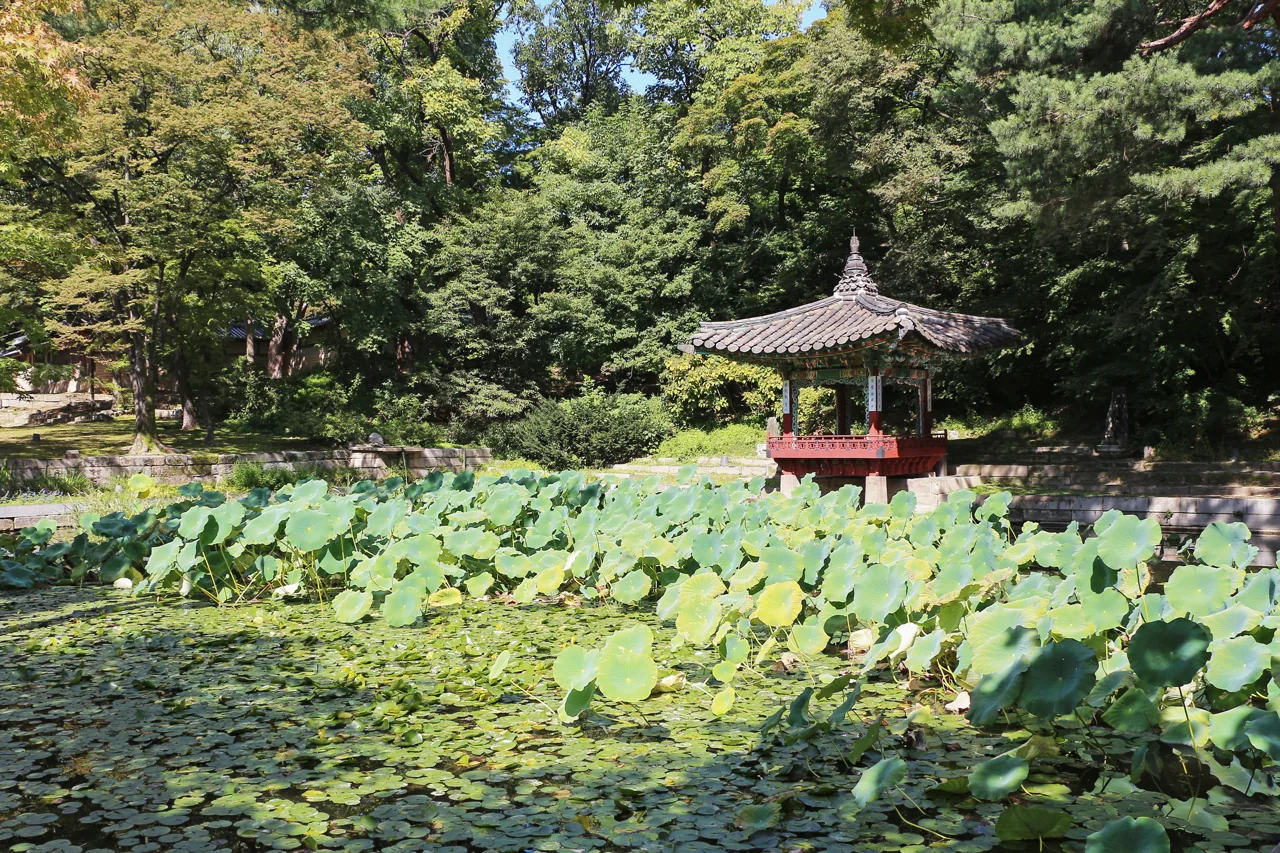
8. Ongnyucheon is closed and the route is shorter than you have read
Almost every description of the garden walk says the same thing: Buyongji, then Aeryeonji, Yeongyeongdang and Gwallamji, finishing at Ongnyucheon at the far end. Ninety minutes, about 2.5 kilometres.
That is not the current route. The official guided-tour page carries this note:
“About 70 minutes. The Ongnyucheon area is closed for heritage repair and maintenance, until further notice.”
The same website’s own course map still numbers Ongnyucheon as stop 14. The map and the tour notice disagree with each other. The tour notice is the operative one, and the drop from 90 minutes to 70 is the evidence for it.
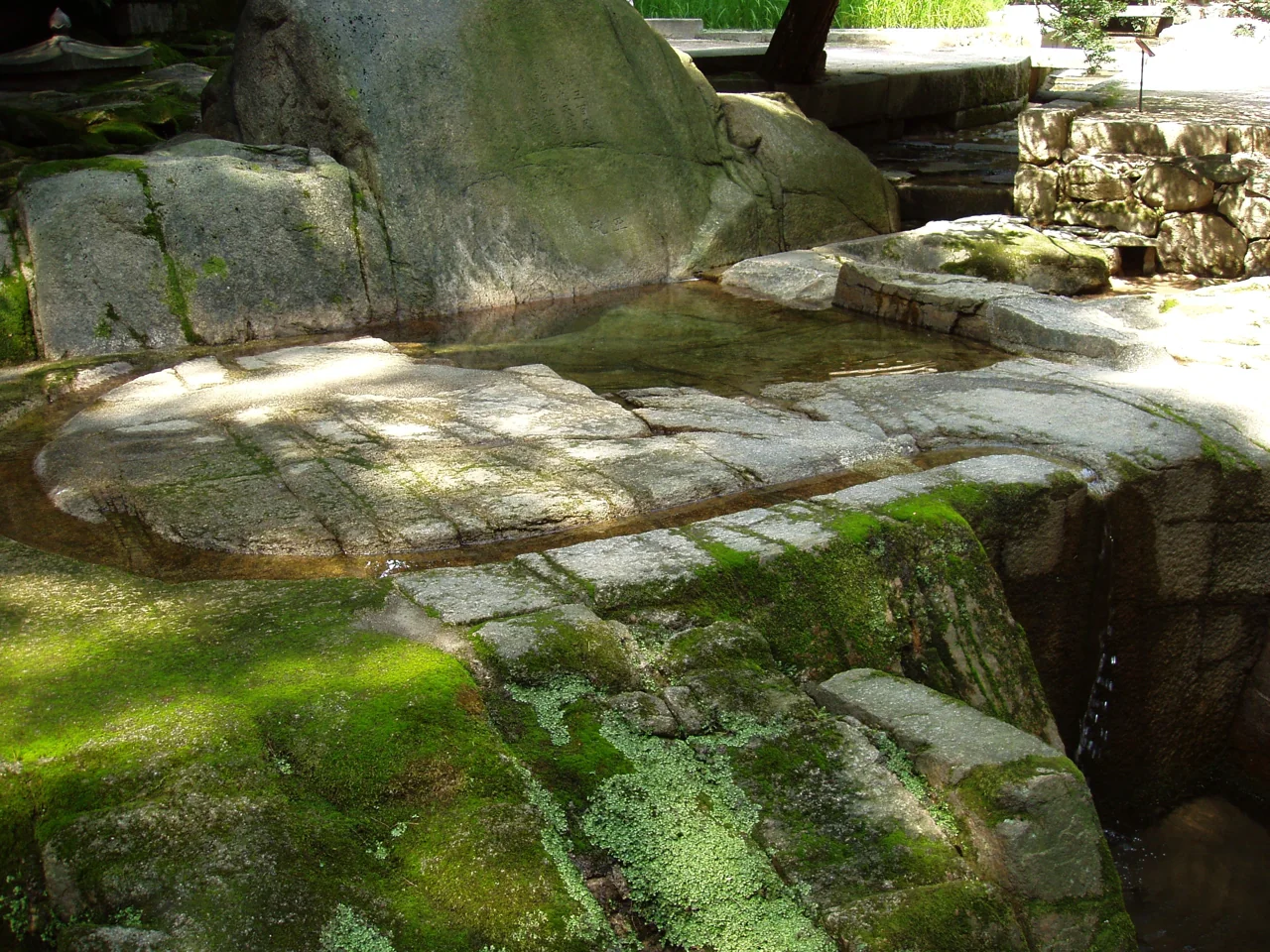
What Ongnyucheon is
A wooded hollow at the northern, deepest end of the garden. In 1636 King Injo had the rock face cut and a channel carved across the top of it to make a small waterfall. The pavilions Soyojeong, Taegeukjeong, Cheonguijeong and Nongsanjeong stand around it. It is the furthest point in the garden, which is most of why it takes so long to include.
It also drops out in extreme weather
Repairs aside, Ongnyucheon was already seasonal. In deep cold from December to February and in the heat of July and August the route is shortened for visitor safety, which brings it to 70 minutes and leaves Ongnyucheon out.
So the window for seeing it was spring and autumn only even before the current closure. Reopening is given as “until further notice”, with no date attached.
9. What the garden walk actually shows you
The official course lists five stops inside the garden. Four of them are open.
Buyongji and Juhamnu
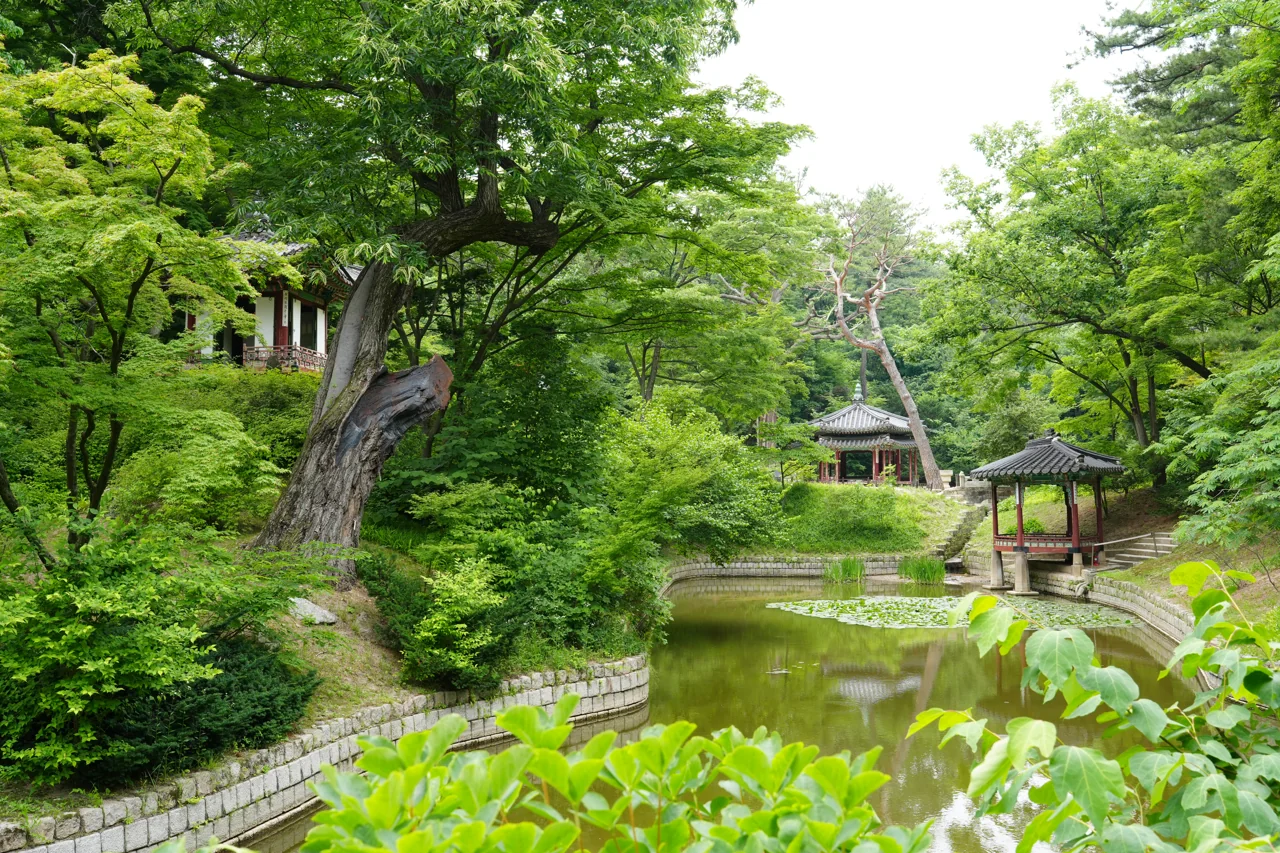
BuyongjiMap is a square pond of roughly a thousand square metres. Buyongjeong pavilion stands with its feet in the water on the south side; Juhamnu sits on the rise to the north. King Jeongjo built Juhamnu and the royal library Gyujanggak here on his accession in 1776. This is the first stop on every garden walk. Buyongjeong and Juhamnu are both designated Treasures.
Aeryeonji and Uiduhap
Over one low ridge from Buyongji is AeryeonjiMap. You reach it through Bullomun, a gate cut from a single block of stone. Aeryeonjeong pavilion stands at the north edge of the pond.
Gwallamji and its four pavilions
The densest cluster of pavilions in the garden. Gwallamjeong, Jondeokjeong, Seungjaejeong and Pyeomusa stand around a pond shaped roughly like the Korean peninsula. Gwallamjeong has a fan-shaped floor plan, unusual among palace pavilions. Jondeokjeong has a double roof.
Yeongyeongdang
YeongyeongdangMap is a palace building modelled on a scholar-official’s house. Crown Prince Hyomyeong had it built in 1827 for a ceremony honouring his father, King Sunjo. It carries no painted decoration, which is why it does not look like the rest of the palace. Men’s and women’s quarters are separated around a wide courtyard. It is a designated Treasure.
Footwear. The garden mixes flat ground with slopes, on earth and stone paths. The official accessibility note says there are steep sections. Leave the heels at the hotel.
10. The nine stops in the palace buildings
The official course lists nine points in the buildings area. No booking, no cap, no clock.
| Stop | What it is | Designation |
|---|---|---|
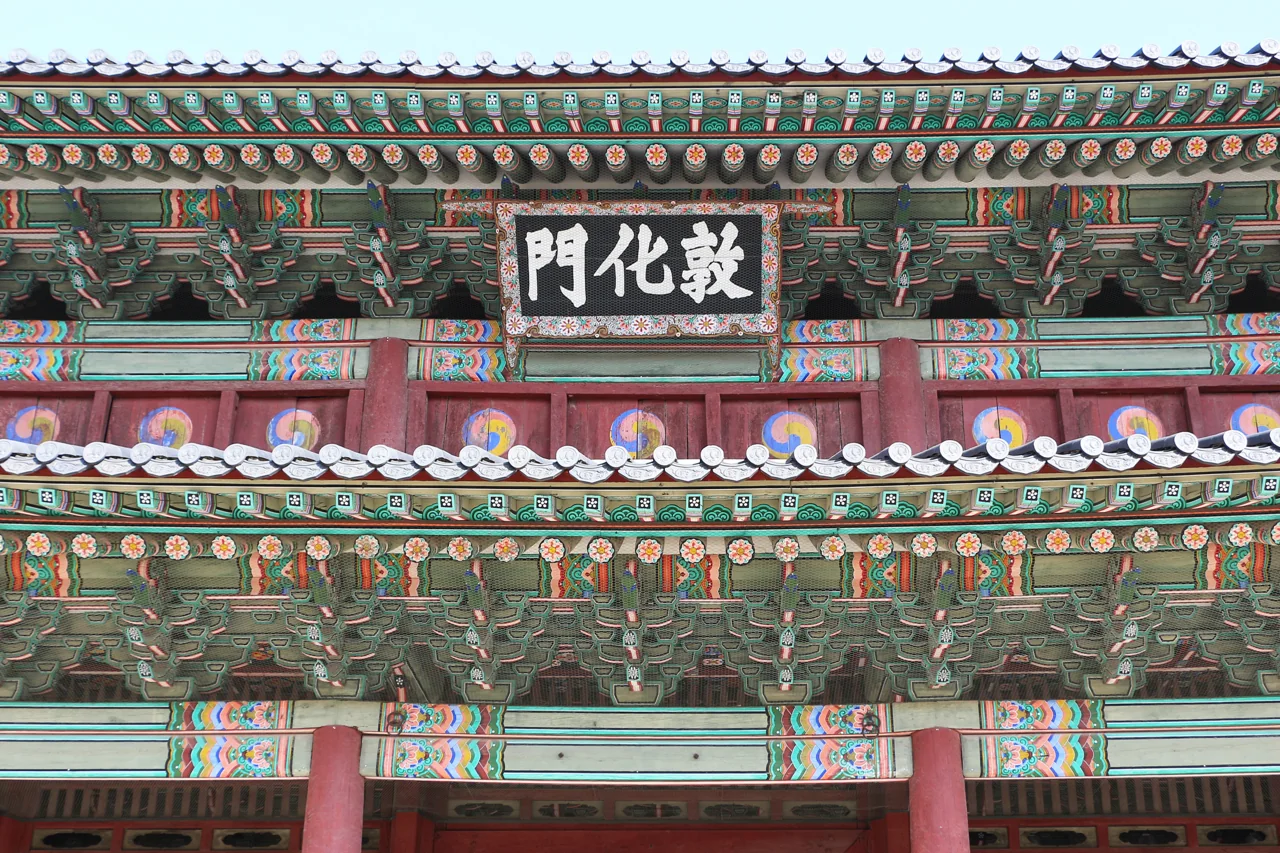
| Donhwamun | The main gate, and the oldest surviving wooden palace gate in Korea | Treasure |
| Injeongjeon | The throne hall, used for coronations and state occasions | National Treasure |
| Seonjeongjeon | The council hall, and the only surviving palace roof in Korea laid in blue glazed tile | Treasure |
| Huijeongdang | A council hall that became a reception room. Rebuilt after the 1917 fire | Treasure |
| Daejojeon | The royal residence. Annexation was signed in its annexe, Heungbokheon, in 1910 | Treasure |
| Seongjeonggak | Where the crown prince studied | Within the historic site |
| Gwollaegaksa | The government offices that stood inside the palace walls | Within the historic site |
| Old Seonwonjeon | Where royal portraits were enshrined | Treasure |
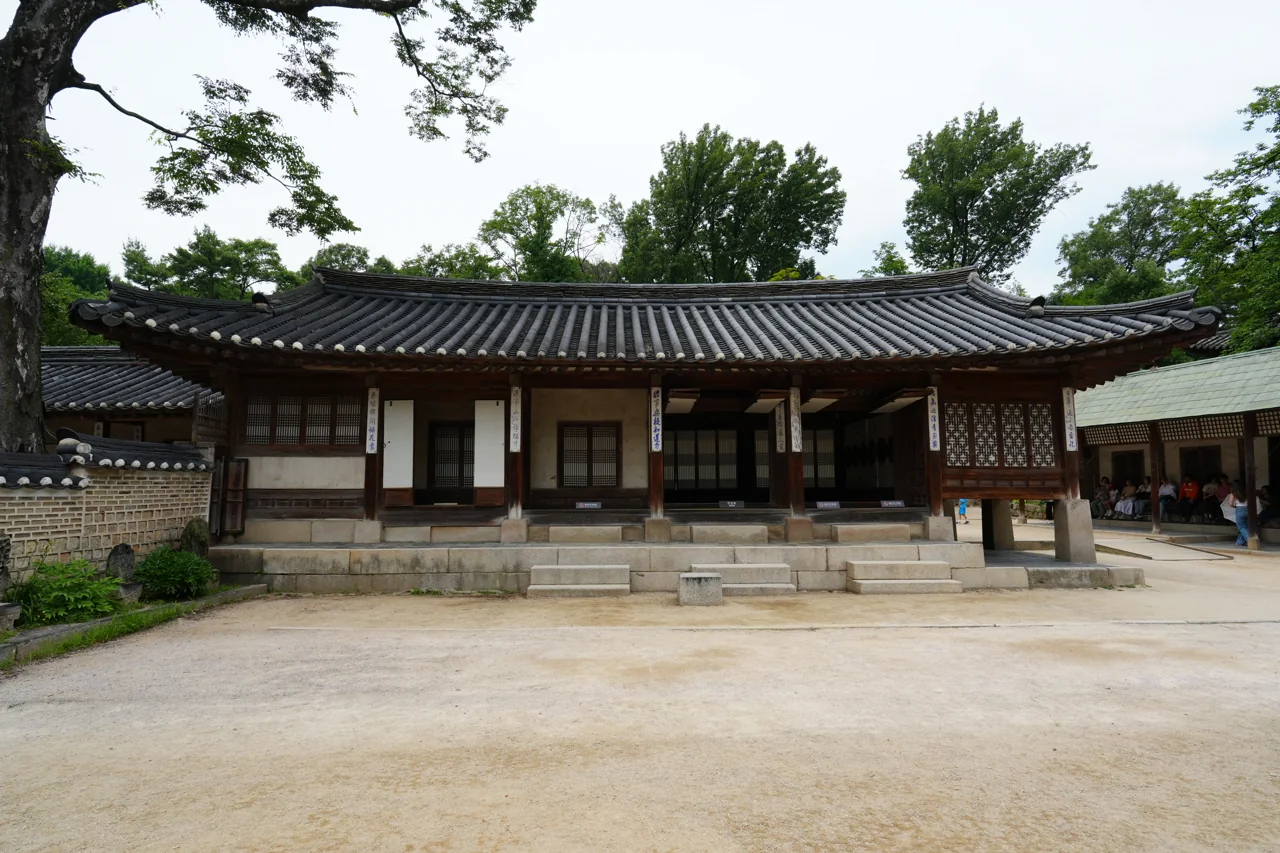
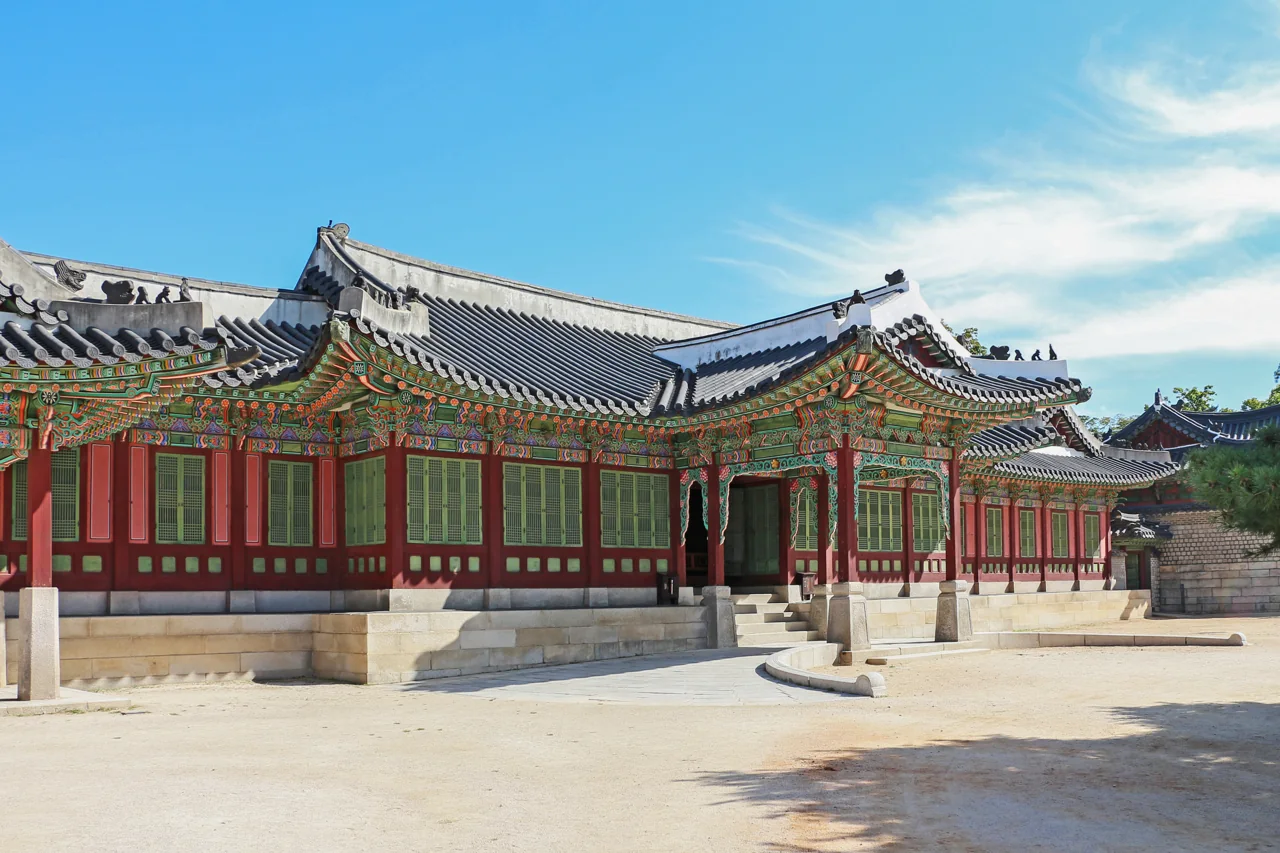
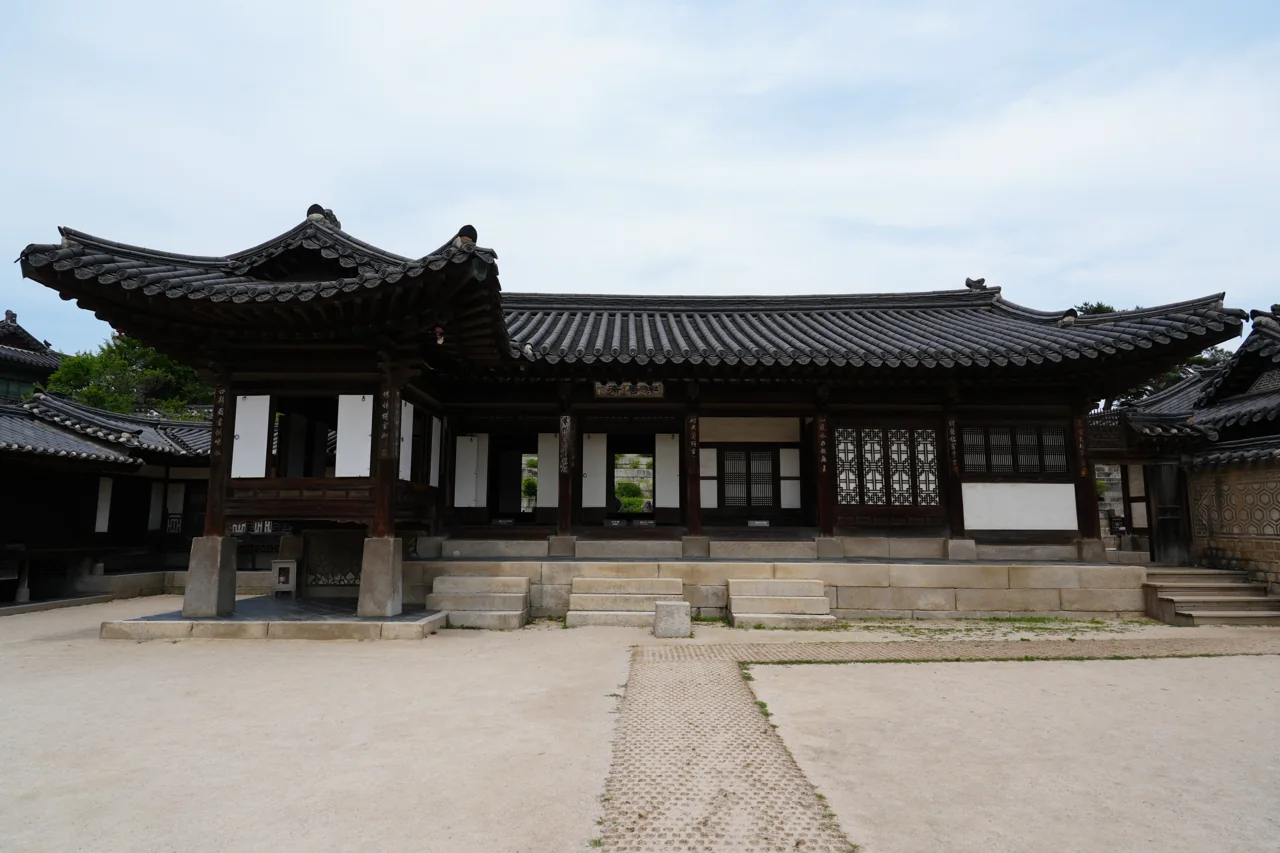
| Nakseonjae | Built in 1847. The last members of the imperial family lived and died here after 1945 | Treasure |
The walk runs from DonhwamunMap across Geumcheongyo bridge and through Jinseonmun into InjeongjeonMap, then past Seonjeongjeon, Huijeongdang and Daejojeon, and out at NakseonjaeMap.
Two in-depth walks, booked ahead
| Area | Days | Time | Booking |
|---|---|---|---|
| Gwollaegaksa | Friday, Saturday, Sunday | 10:30 | From midnight eight days ahead until 30 minutes before |
| Nakseonjae | Friday, Saturday, Sunday | 14:30 | Same |
Both are suspended in the hottest weeks of summer, from late July to the end of August. They are run in Korean.
11. Twenty-five designated heritage items inside one palace
Search the national heritage register for items named after Changdeokgung and 25 come back. The palace itself is a Historic Site, and buildings, trees and paintings inside it are listed separately.
| Grade | Count | What |
|---|---|---|
| National Treasure | 2 | Injeongjeon hall, and the Imun-won rain gauge pedestal |
| Treasure | 12 | Donhwamun, Injeongmun, Seonjeongjeon, Huijeongdang, Daejojeon, Seonwonjeon, a rain gauge pedestal, Geumcheongyo, Buyongjeong, Nakseonjae, Juhamnu, Yeongyeongdang |
| Historic Site | 1 | Changdeokgung as a whole |
| Natural Monument | 4 | A juniper, a hardy kiwi vine, a mulberry, and a stand of Chinese scholar trees |
| Registered Heritage | 6 | Six large wall paintings in Huijeongdang, Daejojeon and Gyeonghungak |
Only three of them are in the garden
Of the twelve Treasures, Buyongjeong, Juhamnu and Yeongyeongdang stand inside the rear garden. The other nine are in the buildings area. In other words the 3,000 won ticket gets you most of the designated heritage on the site, including the only National Treasure building.
Four of them are trees
The Natural Monuments are living: a juniper, a hardy kiwi vine, a mulberry, and a group of Chinese scholar trees. The scholar trees stand just inside Donhwamun, so you pass them on the buildings ticket without needing the garden.
The painted halls
All six Registered Heritage items are paintings hung inside the palace. When the residential quarter burned in 1917 and was rebuilt, leading painters of the day produced large-scale works for the new interiors. They sit indoors, out of reach on a general visit, and turn up instead in the booked Nakseonjae walk.
12. Hanbok gets you into the buildings free
Anyone in hanbok enters the palaces free. Note the limit: the buildings only. The garden is charged as normal. And the definition is stricter than most rental shops let on. The heritage service publishes a dedicated guideline.
| Accepted | Not accepted |
|---|---|
| Both traditional and modernised hanbok | A durumagi overcoat worn on its own |
| Wrap-collar jeogori with a skirt or trousers | A T-shirt-style modern jeogori |
| A jeogori without tie ribbons | Jeans with a jeogori on top |
| Hanbok trousers with a zip, if the cut is right | Hanbok trousers with a T-shirt |
| Hanbok trousers without ankle ties | A one-piece hanbok dress with no jeogori |
| Jeogori with a waist skirt, if the jeogori reaches the waist | |
| Summer ramie hanbok |
It comes down to one test: a wrap-collar jeogori plus a separate bottom. The one-piece dresses and T-shirt tops that fill many rental racks fail on that point. Check the cut before you pay for the rental.
It applies to foreign visitors
The guideline’s own question and answer says the purpose is to popularise hanbok at home and abroad, so nationality is not considered. This is one of very few waivers where your passport does not matter.
The guideline also asks for hanbok suited to the setting and rules out excessive exposure.
13. The Moonlight Tour sells to foreigners on a different site
The Changdeokgung Moonlight Tour opens the palace after dark. You carry a paper lantern and walk with a guide. It runs in two seasons a year, Thursday to Sunday.
The route
Across Geumcheongyo bridge, past a floodlit Injeongjeon, then a daegeum flute recital at the Sangnyangjeong pavilion in the Nakseonjae compound. From there into the rear garden, where costumed performers reenact a royal procession at Buyongji and pose for photographs, and finally to Yeongyeongdang for a court music ensemble and traditional refreshments.
| Item | Detail |
|---|---|
| Departures | Six a night, in two sets of three, five minutes apart |
| Group size | 28 per departure |
| Price | 30,000 won per person |
| Korean nationals | Ballot. One entry per account on a domestic ticketing site; winners then book up to two seats |
| Returns | Released first come, first served after the ballot round closes |
Foreigner-only nights
There are separate departures run in English, Chinese and Japanese. They run on four nights per season, and they are sold on Creatrip rather than the domestic ticketing site. They are first come, first served, not a ballot.
So the two audiences buy in completely different ways: a ballot for Korean residents, an open sale for foreign visitors, on separate websites. If a Korean friend wants to come with you, decide which of the two routes you are using before either of you applies.
Dates and application windows change every season. The heritage service and the Korea Heritage Agency post them, and there is a programme helpline on 1522-2295.
14. It closes on Mondays, not Tuesdays
Seoul’s palaces do not share a closing day, and this is a reliable way to waste a morning.
| Closed | Where |
|---|---|
| Monday | Changdeokgung, Changgyeonggung, Deoksugung, the royal tombs, Sungnyemun |
| Tuesday | Gyeongbokgung, Jongmyo, Chilgung |
When a closing day falls on a public holiday the site opens anyway, and the following first non-holiday becomes the closing day instead. Worth checking if you are visiting at the end of a long weekend.
The official site contradicts itself here. The sidebar box on the heritage service’s Changdeokgung pages reads “Closed every Tuesday”. The opening-hours table on the same site, and article 3-2 of the palace visiting regulations, both put Changdeokgung on Monday. Monday is correct.
Hours change three times a year
| Months | Open | Last admission |
|---|---|---|
| February to May, September and October | 09:00 to 18:00 | 17:00 |
| June to August | 09:00 to 18:30 | 17:30 |
| November to January | 09:00 to 17:30 | 16:30 |
Winter closing is an hour earlier, and the late garden slots shrink with it.
15. Getting there, and the gate through to Changgyeonggung
ChangdeokgungMap is at 99 Yulgok-ro, Jongno-gu. The office number is 02-3668-2300.
| How | Detail |
|---|---|
| Subway | Line 3, Anguk StationMap Exit 3, five minutes on foot |
| Subway | Lines 1, 3 and 5, Jongno 3-ga Station Exit 7, ten minutes on foot |
| Bus | Seoul Donhwamun Traditional Theater stop. Trunk 109, 151, 162, 171, 172, 272, 710. Branch 7025 |
| Car | There is no car park. The official page asks you to use public transport |
Hamyangmun links the two palaces
Changdeokgung and ChanggyeonggungMap are joined by a gate called Hamyangmun. You can walk through in either direction. The two grounds were originally continuous, with no wall between them, and were known jointly as the East Palace.
- Buy a ticket at the Hamyangmun window before passing through.
- No re-entry. Cross into Changgyeonggung and you cannot come back.
- Hamyangmun closes at the same time as last admission to Changdeokgung.
- You cannot enter the Changdeokgung rear garden from Changgyeonggung. The gate connects to the buildings area only.
Changgyeonggung costs 1,000 won for an adult. It works well as the hour after a garden slot. Bear in mind that coming out of the garden puts you back at the north end, so allow walking time to reach Hamyangmun.
16. Prams, wheelchairs and what you cannot bring in
Access
From the heritage service’s own answers:
- The buildings area is mostly level with ramps on some sections, so prams and wheelchairs get around. Halls raised on a stone terrace cannot be approached closely.
- The rear garden mixes level ground with hills and has steep sections.
A garden slot moves as a group for 70 minutes and there is no easy way to drop out partway. If someone in your party is unsteady on slopes, the buildings on their own are a reasonable visit: 3,000 won buys a National Treasure hall and nine Treasures.
Not allowed through the gate
Article 6 of the palace visiting regulations lists them.
- Alcohol, and camping gear such as tents, mats and sun shelters, and cooking equipment
- Sports and play equipment, musical instruments, loudhailers
- Pets. Assistance dogs carrying the official tag are the exception
- Flammables and weapons
The entire grounds are no smoking. Packed food may only be eaten in designated spots, and eating elsewhere is grounds for being asked to leave. The picnic-on-the-lawn version of a palace visit is not on offer here.
17. Building the day around your slot
Fix the garden time and everything else falls into place. Here is a 10am slot.
- 09:00 Through Donhwamun. Collect or buy both tickets. If you are going for same-day garden places, this is when you queue.
- 09:05 Over Geumcheongyo and through Jinseonmun to Injeongjeon.
- 09:25 Seonjeongjeon, Huijeongdang, Daejojeon.
- 09:45 Start walking to the garden entrance. Over 15 minutes.
- 10:00 Garden entry. About 70 minutes.
- 11:10 Out of the garden. Nakseonjae on the way back.
- 11:40 Either through Hamyangmun into Changgyeonggung, or out at Donhwamun towards Bukchon and Insadong.
Changdeokgung on its own is two and a half to three hours. Add Changgyeonggung and you have filled a morning.
Other slots
| Garden slot | Be at the gate | What is left |
|---|---|---|
| 10:30 (English) | 09:30 | The whole afternoon |
| 11:30 (English) | 10:30 | Do Bukchon first, it is ten minutes away |
| 14:30 or 15:30 (English) | 13:30 or 14:30 | Tight in winter, and these slots do not run at all from December to February |
Pairing it with Gyeongbokgung is easy on foot, about 20 minutes between the two. But Gyeongbokgung closes on Tuesday and Changdeokgung on Monday, so both in one day means Wednesday to Sunday.
How to split several days across the city is set out in the Seoul itinerary. If you are adding other cities, start from the Korea travel guide.
🎡Things to Do12
🚇Getting Around5
🧭All-Korea essentials120
Frequently asked questions
See the full Korea travel guide
Images: Photographs via Wikimedia Commons: Bernard Gagnon (CC0), Sadopaul (CC BY-SA 4.0), Alain Seguin (CC BY-SA 3.0), Daderot (CC BY-SA 3.0).