
Busan to Osaka Ferry Guide: PanStar Miracle Timetable, Cabins, Real Costs and Seasickness
Sailing days, cabins for couples and solo travellers, the charges added to the fare, seasickness and getting from Osaka Port into the city.
| How long is the crossing? | About 17 hours overnight: you leave Busan in the afternoon and dock in Osaka the next morning. |
|---|---|
| Which days does it sail? | Busan to Osaka on Sunday, Tuesday and Thursday; Osaka to Busan on Monday, Wednesday and Friday. |
| What does the cheapest berth really cost? | If you’re happy to share an Inside cabin with other passengers, one adult pays 232,000 won one way from Busan at full fare, surcharge and port fees included. |
| Can a couple share a cabin? | Yes, in a suite or by paying for the empty berths, because the shared four-berth cabins are split by gender. |
| When should I reach the terminal? | In Busan two hours before departure, and in Osaka around the time ticketing opens, since nobody boards or gets a refund once ticketing has closed. |
| How do I get from Osaka Port into town? | Walk or take the shuttle to Cosmosquare Station, then ride the Metro to Namba, Umeda or Shin-Osaka. |
1. The PanStar Miracle at a glance
2. Sailing days, times and check-in
3. Planning a return trip by ship
4. Cabin classes and fares
5. Which cabin for couples, solo travellers and families
6. Costs on top of the fare
7. Where and how to book
8. Busan Port International Passenger Terminal
9. Facilities on board
10. Meals on board
11. Bridges and views along the route
12. Seasickness and the rough stretch of the route
13. Luggage allowance and banned items
14. Arriving in Japan at Osaka Port
15. From Osaka Port into the city
16. Sailing back from Osaka to Busan
17. Taking a car, motorbike or bicycle
18. Cancellations, refunds, and ferry or flight

1. The PanStar Miracle at a glance
The PanStar Miracle is the only passenger ship sailing directly between Busan and Osaka. The Osaka Port and Harbor Bureau lists berth KF-2 at the Osaka Port International Ferry Terminal as the Busan route, and the Miracle is the ship that uses it. The PanStar Dream, which used to sail this route, has been sold, so reviews, prices and facility details from its time describe a different ship.
The crossing in brief
- Overnight in both directions: you leave in the afternoon or early evening and dock the next morning.
- Sailings run on set days of the week, so the calendar shapes your plans.
- Dinner, breakfast and a bed are part of the fare.
- The cheapest berths are in shared cabins split by gender.
- A fuel surcharge, port fees and, when leaving Japan, a departure tax come on top of the fare.
- The Busan terminal is a walk from Busan Station, and the Osaka terminal is a walk or a short shuttle ride from the Metro.
The ship
The Miracle was built in Busan, at the Daesun Shipbuilding yard in Yeongdo. It runs on a hybrid system that pairs diesel engines with electric motors, and it carries shipping containers and vehicles as well as passengers, which makes it a car ferry and a cargo ship at the same time.
| Specification | PanStar Miracle |
|---|---|
| Gross tonnage | 22,000 tons |
| Length | 171 m |
| Passenger capacity | 355 |
| Propulsion | Diesel engines and electric motors (hybrid) |
| Cargo | Containers and vehicles |
| Built by | Daesun Shipbuilding, Yeongdo, Busan |
The ship’s profile is on PanStar’s PanStar Miracle page.
Ferry or cruise?
PanStar markets the trip under names such as “Miracle Cruise” and “Seto Inland Sea Cruise”. A common complaint in reviews is that the name made people expect a big cruise ship, and some reviewers say the Miracle feels more like a cargo ship.
The clearest description is a cruise ferry. There’s a buffet restaurant, an outdoor pool deck, a sauna and an evening show, all on a working ship that carries freight between the two ports. The fare pays for the crossing, a night’s sleep and two meals, and the cruise-style extras come on the side.
On a trip through Korea and Japan, the crossing takes the place of a flight and a night in a hotel. You board in Busan in the afternoon, sleep on board, and reach Osaka the next morning with all your luggage.
2. Sailing days, times and check-in
The ship leaves Busan on Sunday, Tuesday and Thursday afternoons and leaves Osaka on Monday, Wednesday and Friday evenings, docking the next morning in both directions. Korea and Japan share the same time zone, so there’s no clock change on board.
Timetable
| Route | Days | Departs | Docks | Time at sea |
|---|---|---|---|---|
| Busan to Osaka | Sunday | 15:00 | Monday 08:30 | 17 h 30 min |
| Busan to Osaka | Tuesday, Thursday | 16:00 | Wednesday, Friday 09:00 | 17 h |
| Osaka to Busan | Monday, Wednesday, Friday | 17:00 | Tuesday, Thursday, Saturday 10:00 | 17 h |
The Sunday sailing leaves Busan an hour earlier than the weekday ones and docks half an hour earlier, so it spends a little longer at sea. PanStar keeps the timetable and the expected times at each landmark on its Osaka route information page. The docking time is when the ship reaches the pier; getting off comes later, as the section on arriving in Japan explains.
Check-in on the day
Boarding tickets are issued only on the day you sail, at the port you’re leaving from, so even an online booking ends with a visit to the PanStar counter.
You’ll need your passport, and it must have at least six months left before it expires.
| Departing from | Ticketing opens | Departs | Car check-in closes |
|---|---|---|---|
| Busan (Sunday) | 13:00 | 15:00 | 12:30 |
| Busan (Tuesday, Thursday) | 14:00 | 16:00 | 13:00 |
| Osaka (Monday, Wednesday, Friday) | 15:00 | 17:00 | 13:00 |
The last column only matters if you’re shipping a car or a motorbike.
The ticketing deadlines in PanStar’s notices are earlier than the closing times shown on its timetable page, so plan around the notices.
| Departing from | Deadline in PanStar’s notices |
|---|---|
| Busan (Sunday) | Be at the third-floor ticket counter by 13:30. Checked bags are taken only from 13:00 to 13:30 |
| Busan (Tuesday, Thursday) | Ticketing closes at 14:50 |
| Osaka (Monday, Wednesday, Friday) | Ticketing closes at 15:50 |
Don’t cut it fine. In Busan, PanStar and Busan Port Authority both advise arriving two hours before departure. In Osaka, the ticket window opens two hours before the ship sails, and PanStar’s Japanese FAQ asks passengers to arrive at least 90 minutes ahead. Once ticketing has closed you can’t board and you can’t get a refund, and one reviewer on the Miracle found the Busan counter already shut at 2:50 pm. Reviewers also say the ship sometimes sails early, by more than half an hour on some departures from Osaka.
3. Planning a return trip by ship
A return trip by ship gives you no nights in Osaka, two nights or three, depending on the day you leave Busan and the sailing you take back. The table pairs each departure from Busan with the next two sailings home.
Departure and return combinations
| Leave Busan | Dock in Osaka | Sail back from Osaka | Dock in Busan | Nights in Osaka |
|---|---|---|---|---|
| Sunday 15:00 | Monday 08:30 | Monday 17:00 (same day) | Tuesday 10:00 | None (two nights on board) |
| Sunday 15:00 | Monday 08:30 | Wednesday 17:00 | Thursday 10:00 | Two |
| Tuesday 16:00 | Wednesday 09:00 | Wednesday 17:00 (same day) | Thursday 10:00 | None |
| Tuesday 16:00 | Wednesday 09:00 | Friday 17:00 | Saturday 10:00 | Two |
| Thursday 16:00 | Friday 09:00 | Friday 17:00 (same day) | Saturday 10:00 | None |
| Thursday 16:00 | Friday 09:00 | Monday 17:00 | Tuesday 10:00 | Three |
If you’re crossing one way from Korea into Japan, only the first two columns matter: pick the sailing that suits your plans and carry on from Osaka.
Turning around on the same day
Every day the ship arrives in Osaka is also a day it sails back, so a same-evening return works whichever day you leave Busan. The time ashore is shorter than the timetable suggests. Getting off the ship and through immigration takes a while after docking, ticketing for the return opens in mid-afternoon, and the shuttle back to the terminal runs in the early afternoon. Worked through, that leaves about three to four hours in central Osaka: you’d reach Namba late in the morning and need to head back in the early afternoon.
PanStar’s “Two Night” package tours run on this same-day schedule. They bundle the return crossing with a private coach and a guided day on a theme such as Osaka Castle, Universal Studios Japan, hot springs, Osaka food, shopping at Harborland or Kobe sake. The Osaka Castle version comes with a Korean guide and needs at least four people to go ahead.
Staying longer
Leaving Busan on Thursday and sailing back on Monday gives three nights in Osaka, a full weekend included. For a longer stay, any later Monday, Wednesday or Friday sailing works in the same way.
If you’d like a few days in Busan before you sail, our Busan itinerary guide can help you plan them.
4. Cabin classes and fares
PanStar’s price list runs from shared four-berth cabins up to a single Presidential Suite, and every price is per person for one sailing. A return costs exactly twice the one-way fare, with no return discount.
Tickets bought on the Korean side are priced in won and tickets bought on the Japanese side in yen, so the table shows both price lists.
Fares by cabin class
| Cabin | One way (won) | One way (yen) | Berths per cabin | Cabins on board | Beds | Floor area |
|---|---|---|---|---|---|---|
| Presidential Suite | 1,200,000 | ¥120,000 | 2 | 1 | Double | 24.7 m² |
| Royal Suite | 700,000 | ¥70,000 | 3 | 5 | Single and double | 17.0 m² |
| Balcony Suite | 500,000 | ¥50,000 | 2 | 30 | Two singles | 12.6 m² |
| Ocean View | 250,000 | ¥25,000 | 4 | 30 | Two capsule-style bunk beds | 11.6 m² |
| Inside | 200,000 | ¥20,000 | 4 | 30 | Two capsule-style bunk beds | 11.6 m² |
| Family | 180,000 | ¥18,000 | 8 | 4 | – | – |
There’s also a top-tier Owner’s Room that doesn’t appear on the public price list.
What the classes mean
Inside and Ocean View cabins share the same floor area and bunk layout. The Inside cabin has no window, and the Ocean View adds a window and a sofa. A Balcony Suite has its own balcony over the sea. PanStar’s cabin page shows photos and floor areas for each class.
Reviewers often compare the Inside cabins to a capsule hotel, and each bunk has a curtain you can draw.
What the fare includes
The price list says every cabin fare includes dinner and breakfast on each sailing. If you’re buying a discounted or promotional fare, check on the booking screen whether meals are part of it before you pay.
PanStar also runs seasonal sales, advertised as a percentage off, and discounts and free tickets can’t be used on peak dates. The table shows the full fare; sales are announced on PanStar’s notices and events pages.
5. Which cabin for couples, solo travellers and families
Inside and Ocean View cabins sleep four. When your group is smaller than that, PanStar fills the spare berths with other passengers, and these shared cabins are split by gender.
Couples
This is the point that confuses couples most. A man and a woman who each book a single berth in a shared cabin will sleep in separate cabins, each with strangers of their own gender.
To keep a four-berth cabin to yourselves, you pay for the two empty berths on top of your own fares. A Balcony Suite is made for two, so a couple simply pays two fares.
| How you book | What you get | Fare for two, Busan to Osaka, one way |
|---|---|---|
| Two berths in shared Inside cabins | Separate cabins, split by gender | 200,000 won each |
| A whole Inside cabin | Private four-berth cabin, no window | 600,000 won |
| A whole Ocean View cabin | Private four-berth cabin with a window | 700,000 won |
| A Balcony Suite | Private room for two with a balcony | 1,000,000 won |
These are fares only, before the surcharge and port fees in the next section.
Tip for couples: A whole Ocean View cabin costs only a little more than a whole Inside cabin and adds a window, so compare the two before you choose.
Solo travellers
One person can’t book a whole four-berth cabin. Travelling alone, you either take a berth in a shared cabin or pay a single supplement for a suite.
| Who is in the cabin | Extra per sailing (won) | Extra per sailing (yen) |
|---|---|---|
| Two people in a four-berth cabin | 100,000 per empty berth | ¥20,000 in total |
| Three people in a four-berth cabin | 100,000 for the empty berth | ¥10,000 |
| One person in a Balcony Suite | 200,000 | ¥20,000 |
| One person in a Royal Suite | 300,000 | ¥30,000 |
| One person in a four-berth cabin | Not possible | Not possible |
Whatever combination you choose, confirm the final amount on the booking screen before you pay.
Families and groups
In a suite, up to two guests pay the adult fare whatever their age. The eight-berth Family cabin is charged at a minimum of seven adult fares, even if fewer of you use it, according to the Japanese and English price lists. PanStar’s Korean FAQ calls the four-berth cabins the largest on board, though, so check the Family cabin with PanStar when you book.
| Child’s age | Fare |
|---|---|
| Under 6 | Free for one child per adult, as long as the child is added when you book. A child under 6 who takes a berth of their own pays the child fare. |
| 6 to 11 | Half the adult fare for the same cabin |
A child under 6 who shares a parent’s berth leaves their own berth empty, so a family of four with a small child may still face an empty-berth charge to keep a four-berth cabin to themselves. If your group includes a child under 6, check how the cabin is counted when you book.
Age discounts can’t be combined with online or other discounts, and children are expected to stay in the same cabin class as the adult travelling with them.
Reviews give a feel for the space. One family of five fitted into an Ocean View cabin with two suitcases, while another traveller found the Inside cabin too cramped and upgraded to a Balcony Suite on the spot.
6. Costs on top of the fare
The fares on PanStar’s price list leave out the fuel surcharge and port fees, and when you leave Japan there’s the Japanese departure tax as well.
Charges per person, per sailing
| Charge | Leaving Busan | Leaving Osaka | Notes |
|---|---|---|---|
| Fuel surcharge | 25,000 won | ¥2,500 | Free under 6. Can change every month; recent months have ranged from 20,000 to 36,000 won (¥2,000 to ¥3,600) |
| Terminal fee and tourism fund | 7,000 won (6,000 won under 12) | None | Charged in Busan only |
| Osaka Port terminal fee | None | ¥700 | Not charged for children under 6 |
| Japan’s International Tourist Tax | None | ¥3,000 | Only when leaving Japan. Children under 2 are exempt. Charged separately from the fare |
The price list doesn’t show the fuel surcharge, so look up the amount for your sailing in PanStar’s notices or on the checkout screen.
Japan’s National Tax Agency explains the departure tax on its International Tourist Tax page.
Totals for one adult in an Inside berth
| Trip | Total at full fare |
|---|---|
| Busan to Osaka, one way | 232,000 won |
| Osaka to Busan, one way, bought in Japan | ¥26,200 |
| Return, bought in Korea | About 494,000 won |
PanStar doesn’t spell out how the Osaka-side charges are paid on a return bought in Korea. Reviews of returns booked on the Korean site say they were charged in won along with everything else at booking, at roughly ten times the yen amounts, which is where the return total in the table comes from. Check the total on the checkout screen before you pay.
Why older posts quote lower prices
Complaints that come up again and again in reviews: not realising taxes were added to the advertised fare, and finding the crossing far more expensive than on the older ship. Prices in posts about that ship don’t match today’s fares, so go by PanStar’s own price list.
7. Where and how to book
PanStar’s official booking site, panstarcruise.com, is in Korean, English and Japanese. Book on the Korean side and you pay in won by card; book on the Japanese side and you pay in yen by card.
Booking direct
For each passenger you’ll need the name in English as it appears in the passport, date of birth, passport number, contact details and home address.
There’s no waiting list for full sailings. Changes and cancellations within 24 hours of the original booking are free; after that, the fees in the cancellation section at the end of this guide apply.
One English-language review mentions a card being declined on the official site, so have a second card ready when you book.
Booking through a reseller
Travel sites such as Klook and KKday also sell the crossing, and they don’t all offer the same cabin classes. Korean-language sellers sell an Inside ticket that you upgrade afterwards, while English-language sellers ask you to choose your cabin at the start.
Resellers sometimes list the crossing below the full fare, so compare their price for your cabin class with the official site before paying.
8. Busan Port International Passenger Terminal
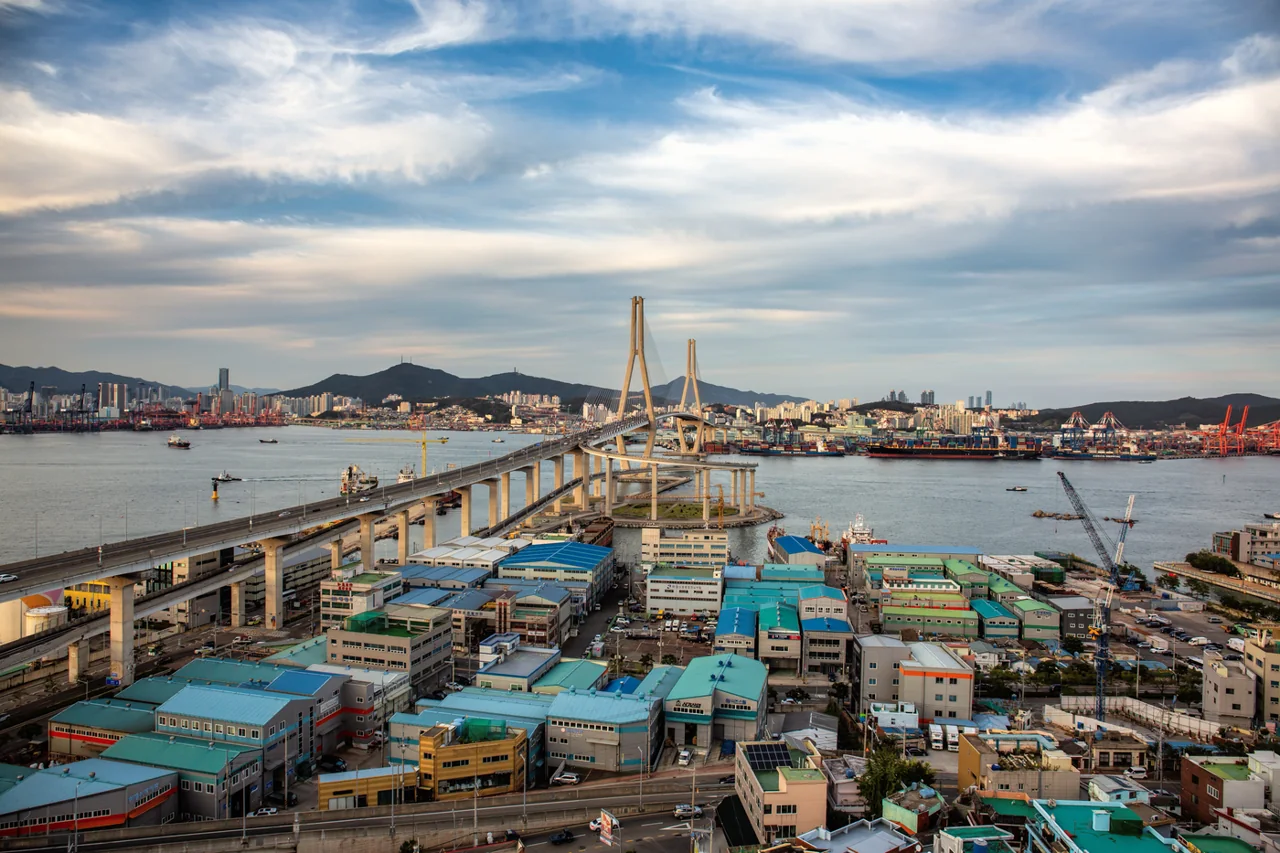
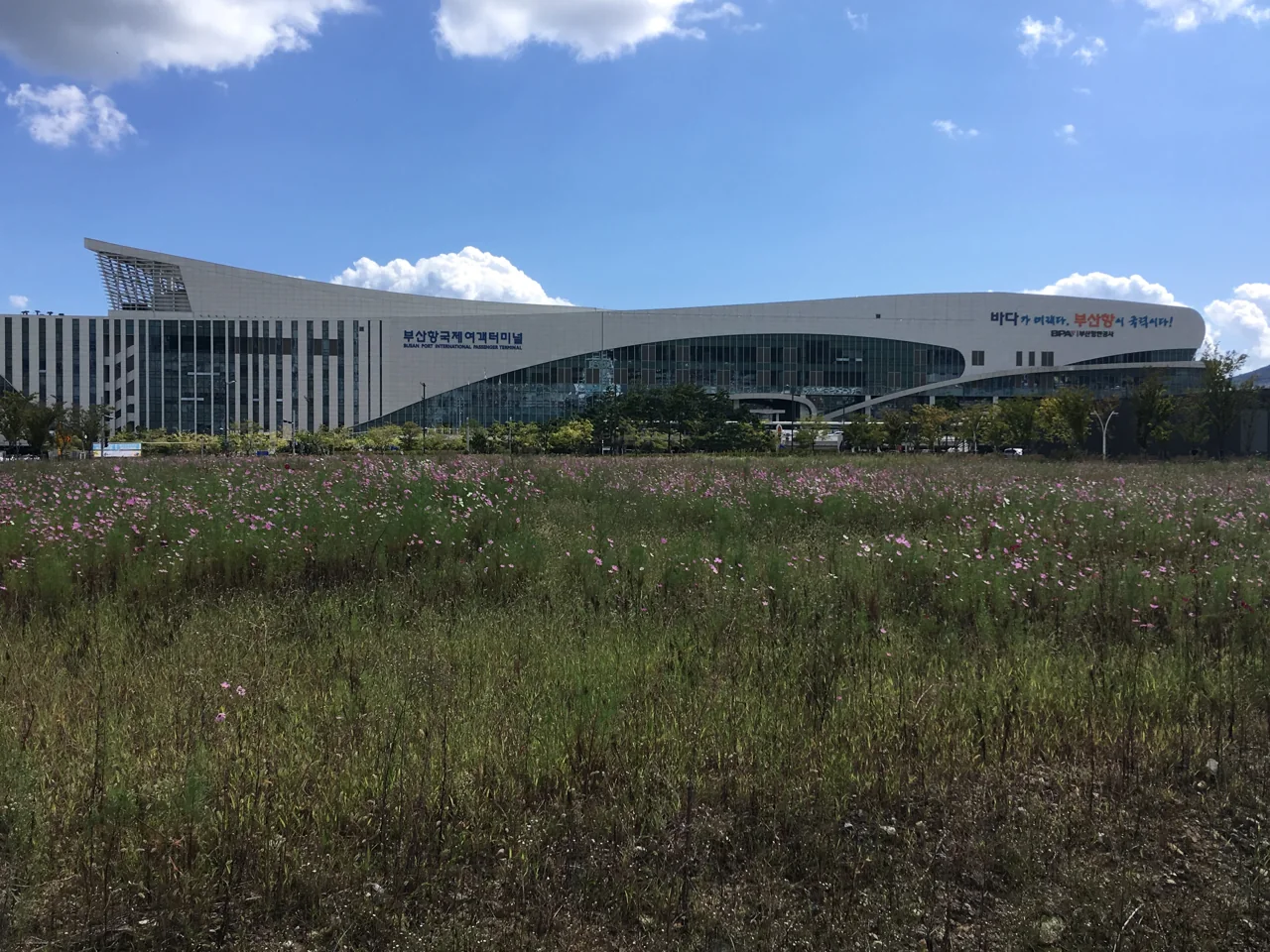
PanStar’s ticket counter is on the third floor of Busan Port International Passenger TerminalMap at 206 Chungjang-daero, Dong-gu. PanStar’s Busan office on Haegwan-ro in Jung-gu is a separate building, so head straight to the terminal on the day.
Leaving Korea step by step
- Collect your ticket at the PanStar counter on the third floor.
- Check in any hold luggage at the baggage area on the first floor.
- Go through security and emigration, then wait in the departure area.
- Board the ship with your carry-on bags.
Luggage carts aren’t allowed in the departure area, so from security onwards you carry or wheel your own bags.
Getting to the terminal
From Busan Station, a moving walkway and the Busan Port pedestrian deck take you to the terminal on foot. Busan Port Authority’s terminal access guide describes each route.
| Starting from | Route | Time |
|---|---|---|
| Busan Station (train) | Station building exit 10, moving walkway, Busan Port pedestrian deck, terminal | About 10 to 15 min |
| Busan Station (Metro Line 1) | Exit 6, station building exit 10, moving walkway, pedestrian deck | About 20 min |
| Choryang Station | Exit 6, First Underpass intersection, crossing on Chungjang-daero | About 20 min |
| Gimhae Airport (public transport) | Light rail to Sasang, Line 2 to Seomyeon, Line 1 to Busan Station, pedestrian deck | About 70 min |
| Gimhae Airport (car) | By road | About 30 min |
From Gimhae Airport by public transport you change trains twice before Busan Station; our Gimhae Airport to Busan guide walks through each change.
| City bus | Main stops | Fare by transit card |
|---|---|---|
| 5-1 | Centum City, Seomyeon, Jagalchi | 1,550 won |
| 42 | Suyeong Station, Kyungsung Univ.·Pukyong Nat’l Univ. Station | 1,550 won |
| 172 | Myeongji, Sinpyeong Station | 1,550 won |
| 1004 | Gimhae, Seomyeon, Busan Station (every 30 minutes or more) | 2,100 won |
Bus fares above are adult fares with a transit card; see our Busan transit card guide and the wider guide to getting around Busan.
Inside the terminal
Opening hours inside the terminal shift with the ship’s schedule, so treat the hours below as a guide.
| Floor | Service | Hours |
|---|---|---|
| 2F | Busan Bank (currency exchange) | Varies |
| 2F | Zimcarry luggage storage | 10:00 to 19:00 |
| 2F | 7-Eleven, Busan City tourist information, baby room, café | Varies |
| 3F | Food court, 7-Eleven | Varies |
| 3F | Saebusan Pharmacy | 08:00 to 18:00 |
| 3F, past emigration | Busan Duty Free (alcohol, tobacco, cosmetics and more); pickup counters for Lotte, Shinsegae and Shilla duty free | Varies |
The terminal’s roaming centre has closed, so sort out your phone plan with your own carrier before you arrive. Busan Bank also has a foreign currency ATM in the terminal, open from 06:00 to 22:00; for changing money before you go, see our guide to money in Korea.
Goods bought at a downtown or online duty-free shop in Busan are collected from the pickup counters at the end of the departure area. Orders from PanStar’s own online duty-free shop are the exception: you receive them after boarding, at the ship’s duty-free shop.
Time to spare before boarding
If you reach the area early, Choryang Ibagu-gil is a short walk from Busan Station. If you’re staying in Busan the night before, our guide to where to stay in Busan compares the neighbourhoods, and the rooms below are close to Busan Station.
9. Facilities on board
Most public areas are on decks 5 and 7, with the Solarium up on deck 8, and the information desk is on deck 5. PanStar’s facilities page describes each one.
Where everything is
| Facility | Deck | Details |
|---|---|---|
| VIP Lounge | 7 | Suite guests only |
| Mu Gung Hwa & Cherry Blossoms | 7 | Dining area for Royal Suite guests and above |
| Yume | 7 | Restaurant for suite guests only |
| Mascarade | 7 | Main restaurant, also the show venue |
| Bada | 5 | Sushi bar |
| Pocha | 7 | Outdoor Korean street-bar with light snacks |
| Hyeon Hae Tan | 7 | Outdoor infinity pool facing the sea |
| Solarium | 8 | Sky garden and jogging track |
| Sauna | 5 | Free for suite guests, 10,000 won per person for everyone else |
| Spa & Therapy | 5 | Paid treatments, pay on the spot |
| GX Room | 5 | Yoga 06:30 to 07:10, Zumba 17:00 to 17:30 |
| Duty Free & CVS | 5 | Convenience store prices are the same as on land |
| Casino & Game Bar | 5 | Games and amusements |
| Kids Club | 5 | Toys and play mats |
| Symposium | 5 | Meeting room |
Smoking is allowed only in the designated area under the outdoor stairs at the back of deck 5.
Pool, sauna and evening shows
The pool is often closed on the Osaka route. In the ship’s first year PanStar announced that the pool would be suspended on its Osaka sailings and open only on a limited basis during its one-night cruises around Busan. Reviewers mention finding it shut in rough seas and shut in November, and others found it open for about two hours in the evening.
The sauna has shampoo, conditioner and body wash, but you bring the towel from your cabin. Many reviewers like the sea view from the sauna, and a few found the bath lukewarm.
Shows and events on board are free. Reviewers describe about an hour of magic, a live band and singing at around 8 pm. Some also found parts of the ship not in use, such as the game machines in the kids’ club, the LP corner and the nail salon.
Wifi and phone signal
PanStar says the ship offers high-speed wifi by satellite. Reviewers say it was free, weak inside the cabins and prone to dropping out now and then. Phones stay on Korean networks until around Tsushima and switch to Japanese networks after that, according to reviews.
Paying on board
Payment on board is mostly by card or PanStar Pay, the ship’s mobile payment, and cash is hard to use. The duty-free shop is the exception: it takes won, yen and US dollars in cash as well as cards. You must be 19 or older to buy alcohol or tobacco.
Packing for the cabin
Cabins have no disposable toothbrushes or toothpaste, because of Korean regulations, so pack your own or buy them at the convenience store on board. Reviewers mention one towel per person, and slippers that aren’t to be worn outside the cabin.
Suites have an in-room safe, while Inside and Ocean View cabins only have a lockable wardrobe. Pets can’t travel on the ship.
10. Meals on board
Dinner and breakfast are buffets with salad, Korean, Western and Japanese dishes, and fruit.
What’s on the buffet
Dishes mentioned in reviews include samgyeopsal (grilled pork belly), jokbal (braised pig’s trotters), jeyuk bokkeum (spicy stir-fried pork), Korean snack food such as fish cakes and rice cakes, and tonkotsu ramen. Reviewers also mention janchi guksu, a light noodle soup, put out as a late-night snack.
Complaints that come up: the food is lukewarm, a lot of the fruit is frozen, and the buffet has no raw fish. For sushi, there’s the separate Bada sushi bar listed in the facilities table.
Lanyards and seating by cabin class
Many reviewers say passengers wear a lanyard whose colour shows their cabin class: light blue for Inside and Ocean View, orange for Balcony Suites and above. Window seats and the order in which guests eat depend on class, and several reviews say suite and Ocean View guests start first, with Inside guests about an hour later.
Suite guests also have their own restaurants, listed in the facilities table above.
Drinks and bringing your own food
Japanese reviewers find drinks on board pricey and the choice small, and some suggest bringing your own canned beer.
PanStar’s guidance on outside food doesn’t agree with itself. The Korean FAQ allows food you’ll finish before you get off, the package tour notes ban outside food, and the Japanese FAQ allows drinks only. If you plan to bring food, ask PanStar when you book. One reviewer also had to throw away a half-finished coffee at the security check in Busan.
11. Bridges and views along the route
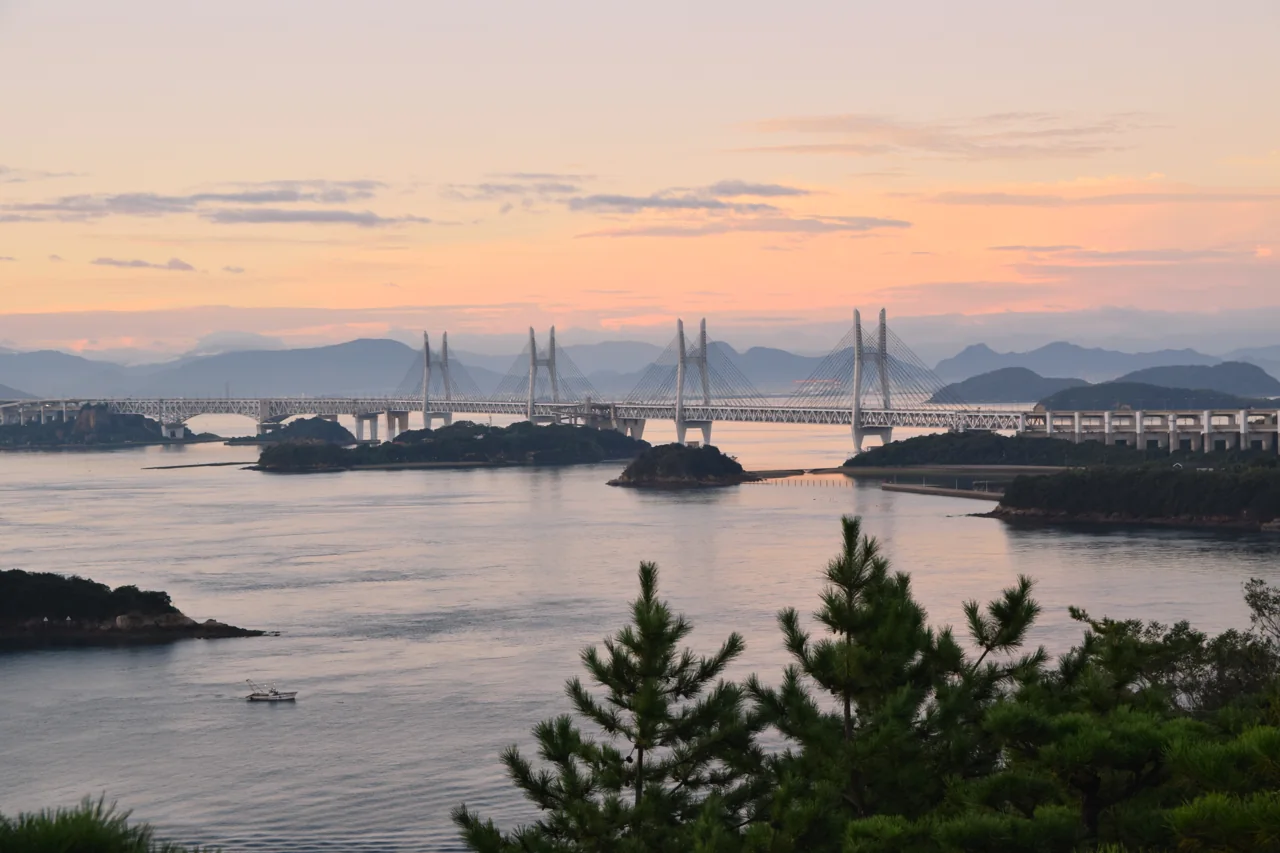
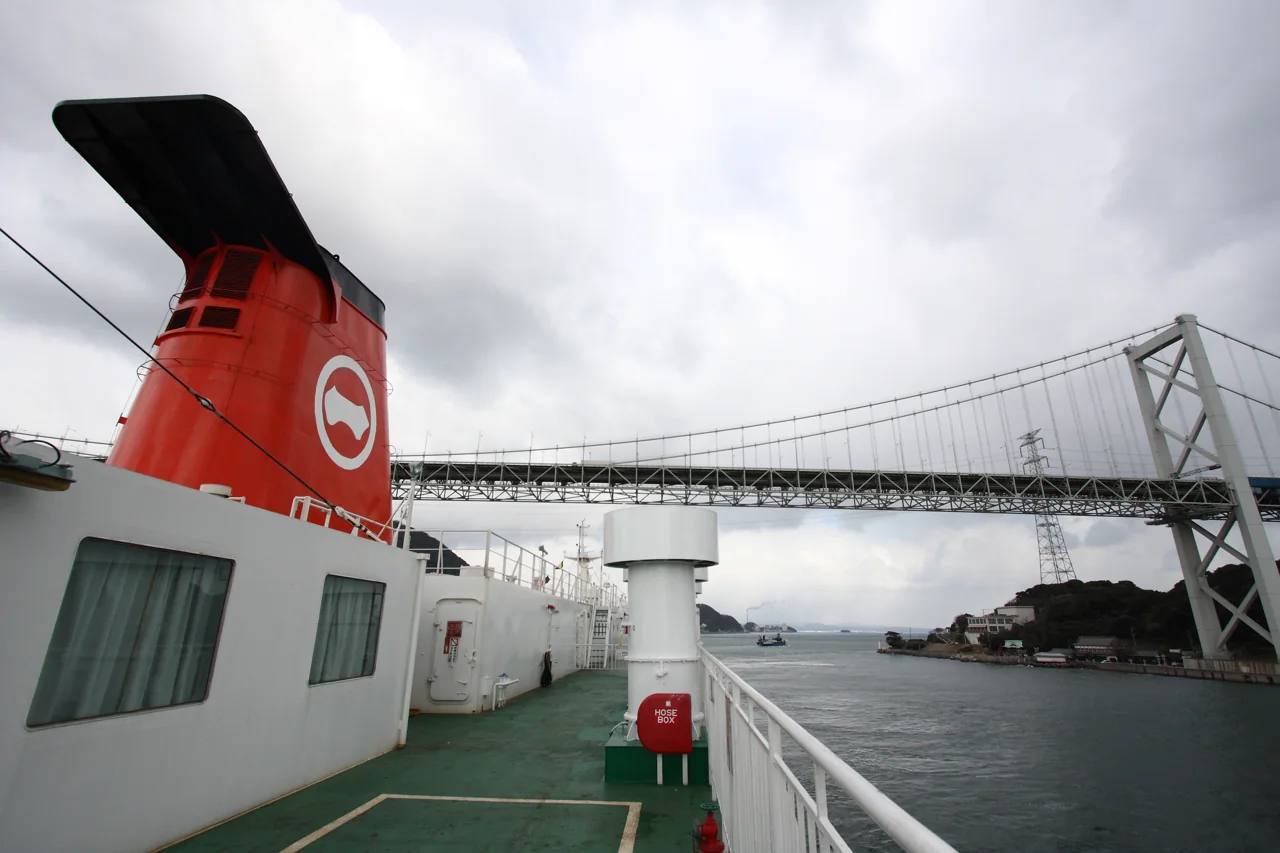
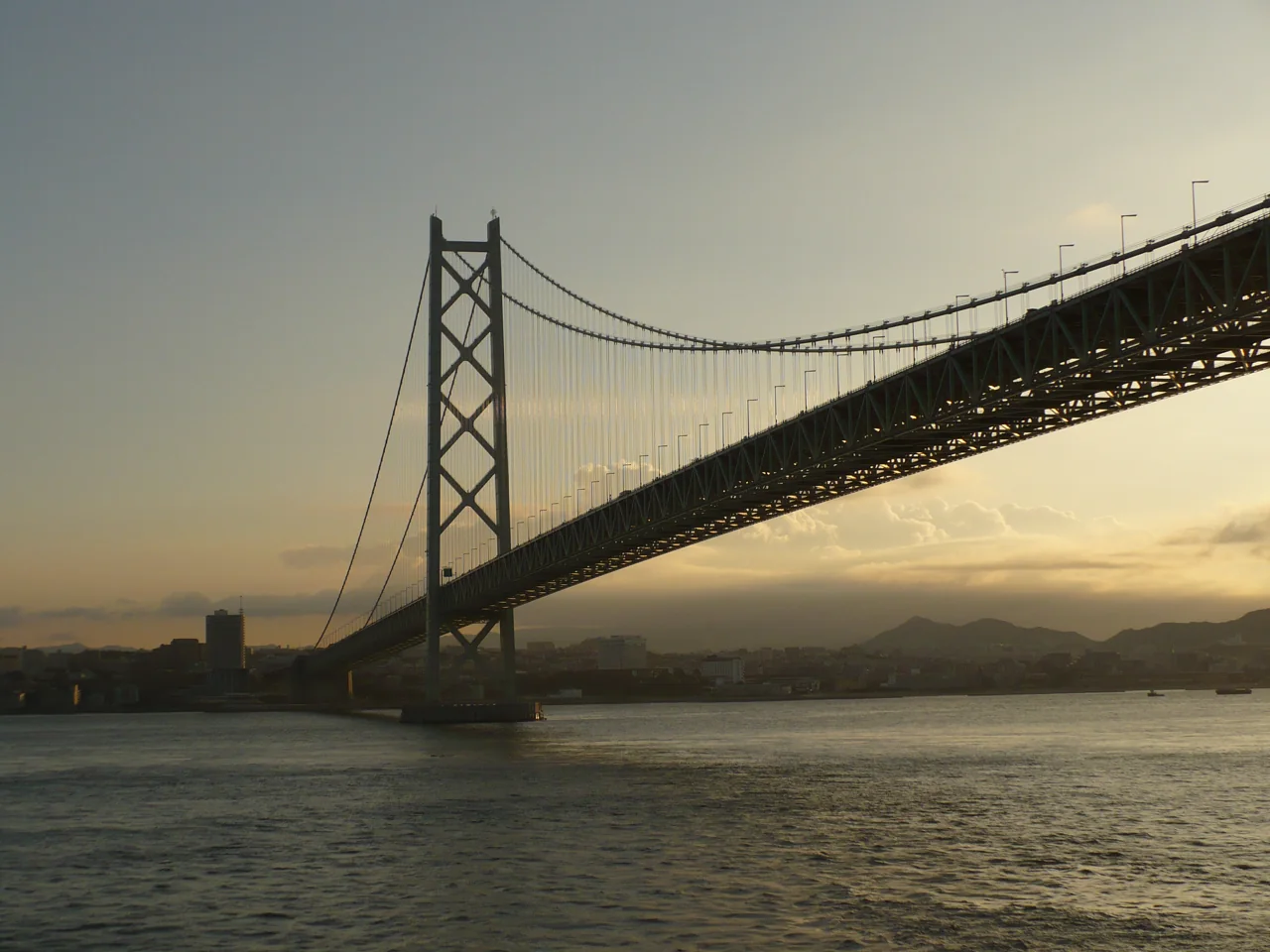
Between Busan and Osaka the ship passes Tsushima, sails under Kanmon BridgeMap, and continues through the Seto Inland Sea under Seto-Ohashi BridgeMap and Akashi-Kaikyo BridgeMap.
Expected times
| Sailing | Kanmon Bridge | Seto-Ohashi Bridge | Akashi-Kaikyo Bridge | Docks |
|---|---|---|---|---|
| Busan to Osaka (Sunday) | 20:00 | 03:30 next day | 07:00 next day | 08:30 |
| Busan to Osaka (Tuesday, Thursday) | 21:30 | 05:00 next day | 08:30 next day | 09:00 |
| Osaka to Busan (Monday, Wednesday, Friday) | 04:30 next day | 21:00 | 18:00 | 10:00 next day |
These are PanStar’s expected times, and the company notes that they shift with the weather and conditions in port.
The bridges
| Bridge | What it is |
|---|---|
| Kanmon Bridge | 1,068 m long, linking Honshu and Kyushu |
| Seto-Ohashi Bridge | A chain of bridges carrying both a road and a railway |
| Kurushima-Kaikyo Bridge | Three suspension bridges joined end to end |
| Akashi-Kaikyo Bridge | Suspension bridge, 3,911 m long |
The Kurushima-Kaikyo Bridge isn’t on PanStar’s table, but according to the Honshu-Shikoku Bridge Expressway company, ships taking the middle of the Seto Inland Sea have to pass through its strait. Reviewers sailing from Osaka passed it around 10:30 pm, and on the sailings from Busan it comes in the middle of the night.
Which bridges you’ll see in daylight
Checked against sunrise and sunset times in the nearest city to each bridge, the sailings from Busan pass the Akashi-Kaikyo Bridge in daylight for almost the whole year, though the Sunday sailing reaches it around sunrise from mid-December through January. The Seto-Ohashi Bridge comes around sunrise on the Tuesday and Thursday sailings from May to August only, and always in darkness on the Sunday sailing. Kanmon Bridge is usually dark by the time a Busan sailing gets there, but from mid-June to early July the Sunday sailing passes it about half an hour after sunset, while the sky still holds a little light.
Sailing from Osaka, you pass the Akashi-Kaikyo Bridge in daylight only from mid-March to mid-September. The rest of the year you see it lit up, from sunset until 11 pm, or midnight on weekends and holidays; the Akashi-Kaikyo Bridge illumination page has the schedule. On this sailing the Seto-Ohashi Bridge comes after dark and Kanmon Bridge before dawn, and the Seto-Ohashi and Kurushima-Kaikyo bridges are lit up only on set days.
Reviewers say there’s an announcement before each bridge, except in the middle of the night.
12. Seasickness and the rough stretch of the route
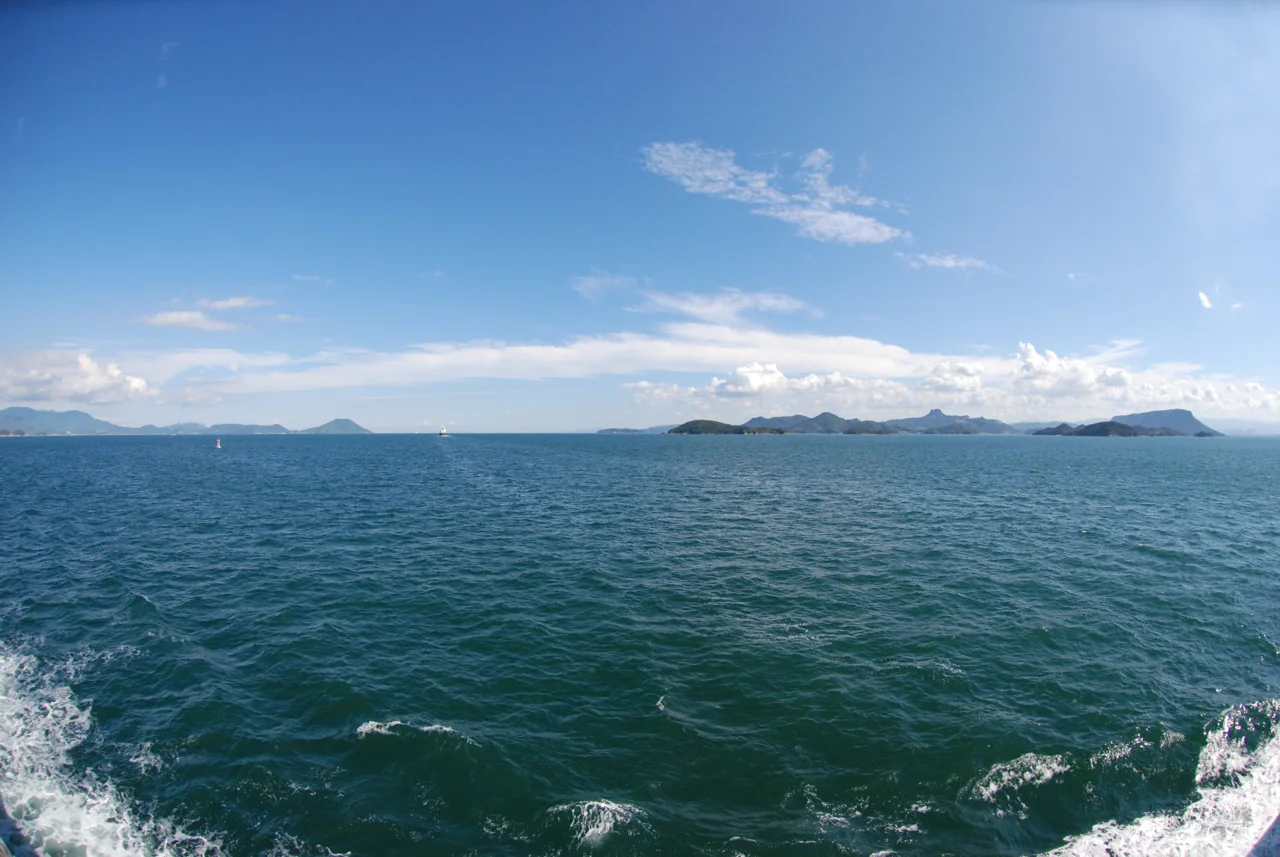
The rough part of the route is the open sea between Busan, Tsushima and the coast of Kyushu, known as the Korea Strait, and reviews agree on this almost without exception.
The Seto Inland Sea is enclosed by islands and land, so its waves stay low, as a Japanese cruise line’s guidance explains.
When the ship moves most
Sailing from Busan, expect the rolling soon after departure, around dinner time. Sailing from Osaka, it comes the next morning as the ship approaches Busan.
The Miracle is fitted with fin stabilisers to reduce rolling. Reviewers’ experiences still vary: one took seasickness tablets and spent the evening in the cabin anyway, one who is usually prone to seasickness was fine, one got tablets from the ship’s medical room, and one found the sailing home during typhoon season rougher.
Getting ready
Saebusan Pharmacy on the third floor of the Busan terminal sells seasickness medicine, so you can pick some up after collecting your ticket.
Seasickness tip: From Busan, the rough water comes in the first hours of the trip, so take your medicine before the ship leaves port instead of waiting until you feel unwell. From Osaka, take it before breakfast on the morning you reach Busan.
13. Luggage allowance and banned items
Carry-on bags are free with no limit on the number of pieces, as long as each one stays within the size and weight limits in PanStar’s baggage rules.
Luggage rules
| Type | Rule |
|---|---|
| Carry-on | Free, with no limit on pieces, if the three sides add up to 200 cm or less and the bag weighs 30 kg or less |
| Checked bags from Busan | 10,000 won up to 20 kg, then 5,000 won for every extra 5 kg |
| Checked bags from Osaka | Per person, total weight: ¥1,000 up to 20 kg, ¥1,500 up to 25 kg, ¥2,000 up to 30 kg |
| Power banks and devices with lithium batteries | Lithium batteries up to 100 Wh, other batteries up to 160 Wh, nothing over 160 Wh, and no more than five per person. Keep them on you or in a seat pocket, never inside a suitcase (checked or carried). Power banks stay unplugged from your devices and can’t be charged or used on board |
| Banned | Dangerous goods, live animals, electric bikes, e-scooters and other lithium-battery mobility devices, and alcohol of 70% or stronger |
If your power bank is rated over 100 Wh, ask PanStar before you pack it. The suitcase rule covers laptops, cameras and other devices with lithium batteries too, so keep them with you rather than packed in a suitcase.
How strict it is in practice
Reviewers say carry-on bags weren’t weighed, and many say the luggage allowance is the reason they chose the ship, especially with shopping to bring home. If you’re planning a big shop, our Busan shopping guide is a good place to start.
You can’t send luggage on the ship without travelling with it yourself.
Bicycles have their own fees, covered in the section on vehicles and bikes.
14. Arriving in Japan at Osaka Port
Passport holders from the US, UK, Canada, Australia and many other countries can visit Japan visa-free for up to 90 days.
From the ship to the street
PanStar’s arrival procedure page sets out the order.
- Take the bus from the ship to the terminal, then the escalator up to the arrivals hall on the second floor.
- Go through immigration with your passport and arrival card.
- Have your hand luggage inspected at customs.
- Collect any checked bags.
- Hand in your paper customs declaration at the customs desk, then walk out.
Customs declaration and Visit Japan Web
Every arriving passenger fills in a paper customs declaration. Japan’s electronic customs gates are only at seven airports (New Chitose, Narita, Haneda, Chubu, Kansai, Fukuoka and Naha), and there are none at Osaka Port, according to Japan Customs.
For immigration you can fill in a paper arrival card or register in advance on Visit Japan Web, which is optional. One reviewer who registered on Visit Japan Web was told it only covered immigration and still had to fill in the paper customs form.
Food you can’t bring into Japan
Leave meat snacks behind. Jerky, ham, sausages, bacon, meat-filled dumplings and anything else made from meat can’t enter Japan without an inspection certificate, even as a gift or for your own use. Breaking the rule can bring a heavy fine of up to ¥3 million or a prison sentence. The Animal Quarantine Service page lists what’s covered.
Plant rules are strict too. Pears and apples from Korea can’t come in at all, other fruit such as citrus, persimmons and strawberries needs an inspection certificate from the Korean government, and soil is banned from every country. One reviewer who brought rice was told to have it checked by quarantine.
How long it takes to get out
PanStar’s Japanese FAQ says passengers start leaving the ship 30 minutes to an hour after it docks, and reviews describe much the same wait. Suite guests get priority disembarkation as an official perk, and reviewers say the higher cabin classes go first in general and mention a single shuttle bus between the ship and the terminal. The bus, immigration and customs all come after that wait, so plan your first stop in the city for an hour and a half to two hours after the docking time.
15. From Osaka Port into the city
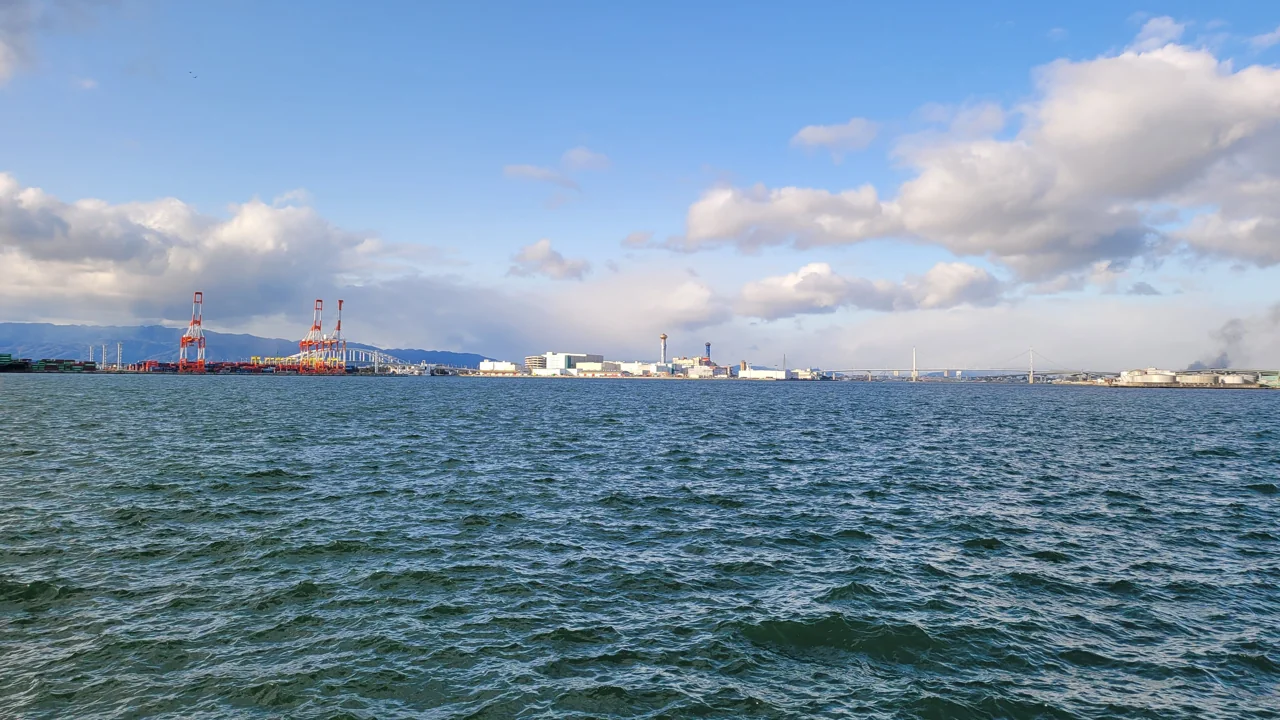
The ship docks at Osaka Port International Ferry TerminalMap, 1-20-52 Nankokita, Suminoe-ku, in the Cosmosquare area of Osaka’s Nanko waterfront.
The nearest station is Cosmosquare StationMap, on the Osaka Metro Chuo Line and the New Tram Nanko Port Town Line. Despite its name, Osakako Station is a different stop, one further along the Chuo Line.
Walking or taking the shuttle
The walk to Cosmosquare Station takes about 15 minutes, according to PanStar’s Japanese site. Reviewers warn that the route has no shade, which makes it a hot walk in summer.
On arrival days the shuttle bus has no timetable; its departure is announced while you’re going through immigration. With light bags, walking saves you waiting for it.
Trains from Cosmosquare
| Destination | Route | Time (approx.) | Fare |
|---|---|---|---|
| Namba | Chuo Line, change at Awaza to the Sennichimae Line | About 23 min | ¥290 |
| Umeda | Chuo Line, change at Hommachi to the Midosuji Line | About 30 min | ¥290 |
| Shin-Osaka (shinkansen) | Chuo Line, change at Hommachi to the Midosuji Line | About 37 min | ¥340 |
| Universal Studios Japan | Chuo Line, change at Bentencho to JR, change at Nishikujo to the Yumesaki Line | About 30 min | ¥420 |
| Kyoto Station | Chuo Line, change at Bentencho to JR, Special Rapid Service from Osaka Station | About 1 h | ¥1,080 |
| Kansai Airport | Chuo Line, change at Bentencho to the JR Kansai Airport Rapid | About 1 h 25 min | ¥1,420 |
Times are counted from Cosmosquare Station, so add the walk or shuttle and the time spent in immigration. The fares to Namba, Umeda and Shin-Osaka, which stay on the Metro, match Osaka Metro’s fare table; the other routes include a JR section.
To Universal Studios Japan by boat
For a different route to Universal Studios Japan, take the Chuo Line one stop to Osakako Station and walk about 10 minutes to the Captain Line pierMap on the west side of the Kaiyukan. The boat reaches Universal City Port in about 10 minutes for ¥900 per adult one way (¥1,100 on special fare days), and it doesn’t sail in bad weather, so check Captain Line’s website before you go.
Lockers and supplies
PanStar’s Japanese FAQ says the terminal itself only has vending machines for drinks and frozen food and a microwave, plus free wifi on the third floor. The nearest convenience store is close to the station.
For bags, use the coin lockers at Cosmosquare Station, listed on Osaka Metro’s Cosmosquare Station guide. Reviewers put them at ¥300 to ¥700 depending on size, cash only; treat those as reviewers’ figures.
16. Sailing back from Osaka to Busan
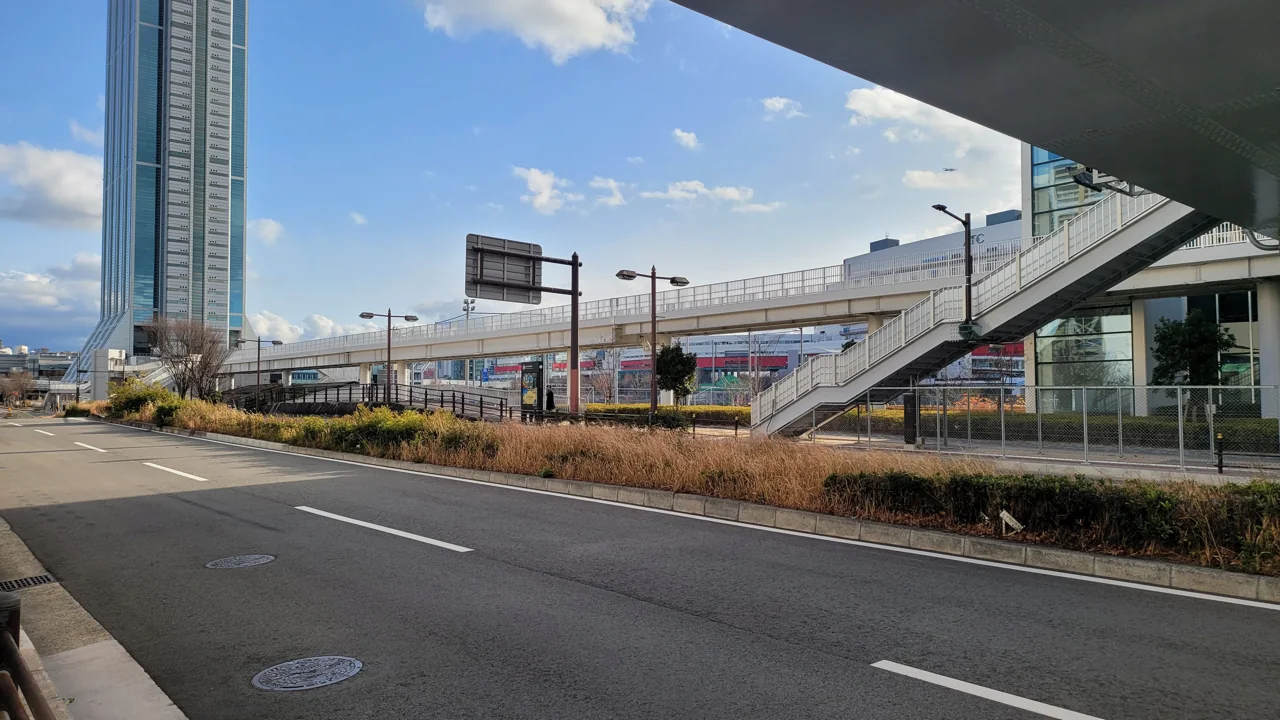
At the Osaka terminal, the PanStar ticket counter is on the first floor. After collecting your ticket and checking any bags, you clear emigration in the first-floor departure hall, and a bus takes you out to the ship. The ticketing opening time and deadline are in the timetable section.
Getting to the Osaka terminal
On sailing days a shuttle bus runs to the terminal at fixed times from bus stop No. 2 in front of Cosmosquare Station, above the station’s exit 2.
| Shuttle stop | Departures | Ride |
|---|---|---|
| Bus stop No. 2, Cosmosquare Station (Monday, Wednesday, Friday) | 14:10, 14:30, 14:50, 15:10 | About 5 min |
To be at the terminal when the ticket window opens, take the 14:50 shuttle at the latest. The final shuttle at 15:10 still reaches the terminal well before ticketing closes.
The terminal only has a drop-off area for people seeing passengers off. If you’re driving yourself, use one of the paid car parks nearby.
Sailings from Osaka carry their own surcharge, port fee and departure tax, listed in the section on costs on top of the fare.
Arriving in Busan
After docking in Busan you leave the ship for the arrivals hall and go through quarantine, immigration and a customs check of your hand luggage. Then you collect any checked bags and head out past the customs desk, where you hand in a declaration only if you have something to declare.
Foreign passengers can use either a paper arrival card, handed out on the ship and in the terminal, or the online e-Arrival card, according to a PanStar notice. If your nationality enters Korea visa-free, check whether you need a K-ETA before you travel.
Japanese reviewers of the Miracle say getting through entry in Busan took about 15 minutes.
From the terminal you can walk back to Busan Station along the pedestrian deck and carry on by KTX train to Seoul.
17. Taking a car, motorbike or bicycle
PanStar carries cars and motorbikes only for owners of vehicles registered in Korea or Japan, travelling with the vehicle in their own name, so this doesn’t apply to most visitors.
Cars and motorbikes
Vehicles are booked as a return trip only and for tourism only, with a set of customs documents prepared well before departure. A motorbike leaving from Korea must be registered in Korea and have an engine of 125cc or more. Japanese-registered bikes travel under the scheme for vehicles leaving from Japan, where the engine must be over 125cc. The full rules and fares are on PanStar’s vehicle page.
Bicycles
Bicycles can travel as checked luggage for a fee.
| Bicycle | From Busan | From Osaka |
|---|---|---|
| Standard | 40,000 won | ¥4,000 |
| Folding | 20,000 won | ¥2,000 |
One of PanStar’s FAQ answers says expensive items such as bicycles can’t be checked in and are kept in a suite cabin instead, so confirm with PanStar how your bike will travel when you book.
E-bikes count as lithium-battery mobility devices, which the luggage rules ban, so this only works for pedal bikes.
PanStar has also posted a notice about Japan’s system of fines for cycling offences, so read up on Japan’s cycling rules before you ride.
18. Cancellations, refunds, and ferry or flight
Cancellation fees depend on how close to departure you cancel and whether your ticket was full fare or discounted, as set out in PanStar’s price list and terms.
Cancellation fees and date changes
| When you cancel | Fee on a full-fare ticket |
|---|---|
| After payment, up to 3 days before departure | None |
| 2 days before | 10% |
| 1 day before | 30% |
| Departure day, up to 2 hours before sailing | 50% |
| From 2 hours before sailing | No refund |
| When you cancel | Fee on a discounted ticket |
|---|---|
| From 24 hours after payment to 7 days before departure | 30% |
| 6 days to 1 day before | 50% |
| Departure day | No refund |
On a return booking you can’t cancel the outbound sailing on its own, though the return sailing can be cancelled separately for the usual fee. A ticket for a sailing you missed can’t be used later.
| Ticket | Date change fee per person, per sailing |
|---|---|
| Full fare, bought on PanStar’s website | First change free, then 10,000 won (¥1,000) |
| Discounted | 20,000 won (¥2,000) |
Moving to a peak-season date can add a surcharge even on the free change. Tickets bought through a reseller follow that reseller’s own change rules.
If the sailing is cancelled
PanStar says sailings are rarely cancelled unless the port itself closes, and its notices and reviews show the ship sailing as normal even with typhoons around.
| What happens | What you get back |
|---|---|
| Cancelled for weather, or for a breakdown PanStar isn’t responsible for | Full refund, no other compensation |
| Cancelled because of a breakdown or accident PanStar is responsible for | Full refund plus 30% of the fare |
| Late by half the normal sailing time or more, for the same reason | An extra 10% refund |
| Late by the full normal sailing time or more (the trip takes twice as long), for the same reason | An extra 30% refund |
Cancellations go up on PanStar’s notice board, and PanStar also contacts the person who made each booking. In the new ship’s first autumn on the route, damage that PanStar believes was caused by an object floating in the sea meant a part had to be replaced; only the German manufacturer makes that part, so the ship was out of service for more than a month. The last scheduled maintenance took it off the route for a month from mid-February. Planned maintenance and temporary suspensions are posted on the notice board first.
Reviews show why it’s worth watching the notices yourself. One traveller first heard of a cancellation from the duty-free pickup counter, before PanStar’s text message arrived, and another was told the night before. When a sailing from Osaka was cancelled, one reviewer says PanStar paid for two hotel nights and meals. Give accurate contact details when you book, and check the notices the day before and on the day.
Ferry or flight
Jeju Air, Jin Air, Air Busan, Trinity Airways (formerly T’way Air) and Eastar Jet fly direct from Gimhae to Kansai, while Korean Air and Asiana don’t fly this route. Airfares change a lot from date to date; Gimhae Airport’s route page (in Korean) lists the flights.
| PanStar Miracle | Direct flight, Gimhae to Kansai | |
|---|---|---|
| How often | Three sailings a week each way | More than 10 flights a day |
| Time on the way | About 17 hours, overnight | 1 h 25 min to 1 h 35 min scheduled |
| Included | Bed, dinner and breakfast | Depends on the airline |
| Luggage | Generous carry-on allowance, no limit on pieces | Airline allowance |
| Into central Osaka | Metro from Cosmosquare | Nankai Rapi:t to Namba in about 38 min, ¥970 plus a ¥700 limited express ticket (Regular Seat) |
| Busan end | Terminal within walking distance of Busan Station | Gimhae Airport |
The Rapi:t timetable and seat types are on Nankai’s website.
The ship suits travellers with children or older relatives, people who’d rather not fly, anyone carrying a lot of shopping, and travellers crossing from Korea into Japan who’d like the night’s accommodation taken care of on the way. It suits people who get badly seasick less well, and it’s risky on a short trip with fixed dates, because there’s no backup ship if a sailing is cancelled. If the sailing days don’t line up with the Osaka stay you want, flying is simpler.
Some reviewers fly one way and take the ship the other, using the luggage allowance for their shopping on the way home. If you’re starting from Seoul, a flight from Gimpo Airport to Kansai is quicker.
Other ferries from Busan to Japan
Busan also has ferries to Fukuoka, Shimonoseki and Tsushima: see our guides to the New Camellia ferry to Fukuoka, the Bukwan Ferry to Shimonoseki and the ferry to Tsushima. From Fukuoka, or from Shin-Shimonoseki Station on the Shimonoseki side, you can carry on to Osaka by shinkansen.
🎡Things to Do49
🍜Food7
🏨Where to Stay3
🚇Getting Around9
🧭Travel Tips14
📌More3
🧭All-Korea essentials51
Busan to Osaka ferry: frequently asked questions
Images: Wikimedia Commons: Raita Futo (CC BY 2.0), Christophe95 (CC BY-SA 4.0), Gohachiyasu1214 (CC BY-SA 4.0), buzzhiro (CC BY 3.0), Maarten Heerlien (CC BY 2.0), Aspere (CC0). Busan Tourism Archive: 써머트리, 정민규 / Busan Metropolitan City Tourism Policy Division (KOGL Type 1).