
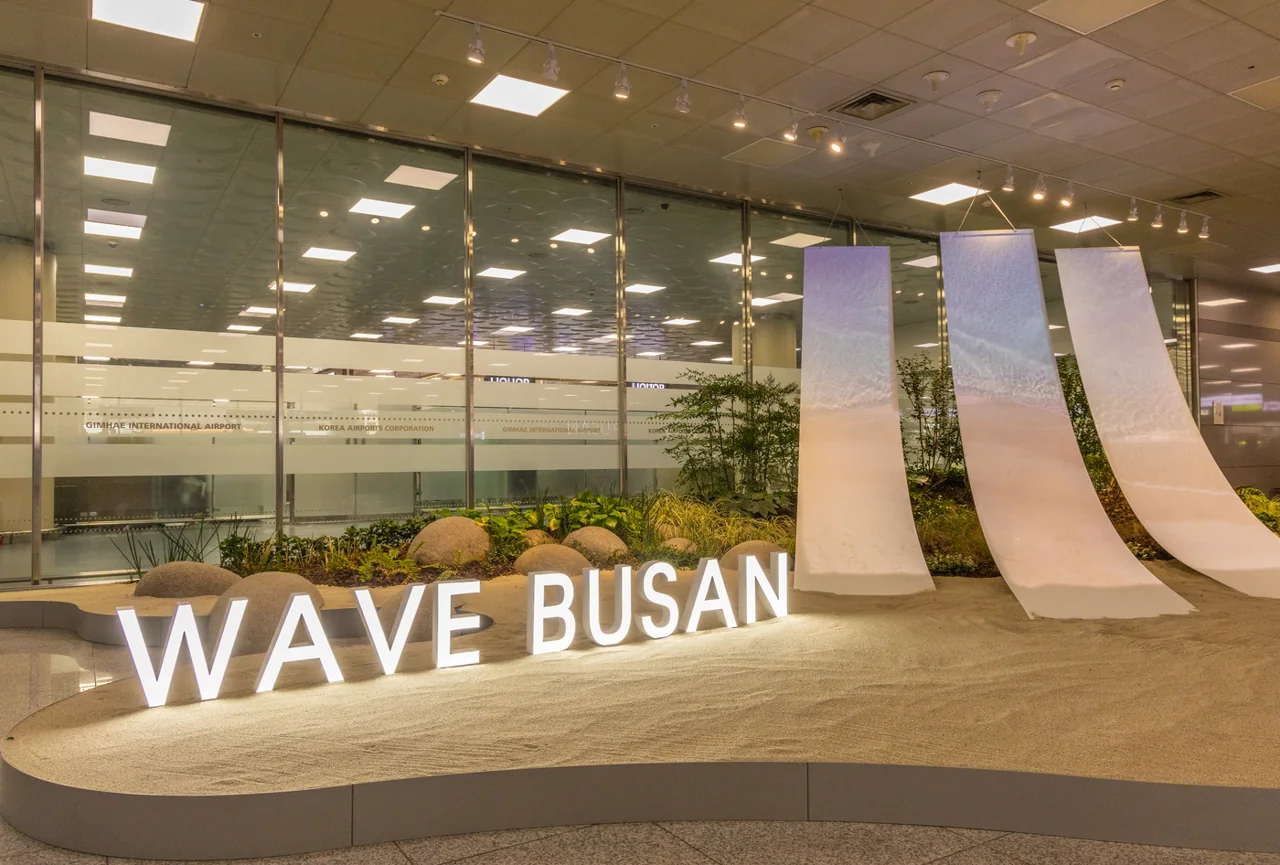
Gimhae Airport Guide for Busan: Arrival, Departure, Duty Free, Tax Refund, Lounges and Parking
What to expect at Busan’s airport, from immigration and mobile data on arrival to check-in times, tax refunds, duty free and lounges when you leave.
| How early should I get to Gimhae for an international flight? | Two hours is the official advice; allow 2.5 to 3 hours if you drive, fly at the weekend or leave between 6 am and 9 am. |
|---|---|
| Can flights land late at night? | No take-offs or landings are allowed from 11 pm to 6 am, so a badly delayed late flight can end up at another airport. |
| Are domestic and international flights in one building? | They use two separate terminals, linked by a free shuttle bus every 12 minutes. |
| When does duty free open? | The shops in departures open at 6:30 am, so a 7 am flight leaves almost no time to shop. |
| Where do I claim a tax refund? | At the refund desk inside the departure area on 2F of the International Terminal, after security and emigration. |
| Can I spend the night at the airport? | Nothing stays open overnight, so book a hotel in Gangseo-gu by the airport or around Sasang Station. |
1. Gimhae International Airport at a glance
2. No flights between 11 pm and 6 am, and how the day runs
3. Where you can fly from Gimhae: countries, cities and airlines
4. The two terminal buildings and what is on each floor
5. Parking at Gimhae Airport for pick-ups and rental cars
6. How early to get to Gimhae Airport
7. Departure step by step: check-in, security and emigration
8. Duty free shops and the tax refund desk
9. Lounges at Gimhae and who can use them
10. Food, cafés and services in the terminals
11. Arriving at Gimhae: entry, customs, data and money
12. Getting into Busan, and sleeping near the airport
13. Connections at Gimhae and the Korean Air flight via Incheon
14. Airline name changes and the new Gadeokdo airport
15. Common mistakes at Gimhae Airport
16. Other ways to reach Busan without a direct flight
1. Gimhae International Airport at a glance
Gimhae International Airport is the airport for Busan. Its code on tickets and bag tags is PUS, and its ICAO code is RKPK. The address is 108 Gonghang-jinip-ro, Gangseo-gu, Busan, about 12 km west of Busan City Hall. The Korea Airports Corporation (KAC) runs the terminals and keeps an English version of the official Gimhae Airport site.
Gimhae Airport in brief
- Codes: PUS (IATA) and RKPK (ICAO)
- Two separate passenger buildings: the International Terminal and the Domestic Terminal
- No take-offs or landings from 11 pm to 6 am
- International flights to Japan, Vietnam, Taiwan, China, the Philippines, Thailand and other Asian cities; no direct flights to Europe or the Americas
- Domestic flights to Jeju and Gimpo (Seoul), plus a Korean Air flight to Incheon that only carries passengers connecting to international flights
- KAC customer centre: 1661-2626, 06:00 to 23:00 every day
A civilian and military airport
Gimhae is a joint-use airport. The Ministry of Land, Infrastructure and Transport and the Korean Air Force both use it, and the two runways serve civilian and military flights. Passenger services are all in the two civilian terminal buildings.
More international passengers than domestic
Gimhae carries more international passengers than domestic ones: over the most recent full year, about 10.4 million people flew on international flights and about 6.4 million on domestic flights. At Gimpo in Seoul the balance is the other way round, with domestic flights making up about 80% of passengers.
That is why the International Terminal is the busier building and the one this guide spends most time on. The Domestic Terminal mainly serves flights to Jeju and Seoul.
2. No flights between 11 pm and 6 am, and how the day runs
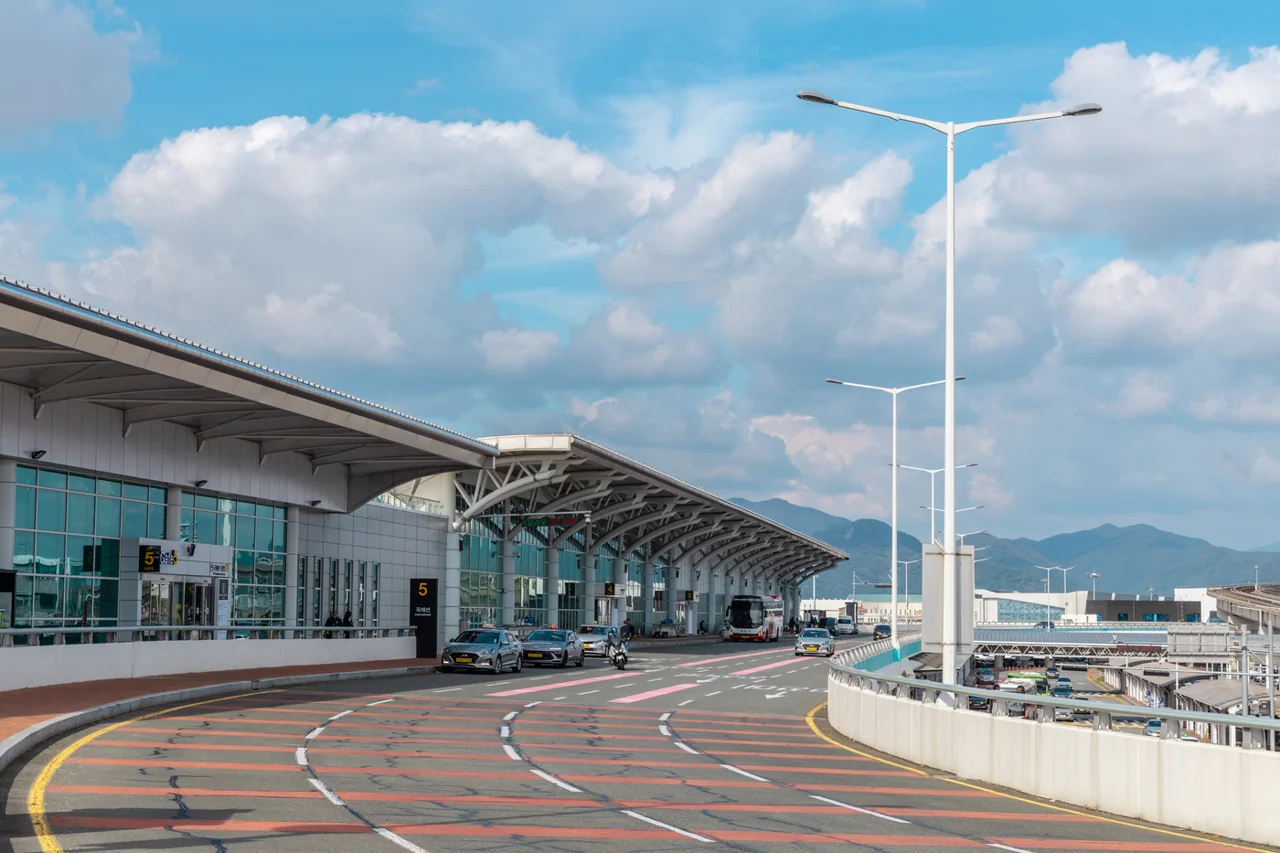
Civil aircraft cannot take off from or land at Gimhae between 11 pm and 6 am. The rule is written into the airport’s entry in the Korean Aeronautical Information Publication (section AD 2.21, noise abatement). This is often called a night curfew. In plain terms, the runway is closed to passenger flights for those seven hours every night.
The closed period used to run from 10 pm to 7 am, so it is now 2 hours shorter than it was. The listed exceptions are emergencies, flights carrying patients who need urgent treatment, state events and flights that must be screened again for security reasons.
Those exceptions are narrow. A flight carrying an emergency patient or needing a second security screening can be considered only if it was scheduled to leave before 11 pm, and only up to 11:30 pm. Operating until midnight can be considered only for passengers stranded by natural events such as heavy snow, heavy rain or strong winds. An ordinary delay does not qualify.
When a late flight runs very late
For an arriving flight, the time that counts is the moment the wheels touch the runway. If a flight cannot make it before the closing time, it lands at another airport such as Incheon. This is rare, but it can happen when a late-evening flight is badly delayed, and in one such case the passengers continued to Busan by bus.
If you are booked on one of the last arrivals of the night and your departure is already delayed, keep an eye on your airline’s messages. Gimpo Airport in Seoul closes at the same hours (see our Gimpo Airport guide), while Incheon and Jeju are open 24 hours.
How a day at Gimhae runs
International departures bunch up in the morning, roughly 7 am to 10 am, when most flights leave for Japan and Taiwan. A second rush comes late in the evening, roughly 9 pm to 10 pm, with flights to Vietnam, the Philippines, Guam, Hong Kong, Taiwan and China. Flights to Bangkok leave earlier in the evening, between 6 pm and 8 pm. Afternoons are quieter. The last international departure leaves at around 10:30 pm, just before the runway closes.
Arrivals start early. The first international flights land at about 6 am, and many arrive during the 6 am hour, mostly overnight flights from Taiwan and Vietnam. The first domestic departure is at about 6:30 am. The airport operator’s hours are 06:00 to 23:00.
Routes and times change twice a year. The summer schedule runs from late March to late October and the winter schedule from late October to late March. Check the route and time on your ticket or on KAC’s live flight information page for Gimhae.
3. Where you can fly from Gimhae: countries, cities and airlines
All of Gimhae’s international routes stay within Asia and the western Pacific. Japan is by far the largest market, followed by Vietnam and Taiwan. The table counts arriving and departing passengers together, using KAC’s route statistics.
| Country | Passengers in 2025 | Share | Main cities |
|---|---|---|---|
| Japan | 3,967,840 | 38.1% | Fukuoka, Osaka Kansai, Tokyo Narita, Sapporo, Okinawa, Nagoya Chubu |
| Vietnam | 2,090,991 | 20.1% | Da Nang, Nha Trang, Hanoi, Ho Chi Minh City, Phu Quoc |
| Taiwan | 1,331,273 | 12.8% | Taipei Taoyuan, Kaohsiung |
| China | 1,062,447 | 10.2% | Shanghai Pudong, Qingdao, Beijing Capital and others |
| Philippines | 645,315 | 6.2% | Cebu, Bohol, Manila, Clark |
| Thailand | 450,887 | 4.3% | Bangkok Suvarnabhumi, Chiang Mai |
| Hong Kong | 266,207 | 2.6% | Hong Kong |
| Singapore | 160,390 | 1.5% | Singapore |
| All international | 10,411,505 | 100% |
It was the first year that Gimhae passed 10 million international passengers, up from 8,947,771 the year before. The three busiest single routes are Taipei Taoyuan, Fukuoka and Osaka Kansai. Each carries a little over 1.1 million passengers a year, and they are very close to one another.
Other cities with departures in the summer schedule include Guam, Macau, Denpasar (Bali), Almaty, Yanji, Zhangjiajie, Shizuoka, Takamatsu, Matsuyama, Kumamoto, Miyakojima, Taichung, Chengdu, Xi’an, Guangzhou, Nanjing, Hangzhou, Guilin, Shenyang and Shijiazhuang. This list changes from season to season.
Coming from further away
There are no direct flights between Gimhae and Europe or the Americas. Travellers from the US, the UK, Europe and Australia reach Busan by connecting at Incheon on the Korean Air transfer-only flight (explained in the section on connections), or by changing planes in Japan or at a Southeast Asian hub.
Domestic routes
Domestic flights from Gimhae go to Jeju and to Gimpo in Seoul. The Incheon route is a special case: it carries only passengers connecting to or from international flights at Incheon, so you cannot use it as an ordinary domestic flight.
| Route | Passengers in 2025 | Flights |
|---|---|---|
| Gimhae to and from Jeju | 3,585,897 | About 28 a day each way in summer |
| Gimhae to and from Gimpo (Seoul) | 2,371,618 | About 18 a day each way in summer |
| Gimhae to and from Incheon | 441,587 | Transfer passengers only |
Airlines at Gimhae
International flights in the summer schedule are flown by Air Busan, Jin Air, Jeju Air, Eastar Jet, Trinity Airways (formerly T’way Air), Korean Air, Vietnam Airlines, VietJet, EVA Air, China Airlines, Starlux, Tigerair Taiwan, HK Express, Singapore Airlines, Philippine Airlines, China Eastern, Shanghai Airlines, Spring Airlines, Air China, China Southern, Loong Air and others.
Domestic flights are flown by Korean Air, Air Busan, Eastar Jet, Jeju Air, Jin Air and Trinity Airways.
4. The two terminal buildings and what is on each floor
The International TerminalMap and the Domestic TerminalMap are separate buildings. A common comment in traveller posts is that there is no connecting walkway between them, so check which building your flight uses before you set off.
Free shuttle bus between the terminals
A free airport shuttle bus runs from 05:00 to 22:48, every 12 minutes. Its loop starts at the P3 car park by the cargo terminal, stops at Gate 1 of the International Terminal and then at Gate 4 of the Domestic Terminal. The timetable allows 2 minutes from International Gate 1 to Domestic Gate 4.
You can also walk between the two buildings. KAC does not publish a walking time, so if you are short of time, take the bus.
Floor by floor
The table follows KAC’s facility guide. “Airside” means after the security check.
| Floor | International Terminal | Domestic Terminal |
|---|---|---|
| 1F | Arrivals hall. Bank and currency exchange, roaming centres of the 3 mobile carriers, WiFi Dosirak, post office, passport service centre, international driving licence centre, lost and found, changing room, tourist information. Two arrivals duty free shops inside the baggage claim area | Arrivals. Gimhae International Airport Clinic, rental car desks, bus ticket office, convenience store |
| 2F | Check-in counters (zones A to D) and the entrance to departures. Airside: duty free shops, duty free pickup counter, restaurants, cafés, the two Sky Hub lounges, tax refund desk | Check-in and departure security. Pharmacy, Zimcarry luggage storage. Airside: café and snacks |
| 3F | Before security: restaurant floor (Myeongga-ui Tteul Korean dining, Hyoja Gomtang, Lotteria, PLE:EATING LOUNGE food court, Ediya Coffee), travel agency counters, roaming counter, Zimcarry. Airside: Korean Air lounge, Air Busan lounge, Heineken Lounge Bar, children’s play area | PLE:EATING restaurant, outdoor garden, Airport Art Hall |
Finding your check-in counter
Check-in counters at the International Terminal are grouped in zones A to D, and each airline has its counters in one zone. Look for your airline’s name on the zone signs when you walk in. Air Busan’s international check-in, for example, is in zone D on 2F, near entrance 5, according to Air Busan’s airport page.
The International Terminal has been expanded. The work added a new arrivals hall on 1F, more immigration desks and more baggage belts.
5. Parking at Gimhae Airport for pick-ups and rental cars
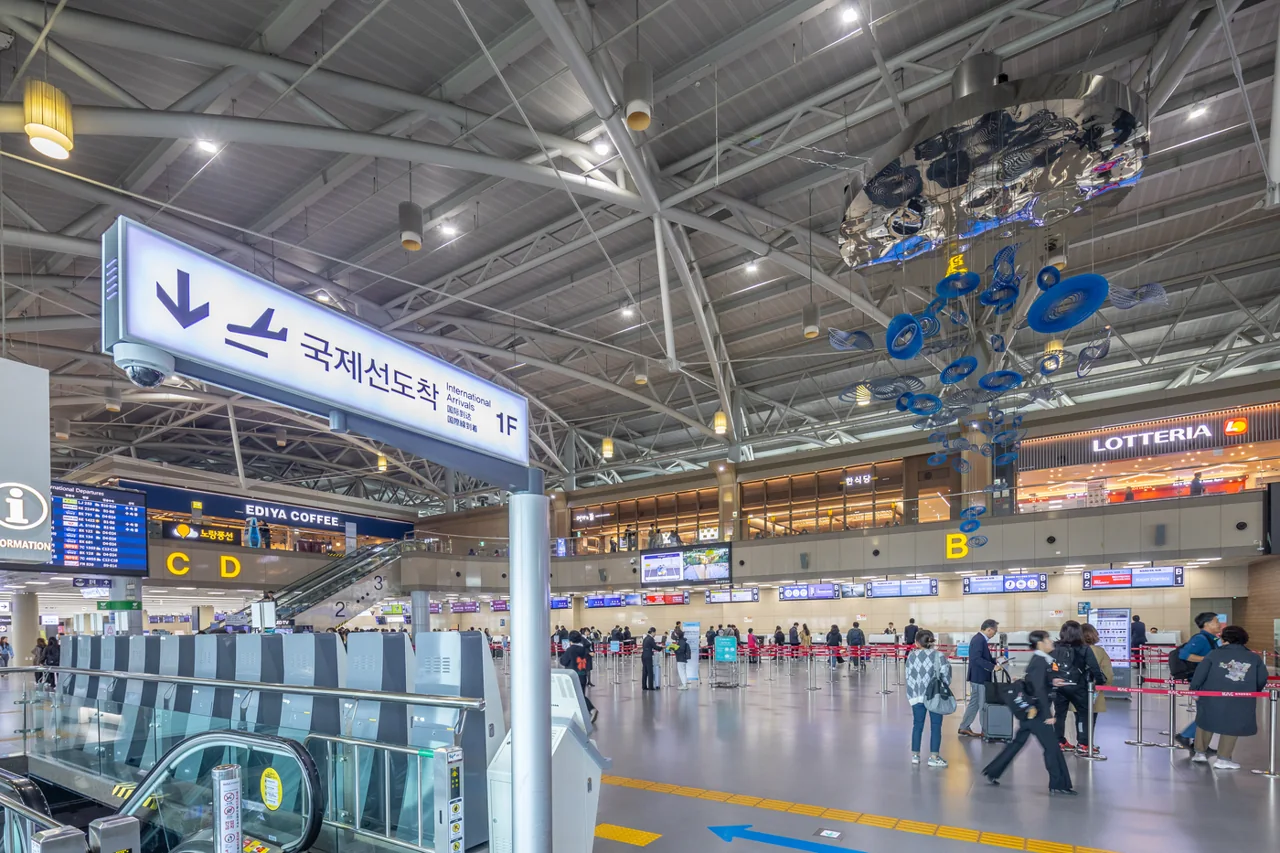
Gimhae’s passenger car parks, P1, P2 and P3, have 5,336 spaces between them. Most overseas visitors only deal with them when someone picks them up or drops them off, or when they collect or return a rental car. The rental car desks are on 1F of the Domestic Terminal.
| Car park | Where | Spaces | 24 hours, small car, Mon to Thu | 24 hours, small car, Fri to Sun and holidays |
|---|---|---|---|---|
| P1 | In front of the Domestic Terminal (multi-storey and open-air) | About 2,005 | 10,000 won | 15,000 won |
| P2 | In front of the International Terminal (multi-storey and open-air) | About 2,453 | 10,000 won | 15,000 won |
| P3 | At the cargo terminals, away from the passenger buildings (use the shuttle bus) | About 878 | 7,000 won | 10,000 won |
For a small car, which covers all passenger cars, vans with up to 15 seats and trucks up to 1 tonne, the first 30 minutes cost 900 won and each further 10 minutes costs 300 won, up to the daily rate within each 24-hour block. The blocks run from the time you drive in, and every new block can add up to another daily rate, with no overall limit. Friday is charged at the weekend rate. Large vehicles have separate rates on the parking fee page. The daily rate is about half of what Gimpo charges.
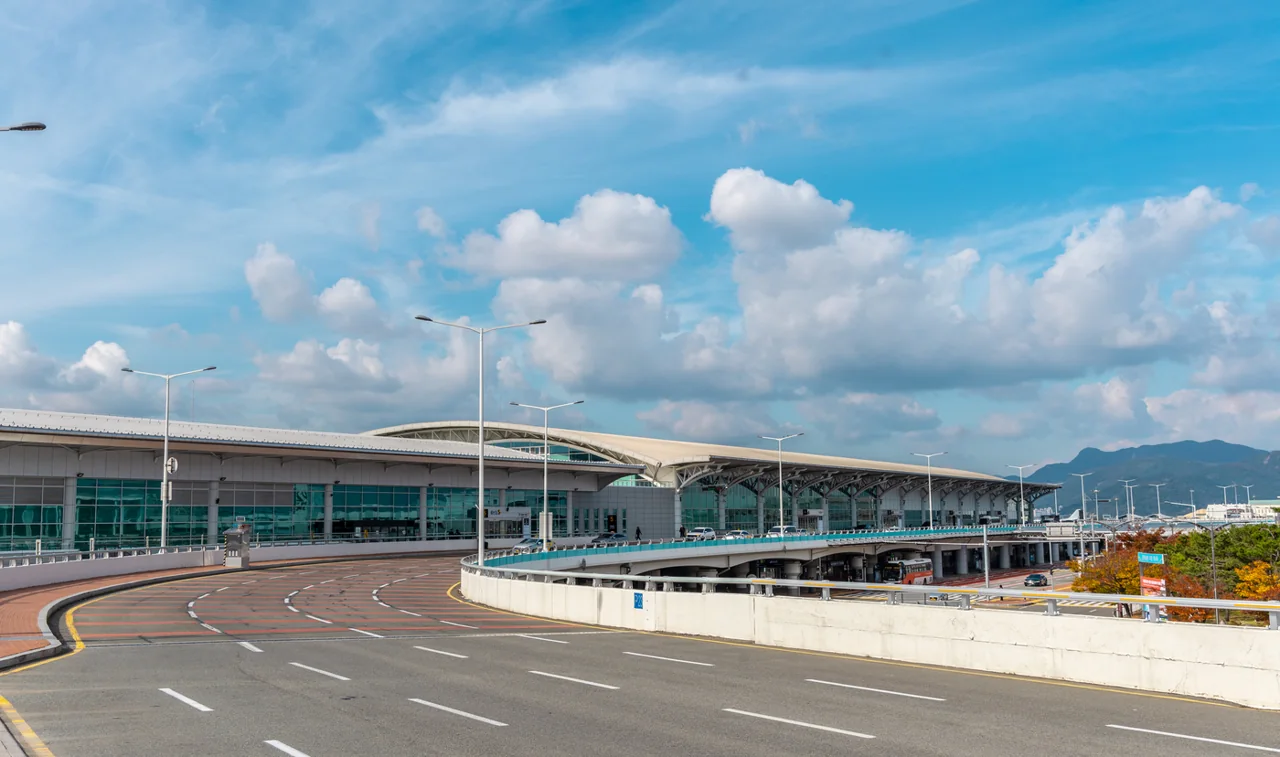
The International Terminal parking buildingMap belongs to P2, the closest car park for international flights. The P3 car park by the cargo terminalMap is cheaper but needs the shuttle bus to reach either terminal.
Paying and driving out
Pay at a pre-payment machine near the 1F terminal doors or inside the car park. Enter the plate number and pay by card or cash; the machines do not take 10 won or 50 won coins. Leave within 30 minutes of paying to avoid an extra charge. P3 fees can only be paid at the machines inside P3 or at the P3 exit.
Korean Hi-pass toll cards work at all three car parks, unless the fee reaches 50,000 won or more. Picking someone up is free for the first 10 minutes in P1 and P2 and the first 20 minutes in P3. The Parking Support Centre is on 051-974-3718.
No bookings, and the car parks fill up
Gimhae’s parking reservation system has ended, and every space is now first come, first served. The Gimhae parking page and the airport homepage display the number of free spaces in P1, P2 and P3 in real time, and the Korean navigation app Tmap displays where the empty spaces are in the P1 and P2 open-air areas.
P3 is the cheapest and fills first. The official page warns that it may be full at weekends and in peak season, and tells drivers to use P1 or P2 instead. P2 and P3 have been close to full even on weekday nights. Traveller posts mention P2 full at 5:48 am, every car park full on the day before a public holiday, and drivers arriving 2 hours early and finding no space. If P2 is full, park in P1 by the Domestic Terminal and walk across or take the shuttle. Cars left on the approach road or in the village streets nearby can be fined or towed.
KAC does not run an official valet service at Gimhae. Signs saying “valet” near the airport belong to private businesses, as do the private car parks around it, so KAC is not responsible for damage or loss there. If an official valet service starts, it will be listed on KAC’s parking page. EV chargers are in the P1 and P2 parking buildings, and there are 132 spaces for drivers with disabilities.
6. How early to get to Gimhae Airport
KAC and Air Busan both recommend arriving 2 hours before an international flight. For a domestic flight, Air Busan recommends 40 minutes. Those are the official figures; traveller experience suggests more time in some cases.
After its expansion, the International Terminal was planned for 8.3 million passengers a year, or up to 11.56 million at a lower level of service. More than 10 million now use it each year, and the extra people show up most in the morning.
When to arrive
| Your situation | Arrive this long before departure |
|---|---|
| International flight, public transport, weekday daytime | 2 hours |
| International flight, coming by car (add time to park), weekend or peak season, or leaving between 6 am and 9 am | 2.5 to 3 hours |
| Domestic flight | 40 minutes (Air Busan) |
The 2-hour line is the official recommendation. The 2.5 to 3 hours comes from traveller posts, which say parking and the morning queues add time. Some posts also say 2 hours was fine for people who came by public transport.
Check-in and boarding times
On Air Busan’s airport page, international check-in opens 3 hours before departure (2 hours on some flights) and closes 50 minutes before. Domestic check-in opens 2 hours before and closes 30 minutes before. International boarding starts 30 minutes before departure and closes 10 minutes before. Other airlines work in a similar way with their own times, and the deadline on your ticket is the one that counts.
The second departure hall
A second departure hall opens only from 05:40 to 10:00, with 2 ID check points, 2 security lanes, 2 staffed and 2 automated emigration counters and 1 customs desk. Busan Ilbo reported that in its first month, departure processing in that time window dropped from an average of 40 to 60 minutes to 10 to 20 minutes. One traveller post describes a long queue at the main hall and about 7 minutes at the second one. From 10 am, only the first departure hall is open.
The second hall is not always the faster one. On a peak summer morning, Newsis reported waits at 6 am of 18 to 20 minutes to reach security at the first hall and 20 to 25 minutes at the second, and wrote that the crowds cleared fairly quickly after 7 am. Traveller posts say passengers for the first flights start gathering from around 4:30 am.
7. Departure step by step: check-in, security and emigration
At the International Terminal, departure starts on 2F and runs in this order.
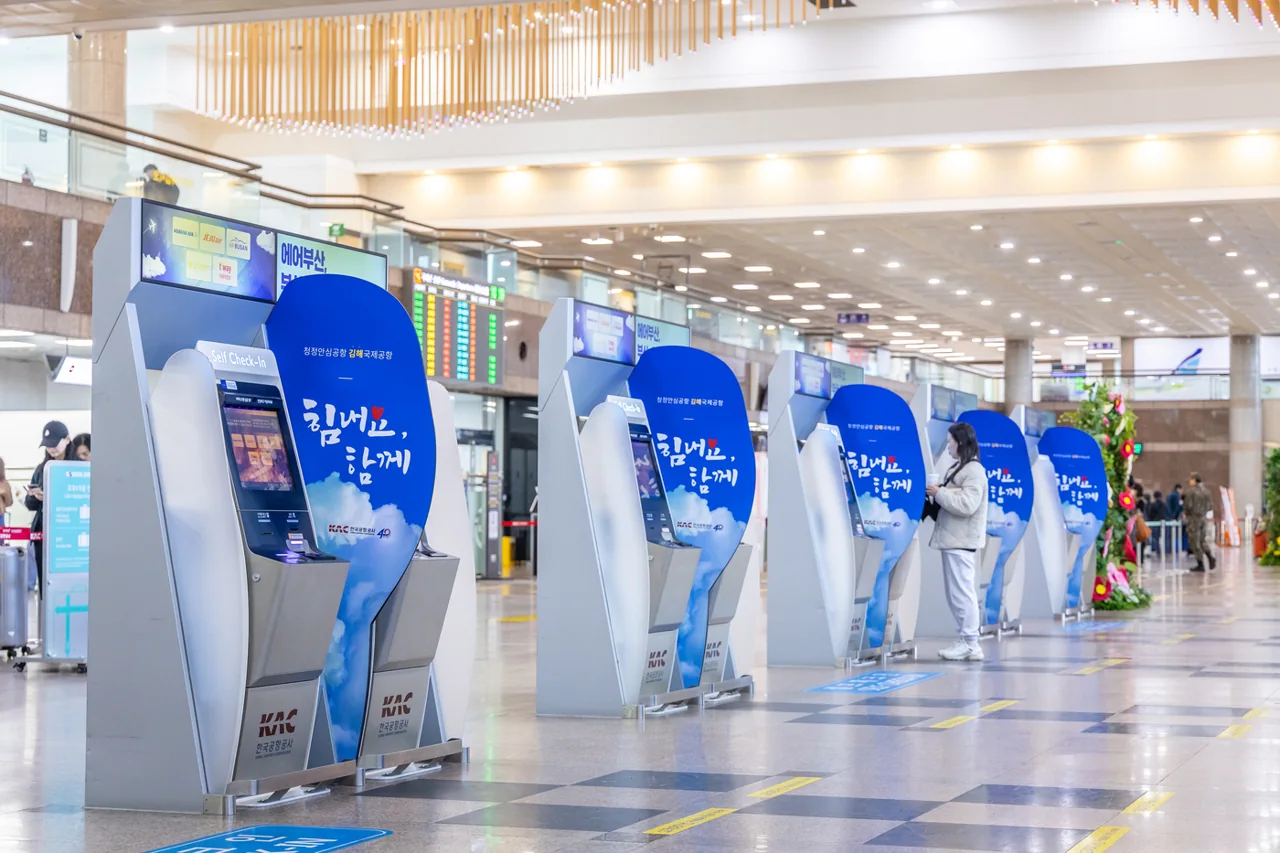
- Check in. Use your airline’s counter or a self check-in kiosk.
- Drop your bags. Checked bags go at the airline counter, even if you checked in at a kiosk.
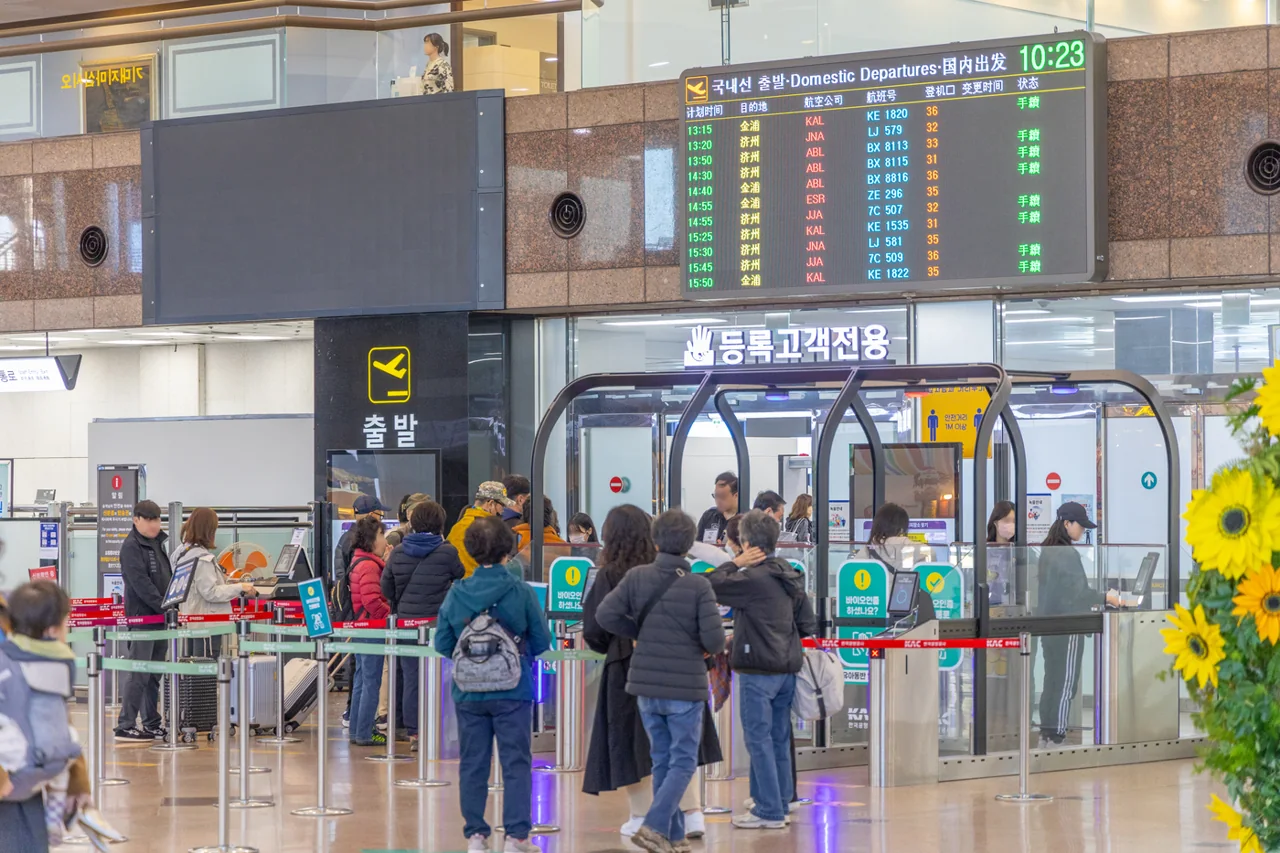
- ID check at the departures entrance. Show your passport and boarding pass, or scan a mobile boarding pass at the automatic gate.
- Security. Hand luggage and body screening.
- Emigration. An automated gate or a staffed immigration desk.
- Airside. Duty free, lounges, food and your boarding gate.
Self check-in kiosks
According to KAC’s self check-in page, the international kiosks serve Korean Air, Air Busan, Trinity Airways, Jeju Air and Eastar Jet. You scan your passport on the kiosk. They work when you are travelling to a country that does not need a visa, and each airline decides which destinations it allows at the kiosk.
Domestic kiosks serve Korean Air, Jeju Air, Air Busan, Jin Air, Trinity Airways and Air Seoul. On both sides, bags still go to the airline counter, where there is usually a separate line for passengers who have already checked in.
Mobile boarding passes
For international flights you can scan a mobile boarding pass at the automatic gate at the departures entrance and go through a dedicated lane. The palm-vein ID gates marked for registered users belong to a biometric ID system mainly used by Korean residents; most visitors simply show their passport.
Automated emigration for visitors
Travellers who cannot use the automated gates, or prefer not to, go to the staffed emigration desks.
Help for families and travellers who need assistance
There are priority security lanes for pregnant women, people travelling with babies or small children, and travellers with disabilities. Travellers with reduced mobility can ask to be accompanied to the check-in counter by calling the customer centre on 1661-2626 or asking at an information desk.
Wheelchairs and strollers can be borrowed next to Gate 2 on 1F of the International Terminal and in the middle of 1F at the Domestic Terminal, if you leave an ID with the staff. Power banks must go in your hand luggage only; the capacity limits are set by each airline, so check your airline’s page before you pack.
8. Duty free shops and the tax refund desk
The departure area of the International Terminal has two duty free shops and a pickup counter for goods bought in advance. Two more shops sit in the arrivals baggage claim area, for passengers landing in Busan. Hours below come from KAC’s airport tips page.
| Shop | Where | What it sells | Hours |
|---|---|---|---|
| Lotte Duty Free | International Terminal 2F, departure area | Cosmetics, perfume, accessories, fashion, food | 06:30-21:00 |
| Kyung Bok Kung Duty Free | International Terminal 2F, departure area | Alcohol, tobacco, food | 06:30-21:30 |
| Duty free pickup counter (goods bought at city or online duty free shops) | International Terminal 2F, departure area | 06:10-21:00 | |
| Kyung Bok Kung Duty Free, two arrivals shops | International Terminal 1F, inside baggage claim | Alcohol, tobacco, perfume, cosmetics | 06:00-22:30 |
Early flights and duty free
The departure shops open at 6:30 am. If your flight leaves at around 7 am, there is almost no time to shop, and traveller posts put it bluntly: on a 7 am flight, forget about shopping. The pickup counter opens a little earlier, at 6:10 am, and you take a number from a kiosk before you queue.
Traveller posts also say the shops are smaller than at Incheon, so if you are after a particular brand, a city duty free shop with pickup at the airport is the safer choice.
Anything bought at the arrivals duty free shops counts towards your duty-free allowance when you enter Korea. Gimhae has no counter in arrivals for collecting city duty free goods on the way in.
Getting a tax refund before you fly
Visitors can get back the VAT on goods bought in Korea. The rules come from the Special Rules on VAT and Individual Consumption Tax for Foreign Tourists and their enforcement rules. A purchase qualifies when the amount paid in one transaction is 15,000 won or more, and tobacco and some other goods are excluded. The goods have to leave Korea within 3 months of the purchase date.
Some shops take the tax off at the till. This immediate refund works for purchases under 1,000,000 won each, up to 5,000,000 won in total during one stay in Korea. For other tax-free receipts, claim at the airport.
At Gimhae, the tax refund desk is on 2F of the International Terminal, inside the departure area after security and emigration, open 06:30 to 21:00. Customs may ask to see the goods, so decide before check-in whether they go in your checked bag or stay with you in the cabin.
9. Lounges at Gimhae and who can use them
The lounges at Gimhae’s International Terminal are all airside, after emigration: the Korean Air and Air Busan lounges on 3F, and two Sky Hub lounges on 2F that take Priority Pass. Details come from KAC, the Air Busan lounge page and the Priority Pass listing for Gimhae.
| Lounge | Where | Hours | How to get in |
|---|---|---|---|
| Korean Air Lounge | 3F, near Gate 4 | 05:40-22:20 (KAC) | Korean Air First and Prestige passengers, Skypass elite members. Priority Pass only for passengers on Korean Air or SkyTeam flights, at limited times |
| Air Busan Lounge | 3F | 06:00-22:00 | Pass 27,000 won online (up to 2 days before departure) or 32,000 won at the door; passengers of any airline can buy at the door. Priority Pass and LoungeKey accepted. Entry from 3 hours before departure. Door sales and card entry limited after 21:30. Under 24 months free |
| Sky Hub Lounge | 2F, between Gates 9 and 10 | 06:30-21:30 | Priority Pass, up to 5 hours |
| N Sky Hub Lounge | 2F, opposite Gates 2 and 3 | 06:30-21:30 | Priority Pass, up to 5 hours, under 3 years free |
Priority Pass at Gimhae
The two Sky Hub lounges are the simplest choice for Priority Pass holders on any airline. The Air Busan Lounge also accepts the card. For the Korean Air Lounge, KAC lists 05:40 to 22:20, but Priority Pass lists only 07:00 to 13:00 for its members, so check the Priority Pass app for the current time slot before you walk over.
Traveller posts say the older Sky Hub Lounge near Gate 9 is small, while the newer N Sky Hub Lounge is roomier. KAC does not publish a walk-in price for the Sky Hub lounges.
Other places to sit
The Heineken Lounge Bar on 3F is a bar selling draught beer, open 07:00 to 21:30; it is not a lounge you enter with a card. On the domestic side, the only lounge is the Korean Air Lounge on 2F of the Domestic Terminal, open 05:50 to 21:15.
A lounge pass bought online in advance is another way into the Sky Hub lounges if you have no card.
10. Food, cafés and services in the terminals
The airside restaurants at the International Terminal are Korean Ramyun Bar, SOBAN (Hanwadam) and FLAVOUR6 AIR-RAIL. Cafés and bars are Angel-in-us (06:00 to 22:00), Twosome Place and the Heineken Lounge Bar, and a CU convenience store opens from 06:00 until the last flight. Most restaurants are open roughly 06:00 to 21:00.
Before security there is more choice. On 3F you will find Myeongga-ui Tteul (Korean dining), Hyoja Gomtang, Lotteria, the PLE:EATING LOUNGE food court and Ediya Coffee. On 2F there is Dunkin’, and on 1F Nadri.
Eating before an early flight
According to KAC’s facility list, the earliest place to eat is Dunkin’ on 2F of the International Terminal, at 05:00. Ediya Coffee on 3F opens at 05:30, and most restaurants open at 06:00. Traveller posts say there are few places to eat airside and that prices are high.
Services in the terminals
| Service | Where and when |
|---|---|
| Bank and currency exchange | Bank counter on 1F of the International Terminal, with exchange booths in departures and arrivals. The bank running them may change, so check the current hours on KAC’s facility list |
| Mobile carrier roaming centres | International Terminal 1F, 06:00-22:00, and 3F, 06:00-21:30. WiFi Dosirak 1F, 06:00-22:00 |
| Free Wi-Fi | “Public WiFi FREE” throughout the terminals |
| Luggage storage (Zimcarry) | International Terminal 3F, 06:00-21:00. Domestic Terminal 2F, 06:00-20:00 |
| Pharmacy | Nuga Pharmacy, International Terminal 2F before security, 05:30-20:30. Domestic Terminal 2F, 06:00-20:00 |
| Clinic | Gimhae International Airport Clinic, Domestic Terminal 1F, 09:00-18:00 |
| Nursing rooms | International Terminal 3F near the roaming centre (before security) and 2F near Gate 4 (airside). Domestic Terminal 2F near Gate 1 and near Gate 36 |
| Phone charging | International Terminal 2F airside: charging stations near Gates 3, 8 and 10, laptop charging seats near Gate 9 |
| Post office | International Terminal 1F, weekdays 09:00-18:00 |
| Lost and found | International Terminal 1F, 06:00-22:00, 051-974-3776 |
| Changing room | International Terminal 1F, 06:00-23:00 |
| Private waiting rooms | International Terminal 2F and Domestic Terminal. 2 hours for 5 people: 77,000 won (international) or 55,000 won (domestic). Book by phone a day ahead |
Small things worth knowing
The changing room on 1F is handy if you are flying from a Korean winter to somewhere hot, or the other way round. The private waiting rooms suit a family or group with a long wait, as long as you call the day before.
Phone charging points are airside near the gates, so you can top up your battery after emigration.
11. Arriving at Gimhae: entry, customs, data and money
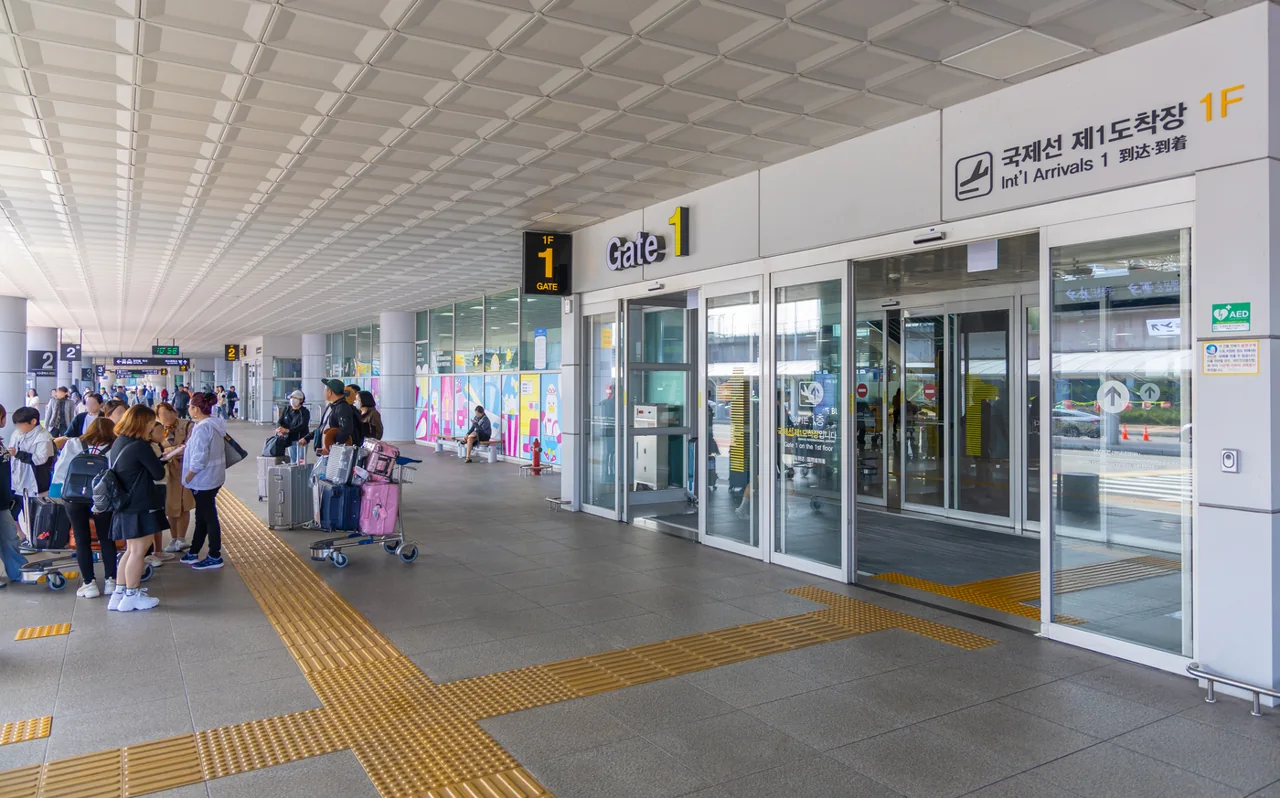
International arrivals at Gimhae come out on 1F of the International Terminal, through one of its arrival gates. Travellers from the US, the UK, Canada, Australia and New Zealand are on Korea’s temporary K-ETA exemption list, and a few things are still worth sorting out before you land. KAC’s arrivals page covers the airport side.
Before you fly: e-Arrival card and K-ETA
The e-Arrival card is free and can be submitted from 3 days before arrival, counted in Korean time. It stops being valid 72 hours after you submit it, so if your plans change, submit it again. You need your passport, an email address, your arrival flight number and where you are staying in Korea. Family members submit for children under 14, and one phone can submit for up to 9 people at once. The site is in English, Korean, simplified Chinese, Japanese, Vietnamese, Thai and Russian.
You can choose between the e-Arrival card and a paper arrival card. If you submit the electronic one, you do not need to fill in the paper form. If you hold a valid K-ETA, you do not need an arrival card at all, unless you are entering Korea on a visa, in which case you still file one.
The K-ETA is Korea’s online travel authorisation. Japan, Taiwan, Spain, the United States, the United Kingdom, Canada, Australia, New Zealand, Hong Kong, Macau, Singapore and some European countries, 22 countries and regions in all, are temporarily exempt. Check the K-ETA site for whether your nationality is exempt and for how long. Travellers aged 17 or under, or 65 or over, do not need a K-ETA. Our K-ETA guide explains the application.
From the plane to the arrivals hall
- Leave the aircraft. Follow the arrivals signs.
- Quarantine. Pass the quarantine check.
- Immigration. Passport and, if you have one, the e-Arrival card details.
- Baggage claim. The two arrivals duty free shops are here too.
- Customs. Use the “Nothing to declare” channel if you have nothing to declare.
- Arrivals hall on 1F. Information desk, roaming counters, bank and exchange.
If this is your first time in Korea on a short visit, expect a staffed immigration desk. Foreign nationals who have registered their fingerprints and face in advance, such as registered foreign residents, can use the automated entry gates at Gimhae too.
Arrivals cluster between 6 am and 9 am, when overnight flights from Taiwan and Vietnam land, so immigration queues can be long. Busan Ilbo reported that one arrivals gate was closed so that its staff could work in the second departure hall.
Customs and duty-free allowances
If you have nothing to declare, you do not need a customs form. If you do, you can declare in advance through the Traveller Customs Declaration app or website. The allowances below come from Article 48 of the Enforcement Rules of the Customs Act.
| Item | Allowance per person |
|---|---|
| Goods in general | USD 800 |
| Alcohol | Up to 2 litres in total and up to USD 400, on top of the USD 800 |
| Cigarettes | 200 |
| Perfume | 100 mL |
| Travellers under 19 | No alcohol or tobacco allowance |
Mobile data, money and help in the arrivals hall
The roaming centres of SKT, KT and LG U+ and the WiFi Dosirak counter are on 1F of the arrivals hall, open 06:00 to 22:00. If you booked a prepaid SIM card or a pocket Wi-Fi, collect it here with your passport and booking email. Our guide to Korean SIM cards and eSIMs compares the options.
There is a bank counter and currency exchange on 1F, but there is no guarantee that an exchange booth is open when the first flights land at around 6 am. Plan to use a card or a travel card on arrival and change cash in the city; our guide to money in Korea has the details. A CU convenience store is on 1F (06:00 to 22:00), and transport cards are covered in our Busan transport card guide.
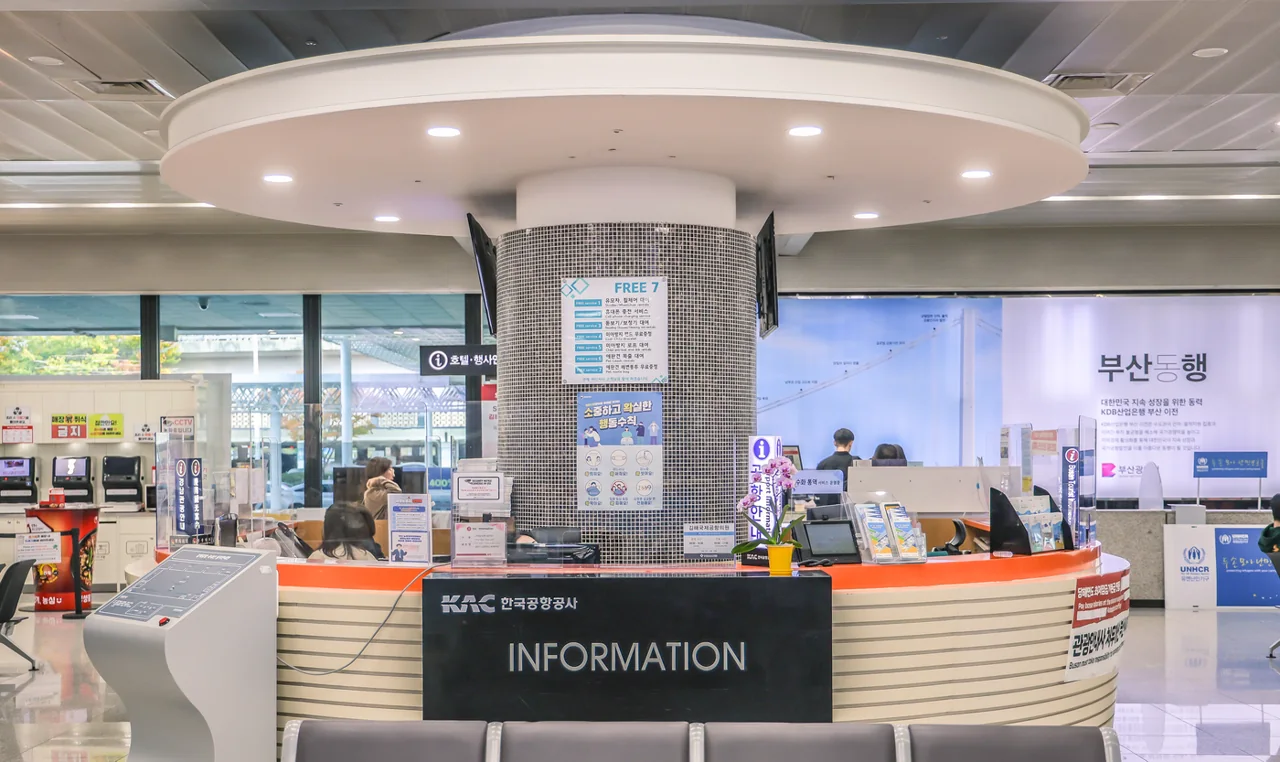
The airport information desk on 1F of the International Terminal is open 06:00 to 23:00, and the tourism associations of Busan and of South and North Gyeongsang provinces have desks on the same floor. The 1330 Korea Travel Hotline gives phone interpretation in English, Korean, Chinese, Japanese and other languages. Useful apps for the trip are in our Korea travel apps guide.
12. Getting into Busan, and sleeping near the airport
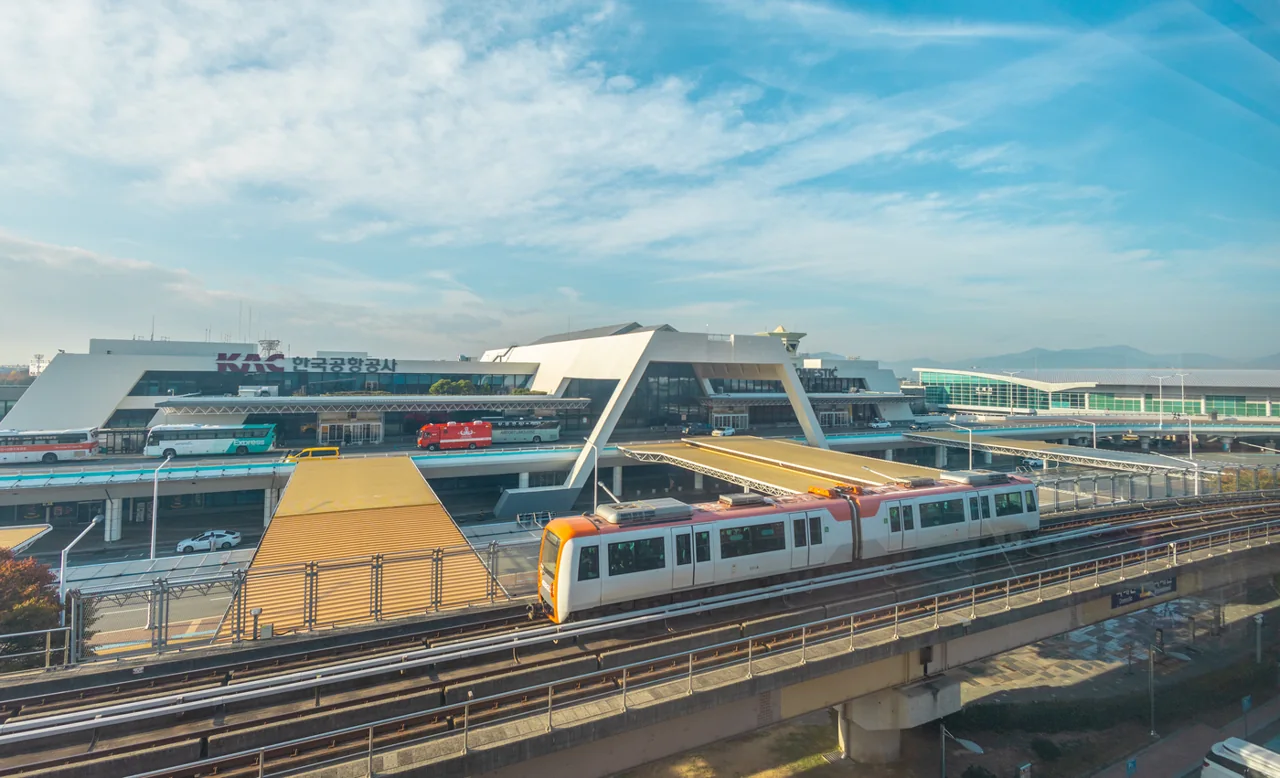
From Gimhae you can reach central Busan by the light rail, the airport limousine bus or a taxi, and our guide to getting from Gimhae Airport to Busan compares them with times and fares. The light rail leaves from Airport Station on the Busan-Gimhae Light RailMap.
A pre-booked private car is the other option, mainly for families, groups or anyone with heavy bags. The driver usually waits in the arrivals hall. Check how far ahead you need to book, as some services confirm the next day.
Nothing stays open overnight
No part of Gimhae Airport is open 24 hours, according to KAC’s facility list, and some traveller posts say the terminals are closed at night. If you land late or fly out very early, book a bed for the night.
Where to stay before an early flight
Many people with a 6 am or 7 am departure stay at one of the hotels in Gangseo-gu next to the airport, or around Sasang Station. Sasang is a transfer station between Busan Metro Line 2 and the Busan-Gimhae Light Rail, and Airport Station is three stops away on the light rail.
If your flight leaves later in the day, staying in the city is easier. Our guide to choosing where to stay in Busan covers the main areas, and our Busan transport guide explains how to get around once you are there.
13. Connections at Gimhae and the Korean Air flight via Incheon
Passengers who land at Gimhae on an international flight and continue on a domestic flight to Jeju or Gimpo collect their bags in Gimhae, go through customs and check the bags in again at the Domestic Terminal. Under Korean customs rules, passengers arriving on international flights collect their bags and clear customs at their first airport in Korea.
International to domestic, and domestic to international
To get from the International Terminal to the Domestic Terminal, take the free shuttle bus or walk. Leave plenty of time for collecting your bags and checking them in again; there is no official minimum connection time for Gimhae.
Coming the other way, from Jeju or Gimpo onto an international flight from Gimhae, the answer depends on the airline. According to Korean Air’s transfer page, when every leg is flown by Korean Air, checked bags go through to your final destination without being collected. With other airlines or separate tickets, ask the airline you booked with.
The Korean Air transfer-only flight between Gimhae and Incheon
Korean Air flies a transfer-only flight between Gimhae and Incheon, about 5 round trips a day. Only passengers connecting to or from an international flight at Incheon can use it. For travellers from Europe and North America, it is a way to reach Busan without going into Seoul.
You cannot buy this leg on its own. It has to be on the same ticket as your international flight from or to Incheon. You can book it as part of a Korean Air itinerary, and Asiana’s website also sells it bundled with an international flight.
Leaving Korea, you do everything at Gimhae: check-in, bag drop and emigration. At Incheon you change planes without going through departure formalities again.
Arriving in Korea, do not join the immigration queue at Incheon. Follow the Transfer signs. Immigration, customs and baggage claim all happen at Gimhae, on 1F of the International Terminal.
K-ETA on the Incheon connection
On this route Korea is your destination, and you enter the country at Gimhae. The transit exemption described on the K-ETA site is for passengers changing planes in Korea on the way to a third country, so it does not cover this journey.
If your nationality needs a K-ETA, have it approved before you board your first flight. If your nationality is on the temporary exemption list, the usual e-Arrival card choice applies when you land at Gimhae.
14. Airline name changes and the new Gadeokdo airport
The merger of Asiana Airlines into Korean Air means Asiana flight numbers (OZ) become Korean Air flight numbers (KE). Asiana already has very few direct flights from Gimhae. If your airline tells you that your flight number has changed, look for the new flight number at check-in.
Air Busan, Air Seoul and Jin Air
The merger of Air Busan and Air Seoul into Jin Air means the Air Busan name disappears and its flights become Jin Air flights. Some Air Busan domestic flights, on the Gimpo and Jeju routes, already carry Jin Air flight numbers as well.
Nothing has been decided about what happens to Air Busan’s counters and lounge at Gimhae. When they change, KAC and the airlines will post notices, so check before you travel.
Trinity Airways is the former T’way Air
Trinity Airways is the new name of T’way Air. The airline code (TW) and the flight numbers stayed the same. If a booking site shows an unfamiliar name, it is the same company.
Gadeokdo New Airport
A new airport is being built on Gadeokdo islandMap in Gangseo-gu, Busan. The government’s target for opening is 2035, later than the first target. Until then, Gimhae remains Busan’s airport, and when the new airport opens, Gimhae’s international flights move there.
15. Common mistakes at Gimhae Airport
The Domestic Terminal and the International Terminal are different buildings. If you get out at the Domestic Terminal, there is no international check-in there. Tell your driver which terminal you need, and use the shuttle bus if you end up at the wrong one.
Mistakes with parking and payment
Parking cannot be booked, and on busy days the closest car parks fill before dawn. If you return a rental car or pick someone up, allow time to find a space. Friday counts as a weekend day for parking, and P3 can only be paid inside P3 or at its exit.
Mistakes with timing
Duty free in departures opens at 6:30 am, so one of the first morning flights leaves little time for shopping. Night arrivals are limited by the 11 pm closing time; a flight that is running hours late may end up at Incheon.
Mistakes on arrival and on connections
On a first visit, plan for a staffed immigration desk and, in the early morning, a queue. On the Korean Air connection via Incheon, stay on the transfer route at Incheon.
16. Other ways to reach Busan without a direct flight
Busan can also be reached by train from Seoul, by ferry from Japan or by a domestic flight, which helps when there is no direct flight to Gimhae from where you live. Incheon, unlike Gimhae, has direct flights to Europe and the Americas.
Through Incheon
The Korean Air transfer-only flight brings you straight from Incheon to Gimhae on one ticket, with immigration in Busan. If you would rather spend time in Seoul first, fly into Incheon, enter Korea there and continue to Busan later by train or domestic flight.
By KTX from Seoul
The KTX high-speed train links Seoul and Busan Station. Our Seoul to Busan KTX guide covers tickets and the stations.
By ferry from Japan
Ferries sail from the Busan Port International Passenger Terminal to Japan. See our guides to the Busan to Fukuoka ferry, the Busan and Osaka ferry and the Busan to Tsushima ferry.
Via Jeju or Gimpo
Domestic flights from Jeju and Gimpo land at Gimhae’s Domestic Terminal. If you are combining Busan with Jeju, our Jeju travel guide helps with that part of the trip, and our Busan itinerary helps plan the days in the city.
🎡Things to Do49
🍜Food7
🏨Where to Stay3
🚇Getting Around9
🧭Travel Tips14
📌More3
🧭All-Korea essentials51
Gimhae Airport FAQ
Images: Busan Tourism Archive: 하이픈그룹 / Busan Tourism Organization Global Marketing Team (KOGL Type 1).