
Korea in February: Weather by Region, What to Wear, Seollal, Daeboreum Bonfires and Early Jeju Blossoms
When Seollal falls and what stays open over the holiday, where to watch the Daeboreum moon house burnings, the last snow festivals and ski weeks, Jeju’s early flowers and what to eat.
| How cold is it? | Seoul and Gangwon are still in deep winter with freezing nights, while Busan and Jeju are milder but often windy. |
|---|---|
| Will I see snow? | Snow is dependable in the Gangwon mountains and on Hallasan, while Seoul does not get many snowy days. |
| When is Seollal? | It moves between late January and mid-February, so check the date table in this guide before you book. |
| What happens over Seollal? | Palaces have opened free over recent holidays, but trains sell out and many restaurants close for a day or two. |
| Can I still ski? | Yes, although some resorts begin closing runs at the end of the month. |
| Is it crowded? | February is one of the quietest months for foreign visitors, apart from the Seollal holiday week. |
1. What February in Korea Is Like
2. How Cold Each Region Gets in February
3. Seollal: The Lunar New Year Date Moves Every Year
4. What Closes and What Stays Open over Seollal
5. Getting Around During the Seollal Holiday
6. Daeboreum: Moon House Bonfires for the First Full Moon
7. Snow and Ice Festivals That Run into February
8. Skiing in February, the Final Weeks of the Season
9. Snow Hikes, and When the Wildfire Trail Closures Begin
10. Seoul in February: Rinks, Palaces, Museums and Evenings Out
11. Busan, the South Coast, Gyeongju and Jeonju
12. Jeju in February: Early Blossoms, Citrus and Snow on Hallasan
13. What to Eat in February
14. Fewer Visitors, and a Discount Program for Foreigners
15. Entry Rules, Air Quality, Daylight and What to Wear
16. Should You Visit Korea in February?
1. What February in Korea Is Like
In most of the cities in this guide, February is the second-coldest month of the year after January; in Seoul it ranks third, behind December as well. The air is very dry, and in Seoul and Daegu it is at its driest of the year. Seoul and Incheon get fewer days of rain or snow than in any other month, and by the last week the days are noticeably longer and the cold starts to ease.
Seollal, the lunar new year, lands in February in more years than not, and when it does the whole country heads home for several days. Two weeks later comes Daeboreum, the first full moon of the lunar year, when towns burn tall stacks of branches on beaches and riverbanks. Both dates move from year to year, so check where they fall before you fix your travel dates.
What the month holds
February in Korea at a glance
- Weather: cold and very dry in Seoul and Gangwon, milder on the south coast, cloudy and windy on Jeju.
- Holidays: Seollal and Daeboreum, both set by the lunar calendar.
- Winter: the last of the snow festivals and the final weeks of the ski season.
- Flowers: plum blossom, daffodils, camellias and early canola on Jeju and the south coast.
- Food: cockles, snow crab, egg cockles and strawberries.
- Crowds: few foreign visitors, and a discount program for foreign tourists that has run into late February in recent years.
In the mountains it is still full winter. Gangwon Province holds snow festivals into February, most runs are open at the ski resorts in the first half of the month, and Hallasan on Jeju is often white to the summit. Down on the south coast and on Jeju, the first flowers of the year open at the same time.
For foreign travelers it is a quiet month, covered in more detail further down. If you are still deciding between months, our guide to the best time to visit Korea compares the whole year.
Where to stay in Seoul
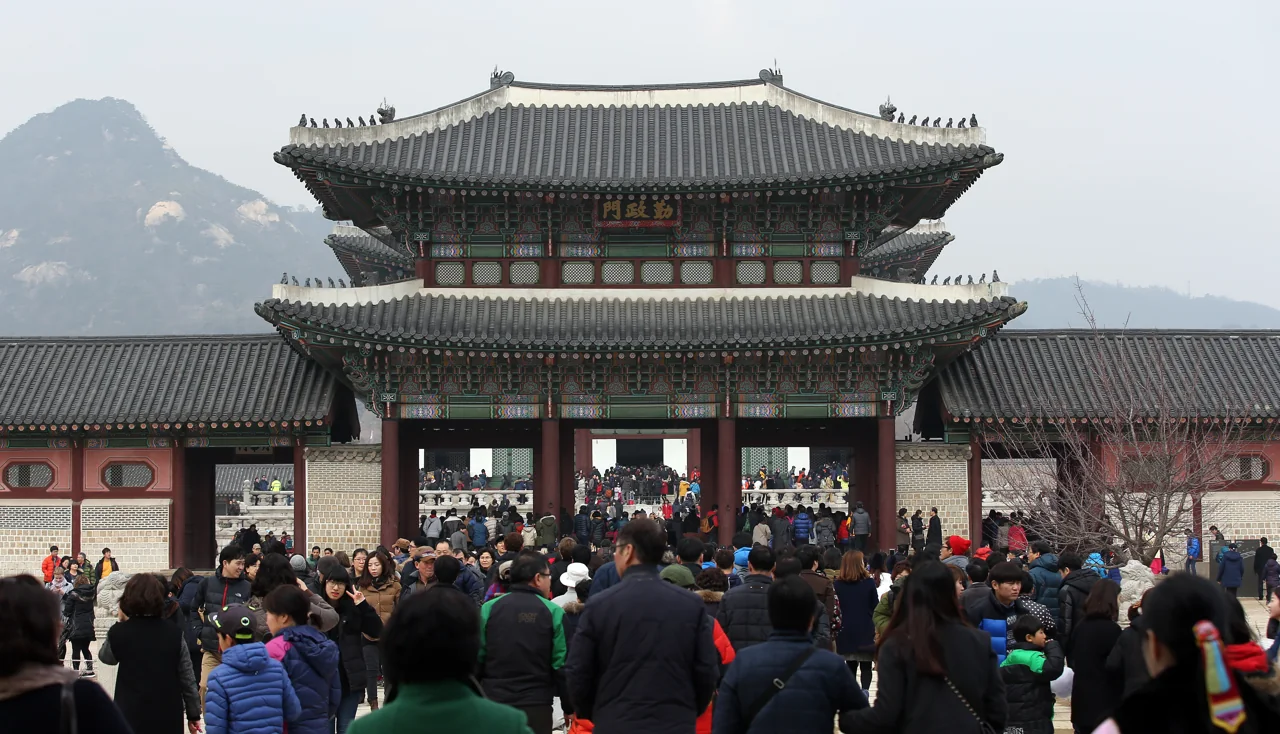
Seoul empties out over Seollal as residents leave for their hometowns, while the palaces and most national museums stay open. A room within walking distance of Gyeongbokgung, Insadong or the National Museum keeps the holiday days simple when some neighborhood restaurants are shut. Jongno and Gwanghwamun put most of the palaces within a short walk, and Yongsan puts you next to the museum.
2. How Cold Each Region Gets in February
Seoul in February is slightly milder than in January, but nights still drop below freezing and daytime highs stay low. The average temperature then jumps clearly in March, so the first days of February feel much like January while the last days are often noticeably milder. The table gives typical daytime highs and nighttime lows, rounded, from the long-term averages of the Korea Meteorological Administration.
| Region (weather station) | Typical daytime high | Typical night low | What to expect |
|---|---|---|---|
| Seoul | 5°C (41°F) | -3°C (26°F) | Milder than January but below freezing at night; fewest wet days of the year; very dry |
| Incheon | 5°C (41°F) | -3°C (27°F) | Much like Seoul, with stronger wind |
| Daegwallyeong (Pyeongchang ski area) | 1°C (33°F) | -10°C (14°F) | Around freezing even at midday; the coldest place in this guide |
| Gangneung and Sokcho | 6 to 7°C (43 to 45°F) | -2 to -1°C (28 to 30°F) | Warmer than Seoul and very dry |
| Gyeongju | 8°C (47°F) | -3°C (26°F) | Warmer than Seoul by day, as cold as Seoul at night; a big gap between the two |
| Daegu | 9°C (48°F) | -1°C (30°F) | Dry, with few days of rain or snow |
| Jeonju | 8°C (46°F) | -3°C (27°F) | Frost on many mornings |
| Busan | 10°C (50°F) | 2°C (35°F) | The warmest of the mainland cities in this guide; its biggest day-to-night swing of the year |
| Yeosu | 9°C (47°F) | 1°C (34°F) | Often windy |
| Jeju City | 10°C (50°F) | 4°C (39°F) | Cloudy, windy days |
| Seogwipo | 12°C (53°F) | 5°C (41°F) | The warmest place in this guide |
Seoul and the northwest
Seoul and Incheon have fewer days of rain or snow in February than in any other month. That is good news for long days on foot, and it also means snow is less frequent than many visitors expect. In Seoul, Incheon, Jeonju and Jeju City, February ranks behind January and December for snowy days, and even in Seoul snowy days are not frequent. A light dusting at some point is likely; snow lying deep on city streets is not something to build a trip around.
The air is very dry. In Seoul and Daegu, average humidity is at its lowest of the year in February, level with March. Expect chapped lips, dry skin and small static shocks from door handles. The same dryness raises the wildfire risk in the hills, which is why some mountain trails close from mid-February (covered in the hiking section).
The mountains and the east coast
Daegwallyeong, the high plateau beside the Pyeongchang ski resorts, hovers around freezing even in the middle of the day. Gangneung and Sokcho on the east coast are warmer than Seoul and very dry. The long-term averages used for this guide have no snow-day figures for Daegwallyeong, Gangneung, Sokcho or Gyeongju, so they say nothing about snow there; that does not mean these places get none.
The south coast and Jeju
In Busan, the gap between daytime and nighttime temperatures is wider in February than in any other month of its year, and Yeosu also has a wide gap between day and night in February. A sunny afternoon on the south coast can feel mild, and the cold returns quickly once the sun goes down, so carry an extra layer for the evening.
Jeju City is a little warmer than in January, but February gets less sunshine there than all but two months of the year, and nearly twice as many days of rain or snow as Seoul. Expect cloud and wind on many days. Seogwipo, on the south side of the island, is warmer and gets more sun.
Yellow dust, the fine sand blown in from the deserts of northern China and Mongolia, is rare in February. At most of the stations with records it becomes more frequent from March and peaks in April.
3. Seollal: The Lunar New Year Date Moves Every Year
Seollal is the first day of the first month of the lunar calendar. On the solar calendar it shifts between late January and mid-February: over the last ten years the earliest Seollal fell on January 22 and the latest on February 17. The public holiday covers three days, the day before Seollal, Seollal itself and the day after, and if any of those three days falls on a Sunday, the first weekday after the holiday is added as a substitute holiday.
This lunar new year matters far more to Korean families than January 1, which is a single day off. It is one of the two big family holidays of the year, alongside Chuseok in autumn.
Seollal and Daeboreum dates for the next few years
| Year | Seollal | Seollal holiday | Daeboreum |
|---|---|---|---|
| 2027 | February 7 | February 6 to 9 (the 9th is a substitute holiday) | February 21 |
| 2028 | January 27 | January 26 to 28 | February 10 |
| 2029 | February 13 | February 12 to 14 | February 27 |
| 2030 | February 3 | February 2 to 4, plus a substitute holiday because one of the three days falls on a Sunday (the date is fixed in that year’s official calendar) | February 17 |
When any of the three Seollal days falls on a Sunday, the first weekday after the holiday becomes a substitute holiday. Public holidays are confirmed each year in the government’s official calendar; the dates above come from the lunar conversion published by the Korea Astronomy and Space Science Institute.
The next Seollal falls on February 7, and the holiday runs for four days, February 6 to 9, because a substitute holiday is added at the end. The year after that, Seollal comes in late January, which leaves February with only Daeboreum and no public holiday at all. If you want to be in Korea for Seollal, or want to avoid it, use the table to see which week it falls in.
What families do over the holiday
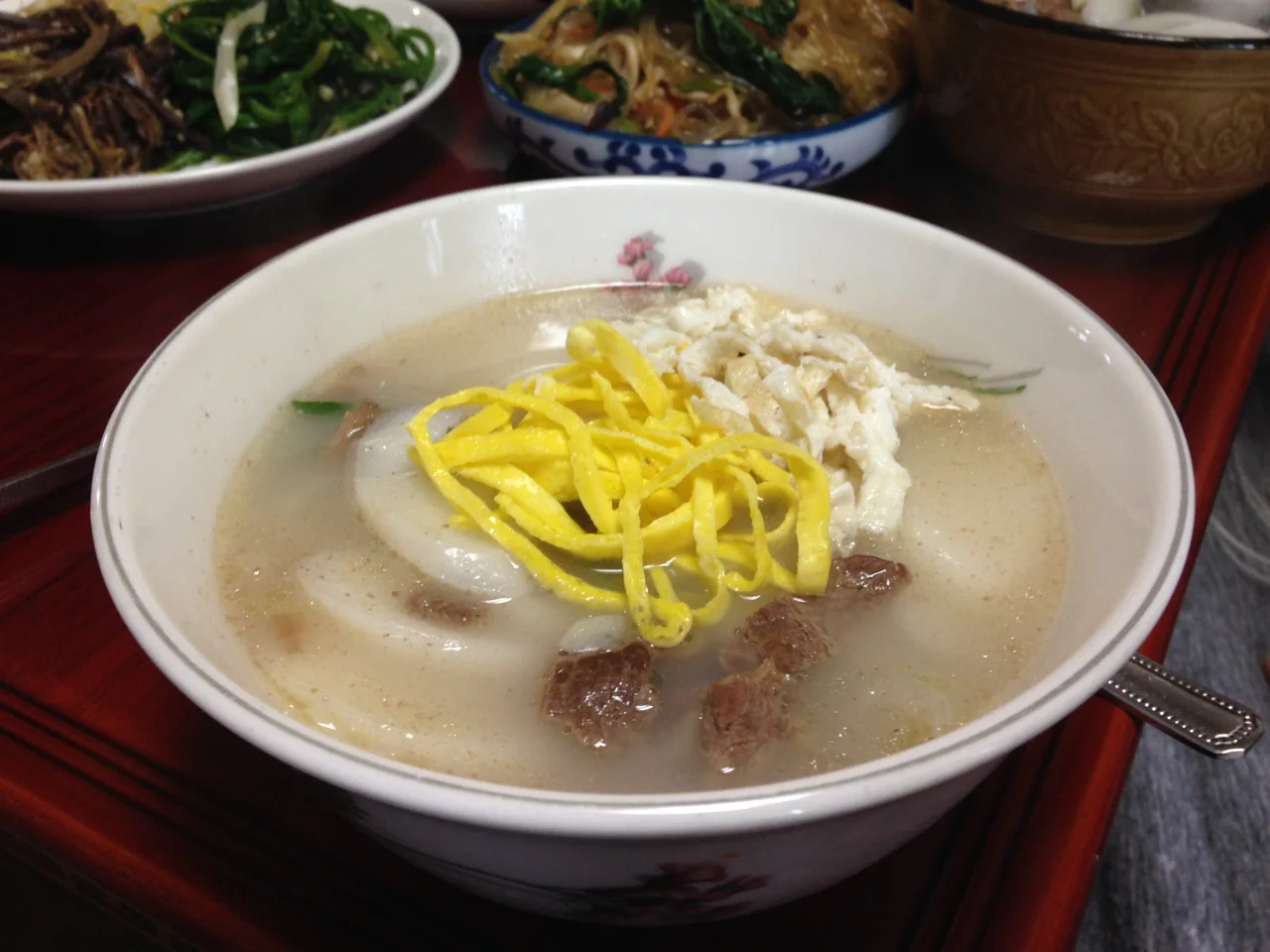
Most Koreans travel to their hometowns or to the home of the eldest relative. On Seollal morning many families hold charye, a memorial rite with food laid out for the ancestors, and the younger generation performs sebae, a deep formal bow to their elders, who reply with words of good luck and an envelope of money. Breakfast is tteokguk, a soup of sliced rice cakes, and eating a bowl is traditionally said to make you a year older.
For travelers, the result is a quiet city and busy roads. Seoul and the other big cities thin out, with emptier streets and some shops and restaurants closed, while highways, trains and domestic flights are packed in the days on either side. The next two sections cover what stays open and how to get around during the holiday.
4. What Closes and What Stays Open over Seollal
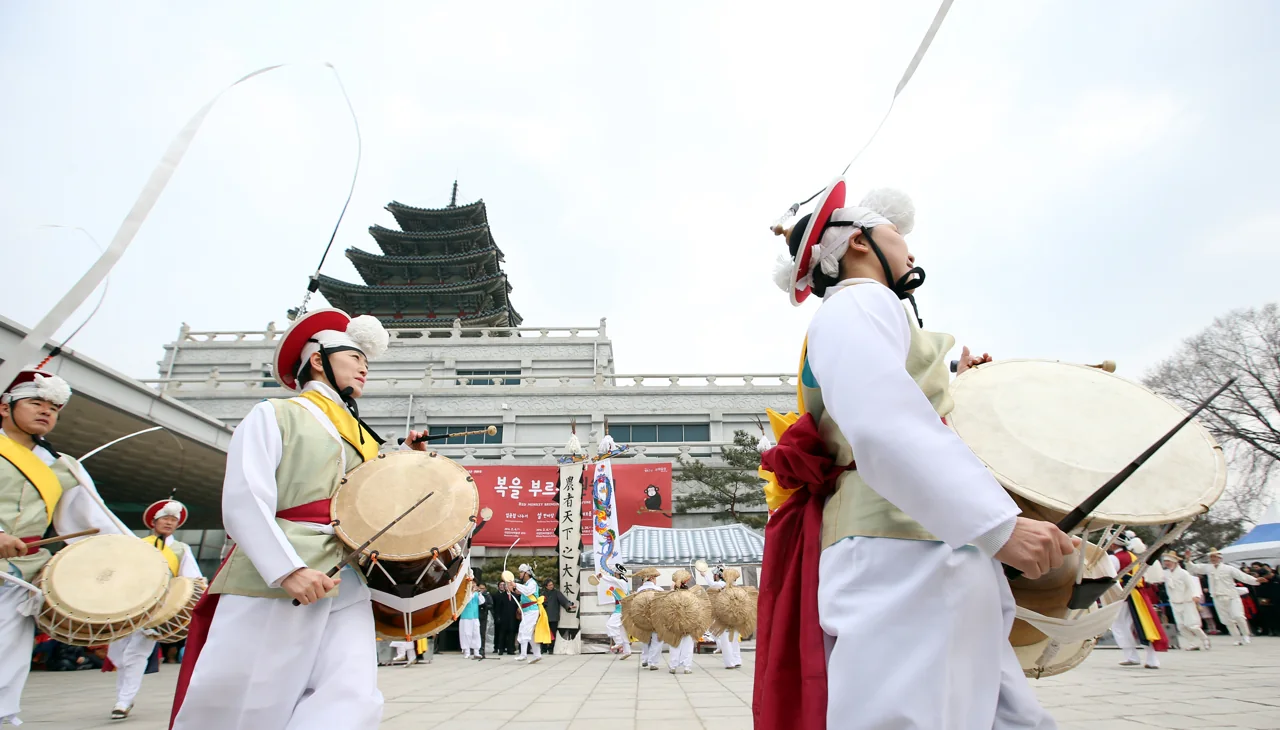
The palaces, Jongmyo Shrine and the Joseon royal tombs have opened free of charge for the whole holiday in recent Seollal holidays (see the last holiday announcement). In the most recent ones they also opened on what would normally be their weekly closing day, and then all closed together on the first weekday after the holiday, which was February 19 at the last edition.
Palaces, Jongmyo and the royal tombs
The Secret Garden at Changdeokgung is not part of the free entry and needs its own ticket, booked online or bought at the gate on the day. Jongmyo, which on some weekdays can only be seen on a timed guided tour, was open for free wandering without a guide throughout the holiday.
The Korea Heritage Service announces these arrangements separately each year, shortly before Seollal. Look for the new announcement before you go, and check opening hours on the royal palaces site.
At the last edition, GyeongbokgungMap gave away sehwa, traditional New Year paintings printed for good fortune, on three days of the holiday. The handouts came twice a day, at 10:20 and 14:20, as the gate guard changing ceremony finished.
Visitors wearing hanbok get into the palaces free on any day of the year, Seollal or not; the Secret Garden is the exception. Rental shops line the streets around Gyeongbokgung.
Museums
The National Museum of Korea closes on Seollal day only and opens on the other days of the holiday (opening days and hours). The National Folk Museum, inside the Gyeongbokgung grounds, also closes on Seollal day and holds a Seollal festival on one day of the holiday, with traditional games, yut fortune-telling and craft activities; it is free and you simply turn up. The National Palace Museum closes on Seollal day and on the last Monday of every month (visitor information).
Seollal events in Seoul and nearby
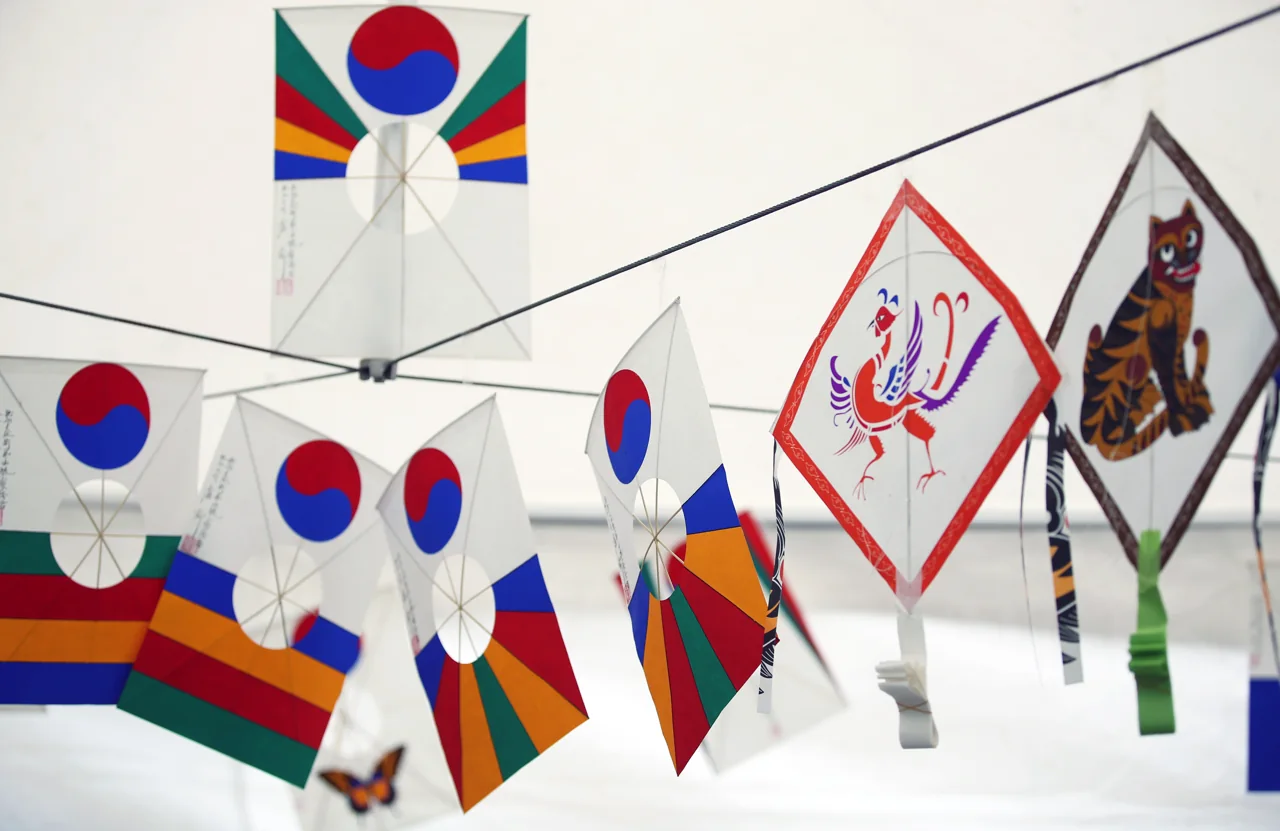
Namsangol Hanok VillageMap held its Seollal festival on three days of the last holiday, from 10:00 to 17:00, with traditional performances and hands-on activities. Entry was free and some activities carried a small charge (Seoul city announcement). Unhyeongung, a former royal residence near Insadong, held its own Seollal program. Outside the city, the Korean Folk Village in Yongin ran a Seollal and Daeboreum program from the first day of the holiday until Daeboreum, a little over two weeks, and several regional national museums laid on traditional games.
Restaurants, shops and late transport
We found no official list of what closes. Many restaurants and shops close on Seollal day and the day before, so if there is a particular place you want to eat or shop, check its hours before you go.
At the last holiday, the subway and some bus routes serving the bus terminals and railway stations ran until 1:00 a.m. on Seollal and the day after. The city announces its holiday transport arrangements each year.
Jeonju over the holiday
At the last Seollal, Gyeonggijeon shrine in Jeonju stayed open through the holiday with its usual paid admission, the Royal Portrait Museum held a Seollal event, the main streets of the Jeonju Hanok Village were closed to cars, and the Jeonju Daesaseupcheong staged Seollal performances on the first three days of the holiday, then closed on Seollal day and the day after. The city posts its holiday program on its Seollal page.
5. Getting Around During the Seollal Holiday
Train tickets for the days around Seollal go on sale first through a domestic holiday booking window, three to four weeks before the holiday. At the last two holidays this window was open to Korail members only, through the Korail Talk app and a dedicated holiday booking page. We found no official Korail guidance on whether foreign visitors can use this window.
Trains
In practice, trains on the days just before and after Seollal sell out early. Either move your rail journeys outside the holiday, or buy as soon as tickets for your dates are released. Regular tickets now go on sale two months before departure, and Korail runs a booking site for foreign visitors.
KORAIL PASS sellers warn that seat reservations may not be available over national holidays. If your pass days overlap with Seollal, read the conditions before you buy.
Trains on the days either side of Seollal sell out early. If your itinerary depends on a train during the holiday, buy the moment sales open for your date, or rearrange the trip so you stay in one city over the holiday.
Roads
Highways jam as people drive home before Seollal and back after it. At the last holiday, the drive from Seoul to Busan was reported to take more than six hours. The government announces a highway toll waiver for the holiday each year, which only matters if you rent a car.
Flights to and from Jeju
Jeju airport is busy over Seollal, and February weather adds its own risk. In each of the last two Februaries there was a day when heavy snow and gales cancelled more than a hundred flights. If Jeju comes near the end of your trip, leave a spare day between your last Jeju flight and your international flight home.
If something goes wrong
Emergency rooms stay open throughout the holiday, and Seoul publishes a list of hospitals running emergency departments each year.
For help in English, call the Korea Tourism Organization’s 1330 Travel Helpline: dial 1330 inside Korea or +82-2-1330 from abroad, or use its chat service. Seoul’s 120 Dasan Call Center takes foreign-language calls only on weekdays from 9:00 to 18:00, so it cannot help in English over the holiday.
6. Daeboreum: Moon House Bonfires for the First Full Moon
Daeboreum falls on the 15th day of the first lunar month, two weeks after Seollal. In eight of the last ten years it fell in February, and in the other two in early March. The next one is February 21, as shown in the date table. It is not a public holiday, so offices and shops run as normal.
How a moon house burning works
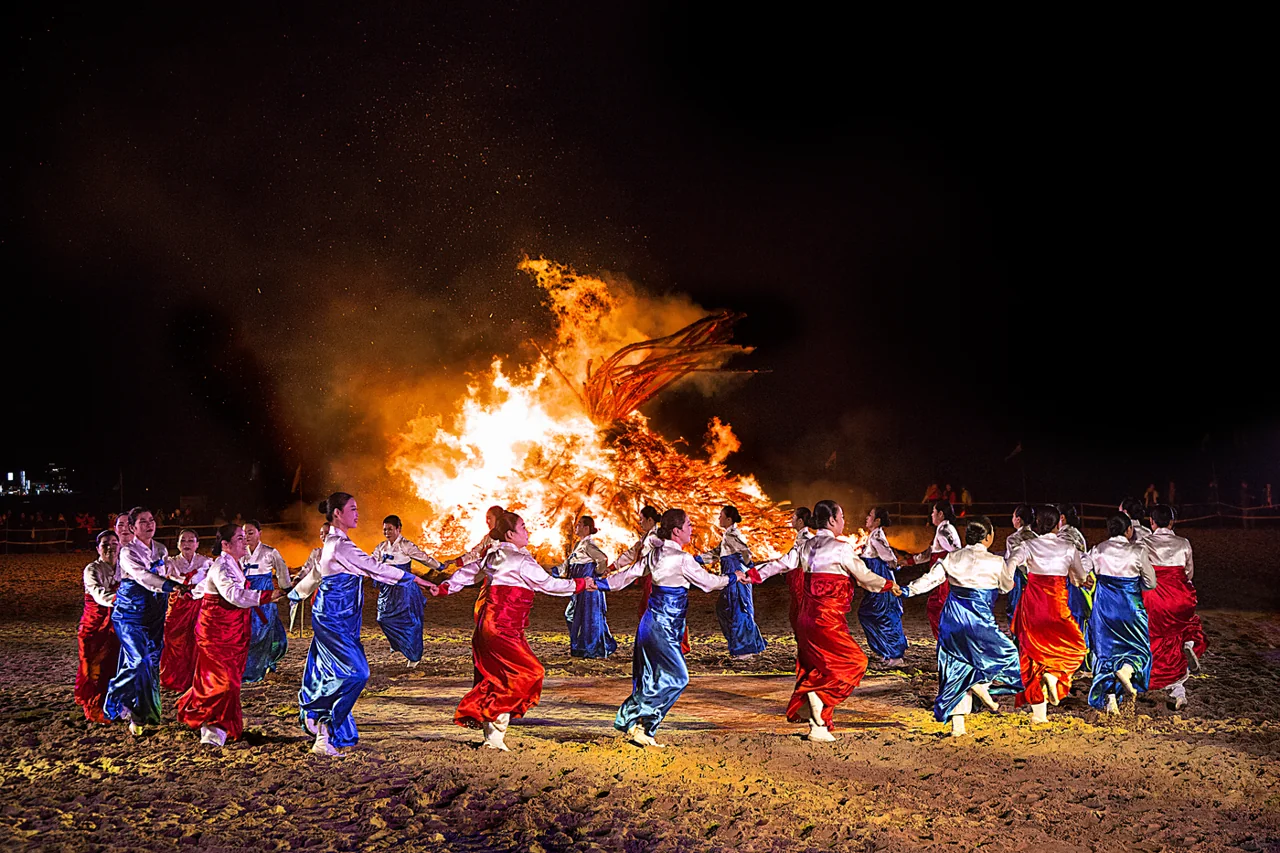
The main event is daljip taeugi, the burning of a moon house: a tall stack of branches and straw built on a beach or riverbank. During the day people tie paper wishes to it, and it is set alight as the moon rises. Around it there is usually pungmul drumming, jisin-balgi (a procession that treads the ground to bless the households for the year) and ganggangsullae, a circle dance with joined hands. Jwibulnori, swinging cans of burning embers, is done with LED lights instead in some places. The events are free.
Moon house burnings depend on the weather and the wildfire risk. At the last February edition, the burning at Namsangol in Seoul was cancelled because of the weather, and Songdo in Busan cut its moon house to a third of the usual size and lit it remotely. Some local governments postpone or cancel the burning when the wind is strong, so check on the day.
Where to watch in Busan
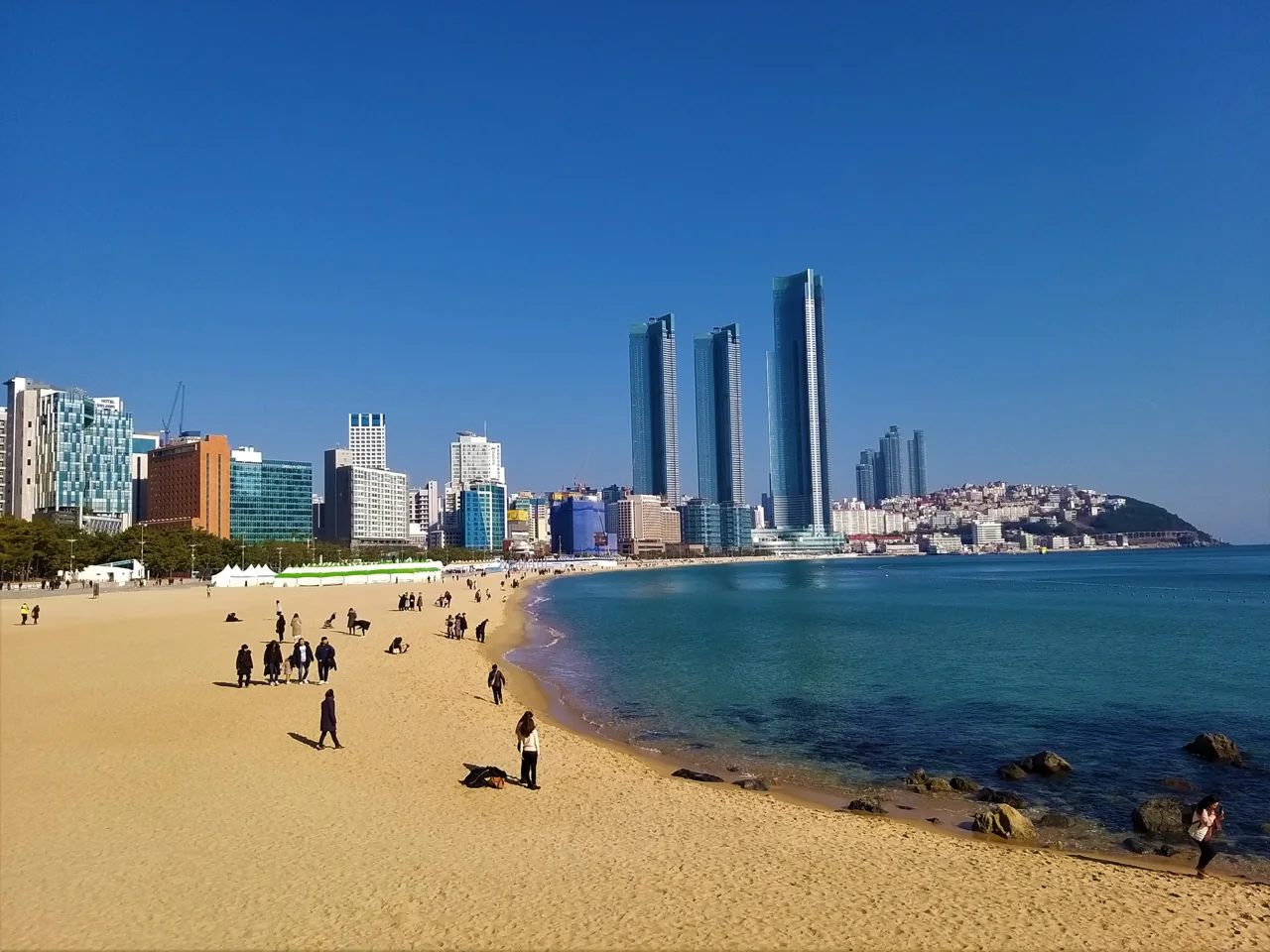
Busan burns moon houses at several beaches and riverbanks on the same evening. At the last edition held in February, the Dalmaji Hot Spring Festival on Haeundae BeachMap lit its moon house at moonrise, 17:42 (Haeundae festival page). At the edition before that, the city listed burnings at Haeundae, Gwangalli, Songdo, Dadaepo, Samnak Ecological Park, Geumjeong and around Cheolma in Gijang, with an LED moon house at Yongho in Nam-gu that is lit up but never set on fire (city venue list).
Seoul and other cities
In Seoul, Namsangol Hanok Village hands out nuts, collects wishes and stages pungmul, and Seokchon LakeMap in Songpa has held a moon house burning. The National Folk Museum runs a Daeboreum program as well. Outside the capital, Cheongdo in North Gyeongsang builds a large moon house on the banks of the Cheongdocheon, Gangneung holds the Gangneung Mangwolje on the banks of the Namdaecheon, and Gyeongju burns one on the Seocheon riverside of the Hyeongsan River.
What people eat
The Daeboreum table, as described in the National Folk Museum’s Encyclopedia of Korean Folk Culture, includes ogokbap, rice cooked with five grains (rice, foxtail millet, sorghum, red beans and soybeans), and mugeun namul, vegetables dried the year before, then soaked and seasoned. On the morning itself people bite into hard nuts such as chestnuts, walnuts, ginkgo nuts and pine nuts, a custom called bureom kkaegi that is meant to keep boils away for the year. In the days before, markets and supermarkets stack up nuts and dried greens.
7. Snow and Ice Festivals That Run into February
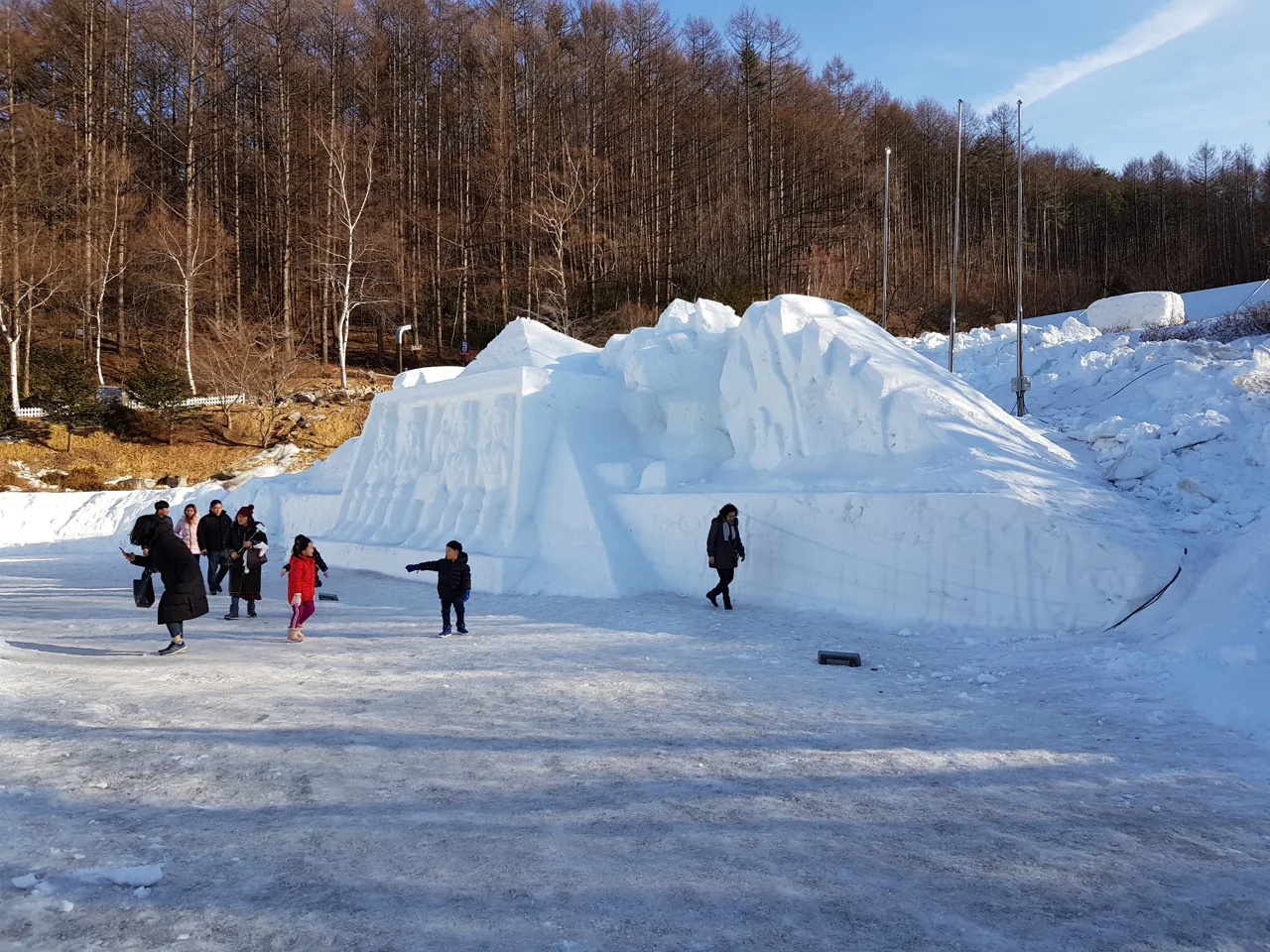
The Daegwallyeong Snow FestivalMap in Pyeongchang fills a field with large snow sculptures, sledding runs and ice slides. The last edition ran from February 13 to 22 and closed early on its final day because of strong wind and rain. The next edition has been announced for late January into early February, so the festival starts in late January in some years and in mid-February in others. Dates are posted on the festival site.
Gangwon’s snow festivals
The Taebaeksan Snow Festival at Danggol SquareMap in Taebaek sets out snow sculptures that stay on display after dark. The last edition ran from January 31 to February 8, and many visitors pair it with a snow hike on Taebaeksan itself, covered in the hiking section (festival site).
The Pyeongchang Trout Festival, with ice fishing on a frozen stream, usually closes between late January and early February; at the last edition the opening was delayed, and it ran until February 9, into the second week of the month (festival site). The Hwacheon Sancheoneo Ice Festival ends in late January, so for that one see Korea in January.
| Festival | Where | Last edition | What is there |
|---|---|---|---|
| Daegwallyeong Snow Festival | Daegwallyeong, Pyeongchang | February 13 to 22 | Snow sculptures, sledding, ice slides |
| Taebaeksan Snow Festival | Danggol Square, Taebaek | January 31 to February 8 | Snow sculptures on view after dark, close to the Taebaeksan trails |
| Pyeongchang Trout Festival | Jinbu, Pyeongchang | Until February 9 | Ice fishing for trout |
| Nami Island winter festival | Nami Island, Chuncheon | Until the end of February (free sled slope until around mid-February) | Winter displays and a sled slope for island visitors |
Near Seoul
Closer to the capital, some ice festivals have run into late February. Last season the Pocheon Baegun Valley Dongjanggun Festival ran into late February and the Yangpyeong ice trout festival into early March.
Nami Island’s winter festival ran until the end of February last season, and its free sled slope for island visitors stayed open until around mid-February; check the exact dates on the official site. Details are on the Nami Island notice, and our Nami Island day trip guide covers the ferry and the trip from Seoul.
In Cheorwon, the Hantan River ice trekking festival is held in January, but the Mulwitgil, a floating walkway on the river, stays open into spring. Last season it ran from November to April and closed on Tuesdays (walkway information).
8. Skiing in February, the Final Weeks of the Season
February is still well inside the ski season. Resorts that opened their upper and summit runs one by one through January generally have most of them open in February. Each resort posts the runs and lifts open that day on its own site, so check before you go.
How much is open
Conditions change by resort and by week. The larger resorts in Gangwon Province keep the widest choice of runs going for longest, and our guide to Korea’s ski resorts compares them one by one.
We found no figures on how busy the slopes get over Seollal, so we cannot say whether the holiday makes them quieter or busier.
When resorts start closing
Last season the resorts closest to Seoul, Konjiam, Jisan and Vivaldi Park, closed in the first week of March. Konjiam moved into its final operating period from late February, and High1 ResortMap closed some of its runs at the end of February (High1’s run-by-run closing notice). Many of the bigger resorts, such as Mona Yongpyong, Phoenix and Muju, have stayed open into March.
Skiing in the last week of February? Pick one of the larger Gangwon resorts, which keep more runs open into March than the resorts near Seoul.
Getting there from Seoul
Vivaldi Park runs a paid shuttle for foreign visitors from Hongik University, Dongdaemun History and Culture Park, Konkuk University and Sports Complex stations. Last season it operated until early March (shuttle booking).
Without a car, the other options are the intercity buses and trains to Gangwon, or an organized day tour from Seoul. Check what a tour includes, such as transport, lift pass, clothing and equipment, before you book.
9. Snow Hikes, and When the Wildfire Trail Closures Begin
On Deogyusan in Muju, a gondola climbs to SeolcheonbongMap at 1,520 m, and the summit, Hyangjeokbong, is about a 20-minute walk from the top station. From October through February, gondola rides on weekends and public holidays must be booked in advance, with booking opening at 17:00 two weeks before the ride date. On weekdays tickets are sold on site, and in winter the gondola runs uphill from 09:00 to 16:00 (gondola information).
Deogyusan and Taebaeksan
Rime frost, the white crust that builds up on branches in freezing fog, has been recorded on Deogyusan in February, but only during long spells below freezing. On Taebaeksan, rime on the summit was reported early last February, and the climb fits neatly with a visit to the snow festival at the foot of the mountain.
Hallasan in winter
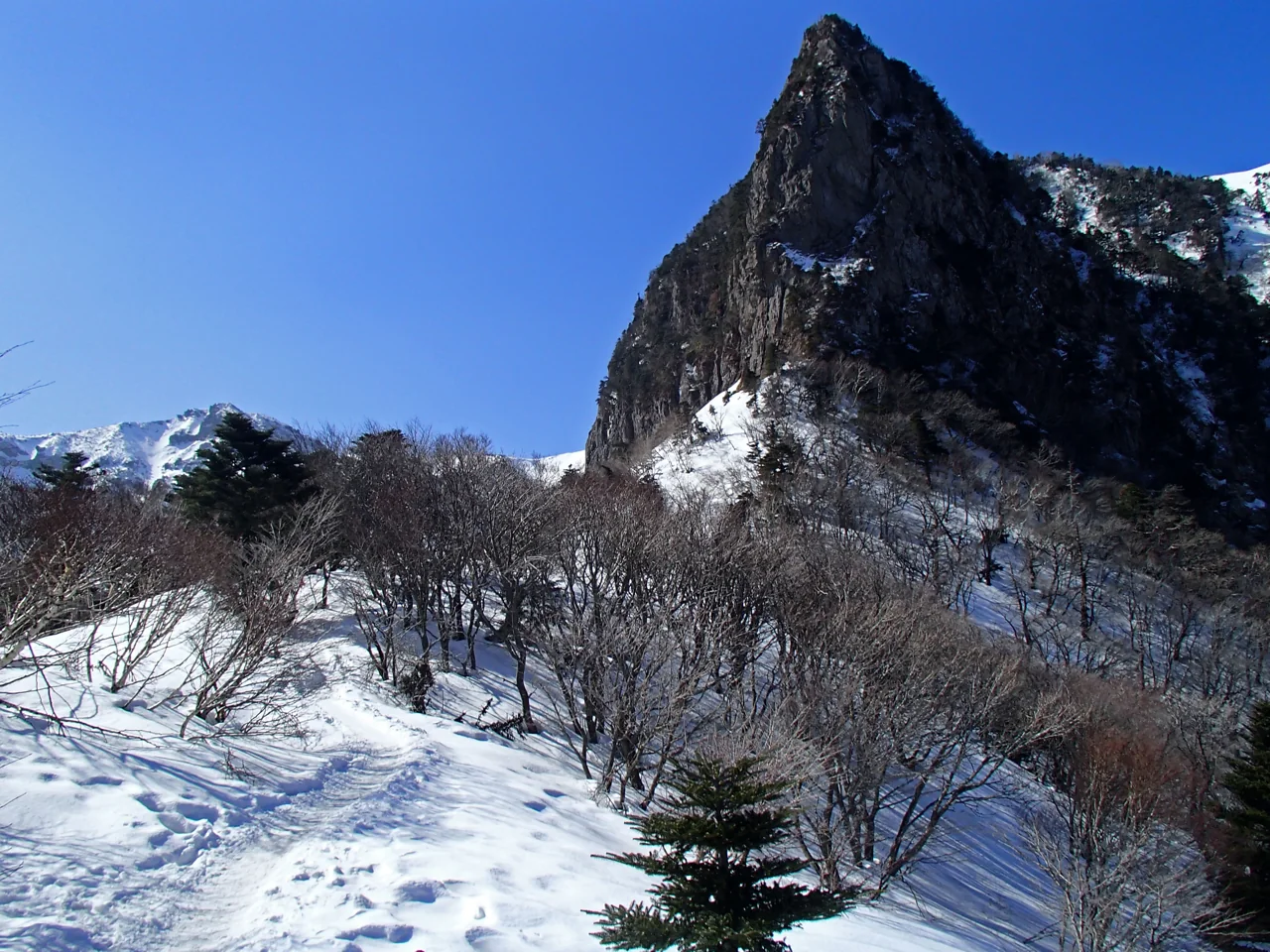
Hallasan on Jeju runs on winter rules. Local press reported a 05:00 opening time for all trails, and the park lists the last entry as 11:30 at SeongpanakMap and Gwaneumsa, 12:00 at Eorimok and Yeongsil, and 10:00 at Donnaeko. The two routes to the summit, from Seongpanak via Jindallaebat and from Gwaneumsa via Samgakbong, need a reservation, and each month’s places open at 09:00 on the first working day of the month before (Hallasan National Park).
Heavy snow advisories and warnings close trails partly or completely. In each of the last two Februaries every trail was shut on at least one day, and in one of those years the summit sections stayed closed for about a month.
Do not tie your Hallasan summit attempt to a single day in February. Keep two or three possible days free, and have a shorter, lower walk ready in case the upper trails close.
Wildfire season and trail closures
The spring wildfire prevention period normally starts on February 1 and runs to mid-May; last season it was moved up to January 20 because of the dry weather. During it, national parks close some trails. Last spring, nine parks including Gyeongju, Palgongsan near Daegu and Jirisan closed parts of their trail networks from February 15, while Deogyusan, Seoraksan, Taebaeksan and Sobaeksan started in early March and had no closures in February.
If you plan a mountain hike after mid-February, look up the closed sections on the Korea National Park Service site first. Lighting fires and smoking are banned on the mountains. Seoraksan had no fire closures in February but does have winter entry hours; see our Seoraksan guide.
10. Seoul in February: Rinks, Palaces, Museums and Evenings Out
The Seoul Plaza skating rink closed on February 8 last season and on February 9 the season before (Seoul Plaza). An hour on the ice costs 1,000 won with skates included (Seoul city announcement).
Ice rinks and sled slopes
The Han River sled parks at Ttukseom, Jamwon and Yeouido ran last season until around the Seollal holiday in mid-February (Seoul city announcement).
Seoul’s winter light displays all finished in January last season, including the Seoul Lantern Festival, the Gwanghwamun lights and the Shinsegae department store façade. For lights that stay on into February, look to Busan, covered in the next section.
Palace hours in February
Opening hours differ from palace to palace. Gyeongbokgung opens from 09:00 to 17:00 and closes on Tuesdays. Changdeokgung opens from 09:00 to 18:00 from February and closes on Mondays. Jongmyo opens from 09:00 to 18:00 and closes on Tuesdays. ChanggyeonggungMap and DeoksugungMap stay open until 21:00 all year and close on Mondays, which makes them the two palaces you can still walk around on a February evening (palace hours).
Tickets cost 1,000 to 3,000 won. Entry is free if you wear hanbok (except for the Secret Garden), and foreign visitors aged 18 and under or 65 and over also get in free. Under an expanded Culture Day scheme, palaces have been free on Wednesdays, except Gyeongbokgung and the Changdeokgung Secret Garden; it is a recent change, so check the fees page before relying on it. Our Gyeongbokgung and hanbok guide covers the largest palace in detail.
Jongmyo is open for free wandering on weekends, public holidays and Wednesdays. On Mondays, Thursdays and Fridays visits are by timed guided tour; tours run in English, Chinese and Japanese, with half the places on each tour booked online and half sold on site on the day. The Changdeokgung Secret Garden runs English tours three times a day in February, at 10:30, 11:30 and 14:30, booked and paid for separately; see our Secret Garden guide.
Museums for cold days
The National Museum of Korea is free, opens at 09:30 and stays open until 21:00 on Wednesdays and Saturdays. Its Monday gallery closures fall in other months, so every gallery is open in February; our National Museum of Korea guide picks out what to see. The National Museum of Modern and Contemporary Art in Seoul opens on Mondays as well, when many other museums are shut. For more ideas, see indoor things to do in Seoul.
Sport, Valentine’s Day and graduation season
There is no baseball in February, but professional volleyball and basketball are in mid-season in indoor arenas, and in some years the K League football season has kicked off in mid or late February.
Valentine’s Day in Korea is known as the day when mostly women give chocolate, and men return the gesture a month later on White Day, March 14. February is also graduation month: the Korean school year starts in March and ends in February, so flower sellers set up stalls outside schools on ceremony days.
11. Busan, the South Coast, Gyeongju and Jeonju
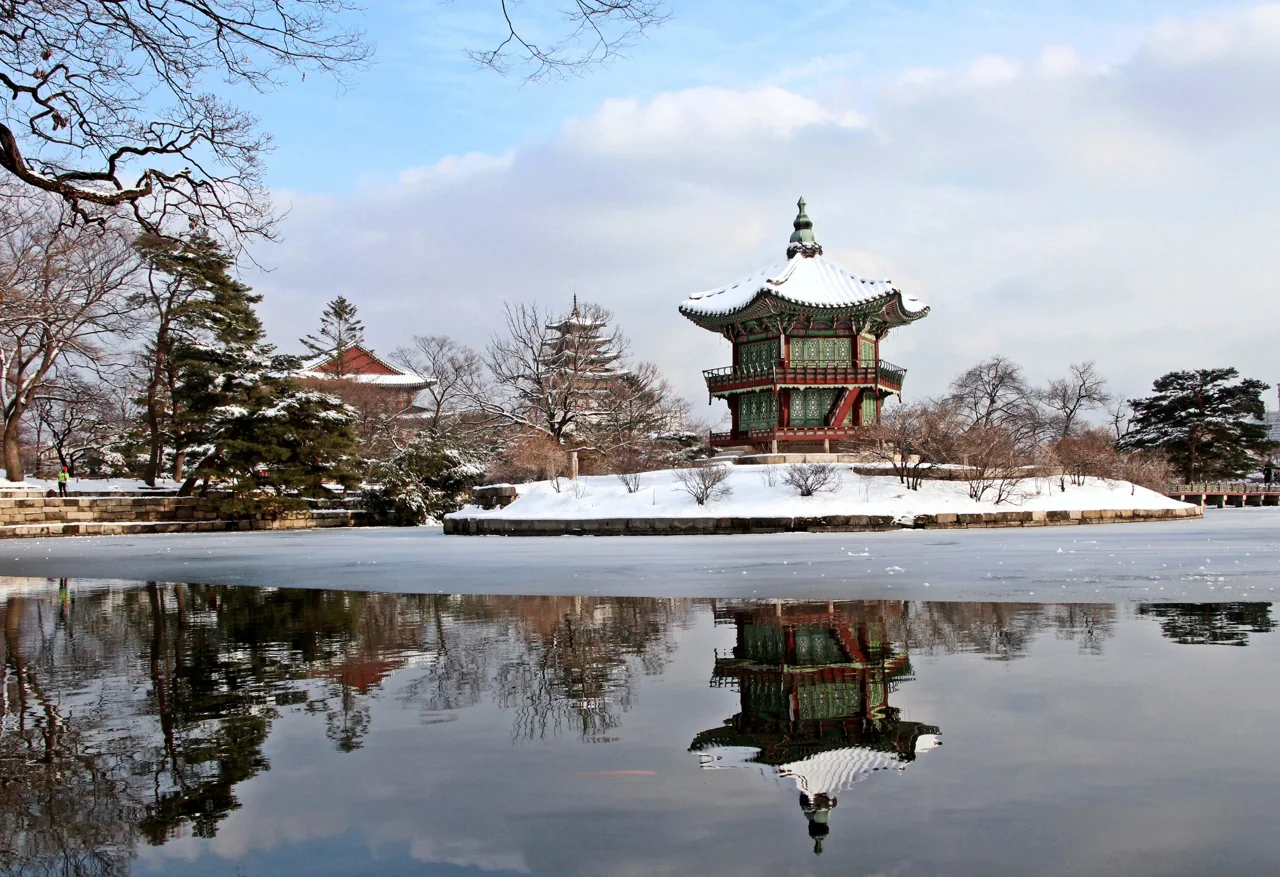
The Gwangbok-ro Winter Light Tree Festival in Busan’s old downtown ran until late February last season, lit from 17:30 to 22:00, which made it one of the few winter light displays still on in February (Visit Busan). Gwangbok-roMap itself is a short walk from Nampo and Jagalchi Market.
Busan
The Gwangalli drone show keeps running on Saturday nights through the winter, and one edition put on a special Seollal show. Camellias bloom on Dongbaekseom, and the plum orchard in Gijang starts flowering in mid-February and peaks in March.
The Daeboreum burnings on Busan’s beaches are covered above, and our Busan in February guide goes into the city’s month in more detail.
Yeosu and the camellia islands
OdongdoMap, a small island in Yeosu joined to the shore by a breakwater you can walk along, has about 3,000 camellia trees. They start flowering in winter and reach full bloom in March, so in February the island is partway into its season (Yeosu city tourism). More in our Yeosu travel guide.
Jisimdo, a small island off Geoje, is another camellia island. Korean press reports on its selection as a winter island to visit by the interior ministry and the Korea Tourism Organization put the best viewing from late February to mid-March.
Gyeongju and Jeonju
In Gyeongju, the Daereungwon tomb park is free to enter, with a fee only for Cheonmachong, the tomb you can walk inside, and Donggung Palace and Wolji Pond stay open until 22:00. Some trails in Gyeongju National Park, including on Tohamsan, fall under the mid-February fire closures described in the hiking section. More in our Gyeongju travel guide.
Jeonju’s February highlight is the Seollal program in the hanok village, described in the section on what stays open over the holiday. Our Jeonju travel guide covers the village, Gyeonggijeon and the food for the rest of the month.
12. Jeju in February: Early Blossoms, Citrus and Snow on Hallasan
The plum tree that the weather service watches in Jeju City first flowered between mid-January and mid-February in each of the last ten years, in February in most of them. Hallim ParkMap on the west coast has held a plum blossom festival from February into March in the past (Hallim Park’s plum festival page on Visit Jeju). In recent seasons, according to local press, it has opened its plum and daffodil gardens in February, and its daffodils have been recorded in flower in February. Norimae Park in Daejeong is another place to see plum blossom.
Plum blossom, daffodils and canola
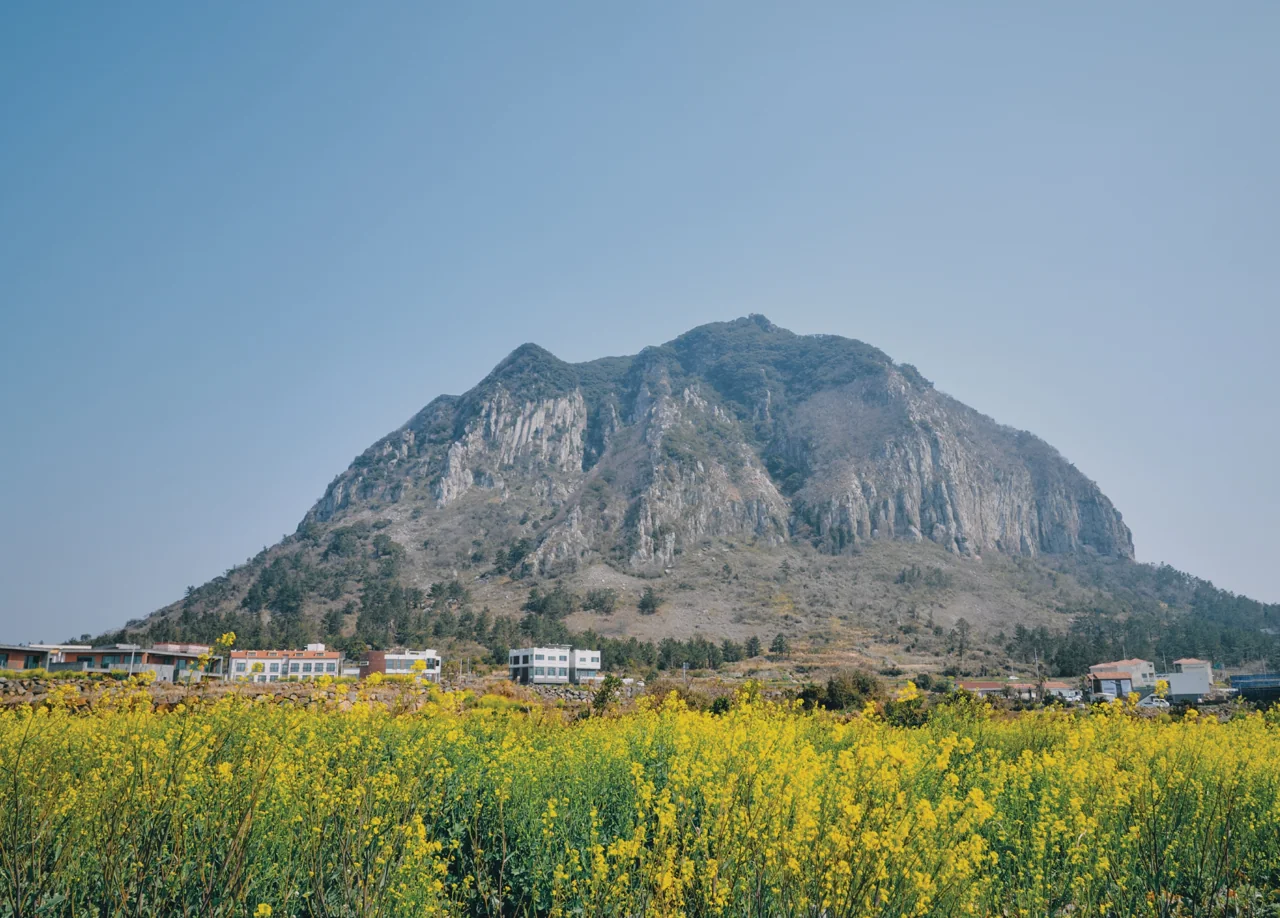
Canola at the Seongsan canola fieldsMap flowers from winter to early spring, according to the official listing, with the timing depending on the weather. The main fields are free, while some privately owned fields nearby charge for entry (Seongsan canola fields on Visit Jeju). Around Sanbangsan, canola was reported in bloom in mid-February in each of the last two years. The Seogwipo Canola Flower Festival is a separate event, held at the end of March or in early April.
Camellias and citrus
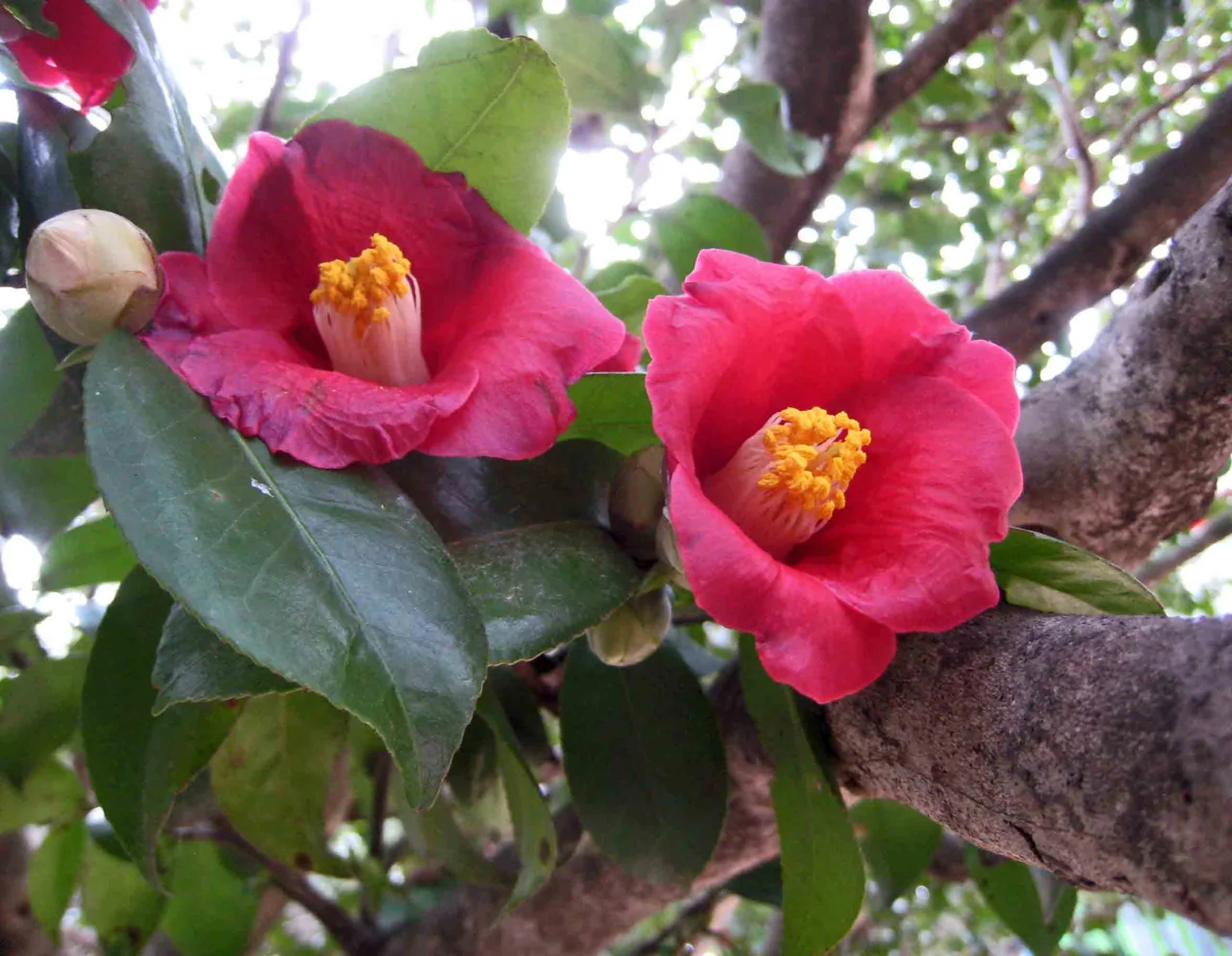
Camellia Hill describes its trees as flowering from autumn to spring, at different times for each variety, and the Wimi camellia grove flowers from late autumn into early spring. In February you will find the last of the early varieties alongside the late ones.
All three of Jeju’s well-known late-season citrus, hallabong, cheonhyehyang and red hyang, are on sale in February.
Ipchun-gut
The Tamna-guk Ipchun-gut is a Jeju new year rite and folk festival held over three days around Ipchun, the first day of spring on the traditional calendar, which falls around February 4. It takes place at Gwandeokjeong and the old Jeju Mokgwana government office in Jeju City, and it is free; the last two editions both ran from February 2 to 4 (Ipchun-gut on Visit Jeju).
Snow on the 1100 Road
The 1100 Road, which passes Eorimok, the 1100 Highland rest area and Yeongsil, is one of the island’s best-known places for snow scenery. Last season the Halla Snow Flower Buses, routes 1100 and 1100-1, ran from mid-December to early March, and they stop running when snow closes the road. Road closures are posted by the Jeju Provincial Police.
Parking enforcement around the 1100 Highland, Yeongsil and Eorimok is strict. Do not stop on the roadside for snow photos; take the bus, or use a proper car park.
Cloud and wind are common on Jeju in February, as the weather table shows, and the flight advice in the holiday travel section applies here too. Our Jeju travel guide helps you choose a base, and renting a car on Jeju covers licences and insurance.
13. What to Eat in February
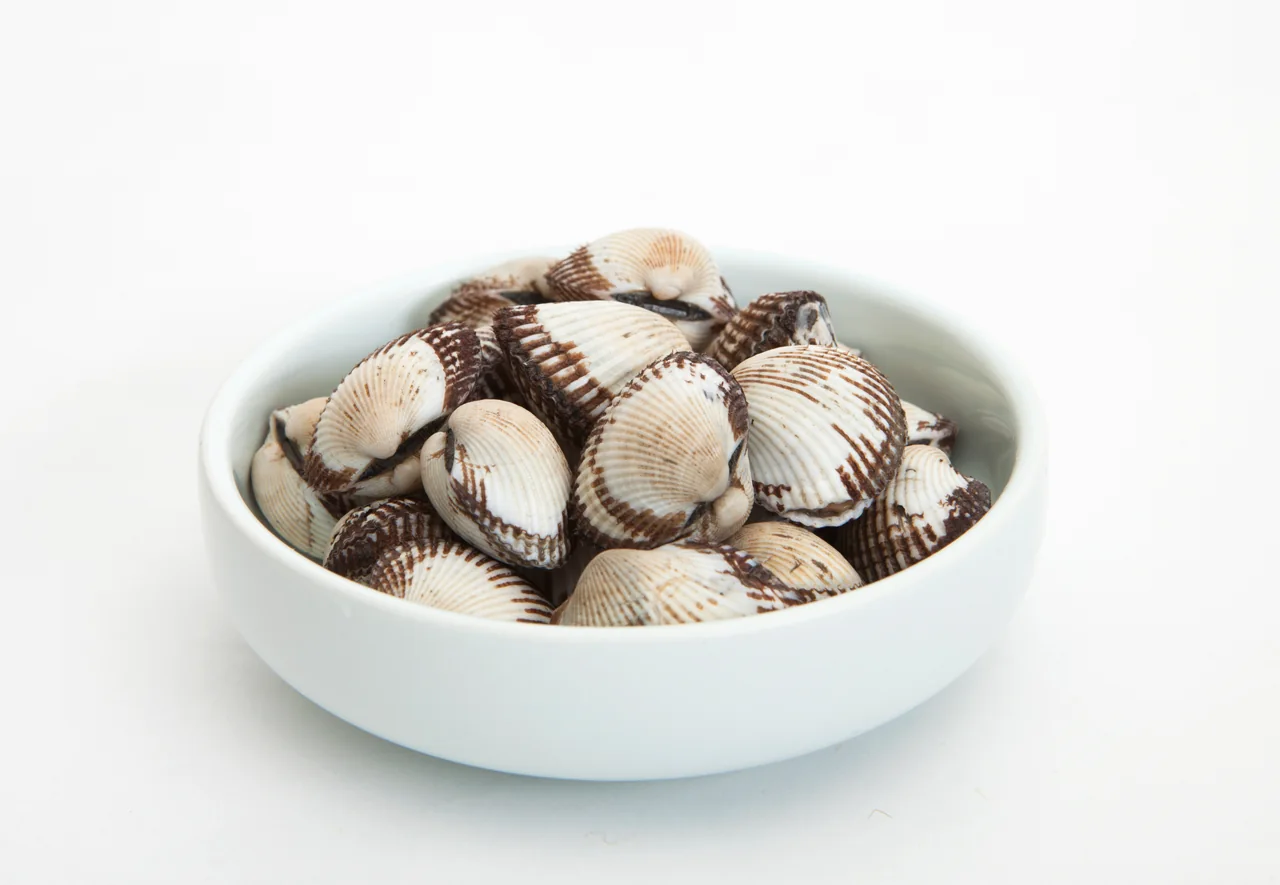
Cockles are the seafood the Ministry of Oceans and Fisheries has picked most often for February in its seafood-of-the-month list, five times in thirteen years, and the ministry says they are at their best in the cold of winter (ministry announcement).
Cockles from Beolgyo
Beolgyo and Suncheon in South Jeolla are the towns most associated with cockles. Try kkomak bibimbap, rice mixed with seasoned cockles, or a plate of plain boiled cockles. The Beolgyo cockle festival is held in November, so there is no cockle festival to plan around in February.
Snow crab from the east coast
February falls in the snow crab season on the east coast around Uljin and Yeongdeok; fishing is closed only from June to November. The ministry calls January and February the time when the crab is fullest and sweetest (ministry announcement). The Uljin snow crab festival at Hupo Port started at the end of February and ended in early March at each of the last two editions, while Yeongdeok’s festival is in March.
Egg cockles from Namdang Port
Saejogae, egg cockles, fill out in their January and February season, according to the ministry (ministry announcement). Namdang PortMap in Hongseong, South Chungcheong, opens its egg cockle festival in mid-January, and February fell within the festival at the last edition. They are usually eaten shabu-shabu style, dipped briefly into a hot broth at the table.
Oysters and snailfish
Oysters from Tongyeong and Geoje are harvested through the winter and into spring, so February is well inside the season; look for gulgukbap, oyster and rice soup, and gul-jeon, oyster pancakes. On the south coast, the ministry notes that winter is when the mulmegi (snailfish) catch is in full swing; it is served in a clear soup, mulmegi-tang.
Strawberries
Korean strawberries are at their peak supply from early January to late February, according to the Rural Development Administration’s crop calendar. Hotels in Seoul run strawberry dessert buffets and afternoon teas from winter into spring, and in every season we checked they were running throughout February. Jeju’s citrus is covered in the Jeju section.
Seollal food and winter street snacks
Tteokguk is the Seollal dish: thin slices of white rice cake simmered in a clear broth and eaten on the morning of Seollal. The Daeboreum dishes are described in the Daeboreum section. Street stalls keep selling the winter snacks through February, including bungeoppang, hotteok and eomuk. For a wider list of dishes, see what to eat in Korea.
14. Fewer Visitors, and a Discount Program for Foreigners
Across all nationalities, February drew fewer foreign visitors than any month except January in each of the last two years, and the ranking holds when you compare daily averages, so the shorter month is not the reason. For American visitors, February was the quietest or second-quietest month of the year in each of the last two years.
How quiet February is
March changes that. In the last two years, arrivals from Japan and the United States nearly doubled from February to March, and arrivals from Spain more than doubled. That makes February the last uncrowded month before spring.
The Seollal holiday week is the exception. Domestic travel peaks then on roads, trains and flights to Jeju, so a month that is quiet overall can still have a crowded week. We found no week-by-week figures, so plan around the holiday dates rather than any crowd forecast.
Korea Grand Sale
The Korea Grand Sale is a discount program for foreign visitors that covers flights, hotels, shopping and payment apps. Each of the last three editions ran until late February; two began in mid-January and the most recent began in mid-December. Dates and participating businesses are posted on the official Korea Grand Sale site and announced by the Ministry of Culture, Sports and Tourism.
Department stores and tax refunds
Korean department stores held their big seasonal sales in early January and early April at the last edition, so February tends to have no major store-wide sale. Instant tax refunds at participating shops work as usual.
For other ways to cut costs, see Korea travel deals.
15. Entry Rules, Air Quality, Daylight and What to Wear
Citizens of the United States, the United Kingdom, Canada and Australia are on the list of countries temporarily exempt from the K-ETA, Korea’s electronic travel authorization. The exemption has been announced to run until December 31, 2026, and extensions have been announced in December in the past, so check the official K-ETA site before you fly.
K-ETA and the arrival card
Travelers aged 17 and under or 65 and over do not need a K-ETA in any case. Our K-ETA guide explains who needs what.
If you enter without a K-ETA, you fill in an arrival card. You can choose between the paper card and the electronic one, and both are equally valid. The electronic card can be submitted from three days before arrival and is free (e-Arrival Card).
Fine dust and dry air
February falls inside Korea’s fine dust seasonal management period, which runs from December to March, the months when high fine-dust days are most frequent. Press reports based on government data rate March as worse than February. Check the latest readings on the AirKorea English website.
The air is very dry outdoors and in. Pack moisturizer and lip balm, and expect static. Underfloor heating (ondol) keeps rooms warm and dry, so wear layers you can take off when you step inside.
Keep lip balm and hand cream in your coat pocket rather than your suitcase. Dry air and heated rooms crack lips and knuckles within a day or two.
Daylight
In Seoul on February 1 the sun rises a little after 7:30 and sets just before 6 p.m.; by the end of the month sunrise is around 7:00 and sunset around 6:20, so the days gain about an hour of light over the month. In Busan the sun rises 10 to 15 minutes earlier than in Seoul, and on Jeju it sets 5 to 10 minutes later.
What to wear
In Seoul and Gangwon Province, dress as for January: a long padded coat, a hat and gloves, with more layers for the mountains and the ski slopes. In Busan and on Jeju, one warm coat plus a windproof layer covers most days. Toward the end of the month there are milder afternoons, so several layers you can peel off work better than one heavy outfit.
For staying online, see our eSIM guide for Korea, and for trains, buses and transit cards, read how to get around Korea.
16. Should You Visit Korea in February?
February suits you if you want to see Seollal, with free palace entry and folk events in Seoul, in a year when it falls in February. It also suits skiers and anyone who wants snow before the season ends, travelers who want Seoul without spring crowds, anyone hoping for early flowers on Jeju, and anyone keen on snow crab, cockles and strawberries.
Who should pick another month
Another month will suit you better if you want hiking or the spring flower festivals, which belong to March and April, or beaches, or warm weather. If you want to avoid holiday traffic, choose dates outside the Seollal holiday week.
Early, mid or late February
Early February has the winter festivals and skiing in full swing, at the tail of the coldest weather. From mid-February some national parks start closing trails for wildfire season; for the Seollal and Daeboreum dates, see the table above. Late February brings longer days, fewer open ski runs, flowers on Jeju and the start of the Uljin snow crab festival.
What changes in March
March 1 is Independence Movement Day, a public holiday. The mainland plum festivals at Gwangyang and at Wondong in Yangsan, the red plum blossom at Bongeunsa temple in Seoul and the Jeju Fire Festival all come in March. Foreign arrivals rise sharply, yellow dust becomes more frequent, and the professional baseball season opens in late March. Busan in March covers the start of spring in the south, and our season-by-season guide to Korea compares the rest of the year.
🎡Things to Do77
🍜Food8
🏨Where to Stay4
🚇Getting Around16
🧭Travel Tips27
📌More4
Korea in February: frequently asked questions
Images: Photographs via Wikimedia Commons: Republic of Korea / Korea.net (CC BY-SA 2.0), 생각하는 나무 (CC BY-SA 4.0), 칼빈500 (CC BY-SA 3.0), Lcarrion88 (CC BY-SA 4.0), Noh Mun Duek (CC BY-SA 4.0), 阿橋 HQ (CC BY-SA 2.0), Jeju Olle Foundation (CC BY-SA 4.0), National Institute of Korean Language (CC BY-SA 2.0 KR), soscs (CC0). Busan Tourism Archive: Jeong Jae-gyo / Busan Metropolitan City (KOGL Type 1).