
Ahopsan Forest, Busan: Tickets, Access and What Nobody Tells You
Adults pay 8,000 won and individuals walk in without booking. Getting there is the hard part — one village bus every 50 to 60 minutes
| Ticket | 8,000 won for adults. 5,000 won ages 5 to 18. 7,000 won for over-65s and groups of 30 or more. |
|---|---|
| Booking | Not needed for individuals. Only groups of 30+ phone ahead on 051-721-9183. |
| Hours | 09:00-18:00 March to November, 09:00-17:00 December to February. Last entry one hour before closing. |
| Walk | A 3.2km loop, 1 to 2 hours. No shop inside — bring water. |
| Getting there | No subway. The village bus runs every 50 to 60 minutes with two vehicles licensed. |
| Parking | Free. |
1. 8,000 won, and you can just turn up
2. Four things the internet currently gets wrong
3. Prices and opening hours
4. Who needs to book and who does not
5. Is 8,000 won a lot for a bamboo forest?
6. The name, the hill and the size question
7. The moso grove, 33,000sqm
8. Tortoiseshell bamboo, which you have to crouch to see
9. Pines, cypress and the family house
10. Nine generations of one family
11. The two stone pillars from The King: Eternal Monarch
12. The 3.2km loop, in order
13. Getting there 1: the bus runs twice an hour at best
14. Getting there 2: bus 184, driving, and taxis
15. Do not confuse it with Busan Healing Forest
16. When to come
17. Building a day around it in Gijang
A 400-year-old private forest in the hills of Gijang, an hour and a half out of central Busan. Part of our Busan travel guide.
1. 8,000 won, and you can just turn up
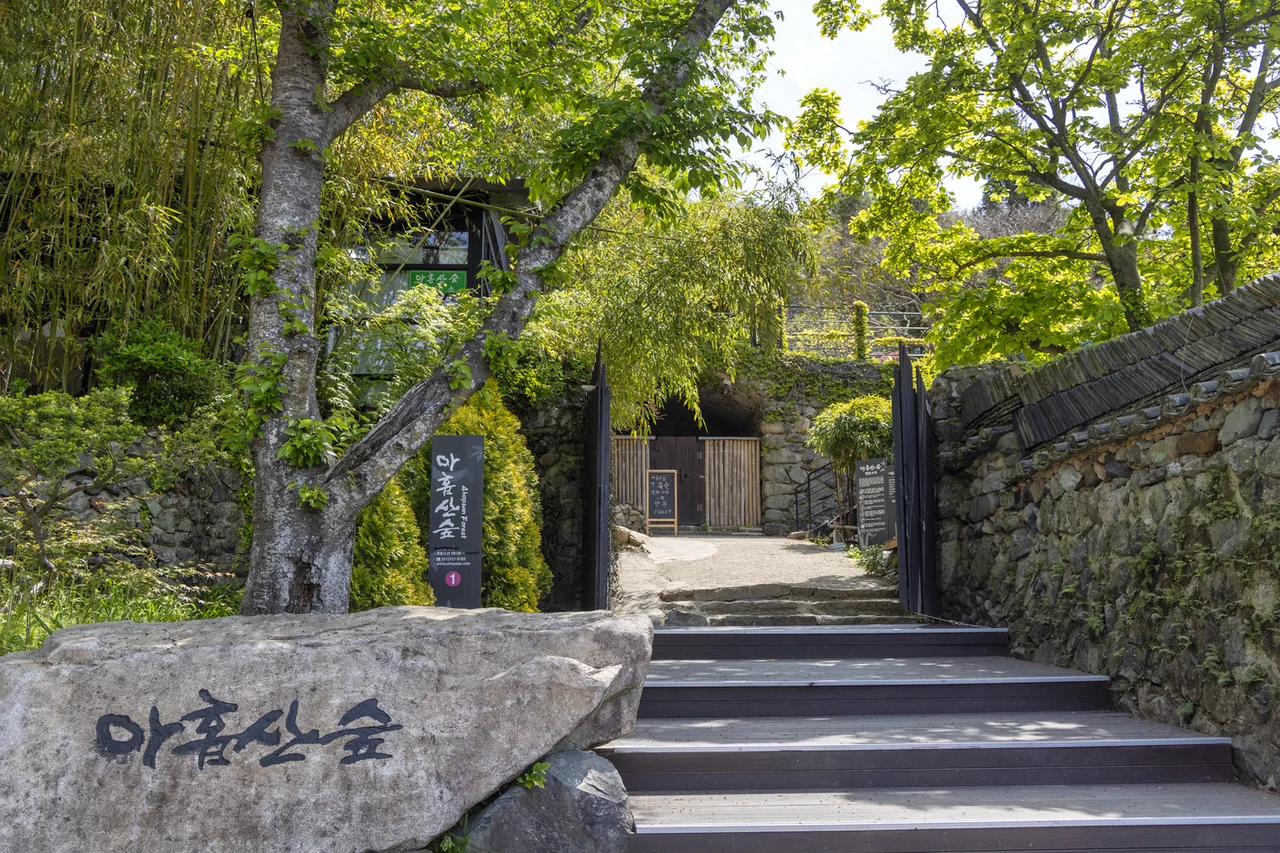
Ahopsan ForestMap charges adults 8,000 won, and individual visitors walk in without any reservation. Buy a ticket at the gate and go through. Parking is free.
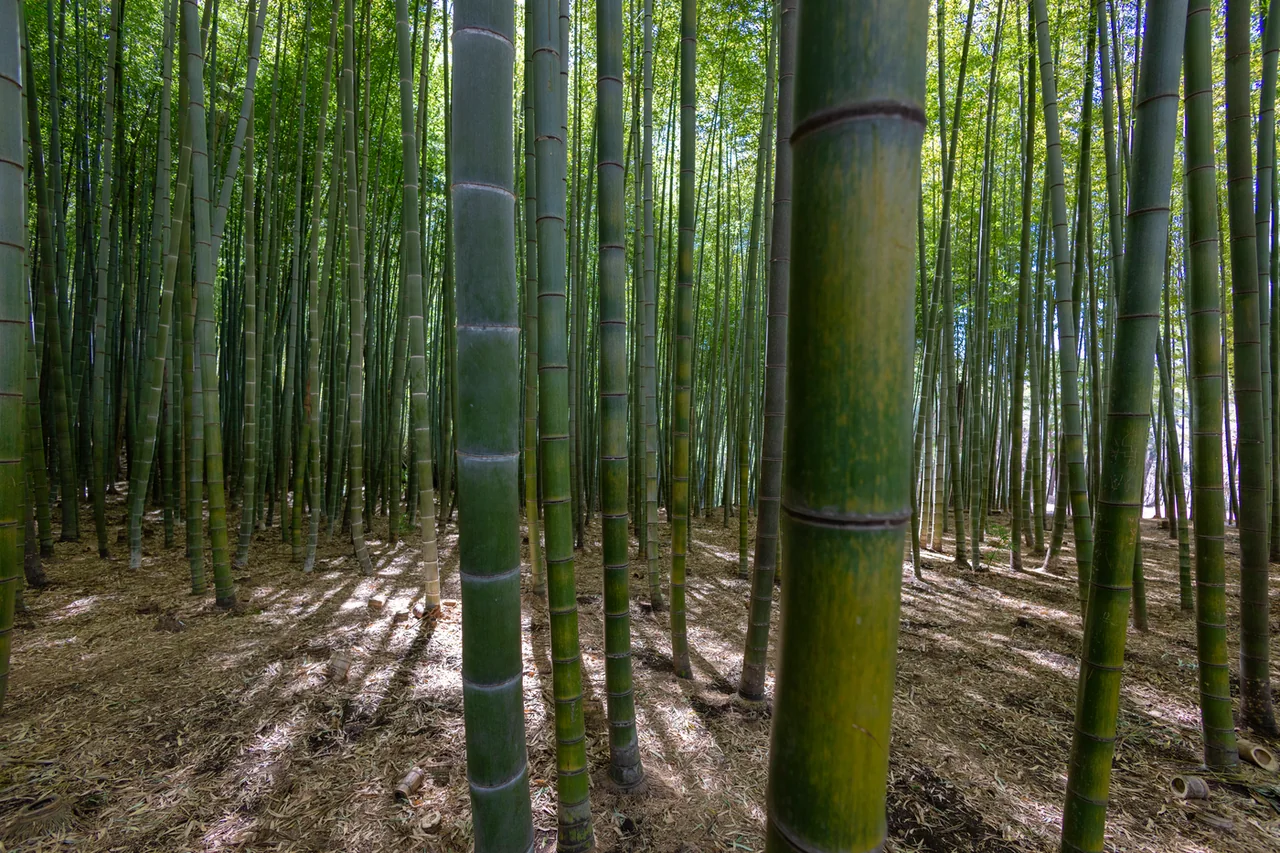
This is not a public park. The Nampyeong Mun family has owned and managed this hillside for nine generations, roughly 400 years, and it only opened to the public around 2015 to 2016. Most people come for one thing: a 33,000sqm stand of moso bamboo, the largest single-species bamboo grove in South Korea.
| Detail | |
|---|---|
| Address | 37-1 Midong-gil, Cheolma-myeon, Gijang-gun, Busan |
| Phone | 051-721-9183 (Korean only) |
| Adult | 8,000 won |
| Ages 5-18, disabled visitors, veterans | 5,000 won |
| Over 65, groups of 30+ | 7,000 won |
| Hours | 09:00-18:00 (Mar-Nov) / 09:00-17:00 (Dec-Feb), open daily |
| Trail | 3.2km loop, 1-2 hours |
One thing to settle before you commit to a day here. Ahopsan is not in Busan city — it is up a valley in Cheolma-myeon, Gijang County. There is no subway station. The village bus that goes past has two vehicles licensed to it. If you are travelling without a car, read section 13 before you decide.
2. Four things the internet currently gets wrong
Search results for this place are unusually out of step with what is actually true on the ground. These four come up constantly.
The ticket price is listed as 5,000 won
5,000 won is the rate for ages 5 to 18. Adults pay 8,000 won. Over-65s and groups of 30 or more pay 7,000 won. A good number of the pages ranking for this search list 5,000 won as if it were the only price.
The official website does not load
Gijang County’s tourism page and the Korea Tourism Organization both point to ahopsan.com as the official site. That address currently returns nothing. We tried it several ways in August 2026 and got an empty response every time. The only channel that actually works is the phone number, and it is answered in Korean.
“Advance reservation required” and “just walk in” both circulate
Official Korean sources contradict each other on this. Section 4 sets out who says what.
The bus information changed two weeks ago
The Gijang 2-3 village bus changed operator on 29 July 2026, from Yongjin to Chaseong, and the timetable changed again on 1 August. Any departure time written in a trip report older than that may no longer hold.
3. Prices and opening hours
Four price bands, and two sets of opening hours depending on the time of year.
| Who | Price |
|---|---|
| Adult | 8,000 won |
| Ages 5 to 18 | 5,000 won |
| Visitors with disabilities, national merit holders | 5,000 won |
| Aged 65 and over | 7,000 won |
| Groups of 30 or more | 7,000 won |
| Parking | Free |
Winter hours pull in by an hour at the end of the day.
| Period | Open | Last entry |
|---|---|---|
| March to November | 09:00-18:00 | 17:00 |
| December to February | 09:00-17:00 | 16:00 |
Note the gap between last entry and closing. The loop is 3.2km and takes one to two hours, so arriving at the last-entry cutoff means walking part of it and turning back. In winter, 16:00 is the real deadline.
Open every day of the year, including the Lunar New Year holiday.
4. Who needs to book and who does not
If you are visiting alone, as a couple or as a family, you do not need to book. Groups of 30 or more and coach parties phone ahead.
This gets its own section because the official Korean sources disagree, and depending on which one a traveller reads, plenty of people arrive believing the forest turns away anyone without a reservation.
| Source | What it says |
|---|---|
| Korea Tourism Organization | Entry limited to a set number of visitors who have reserved in advance, for conservation reasons |
| Visit Busan (city government) | Reservation required for tour coaches only |
| Tour operator conditions and visitor reports | Individuals buy at the gate; only groups of 20-30+ phone ahead |
Two of the three say groups only, and the guided tours sold through booking platforms are structured around paying admission on arrival, which would not work if individual entry were capped. We are not going to call the Korea Tourism Organization line simply wrong, though. Numbers may be limited at particular times, and the website that would confirm it is down.
5. Is 8,000 won a lot for a bamboo forest?
Korea’s two best-known bamboo groves are cheaper or free, which makes this a fair question. Side by side:
| Ahopsan Forest | Juknokwon, Damyang | Taehwagang, Ulsan | |
|---|---|---|---|
| Adult entry | 8,000 won | 3,000 won | Free |
| Run by | A private family | Damyang County | Ulsan City |
| Size | 33,000sqm bamboo grove | About 160,000sqm | About 142,000sqm |
| Walking distance | 3.2km | About 2.2km | About 4km |
| Beyond bamboo | Old pines, cypress, cedar, ginkgo | Waterfall, exhibition hall, tea house | Riverside path, night lighting |
The difference is who pays for the upkeep. Juknokwon and Taehwagang are public projects funded through local government budgets. Ahopsan is privately owned and receives no public money, so the gate covers the maintenance.
The experience is not the same product either. Taehwagang is a flat 4km riverside walk in the middle of a city, lit at night. Juknokwon has a tea house and an exhibition hall inside the grove. Ahopsan has none of that. What it has instead is the largest single-species moso stand in the country and a grove of 100 to 300-year-old pines on the same 3.2km loop.
6. The name, the hill and the size question
“Ahop” is the native Korean word for nine, not a Sino-Korean reading. What the nine refers to is not settled: some sources say nine peaks, others nine valleys. What is certain is that the highest point is 361m. This is a low hill and the trail goes nowhere near the summit.
There are 116 protected trees inside the boundary, individually designated. Four centuries of not cutting is what produced them.
The total area, though, is reported differently by every official source.
| Source | Area given |
|---|---|
| Gijang County | 429,752sqm |
| Korea Tourism Organization | 520,000sqm |
| Korean press | 150,000 pyeong (about 495,000sqm) |
Those three sit more than 90,000sqm apart and there is currently no way to settle it. The figures worth trusting are the 33,000sqm moso grove and the 3.2km loop.
7. The moso grove, 33,000sqm
This is the section almost everybody comes for. Moso bamboo, one species, planted across 33,000sqm — the widest single-species bamboo stand in South Korea.
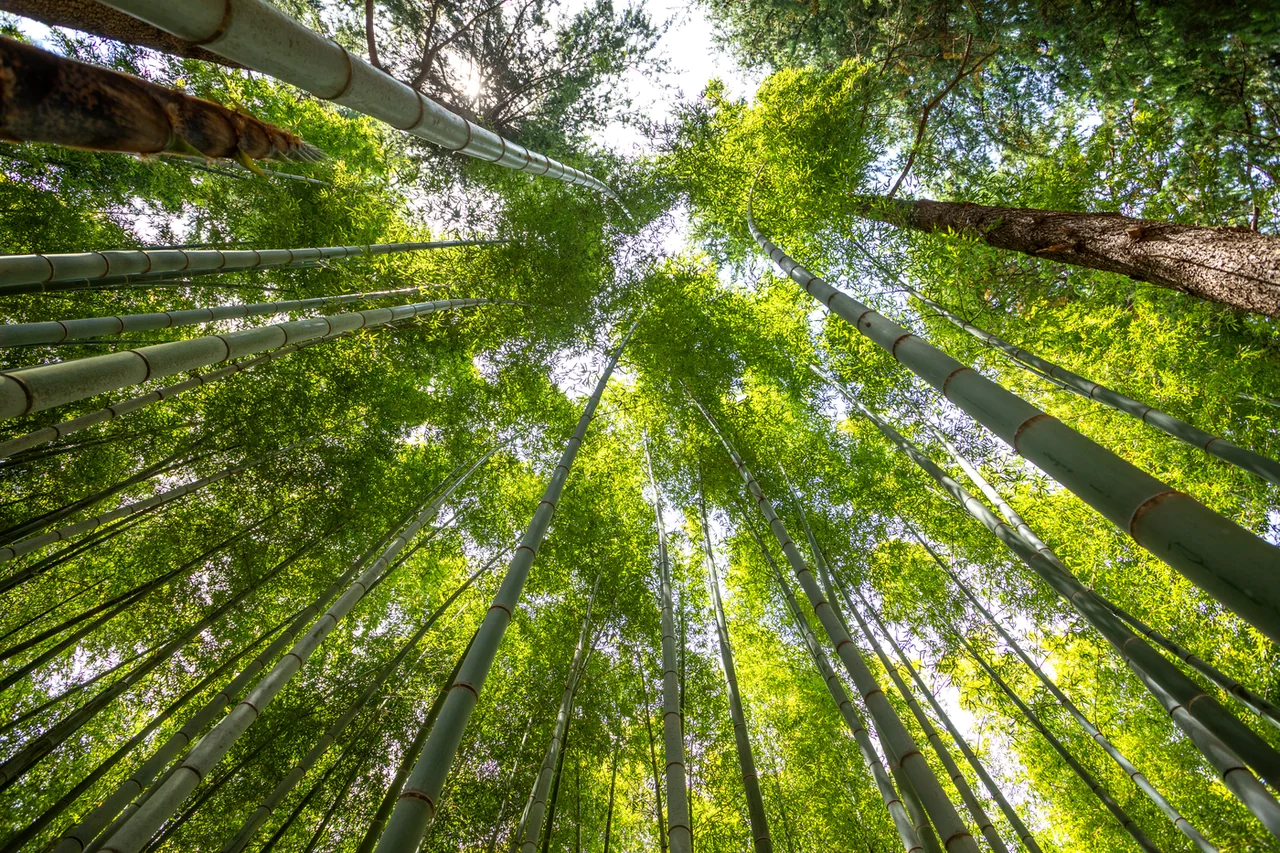
Moso is at the thick end of the bamboo range. Mature culms reach 10 to 20m tall with a diameter around 20cm, too wide to get both hands around. It is not native to Korea; it was brought over from China about 200 years ago.
Two things register when you walk in. The first is how dark it is — the canopy closes overhead and daylight arrives in fragments even at midday. The second is the sound, because in any wind the culms knock against each other.
| Detail | |
|---|---|
| Grove area | 33,000sqm |
| Height | 10-20m |
| Culm diameter | About 20cm |
| Introduced | About 200 years ago, from China |
On trail signage this stretch is marked Gutteo moso grove. The two stone pillars in section 11 stand in the middle of it.
8. Tortoiseshell bamboo, which you have to crouch to see
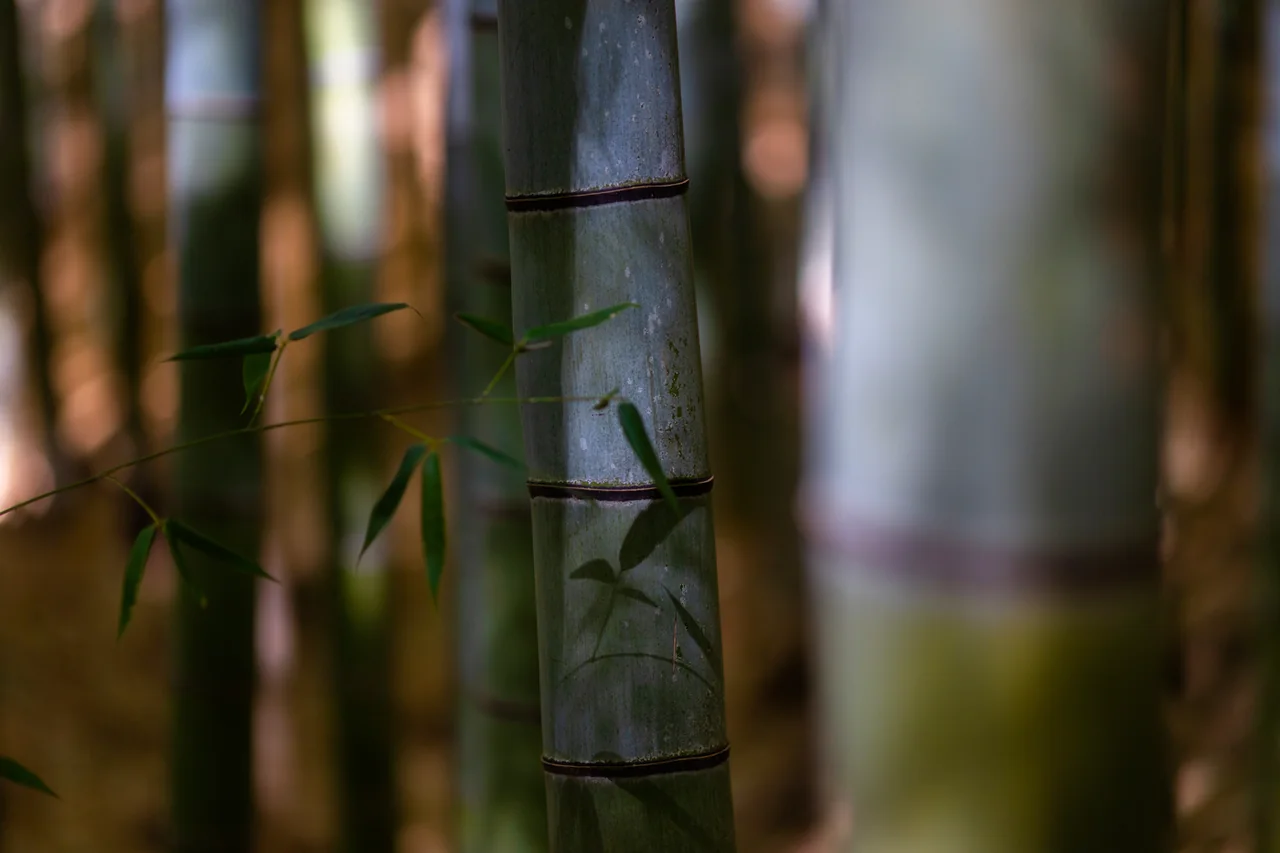
Most visitors walk straight past the second species. Ahopsan also grows gugapjuk, tortoiseshell bamboo, which is rare in Korea.
Its lower internodes grow at alternating angles, so the base of each culm carries a pattern that looks like the plates of a turtle shell. It is short and thick rather than tall and straight.
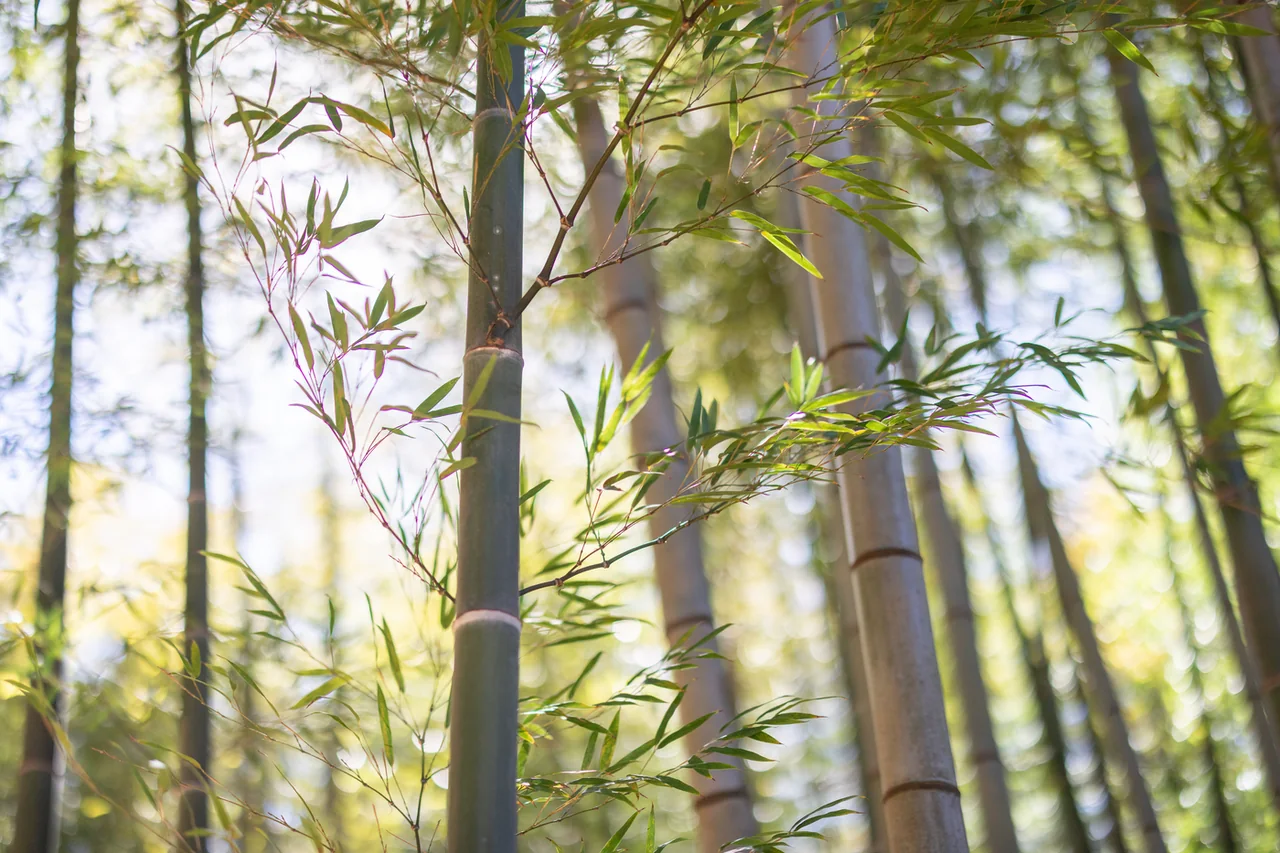
The catch is where to look. In the moso grove your head is tilted back. The tortoiseshell pattern sits at about knee height, and only on the lowest few segments of each culm — stand upright and you will miss it entirely.
9. Pines, cypress and the family house
The first thing past the ticket booth is not bamboo. It is pine.
Geumgang pine
A stand of Korean red pine aged 100 to 300 years. It reads completely differently from the bamboo — open overhead, red trunks running straight up, floor of soil and needles rather than closed green.
Cypress
Later in the loop the trail passes through planted hinoki cypress. The smell changes sharply enough that you notice the transition without looking for it.
And the rest
Cedar, fir, ginkgo and Mongolian oak all appear along the circuit. This mix is the product of four centuries of one family deciding what to plant and what to leave.
Gwanmiheon
The family’s head house, Gwanmiheon, stands at the edge of the forest. This is where the people who kept the place lived.
You move from pine to bamboo to cypress over the course of one circuit. That sequence, more than the distance, is why the walk takes one to two hours.
10. Nine generations of one family
Ahopsan is private land, not a park. The Nampyeong Mun family settled in Midong village after the Japanese invasions of the 1590s and have managed this forest for nine generations and some 400 years since.
That ownership explains the visiting conditions. The entry fee, the ban on dogs, the complete absence of a shop or a vending machine — all of it follows from the fact that this is somebody’s land rather than a municipal facility.
It opened to the public around 2015 to 2016. For most of those four centuries no outsider walked in at all. Even now the accessible area is defined and marked, and you are expected to stay inside it.
The 116 protected trees are a direct result of the same policy. Neighbouring hillsides were logged repeatedly over the same period.
11. The two stone pillars from The King: Eternal Monarch
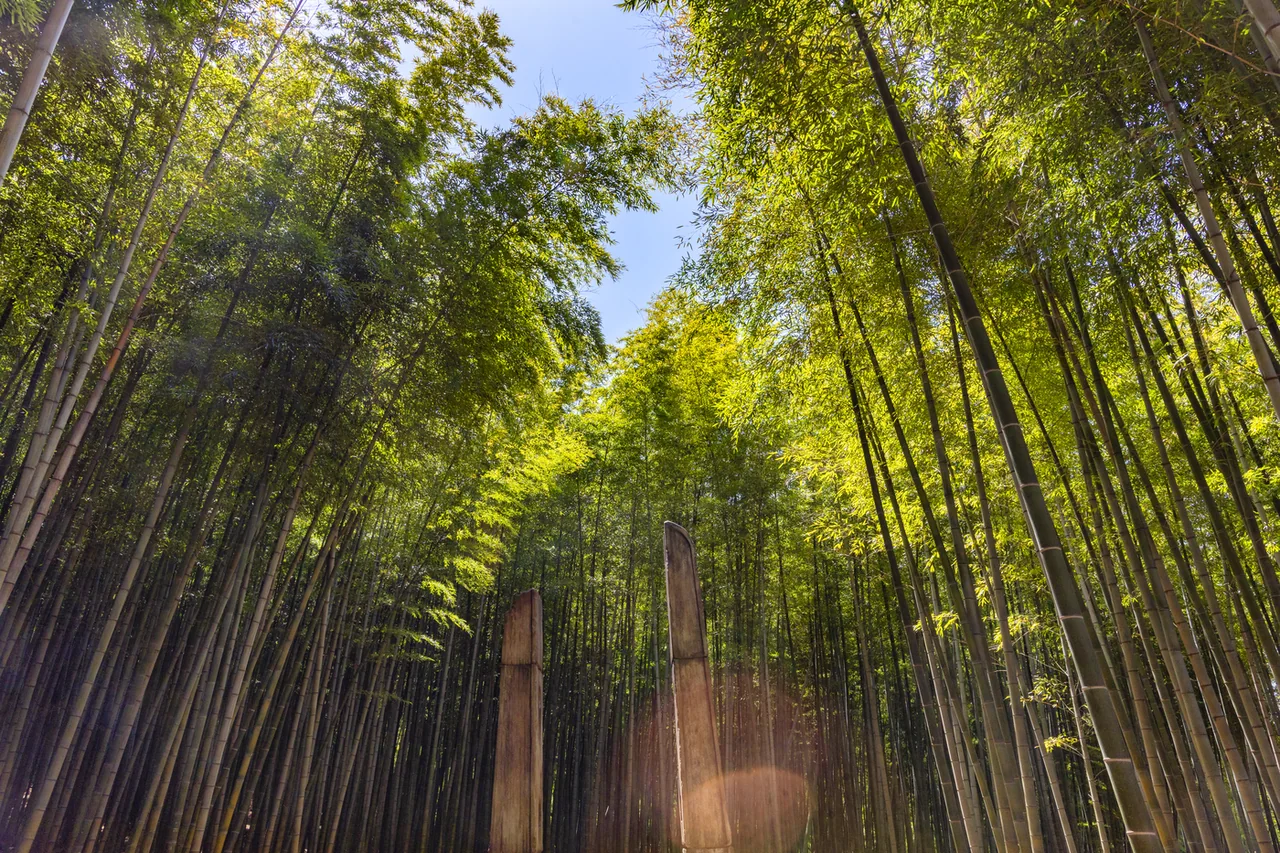
Two stone pillars stand in a clearing in the middle of the moso grove. In The King: Eternal Monarch (2020) this is the gate between two parallel worlds, and it is comfortably the busiest spot in the forest.
Several productions have filmed here.
| Production | Year |
|---|---|
| Kundo: Age of the Rampant | 2014 |
| Memories of the Sword | 2015 |
| The Tiger | 2015 |
| The King: Eternal Monarch | 2020 |
The forest also appears in the Korea Tourism Organization’s Feel the Rhythm of Korea 2 campaign, in the Busan and Tongyeong film.
The pillars are shaped like danggan jiju, the paired stone supports that held temple banners. They are set dressing left in place after filming, not historical artefacts, and a fair number of visitors assume otherwise.
12. The 3.2km loop, in order
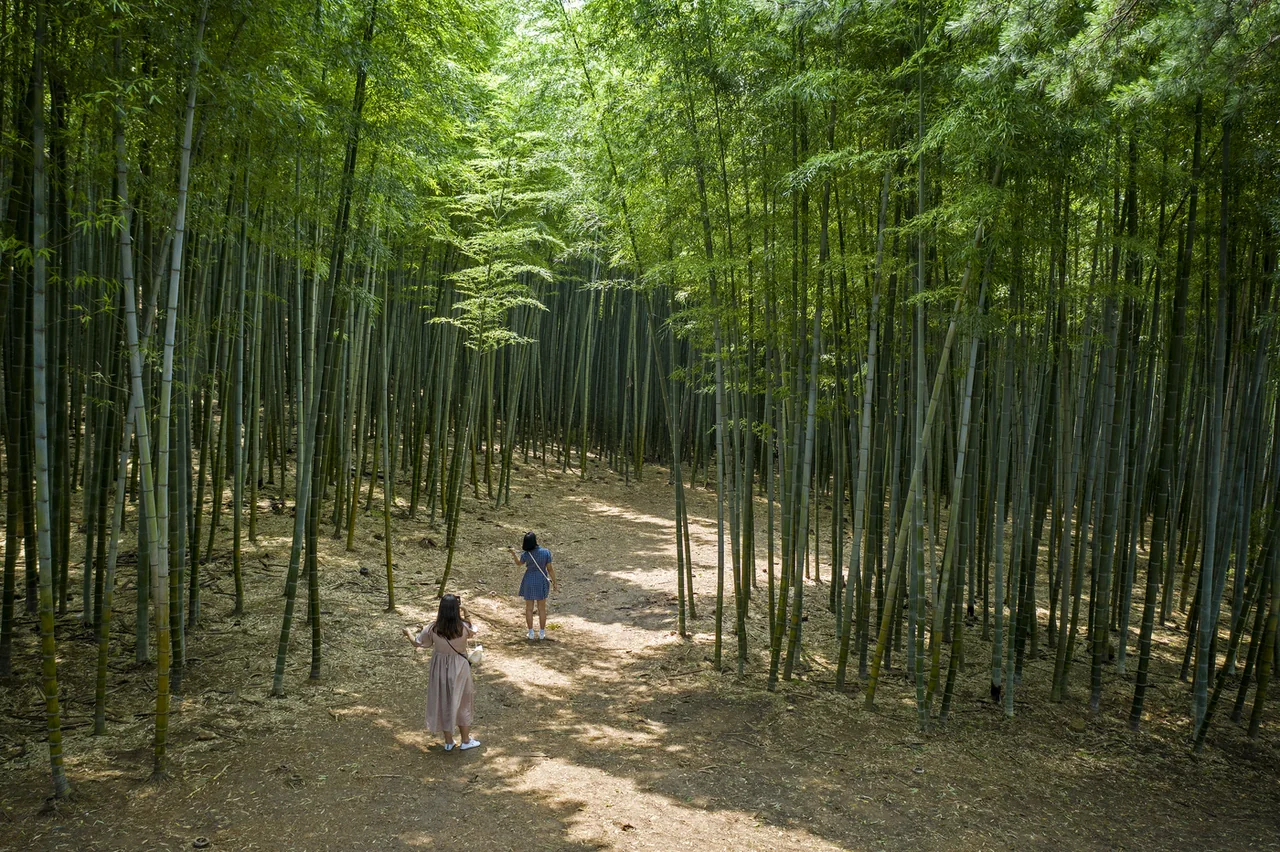
The trail is a circuit — walk it one way and you come back to where you started. About 3.2km, one to two hours.
The species change as you go, in this order.
| # | Section | What is there |
|---|---|---|
| 1 | Ticket booth | Buy and enter |
| 2 | Geumgang pine stand | 100-300 year old red pine |
| 3 | Gutteo moso grove | 33,000sqm of bamboo, the two stone pillars |
| 4 | Seonangdang shrine | Village guardian shrine |
| 5 | Cypress stand | Where the smell changes |
| 6 | Flat bamboo field | Bamboo across level ground, final stretch |
Underfoot
Bare earth with gradient, not paved path. It is slippery the day after rain. Do not wear anything with a heel.
There is no shop
Nothing is sold inside the forest. Carry water in with you, particularly in summer. The bamboo sections are shaded and noticeably cooler than outside, but there is up and down.
Dogs
Not permitted. Private land, different rules from a public park.
Staying out at Gijang rather than in the city lets you be at the gate for opening and still have the afternoon on the coast.
13. Getting there 1: the bus runs twice an hour at best
If you are not driving, this is the section that decides your day. There is no subway to Ahopsan, and the village bus that serves it has two vehicles.
Gijang 2-3 village bus
It starts at Beomeosa station on Line 1 and calls at Nopo station (Busan Central Bus Terminal). Board at whichever suits you.
| Detail | |
|---|---|
| From | Beomeosa or Nopo station (Line 1) |
| Operator | Chaseong Transport (changed 29 July 2026) |
| Vehicles licensed | 2 |
| Frequency | Every 50-60 minutes |
| First bus | 07:00 |
| Last bus | 21:30 |
| Get off at | Busan Healing Forest, or Midong village / Ungcheon |
The Busan Healing Forest stop leaves you about 400m from the gate. But that stop is only served at certain times of day, not by every run. Midong village and Ungcheon are also close by, and that part of the route is a one-way loop, so check the destination board before boarding.
Three things to know first
First, the timetable changed on 1 August 2026. Departures from Beomeosa now start at 07:00.
Second, this is classed as a remote route and carries a fare surcharge. Do not budget it as a standard village bus fare.
Third, during major holidays it drops to one vehicle, which doubles the wait.
14. Getting there 2: bus 184, driving, and taxis
City bus 184
Coming from the Haeundae side, bus 184 connects Banyeo Nongsanmul Market on Line 4 with Gadong village in Jeonggwan, and passes through Ungcheon.
| Detail | |
|---|---|
| Route | Jeonggwan Gadong village to Banyeo Nongsanmul Market (Line 4) |
| Vehicles licensed | 3 |
| Frequency | Every 30-60 minutes |
| First and last | 05:00 / 22:25 |
Better than the 2-3, still half an hour or more between buses. The route carries a 60-minute transfer window, which gives you room when connecting.
Driving
Parking is free. Given the bus frequencies, most Korean visitors drive. From the city it makes sense to pair the forest with Osiria or Haedong Yonggungsa and treat it as one day out.
Taxis
You can take a taxi in from the nearest subway station. The problem is the other direction — there are no taxis cruising a forest road in Gijang. Either agree a pickup time with the driver who brought you, or book the return through an app before you lose signal.
15. Do not confuse it with Busan Healing Forest
The nearest bus stop is called Busan Healing Forest, and that is a different place. Another forest in the same township, run by someone else entirely.
| Ahopsan Forest | Busan Healing Forest | |
|---|---|---|
| Run by | Nampyeong Mun family (private) | Busan Metropolitan City |
| Entry | 8,000 won adult | Free |
| Opened | To the public around 2015-2016 | 2017 |
| Season | All year | March to December |
| What is there | Moso grove, old pine, cypress | Visitor centre, forest culture centre, meditation ground |
| Programmes | None | Free, booked through the Busan city reservation system |
Busan Healing Forest was the first facility of its kind in the southeast, opened in 2017. Its programmes and its parking are free; the monthly schedule is published around the 20th of the preceding month and booked through the city portal. You can also simply walk in and use the paths.
They are not within walking distance of one another. Doing both by public transport means absorbing the 50-60 minute bus headway twice in one day, which is not realistic. With a car it is a reasonable pairing.
16. When to come
Bamboo is evergreen, so the moso grove looks much the same whenever you arrive. Everything around it changes.
Spring
Shoots come up. Moso shoots are thick and grow fast, and the window for seeing them break ground is short. They are not to be touched or stepped on.
Summer
The bamboo sections are properly shaded and clearly cooler than the open ground outside. It is also humid, and there are mosquitoes. This is when carrying water matters most.
Autumn
The ginkgo and broadleaf sections colour up against the green of the bamboo. It is also the busiest time of year.
Winter
Closing moves an hour earlier, to 17:00, with last entry at 16:00. Snow bends the culms over.
The day after rain
Slippery underfoot, but the bamboo is at its deepest green. If you are here to photograph, it is a good trade.
Time of day
For fewest people, be at the gate at 09:00, before the queue forms at the stone pillars. For light, mid-morning, when the sun comes in at an angle through the canopy.
17. Building a day around it in Gijang
The travel time in and out is long for a one to two hour visit. Half a day is left over, and Gijang has enough nearby to fill it.
| Where | What it is |
|---|---|
| Haedong Yonggungsa | Temple built onto the rocks at the water’s edge. Free |
| Osiria Tourism Complex | Theme park, luge, outlet mall. Osiria station on the Donghae line |
| Gijang Market | Anchovies, seaweed and the rest of the local catch |
| Jukseong Church | A drama set on the shoreline, built for filming |
| Busan Healing Forest | Same township, free, March to December |
| Beomeosa Temple | The village bus starts at Beomeosa station, so it is on the way |
Driving, the natural order is the forest in the morning and the coast in the afternoon. On public transport, two stops in a day is the realistic ceiling — at 50-60 minute headways you will spend over two hours of the day simply moving.
If you would rather keep the day inland, Tongdosa lies in the same direction. Our guide to things to do in Busan sets out how the city’s areas group together.
🎡Things to Do48
🍜Food7
🏨Where to Stay3
🚇Getting Around8
🧭Travel Tips14
📌More3
🧭All-Korea essentials50
Frequently asked questions
See the full Busan travel guide →
Images: All photographs from the Busan Tourism Archive (visitbusan.net/archive) under KOGL Type 1. Moso grove, entrance, culm nodes, stone pillars and backlit leaves (2022): Summertree / Busan Metropolitan City and Busan Tourism Organization. Pine among bamboo (2019): Kwon Ki-hak, Busan citizen photographer / Busan Metropolitan City. Trail with visitors (2019): Summertree and Eum Media / Busan Metropolitan City and Busan Tourism Organization.