
Busan to Shimonoseki Ferry: Times, Fares and Both Terminals Explained
One sailing a night in each direction, worked by two ships that take turns, and a check-in desk in Busan that shuts at 17:30 for a ship leaving at 21:00. There is no later boat.
| Route and ships | Busan to Shimonoseki and back, once a day each way, worked in turn by the Japanese-flagged Hamayuu and the Korean-flagged Seong Hee |
|---|---|
| Leaving Busan | Departs 21:00, docks in Shimonoseki at 07:45 the following morning |
| Leaving Shimonoseki | Departs 19:45, docks in Busan at 08:00 the following morning |
| Fares, one way | ¥12,000 in second class up to ¥34,000 for a suite, published in yen |
| Cash you need at the counter | Terminal facility fee and fuel surcharge at both ports, plus a ¥3,000 Japanese tourist tax when you sail from Shimonoseki. Cards are not accepted |
| Walk from the nearest station | About seven minutes at both ends, from Busan Station and from JR Shimonoseki Station |
| Free baggage allowance | 40 kg carried on board, with the three sides adding up to 2 m or less |
1. The whole crossing sits in four times
2. Shimonoseki is on Honshu, and that is what you are buying
3. Two ships take turns, and you do not pick
4. What a cabin costs, one way
5. Having the cabin to yourself costs extra
6. The charges that are not in the fare
7. The 17:30 deadline on the Busan side
8. Baggage, and the bicycle rule that runs backwards
9. Getting to the terminal in Busan
10. Getting to the terminal in Shimonoseki
11. What the counter will ask you for
12. The night on board
13. Landing, immigration and the entry card
14. Where you can be by lunchtime
15. Walking under the strait into Kyushu
16. Building a Busan trip around a 21:00 sailing
This is the crossing that puts you on Honshu rather than Kyushu, and it is booked and boarded quite differently from the Fukuoka boat most people think of first. Below are the official times, the full fare table in yen, the charges the counter collects in cash, the baggage rules including the one about bicycles that runs backwards, and how to walk from ship to platform at either end. If you are still building the Busan half of the trip, our complete Busan travel guide covers the city itself.
1. The whole crossing sits in four times
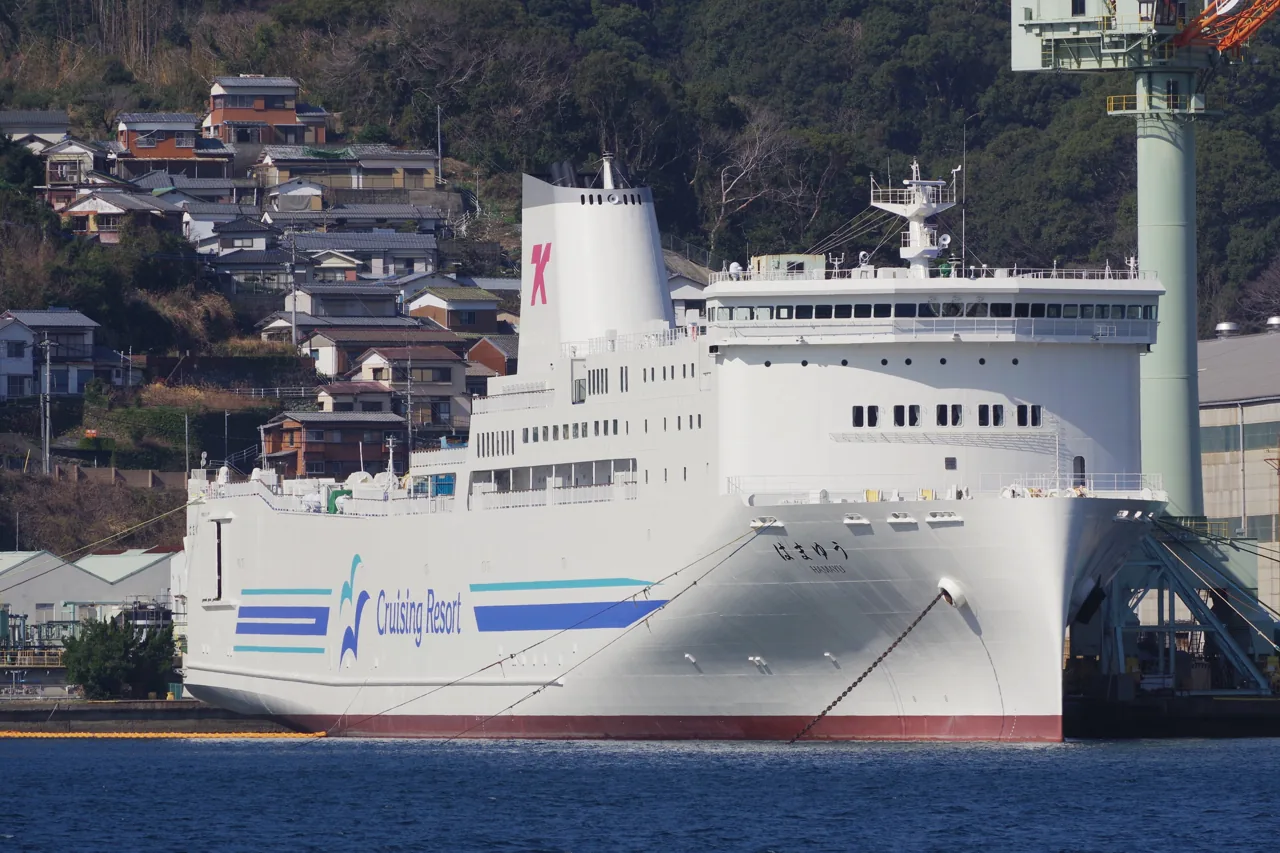
You board in the evening, sleep through the Korea Strait and step off onto Honshu before eight the next morning, which makes this the one ferry out of Busan that does not land you in Kyushu. There is a single sailing in each direction each day, so the trip is governed by four moments: when the desk opens, when it closes, when the ship lets go and when it ties up on the far side.
| Direction | Passenger check-in | Vehicles accepted | Checked baggage | Departs | Arrives |
|---|---|---|---|---|---|
| Busan to Shimonoseki | 15:00 to 17:30 | 15:30 to 16:00 | 15:00 to 17:30 | 21:00 | 07:45 next morning |
| Shimonoseki to Busan | 15:00 to 18:00 | 15:00 to 15:30 | 15:00 to 17:30 | 19:45 | 08:00 next morning |
Two lines in that table catch people out every year. The Busan desk closes at 17:30 for a ship that does not move until 21:00, a gap of three and a half hours you have to plan around rather than turn up into. And the arrival in Shimonoseki is 07:45, a quarter of an hour earlier than the arrival back in Busan, which matters if you have written a train time into your notes. The operator also warns that boarding times can slide with the passenger numbers on the day and that the timetable itself can change for weather and other circumstances.
2. Shimonoseki is on Honshu, and that is what you are buying
Shimonoseki sits at the western tip of Honshu, Japan’s main island, looking across the Kanmon Strait at Kitakyushu. The gap is narrow enough that a pedestrian tunnel runs under it in 780 metres. That geography is the entire argument for this route over the other one.
Land here and three directions open at once. You can carry on east into Yamaguchi Prefecture and towards Hiroshima without a second ferry, a flight or an island change. You can be in Kokura, on Kyushu, about fifteen minutes after you reach the platform. Or you can walk across, which is a genuinely odd thing to be able to do and something no ship will give you.
If Kyushu is the whole point of your trip and Fukuoka is where you want to wake up, the Busan to Fukuoka sailing puts you there directly and we have written that route up separately in our the Busan to Fukuoka ferry guide. This page assumes you want the mainland.
3. Two ships take turns, and you do not pick
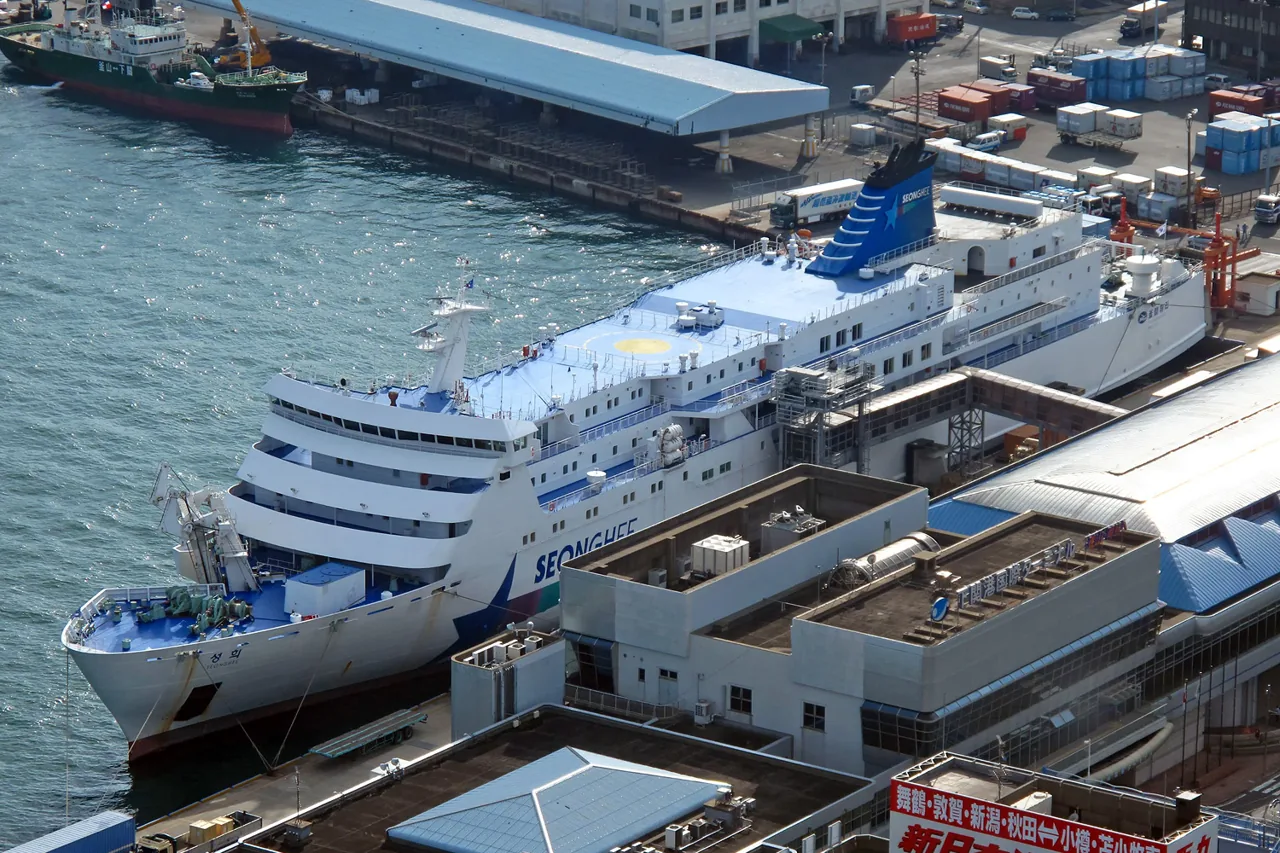
The route is worked by two vessels in rotation: the Hamayuu, registered in Japan, and the Seong Hee, registered in Korea. One of them leaves each port each evening. You will find pages claiming that one ship runs on odd dates and the other on even, but the operator does not publish any such rule, so treat it as folklore rather than something to book around. The fare table is the same whichever one you end up on.
With one sailing a day and no spare vessel, a ship out of service means a cancelled crossing rather than a substituted one. Ships come off the run for their statutory inspection and the operator posts a suspension notice when that happens. Check the notices before you commit to a date, and remember that the schedule can also move for weather, so if you are sailing in a month our when to visit Busan guide flags as unsettled, leave a spare day in the plan.
4. What a cabin costs, one way
Fares are published in yen and cover one crossing. They are for the berth, not for the extras the terminal collects separately, which is where budgets usually go wrong.
| Cabin | Adult, 12 and over | Child, 1 to under 12 | Passenger with a disability |
|---|---|---|---|
| Suite | ¥34,000 | ¥17,000 | ¥27,200 |
| Deluxe | ¥23,000 | ¥11,500 | ¥18,400 |
| First class | ¥16,000 | ¥8,000 | ¥12,800 |
| Second class | ¥12,000 | ¥6,000 | ¥9,600 |
Children under one travel free. The disability fare applies to the holder of the certificate and one accompanying passenger, and the certificate has to be shown when the ticket is bought, not produced later at the gate. Because the operator sets these prices in yen, a won figure quoted to you in Busan is a conversion on the day rather than a fixed price, so confirm it at the point of booking instead of assuming the number you saw last month still stands.
5. Having the cabin to yourself costs extra
Cabins are priced on the assumption they are full. Use one below its capacity and a supplement is added on top of the fares above, again per crossing.
| Cabin | People using it | Supplement, one way |
|---|---|---|
| Suite | 1 | ¥17,000 |
| Deluxe | 1 | ¥11,500 |
| First class, two berths | 1 | ¥9,000 |
| First class, three berths | 1 | ¥18,000 |
| First class, three berths | 2 | None |
| First class, four berths | 1 | ¥27,000 |
| First class, four berths | 2 | ¥18,000 |
| First class, four berths | 3 | None |
The waiver is narrower than it looks. It applies to exactly two cases, three people in a four berth room and two people in a three berth room, and to nothing else. A solo traveller pays a supplement in every first class room, including the two berth one, where a single empty berth still costs ¥9,000. A couple wanting privacy is better off in the two berth first class room, where two passengers fill the cabin and no supplement applies at all, than spreading into something larger and paying for the empty berths.
6. The charges that are not in the fare
On top of the ticket, the terminal collects a set of per-person charges in the currency of the port you are sailing from. They are not the same in both directions, because one of them is a Japanese tax.
| Charge | Sailing from Shimonoseki | Sailing from Busan |
|---|---|---|
| Terminal facility fee | ¥620 for 12 and over, ¥310 for ages 6 to 11, free for 5 and under | ₩7,000 for 12 and over, ₩6,000 for ages 6 to 11, free for 5 and under |
| Fuel surcharge, July 2026 | ¥2,000, age 1 and over | ₩20,000, age 1 and over |
| International tourist tax | ¥3,000, age 2 and over | Not charged |
The tourist tax is Japan’s departure tax, so it lands on the Shimonoseki side only. A couple sailing out of Busan pays the facility fee and the surcharge and nothing else; the same couple coming back from Shimonoseki pays ¥6,000 more than they might have budgeted for. The fuel surcharge is revised periodically, so the July 2026 figures above are the current ones rather than permanent ones.
These charges are cash only. Not cash preferred, not cash with a card machine somewhere behind the desk: the official check-in guidance says cash, in the currency of the port you are leaving from. Withdraw what you need before you reach the terminal, because sorting it out at 17:25 with the desk about to close is a bad five minutes.
7. The 17:30 deadline on the Busan side
Check-in for the Busan departure opens at 15:00 and closes at 17:30 for a 21:00 sailing. That is the single most important number in this guide, because it is earlier than travellers expect and earlier than the deadline on the other international sailing from the same building, which our the Busan to Fukuoka ferry guide covers. Coming the other way the desk is more forgiving, staying open until 18:00 for a ship that leaves at 19:45.
The checked baggage counter closes at 17:30 in both directions, so if you have a bag going into the hold you are working to the Korean deadline whichever way you sail. Vehicles are tighter still: 15:30 to 16:00 leaving Busan, and 15:00 to 15:30 leaving Shimonoseki, both of them half hour windows with no flexibility.
The practical effect is that your last day in Busan ends in mid afternoon. Plan it as a morning of sightseeing and an early lunch rather than a full day, and if you want somewhere to spend the last hour or two, Nampo-dong and the market streets around it are the closest thing to the port worth your time.
Aim to be at the counter by 16:30 if you have a bag to check, a discount to prove or a vehicle. That leaves an hour of slack against a deadline that does not move, and the four and a half hours between check-in and departure are yours to spend wherever you like as long as you are back aboard in time.
8. Baggage, and the bicycle rule that runs backwards
The free allowance on this route is generous by ferry standards, and the rules for anything unusual are specific.
| What you have | The rule | Cost |
|---|---|---|
| Baggage carried on board | Three sides adding up to 2 m or less, and 40 kg or less | Free |
| Checked baggage up to 20 kg | Accepted 15:00 to 17:30 in both directions | ¥900 or ₩9,000 |
| Checked baggage over 20 kg | Charged in blocks | ¥250 or ₩2,500 per additional 5 kg |
| Bicycle | Carried on board only. It cannot go in the hold unless you are a group of ten or more, which needs arranging in advance | ¥2,000 or ₩20,000, tandems ¥4,000 or ₩40,000, cash at the onboard information desk after boarding |
| Bicycle packed in a bike bag | Treated as ordinary baggage carried on board | Free |
| Electric bikes, e-scooters, hoverboards | Refused both on board and in the hold | Not carried |
| Golf bags | No longer allowed to be carried into the passenger decks, a rule in force since 22 November 2025 | Must go as checked baggage |
| Anything over 40 kg, over 2 m in total, or with one side over 90 cm | Cannot be checked as baggage at all | Needs a cargo export procedure |
Note that the bicycle fee is not collected at the terminal with everything else. You board first, then pay at the information desk on the ship, in cash again.
If you have taken a bike on the Busan to Fukuoka sailing, do not carry the habit across. The rule here works in the opposite direction: on this route a bicycle can come on board with you but cannot be checked into the hold. Read the route you are actually sailing, and if it is the other one, our the Busan to Fukuoka ferry guide is the page you want.
9. Getting to the terminal in Busan
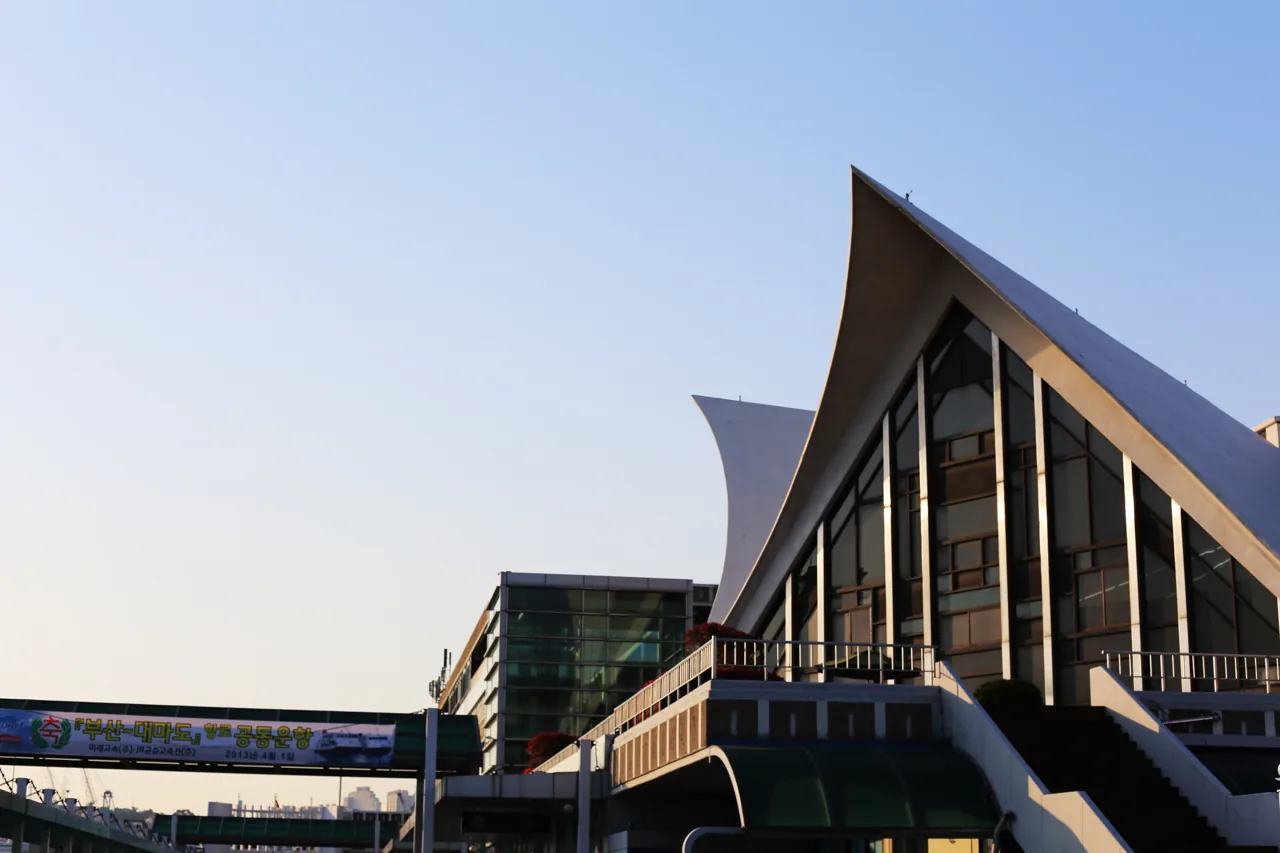
Sailings leave from the Map, the same building the Fukuoka ships use, which is why the signage inside is worth reading properly rather than following the crowd. From KTX Busan Station it is an elevated pedestrian walkway and about seven minutes on foot, luggage and all, with no road to cross.
That walkway is the reason this route is easy to reach from almost anywhere. Arrive in Busan by train and you are already at the door. Coming in by air, the run from Gimhae is covered in our getting in from Gimhae Airport guide, and the metro and bus options for getting across the city with bags are in our the metro and transit cards guide. If your last day is being spent in the old centre, Nampo-dong is close enough that you can eat there and still make the desk.
10. Getting to the terminal in Shimonoseki
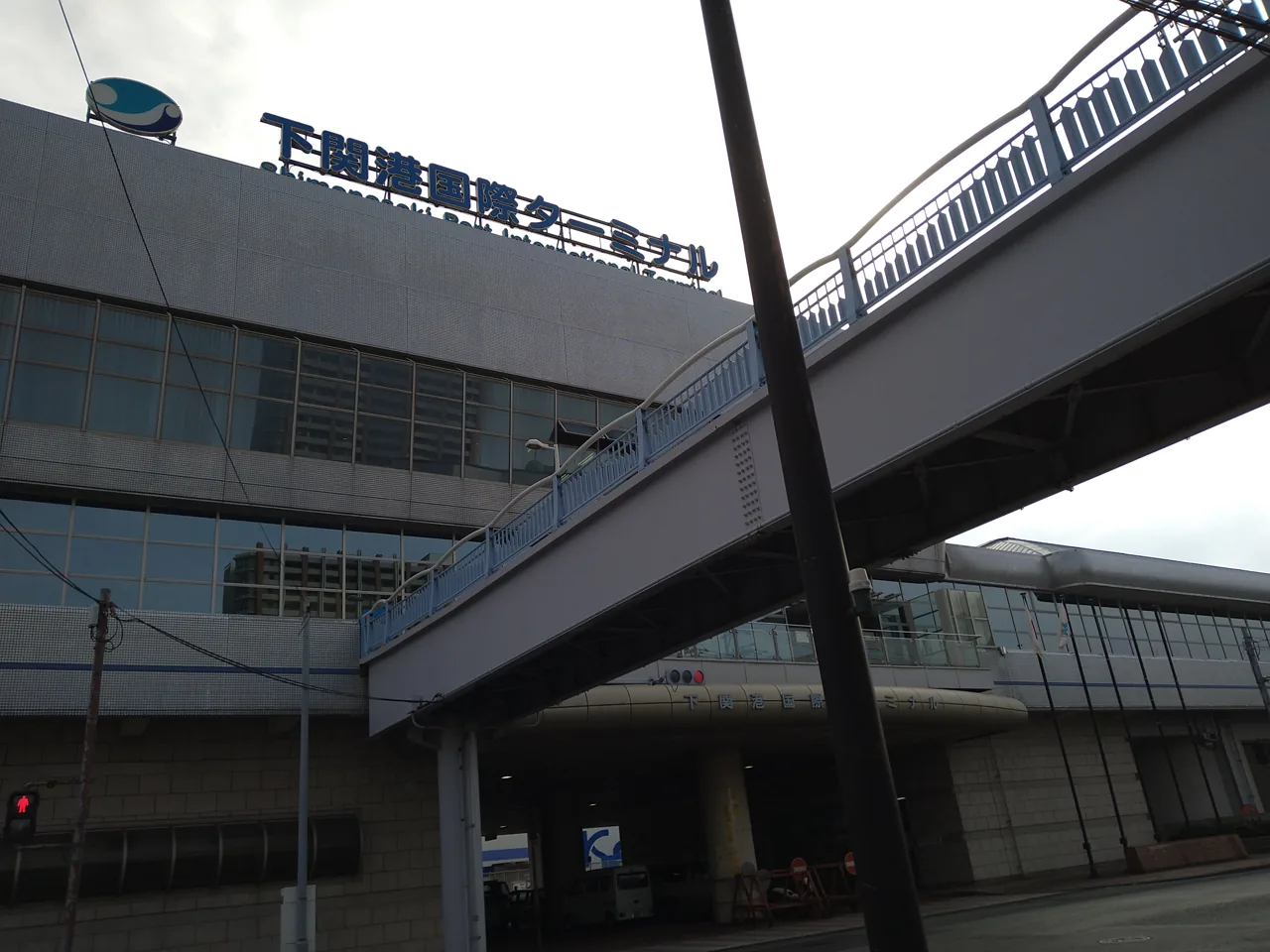
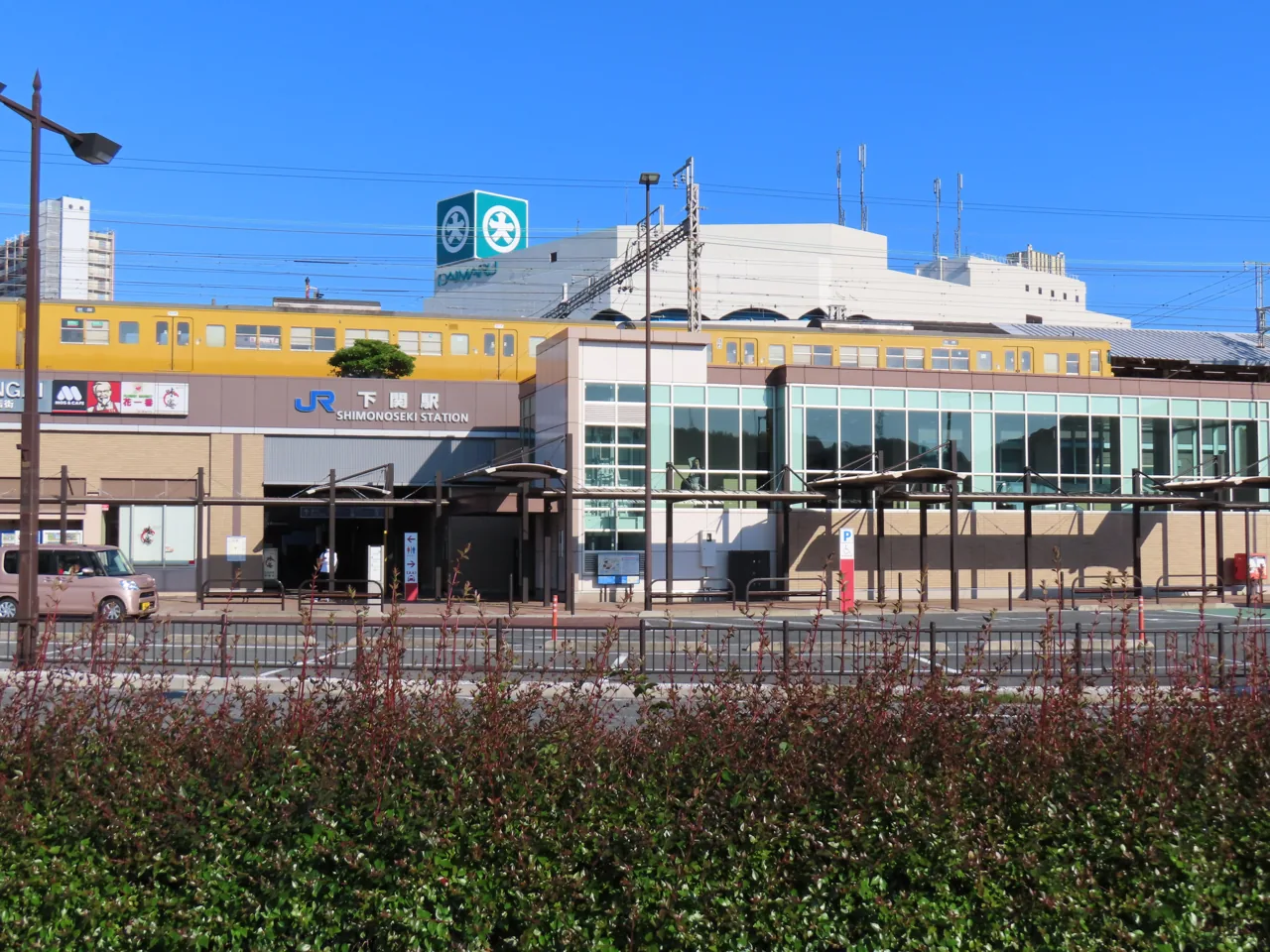
The Japanese end is the Map at 1-10-60 Higashi-Yamatomachi, Shimonoseki, Yamaguchi Prefecture, on 083-224-3000. Leave JR Shimonoseki Station by the east exit, cross the raised deck, and about seven minutes later you are at the second floor check-in counters without having gone down to street level. Arriving by car it is roughly fifteen minutes from Shimonoseki IC or the Shimonoseki exit of the Kanmon Tunnel.
| Busan Port International Passenger Terminal | Shimonoseki Port International Terminal | |
|---|---|---|
| Nearest station | Busan Station, on the KTX line and the metro | JR Shimonoseki Station, east exit |
| Walk from it | About 7 minutes on an elevated walkway | About 7 minutes across a raised deck |
| Where the walk ends | Inside the terminal building | At the second floor check-in counters |
| By car | City road access to the port area | About 15 minutes from Shimonoseki IC or the Kanmon Tunnel exit |
| Parking | Port parking on site | First come, no reservations, discount voucher issued at check-in |
| Vehicle limits for that car park | Standard port restrictions apply | 5.0 m long, 2.0 m wide, 2.2 m high, up to 1 tonne |
| Also used by | Other international routes including the Fukuoka sailings | This route |
The symmetry is the quiet strength of this crossing. Both ports are a seven minute walk from a mainline railway station, which means you can do the entire journey from a hotel in one city to a hotel in the other without ever needing a taxi or a bag drop. Very few sea routes anywhere manage that at both ends.
11. What the counter will ask you for
Check-in is straightforward if you have the right things in your hand and slow if you do not. The list differs by direction because the charges do.
| Sailing from | What you produce | What you pay there, in cash |
|---|---|---|
| Busan | Passport; your boarding ticket, return ticket, coupon or the fare itself; documentation for any discount you are claiming | Terminal facility fee and fuel surcharge, in won |
| Shimonoseki | Passport; your boarding ticket or equivalent; documentation for any discount you are claiming | Terminal facility fee, fuel surcharge and the ¥3,000 international tourist tax, in yen |
The order of events is the same both ways: complete check-in, collect your boarding pass, clear departure immigration, then board. Leave time for the immigration queue, which is not part of the check-in window and is not something the desk can hurry along for you.
Bringing a car or a motorcycle out of Busan means a Korean compulsory insurance certificate and a return ticket, and the vehicle acceptance window is only 15:30 to 16:00. That is thirty minutes, once a day, with the paperwork checked at the gate. Turning up at 16:10 with the right documents is the same as turning up without them.
12. The night on board
You are aboard for roughly eleven hours, most of them asleep, so the cabin choice is really a choice about how you want to spend a night rather than about the crossing itself.
| Cabin | Adult fare, one way | What is in the room |
|---|---|---|
| Suite | ¥34,000 | A private terrace, bathtub, shower and toilet. The bed is a double rather than twins, which is worth knowing before two colleagues book it |
| Deluxe | ¥23,000 | Bathtub, shower and toilet |
| First class | ¥16,000 | A two berth Western style room with shower, toilet and washbasin |
| Second class | ¥12,000 | The cheapest tier, and the one without private facilities listed against it |
Cabins come with bath and face towels, slippers, an electric kettle, a hairdryer, shampoo, conditioner and body wash, and two bottles of water. Since a notice dated 4 July 2026, the ships carry onboard Wi-Fi over the au Starlink service, running from the Shimonoseki departure of 7 July onwards.
The sockets take both Japanese 110V and Korean 220V plugs, which is a small mercy on a route where half the passengers are carrying the wrong adapter. You can charge everything overnight without unpacking a converter, whichever direction you are going.
13. Landing, immigration and the entry card
Arriving in Shimonoseki the ship is alongside at 07:45; arriving in Busan it is 08:00. Either way you are through the terminal and into the day early enough that the crossing has cost you no daylight at all, which is the real economics of an overnight ferry against a short flight.
For entry into Korea, the operator’s guidance is that both the electronic arrival declaration and the paper arrival card are accepted, with the electronic option recommended and expected to become the standard in time. In other words you can still fill in a card on board if that suits you, but doing the declaration on your phone before you dock will move you through faster. Visa-free visitors should also check whether the Korean travel authorisation applies to them, which our Korea’s visa and K-ETA rules guide sets out.
14. Where you can be by lunchtime
This is the part that separates the two Japan ferries from Busan. Off the ship at 07:45 with a seven minute walk to a JR platform, most of western Japan is within reach before the day has properly started.
| Where | How you get there from the terminal | Roughly |
|---|---|---|
| Kokura, in Kyushu | Walk to JR Shimonoseki Station, then one train across the strait | About 15 minutes on the train |
| Hakata, central Fukuoka | Change at Kokura for the Sonic or Kirameki limited express | About 45 minutes on from Kokura |
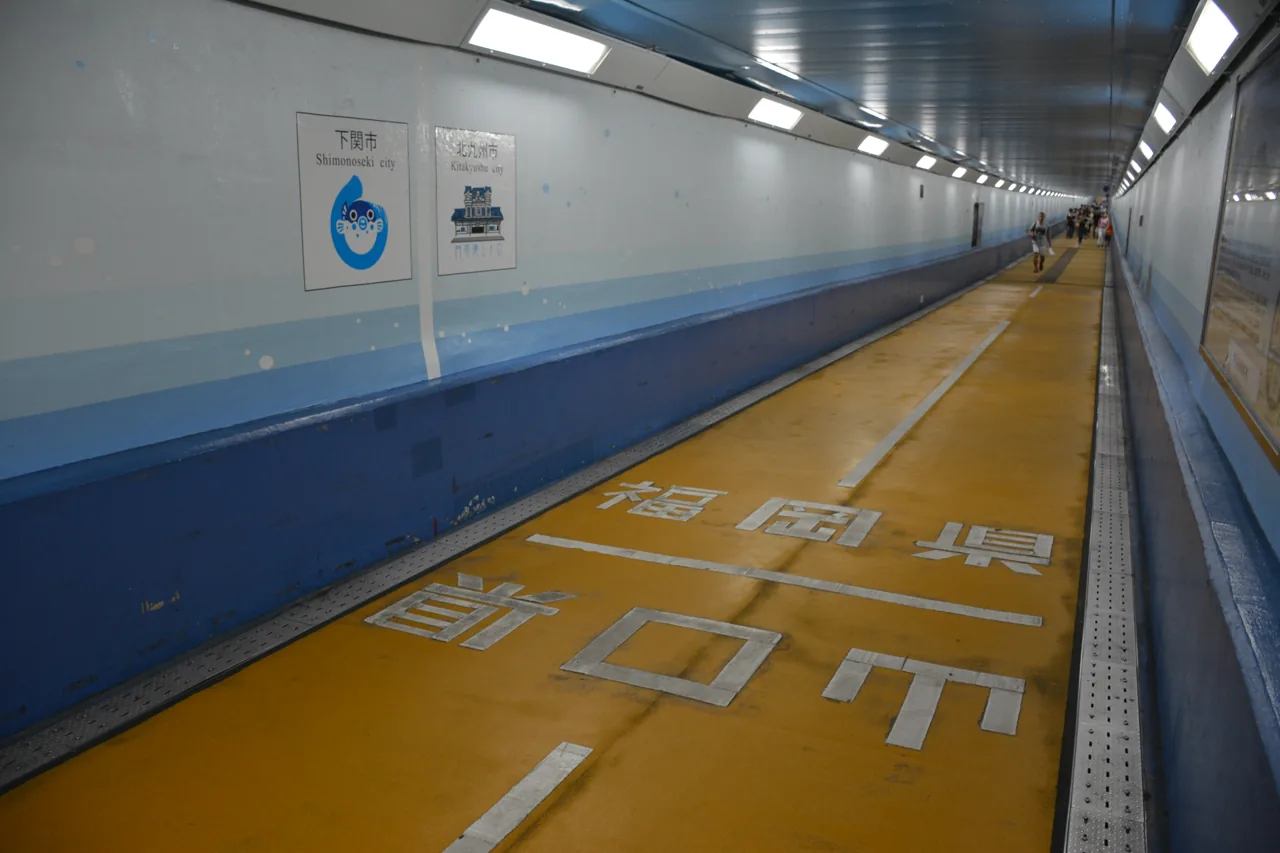
| Kyushu on foot | The Kanmon Tunnel pedestrian way, 780 m under the strait | About 15 minutes walking, free |
| Karato Market | Shimonoseki’s own fish market, on the strait side of the city | The weekend sushi counters are the reason to go |
| Yamaguchi and on towards Hiroshima | East by rail, no island change and no second ferry | Depends how far you push |
| Back to Busan | The same ship, out at 19:45 that evening or on any later date | A day trip is technically possible and rarely a good idea |
Note what the Hakata line in that table means: you can reach central Fukuoka from this ferry, it just takes an hour of trains. If Fukuoka is the destination rather than a stop, the direct sailing is the better buy and we compare it properly in our the Busan to Fukuoka ferry guide. Land here when the plan is Honshu, or when the plan is Kyushu arrived at slowly.
15. Walking under the strait into Kyushu
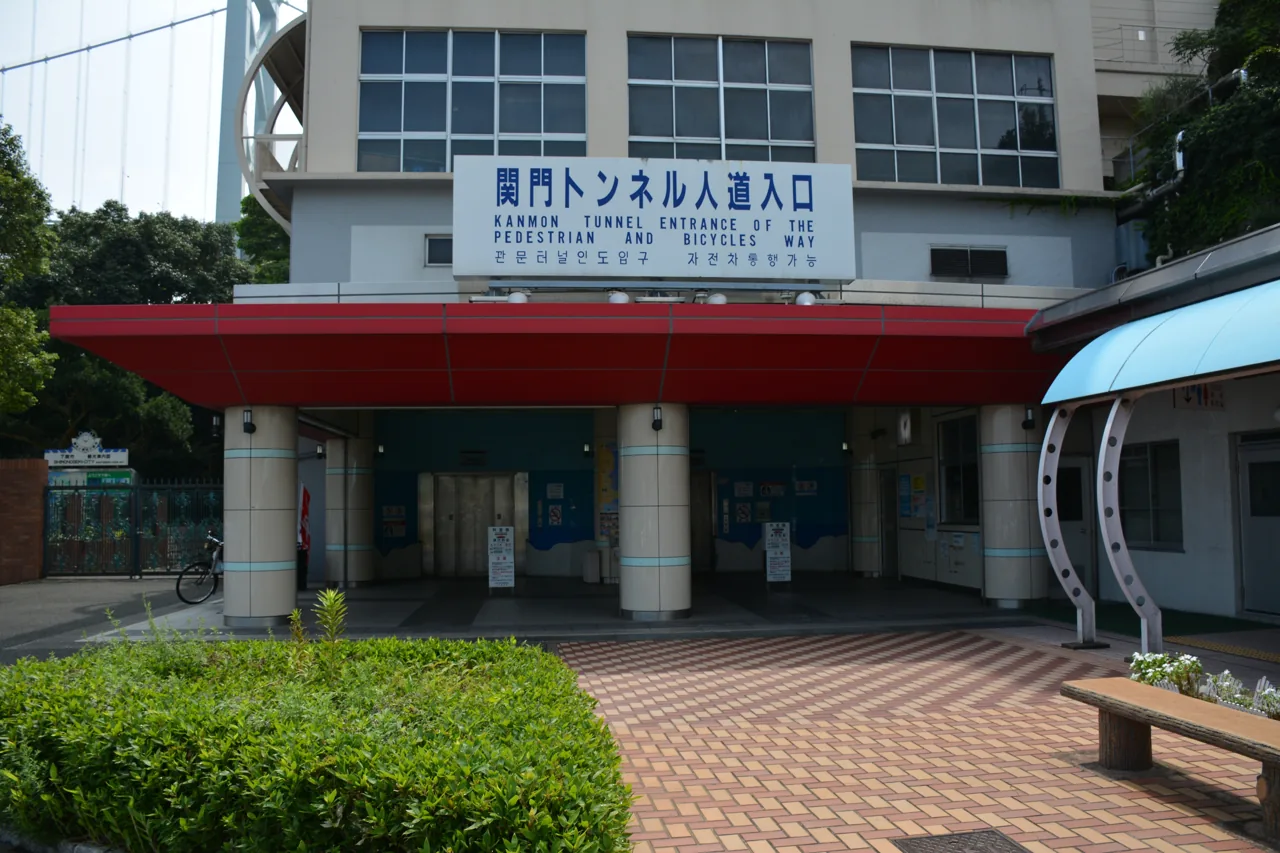
The Kanmon Tunnel carries a road on its upper level and a footpath on its lower one. The walkway runs 780 metres from side to side, takes about fifteen minutes at a normal pace, and costs nothing to use. Partway along, a marking painted across the floor shows where Yamaguchi Prefecture ends and Fukuoka Prefecture begins, which is the whole reason people stop and take a photograph in a concrete tube under the sea.
Walking between two of Japan’s main islands is not something the Fukuoka ferry can offer you at any price, and it is the single best argument for choosing this route if you are the kind of traveller who collects experiences rather than destinations. Come up on the far side and you are in Kitakyushu; turn round and walk back and you are in Shimonoseki again a quarter of an hour later.
Nothing else in the trip is this cheap. The ferry is a five figure yen number, the trains add up, and the crossing between two islands costs you a quarter of an hour and no money whatsoever.
For what to do once you step off the boat — getting from the port into the city and a first day in northern Kyushu — see our Kyushu arrival guide on BreezeJapan.
16. Building a Busan trip around a 21:00 sailing
Work backwards from 17:30 and the shape of the last day sorts itself out. You have the morning and the early afternoon, then a walk to the terminal, then a long evening on a ship. Where you sleep the night before matters mostly for how far you have to drag a suitcase, and our where to stay in Busan guide breaks the city down by district for exactly that reason. If you have already settled on the beach end of town, be honest about the distance: our where to stay in Haeundae guide covers those zones, and none of them are close to the port, so allow real time for the crossing of the city rather than an optimistic half hour.
For the last proper meal before you sail, our what to eat in Busan guide is organised the way you will actually be eating, near where you are rather than across town. Costing the whole thing against a flight is worth doing, and our what a Busan trip costs guide gives you the rest of the numbers to weigh a ¥12,000 second class berth against a fare plus a night’s hotel plus two airport transfers. And if the month you are travelling in is one where the weather might move a sailing, our when to visit Busan guide is the place to check before you lock the dates.
Coming the other way, the 08:00 arrival in Busan is the most useful hour on this whole timetable. You are through the terminal, over the walkway and standing in Busan Station with a full day in front of you and no flight to recover from. Book the first night in the city rather than losing it to arrival logistics.
🎡Things to Do49
🍜Food7
🏨Where to Stay3
🚇Getting Around7
🧭Travel Tips14
📌More3
🧭All-Korea essentials37
Questions people ask before they book
See how the crossing fits into the rest of a Busan trip
The same terminal also serves the ferries to Tsushima. Those are high speed craft, 1 hour 10 minutes to Hitakatsu, which makes a day trip possible.