Dwaeji-Gukbap: Busan’s Pork Soup, and Where to Eat It
Busan’s signature comfort food — what dwaeji-gukbap is, the milky pork broth, the types, how to season it like a local, where to find it and what it costs.
Last Updated: June 2026
The short version
Dwaeji-gukbap (돼지국밥) is Busan’s signature dish: a hearty pork-bone soup with slices of pork and rice, cheap, filling and served all day.
You season it yourself at the table — salt it with saeujeot (salted shrimp), pile in buchu (chives), and add dadaegi (spicy paste) to taste.
There are variations: classic dwaeji-gukbap, sundae (blood sausage) gukbap, offal gukbap, a mixed bowl, and suyuk (boiled pork) if you want the meat on a plate.
Find it all over the city; Seomyeon’s “Dwaeji-gukbap Street” is the famous cluster. Expect roughly ₩9,000–12,000 a bowl, and it’s great for solo diners.
If one dish is Busan’s soul, it’s dwaeji-gukbap (돼지국밥) — a steaming bowl of milky pork-bone broth with tender pork and rice. It’s the food locals eat at any hour: cheap, hearty, unfussy and everywhere. Its roots trace to the hard years around the Korean War, when Busan’s population swelled with refugees and a filling pork soup made sense. Today it’s pure comfort, and learning to season your own bowl is half the fun. This guide explains what’s in the bowl, the types, how to eat it like a local, where to go and what to pay. For the rest of your trip, see our complete Busan Travel Guide.
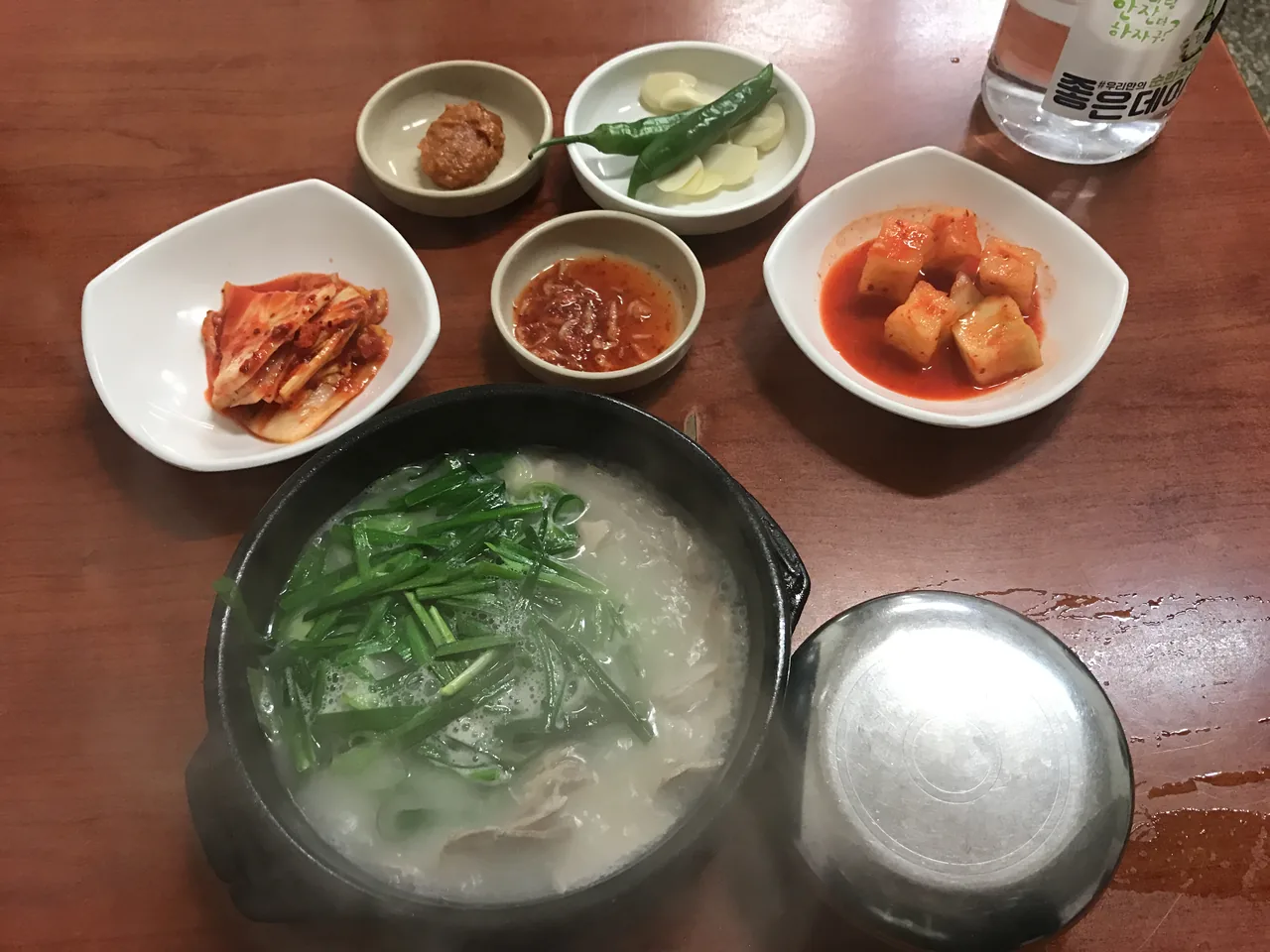
A bowl of dwaeji-gukbap with its rice and banchan. (Photo: chomjong, CC BY 2.0)
1. What dwaeji-gukbap is
Dwaeji-gukbap literally means “pork (dwaeji) rice-soup (gukbap).” It’s a bowl of pork-bone broth — often milky-white and rich, sometimes lighter and clearer — loaded with sliced boiled pork and served with rice, either in the soup or in a separate bowl.
It’s strongly associated with Busan. The common story ties it to the Korean War era, when the city took in huge numbers of refugees and a cheap, filling pork soup became a staple — and it stuck as a local identity food. Today it’s the definition of comfort eating: warming, protein-heavy, and served at all hours.
Local read: Don’t judge the bowl as it arrives — it’s deliberately under-seasoned so you finish it at the table with shrimp, chives and chilli. More on that below.
2. What’s in the bowl
A typical set arrives as the soup, a bowl of rice, and a row of banchan (side dishes). In and around the bowl you’ll find:
The broth — pork-bone based; some shops serve it milky and rich, others clear and clean. Both are correct; it’s a matter of taste.
Pork — slices of boiled pork, sometimes with a little fat for flavour.
Rice — either already in the soup (gukbap) or served separately so you control it (ttaro-gukbap).
Sides — kimchi, sometimes diced radish kimchi (kkakdugi), thin noodles (somyeon), raw garlic and chilli.
The seasoning trio — saeujeot (salted shrimp), buchu (chives) and dadaegi (spicy paste) — comes on the side so you can build the flavour you like.
3. The types (what to order)
The menu is usually short. Here are the common bowls:
Dish
What it is
Good for
Dwaeji-gukbap
Classic pork soup with rice
First-timers
Ttaro-gukbap
Same, but rice served separately
Controlling your bowl
Sundae-gukbap
With Korean blood sausage (sundae)
Trying more textures
Naejang-gukbap
With pork offal/innards
Adventurous eaters
Seokkeo-gukbap
“Mixed” — pork + sundae + offal
A bit of everything
Suyuk (baekban)
Boiled pork slices on a plate (+ rice & soup)
Sharing, drinking soju
If it’s your first bowl, order the plain dwaeji-gukbap (or ttaro-gukbap). You can always branch out next time.
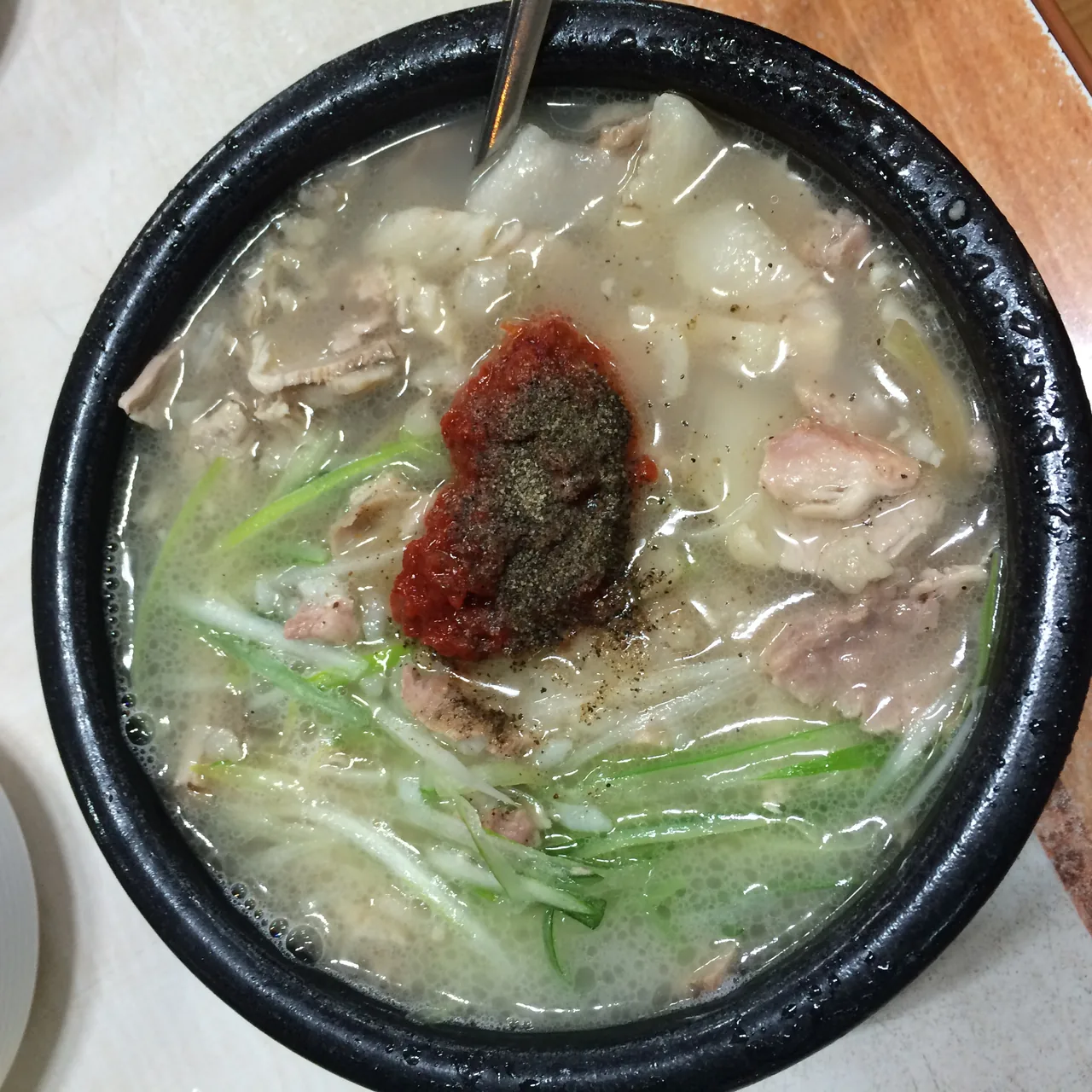
Dwaeji-gukbap with a spoonful of dadaegi (spicy paste). (Photo: chomjong, CC BY 2.0)
4. How to eat it like a local
The bowl arrives mild on purpose — you season it. Here’s the local routine:
Add
What it is
How
Saeujeot
Salted fermented shrimp
Your “salt” — add a little, taste, repeat
Buchu
Garlic chives (jeong-gu-ji locally)
Pile a generous handful in
Dadaegi
Spicy red seasoning paste
Stir in for heat, to taste
Garlic / chilli
Raw, on the side
For a sharper kick
Tip the rice into the soup (or spoon soup over rice if it’s ttaro), and eat with the kimchi. If you’re sensitive to a porky aroma, the chives, shrimp and chilli cut right through it.
Tip: Go slowly with the saeujeot and dadaegi — you can always add more, but you can’t take it out.
5. Where to eat it in Busan
Dwaeji-gukbap is genuinely everywhere in Busan, from old family shops to all-night spots. A few areas to know:
Seomyeon “Dwaeji-gukbap Street” — the famous cluster of long-running shops near Seomyeon, a great place to just pick one and go.
Around Busan Station & Beomil-dong — historic neighbourhoods with well-known old shops.
Your neighbourhood — almost every district has a trusted local bowl; if it’s busy with locals, it’s a safe bet.
Famous long-running shops
Halmae Gukbap (할매국밥), Beomil-dong — one of Busan’s oldest dwaeji-gukbap houses, dating to the 1950s. 📍Map
Bonjeon Dwaeji-gukbap (본전돼지국밥), near Busan Station (Choryang) — famous for a clean, refined broth. 📍Map
Ssangdungi Dwaeji-gukbap (쌍둥이돼지국밥), Beomil-dong — a long-time local favourite. 📍Map
Always double-check: opening hours, days off and even whether a shop is still open can change — confirm on a map app before a special trip, and save the Korean name (in brackets) to search or show a taxi driver.
How to choose: look for a place full of locals, a broth style you like (ask “milky or clear?”), and don’t overthink it — the bar for a satisfying bowl in Busan is high.
6. Price & practical tips
Price
A bowl is one of Busan’s best-value meals — roughly ₩9,000–12,000, give or take by shop and year. Suyuk plates cost more as they’re meant for sharing.
Hours & solo dining
Many shops open early and some run very late or 24 hours. It’s a great solo meal — single diners are completely normal, so don’t hesitate to eat alone.
Paying & drinks
Cards are widely accepted; carry a little cash for tiny old shops. Locals often pair suyuk with soju. Tap water and banchan are free and usually self-serve.
Note: exact prices, hours and whether a shop is open 24/7 change — check current info if you’re making a special trip late at night.
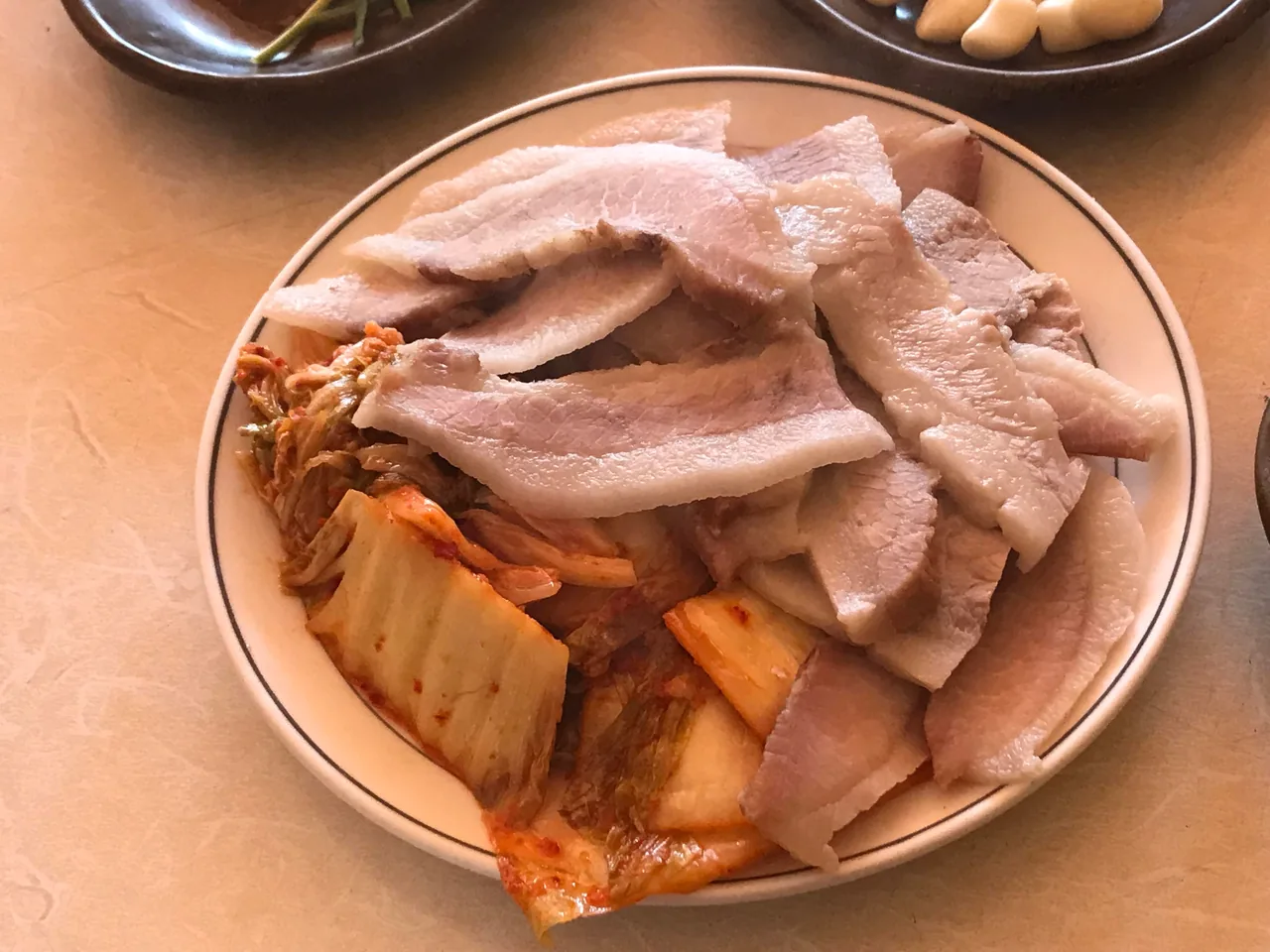
Suyuk — boiled pork slices, a popular side to share. (Photo: lazy fri13th, CC BY 2.0)
7. Other Busan foods to try
Once you’ve had your gukbap, Busan has more signature bites worth chasing:
Milmyeon — Busan’s chewy wheat cold noodles, another refugee-era classic and the perfect summer counterpart to gukbap.
Ssiat hotteok — the seed-stuffed sweet pancake of Nampo-dong / BIFF Square street food.
Build a day around food and you’ll understand why Busan is a proud eating city. Our complete Busan Travel Guide has more on neighbourhoods and what to eat where.
8. First bowl & fitting it into your trip
If it’s your first time
Order a plain dwaeji-gukbap, season gently with saeujeot, add buchu, then a little dadaegi. Eat it with kimchi. That’s the honest, classic experience.
When to have it
A warming lunch between sights, or a late dinner after a night out at Gwangalli or Seomyeon.
An easy, cheap meal on a solo day exploring the city.
A hearty start or end to a day of beaches and markets.
It’s the one dish almost every Busan itinerary should include at least once. Plan the rest with our complete Busan Travel Guide.
It’s Busan’s signature pork soup: a pork-bone broth with sliced boiled pork and rice, served with banchan. You season it yourself at the table with salted shrimp, chives and spicy paste.
Q. How do I eat dwaeji-gukbap?
Season the broth with saeujeot (salted shrimp) instead of salt, add plenty of buchu (chives), stir in dadaegi (spicy paste) to taste, tip in the rice, and eat with kimchi.
Q. What does dwaeji-gukbap taste like?
Rich, warming and savoury. The broth can be milky and hearty or lighter and clean depending on the shop; after you add shrimp, chives and chilli it becomes deeply flavourful.
Q. Where can I eat dwaeji-gukbap in Busan?
All over the city. Seomyeon’s “Dwaeji-gukbap Street” is the famous cluster, and there are well-known old shops around Busan Station and Beomil-dong. A spot full of locals is a safe choice.
Roughly ₩9,000–12,000, varying by shop and year — one of Busan’s best-value meals. Suyuk (boiled pork) plates cost more as they’re for sharing.
Q. Is dwaeji-gukbap good for solo travelers?
Yes — it’s a classic solo meal. Single diners are completely normal, many shops are open long hours, and it’s quick, cheap and filling.
Q. What’s the difference between gukbap and ttaro-gukbap?
In gukbap the rice is already in the soup; in ttaro-gukbap the rice comes in a separate bowl so you can add it yourself or keep it apart. Same dish, your choice.
Q. I don’t like a strong pork smell — will I be okay?
Yes. Choose a clear-broth shop if you prefer, and the buchu (chives), saeujeot and chilli you add cut through any aroma. Busan shops generally make a clean, well-balanced broth.