
The 7 Best Beaches in Busan (and How to Pick Yours)
Busan is Korea’s beach capital, and its seven city beaches each do something completely different — Haeundae‘s buzz, Songjeong’s surf, Gwangalli‘s bridge lights, Dadaepo’s sunsets and fountain, Songdo’s cable car. This is the complete guide: every beach in depth, exact directions, facilities, when they open, safety, beach-hopping routes and how to pick. Working out how the fountain show, the sunset and the Molundae exit deadline fit together is covered in our Dadaepo guide.
- Busan has seven main city beaches — Haeundae, Gwangalli, Songjeong, Dadaepo, Songdo, Ilgwang and Imrang — plus quieter spots like Cheongsapo. All are free and reachable by metro or train.
- Quick picks: Haeundae for the all-rounder, Gwangalli for night views and nightlife, Songjeong for surfing, Dadaepo for sunset and the musical fountain, Songdo for the cable car and glass skywalk, Ilgwang/Imrang for quiet.
- 2026 swim season: Haeundae and Songjeong open June 26; Songdo, Gwangalli, Dadaepo, Ilgwang and Imrang open July 1, with lifeguards and full facilities through late August.
- Plan around it: swim 11am–6pm in supervised zones, beat the heat before 10am or after 4pm, watch for rip currents, and check the forecast in typhoon season (Aug–Sep).
1. Which Busan beach should you choose?
2. Haeundae Beach — the big, easy all-rounder
3. Gwangalli Beach — the night-view beach
4. Songjeong Beach — the surf beach
5. Dadaepo Beach — sunset and the musical fountain
6. Songdo Beach — Korea’s first beach, cable car & glass skywalk
7. Ilgwang & Imrang — the quiet northern beaches
8. Cheongsapo & the coastal walks
9. Beach-hopping itineraries
10. Swimming season, water & lifeguards
11. Beach safety: rip currents, jellyfish & typhoons
12. Rentals, costs, facilities & what to pack
Busan is the closest thing Korea has to a beach city, and the beaches are genuinely why a lot of people fall for it. Seven are managed by the city, and they are not interchangeable: Haeundae is the big, buzzy resort beach with an aquarium on the sand; Gwangalli glows at night under the floodlit Gwangan Bridge; Songjeong is where everyone learns to surf; Dadaepo faces west for the best sunsets and a giant musical fountain; and Songdo, the oldest of them all, now has a sea-crossing cable car and a glass skywalk. Add the hidden coves — Cheongsapo, Ilgwang, Imrang — and you could spend a whole trip just following the coast. I’ve walked all of them across every season, and the trick is matching the beach to your day: swim, surf, sunset, a night out, or a quiet escape. This is the full, fact-checked guide — every beach in depth with exact directions, hours and facilities, when they open for swimming, water and safety, ready-made beach-hopping routes, what to pack and what it costs. Plan it alongside the rest of your trip with our complete Busan Travel Guide.
1. Which Busan beach should you choose?
Pick by what you want from the day. Here’s the quick steer across all seven city beaches, then a deeper dive into each below.
| Beach | Best for | Vibe | Get there |
|---|---|---|---|
| Haeundae | First-timers, families, all-rounder | Big, central, lively; aquarium & hotels on the sand | Metro L2, Haeundae |
| Gwangalli | Night views, cafés, nightlife | Lit Gwangan Bridge, drone show, buzzy after dark | Metro L2, Gwangan |
| Songjeong | Surfing & calmer swims | Mellow, surf schools, younger crowd | Donghae Line, Songjeong |
| Dadaepo | Sunset, toddlers, the fountain | West-facing, very shallow flats, music fountain | Metro L1, Dadaepo Beach |
| Songdo | Cable car, skywalk, retro charm | Korea’s first beach (1913), compact & scenic | Bus/taxi from Nampo |
| Ilgwang | Quiet, families, local food | Long white sand, calm shallow water | Donghae Line, Ilgwang |
| Imrang | Peace, shallow water, seafood | Small, low-key, far fewer tourists | Bus / car, north Busan |
Still deciding? In one sentence: Haeundae if you want everything in one place, Gwangalli for the night, Songjeong to surf, Dadaepo for sunset with little kids, Songdo for views and attractions, and Ilgwang or Imrang to escape the crowds. The two giants, Haeundae and Gwangalli, are only a 10-minute taxi apart — many people simply do both, beach by day and bridge by night (see our full Haeundae vs Gwangalli comparison).
2. Haeundae Beach — the big, easy all-rounder
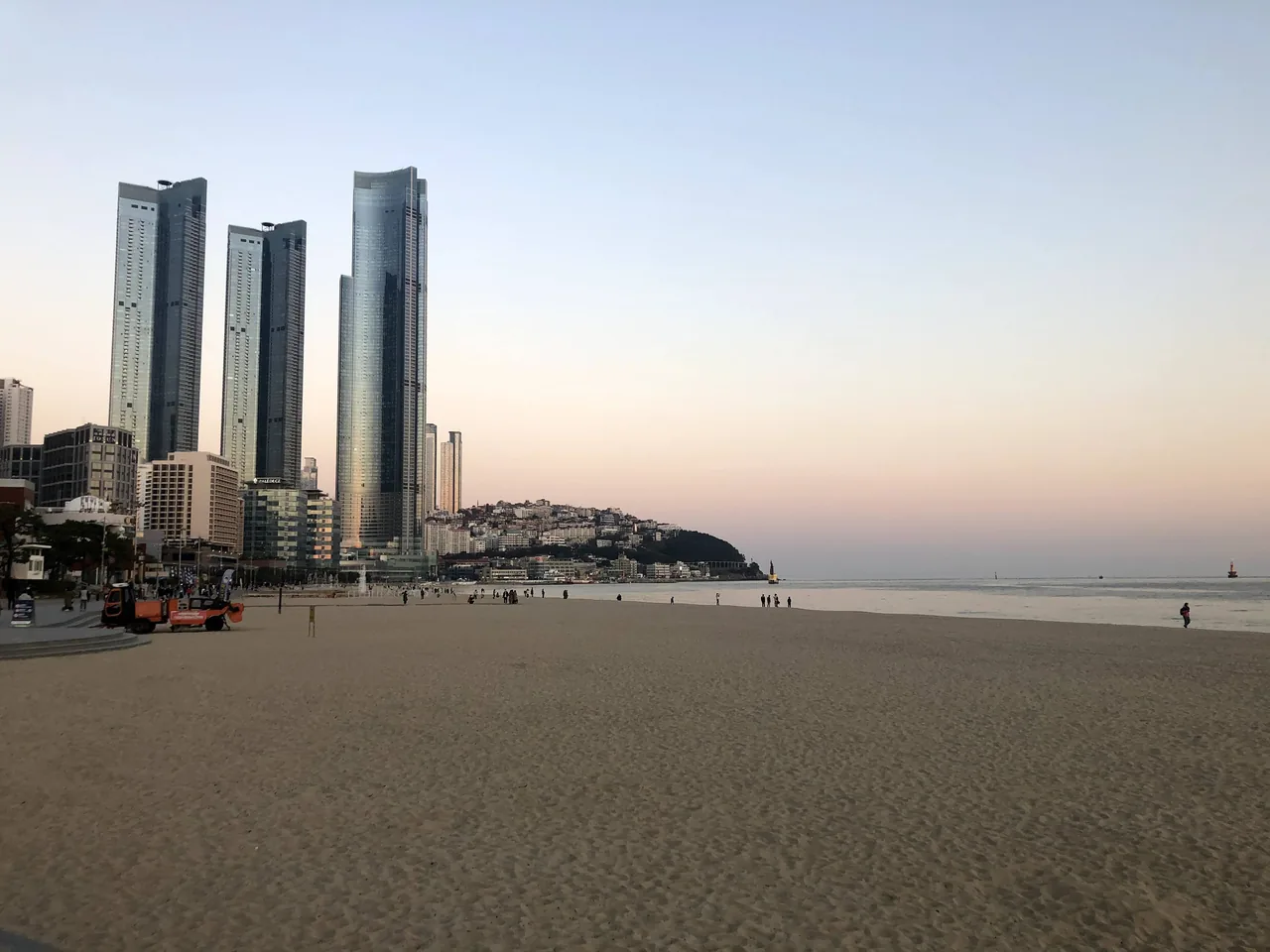
⏱️ Plan a half-day to a full day here. Best photo spots: the Nurimaru walk on Dongbaek Island for the Marine City skyline, and the eastern end of the sand at sunset.
Haeundae is Busan’s signature beach: a wide 1.5 km crescent of pale sand backed by a wall of skyscrapers, and the single easiest choice for first-timers and families. It’s the most developed beach in Korea, so everything you might want is within a few minutes’ walk.
- Why go: broad, gentle sand, the SEA LIFE aquarium right on the beach, the leafy Dongbaek Island boardwalk (with the Nurimaru APEC House) at the western end, and endless cafés, convenience stores, hotels and seafood restaurants behind.
- Best for: a first visit, families, and anyone who wants a “beach plus everything” day without travelling around.
- Getting there: Metro Line 2 to Haeundae Station, Exit 5, then a flat 5–7 minute walk down Gunam-ro to the sand.
- Facilities & swimming: in season (from June 26 in 2026) there are lifeguards, showers, changing rooms, lockers, first aid and rental parasols; the water is gentle and shelves slowly, good for paddling.
- What to do & nearby: the aquarium, Dongbaek Island sunset walk, the Blue Line Park Sky Capsule just east at Mipo, the X the SKY observation deck in the LCT tower, and a huge choice of restaurants in Haeundae Market.
3. Gwangalli Beach — the night-view beach
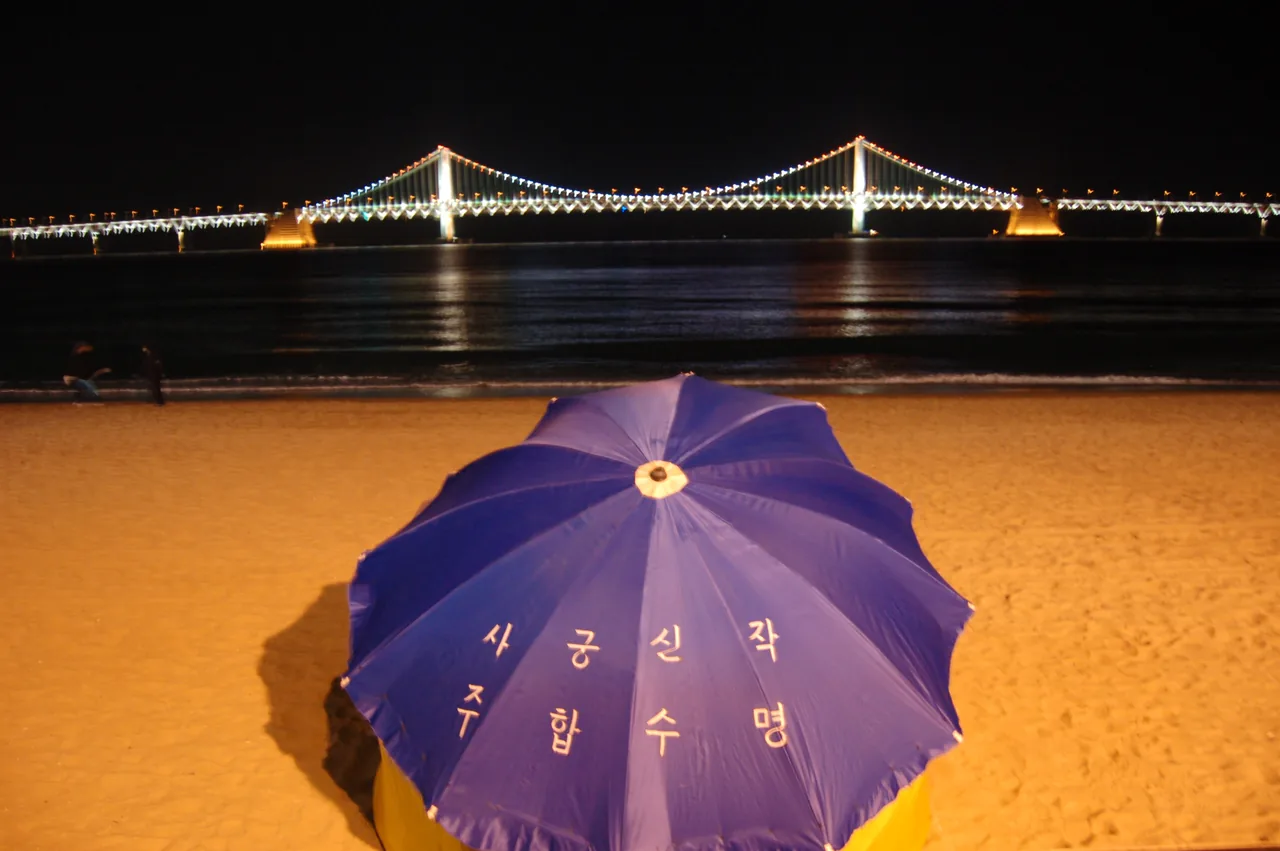
⏱️ Allow 2–3 hours, ideally in the evening. Best photo spots: Millak Waterside Park and The Bay 101, with the lit Gwangan Bridge after dark.
Gwangalli is the beach to come to after dark: its fine sand faces the floodlit Gwangan Bridge head-on, with a weekend drone light show over the water and a solid wall of cafés, bars and raw-fish restaurants behind.
- Why go: the bridge view at night is Busan’s signature photo; by day there’s stand-up paddleboarding and jet-skiing, and by evening grilled shellfish and hoe (raw fish) with a sea view.
- Best for: couples, friends, photography and nightlife. It’s younger, trendier and livelier than Haeundae.
- Getting there: Metro Line 2 to Gwangan Station, Exit 3 or 5, a 5-minute walk to the sand (Exit 1 also works and avoids an extra crossing).
- Facilities & swimming: open from July 1 in 2026 with lifeguards and the usual showers, lockers and rentals; swimming is fine, though most people come for the atmosphere and the view rather than a long swim.
- What to do & nearby: the weekend drone show (typically Saturday nights), the café strip, Millak Waterside Park for raw fish, and an easy taxi to Haeundae.
4. Songjeong Beach — the surf beach
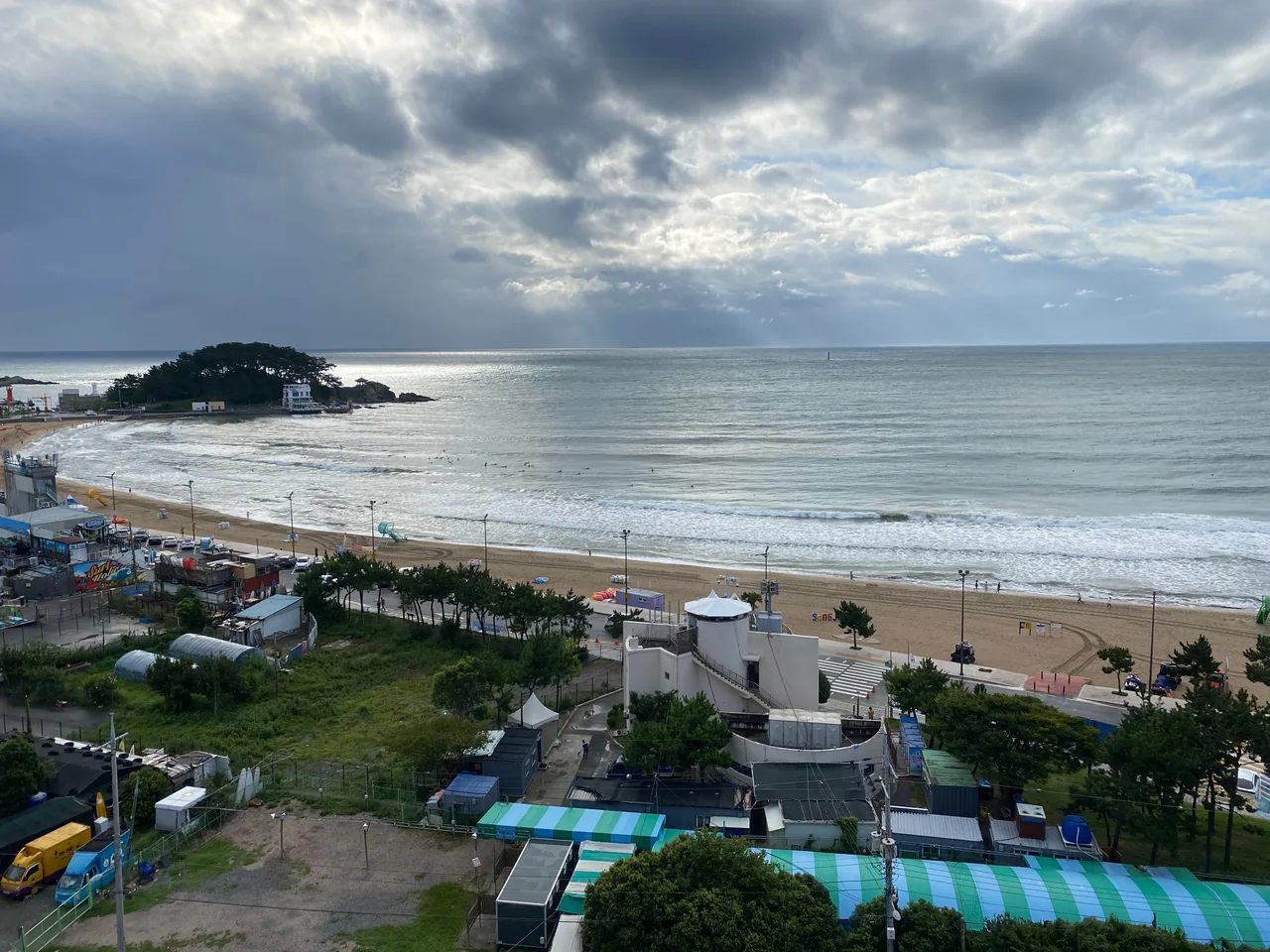
⏱️ About 2–3 hours. Best photo spots: the pavilion at Jukdo Park looking over the bay, and the surfers’ line-up at sunrise.
Songjeong is Busan’s surf beach: mellower, shallower and a little out of town, with consistent gentle waves, a row of surf schools and board rentals, and a relaxed, younger crowd.
- Why go: the best beginner surf in the city, calmer water that’s also good for swimming, a laid-back vibe, and the cliff-top cafés of nearby Cheongsapo.
- Best for: first-time surfers, families wanting calmer water, and a low-key day away from the Haeundae crowds.
- Getting there: the Donghae Line to Songjeong Station (about a 10-minute walk), or the scenic Blue Line Park beach train along the coast from Haeundae; city buses 100, 139 and 181 also run from Haeundae Station Exit 7.
- Facilities & swimming: opens early, on June 26 in 2026, with lifeguards, showers and lockers; the bay is sheltered and the waves are forgiving, ideal for lessons.
- What to do & nearby: book a surf lesson on the spot (boards and wetsuits included), walk the Blue Line coastal path, and finish at a Cheongsapo cliff café or the Daritdol glass observatory.
5. Dadaepo Beach — sunset and the musical fountain
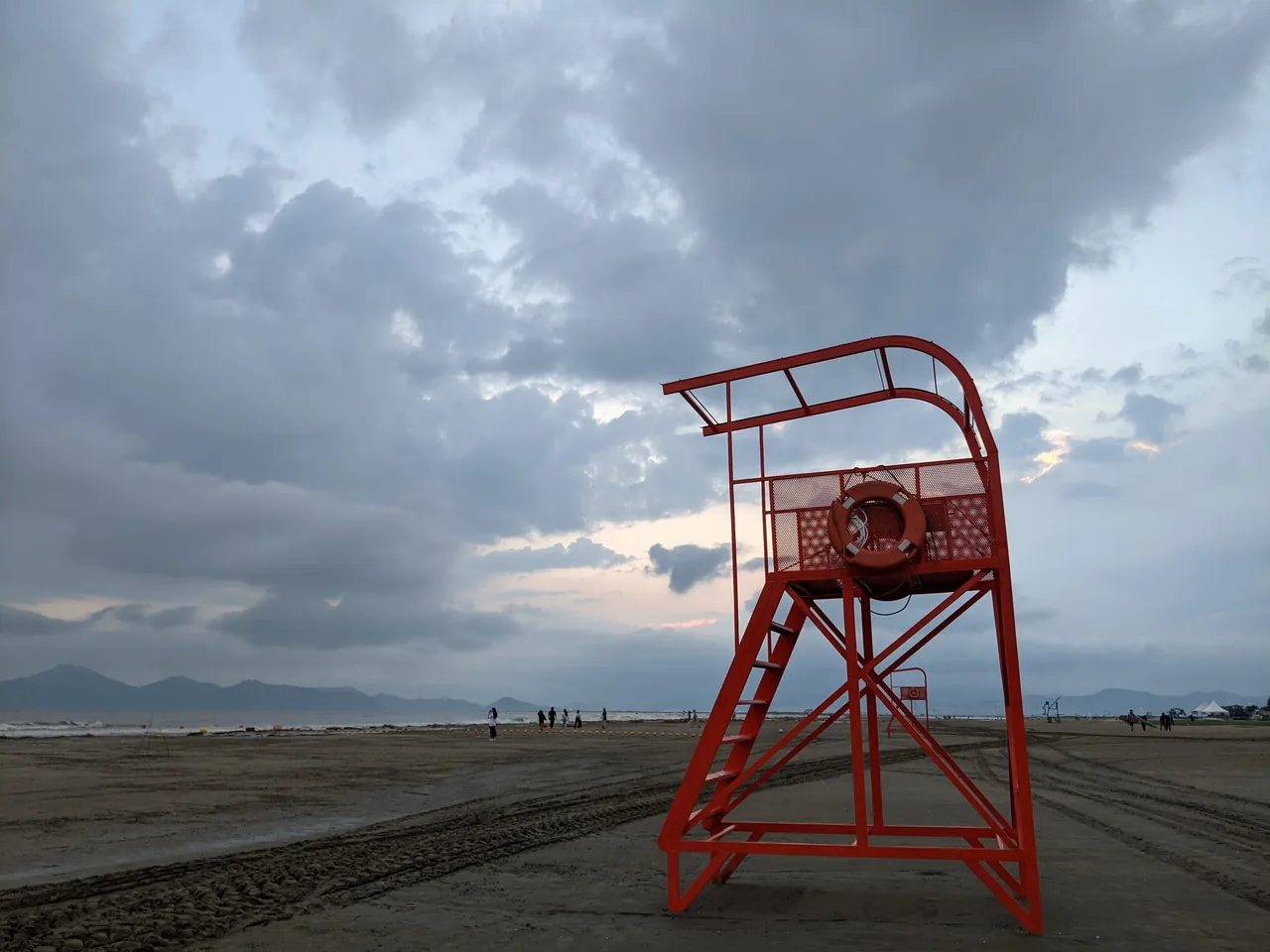
⏱️ Allow 2–3 hours, timed for sunset. Best photo spots: the Dream Sunset Fountain at night (Apr–Oct) and reflections on the wet tidal flats.
Dadaepo, at the city’s western edge where the Nakdong River meets the sea, faces the sunset — it has vast, ankle-deep tidal flats and the giant Dadaepo Sunset Fountain of Dreams, the world’s largest floor fountain, which lights up with music on summer evenings.
- Why go: Busan’s best sunset, super-shallow water that’s perfect for toddlers, a free music-and-water fountain show after dark, and a green beach park with eco-trails, lawns and a stream.
- Best for: families with little kids, sunset chasers and photographers.
- Getting there: Metro Line 1 to Dadaepo Beach Station, Exit 4, a short walk to the sand — one of the most scenic metro stations in the country.
- Facilities & swimming: opens July 1 in 2026; there are showers, foot-wash stations, drinking fountains and paid parking (386 spaces across the Morundae and central lots); the water is exceptionally shallow, so it’s more for paddling than serious swimming.
- The fountain (2026, check before you go): the Sunset Fountain of Dreams runs roughly late April to late October, closed Mondays; shows are about 20 minutes — in spring/summer (Apr–Aug) at 8pm on weekdays, plus a 9pm second show on weekends; in autumn (Sep–Oct) at 7:30pm, plus 8:30pm on weekends.
6. Songdo Beach — Korea’s first beach, cable car & glass skywalk
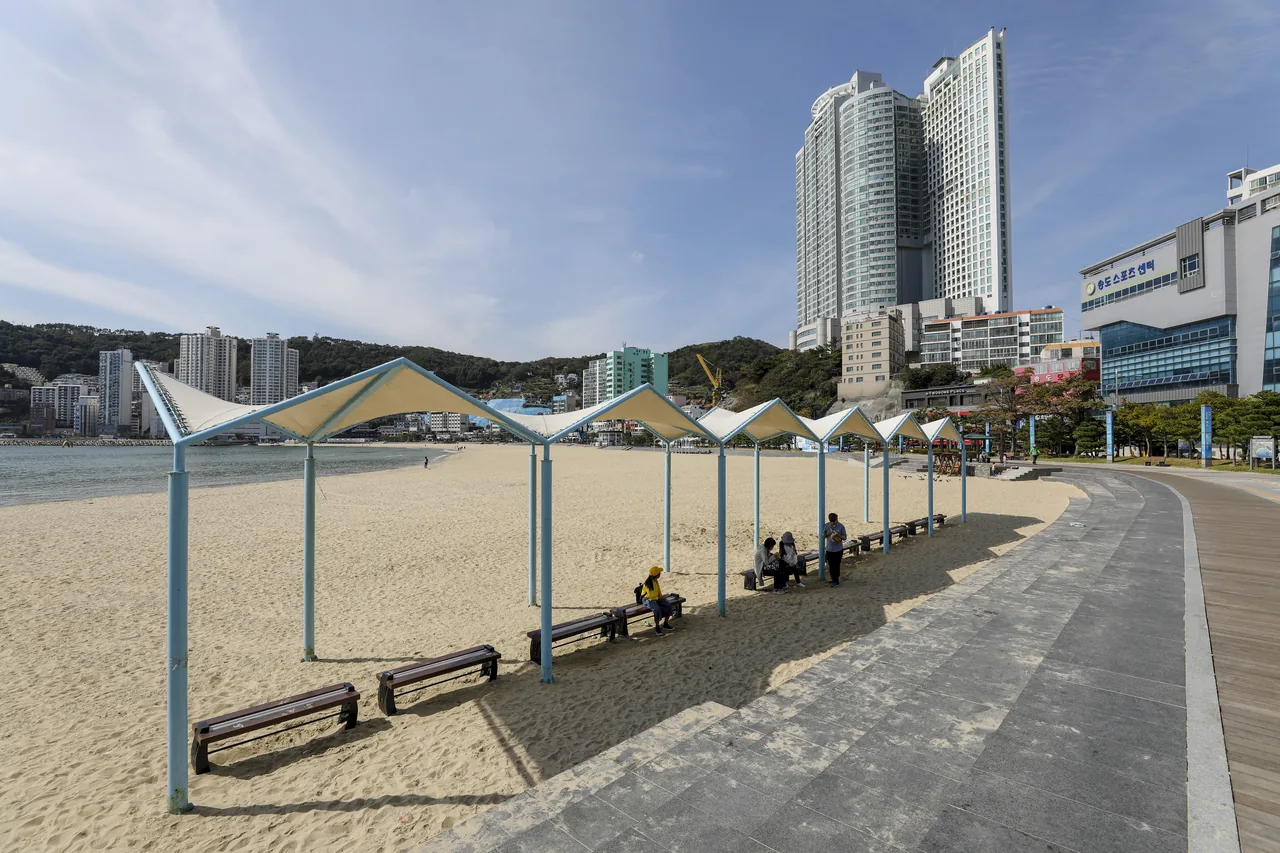
⏱️ About 2–3 hours. Best photo spots: the end of the Cloud Trail skywalk and the Air Cruise cable car over Songdo Bay.
Songdo opened in 1913 as Korea’s very first public beach, and it has been reborn as a compact resort with a sea-crossing cable car and a glass-floored cliff skywalk. It’s small and sheltered, just west of the old downtown.
- Why go: the Songdo Marine Cable Car (Busan Air Cruise), the cliff-side Cloud Trails skywalk, a calm little beach, a coastal walk and retro charm.
- Best for: a half-day with a view, families, and anyone who likes a beach with attractions attached.
- Getting there: a short bus or taxi ride from Nampo-dong / Jagalchi in the old downtown (about 15 minutes), so it pairs perfectly with the markets.
- Cable car (2026): the 1.62 km Busan Air Cruise runs Songnim Park to Amnam Park; hours are roughly 9:00–22:00 in Jul–Aug, 9:00–21:00 in spring/autumn and 9:00–20:00 in winter. Round-trip is about ₩17,000 (standard) or ₩22,000 for a glass-floor Crystal cabin; the cliff skywalk costs around ₩1,000.
- What to do & nearby: ride the cable car, walk the skywalk and the Amnam Park coastal trail, then head back to Jagalchi Market and Nampo-dong for dinner.
7. Ilgwang & Imrang — the quiet northern beaches
For sand without the crowds, head north to Gijang, where Ilgwang and Imrang offer calm, shallow water and a slower, local feel.
- Ilgwang Beach — a long, white-sand bay with shallow, gentle water and a cosy, village atmosphere; popular with locals and families and far quieter than Haeundae. Take the Donghae Line to Ilgwang Station, Exit 1 (about a 5-minute walk), or buses 180, 182 or 188. There are showers and small restaurants, and the seafood — especially Gijang anchovy and seaweed — is excellent.
- Imrang Beach — a 1.5 km beach a little further north, known for clean water shallow enough (about waist-deep) for young children, and for fishing and fresh seafood; low-key and uncrowded, best reached by car or local bus.
8. Cheongsapo & the coastal walks
Some of Busan’s best coast isn’t a swimming beach at all — it’s the cliff paths and fishing coves between the big beaches.
- Cheongsapo — a tiny fishing village between Haeundae and Songjeong, famous for the Daritdol Observatory, a free glass-floored skywalk jutting over the reefs (open to about 9pm in summer), red-and-white lighthouses and a strip of sea-view cafés. The Blue Line Park train and coastal walk pass right through.
- Igidae Coastal Trail — a dramatic cliff-top walk on the headland between Gwangalli and Oryukdo, with the Oryukdo Skywalk (a glass platform over the sea) at its eastern end. Great for walkers and photographers rather than swimmers.
- Dongbaek Island — the wooded islet at the western end of Haeundae, with an easy boardwalk loop, the Nurimaru APEC House and skyline views.
9. Beach-hopping itineraries
Busan’s coast splits neatly into an eastern cluster and a western one — group by side and you’ll spend your time on the sand, not on the metro.
- East-coast beach day: Haeundae (morning swim + aquarium) → Dongbaek Island walk → the Blue Line Park Sky Capsule or beach train to Cheongsapo (Daritdol observatory) → Songjeong (afternoon surf) → back to Gwangalli for the bridge lights and dinner.
- West / old-town day: Jagalchi and Gukje markets (lunch) → Songdo (cable car + skywalk) → Dadaepo for sunset and the musical fountain.
- One perfect beach day (short trip): Haeundae in the morning, the Sky Capsule along the coast in the afternoon, and Gwangalli at night — three very different moods of the same coastline.
- Quiet escape: the Donghae Line north to Ilgwang for a calm swim and a Gijang seafood lunch, with Haedong Yonggungsa temple on the way.
10. Swimming season, water & lifeguards
Busan’s beaches officially open for swimming in summer with lifeguards on duty, but they’re free and lovely to walk year-round.
| Beach | 2026 open | Notes |
|---|---|---|
| Haeundae, Songjeong | June 26 | Open earliest; full facilities & lifeguards |
| Gwangalli, Songdo, Dadaepo, Ilgwang, Imrang | July 1 | Lifeguards and facilities through late August |
- Lifeguard hours: typically around 9am–6pm in the official season; supervised swimming is usually allowed roughly 11am–6pm within the flagged zones.
- Water: the sea is warmest from mid-July to late August (around 22–26°C); June and September are pleasant for walking and paddling but cooler for swimming.
- Out of season: the same beaches are quiet and beautiful for sunrises, cafés, photos and coastal walks — just no swimming supervision.
11. Beach safety: rip currents, jellyfish & typhoons
Busan’s beaches are very safe and well-staffed in season, but a few seasonal hazards are worth knowing.
- Rip currents: the main risk. Swim only in the flagged, lifeguarded zones, don’t go out of your depth, and if you’re caught in a current, stay calm and swim parallel to the shore rather than against it. Haeundae and Songjeong occasionally see rip-current advisories.
- Jellyfish: in mid- to late summer (especially August), jellyfish can appear after warm spells or storms; heed any posted warnings, and rinse and seek first aid if stung — lifeguard stations carry supplies.
- Typhoons & surf: August–September is typhoon season; surf and wind can rise fast, so check the forecast 2–3 days out and stay out of the water when a storm is near. Beachfront areas can flood in a big typhoon.
- Sun & heat: the summer sun is strong — bring a shade tent or parasol, plenty of water and high-SPF sunscreen, and watch small children closely on the very shallow flats at Dadaepo and Imrang.
12. Rentals, costs, facilities & what to pack
The sand and the sea are free — you only pay for the extras, and Busan’s beaches are well equipped in season.
- Costs: entry is free everywhere. Parasol-and-mat sets rent for roughly ₩10,000–20,000 a day; surf lessons at Songjeong run around ₩50,000–70,000 with gear; the Songdo cable car is ₩17,000–22,000 round trip.
- Facilities (in season): showers, foot-wash stations, changing rooms, lockers, drinking fountains, toilets and first aid operate at the main beaches. Dadaepo and Haeundae have large paid car parks; spaces fill early on summer weekends, so use the metro if you can.
- What to pack: a shade tent or parasol, water and snacks, sunscreen and a hat, water/reef shoes for pebbly spots, a dry bag, and a light layer for cool sea breezes after sunset.
- Accessibility: Haeundae and Gwangalli have step-free metro access (lifts) and flat promenades; some beaches offer beach wheelchairs and accessible boardwalks in season — ask at the on-beach information desk.