
Busan Street Food: What to Eat & Where to Find It
Jagalchi’s fish stalls, BIFF Square’s seed-filled hotteok, the alleys of Gukje Market and a night market that comes alive after dark — a local’s guide to eating your way through Busan.
- Busan’s street-food heart is the old downtown around Nampo: Jagalchi fish market, BIFF Square, Gukje Market and the Bupyeong Kkangtong Night Market — all within a few blocks.
- Must-eats: ssiat hotteok (seed-filled pancake, a BIFF Square original), bibim dangmyeon (spicy glass noodles), Busan eomuk (fish cake), and fresh seafood at Jagalchi.
- Most stalls are cash-friendly but many now take cards; go hungry, share, and check hours in a map app — small stalls keep their own schedules.
- It pairs perfectly with a sit-down bowl of dwaeji-gukbap or milmyeon, and fits the Nampo half of a Busan day.
1. Busan’s street-food markets at a glance
2. Jagalchi Market: Korea’s biggest fish market
3. BIFF Square: the street-food strip
4. Gukje Market & the Bupyeong Night Market
5. The must-eat Busan street foods
6. Beyond the markets: more food streets
7. How to do a Busan street-food crawl
8. Where street food fits in your Busan trip
If Busan has a single best meal, it isn’t in a restaurant — it’s grazing the markets. The old downtown around Nampo packs Korea’s largest fish market, a street-food square, a sprawling traditional market and a buzzing night market into a few walkable blocks. This is a local’s guide to Busan street food: the markets, the must-eat dishes, the famous local names, and how to do a crawl without missing the good stuff. Plan the rest of your trip with our complete Busan Travel Guide.
1. Busan’s street-food markets at a glance
Four markets, all within walking distance in the Nampo/Bupyeong area, cover most of the eating:
| Market | Known for | Area |
|---|---|---|
| Jagalchi Market | Korea’s biggest fish market — raw & grilled seafood | Nampo (Jagalchi station) |
| BIFF Square | Ssiat hotteok, bibim dangmyeon, street snacks | Nampo |
| Gukje Market | Traditional market alleys, eomuk, yubu jeongol | Nampo |
| Bupyeong Kkangtong Night Market | Global street food after dark | Bupyeong (next to Gukje) |
You can hit all four in an afternoon-into-evening. Below, what to eat at each — and the dishes worth crossing town for.
2. Jagalchi Market: Korea’s biggest fish market
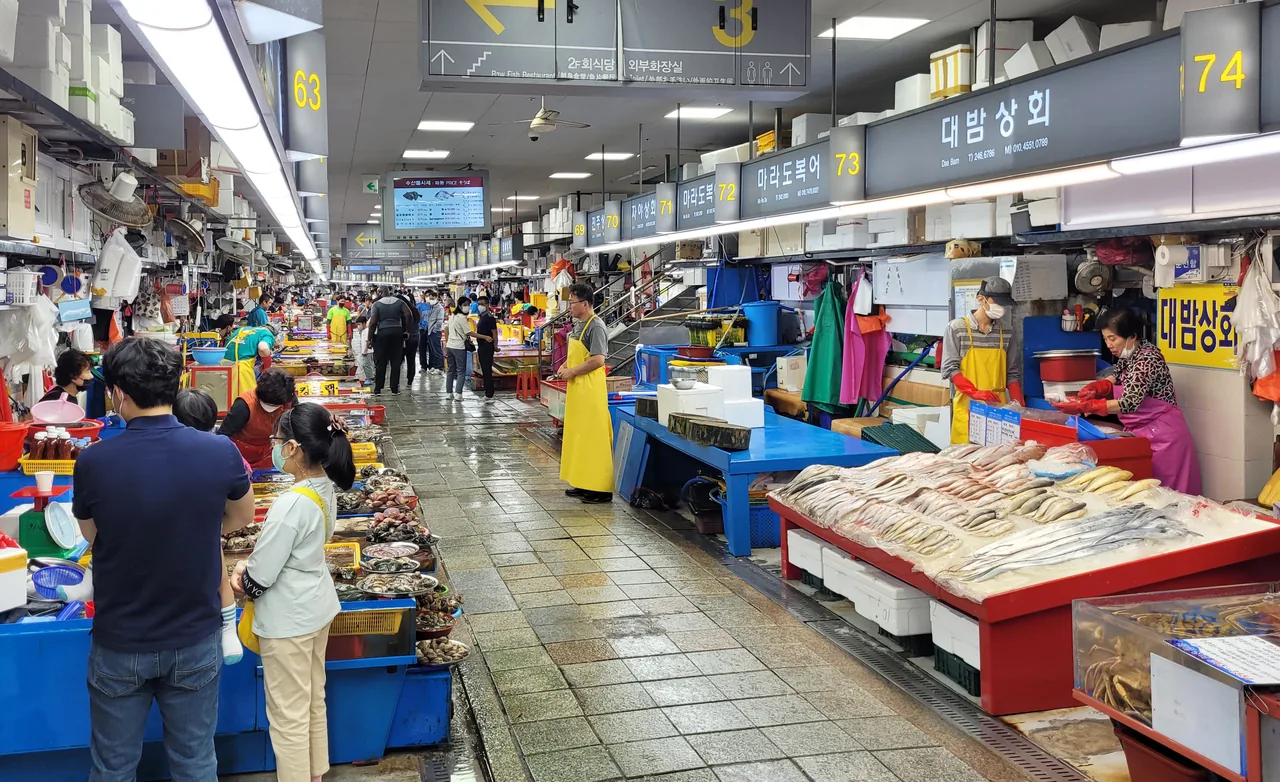
Jagalchi Market (자갈치시장) is the soul of seafood Busan — a cavernous hall of stalls run mostly by the city’s famous jagalchi ajumma (market women), plus a modern building on the waterfront.
- How it works: pick your fish or shellfish fresh downstairs, and a restaurant upstairs will prepare it as raw hoe (sashimi) or grilled, usually for a cooking fee. Agree the price first.
- The local specialty: gomjangeo (꼼장어) — spicy grilled hagfish — is a Jagalchi classic, along with grilled clams and a bowl of seafood.
- Cheap and quick: stalls selling steamed crab, dried fish and Busan eomuk (fish cake) skewers are good even if you don’t sit down for hoe.
3. BIFF Square: the street-food strip
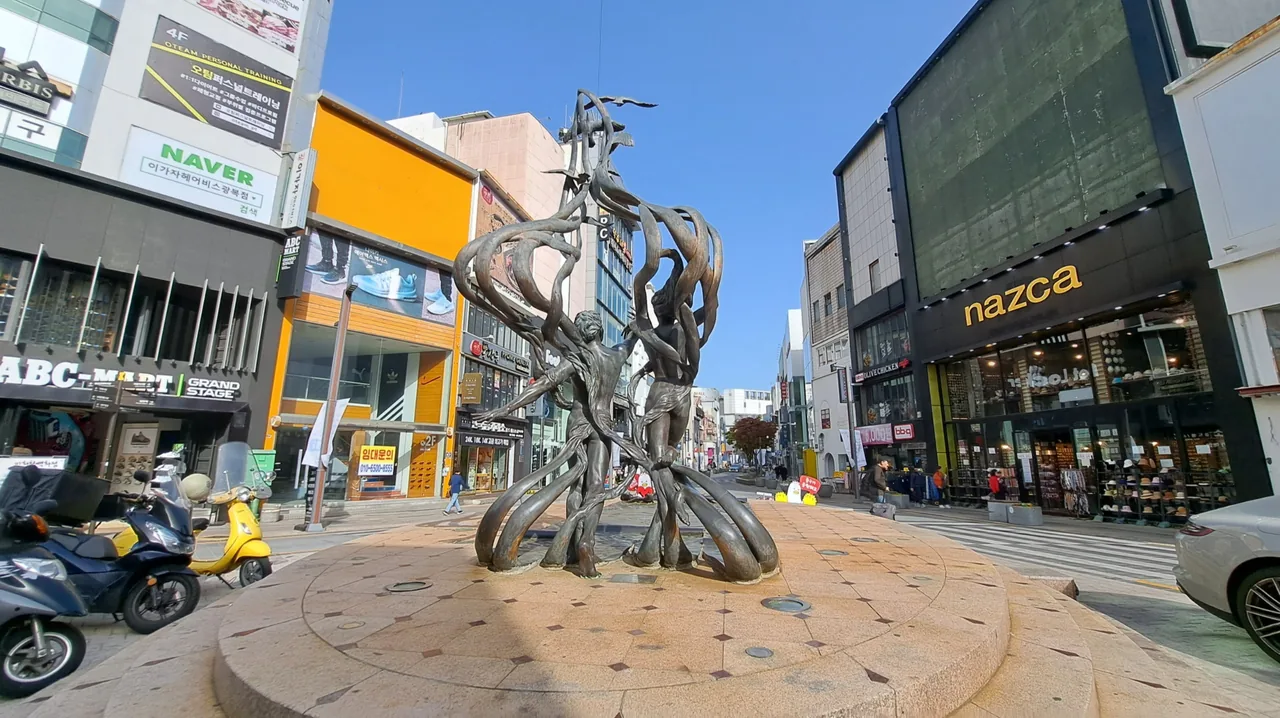
A few minutes from Jagalchi, BIFF Square (BIFF광장) — named for the Busan International Film Festival — is the city’s best-known street-food run.
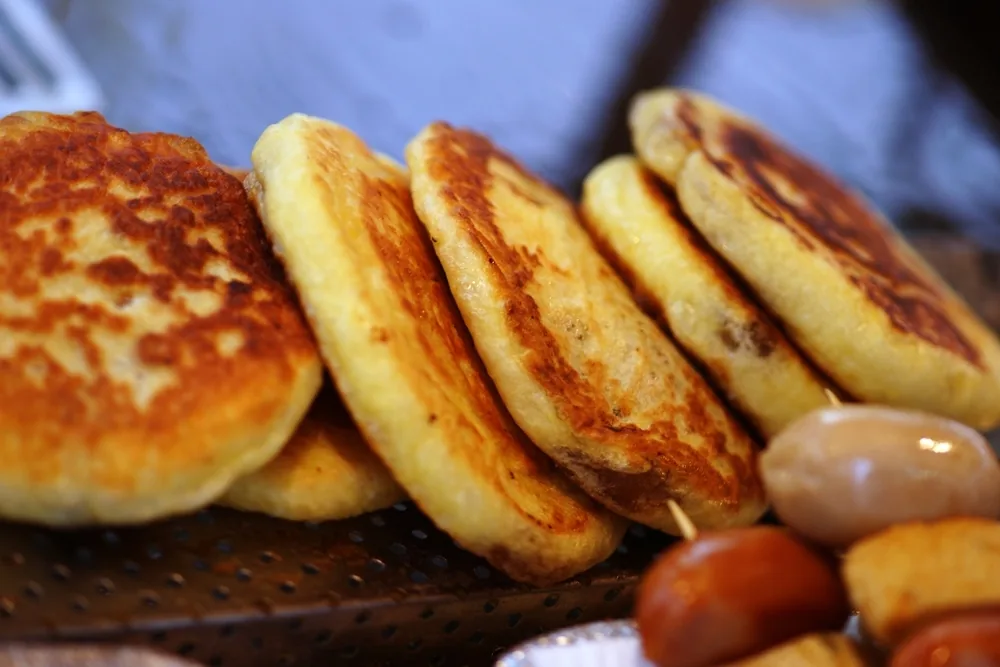
- Ssiat hotteok (씨앗호떡): Busan’s signature street snack and a BIFF Square original — a fried sweet pancake split open and stuffed with seeds and nuts. Look for the lines.
- Bibim dangmyeon (비빔당면): chewy glass noodles tossed in a sweet-spicy sauce, a cheap Busan favorite.
- The classics: tteokbokki (spicy rice cakes), eomuk skewers with hot broth, gimbap and twigim (fritters) line the strip.
4. Gukje Market & the Bupyeong Night Market
Behind BIFF Square, Gukje Market (국제시장) is a sprawling maze of alleys selling everything — and plenty to eat among the shops.
- In Gukje: sit-down alley stalls for yubu jeongol (fried-tofu hotpot), bibim dangmyeon, kalguksu and patbingsu in summer; the famous Manmul (“everything”) street runs through it. Map
- Bupyeong Kkangtong Night Market (부평깡통야시장): right next door, this covered market turns into a night-food hub after sunset, with stalls of grilled skewers, dumplings and international street food. Map
- When: the night market is best in the evening (roughly from late afternoon); Gukje’s day stalls wind down earlier.
5. The must-eat Busan street foods
Beyond the markets, these are the dishes that say “Busan.” Most cost just a few thousand won:
| Dish | What it is |
|---|---|
| Ssiat hotteok (씨앗호떡) | Fried sweet pancake stuffed with seeds & nuts |
| Bibim dangmyeon (비빔당면) | Chewy glass noodles in sweet-spicy sauce |
| Eomuk (어묵) | Busan’s famous fish cake, on skewers with broth |
| Gomjangeo (꼼장어) | Spicy grilled hagfish, a Jagalchi specialty |
| Chungmu gimbap | Mini rice rolls with spicy squid & radish |
| Tteokbokki & twigim | Spicy rice cakes & assorted fritters |
For the two great sit-down Busan dishes — dwaeji-gukbap (pork soup) and milmyeon (cold wheat noodles) — see our dedicated guides linked below.
6. Beyond the markets: more food streets
The markets are the headline, but a few other areas are worth a graze:
- Seomyeon food alley (서면 먹자골목): the city’s central nightlife-and-eating district, thick with pork-soup joints, grills and pojangmacha (tented street bars). Map
- Haeundae Market: a covered lane near the beach with street snacks, seafood and the famous Haeundae-style eomuk. Map
- Gwangalli: beachfront cafes and bars rather than market stalls, but a great spot for an evening bite with a bridge view.
7. How to do a Busan street-food crawl
A few practical notes to eat well and stress-free:
- Bring some cash: many stalls now take cards, but small ones may be cash-only — keep a little won on you.
- Go hungry and share: portions are small and cheap, so a group can taste far more by splitting.
- Check hours in a map app: search the stall or market in KakaoMap or Naver Map; hours and closing days vary and Google Maps is unreliable in Korea.
- Best time: late morning for Jagalchi, afternoon for BIFF/Gukje, evening for the Bupyeong night market — you can do them in that order.
- Allergies: a lot of street food contains seafood, wheat or nuts (the hotteok especially) — ask or check before you order.
8. Where street food fits in your Busan trip
The Nampo markets make a perfect half-day, and they slot neatly into a wider plan:
- Pair with old downtown: combine the markets with Gamcheon Culture Village and Yongdusan Park — all on the western, Line 1 side of the city.
- Make it a meal day: markets for grazing, a sit-down soul-food lunch, and a Gwangalli or Seomyeon dinner.
- Fit it to your days: the markets are Day 2 territory in most plans — see how it all comes together in our complete Busan Travel Guide.
Get a transit card, route each stop in KakaoMap, and the whole crawl is an easy, delicious afternoon.