
Gwangalli Beach, Busan: The Complete Guide to Night Views, Food, Cafes & Stays
Gwangan Bridge after dark, the free Saturday drone show, the November fireworks, water sports, raw-fish centers and rooftop cafes
- Gwangalli is Busan’s night-view beach: a 1.4 km stretch of sand that looks straight out at the Gwangan Bridge (the Diamond Bridge), which lights up after dark.
- Getting here is simple. Take Busan Metro Line 2 to Gwangan Station, leave by Exit 3 or 5, and walk about 5 to 10 minutes to the sand.
- The free M Drone Light Show flies roughly 1,000 drones over the bay every Saturday at 20:00 and 22:00 year round, and it is the single best reason to time a Saturday visit.
- Come in the evening. Gwangalli is younger, more local and more atmospheric than Haeundae, strong on rooftop cafes, raw-fish restaurants, water sports and the bridge lighting up at night.
1. Why come to Gwangalli (and how it differs from Haeundae)
2. Gwangalli at a glance: the key facts
3. Gwangan Bridge at night and the best photo spots
4. The M Drone Light Show: free, every Saturday
5. The Busan Fireworks Festival in November
6. Water sports and yacht cruises
7. Cafes and rooftop bars with a bridge view
8. Where to eat: raw fish and seafood
9. Millak Waterside Park: the night-view hangout
10. Getting here and around
11. When to visit Gwangalli
12. Where to stay near Gwangalli
13. Gwangalli vs Haeundae: which beach for you?
14. Practical tips and what to combine nearby
Gwangalli is the beach you come to after dark, a gently curving 1.4 km of sand facing the floodlit Gwangan Bridge, with rooftop cafes, raw-fish centers and a free weekly drone show all within a few minutes’ walk. Answer first: take Metro Line 2 to Gwangan Station, arrive in the late afternoon, and stay for sunset, the bridge lighting up and, on Saturdays, the 20:00 drone show. This guide is part of our complete Busan Travel Guide, so use it for Gwangalli itself and tap the master guide for the wider city. Below you will find the best Gwangan Bridge viewpoints, the drone show and fireworks timings, water sports, cafes, raw fish at Millak, the waterside park, transport, where to stay and how Gwangalli compares with Haeundae.
1. Why come to Gwangalli (and how it differs from Haeundae)
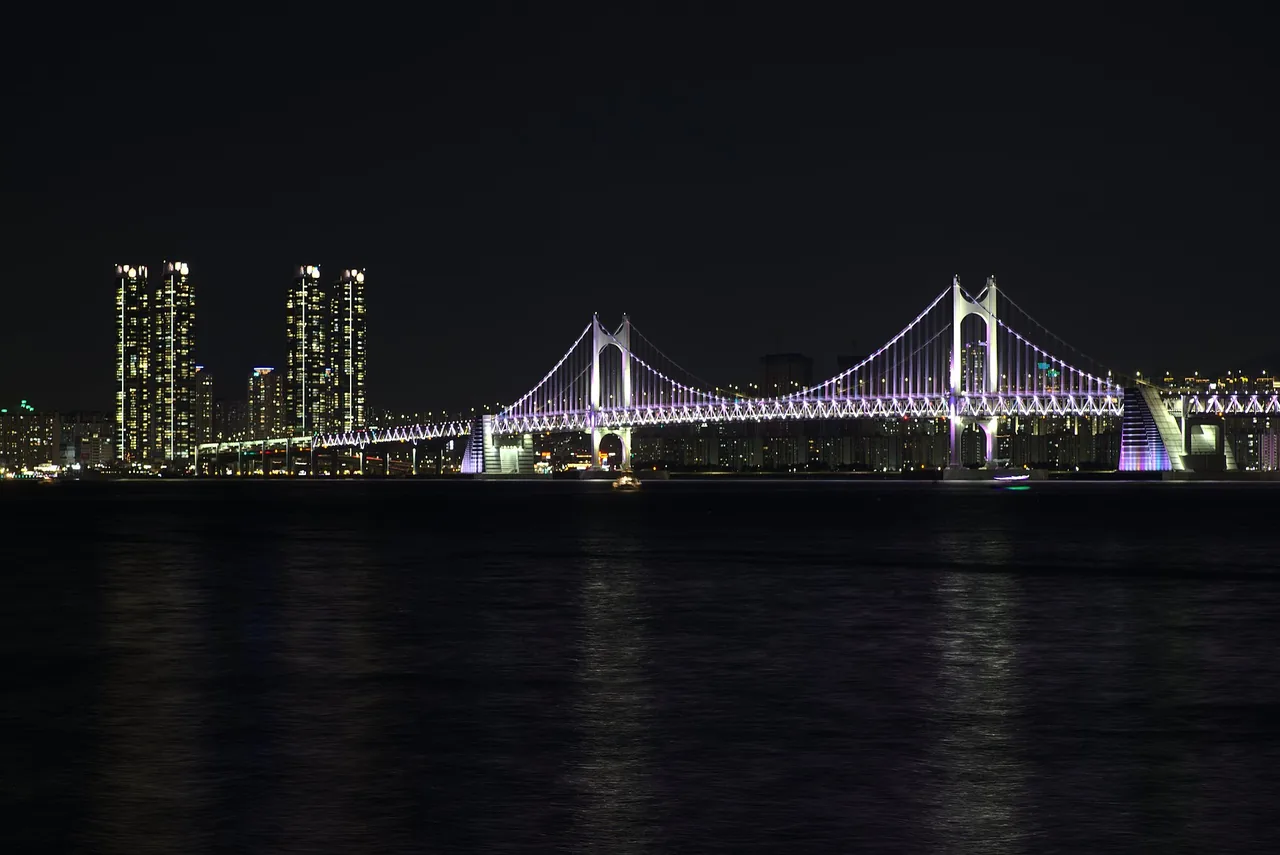
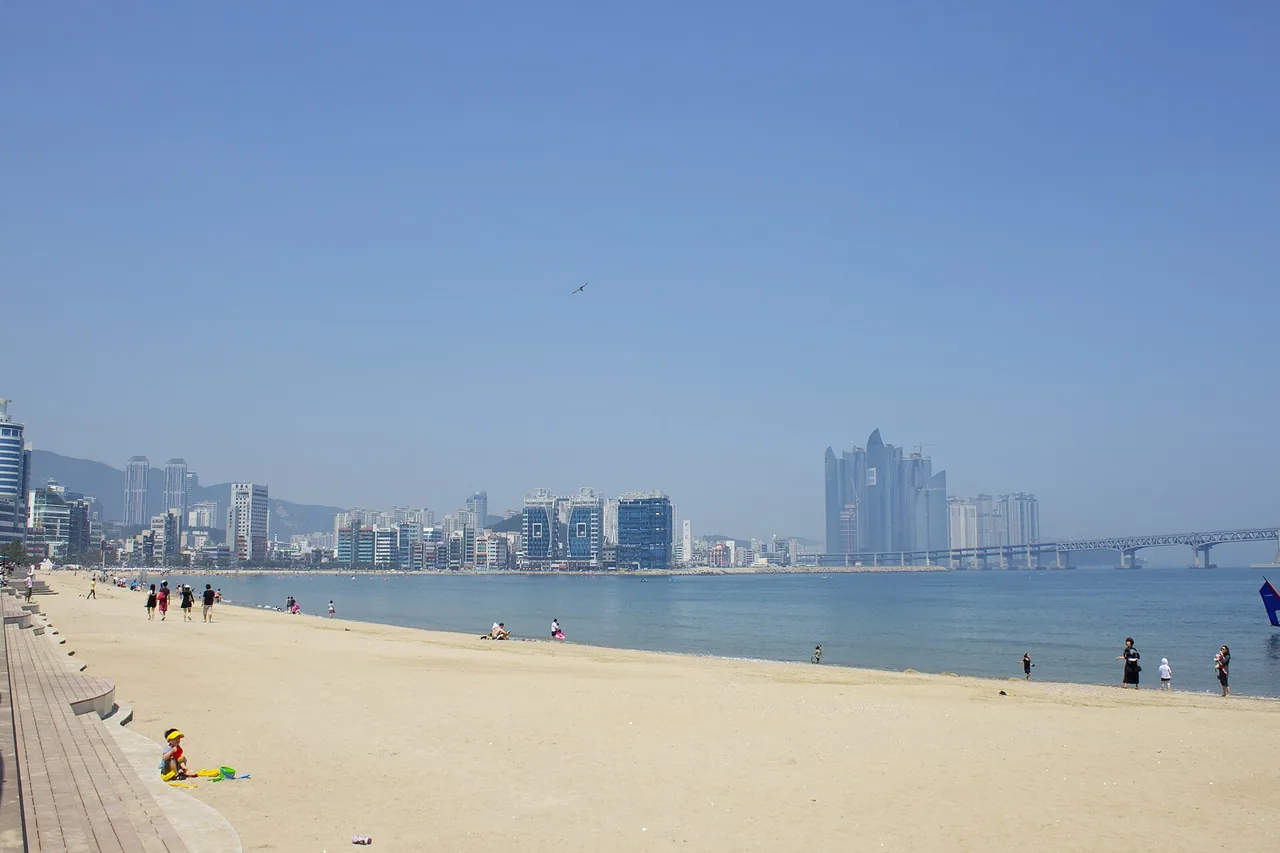
Gwangalli is Busan’s night-view and atmosphere beach: you come for the floodlit Gwangan Bridge, the free Saturday drone show, the rooftop cafes and the raw-fish centers, not mainly to swim. A 1.4 km arc of sand in the Suyeong district looks straight across the bay at the Gwangan Bridge, Korea’s largest two-deck sea bridge, which is lit with colour-changing LEDs every evening. Reach it on foot from Gwangan Station on Metro Line 2.
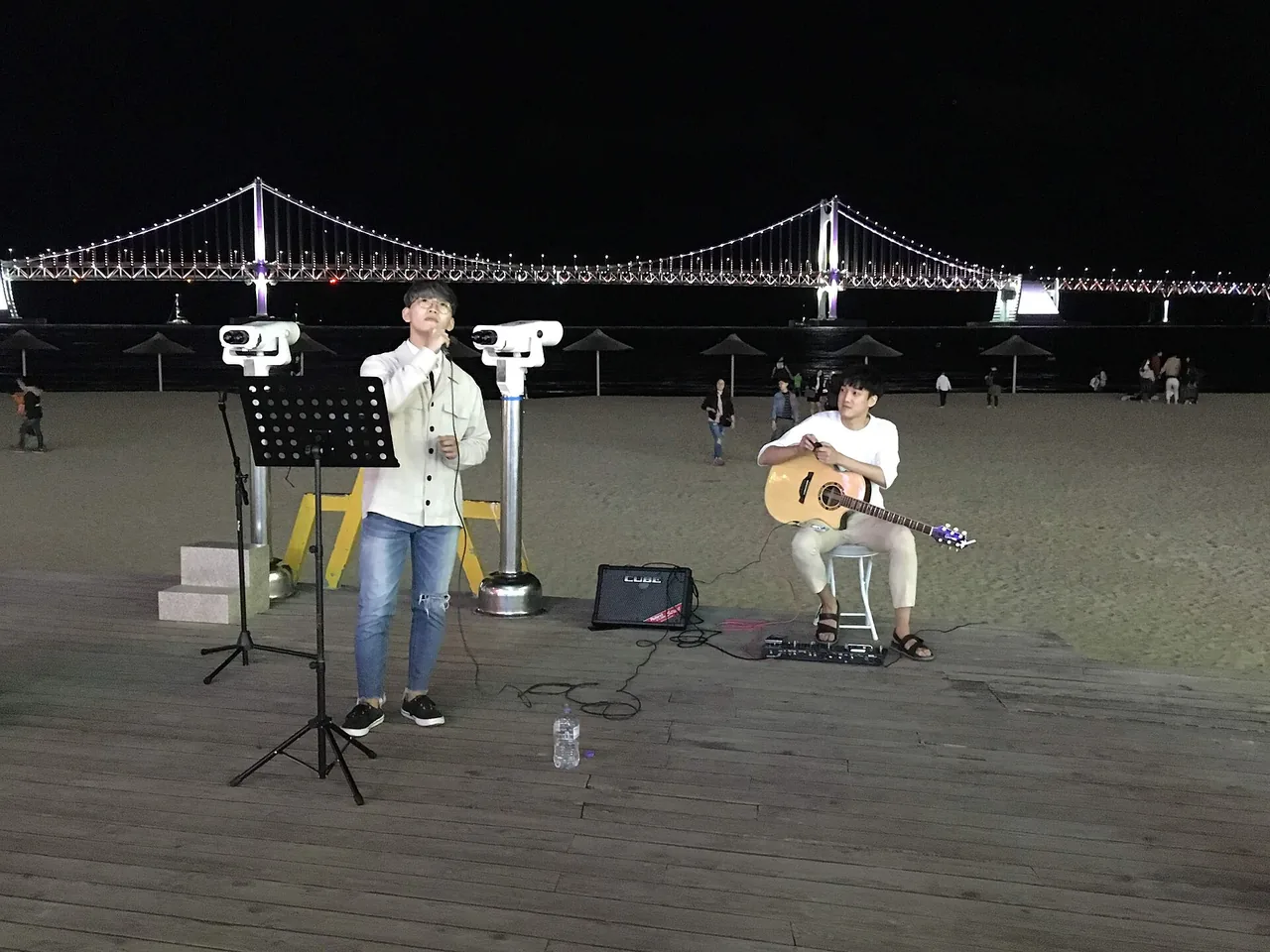
Where Haeundae is the big, polished resort beach, Gwangalli feels younger and more local, the place Busan locals choose for a date, a drink by the sea or a long evening with friends. The energy peaks at night, when the bridge glows, buskers play along the promenade, the cafe rooftops fill up and, on Saturdays, drones rise over the water. It rewards an evening far more than a midday visit.
The whole beach faces the lit bridge head on, the defining Gwangalli image and Busan’s best free night view.
About 1,000 drones every Saturday night (20:00 and 22:00 in summer, earlier in winter), drawing pictures and messages over the bay.
Sunset yacht cruises under the bridge, plus SUP, kayak and banana boat in summer.
Rooftop bay-view cafes along the sand and hundreds of raw-fish stalls at the Millak centers.
2. Gwangalli at a glance: the key facts
Free to enter, open year round, and at its best after dark. Here are the numbers worth knowing before you go.
| Item | Detail |
|---|---|
| Location | Suyeong-gu, Busan |
| Entry | Free (the beach itself) |
| Getting here | Metro Line 2, Gwangan Station, Exit 3 or 5, then 5 to 10 min on foot (about 870 m) |
| Beach size | About 1.4 km of sand |
| Best time | Evening, for the lit Gwangan Bridge; Saturdays for the drone show |
| Free drone show | Every Saturday night (20:00 & 22:00 in summer; earlier in winter) |
| Big event | Busan Fireworks Festival, November 7, 2026 |
| Time needed | Half a day; a full afternoon-into-evening with food and the bridge view |
| Best for | Night views, cafes, water sports, raw fish, dates and a younger, local vibe |
The single biggest difference from Haeundae is the view: at Gwangalli the Gwangan Bridge sits directly in front of you across open water, which is why the beach is built around evenings, photography and night-time atmosphere rather than swimming.
3. Gwangan Bridge at night and the best photo spots
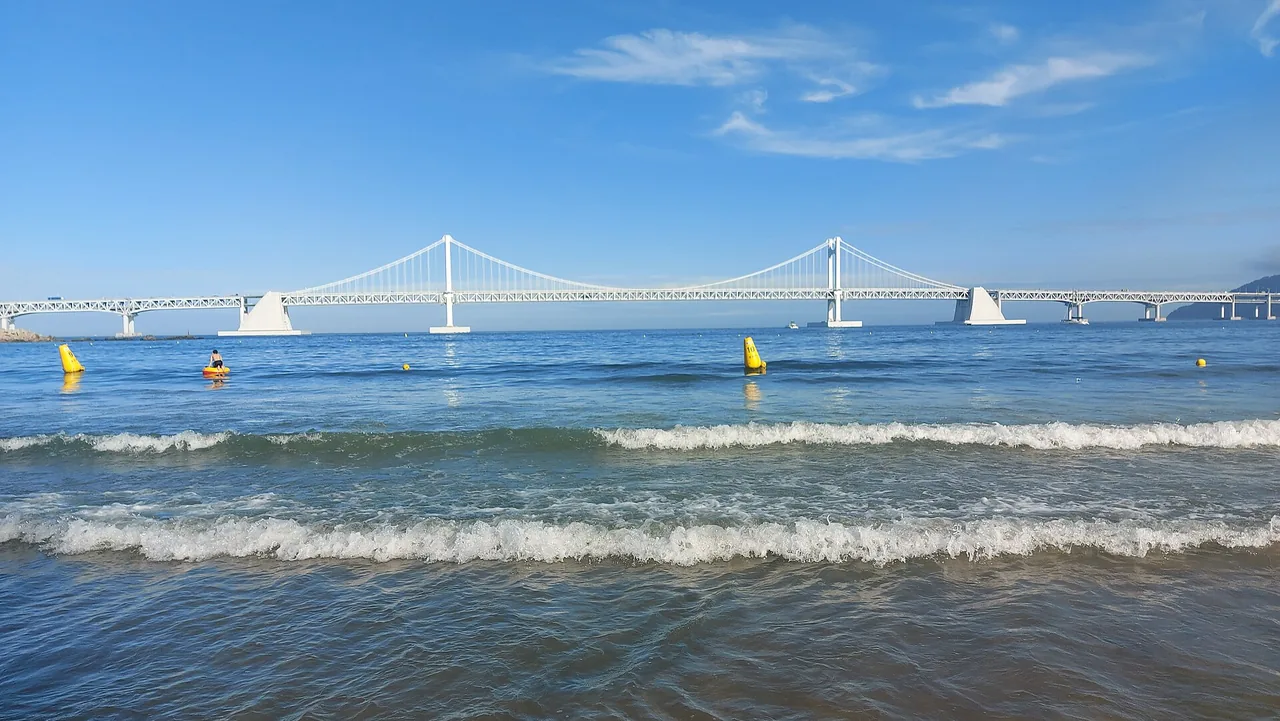
The Gwangan Bridge is the reason to be here after dark: Korea’s largest two-deck sea bridge, also called the Diamond Bridge, lit with LEDs from sunset and visible head on from anywhere on the beach. The classic sequence is to arrive before sunset, watch the sky turn through blue hour, then catch the bridge lighting up, all from the same spot on the sand.
The whole beachfront works as a viewpoint, but a few spots stand out. Here is where to point your camera.
| Viewpoint | Why it works |
|---|---|
| Beach sand and themed street | The straight-on, postcard view of the bridge across the water, with the promenade buskers nearby |
| Millak Waterside Park | To the left of the beach and closer to the bridge, the local number-one spot for the night view |
| Rooftop cafes | Bay-view rooftops along the sand (such as Cup & Cup on the 5th and 6th floors) put the bridge in frame with a coffee in hand |
| Namcheon-dong, Igidae, Hwangnyeongsan | Higher ground for a wider city-and-bridge night panorama from above |
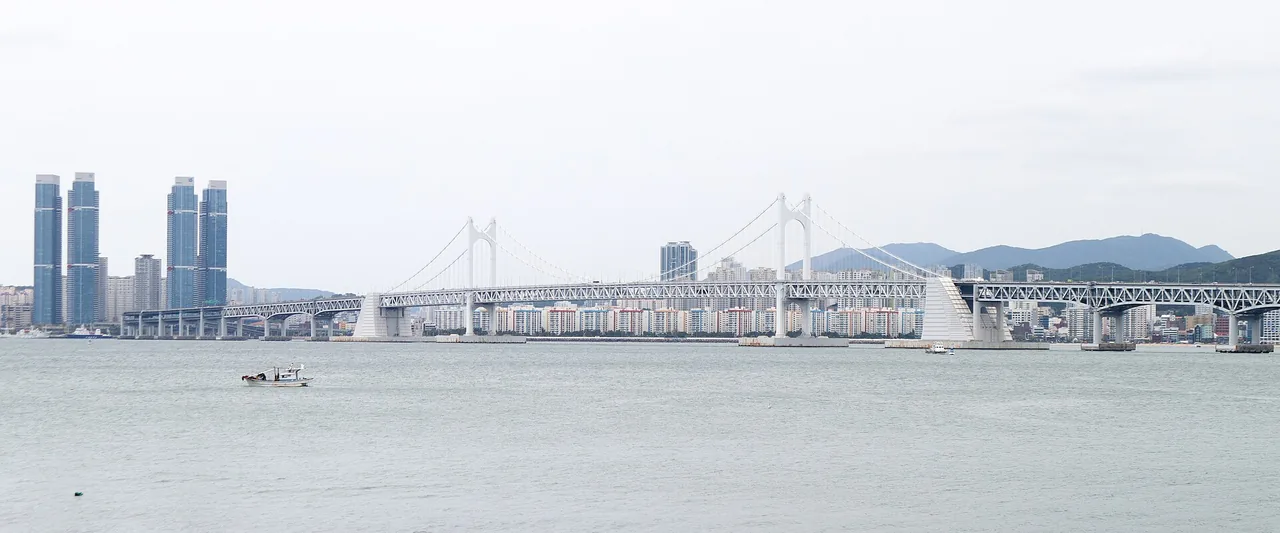
A little background helps you appreciate the view. The Gwangan Bridge is a double-deck sea bridge of roughly 7.4 km (with a 900 m suspension span at its center), opened in 2003, with traffic running on two levels above the sea. Its nickname, the Diamond Bridge, comes from the lighting: the LED system shifts colour by season and time of day, which is why two visits rarely look identical. It has also hosted large-scale public events, and it anchors almost every postcard of modern Busan.
4. The M Drone Light Show: free, every Saturday
The Gwangalli M Drone Light Show flies about 1,000 drones over the bay every Saturday night, and it is completely free to watch from anywhere on the beach. Shows run at 20:00 and 22:00 in the summer peak (March to September) and start about an hour earlier in winter, so check the day’s schedule before you go. The drones form moving pictures, animations and messages above the water with the lit Gwangan Bridge behind them, a genuinely impressive show and one of the best free things to do in Busan.
| Detail | Info |
|---|---|
| When | Every Saturday night; two shows (summer 20:00 & 22:00, winter about an hour earlier) |
| Drones | About 1,000 (up to about 2,500 for special editions) |
| Price | Free |
| Where to watch | Anywhere on the beach; best from the center, Millak Waterside Park or a rooftop |
| Special shows | Larger editions for Lunar New Year, year-end countdown and similar dates |
The show is run by the city as a permanent, year-round programme rather than a one-off festival, which is what makes it so reliable: if you are in Busan on a Saturday, you can plan your evening around it. Each performance lasts roughly ten minutes and is choreographed to music and a storyline, with the drones forming everything from sea creatures and K-pop motifs to written messages, all hovering over the water with the lit bridge as a backdrop. The 20:00 show tends to be the busier of the two; the 22:00 slot is a little calmer if you prefer space to spread out.
5. The Busan Fireworks Festival in November
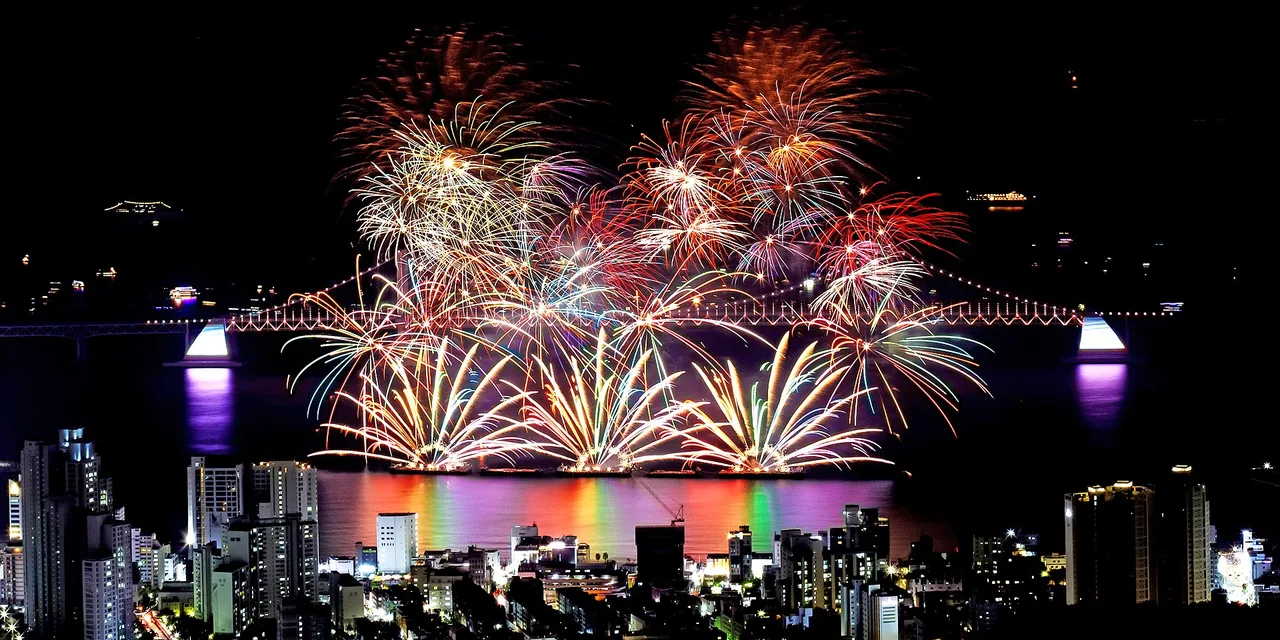
The Busan Fireworks Festival is the city’s biggest night event, and in 2026 it falls on Saturday, November 7, with the main fireworks lit at 20:00 over the bay between Gwangalli, Haeundae and Igidae. Gwangalli’s beachfront is the prime free vantage point, with the bursts framed directly above and around the Gwangan Bridge.
| Detail | Info |
|---|---|
| Date (2026) | Saturday, November 7 |
| Main fireworks | Lit at 20:00 (official events run from the afternoon) |
| Where | Around Gwangalli, Haeundae and Igidae |
| General viewing | Free from Gwangalli Beach |
| Paid seating | Reserved seats near the bridge, booked separately in advance |
6. Water sports and yacht cruises
Gwangalli is Busan’s water-sports beach: you can take a yacht cruise under the Gwangan Bridge year round, or paddle a SUP, kayak or banana boat in summer. Because the bay is sheltered by the bridge and faces the city, it is calmer and more scenic than the open coast, which makes it ideal for being out on the water.
A cruise from the Haeundae and Gwangalli waterfront that loops out toward the bridge. The sunset and night sailings are the most popular, gliding under the lit span just as the city skyline turns on.
Stand-up paddleboarding, kayaking and banana-boat rides run through summer from the Gwangalli ocean-leisure center, with qualified instructors and gear for beginners.
A typical yacht cruise lasts around 60 to 90 minutes and includes simple snacks or drinks on board, with some operators handing out fireworks-style sparklers or letting you feed the seagulls that trail the boat. SUP and kayak sessions are sold by the hour and include a buoyancy vest and a short safety briefing, so no experience is needed; the sheltered bay is genuinely beginner-friendly. Banana-boat and other tow rides are sold per ride and are the cheapest way to get out on the water for a quick thrill.
A sunset or night yacht cruise out toward the Gwangan Bridge is one of the most memorable ways to see the lights, and slots fill quickly on summer weekends.
For a hands-on session, a beginner-friendly SUP or paddleboard class on the calm Gwangalli bay is easy to arrange in summer.
7. Cafes and rooftop bars with a bridge view
Gwangalli’s cafe street is one of the best in Busan, lined with ocean-view cafes and rooftop bars that look straight at the Gwangan Bridge. The strip running behind the sand is dense with coffee shops, dessert places and rooftop terraces, so it is easy to find a window or open-air seat facing the water.
The trick is that the same seat works twice: a sea view by day and a front-row bridge view at night. Higher floors and rooftops are the prize, and the popular ones fill up before sunset on weekends.
Multi-floor cafes such as Cup & Cup put the bridge in frame from a 5th or 6th-floor bay-view terrace, a favourite for sunset and the night lights.
The strip behind the beach is wall-to-wall coffee, brunch and dessert spots, many with sea-facing windows.
By day the focus is the open bay; by night the same tables become some of the best bridge-view seats anywhere on the beach.
8. Where to eat: raw fish and seafood
For dinner, head to the Millak and Gwangalli raw-fish centers, where hundreds of stalls sell live, sliced raw fish (hoe), or to Millac The Market for a bay-view food court. The raw-fish centers around Gwanganhaebyeon-ro 312beon-gil hold roughly 300 restaurants and raw-fish stalls, the classic Busan way to eat by the sea.
| Where | What to expect |
|---|---|
| Millak / Gwangalli raw-fish centers | About 300 stalls of live sliced raw fish (hoe). Takeaway is cheaper; a sit-down setup adds a per-person table charge plus a spicy fish stew (maeuntang) ordered separately. |
| Millac The Market | A former fish market turned bay-view food court, with floor-to-ceiling windows looking out over the water. Easy and modern, good for groups and non-raw options. |
| On the beachfront | Grilled shellfish (jogae-gui), seafood spots, izakaya-style bars, plus street snacks and cafe desserts along the promenade. |
If raw fish is not your thing, the beachfront has plenty of alternatives. Grilled shellfish (jogae-gui) restaurants serve a sizzling tray of clams, scallops and prawns over a tabletop grill, often with cheese and ramen added at the end. Spicy stir-fried octopus, seafood pancakes, and Busan staples like milmyeon (cold wheat noodles) and ssiat-hotteok (seed-stuffed sweet pancakes) are all easy to find, and the cafe street behind the sand covers dessert and late-night coffee.
9. Millak Waterside Park: the night-view hangout
Millak Waterside Park, just to the left of the beach in Millak-dong, is the local number-one spot for the Gwangan Bridge night view and the city’s most relaxed evening hangout by the sea. It sits closer to the bridge than the main beach, so the lit span fills more of the frame, and the deck stretches right out over the water.
At night the park turns into an open-air gathering place. Locals spread mats on the deck, buy snacks and beer from the nearby convenience stores, and settle in for chimaek (fried chicken and beer) with the bridge glowing across the bay. It is free, casual and one of the most enjoyable ways to spend a Gwangalli evening.
| Detail | Info |
|---|---|
| Where | Millak-dong, just left of Gwangalli Beach |
| Why go | Closest open viewpoint to the lit Gwangan Bridge, with a deck over the water |
| What to do | Spread a mat, grab convenience-store snacks and beer, watch the bridge and the Saturday drone show |
| Getting there | About 20 min on foot from Gwangan Station Exit 3, or local bus 41, 83-1 or 210 |
10. Getting here and around
The simplest route is Metro Line 2 to Gwangan Station, then Exit 3 or 5 and a 5 to 10 minute walk (about 870 m) to the sand. Geumnyeonsan Station on the same line is another option.
| From | How | Rough time |
|---|---|---|
| Haeundae | Metro Line 2 to Gwangan Station | About 15 min |
| Seomyeon | Metro Line 2 to Gwangan Station | About 20 to 25 min |
| Busan Station | Line 1 to Seomyeon, transfer to Line 2, to Gwangan Station | About 30 to 40 min |
| Gimhae Airport | Light rail to Sasang, then Line 2 to Gwangan; or airport bus / taxi | About 40 to 50 min |
11. When to visit Gwangalli
Come in the evening above all, when the Gwangan Bridge lights up, and choose your day around what you want: Saturday for the drone show, summer for swimming and water sports, November for the fireworks, and spring for the Namcheon-dong cherry blossoms. The night view is the constant; the season and day of week add the extras.
The bridge lighting up after sunset is the core experience, beautiful year round and best in the blue-hour window just after the sun drops.
The free M Drone Light Show at 20:00 and 22:00, the single best reason to align a visit with a Saturday.
Swimming, SUP, kayaking and the liveliest crowds and street energy, though weekends and festival days get very busy.
The Busan Fireworks Festival (Nov 7, 2026) and, in spring, the cherry-blossom street in nearby Namcheon-dong.
12. Where to stay near Gwangalli
Stay in an ocean-view hotel or guesthouse along the Gwangalli waterfront, where bridge-view rooms are the prize. Waking up or coming back to a room that looks straight at the Gwangan Bridge, lit up at night, is the main reason to base yourself here rather than in Haeundae or Seomyeon.
| Level | Rough price per night | Good for |
|---|---|---|
| Guesthouse / hostel | From around ₩30,000 to ₩50,000 | Budget travellers, solo trips, a young social vibe |
| Mid-range hotel | About ₩70,000 to ₩140,000 | Comfort and a short walk to the sand |
| Ocean-view / bridge-view | ₩150,000 and up | Bridge-view rooms and a night-view base |
Prices swing hard with the season and the view, climbing on summer weekends and around the fireworks festival, when rooms with a bridge view sell out first.
For a stay that looks straight at the lit bridge, compare the Gwangalli ocean-view and bridge-view hotels and book ahead for the date you want.
13. Gwangalli vs Haeundae: which beach for you?
Choose Gwangalli for night views, atmosphere, cafes, water sports and a younger local feel; choose Haeundae for a wider beach, more tourist infrastructure, big hotels and family facilities. The good news is they sit two metro stops apart on Line 2, so you can easily do both, beach by day, the other by night.
| Gwangalli | Haeundae | |
|---|---|---|
| Vibe | Younger, local, atmospheric, date-night | Bigger, polished, mainstream resort |
| Beach | About 1.4 km of sand | About 1.5 km, wider and deeper |
| Signature view | Gwangan Bridge lit up, head on | Marine City skyline and The Bay 101 |
| Free shows | Saturday drone show; November fireworks | Sand Festival in May |
| Strengths | Night views, rooftop cafes, water sports, raw fish | Sky Capsule, aquarium, luxury hotels, infrastructure |
| Best for | Evenings, photography, couples, water sports | Swimming, families, a full resort day |
If you only have one evening, Gwangalli wins for the bridge and the drone show. If you want a full day with a wide beach and big attractions, lean Haeundae. Doing both is easy: see our Haeundae guide to plan the other half of your trip.
14. Practical tips and what to combine nearby
Save Gwangalli for the back half of your day, plan ahead for drone-show Saturdays and the November fireworks, and combine it with the coastal and night-view sights nearby. Because the highlight is the bridge after dark, it works best as an evening cap to a Busan day.
A cliffside walking path with side-on views of Gwangalli and the bridge across the water, a scenic daytime add-on before an evening on the beach.
A mountain with a beacon-mound viewpoint for a sweeping city-and-bridge night panorama from above. Best by taxi after dark.
A cherry-blossom street and cafe neighbourhood right behind Gwangalli, gorgeous in spring.
Shinsegae department store and the BEXCO convention center, a short hop on Line 2 toward Haeundae.
For maps, translation and booking on the move, a local data eSIM saves you hunting for Wi-Fi and keeps Naver Map and Kakao T working from the moment you land.