
Seoul to Busan by KTX: Times, Tickets & How to Ride
The KTX bullet train links Seoul and Busan in about two and a half hours, city center to city center. Here’s how the train works, how to book, what it costs, and how to ride it step by step — the complete guide.
- The KTX covers Seoul to Busan in roughly 2.5 hours — usually faster and easier than flying once you count airport time.
- It runs very frequently (multiple departures an hour) from Seoul Station to Busan Station, both right in the city center.
- A standard one-way ticket is around 60,000 won; book on the Korail app, at the station, or via a travel site — reserve ahead in peak holidays.
- Busan Station is the end of metro Line 1, so you step off the train and straight onto the subway to your hotel.
1. Why take the KTX (and not fly or bus)?
2. KTX vs SRT: which high-speed train?
3. How long it takes & what it costs
4. How to book a KTX ticket, step by step
5. What the journey is like
6. Arriving at Busan Station — getting to your hotel
7. The Korea Rail Pass & money-saving tips
8. The bottom line
For most travelers, the KTX (Korea’s high-speed train) is the best way to get from Seoul to Busan. It runs city center to city center in about two and a half hours, far less hassle than an airport, and it’s comfortable, frequent and easy to book. This guide explains how the KTX works, the difference between KTX and the SRT, how long it takes and what it costs, how to book a ticket step by step, what the journey itself is like, what to do when you arrive at Busan Station, and the tips that make it smooth (including the Korea Rail Pass for foreign visitors). Once you’re in Busan, see our complete Busan Travel Guide to plan the rest of your trip.
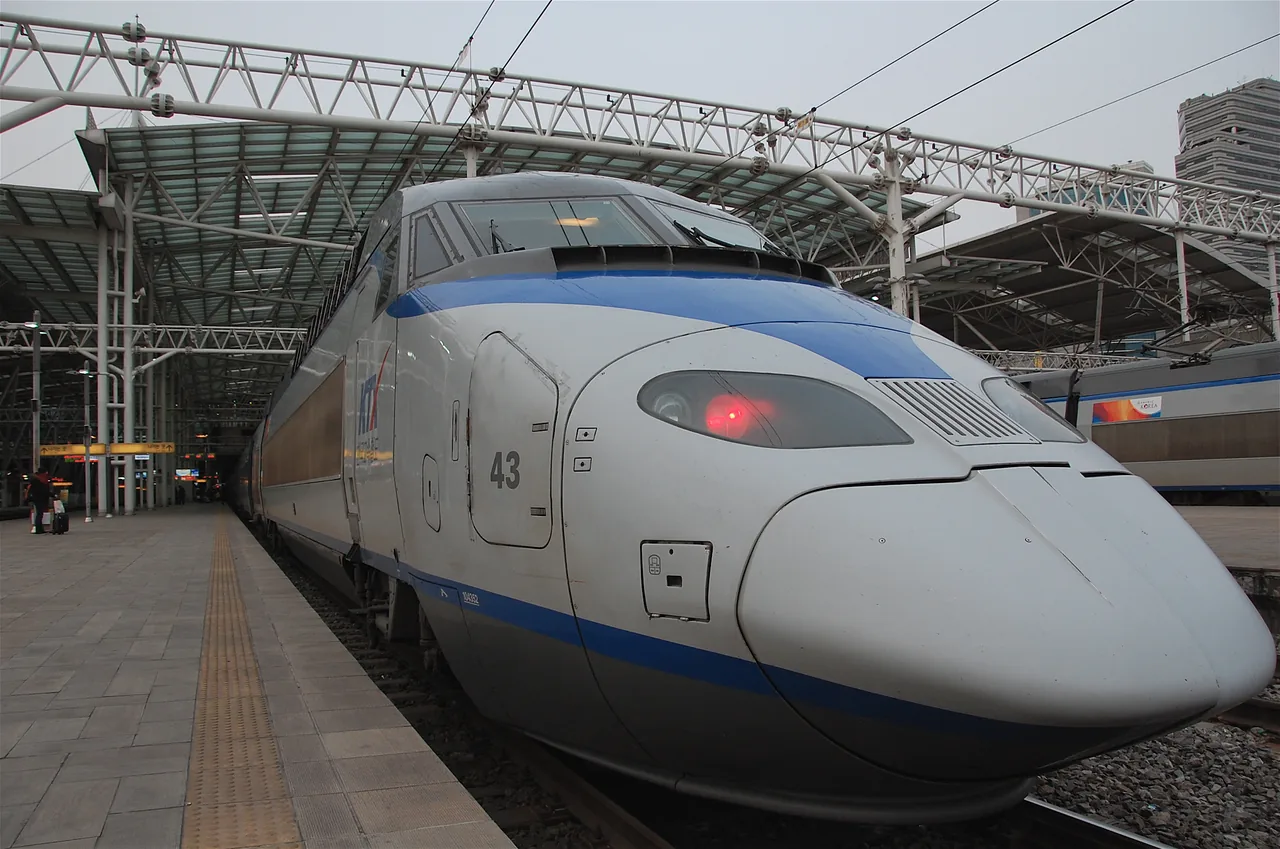
1. Why take the KTX (and not fly or bus)?
Seoul and Busan sit at opposite ends of the country, about 325 km / 200 miles apart, and you have three realistic ways to bridge them: the high-speed train, a domestic flight, or an express bus. For nearly every visitor, the train wins:
| Option | Door-to-door | Why / why not |
|---|---|---|
| KTX (train) | ~2.5 hrs ride + short transfers | City center to city center, frequent, no security lines, comfortable. Best all-round. |
| Flight (Gimpo–Gimhae) | ~1 hr flight, but ~3–4 hrs total | Airports are far out; add check-in, security and the transfer at both ends. Rarely worth it. |
| Express bus | ~4–4.5 hrs | Cheapest, but slow and traffic-dependent. Fine on a tight budget. |
The flight looks fast on paper, but Gimpo and Gimhae airports are well outside their cities; once you add getting to the airport, check-in, security and the ride into Busan, the train usually gets you there first — and drops you in the middle of town. That’s why the KTX is the default choice.
2. KTX vs SRT: which high-speed train?
South Korea actually has two high-speed operators on this route, and they’re almost identical to ride:
- KTX (run by Korail) — departs from Seoul Station (and some from Yongsan). The original and most frequent service. This is what most visitors use.
- SRT (run by SR) — departs from Suseo Station in southern Seoul (Gangnam side), often a little cheaper. Great if your hotel is in southern Seoul, but a different departure station.
Both reach Busan Station in a similar time. The simple rule: if you’re near the center or north of Seoul, take the KTX from Seoul Station; if you’re staying around Gangnam/southern Seoul, the SRT from Suseo can be handier and a touch cheaper. The rest of this guide assumes the KTX, but the steps are the same for the SRT.
3. How long it takes & what it costs
Travel times and fares vary slightly by train and seat. Approximate figures for a one-way Seoul → Busan trip (always confirm current prices and times when you book — they change):
| Detail | Approx. | Notes |
|---|---|---|
| Journey time | ~2 hr 15 min – 2 hr 50 min | Express trains skip stops and are fastest; others stop more. |
| Standard (economy) fare | ~60,000 won | One way; the usual ticket most people buy. |
| First class | ~84,000 won | Wider 2+1 seats, a bit more room and quiet. |
| Standing ticket | cheaper than seated | When seats sell out — you stand or sit in the vestibule. |
| Frequency | several per hour | From early morning to late evening, daily. |
The KTX makes a handful of stops between the two cities — typically Gwangmyeong, Cheonan-Asan, Osong, Daejeon, Dongdaegu and then Busan — though the fastest express runs skip several of these. When you book, you can usually see each train’s stop count and journey time, so pick a quicker one if the schedule suits.
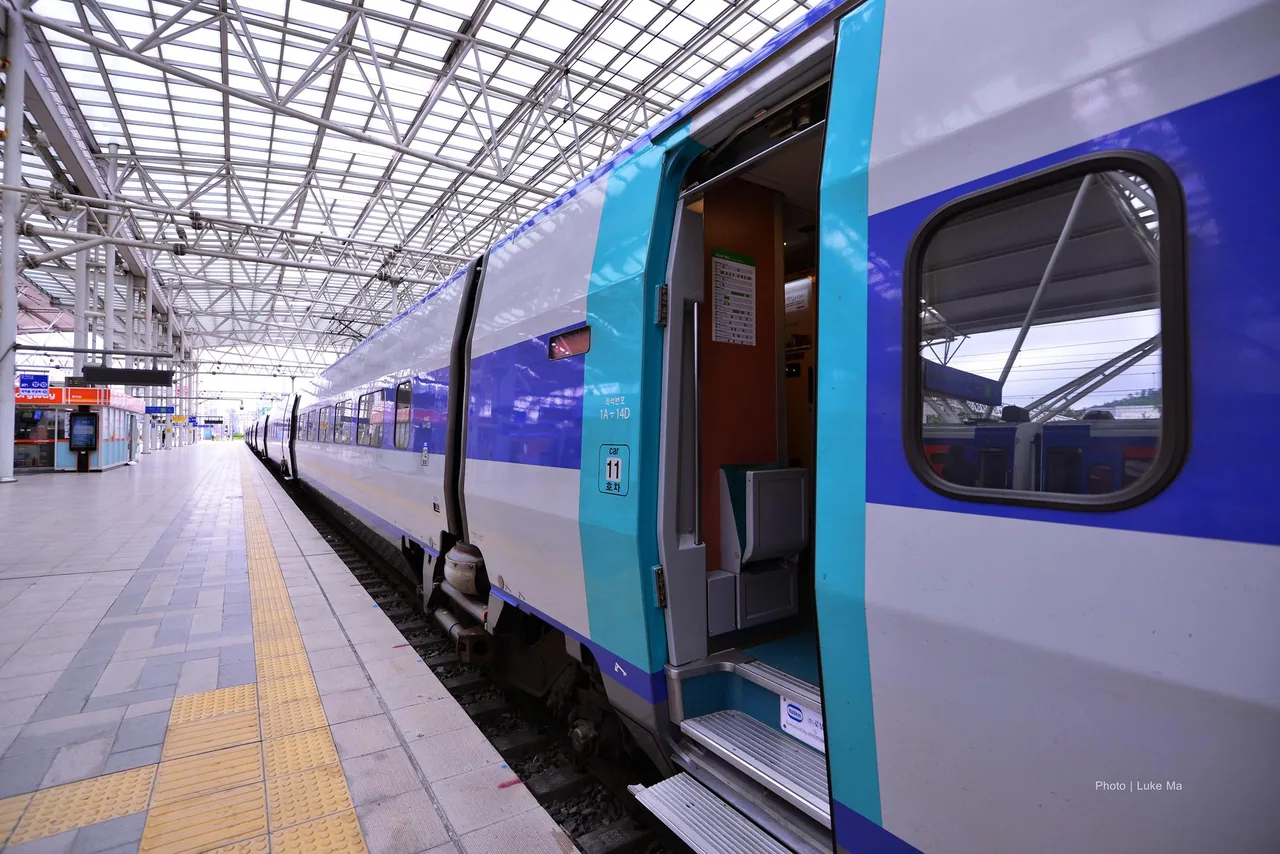
4. How to book a KTX ticket, step by step
Booking is easy and you do not need to read Korean. Here’s the whole flow:
- Choose how to book The official Korail app (“Korail Talk”/Let’s Korail) or the Korail website (English available) are easiest; you can also use a travel site (Klook, Trip.com, Rail Ninja) or just buy at the station.
- Search your train Enter Seoul → Busan, your date and time. You’ll see every departure with its price, journey time and seats left.
- Pick a seat Choose standard or first class, then window/aisle and, if you like, a forward-facing seat. Reserve early in busy periods.
- Pay Use a foreign card on the app/site, or pay by card/cash at a station counter or machine. Foreign cards sometimes fail in-app — a travel site or the station counter is the backup.
- Get your e-ticket The ticket lives in the app or your email — no need to print. Just show it (or have your seat saved) when asked.
- Board No airport-style security. Find your platform on the big board, go down, and get on the right car for your seat number.
5. What the journey is like
Once you’re on board, a KTX trip is relaxed — far closer to a comfy café chair than a cramped plane seat:
- Seats: reserved, reclining, with a tray table and power outlets on most trains; first class adds a 2+1 layout and more legroom.
- Luggage: overhead racks for cabin bags, plus larger luggage areas at the ends of each car for big suitcases. There’s no airline-style weight check.
- Food & drink: there are vending machines and snack carts on many trains; most people grab a coffee or a gimbap at the station before boarding.
- Comfort: smooth, quiet and fast (up to around 300 km/h). Restrooms are on board. Phone calls are expected to be kept quiet — step to the vestibule for long ones.
- The view: rice fields, mountains and tunnels flick by; sit on either side, it’s pleasant throughout.
6. Arriving at Busan Station — getting to your hotel
Busan Station is right in the heart of the city, beside the port and the old downtown, which makes onward travel simple. From the platform:
- Metro Line 1 (orange) connects directly at Busan Station — perfect for Nampo (Jagalchi, BIFF), Seomyeon (the central hub) and beyond. Tap a transit card and go.
- For Haeundae or Gwangalli (Line 2 areas), take Line 1 to Seomyeon and change to Line 2 — the standard cross-city route.
- Taxis queue right outside; handy with luggage or to a hotel that’s awkward by metro. Use a maps app or have your hotel name in Korean ready.
If you haven’t already, pick up a transit card (Cashbee or T-money) at a station convenience store so you can ride the metro and buses straightaway — see our Busan metro & transit card guide for the full how-to. And if you’re flying out of Busan later, our Gimhae Airport guide covers the trip back.
7. The Korea Rail Pass & money-saving tips
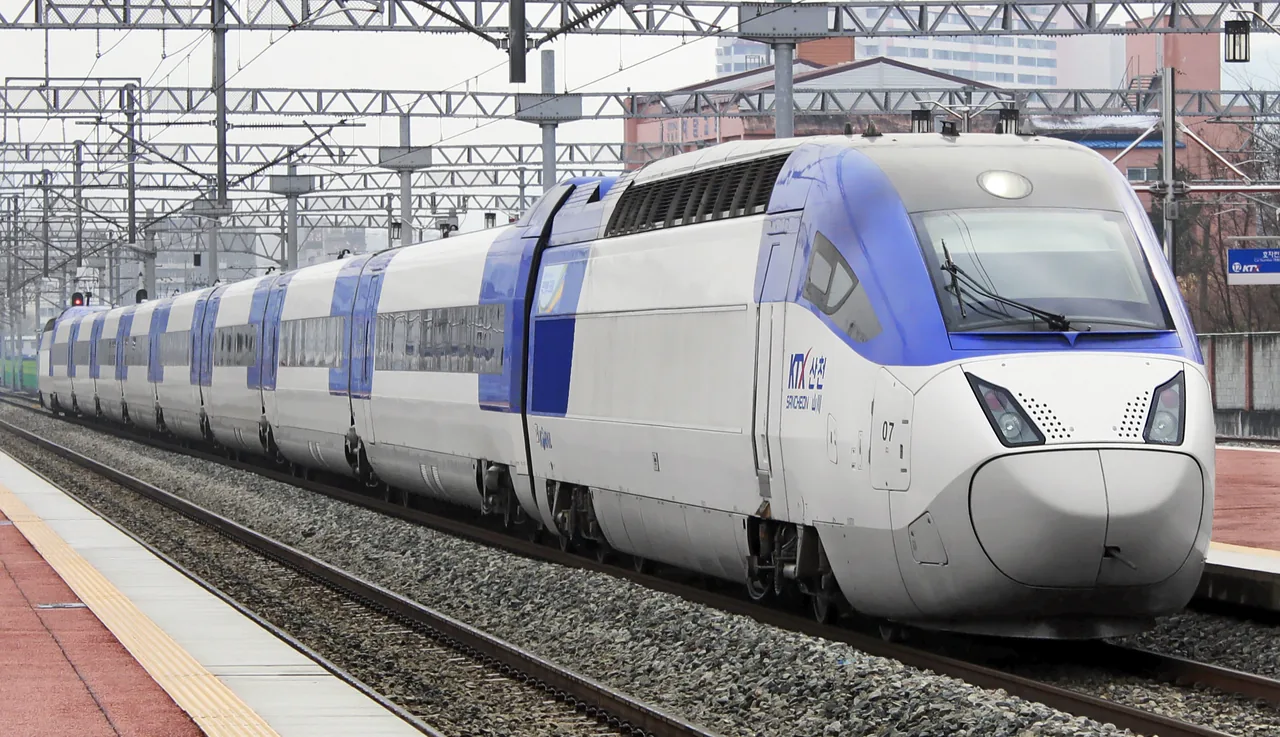
If trains are a big part of your trip, the Korea Rail Pass (KR Pass) can be great value. It’s a pass for foreign visitors only that gives unlimited rides on most Korail trains — including the KTX — for a set number of days (e.g. 2, 3, 4 or 5 days, consecutive or flexible).
- Worth it if you’re doing several intercity hops (say Seoul → Busan → Gyeongju → back), where individual KTX tickets add up fast.
- Maybe not if you’re only going one way to Busan and staying — a single ticket is then cheaper.
- Note: the KR Pass covers Korail (KTX) but not the SRT (a different operator). Buy it before or on arrival via Korail or an authorized seller, and still reserve your seats.
| If you… | Then… |
|---|---|
| Just want Seoul → Busan once | Buy a single KTX ticket (cheapest) |
| Are train-hopping several cities | Compare the KR Pass |
| Stay near Gangnam/southern Seoul | Consider the SRT from Suseo |
| Travel on a holiday/weekend | Book days ahead — seats sell out |
8. The bottom line
For the vast majority of travelers, the KTX is the smartest way to get from Seoul to Busan: about two and a half hours, city center to city center, frequent departures, comfortable seats and an easy booking app. Skip the airport stress unless you’re catching an international flight, reserve ahead if you’re traveling on a holiday or weekend, and grab a transit card so you can roll straight onto Busan’s metro when you arrive.
With the journey sorted, the fun part is planning what to do once you’re there — the beaches, the markets, the temples and the food. Start with our complete Busan Travel Guide and build your days around it.