A port city to its core, Busan does seafood better than anywhere in Korea. Here’s where to eat fresh raw fish (hoe), grilled shellfish and crab — and exactly how it works.
Last Updated: June 2026
The short version
Busan is Korea’s seafood capital — the must-do is hoe (fresh sliced raw fish), eaten with sauces, sides and a spicy stew to finish.
Head to Jagalchi Market, Korea’s biggest fish market: pick your seafood downstairs and have it prepared upstairs.
Beyond fish, try gomjangeo (grilled hagfish), grilled shellfish, snow crab and sea squirt — Busan does them all.
Other great spots: the Millak raw-fish centers by Gwangalli, Gijang market (crab) and Cheongsapo. Confirm prices and hours in a maps app.
Busan is a fishing port at heart, and seafood is the soul of its food scene. The headline dish is hoe — super-fresh sliced raw fish, Korea’s take on sashimi, eaten communally with dipping sauces, wraps and a spicy stew made from the bones afterwards. But there’s much more: grilled shellfish, the famously chewy gomjangeo (grilled hagfish), snow crab, sea squirt and abalone. This guide explains where to go (markets and raw-fish districts), how the whole choose-and-eat ritual works, what to order, and the tips that keep it smooth. For the rest of Busan’s food, see our other guides; to plan your days, our complete Busan Travel Guide.
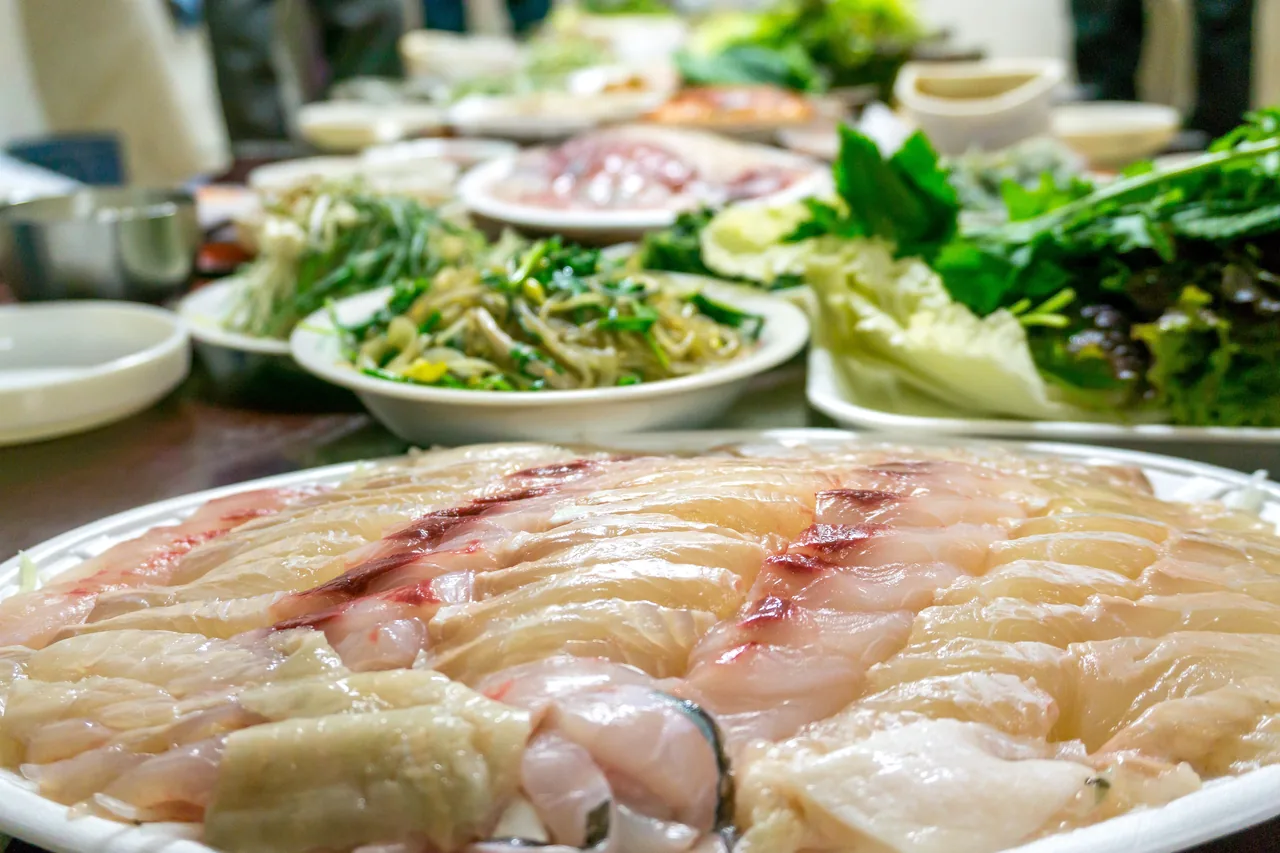
Hoe — fresh sliced raw fish — is the star of Busan’s seafood scene. (Photo: littlepepper, CC0)
1. Why Busan is Korea’s seafood capital
Busan grew up around its harbour, and that heritage is on every plate. The city lands a huge share of Korea’s catch, so the seafood is about as fresh as it gets — much of it swimming in a tank minutes before it reaches your table. For Koreans, a trip to Busan often means a seafood feast.
The centrepiece is hoe (raw fish), but the range is enormous: shellfish grilled at your table, crab steamed whole, chewy grilled hagfish, sea squirt, abalone and spicy seafood stews. This guide walks you through the best places and exactly how to eat it without feeling lost.
First-timer’s plan: go to a market or raw-fish center hungry, share a platter of hoe between two or more, and finish with the spicy maeuntang stew. That’s the classic Busan seafood night.
2. Where to eat seafood at a glance
Busan’s seafood clusters in markets and waterfront districts, each with a slightly different specialty:
Confirm before you go: market stalls and centers change, and seafood is priced by weight and season (often “market price”). Look the place up in KakaoMap or Naver Map for current hours, and agree the price before they prepare your catch.
3. Jagalchi Market — the classic experience
Jagalchi Market, in the old town by Nampo, is Korea’s largest fish market and the heart of Busan seafood. The famous local saying — roughly “come, see, buy” — sums up the vibe: rows of tanks and trays of everything the sea offers.
How it works for visitors:
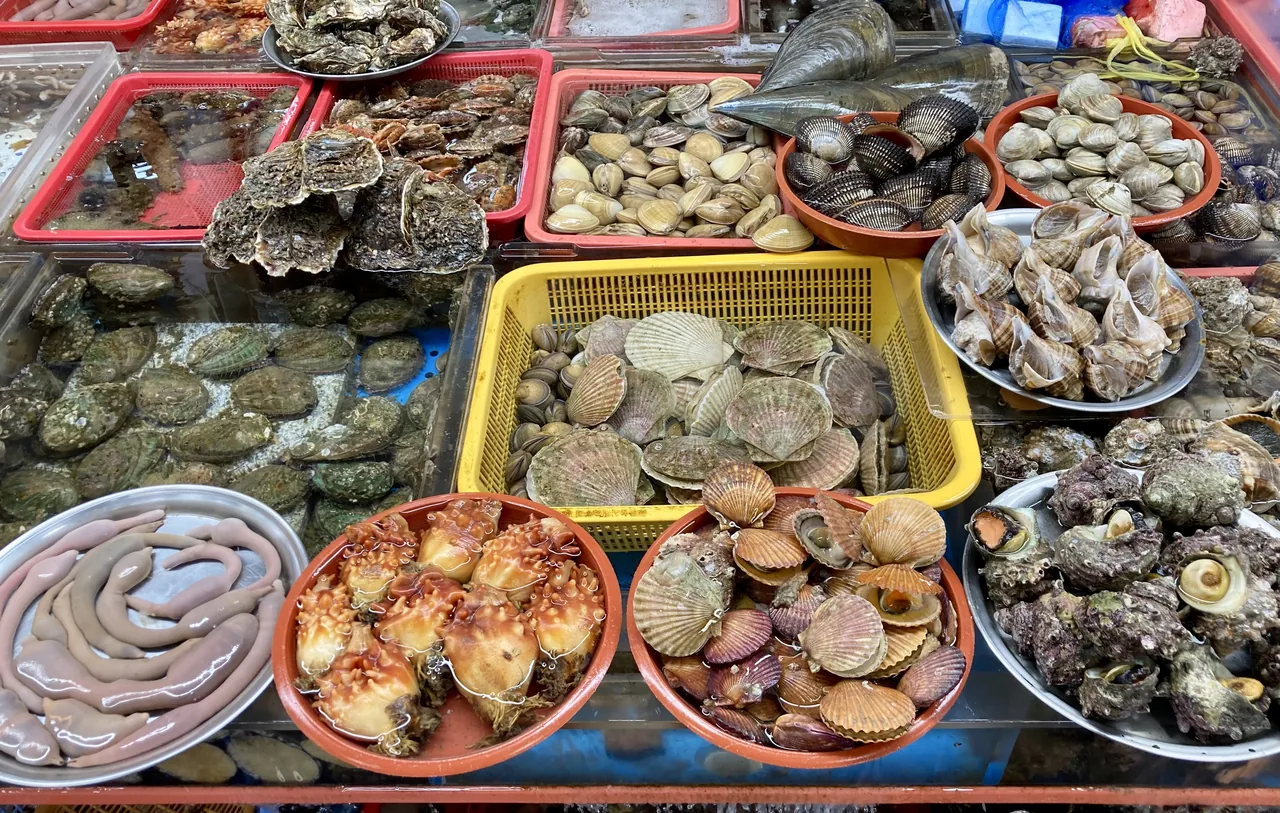
Choose downstairs Walk the market hall and pick your live seafood (a fish for hoe, shellfish, crab). The vendor weighs it and quotes a price — agree it first.
Eat upstairs Take your seafood to a restaurant on the upper floor, which prepares it (slices the hoe, grills the shellfish) for a small per-person table charge that includes the side dishes.
Enjoy the full spread Your fish comes as hoe with sauces and sides; the bones go into a spicy stew (maeuntang) to finish.
Good to know: the upstairs “preparation/table” fee (covering sides, the stew and service) is normal and separate from what you paid for the seafood. Ask what it is up front so there are no surprises.
Jagalchi, Korea’s biggest fish market: choose your seafood downstairs, eat it upstairs. (Photo: Dudva, CC BY-SA 4.0)
4. How to eat hoe (raw fish)
Korean hoe is leaner and chewier than Japanese sashimi, and it’s eaten communally with a whole table of accompaniments. The ritual:
The fish: thin slices of very fresh white fish (often flatfish/flounder, sea bream or rockfish), served on a big platter.
The sauces: dip in chojang (sweet-spicy red sauce) or ssamjang/soy with wasabi — locals love seasoned doenjang too.
The wrap: lay a slice on a lettuce or perilla leaf with garlic, chilli and sauce, then eat it in one bite (ssam).
The finish: the head and bones are simmered into a fiery maeuntang (spicy fish stew) — don’t skip it, it’s part of the meal.
Sharing is the point: hoe is ordered as a platter for the table, not per person. Two people can happily share a “small,” and it usually comes with so many side dishes you won’t leave hungry.
5. Beyond raw fish
Busan’s seafood goes far past hoe. Look out for these:
Gomjangeo (grilled hagfish) — a chewy, savoury Busan specialty grilled at the table, classic around Jagalchi. An acquired taste locals adore.
Grilled shellfish (jogae-gui) — a big tray of clams, scallops and more cooked on a grill in front of you, popular at Cheongsapo and the coast.
Snow crab (daege) — steamed whole and eaten by the leg; the Gijang area on the east coast is famous for it.
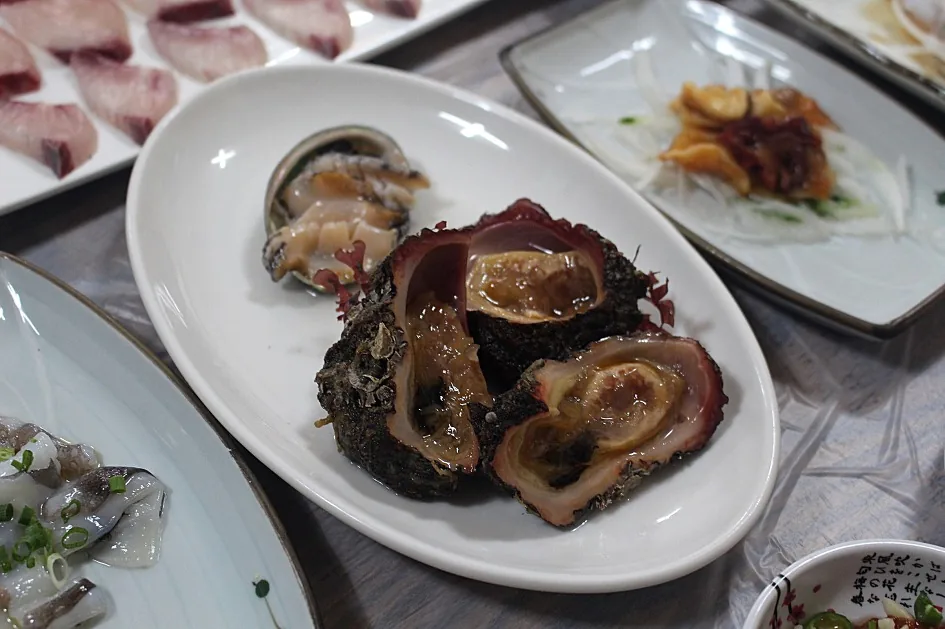
Sea squirt (meongge) & abalone (jeonbok) — served raw or in dishes; meongge is briny and divisive, abalone is prized.
Seafood soups & stews — from spicy maeuntang to clear clam and pollock broths.
Allergies & raw food: if you have a shellfish or seafood allergy, be cautious — communication can be tricky at markets. As with any raw food, choose busy, clearly fresh places (which in Busan is most of them).
6. Other seafood spots worth the trip
If you want more than Jagalchi, these are local favourites:
Millak raw-fish centers — large multi-storey hoe centers right by Gwangalli Beach; buy downstairs, eat upstairs with a view of the Gwangan Bridge. Great for a hoe dinner with scenery. 📍Map
Gijang Market — on the east coast, famous for snow crab and anchovies; a worthwhile half-day trip combined with the coast. 📍Map
Cheongsapo — a small fishing village near Haeundae known for grilled shellfish and crab, with a sea-view skywalk nearby. 📍Map
Busan Cooperative Fish Market — the working wholesale market; the dawn auction is a sight in itself. 📍Map
Match the spot to your night: Jagalchi for the classic old-town market, Millak to pair hoe with a beach-and-bridge view, Gijang or Cheongsapo for a coastal seafood day trip.
Beyond fish: sea squirt (meongge) and abalone (jeonbok) are Busan favourites too. (Photo: 대경라이프, CC BY-SA 4.0)
7. Ordering, prices & tips
A few things that make a Busan seafood meal go smoothly:
Tip
Why
Agree the price first
Seafood is by weight/season (“market price”) — confirm before it’s prepared
Share platters
Hoe and shellfish are ordered for the table, not per head
Expect a table/prep fee
Markets charge a small per-person fee for sides, stew and prep
Pay by card
Most places take cards, but a little cash helps at small stalls
Seasonality: some seafood (like certain crab) is best in cooler months — ask what’s good that day.
Maps app: use KakaoMap/Naver Map to find a specific center, check reviews and hours, and see the exact location.
One more time — verify: stalls, centers and prices change. Confirm hours and agree the cost up front, and you’ll have a great (and fair) seafood meal.
8. The bottom line
You can’t really say you’ve eaten in Busan until you’ve had its seafood. Make a night of hoe at Jagalchi Market or a Millak center — pick your fish, share the platter, finish with the spicy stew — and branch out into grilled shellfish, hagfish or crab if you’re feeling adventurous. Agree prices up front, share generously, and check the spot in a maps app before you go.
Busan is Korea’s seafood capital, famous above all for hoe (fresh sliced raw fish). It’s also known for grilled hagfish (gomjangeo), grilled shellfish, snow crab, sea squirt and abalone — best enjoyed at markets like Jagalchi.
Q. How does eating at Jagalchi Market work?
Pick your live seafood from a vendor downstairs (agree the price by weight), then take it to a restaurant upstairs that prepares it — slicing the hoe or grilling shellfish — for a small per-person table fee that includes the side dishes and stew.
Q. What is hoe and how do I eat it?
Hoe is Korean-style sliced raw fish, leaner than Japanese sashimi. Dip slices in chojang (sweet-spicy sauce) or soy with wasabi, or wrap them in lettuce/perilla with garlic and sauce. The bones are simmered into a spicy maeuntang stew to finish.
It’s priced by weight and season (often ‘market price’), so always confirm before they prepare it. There’s usually a separate small per-person table/preparation fee at markets that covers the side dishes and the stew. Sharing a platter keeps it affordable.
Q. Where can I eat seafood with a view in Busan?
The Millak raw-fish centers by Gwangalli Beach let you eat hoe with a view of the Gwangan Bridge. Cheongsapo near Haeundae is good for grilled shellfish by the sea, and Gijang on the east coast is famous for snow crab.
Q. Is it safe to eat raw fish in Busan?
Busan’s seafood is extremely fresh, much of it kept live until ordered. As with raw food anywhere, choose busy, clearly fresh places (most are). If you have a seafood or shellfish allergy, be cautious, as communication at markets can be tricky.
Q. What is gomjangeo?
Gomjangeo is grilled hagfish, a chewy, savoury Busan specialty cooked at your table, classic around Jagalchi Market. It’s an acquired taste that locals love, often eaten with soju.
Q. Do I need cash at Busan fish markets?
Most places take cards, but carrying a little cash is handy for small stalls and to settle the seafood price you agree with a vendor. Confirm the total before they start preparing your order.