Taejongdae: Cliffs, a Lighthouse & the Danubi Train
Taejongdae is Busan’s most dramatic stretch of coast — pine-clad cliffs, a white lighthouse and sea views that run to the horizon. Here is how to get there, how to use the Danubi train, and exactly what to see.
Last Updated: June 2026
The short version
Taejongdae is a free coastal park on the southern tip of Yeongdo island, famous for sheer sea cliffs, a forest, the Yeongdo Lighthouse and an observatory.
Getting there: take the metro to Nampo, then a short bus ride — Naver Map or KakaoMap will route you door to door.
Inside the park the road loops about 4.3 km uphill — ride the Danubi road train (small fee) or walk it if you have the legs and the time.
Don’t-miss stops: the Observatory, the Yeongdo Lighthouse and its sea deck, Taejongsa Temple, and the pebble beach where haenyeo sell fresh seafood.
If you only make one trip to the edge of Busan, make it Taejongdae. On the southern tip of Yeongdo island, the land suddenly drops in tall, pine-topped cliffs straight into a deep blue sea, and a white lighthouse stands guard over the water. It is one of Busan’s designated scenic spots, named after a Silla-dynasty king who is said to have loved the view, and on a clear day you can see the Oryukdo islets and even, faintly, the Japanese island of Tsushima on the horizon. Best of all, walking in is free. This guide covers everything a first-timer needs: how to get to Taejongdae from the city, how the Danubi road train works, every viewpoint and stop worth your time, when to go, and how to fold it into a wider day on Yeongdo. Pair it with the rest of your trip using our complete Busan Travel Guide.
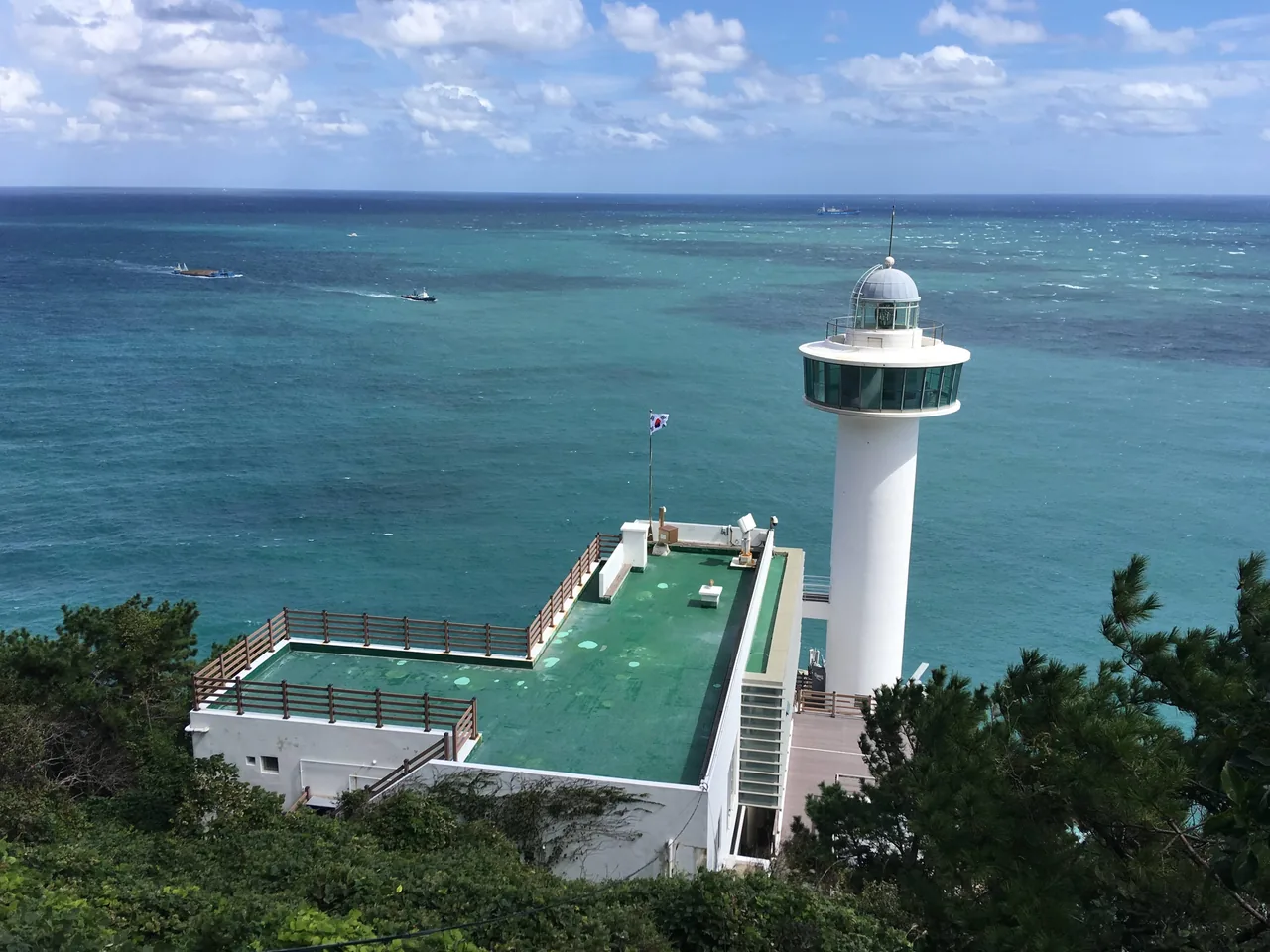
The Yeongdo Lighthouse marks the tip of Taejongdae, with a deck looking out over the open sea. (Photo: Christophe95, CC BY-SA 4.0)
Busan has plenty of beaches, but Taejongdae gives you the city’s most cinematic coastline. This is a headland park on the far south of Yeongdo, where a forested ridge ends in steep cliffs that plunge into the open sea. There is no city skyline here — just rock, pines, waves and the horizon, which is exactly why locals come to clear their heads.
The park is woven with shaded walking paths and a loop road that climbs to a clifftop observatory and the white Yeongdo Lighthouse. Along the way you pass a Buddhist temple, viewpoints over the water, and a pebble beach at the bottom where you can eat seafood pulled from the sea that morning. It is the kind of place you can do in a relaxed half-day, and it pairs perfectly with the cafés and culture villages elsewhere on Yeongdo.
Good to know: entering Taejongdae on foot is free. You only pay if you ride the Danubi train inside the park — and even that is a small, optional fee.
2. How to get to Taejongdae
Taejongdae sits at the end of Yeongdo island, so there is no subway station right at the gate — you finish the trip by bus. The easiest approach for most visitors is to ride the metro to the Nampo area and switch to a bus that runs all the way to the Taejongdae stop.
Metro Line 1 to Nampo Station, then a bus (e.g. 8, 30, 88, 186) to the Taejongdae stop
~25–35 min
Busan Station (KTX)
Bus toward Yeongdo / Taejongdae, or metro to Nampo then bus
~35–45 min
Seomyeon (city centre)
Metro Line 1 to Nampo, then bus to Taejongdae
~45–55 min
Anywhere
Taxi (hail with Kakao T) straight to the gate
Varies
The bus drops you at the Taejongdae entrance, where the park road and the Danubi train station begin. Bus numbers and stops change from time to time, so confirm the live route in your map app on the day.
Use a Korean map app. Google Maps barely gives transit or walking directions in Korea — set Naver Map or KakaoMap to English and let it route you from your hotel straight to the Taejongdae stop.
3. Getting around inside: the Danubi Train vs walking
From the entrance, a single road loops roughly 4.3 km through the park and up to the cliffs. It is a genuine hill, so you have two ways to tackle it:
The Danubi Train (다누비열차): a cheerful road train that circles the loop and stops at the main sights — the Observatory, the Yeongdo Lighthouse and Taejongsa Temple. You buy a ticket at the entrance, ride to a stop, explore, then catch a later train onward. It is the easy, popular choice, especially in summer heat.
On foot: the whole loop is walkable on shaded paths and the road, with the best sea views along the way. Allow a couple of unhurried hours and wear comfortable shoes — there are real uphill sections.
A common plan is to ride the Danubi up to the far viewpoints and walk back down, which saves your legs for the climb but still lets you wander the prettiest stretches.
Note on the Danubi train: the fare is small (around a few thousand won), but exact prices, hours and whether it runs can change with the season and the weather. On busy days you may queue, and on very foggy days services can be limited. Check the current fare and timetable at the entrance booth.
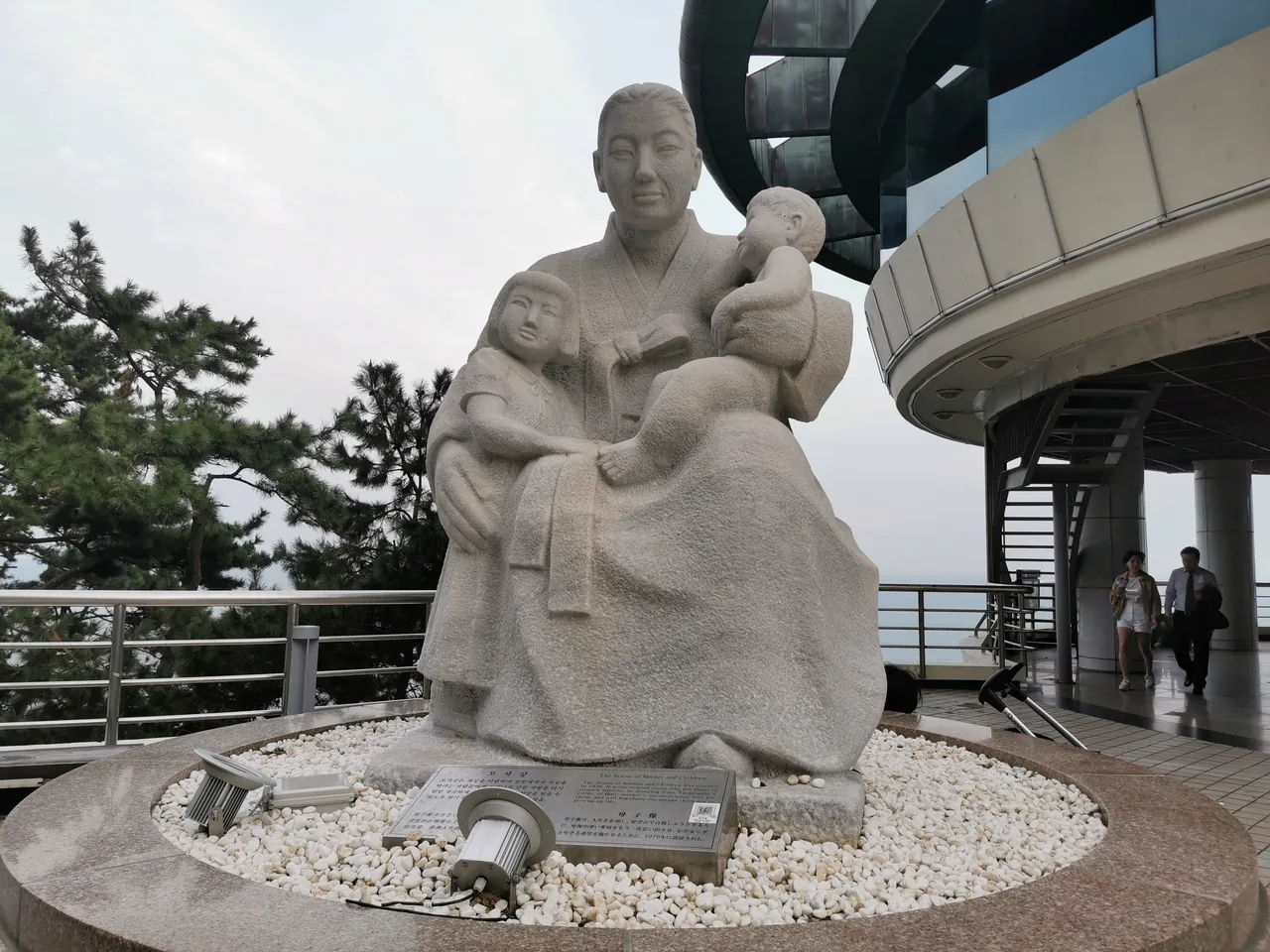
The Mother and Son statue stands beside the Taejongdae Observatory, tied to the cape’s old legends. (Photo: Ahmed, CC BY-SA 4.0)
4. What to see at Taejongdae
Taejongdae is really a string of viewpoints linked by forest. Here are the stops worth planning around:
The Observatory (전망대): a multi-level building near the cliff edge with the park’s widest sea views, a café and, on a clear day, sightlines to the Oryukdo islets and distant Tsushima. The Mother and Son statue stands beside it, tied to the old legends of the cape.
Sinseondae (신선대): the rocky shelf just below the observatory — its name means the place where immortals came down. You can pick your way toward the lower rocks for the most dramatic cliff-and-sea angles.
Yeongdo Lighthouse (영도등대): the white lighthouse at the water’s edge, with an observation deck, a small gallery and steps down toward the sea. It is the postcard image of Taejongdae.
Taejongsa Temple (태종사): a quiet Buddhist temple tucked in the forest, best known for its hydrangeas, which bloom in early summer.
Jagal-madang pebble beach: at the bottom by the water, where haenyeo (free-diving women) sell just-caught seafood you can eat on the spot.
Plan loosely. You won’t see every corner — pick the Observatory and the Lighthouse as your two anchors, and let the forest paths between them fill the rest.
5. Yeongdo Lighthouse and the cliff walk
If Taejongdae has one signature image, it is the Yeongdo Lighthouse standing white against the turquoise water. The lighthouse complex sits low on the cliff, reached by a path and a flight of steps down from the loop road, and it rewards the short descent.
The sea deck: a broad terrace at the base puts you almost at sea level, with waves breaking on the rocks and ships sliding past on the horizon.
Views and a rest: there is a small gallery space and a café area, so you can sit with a coffee and the open ocean in front of you.
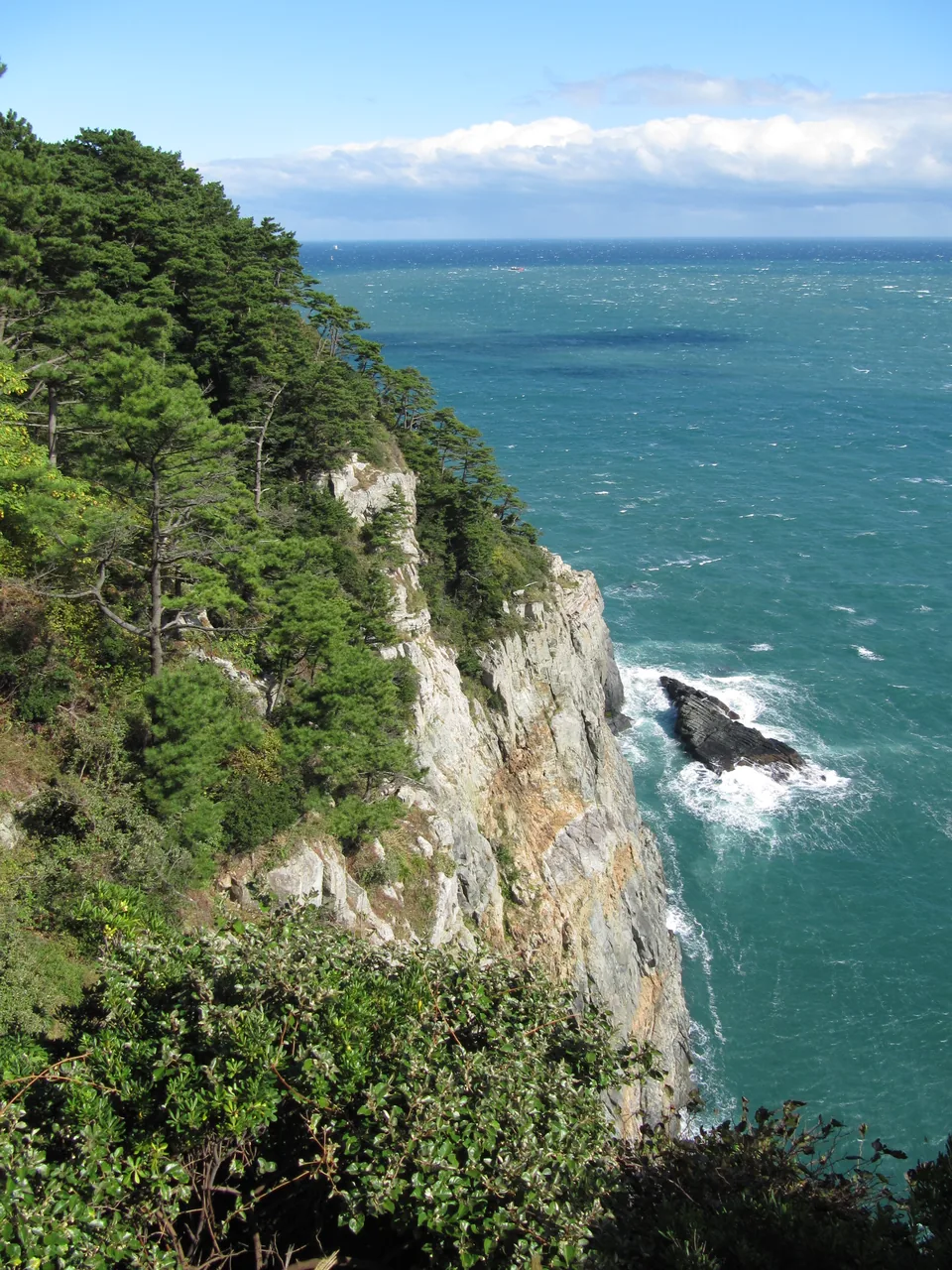
The cliff angles: from the lighthouse and the surrounding rocks you get the classic Taejongdae shot — sheer cliffs, pines clinging to the edge, and deep blue water below.
Stay on the marked paths. The cliffs are high and the rocks can be slick. Keep children close, mind the railings, and don’t climb beyond the safe viewpoints for a photo.
6. Best time to visit & practical tips
Taejongdae is open year-round and rewards a clear, dry day above all else — the whole point is the view, and fog or haze can swallow it. Here is the quick planning sheet:
Detail
What to expect
Entry
Free to walk in; Danubi train is a small extra fee
Time needed
About 2–3 hours for a relaxed visit
Best weather
Clear days for the views; avoid heavy fog
Best seasons
Spring and autumn for comfort; early-summer hydrangeas at Taejongsa
Wear
Comfortable walking shoes — there are hills
Food
Fresh seafood from the haenyeo at the pebble beach; café at the Observatory
Hours for the park gate and the Danubi train shift with the season, and the lighthouse facilities may keep their own schedule, so check current times before you go. Bring water in summer, a layer in winter (the cape is windy), and don’t rush — the slow pace is the pleasure.
June bonus: if you visit in early summer, the hydrangeas at Taejongsa Temple are in full colour — a lovely detour off the main loop.
Taejongdae’s pine-clad cliffs drop straight into the sea — the view that makes the trip. (Photo: Michiel1972, CC BY-SA 3.0)
7. Combine it into a Yeongdo day
Taejongdae sits at the end of Yeongdo, the island just across the bridge from downtown Busan, and the island has more to offer than the cape alone. With half a day you can string together a proper Yeongdo outing:
Taejongdae in the morning, while the light is clear and the crowds are thinner.
Huinnyeoul Culture Village on the way back — a cliffside row of white houses and tiny cafés over the sea, made for slow photos.
Yeongdo’s coastal cafés, the big sea-view spots the island is now famous for, perfect for a late-afternoon coffee.
Nampo and Jagalchi just across the bridge, for the fish market, Gukje Market and BIFF Square in the evening.
Done with the cliffs and the lighthouse? Build the rest of your Busan days around them with our complete Busan Travel Guide.
8. Is Taejongdae worth it?
For a first visit to Busan, yes — Taejongdae is one of the easiest big payoffs in the city. It costs nothing to enter, it is reachable by metro and a short bus, and it trades the urban beaches for raw cliffs, forest and open sea. Ride the Danubi train if the hill or the heat is a concern, walk the shaded paths if you want to linger, and anchor your visit on the Observatory and the Yeongdo Lighthouse.
Go on a clear day, give it a couple of unhurried hours, pair it with the rest of Yeongdo, and Taejongdae will likely be one of the views you remember longest. Plan the full trip with our complete Busan Travel Guide.
Yes — walking into Taejongdae park is free. You only pay a small, optional fee if you ride the Danubi road train inside the park, and prices can change, so check at the entrance.
Q. How do I get to Taejongdae from central Busan?
Take metro Line 1 to the Nampo area, then a bus (such as 8, 30, 88 or 186) to the Taejongdae stop. From Busan Station you can also take a bus toward Yeongdo. A taxi via Kakao T goes straight to the gate. Confirm live routes in Naver Map or KakaoMap.
The Danubi Train is a road train that loops the roughly 4.3 km park road and stops at the main sights — the Observatory, the Yeongdo Lighthouse and Taejongsa Temple. The fare is small (a few thousand won), but exact prices and hours vary by season, so check at the ticket booth.
Q. How long do you need at Taejongdae?
Allow about 2–3 hours for a relaxed visit — enough to reach the Observatory and the Yeongdo Lighthouse, walk some of the forest paths and stop for a view or a snack. You could spend longer if you eat at the pebble beach.
Q. Can you walk around Taejongdae instead of taking the train?
Yes. The full loop is about 4.3 km on shaded paths and the road, with great views along the way, but it is hilly. Many people ride the Danubi train up and walk back down. Wear comfortable shoes.
Q. When is the best time to visit Taejongdae?
Go on a clear, dry day — the views are the whole point, and fog can hide them. Spring and autumn are the most comfortable seasons, and in early summer the hydrangeas at Taejongsa Temple are in bloom.
Q. What is there to see at Taejongdae?
The highlights are the clifftop Observatory with its wide sea views and Mother and Son statue, the white Yeongdo Lighthouse and its sea deck, the Sinseondae rocks, Taejongsa Temple, and the pebble beach where haenyeo sell fresh seafood.
Q. Can you eat at Taejongdae?
Yes. At the pebble beach by the water, haenyeo (free-diving women) sell freshly caught seafood you can eat on the spot, and there is a café near the Observatory. Bring some cash for the seafood stalls.