August is the peak of summer in Busan — the warmest sea of the year, the biggest beach festivals and full-throttle energy — but also the hottest, most humid and most crowded month, with sweltering tropical nights and the height of typhoon season. Here is everything you need to plan it well.
Last Updated: June 2026
The short version
August is peak beach season: the sea is at its warmest of the year (~28°C, perfect for swimming) and every beach is in full swing.
It is the hottest month, with daytime highs around 31°C, heatwaves, and famous tropical nights when it stays too warm to sleep — so the city comes alive after dark.
It is also the busiest and priciest month (Korea’s summer holidays) and the peak of typhoon season, with showers still around — book well ahead and stay flexible.
The headline event is the Busan Sea Festival in early August, spread across the city’s beaches.
August is Busan at its absolute summer peak. The monsoon rains that dominate July have usually eased, the sea has warmed to its best for swimming, and the city throws its biggest beach party of the year. It is loud, hot and joyful — and it is also the most demanding month to travel: August is the hottest and most crowded month, brings sweltering tropical nights, sits at the peak of typhoon season, and still sees plenty of rain. None of that should put you off — this is exactly what a Korean summer is meant to feel like — it just means planning around the heat, the crowds and the occasional storm. This guide is the most detailed of our monthly set: the weather week by week, the heat and tropical nights, how August compares with June and July, the beaches and the warm sea, the Busan Sea Festival, what to do beyond the sand, what to pack, how busy and pricey it gets, and a smart day plan. Build it into the rest of your trip with our complete Busan Travel Guide.
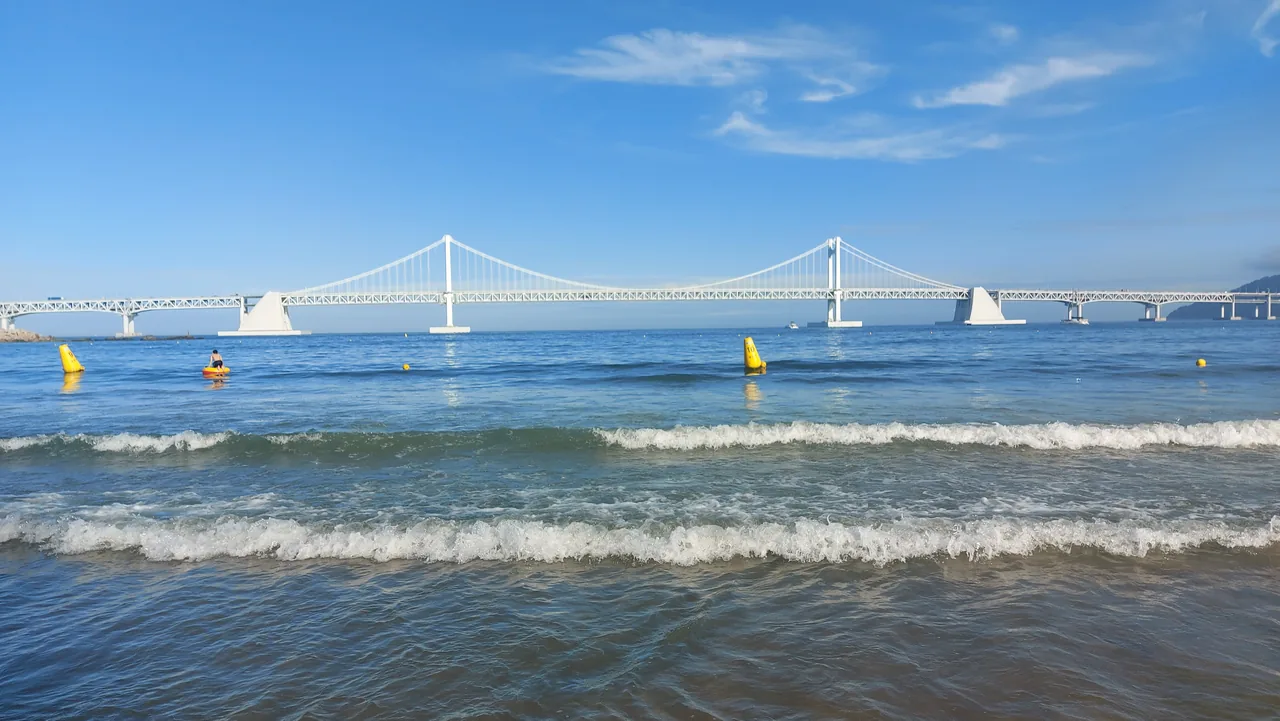
Gwangalli is at the heart of Busan’s peak summer and the Sea Festival in August.
1. Is August a good time to visit Busan?
It depends entirely on what you are after. If you want the full Korean beach summer — warm sea, packed sand, festivals and warm nights out — August is the month. The water is at its warmest, every beach is open and buzzing, and the city is in holiday mode. This is the postcard version of a Busan summer.
The flip side is that August asks the most of you. It is the hottest, most humid and most crowded month of the year, with heatwaves, sticky tropical nights, the highest prices, and the peak of typhoon season layered on top of lingering summer showers. So August rewards travellers who lean into it: come for the beaches and the buzz, prepare seriously for heat and rain, book ahead, and keep your plans flexible.
The verdict: August is brilliant if a hot, lively, full-on beach summer is exactly what you want, and you don’t mind crowds and heat. For milder, drier, quieter weather, June is the gentle option; for the beaches open but slightly less intense, early July or late August edge the extremes.
🏨 In Haeundae the beachfront and the station area price differently. Decide how far you want to walk firstSee on Trip.com →See on Agoda →See on Expedia →Affiliate link — we may earn a commission at no extra cost to you.
2. Busan weather in August, in detail
August is hot and humid throughout, easing only slightly toward the very end of the month as the first hint of autumn approaches:
Period
Daytime high
Feel & conditions
Early August
~30–31°C
Peak heat & humidity; tropical nights; Sea Festival
Mid August
~30–31°C
Hot, sticky, showers and typhoon risk
Late August
~29–30°C
Still hot, very humid; heat slowly easing toward month’s end
Daytime highs average around 31°C and overnight lows around 25°C, with very high humidity that pushes the "feels-like" temperature higher. Rain is still significant — frequent showers and the chance of a typhoon downpour — though the steady monsoon of July has usually passed. The big draw is the sea, at its warmest of the year around 28°C — ideal for swimming.
Take the heat seriously. With daytime highs around 31°C, high humidity and nights that barely cool down, heat is the defining challenge of August. Hydrate constantly, use strong sun protection, and plan cool, indoor breaks in the middle of the day.
3. Heatwaves & tropical nights
The single thing that defines a Busan August is the heat that doesn’t switch off at night. Korea calls these tropical nights (yeoldae-ya) — nights when the temperature stays above 25°C from evening into the next morning — and August sees around 17 of them on average.
It stays hot after dark: sleeping without air-conditioning can be tough, so check that your accommodation has good AC.
The city lives at night: because the days are scorching and the nights are warm, locals head out after sunset — to the beaches, night markets, seafront cafés and bars. Evenings are when Busan’s summer is at its most fun.
Heatwave days happen: spells of extreme heat are common, so pace yourself, seek shade and water, and treat the hottest afternoon hours as indoor time.
Embrace the nights: flip your schedule — beach and sights early or late, a long air-conditioned break midday, and then make the warm evening the highlight, with a seaside dinner and the lit-up Gwangan Bridge.
4. How August compares — and the rain & typhoons
August is the climax of Busan’s summer trio. Here is how the three summer months stack up, so you can pick the one that suits you:
June
July
August
Heat
Mild (~23°C)
Hot (~28°C)
Hottest (~31°C)
Rain
Light, rising late
Wettest (peak monsoon)
Showers + typhoons
Sea
Cool (~20°C)
Warm (~24°C)
Warmest (~28°C)
Beaches
Closed for swimming
Open
Peak season
Crowds
Low
Building
Highest
On rain: the heavy, steady jangma monsoon usually ends by early August, so it is often drier day-to-day than July — but August is the peak of typhoon season. A passing typhoon can bring a day or two of strong wind and heavy rain, and showers remain common, so keep an eye on the forecast and stay flexible. If the rain sets in, our guide to Busan when it rains lists the indoor options with prices and opening hours.
Plan around it: if you want the warmest sea and the festivals, August wins; if you want the open beaches with a bit less heat and crowd, the very start of July or the tail of August are slightly calmer.
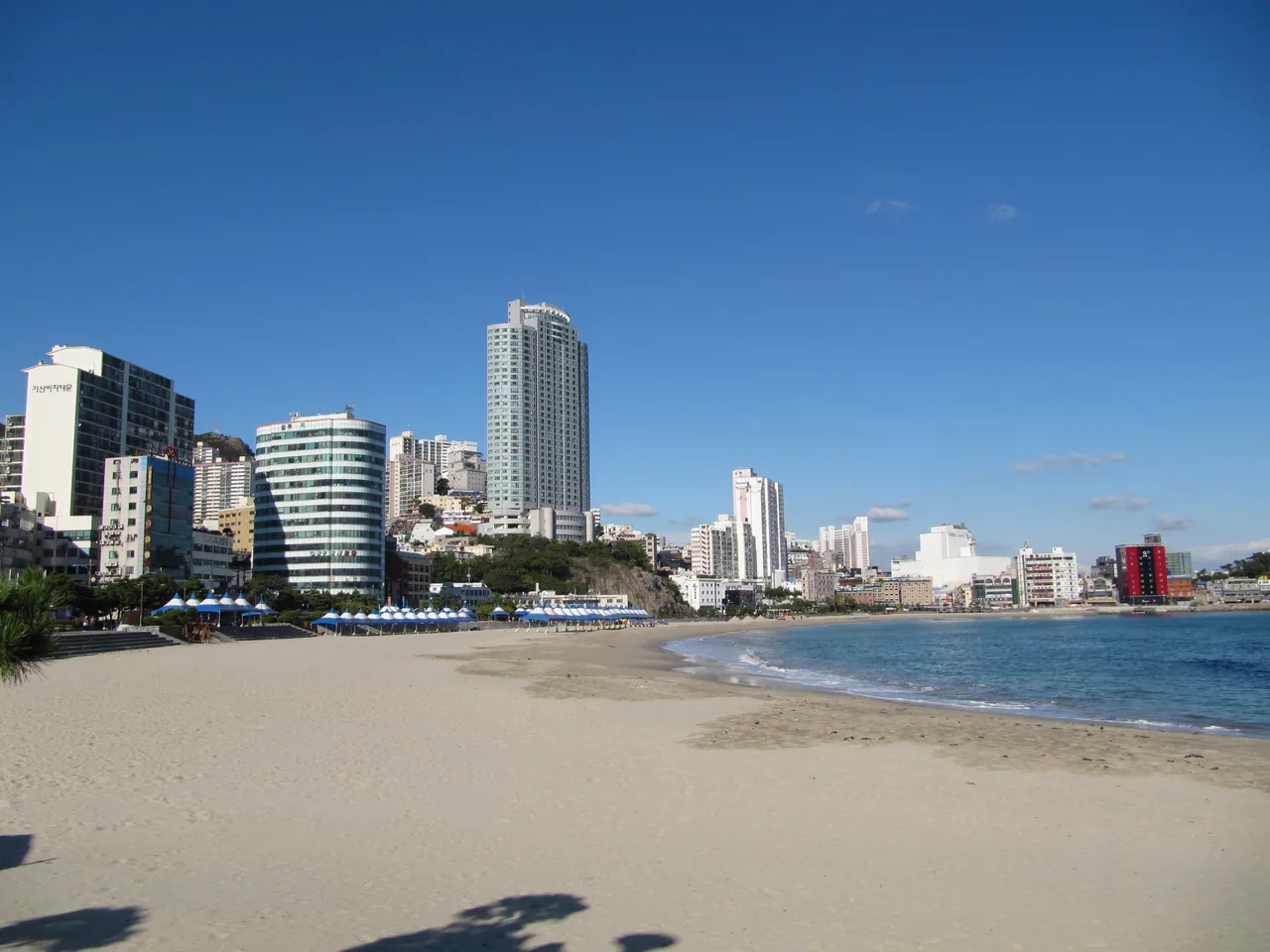
Busan’s beaches like Songdo hit their warmest, busiest peak in August.
5. Beaches & the sea: peak season
August is the whole reason many people come to Busan in summer. The sea is at its warmest of the year, around 28°C, and every beach is in full, lively swing:
Perfect swimming: the warm water, lifeguards, parasols, rental gear and full facilities are all in place — this is prime beach time.
All the beaches buzz:Haeundae and Gwangalli are the headliners, with Songjeong (surf), Songdo and Dadaepo also lively. Evenings on the sand, with the heat finally easing, are a summer highlight.
Mind the conditions: swim between the flags, follow lifeguards, and take rip currents, sudden storms and typhoon swells seriously — and watch for jellyfish, which can appear in late summer.
Beat heat and crowds together: hit the sand early morning or in the cooler evening, when the beaches are most pleasant, and save the blazing midday hours for shade, water or an indoor escape.
August is festival month on the coast, and the big one is the Busan Sea Festival, the city’s flagship summer celebration:
Busan Sea Festival: usually held in early August across several beaches — Haeundae, Gwangalli, Songjeong, Songdo and Dadaepo — with concerts, jazz and dance parties, water events and night performances. It is the heart of a Busan August.
Liberation Day (15 August): a national holiday, so expect extra crowds and a festive mood around the middle of the month.
More summer happenings: the waterfront and city run a busy programme of summer concerts and events through the month, including spots like the Dadaepo sunset fountain show.
Check the calendar: exact dates change every year, so look up the city’s official tourism event calendar for your travel days.
Time it if you can: if your dates line up with the Busan Sea Festival, you will catch the city’s summer at its loudest and most fun — book accommodation extra early for that week.
7. Beyond the beach: what else to do
When you need a break from the sand — or from the heat and the odd downpour — Busan has plenty more in August:
Warm-night outings: with the evenings balmy, lean into night markets, beachfront cafés and bars, rooftop views and the lit-up Gwangan Bridge — the best of a Busan summer happens after dark.
Beat-the-heat indoors: the big department stores and spas, the aquarium, museums, cinemas and indoor markets are perfect for the scorching midday hours or a typhoon afternoon.
Water and views: beyond swimming, there are coastal rides and viewpoints to enjoy in the cooler windows of the day.
Sunset spots: west-facing Dadaepo and the city’s viewpoints are lovely as the heat softens into evening.
Plan it like a local: outdoors early and late, air-conditioning in the harsh midday, and the warm evening saved for the city’s best summer atmosphere.
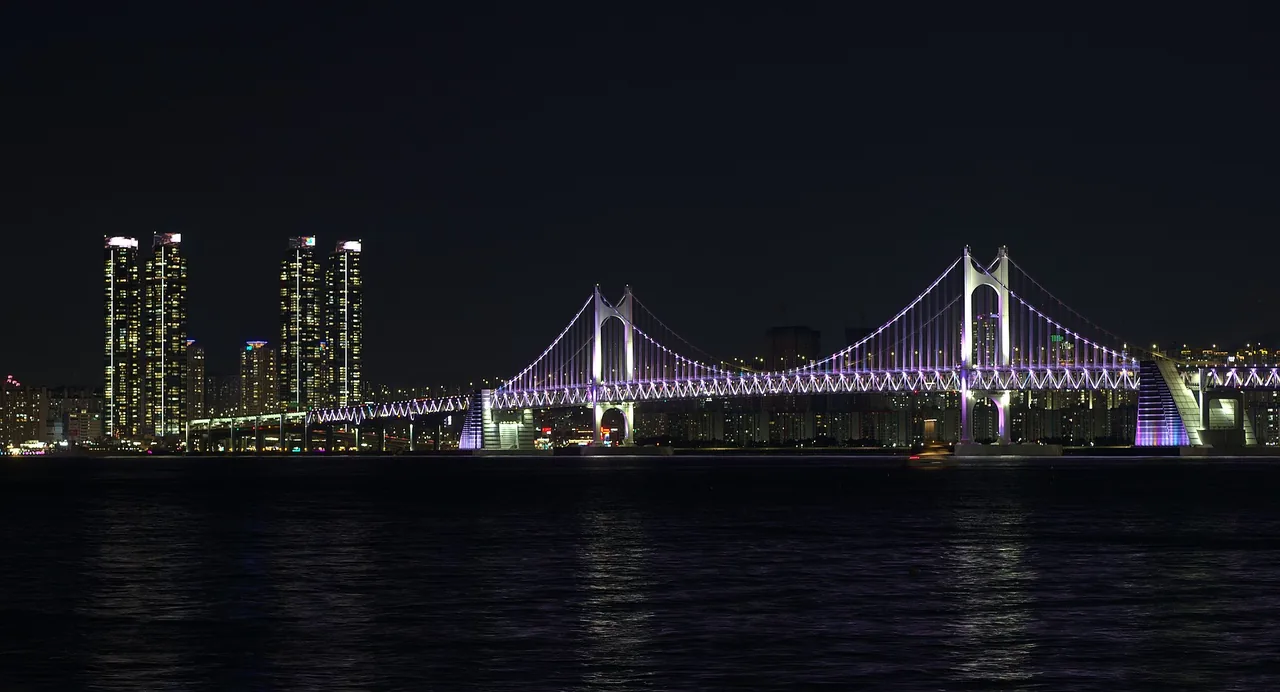
August nights stay warm in Busan, when the city heads out under the lit Gwangan Bridge.
August needs full hot-weather kit plus rain and sun defences. Pack light but cover the extremes:
Light, breathable, quick-dry clothing: it is hot and very humid, so the lightest summer fabrics that dry fast are essential.
Strong sun protection: high-SPF sunscreen, a hat and sunglasses are must-haves under the August sun.
Swimwear & beach kit: the sea is at its best, so bring swimwear, a towel and water shoes.
Rain gear: a sturdy umbrella or packable rain jacket for showers and any typhoon days.
A light layer: indoor air-conditioning runs cold, so a thin top is handy after the heat outside.
Hydration habit: a reusable water bottle and electrolyte drinks help in the relentless heat.
Tip: in August you may sweat through the day, get caught in a downpour and shiver in strong air-conditioning — quick-dry clothes and a light layer handle all three.
9. Crowds, prices & where to stay
August is the peak — the busiest and most expensive time to visit Busan, as Korea takes its main summer holidays and the beaches fill up:
Period
Crowds & prices
Booking advice
Early August (Sea Festival)
Very high
Book weeks ahead, especially beach areas
Mid August (around the 15th)
Peak (national holiday)
Reserve early; expect premium prices
Late August
Easing as month ends
Slightly easier and better value
Where to stay: Haeundae for the beach and summer scene (and the Sea Festival), Seomyeon for a central, often better-value base, Nampo for downtown and the markets.
Book early: beachfront hotels in particular sell out and peak in price in August — reserve as far ahead as you can.
Value tip: if you can, aim for late August, when prices and crowds start to ease while the sea is still warm and the beaches still open.
🏨 In Gwangalli, rooms facing the bridge cost more than those that do not. Check which way it faces before bookingSee on Trip.com →See on Agoda →See on Expedia →Affiliate link — we may earn a commission at no extra cost to you.
10. A smart August itinerary & the verdict
The key to August is to work with the heat, not against it: outdoors in the cooler edges of the day, indoors when it blazes, and the warm evening as your highlight. A simple template:
Early morning: beach or a coastal walk while it is cooler and calmer.
Midday: escape the heat — department stores and spas, the aquarium or a museum, a long, cool lunch.
Evening: the best part of an August day — a seaside dinner, night markets, the Sea Festival or the lit-up Gwangan Bridge, with the city out enjoying the warm night.
Always: carry water, sun protection and rain gear, and check the forecast (including typhoon updates) each morning.
The verdict: August is Busan’s summer at full volume — the warmest sea, the biggest festivals, the liveliest nights — with the trade-offs of being the hottest, most humid and most crowded month, plus the peak of typhoon season. If a full-on Korean beach summer is what you came for, August delivers like no other month. Prepare for heat and rain, book ahead, lean into the nights, and it is unforgettable. Plan it all with our complete Busan Travel Guide.
🎆 Visiting in summer? Busan’s festival season runs right alongside it — the free Sea Festival, the WATERBOMB water party and the Gwangalli drone show. Our Busan summer festivals guide has the dates, tickets and free spots.
Yes if you want a full beach summer: August has the warmest sea of the year, every beach open and buzzing, the Busan Sea Festival and lively warm nights. The trade-offs are that it is the hottest, most humid and most crowded month, with tropical nights and the peak of typhoon season, so come prepared for heat, rain and crowds.
Q. What is the weather like in Busan in August?
Hot and humid, with daytime highs around 31°C and overnight lows around 25°C. It is the hottest month, with heatwaves and tropical nights when it stays warm overnight. Showers are still common and typhoons are possible, though the steady monsoon of July has usually ended. The sea is at its warmest, around 28°C.
Q. How hot does Busan get in August? What are tropical nights?
August is the hottest month, with highs around 31°C and high humidity that feels hotter. Busan averages about 17 tropical nights — nights when the temperature stays above 25°C, making it hard to sleep without air-conditioning. The heat barely eases after dark, which is why the city comes alive at night.
Q. Does it rain in Busan in August? Are there typhoons?
The heavy jangma monsoon usually ends by early August, so day-to-day it can be drier than July, but showers remain common and August is the peak of typhoon season. A passing typhoon can bring a day or two of strong wind and heavy rain, so watch the forecast and stay flexible.
Q. Can you swim at the beach in Busan in August?
Yes — August is peak beach season, with the sea at its warmest of the year, around 28°C, and lifeguards and full facilities in place. Swim between the flags, follow lifeguards and respect rip currents, sudden storms and typhoon swells; watch for jellyfish in late summer.
Q. When is the Busan Sea Festival?
The Busan Sea Festival is usually held in early August, spread across several beaches including Haeundae, Gwangalli, Songjeong, Songdo and Dadaepo, with concerts, jazz, dance parties and water events. Exact dates change each year, so check the city’s official event calendar.
Q. What should I pack for Busan in August?
Light, breathable, quick-dry summer clothing, strong sun protection (high-SPF sunscreen, hat, sunglasses), swimwear and beach kit, a sturdy umbrella or rain jacket, a light layer for cold indoor air-conditioning, and a reusable water bottle for the heat.
Q. Is Busan crowded or expensive in August?
Yes — August is the peak, the busiest and most expensive month, as Korea takes its summer holidays. Beaches and beach hotels fill up and prices climb, especially around the early-August Sea Festival and the 15 August holiday. Book accommodation well ahead; late August eases a little.
July is the wettest month (peak monsoon) but slightly less hot and crowded; August is the hottest and most crowded but the monsoon has usually ended, the sea is warmest, and the festivals are biggest. Choose July if you prefer a touch less heat and crowd, August for the warmest sea and the full summer peak.