Eomuk — Korean fish cake — is Busan’s soul food: a steaming skewer dipped in free broth on a winter street, a croquette that went viral nationwide, and a souvenir locals swear by. Here’s what to eat, where, and the story behind it.
Last updated: June 2026
The short version
Eomuk (Korean fish cake) is Busan’s signature snack — the city is its home, and ‘Busan eomuk’ is a brand in itself across Korea.
The classic is kkochi-eomuk — a fish-cake skewer simmered in hot anchovy broth, with the broth free and refillable — the perfect cheap winter street food (around 1,000 won a skewer).
Two famous makers run shops with experience centres: Samjin Eomuk (Korea’s oldest, since 1953, on Yeongdo) and Goraesa (since 1963, by Haeundae).
Beyond skewers, try eomuk croquettes and rolls, a bowl of eomuk-tang (fish-cake soup), and pick up a vacuum-packed gift set as an only-in-Busan souvenir.
Ask anyone from Busan about home, and sooner or later eomuk comes up. Korean fish cake is made all over the country, but Busan is where it grew up — a legacy of the port’s endless fish supply and the hard post-war years, when fried fish cake was cheap, filling food for refugees. Today ‘Busan eomuk’ is a point of pride and a genuine brand: you’ll find it as a steaming skewer at a winter street stall, as crisp croquettes in a glossy bakery-style shop, floating in a comforting soup, and shrink-wrapped into gift boxes that travellers haul home by the armful. The first time I huddled at a Nampo-dong stall on a cold night, the vendor kept topping up my little paper cup of broth without my asking — that, more than anything, is the taste of Busan winter. This guide covers what eomuk is and where it came from, the street-food skewer, the famous makers and their experience centres, what to order, where to eat, and how to take some home. Plan it alongside the rest of your trip with our complete Busan Travel Guide.
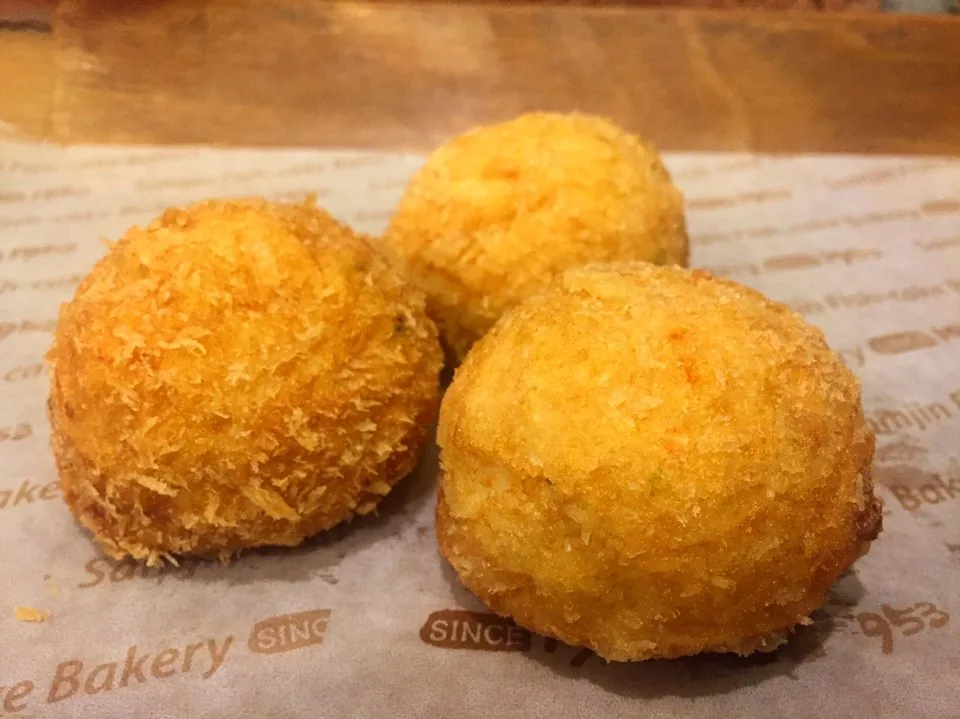
Eomuk croquettes — the fried fish-cake snack that made Busan eomuk famous nationwide. Photo: Pibiy, CC BY-SA 4.0, via Wikimedia Commons.
1. What is Busan eomuk?
Eomuk is Korean fish cake — ground white fish blended with starch and seasonings, shaped and fried — and Busan is its spiritual home. It arrived via Japanese kamaboko in the early 20th century, but the Korean version is fried in oil, and it took deep root in Busan thanks to the port’s fish and the lean years after the Korean War, when it was affordable, protein-rich food.
Why Busan: a fishing port with a constant supply of fresh fish, plus a post-war history that turned cheap fried fish cake into everyday sustenance.
A real brand: ‘Busan eomuk’ carries weight all over Korea, the way a regional specialty does — locals are genuinely proud of it.
‘Eomuk’ vs ‘odeng’:eomuk is the proper Korean word for the fish cake; odeng (from Japanese) is often used for the skewered-in-broth street version.
Tip: don’t overthink the terminology — point at the skewers, say “eomuk,” and you’re in. It’s one of the easiest, friendliest first bites in the city.
2. The street-food skewer (and that free broth)
The most beloved form is kkochi-eomuk: a folded fish-cake skewer simmered in a vat of hot anchovy-and-kelp broth, eaten standing up — and the broth is free and endlessly refillable. At around 1,000 won a skewer, it’s the cheapest happiness in Busan, and never better than on a cold evening.
How it works: grab a skewer from the simmering pot, help yourself to a paper cup of broth, eat, and pay for what you took. Many stalls leave a soy-and-chilli dip on the counter.
When: it’s a year-round snack but a winter institution — the steam and hot broth are half the joy.
Where: street stalls (pojangmacha), market lanes and bunsik (snack) shops all over the city.
Tip: the broth is meant to be refilled — don’t be shy. On a chilly night a skewer and two or three cups of hot broth is a small, perfect meal for pocket change.
3. Samjin Eomuk: the original (since 1953)
Samjin Eomuk is the oldest fish-cake maker in Korea, founded in 1953 in Bongnae Market on Yeongdo, and now run by the third generation of the same family. Its Yeongdo flagship is a bright, bakery-style shop, and upstairs is the Samjin Eomuk Experience & History Center, where you can learn the story and even make your own fish cake.
The croquette revolution: in 2013 Samjin launched a ‘fish-cake bakery,’ and its eomuk croquettes — fish cake wrapped around fillings and fried crisp — went viral and carried Busan eomuk nationwide.
What to try: the eomuk croquette, the chilli-fried fish cake, and the whole-shrimp roll are signatures.
Visiting: the Yeongdo flagship (Taejong-ro 99beon-gil 36) is open daily 09:00–19:00; from Nampo Station (Line 1, Exit 9) take Yeongdo bus 5 to Bongnae Market. There are branches around the city too, including by Busan Station.
Tip: go to the Yeongdo flagship hungry and graze bakery-style — you pick croquettes and rolls fresh from the fryer onto a tray. It pairs perfectly with a Yeongdo day (Huinnyeoul Village, Taejongdae).
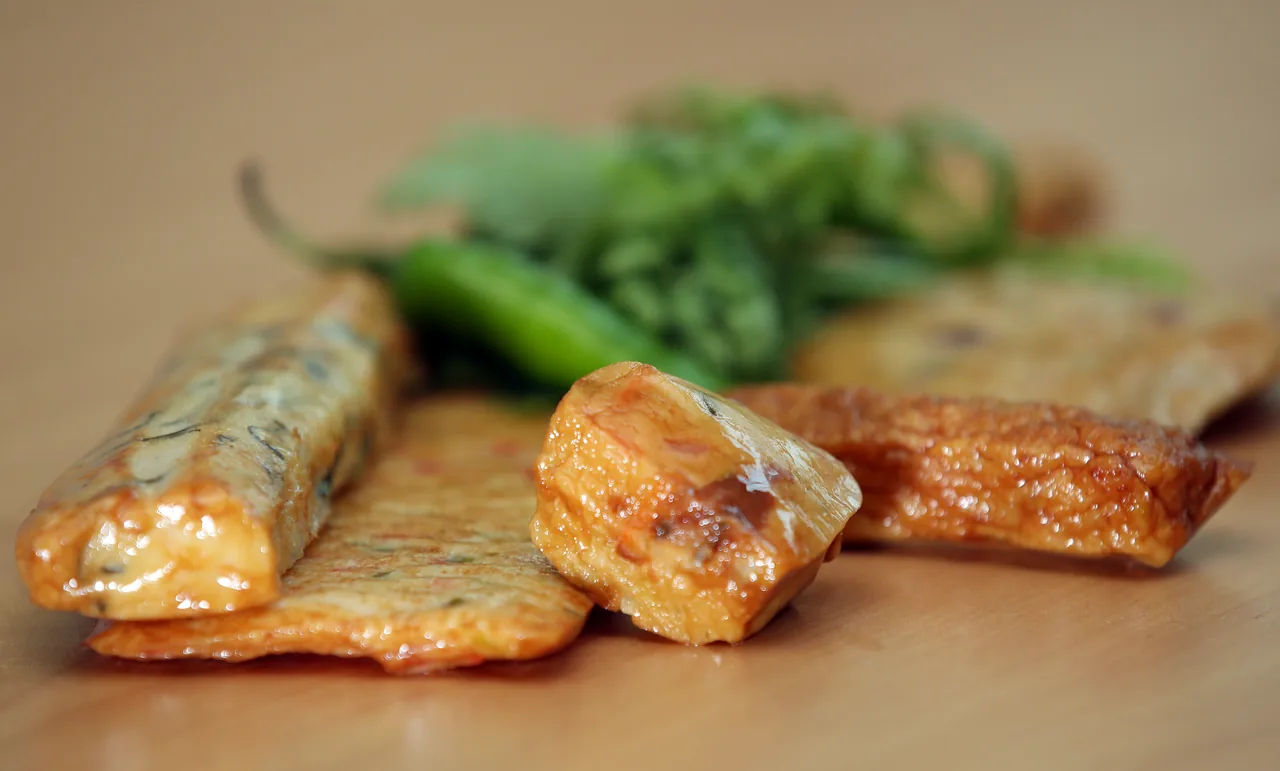
Freshly fried Busan fish cakes; the city is the home of Korean eomuk. Photo: Republic of Korea (Korea.net), CC BY-SA 2.0, via Wikimedia Commons.
4. Goraesa and the other big names
Goraesa has been making eomuk since 1963 and is the other name everyone knows, with a flagship by Haeundae and premium, creative fish cakes.
Goraesa: its Haeundae store (Metro Line 2, Haeundae Station, Exit 5) is hard to miss — giant fish-cake decorations on the wall — and has a second-floor experience hall. Look for premium rolls: vegetable, cheese, octopus and roasted whole-shrimp. It has several locations, including near Jagalchi Market and at Bujeon Market.
Plenty more: markets and bunsik shops citywide sell excellent everyday eomuk; you don’t have to stick to the big brands to eat well.
Tip: if you’re staying in Haeundae, the Goraesa store there is an easy, fun stop; if you’re downtown, you’re never far from a market stall doing the classic skewer just as happily.
5. What to order: the eomuk line-up
Eomuk comes in more shapes than first-timers expect — here’s the range to look for.
Kkochi-eomuk (skewer): the classic, simmered in broth — start here.
Eomuk croquette: fish cake around a filling (shrimp, curry, bulgogi…), breaded and fried crisp — Samjin’s famous one.
Tong-saewu-mari (whole-shrimp roll): a whole shrimp wrapped in fish cake.
Cheese eomuk: molten cheese inside — a crowd-pleaser.
Sagak-eomuk: the flat square sheets used in soups and home cooking.
Eomuk-tang: a warming bowl of fish cake in clear broth — a light meal in itself.
Eomuk-bokkeum: stir-fried fish cake, slightly sweet-spicy — a classic banchan (side dish).
Tip: for a first proper tasting, get a croquette, a whole-shrimp roll and a skewer with broth — sweet, savoury and soupy in one go.
6. Where to eat eomuk in Busan
From street corners to flagship shops, eomuk is everywhere — here’s where to find it.
Where
What you’ll get
Street stalls & bunsik shops
The classic broth skewer, cheap and everywhere — best in winter
Traditional markets
BIFF Square, Gukje, Jagalchi and Bujeon markets — skewers and fresh-fried cakes
Samjin Eomuk (Yeongdo)
Bakery-style shop + make-your-own experience center
Goraesa (Haeundae)
Flagship with premium rolls + experience hall
Busan Station
Branch shops handy for grabbing gift sets before you leave
Because the markets cluster downtown around Nampo, you can pair eomuk easily with Jagalchi Market and BIFF Square street food in one walk.
Tip: mix it up — a fresh croquette from a brand shop, then a classic broth skewer from a market stall. They’re different pleasures, and both are very Busan.
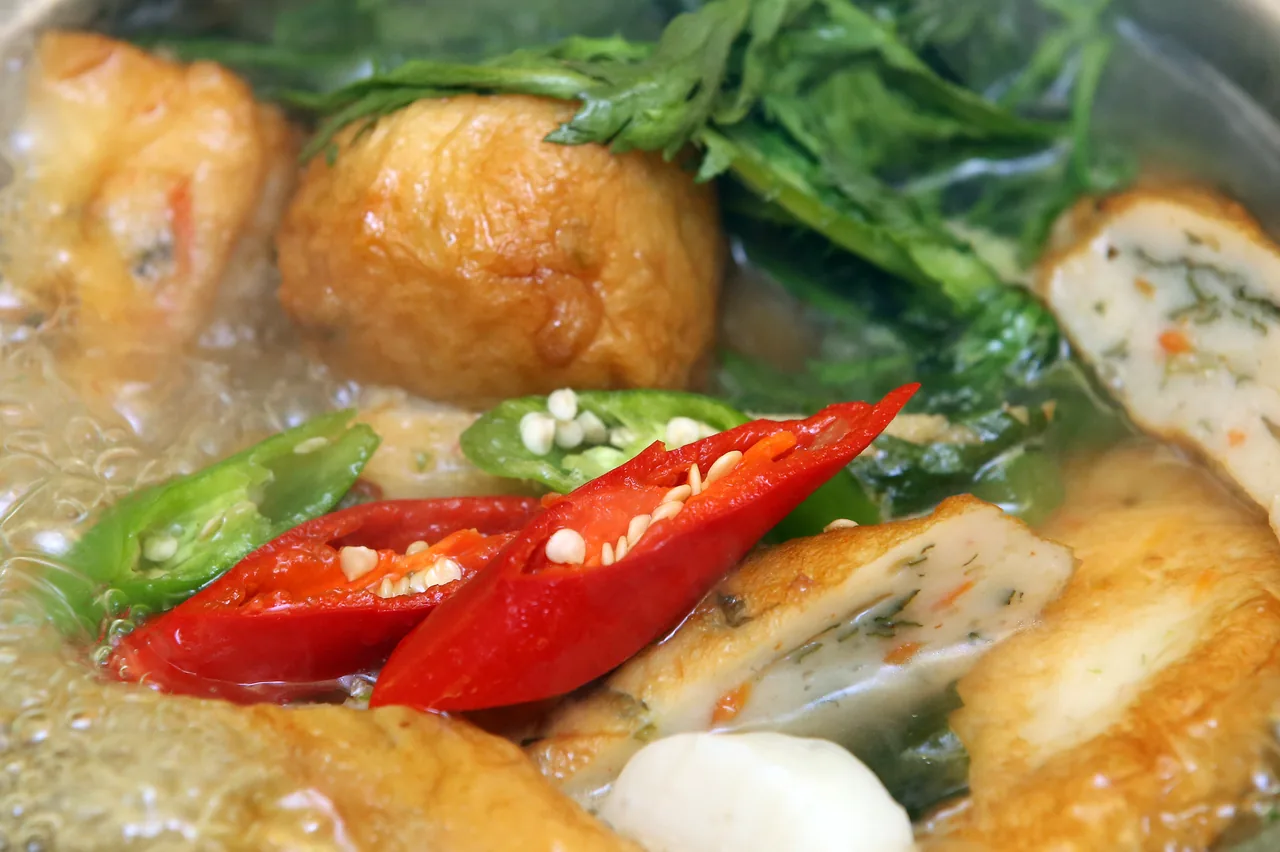
Eomuk simmered in hot broth — the classic Busan winter comfort food. Photo: Republic of Korea (Korea.net), CC BY-SA 2.0, via Wikimedia Commons.
7. Eomuk as a souvenir
Vacuum-packed eomuk gift sets are one of Busan’s most popular edible souvenirs, and the brand shops make them easy to grab on your way out.
Gift sets: Samjin, Goraesa and others sell boxed, sealed assortments designed for travel.
Handy spots: the brand branches at Busan Station and the airport area are built for last-minute souvenir runs.
Keep it fresh: buy sealed packs near the end of your trip and check the use-by; they travel well chilled.
Tip: a Busan eomuk gift set is a thoughtful, very local present — far more ‘Busan’ than a fridge magnet, and people actually enjoy eating it.
8. Tips, prices and a smart plan
Eomuk is cheap, casual and easy — a few pointers to enjoy it like a local.
Price: a broth skewer is around 1,000 won; croquettes and rolls are a couple of thousand each — snack money.
Broth refills: at stalls the broth is free — refill your cup as you go.
Pay-as-you-took: at stalls you usually tell the vendor how many skewers you had and pay at the end.
Best in winter: the hot-broth skewer is magic on a cold night; in summer, lean into croquettes and soups.
A simple plan: classic broth skewers at a Nampo or BIFF Square stall, croquettes at a brand shop, and a gift set before you fly home.
Verdict: eomuk is Busan in a single, cheap, comforting bite — born of the port and the post-war years, perfected on winter streets, and reinvented as the croquette that made the whole country pay attention. Eat it on a skewer with free broth, try a croquette from Samjin or Goraesa, and take a gift set home. It’s one of the warmest, most local things you can do here. Plan the rest with our complete Busan Travel Guide.
Eomuk is Korean fish cake — ground white fish mixed with starch and seasonings, shaped and fried. In Busan it’s a signature food, eaten as a broth-simmered skewer, as crisp croquettes, in soups and as a stir-fried side. The word ‘odeng’ (from Japanese) is often used for the skewered street version, but ‘eomuk’ is the proper Korean term.
Q. Why is Busan famous for eomuk?
Busan is a major fishing port with a constant supply of fresh fish, and after the Korean War cheap fried fish cake became everyday food there. Over time ‘Busan eomuk’ grew into a proud regional brand recognised across Korea, home to the country’s oldest maker (Samjin, since 1953) and other big names.
Q. What is kkochi-eomuk and is the broth really free?
Kkochi-eomuk is a fish-cake skewer simmered in hot anchovy-and-kelp broth, the classic street version. Yes — at stalls the broth is free and refillable: help yourself to a paper cup, eat your skewer (around 1,000 won), and refill the broth as you like. It’s the quintessential Busan winter street snack.
Q. What is Samjin Eomuk?
Samjin Eomuk is Korea’s oldest fish-cake maker, founded in 1953 in Bongnae Market on Yeongdo and now in its third family generation. Its Yeongdo flagship is a bakery-style shop with a second-floor experience and history center where you can make your own fish cake. Its 2013 ‘eomuk croquette’ went viral and helped make Busan eomuk nationally famous.
Q. Where is Samjin Eomuk and how do I get there?
The Samjin Eomuk flagship is on Yeongdo at Taejong-ro 99beon-gil 36, open daily 09:00–19:00. From Nampo Station (Metro Line 1, Exit 9), take Yeongdo-gu bus 5 and get off near Bongnae Market. There are also branches around the city, including near Busan Station, handy for souvenirs.
Q. What is Goraesa Eomuk?
Goraesa is another famous Busan fish-cake maker, going since 1963. Its Haeundae store (Metro Line 2, Haeundae Station, Exit 5) has eye-catching fish-cake decorations and a second-floor experience hall, and it’s known for premium rolls like vegetable, cheese, octopus and whole-shrimp. It has several branches, including near Jagalchi Market and at Bujeon Market.
Q. What kinds of eomuk should I try?
Start with a broth-simmered skewer (kkochi-eomuk), then a fried eomuk croquette (Samjin’s signature), a whole-shrimp roll and cheese eomuk. For a sit-down option, eomuk-tang (fish-cake soup) is a light meal, and eomuk-bokkeum (stir-fried fish cake) is a classic side dish.
It’s cheap snack food: a broth skewer is around 1,000 won, while croquettes and specialty rolls run a couple of thousand won each. At street stalls the broth is free, so a skewer and a few cups of hot broth make a satisfying treat for very little money.
Q. Can I bring Busan eomuk home as a souvenir?
Yes — vacuum-packed eomuk gift sets are a popular Busan souvenir, sold by Samjin, Goraesa and others, with branches at Busan Station and around the airport for last-minute buys. Buy sealed packs near the end of your trip, check the use-by date, and keep them chilled for the journey.
Q. When is the best time to eat eomuk?
Any time, but the broth skewer is at its best in winter, when the steam and hot soup are part of the pleasure — it’s Busan’s classic cold-weather street snack. In warmer months, croquettes, rolls and a bowl of eomuk-tang are great any day.