Seomyeon: Busan’s Buzzing Hub for Shopping, Food & Nightlife
Seomyeon is Busan’s downtown heart — the city’s biggest shopping streets, the famous Jeonpo Café Street, a legendary pork-soup alley, two crossing metro lines and a neon nightlife scene, all in one walkable district. Here’s exactly what to do, eat and see.
Last updated: June 2026
The short version
Seomyeon is the commercial heart of Busan — its busiest downtown for shopping, eating, café-hopping and nightlife, built around the city’s biggest metro interchange.
The headline draws are Jeonpo Café Street (dozens of design cafés in an old tool-shop district), the shopping malls and underground arcade, the food alley, and Seomyeon’s famous dwaeji-gukbap (pork soup) alley.
Getting here is effortless: Seomyeon Station is where Metro Line 1 and Line 2 cross, so almost everywhere in Busan is a direct ride away — which also makes Seomyeon a smart, cheaper place to stay.
Give it half a day to a full day: café-hop in Jeonpo, shop and snack around the crossing, eat pork soup, then watch the streets light up at night.
Seomyeon is the part of Busan where the whole city seems to pass through. It’s the downtown core — a dense grid of shopping streets, department stores, an underground arcade, food alleys and cafés wrapped around the busiest metro interchange in the city. Locals shop here, eat here and go out here, and because Line 1 and Line 2 cross right underneath, it’s also one of the easiest places in Busan to base yourself. We come back to Seomyeon on every trip: a morning café-hopping through the old tool-shop lanes of Jeonpo, an afternoon of shopping and street snacks around the crossing, a steaming bowl of dwaeji-gukbap in the pork-soup alley, and then the neon coming on as the evening crowd arrives. This guide is the complete, fact-checked walk-through — how to get there and around, Jeonpo Café Street, the shopping, the food alleys, the pork-soup street, Bujeon Market, nightlife, where to stay and a ready half-day plan. Plan it alongside the rest of your trip with our complete Busan Travel Guide.
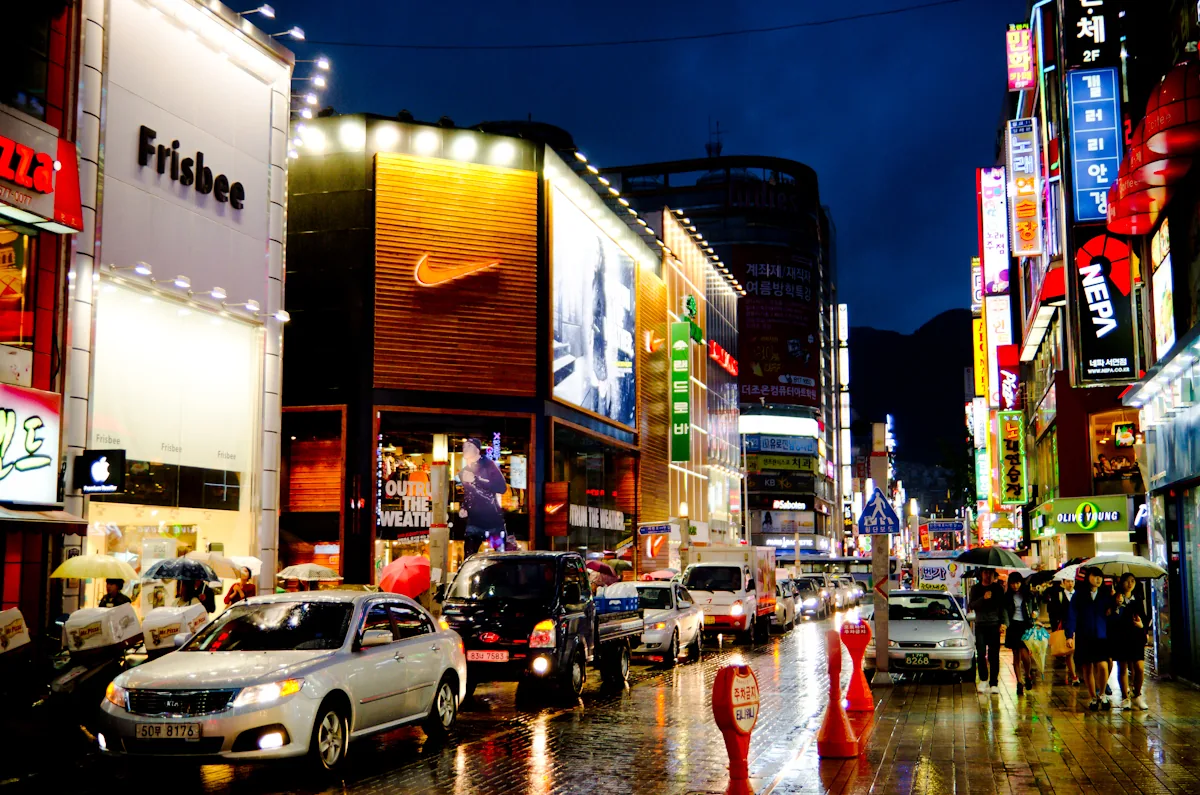
Seomyeon at night — the neon-lit downtown heart of Busan. Photo: Carey Ciuro, CC BY 2.0, via Wikimedia Commons.
⚡ Quick Facts
🚇 Getting there
Seomyeon Stn (Lines 1 & 2)
🕐 Hours
Shops & cafés vary
💵 Admission
Free
⏱️ Time needed
Half day
1. Is Seomyeon worth visiting?
Yes — if you want to see how Busan actually lives, shops and eats, Seomyeon is essential. It isn’t a single sight; it’s the city’s downtown, and the appeal is the density and energy of it all in one walkable area.
Shopping: department stores, a huge underground arcade, fashion streets and the trend-setting cafés of Jeonpo — the best one-stop shopping in Busan.
Food: a street-snack food alley, Busan’s most famous dwaeji-gukbap (pork-and-rice soup) alley, and endless restaurants, from cheap eats to late-night grills.
Convenience: Seomyeon Station is the city’s main interchange, so it’s quick to reach from anywhere and an easy, central base for a trip.
Bottom line: come for half a day if you just want the cafés and shopping, or make it your base for the whole trip and dip in each evening for dinner and nightlife.
🏨 Seomyeon sits where subway lines 1 and 2 meet. It suits trips that move between several areasSee on Trip.com →See on Agoda →See on Expedia →Affiliate link — we may earn a commission at no extra cost to you.
2. How to get to Seomyeon and get around
Seomyeon Station is the busiest interchange in Busan, where Metro Line 1 and Line 2 cross — so you can get here directly from almost anywhere in the city.
By metro: ride to Seomyeon Station (Line 1 and Line 2). From the airport, take Line 2 from Sasang; from the KTX at Busan Station, Line 1 is a straight shot. A rechargeable Cashbee/T-money card makes transfers seamless.
The exits: the station has a maze of numbered exits feeding straight into the underground shopping arcade — Lotte Department Store and the main crossing are signposted, and you can stay underground in bad weather.
For Jeonpo Café Street: it’s an easy walk from Seomyeon, or take Line 2 one stop to Jeonpo Station and leave from Exit 7 (about a 6-minute walk).
On foot: the whole district is flat and walkable, and an underground passage links Seomyeon toward Bujeon Station and Bujeon Market.
💡 Seomyeon’s exits are genuinely confusing the first time. Note the nearest exit number to wherever you’re headed before you come up, and use a Korean map app for walking directions — see our guide to Busan’s metro and transit cards.
3. Jeonpo Café Street (전포카페거리)
Jeonpo Café Street is Seomyeon’s coolest corner — a cluster of small lanes packed with dozens of design-led cafés, bakeries and brunch spots, set in a former tool-and-hardware district. It was even featured in The New York Times‘ ‘World Destinations of the Year’, and the industrial-chic conversion of old workshops into specialty coffee shops is what gives it its distinctive look.
What’s there: roughly 46 cafés and over 200 shops and restaurants — specialty coffee, dessert cafés, roasteries, brunch and boutiques, with the zone now spreading behind the NC Department Store and Gyeongnam Technical High School.
The vibe: young, photogenic and creative — exposed-brick roasteries next to pastel patisseries, popular with students and couples. It’s a place to wander slowly rather than tick off a list.
When to go: afternoons are liveliest; many cafés stay open into the evening, and it photographs beautifully in the golden hour.
☕ For more of the city’s coffee scene beyond Jeonpo, see our Busan café guide — but Jeonpo is the single best place to café-hop on foot.
4. Shopping in Seomyeon
Seomyeon is the best all-round shopping in Busan — department stores, an enormous underground arcade and open-air fashion streets, all in one block.
Department stores: the Lotte Department Store (Busan’s main branch) sits right on Seomyeon Station, and the NC Department Store has seven floors split into a youthful “Young Hall” and a fashion section — part luxury, part discount, all under one roof.
Underground arcade: the Seomyeon Underground Shopping Center is a long, climate-controlled run of fashion, cosmetics and accessory stalls connecting the station exits — perfect on a rainy or hot day.
Street shopping: the open-air lanes around the crossing — sometimes called “Seomyeon Young Street” — are lined with fashion shops, beauty stores and the landmark Judies Taehwa, lighting up with neon at night.
Beauty & cosmetics: Seomyeon is also Busan’s beauty hub, with a dense “medical street” of dermatology and skincare clinics alongside the cosmetics shops.
🛍️ For a full rundown of malls, markets and tax-free tips across the city, see our Busan shopping guide. Seomyeon is where to come if you only have time for one shopping district.
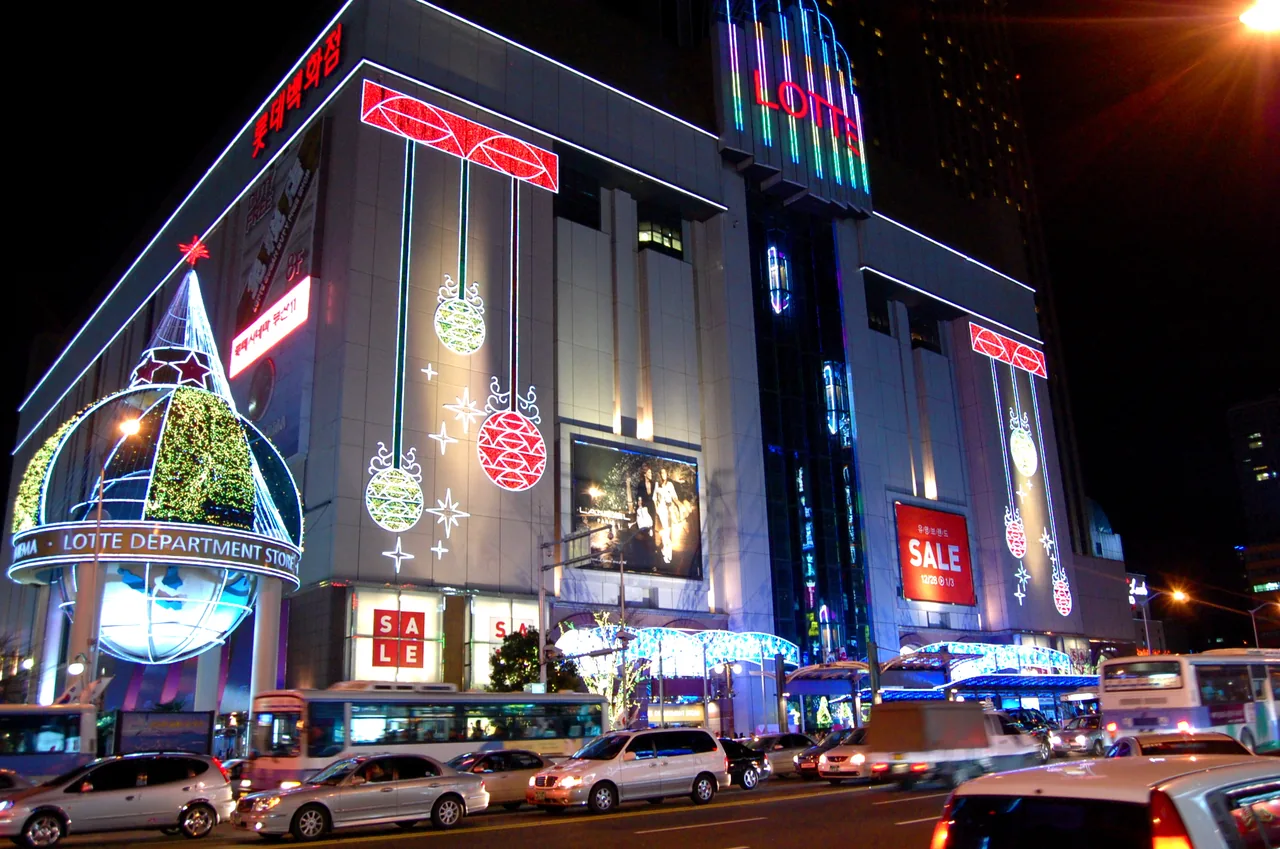
The Lotte Department Store at Seomyeon, Busan’s main downtown shopping district. Photo: Jrwooley6, CC BY-SA 2.0, via Wikimedia Commons.
5. Seomyeon food alley & street food
The Seomyeon food alley, between the main crossing and Judies Taehwa, is one of Busan’s best spots for cheap, fast street eats. It’s a tight run of stalls and small restaurants that comes alive from afternoon into the night.
What to eat: classic street snacks — tteokbokki (spicy rice cakes), eomuk (fish-cake skewers with free broth), seafood-and-scallion pajeon, dumplings, gimbap and sweet seed hotteok.
How it works: graze your way along — most stalls are point-and-eat, cash is handy, and standing counters let you snack between shops.
Best time: early evening, when the office crowd spills out and the alley is busiest and most atmospheric.
🍢 Love Busan’s fish cake? It started here as a local staple — read about Busan eomuk and the wider street-food scene for what to order.
6. Dwaeji-gukbap: Seomyeon’s pork-soup alley
Seomyeon has Busan’s most famous dwaeji-gukbap (pork-and-rice soup) alley — a lane of long-running restaurants serving the city’s signature comfort dish. You’ll find it on Seomyeon-ro 68beon-gil, beside Seomyeon Market, where a dizzying number of pork-soup specialists sit side by side.
The dish: a milky pork-bone broth with rice and tender pork, served with chives, salted shrimp, raw garlic and chilli paste to season at the table — hearty, cheap and open late.
The history: the alley traces back to Korean War refugees who settled in Busan, and it carries that nostalgic, hand-me-down history with it — this is local food, not a tourist invention.
How to order: point to dwaeji-gukbap (or the mixed soondae/offal version if you’re adventurous), then build the flavour yourself with the table condiments.
🍲 Dwaeji-gukbap is the dish that defines Busan eating — see our full dwaeji-gukbap guide for what to look for and how to season it like a local.
A short walk or underground stroll from the Seomyeon crossing brings you to Bujeon Market, one of Busan’s largest traditional markets. It’s a working local market rather than a polished tourist one, which is exactly its charm.
What’s there: mountains of fresh produce, dried seafood, grains, ginseng and medicinal herbs, side dishes and snack stalls — a sensory, authentic slice of everyday Busan.
Getting there: it sits right in front of Bujeon Station (Line 1), and an underground arcade links it back toward Seomyeon, so you can combine the two easily.
Good for: a cheap market lunch, fruit and snacks, and a wander to see how locals actually shop — go in the morning when it’s freshest and liveliest.
💡 Markets are a Busan highlight. If you love this, pair it with the seafood spectacle of Jagalchi Market down in Nampo on another day.
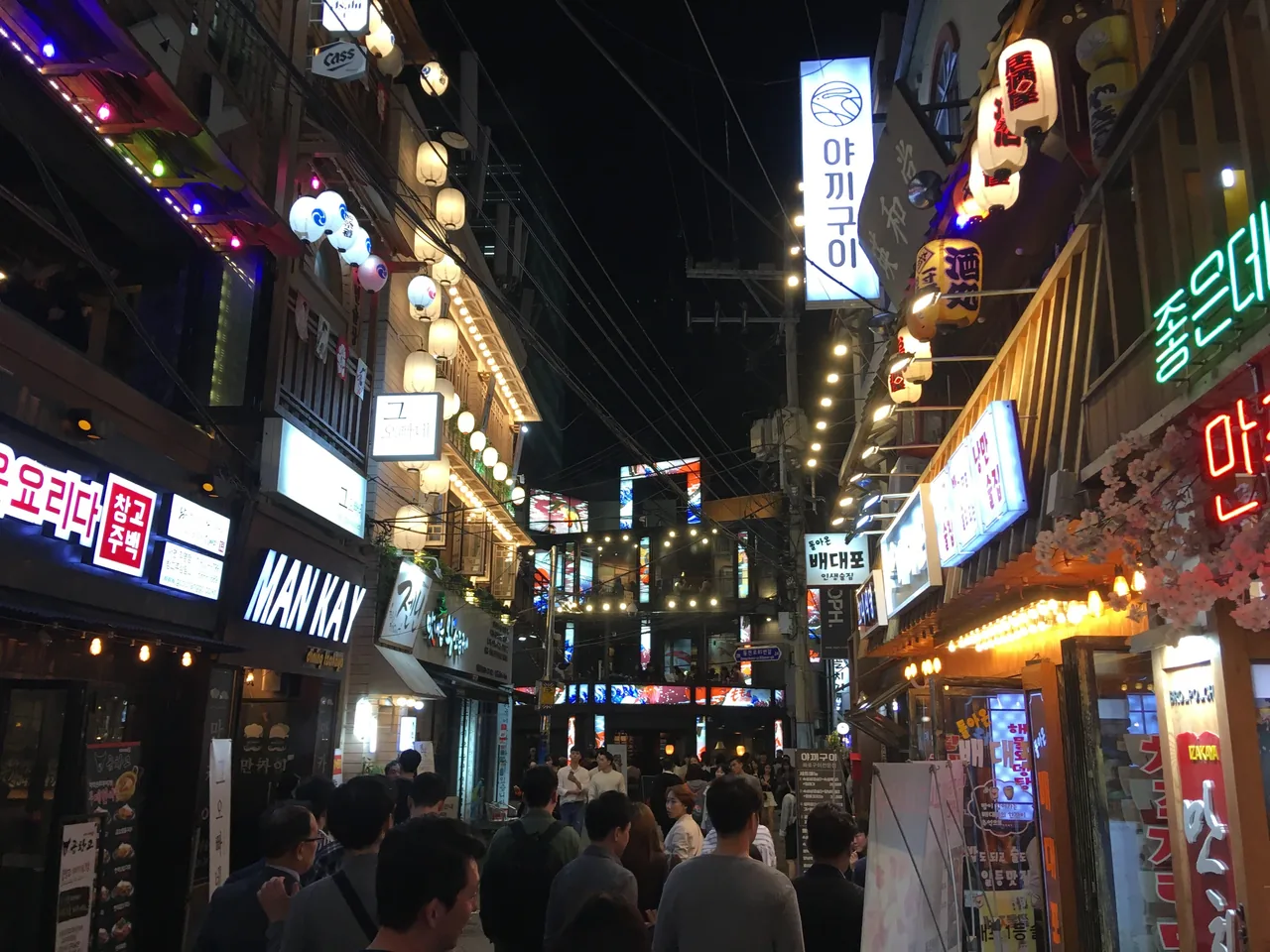
A busy street in Seomyeon, the downtown core where Busan shops and eats. Photo: Christophe95, CC BY-SA 4.0, via Wikimedia Commons.
8. Seomyeon at night & nightlife
Seomyeon is one of Busan’s two great nights out (alongside Gwangalli), where the neon comes on and the streets fill with diners, drinkers and shoppers late into the evening.
The scene: a dense mix of pubs, bars, Korean BBQ joints, pojangmacha (street-food drinking tents), karaoke and clubs, packed into the lanes around the crossing and out toward Jeonpo.
How a night runs: Koreans eat first, then move on for drinks (cha 1, cha 2…) — start with grilled meat or pork soup, then bar-hop or pull up a stool at a pojangmacha for soju and snacks.
Good to know: it’s lively but relaxed and very safe, runs late, and the metro stops around midnight — after that, grab a cheap taxi with the Kakao T app.
🌃 Seomyeon and Gwangalli are the city’s nightlife twins — one for downtown buzz, one for beachfront bars. A dedicated Busan nightlife guide is coming next; for now, Seomyeon is the easiest place to start.
Seomyeon is one of the smartest bases in Busan — central, cheaper than the beach districts, and plugged into both metro lines.
Why stay here: two crossing metro lines mean fast, direct trips to Haeundae, Nampo, the airport and the KTX station, plus endless food and shopping on your doorstep for every evening.
Who it suits: first-timers who want to be central, foodies, shoppers and anyone on a budget — you generally get more room for your money here than in Haeundae.
The trade-off: it’s downtown buzz, not sea views — if you want to wake up to the beach, base in Haeundae instead and treat Seomyeon as a day-and-night out.
🏨 Compare the city’s neighbourhoods in our where to stay in Busan guide and the best Busan hotels roundup — Seomyeon is the top pick for value and convenience.
10. A ready half-day plan for Seomyeon
This easy loop strings together the best of Seomyeon on foot, finishing with the night-time buzz.
Afternoon: start at Jeonpo Café Street for coffee and a wander → walk back toward the crossing for shopping at the department stores and the underground arcade.
Early evening: graze the food alley for street snacks, or sit down for a bowl of dwaeji-gukbap in the pork-soup alley.
Night: as the neon comes on, bar-hop or pull up at a pojangmacha — then hop the metro (or a quick taxi) back to your hotel.
🗓️ Short on time? Jeonpo + the food alley alone make a great two-to-three-hour visit. Building a full trip? Slot Seomyeon into our Busan itinerary as your central, easy evening base.
Seomyeon is Busan’s downtown commercial heart — known for its big department stores and underground shopping arcade, the trendy Jeonpo Café Street, a famous dwaeji-gukbap (pork soup) alley and street-food alley, and a busy nightlife scene. It’s also the city’s main metro interchange, where Line 1 and Line 2 cross.
Q. Is Seomyeon worth visiting?
Yes. If you want to experience everyday downtown Busan — shopping, café culture, street food and nightlife all in one walkable district — Seomyeon is essential. It’s less about a single sight and more about the energy and convenience of the area.
Q. How do I get to Seomyeon?
Take the Busan Metro to Seomyeon Station, where Line 1 and Line 2 meet. It’s a direct ride from Busan Station (KTX) on Line 1 and from the airport area on Line 2. For Jeonpo Café Street, walk from Seomyeon or take Line 2 one stop to Jeonpo Station, Exit 7.
Q. What is Jeonpo Café Street?
It’s a cluster of lanes in Seomyeon filled with dozens of design-led cafés, bakeries and brunch spots, set in a former tool-and-hardware district. It has around 46 cafés and over 200 shops, was featured in The New York Times, and is the best place in Busan to café-hop on foot.
Q. Where is the best dwaeji-gukbap in Seomyeon?
Head to the pork-soup alley on Seomyeon-ro 68beon-gil, next to Seomyeon Market, where many long-running dwaeji-gukbap restaurants sit side by side. The alley dates back to Korean War refugees and serves Busan’s signature pork-and-rice soup, cheap and late.
Q. What food should I eat in Seomyeon?
Graze the food alley for tteokbokki, fish-cake skewers, seafood pajeon and dumplings, then have a bowl of dwaeji-gukbap in the pork-soup alley. Seomyeon also has endless restaurants, Korean BBQ and late-night spots for a full night out.
Q. Is Seomyeon a good place to stay in Busan?
Yes — it’s central, generally cheaper than Haeundae, and connected to both metro lines, so you can reach the beaches, Nampo, the airport and the KTX station quickly. It’s a top pick for value, food and convenience, though it has city views rather than the sea.
Q. Is Seomyeon good for nightlife?
Very. Along with Gwangalli, Seomyeon is one of Busan’s main nightlife areas, with bars, pubs, Korean BBQ, pojangmacha drinking tents, karaoke and clubs around the crossing and toward Jeonpo. It’s lively, safe and runs late; the metro stops around midnight.
Q. How long do you need in Seomyeon?
Half a day covers the cafés, shopping and a meal; a full day lets you add Bujeon Market and a night out. If Seomyeon is your base, you’ll naturally pass through it every day.