
Learning to Surf at Songjeong Beach, Busan
Busan has a real surf town inside the city limits, and Songjeong Beach is where almost everyone in Korea catches their first wave. Gentle, shallow and sandy, with a strip of surf schools where a two-hour beginner lesson costs about ₩65,000 — board, wetsuit and unlimited free surfing included. Here’s everything: how a lesson works, what it costs, when to go, how to get there, and the smartest way to book a summer slot before they sell out.
- Yes, you can surf in Busan — and Songjeong Beach is Korea’s most beginner-friendly break: consistent, gentle waves over a shallow sandy bottom, ringed by surf schools. Most first-timers stand up on day one (Surfholic reports a 97%+ success rate).
- A beginner lesson is ~₩65,000 for about two hours of instruction plus unlimited free surfing the same day, with board and wetsuit included. Book online (Klook/KKday) to lock a slot — summer weekends sell out.
- Summer (Jun–Aug) is warm and perfect for learning — bathwater sea, daily lessons, a buzzing surf-town scene. For the best waves, though, autumn (Sep–Nov) is king; surfing runs year-round with thicker winter wetsuits.
- Getting there: from Haeundae Station (Line 2), bus 100-1 to Songjeong Beach, or ride the Blue Line Park beach train to its Songjeong end. It’s the easy day trip past Haeundae.
- No experience or gear needed — schools provide everything (board, wetsuit, hot showers, towels) and lessons run in English. Just bring swimwear, sunscreen and a towel.
Summer is prime learning season and slots fill fast — most beginners stand up day one (97%+), English lessons and all gear included. Secure yours:🏄 Book a Songjeong surf lesson · Klook🏄 Book a Songjeong surf lesson · KKday* affiliate link
1. Can you really surf in Busan?
2. Songjeong surfing at a glance
3. Why Songjeong is perfect for beginners
4. What a beginner lesson is actually like
5. Prices & what’s included
6. How to book & which surf shop to pick
7. Best time to surf — season by season (and the summer truth)
8. How to get to Songjeong
9. What to wear & bring
10. Surf etiquette & staying safe
11. Beyond the lesson: a Songjeong surf-town day
12. Songjeong vs other Busan surf spots
13. Is it worth it? Costs & a sample summer surf day
Most people don’t expect Korea to have surf — and then they get to Songjeong. Tucked just past Haeundae on Busan’s eastern coast, this wide sandy bay is the country’s surfing capital: Korea’s most consistent beginner waves, a beachfront lined end to end with surf schools, board racks and wetsuit-clad regulars who are out even in February. It’s the place where a huge share of Korea first learns to surf, and in summer it turns into a proper sun-and-saltwater scene — warm water, daily lessons, cafes spilling onto the sand and a line-up of beginners all popping to their feet for the first time. You do not need any experience, any gear, or any Korean: a two-hour lesson gets most people standing on day one, everything is provided, and the instructors teach in English. This guide is the complete beginner’s playbook — exactly what a lesson is like, what it costs and what’s included, which shop to pick, the real truth about summer vs autumn waves, how to get there without a car, what to wear and the etiquette that keeps the line-up safe, plus the smartest way to book a slot before the summer weekends fill. Wax up. Plan the rest of your trip with our complete Busan Travel Guide.
1. Can you really surf in Busan?
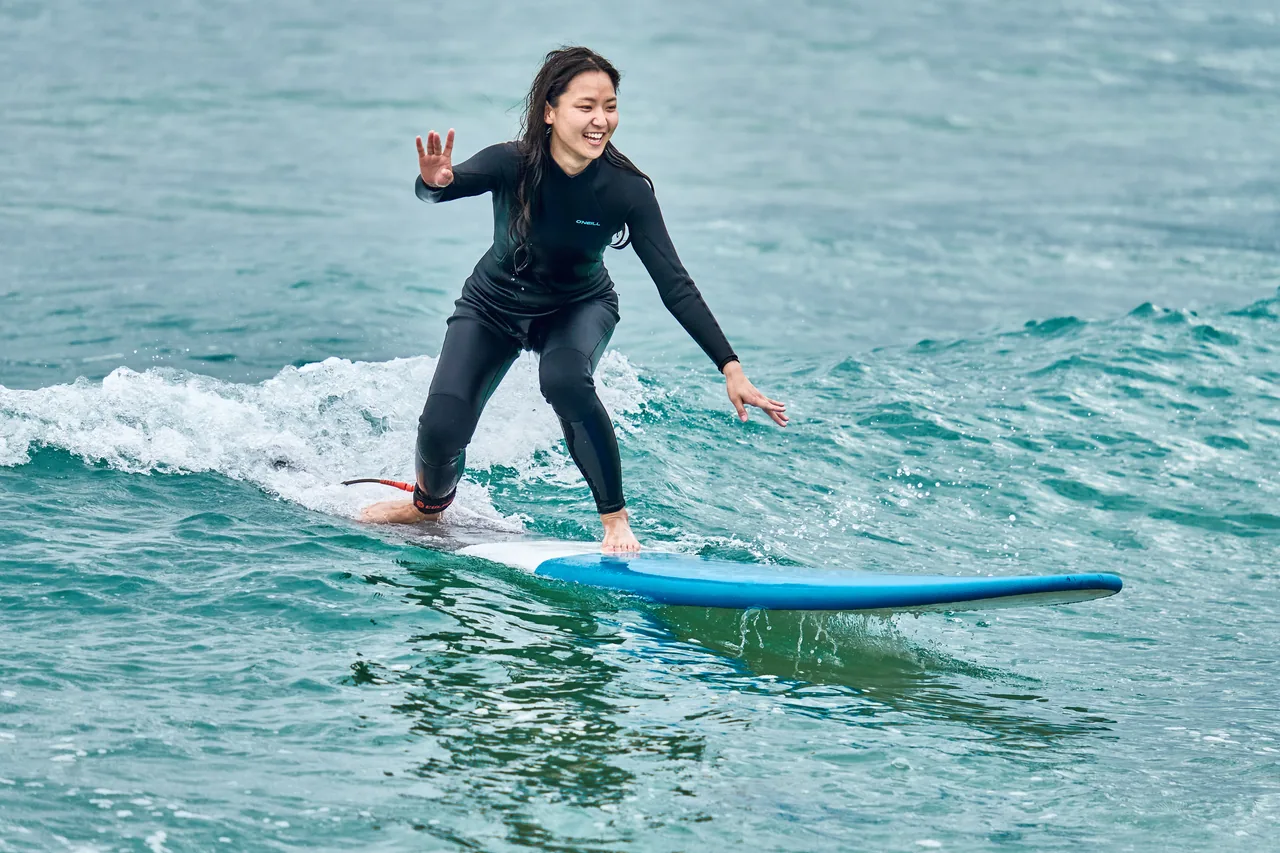
Yes — Busan is Korea’s surf capital, and Songjeong Beach is its most beginner-friendly break, with consistent, gentle waves over a shallow sandy bottom and a whole strip of surf schools. It’s where most of Korea learns to surf, and beginners regularly stand up on their very first day.
Songjeong isn’t a novelty or a one-shop gimmick. It’s a genuine surf town: the bay catches reliable waves, the bottom is forgiving sand (not reef or rock), and the beach is packed with established schools renting boards and teaching classes daily. The waves here are mellow enough to learn on yet consistent enough that locals surf year-round.
- Beginner-friendly by nature: gentle, rolling whitewater waves and shallow water make standing up far easier than at a heavy reef break.
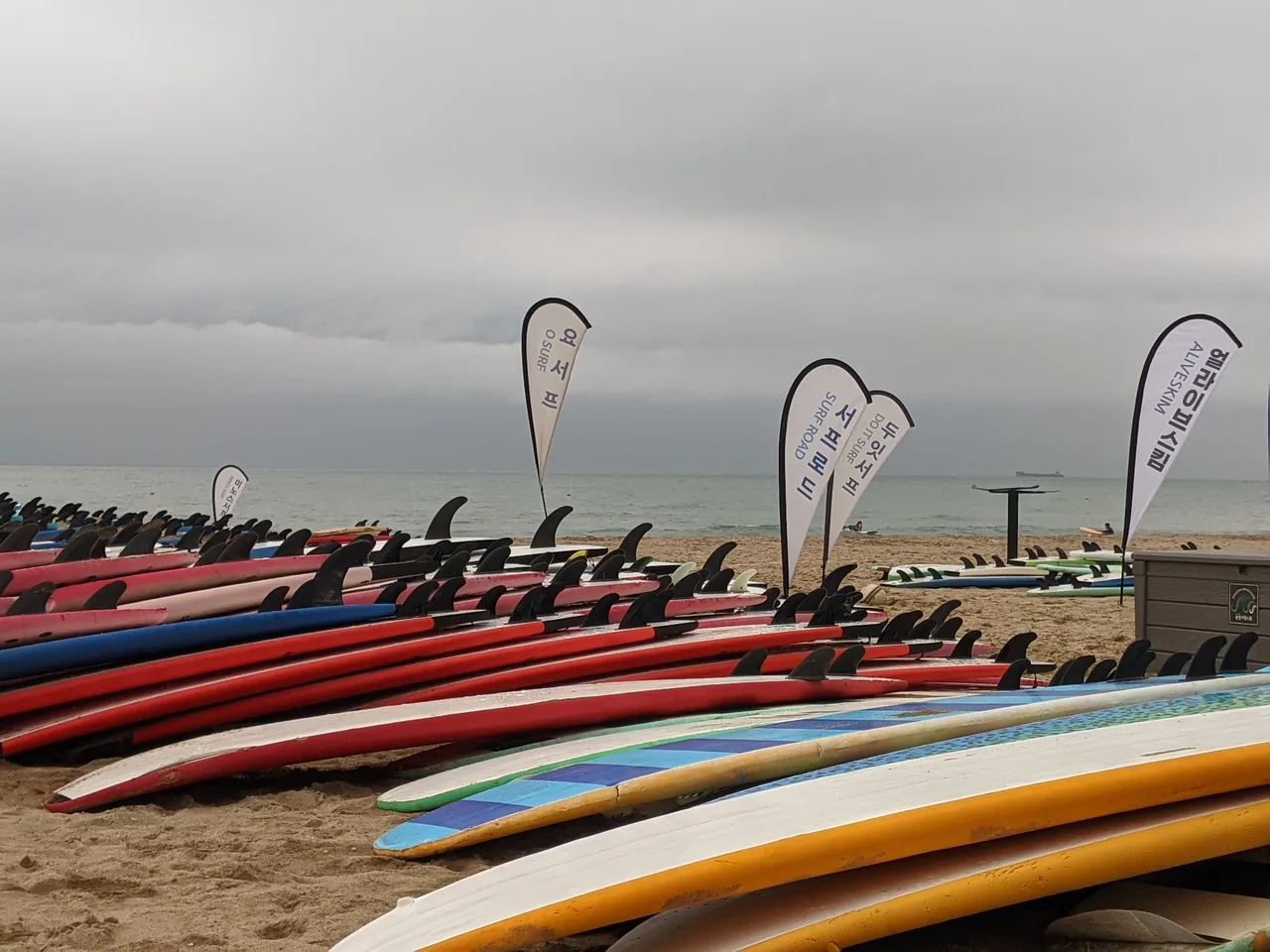
- Everything is here: a dozen surf schools and rental shops along the beachfront, with lessons, gear, lockers and hot showers.
- Year-round surf culture: warm water in summer and autumn, thick wetsuits in winter — Songjeong’s regulars never really stop.
2. Songjeong surfing at a glance
Everything you need on one screen — the where, when and how much.
| Details | |
|---|---|
| Where | Songjeong Beach, Haeundae-gu, east Busan (just past Haeundae) |
| Why here | Korea’s most consistent, beginner-friendly waves; the country’s surf hub |
| Beginner lesson | ~₩65,000 — about 2 hours’ instruction + unlimited free surfing, board & wetsuit included |
| Stand-up rate | Most beginners stand on day one (Surfholic reports 97%+) |
| Best season | Spring & autumn for waves; summer for warm water + easy learning; year-round overall |
| Getting there | Haeundae Station (Line 2) → bus 100-1 → Songjeong Beach; or the Blue Line beach train |
| Bring | Swimwear, sunscreen, a towel — board, wetsuit, showers all provided |
| Book ahead? | Yes for summer weekends and holidays — slots sell out |
3. Why Songjeong is perfect for beginners
Songjeong is, frankly, one of the best places in the world to learn — the conditions do half the work for you.
- Gentle, rolling waves: the bay produces soft, beginner-sized whitewater most days — enough push to stand up, not enough to scare you.
- Shallow, sandy bottom: no reef, no rocks. You can stand on the bottom in the learning zone, and a wipeout means a soft sandy landing.
- A wall of surf schools: the beachfront is lined with established shops — so lessons, gear, lockers, showers and advice are all steps from the sand.
- Warm summer water: in summer the sea is genuinely warm, so you can learn in a thin wetsuit (or rashguard) without the cold sapping your energy.
- High success rate: with mellow waves and pro instructors, the vast majority of first-timers ride whitewater to their feet on day one — Surfholic alone reports a 97%+ stand-up rate.
4. What a beginner lesson is actually like
A standard beginner lesson is about two hours and follows the same proven arc — and by the end most people have ridden a wave standing up.
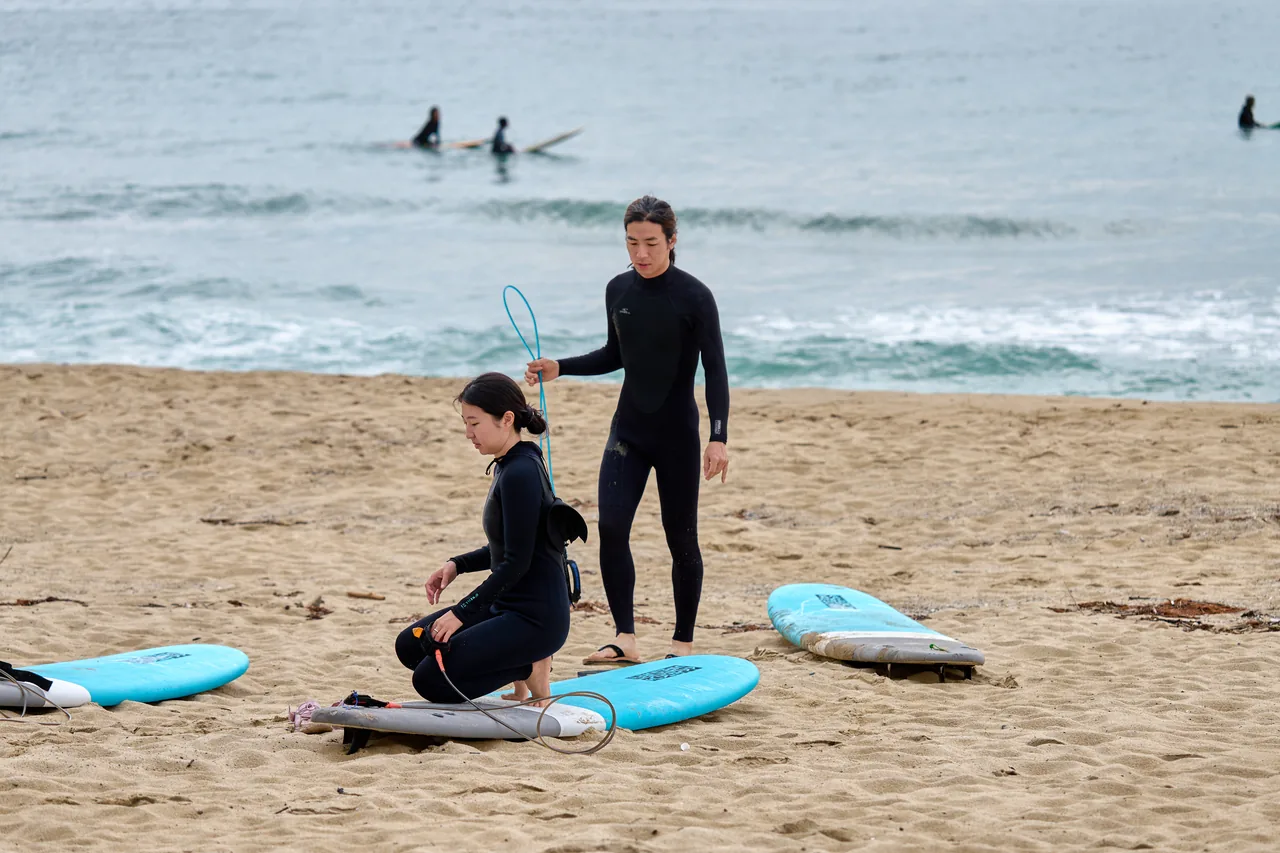
- Kit up (on land)You’re fitted with a wetsuit and a soft beginner board, and the instructor covers safety, the parts of the board and how to carry it.
- The pop-up, on the sandBefore you get wet, you practise paddling and the “pop-up” — going from lying down to standing — on a board on the beach until the movement clicks.
- Into the whitewaterIn the shallow inside section, the instructor pushes you into gentle, already-broken waves and talks you up to your feet. Most people stand within a few tries.
- Unlimited free surfingAfter the ~2-hour lesson, many packages include unlimited free surfing the same day — you keep the board and wetsuit and practise as long as you like.
- Hot showers & relaxBack at the shop, hot showers, towels and toiletries are provided — you rinse off and wander into the surf-town cafes.
5. Prices & what’s included
Surfing at Songjeong is excellent value: a full lesson with all gear and a whole day’s practice costs about the price of a nice dinner.
| What | Typical price | Includes |
|---|---|---|
| Beginner lesson | ~₩65,000 | ~2 hrs instruction + unlimited free surfing, board & wetsuit |
| Board + wetsuit rental | From ~₩20,000–30,000 | Self-guided practice once you can surf |
| Surf + hotel package | ~₩120,000 | Lesson plus a night’s stay (offered by some shops) |
| Hot showers, towels, lockers | Included | Provided at the main schools |
The headline ₩65,000 lesson is the sweet spot for visitors — it bundles instruction, all the gear and a full afternoon of practice into one fixed price. Booking through a platform like Klook or KKday locks that price in and guarantees your slot.
6. How to book & which surf shop to pick
Songjeong’s beachfront has a dozen good surf schools — they’re broadly similar, so book whichever has your slot, in English, at the right time. Here’s how, and the names to know.
- Surfholic — the biggest school in Korea, seconds from the sand, with English lessons, hot showers and a 97%+ first-day stand-up rate. The easy default for visitors.
- Songjeong Surfing School — operating since the 1990s, one of the oldest and largest, with ISA-certified instructors.
- Day Surf, Uncle Surf, Surf Road, Monkey Surf — other established beachfront schools, all offering beginner lessons with gear included.
The smartest way to book: reserve online in advance through Klook or KKday. You get English support, instant confirmation and a guaranteed slot — and in summer, when weekend and holiday lessons sell out, that guarantee matters. You simply show your voucher at the shop.
Summer weekends and the best morning sessions sell out — book ahead to lock your slot. Compare both platforms:🏄 Book a Songjeong surf lesson · Klook🏄 Book a Songjeong surf lesson · KKday* affiliate link
7. Best time to surf — season by season (and the summer truth)
Songjeong surfs all year, but the conditions change with the season. Here’s the honest breakdown — including what summer is really like.
| Season | What it’s like | Best for |
|---|---|---|
| Summer (Jun–Aug) | Warm “bathwater” sea, thin wetsuit, daily lessons, buzzing scene — but typhoon season means unpredictable swell, occasional heavy rain, onshore wind and some jellyfish; busiest of the year | Learning + warm water + atmosphere |
| Autumn (Sep–Nov) | The best waves of the year — typhoon swells linger into early October, water still warm, calmer winds, clear skies | The best surf; progressing past beginner |
| Spring (Apr–Jun) | Mild, consistent, comfortable water and air — a lovely time to learn with fewer crowds | Relaxed learning |
| Winter (Dec–Feb) | Cold but surfable in a 4.5mm wetsuit with hood, booties and gloves (provided); quiet, clean line-ups | Hardy surfers, empty waves |
The summer truth: for learning, summer is brilliant — the water’s warm, you won’t freeze, lessons run nonstop and the surf-town energy is at its peak. The catch is that the very best waves come in autumn, and summer swell is typhoon-driven and hit-or-miss. For a first lesson, none of that matters: the gentle inside whitewater you learn on is there regardless.
8. How to get to Songjeong
Songjeong is an easy hop past Haeundae on Busan’s eastern coast — no car needed.
- Metro + bus (simplest): take Metro Line 2 to Haeundae Station, leave by Exit 1 or 7, and catch bus 100-1 to the Songjeong Beach stop. From central Busan it’s one ride plus a short bus.
- The scenic way — Blue Line Park: ride the Beach Train (or Sky Capsule) along the old coastal rail from Mipo (Haeundae) to its Songjeong terminus — a beautiful arrival right by the surf beach. See our Blue Line Park guide.
- Donghae Line: the Donghae rail line also runs near Songjeong, handy if you’re combining with the Osiria area (Skyline Luge, Lotte World).
- Taxi: quick and cheap from Haeundae if you’ve got a board bag or are short on time.
9. What to wear & bring
The school provides the surfing gear — you just need a few basics.
- Swimwear: worn under the wetsuit (the school supplies the wetsuit and board). A snug swimsuit or trunks and a rashguard are ideal.
- Reef-safe sunscreen: you’ll be out for hours and the sea reflects — apply a strong, water-resistant SPF before you paddle out, and reapply.
- A towel and change of clothes: hot showers are provided, but bring your own towel option and dry clothes for after.
- Summer: a thin wetsuit or just a rashguard is plenty; a hat and water for between sessions.
- Winter: everything’s provided — 4.5mm wetsuit, hood, booties, gloves — but expect cold hands and a bracing paddle-out.
10. Surf etiquette & staying safe
Surfing has unwritten rules that keep everyone safe and the line-up friendly. As a beginner you’ll be in the inside whitewater, but it pays to know them.
- Stay in the beginner zone: learn in the inside whitewater near shore, away from the experienced surfers sitting further out. Your lesson keeps you in the right spot.
- Don’t ditch your board: a loose board is the main hazard to others — always hold or control it, and never let go in front of someone.
- One surfer per wave: don’t “drop in” on a wave someone’s already riding. In the line-up, the surfer closest to the breaking part has priority.
- Mind the rips: rip currents can pull you out; if caught, don’t fight it — paddle parallel to shore. Surf near the lifeguard flags and ask the school about the day’s conditions.
- Respect the flags & locals: obey beach safety flags, and remember Songjeong’s regulars share the water generously with learners who follow the rules.
11. Beyond the lesson: a Songjeong surf-town day
Songjeong is a whole vibe, not just a beach — build a day around your morning surf.
- Surf cafes & brunch: the streets behind the sand are full of surf-style cafes and brunch spots — the classic post-session move is coffee with salty hair.
- Blue Line Park: the Sky Capsule and Beach Train run the gorgeous coastal rail between Songjeong and Mipo (Haeundae) — pair it with your surf day.
- Haedong Yonggungsa & Cheongsapo: Busan’s spectacular seaside temple and the pretty Cheongsapo fishing village are both a short hop along this coast.
- Osiria add-ons: the Skyline Luge and Lotte World are just up the coast if you want an action-packed day after your surf.
12. Songjeong vs other Busan surf spots
Songjeong is the clear first choice for beginners, but it’s not Busan’s only surf — here’s how the options compare.
- Songjeong: the surf capital — most consistent waves, most schools, the most beginner-friendly. Start here.
- Dadaepo Beach: on Busan’s far west, a wide flat beach that also has surf schools and gentle waves — a quieter alternative, further from the centre.
- Haeundae: the famous beach occasionally gets surfable waves but is crowded with swimmers in summer — more a backup than a destination.
- Ilgwang & the eastern beaches: pick up swell too, but with far less infrastructure than Songjeong.
And Busan vs Yangyang? The east-coast town of Yangyang is Korea’s other big surf hub, often with bigger, cleaner swell — but for a Busan trip, Songjeong gives you world-class beginner waves without leaving the city.
13. Is it worth it? Costs & a sample summer surf day
A Songjeong surf lesson is one of the best-value, most memorable things you can do in Busan in summer — world-class beginner conditions for the price of a nice meal.
- The lesson: ~₩65,000 all-in (instruction, board, wetsuit, unlimited same-day surfing, showers).
- Just renting (once you can surf): board + wetsuit from ~₩20,000–30,000.
- Getting there: a few thousand won by metro + bus, or the Blue Line beach train for the scenic arrival.
- Book online (Klook/KKday) to guarantee a summer slot and keep the price fixed.
A perfect summer surf day: early-morning lesson at Songjeong while the water’s glassy → unlimited free surfing until your arms give out → hot shower → brunch and coffee in a surf cafe → Sky Capsule along the coast → sunset back on the sand. Total spend for one: about the cost of a single nice dinner, for a day you’ll be talking about for years.
🎡Things to Do38
🍜Food7
🏨Where to Stay3
🚇Getting Around7
🧭Travel Tips14
📌More3
🧭All-Korea essentials29
Surfing at Songjeong Beach — FAQ
🏄 Next: plan the rest of your trip with all our Busan guides →