
Korean Etiquette: The Do’s, Don’ts & Customs Travelers Should Know
Bowing, dining rules, drinking customs, subway manners, shoes off, temples, the bathhouse and the things that quietly cause offence — here’s how to be a respectful, confident traveller in Korea, explained simply.
| The one idea | Korea runs on respect for age and reading the room (nunchi). When in doubt, be polite, a little reserved, and follow what locals around you do. |
|---|---|
| Always | Use two hands to give or receive things (money, cards, drinks, gifts), especially with older people. Take your shoes off indoors when you see a step-up or a shoe rack. |
| At the table | Let elders start, pour drinks for others (not yourself), and never stick chopsticks upright in rice. No tipping, anywhere. |
| In public | Keep your voice down on the subway and buses, leave priority seats free, and queue patiently. Koreans value quiet, orderly public space. |
| Don’t stress | You won’t be expected to know everything. A little effort, a smile and a ‘thank you’ in Korean go a very long way. |
1. Korean etiquette in one minute
2. The big idea: age, hierarchy & nunchi
3. Greetings & body language
4. Dining etiquette at the table
5. Drinking culture & its rules
6. Public transport & public space manners
7. Shoes off: where and when
8. Temples, palaces & sacred places
9. Money, tipping & paying
10. Taboos & superstitions to know
11. Communication & saving face
12. Personal space, touch & public affection
13. Photography & dress etiquette
14. The bathhouse (jjimjilbang) rules
15. Cultural experiences worth trying
16. Sensitive topics & polite phrases
1. Korean etiquette in one minute
Korea is warm, safe and easy to travel, and locals are forgiving of visitors who don’t know every custom. But a handful of habits will instantly mark you as thoughtful rather than clueless. The golden thread behind almost all of it is respect — especially for age and seniority — and nunchi, the Korean knack for reading a situation and acting accordingly.
If you remember nothing else, remember these five:
| Do | Don’t |
|---|---|
| Give & receive with two hands | Hand money or cards with one hand to an elder |
| Take shoes off indoors when expected | Walk onto a raised floor in your shoes |
| Let elders start eating & drinking | Stick chopsticks upright in your rice |
| Keep quiet on the subway | Take phone calls loudly in public |
| Bow slightly when greeting or thanking | Tip — it’s just not done here |
The rest of this guide explains the why and the how, from greetings and the table to temples, the bathhouse and sensitive topics. Pair it with our complete Korea Travel Guide for the practical side of your trip.
2. The big idea: age, hierarchy & nunchi
Almost every Korean custom traces back to one thing: a deep, Confucian-rooted respect for age and social hierarchy. Older people are given precedence, addressed differently, and deferred to in small daily ways. You don’t need to master the language levels, but you should understand the instinct behind them.
The other key concept is nunchi (눈치) — literally “eye-measure,” the art of sensing the mood of a room and what’s expected without being told. Koreans read nunchi constantly. As a visitor, your version of nunchi is simple: watch what locals around you do, and follow it. Quiet train? Stay quiet. Everyone bowing slightly? Bow back.
3. Greetings & body language
Greetings in Korea are warm but a little more formal than in the West. A few simple moves go a long way.
- Bow slightly. A small nod of the head when you meet, thank or say goodbye to someone is standard and always appreciated. Bow a touch deeper to older people.
- Handshakes happen too — often with a slight bow, and frequently with the left hand lightly supporting the right forearm as a sign of respect.
- Two hands. When giving or receiving anything — a card, money, a gift, a business card — use both hands, or your right hand with your left touching your forearm.
- Beckon with your palm down, fingers waving toward you. Calling someone with your palm up and a curled finger is rude (it’s how you’d call a dog).
- Eye contact is fine but don’t overdo it with elders or authority figures; a softer gaze reads as respectful.
4. Dining etiquette at the table
The Korean table has its own quiet choreography. You won’t be scolded for a slip, but getting these right feels good and earns warm smiles. (For what to actually order, see our what to eat in Korea guide.)
- Elders first. Wait for the oldest person to pick up their spoon or chopsticks before you start.
- Spoon and chopsticks — spoon for rice and soup, chopsticks for sides. Don’t hold both at once, and never stick chopsticks upright in rice (it resembles a funeral rite).
- Keep the rice bowl on the table. Unlike in Japan or China, you don’t lift your rice bowl to your mouth; you eat from it where it sits.
- Share nicely. Many dishes are communal. Use serving spoons where provided, and don’t dig through shared dishes for the best bits.
- Match the pace of the table and don’t leave the moment you finish — meals are social.
5. Drinking culture & its rules
Drinking is woven into Korean social life, and it has the most specific etiquette of all. You never have to drink alcohol, but if you do, these rules matter.
- Never pour your own glass. You pour for others; someone will keep your glass topped up. Watch for empty glasses around you and fill them.
- Pour and receive with two hands, especially for someone older — bottle in your right hand, left hand supporting your forearm or the bottle.
- Turn away to drink in front of a much older person or a senior — turn your head slightly to the side and cover the glass a little. It’s a sign of respect.
- Accept the first pour graciously, even if you only sip. Refusing outright can feel cold; “I’m driving” or “just a little” is fine.
6. Public transport & public space manners
Korea’s public spaces are calm, clean and orderly, and there’s a strong shared sense of not disturbing others. On the subway and bus especially:
- Keep your voice down. Phone conversations are kept short and quiet; loud talking or speakerphone is frowned upon.
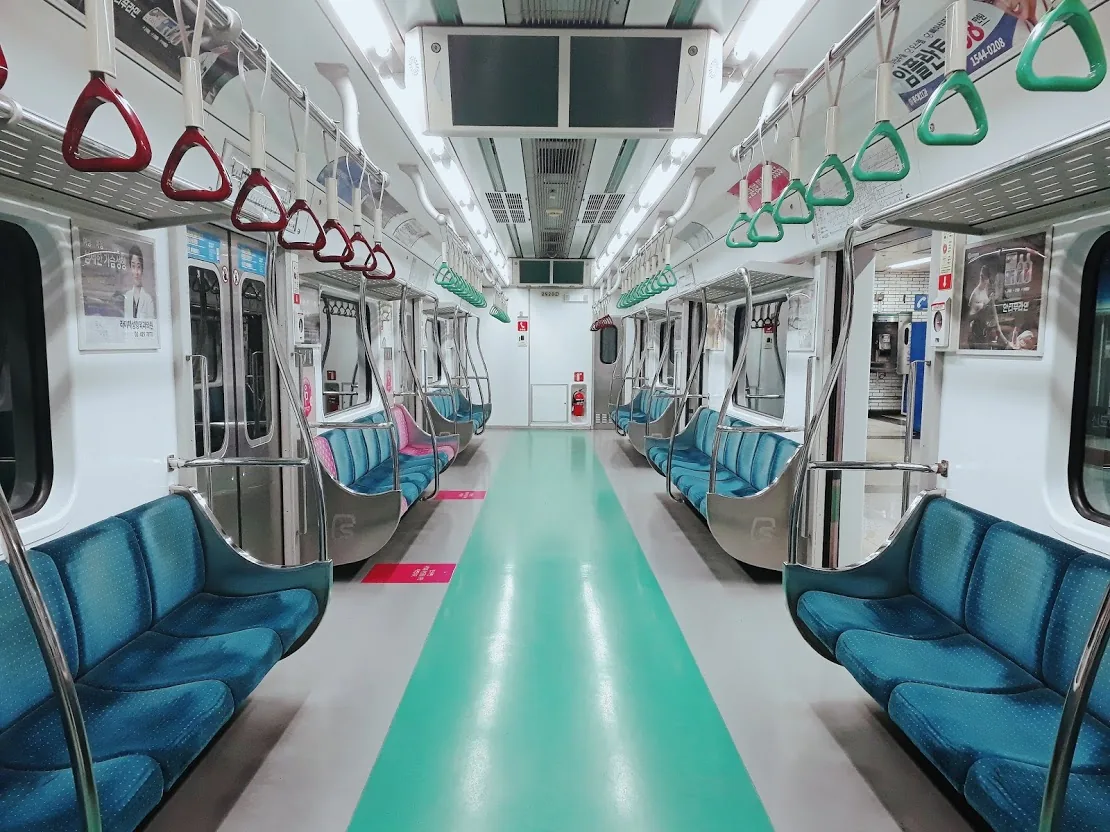
- Leave the priority seats (marked, often pink/yellow at carriage ends) for the elderly, pregnant, disabled and those with infants — even if the train is packed and they’re empty.
- Queue patiently and let people off before you board. Koreans line up neatly at marked spots on the platform.
- Stand right on escalators in busy stations so others can pass on the left (though officials technically ask you to hold the rail and not walk).
- No eating smelly food on the subway, and take your rubbish with you — bins are scarce, so you’ll often carry trash until you find one.
7. Shoes off: where and when
Koreans take their shoes off indoors far more than most Western visitors expect, and walking in with shoes on is a genuine faux pas. The floor is a clean, living space — people sit and even sleep on it.
Take your shoes off when you see any of these signs:
- A raised step or platform just inside the door, or a shoe rack / cubbies.
- Shoes already lined up at the entrance.
- You’re entering a home, a guesthouse or hanok stay, a temple hall, many traditional restaurants (especially floor-seating ones), and some clinics.
8. Temples, palaces & sacred places
Korea’s Buddhist temples and royal palaces are living cultural sites, not just photo backdrops. Visiting is encouraged — just do it respectfully.
- Dress modestly at temples — covered shoulders and knees. Keep your voice low and your movements calm.
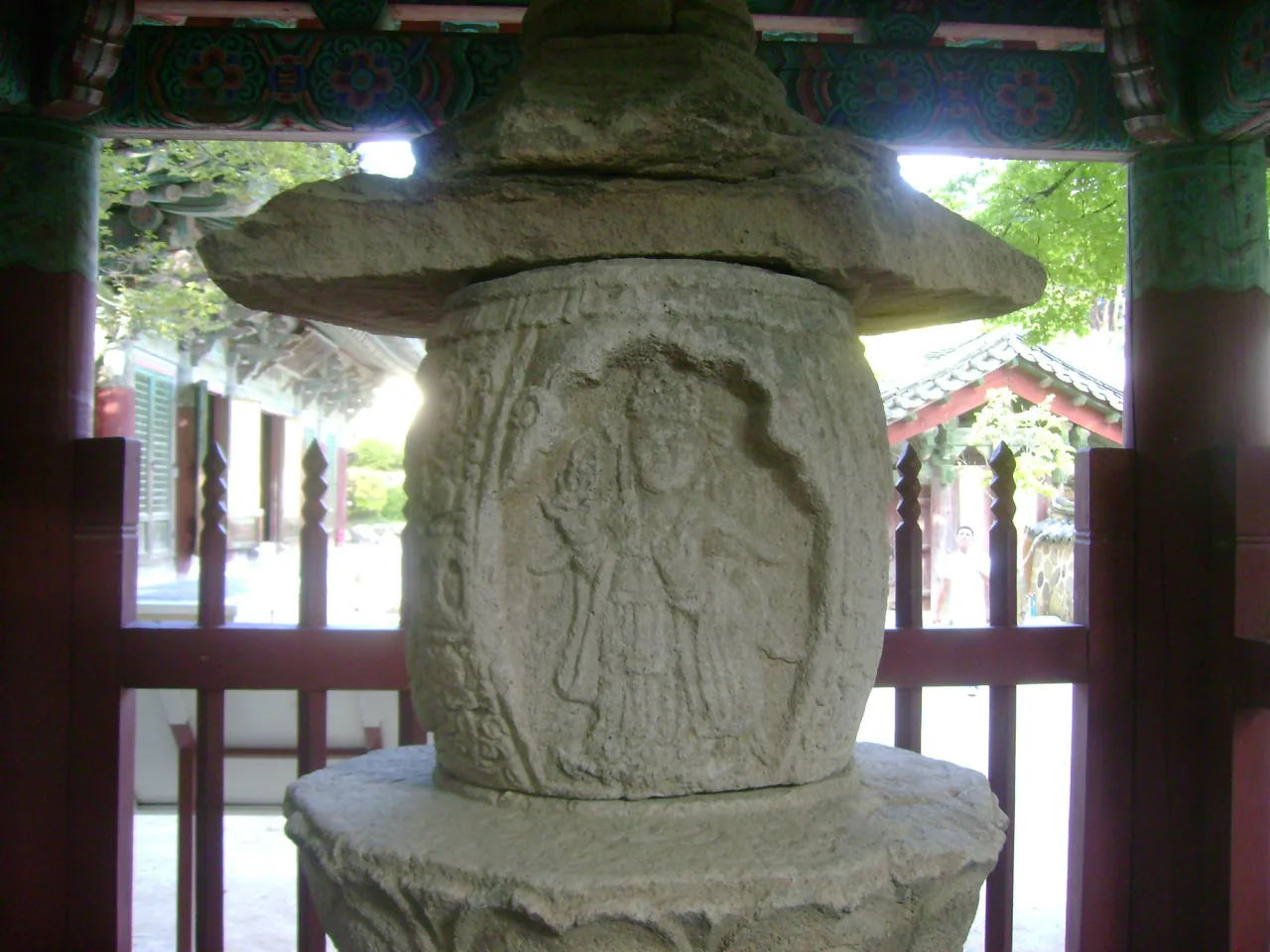
- Take shoes off before entering a temple hall, and don’t point your feet at a Buddha statue when sitting.
- Don’t interrupt people who are praying or bowing, and walk around the edges of halls, not through the middle.
- Ask before photographing monks or worshippers, and look for “no photography” signs inside halls.
- At palaces, stay behind ropes and off the old structures; many areas are restored heritage.
9. Money, tipping & paying
Money etiquette is simple but worth getting right.
- No tipping. Restaurants, taxis, hotels, bars — none of them expect a tip, and prices already include service. Leaving extra coins can even cause polite confusion.
- Pass cards and cash with two hands, or your right hand supported by the left, especially to older staff.
- Cards work almost everywhere, including small shops and increasingly street stalls. Carry a little cash for the oldest markets.
- Splitting the bill is common among friends, but often one person (frequently the eldest or the host) pays for the whole table, and others “get the next round.” Offer, but don’t fight too hard over it.
10. Taboos & superstitions to know
A few specific things land badly in Korea, often for cultural or superstitious reasons. None are likely to get you in trouble, but avoiding them shows awareness.
| Avoid | Why |
|---|---|
| Writing someone’s name in red ink | Red names are associated with death |
| Chopsticks upright in rice | Resembles incense at a funeral |
| Gifting in sets of four | “Four” (사) sounds like the word for death |
| Pointing or beckoning palm-up | Seen as rude / how you’d call an animal |
| Feet pointed at people or shrines | Feet are considered the lowest, least clean |
| Blowing your nose at the table | Considered unpleasant during a meal |
11. Communication & saving face
Korean communication tends to be more indirect than many Western styles, built around harmony and “saving face” — never embarrassing yourself or others in public.
- “Maybe” or “it’s a little difficult” often means no. A soft, vague answer is a polite refusal; pushing for a hard yes can be uncomfortable.
- Avoid public criticism or confrontation. Disagreements are handled gently and privately. Raising your voice or making someone “lose face” damages the relationship.
- Business cards (and any formal exchange) are given and received with two hands; take a moment to look at the card rather than pocketing it instantly.
- Modesty is valued. Koreans often deflect compliments; bragging reads poorly.
12. Personal space, touch & public affection
Korea has its own norms around bodies and closeness that can surprise first-timers.
- Same-sex friends are physically close — linking arms, a hand on the shoulder. It’s friendship, nothing more.
- Couples hold hands and wear “couple looks,” but heavy public displays of affection (long kisses) are uncommon and draw stares.
- Crowds get close on transport and in markets, with less personal space than you may be used to — and little of the apologising you’d expect at home.
- Don’t touch people’s heads or be overly hands-on with people you’ve just met.
13. Photography & dress etiquette
Two practical areas that trip up visitors: cameras and clothes.
Photography
- Ask before photographing people up close, including market vendors and monks.
- Don’t photograph military sites, soldiers or security installations (you’ll see signs, especially near the DMZ).
- Watch for no-photo signs inside temple halls, museums and some shops.
Dress
- Korea is fashion-conscious; smart-casual is a safe everyday default and people dress up more than in many countries.
- Cover shoulders and knees at temples and palaces.
- Low-cut tops draw more attention than short skirts — modesty norms differ from the West. At the beach, swimwear is for the beach and pool only.
14. The bathhouse (jjimjilbang) rules
A Korean bathhouse or jjimjilbang is a wonderful, very local experience — and it has firm etiquette, mostly around hygiene and the fact that the bathing areas are nude and gender-separated.
- Shower thoroughly before entering any communal bath or pool. This is non-negotiable.
- No swimwear in the bathing area — everyone is undressed, and it’s completely normal and non-sexual.
- Tie up long hair and keep your small towel out of the water.
- In the shared jjimjilbang lounge (the mixed-gender part), you wear the provided loose clothes; keep noise down, and it’s fine to nap on the heated floor.
- Watch out for tattoo rules at some traditional spas, though attitudes are relaxing.
15. Cultural experiences worth trying
The best way to understand Korean culture is to step into it. A few experiences are easy to arrange and deeply rewarding:
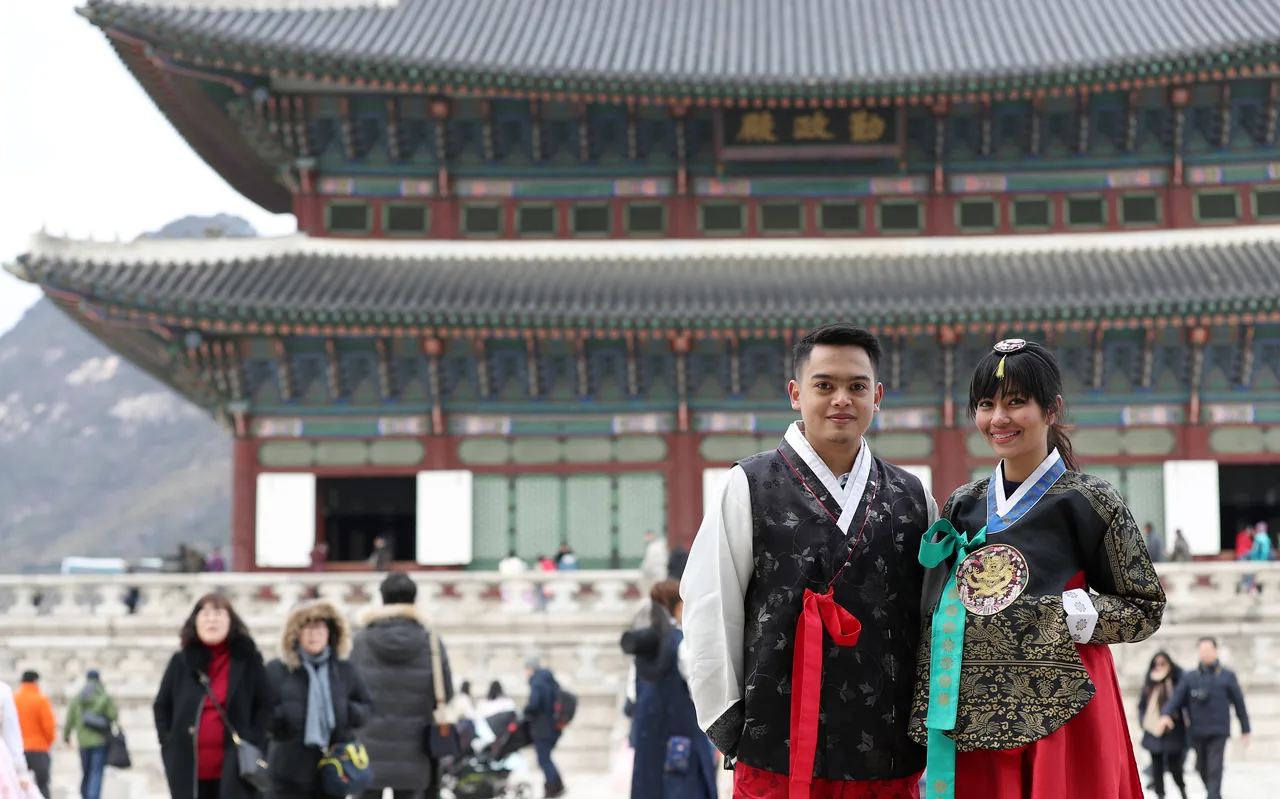
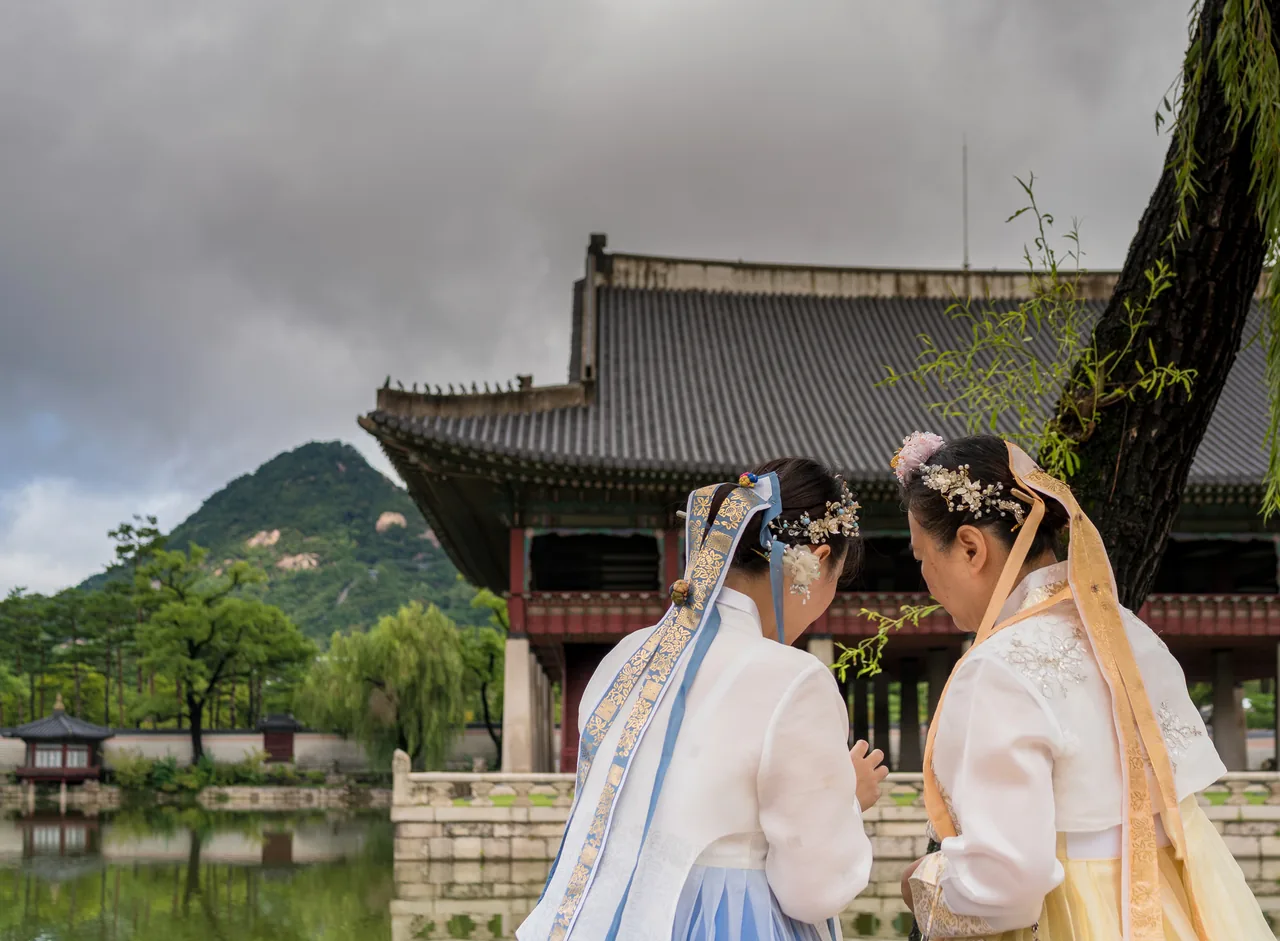
- Hanbok rental — slip into traditional dress near a palace; it’s fun, beautiful in photos, and gets you free palace entry.
- Temple stay — spend a night at a mountain temple, try meditation, tea and temple food, and see Buddhist life up close.
- Tea ceremony or hanok experience — a calm window into traditional manners and aesthetics.
- A cooking class or market tour — culture through food, and a fast way to learn etiquette in action.
16. Sensitive topics & polite phrases
A little tact and a few words of Korean will carry you far.
Tread lightly on
- Politics, North Korea and reunification — complex and personal; listen more than you opine.
- History with Japan (colonial era, comfort women) — deeply felt; not a casual debate topic.
- Don’t joke about North Korea as if it’s a novelty; for many families it’s serious and close to home.
Phrases that win goodwill
| Meaning | Korean | Sounds like |
|---|---|---|
| Hello | 안녕하세요 | an-nyeong-ha-se-yo |
| Thank you | 감사합니다 | gam-sa-ham-ni-da |
| Sorry / excuse me | 죄송합니다 | joe-song-ham-ni-da |
| Excuse me (to get attention) | 저기요 | jeo-gi-yo |
| Yes / no | 네 / 아니요 | ne / a-ni-yo |
| It’s okay / no thanks | 괜찮아요 | gwaen-cha-na-yo |
🎡Things to Do72
🍜Food8
🏨Where to Stay4
🚇Getting Around12
🧭Travel Tips24
📌More3
Korea etiquette FAQ
Plan the whole trip: read our complete Korea Travel Guide
Images: Hero: Korea.net / KOCIS (CC BY-SA 2.0) · IssamBarhoumi (CC BY-SA 4.0) · steveslep (CC BY 2.0) · Brit in Seoul (CC BY-SA 4.0), via Wikimedia Commons.