
Seoul Climate Card vs T-money: Which One Saves You More?
A ride-by-ride breakeven breakdown so you buy the right card before you tap in
| Staying in central Seoul, 3+ rides/day | Climate Card short-term pass — unlimited subway + city buses pays off fast |
|---|---|
| Day trips outside Seoul (Suwon, Nami, DMZ) | T-money — the Climate Card doesn’t work beyond the city limits |
| Lots of walking, 1–2 rides/day | T-money — pay-as-you-go is cheaper than any flat pass |
| Airport runs (AREX) | Neither covers the airport line — budget that separately |
| Bottom line | 4 rides/day breaks even on the 1-day pass, 3 rides/day on the 3-day — count your hops, then pick |
1. Quick verdict: who should buy which
2. What each card actually is
3. Climate Card short-term prices and what’s included
4. How T-money works and where you can use it
5. ★ The breakeven calculator: how many rides per day to profit
6. Which card by traveler type
7. The traps: what the Climate Card does NOT cover
8. How to buy and use it
9. 30-day pass vs short-term: when to go long
10. Korea Tour Card, WOW Pass, and the rest
11. First-day setup, step by step
12. Final call and where to go next
1. Quick verdict: who should buy which
If you’re parked in Seoul and tapping in three or more times a day, the Climate Card short-term pass wins; if you’re doing day trips or barely riding, stick with T-money. That’s the whole decision in one sentence, and the rest of this guide just shows you the math so you can trust it. Either card still leaves you the lines to learn. The Seoul subway guide lays out the nineteen lines and the 103 interchange stations.
The Seoul Climate Card (기후동행카드) is an unlimited flat-rate pass for Seoul subway and city buses. T-money is the classic pay-as-you-go rechargeable card that works nationwide. Neither is “better” in the abstract — it depends entirely on how much you ride and where you go.
| Your trip | Pick | Why |
|---|---|---|
| Based in Seoul, sightseeing hard | Climate Card | Hop on/off freely, no per-tap counting |
| Day trips beyond the city | T-money | Climate Card stops at the Seoul border |
| Slow trip, mostly on foot | T-money | You won’t ride enough to break even |
| Airport transfer | Separate | AREX isn’t covered by either card |
2. What each card actually is
T-money is a prepaid wallet you tap down ride by ride; the Climate Card is an all-you-can-ride pass for a fixed number of days. That single difference drives every recommendation below.
T-money is a rechargeable stored-value card. You load won onto it, and each tap deducts the fare. It works on subways, city buses, most taxis, convenience stores, and station lockers — and it works across the whole country, not just Seoul. The blank card costs about ₩2,500–4,000 at any convenience store, and you can refund the remaining balance when you leave — though a ₩500 fee is deducted per refund (convenience stores only refund balances up to about ₩20,000, with no partial refunds).
The Climate Card is a flat-rate unlimited pass, valid only inside Seoul. It launched as a 30-day commuter product, but since July 2024 there are short-term passes aimed squarely at tourists — 1, 2, 3, 5, and 7 days. Within its window you ride Seoul subway and city buses as much as you like, no per-ride charge.
| T-money | Climate Card (short-term) | |
|---|---|---|
| How it charges | Pay-as-you-go per tap | Flat fee, unlimited rides |
| Coverage area | Nationwide | Seoul only |
| Best for | Light or wide-ranging trips | Heavy riding inside Seoul |
| Taxis & stores | Yes | No (transit only) |
| Refundable | Remaining balance | Before the period ends |
3. Climate Card short-term prices and what’s included
Short-term passes run ₩5,000 to ₩20,000, the physical card adds a one-time ₩3,000, and the mobile version is free. Here’s the full menu so you can match a pass length to your stay.
| Pass | Price | Per day |
|---|---|---|
| 1-day | ₩5,000 | ₩5,000 |
| 2-day | ₩8,000 | ₩4,000 |
| 3-day | ₩10,000 | ₩3,333 |
| 5-day | ₩15,000 | ₩3,000 |
| 7-day | ₩20,000 | ₩2,857 |
The longer the pass, the lower the daily rate, so a 7-day pass is the easiest one to “win” on. The mobile pass is free, but it’s Android-only — you add it in the Mobile T-money app and tap your phone at the gate via NFC. iPhone users can’t tap a phone to ride (Apple locks transit NFC to Apple Wallet, and the Climate Card isn’t in Apple Wallet), so on iPhone you buy the physical card (₩3,000) instead.
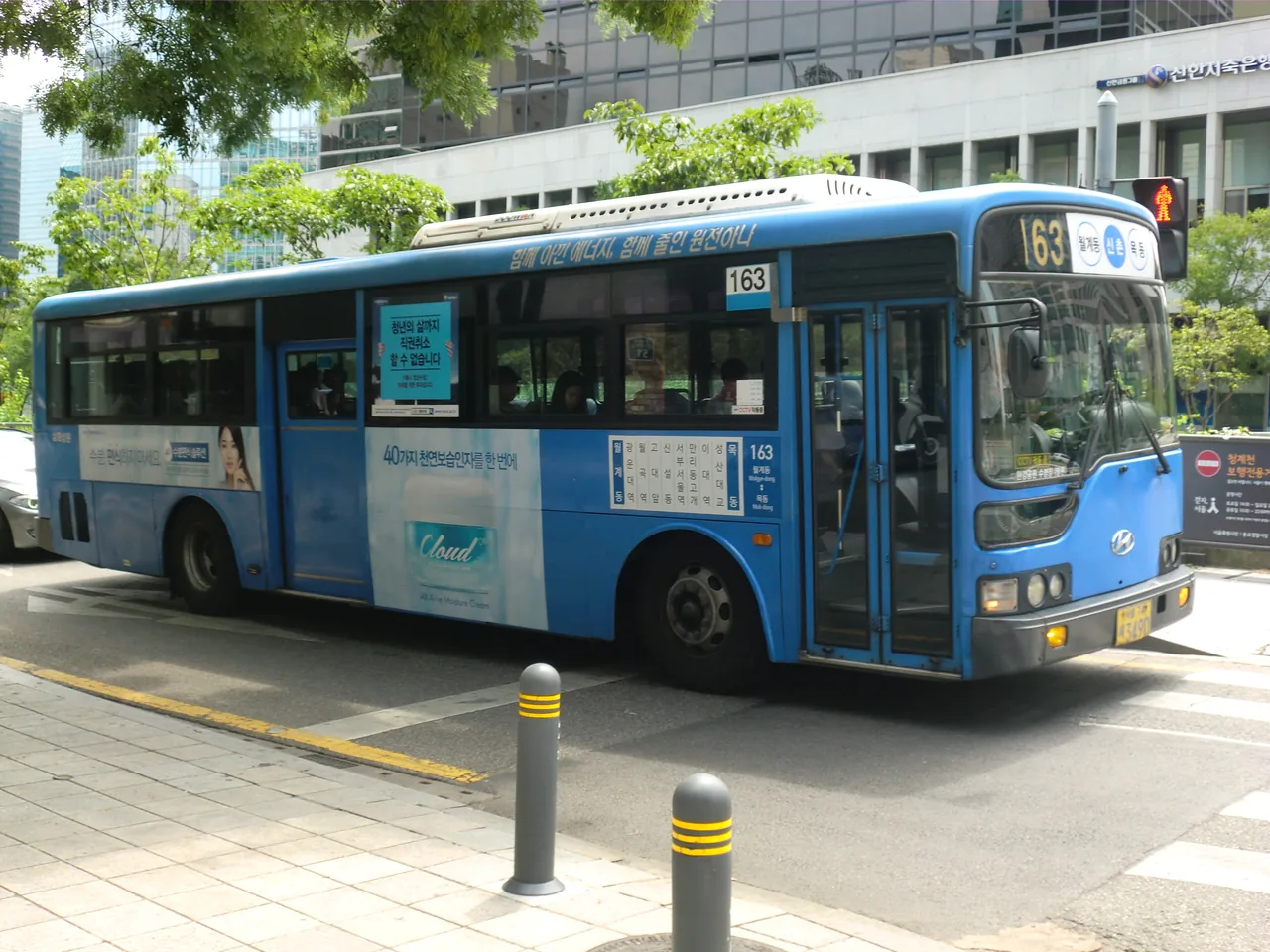
What’s covered: Seoul subway plus all Seoul city buses — trunk (blue), branch (green), village, circular, and late-night lines. You charge the pass at any subway station kiosk or in the app. For getting around the city in general, the guide to getting around Korea has the full transit rundown.
- Subway: every Seoul Metro line within the city boundary
- City buses: blue, green, village, circular, and owl (late-night) routes
- Not included: express buses, Sinbundang Line, AREX, and anything past the city limit — see section 7
4. How T-money works and where you can use it
T-money charges ₩1,550 per subway ride and works almost everywhere in Korea, which makes it the safe default for unpredictable trips. You buy a blank card, load cash, and tap.
The Seoul subway base fare on a transit card is ₩1,550 (it rose on 28 June 2025; cash is ₩1,650). That covers the first 10 km, then adds ₩100 per 5 km after that. A trunk or branch city bus is about ₩1,500 by card. Transfers are discounted if you tap onto your next vehicle within 30 minutes of getting off, so a typical single journey works out to roughly ₩1,550–1,750.
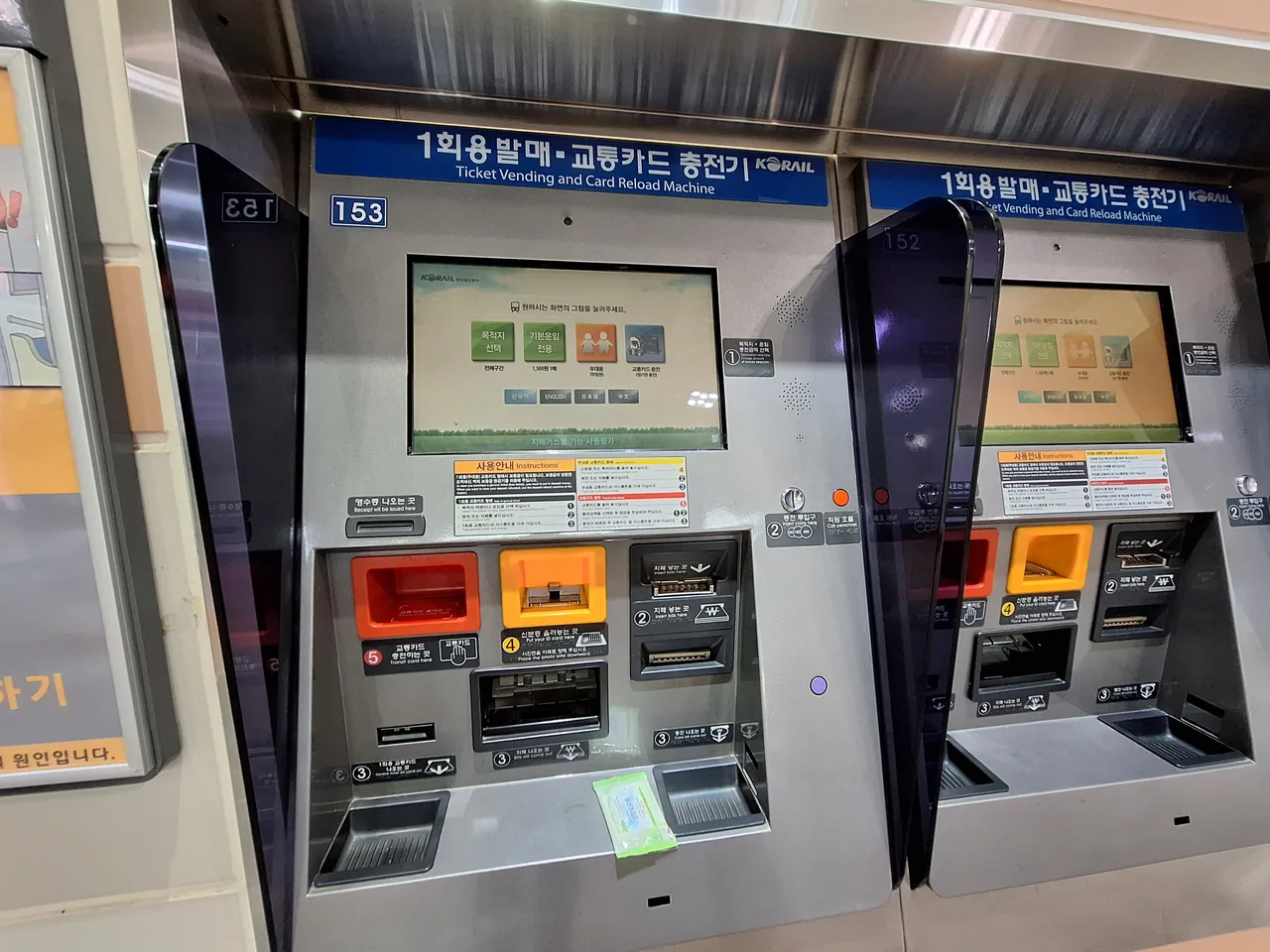
Where T-money shines is reach: subways and buses nationwide, most taxis, convenience stores, and station lockers. Buy the card at any convenience store (GS25, CU, 7-Eleven) or station machine, top it up at the same machines, and refund the leftover balance before you fly home — minus a ₩500 refund fee.
5. ★ The breakeven calculator: how many rides per day to profit
The Climate Card pays for itself at roughly 4 rides a day on the 1-day pass and just 3 rides a day on the 3-day pass — and it only gets easier from there. This is the table no other guide gives you, so spend a minute here.
The math is simple: divide the pass price by the daily allowance, then divide by the ₩1,550 base fare. Below is the breakeven point for each pass — the rides-per-day at which the pass starts beating pay-as-you-go.
| Pass | Cost per day | Rides/day to break even | Verdict |
|---|---|---|---|
| 1-day ₩5,000 | ₩5,000 | ≈ 3.2 → 4 rides | Need a busy day (3 rides = roughly even) |
| 3-day ₩10,000 | ₩3,333 | ≈ 2.2 → 3 rides | Easy win for active sightseeing |
| 5-day ₩15,000 | ₩3,000 | ≈ 2 rides | Breaks even at just 2 rides/day |
| 7-day ₩20,000 | ₩2,857 | under 2 rides | Almost always worth it in Seoul |
Read it this way: with the 1-day pass you need a genuinely busy day — four taps or more — for it to beat T-money. The 3-day pass tips into profit at three rides a day, which is normal for anyone bouncing between palaces, markets, and neighborhoods. By the 5-day and 7-day passes, two rides a day already covers it, so most travelers staying put in Seoul come out ahead.
6. Which card by traveler type
Match the card to your itinerary, not the other way around. Here’s the recommendation for the four most common Seoul trips, with the reason behind each.
| Your trip style | Best card | Reasoning |
|---|---|---|
| Day-tripper (Suwon, Nami Island, Everland, DMZ) | T-money | Those rides leave Seoul, so the Climate Card doesn’t apply |
| 2–3 days, Seoul-focused | Climate Card 2- or 3-day | 3 rides/day breaks even — easy to clear sightseeing |
| 5–7 days in the city | Climate Card 5- or 7-day | Lowest daily rate; profitable at ~2 rides/day |
| Multi-city (Seoul + Busan, etc.) | T-money (or split) | Climate Card is Seoul-only; T-money rides nationwide |
One nuance that trips people up: your arrival and departure days are usually airport-transfer days, and the Climate Card doesn’t cover the airport line. So size your pass to your actual in-Seoul sightseeing days, not your total trip length. A five-night stay with two airport days is really three Climate Card days. If you’re planning the whole route, the Korea itinerary guide lays out sample day-by-day plans.
7. The traps: what the Climate Card does NOT cover
The single biggest mistake is assuming the Climate Card covers everything — it stops at the Seoul city limit and skips several specific lines. Tap in on the wrong service and you’ll be charged separately, or blocked at the gate.
- AREX (Airport Railroad): the line to/from Incheon Airport — pay separately
- Express (red) buses: the long-distance commuter routes into the suburbs
- Sinbundang Line: the premium-fare line through southern Seoul/Gyeonggi
- KTX and regular rail: intercity trains need their own ticket
- Outside Seoul: anything past the city boundary (Suwon, outer Gyeonggi) adds a surcharge
- Ttareungi bikes & Han River bus: effectively the 30-day pass’s territory, not the short-term passes
Think of the short-term Climate Card as exactly “unlimited subway and city bus, inside Seoul.” For the airport in particular, since neither card covers AREX, sort that ride out on its own — here’s a clean way to book the airport line or a private transfer.
If you’re coming straight from the airport, our guide on getting from Incheon Airport to Seoul walks through every option.
8. How to buy and use it
You can go physical or mobile, and from March 2026 you can finally pay with a foreign card. The mobile pass is free, but it only works on Android — iPhone users go physical.
Physical card: buy the blank card (₩3,000) at a subway station customer center or a nearby convenience store, then charge your chosen pass length at a station kiosk. Mobile (Android only): install the Mobile T-money app (free), pick your pass, and tap your phone at the gate via NFC. iPhone can’t tap a phone to ride — Apple restricts transit NFC to Apple Wallet, and the Climate Card isn’t in Apple Wallet — so iPhone users buy the physical card.
- Foreign credit cards: accepted from March 2026 — the change that made this pass realistic for tourists; note a foreign-issued card adds an ~3.7% service fee at the machines
- Charging: station kiosks or in the app; choose 1/2/3/5/7-day at purchase
- Refund: apply before the period ends — freeze the card in the Mobile T-money app, then enter your refund details on the Tmoney Card & Pay site (same process for the short-term passes)
9. 30-day pass vs short-term: when to go long
If you’re staying two weeks or more in Seoul, the 30-day pass almost always beats stacking short-term passes. It’s built for residents, but long-stay visitors can cash in too.
The 30-day Climate Card is ₩62,000 without Ttareungi bike-share, or ₩65,000 with it. Compare that to buying multiple short-term passes: two 7-day passes plus a 1-day already runs ₩45,000 for just 15 days, and a third week pushes you past the 30-day price. So once your Seoul stay stretches toward two weeks of daily riding, the monthly pass is the cleaner, cheaper choice.
| Stay length in Seoul | Best option |
|---|---|
| 1–7 days | Short-term pass sized to your sightseeing days |
| 8–13 days | Compare: two short-term passes vs the 30-day |
| 14+ days | 30-day pass (₩62,000 / ₩65,000 with bikes) |
10. Korea Tour Card, WOW Pass, and the rest
Every other “tourist card” you’ll see advertised — Korea Tour Card, WOW Pass — is really just a T-money variant, not an unlimited pass. Knowing that saves you from overpaying for branding.
The Korea Tour Card is T-money in tourist packaging: it works exactly like a regular T-money (pay-as-you-go) and throws in a few merchant discounts. WOW Pass bundles a prepaid card with currency exchange at airport machines, but for transit it behaves like T-money too — you tap and the fare comes off your balance.
| Card | How transit works | Unlimited? |
|---|---|---|
| Climate Card (short-term) | Flat fee, ride all you want | Yes |
| T-money | Pay-as-you-go per tap | No |
| Korea Tour Card | Same as T-money + discounts | No |
| WOW Pass | Same as T-money + currency exchange | No |
So the real choice is binary: a flat unlimited pass (Climate Card) or a pay-as-you-go card (everything else). The pretty tourist names don’t change that.
11. First-day setup, step by step
Get your card sorted before you leave the station, and you’ll be tapping through gates within minutes of landing in the city. Here’s the order of operations.
- Get a card On Android, add the mobile Climate Card in the Mobile T-money app (free); on iPhone, buy a physical card (₩3,000) at a station customer center. From March 2026 a foreign credit card works for purchase (it adds an ~3.7% service fee at the machines).
- Charge or activate Pick your pass length (1/2/3/5/7-day) and pay — in the app, or at a station charging kiosk for the physical card.
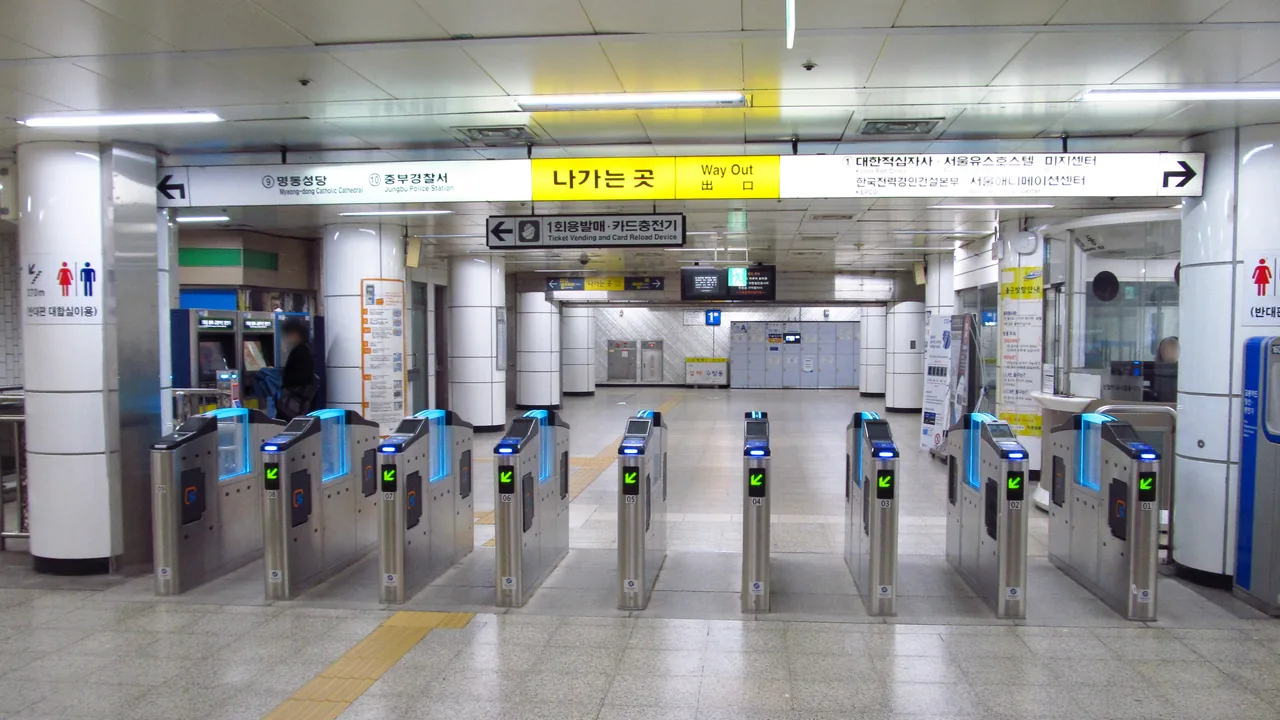
- Tap and ride Touch your phone or card to the reader at the gate going in and out. On buses, tap on boarding (and tap off on some routes to keep transfer discounts).
- Get a maps app Download Naver Map or KakaoMap for accurate Seoul transit routing — Google Maps is limited for transit directions in Korea. Pin Seoul Station 📍 and your hotel before you set off.
For the full data setup, see Korea SIM & eSIM guide.
12. Final call and where to go next
Honest bottom line: if your trip is Seoul-centric and you’ll ride three-plus times a day, buy the Climate Card and stop overthinking it; if you’re doing day trips or moving between cities, T-money is the flexible, cheaper companion. When in doubt, carry a cheap T-money as backup even if you buy a pass — it covers taxis, day trips, and the airport that the Climate Card can’t.
Size the pass to your real in-Seoul days, go mobile to skip the ₩3,000 fee, and remember the airport line lives outside both cards. Tap into Hongik University Station 📍 on day one and you’ll have the system figured out in an afternoon.
Plan the rest of your days with the Korea itinerary guide, dig into routes and fares in the guide to getting around Korea, and start from the top with the complete Korea Travel Guide.
🎡Things to Do12
🚇Getting Around3
🧭All-Korea essentials114
Climate Card vs T-money: quick answers
Images: Hero: LERK (CC BY 2.5) · LandAndTree (CC BY 4.0) · LERK (CC BY-SA 4.0) · hyolee2 (CC BY-SA 4.0), via Wikimedia Commons.