
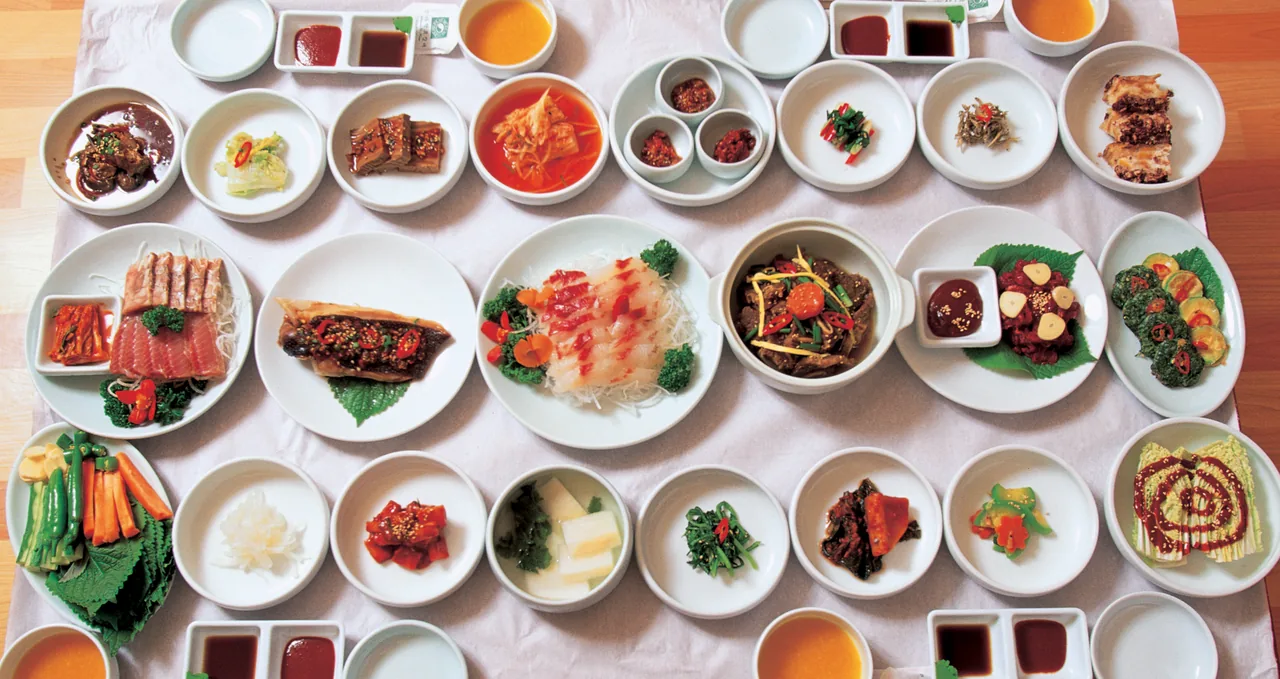
What Should You Eat in Korea? 35 Dishes You Can’t Miss
Korean BBQ, bibimbap, fried chicken, fiery stews and a whole universe of street food. This is the complete, no-nonsense guide to what to order across Korea — what each dish tastes like, how to eat it, what it costs, and how to eat brilliantly whether you’re vegetarian, halal or simply starving.
| Eat these first | Korean BBQ (grill-it-yourself pork or beef), bibimbap, Korean fried chicken with beer, a bubbling kimchi or soft-tofu stew, and street-stall tteokbokki. Nail those five and you’ve tasted the real Korea. |
|---|---|
| How meals work | Order one main and a free spread of banchan (side dishes) appears. Rice and side refills are usually free, there’s no tipping anywhere, and tap water is free. |
| Spice level | Plenty is spicy (gochujang, gochugaru), but lots isn’t — bulgogi, samgyetang, japchae, gimbap and most BBQ are mild. You can always ask for it less spicy. |
| Budget | You eat extremely well on little money: markets, gimbap shops, noodle joints and convenience stores serve full meals for a few dollars. |
| Special diets | Vegetarian, vegan, halal and gluten-free are all doable with a little planning. Temple food is a vegan highlight; watch for hidden anchovy and beef broth. |
| By region | Each city guards its own dish: Jeonju bibimbap, Andong jjimdak, Chuncheon dakgalbi, Jeju black pork, and Busan’s seafood and pork-soup scene. |
1. What should you eat in Korea? Start here
2. 35 must-try Korean dishes at a glance
3. How Korean food works (and why it tastes Korean)
4. Korean BBQ: the meal everyone remembers
5. Stews, soups & the spicy comfort food
6. Noodles: cold, hot and everything between
7. Rice dishes & the everyday bowl
8. Fried chicken, chimaek & the chicken classics
9. Street food & markets: where Korea eats best
10. Seafood & raw fish for the adventurous
11. Sweets, desserts & Korea’s cafe culture
12. What to drink: soju, makgeolli & beyond
13. Regional specialties: a tasting map of Korea
14. Eating by season & at the holidays
15. Vegetarian, vegan, halal & allergies
16. Food experiences: markets, tours & cooking classes
17. How to order & handy Korean food phrases
18. Costs, timing & practical tips
1. What should you eat in Korea? Start here
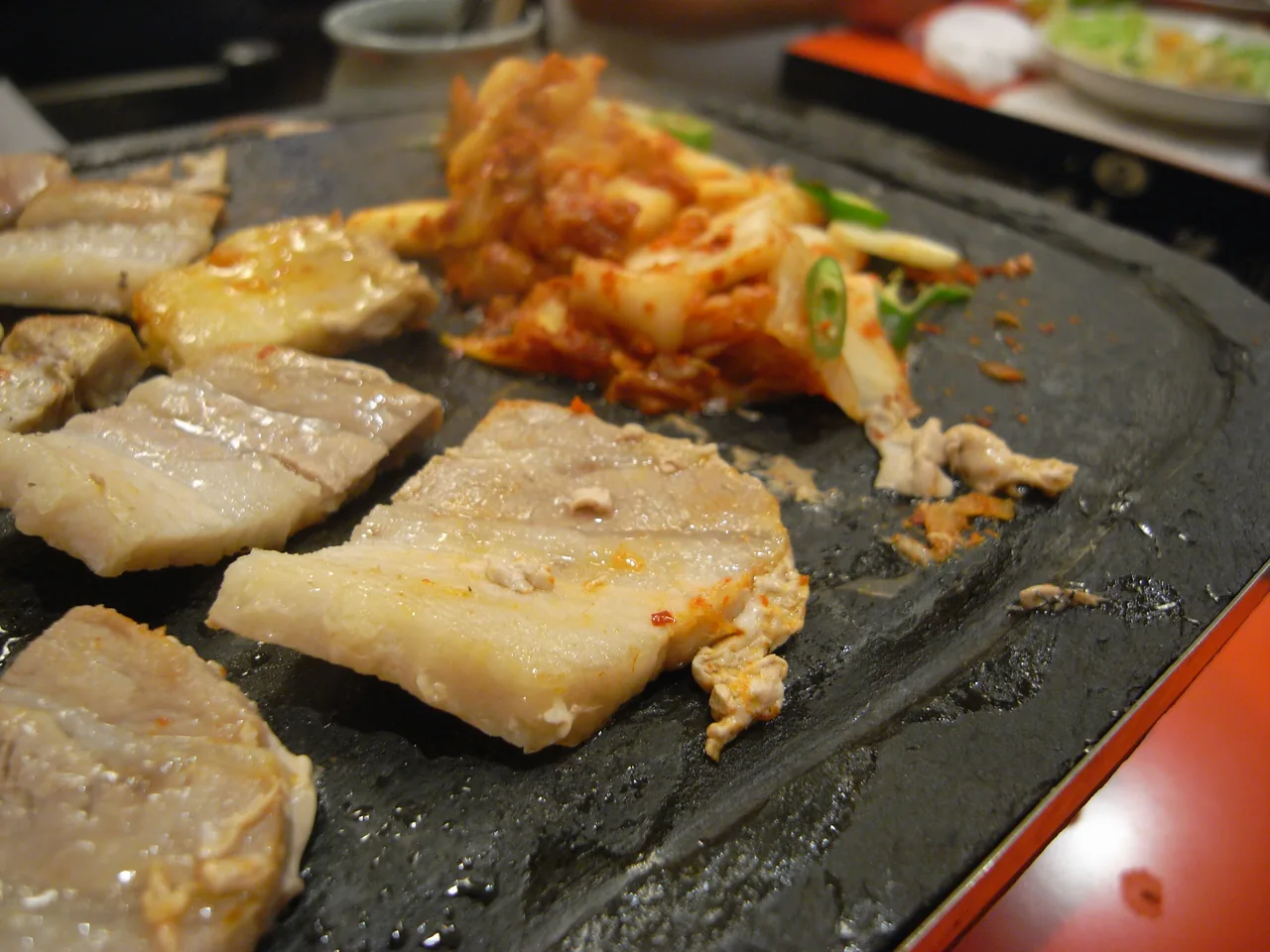
The five foods every first-timer should try in Korea are Korean BBQ, bibimbap, Korean fried chicken, a hot jjigae stew, and tteokbokki. Get through those and you’ve covered the flavours that define Korean eating: smoky grilled meat, fermented heat, garlic, chilli and sesame, all built around sharing.
Korean food rarely arrives as one plate. A meal is a main dish ringed by a small army of free side dishes (banchan), with rice as the anchor. It’s generous, communal and famously good value. Here’s the absolute shortlist before we go deep:
| Dish | What it is | Spicy? |
|---|---|---|
| Korean BBQ (gogi-gui) | Pork belly or beef you grill at your table and wrap in lettuce | No |
| Bibimbap | Rice, vegetables, egg and chilli paste, mixed in the bowl | Mild |
| Korean fried chicken | Double-fried and shatteringly crisp; order with beer (“chimaek”) | Optional |
| Jjigae (stew) | Bubbling pot of kimchi, soft tofu or soybean paste, eaten with rice | Usually |
| Tteokbokki | Chewy rice cakes in sweet-spicy sauce — the king of street food | Yes |
That’s the core. The rest of this guide is the deep dive: a 35-dish dictionary, every big food family (BBQ, stews, noodles, rice, chicken, street food, seafood), what each region is famous for, what to drink, and how to handle any diet. When you’ve eaten your way around the country, plan the rest of your trip with our complete Korea Travel Guide.
2. 35 must-try Korean dishes at a glance
Here’s the cheat sheet: 35 Korean dishes worth knowing, grouped by type, with what each one is, whether it’s spicy, and a rough price so you can budget. Screenshot it and order with confidence.
| Dish | What it is | Spicy? | ~Price (KRW) |
|---|---|---|---|
| 🔥 Grilled & BBQ | |||
| Samgyeopsal | Grilled pork belly, the BBQ icon | No | 13,000–20,000 |
| Galbi | Marinated grilled short rib (beef or pork) | No | 18,000–35,000 |
| Bulgogi | Thin sweet-marinated beef | No | 12,000–20,000 |
| Hangjeongsal | Pork jowl, chewy and rich | No | 14,000–20,000 |
| Chadolbaegi | Thin-sliced beef brisket, fast-grilled | No | 15,000–25,000 |
| 🍲 Stews & soups | |||
| Kimchi-jjigae | Aged kimchi & pork stew, tangy and rich | Yes | 8,000–11,000 |
| Doenjang-jjigae | Soybean-paste stew, deeply savoury | Mild | 8,000–10,000 |
| Sundubu-jjigae | Silky soft-tofu chilli stew with egg | Yes | 8,000–11,000 |
| Budae-jjigae | “Army stew” with sausage, spam & ramen | Yes | 10,000–13,000/person |
| Samgyetang | Whole young chicken with ginseng & rice | No | 15,000–20,000 |
| Seolleongtang | Milky ox-bone soup with rice | No | 9,000–12,000 |
| Gukbap | Rice in a hearty soup (pork/beef) | To taste | 8,000–10,000 |
| 🍜 Noodles | |||
| Mul-naengmyeon | Cold buckwheat noodles in icy broth | No | 9,000–13,000 |
| Bibim-naengmyeon | Cold noodles in spicy sauce | Yes | 9,000–13,000 |
| Kalguksu | Hand-cut wheat noodles in warm broth | No | 8,000–11,000 |
| Jjajangmyeon | Noodles in black-bean sauce | No | 6,000–9,000 |
| Jjamppong | Spicy seafood noodle soup | Yes | 8,000–11,000 |
| Kongguksu | Chilled soy-milk noodles (summer) | No | 9,000–12,000 |
| 🍚 Rice dishes | |||
| Bibimbap | Mixed rice with veg, egg & gochujang | Mild | 9,000–13,000 |
| Dolsot-bibimbap | Bibimbap in a sizzling stone bowl | Mild | 10,000–14,000 |
| Gimbap | Seaweed rice roll, cheap & portable | No | 3,000–5,000 |
| Kimchi-bokkeumbap | Kimchi fried rice | Yes | 7,000–9,000 |
| 🍗 Chicken | |||
| Korean fried chicken | Double-fried, plain or sweet-spicy glazed | Optional | 18,000–23,000/whole |
| Dakgalbi | Spicy stir-fried chicken on a hot plate | Yes | 13,000–16,000/person |
| Jjimdak | Braised soy chicken with glass noodles | Mild | 20,000–30,000 (shared) |
| 🥟 Street food | |||
| Tteokbokki | Rice cakes in sweet-spicy sauce | Yes | 3,500–6,000 |
| Hotteok | Sweet syrup-filled griddle pancake | No | 1,500–3,000 |
| Sundae | Korean blood sausage with noodles | No | 4,000–6,000 |
| Eomuk / odeng | Fish cake on a skewer with hot broth | No | 1,000–2,000 |
| Bindaetteok | Crispy fried mung-bean pancake | No | 5,000–8,000 |
| Mandu | Korean dumplings (steamed or fried) | No | 5,000–8,000 |
| 🦑 Seafood & sweets | |||
| Hoe | Korean-style raw fish (sashimi) | No | Market price |
| Haemul-pajeon | Seafood & spring-onion pancake | No | 12,000–18,000 |
| Ganjang-gejang | Raw crab marinated in soy sauce | No | Market price |
| Bingsu | Shaved-milk-ice dessert mountain | No | 8,000–15,000 |
3. How Korean food works (and why it tastes Korean)
Three things define the Korean flavour: fermentation, chilli, and a base of garlic, sesame and soy. Master the building blocks and every dish makes sense.
- Gochujang — sweet-spicy fermented chilli paste (the red in bibimbap and tteokbokki).
- Doenjang — earthy fermented soybean paste (the savoury in stews).
- Gochugaru — chilli flakes that give kimchi and stews their heat.
- Ganjang & sesame oil — soy sauce and nutty sesame season almost everything.
Now the rhythm of a meal, which surprises first-timers:
- Banchan are free and refillable. Those little dishes of kimchi, beansprouts, greens and pickles come automatically and you can ask for more. They’re shared and eaten there, not taken home.
- Rice is the anchor. You eat it with the dishes, not before or after.
- You share. Stews and BBQ are ordered for the table. Solo dining is fine too, though some BBQ places want two people.
- Spoon and chopsticks — spoon for rice and soup, chopsticks for everything else. Never stand chopsticks upright in rice.
- No tipping, ever. The price is the price; water and barley tea are free and self-serve.
4. Korean BBQ: the meal everyone remembers
Korean barbecue (gogi-gui) is the experience most visitors fall hardest for. You cook the meat yourself on a grill built into the table, then wrap each bite in lettuce or perilla leaf with garlic, green chilli and fermented paste (ssamjang). It’s hands-on, social and endlessly good.
The cuts to know
- Samgyeopsal — thick, unmarinated pork belly. The national favourite and cheap.
- Galbi — marinated beef or pork short rib, sweet and tender. LA-galbi is the cross-cut version.
- Bulgogi — thin marinated beef, often cooked in a slightly soupy pan. Mild and universally loved.
- Moksal & hangjeongsal — pork shoulder and jowl, for when you want texture beyond belly.
- Chadolbaegi — wafer-thin beef brisket that cooks in seconds.
How to grill it like a local
- Let staff help at first Many places grill or cut the pricier cuts for you.
- Grill, then snip Cook until just done, then use the table scissors to cut bite-sized pieces.
- Build a ssam Lettuce, a piece of meat, a smear of ssamjang, a sliver of raw garlic, maybe kimchi — fold and eat in one bite.
- Finish with rice or noodles Many spots offer fried rice or cold naengmyeon to round things off.
5. Stews, soups & the spicy comfort food
If BBQ is the party, stews and soups are the soul of everyday Korean eating. They arrive bubbling in a stone pot, you ladle them over rice, and they warm you from the inside out. Most are spicy; some are gentle.
| Dish | What’s in it | Spicy? |
|---|---|---|
| Kimchi-jjigae | Aged kimchi, pork, tofu — tangy and rich | Yes |
| Doenjang-jjigae | Soybean-paste stew with veg and tofu | Mild |
| Sundubu-jjigae | Soft tofu in chilli broth with a raw egg | Yes |
| Budae-jjigae | “Army stew” with sausage, spam, ramen, kimchi | Yes |
| Samgyetang | Young chicken stuffed with rice & ginseng | No |
| Seolleongtang | Milky, slow-boiled ox-bone soup | No |
| Haejangguk | “Hangover soup” — hearty and restorative | Varies |
| Gukbap | Rice in soup (pork, beef or blood-sausage) | To taste |
Samgyetang is the one to know in summer — Koreans eat this ginseng-chicken soup on the hottest days to “fight heat with heat.” And gukbap (rice-and-soup) is the ultimate cheap, filling, any-time meal; Busan’s pork version is so beloved it has its own complete Busan food guide.
6. Noodles: cold, hot and everything between
Korea’s noodle game is deep, and the right bowl changes with the weather and the moment.
- Naengmyeon — cold buckwheat noodles, either in an icy beef-and-radish broth (mul-naengmyeon) or tossed in a fiery sauce (bibim-naengmyeon). The summer favourite and the classic chaser after BBQ.
- Kalguksu — hand-cut wheat noodles in a warm, comforting broth, often with clams or chicken.
- Janchi-guksu — thin “banquet noodles” in a light anchovy broth; cheap and gentle.
- Jjajangmyeon — noodles in a glossy black-bean sauce, Korea’s beloved Korean-Chinese staple and the nation’s go-to delivery food.
- Jjamppong — its spicy seafood-soup sibling, fiery and red.
- Kongguksu — chilled noodles in nutty cold soy-milk broth, a summer specialty.
- Ramyeon — instant ramen, a genuine food group here; best eaten at a convenience-store counter.
7. Rice dishes & the everyday bowl
Rice is the centre of the Korean plate, and these bowls make perfect, fuss-free meals at any budget.
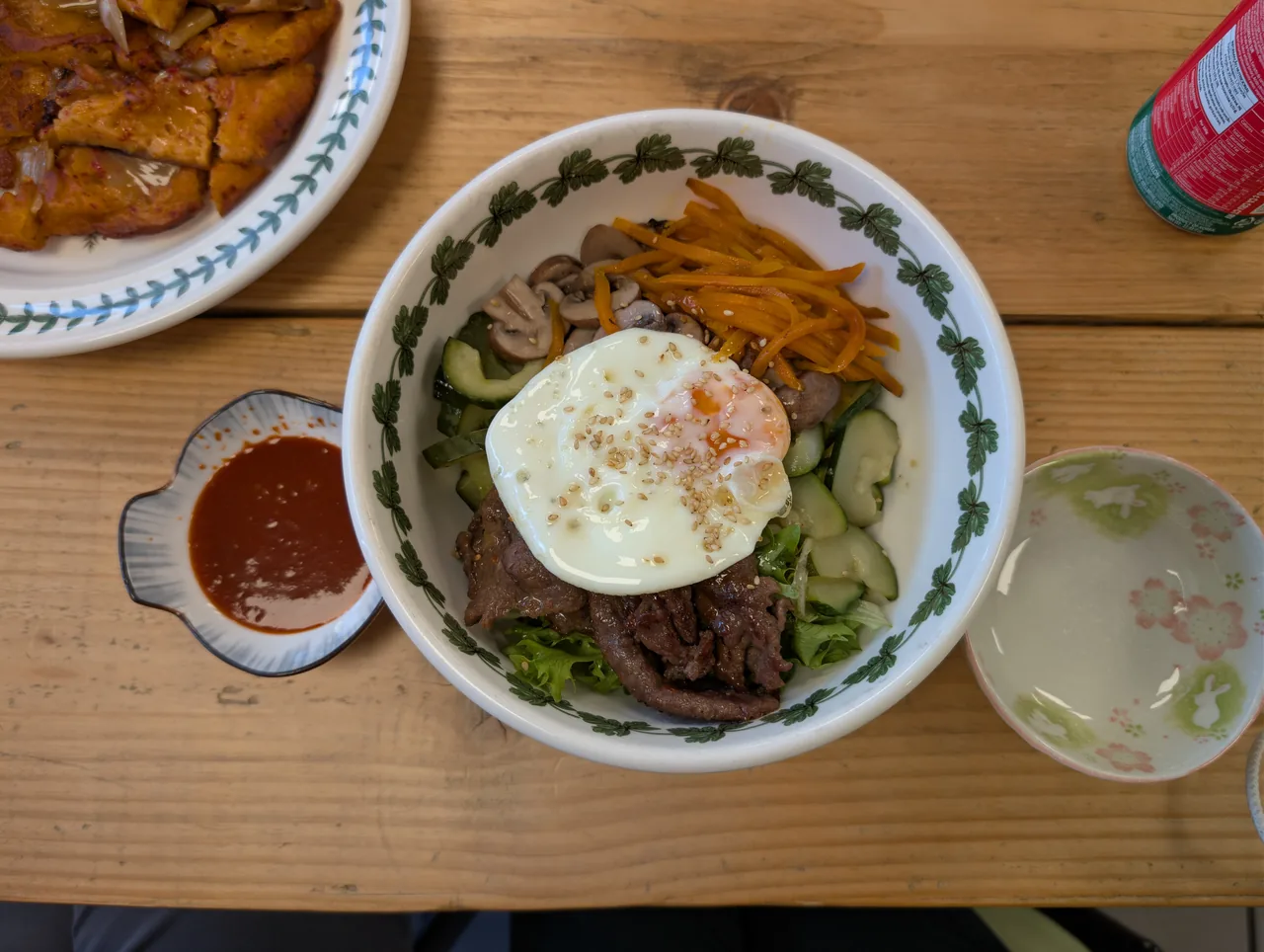
- Bibimbap — a bowl of rice topped with seasoned vegetables, egg and chilli paste (gochujang). Mix it all together. The version from Jeonju is legendary; order it dolsot (hot stone bowl) for crispy rice at the bottom.
- Gimbap — rice and fillings rolled in seaweed, the cheap, portable hero of every market and convenience store. Endless varieties, from tuna to bulgogi.
- Bokkeumbap — fried rice, especially kimchi-bokkeumbap, often the finale to a BBQ.
- Deopbap — a rice bowl topped with something saucy (spicy pork, octopus, or raw fish).
- Juk — Korean rice porridge, gentle and nourishing; the go-to when you’re unwell or want something light.
8. Fried chicken, chimaek & the chicken classics
Korean fried chicken deserves its own shrine. It’s double-fried for a shatteringly thin, greaseless crust, then served plain (huraideu), glazed sweet-and-spicy (yangnyeom), or coated in soy-garlic. Paired with cold beer it becomes chimaek (chicken + maekju) — the national late-night ritual after a day of sightseeing.
Beyond the fryer, two chicken dishes are unmissable:
- Dakgalbi — chicken stir-fried with cabbage, rice cakes and sweet-spicy sauce on a giant hot plate, a specialty of Chuncheon. Order fried rice in the leftover sauce to finish.
- Jjimdak — chicken braised in a sweet soy sauce with potatoes, glass noodles and vegetables, the pride of Andong. Mild, shareable and great for groups.
9. Street food & markets: where Korea eats best
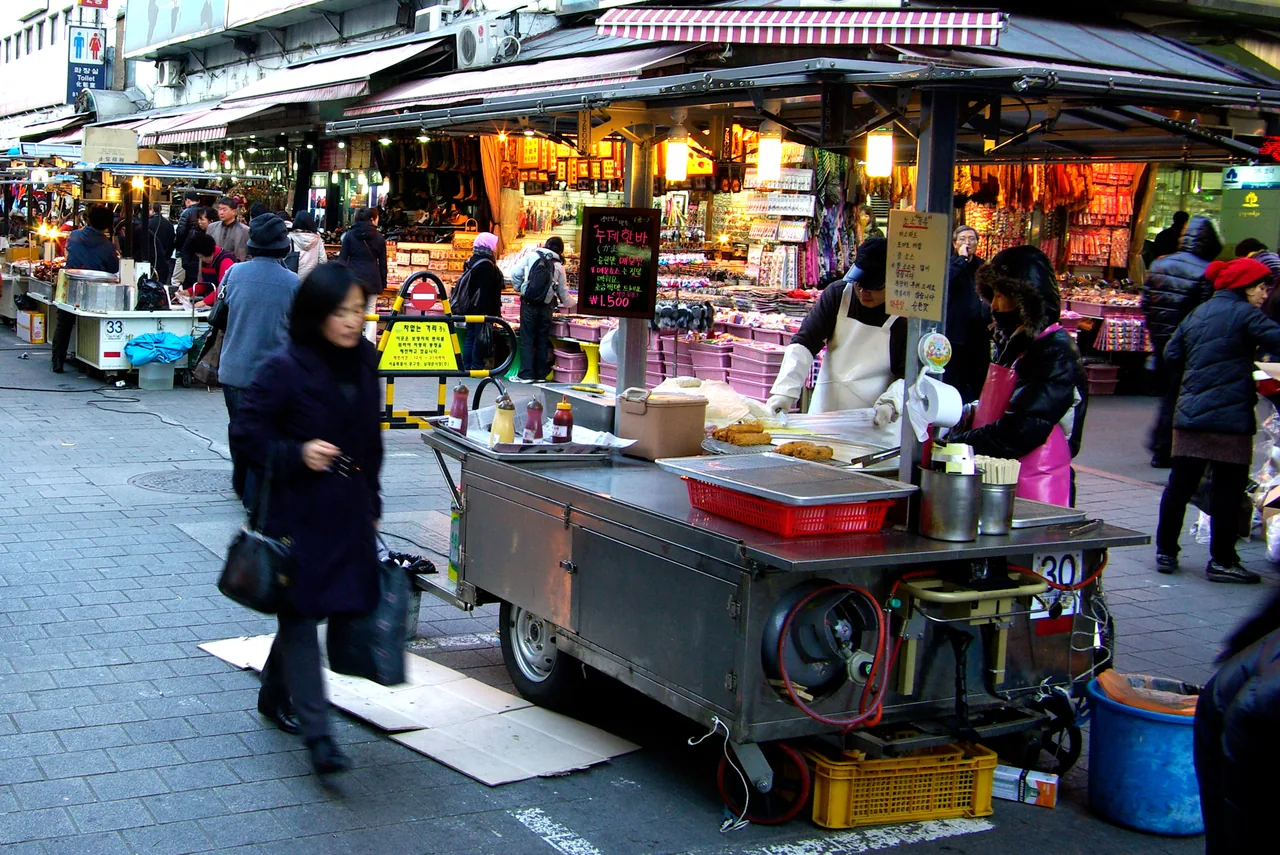
Some of the best food in Korea costs a couple of dollars and is eaten standing up. Traditional markets and street stalls (pojangmacha) are where you’ll find it — Gwangjang and Myeongdong in Seoul, Gukje and BIFF in Busan, and every neighbourhood’s local market.
| Snack | What it is |
|---|---|
| Tteokbokki | Chewy rice cakes in sweet-spicy sauce — the icon |
| Hotteok | Griddled pancake oozing brown-sugar syrup |
| Sundae | Korean blood sausage with glass noodles |
| Gimbap (mayak) | Mini seaweed rolls — Gwangjang’s “addictive” version |
| Bindaetteok | Crispy mung-bean pancake, fried fresh |
| Twigim | Korean tempura — fried veg, squid and dumplings |
| Gyeran-ppang | Sweet little bread baked with a whole egg inside |
| Eomuk / odeng | Fish cake on a skewer with hot broth — a Busan staple |
| Dak-kkochi | Glazed grilled chicken skewers |
10. Seafood & raw fish for the adventurous
With coastline on three sides, Korea is a seafood country, and the coastal cities (Busan, Sokcho, Mokpo, Jeju) take it to another level.
- Hoe — Korean-style raw fish, sliced thin and eaten with chilli paste, ssamjang and garlic rather than soy and wasabi. Best at a coastal market where you pick the fish.
- Sannakji — live octopus, sliced and served still wriggling. A bucket-list bite for the brave (chew well).
- Haemul-pajeon — a thick, crispy seafood-and-spring-onion pancake, the perfect rainy-day dish with makgeolli.
- Ganjang-gejang — raw crab cured in soy sauce, so rich it’s nicknamed “rice thief.”
- Jogae-gui & jjim — grilled or steamed shellfish, piled high and shared.
- Agujjim — spicy braised monkfish with beansprouts, a southern specialty.
11. Sweets, desserts & Korea’s cafe culture
Korea has a serious sweet tooth, and dessert here ranges from market-stall classics to some of the most photogenic cafes on the planet.
- Bingsu — the summer essential: a mountain of fluffy shaved milk-ice topped with red bean, fruit or matcha, shared with spoons.
- Hotteok — the griddled pancake oozing brown-sugar syrup; a winter street favourite.
- Bungeoppang — a fish-shaped pastry filled with sweet red bean or custard, sold from carts when it’s cold.
- Tteok — chewy rice cakes in endless colours and fillings, from songpyeon to nutty injeolmi.
- Yakgwa & hangwa — traditional honey cookies and sweets, newly trendy with a younger crowd.
- Cafe culture — Korea’s cafes are a destination in themselves: dessert cafes, hanok and rooftop cafes, the famous croffle (croissant-waffle), and traditional teas like sujeonggwa and yuja-cha.
12. What to drink: soju, makgeolli & beyond
Eating in Korea comes with its own drinks culture. You never have to drink alcohol, but knowing the lineup helps.
- Soju — the clear, cheap, slightly sweet spirit that’s everywhere; the default with BBQ and stew. Pour for others, not yourself, and accept a pour with two hands.
- Makgeolli — milky, lightly fizzy unfiltered rice wine, low in alcohol and unbeatable with savoury pancakes (jeon) on a rainy day.
- Beer (maekju) — light lagers, the other half of chimaek. Mix it with soju for somaek.
- Non-alcoholic — free barley tea at most meals, sweet rice drink sikhye, cinnamon-ginger sujeonggwa, and a world-class cafe scene.
13. Regional specialties: a tasting map of Korea
Half the fun of eating across Korea is that each city guards its own dish. If you’re travelling around, plan a meal around the local specialty: Which places to actually walk into is covered in the Jeonju travel guide: the bibimbap houses the city names itself, the bean sprout soup at Nambu Market, and the four makgeolli alleys.
| Place | Famous for |
|---|---|
| Seoul | Everything, plus market street food (Gwangjang) and royal-court cuisine |
| Jeonju | The original bibimbap, plus a legendary banchan culture |
| Andong | Jjimdak — braised soy chicken with glass noodles |
| Chuncheon | Dakgalbi — spicy stir-fried chicken; also makguksu noodles |
| Jeju Island | Black pork BBQ, fresh hairtail, abalone, mandarin everything |
| Suwon | Wang-galbi — oversized beef short ribs |
| Sokcho | Fresh seafood, squid sundae, and dakgangjeong |
| Mokpo | Southern seafood: skate (hongeo), octopus, blue crab |
| Busan | Seafood, dwaeji-gukbap (pork soup), milmyeon, fish cake |
Busan in particular is a food city in its own right — a port town built on raw fish, fish cake and pork-bone soup. If the coast is on your route, dive into our full complete Busan food guide for exactly what to order and where.
14. Eating by season & at the holidays
What’s best on the table shifts with the calendar, and a few dishes are tied to specific holidays. Timing your trip around them is a delicious bonus — and our best time to visit Korea guide helps you plan when to come.
| When | What to eat |
|---|---|
| Spring | Fresh strawberries, mountain greens (namul), cherry-blossom desserts |
| Summer | Naengmyeon and cold noodles to cool down, plus samgyetang on the hottest days |
| Autumn | Hairtail and blue crab at their fattest, new-harvest rice, persimmons, chestnuts |
| Winter | Street hotteok and bungeoppang, hot fish-cake broth, oysters, steaming gukbap |
| Seollal (Lunar New Year) | Tteokguk, the rice-cake soup eaten to turn a year older |
| Chuseok (autumn harvest) | Songpyeon, the half-moon stuffed rice cakes |
15. Vegetarian, vegan, halal & allergies
Korea is meat- and seafood-heavy, but eating to your needs is very doable with a little prep.
Vegetarian & vegan
- Temple food (sachal eumsik) is the gem — elegant, fully vegan Buddhist cuisine with no meat, fish or even garlic and onion. Seek it out.
- Everyday picks: bibimbap (ask without meat/egg), japchae, kimchi pancake, tofu stew, gimbap (no ham), and the growing number of vegan restaurants in Seoul and Busan.
- Hidden traps: many “vegetable” dishes use anchovy or beef broth, and kimchi often contains fermented shrimp or fish sauce. Learn the phrase for “no meat, no fish” (gogi·saengseon ppaego juseyo).
Halal
- Itaewon in Seoul has a cluster of halal-certified restaurants and a mosque, and halal Korean and Middle Eastern spots are growing in the big cities.
- Pork is everywhere in Korean food, so check before ordering; seafood and vegetable dishes are usually the safer base.
16. Food experiences: markets, tours & cooking classes
Eating in Korea is even better as an activity. Three easy ways to go deeper than just sitting down at a restaurant:
- Traditional markets — graze through Gwangjang and Mangwon in Seoul, Gukje and BIFF in Busan, or any neighbourhood market. Go hungry, order small, move often.
- Food tours — a local guide walks you through a market or night-food street, ordering the good stuff and explaining what you’re eating. The fastest way to taste a lot without the guesswork or the language barrier.
- Cooking classes — make kimchi, bibimbap or tteokbokki with a teacher, then eat your work and take the recipes home.
17. How to order & handy Korean food phrases
Most tourist-area spots manage some English, and a translation app (Papago) covers the rest — but a few phrases go a long way and always earn a smile.
| You want to say | Korean | Sounds like |
|---|---|---|
| Hello | 안녕하세요 | an-nyeong-ha-se-yo |
| This one, please | 이거 주세요 | i-geo ju-se-yo |
| Two of these | 이거 두 개요 | i-geo du-gae-yo |
| Not spicy, please | 안 맵게 해주세요 | an maep-ge hae-ju-se-yo |
| No meat / no fish | 고기·생선 빼주세요 | go-gi saeng-seon ppae-ju-se-yo |
| Water, please | 물 주세요 | mul ju-se-yo |
| The check, please | 계산해주세요 | gye-san-hae-ju-se-yo |
| It’s delicious! | 맛있어요! | ma-shi-sseo-yo |
18. Costs, timing & practical tips
A few last things that make eating in Korea easy and cheap.
- What it costs: a market snack or gimbap is a couple of dollars; a stew or bibimbap is modest (8,000–13,000 KRW); BBQ and chicken cost more, especially beef. You can eat very well on a small budget by leaning on markets, noodle shops and convenience stores.
- When to eat: restaurants serve all day, but kitchens at smaller places can close mid-afternoon. Street food and convenience stores fill any gaps. Korea eats late — chimaek runs past midnight.
- Reservations: rarely needed except for trendy or fine-dining spots. Most places are walk-in.
- Finding good food: use Naver Map or KakaoMap to read reviews and hours — Google Maps is weak in Korea. A long local queue is the most reliable sign of all.
- Paying: cards work almost everywhere, including most street stalls now; carry a little cash for the oldest markets. No tipping.
🎡Things to Do72
🍜Food7
🏨Where to Stay4
🚇Getting Around12
🧭Travel Tips25
📌More3
Korea food FAQ
Plan the whole trip: read our complete Korea Travel Guide
Images: Hero: Korea.net / KOCIS (CC BY-SA 2.0) · moso (CC BY 2.0) · Andy Li (CC0) · LinasD (CC BY-SA 4.0), via Wikimedia Commons.