Bukchon Hanok Village: How to Visit Seoul’s Living Hanok Quarter (the Right Way)
A first-timer’s guide to Bukchon — the 600-year-old neighbourhood of tiled hanok roofs between two palaces. The famous Eight Views, the photo lanes, the new tourist curfew and quiet-hour rules, and how to enjoy it without being that visitor.
Last updated: June 2026
The short version
What it is
A hillside neighbourhood of traditional Korean houses (hanok) between Gyeongbokgung and Changdeokgung palaces — and, crucially, a real residential area where people live, not a theme park.
The #1 rule
It’s now a managed zone: in the core lanes tourists may visit only 10:00–17:00, with quiet hours the whole time. Outside those hours it’s closed to visitors (fines apply). Whisper, don’t enter homes.
Don’t miss
The Bukchon Eight Views (the official photo viewpoints), the sloped lane of Bukchon-ro 11-gil, and the craft workshops, tea houses and tiny museums tucked inside the hanok.
Hanbok
Renting a hanbok makes the lanes magical for photos — and the same outfit gets you free entry to the nearby palaces.
Getting there
Subway Line 3 to Anguk Station, Exit 2 or 3, then a 5-minute walk uphill. It sits right next to Gyeongbokgung.
How long
About 1–2 hours for the lanes and views; half a day if you add a hanok workshop, tea house and the palaces next door.
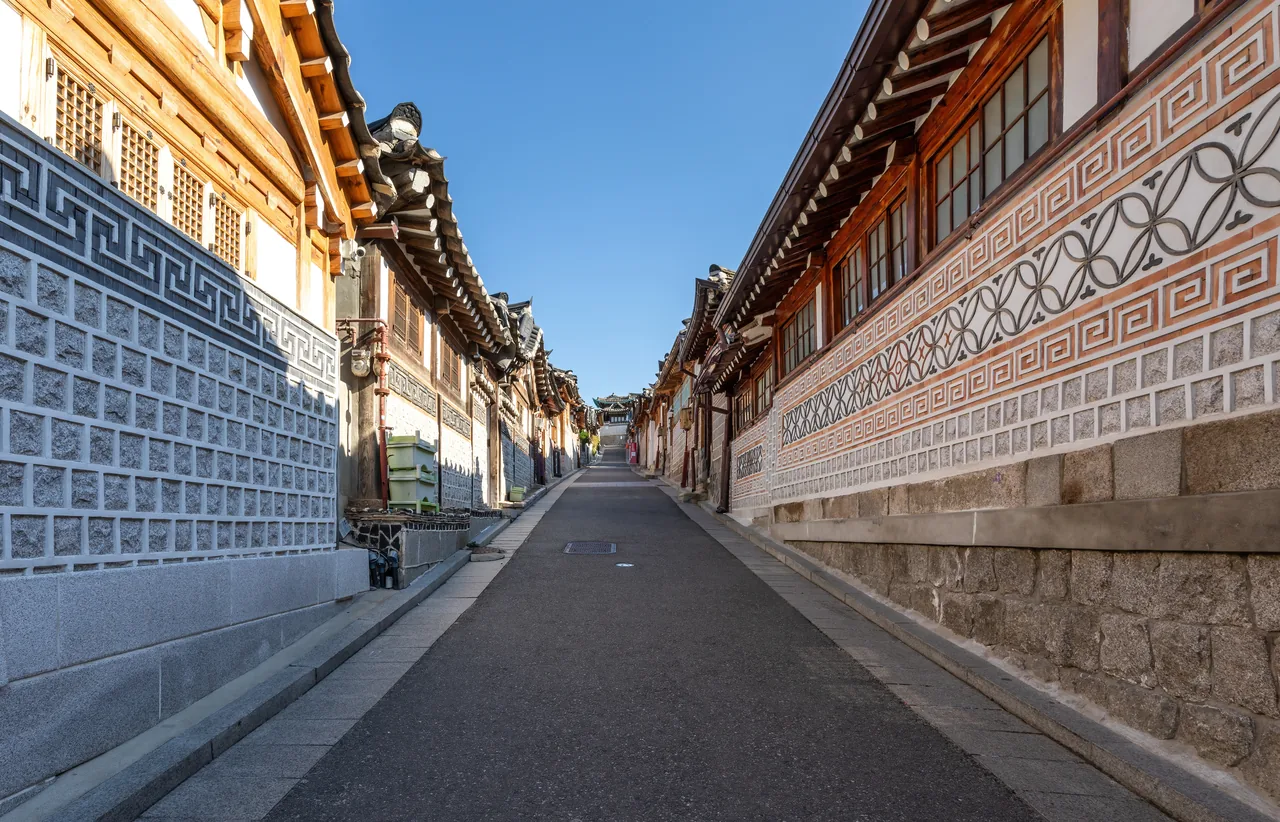
Photo: Basile Morin, CC BY-SA 4.0, via Wikimedia Commons.
1. First things first: what Bukchon is, and how to do it right
Bukchon Hanok Village (북촌한옥마을) is a hillside maze of hanok — traditional Korean houses with gently curved tiled roofs — sitting on the slope between Gyeongbokgung and Changdeokgung palaces. For about 600 years this was where the Joseon court’s aristocrats lived, and astonishingly it’s still a lived-in neighbourhood: real families behind those gates, hanging laundry, getting their kids to school. That’s exactly what makes it beautiful — and exactly why how you visit matters. The wall on the east side is Changdeokgung, ten minutes on foot.
Get it right with three simple moves:
Come in the daytime window. The core lanes are now a managed zone open to tourists only 10:00–17:00, and closed to visitors outside that. Mornings are quietest and best-lit.
Keep your voice down. The whole area runs on quiet hours — these are people’s homes and the walls are thin. Whisper, don’t shout for photos, and never step inside a gate.
Wear a hanbok if you want the shot. Against the tiled roofs and stone walls it’s the photo of the trip — and the same outfit gets you into the palaces free.
Bukchon is not an attraction — it’s a neighbourhood. There are no ticket gates and most “sights” are simply people’s front doors. Seoul brought in visitor rules precisely because crowds were making life hard for residents. Treat it like walking through a quiet village (because you are) and it stays open and lovely for everyone.
2. What is a hanok, and why Bukchon matters
A hanok is a traditional Korean house, and once you know what to look for, Bukchon turns from “pretty old street” into something you can actually read.
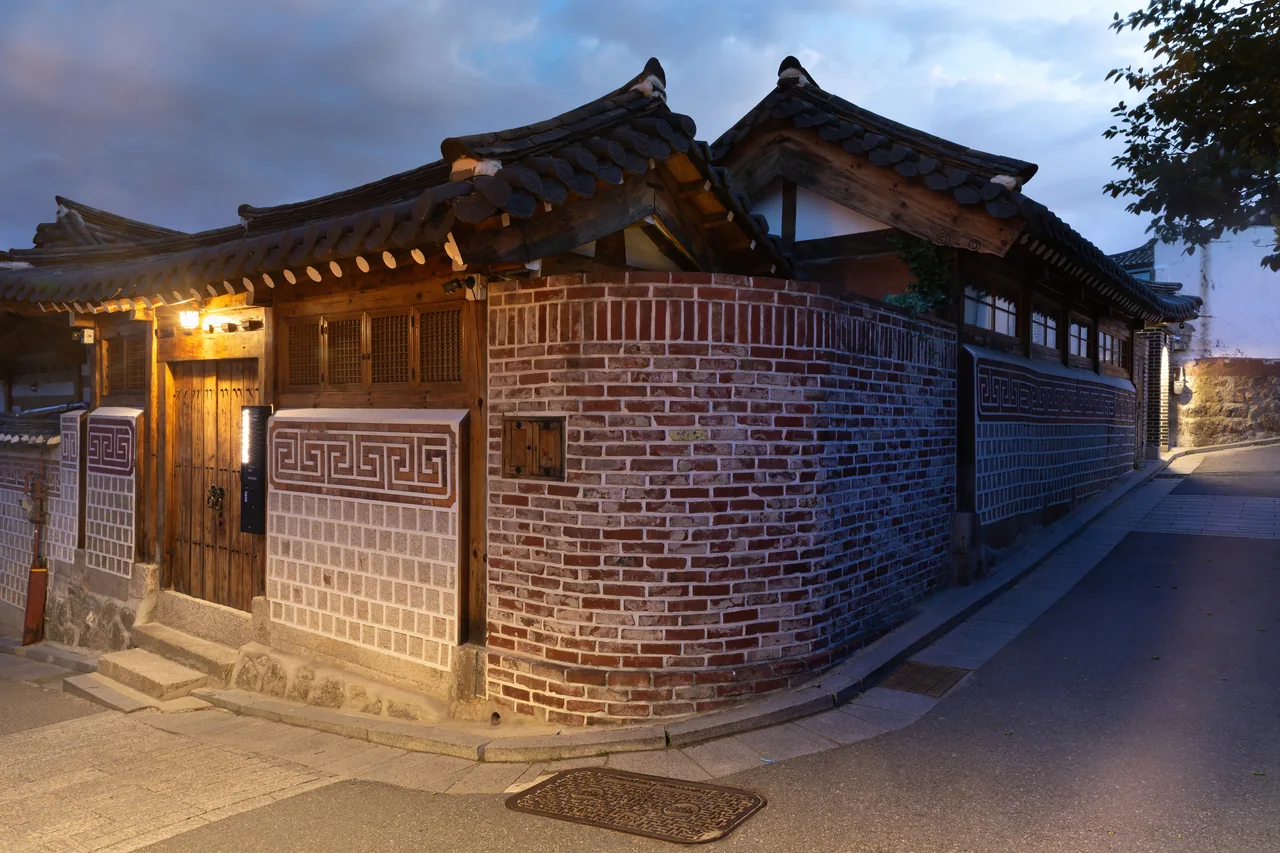
The roof: dark giwa (clay tiles) with a softly upturned curve at the eaves — the line Koreans describe as the “wing of the roof.”
The shape: houses built around a courtyard (madang), with wooden post-and-beam frames, paper-screen doors (hanji), and the famous ondol underfloor heating.
The setting: hanok are designed to sit with the land, not flatten it — which is why Bukchon’s lanes rise and fall with the hillside instead of running straight.
The name Bukchon means “north village,” because it lay north of the stream that ran through old Seoul, in the prime stretch between the two main palaces. That’s where the powerful families built — so these aren’t humble cottages but the elegant townhouses of the Joseon elite. Many were rebuilt in the early 20th century, and the district you walk today is the largest surviving cluster of urban hanok in Seoul.
Read the rooflines: stand where several hanok roofs overlap down the slope (the Eight Views are chosen for exactly this) and you’ll see the cityscape the aristocrats saw — tiled waves of roofs with a modern skyline rising behind. That contrast is the real picture of Bukchon.
3. ⚠️ The visiting rules you must know (2026)
This is the part that trips people up, so read it before you go. To protect residents from overtourism, the core of Bukchon is now a Special Management Zone with enforced rules.
Visiting hours: in the managed core (around Bukchon-ro 11-gil), tourists may visit only 10:00–17:00. From 17:00 to 10:00 the next morning it is closed to visitors, and being there for sightseeing can bring a fine of about ₩100,000.
Quiet hours: during the open window the whole zone is a quiet area — keep voices low, especially in the residential lanes.
Sunday rest: parts of the village take a “rest day” on Sundays to give residents a break.
Tour buses: from 2026 chartered buses face restrictions in parts of Bukchon (fines from ₩300,000), so most visitors arrive by subway.
The simple read: go in the morning, leave by late afternoon, and keep it quiet. Staying guests, shoppers and people passing through aren’t the target — noisy sightseeing crowds after hours are. Rules get adjusted over time, so glance at the official Seoul tourism site before a special trip.
4. The Bukchon Eight Views (Bukchon Palgyeong)
Rather than one “main sight,” Bukchon has eight official viewpoints — the Bukchon Palgyeong (북촌 8경) — marked around the neighbourhood. They’re the curated angles where the rooftops, lanes and city line up best, and following them turns a random wander into a proper route.
Views 1–2: looking toward Changdeokgung’s wall and the lane down to Wonseo-dong’s workshops.
Views 3–4: the Gahoe-dong alleys, lined with some of the most intact hanok façades.
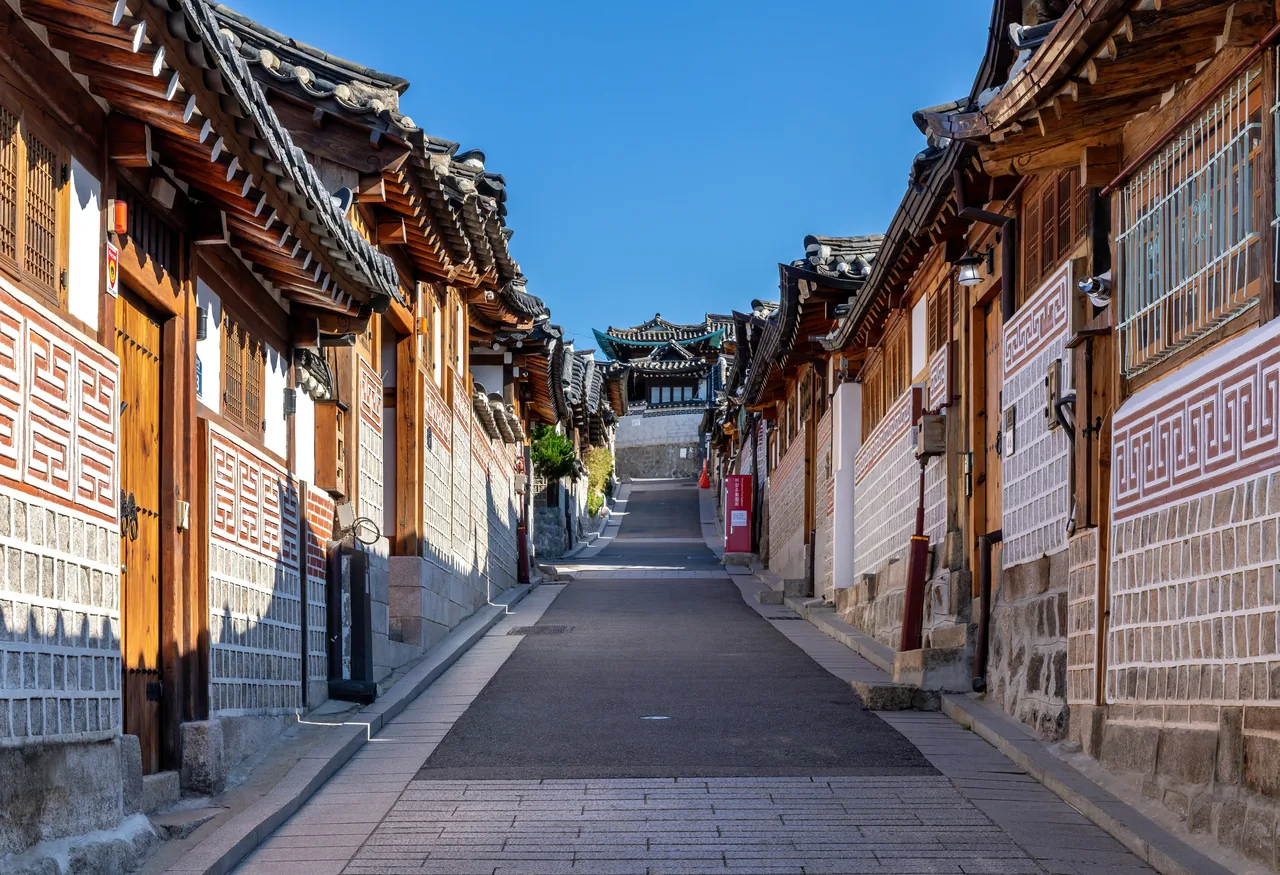
Views 5–6: the classic shot — looking down the sloped lane of Bukchon-ro 11-gil over a cascade of tiled roofs to the towers of downtown beyond.
Views 7–8: the climb up and the look back over the rooftops from the top of the hill.
Views 5 and 6 are “the” photo — the postcard of tiled roofs descending toward the city. It’s also the most sensitive residential spot, so this is exactly where the whisper rule matters most. Shoot quickly, keep quiet, and move on.
5. Bukchon-ro 11-gil and the lanes
If Bukchon has a single famous street, it’s Bukchon-ro 11-gil — the steep, narrow lane in Gahoe-dong where rows of hanok step down the hill and frame the skyline at the bottom. It’s the image you’ve seen on a hundred Seoul posts, and standing there in person, with the curved roofs falling away beneath you, genuinely lives up to it.
It’s also the heart of the quiet zone, monitored by staff during open hours. The deal is simple: enjoy it, photograph it, but treat it like the front yard of someone’s home — because it is. Beyond this headline lane, wander the smaller alleys of Gahoe-dong and Samcheong-dong; they’re just as pretty and far calmer.
The etiquette that keeps Bukchon open: don’t lean on or open residents’ gates, don’t use tripods or block the narrow lane for long shoots, don’t picnic or leave litter, and lower your voice. Signs and helpers are everywhere for a reason — the village’s future as a place you can visit depends on visitors behaving like guests.
Photo: Basile Morin, CC BY-SA 4.0, via Wikimedia Commons.
6. Beyond the photos: step inside a hanok
Bukchon is far more than a photo lane, and the way to make it worth a couple of hours — and to spread out from the crowded spots — is to step inside some of the hanok that are open to the public. A few are genuinely worth planning around:
Baek In-je House Museum (백인제 가옥):📍Map the standout — a beautifully restored 1913 mansion that’s one of Bukchon’s grandest hanok, with linked courtyards, an inner garden and a little hilltop view. It’s free and you walk right through it (about 09:00–18:00, closed Mondays). This is the best way to actually go inside a grand hanok instead of photographing one from the lane.
Bukchon Traditional Culture Center (북촌문화센터):📍Map a free restored hanok with clear displays on how hanok are built, plus hands-on programs like tea ceremony and crafts — a calm first stop to understand what you’re looking at.
Craft workshops: hanok studios for knot-tying (maedeup), embroidery, hanji paper, natural dyeing and ceramics. The long-running Donglim Knot Workshop (동림매듭공방)📍Map near Anguk Station, for instance, runs short hands-on classes (Tue–Sun, from around ₩10,000).
Tea houses & cafés: traditional teahouses in hanok courtyards where you sit on the floor with a pot of omija or citron tea — the calmest way to feel the architecture from the inside.
Honestly, this is the part to build the visit around: an hour inside Baek In-je House, or a slow pot of tea, beats another ten minutes jostling for the same rooftop photo. It gets you off the over-photographed lanes, supports the neighbourhood, and lets you sit inside a hanok rather than shooting the outside of someone’s home.
7. Wearing a hanbok in Bukchon
Bukchon and a rented hanbok are made for each other — the traditional dress against weathered wood, tiled roofs and stone walls is the look people travel here for. Because Bukchon sits right beside the palaces, the smart play is one rental for the whole day.
Where to rent: dozens of shops cluster around Anguk Station and toward Gyeongbokgung, minutes from the lanes.
One outfit, two icons: wear it through Bukchon’s alleys and then into Gyeongbokgung Palace next door — and the hanbok gets you free palace entry.
Dress for the hills: Bukchon is sloped and cobbled, so choose comfortable shoes under the skirt; the prettier, simpler colours also photograph best against the hanok.
Do the photos kindly: hanbok shots in Bukchon are wonderful, but the best ones are in the wider lanes and the official viewpoints — not pressed against a resident’s doorway. Our Gyeongbokgung Palace & hanbok guide covers the palace half of the day.
8. Etiquette: you’re walking through people’s homes
It’s worth saying plainly, because it’s the whole key to Bukchon: this is a residential neighbourhood, and the “attractions” are families’ front doors. A little courtesy keeps the village open and makes your visit better too.
Keep quiet — whisper in the lanes, especially Bukchon-ro 11-gil; sound carries straight through hanok walls.
Don’t enter or touch — no opening gates, peering into courtyards, or leaning on walls and doors.
Don’t block the lane — step aside for residents, keep shoots short, skip the tripod.
Take your rubbish with you — there are few bins and they’re not for tourist litter.
Mind the hours — be out of the managed core by 17:00.
One line to remember: visit like you’d want strangers to behave on your own street. A quick read of our Korea etiquette guide covers the wider do’s and don’ts of travelling in Korea.
9. Best time to visit, and how long
Early morning (right at the 10:00 opening) is the sweet spot: soft light, empty lanes and the coolest temperatures, well before the day-trip crowds. Late afternoon before the 17:00 close is the second-best window. Avoid mid-day weekends, which are busiest.
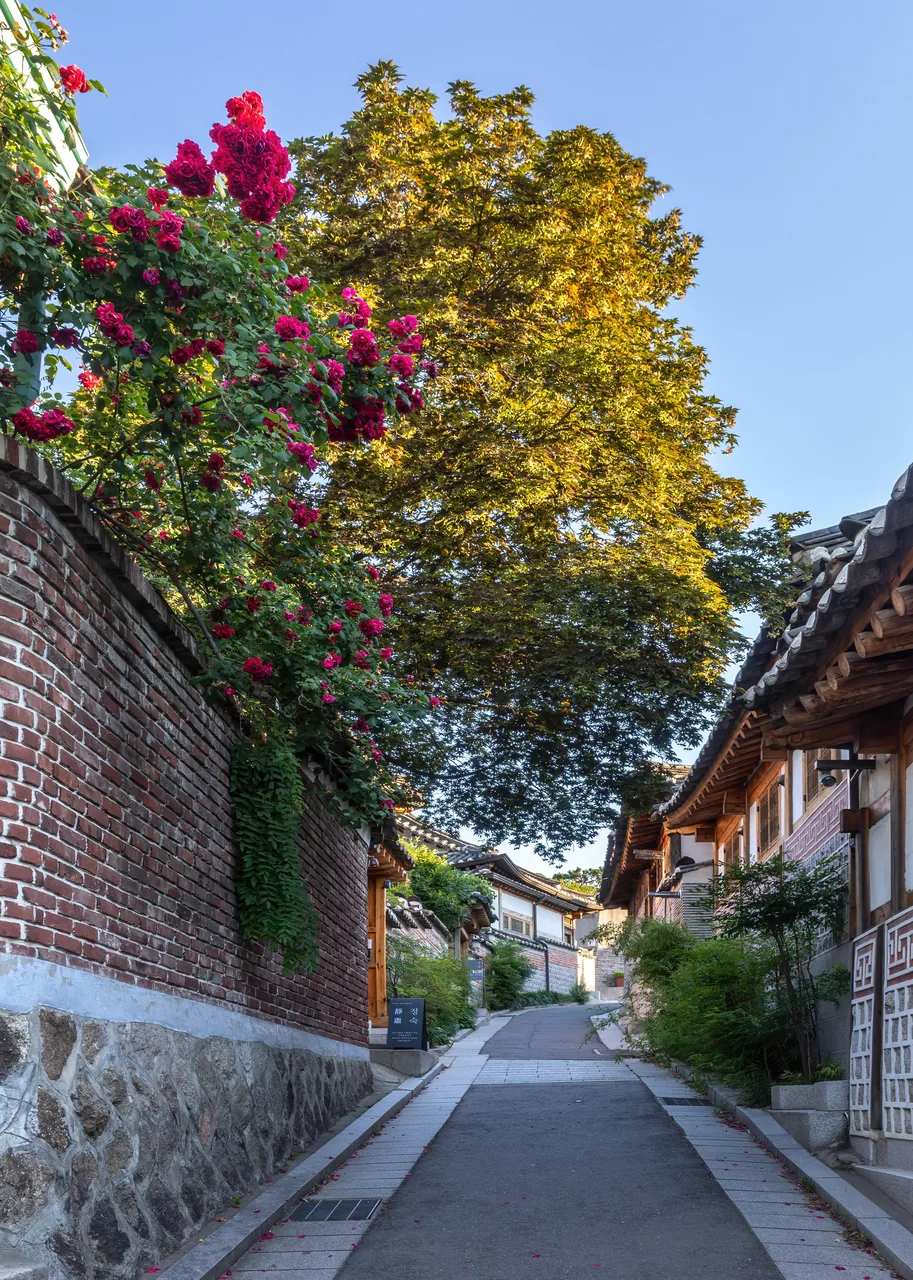
By season, Bukchon is lovely year-round but peaks with spring blossom (April) and autumn colour (late October–November), when the foliage frames the rooftops. Winter after light snow is quiet and striking; summer is humid with sudden rain, so carry an umbrella.
Plan on 1–2 hours for the lanes and the Eight Views at an unhurried pace, or half a day if you add a tea house, a craft workshop, and the palaces and Samcheong-dong next door. For fitting it into a wider trip, see our Korea itinerary guide.
Not a Tuesday problem here, but a clock one: Bukchon’s lanes are open daily, but remember the 17:00 cut-off in the managed core and the quieter Sunday rest in parts of the village. Build your visit into the morning or early afternoon.
Photo: Basile Morin, CC BY-SA 4.0, via Wikimedia Commons.
10. Getting there
Bukchon is genuinely easy to reach and sits right by Gyeongbokgung, which is why the two pair so naturally.
Subway: take Line 3 (orange) to Anguk Station and use Exit 2 or 3; the lanes are a gentle 5-minute walk uphill. This is by far the easiest way in.
From Gyeongbokgung: it’s a short walk east from the palace, often via Samcheong-dong’s café street.
Orientation: grab a free map at the Bukchon information desk near Anguk Station, which marks the Eight Views and the quiet lanes.
Skip the tour bus: with the 2026 chartered-bus restrictions, the subway is both easier and the considerate choice. For how the subway and transit cards work generally, see our guide to getting around Korea guide, and tie the day together with our complete Korea Travel Guide.
Bukchon’s best feature might be its address — some of Seoul’s top sights are a short walk away, which is why it slots so neatly into a single, walkable day.
Gyeongbokgung Palace — right next door; do the palace and the changing-of-the-guard, then the hanok lanes (or the reverse).
Samcheong-dong — the stylish café-and-gallery street that physically links Bukchon to the palace area; perfect for a coffee break.
Insadong — ten minutes south, full of craft shops, tea houses and galleries.
Ikseon-dong — a second, smaller hanok quarter nearby, now packed with hip cafés and boutiques inside the old houses; livelier and more commercial than residential Bukchon.
A natural day: hanbok in the morning → Gyeongbokgung and the guard ceremony → Bukchon’s lanes and Eight Views → tea or lunch in Samcheong-dong → Insadong in the afternoon. It’s one of the great walking days in Seoul.
Bukchon isn’t the only place to see hanok, and knowing the difference helps you choose what fits your trip:
Bukchon — the real thing: a living, sloped residential village with the famous views. Quietest and most atmospheric, with the visiting rules to match.
Ikseon-dong — nearby and hanok-lined too, but reborn as a dense lane of cafés, dessert shops and boutiques. Great for eating and browsing, less about architecture and calm.
Namsangol Hanok Village — a curated open-air village near Myeongdong with relocated hanok and free cultural programs; no residents, no rules to worry about, good for families.
Jeonju Hanok Village — a whole hanok town a couple of hours south, if you want to go deeper (and stay overnight in a hanok).
If you want the authentic, photogenic original, it’s Bukchon — just go early, keep it quiet, and treat it as the neighbourhood it is.
Yes — the lanes are public streets with no entrance fee or ticket. You only pay if you go inside a paid museum, take a craft class, or sit down at a tea house or café. Just remember it’s a managed residential zone with set visiting hours and quiet rules, not a free-for-all attraction.
Q. What are the Bukchon visiting hours, and is there really a curfew?
In the managed core around Bukchon-ro 11-gil, tourists may visit only between 10:00 and 17:00. From 17:00 to 10:00 the next morning it’s closed to sightseers, and being there for tourism in those hours can bring a fine of around ₩100,000. The rules protect residents from overtourism, so plan a daytime visit.
Q. Why is Bukchon so strict about noise and rules?
Because real families live there. Bukchon is a centuries-old residential neighbourhood, not a museum, and years of large, noisy crowds disrupted residents’ daily lives — so Seoul introduced quiet hours, visiting hours and fines. Whispering, not entering gates and keeping lanes clear is what keeps the village open to visitors at all.
Q. What are the Bukchon Eight Views?
They’re eight official viewpoints (Bukchon Palgyeong) marked around the neighbourhood, each framing the hanok roofs, lanes and city skyline at their best. Views 5 and 6 — looking down the sloped Bukchon-ro 11-gil over the tiled roofs toward downtown — are the most famous, and also the most sensitive residential spot, so keep quiet there.
Q. How do I get to Bukchon Hanok Village?
Take subway Line 3 (orange) to Anguk Station and use Exit 2 or 3; the lanes are about a 5-minute walk uphill. It’s right beside Gyeongbokgung Palace, so most people combine the two. With 2026 tour-bus restrictions in the area, the subway is the easiest and most considerate way to arrive.
Q. How long should I spend in Bukchon?
About 1–2 hours is enough to walk the main lanes and the Eight Views at a relaxed pace. Add a couple more hours if you want to visit a craft workshop, sit in a hanok tea house, and continue to Gyeongbokgung and Samcheong-dong next door, which makes a comfortable half-day.
Q. Can I wear a hanbok in Bukchon?
Absolutely, and it makes for beautiful photos against the hanok. Rental shops cluster near Anguk Station and Gyeongbokgung, and one rental covers both Bukchon and the palaces — where wearing hanbok gets you in free. Just take your photos in the wider lanes and official viewpoints, not pressed against residents’ doors.
Q. When is the best time to visit Bukchon?
Early morning, right at the 10:00 opening, for soft light, empty lanes and cool air before the crowds; late afternoon before the 17:00 close is the next best. Spring blossom and autumn foliage are the prettiest seasons. Avoid busy weekend middays, and note that parts of the village rest on Sundays.
Q. Is Bukchon the same as Ikseon-dong?
No. Bukchon is a large, hilly, genuinely residential hanok village known for its views and quiet atmosphere. Ikseon-dong is a smaller nearby hanok area that’s been turned into a buzzy lane of cafés, dessert shops and boutiques — fun for eating and browsing, but more commercial and less about architecture and calm.
Q. Do I need a guide for Bukchon?
No — it’s easy to explore on your own with the free map from the Anguk Station information desk, which marks the Eight Views and quiet lanes. A guided walking tour can add history and context if you like, but most visitors simply wander the lanes, visit a workshop or tea house, and pair it with the palace next door.