
Busan Travel Guide: Where to Stay in Haeundae, Nampo or Seomyeon and How to Get Around
Busan’s sights are not gathered in one place. Some neighbourhoods link up on foot from a subway exit; others need a bus on top of that. So the first decision is not what to see but which part of the city you spend each day in.
| Decide this first | Not what to see, but which neighbourhood you spend the day in. Everything else follows from that. |
|---|---|
| Walkable from a station | Nampo-dong and Jagalchi, Haeundae beach, Gwangalli, Seomyeon and Dongnae. |
| Needs a bus as well | Gamcheon Culture Village, Huinnyeoul and Taejongdae, Beomeosa, Haedong Yonggungsa, Eulsukdo. |
| Don’t cross the city twice | Haeundae and Nampo-dong sit at opposite ends. Doing both in one day means an hour underground each way. |
| Cheapest way around | A prepaid transit card. Cards from Seoul work here, and children aged six to twelve ride free with one. |
| Busiest dates | Early October for the film festival and the first Saturday of November for the fireworks. |
1. How you get somewhere in Busan depends on the neighbourhood
2. Choose your base before anything else
3. Nampo-dong and Jagalchi: a day in the old city on foot
4. Yeongdo: across the bridge to Huinnyeoul and Taejongdae
5. Gamcheon Culture Village and the hillside roads
6. Haeundae and the streets behind it
7. Gwangalli and Igidae
8. Seomyeon and Jeonpo: no sea, but everything is reachable
9. Dongnae, Oncheonjang and Beomeosa: the older side of the city
10. Gijang: out along the Donghae Line
11. Dadaepo and the Nakdong River side
12. Getting to Busan
13. From Gimhae Airport into the city
14. Getting around the city
15. Is the City Tour Bus worth it
16. What to eat
17. If you are here on a Monday
18. After dark
19. What you pay for and what you don’t
20. When to come
21. How many days, and in what order
22. With children or with older parents
23. Choosing by what you came for
24. Things visitors mix up
25. Day trips out of Busan
26. Practical notes for a first visit
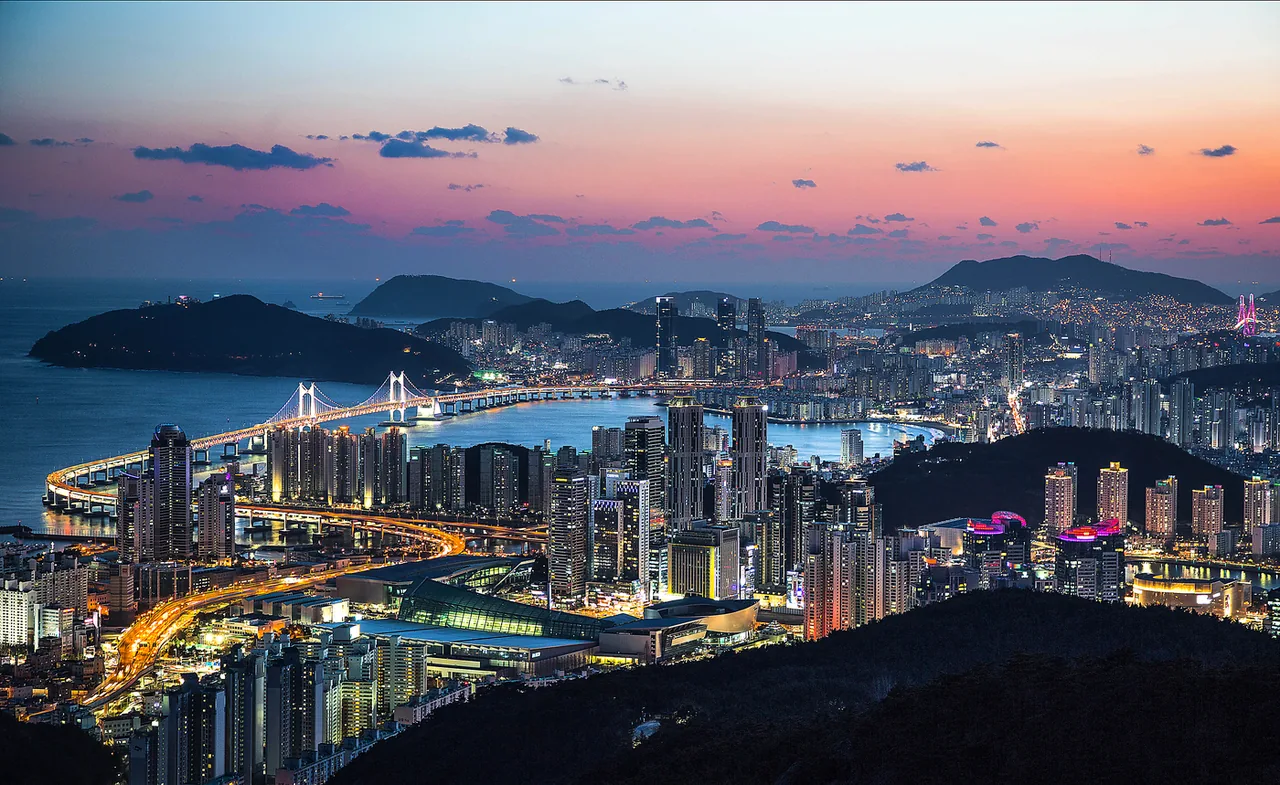
The quickest way to lose a day in Busan is to plan it as a list of sights. Wake up in Haeundae, go to Jagalchi Market for lunch, come back to Haeundae in the afternoon, and you have spent close to two hours sitting on a train. Busan runs along the coast rather than out from a centre, so its eastern and western ends are genuinely far apart. What follows is arranged by neighbourhood for that reason. Settle where you sleep and where each day happens, and the rest of the planning falls into place on its own.
1. How you get somewhere in Busan depends on the neighbourhood
Open a map of Busan and the sights look scattered across the whole city. They are, but the scattering works differently in different places. In some neighbourhoods you come up from a subway exit and simply walk. In others you come up from the subway and then wait for a bus. Plan without knowing which is which and you will manage two stops in a day.
Places you walk to from a station
Nampo-dong, Jagalchi Market, Gukje Market, the Bosu-dong book alley and Yongdusan Park all sit between Nampo and Jagalchi stations, close enough that you can get off at one and walk to the next. At Haeundae the beach is straight ahead as you leave the station. Gwangalli is a short walk in from Geumnyeonsan or Gwangan station. Seomyeon and Jeonpo are joined at the hip around Seomyeon station, and Dongnae and Oncheonjang start at the station exits.
Places that need a bus on top of the subway
For Gamcheon Culture Village you get off at Toseong station and take a village bus up the hill. For Huinnyeoul Culture Village and Taejongdae you cross into Yeongdo by bus from Nampo-dong. Beomeosa has a station named after it, but the temple is another bus ride uphill from there. Songdo beach is a bus from Nampo-dong, and Eulsukdo with its art museum is a bus as well.
Places out on the Donghae Line
Gijang, at the northeastern end of the city, is not on the subway. The Donghae Line commuter railway runs out there instead, stopping at Osiria, Ilgwang and Jwacheon. From those stations you take a bus again to reach Haedong Yonggungsa temple or the Jukseong chapel. Places further inland, like Daeryong village or Jangan temple, are served by buses that come infrequently.
Places that really want a car
Gadeokdo island, Myeongji, the Nakdong estuary and Hoedong reservoir can all be reached on public transport, but each one eats a large part of the day. If any of them are on your list, plan around a rental car from the start rather than trying to force them into a subway itinerary.
Why the city ended up this shape
Busan grew out of a port. The harbour was where Jung-gu, Dong-gu and Yeongdo are now, which is why the older buildings and the markets are all on that side. When the city needed room to expand, the mountains behind it were in the way, so it stretched east along the coastline instead. Haeundae, Centum City and Marine City are all products of that later growth.
The result is a city whose old half and new half are not next to each other but at opposite ends. Getting from Nampo-dong to Haeundae means a train, a change at Seomyeon, and a long ride. On a map the two look close together.
There are mountains in the middle of it
Geumjeongsan, Baegyangsan, Hwangnyeongsan and Seunghaksan all sit inside the city limits. That is why two neighbourhoods can be side by side and still require going around a hill to travel between them. Roads cut along the mountainsides link them, and village buses run those roads. Choryang, Gamcheon and Ami-dong are all up there.
2. Choose your base before anything else
In Busan the location of your hotel decides most of your itinerary. This is not a city like Seoul where any central address works about as well as another. Pick one of the five below and plan around it.
| Area | Suits you if | Downside |
|---|---|---|
| Haeundae | You want to wake up looking at the sea. The beach is at the station exit | A long way from the old city |
| Gwangalli | You want the bridge lit up at night and places open late | A short walk in from the station |
| Seomyeon | You plan to move around a lot. Two subway lines cross here | No sea |
| Nampo-dong / Busan Station | You want to walk the old city and arrive by train | Quiet after dark |
| Gijang / Osiria | You came to rest. The resorts are out here | Getting into town takes a while |
Two nights or fewer: one base, one side of the city
On a short trip, do not move hotels. Changing base in Busan means carrying luggage onto a train, and that single move takes up half a day. With two nights, see either the eastern beaches or the old western city properly and leave the other for another trip.
Three nights or more: splitting is reasonable
With three nights or more you can spend the first half in the old city and the second half in Haeundae. On the day you move, leave your bags in a coin locker at Busan Station or Haeundae Station in the morning, spend the day out, and collect them in the evening rather than dragging them around.
When to book
How hard it is to find a room changes sharply through the year.
- Beach season in summer. Seafront rooms at Haeundae and Gwangalli go months ahead.
- Fireworks weekend. Gwangalli fills first and prices climb with it.
- Film festival. Haeundae and Centum City are busy.
- Baseball weekends. Around Sajik and in Seomyeon there is more competition than usual.
Midweek in winter, by contrast, there are rooms everywhere. If you want a sea view without paying for it, that is when to come.
About sea-view rooms
At Haeundae and Gwangalli, “sea view” covers everything from a full frontal view to a sliver at the edge of the window. Check the floor and the direction rather than the phrase. At Gwangalli it is also worth checking whether the room faces the bridge, since that is what people come for at night.
Which hotels sit in which area is set out in where to stay in Busan, and the hotels themselves are compared in the Busan hotel guide.
3. Nampo-dong and Jagalchi: a day in the old city on foot
This is the part of Busan where you see the most without transport. Come out of Nampo station and Jagalchi Market, Gukje Market, the Bosu-dong book alley and Yongdusan Park all connect on foot. A loop takes half a day.
An order that doesn’t double back
Start at Jagalchi in the morning, when the market has the most on display; it winds down through the afternoon. Move inland to Gukje Market and Bupyeong Kkangtong Market for lunch, then walk up past the Bosu-dong book alley to Yongdusan Park. If you time the tower for just before sunset you get the city by day and by night in one visit.
Four markets, all different
“The market” in the old city is not one place. From the water inland it goes Jagalchi, then Bupyeong Kkangtong, then Gukje Market, then the book alley, and they sell entirely different things.
| Market | What is sold there |
|---|---|
| Jagalchi | Fish and shellfish. Choose downstairs, eat upstairs |
| Bupyeong Kkangtong | Street food. A night market runs in the evening |
| Gukje | Clothes, kitchenware, general goods, changing by alley. See shopping in Busan |
| Bosu-dong | Second-hand books, both sides of the lane |
The night market at Bupyeong Kkangtong only runs in the evening. People arrive at midday, find nothing, and leave again.
Yongdusan Park and Busan Tower
The park itself is free to enter; only the tower observation deck charges. It is 12,000 won for anyone thirteen or over and 9,000 won for children from thirty-six months to twelve years, with the same 9,000 won for visitors aged sixty-five and above. The deck stays open until 10pm and the ticket desk closes at 9:30pm.
There is an escalator up to the park from the Gukje Market side. The stairs are hard work.
The 40 Steps and Gwangbok-ro
Near Jungang station, the 40 Steps are where separated families came looking for each other during the Korean War. The staircase is short, but the sculptures around it recreate the scene. Gwangbok-ro is the main street running from Nampo-dong up towards Yongdusan, and it is the street that gets covered in lights in winter.
If it rains
The indoor options here are close together. The Busan Modern History Museum has a main building and an annexe within a block of each other, and the Gwangbok underground arcade lets you walk from Nampo station to Jungang station without surfacing. The film museum is inside the same area. More wet-weather options are gathered in Busan when it rains.
Choryang and the hillside road
The slope behind Busan Station is Choryang. Houses from the refugee years still stand along the road that cuts across the hillside, with a staircase of 168 steps and a small monorail running between them. The climb is steep, so riding the monorail up and walking down is the easier order. The route is described in the Choryang Ibagu-gil guide.
Eating here
Seed hotteok, a sweet pancake split open and filled with seeds and nuts, is fried on the street in Nampo-dong. At Jagalchi you pick a fish downstairs and it is sliced for you upstairs. Bupyeong Kkangtong sells stuffed tofu pouches and cold spiced noodles. More on all of it in the Nampo-dong guide and Jagalchi Market.
4. Yeongdo: across the bridge to Huinnyeoul and Taejongdae
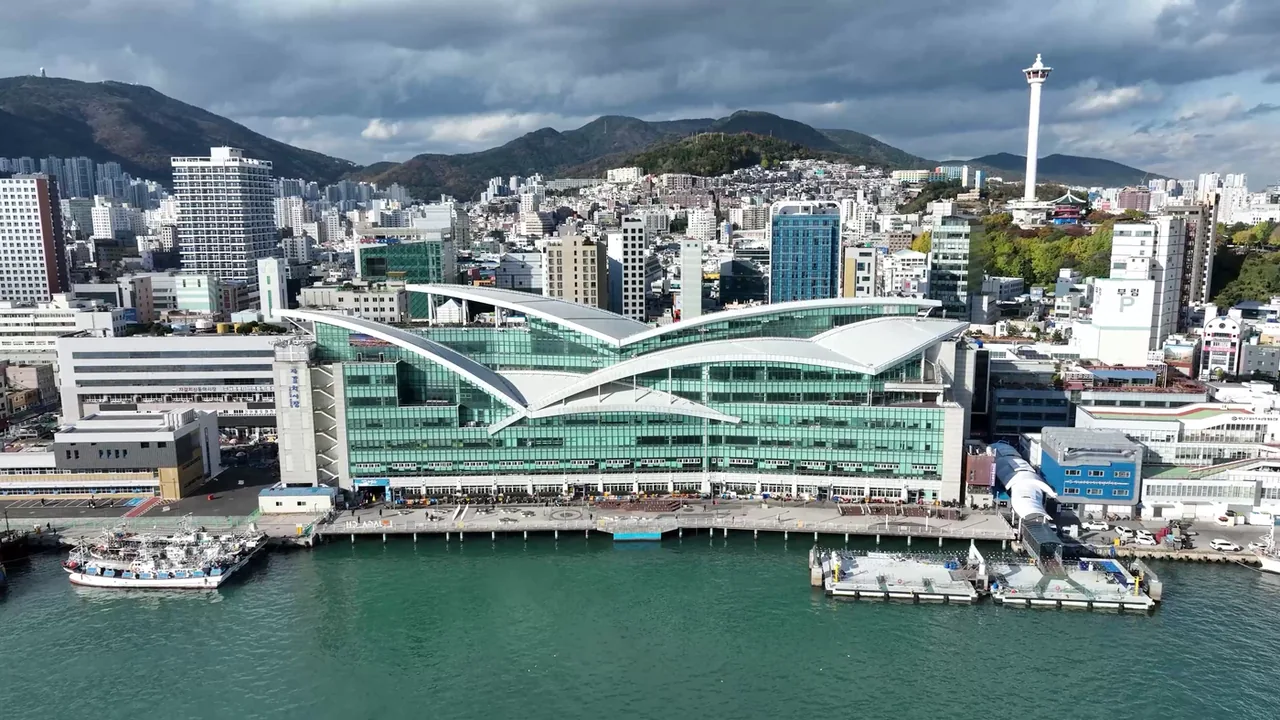
Yeongdo is an island one bridge from Nampo-dong. Once you cross it, though, there is no subway. You move by bus or taxi. Pair it with the old city on the same day, but leave the whole afternoon free for it.
Huinnyeoul Culture Village
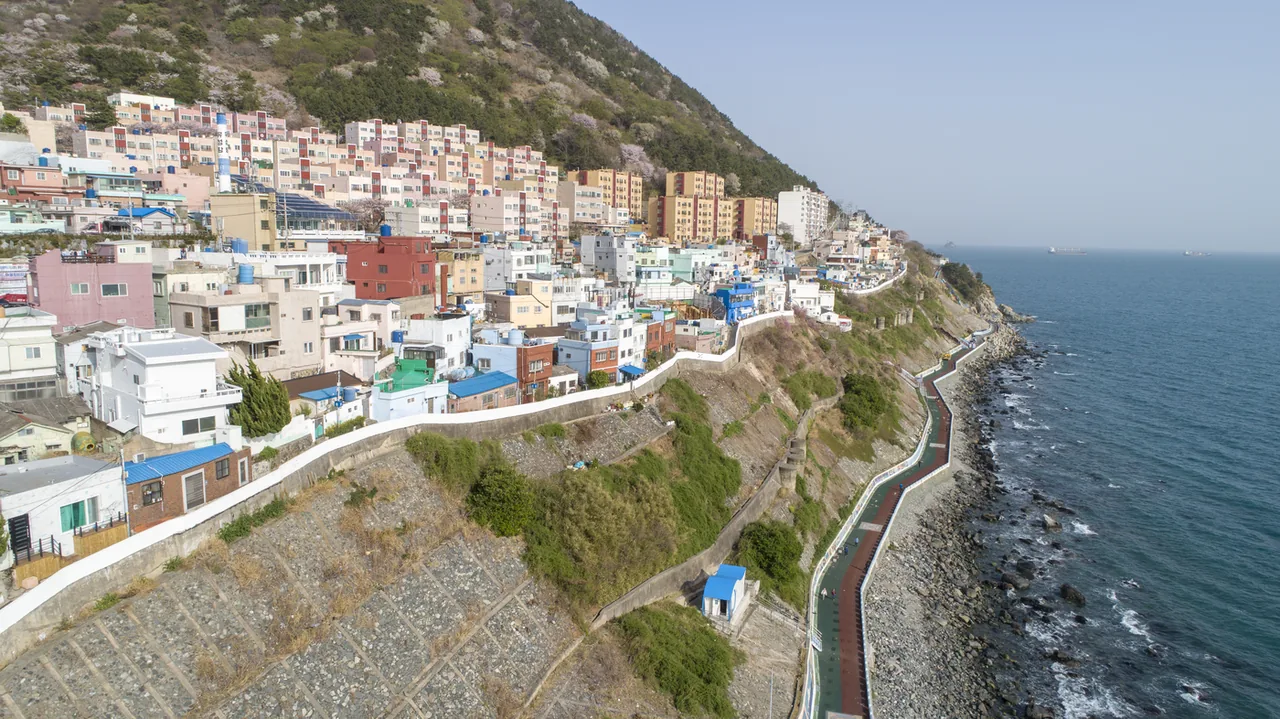
Houses line the top of a cliff with a narrow path running between them and the drop. Below that path a lower walkway runs right along the water, through a short tunnel cut into the rock. People live here, so keep your voice down and stay out of doorways.
Taejongdae
The southern tip of the island: cliffs, a lighthouse and a pebble shore, with a small road train called the Danubi doing a circuit inside. Walking the loop takes about an hour and a half; the train cuts that down a lot. Getting down to the lighthouse and back means stairs either way.
Entry is free and the park stays open until midnight. It opens at 4am from March to October and at 5am from November to February, which is why people go up for the light on the water before dawn. The train does not run at night, so after dark you walk. The details are in the Taejongdae guide.
Kkangkkangi Arts Village
Immediately left after the Yeongdo bridge. This was where ships were repaired, and the name comes from the sound of hammers knocking rust off hulls. The yards still work, so you hear them. The village’s tour facilities open from 10am to 5pm and close on Mondays.
Bongnaesan
The hill in the middle of the island. From the top you see the harbour, the old city and the south port at once. A path goes up from Huinnyeoul and takes about an hour.
The National Maritime Museum
Out at Dongsam-dong on the eastern side. Admission is free, and inside there is a full-size reconstruction of the ships that carried Korean envoys to Japan. Tuesday to Friday it closes at 6pm with last entry at 5:30pm; on Saturdays, Sundays and public holidays it stays open to 7pm with last entry at 6:30pm. Closed Mondays.
The main hall, the maritime library and the children’s museum keep different hours, and the library shuts earliest. Busan’s other museums are collected in the museums and galleries guide.
To give the island a full day, see the Yeongdo guide.
5. Gamcheon Culture Village and the hillside roads
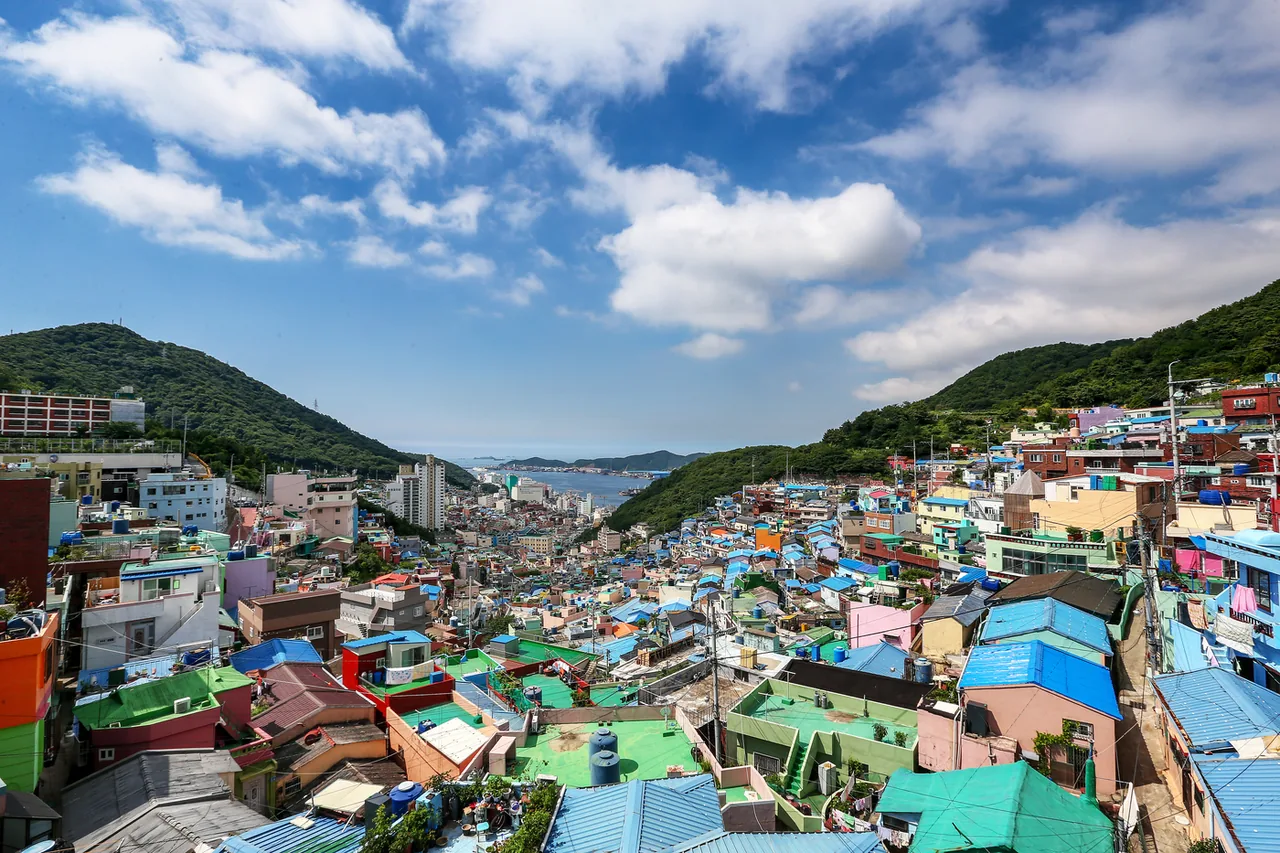
You cannot reach Gamcheon directly by subway. Get off at Toseong station and take a village bus up the hill. The bus works its way through narrow streets, so it takes a while, and at weekends there can be a queue for it.
Once you are up there
Pick up a map at the village entrance and follow the marked route. The lanes branch in many directions and without a map you will circle the same corner twice. Inside the village it is stairs and slopes, so wear something you can walk in.
Opening hours change with the time of year
The information centre and the exhibition spaces open from 9am to 6pm between March and October, and close an hour earlier from November to February. The lanes themselves are a residential neighbourhood and can be walked at any time, but the stamp trail and the exhibition rooms need those hours. There is no entry charge; only parking is paid.
People live here
Everything behind those walls is somebody’s home. Not looking through windows and not walking into yards is the baseline. The village posts requests to keep noise down in several places.
Ami-dong Bibimun Village
Down the hill from Gamcheon. During the refugee years people built houses on a former cemetery, and the gravestones ended up in the walls and steps, where you can still read the carving. It is close enough to walk between the two, and since the route is downhill the whole way, seeing Gamcheon first and descending to Ami-dong is the easier direction.
The road along the hillside
Gamcheon, Ami-dong and Choryang all sit on the same mountainside road. Village buses run it, and the harbour stays in view through the window most of the way. Walking between them is further than it looks, so ride and get off at each neighbourhood instead.
What to look for inside the village is set out in the Gamcheon Culture Village guide.
6. Haeundae and the streets behind it
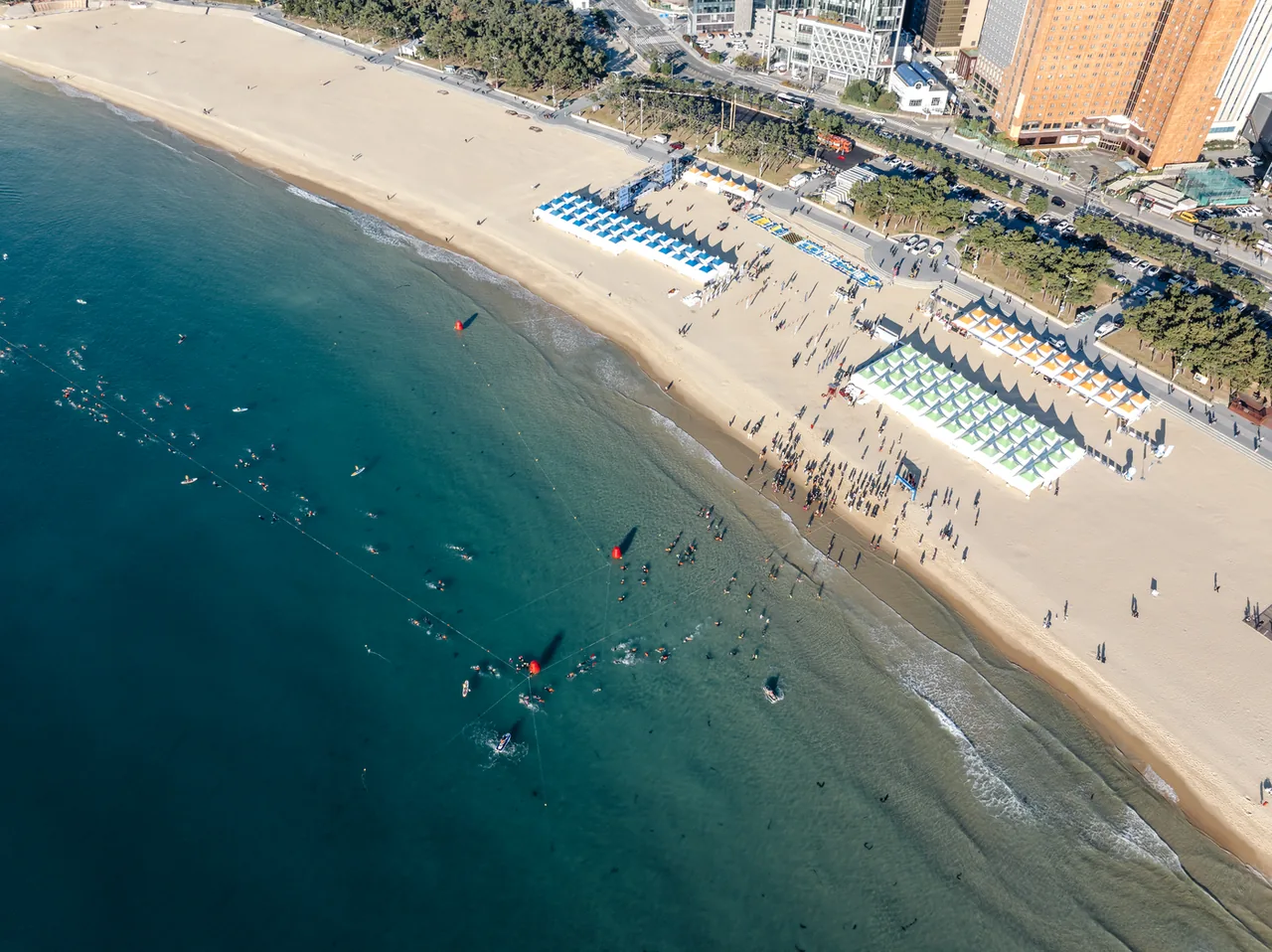
Haeundae asks the least of you of anywhere in Busan. Leave the station, walk straight ahead, and the sea is there; the sand runs west to Dongbaekseom. Hotels and restaurants fill the space between, so a day spent entirely here still works.
From the sand to Dongbaekseom
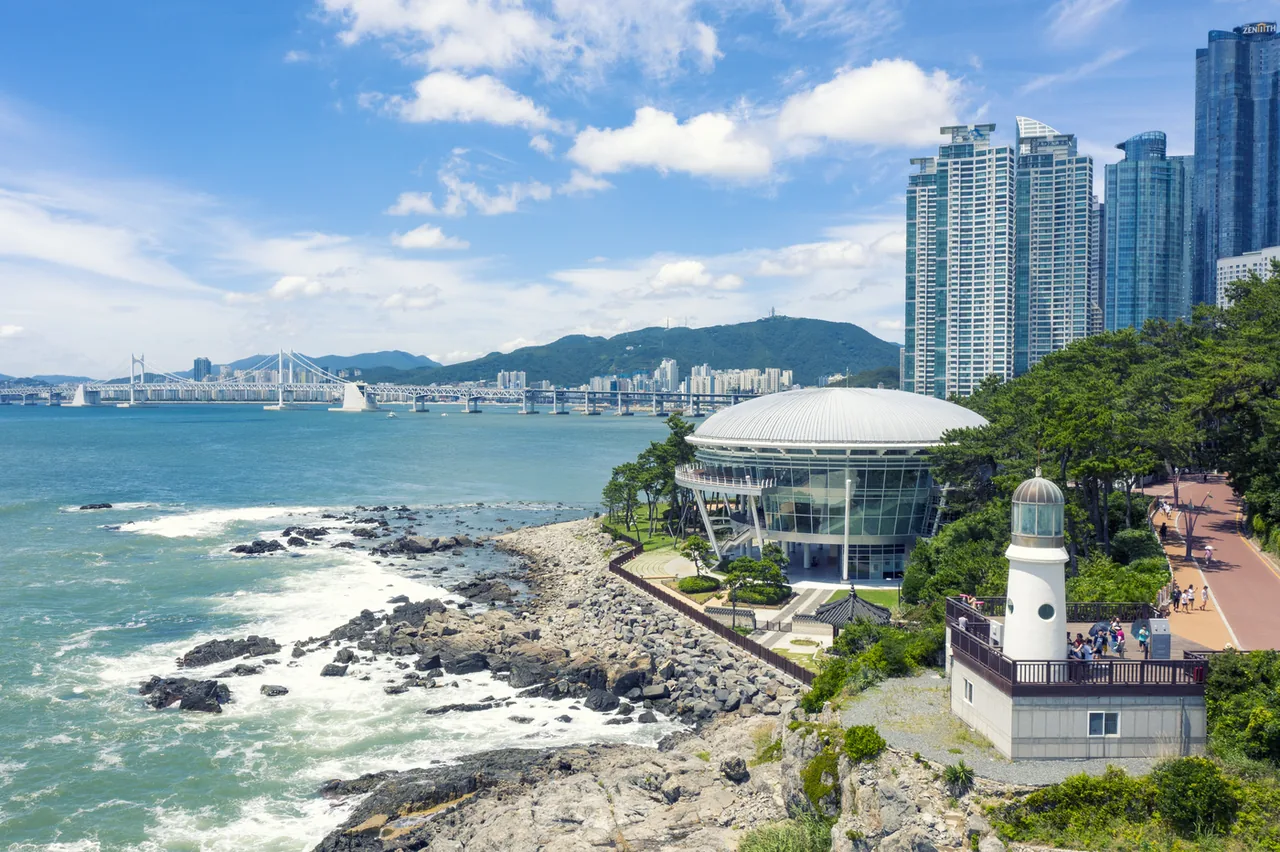
The western end of the beach runs into Dongbaekseom. It is called an island but has long since joined the mainland, so you walk in. A path circles it above the water, with Nurimaru inside. Starting from the beach, going round and coming back takes a little over an hour.
Nurimaru opens from 9am to 6pm and is free. It closes on the first Monday of each month and opens on the others. Inside, the windows face the bridge.
The circuit splits into a lower path near the waves and an upper path through trees; they rejoin, so you can take one out and the other back.
Mipo, Cheongsapo and Songjeong
From Mipo at the eastern end of the beach, a former railway line has been turned into a walking route that runs past Cheongsapo and on to Songjeong. If you would rather not walk it, a beach train runs on the same rails, and a small suspended capsule car covers the stretch between Mipo and Cheongsapo above it. Fares and booking are in the Blue Line Park guide.
The side without the sea
Two subway stops from Haeundae is Centum City, where the department stores, the convention centre, the Busan Cinema Center and the Museum of Art all sit together. If it rains, or you have had enough sand, that is where the afternoon goes. The Cinema Center‘s roof is the attraction in its own right, and it is worth seeing again once the lighting comes on.
Looking down on it
For the view from above, the observation deck on the Marine City side takes you up over the bay. Going up shortly before sunset gives you the daytime view and the night one in a single ticket. Hours and prices are in the observation deck guide.
Which part of Haeundae to sleep in is set out in the Haeundae accommodation guide, and what else is there in the Haeundae Beach guide.
7. Gwangalli and Igidae
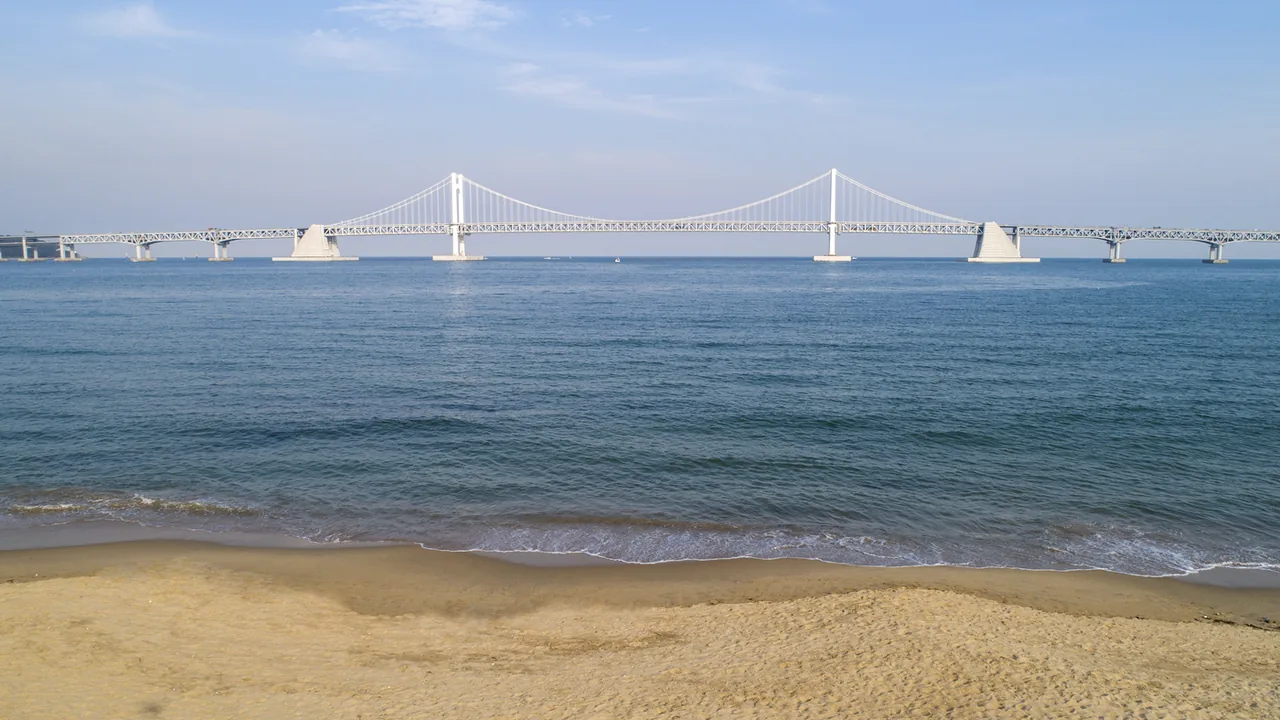
Gwangalli is quieter than Haeundae and stays awake longer. The bridge crosses the bay in front of the beach and lights up after dark. There are more places to sit facing the water, and more of them open late.
The drone show
Drones fly formations over the bay on a regular schedule. A new programme comes out each month, and bad weather cancels a performance on the day. If you are planning around it, check that afternoon rather than the week before. Where to stand is covered in the Gwangalli drone show guide.
Millak waterfront
At the eastern end of the beach, a low concrete terrace steps down towards the water and is built for sitting on. Rules about what you can bring and when have tightened over the years because of litter and noise, so check what applies before you plan an evening there. The raw fish restaurants are concentrated on this side.
Igidae and Oryukdo
South of Gwangalli, a coastal path starts at Igidae. It runs over rock rather than pavement, so footwear matters, and at the far end it reaches the Oryukdo Skywalk, where a glass floor puts the waves underneath you. There is no station nearby; you take a bus from Kyungsung University station. Conditions and timings are in the Igidae and Oryukdo guide.
The UN Memorial Cemetery
A walk from Daeyeon station. Soldiers from other countries who died in the Korean War are buried here, and it is the only cemetery of its kind anywhere. It is a quiet place, so be careful with photographs.
The grounds open until 6pm from May to September and until 5pm from October to April, with no closing day and no admission charge. The UN Peace Memorial Hall across the road does close on Mondays and on 1 January, so avoid a Monday if you want both. The Busan Museum and the National Memorial Museum of Forced Mobilisation are next door, which makes three stops in one walk. See the UN Memorial Cemetery guide.
Gwangalli itself is covered in the Gwangalli Beach guide, and the two beaches are compared in the Busan beaches guide.
8. Seomyeon and Jeonpo: no sea, but everything is reachable
Seomyeon is where subway lines 1 and 2 cross. From here you can reach Haeundae and you can reach Nampo-dong, and neither is much worse than the other. There is no beach, but if you intend to see a different neighbourhood every day this is the base that moves you least.
Jeonpo
A walk from Seomyeon station. Cafés and small shops moved into a street of hardware and tool merchants, and the merchants are still there, which gives the area a different character by day than by night.
Busan Citizens Park
A large park within walking distance of Seomyeon. The site was a US military base, and a racecourse before that; a history hall inside the park sets out both. The lawns are wide enough to spend half a day on with children.
The park is open from 5am to midnight all year and costs nothing. The history hall inside runs Tuesday to Sunday, 9am to 6pm. The water play area only operates in summer.
Why Seomyeon confuses people
Seomyeon station has a lot of exits and a wide underground arcade, so it is easy to surface facing the wrong way. Come up to street level and use the Lotte department store to orient yourself; Jeonpo is on the far side from it, and Bujeon Market is in another direction again.
Busan also has two stations with similar names. Busan Station is where the KTX arrives. Bujeon Station is a separate station beside Seomyeon, and it is where the Donghae Line starts. It is worth checking which one a ticket refers to.
Bujeon Market
A large traditional market you can walk to from Seomyeon, selling produce, dried fish and medicinal ingredients. It is a working market rather than a sight, and it is busiest in the morning.
At night
This is where the most places stay open latest in Busan: bars, karaoke rooms and restaurants clustered around the station. Where Gwangalli is about drinking with a view of the water, Seomyeon is indoors. The split is set out in the Busan nightlife guide.
In winter
Lights go up along the streets here in winter, and a tree goes up on Gwangbok-ro at the same time. Both are busy in the evening.
More on the area in the Seomyeon guide.
9. Dongnae, Oncheonjang and Beomeosa: the older side of the city
Busan means the sea to most visitors, but the city started at Dongnae. The Joseon-era district office was here, and the fortress wall, the Confucian school and the shrine remain. Everything links up on foot from Dongnae and Myeongnyun stations.
Dongnae fortress and the Bokcheon-dong tombs
A path follows the old wall, and the hill beside it is the Bokcheon-dong burial ground. The museum built on the site displays what came out of the tombs. It opens 9am to 6pm with last entry at 5pm, closes on Mondays and on 1 January, and charges nothing.
The mound field outside stays open later than the museum, so on the day the museum is shut you can still walk the hill. The Dongnae fortress history hall keeps the same Tuesday-to-Sunday hours and is also free. The wall itself can be walked at any hour.
Oncheonjang
Next to Dongnae, and named for the hot springs that are still there. Public bathhouses and spa hotels remain in the neighbourhood. If a bathhouse is on your list, this side of the city or Haeundae is where to look. What is where is set out in the Busan spa and jjimjilbang guide.
Chungnyeolsa
A shrine to those who died defending Dongnae fortress in the sixteenth-century invasion. The grounds are large and wooded and pleasant to walk. They stay open until 9pm from April to September and until 8pm from October to March, though the main hall and memorial building close at 6pm. Open every day, no charge.
Geumgang Park
Attached to Oncheonjang on the Geumjeongsan side. A cable car from here goes partway up the mountain: 11,000 won return or 7,000 one way for adults, and 8,000 won return for children. The botanical garden inside the park has closed with no reopening date announced.
Beomeosa
A temple on the slope of Geumjeongsan. There is a station named after it, but from there you take a bus up. The buses are not frequent, so check the timetable before you set off. The trail up to the Geumjeongsanseong fortress wall starts from the temple. Access and hours are in the Beomeosa guide.
Sajik Baseball Stadium
A walk from Sajik station. During the season, evenings with a home game draw a crowd, and without a ticket bought in advance you may not get in. The way people support the team here is unlike other Korean stadiums, which catches first-timers off guard. Tickets and the atmosphere are covered in the Sajik Stadium guide.
10. Gijang: out along the Donghae Line
Gijang is inside the city but off the subway network. You take the Donghae Line, and from most of its stations you take a bus again. Because of that, give Gijang a whole day rather than half of one.
Haedong Yonggungsa
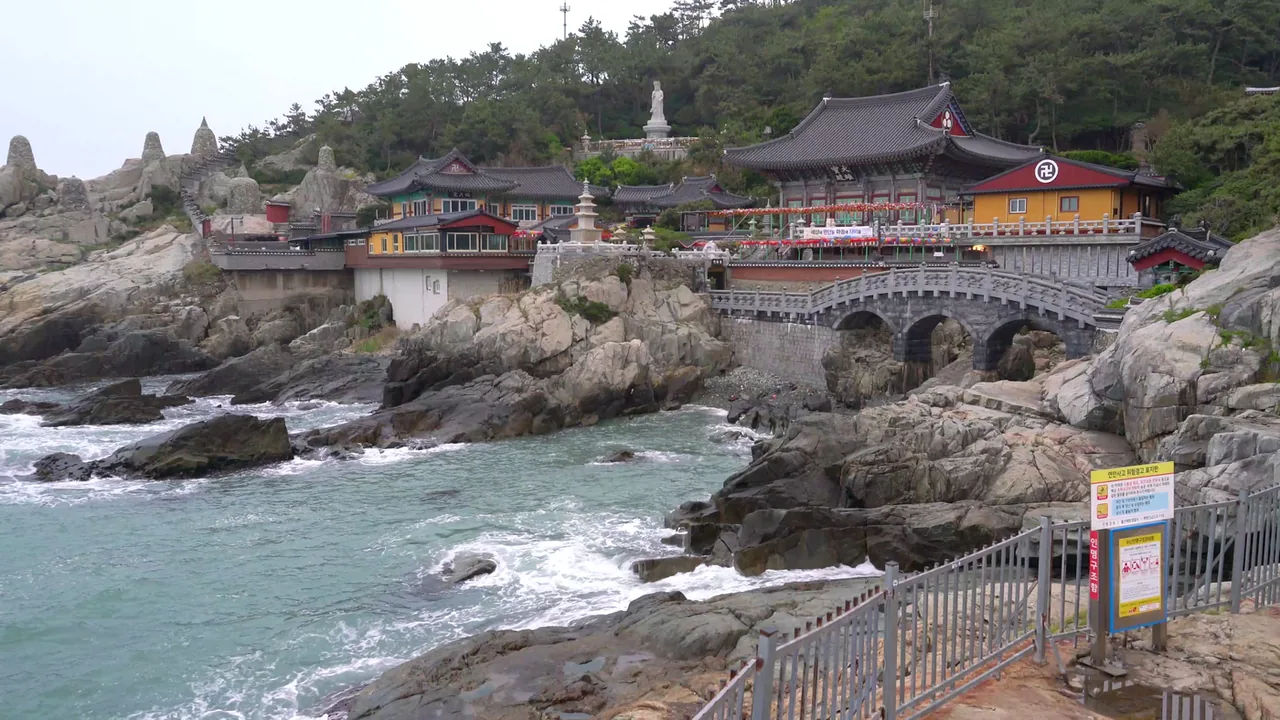
A temple built onto rocks at the edge of the sea, the one place in Busan where you get a temple and the water in the same view. Inside it is a series of staircases, and there is a walk in from the car park before that even starts.
It opens at 4:30am and closes at 7:20pm, with last entry at 6:50pm. People go at sunrise, which is when it is emptiest; by midday you queue on the steps. Timings and access are in the Haedong Yonggungsa guide.
Osiria
Around Osiria station on the Donghae Line, a theme park, a shopping outlet, resorts and a large bookshop sit together and connect on foot, which makes a full day with children workable. The theme park has its own guide at Lotte World Adventure Busan, and the wider complex at the Osiria guide.
Jukseong chapel, Ilgwang and Imnang
The chapel at Jukseong was built as a drama set and has never been a working church; people go for the way it stands against the sea. Ilgwang and Imnang beaches are quieter and emptier than Haeundae. All three need a bus, and the buses are spaced out.
Orangdae and the coastal path
A little beyond Haedong Yonggungsa is Orangdae, where a small shrine stands on the rocks with the waves breaking in front of it. It is free and open at any hour, which is why people come for sunrise. The Osiria coastal walk runs along the water with no shade, so it is hard going on a summer afternoon.
Gijang Market
A walk from Gijang station, known for snow crab and anchovies. Pick a crab and they will steam it for you there. In spring there are stalls serving raw anchovy.
An order that works
Take the temple first thing, when it is quietest. Come down to Osiria for lunch and spend the afternoon there. In the evening go out to Gijang Market or Ilgwang for the water and head back. Reversed, you spend the middle of the day queueing on temple steps.
11. Dadaepo and the Nakdong River side
West Busan is where the river meets the sea. There are fewer visitors and fewer people generally. Ride line 1 to its southern terminus at Dadaepo Beach station and the sand is right there.
Dadaepo
The water is shallow and the tide pulls back a long way, so walking here feels different from the other beaches. The sun sets over the water on this side, which is what most people come for. A fountain plaza beside the sand runs in summer for children. Access and sunset timings are in the Dadaepo Beach guide.
Eulsukdo and the Museum of Contemporary Art
An island in the Nakdong estuary. Migratory birds settle here in winter, and the Busan Museum of Contemporary Art stands on it, its outer walls covered in climbing plants. It runs Tuesday to Sunday, 10am to 6pm with last entry at 5:30pm, and closes on Mondays and 1 January; when a Monday is a public holiday it closes the Tuesday instead. Free, apart from some special exhibitions. You get there by bus from the subway.
Songdo
The bay west of the old city. This was the first public beach in the country, and a cable car now crosses the water beside a walkway built out over it. Buses run from Nampo-dong.
The cable car runs until 8pm from December to February and until 9pm from March to June and September to November. A standard cabin is 17,000 won return or 13,000 one way; a glass-floored cabin is 22,000 won return. The skywalk over the sea is a separate 1,000 won, free for under-sevens, open until 6pm from March to September with last entry at 5:30pm and until 5pm from October. It closes on the first and third Monday of each month. See the Songdo Beach guide.
The riverside parks
Samnak, Daejeo and Maekdo ecological parks run one into the next along the river. They are flat and wide, and people cycle or walk them. Rape flowers cover the area in spring and silver grass in autumn. Seunghaksan’s grass field is an autumn climb rather than a stroll.
Gadeokdo
The island at the western edge of the city, joined by bridge, with a lighthouse, a breakwater and a hiking trail up Yeondaebong. There are not many places to eat out there, so time your meals. On public transport it is a long trip; this is a place for a car.
Making a day of it
Ride line 1 to Dadaepo, walk the beach, take a bus across to Eulsukdo for the art museum, then return to Dadaepo for sunset. Restaurants are scattered out here, so decide where lunch is happening before you go.
12. Getting to Busan
Where you arrive shapes your first day, because the three arrival points are nowhere near each other.
| How | Where you land | What follows |
|---|---|---|
| KTX or SRT from Seoul | Busan Station | The middle of the old city. Nampo-dong is two subway stops |
| Flight | Gimhae International Airport | A separate journey into the city, covered below |
| Intercity bus | Nopo or Busan West (Sasang) | Nopo is the line 1 terminus; Sasang is on line 2 |
| Ferry | Busan Port International Passenger Terminal | Close to Busan Station |
Arriving at Busan Station
Busan Station sits inside the old city. You can walk up into Choryang from it, and Nampo-dong is two stops away. Haeundae, though, means changing at Seomyeon and riding a long way. If your hotel is in Haeundae, the first thing you do after arriving is a long transfer.
Arriving at Nopo
Nopo is at the northern end of line 1, so it takes a while to get into town. It is also where buses to Gyeongju leave from, which matters if you plan a day trip. Times and route are in the Gyeongju day trip guide. If you plan to stay a night or more in Gyeongju, see the Gyeongju travel guide: the central sites join up on foot and several stay open until 22:00.
Arriving at Sasang
Busan West Bus Terminal is at Sasang, where subway line 2 meets the Busan-Gimhae light rail, so Seomyeon and Haeundae are straightforward from there. Buses to Tongyeong and Geoje leave from this terminal.
Leaving by sea
Ferries run from the international terminal near Busan Station. Sailings towards Japan are set out in the Busan to Tsushima ferry guide.
Trains from Seoul, including how far ahead to book and what the seat classes mean, are covered in the Seoul to Busan KTX guide.
What to do with the first day
| You arrive | Realistic for that day |
|---|---|
| Morning | Drop the bags and walk your own neighbourhood all day |
| Midday | One market or one beach nearby. Don’t go across the city |
| Evening | One night view: Yongdusan Park, or the sand at Gwangalli |
Planning to reach the far side of the city on arrival day generally means spending it in transit.
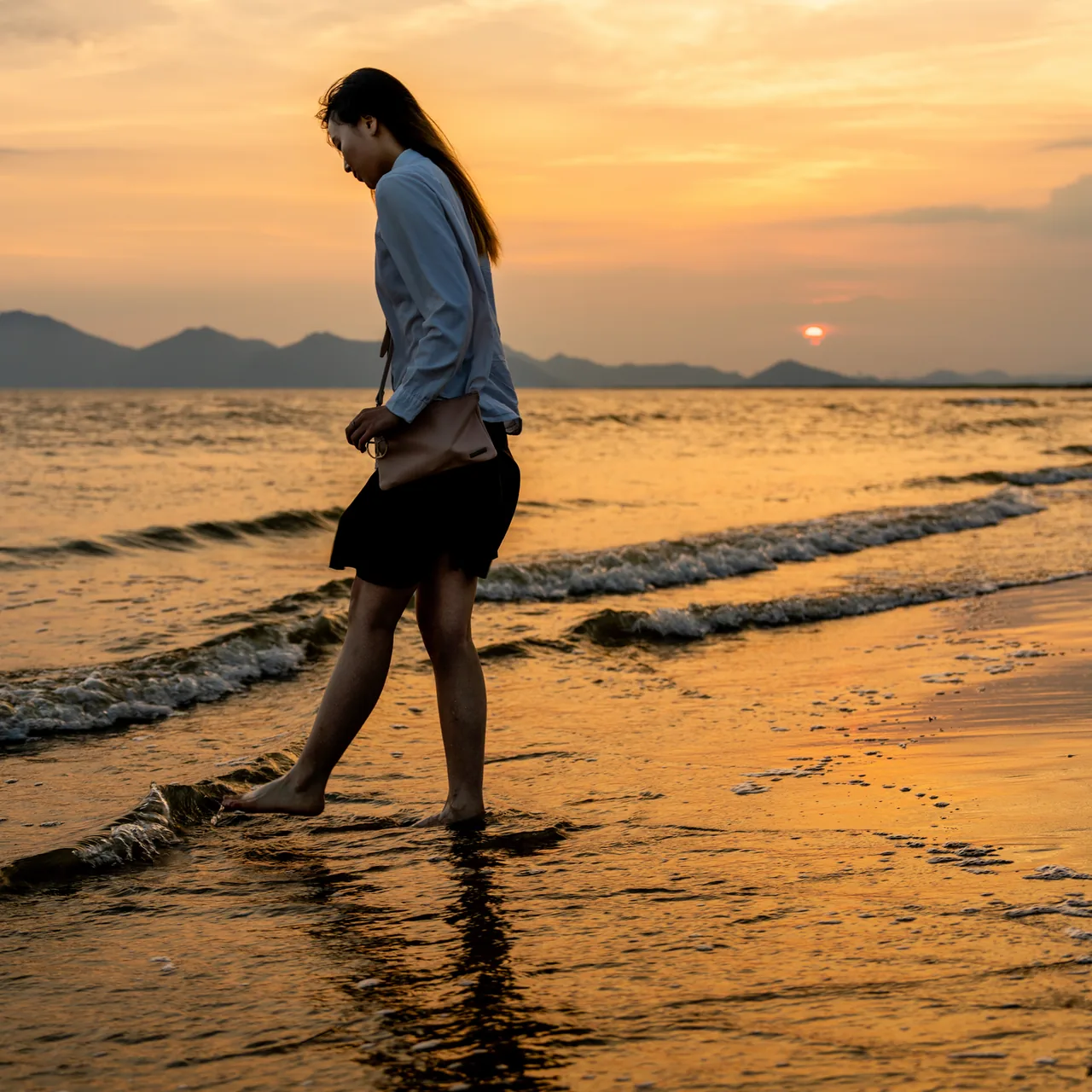
13. From Gimhae Airport into the city
The airport is outside the city, and which option suits you depends entirely on where you are sleeping.
For Haeundae and Gijang: Airport Limousine 1
From Jangsan the first bus is at 5:30am and the last at 7pm; from the airport, departures run from 7:10am to 4:50pm. It takes about an hour and a half each way. The service that runs further out to Banyan Tree in Gijang starts earlier, at 4:50am, and runs from the airport until 9:40pm.
It calls at Banyan Tree, Ananti Cove, Osiria, Jangsan station, Haeundae Oncheon junction, Haeundae Beach, the Dongbaekseom entrance, Hanwha Resort, Park Hyatt, the yacht marina, BEXCO and Shinsegae Centum City.
Fares are 9,500 won for adults, 7,600 for middle and high school students and 4,800 for primary school children. One pre-school child travelling with an adult goes free; if the child takes a seat, the child fare applies.
For Seomyeon and Bujeon: Airport Limousine 2
From Bujeon the first bus is at 6am and the last at 8pm; from the airport, departures run from 7:20am to 9:30pm. The trip takes about fifty minutes. It calls at Bujeon station, Bujeon Market, Seomyeon station by the Lotte department store, Dong-eui University station and Jurye station.
Fares are 6,000 won for adults, 4,800 for middle and high school students and 3,000 for primary school children.
Both routes
Neither takes cash. Book through the Bustago app, use the ticket machine at the bus ticket office beside Gate 4 on the first floor of the airport, or tap a transit card on board if seats are left. Seats are not assigned, so whoever sits down has the seat. And the limousines are outside the transfer discount, so tapping onto a subway afterwards costs a full fare. Luggage is limited to two pieces per person totalling under 30kg.
The other ways in
The Busan-Gimhae light rail takes six minutes from the airport station to Sasang, where you change to subway line 2. With light luggage and a hotel in Seomyeon or Haeundae, that is a good option. City buses 307 and 109 also serve the airport, and taxis are available.
Which to choose is weighed up in the Gimhae Airport transport guide.
14. Getting around the city
Busan has subway lines 1 to 4, plus the Donghae Line commuter railway and the Busan-Gimhae light rail. Between them they cover most of what you will want. City buses and village buses fill in the rest.
Subway fares
With a transit card, journeys within ten kilometres cost 1,600 won for adults and journeys beyond that 1,800 won. Middle and high school students pay 1,050 and 1,200 won. Buying a single ticket instead adds about a hundred won for adults. Passengers aged sixty-five and over ride free, though the free-travel card is issued to Busan residents.
If you are travelling with children
Without that registration, tapping an adult card simply charges the adult fare. Paying cash costs 400 won. Family-friendly routes are gathered in Busan with kids.
Day passes
There is a season ticket sold through a phone app: 6,000 won for one day, 13,000 for three days and 45,000 for a month, with student prices of 4,000, 9,000 and 33,000. The day pass allows unlimited journeys on the day you first tap through.
Bus fares
A city bus is 1,550 won with a card and a village bus 1,480 won; late-night buses are 2,000 won. Cash costs more in each case. The same free travel for six to twelve year olds applies with a card.
Transfers
You get a discount when you board the next service within thirty minutes of tapping off, for up to two transfers; a third gets nothing. Several conditions catch people out.
- The same bus number does not count as a transfer, even with another service in between.
- Subway to subway only works if you change without leaving the gates. Exit and re-enter and you pay again.
- You must tap off when you get out. Skip that and the next boarding is a fresh fare.
- Cash fares get no transfer discount at all.
- One card paying for two people gives the discount to one of them.
- Airport limousines are excluded.
- Where fares differ, you pay up to the highest of them.
Cards from elsewhere in Korea work here
T-money, Cashbee, Rail Plus and the other nationwide cards are accepted on the Busan subway, city buses, village buses, the Donghae Line and the light rail. If you already have one from Seoul, keep using it.
The Dongbaek Pass
Spend more than 45,000 won a month on Busan public transport with a Dongbaekjeon transit card and the excess comes back the following month, up to 45,000 won. Anyone nineteen or over qualifies, and there is no residency requirement, though the cards are issued by Busan Bank, Hana Card and Nonghyup. You have to register for the pass in the Dongbaekjeon app; holding the card alone does not trigger the refund. Tapping two fares on one card removes that month from the calculation.
A visitor on a short trip will not spend 45,000 won on transport, so this is aimed at people staying longer.
Lines, transfers and last trains are set out in the Busan subway and transit card guide, and the whole network including buses in getting around Busan.
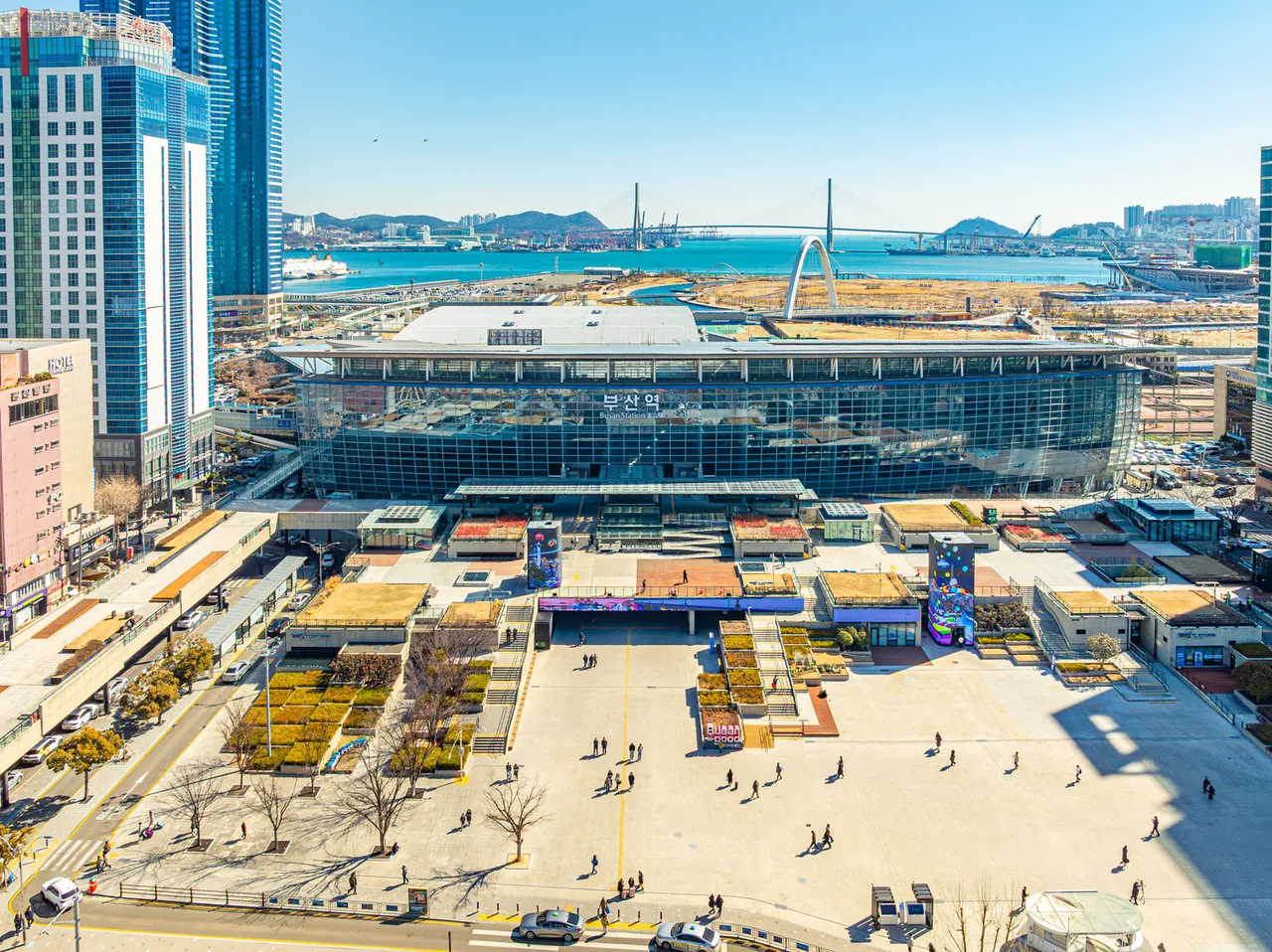
15. Is the City Tour Bus worth it
An open-top double-decker that leaves from Busan Station and loops past the larger sights. One ticket lets you get off and back on all day.
| Route | Adult | Child |
|---|---|---|
| Circular (Red, Green, Orange) | 20,000 won | 10,000 won |
| Night route | 20,000 won | 10,000 won |
| West Busan theme route | 25,000 won | 20,000 won |
| East Busan theme route | 30,000 won | 25,000 won |
One circular ticket covers the Red, Green and Orange routes together. Buying online in advance brings the circular ticket down to 19,000 and 9,500 won. The night route has no discount.
The three routes
- Red leaves Busan Station and loops along the eastern coast, crossing the Gwangan Bridge.
- Green goes into Yeongdo and out to Taejongdae.
- Orange covers the western side towards Gamcheon and Dadaepo.
One ticket covers all three, but doing all three in a day is not realistic. A full loop takes over two hours and getting off to look at anything adds to that. One route with a portion of a second is about right.
Red Line times
The first bus leaves Busan Station at 9:45am and the last returns at 6:45pm, running every fifty minutes for nine departures a day. There are twelve stops and a full loop takes a little over two hours.
Where to board
In front of Busan Station at the ground floor of the Ramada Encore, opposite the Starbucks. Come out of KTX exit 1 or subway exit 6.
When it pays and when it doesn’t
It earns its price when you are stringing together places that are awkward on the subway, because Taejongdae and Gamcheon, both of which otherwise need a bus change, are on the routes. The front seats upstairs are the reason to be on it while crossing the bridge.
If your plans are Haeundae and Seomyeon, which the subway reaches directly, the subway is faster and far cheaper. The upper deck also has no roof, which makes rain or a midsummer afternoon uncomfortable. Route details are in the Busan City Tour Bus guide.
16. What to eat
Busan’s food is regional in a specific way: it belongs to particular neighbourhoods. Which part of the city you spend the day in largely settles what you eat that day.
| Dish | Where to find it |
|---|---|
| Dwaeji gukbap (pork soup with rice) | Seomyeon and around Busan Station |
| Milmyeon (wheat noodles) | Gaya, Gaegeum and Nampo-dong |
| Raw fish and shellfish | Jagalchi Market, Millak, Gijang |
| Eomuk (fish cake) | Busan Station and Nampo-dong |
| Seed hotteok | Fried on the street in Nampo-dong |
| Dongnae pajeon (spring onion pancake) | Around Dongnae and Oncheonjang |
| Grilled shellfish | Gwangalli and Gijang |
Dwaeji gukbap
The single most common bowl in Busan: pork bones simmered for hours, with sliced boiled pork added. Kitchens differ in how they draw the stock, so the broth ranges from clear and light to milky and rich.
You can eat it as it arrives, but locally people season it with salted shrimp and add the chive salad that comes on the side. The chives are sharp and change the broth completely. Add the chilli paste a little at a time. Rice goes into the soup or stays beside it, as you prefer.
The long-standing places cluster in Seomyeon and near Busan Station, and at lunchtime you queue. Which kitchen makes which style is in the dwaeji gukbap guide.
Milmyeon
Invented during the Korean War when refugees wanted cold noodles and there was no buckwheat, so wheat flour went into the press instead. That is why it is hard to find outside Busan. Choose between the version in cold broth and the version mixed with sauce, and add vinegar and mustard to the broth at the table.
Queues are longest in summer. If the wait is long, order dumplings alongside. The noodles are softer than naengmyeon and give way without scissors. The milmyeon guide covers what separates one shop from another.
Eating raw fish
At Jagalchi you choose downstairs and go upstairs to eat, where a table charge is added on top of the fish. At Millak, near Gwangalli, the fish restaurants are lined up facing the water.
Ask the price before you choose. It varies a great deal by species and size, and some places sell by weight while others sell by the fish. The bones usually go into a spicy stew afterwards, which is sometimes charged separately. More in the Busan seafood guide.
Eomuk
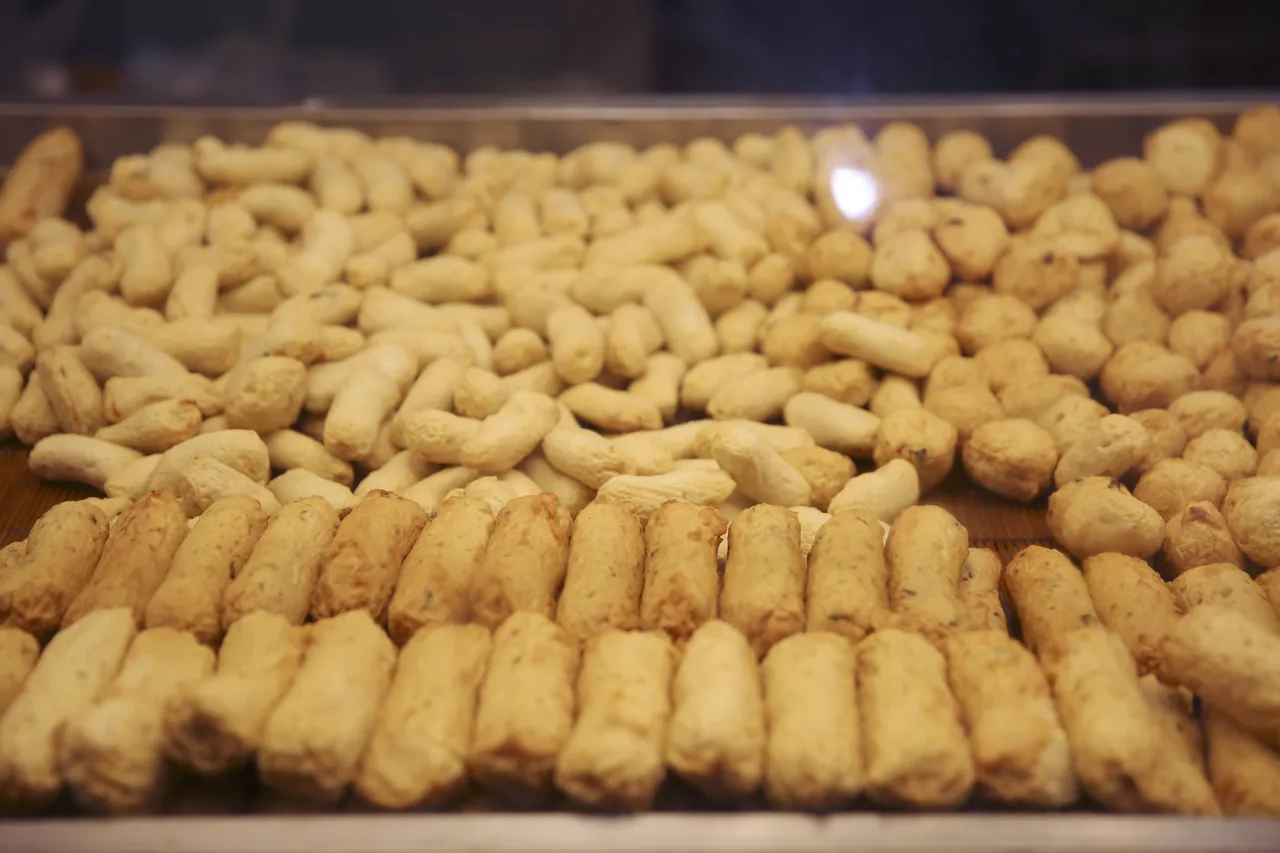
Busan fish cake has a higher proportion of fish, which makes the texture different from what is sold elsewhere in Korea. Factory-run shops at Busan Station and in Nampo-dong sell it straight out of the fryer, and people buy boxes to take on the train.
Seed hotteok
Fried on the street in Nampo-dong. The pancake is cooked, split open and filled with sunflower seeds and peanuts. It comes out extremely hot inside, so give it a moment. The queue builds in the evening.
Dongnae pajeon
A long-standing dish around Oncheonjang, made with more rice flour than wheat and loaded with seafood. It is thicker and heavier than the pancakes served elsewhere in the country.
Grilled shellfish and hagfish
Shellfish is grilled at Gwangalli and in Gijang, and hagfish around Jagalchi. Both are evening trades, so many places are shut during the day.
The whole of it is set out in the Busan food guide.
17. If you are here on a Monday
The most common way to waste a day in Busan is to arrive on a Monday with an indoor plan. Almost everything indoors closes. The outdoor half of the city carries on as normal, so a Monday only goes wrong if you fill it with museums.
Closed on Mondays
- Bokcheon Museum and the Dongnae fortress history hall
- Busan Museum of Contemporary Art (the following Tuesday instead when the Monday is a holiday)
- The National Maritime Museum
- The Beomeosa temple museum
- The Nakdong Estuary Eco Center
- The UN Peace Memorial Hall, though the cemetery itself stays open
- The tour facilities at Kkangkkangi Arts Village
Open regardless
Taejongdae, Huinnyeoul, Gamcheon Culture Village, Haedong Yonggungsa, the Jukseong chapel, Orangdae and Daeryong village all run as usual, as do the beaches and the coastal paths. Chungnyeolsa never closes, and on the day the Bokcheon Museum is shut the burial mounds outside can still be walked.
First and third Mondays only
Nurimaru closes on the first Monday of the month. The Songdo skywalk closes on the first and third Mondays. They open on the others.
Rain changes the calculation
Rain pushes you indoors, and if that day is a Monday your options narrow a lot. The fallbacks are the places that open regardless of the day: department stores, underground arcades, the aquarium. The Gwangbok underground arcade runs from Nampo station to Jungang station without going outside. More in Busan when it rains.
Lunar New Year and Chuseok
On the main holiday days most museums and memorial halls close, and a good number of market stalls shut as well. Beaches, walking paths and temples stay open and are quieter than usual. If your trip falls on one of those days, keep indoor plans out of it.
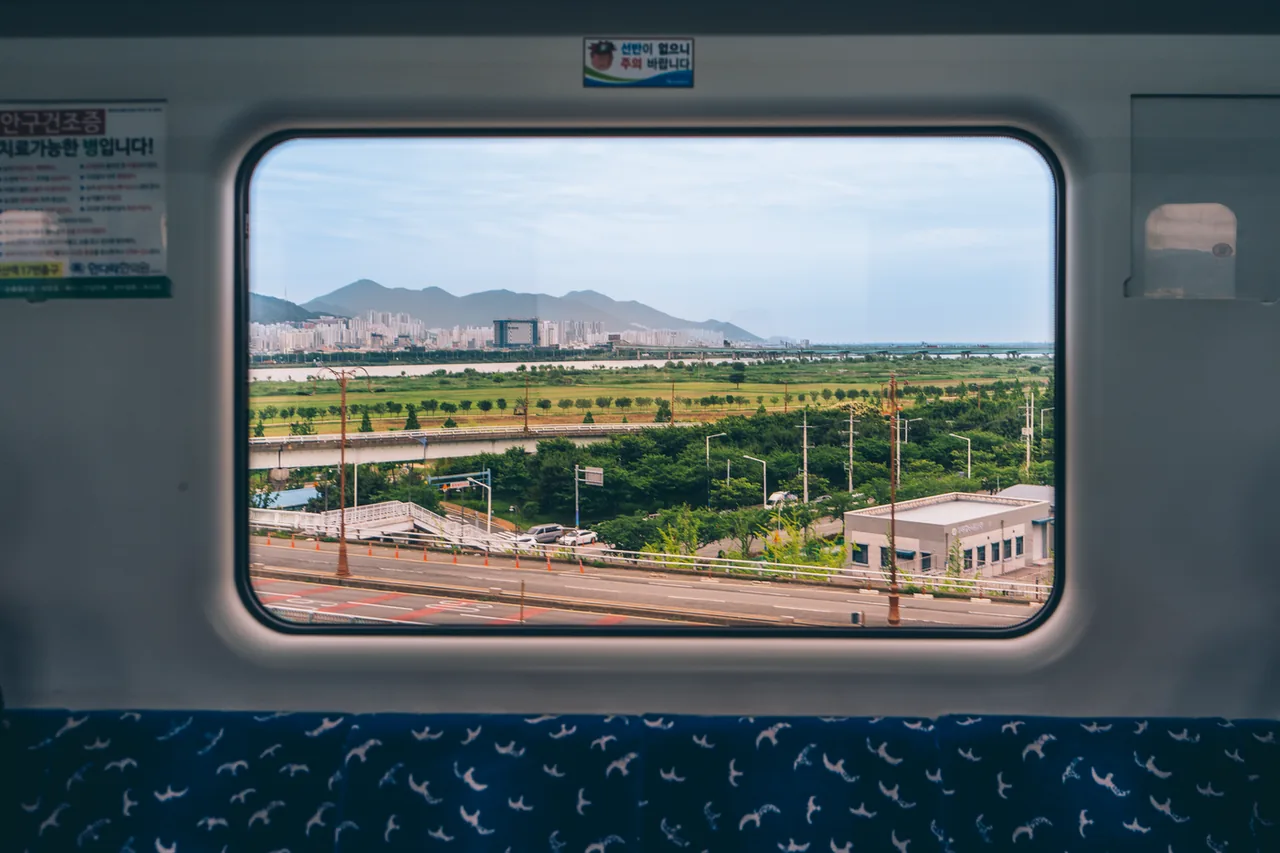
18. After dark
Plenty stays open in Busan after dark. The useful thing to know is which places those are, because the list is short and specific.
| Place | Until |
|---|---|
| Taejongdae | Midnight. Opens 4am March to October, 5am November to February |
| Busan Tower | 10pm, with the ticket desk closing at 9:30pm |
| Chungnyeolsa | 9pm April to September, 8pm October to March |
| Busan Citizens Park | Midnight, opening at 5am |
| Bukhang waterfront park | Midnight, opening at 5am |
| Haedong Yonggungsa | 7:20pm, last entry 6:50pm |
Where the night views are
For the Gwangan Bridge head-on, stand on the sand at Gwangalli. To look down on it from the side, go up to the Hwangnyeongsan viewpoint or out along Igidae. Hwangnyeongsan is the one that gives you the city lights in a single sweep; Bukhang waterfront park and the observation points near the port give you the harbour instead. Which viewpoint gives which picture is set out in the Hwangnyeongsan night view guide.
Walking at night
The sand at Haeundae and the path around Dongbaekseom are lit and are walked after dark, and so is the stretch from Gwangalli to the Millak waterfront. The Igidae coastal path is a different matter. It crosses bare rock, and it is not somewhere to be in the dark. Come off it before the light goes.
Bongnaesan and the paths above Huinnyeoul also give you harbour lights, but the approaches have few street lamps and are not a good first visit after dark.
Eating and drinking late
Seomyeon runs latest, and Gwangalli has the most seats facing the water. Nampo-dong quietens down in the evening. The split is set out in the Busan nightlife guide.
Last trains
The subway stops around midnight, with the exact time varying by line and direction and running earlier towards the ends of the lines. If you are out late at Gwangalli or Haeundae and sleeping on the other side of the city, watch the clock.
After that it is a late-night bus or a taxi. Night bus fares are higher than daytime ones and taxis carry a late surcharge. If this is going to happen more than once, stay in the neighbourhood where you intend to spend your evenings.
19. What you pay for and what you don’t
There are not many places in Busan you pay to walk into. The hills, the sea, the villages, the temples and the parks are open. What costs money is riding things.
Free to enter
Gamcheon Culture Village, Huinnyeoul and Ami-dong all cost nothing. Taejongdae is free to enter, with a charge only for the Danubi train inside. The same goes for Yongdusan Park, Busan Citizens Park, the UN Memorial Cemetery, the Jukseong chapel, Orangdae, Daeryong village, Geumjeongsan and Jangan temple. The city and national museums do not charge admission.
Things you ride
| What | How much |
|---|---|
| Busan Tower deck | 12,000 won for thirteen and over; 9,000 for children from thirty-six months to twelve, and for sixty-five and over |
| Songdo cable car | 17,000 won return, 13,000 one way; 22,000 return in a glass-floored cabin |
| Songdo skywalk | 1,000 won, free under seven |
| Geumgang Park cable car | 11,000 won return, 7,000 one way; 8,000 return for children |
The botanical garden inside Geumgang Park has closed with no reopening date. The park and the cable car are unaffected.
Buy ahead where it matters
Theme parks, the aquarium and the luge are usually cheaper booked in advance, and a city pass can cover several of them than at the gate, and each has its own opening hours and last-entry cut-off. The ticketed attractions are gathered in the Busan activities guide.
A worked-through budget is in the Busan travel cost guide.
20. When to come
Busan sits on the coast, so the same forecast feels windier here than inland. The large events are concentrated in autumn, and rooms go early around them.
Spring
Cherry blossom arrives from late March into early April. Namcheon-dong, the Oncheoncheon stream and the riverside parks at Samnak and Daejeo draw crowds then. The gap between day and night temperatures is wide at that time of year, so bring a layer.
Summer
During the official beach season the sand fills up, with marked areas renting parasols and rings. The rainy period brings several days of rain in a row, so keep one indoor plan in reserve.
Summer evenings are when the grilled shellfish tables at Gwangalli and Gijang run latest. This is the time of year when the city stays up longest.
Autumn
On weather alone this is the easiest time to be here. It is also when the big events land, so book accommodation early. You cannot swim, but the beaches are better to walk than in summer.
Winter
Lights go up in Seomyeon and along Gwangbok-ro. Sea wind makes it feel colder than the temperature suggests, and the beaches at Gwangalli and Haeundae have nothing to break it, so standing about is hard work. In exchange, queues are short everywhere and rooms are cheap. If you are going for the winter sea, go in daylight, because the wind gets worse after sunset.
The dated events
| Event | When | Where |
|---|---|---|
| Busan International Film Festival | 6 to 15 October | Around the Busan Cinema Center |
| Busan Fireworks Festival | Saturday 7 November | Gwangalli beach, Igidae, Dongbaekseom |
| Busan Biennale | Late August to early November | |
| Busan Sea Festival | 7 to 13 August | |
| Haeundae Sand Festival | Mid-May | Haeundae beach |
| Busan International Rock Festival | Early October |
Where to stand for the fireworks is covered in the fireworks festival guide, and the summer events in the Busan summer festival guide.
The drone show runs all year
The Gwangalli drone show performs at weekends through the winter as well. Dates are published month by month, so check close to the day.
There is a page for each month
What opens, what closes and whether you can get in the water all change month by month. Pick the month you are travelling and it goes to the guide for that month alone.
January · February · March · April · May · June · July · August · September · October · November · December
What changes from month to month is set out in the best time to visit Busan.
21. How many days, and in what order
There is one rule that matters when building a Busan itinerary: do not cross the city and come back in the same day. Everything below is built on that. With an extra day, Daegu is about ninety minutes away. The Daegu travel guide separates what a downtown-only day covers from what adding Palgongsan needs.
Two days
Take one side. If you came for the sea, that is Haeundae and Gwangalli; if you came for the old city, Nampo-dong and Yeongdo. Sleep in whichever one you chose.
Three days
| Day | Where |
|---|---|
| Day 1 | Arrive and stay near your hotel. Haeundae means the beach and Dongbaekseom; Nampo means Yongdusan and the tower |
| Day 2 | The old city. Jagalchi, then Gukje Market and Bosu-dong, then Yeongdo in the afternoon |
| Day 3 | Gamcheon Culture Village, then back to Busan Station for your train |
Add an evening in Gwangalli and the nights are covered. An hour-by-hour version is in the Busan two-night itinerary.
The same three days, in detail
This assumes you are based in Nampo-dong. Staying in Haeundae, swap the first two days round.
| When | What |
|---|---|
| Day 1 afternoon | Arrive at Busan Station, drop bags, walk up into Choryang and back down |
| Day 1 evening | Dinner in Nampo-dong, then up to Yongdusan Park for the lights |
| Day 2 morning | Jagalchi Market, while there is most on the stalls |
| Day 2 midday | Gukje Market and Bosu-dong, then lunch |
| Day 2 afternoon | Cross to Yeongdo for Huinnyeoul and Taejongdae |
| Day 2 night | Subway to Gwangalli for dinner by the water |
| Day 3 morning | Toseong station and the village bus to Gamcheon |
| Day 3 midday | Back down to Busan Station, buying fish cake for the train |
The point of that order is that nothing heavy lands on the last day. Gamcheon takes time to get up to and back down from, and a tight train connection turns it into a rush.
Four days
An extra day gives you three choices.
- Gijang. The Donghae Line out to Haedong Yonggungsa and Osiria together. With children, add the theme park.
- A day trip. Gyeongju or Tongyeong, leaving early.
- Dongnae and Geumjeongsan. The older side of the city, finishing at a bathhouse. The least travelling of the three.
If the legs have gone, the third is the comfortable one: subway only, and short walks. A day-by-day version is in the Busan three-night itinerary.
Mistakes people make
- Sleeping in Haeundae and coming into the old city every day. That is two hours underground daily.
- Putting Gamcheon and Taejongdae on the same day. Both need buses, and the day becomes travel.
- Planning the City Tour Bus for a Monday or Tuesday, when it does not run.
- Going deep into Gijang without checking the last bus back.
If you are still choosing what to see, things to do in Busan is the wider list.
22. With children or with older parents
Who you are travelling with changes what is realistic here more than in most cities, because Busan is built on hills and a lot of it is stairs.
The places with stairs
Gamcheon, Ami-dong, the Choryang steps, Huinnyeoul and Haedong Yonggungsa are all climbs. If knees are a consideration, take one of them and fill the rest of the day with flat ground. On the Choryang route, riding the monorail up and walking down takes most of the effort out of it.
The flat alternatives
Haeundae beach and the Dongbaekseom path, Gwangalli, Dadaepo, Busan Citizens Park, Eulsukdo and the riverside parks are level walking. Taejongdae becomes manageable with the Danubi train. Markets are flat but crowded.
With children
Osiria has the theme park, the bookshop and the outlet together, which fills a day. There is an aquarium on the Haeundae side, and the fountain plaza beside Dadaepo runs in summer. The National Science Museum and the Fisheries Science Museum are both out towards Gijang.
For getting around, the free travel for six to twelve year olds with a registered card is the single biggest saving. If you are pushing a buggy, check whether the station you want has a lift, because some of the older exits are stairs only.
More in Busan with kids.
With older parents
Anyone sixty-five or over rides the Busan subway free, though the free-travel card is issued to residents; visitors from elsewhere use a concession card instead.
Plan one neighbourhood a day with somewhere to sit built into the middle. Dongnae and Oncheonjang work well because the sights and the resting places are close together, and the UN Memorial Cemetery and the Busan Museum connect on flat ground. Finishing the day at a bathhouse rounds it off.
23. Choosing by what you came for
If you already know what kind of trip you want, the neighbourhood follows from that rather than the other way round. Here is the same city sorted by interest instead of by geography.
You came for the sea
Base yourself at Haeundae or Gwangalli and give the first day to the beach and the path around Dongbaekseom. Add the old railway walk from Mipo out to Songjeong on the second, and Dadaepo at sunset on the third if you have it. Igidae belongs here too, as the rougher coastal walk. The comparison between the main beaches is in the Busan beaches guide.
You came for markets and street food
Stay in Nampo-dong. Jagalchi, Gukje and Bupyeong Kkangtong are all within a walk of each other, the night market runs in the evening, and Bujeon Market near Seomyeon is a subway ride away for a working market rather than a tourist one. Gijang Market makes a half day if you want crab. Start with Jagalchi Market.
You came for temples and history
Dongnae gives you the fortress, the shrine and the burial mounds in one walk, with Beomeosa up the mountain from there. Haedong Yonggungsa is the coastal temple out at Gijang, and Tongdosa is the large one a day trip away in Yangsan. In the old city, the modern history museum, the wartime capital memorial and the UN cemetery cover the twentieth century. See the museums guide.
You came to walk
The Igidae coastal path, the Dongbaekseom loop, the old railway line from Mipo to Songjeong, the Geumjeongsan fortress wall and the Nakdong riverside parks are the five that people come back for. Igidae is rock underfoot; the riverside parks are flat and long; Geumjeongsan is a proper climb.
You came with a camera
Gamcheon and Huinnyeoul for the hillside villages, Yongdusan and the Marine City deck for the city from above, Hwangnyeongsan for the bridge and the lights together, Dadaepo for the sunset, and Jukseong at Gijang for a chapel against open sea. Most of these want a specific time of day rather than a specific season.
You came to eat and drink late
Seomyeon for indoor nights and the widest choice, Gwangalli for tables facing the water, Millak for raw fish, Gijang and Gwangalli for grilled shellfish. Nampo-dong empties out early, so it is the wrong base for this. See the nightlife guide.
You came with a family
Osiria out on the Donghae Line takes a full day on its own, and Centum City handles a wet one. Dadaepo has the fountain plaza in summer, Haeundae has the aquarium, and the science museums are out towards Gijang. Keep the hill villages to one per trip. See Busan with kids.
You came for one thing only
If the trip exists because of a single event, whether the fireworks, the film festival, a baseball game at Sajik, build outward from that date and location rather than trying to fit the city around it. Rooms near the event go first, transport on the day is slow, and the evening will run late.
24. Things visitors mix up
A handful of names and locations in Busan work differently from how they read, and each one regularly sends people the wrong way.
Busan Station and Bujeon Station
The KTX arrives at Busan Station. Bujeon Station is a separate station beside Seomyeon, and it is where the Donghae Line begins. Tickets get booked to the wrong one.
There are two Haeundae stations
Subway line 2 has a Haeundae station, and the Donghae Line has one of the same name. They are not in the same place. For the beach you want the line 2 station. Check which line a route app is sending you to.
Jung-dong is sometimes closer
If you are heading for the eastern end of Haeundae beach or for Mipo, walking from Jung-dong station is shorter than from Haeundae station. Which one you get off at depends on where your hotel sits.
The Donghae Line is not the subway
It appears on the same network map, which makes it look like another subway line, but trains come far less often. Going out to Gijang, look at the timetable before you leave rather than turning up at the platform.
Gwangalli and Millak are different places
The beach and the Millak waterfront run into each other but are not the same. One is sand, the other a concrete terrace. The raw fish restaurants are on the Millak side.
Taejongdae and the Yeongdo lighthouse
The lighthouse is inside Taejongdae. It is not a separate destination. You enter the park and walk down to it.
Beomeosa station is not at Beomeosa
The station carries the temple’s name, but the temple is a bus ride up the hill from there, and walking it takes a long time. The same is true of the fortress wall.
Seomyeon station exits
There are many of them and the underground arcade is wide, so it is easy to come up facing the wrong way. Surface, find the Lotte department store, and work from there.
25. Day trips out of Busan
On a longer stay, most people give one day to somewhere outside the city. Where you go decides which terminal you start from.
| Where | Leaving from | What you go for |
|---|---|---|
| Gyeongju | Nopo bus terminal | Bulguksa, the royal tombs, Cheomseongdae |
| Tongyeong | Busan West (Sasang) | Cable car, the Dongpirang murals, the harbour |
| Geoje | Busan West (Sasang) | Windy Hill and the boat to Oedo |
| Ulsan | Donghae Line | Daewangam park and Ganjeolgot |
| Tongdosa, Yangsan | Nopo or subway | A large temple and its hermitages |
Gyeongju
The most common choice. It is about an hour by bus from Nopo, and the royal tombs, Cheomseongdae and the Donggung pond are close enough together in town to walk between. Bulguksa and Seokguram are a further bus ride out. Doing both the town and Bulguksa in one day means an early start; if you leave late, take the town only. Order and timings are in the Gyeongju day trip guide.
Tongyeong
Buses go from the Sasang terminal. A cable car climbs Mireuksan for a view over a scattering of islands, and the Dongpirang mural village and the central market sit beside the harbour. Chungmu gimbap comes from here. See the Tongyeong day trip guide.
Geoje
Further than Tongyeong. Windy Hill, Sinseondae and the boats out to the Oedo garden island. Oedo runs to a boat timetable, so it takes the whole day. See the Geoje day trip guide.
Ulsan
Reached by train rather than bus: the Donghae Line runs across without a change. Daewangam park is a walk among rocks and pines, and Ganjeolgot is known as the first place on the mainland to see the sunrise. See the Ulsan day trip guide.
Tongdosa
The nearest of the large temples. Buses go from Nopo, and the walk in from the entrance past the hermitages is long enough to be the point of the visit. Plum blossom brings crowds in spring. See the Tongdosa guide.
26. Practical notes for a first visit
A few things worth settling before you arrive, none of them specific to Busan but all of them easier to sort out in advance than at the airport.
Entry
What you need to enter Korea depends on your nationality, and the rules around the electronic travel authorisation have changed more than once in recent years. Check against your own passport rather than against what someone else did last year. The current position is set out in the Korea visa and K-ETA guide.
Money
Cards are accepted almost everywhere, including in taxis and at most market stalls of any size. What still wants cash is small street food, some older restaurants and the occasional village bus. Withdrawing at a convenience store ATM is straightforward; look for one that says it takes foreign cards.
Tipping is not part of how restaurants, taxis or hotels work here, and trying to leave one usually causes confusion.
Staying connected
You will want data, because the useful maps here are the Korean ones and they need a connection. Pick up a SIM or an eSIM before you land or at the airport. Coverage in Busan is good everywhere you are likely to go, including on the subway.
Maps
Google Maps does not give walking or driving directions inside Korea, and its transit results are incomplete. Naver Map and Kakao Map are what everyone uses, and both have English interfaces. Search results are better if you type the Korean name, so it is worth copying place names across rather than typing them from memory. The apps worth having are covered in the Korea travel apps guide.
Language
Signs on the subway, at stations and at major sights are in English. Restaurant menus outside the tourist areas often are not, and neither are village bus stops. Translation apps that read text through the camera handle most of it.
Manners that come up
Take your shoes off where you see a raised floor or a shoe rack, which includes many older restaurants. Both hands, or a hand supported at the wrist, for passing and receiving. Eating while walking is not done much outside street-food areas. The wider set is in the Korea etiquette guide.
Left luggage
There are coin lockers at Busan Station, Haeundae Station and Seomyeon Station. The large sizes are the ones in short supply, and on a Saturday morning they are often all taken. Leaving bags at your hotel before check-in or after check-out is the reliable option, and every hotel here expects to be asked.
What the weather actually does to a plan
Sea wind is the variable that catches people out. A forecast that looks mild inland can be uncomfortable standing on open sand, and the beaches at Haeundae and Gwangalli have nothing between you and it. In winter that matters enough to move a beach walk to the middle of the day. In summer it works the other way: the coast is the bearable part of the city in the afternoon, and the inland neighbourhoods are the ones to save for the evening.
Where Busan sits in a Korea trip
Most people arrive through Incheon and reach Busan by train, which is the easiest overland link in the country. Others fly into Gimhae directly, which is common from Japan and from Taiwan and Hong Kong. Busan works as a two- or three-night stop in a longer trip, or as the whole trip if beaches and food are the reason you came. The national picture is in the Korea travel guide, and getting between cities in getting around Korea.
🎡Things to Do49
🍜Food7
🏨Where to Stay3
🚇Getting Around8
🧭Travel Tips14
📌More2
🧭All-Korea essentials40
Frequently asked questions
Photographs: All photographs from the Busan Tourism Archive (visitbusan.net), Korea Open Government Licence Type 1 (attribution). Produced by Busan Metropolitan City photographers Park Hong-mun, Jeong Eul-ho, Jeong Eon-mo and Park Young-eun; Summertree with Lim Seong-hwan; Hyphen Group; Oh Seung-hwan. Published by Busan Metropolitan City and the Busan Tourism Organization.