
How to Get Around Korea: Trains, Subways, Buses & the T-money Card
Trains, subways, buses, taxis, flights and ferries — exactly how to move around Korea like a local. The KTX backbone, the one card you need, the apps that actually work, and what every ride really costs.
| The one card | Get a T-money card (or the Climate Card in Seoul). Tap it on every subway, bus and most taxis nationwide. Buy it at any convenience store for around ₩2,500–4,000. |
|---|---|
| Between cities | The KTX high-speed train is the backbone — Seoul to Busan in about 2.5 hours. Express buses are cheaper and reach everywhere; domestic flights are mainly for Jeju. |
| Inside cities | World-class subways (English-signed) in Seoul, Busan, Daegu, Daejeon and Gwangju, plus dense bus networks. Tap on, tap off, done. |
| Taxis | Cheap and metered. Hail one or use the Kakao T app. No tipping, ever. Pay by card or T-money. |
| The apps | Use Naver Map or KakaoMap for directions and Kakao T for taxis. Google Maps does not do transit or driving directions in Korea — don’t rely on it. |
1. Getting around Korea: the quick answer
2. The one card you need: T-money (and Seoul’s Climate Card)
3. KTX & high-speed trains: the backbone
4. Is a Korail Pass worth it?
5. Regular & scenic trains (ITX, Mugunghwa, tourist lines)
6. Intercity & express buses: where they beat the train
7. City subways & metros
8. City buses: the colour-coded system
9. Taxis & ride-hailing (Kakao T)
10. From the airport to the city
11. Domestic flights (mostly Jeju)
12. Ferries: islands & international
13. The apps that run Korea’s transport
14. Renting a car & driving in Korea
15. What transport costs in Korea
16. Smart tips & mistakes to avoid
1. Getting around Korea: the quick answer
Korea is one of the easiest countries in the world to get around. Between cities you ride the fast, frequent KTX train; inside cities you tap a single T-money card onto clean, English-signed subways and buses; and when you want a door-to-door ride, a metered taxi or the Kakao T app is cheap and everywhere. Almost everything runs on time, almost everything takes the same tap-card, and almost nothing requires you to speak Korean.
The two things that trip up first-timers are simple to fix: get a transit card on day one, and install the right maps app (Naver or Kakao — not Google Maps, which can’t navigate Korea). Sort those and the whole country opens up.
This guide walks through every option — trains, the Korail Pass, buses, subways, taxis, airport transfers, domestic flights, ferries and rental cars — with real costs and the practical know-how that ties it together. Pair it with our Korea itinerary guide to see how the routes connect, and our complete Korea Travel Guide for the big picture.
2. The one card you need: T-money (and Seoul’s Climate Card)
Korea’s transport runs on a rechargeable tap-card, and the universal one is T-money. One card covers every subway and city bus in the country, most taxis, and even convenience stores and lockers. You tap it on a reader when you board and tap off when you leave.
Getting and topping up a T-money card
- Where to buy: any convenience store (GS25, CU, 7-Eleven, Emart24) and most subway-station machines. The card costs around ₩2,500–4,000 (non-refundable) and starts empty.
- Topping up: tell the cashier “T-money, charge” and hand over cash, or use the recharge machines in subway stations. Cash only for top-ups in most places — keep some won handy.
- Refunds: you can refund the leftover balance (minus a small fee) at convenience stores before you fly home, up to a limit.
Should you get the Climate Card instead (Seoul)?
If you’re spending several days mostly in Seoul, the Climate Card (기후동행카드) gives unlimited subway and city-bus rides for a flat price, including short-term passes aimed at tourists. It pays off fast if you ride a lot in one city. For a multi-city trip, plain T-money is simpler because it works everywhere. For the full breakdown — which pass pays off and when T-money still wins — see our Climate Card vs T-money comparison.
3. KTX & high-speed trains: the backbone
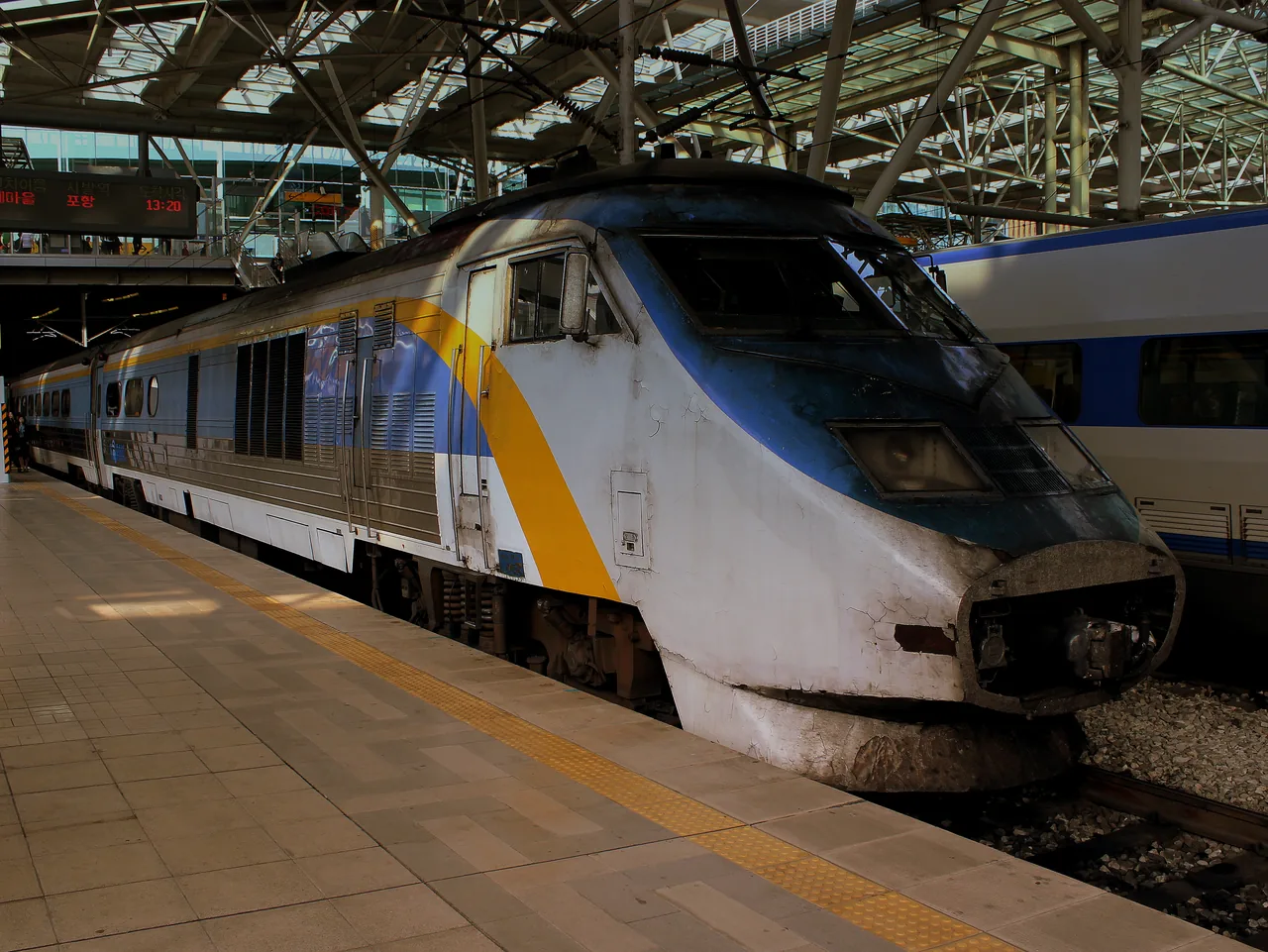
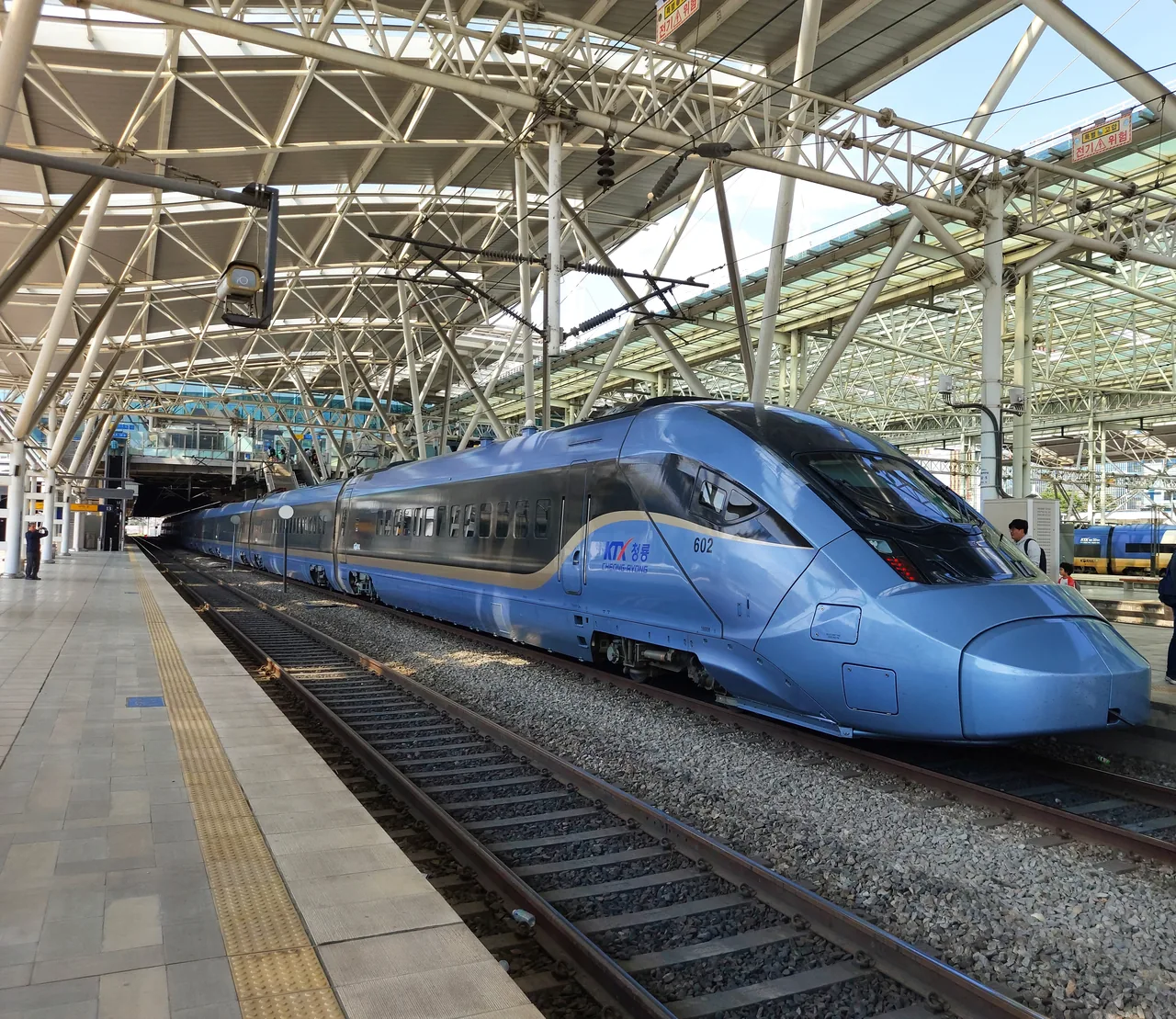
The KTX is Korea’s high-speed rail and the spine of almost any trip. It links the major cities at up to 300 km/h, runs frequently, and is comfortable, punctual and far less hassle than flying domestically.
| Popular KTX route | Time | Approx. fare (1 way) |
|---|---|---|
| Seoul → Busan | ~2.5 hrs | ~₩59,800 |
| Seoul → Gyeongju (Singyeongju) | ~2 hrs | ~₩49,000 |
| Seoul → Gangneung (east coast) | ~2 hrs | ~₩27,600 |
| Seoul → Jeonju | ~1.5–2 hrs | ~₩34,000 |
There’s also the SRT, a separate high-speed operator running the busy Seoul–Busan line from Suseo station in southeast Seoul, usually a touch cheaper. For travellers, KTX and SRT feel almost identical — book whichever fits your schedule and starting station.
How to book
- Online/app: the official Korail app and Let’s Korail site (English) let you book and store an e-ticket. SRT has its own app.
- At the station: ticket machines have English; staffed counters too. You can usually buy moments before departure off-peak.
- Seats: reserved is standard. Standing/non-reserved tickets exist when seats sell out.
4. Is a Korail Pass worth it?
The Korail Pass is a foreigner-only rail pass giving unlimited rides on KTX and regular Korail trains (but not SRT or city subways) over a set number of days. Whether it saves you money comes down to how much you ride.
| Pass type | Good for |
|---|---|
| Consecutive (3 or 5 days) | An intense stretch of city-hopping in a short window |
| Flexible (2 or 4 days within 10) | A relaxed trip with a few big train days spread out |
The maths is simple: a Seoul–Busan round trip alone is around ₩120,000. If your itinerary adds Gyeongju, Jeonju or Gangneung on top, a pass can beat buying separate tickets — and it saves you booking each leg. For a single out-and-back, individual tickets are usually fine. If Jeonju is on your list, see the Jeonju travel guide: far more Jeonju trains leave from Yongsan than from Seoul Station, so searching Seoul alone makes the day look sold out.
5. Regular & scenic trains (ITX, Mugunghwa, tourist lines)
Not every trip needs the bullet train. Korail’s regular trains are cheaper, reach smaller towns, and the slower ones are genuinely scenic.
- ITX-Saemaeul / ITX-Cheongchun — fast, comfortable limited-express trains; great for medium hops like Seoul–Chuncheon.
- Mugunghwa — the cheap, all-stops workhorse. Slow but characterful and very affordable for shorter distances.
- Tourist & scenic trains — themed routes like the coastal and mountain lines (e.g. the east-coast Sea Train, the V-Train through Baekdudaegan valleys) are an experience in themselves.
6. Intercity & express buses: where they beat the train
Korea’s bus network is superb and often the smarter choice — it reaches places trains don’t, runs constantly, and costs less. There are two flavours:
- Express buses (고속버스) — long-distance, motorway routes between major cities. Comfortable, with premium “first-class” seats (28-seat coaches with reclining loungers) on popular routes.
- Intercity buses (시외버스) — shorter and regional, stopping at smaller towns the express network and trains skip.
Buses leave from bus terminals (every city has at least one big one). Buy tickets at the counter, from machines, or on the Kobus / bus apps. They’re punctual and the motorways are good, though heavy holiday traffic can stretch journey times.
7. City subways & metros
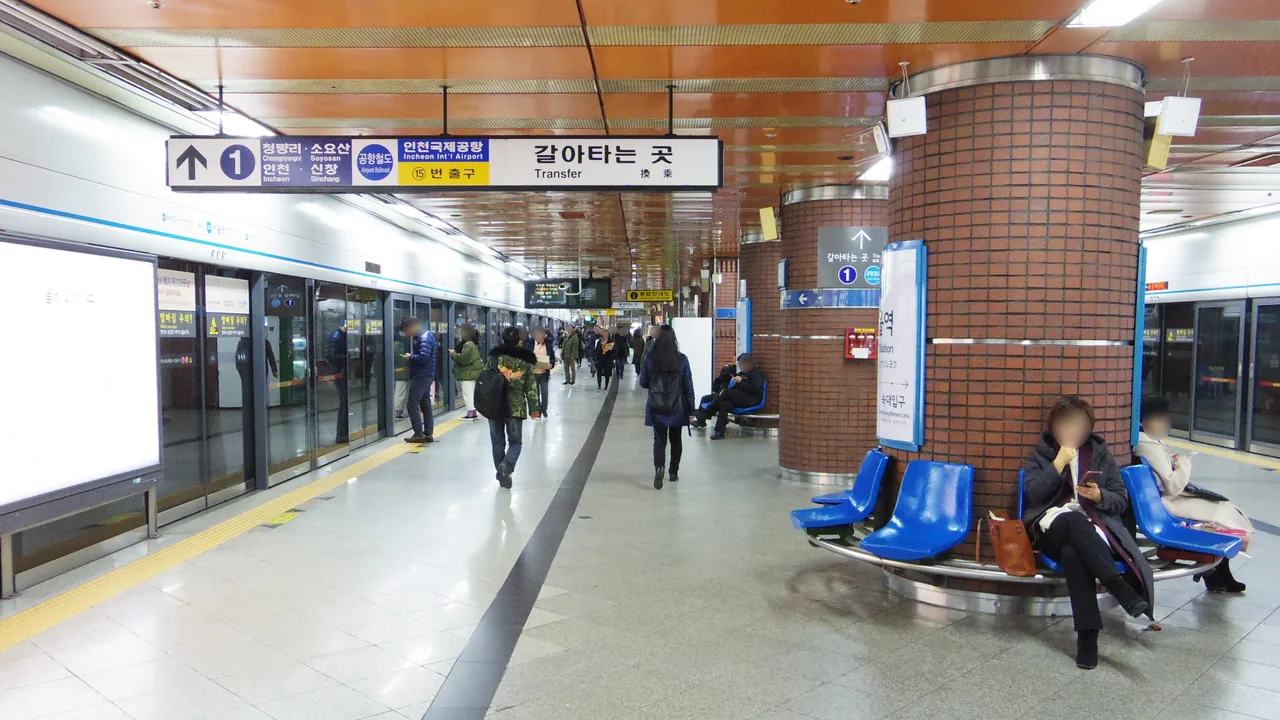
Korea’s city subways are world-class: clean, cheap, frequent, and signed in English with every station numbered. Five cities have metro systems — Seoul (the big one, plus a vast greater-Seoul network), Busan, Daegu, Daejeon and Gwangju. Seoul runs nineteen lines, so it has its own Seoul subway guide. The station where the most lines meet is not Seoul Station.
- Fares — a base ride is around ₩1,400–1,550, rising slightly with distance. Just tap your T-money in and out.
- Finding your way — stations have a number (e.g. “Line 2, Station 222”), so you can navigate even without reading Korean. Exits are numbered too — apps tell you which exit to take.
- Transfers — free between lines within the time limit; tap-off, tap-on only when leaving the system.
8. City buses: the colour-coded system
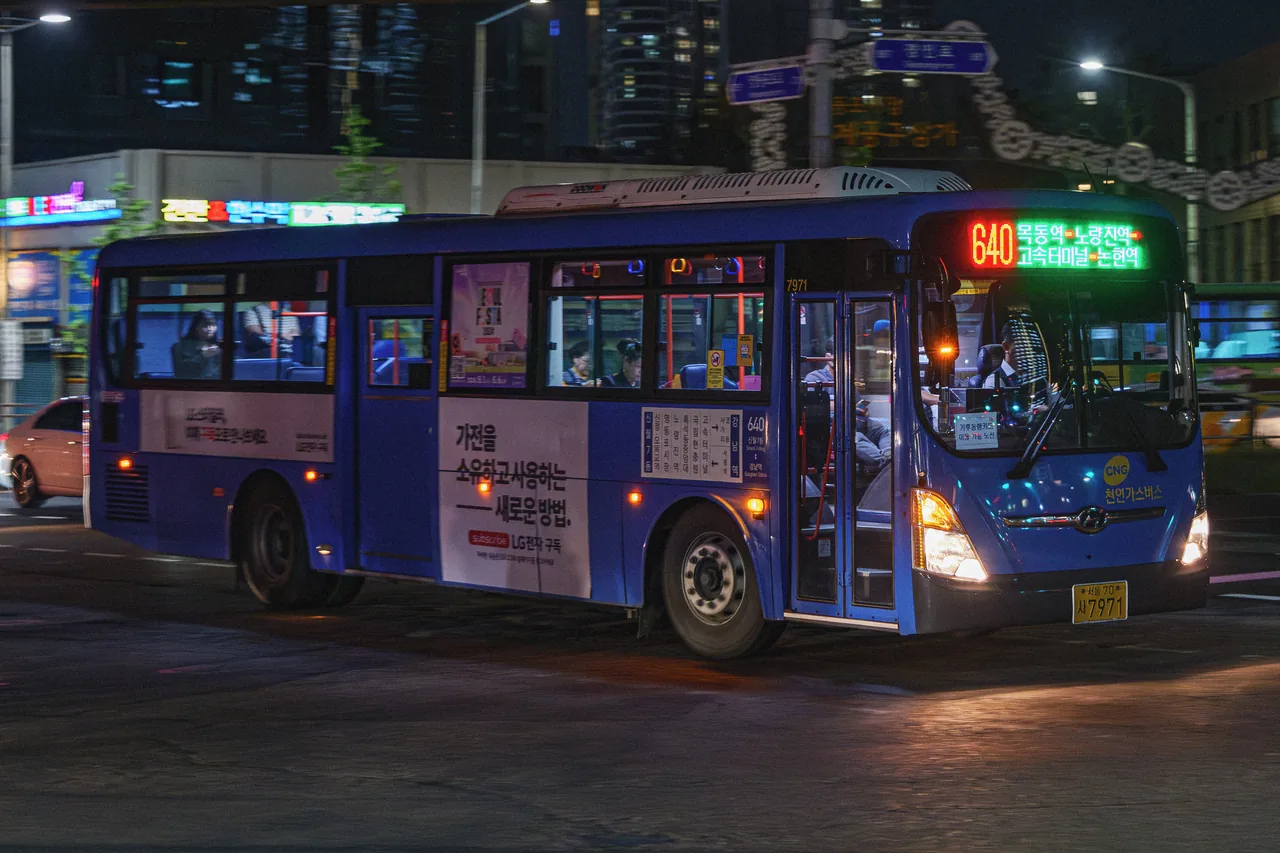
City buses fill in everywhere the subway doesn’t reach, and they’re easy once you know the system. In Seoul, buses are colour-coded by job:
| Colour | Type | What it does |
|---|---|---|
| Blue | Trunk (간선) | Long routes across the city on main roads |
| Green | Branch (지선) | Shorter feeder routes linking to subway stations |
| Red | Wide-area (광역) | Express routes out to suburbs and satellite cities |
| Yellow | Circular (순환) | Loops around a city-centre district |
How to ride: tap your T-money as you board through the front, tap again on the rear reader as you get off (distance-based fare). Press the bell before your stop. Your maps app tells you the bus number, where to board and how many stops to ride.
9. Taxis & ride-hailing (Kakao T)
Taxis in Korea are cheap, metered and everywhere, and they’re a stress-free way to cover the gap when the subway’s closed or you’ve got luggage. No tipping — ever.
- Hailing — flag one on the street, or use Kakao T, the app nearly everyone uses. It books a cab to your pin, shows the route, and you can pay in-app.
- Fares — a regular taxi starts around ₩4,800 in Seoul and ticks up by distance and time; a late-night surcharge applies after midnight. Short hops are very affordable.
- Types — regular (orange/silver/white), plus pricier “Deluxe” (모범) black taxis and larger jumbo vans for groups and luggage.
- Paying — card and T-money are accepted in virtually all taxis; cash works too.
10. From the airport to the city
Korea’s airports are well connected, so getting downtown is straightforward wherever you land.
- Incheon (ICN) → Seoul — the AREX train is the easiest: an Express runs nonstop to Seoul Station in about 43 minutes, while the cheaper all-stop service connects to the metro. Airport limousine buses drop you near major hotels, and taxis run 24/7.
- Gimpo (GMP) — Seoul’s domestic-and-close-international airport sits right on the subway and AREX, minutes from the city.
- Gimhae (PUS) → Busan — the Busan–Gimhae light rail plus subway, or a limousine bus, gets you into town; see our Gimhae Airport to Busan guide for the step-by-step.
- Jeju (CJU) — limousine and local buses run from the terminal; many visitors pick up a rental car here.
11. Domestic flights (mostly Jeju)
For the mainland, the train almost always beats flying once you count airport time. The big exception is Jeju Island, which has no train or bridge — you reach it by plane or ferry.
- Routes — Gimpo (Seoul)–Jeju is one of the busiest air routes on Earth, with flights every few minutes; Busan–Jeju is frequent too.
- Cost & time — flights are cheap and quick (around an hour in the air), but factor in airport check-in and transfers either end.
- Booking — low-cost carriers (Jeju Air, Jin Air, T’way, Air Busan) and the majors (Korean Air, Asiana) all fly it; book on their apps or a comparison site.
12. Ferries: islands & international
Korea is a peninsula with thousands of islands, so ferries matter for certain trips.
- To Jeju — overnight and daytime car ferries run from ports like Mokpo, Wando and Busan. Slower and cheaper than flying, and the only way to bring a car to the island.
- Smaller islands — ferries reach hundreds of islands off the south and west coasts (Ulleungdo, the Yeosu and Tongyeong island clusters, and more).
- International — fast ferries and overnight boats link Busan with Japan (Fukuoka, Osaka, Shimonoseki) — a fun alternative to flying; see our Busan to Fukuoka ferry guide.
13. The apps that run Korea’s transport
This is the one thing that genuinely surprises visitors: Google Maps does not give transit or driving directions in Korea (it’s a data-export issue, not a bug). Walking directions are patchy too. Download the local apps before you go and you’ll navigate like a resident.
- Naver Map / KakaoMap — the two map apps Koreans actually use. Full subway, bus, walking and driving directions in English, with real-time arrivals and the right exit numbers.
- Kakao T — taxis, plus navigation and other transport. The standard way to call a cab.
- Korail / SRT — book and store train tickets.
- Subway apps — dedicated Seoul/Busan metro apps show timetables, first/last trains and which car to board for your exit.
14. Renting a car & driving in Korea
For most first trips you won’t need a car — public transport is so good that driving in cities is more hassle than help. But there’s one place it shines: Jeju, where the island’s sights are spread out and buses are limited. The countryside and the coast can also reward a road trip.
- Licence — you need an International Driving Permit (IDP) alongside your home licence; get the IDP before you travel (you can’t issue it in Korea).
- The basics — Koreans drive on the right, road signs are bilingual on main routes, and tolls are common on expressways (rentals usually have a hi-pass transponder).
- Navigation — use a Korean sat-nav or KakaoMap/Naver in driving mode; set the destination by phone number or map pin.
15. What transport costs in Korea
Transport is one of the best-value parts of a Korea trip. Here’s a rough sense of what you’ll pay (approximate, and prices nudge up over time):
| Ride | Approx. cost |
|---|---|
| Subway / city bus (one ride) | ~₩1,400–1,550 |
| Taxi base fare (Seoul) | ~₩4,800 + distance |
| KTX Seoul → Busan (1 way) | ~₩59,800 |
| Express bus Seoul → Busan | ~₩28,000–42,000 |
| Domestic flight Seoul ⇄ Jeju | ~₩30,000–90,000 |
| Incheon AREX Express → Seoul | ~₩11,000 |
Day to day, you’ll spend very little on local transport — a few thousand won. The bigger line items are intercity legs (KTX or a Korail Pass) and any Jeju flights. For a full trip budget, see our Korea money guide.
16. Smart tips & mistakes to avoid
A handful of habits make Korean transport effortless:
- Always tap off. Subways and many buses charge by distance — forget to tap out and you’ll overpay or get blocked next time.
- Mind the last train. City subways stop around midnight (a bit earlier on some lines). After that it’s taxis or night buses — check the last-train time in your app.
- Avoid rush hour with luggage. 8–9am and 6–7pm trains and buses are packed. Travel off-peak or take a taxi with bags.
- Book intercity travel before holidays. Seollal and Chuseok empty the cities and fill every train and bus — reserve early and check dates in our best time to visit Korea guide.
- Use luggage lockers and delivery. Coin lockers fill stations; same-day luggage transfer services exist too, so you can sightsee hands-free on travel days.
- Keep some cash for top-ups. Many T-money recharge points are cash-only, even though almost everything else takes cards.
🎡Things to Do72
🍜Food8
🏨Where to Stay4
🚇Getting Around11
🧭Travel Tips25
📌More3
Getting around Korea: FAQ
Plan the whole trip: read our complete Korea Travel Guide
Images: Hero: calflier001 (CC BY-SA 2.0) · 생각하는 나무 (CC BY-SA 4.0) · LERK (CC BY-SA 4.0) · TurnOnTheNight (CC BY-SA 4.0), via Wikimedia Commons.