
Dadaepo Beach and the Sunset Fountain of Dreams: Busan’s Best-Timed Evening
Four separate timetables govern this stretch of sand, and most visitors only find out when the fountain stays dark or a loudspeaker tells them to leave. Here is the running order that makes all four line up.
| Where | End of Metro Line 1, Dadaepo Beach Map station (095), about 80 minutes from Nopo at the far northern end of the line |
|---|---|
| What it costs | Nothing. Beach, fountain, Molundae Map, Amisan Observatory Map and the wetland boardwalk are all free, and the observatory car park is free too |
| Fountain season 2026 | 24 April to 30 September only, closed every Monday, with construction ending the season a month early |
| Worst possible day | Monday, when the fountain is dark and the observatory is shut |
| Evening finish | 20:20 on weekdays, 21:20 when the second weekend show runs; remember you are leaving from the end of the line |
| Best months | July and August for the beach, September for a short gap between sunset and the show, November to January if you want the estuary view in low light |
1. Why Dadaepo is not just another Busan beach
2. The Sunset Fountain of Dreams: full 2026 operating data
3. Sunset times at Dadaepo, month by month
4. The running order that actually works, by season
5. Four things you will read about Dadaepo that are wrong
6. The beach itself: season, hours and what is on the sand
7. Getting there, and the last-train problem
8. Molundae: a headland the army still runs
9. Amisan Observatory and the shifting sandbars of the Nakdong
10. Gouni Ecological Trail and Dadaepo Beach Park
11. Pairing Dadaepo with the rest of west Busan
12. Photographing Dadaepo: flats, reflections and the blue hour maths
13. Practical warnings before you commit an evening
Dadaepo sits at the mouth of the Nakdong River, forty-odd minutes of metro beyond the Busan most visitors ever see, and it rewards the trip in a way that Haeundae cannot: an enormous shallow beach that drains into mirror-flat sand at low tide, a headland that has been a military zone since long before it was a tourist site, and the largest floor fountain in the world firing to music after dark. What almost no one tells you is that the fountain, the sunset, the headland gate and the observatory all keep different hours; pick the wrong day and three of the four are shut. This page fixes the sequence for you, month by month, and it sits alongside our full complete Busan travel guide if you are still building the rest of the trip.
1. Why Dadaepo is not just another Busan beach
Dadaepo is the only beach in Busan where the main attraction is a schedule, not a view. Four timetables overlap here, they are set by four different bodies, and they do not agree with each other.
| Timetable | What it says | Who sets it |
|---|---|---|
| Music fountain | 20:00 from April to August, 19:30 in September, closed every Monday | Saha District |
| Sunset | 19:38 in mid-July, 18:32 in mid-September, 17:13 in mid-December | Astronomy |
| Molundae headland gate | Out by 20:00 April to October, out by 18:00 November to March | The army |
| Amisan Observatory | 09:00 to 18:00, last entry 17:00, closed Mondays | Saha District |
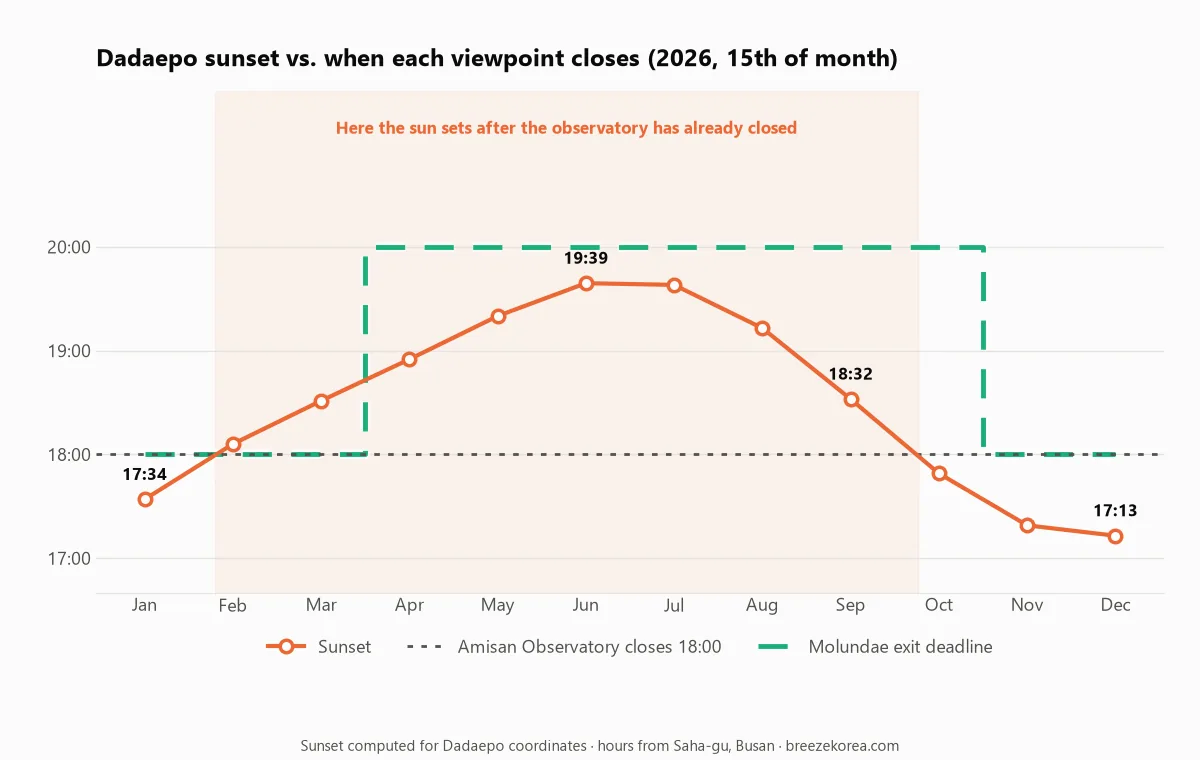
Read across that table and the problem appears immediately. For eight months of the year the observatory shuts before the sun goes down, and in summer the headland empties at exactly the hour the fountain begins.
That is the real subject of this page. Everything else here — the beach season, the boardwalk, the photography — depends on getting those four rows into a single working order.
2. The Sunset Fountain of Dreams: full 2026 operating data
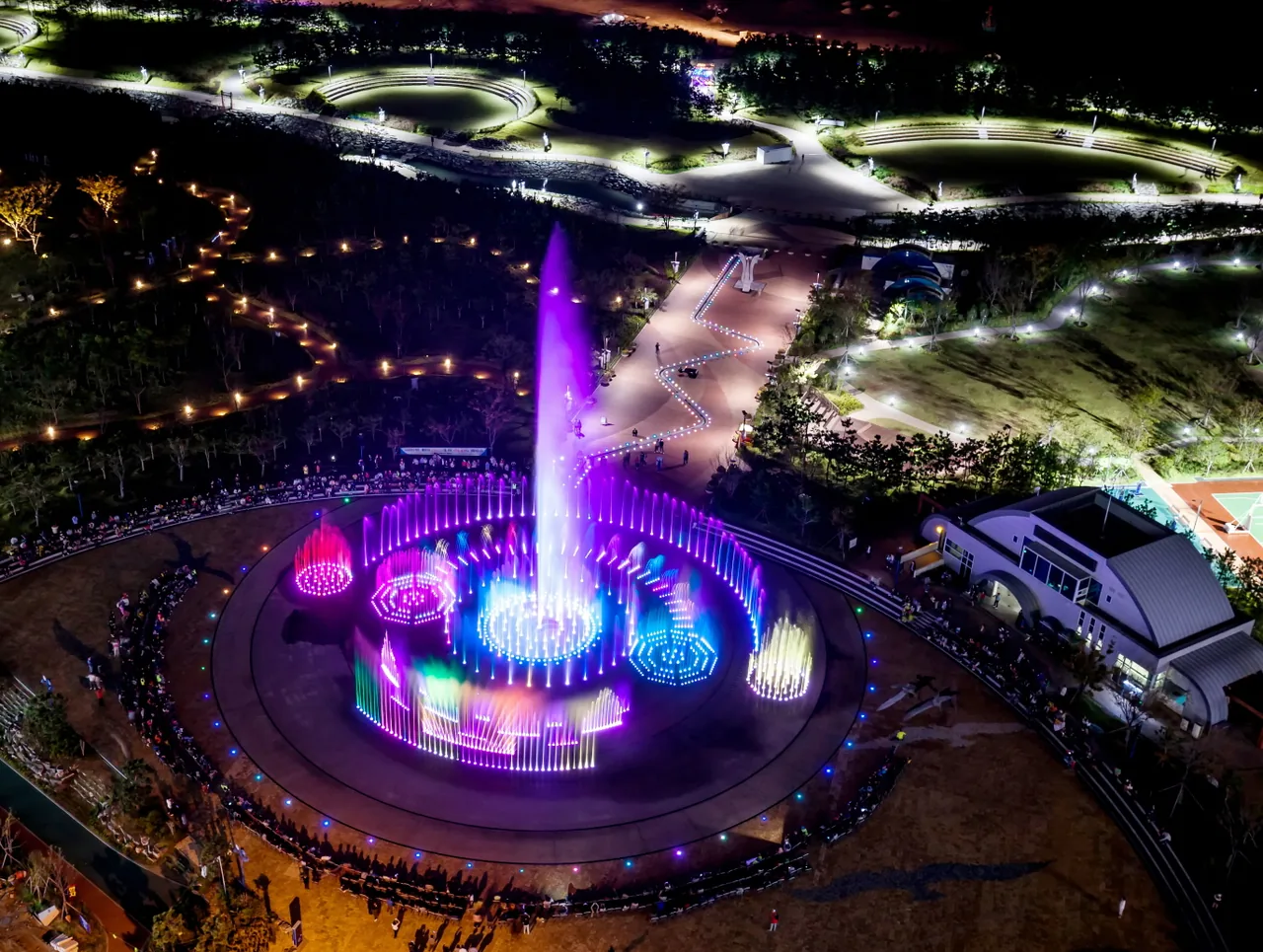
The fountain is free, it is enormous, and its 2026 calendar is shorter than almost every travel database currently says.
| Item | 2026 detail |
|---|---|
| Season | Friday 24 April to Wednesday 30 September |
| Closed | Every Monday, including Mondays that fall on public holidays |
| Admission | Free |
| Why it ends early | Facility construction begins in October, cutting the usual season short |
| Cancellation | Heavy rain or strong wind |
Music show times
| Period | Weekdays | Weekends and public holidays |
|---|---|---|
| April to August | 20:00, one show, 20 minutes | 20:00 and 21:00, 20 minutes each |
| September | 19:30, one show, 20 minutes | 19:30 and 20:30, 20 minutes each |
Note the half-hour shift on 1 September. Plenty of people arrive in early September expecting 20:00 and reach the plaza as the crowd is leaving.
Daytime water play
From May to September the same floor runs a non-musical water-play programme in the afternoon, aimed squarely at children.
| Slot | Duration | Months |
|---|---|---|
| 14:00 | 20 minutes | May to September |
| 15:00 | 20 minutes | May to September |
| 16:00 | 20 minutes | May to September |
| 17:00 | 20 minutes | May to September |
The size, and why it holds a record
| Measure | Figure |
|---|---|
| Opened | 27 March 2010, registered that same day as the world’s largest floor fountain |
| Floor area | 2,538 square metres |
| Diameter | 60 metres |
| Circumference | 180 metres |
| Maximum jet height | 55 metres |
| Sub-fountains | 29 of them, across 20 different types, including crane-wing, rainbow, sunflower and mist effects |
3. Sunset times at Dadaepo, month by month
These are computed for the beach itself at 35.0455 degrees north, 128.9660 degrees east, in Korean Standard Time, with the standard atmospheric refraction correction applied. The same method reproduces Seoul’s published solstice times to within a minute, so you can plan around them to the quarter-hour with confidence.
| Month (15th) | Sunset | Month (15th) | Sunset |
|---|---|---|---|
| January | 17:34 | July | 19:38 |
| February | 18:06 | August | 19:13 |
| March | 18:31 | September | 18:32 |
| April | 18:55 | October | 17:49 |
| May | 19:20 | November | 17:19 |
| June | 19:39 | December | 17:13 |
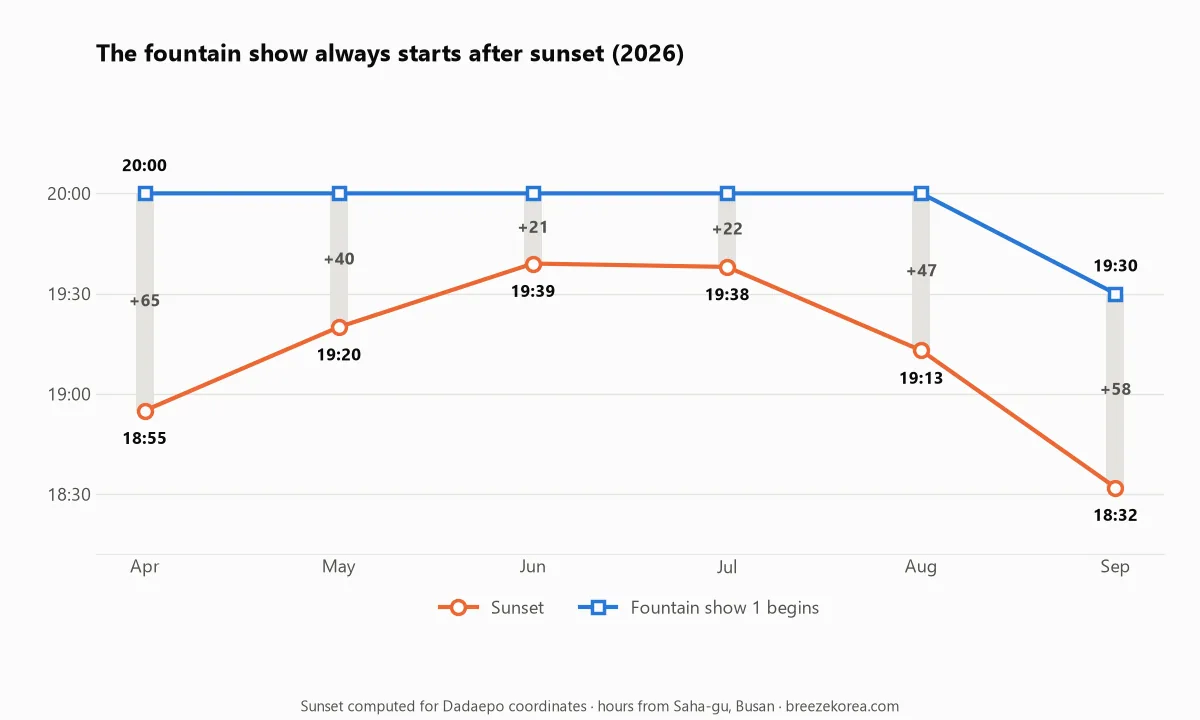
The interesting curve is not the summer peak but the September collapse. The sun loses more than an hour between mid-August and the end of September, which is precisely why the fountain moves its show forward.
Dated sunsets across the fountain season
| Date | Sunset | Show starts | You wait |
|---|---|---|---|
| 24 April (opening night) | 19:03 | 20:00 | 57 minutes |
| 21 June | 19:41 | 20:00 | 19 minutes |
| 1 July | 19:42 | 20:00 | 18 minutes |
| 31 July | 19:28 | 20:00 | 32 minutes |
| 15 August | 19:13 | 20:00 | 47 minutes |
| 31 August | 18:53 | 20:00 | 67 minutes |
| 15 September | 18:32 | 19:30 | 58 minutes |
| 30 September (closing night) | 18:10 | 19:30 | 80 minutes |
4. The running order that actually works, by season
There is only one sequence that clears all four timetables in summer, and it runs south to north, ending at the fountain. Here it is as a clock, using mid-July numbers.
September, when the clock compresses
Mid-September sunset is 18:32 and the show moves to 19:30, so you get roughly an hour of full darkness in between. That is the month to eat between the two, because unlike July the show plays out against a properly black sky and the colour reads better.
November to February, the only observatory season
With no fountain running, winter reverses everything. Sunset falls between 17:13 and 17:34, which is the one window in the year when it happens before Amisan Observatory closes at 18:00.
| Season | Anchor | Watch sunset from | Ends at |
|---|---|---|---|
| July to August | Fountain 20:00 | Beach or Molundae deck | 20:20, or 21:20 at weekends |
| September | Fountain 19:30 | Beach or boardwalk | 19:50, or 20:50 at weekends |
| November to February | Observatory 18:00 | Amisan Observatory | 18:00 |
5. Four things you will read about Dadaepo that are wrong
1. That you can watch the sunset from Amisan Observatory
You usually cannot. The observatory closes at 18:00 with last entry at 17:00, and at this latitude the sun sets after 18:00 from 9 February to 8 October.
That leaves 9 October to 8 February as the only period when a sunset is physically visible from inside. For the other eight months the building is locked before the sun touches the water.
2. That the fountain runs from April to October
It normally does, and tourism databases still print it, but 2026 is not a normal year. Facility construction starts in October, so the season is 24 April to 30 September and nothing runs after that.
The Monday closure is the second half of this myth. It applies even when the Monday is a public holiday, which catches out visitors on long weekends.
3. That Molundae is open for a stroll whenever you like
The headland is an active military zone with soldiers stationed at the gate. Access is 05:00 to 20:00 from April to October and 06:00 to 18:00 from November to March, with announcements 15 minutes and five minutes before closing.
Sections of the interior are simply off limits, so the path breaks in places, and the area beyond Dadaejin Dongheon towards the Jeong Un memorial includes restricted ground.
4. That the city tour bus solves Dadaepo
This one costs people an entire day. The Orange Line from Busan Station is not a hop-on circular at all but a themed, once-daily excursion, and the timings make a Dadaepo sunset impossible.
| Orange Line | Reality |
|---|---|
| Frequency | Once a day, departing 10:00, returning 18:00 |
| Duration | Seven to eight hours |
| Not running | Mondays and Tuesdays |
| Fare | 25,000 won adult, 20,000 won child, plus 3,000 won for the eco cruise |
| Minimum | Cancelled if fewer than eight people book |
| Route | Busan Station, Songdo Beach, Gamcheon Culture Village, National Assembly Busan Library, lunch, Nakdong Eco Center, Nakdong eco cruise, Museum of Contemporary Art |
It finishes at 18:00. Sunset in July is 19:38 and the fountain starts at 20:00, so the tour is over before either happens. Get the full picture on our how the Busan City Tour bus works page, then take the metro instead.
6. The beach itself: season, hours and what is on the sand
Dadaepo opens for swimming later than the famous two. Haeundae and Songjeong open on 26 June in 2026; Dadaepo runs a straight two months.
| Item | 2026 |
|---|---|
| Swimming season | 1 July to 31 August |
| Hours | 09:00 to 18:00 |
| Water | Very gradual shelf, large tidal range, extensive sandbars exposed at low water |
| Cost | Free |
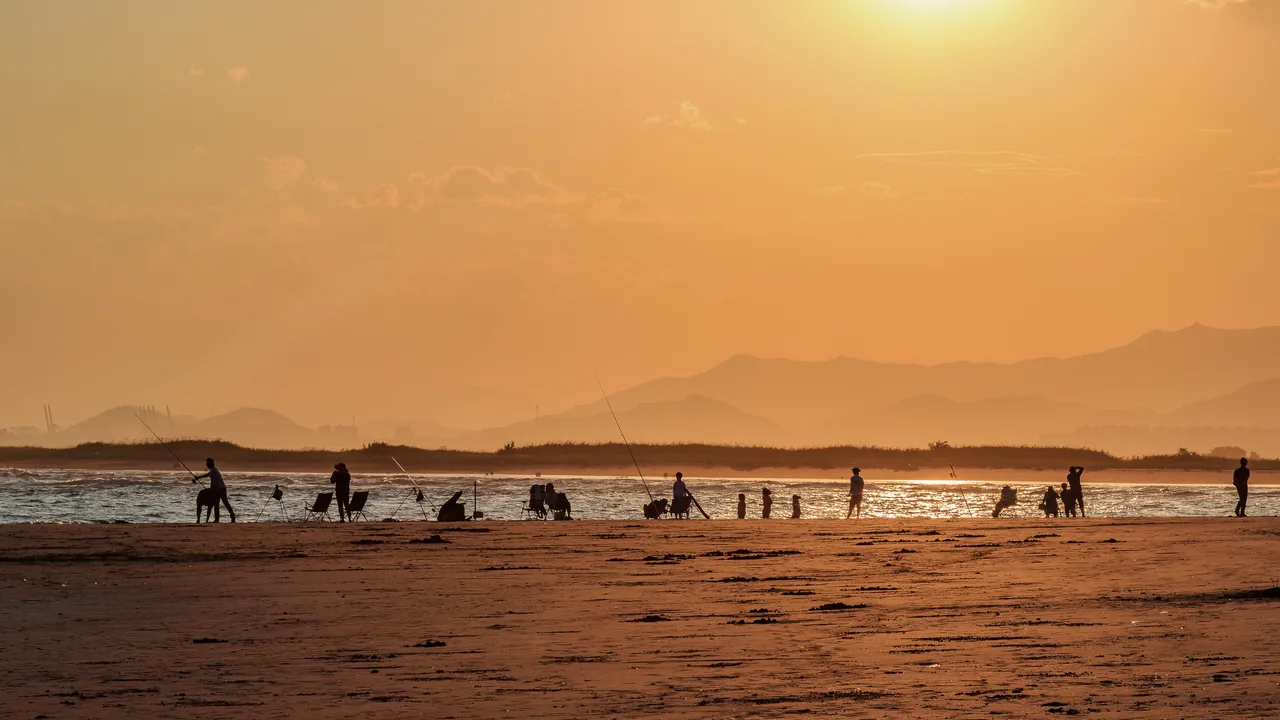
The gentle gradient is the reason families come out here rather than fight for towel space in the east of the city. It is also why the reflection photographs work: at low tide you get hundreds of metres of wet, almost level sand.
Facilities
| Facility | Count |
|---|---|
| Shower blocks | 2 |
| Changing rooms | 2 |
| Toilets | 8 |
| Foot-wash taps | 6 |
| Drinking fountains | 6 |
| Parking spaces | 400 |
If you are ranking Busan’s shoreline against itself, our every beach in Busan compared comparison puts Dadaepo next to the other six and explains where it wins and where it does not.
7. Getting there, and the last-train problem
Dadaepo Beach station is the literal end of Metro Line 1, station number 095. The Sinpyeong to Dadaepo Beach extension opened on 20 April 2017 and completed the line.
| Destination | Station | Exit or connection |
|---|---|---|
| Beach, fountain, Molundae | Dadaepo Beach (095, terminus) | Exit 4 |
| Amisan Observatory | Dadaepo Harbor, one stop earlier | Exit 1, then Saha-gu 15 village bus to Molundae Cathedral, two minutes on foot |
End to end, Nopo at the northern terminus to Dadaepo Beach at the southern one is about 80 minutes, which tells you what you need to know: this is a genuine cross-city journey, not a suburban hop.
Driving is comparatively easy by Busan standards: 400 spaces at the beach and free public parking at Amisan Observatory. For fare cards, transfer rules and how Line 1 connects to the rest of the network, see our getting around Busan guide.
8. Molundae: a headland the army still runs
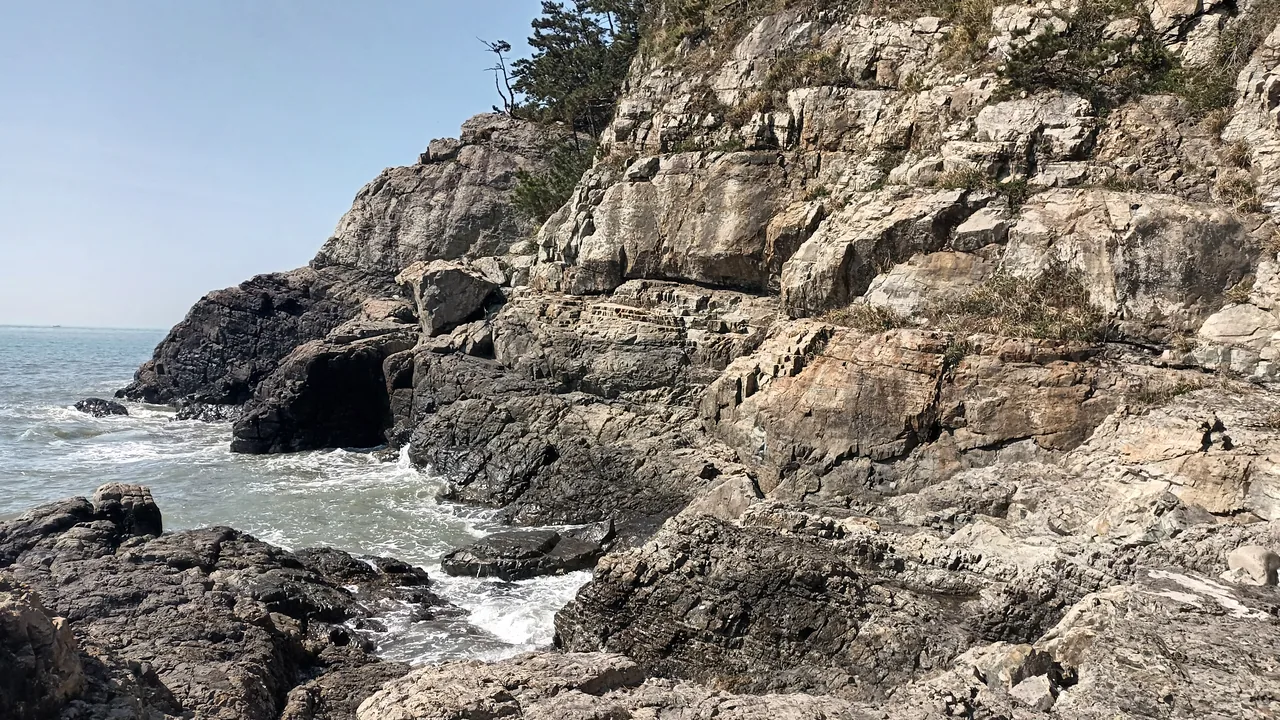
Molundae is the wooded promontory closing the southern end of the beach, and it is a Busan Metropolitan City Monument, number 27. The name comes from the sea itself: the currents here throw up fog and low cloud often enough that the headland regularly disappears altogether.
| Season | Open | Must be out by |
|---|---|---|
| April to October | 05:00 | 20:00 |
| November to March | 06:00 | 18:00 |
Those hours are enforced, not advisory. Soldiers are stationed at the gate, and announcements go out 15 minutes and five minutes before closing.
What is actually on the headland
- The sunset deck, a 346-metre timber deck walkway laid in March 2010, and the only elevated sunset position that stays open through summer evenings
- The Jeong Un memorial stele, City Monument number 20, for the Nokdo commander who served under Admiral Yi Sun-sin and was killed in these waters during the Imjin War
- Dadaejin Dongheon, the old district government hall, City Cultural Heritage number 3
- Hwasondae, the rocky point on the eastern side
Because military facilities and closed areas sit inside the perimeter, the walking route is not one continuous loop. The path ends abruptly in one or two places; just turn round and retrace your steps.
The address is San 144, Dadae-dong, Saha-gu, and the enquiry number is 051-220-4524.
9. Amisan Observatory and the shifting sandbars of the Nakdong
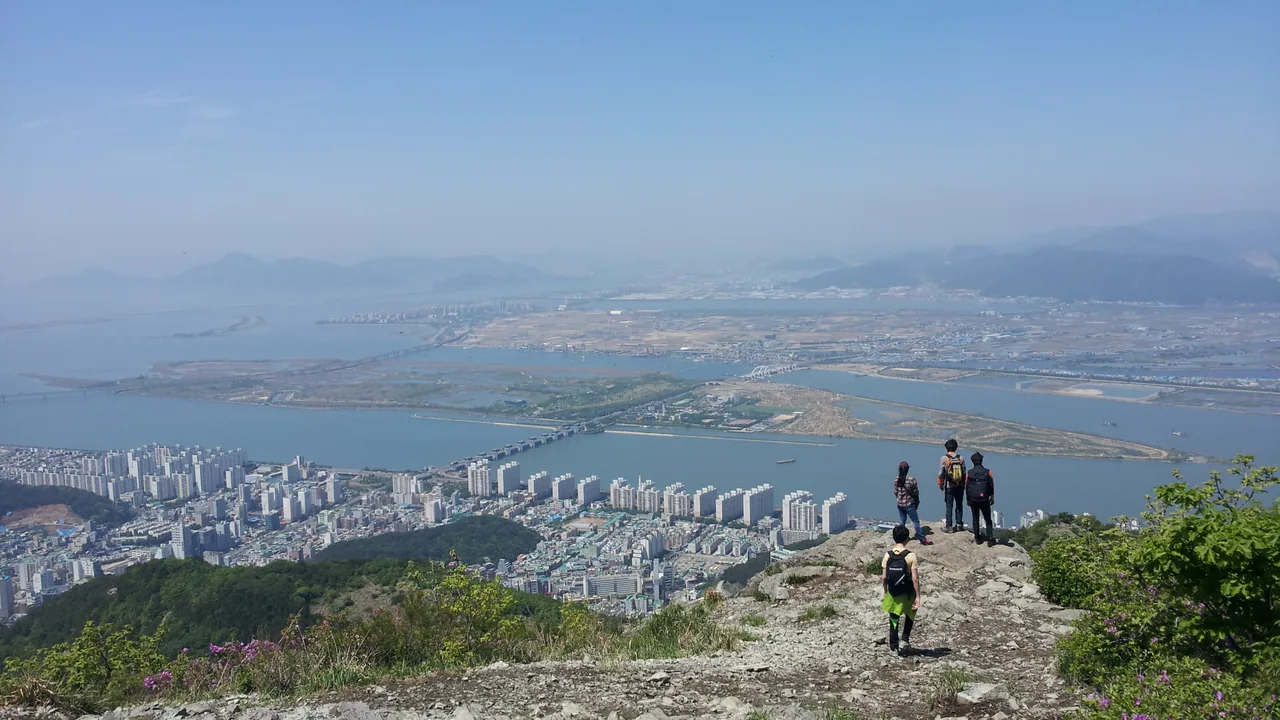
Amisan Observatory looks out over the Nakdong River estuary from the hillside north of the beach. It is free, it is indoors, and it is the best explanation you will get of why this coastline looks the way it does.
| Item | Detail |
|---|---|
| Hours | Tuesday to Sunday, 09:00 to 18:00 |
| Last entry | 17:00 |
| Closed | Mondays and 1 January |
| Admission | Free, and the public car park is free too |
| Address | 77 Dadaenakjo 2-gil, Saha-gu |
| Enquiries | 051-265-6863 to 4 |
What you are looking at
The view is of four sandbars built entirely from river sediment, sitting where the Nakdong meets the sea: Doyodeung, Sinjado, Baekhapdeung and Jangjado. They are landforms in motion, deposited and reshaped by the river, and they are a major stopover for migratory birds.
Bring binoculars in winter if birds interest you at all. The same cold months are the only ones when the light show outside the window happens before closing time.
10. Gouni Ecological Trail and Dadaepo Beach Park
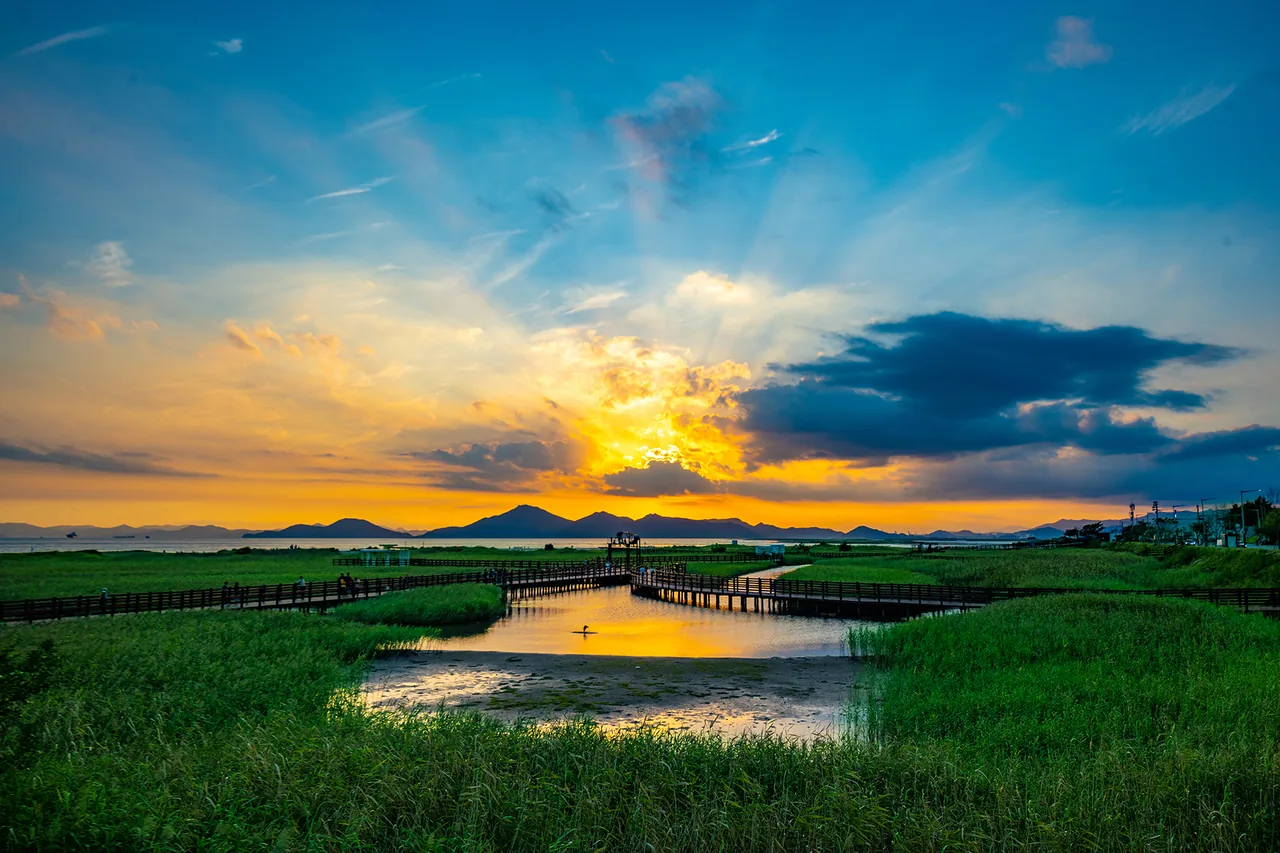
Behind the sand lies a natural wetland, and a timber boardwalk crosses it. Locally it is signed both as the Gouni Map Ecological Trail and as the Dadaepo ecological walk; they are the same thing, and it is free.
It is all reeds and silver grass, dense enough that in places the boardwalk is a corridor with walls of stems on both sides. In late September and October it turns bronze and the whole park changes character.
| Feature | Detail |
|---|---|
| Surface | Raised timber boardwalk over wetland |
| Cost | Free, no gate, no closing time posted |
| After dark | Landscape lighting installed, so it stays walkable at night |
| Best slot | The 30 to 60 minutes before sunset, then again after the fountain show |
It also gives you somewhere to go after the show, when the metro platform is at its worst and the plaza empties all at once.
11. Pairing Dadaepo with the rest of west Busan
Dadaepo is at the far southwestern corner of the city, and it pairs naturally with places on the same side rather than with Haeundae. Line 1 does most of the work.
| Pair with | Why it works | Time of day |
|---|---|---|
| Gamcheon Culture Village | Both sit in the western districts and both are best in strong light; the village is exhausting in the afternoon heat but excellent in the morning | Morning, then move south |
| Songdo Beach and its cable car | The cable car and skywalk fill a midday slot, and Songdo is the closest beach with a completely different character | Late morning to early afternoon |
| Nakdong estuary birdwatching | The sandbars you see from Amisan can be approached from the estuary side in winter | Daytime, October to February |
The obvious full day is Gamcheon first, Songdo second, Dadaepo for the evening, with the fountain closing the day. That order also matches the sun: you want the west-facing coast last.
If you are assembling a broader shortlist, our things to do in Busan roundup covers what else is worth a metro ride, and the best photo spots in Busan maps the best places in the city to stand with a camera including several within walking distance of this beach.
12. Photographing Dadaepo: flats, reflections and the blue hour maths
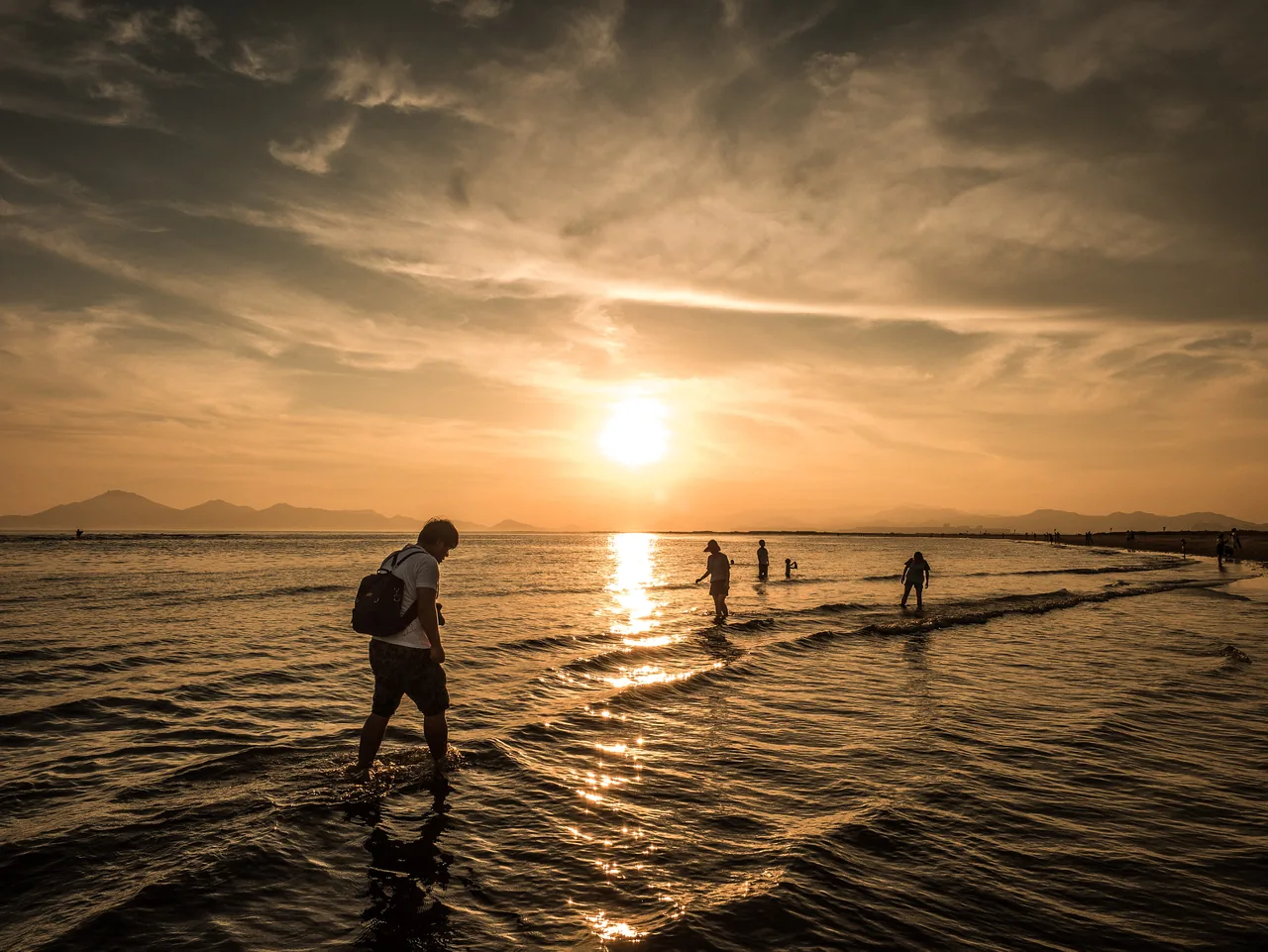
Dadaepo is the best reflection beach in Busan and it is not close. The tidal range is large, the slope is minimal, and at low water you get a mirror hundreds of metres wide facing directly into the setting sun.
- Check the tide, not the weather A high tide at sunset removes the entire reason to be here. The flats are the shot.
- Get low Standing height compresses the reflection to a smear. Crouching turns a puddle into a full mirrored sky.
- Put a person in it The flats have no scale of their own, which is why every good frame from here has a small silhouette somewhere in the middle distance.
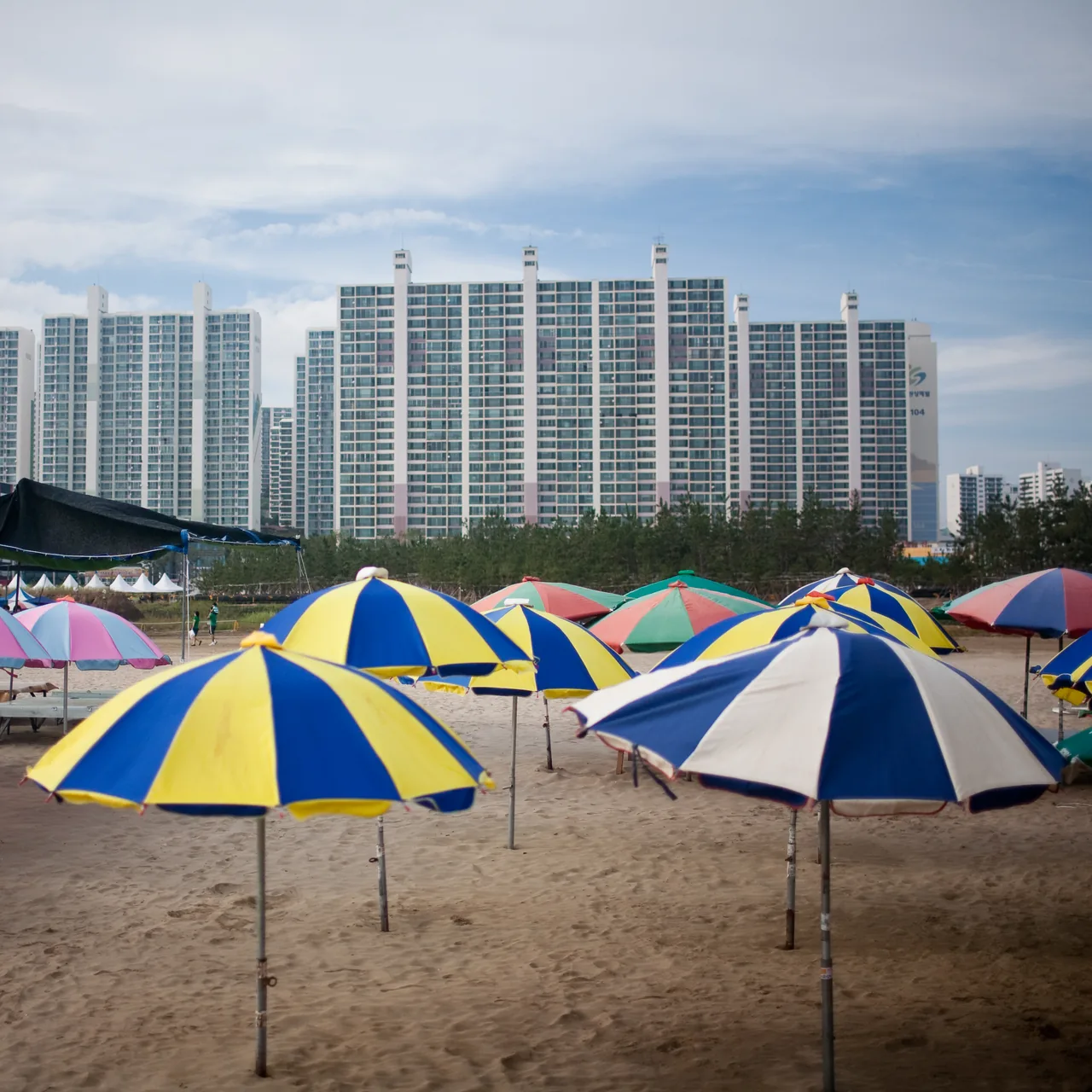
- Then turn around The colour behind you, over the apartment towers and Molundae, often outlasts the colour over the water.
The blue hour arithmetic
The useful question is how long after sunset the fountain starts, because that determines whether you are shooting the show against a coloured sky or a black one.
| Date | Sunset | Show | Gap | Sky at showtime |
|---|---|---|---|---|
| 15 June | 19:39 | 20:00 | 21 min | Still blue, jets read against colour |
| 15 July | 19:38 | 20:00 | 22 min | Still blue |
| 15 August | 19:13 | 20:00 | 47 min | Effectively dark |
| 15 September | 18:32 | 19:30 | 58 min | Fully dark, maximum jet contrast |
For the fountain itself, remember the jets reach 55 metres in a 60-metre circle. A wide lens from the back of the plaza holds the whole thing; from the front row you will be photographing water and nothing else.
13. Practical warnings before you commit an evening
- Weather cancellation. The show is called off for heavy rain or strong wind, and coastal wind here reaches that threshold without a storm behind it. Have a fallback.
- The Molundae announcement. Fifteen minutes and five minutes before closing, the loudspeaker sounds. It is not a suggestion, and the gate is a long way back from the far points of the headland.
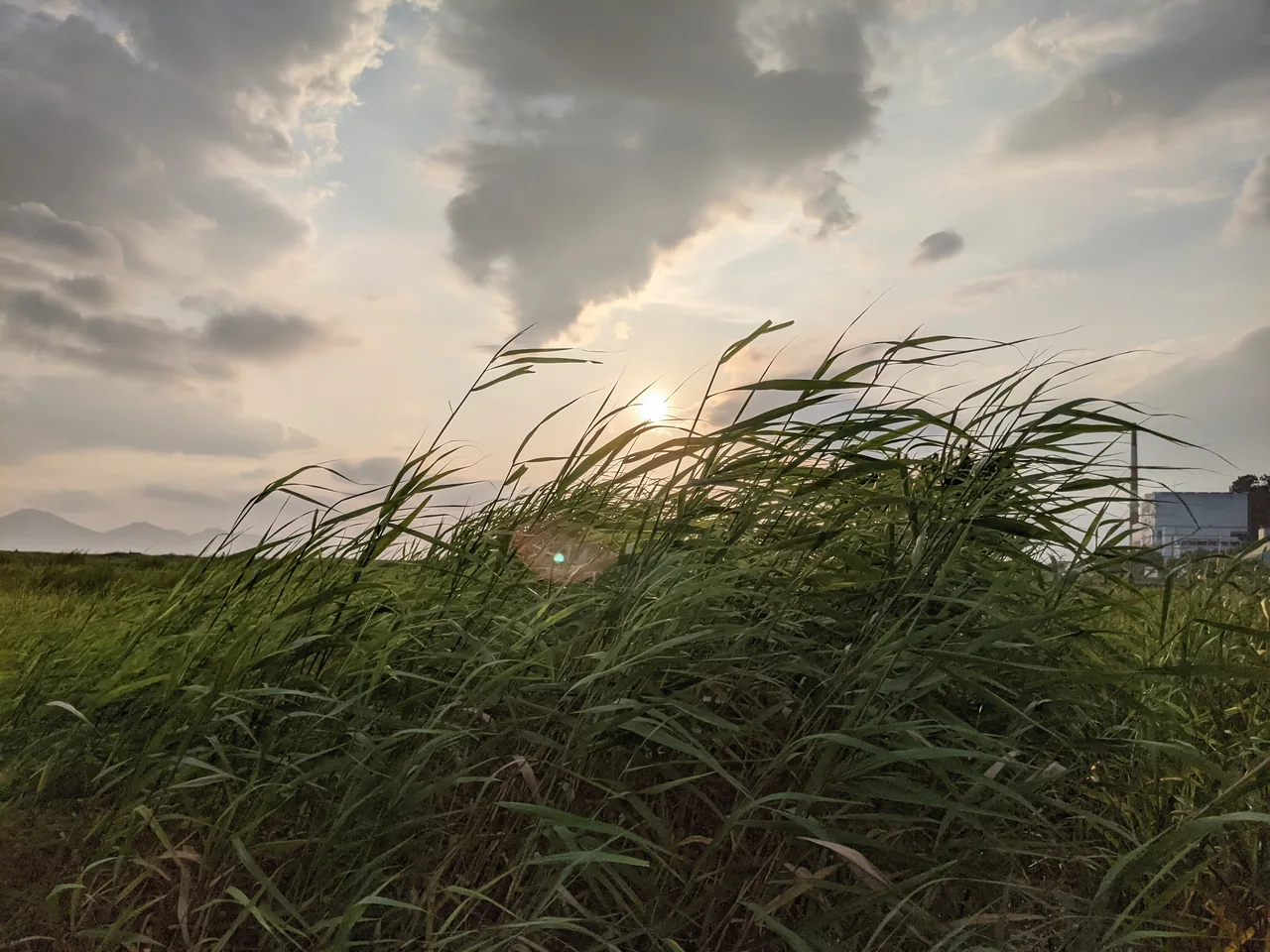
- Wind on the exposed sand. This is an open river-mouth beach; evenings are notably cooler and breezier than central Busan. Take a layer even in August.
- Insects on the boardwalk. It crosses a wetland and you will be on it around dusk, which is the worst combination. Repellent solves it.
- The 1 September shift. The show moves from 20:00 to 19:30 overnight. Anyone working from an August plan arrives late.
- Nothing runs after 30 September 2026. October onward is construction, so an autumn visit is a beach, headland and estuary trip only.
None of this makes Dadaepo a difficult day out. It makes it a day out that rewards a plan, which is more than can be said for most beaches.