Busan in July: Beach Season, the Monsoon & What to Do
July is peak summer in Busan — the beaches officially open, the sea turns warm and the city buzzes — but it is also the hottest, most humid and rainiest month, with typhoon season beginning. Here is exactly what to expect and how to make the most of it.
Last Updated: June 2026
The short version
July is when Busan’s beach season officially opens (around July 1), the sea warms to a swimmable ~24°C, and the full summer atmosphere kicks in.
It is also the wettest month of the year — peak monsoon (jangma) early on — so pack proper rain gear and plan around showers.
Late July the rains usually break into intense heat and humidity, and typhoon season begins, so watch the forecast.
It is hot, busy and lively: ideal if you came for beaches and summer, as long as you prepare for rain, heat and crowds.
July is Busan at full summer volume. This is the month the city’s famous beaches officially open, the sea finally warms up enough to swim, and the whole coast buzzes with parasols, festivals and warm nights. It is also, frankly, the most demanding month weather-wise: July is the rainiest, most humid month of the year, the peak of the jangma monsoon, and the start of typhoon season. None of that cancels a great trip — Busan is built for summer — it just means you plan around heat and rain. This guide breaks down July in detail: the weather week by week, when the monsoon peaks and breaks, what the beaches and sea are really like now they are open, what to pack, the best things to do (sunny, rainy or sweltering), and how busy and pricey it gets. Plan the rest of your trip with our complete Busan Travel Guide. If the rain sets in, our guide to Busan when it rains lists the indoor options with prices and opening hours.
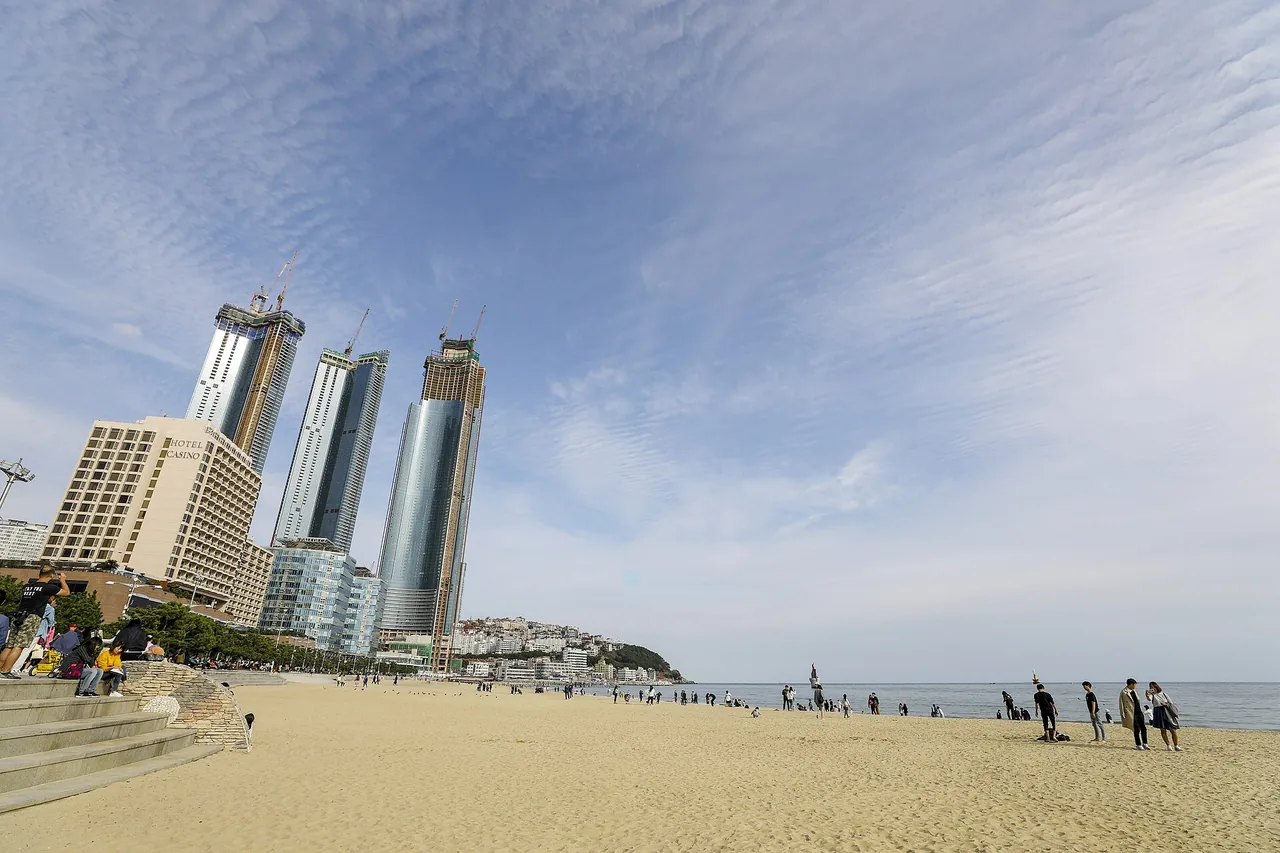
July is when Busan’s official beach season opens — Haeundae in full summer swing.
1. Is July a good time to visit Busan?
It depends on what you want. If you came for the beach and full summer energy, July is the month: the official beach season opens, the sea is warm enough to swim, lifeguards and parasols are out, and the city is alive with summer. That is exactly what many people picture when they imagine Busan.
The trade-off is the weather. July is the hottest, most humid and rainiest month of the year — the peak of the monsoon early in the month, breaking into fierce heat later, with typhoon season starting. So July rewards the prepared: come for the beaches and the buzz, but pack for rain and heat, keep your plans flexible, and check the forecast.
The verdict: July is brilliant for beach-and-summer travellers who don’t mind heat, humidity and the odd washout. If you want milder, drier and quieter weather, June (earlier) is the gentler choice.
🏨 In Haeundae the beachfront and the station area price differently. Decide how far you want to walk firstSee on Trip.com →See on Agoda →See on Expedia →Affiliate link — we may earn a commission at no extra cost to you.
2. Busan weather in July, in detail
July is hot and wet from start to finish, but it shifts character around the end of the monsoon:
Period
Daytime high
Feel & rain
Early July
~26–28°C
Hot, very humid, peak monsoon — frequent, heavy rain
Mid July
~28°C
Hot and sticky, still showery, humid
Late July
~28–30°C
Monsoon usually breaks → intense heat; typhoon risk
Highs average around 28°C and lows around 22–23°C, with very high humidity that makes it feel hotter. July is the wettest, least sunny month in Busan — expect roughly two weeks of rainy days and heavy monsoon downpours, especially in the first half. The sea is at a swimmable ~24°C.
Heat & humidity are real. Between the monsoon humidity and the late-July heat, stay hydrated, use sun protection, and build in cool, indoor breaks during the hottest hours.
3. Peak monsoon, then heat & typhoons
July’s weather really has two acts, and understanding them is the key to planning:
Early–mid July — peak jangma: the monsoon is at its height. This is the wettest stretch of the year, with frequent showers and heavy downpours between humid, warm spells.
Late July — the break & the heat: the monsoon front usually lifts in the second half of the month, and the weather flips to intense, sticky heat — peak summer proper.
Typhoon season: from July into early autumn, Busan can be brushed by typhoons. They are not constant, but a passing storm can bring a day or two of strong wind and rain, so keep an eye on the forecast.
Early–mid July
Late July
Main weather
Peak monsoon rain
Heat & humidity; possible typhoons
Beaches
Open but rain-interrupted
Hot, busy, full season
Plan
Flexible, rain backups ready
Beat the heat, hydrate, watch storms
Stay flexible. Whether it is monsoon rain or a passing typhoon, weather in July can shift fast — keep indoor options handy and don’t over-pack your daily schedule.
4. Beaches & the sea in July
This is the big reason to come in July: the beaches officially open (around the start of the month), and Busan becomes a proper summer beach city.
Swimmable, warm sea: the water is around 24°C — comfortable for a dip — with lifeguards, parasols, rental gear and the full beach setup in place.
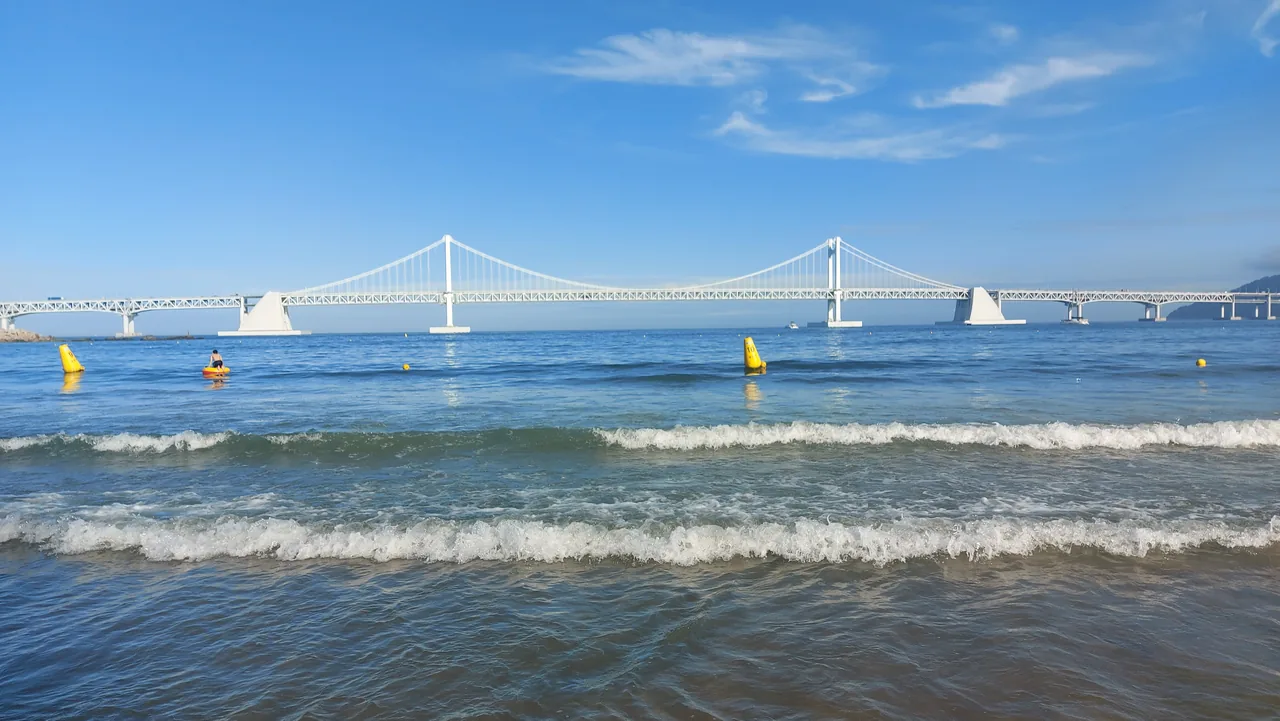
The big beaches buzz:Haeundae and Gwangalli lead the way, with Songjeong (surf) and Songdo also lively. Evenings on Gwangalli, with the bridge lit up, are a summer highlight.
Mind the conditions: swim between the flags, heed lifeguards, and take rip currents, sudden monsoon storms and typhoon swells seriously — conditions can change quickly in summer.
Tip: beat both the heat and the crowds by hitting the sand early in the morning or in the cooler evening, and save the midday hours for shade, water or an indoor escape.
Gwangalli and the Gwangan Bridge are a summer-evening highlight in July.
July needs full summer kit plus serious rain readiness. Pack for heat, humidity and downpours:
Light, breathable, quick-dry clothing: it is hot and very humid, so lightweight summer fabrics that dry fast are your friend.
Proper rain gear: a sturdy umbrella and/or a packable rain jacket are essential in peak monsoon — and quick-dry shoes or sandals help.
Swimwear & beach kit: the beaches are open, so bring swimwear, a towel and water shoes.
Strong sun protection: when the sun is out it is intense — high-SPF sunscreen, a hat and sunglasses.
A light layer: strong indoor air-conditioning can feel cold after the heat outside.
Tip: think layers and quick-dry. In July you may be sweating, caught in a downpour and chilled by aggressive air-conditioning all in one day.
6. The best things to do in Busan in July
July rewards a beach-and-summer plan with reliable backups for rain and the worst of the heat:
Hit the beaches: the headline activity — swim, sunbathe, people-watch and catch the warm-night atmosphere at Haeundae, Gwangalli, Songjeong and Songdo.
Summer nights: the heat eases after dark, so lean into evening markets, beachfront cafés, rooftop views and the lit-up Gwangan Bridge.
Beat-the-heat escapes: when it is sweltering or pouring, head for the big department stores and spas, museums, the aquarium, cinemas and indoor markets.
Catch the last hydrangeas: early July still sees hydrangeas at Taejongdae before they fade — a pretty start to the month.
Plan it like a local: do the beaches and outdoors early and late, and treat the hot, humid midday as time for shade, water or air-conditioning.
July is when Busan’s summer programme gets going, building toward the big August beach festivals:
Official beach opening: the season-opening of the city’s beaches around the start of July is the month’s headline, kicking off summer events and beach facilities.
Summer cultural events: through July the city and waterfront areas like Gwangalli run a rotating line-up of summer performances and weekend happenings.
Looking ahead: the biggest beach festivals, including the Busan Sea Festival, fall in August — so if you visit late July, the build-up has begun.
Check the calendar: exact dates and line-ups change yearly, so look up the city’s official tourism event calendar for your dates.
Good to know: July’s main “event” is the beaches themselves coming fully alive — that, plus warm nights out, is the heart of a Busan July.
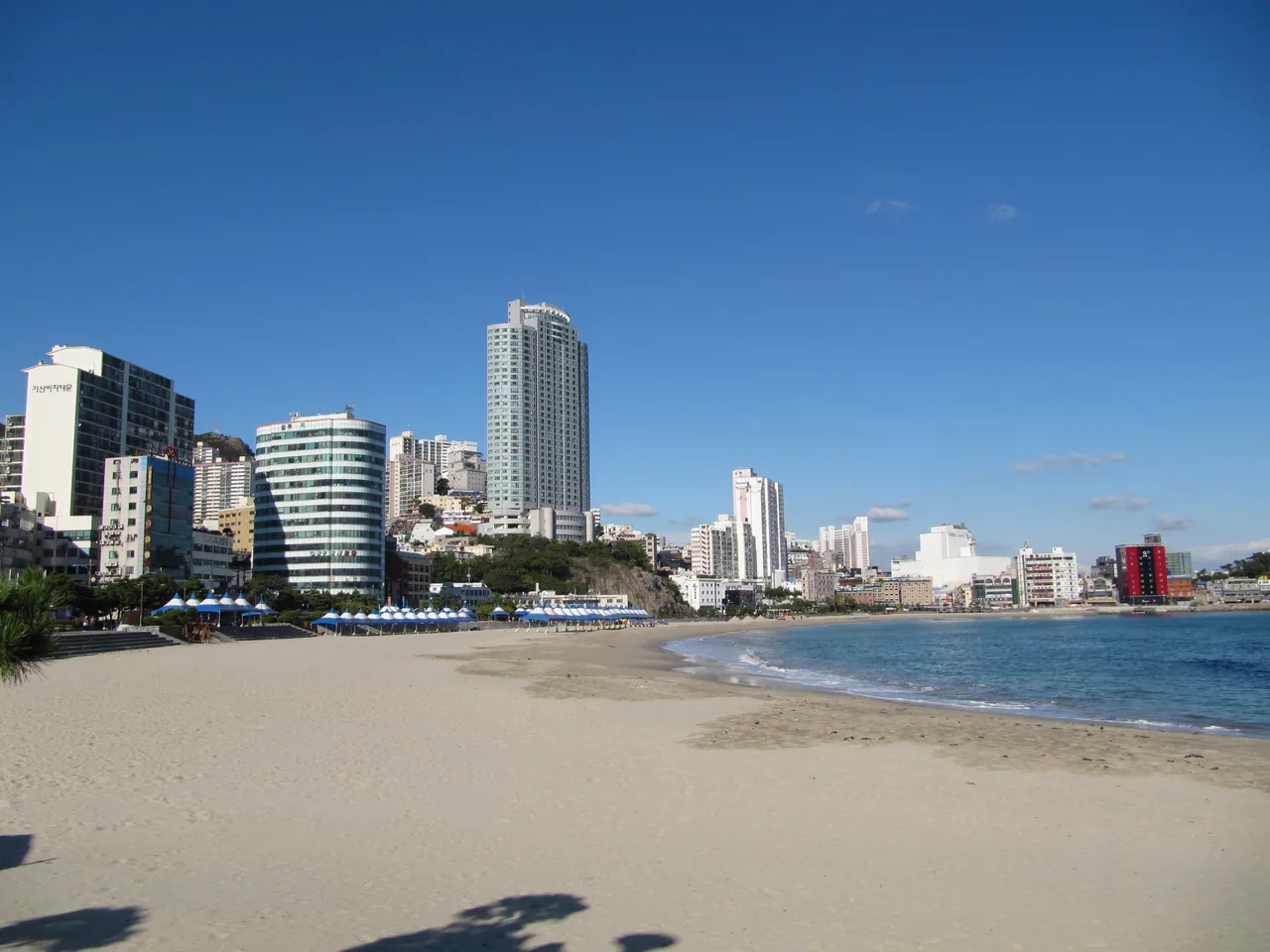
Songdo is one of several Busan beaches buzzing through July.
8. Crowds, prices & where to stay
July is when Busan’s summer high season ramps up. It is busier and pricier than June, and it builds toward the late-July and August peak when Korea takes its summer holidays:
More crowds: the beaches and beach-area restaurants get busy, especially on weekends and as the school holidays begin later in the month.
Higher prices: beachfront accommodation in particular rises in July, climbing toward the August peak — book ahead, especially for Haeundae.
Where to stay: Haeundae for the beach and summer scene, Seomyeon for a central and slightly cheaper base, Nampo for downtown and the markets.
Booking tip: reserve earlier than you would for June, particularly beach hotels and late-July dates, and pick a base near a metro line so a rainy or sweltering day is easy to reroute.
🏨 In Gwangalli, rooms facing the bridge cost more than those that do not. Check which way it faces before bookingSee on Trip.com →See on Agoda →See on Expedia →Affiliate link — we may earn a commission at no extra cost to you.
9. A smart July itinerary & the verdict
The trick in July is to work around the heat and the rain: beaches and outdoors in the cooler, drier windows, indoor escapes for the rest. A simple template:
Morning: hit the beach or a coastal walk early, before the midday heat and while it is calmer.
Midday: escape the heat or a downpour — department stores and spas, a museum or the aquarium, a long lunch.
Evening: back outside as it cools — beachfront dinner, night markets, and the lit-up Gwangan Bridge.
Always: carry rain gear and sun protection, and check the forecast (including any typhoon updates) each morning.
The verdict: July is peak-summer Busan — open beaches, warm sea, long buzzing nights — with the trade-off of being the hottest, most humid and rainiest month, plus the start of typhoon season. Come for the beach-and-summer experience, pack for heat and rain, stay flexible, and Busan in July delivers. Plan it all with our complete Busan Travel Guide.
Yes if you came for beaches and summer: July is when the beach season officially opens, the sea is warm enough to swim, and the city is at full summer buzz. The trade-off is that it is the hottest, most humid and rainiest month, with typhoon season starting, so come prepared for heat and rain.
Q. What is the weather like in Busan in July?
Hot and humid, with daytime highs around 28°C and lows around 22–23°C. July is the rainiest, least sunny month — peak monsoon early on, breaking into intense heat later. Humidity is high throughout, and the sea is a swimmable ~24°C.
Q. Does it rain a lot in Busan in July?
Yes — July is the wettest month of the year, with roughly two weeks of rainy days and heavy monsoon (jangma) downpours, especially in the first half. The rains usually break in late July into hot, sticky weather. Pack a sturdy umbrella and a rain jacket.
Q. Can you swim at the beach in Busan in July?
Yes. The official beach season opens around the start of July, with lifeguards and full facilities, and the sea is a comfortable ~24°C. Swim between the flags and respect lifeguards, as monsoon storms, rip currents and typhoon swells can make conditions change fast.
Q. Are there typhoons in Busan in July?
Typhoon season runs from July into early autumn, so Busan can be affected by a passing typhoon, usually bringing a day or two of strong wind and rain. They are not constant, but keep an eye on the forecast and stay flexible, especially later in summer.
Q. What should I pack for Busan in July?
Light, breathable, quick-dry summer clothing, a sturdy umbrella and packable rain jacket, swimwear and beach kit, strong sun protection (high-SPF sunscreen, hat, sunglasses), and a light layer for strong air-conditioning indoors.
Q. Is Busan crowded or expensive in July?
Busier and pricier than June. July is the start of the summer high season, building toward the late-July and August peak, so beaches and beach hotels fill up, especially on weekends. Book accommodation ahead, particularly around Haeundae.
June is milder, drier and quieter, with a cooler sea and beaches not yet open for swimming. July is hotter, much wetter (peak monsoon) and busier, but the beach season is open and the sea is warm. Choose June for comfort and value, July for full beach-and-summer season.